World's longest-range airliner takes to the skies

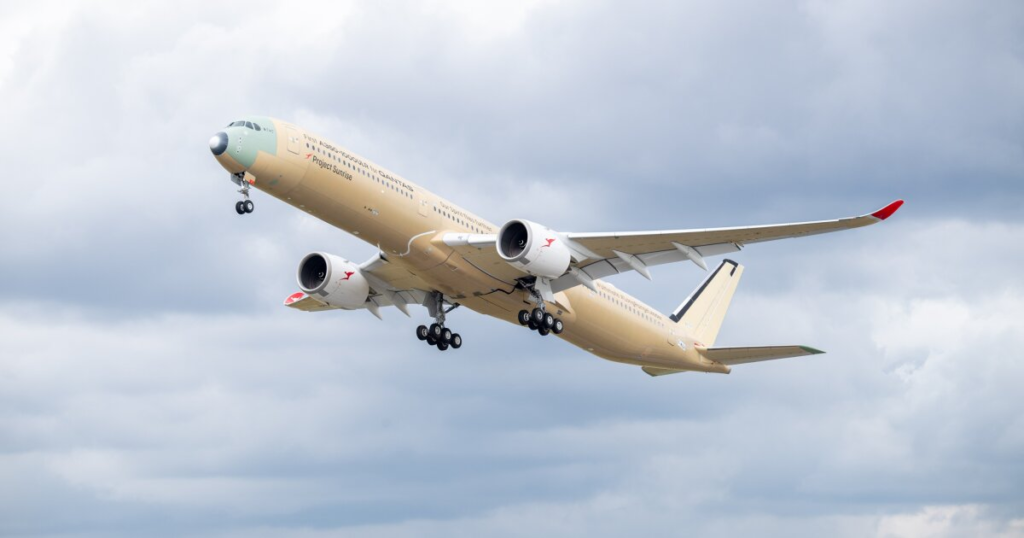
If it’s ever been your dream to spend 22 hours on a non-stop flight from Sydney to London, then good news: Airbus has announced the maiden flight of the world’s longest-range airliner, the Airbus A350-1000ULR, with a range of almost 10,000 nautical miles. Getting from Australia’s major eastern cities of Sydney and Melbourne to New York or London has always been an adventure. After the Second World War, it could take up to four weeks by steamship. If you were in a hurry, seaplanes could make the journey in a mere 12 days, albeit with nine stops along the way. When jet airliner service arrived in 1959, the voyage was cut to 33 hours with only three refueling stops. Today, even after seven decades of technological improvements, these antipodal routes still require at least one stopover in hubs such as Singapore, Dubai, Los Angeles, or Dallas. That can add up to four hours to the journey, along with the risks of missed connections, lost baggage, delays, and the general aggravation of customs procedures. To address this, Qantas launched its Project Sunrise initiative, aimed at introducing nonstop flights to the other side of the world. The purpose extends beyond passenger convenience. The airline sees such routes as a way to capture more premium-fare traffic while insulating its flagship services from foreign regulatory changes, airport curfews, landing-slot constraints, and regional geopolitical instability. It also provides an opportunity to modernize the airline’s long-haul fleet. Key to the project is the Airbus A350-1000ULR (Ultra Long Range), a specialized widebody twin-engine airliner derived from the baseline A350-1000. The prototype took to the air from Airbus’s facility in Toulouse, France, on June 2, 2026, for a test flight lasting three hours and 43 minutes and reaching an altitude of 41,000 ft (12,500 m). The main difference between the A350-1000ULR and the standard version is a new 20,000-liter (5,283 US-gal) rear center fuel tank, increasing operational range by approximately 1,000 nautical miles (1,151 miles, 1,852 km) to a total of 9,700 nautical miles (11,163 miles, 17,964 km). The aircraft will typically carry 238 passengers in a four-class configuration. Added to this is a lighter galley cooling system featuring high-efficiency refrigeration units designed for ultra-long-haul operations, where minimizing both odors and power consumption is a priority. According to Airbus, once flight testing is completed, the aircraft will be given its Qantas livery and then delivered to the airline, with a second aircraft scheduled for delivery in April 2027. The current plan is for a fleet of 12 of the ultra-long-range variant. Unfortunately, it still means spending 22 hours in an airline seat next to someone with very strong views on air fryers. Source: Airbus source

World's longest-range airliner takes to the skies Read More »
Charles & Keith taps former Meta executive as global marketing director

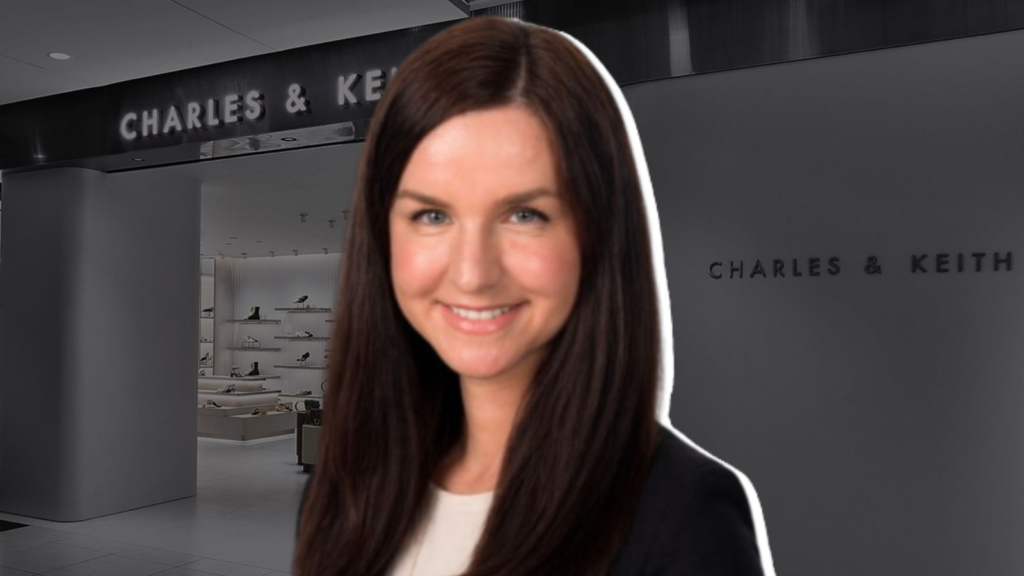
Singapore-based fashion group Charles & Keith has unveiled a series of leadership appointments as it looks to accelerate growth, strengthen its digital capabilities and sharpen its brand positioning following its 30th anniversary. Leading the appointments is Aniko Andras (pictured), who joins the company as global marketing director. In the role, she will oversee the group’s global marketing strategy, working across teams to deepen brand affinity and enhance the customer experience as Charles & Keith expands its presence across international markets. Andras brings more than 20 years of international marketing experience to the role. She joins from Meta, where she led strategic partnerships with luxury and technology brands across the Asia Pacific region. Prior to that, she held marketing leadership roles at Apple, L’Oréal and Reckitt, building expertise in brand development, digital marketing and customer engagement. Don’t miss: How Coach is winning over Gen Z one experience at a time The company has also appointed Claudia Brechenmacher as head of transformation. She will lead the group’s transformation and strategy efforts, focusing on organisational agility, operational excellence and long-term business growth. Brechenmacher brings 15 years of global strategy consulting experience, including a decade at Bain & Company, where she led strategy development and large-scale transformation projects across Europe and Asia. Meanwhile, Cayetano Morales Rosell has been named global director of eCommerce. He joins the company with more than 15 years of experience at Inditex and Massimo Dutti, having held senior positions spanning merchandising and global eCommerce. In his new role, Morales Rosell will be responsible for driving Charles & Keith’s global eCommerce strategy, with a focus on accelerating growth, advancing the group’s digital ambitions and strengthening its technology, logistics and team capabilities. Charles & Keith said the leadership changes are aimed at driving its “transformative growth”, redefining its digital and creative identities, and scaling operational efficiencies as the company enters its next phase of growth. The appointments come as fashion brands continue to invest in marketing and digital transformation to drive growth in an increasingly competitive retail landscape. Earlier this year, luxury fashion house Tapestry, parent company of Coach and Kate Spade New York, appointed Dentsu as its global agency of record outside the US. Under the expanded partnership, Dentsu will oversee media planning and buying for the group’s flagship brands across APAC, Europe, the Middle East, Africa and India, building on an existing collaboration in China. Related articles: Is community the new currency for Love, Bonito?   Christy Ng brings Mamee Monster to life in playful bag collaboration      Coach just turned storytelling into a fashion statement source

Charles & Keith taps former Meta executive as global marketing director Read More »

PLUG lands in Singapore with new MD leading expansion

Independent public relations and marketing agency PLUG has officially launched its Singapore office, marking its latest expansion in Asia as brands increasingly seek integrated campaigns that span multiple markets. The move follows a soft launch in 2025 and is being led by communications veteran Jolin Ng (pictured), who joins as managing director of PLUG Singapore. According to the agency, the Singapore office will offer integrated services across public relations, influencer strategy, social media and content, with a focus on delivering culture-led brand storytelling tied to business outcomes. Don’t miss: Mediaplus expands into Asia with Singapore joint venture Ng brings more than 15 years of communications experience across Asia. Prior to joining PLUG Singapore, she held senior roles at Hill+Knowlton Strategies and AKA Asia, before serving as general manager at W Communications Singapore. Over the course of her career, she has led campaigns for brands including Hilton APAC, Hong Kong Disneyland, New World Development, SK-II Global and Tinder APAC. Ng is also no stranger to PLUG, having first joined the agency’s Hong Kong office in 2018. The Singapore launch builds on an existing cross-market collaboration model between the agency’s teams. The Singapore expansion forms part of PLUG’s broader growth strategy in Asia, pairing Singapore’s role as a gateway to Southeast Asia with Hong Kong’s position as a bridge to North Asia and Mainland China. Founded in Hong Kong in 2007 by Lara Jefferies and co-led by executive director Alex Zenovic, PLUG has grown into an independent agency with more than 30 specialists across Hong Kong and Singapore. Its capabilities span public relations, strategy, creative, content, digital, social media and partnerships. Since its soft launch, PLUG Singapore has built a portfolio across consumer, culture and social impact sectors. Clients and projects include integrated campaign work for Stroke Support Station (S3), Play Nation and Thekchen Choling Singapore, as well as public relations, influencer engagement and activation work for brands such as Airbnb, Driscoll’s and Pizza Hut. The agency’s wider client roster includes the Singapore Tourism Board, Aesop, Diptyque, IWC Schaffhausen, ALICE + OLIVIA and The North Face. “Expanding from Hong Kong to Singapore with Ng, whom we’ve worked with for years, is a natural evolution. She brings deep experience in both cities, an analytical mind, fantastic connections and an innate understanding of the PLUG culture and passion for our work,” said Jefferies. She added, “With our expertise across both markets, we’re able to connect communities, unlock new collaborations and help brands operate more fluidly across Asia.” In tandem, Ng said, “The industry tends to organise itself around channels, but people don’t engage that way. At PLUG, we build ideas that move fluidly across culture, media and everyday moments. In Singapore, we’re applying that thinking to help brands build genuine connections with their community, not just collect them.” PLUG’s expansion comes amid continued agency investment in Singapore as firms look to strengthen their regional capabilities. In October last year, communications group COMCO Mundo League of Enterprises launched its Singapore office under the banner of COMCO Southeast Asia – Singapore, positioning itself closer to regional business hubs and high-growth sectors such as technology, finance, healthcare and consumer markets. Prior to that, PR and communications agency LaunchLink Communications also established a Singapore office as part of its APAC expansion plans. The office serves as a regional hub for local and international clients, offering services ranging from strategic communications and executive positioning to market entry support, product launches and cross-border campaigns. Related articles: Experiential agency Verve expands into Asia with Singapore office  Design consultancy Elephant stomps into Singapore with new APAC hub     Brand and growth consultancy MOMENTRA opens shop in Singapore source

PLUG lands in Singapore with new MD leading expansion Read More »

The largest magnetic map of the Universe captures what we can't see

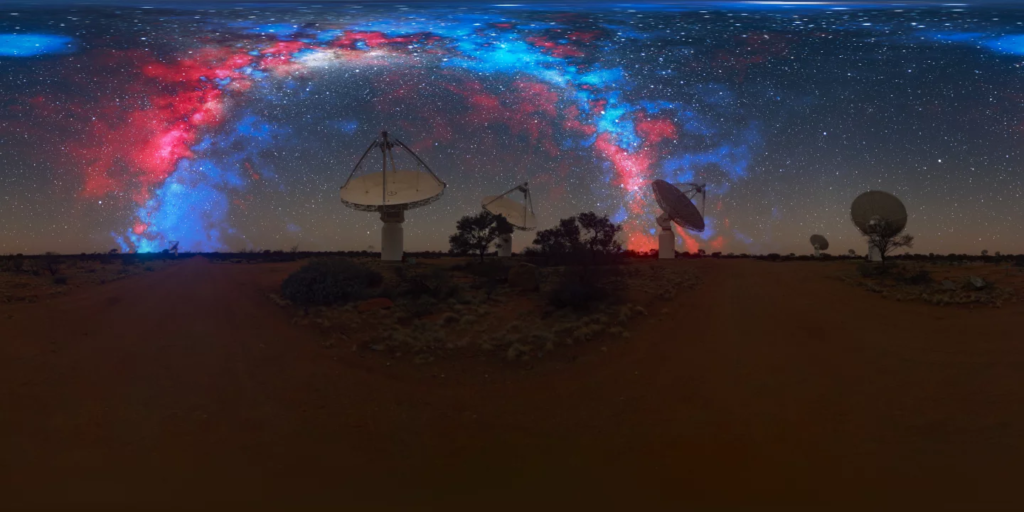
We’re a step closer to understanding how energy is spread across the Universe, with the most detailed map of intergalactic magnetism ever produced. It’s more than five times larger than all earlier studies combined. Researchers from Australia’s national science agency CSIRO and the SKA Observatory (SKAO) have produced the detailed images using the ASKAP radio telescope. “For the first time, we can investigate fine details of the material between nearby stars, and study a huge number of distant galaxies,” says lead researcher Dr Alec Thomson, commissioning scientist with the SKAO. We obviously can’t see magnetic fields, so it can be easy to underestimate their role in how they shape our world and the space beyond it. Without Earth’s invisible geomagnetism, solar winds would ultimately render the planet uninhabitable. The new imagery has been produced by the CSIRO’s ASKAP radio telescope, at Inyarrimanha Ilgari Bundara in Western Australia, where it monitors the sky’s radio signals as part of the Rapid ASKAP Continuum Surveys (RACS). In 2020, it produced the largest and fasted radio sky survey in history. ASKAP scans the sky to build detailed maps of the Universe’s radio signalsCSIRO/Alec Thomson et al./Alex Cherney and Tom Fowler/Sam Moorfield Now, the new map, known as SPICE-RACS, is built on the foundation that light twists as it travels through a magnetic field. So measuring the degree of twisting as captured by ASKAP, the scientists could locate these fields and measure their strength. “We collected rotation measures from every galaxy detected in RACS – nearly four million galaxies – and reprocessed this original data from ASKAP to retrieve the full picture,” Thomson says. Our understanding of the Universe is heavily dependent on the technology we have to survey it – as a majority of space is invisible to the naked eye. “For the past 20 years we have been working with essentially the same data set, which didn’t even cover the southern sky,” says Professor Naomi McClure-Griffiths, SKAO’s Chief Scientist. “Now, we can finally answer some big questions with a much better picture of the Universe’s magnetic structures. “With the information we now have on magnetic fields throughout the Universe, we can study things like how magnetic fields affect the galactic-scale interaction of our own Milky Way and its neighbours, the Magellanic Clouds,” she adds. “We can even potentially find the answer to questions like when did magnetic fields first appear in the Universe? We had once thought it would be impossible to answer these questions. I’m excited to say that is no longer the case.” The technology lets us “see” magnetic fields in space CSIRO/Alec Thomson et al./Alex Cherney and Tom Fowler/Sam Moorfield The CSIRO researchers have also made there data open access, encouraging scientists around the world to conduct their own research with it. “Our data is accessible to anyone, whether it be for something unique in their own work or to replicate something tested already – an important part of the scientific process,” says CSIRO astronomer Dr Tim Galvin. “The data for this project is already being used by many research teams to produce new insights. “By having these resources freely available, we’re supporting the continued advancement of our collective understanding of the Universe,” he adds. CSIRO’s data portal is a valuable resource for scientists – or anyone who loves to spend a few hours down a good rabbit hole. And while these maps are remarkable achievements, the international team of researchers, known as the Polarisation Sky Survey of the Universe’s Magnetism (POSSUM) collaboration, promises even they’re just the beginning. The research has been accepted – but yet to be peer-reviewed – by the Publications of the Astronomical Society of Australia. Source: CSIRO source

The largest magnetic map of the Universe captures what we can't see Read More »

Tech giants and law enforcement disrupt SEA scam networks in joint crackdown

Meta, Microsoft and Coinbase have led a sweeping digital takedown of scam infrastructure across Southeast Asia, with platforms disabling millions of accounts and disrupting fraud operations across the attack chain. Meta said it disabled more than 1.4 million accounts, pages and groups across Facebook and Instagram linked to scam networks. It also worked alongside other industry players in the coordinated operation. Microsoft suspended around 20,000 fraudulent accounts tied to scam operations, while Coinbase froze more than US$3 million in cryptocurrency assets linked to criminal networks. Don’t miss: Google clamps down on financial scam ads with new Malaysia verification requirement Connectivity provider Starlink also terminated access for thousands of kits identified as being used for unlawful activity, cutting off another layer of operational infrastructure for scam compounds. On the enforcement side, law enforcement agencies arrested 63 suspected individuals connected to scam centres, according to participating partners. The operation was led by the US Department of Justice’s scam center strike force, bringing together technology companies and law enforcement agencies across multiple jurisdictions, including the US, UK, Australia, Canada, New Zealand and Thailand. The effort also involved the US Attorney for the District of Columbia, Jeanine Pirro, alongside the FBI and US Secret Service, with coordination supported through intelligence sharing between public and private sector partners. Partners said the collaboration allowed them to connect activity across platforms and financial systems, helping identify scam networks and potential scam compound locations for referral to authorities. Beyond account takedowns and asset freezes, the operation also generated intelligence gains, with partners identifying new suspected scam centre locations and networks. These were passed to law enforcement agencies for further action, extending disruption from online platforms into real-world enforcement. Industry partners said the coordinated model enabled action across multiple stages of the fraud ecosystem, from online recruitment and communication channels to financial transfer and infrastructure access. Scam networks across the region have increasingly relied on multi-platform tactics to evade detection, prompting companies to adopt more coordinated approaches across sectors. The participating companies said they plan to continue cross-industry collaboration to disrupt evolving scam operations and strengthen safeguards for users online. “Protecting people around the world from scams is one our highest priorities. The joint operation demonstrates the power of partnerships to combat scammers. We’re proud to partner with industry and DOJ, FBI, Royal Thai Police, and other law enforcement agencies in taking this global fight directly to these Asia-based scam centers at their source,” said Chris Sonderby, VP and deputy general counsel, Meta. In tandem, Steven Masada, global head of Microsoft’s digital crimes unit said, “Operations like this show what’s possible when technology companies and law enforcement work side by side. Scam networks operate across platforms and borders, and Microsoft remains committed to working with partners to combine visibility into scam infrastructure with real-world action, disrupting criminal networks at scale and holding those behind them accountable.” The recent enforcement push builds on earlier platform-level measures aimed at tightening scam detection and brand protection across Meta’s ecosystem. Meta had previously updated its anti-scam advertising tool, “Brand rights protection”, adding new features requested by businesses using the system. The updates were designed to give brands greater control over how they are represented online and to reduce exposure to misleading or harmful content. The tool serves as a unified reporting system across Facebook and Instagram, allowing businesses to monitor and flag misuse of their brand in both ads and organic content, including impersonation and intellectual property infringement. Related articles: Singapore orders Meta to curb Facebook scams or face S$1m fines   Meta joins SPF and NCPC to beat scammers at their own game  Facebook advertisers must verify identities amidst surge in scam ads   source

Tech giants and law enforcement disrupt SEA scam networks in joint crackdown Read More »

Dow Jones Futures Fall, Oil Prices Rise As Trump Sets New Hormuz Target Date; Palo Alto, Marvell Are Early Movers

Dow Jones futures fell modestly early Wednesday, while S&P 500 futures were little changed and Nasdaq futures rose. Crude oil prices climbed amid fresh U.S.-Iran clashes and President Donald Trump saying the Strait of Hormuz could remain closed for months. Palo Alto Networks (PANW) fell before the open despite strong earnings and guidance. The Trump administration proposed new tariffs on… Copyright ©2026 Investor’s Business Daily, LLC. All rights reserved. 87990cbe856818d5eddac44c7b1cdeb8 source

Dow Jones Futures Fall, Oil Prices Rise As Trump Sets New Hormuz Target Date; Palo Alto, Marvell Are Early Movers Read More »

Pink Dot is ditching its usual concert format for something more personal

Pink Dot is marking its 18th year with a new campaign, “Come get personal” as it shifts this year’s event into a more interactive, community-led experience centred on storytelling, connection and lived experiences within Singapore’s LGBTQ+ community. Taking place on 27 June 2026 at Hong Lim Park, Pink Dot 18 will move away from its usual single-stage concert format. Instead, the park will be transformed into a series of themed “villages” that attendees can explore, each spotlighting different aspects of queer life in Singapore, from relationships and identity to school, work, community and everyday social navigation. The refreshed format comes after the repeal of Section 377A, as conversations around LGBTQ+ issues in Singapore evolve beyond one galvanising issue into a wider range of community experiences. According to Pink Dot, the campaign is also a response to an increasingly overwhelming and polarised world, encouraging people to begin with personal stories and connections. Don’t miss: GOODSTUPH turns schoolyard slurs into pride keychains for Pink Dot 2025  “This year, Pink Dot is about remembering something simple: our stories are personal. They’re about real people: our families, friendships and communities,” said Andee Tay, spokesperson for Pink Dot. “There’s so much happening in the world right now, it can feel hard to know what to care about or how to even begin making a difference. At such moments the instinct can be to turn away or retreat into ourselves. But we’re inviting people to do the opposite: to start with what is personal, with the people in front of us. To hear someone else’s story, meet someone new, and connect to experiences beyond your own,” Tay added. As part of the redesigned park experience, more than 20 community groups will host experiential booths and activities across Hong Lim Park. These will include gallery walks, immersive installations, games and facilitated conversations. Among the community-led experiences is “This classroom is not empty” by Queer Friendly Chers, an unmanned interactive booth spotlighting queer and ally educators who create safe spaces for queer and trans students, even when they cannot safely be visible in their workplaces. Meanwhile, The T Project will present “Body pARTS,” an interactive reflection wall exploring how scars can tell stories of healing and self-acceptance rather than shame. South Asian Pride Singapore will share stories of identity and belonging while inviting visitors to contribute to a community tapestry, while WLWheels, a group of lesbian riders, will showcase their motorbikes and share how they found one another. According to Tay, community groups have always played a key role in Pink Dot, but this year, they will take the lead in telling the community’s stories. These groups, Tay said, are the “beating heart” of queer life in Singapore, creating spaces for support and belonging beyond Pink Dot day itself. The new format is designed to create more entry points for attendees, whether they are visiting Pink Dot for the first time, returning as long-time supporters, exploring their place in the community, or showing up as allies. Pink Dot said the refreshed experience aims to make the event more accessible for those attending alone or for the first time, while also giving long-time attendees new ways to connect with the community. While the usual concert will be replaced by experiential community activations and pop-up performances, Pink Dot’s picnic lawn, soapbox speeches and light-up will remain. From 4pm to 7pm, visitors will be able to explore the activations across the four themed villages, picnic on the lawn and catch pop-up performances. This will be followed by the event’s soapbox speeches and light-up. The campaign ultimately invites attendees to take the freedom to love personally, whether through listening to experiences different from their own, supporting loved ones or contributing to the community in everyday ways. “Sometimes all it takes is one conversation or connection to see something differently,” said Tay. “When we connect with one another, love stops being an abstract idea and becomes something we do for one another. Because when something becomes personal, things change.” The campaign builds on Pink Dot’s recent efforts to place personal storytelling at the centre of its advocacy. Last year, the movement launched a multi-year campaign celebrating diverse expressions of queer love between partners, friends and chosen families. Anchored by a community time capsule initiative, the campaign invited LGBTQ+ Singaporeans and allies to contribute letters, photographs and personal objects that reflected their experiences of love, with selected submissions showcased at Pink Dot 17 before being sealed until 2050. The initiative, created in partnership with creative agency Friend and production house AMOK, was brought to life through a short video series spotlighting stories of queer connection through meaningful objects. These included items linked to Singapore’s first LGBTQ+ counselling hotline, Taiwan Pride, The T Project, Oogachaga, queer couples, artists and activists. With “Come get personal,” Pink Dot 18 appears to continue that storytelling-led direction, shifting the focus from preserving memories for the future to creating more immediate, in-person moments of connection across the community. Related articles:   Optus unveils Mardi Gras 2026 platform ‘Pride blooms from Yes’ Babaylanes, DDB MNL turn watch time into support for trans creators this Pride  Sephora and Haus Labs go Gaga for self-expression this Pride source

Pink Dot is ditching its usual concert format for something more personal Read More »

When CPI Breaks, So Do Real Returns

Start with pension allocation. Nigeria’s pension assets reached ₦26.66 trillion as of October 2025, with roughly 60%, or about ₦16 trillion, invested in government securities. If the real return on government paper has been negative for most of the past 15 years, then millions of retirement savers were not just earning low returns. They were losing purchasing power while their nominal balances increased. This is not unique to Nigeria. The OECD’s 2024 pension report, using 2023 data, found that pension systems in Nigeria, Angola, and Egypt, where more than half of assets are allocated to bills and bonds, delivered negative real returns. Recent increases in Nigeria’s pension fund equity allocation limits are directionally positive. But they are modest relative to the scale of the problem. Under the old CPI methodology, a 91-day T-bill yielding 18% against inflation at 34.8% was clearly negative in real terms. Under the rebased CPI, a yield of 15% against inflation of 15.15% appears roughly neutral. Has the underlying reality improved, or has the measurement changed? The answer is both. Inflation has genuinely moderated. Monthly CPI increases fell below 1% for several consecutive months in the second half of 2025. But the rebase also lowered measured inflation by roughly 10 percentage points. Without a continuous series, it is difficult to separate these effects. What is clear is that the sign has shifted. From August 2025 through January 2026, real returns turned positive for six consecutive months. January 2026 was the strongest month, with a +4.39% real return, driven by a 2.88% month-on-month decline in CPI alongside a 1.38% nominal T-bill return. The real return index rose from 984 to 1,027, above its base level of 1,000 for the first time. After 15 years of negative returns, cash is no longer guaranteed to destroy purchasing power. Whether that shift proves durable remains an open question. source

When CPI Breaks, So Do Real Returns Read More »

Indeed says it's time to stop searching and start matching

Indeed is repositioning itself as an AI-powered hiring platform with the launch of a new global brand campaign titled “Jobs need people.” Created in partnership with 72andSunny, the campaign seeks to reinforce the idea that while AI can make hiring more efficient, recruitment remains a fundamentally human process. The campaign will roll out across television, streaming platforms, YouTube and social media through a series of six-, 15- and 30-second films. The creative flips the traditional job-search narrative by reminding audiences that employers are not simply looking for resumes, but for the skills, perspectives and potential behind them. Don’t miss: Jobstreet turns to mermaids and Monkey King to fix job matching According to Indeed, the campaign is supported by a full-funnel media strategy that will also include sports partnerships and experiential activations. One of the first examples of the platform’s new brand direction was its collaboration with FOX Sports and FOX One on the search for a “Chief World Cup watcher“, which was promoted through activations including Times Square billboards and on-site branding. The campaign comes as Indeed continues its evolution from a traditional job board into what it describes as an AI-powered matching platform. According to James Whitemore, chief marketing officer at Indeed, the company is shifting the conversation away from job searching and towards job matching. “For more than two decades, Indeed has helped millions of people get jobs. But as hiring becomes more complex, noisy and impersonal, something needs to change: finding the right opportunity shouldn’t depend on endless searching,” said Whitemore in a blog post. Indeed said it now facilitates 31 hires every minute through its platform and increasingly relies on AI and data-driven matching to connect employers with candidates. The company said its matching engine draws from more than 665 million job seeker profiles and insights such as salary expectations, certifications and preferred work patterns to surface potential matches. According to Indeed, approximately 70% of sponsored applications on its platform now come through tools such as Smart Sourcing and Smart Screening, while traditional keyword-based search accounts for less than 30%. The shift comes amid ongoing frustrations among both job seekers and employers. Citing an April 2026 Harris Poll survey commissioned by Indeed, the company said 81% of job seekers have applied for roles without receiving a response, while 45% are unsure whether they are qualified for the jobs they apply for. The survey also found that job seekers spend an average of six hours researching and applying for positions, despite more than half expecting they will not hear back from employers. Against this backdrop, Indeed said its latest campaign is intended to highlight a future where hiring is driven less by application volume and more by meaningful connections between employers and candidates. “Hiring shouldn’t feel like a search. It should be a discovery,” Whitemore said. Indeed’s latest campaign comes as professional platforms increasingly look to address the realities of today’s evolving workplace through brand storytelling. Earlier this year, LinkedIn launched a global campaign titled “The network that works for you”, created in partnership with McCann New York. The campaign used humour to spotlight relatable workplace scenarios, from awkward meeting moments to career uncertainties, while positioning LinkedIn as a platform that supports professionals and businesses through the complexities of modern work. Rather than promising to eliminate workplace challenges, LinkedIn’s campaign focused on helping users navigate them. Similarly, Indeed’s “Jobs need people” campaign seeks to address common frustrations in the hiring process, highlighting the role technology can play in connecting employers and candidates while keeping human relationships at the centre of recruitment. Related articles: Jobstreet by SEEK warns of growing impersonation scams in MY   Love, Bonito and LinkedIn tackle career questions women hesitate to ask   Philippines ranks second in APAC workplace happiness, Jobstreet by SEEK finds   source

Indeed says it's time to stop searching and start matching Read More »

First-ever AC Cobra road coupé rolls out, and it's a brutal stunner

One week the world gets shown a glimpse of the future at the launch of the Luce – the first state-of-the-art electric Ferrari – then the next week we get the ultimate retro car, a monstrous five-liter 18-mpg V8 muscle car. And to complete the old-school feeling, this brutish bulldog is built by AC Cars, one of the world’s longest standing auto manufacturers. The unveiling of a new production AC Cobra shows the two sides of the contemporary motor industry in stark relief, so we think it needs a closer look. Whether it’s doomed and dated, or desirable and down-to-earth, the new AC Cobra GT Coupe – which was announced last year but has now entered the ‘ready to build’ stage – would be a ferocious form of transport whatever era it landed into. The five-liter Ford V8 is tuned to 730 hp yet the car weighs under 1,600kg (~3,530 lb). The result is 198 mph (318.6 km/h) and 0-60 sprints in 3.2 seconds (Clubsport version). They have had 125 years of practice so perhaps it’s no surprise that AC’s in-house body makers have crafted such a classy set of curvesAC Cars Britain’s oldest active vehicle manufacturer, now based at Castle Donington in the Midlands, is celebrating the 125th anniversary of its founding and revealed this first-ever fixed-head production Cobra toward the end of last month. Dedicated car spotters will already be angrily scrolling to the comments section, but rest assured the only Cobras with roofs to date have been track specials. This is the first hardtop road car in a heritage that goes back to 1962. The coupe is available in both left and right-hand drive and features AC’s own extruded aluminum spaceframe chassis and carbon fiber bodywork. The company hopes that this car with a roof will make a huge difference to sales. A ten-fold difference in fact. AC Cars is hoping to jump from around 100 hand-built cars per year currently to around 1,000 cars in total. David Conza, Chief Executive Officer of AC Cars, marked the launch and anniversary by hopefully claiming “we move from a boutique manufacturer to a global performance brand.” The ferocious little aluminum and carbon fiber supercar has a five-liter Ford V8 under the hoodAC Cars It’s all very bespoke and traditional of course with each example built specifically for its client, and prices rising from £234,300 to way over a quarter of a million (which converts to between US$314,656 to $335,770 in today’s money). And don’t be in too much of a hurry, the first examples will be delivered from 2028. A simple blank form on the AC website allows you to join the waiting list, saying: “Congratulations – you are only a few steps away from submitting your enquiry for a production slot of the AC Cobra GT Coupe. Please complete the form below, and an AC Cars Concierge representative will personally contact you to discuss brand fit, availability, and allocation opportunities.” There’s no doubting the road presence of the new car. Even if the V8 noise didn’t rupture your ear drums, you couldn’t help but notice that shape as it passes you. Its carbon fiber bodywork includes a ‘double bubble’ roofline, which lowers overall height without impacting head room, and smooths airflow and drag. The distinctive Kammtail rear is a classic concept used by race teams for decades to improve aerodynamic efficiency without resorting to a ‘longtail’ solution. Details of the new car include a choice of gearboxes between a 6-speed manual for traditionalists or a high-tech 10-speed automatic with steering-wheel shift paddles. The interior has classic touches like hand-stitched leather and analog instruments. Compared to the iconic AC Cobra of 1962, it’s bigger and massively more powerful. Shelby’s famous original V8 only produced around a third of the horsepower of the modern unit, was 60-mph slower and took two more seconds to get to 60 mph from a standstill. The double-bubble roof keeps overall height low but allows drivers over six feet tall to sit comfortablyAC Cars The heritage all dates back to the Weller Brothers establishing a vehicle manufacturing business in 1901, producing cars and motorbikes from their London workshop. Its Autocarrier of 1904 gave the company its name and was the first three-wheel commercial delivery vehicle. Evidently it was an instant success. The AC Ace in 1953 was the sportscar that cemented the company’s status. With a light aluminum body, it was a cult racing success. It would eventually evolve to incorporate the Ford V8 and become the AC Cobra of legend. In 1964 the Shelby Cobra Daytona Coupe won the GT class at the 24 Hours of Le Mans, driven by Dan Gurney and Bob Bondurant, and incredibly the Cobra 427 S/C was the fastest accelerating production car in the world from 1965 for 21 years to 1986. Unsurprisingly after that the Cobra has become a motoring landmark that we’ve visited many times at New Atlas, including Shelby’s own 1966 dual-supercharged vehicle that went to auction in 2007, and a 50th anniversary FIA Cobra we covered in 2014. Source: AC Cars source

First-ever AC Cobra road coupé rolls out, and it's a brutal stunner Read More »