Australian artist Cj Hendry turns IMBA Theatre into a double debut

IMBA Theatre at Gardens by the Bay is bringing internationally acclaimed Australian artist Cj Hendry to Southeast Asia for the first time this June, with two large-scale immersive installations that blur the lines between art, experience design and cultural marketing. The double activation will see Hendry’s “Flower market” and the world premiere of “JuJu World” take over IMBA Theatre’s gallery space in a limited-run format, positioning Gardens by the Bay as a temporary home for experiential, participation-led art. “Flower market” will run from 10 to 14 June 2026 as a free-entry experience, while “JuJu World” will follow from 20 June to 18 July 2026 as a ticketed installation. Both experiences are designed around interaction rather than observation, reflecting a growing shift in how audiences engage with culture, not just as spectators, but as active participants. Don’t miss: LEGO turns Jewel Changi Airport into SEA’s largest Botanicals mall activation  Known for transforming hyperrealistic drawings into large-scale, immersive environments, Hendry has built a global reputation for creating art that behaves akin to a brand experience: highly visual, shareable and designed for physical engagement. In “Flower market”, IMBA Theatre will be transformed into a surreal floral retail environment featuring tens of thousands of plush blooms. Visitors are invited to browse, pick and assemble their own bouquets in a format that mirrors retail and experiential activation mechanics, rather than traditional gallery viewing. The Singapore edition will introduce more than 30 flower varieties, including locally inspired designs such as the Papilionanthe Miss Joaquim, Raffles’ Pitcher Plant and Singapore Ginger Flower. Each visitor will also receive a complimentary flower upon entry, reinforcing the participatory nature of the experience. Meanwhile, “JuJu World” marks the first inflatable experience built around Hendry’s JuJu collectible series, introducing a bold yellow colourway created exclusively for Singapore. The installation extends her collectible universe into a physical, immersive format, with limited large-scale JuJu pieces available only during the run. The experience continues a broader trend in experiential marketing where art, retail and entertainment increasingly overlap, with installations designed to be photographed, shared and socially amplified as much as they are experienced in person. Michael Lee, chief executive of IMBA, said the collaboration reflects a focus on building participatory cultural formats that move beyond passive viewing. “Henry’s installations cross every boundary of language, age and background, and we see real potential to build programming and community experiences around them. We can’t wait to welcome Singapore to these two experiences,” said Lee.  In tandem, Teyi Guo, director, leisure events at the Singapore Tourism Board, said the activations add to Singapore’s pipeline of world-class experiential offerings and reinforce its positioning as a destination for cultural tourism and immersive experiences. Artist Hendry on the other hand said the Southeast Asia debut is rooted in shared emotional cues such as curiosity, nostalgia and play, with the aim of making art more accessible and engaging across audiences. “Presenting my works in Southeast Asia with IMBA feels incredibly exciting because these activations represent our shared emotion and universal experiences, from curiosity to adolescence and nostalgia. This double bill at IMBA Theatre will spark joy among new audiences in the region, demonstrating that art is meant for everyone. This is something I value enormously in my practice and I hope audiences will treasure during the two limited runs at IMBA Theatre at Gardens by the Bay,” said Henry.  Together, “Flower market” and “JuJu World” signal one of the most ambitious experiential art takeovers in the region to date, reflecting how cultural spaces are increasingly adopting the language of branded experiences, interaction and immersion.  The IMBA Theatre takeover comes as Singapore continues to lean into experiential and destination-led cultural programming that merges art, leisure and brand storytelling. Recent examples include Tanjong Beach’s transformation into “Lobster beach”, a large-scale public art activation by British pop artist Philip Colbert, where an 8-metre ice-cream sculpture and inflatable installations turned the shoreline into an immersive, shareable playground. Presented by Mastercard and supported by Sentosa Development Corporation, the activation highlighted how public spaces are increasingly being used as canvases for experiential marketing, blending gallery-led art with open-air, audience-first engagement designed to drive footfall, dwell time and social content creation. Related articles:   MINISO debuts its first global art gallery in Shanghai  Bibit, Stockbit turn to art to frame resilience and reinvention in investing  How Kotex is putting period blood back into the art world  source

Australian artist Cj Hendry turns IMBA Theatre into a double debut Read More »
Is SpaceX ushering in a new Space Age?

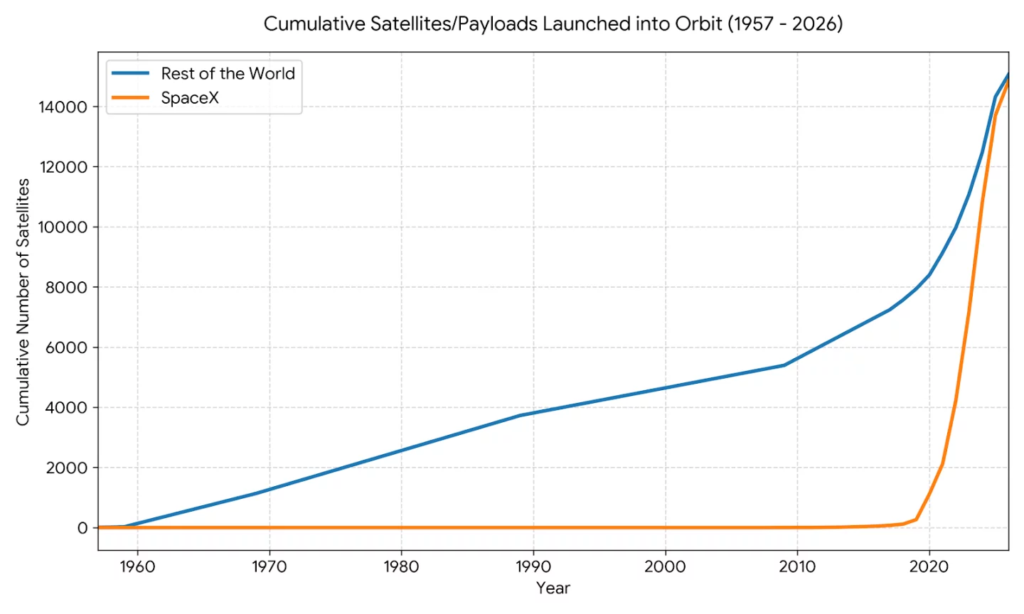
SpaceX has once again set the record for flying the largest and most powerful rocket in history. It’s also on the verge of launching more satellites than the rest of the world combined since Sputnik. Are we witnessing the beginning of a new Space Age? In many ways, SpaceX’s Starship rocket is a metaphor for the company as a whole. It’s an impressive piece of space hardware but it’s also deceptive when it comes to scale. You can go online and buy a desktop model of the vehicle and when you set it up away from any context of size you fail to grasp just how big and powerful this machine is. You don’t realize that the Starship Version 3 (V3) is the height of a 40-story skyscraper. At 408 ft (124 m), it dwarfs the Apollo Saturn V that only measured 363 ft (110 m). The Starship also has almost twice the thrust of the Moon rocket. Add in a payload of over 100 tonnes and Starship is a monster by any standard. Yet, unless you’re standing next to it, it can be hard to truly gauge its size. Orbital launches of SpaceX versus the rest of the world since 1957David Szondy/New Atlas It’s the same with SpaceX itself. When it was founded in 2002, it looked like a vanity project of a billionaire electric car maker. Many people still see the company as that, but the truth is that SpaceX went from nothing to the leading orbital launch provider on the planet in a remarkably short time. And the scale of this achievement is much, much larger than popular perception. Since the first Sputnik went into space in November 1957, all of the governments and private companies on Earth have launched an estimated 15,062 payloads into orbit. Starting a tad later in 2008, SpaceX has managed to shoot 14,844 payloads into space – almost equal to the total of the rest of the world combined. By the time you read this, the company may well have exceeded it. Starship Version 3 taking offSpaceX To this can be added technological innovations that the aerospace field now takes for granted. SpaceX was the first privately funded company to send a liquid-fueled rocket into orbit in 2008. It sent the first private spacecraft to dock with the International Space Station in 2012. Then there was the first powered landing of an orbital rocket first-stage booster in 2015. And in 2017 we saw the first reflight of an orbital rocket stage. Then in 2020, SpaceX sent the first private astronaut mission into space. Now, all of this is not to parade SpaceX’s achievements, though they are impressive. What is important is that the company isn’t some anomaly that could fade away tomorrow. It’s the harbinger of what could be a second Space Age – one that could make the first look like a 100-tonne, 15th-century carrack compared to a nuclear-powered, 70,000-tonne, Ro-Ro container ship the size of a small town. What has happened is that SpaceX is the first of a growing number of companies that are overturning and replacing the business models that have dominated the space sector since the beginning. Up until about 20 years ago, space launches were the reserve of national space agencies, the military, and a handful of large businesses. The pace of launches was at a steady cadence, averaging 95 per year worldwide at their height in the 1970s and ’80s. By the 1990s, it looked as if the exploitation of space would remain with national agencies like NASA, the Russian Space Agency, and the US Air Force; state consortia like Arianespace, China Great Wall Industry Corporation, and International Launch Services; or private companies Being Commercial Launch Services, and Lockheed Martin. It was a neat, stable model, with global launch numbers falling to just 55 per year by 2004. Today, the worldwide launch rate has risen to roughly 125 launches annually, with the number exploding in 2018. This dramatic increase isn’t due to just new technologies, but new business models that reject the assumptions of the first Space Age. Without going into too much detail, the fundamental shift was to stop treating every rocket launch as a dramatic one-off experiment built from scratch by teams of specialists. Rockets also ceased to be viewed as enormously expensive expendable vehicles destined either to smash into the ocean or remain abandoned in orbit forever. The new model involved making rockets simpler and simpler by changing the designs to include 3D-printed parts and other innovations to reduce the number of components, and then streamline the whole thing to make the vehicles more or less mass-producible. The other side of this was to aim toward making the entire launcher, ideally, fully reusable so it could be quickly refurbished and used again and again. After SpaceX introduced this concept, it was eventually able to reduce the launch costs to US$67 million per mission for commercial contracts and $150 million for NASA and the US Department of Defense. That’s an improvement over previous rates that could be as high as $1.5 billion per launch of the Space Shuttle. To this model was added other ideas, like vertical integration so that as much of the rocket-making process was in-house rather than dependent on outside vendors. Another was to diversify revenue beyond just shooting payloads into orbit. For example, many people believe that SpaceX gets most of its income from US government contracts. In fact, this makes up only 20% of its revenue. Most comes from the company’s Starlink data/communications services, with a constellation of over 7,000 active satellites and over 10 million subscribers in markets that were previously dominated by a handful of satcom companies providing limited coverage for astronomical rates. The Neutron rocketRocket Lab It’s an extremely successful model that other companies are imitating in their own ways, and one that will have far-reaching consequences in the next decade. One likely outcome is the erosion of the near-monopoly on US government national

Is SpaceX ushering in a new Space Age? Read More »

In a first, this animal hijacks the power of bioluminescence from its victims

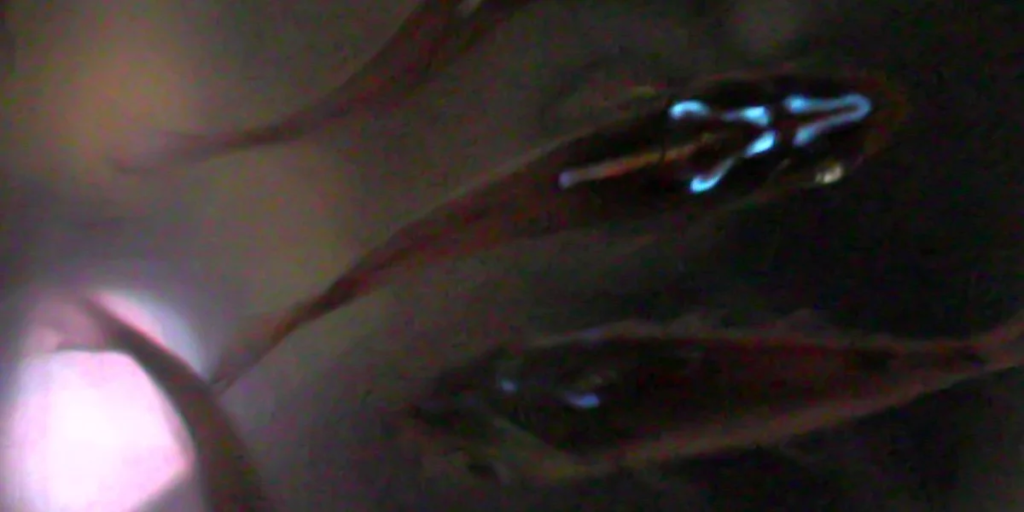
The rules of biology have been torn up by a small fish in the Pacific that steals light-producing molecules from its food in the only known example of kleptoproteinism. Researchers from Tohoku University in Japan have uncovered how the golden sweeper fish (Parapriacanthus ransonneti) glows despite missing a gene for luciferase, the enzyme critical for bioluminescence. Using advanced whole-genome sequencing, the researchers uncovered how these crafty 7-cm (2.8-in) fish “steal” light-producing molecules from their prey – a tiny ostracod, a crustacean known as a “sea firefly” – in an incredibly rare example of molecular thievery. Fish “Steals” Glowing Protein: Genome Sequencing Proves Unique Survival Strategyキンメモドキの発光 c美ら海水族館 In previous research, the scientists found that sea fireflies (Cypridina noctiluca) appeared to be critical to the glow-up seen in P. ransonneti fish. But it wasn’t clear whether the bioluminescence was triggered within the fish or if it was an external acquisition. Not only was the luciferase gene absent, but the team found no evidence that the fish had acquired it through horizontal gene transfer – the process by which DNA can occasionally jump between unrelated species. “These results provide compelling and conclusive evidence that this fish does not possess the genetic blueprint for bioluminescence,” says Manabu Bessho-Uehara, an associate professor at Tohoku University. “Instead, it relies entirely on proteins obtained from its prey, representing a truly unique form of biological adaptation.” Essentially, the fish has no way of making the enzyme it needs to glow, and it hasn’t borrowed the instructions to make it. “Taken together, we conclude that the ostracod luciferase gene is absent in the genome of P. ransonneti, supporting the hypothesis that P. ransonneti cannot produce luciferase by itself but instead sequesters and uses the luciferase from ostracod prey for its bioluminescence,” the researchers note. Instead, it targets a luminous prey species, extracting its fully formed luciferase protein, and then transports it to its own light organs. This method means it’s not an infinite glow, but the light is topped up with each feed. Ventral side of the P. ransonneti glowing blue. The enzymes and chemical molecules used for this bioluminescence cannot be synthesized (biosynthesized) by the fish; instead, they are ingested from their prayGovernment Park (Ocean Expo Park)/Okinawa Churaumi Aquarium While it may not seem like a big deal, this sort of phenomenon shows how resourceful nature can be. Conserving a gene that can produce bioluminescence can be energy-intensive – so the fish have basically outsourced the job. But then there’s more to this story. The bioluminescence isn’t used for attracting a mate or luring prey, but camouflage – which sounds counterintuitive. In dim, moonlit waters, predators beneath a school of P. ransonnetis can identify the silhouettes of the fish and pick them off. But when these thieving fish harness the power of their stolen light to glow from their organs, it cancels out their silhouettes. The strategy, known as counterillumination, is one of nature’s most sophisticated forms of concealment. It’s a fascinating – and extremely rare – example of how evolution has aided a species in developing the survival strategies it needs but can’t do on its own. So, rather than holding onto the genes needed to produce its own bioluminescent machinery, the golden sweeper has harnessed a way to “steal” the materials it needs for its “invisibility cloak”, saving the species energy and protecting them in the process. That is, as long as the fish can access a supply of sea fireflies. “The sequestration and use of prey protein, known as kleptoprotein, is reported only from Parapriacanthus ransonneti,” the researchers note. “Our findings revealed that the acquisition of the function of the prey organism can be achieved without horizontal gene transfer. The molecular mechanisms underlying protein sequestration are not elucidated yet. The genome sequence of P. ransonneti provides a fundamental source to understand the evolution of kleptoprotein bioluminescence.” The research was published in Scientific Reports. Source: Tohoku University Fact-checked by Mike McRae source

In a first, this animal hijacks the power of bioluminescence from its victims Read More »

Meta launches paid subscriptions across Facebook, Instagram and WhatsApp

Meta is rolling out paid subscription offerings across its platforms, including Facebook, Instagram and WhatsApp, as the tech giant looks to deepen monetisation efforts beyond advertising. The announcement was made by Naomi Gleit, head of product at Meta, in a video posted on Instagram. Dubbed Facebook+, Instagram+ and WhatsApp+, the subscriptions will introduce enhanced features aimed at helping users “express and connect” across Meta’s apps, according to Gleit. “We’re starting to roll out Facebook+, Instagram+, WhatsApp+, with enhanced features that our community already loves,” she said in the video. Don’t miss: Meta cuts jobs across APAC as AI restructuring deepens Gleit added that Meta is also testing additional subscription tiers designed for creators, businesses and users of Meta AI and its AI glasses ecosystem. According to her, the upcoming plans for Meta AI users will offer “more capacity, bigger, more complex requests, and more room to create”. Meanwhile, creators and businesses will gain access to premium tools intended to “enhance presence, supercharge content, automate tasks, and protect your brand”. Meta is also exploring a unified subscription umbrella called “Meta One”, which could eventually bring together the company’s various paid offerings across its ecosystem. “You may see us testing subscriptions under the name Meta One,” Gleit said, adding that the company is still “testing and learning”. The move marks Meta’s latest push to diversify revenue streams as competition intensifies across social, creator and AI platforms. It also signals the company’s growing focus on premium experiences tied to AI capabilities and creator tools. In the caption accompanying the video, Meta said Instagram Plus, WhatsApp Plus and Facebook Plus are “rolling out globally”, with more plans expected for creators, businesses and “Meta AI power users”. According to media reports, Meta’s subscription push also includes paid AI tiers under the broader “Meta One” programme. The company is expected to begin testing Meta AI subscriptions in Singapore, Guatemala and Bolivia from June. Reports added that Meta One Plus will cost US$7.99 per month, while a higher-tier Meta One Premium plan will be priced at US$19.99 per month. The subscriptions are aimed at frequent users of Meta AI’s image, video and reasoning tools. MARKETING-INTERACTIVE has reached out for more information.  The latest rollout builds on Meta’s earlier experiments with premium social features. In April, the company began trialling Instagram+ in select markets. The subscription tier reportedly included features such as anonymous Story viewing, Story rewatch analytics, unlimited custom audience lists and the ability to extend Stories for an additional 24 hours. Subscribers could also spotlight one Story per week to boost visibility by pushing it to the front of followers’ Stories trays. Related articles:   Meta’s AI ad machine powers 33% revenue surge as new campaign connectors roll out Meta APAC head of comms for product and partnerships steps down  Meta set to overtake Google in global digital ad revenue source

Meta launches paid subscriptions across Facebook, Instagram and WhatsApp Read More »

Featherlight bike trailer carries cargo up to 9 x its own weight

Most people don’t give a lot of thought to bike cargo trailers … they think of the things as being just little towed carts. The Veolo Bike Trailer 2.0, however, is likely one of the lightest, smoothest-running, most well-appointed offerings you can buy. Currently the subject of a Kickstarter campaign, the Veolo 2.0 was created by German cyclist/industrial designer Johann Schmidt. And yes, there is indeed a 1st-Gen Veolo. It’s no slouch itself, although the 2.0 is lighter (6.7 kg/14.7 lb vs 8.5 kg/18.7 lb), differently proportioned, more focused on modularity, plus it now features an “ecosystem” of accessories. All loaded up and ready to goVeolo It sports a 6061 aerospace-grade aluminum frame with 45 mm of elastomer suspension for each of the two wheels. Those wheels are clad in Kenda 20 x 2.10-inch tires, and they can be quickly removed from the trailer for storage via QuickLock hubs. Loads sit on a Batyline textile mesh insert, reinforced with hypalon and carbon fiber in high-stress areas. There are numerous anchor points, strapping leashes, and Fidlock magnetic attachment points for securing cargo of various shapes and sizes, which can weigh up to 60 kg (132 lb) – it is worth noting that the heavier original-model Veolo can handle loads of up to 80 kg (176 lb). Loads sit on a textile mesh insertVeolo The trailer’s drawbar is connected to the bike’s rear axle via a patented ball-and-socket QuickMount system, which just pops in and out of place in about one second. Backers can chose between a standard Base drawbar, a Long model for towing longer loads, or a Multifunctional model that swivels upwards to let them tow it by hand. And then there’s that ecosystem of stuff-carrying accessories … Options currently include a 180-liter soft-sided bag, a 220-liter lockable box, a set of load bars for carrying long loads, and a mesh-sided dog carrier, all of which mount securely to the trailer. Assuming everything works out, a pledge of €490 (about US$572) will get you a Veolo Bike Trailer 2.0 of your own – the planned retail price is €750 ($875). Pledges for the accessories range from €179 ($209) for the bag up to €269 ($314) for the dog carrier. Veolo Bike Trailer 2.0 – high performance & modularity Source: Kickstarter source

Featherlight bike trailer carries cargo up to 9 x its own weight Read More »

Telescoping recumbent e-trike is like a carbon fiber cannon

As it is, a recumbent trike is something that may already get you noticed. Add tilting wheels, and it’ll draw even more attention. But with its telescoping carbon-fiber-tube body, the Allroadracer TriX is sure to turn heads wherever it goes. Currently in the preproduction phase, the TriX was invented by German cyclist/entrepreneur Ahmad Omari. He recently showcased the vehicle at the Spezi International Special Bikes Show. Like a lot of three-wheelers, it utilizes a linkage that allows the wheels to tilt when cornering (by up to 27 degrees), thus boosting stability. Each front wheel can also independently travel vertically by as much as 260 mm, plus there’s a rear shock with 120 mm of travel, facilitating smooth and level travel over rough and uneven terrain. The TriX measures 185 cm long by 92 cm wide by 92 cm high (72.83 by 36.22 by 36.22 inches) – the non-carbon parts of its frame are made of aluminumAllroadracer And yes, then there’s that carbon-tube body. The TriX’s chain runs internally through a boom-style carbon fiber tube that telescopes out horizontally to fit the body size of the rider. That chain extends to a mid-mount 250-watt hub motor that delivers 90 Nm (66 lb ft) of torque, boosting the rider’s pedaling power. A second chain runs from that motor to the rear wheel, which is equipped with an Enviolo AutomatiQ continuously variable hub transmission. The motor is powered by the buyer’s choice of a 500- or 800-Wh lithium-ion battery, which is mounted on the back of the seat. We’re told that range is approximately 70 to 100 km (43.5 to 62 miles), respectively. The Allroadracer TriX’s chain runs through a carbon fiber boom-type body – although future models may not even have a chainAllroadracer Some of the TriX’s other specs include 24 x 2.40-inch tires, hydraulic disc brakes, a maximum rider/cargo capacity of 120 kg (265 lb), and a claimed total weight of 25 kg (55 lb). Omari tells us that he plans to start by producing a Europe-only Early Adopter run of 10 units, as soon as he has binding preorders for them. This will involve receiving €5,000 deposits toward the full price of €10,000 (about US$11,634) plus shipment and VAT. Overseas availability will follow, but some big changes will be made in those vehicles. “For overseas, the Allroadracer TriX will be delivered in a kit, which is 80% pre-assembled. To make the remaining 20% failsafe and easy to assemble, I’m planning a modification to the powertrain,” says Omari. “Particularly, I’m planning to switch to a chainless powertrain, meaning there will be a [wireless] pedal generator in the front, and a hub motor on the rear wheel. The system will simulate a chain, without using a chain.” In fact, ICE Trikes recently debuted just such a pedal-by-wire system on a number of its own recumbents … so it’s definitely more than just a concept. You can see the Allroadracer TriX in action – with its current chain-drive drivetrain – in the following video. Allroadracer TriX recumbent e-trike Source: Allroadracer source

Telescoping recumbent e-trike is like a carbon fiber cannon Read More »

Inside MAD’s stunning spiral-cloud science museum

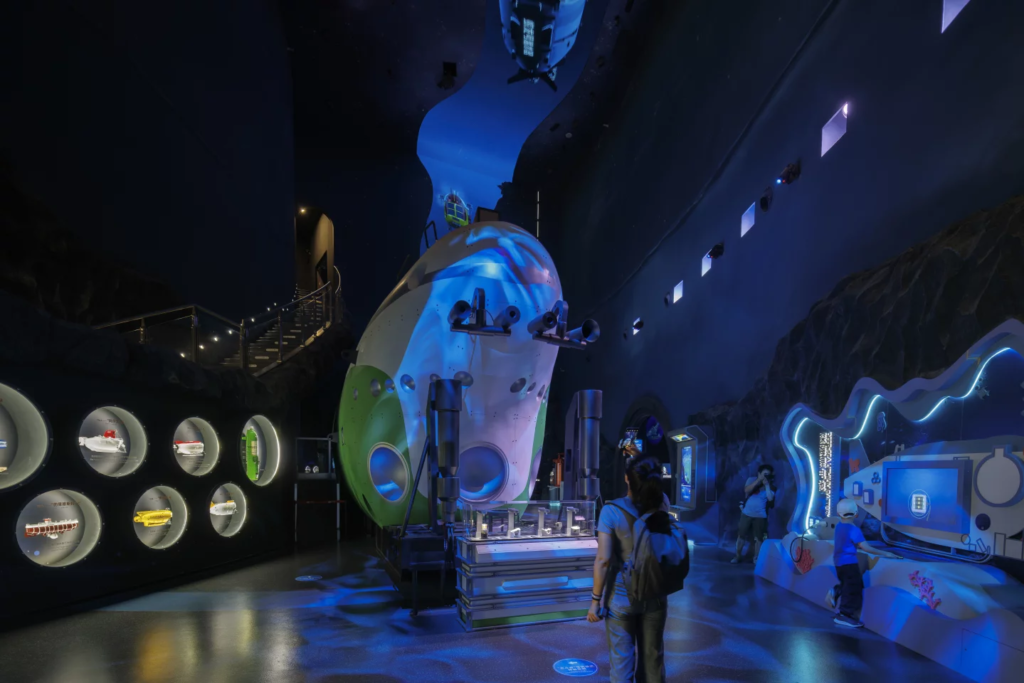
Recently completed in Haikou, China, the Hainan Science Museum is an impressive 46,528-sq-m (500,823-sq-ft) cultural hub for science and technology education. Designed by lead architect Ma Yansong, from MAD architects, the museum is positioned at the edge of the Wuyuan River National Wetland Park. From the exterior, the building resembles a soft cloud-like volume. The facade is assembled from 843 fiber‑reinforced plastic panels, each shaped and detailed to withstand Hainan’s tropical climate. The result is a reflective silver envelope that shifts with cloud cover and time of day. This isn’t just a museum, it’s an invitation to exploreArch Exist Three concrete cores bear the primary loads of the museum, freeing the gallery floors from interior columns and enabling long, uninterrupted exhibition spaces inside the museum. This structural decision allows the museum’s mass to be cantilevered over reflecting pools and a covered plaza, creating a series of public spaces beneath the overhang, where locals can gather and enjoy the location without the need to enter the facility. Shaded from the sun and open to breezes from the wetland, the plaza functions as a meeting ground for the neighborhood: parents waiting at pickup time, students gathering before workshops, and residents simply cutting through on their way elsewhere. Inside, the museum boasts a planetarium, giant-screen theater, exhibition zones, and landscaped outdoor teaching plots organized around regional species and observable plant phenomena. Visitors are typically brought by elevator to the uppermost exhibition level and then follow a broad, gently descending ramp that coils around a central void. Every curve designed to spark imaginationArch Exist A large opening in the roof brings daylight deep into this atrium, so the path is continuously lit from above. On one side, tall windows frame views of the surrounding greenery; on the other, the route passes a sequence of galleries and activity spaces. “I wanted the project to be built on the idea of flow and chaos – space, function, and knowledge to flow into one another, freely,” says Ma Yansong. “If artificial intelligence can already answer almost any question, a science museum’s job is no longer to deliver facts. It is to teach children how to ask them.” A museum designed for wandering minds and future innovatorsArch Exist This ambition shapes both the open exhibition sequence and the way topics slide into one another, encouraging wandering and cross‑connection, rather than linear lesson plans. The museum also sits within a wider scientific landscape. Hainan Island hosts China’s coastal space launch center on its eastern shore, with dozens of missions to orbit, the Moon, and Mars since 2016. The new institution positions those achievements not as distant spectacles but as part of a local story, set within walking distance of more than 30 schools and kindergartens. Source: MAD source

Inside MAD’s stunning spiral-cloud science museum Read More »

Wild sleeping bag goes atomic with adaptive insulation tech

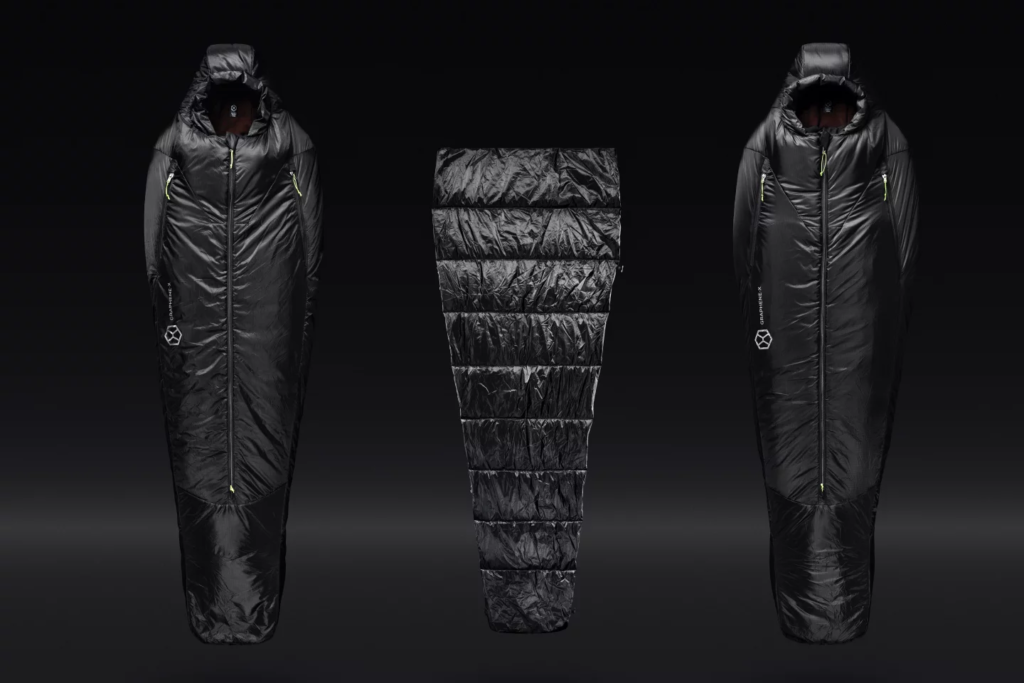
Graphene-X is a Hong Kong-based company that produces outdoor clothing and gear. This time around it’s entering the camping market with a product called the Tardigrade Sleeping System, currently available for backing on Kickstarter. The product is named after the tardigrade – a tiny organism famous for being one of the toughest life forms on Earth, capable of surviving temperatures between -272 °C and 150 °C (-458 °F and 302 °F). The new sleeping system from Graphene-X might not match that extreme range, but it’s promised to offer a good solution for both summer and winter camping. The complete Tardigrade Sleeping SystemGraphene-X With so many sleeping bags already available, it may seem like there’s little room for innovation. The team at Graphene-X sees this market differently though. The company argues that choosing the right sleeping bag still comes with a lot of compromises. And this is a fair point: a high-quality bag can be quite expensive, and we understandably expect a lot from it. Ideally, every camper wants a single solution that works across all seasons instead of buying several separate bags. And this is the main inspiration behind the Tardigrade Sleeping System. It’s not a single product, but rather a modular system that combines three components: Tardigrade Extreme – a winter-oriented sleeping bag rated down to -30 °C (-22 °F) and weighing 1.9 kg (67 oz) Tardigrade Lite – a lighter three-season sleeping bag rated down to -10 °C (14 °F) and weighing 1.4 kg (49 oz) Modular Cover – a thin layer with 150 g/m2 Graphinsulate fill that can be attached inside either sleeping bag using buckles for extra warmth. It weighs 334 g (12 oz) The biggest challenge was to make the whole system adaptive to different conditions, and that was achieved through a smart combination of materials. It involves two key technologies: Graphinsulate insulation and WAI (Weather Adaptive Insulation). Graphene is a one-atom-thick layer of carbon atoms arranged in a hexagonal structure. This material is incredibly strong and conducts heat very efficiently. It has a better warmth-to-weight ratio than down insulation and maintains its quality after multiple washes. The second important component is aerogel, an ultra-light material made by removing the liquid from a gel and replacing it with air. Because of its low density and strong insulating properties, it has been used in space missions by NASA. The aerogel fibers used in the sleeping bagGraphene-X The creators of Tardigrade integrated aerogel into polyester fibers by filling special internal fabric tubes with it. Those tubes can inflate or deflate depending on the temperature outside. This is part of the WAI system, which allows the sleeping bag to adapt to different weather conditions without becoming heavy or bulky. There are several additional features worth mentioning. One of the priorities for the team was to create a product that feels more like sleeping in a bed rather than in a sleeping bag, so a lot of effort went into reducing typical inconveniences. Sleeping in a traditional bag often feels like being in a cocoon where you can’t move freely, and need to unzip the whole thing to reach your phone or water bottle. To address this, Tardigrade features zippers just for the arm areas, so cold air doesn’t enter the bag as quickly. The sleeping bags stuff down into an included compression packGraphene-X Another common issue is sliding off the sleeping pad, and this was solved by adding stretchy hoops to the bags to hold the inflatable mattress underneath. Both versions (Extreme and Lite) are compatible with mattresses measuring 220 x 56-65 x 8 cm (86.6 x 22.0-25.6 x 3.1 in). Both sleeping bags come in the same size, measuring 210 x 80 x 50 cm (82.7 x 31.5 x 19.7 in). Tardigrade sleeping bags also feature an additional graphene layer at the foot end for added warmth, and an internal pocket. Early Kickstarter backers can get all three components for US$629, with a planned retail price of $979, or purchase them separately: Lite for $249, Extreme for $359, and the modular cover for $109. A compression packing bag is included in each system. Assuming the campaign is successful, shipping will begin in November. Tardigrade Sleeping System Source: Kickstarter Note: New Atlas may earn commission from purchases made via links. source

Wild sleeping bag goes atomic with adaptive insulation tech Read More »

Nike and BTS team up for global merchandise blitz

Nike is partnering with global pop music icons BTS to debut a first-of-its-kind “Nike by you” customisation experience alongside an exclusive merchandise collection for the group’s upcoming BTS WORLD TOUR “ARIRANG.” The initiative blends experiential retail with tour merchandise to create a cohesive collection celebrating BTS’ creative journey. The partnership aims to provide global fans with unique, interactive touchpoints for self-expression and fandom. At the core of the collaboration is the “Nike by you” experiential retail activation, which features 10 custom graphics designed specifically for the band. The initiative allows consumers to co-create and personalise select Nike apparel and tote bags. According to the brand, each graphic incorporates expressive shapes and fluid movement meant to mirror the evolution of BTS’ musical artistry. The accompanying tour merchandise includes exclusive T-shirts, hoodies, and a South Korea-exclusive cap. The collection’s visual identity relies heavily on typography, featuring custom wordmarks and bold, energetic forms unique to the band. Furthermore, select customisation designs place emphasis on the number seven—symbolising the seven members of the group—while other graphics reference musical bars and measures to underscore the band’s cross-generational appeal. The customisation experience will launch 1 June at select Nike stores globally, and will be available at select retail locations in Hong Kong on 27 February 2027. Nike x BTS tour merch will be available in select cities on the BTS WORLD TOUR “ARIRANG”, arriving in Hong Kong at select retail locations on 10 July and 26 February 2027. The creative direction of the collection focuses on balancing the band’s shared cultural heritage with a future-forward mindset, tapping into the lucrative market of concert-going fashion and fan merchandise. MARKETING-INTERACTIVE has reached out to Nike for more information. Beyond sports brands, snacking giant OREO is also capitalising on K-pop fandom culture with its own major global collaboration with BTS, unveiling a limited-edition cookie inspired by Korean street food and fan engagement traditions. The campaign, which will roll out across more than 80 markets, introduces the “Limited edition OREO & BTS cookies”, a brown sugar pancake-flavoured OREO inspired by hotteok, a popular Korean street snack. Mark your calendars for 24 June! #Content360 Hong Kong returns with a dynamic, one-day event dedicated to pivotal trends—from the silver economies to breakthrough IP collaborations, sports, and beyond. Let’s dive into the art of curating content with creativity, critical thinking and confidence! Related articles: STB bets big on K-pop with SG showcase in BTS Jin’s next music videoNike unveils horror-themed brand identity to reshape football’s future source

Nike and BTS team up for global merchandise blitz Read More »