Olight torch throwdown: One of these slim flashlights is our new go-to

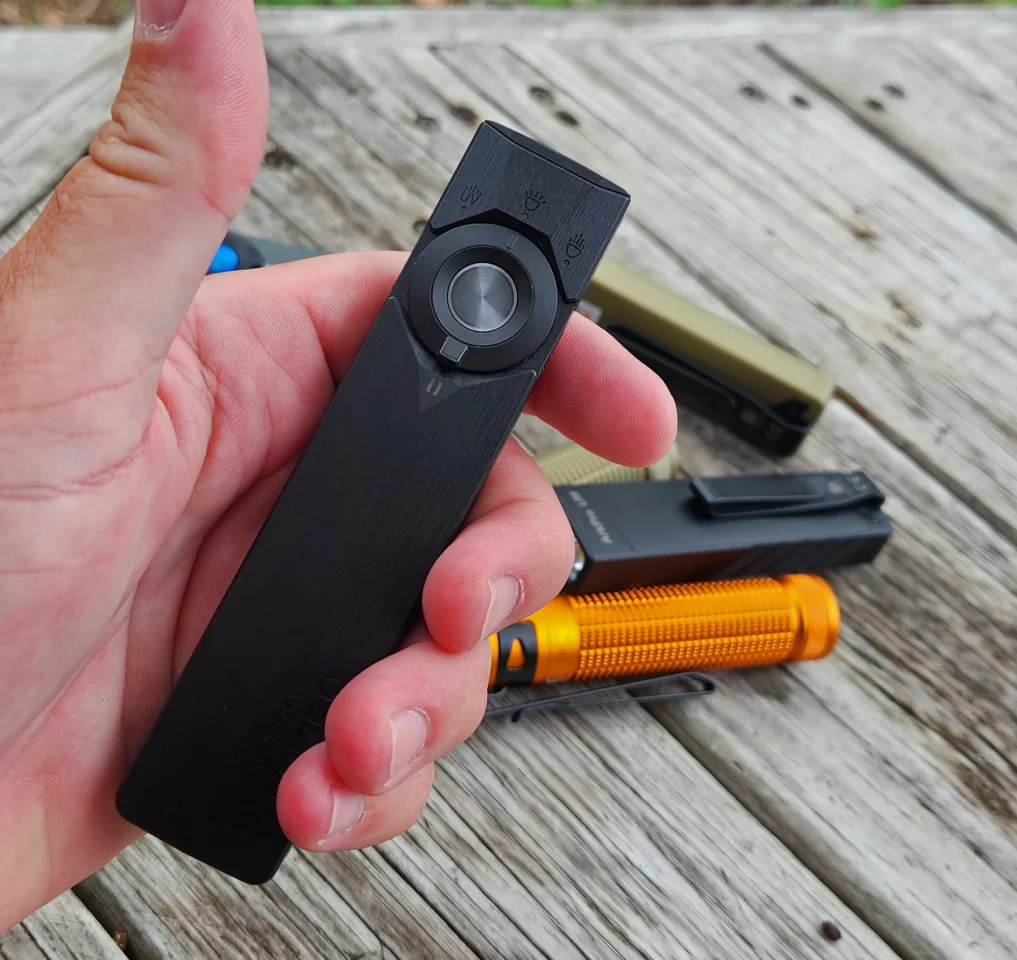
I’m a bit of a flashlight hoarder. Bike lights, work lights, EDC lights, head lamps, even night vision … I have far too many, but try as I might, I can’t seem to get rid of them. Olight asked if I wanted to review the ArkPro and the Baton 4, and my eyes turned to saucers. Olight sent me all three versions of the ArkPro (Ultra, Standard, Lite) and both of the Baton lights (Ultra and Pro). And for full transparency, we did not get paid to write this, but we will earn commission should you decide to buy one using our links. That doesn’t affect my thoughts below. For the main purposes of this review, I’m going to talk mostly about the Ultra versions of each. Right off the bat, this little ArkPro torch is different: it’s rectangular, which sounds weird right up until you actually hold it, and it just feels right. Not to mention how much more comfortable it is in your pocket, right up to the point you forget it’s even in there. It’s about 4.9 inches (124 mm) long and weighs in at 4.23 ounces (120 g), though the ArkPro Lite version is about a quarter-inch shorter (6.4 mm). The ArkPro Ultra is a perfect fit in my handJS @ New Atlas It’s made from “OAL,” which is some sort of proprietary aluminum that Olight says is super-duper tough. Olight states that it’s “1.73x harder than 6061 aluminum, 1.73x more tensile strength than TA2 titanium, and 1.44x the yield strength of TA2 titanium.” I have no means of verifying any of those claims, but I can tell you that it feels strong, it’s lightweight, and it’s weirdly hard to scratch. I watched SensiblePrepper take a key, knife, and drill bit to ’em in a torture test. Looked like a pass to me. It’s bright. The Ultra is cracking out a 1,700-lumen rating in “Turbo” flood mode for 3 minutes before it steps down to standard “high” mode at 520 lumens for another 140 mins. That’s real bright. Even at 520 lumens. And it’s equally dim when you need dim with its “moonlight” mode, which is a single lumen’s worth of light that’ll last 14 days on a single charge. That’s proper emergency-light status – like being stuck in a pitch-black flooded cave, waiting for rescue … one lumen is a lot more comforting than none. I tried to lock exposure on my phone’s camera to keep everything level. As you can see, the ArkPro Ultra is brighter overall, but more importantly, the Ultra has 10,640 candela whereas the Lite is 2,225 candela … meaning the Ultra has over double the throw than the LiteJS @ New Atlas The ArkPro (non-Ultra) is rated to 1,500 lumens max, while the cheapest of the line, the ArkPro Lite, still cracks out a solid 1,200 lumens in Turbo. If you know you’re not going to be around a charger but still need a fair bit of light, high mode will last you between 125 and 155 minutes – mostly depending on spot vs flood – across all three ArkPro models. They will get a little toasty on the business end when you’ve got it bright. Fortunately, the ArkPro has a button lockout to prevent accidental heating of your giblets via your pockets. The ArkPro and ArkPro Ultra both feature UV light, spot, flood, and green laser modes. Both the UV and the green laser have two levels of brightness adjustability, while the spot and flood have five levels, plus a strobe feature. The ArkPro Lite, on the other hand, drops both the laser and the dedicated flood mode in favor of a red light. I do love the red light that’s only on the ArkPro Lite modelJS @ New Atlas It’s a pity that the Ultra and the standard model skipped the red light. A good red beam genuinely comes in handy for keeping your night vision while out in the wild, or even just for trying not to disturb your fellow campers when you wake up at 3 AM to water a tree. The red light alone makes the cheapest of the three lights maybe the best option if you don’t need a laser or flood beam. Sure, it’s less lumens overall, but I sure do like that red light. All three versions have a UV light, which is a lot of fun, right up until you use it to inspect the bathroom of the $200-a-night hotel you’re staying at. Then it’s much less fun … sometimes you’re just better off not knowing. Where it is fun, on the other hand, is snipe hunting with the kids at night. So far, we’ve only found jellyfish and scorpions. Oh, and I found where the leak in my car’s AC was coming from, too. The shoreline is pretty fun with the ArkPro’s UV light. I wish it were a little brighter/stronger, but it’s still good fun.JS @ New Atlas The side button on the two pricier ArkPro models is for the green laser. It’s not the most powerful green laser I’ve ever used, but it’s still good enough to see in the daylight for jobsite use, etc., let alone for pointing out which stars and constellations you’re telling your kid about on a camping trip. Outside of testing how good the laser is, I haven’t really had any uses for it, but it’s neat to have. It also works while using the spot, flood, or UV beam. I guess that’s cool? Um … yeah, that’s a laser on the ArkPro and ArkPro UltraJS @ New Atlas One thing that I don’t really care for is the magnetic charger – Olight’s proprietary magnetic puck that snaps to the bottom of the also-magnetic flashlight to charge. I may be the outlier on this too. But one drop of the flashlight into sand or dirt and it’s going to pick up iron dust and grit stuck to the bottom of it. That

Olight torch throwdown: One of these slim flashlights is our new go-to Read More »
This 'beginner' electric moto costs $38K, and I'm confused

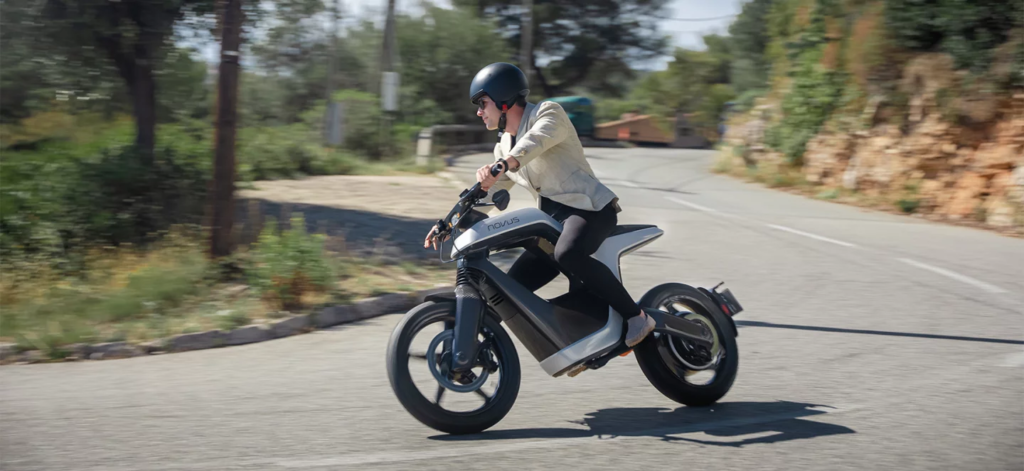
Usually, when you’d talk about beginner motorcycles, you’d think of lightweight, low-speed, and most importantly, low-cost options – of which there are plenty. In the electric segment, although prices jump a bit compared to their ICE counterparts, entry-level e-motos largely follow the same script. Not this one, though. For starters, the Novus One is priced at €31,951.50 (around US$38,000). That’s not the kind of money I see beginner riders shelling out for a motorcycle. Granted, there’s a more affordable “Founder’s Edition” that costs €25,347 (around $30,000), but even that’s not exactly cheap by any stretch of the imagination. So what’s happening here? Is there some kind of tech we’re seeing for the first time on motorcycles? Or the use of precious metals that we’re not aware of? The Novus One boasts a 0–30 mph time of under 2 secondsNovus Well, let’s look at all that the motorcycle offers. For starters, the Novus One is positioned between an e-bike, a scooter, and a motorcycle. It apparently combines the lightness of an e-bike, the maneuverability of a scooter, and the performance of a motorcycle. The design is what grabs your attention at first sight. That hollow body does indeed look cool, but it’s not like we haven’t seen it before. What’s definitely cool is the fact that the monocoque frame, swingarm, fork, and rims are all made entirely of carbon fiber. It doesn’t sport any fairing like a traditional motorcycle, following what Novus calls a “one-piece” design language. The frame itself weighs just 15 lb (6.9 kg) while being more rigid than conventional steel or aluminum frames. That results in the motorcycle weighing a total of 266 lb (121 kg). Powering the One is a high-torque (295 lb-ft / 400 Nm) transverse flux hub motor from GKN, which boasts “unequalled torque density and efficiency.” This essentially translates to performance that “easily surpasses comparable 125cc machines,” capable of speeds up to 80 mph (130 km/h) and a 0–30 mph (48 km/h) time of under 2 seconds. Charging through a fast charger takes you from 0 to 80% in 1.5 hoursNovus That motor is paired to a 5.5-kW battery that offers anywhere between 80 and 93 miles (130 and 150 km) of range. As for charge times, you can go from 0 to 80% in 1.5 hours through fast charging, or 2.5 hours through a basic charger. Keep in mind, Novus offers the One in two trims: The Base model that’s limited to producing 7 kW (peak) of power, with a top speed of 56 mph (90 km/h) and a range of up to 193 miles (50 km). Then, there’s the God, which produces up to 25 kW of power for a top speed of 75 mph (120 km/h) and a range of about 83 miles (135 km) per charge. What’s fascinating is that the Novus One’s actual performance lands surprisingly close to bikes costing one-third as much. An $8,000 Ryvid Anthem or a $10,000 Maeving RM1S will deliver broadly similar urban usability, while the $12,500 Zero FXE absolutely demolishes it on power-per-dollar. Step up to the $10,000 LiveWire S2 Del Mar, and you’re looking at more than double the horsepower for almost less than a quarter of the money. The Novus One weighs all of 266 lb (121 kg)Novus Part of that expansive cost is down to one key reason. Everything from development, design, and assembly is done in Braunschweig, Germany. Then, most of the components are predominantly sourced from Europe: carbon fiber from Austria, the motor from Switzerland, the chassis from Belgium and Italy, and the battery from the Czech Republic. Currently, you can go ahead and configure and order the bike if you’re in Europe. There’s also a broad market launch planned in the days to come, with a plan to launch in countries like the USA and the United Arab Emirates by 2027. And even though it looks cool and approachable, is largely beginner-friendly with modest performance, manageable weight, and a focus on urban mobility, I’d still have doubts about going for the Novus One. That’s because it carries a price tag that plants it squarely in the same financial universe as exotic motorcycles, high-end adventure bikes, and even a few sports cars. For $38,000, most riders aren’t shopping for a first motorcycle; they’re shopping for a dream motorcycle. The Novus One costs €31,951.50 (around US$38,000) for the top-spec modelNovus And to be fair, it doesn’t look like Novus has built this for the average Joe. The carbon-fiber monocoque frame, minimalist aesthetic, and boutique production approach make it feel more like something you’d find in a modern art gallery than a dealership showroom. Viewed through that lens, the sticker price starts to make a little more sense – though not necessarily any easier to justify. And maybe that’s why I’m still conflicted. I can appreciate the engineering, admire the craftsmanship, and understand the appeal of owning something few people will ever see in the flesh. But calling it a beginner motorcycle feels a bit like calling a limited-edition Swiss watch a starter timepiece. Source: Novus source

This 'beginner' electric moto costs $38K, and I'm confused Read More »

Perplexity eyes 2028 IPO

Perplexity is planning to go public in 2028, regardless of how investors respond to the upcoming listings of Anthropic and OpenAI, according to comments made by CEO Aravind Srinivas in an interview with CNBC. Srinivas reportedly said the company’s IPO plans remain unchanged despite growing attention on a wave of anticipated AI public offerings. He had previously indicated that Perplexity did not intend to pursue a public listing before 2028. The CEO reportedly stated that the performance of listings from other competitors could have broader implications for the AI sector, adding that successful debuts would be positive for the wider industry.  Don’t miss: CNN reportedly sues Perplexity over alleged AI copyright infringement Srinivas also defended the high valuations attached to frontier AI firms such as Anthropic and OpenAI, saying that their position at the forefront of AI development continues to justify investor confidence, though a sustained slowdown in model innovation could put pressure on those valuations. The Perplexity chief also touched on changing enterprise attitudes towards AI spending. He reportedly said businesses are becoming more selective about how they deploy AI models, prioritising performance and cost efficiency rather than simply increasing usage. He added that lower-cost open-source models could increasingly play a role where they are able to deliver comparable results, suggesting that enterprise AI spending is likely to become more measured over time. Perplexity’s plans come amid a growing wave of AI companies positioning themselves for public markets. Last week, Anthropic confidentially submitted a draft registration statement for a proposed IPO to the US Securities and Exchange Commission (SEC), giving the company the option to go public once the regulator completes its review process. Shortly after, OpenAI also confidentially filed a draft registration statement with the SEC, describing the move as part of what its leaders see as the company’s “third phase” of evolution. While OpenAI has not committed to a timeline for a potential listing, it said the filing provides flexibility to pursue a public offering should it decide that going public is in the company’s best interests. Related articles: OpenAI reportedly plans ChatGPT ‘superapp’ overhaul   Anthropic builds Singapore footprint with hiring push  Inside Claude Design, Anthropic’s bid to reinvent creative work source

Perplexity eyes 2028 IPO Read More »

World-first hydrogen-powered 'gas station' for ships passes key trials

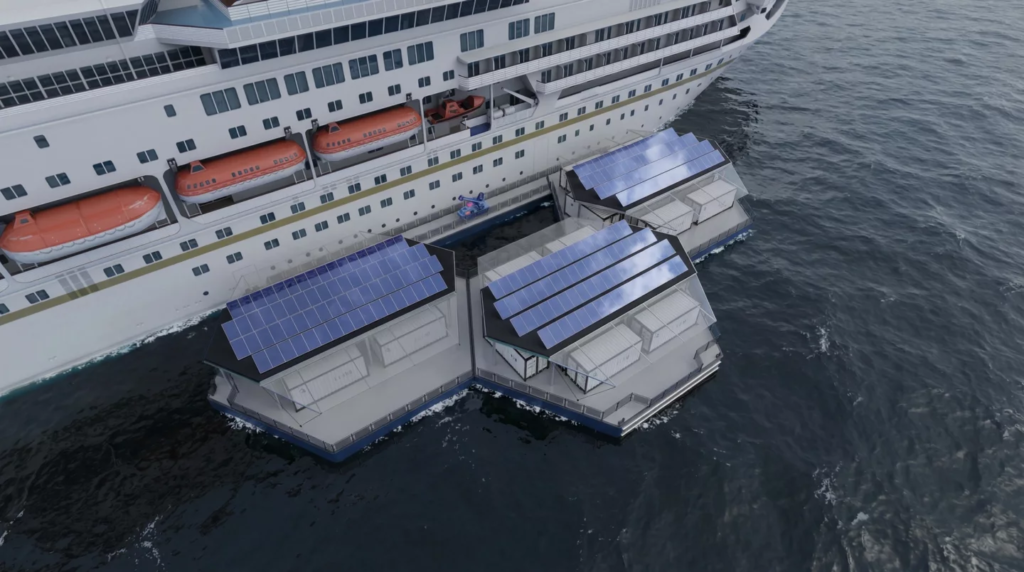
Retrofitting a port berth with shore power can take anywhere from three to seven years of permitting, construction, and grid upgrades. Now, a UK company has developed a floating hydrogen-powered platform and can make that wait disappear without having to move a single brick. The Hydrogen Power Hub, a modular floating platform developed by a UK-led consortium headed by Elire Maritime, has cleared six months of engineering trials, removing the last technical barriers before commercial deployment. The system can dispatch up to 5 MW of continuous clean power directly to a docked vessel while it sits at berth – no grid connection, no port construction required. The platform is built from three hexagonal modules that together cover around 1,200 sq m (12,917 sq ft). At full capacity, it can supply 91 MWh of energy per week, enough to serve mid-size cruise ships. The core of the system is a set of 1.3-MW modular hydrogen fuel cells – essentially electrochemical devices that convert hydrogen gas into electricity through a chemical reaction, with water as the only byproduct. The Hydrogen Power Hub covers around 1,200 sq m across three modulesElire Maritime Those fuel cells run continuously, consuming between 7,500 and 8,000 kg (16,535 and 17,637 lb) of hydrogen per week, slowly charging a 45-MWh onboard battery bank. When a ship pulls up, that stored energy can be discharged rapidly like a giant power bank. An onboard solar array generates up to 146 kW of additional power, giving the platform some autonomy between hydrogen resupply visits, which happen roughly twice a week by support vessel. Docked ships are some of the dirtiest neighbors a port city has. Their diesel auxiliary engines keep running, burning fuel and pushing exhaust over the surrounding city just to keep the onboard systems alive. The Hydrogen Power Hub cuts port emissions by 77% compared to those conventional diesel generators, saving an estimated 47 tonnes of CO2 per ship per week and eliminating the particulate pollution that drifts over surrounding cities. One of the more novel technical bets is the hydrogen storage system developed by Rux Energy UK, which uses nanoporous materials – materials riddled with microscopic pores that trap hydrogen molecules – to store the gas compactly and at low pressure. That’s a meaningful safety and logistics advantage over high-pressure tank alternatives. Onboard hydrogen tanks require a resupply vessel roughly twice a weekElire Maritime The University of Strathclyde stress-tested the designs in wave tanks to verify structural integrity and inter-module connectivity under storm conditions. Schneider Electric and Ricardo plc independently verified that the electrical architecture can operate fully off-grid and that hydrogen integration meets safety standards. Engineers found no technical barriers to full construction. Its main downside is price. According to Elire, hydrogen-generated electricity from this platform is estimated at £0.25–0.50 per kWh (around US$0.33 to $0.67), compared to £0.15–0.25 (~$0.20 to $0.33) for grid power or diesel – roughly two to three times more expensive. But the platform’s proponents argue that speed and flexibility change the equation. It can be assembled, deployed, and relocated as shipping routes shift, avoiding the risk of expensive fixed infrastructure becoming stranded. “Ports are under increasing pressure to decarbonize while facing major infrastructure constraints,” said Luke Jenkinson, founder and CEO of Elire Maritime. “We have validated a practical, scalable, and deployable system capable of delivering clean power directly where it is needed most.” The consortium, funded through the UKRI Clean Maritime Demonstrator Competition Round 6, has entered early stage engagement with ports in London, Singapore, Hamburg, Brisbane, and Riga – ports already under regulatory pressure to cut emissions but unable to pause operations for years of construction. Source: Elire Maritime source

World-first hydrogen-powered 'gas station' for ships passes key trials Read More »

MCP新都城中心無間足本直播世界盃 首日賽事吸過百球迷齊聚商場觀賽

重點 首創「足球點心車」、免費派發港式咖啡奶茶 「夜晨經濟 × 離峰行銷」雙重策略 強勢聯動跨界別及商戶  提升夜間及早晨時段營運效益  預計帶動人流及營業額雙位數升幅 恒基兆業地產租務(二)部總經理陳德鳴先生表示:「今屆國際足球盛事的觀賽時段主要集中於深夜至早晨,MCP新都城中心特別以『離峰行銷』策略引領『夜晨經濟』。從開鑼首日的現場反應可見,商場透過 24 小時開放觀賽區、強勢聯動跨界別及場內商戶的策略非常成功,今早賽事更吸引了大量本地球迷及年青人流進場,有效拓展不同時段的消費潛力。在全城足球熱潮與首波全方位宣傳攻勢帶動下,我們對整個活動期間的表現充滿信心,預期商場整體人流及營業額將錄得雙位數增長,當中以運動用品及餐飲商戶表現尤其令人期待。」 LinkedIn Email Facebook Twitter WhatsApp The post MCP新都城中心無間足本直播世界盃 首日賽事吸過百球迷齊聚商場觀賽 appeared first on VeriMedia. source

MCP新都城中心無間足本直播世界盃 首日賽事吸過百球迷齊聚商場觀賽 Read More »

HP hands global media account to new agency

Hewlett-Packard has appointed Publicis as its global media agency partner, bringing an end to a 17-year relationship with Omnicom Media Group, according to reports. The appointment follows a closed agency review involving the two holding company networks, which concluded earlier this year. The account is estimated to be worth approximately US$250 million. Publicis Media will oversee media responsibilities for the technology giant across global markets. MARKETING-INTERACTIVE has reached out to Publicis Groupe for more information.  Don’t miss: Omnicom launches dedicated client success unit Omnicom’s relationship with HP dates back to 2009, when PHD was first awarded the company’s global traditional media business. The remit later expanded in 2017 to include global digital media duties. PHD successfully defended the account in 2024, retaining responsibility for strategy, planning and media buying, while HP continued to manage much of its digital media activity in-house. The development follows a series of major global account reviews across the advertising industry. Earlier in April this year, Microsoft shifted its global media account from Dentsu to Publicis, while IBM appointed Omnicom as its global media agency. IBM called a global media review in December last year, but the company’s broader agency reset is still in progress. Heineken concluded its global marketing agency review in May, appointing a roster of creative, production and media partners as it looks to accelerate the next phase of growth for its global and power brands portfolio. The brewer reappointed dentsu as its global media agency and Publicis Groupe for global secondary production duties. Its global creative roster has been consolidated across three holding companies: Publicis Groupe, WPP and Stagwell.Related articles: Coca-Cola launches global media reviewSuntory concludes media pitch for Asia IBM picks new global media agency source

HP hands global media account to new agency Read More »

Insta360 and Leica's Luna Ultra targets DJI's pocket camera crown

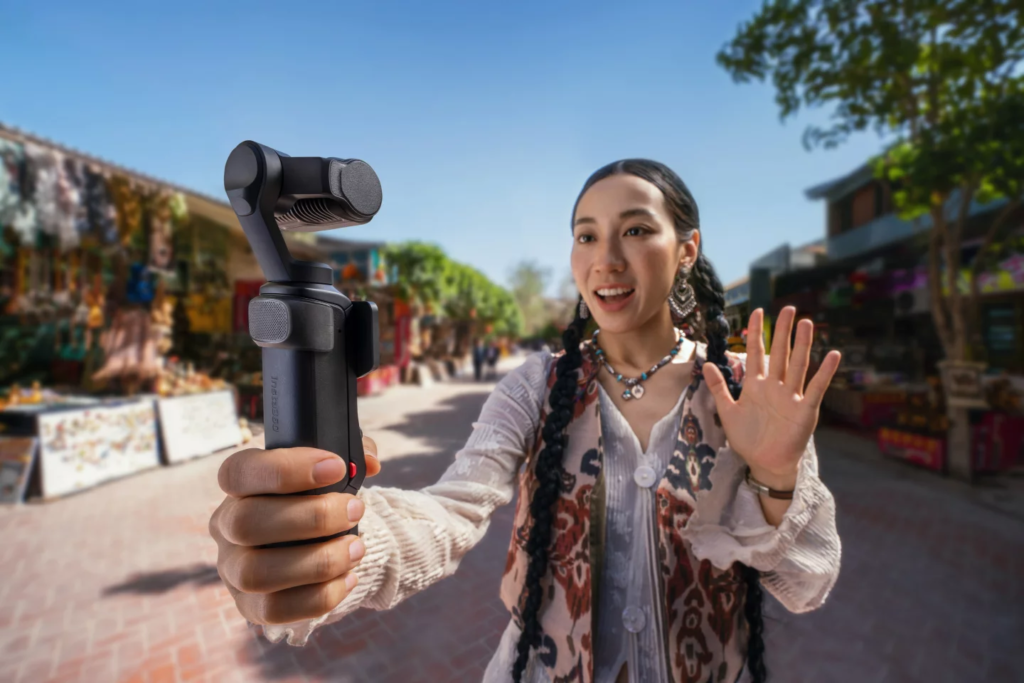
For years, DJI’s Osmo Pocket has been the default choice for creators who want cinematic-quality video in a compact, stabilized package. DJI didn’t just define the pocket gimbal camera, it owned it, almost without competition. That has just changed, with Insta360 and Leica jointly launching the Luna Ultra. The Luna Ultra is built around a dual-lens system, which the Osmo Pocket 4 currently lacks – although not for long. The primary camera uses a Leica Summicron lens with an f/1.8 aperture and a 20-mm-equivalent focal length, backed by a 1-inch-type CMOS sensor – a chip roughly the size of a thumbnail that captures significantly more light than the smaller sensors found in most action cameras. The secondary camera is a 60-mm-equivalent telephoto at f/2.0, with a 1/1.3-inch sensor, offering up to 6x optical-quality zoom and 12x hybrid zoom. The whole package weighs just over 200 g (7 oz) – comparable to a mid-range smartphone – and runs on a 1,550-mAh battery rated for up to four hours of use, with an 80% fast-charge in roughly 23 minutes. Meet Insta360 Luna Ultra – Flagship dual-lens 8K gimbal camera Stabilization comes courtesy of a three-axis mechanical gimbal working in tandem with electronic image stabilization. Insta360’s Deep Track 5.0 system handles intelligent subject tracking, with dedicated modes for groups, active zoom, and automatic reframing. On the video side, the Luna Ultra records 8K at 30 frames per second with Dolby Vision – the same HDR format used in high-end cinema displays – and shoots in 10-bit I-Log, a flat color profile that preserves up to 14 stops of dynamic range for maximum flexibility in post-production. It also works great at night thanks to its dedicated PureVideo low-light mode, capable of reducing noise at up to 4K/60 fps. Stills photography reaches 37 megapixels in UltraPhoto mode – a computational multi-frame capture technique – and up to 200 megapixels for panoramas. “A 3-axis stabilization system, combined with electronic image stabilization, ensures smooth footage during movement”Insta360 The Leica collaboration goes well beyond a badge on the lens. The camera includes Leica-tuned color profiles (Natural, Vivid, and Chrome), support for ACES (Academy Color Encoding System – a professional color management standard used widely in film production), and built-in timecode for multi-camera synchronization with Final Cut Pro and Adobe Premiere Pro. This marks the sixth product resulting from a six-year partnership between the two companies, unveiled at Leica’s headquarters in Wetzlar, Germany. One genuinely clever hardware idea is the 2-inch OLED touchscreen, which detaches completely from the camera body and functions as a wireless HD monitor, microphone, and remote control with a range of up to 20 m (66 ft). For solo creators, this means monitoring and adjusting shots from angles that would otherwise need a second pair of hands. “An industry-first detachable 2-inch OLED touchscreen enables remote monitoring and control with HD transmission up to 20 meters”Insta360 The accessory ecosystem reinforces that one-person-crew ethos. A POV head tracker for hands-free capture, Black Mist diffusion filters, a wide-angle lens expanding the field of view to 108°, and ND filters for exposure control. Internal storage sits at 47 GB, expandable to 1 TB via microSD. That dual-lens advantage may be short-lived, however. DJI is launching a dual-lens Pocket 4 Pro that could close the spec gap. There’s also a regulatory tailwind. Since December 2025, the FCC has blocked DJI from receiving equipment authorization in the US, effectively locking new DJI products out of the American market. At US$769.99 and available now in the US, the Luna Ultra arrives at exactly the right moment. Product page: Insta360 source

Insta360 and Leica's Luna Ultra targets DJI's pocket camera crown Read More »

The end of the one-off delivery: Why an experience now needs a performance model

This post is sponsored by Trinax. Great experiences do not fail at launch. They decay over time. Across industries, brands invest significant effort and resources into designing and launching digital products, platforms, and public-facing touchpoints. And launch day is celebrated as a milestone. Yet quietly, weeks and months later, the quality of the experience begins to slip. Content becomes stale. Usability issues compound. Engagement drops. What was once compelling slowly loses its impact. The problem is not poor execution. It is the absence of a structure to sustain the performance after the launch. In today’s always-on digital environment, the experience is no longer a moment in time. It is a living system, one that must be continuously validated, optimised, and cared for. And this reality demands a fundamental shift in how an experience is designed and delivered. Why delivering a one-off experience no longer works For years, experience designs have been delivered as bespoke, project-based engagements. This model worked when campaigns were finite and touchpoints were static. But that world no longer exists. Digital products, platforms, and public-facing touchpoints now evolve continuously. User expectations reset faster than ever. Regulatory requirements shift. Technologies change. What performs well today may underperform tomorrow, even if it was well designed at the launch. When the experience delivery ends at handover, organisations are left with: Unvalidated assumptions post-launch. Limited visibility into real performance. Growing experience debt over time. In short, great experiences decay when no one owns their performance. Why Trinax turned experience design into a product At Trinax, we believe that to sustain great experiences, the experience delivery itself must evolve from one-off projects to structured systems – and from a creative execution to performance ownership. Through years of work across both public institutions and commercial enterprises, we observed the same challenges repeating themselves: Teams struggled to make confident decisions early. Validation often happened too late. Experience quality declined after the launch. Optimisation was reactive rather than deliberate. The answer was not more creativity, nor more bespoke work. It was productisation. This belief led to the creation of the DIGITAL PRODUCT EXPERIENCE & PERFORMANCE SUITE™, a productised, evidence-led approach to designing, validating, and optimising enterprise digital products and public-facing touchpoints. The suite operates across two tracks: Product Design – for digital products, platforms, and enterprise tools; and Experience Design, for immersive environments, interactive installations, and physical-digital touchpoints. Both are grounded in the same discipline and the same belief that performance must be designed for, not assumed. By productising the experience design, we enable organisations to: Reduce risk early. Make decisions with evidence, not opinion. Scale quality and consistency. Build experiences designed to perform over time. Productisation is not about rigidity. It is about discipline, and discipline is what enables performance. Why performance must sit at the centre Design quality alone is no longer enough. An experience that looks good, but underperforms fails the business. An experience that launches strong, but degrades over time fails the user. Performance, usability, clarity, adoption, engagement, and continuity is what ultimately determines value. Yet performance is often assumed, not measured. Optimisation is often reactive, not structured. Ownership is often unclear. At the core of how we think about performance is a principle from behavioural science: the “Peak-End Rule”. Research by Nobel laureate Daniel Kahneman found that people do not judge an experience by its average quality. They judge it by how it felt at its most intense moment, and how it ended. Everything in between matters far less than most organisations design for. This has a direct consequence for how an experience should be designed and sustained. If the peak deteriorates because no one is monitoring it, the memory of the experience deteriorates with it. If the ending of a user journey becomes friction-heavy because the content has gone stale or a flow has not been optimised post-launch, the entire experience is remembered poorly, regardless of how strong it was at the launch. People judge an experience by its peak and its ending. Not its average. Designing for performance means owning both, long after launch. At Trinax, we believe an experience performance must be intentional, measurable, and continuously managed. This belief sits at the core of our productised suite, and it is what naturally leads to the next evolution. Performance models are the future As digital products and experiences become long-lived systems, an experience delivery must extend beyond design and build. This is where experience optimisation and continuity comes in. Experience optimisation and continuity represent a shift from: Delivery to stewardship. Launch to longevity. Projects to partnerships. Through our continuous experience care model, this provides ongoing maintenance, optimisation, content refreshes, monitoring, and ROX-driven insights, ensuring the experiences remain secure, relevant, and impactful long after their launch. The reason this model exists is the “Peak-End Rule”. Peaks and endings cannot be owned at the launch and then forgotten. They require deliberate, ongoing design attention. This is not a retainer for its own sake. It is the structural answer to a behavioural reality. In this model, performance is not a by-product. It is the product. The people behind the system The Trinax creative and research team. Productised systems only work when they are backed by disciplined and experienced teams. At Trinax, that means senior-led engagements where research, design, and communication work in parallel from day one, not sequentially. Each discipline owns a clear role within the system which ensures continuity, accountability, and depth. Rather than heroics or ad-hoc brilliance, our teams operate within a shared framework that prioritises evidence, validation, and long-term performance. This is what allows productisation, experience optimisation and continuity to work in practice, not just in theory. Experience at scale requires more than talent. It requires structure. Why this matters for brands and marketers For

The end of the one-off delivery: Why an experience now needs a performance model Read More »

Mandai Wildlife Group picks agency for China

Mandai Wildlife Group has appointed Tribe China as its China digital and social media agency of record, tasking the Shanghai-based integrated brand communications agency with growing the destination’s presence and engagement among Chinese travellers. The remit, which began on 26 May 2026, spans always-on social media management and content across Xiaohongshu, also known as RED, Douyin, WeChat and Weibo. It also includes China digital and social strategy, KOL and KOC programmes, and paid amplification. Through the appointment, Tribe China will work to position Mandai Wildlife Reserve as a must-visit destination for the China market. Don’t miss: EDB and Enterprise SG open China agency pitch  Speaking on the appointment, Agatha Yap, chief marketing officer for Mandai Wildlife Group said the company looked for a local agency partner who could bring its wildlife and nature stories to life in a way that resonates authentically with Chinese travelers.  “Tribe China’s deep roots and understanding in China’s social and digital space, their approach to content storytelling and the sense of purpose from their leadership team made them the right fit for Mandai.” said Yap.  Meanwhile, Liz Yin, founder and managing director of Tribe China, added that the appointment comes at an exciting moment for Mandai Wildlife Group, following the completion of its precinct and the launch of a new destination campaign. “We look forward to building an always-on, locally relevant social presence — from everyday wildlife storytelling to destination campaigns — across China’s unique digital platforms that not only drives awareness but inspires a genuine desire to visit,” added Yin.  Mandai Wildlife Group is the steward of Mandai Wildlife Reserve, Singapore’s wildlife and nature destination. The precinct is home to five wildlife parks, nature-themed indoor attractions, a resort, glamping sites and more. The appointment comes as Mandai Wildlife Group sharpens its focus on China’s outbound travel market. According to the Singapore Tourism Board, China remained Singapore’s largest source market in 2025, with 3.1 million visitors. Mandai Wildlife Group recently marked the grand opening of its precinct following the completion of Rainforest Wild Adventure East, an expansion of Asia’s first adventure-based wildlife park. Alongside the opening, it launched a new destination campaign, “Imagine wilder”, inviting visitors to go beyond the familiar and reimagine how they engage with nature through more immersive encounters across the precinct. In addition to its China-focused appointment, Mandai Wildlife Group has also been building out its broader media agency line-up. Earlier this year, the group appointed Omnicom Media agency PHD as its global media agency of record, with the remit covering integrated media strategy, planning, buying, activation and performance optimisation across all paid channels. The PHD remit, which began in January 2026, spans Singapore, Australia, India, Indonesia, the Philippines, Japan and South Korea, with strategic leadership based in Singapore. The appointment underscores Mandai Wildlife Group’s wider push to strengthen its regional and global marketing ecosystem, combining global media strategy with locally relevant digital and social engagement in key visitor markets such as China.  Related articles:   Chris Chiu exits Mandai Wildlife Group and Mandai X after five years Mandai Wildlife Group nabs Agatha Yap as CMO  Mandai becomes Asia’s first real-life Minecraft adventure  source

Mandai Wildlife Group picks agency for China Read More »

Historic drone rescue of Apache crew points to future of recovery missions

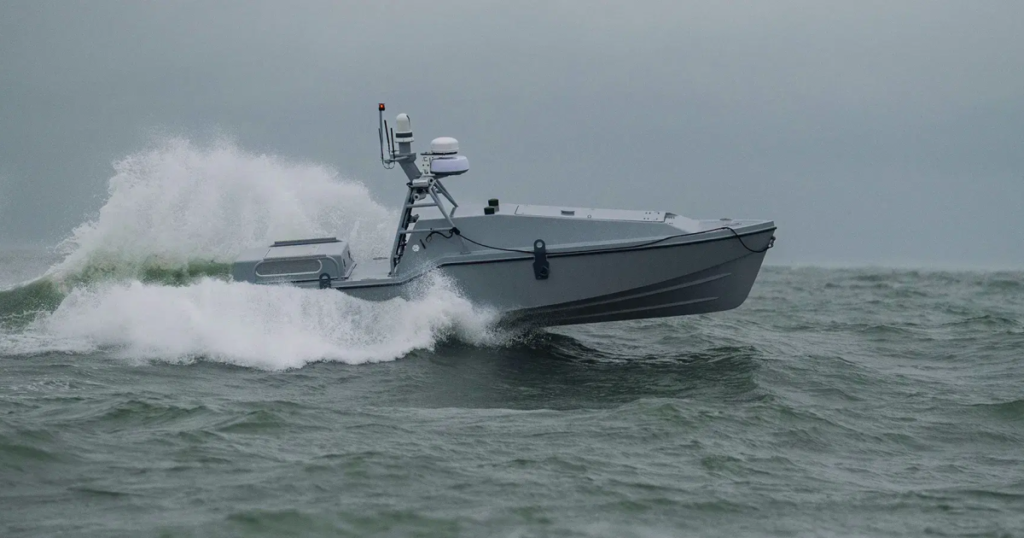
In a historic first, two US Army crew members from an AH-64 Apache helicopter forced down near the coast of Oman were rescued within two hours by a US Navy Saronic Corsair drone boat operated by the 5th Fleet’s Task Force 59. Details of the incident remain sketchy, including whether the Apache ditched due to a mechanical failure or hostile action. What is known is that, at 11:33 GMT on June 8, 2026, the attack helicopter encountered trouble while on a routine patrol near the Strait of Hormuz. A recovery effort was launched by US Naval Forces Command and the 82nd Airborne Division, with support from US Air Force and Navy units. What made the operation unusual was the involvement of Task Force 59, a dedicated artificial intelligence and unmanned systems integration unit that operates a flotilla of drone boats, including the Corsair. Equipped with a 360-degree passive sensing payload, the vessel was able to locate the two crew members, who were able to climb aboard the 24-ft (7.3-m) drone boat and cling onto its superstructure as the surface craft carried them to a safe area for helicopter extraction. Both were reported to be in stable condition after their ordeal. This first-of-its-kind rescue is significant for more than its historic value. It also highlights a potentially important application of drone technology for both military and disaster-relief missions. Casualty evacuation has always posed a major challenge for armed forces, particularly Western militaries dedicated to the principle of leaving no one behind. It’s a laudable concept, but one that has caused problems in the past. At the very least, it means using up soldiers to move wounded comrades to the rear, meaning that at least two fit people are needed to handle one casualty. Even with dedicated stretcher bearers, that’s a lot of personnel. It can also cause serious operational problems. During the Vietnam War, the Viet Cong learned that they could bring an American assault crashing to a halt by wounding a US soldier as quickly as possible, stopping the attack while the casualty was dealt with. By the time of the Falklands War, the British learned from this and adopted the policy of stabilizing a casualty and continuing the assault, with recovery taking place later when conditions allowed. Autonomous drones – including land, sea, and air, as rescue and evacuation units – could change things dramatically. Many more soldiers could be freed up for combat and other operations while often costly rescue or recovery missions could be handled by autonomous vehicles. Casualties could be moved to the rear quickly, helping preserve the critical “Golden Hour” during which prompt medical treatment can mean the difference between life and death. In addition, the drones could be sent into situations that would be too dangerous for a human team, increasing the chances of successful rescue. For the military, making use of such technology has obvious benefits, but it could also help in disaster situations. Recovery drones could rush into areas affected by earthquakes, hurricanes, wildfires, and tsunamis, where conditions may be too hazardous for human teams. They could even be pre-positioned in hazard areas in anticipation of disasters, ready to go at a moment’s notice to collect the injured and drop off supplies. And, as was demonstrated in the Apache incident, the drones don’t even need to be dedicated ones. Any platform capable of carrying a human-sized payload could be pressed into service as needed. They don’t even need to be the vehicle-like drones we’re used to. Quadruped robots are being developed to act like mules for the infantry and could maybe be equipped with little kegs of brandy to turn them into robo-St. Bernards. There has also been considerable discussion of humanoid military robots, which could one day be reprogrammed for casualty duty. So don’t be surprised if a cliché cry of “Medic” one day ends up being answered by something that looks like C-3PO in camo, complete with a red cross on its chest. Source: US Central Command source

Historic drone rescue of Apache crew points to future of recovery missions Read More »