Luckin Coffee surpasses 35,000 stores globally

Luckin Coffee has expanded its global store network beyond 35,000 outlets, marking a new milestone for the Chinese beverage giant as it continues to broaden its offerings beyond coffee. The company said its global store count surpassed 35,000 as of 31 May 2026, supported by growing demand for its expanding portfolio of coffee, tea and fruit-based beverages. According to Luckin, cumulative sales of its non-coffee beverage range have exceeded RMB20 billion, with 22 products individually surpassing 100 million cups sold. Don’t miss: Why Luckin Coffee is borrowing from the toy aisle to sell more coffee Among its top-performing products, the ‘Coconut latte’ has sold more than 2.1 billion cups since launch, while the ‘Orange Americano’ has surpassed 500 million cups. Its ‘Light jasmine milk tea’ has recorded sales of more than 400 million cups, while the ‘Little butter latte’ and ‘Active apple kale tea’ have sold nearly 300 million and more than 100 million cups respectively. Luckin said the growth of its non-coffee portfolio has helped the company serve consumers across a wider range of occasions, from work breaks and afternoon tea to social gatherings. The expansion comes as beverage brands increasingly move beyond their traditional categories in search of new growth opportunities. Luckin said it has invested heavily in supply chain and operational capabilities to support rapid product innovation across multiple beverage segments. The company has expanded its sourcing network across key markets including Brazil, Ethiopia and Indonesia, as well as China’s Yunnan and Guangxi provinces, securing ingredients ranging from coffee beans and coconuts to jasmine flowers and navel oranges. It has also strengthened its manufacturing footprint through investments in self-operated facilities, including its green coffee bean processing plant in Baoshan, Yunnan, and roasting centres in Qingdao, Kunshan, Pingnan and Xiamen. According to Luckin, these investments have enabled it to build an integrated value chain spanning ingredient sourcing, processing, product development and digital distribution, providing the foundation for its growing beverage portfolio and expanding retail footprint. The company added that the combination of a diversified product range, integrated supply chain capabilities and a network of more than 35,000 stores positions it to capture a broader share of China’s freshly made beverage market, which is increasingly being shaped by scale, innovation and operational efficiency. The latest milestone builds on Luckin’s earlier efforts to strengthen both its retail footprint and brand credentials. Earlier this year, the company opened its 30,000th store in Shenzhen, using the occasion to unveil its first “origin flagship” store. Designed to spotlight Luckin’s sourcing strategy and premium ambitions, the concept reflected the brand’s broader shift from rapid domestic expansion towards deeper brand-building and greater control of its global coffee supply chain. Beyond China, Luckin has also been leaning into localised marketing efforts across regional markets. In Singapore, the brand partnered with Japanese lifestyle brand OSAMU GOODS for a limited-time campaign inspired by “520”, a Chinese internet slang term that phonetically resembles “I love you”, alongside the return of its ‘Pink blossom latte’. In Malaysia, Luckin reunited with local fashion label FIZIWOO for a second consecutive Hari Raya collaboration. Building on a partnership launched last year, the “Nikmat dikongsi, Raya dirai” (“Sharing life’s joys, celebrating Raya together”) campaign combined coffee and fashion to create a festive brand experience tailored to Malaysian consumers. Related articles: How Luckin Coffee is brewing a sense of belonging in Malaysia   Luckin Coffee backer reportedly buys Blue Bottle Coffee   Luckin Coffee refreshes menu, eliminates Nutri-Grade D items in Singapore source

Luckin Coffee surpasses 35,000 stores globally Read More »

IAS expands brand safety measurement to YouTube Audio Ads

Integral Ad Science has expanded its Total Media Quality brand safety and suitability measurement to YouTube Audio Ads campaigns. The rollout gives advertisers access to third-party measurement for audio campaigns on YouTube, including reporting on whether ads appear next to content that aligns with a brand’s safety and suitability standards. The expansion adds audio to IAS’ existing YouTube measurement coverage, which includes Shorts and long-form video. Don’t miss: YouTube to hold back ads during peak livestream moments  According to IAS, its measurement for YouTube Audio Ads will provide reporting across YouTube formats, including Shorts, long-form video and audio. The company said the feature will be available globally. Lisa Utzschneider, CEO of IAS, said the move comes as advertisers increase their focus on digital audio. “Digital audio is experiencing a surge in engagement, with US adults due to spend an average of one hour and 26 minutes per day with the format across platforms in 2026,” said Utzschneider. “As more brands shift their budgets toward audio to reach these highly engaged audiences, it is essential that they have the same level of granular, content-level transparency they have come to expect from IAS,” she added. The launch builds on IAS’ existing work with YouTube. In 2024, the company introduced IAS Optimization for YouTube, which offers pre-screen suitability controls for advertisers. IAS has also launched a pre-screen brand safety solution for Google’s Search Partner Network. The company said it received MRC accreditation last year for integrated third-party calculation and reporting of YouTube video viewability. According to Google data cited by IAS, YouTube has more than one billion monthly active podcast users across formats.  The expansion follows IAS’ recent extension of its AI-driven Meta content block list optimisation solution to Threads feed, giving advertisers additional brand safety controls on the platform. The move builds on IAS’ wider partnership with Meta, after the company was selected in 2024 as the first provider to develop an independent optimisation solution for Meta’s platforms.  Related articles:  Indonesia emerges as safe haven for advertisers amid global ad fraud surge, IAS says  IAS rolls out global media quality tools on Reddit, expanding third-party insights  Spotify and IAS tie-up for third-party podcast brand safety tools  source

IAS expands brand safety measurement to YouTube Audio Ads Read More »

Tiny house opens up to the outside with dual-door design

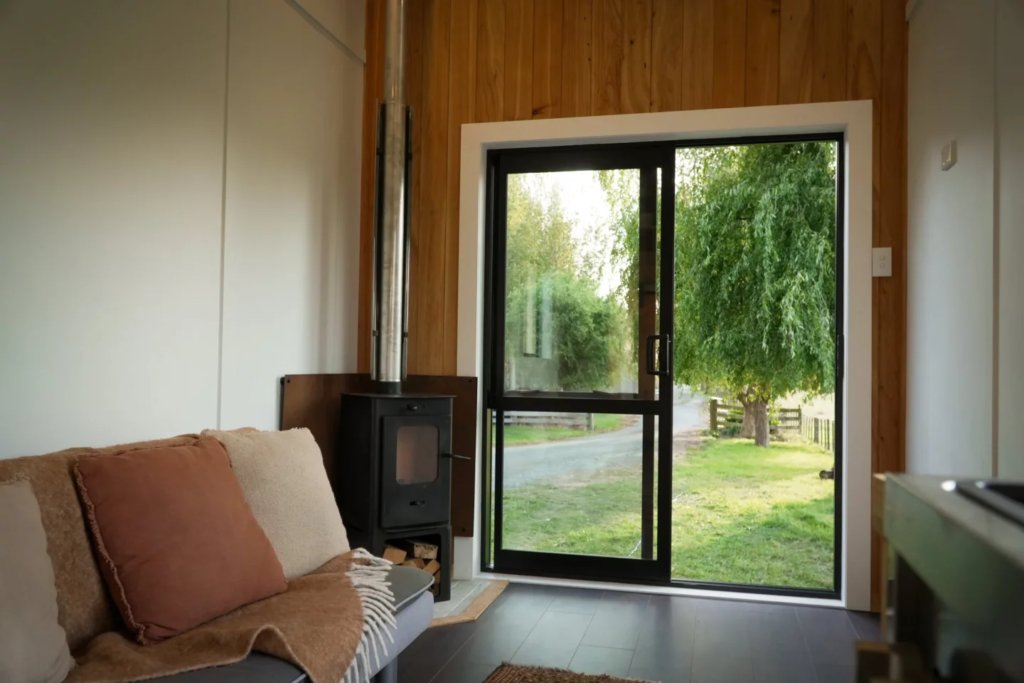
Living in as small a space as a tiny house can sometimes feel a little claustrophobic, but the Kanuka tackles this by opening up to the outside with two double glass door entrances, filling the home with natural light. Designed by Tiny Timber Homes, the Kanuka is based on a triple-axle trailer and finished in metal cladding, with wooden accents. It has a length of 8.1 m (26.5 ft), which is a decent size for a New Zealand tiny house, and could be a good fit for vacations or for full-time living. The Kanuka’s living room includes a large sofa, a wood-burning stove, and features a high ceilingTiny Timber Homes As mentioned, the home has two entrances. These are positioned quite close to each other, with one consisting of French doors and the other sliding doors. This may seem like overkill but they really help open up the home to the outside. The layout also seems well suited to the addition of a wraparound porch, if the owner wanted to expand the outdoor living space further. Inside, the decor features a modern aesthetic, with white walls combined with warm timber accents. The living room has a high ceiling and is furnished with a large sofa and a wood-burning stove. There’s enough room to add a dining table too. The kitchen is nearby and is equipped with a sink, an oven and a propane-powered four-burner stove, and a fridge/freezer. The adjacent staircase creates lots of opportunities for storage here, with multiple drawers, a cupboard, and a pull-out pantry built into the wall. There’s also a useful shelf area above the kitchen. From the kitchen, a wooden barn-style sliding door leads to the bathroom. This contains a vanity sink, a toilet, and a glass-enclosed shower. The Kanuka’s loft bedroom includes a double bed and additional storage spaceTiny Timber Homes The Kanuka contains a single bedroom that’s reached by the storage-integrated staircase mentioned. It has a typical loft-style layout, with a low ceiling, a carpeted floor, a double bed, and some additional storage. The Kanuka starts at NZD 100,000 (for reference, this works out at roughly US$58,000), though we’ve no word on delivery, so those interested will need to contact the firm directly. Multiple options are available too, such as changing the materials used and even its size and layout. Source: Tiny Timber Homes source

Tiny house opens up to the outside with dual-door design Read More »

3D-printable architectural material is made out of yeast

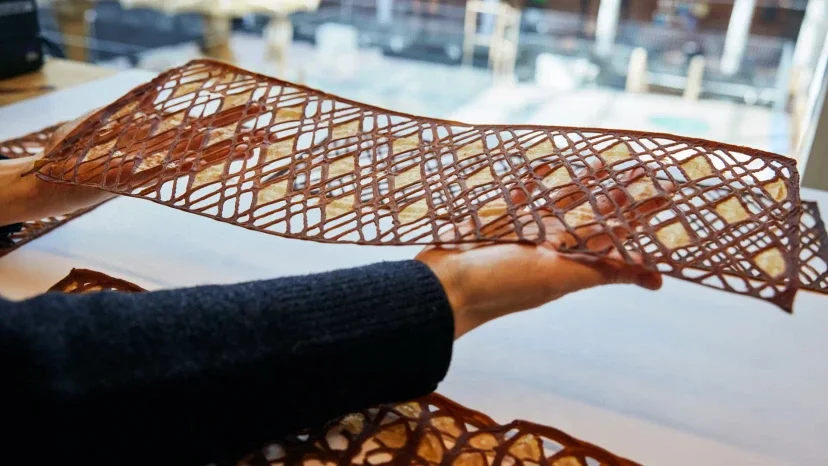
A research team at Chalmers University of Technology in Sweden has come up with a new bio-derived material made from yeast. It can be used with 3D-printing technology to produce a construction material which can be modified specifically for the architectural and interior design field. Currently, building materials such as plaster, plastic or synthetic fabrics are typically made from non-renewable or fossil-based sources. They’re often used for building components such as sunlight protective screens, room dividers or wall structures. Traditional construction materials are engineered to be long-lasting and durable, but also contribute a large amount to global emissions and consumption of resources in their production. By contrast, the yeast-based material is biodegradable, sustainable and zero-waste, according to the research team. A close look at a lattice made of the materialChalmers University of Technology “I’ve always been interested in the combination of architecture and living materials, and essentially this research is about creating an architectural material made entirely from organic, renewable ingredients,” says Prof. Malgorzata Zboinska, leader of the study. “By combining biomaterials with digital manufacturing, we can take a novel approach to both the design and production of architectural components.” The yeast is deactivated by heating before mixing to stabilize the material. It is not used for fermentation as is typically the case, but instead acts as a binder for all the other ingredients. “Yeast grows exponentially. It does not require strictly controlled environments and is not particularly sensitive to contamination. Because it consists of single-celled organisms, we can produce a more homogeneous, predictable material,” explains Zboinska. The mixture is extruded from the printer nozzle prior to air-dryingChalmers University of Technology The material also contains cellulose wood fibers for tensile strength and structure, alginate derived from brown seaweed for dimensional stability necessary for 3D printing, plant glycerols for plastic flexibility, and water. When all these ingredients are combined with the yeast and heated, they produce a gummy hydrogel that is moldable. “3D printing makes it possible to create complex shapes without producing waste. We can design and manufacture the material directly – with a high degree of control over its shape, texture and material distribution,” says Yagmur Bektas, a doctoral student at the Department of Architecture and Civil Engineering at Chalmers, and co-author of the study. The resulting jelly-like mass is then 3D-printed via air pressure and left to air dry at room temperature to form its final shape – all without the need for energy-intensive heating or extra implements. Malgorzata Zboinska and Yagmur Bektas in the labChalmers University of Technology With minor formula tweaks, architectural components can be produced with an array of colors that can range from yellow to brown tones by adding natural pigments or colorful yeast strains. Different levels of material transparency can also be achieved including pattern designs and texture finishes. Further research is required before the material can be extensively incorporated into building construction, since crucial attributes such as strength, fire safety and moisture tolerance need to be studied. The scientists also need to explore the ability to scale up manufacturing, and to design stronger structures. The yeast can be obtained as a byproduct from the brewing and agricultural industries – the 3D-printed material itself will biodegrade when disposed of at the end of its useChalmers University of Technology “The future of architectural ELMs, or Engineered Living Materials, is very exciting, with great potential to customize them to perform a variety of functions,” says Zboinska. “This could, for example, involve self-healing materials or materials that purify the air by neutralizing harmful substances and pollutants. What we have achieved so far is an important first step towards establishing a completely new type of architectural material. You could say that we are laying the foundations for future developments that combine sustainability, functionality and design in entirely new ways.” Source: Chalmers University source

3D-printable architectural material is made out of yeast Read More »

Dow Jones Futures Tumble As Trump Says Iran Will 'Have To Pay The Price'; CPI Inflation On Tap

Dow Jones futures fell strongly early Wednesday, as President Trump said Iran will “have to pay the price” for taking too long to reach a deal. Futures suggest the S&P 500 and Nasdaq will move back Tuesday’s lows near critical support. The CPI inflation report Nvidia chipmaker Taiwan Semiconductor (TSM) reported strong sales before the open with Oracle (ORCL) earnings after… Copyright ©2026 Investor’s Business Daily, LLC. All rights reserved. 87990cbe856818d5eddac44c7b1cdeb8 source

Dow Jones Futures Tumble As Trump Says Iran Will 'Have To Pay The Price'; CPI Inflation On Tap Read More »

Nearly 80% of consumers willing to pay more for brands they trust

Truth is becoming a commercial growth driver for global brands, with 80% of people globally saying they actively choose brands they trust even if they cost more, according to McCann’s latest “Truth about global brands” study. At the same time, the cost of losing trust is becoming more tangible. The study found that 69% of consumers have stopped using a brand because they no longer trusted it, while this figure rises to 79% among B2B decision-makers. The findings point to a shift from a trust economy to a “doubt economy”, where brands are under pressure to provide clarity, credibility and consistency in an increasingly fragmented information environment. The third wave of the study, developed in partnership with Economist Enterprise, surveyed 20,713 people across 20 markets and included dedicated analysis of 1,798 senior B2B decision-makers. It also included interviews with more than 15 global CMOs and brand leaders. Don’t miss: APAC trust gap hits record high as income disparity doubles  The research found that consumers are navigating what McCann calls a “truth maze” of reviews, creators, algorithms, AI-generated content and competing brand claims. While 72% of people said it is more important than ever to prioritise truth, 55% believe brands are less truthful than they were 20 years ago. AI is intensifying this challenge. While 72% of consumers and 88% of B2B leaders said brands must use AI to keep up, 76% of people said they worry they will soon be unable to distinguish between real people and artificial ones online. Transparency is emerging as a key trust lever, with 53% of respondents saying brands being open about AI use is the most effective way to build trust. Another 45% said brands should help people understand what is real and what is not in AI-generated content. Among B2B decision-makers, trust in AI appears stronger but still conditional. According to Economist Enterprise’s B2B analysis, 85% of B2B decision-makers trust brands that use AI, and they are 20 percentage points more likely than the general public to trust AI-generated content. However, 54% said transparency around AI use is the most important factor in brand trustworthiness, while 44% said brands should help audiences understand what is true and what is not. Only 11% said avoiding AI altogether would help build trust, compared with 24% of the general public. The study also found that B2B buyers increasingly expect brands to act as reliable guides through complexity. Almost all B2B decision-makers surveyed, at 92%, said it is important for global brands to act as reliable and trustworthy guides. Brand values are also becoming a commercial factor, with 85% of B2B decision-makers saying brand values outweigh price. At the same time, heritage still matters. Across all respondents, 72% said a long-standing brand is more meaningful than a new one. However, B2B decision-makers were found to be more receptive to novelty than the wider public, at 37% compared with 28%, suggesting that brands need to balance legacy and credibility with innovation and forward momentum. Beyond trust, the study also identified a shift in how culture and influence move globally. It describes this new environment as “multimodal globality”, where culture no longer flows in a linear or top-down way, but instead moves across platforms, communities, creators and networks. Today, 20 countries are seen as influential in shaping global culture, up from 12 in 2018, while 69% of people globally believe the world is evolving towards a global culture. The research also points to a major growth opportunity among future audiences. The global middle class is projected by the World Economic Forum to reach five billion people with US$62 trillion in annual spending power by 2030. Within this group, McCann identifies the “Upward class” as a particularly important audience: 1.02 billion people globally, representing US$29.5 trillion in annual spending. This group, according to McCann, has moved beyond the social class they were born into and sees brands not only as products, but as symbols of progress, identity and belonging. As a result, brands need to move beyond traditional segmentation and better understand the aspirations, behaviours and cultural signals shaping future demand. Related articles:  Trust turns inward in Singapore as insularity rises  Trust is rising in Malaysia, but so is the distrust of differences  Media optimism anchors global AI narrative despite gap in public trust  source

Nearly 80% of consumers willing to pay more for brands they trust Read More »

Dow Jones Futures Signal Market Bounce, But Then What? Oracle Dives, SpaceX IPO On Launch Pad

Dow Jones futures rose Thursday, along with S&P 500 futures and especially Nasdaq futures, after new U.S. attacks on Iran ended Wednesday night. Oracle (ORCL) fell sharply despite beating earnings views, The SpaceX IPO looms after the close. The stock market rally suffered sharp, broad losses on Wednesday as President Trump promised to hit Iran “very hard” after back-and-forth attacks… Copyright ©2026 Investor’s Business Daily, LLC. All rights reserved. 87990cbe856818d5eddac44c7b1cdeb8 source

Dow Jones Futures Signal Market Bounce, But Then What? Oracle Dives, SpaceX IPO On Launch Pad Read More »

Compact e-reader now lets you handwrite notes and lists on-the-go

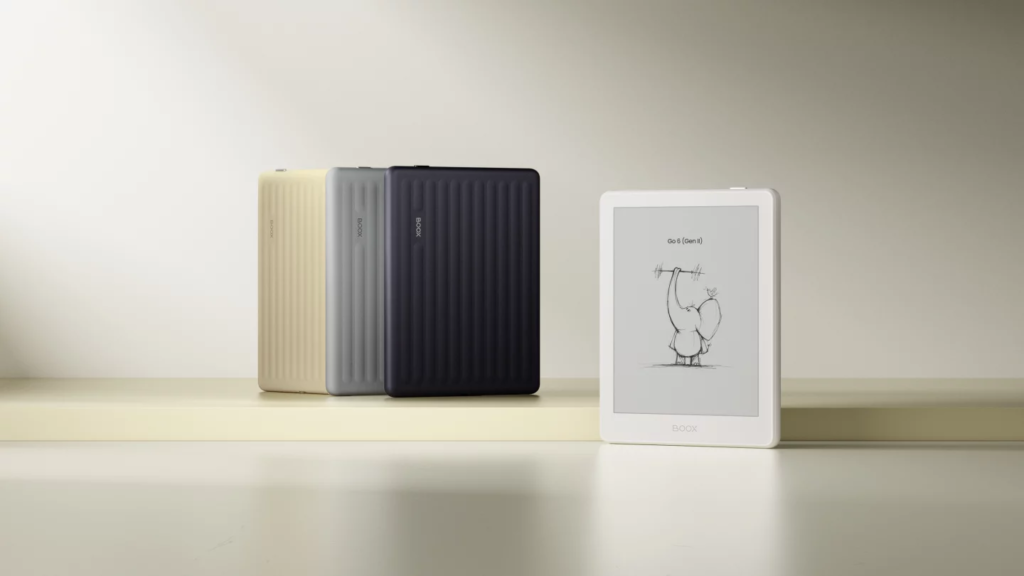
BOOX has launched its Go 6 (Gen II) e-reader, which now features pen- and pencil-like handwriting capabilities and a notes app packed with useful templates. These productivity features take this model to the next level – all for less than US$200. The second generation of its 6-inch E Ink reader bring BOOX’s innovative note-taking technology to the smaller screen, turning this gadget into not just a sleek portable library but a powerful planner and creative tool in its own right. The Go 6 (Gen II) comes in four colors, all with detailing inspired by another handy travel accessory – a good suitcaseBOOX Recently, I was converted to the BOOX – and Android – side when I tested out the Go 10.3 (Gen II) Luma tablet. And it’s not an overstatement to say it’s been life-changing. Despite my work and spending a fair bit of 2026 mingling with robots in China and Hong Kong, I’m not someone who easily incorporates new technology into their daily life. In addition to this, digital tools can be a challenge for visually driven attention-deficit/hyperactivity disorder (ADHD) brains; for me, typing workflow schedules, meetings and appointments into an app or an online calendar is about as useful as writing it down on a scrap of paper (the paper actually works better, as long as I don’t then lose it). If I close an app – or even shut a hardcopy planner – I’m likely to forget it exists. A few months ago, I gave the Go 10.3 tablet a test run, and found a sweet spot I never knew existed. Sure, it’s digital, but I could still handwrite to-do lists and schedules like I would in my poorly neglected Moleskine. Much like the tablet, the more compact Go 6 is designed for many uses, with a 300 PPI monochrome ePaper display and adjustable front lights for clear, no-strain reading, as well as stylus-supported E Ink technology that allows you to use it like you’re writing on actual paper. Running Android 11, it also connects to the Google Play Store so you can customize it with any third-party apps that you need. Through this, you can access your other digital calendars, planners and productivity apps, even link up your Kindle library, without the distraction of a full-feature smartphone. This is how I think my handwriting looks, compared to how it does look (below)BOOX The updated Go 6 pairs with the InkSense Plus Stylus (not included) and comes with a native notes app that lets you mark up books you’re reading and use it much like how you’d write in a planner or journal, except now you have more templates to work with, which are all stored in the same spot. Of course it’s much more than a fancy note-taker, but this aspect elevates it far above e-readers that don’t have this functionality. So you can jot down thoughts, do some idle sketching, make lists on-the-go that are instantly saved (and then easily accessible to add to or reference). The hardware has had an interesting design makeover too, now available in four colors – Plum, Stone, Shell, and Custard – and features detailing that resembles the surface of a suitcase. It weighs 160 g (5.6 oz) and is just 6.8-mm (0.27-in) thick, so it’s built for travel, whether that be across the world on vacation or commuting to work. One of the great aspects of my tablet is its lighting, whether it’s being used in bright sunlight or on a dimmed plane. And while we haven’t yet put the Go 6 to the test, BOOX has set a pretty good precedent with its battery power. Here, a 1,500-mAh polymer Li-on battery should last you several days easily, if not longer, even with frequent use. While it can take a bit of time getting used to the E Ink and ePaper refresh compared with a late-model smartphone, the screen responsiveness on the 10.3 model when using the stylus is excellent – so I’d expect that, or even better, on the smaller device. The Go 6 (Gen II) gets a system makeover with 3 GB of RAM, and has Bluetooth 5.0 and 2.4-GHz/5-GHz Wi-Fi connectivity, and a microSD card slot. Day or night, the screen adapts to reading conditions and your preferencesBOOX Of course, these devices do a whole lot more than display pages and let you scribble notes. They’re built for user customization. That said, the preloaded software (including a range of note templates) mean you can just plug and play with minimal set-up. Naturally, you will need a Wi-Fi connection for some features, such as adding apps and updating firmware. Existing digital libraries on other non-BOOX e-readers can also be integrated via apps like Kindle for Android. And while the Go 6 (Gen II) may not look and feel as luxurious as a high-end Kindle Scribe, it delivers much more open-ended and flexible usability – like the opportunity to run third-party, non-native apps – for a fraction of the price. Meanwhile, since I like to practice what I preach, here’s the main menu of my tablet’s notes section. While the InkSense stylus ($45.99) can’t work miracles when it comes to handwriting (clearly), it does have 4,096 levels of pressure sensitivity, tilt support, a customizable side button and is powered by a 80-mAh battery – so it’s a worthy investment, especially if you’ll want to make the most of its productivity tools or want to annotate texts like academic papers using the native NeoReader app. The 10.3 tablet from BOOX has transformed my note-taking and organizingNew Atlas While we’re yet to see how the new 6-inch device handles, BOOX has found a sweet spot in its reading-writing hybrid – a device that makes it easy to switch off with a novel, and a versatile tool that makes all kinds of note-taking, journaling and list-making nearly as enjoyable. And in the case of the new travel-ready Go 6, it’s also affordable, at less than $200. The BOOX Go 6 (Gen II)

Compact e-reader now lets you handwrite notes and lists on-the-go Read More »

Golin and Ketchum merge under new Golin Ketchum brand

Golin and Ketchum have merged to form a single global communications agency under the new Golin Ketchum brand, bringing together two established agency names under one operating model. The combined agency will offer communications services across brand and consumer marketing, corporate affairs, health, technology, and food, agriculture and nutrition. It will be supported by a global network of offices, specialty practices and sector expertise. Matt Neale has been named CEO of Golin Ketchum (pictured left), while Tamara Norman (pictured right) will serve as president. Don’t miss: Omnicom PR builds out APAC leadership team following regional overhaul According to Neale, the merger was driven by an ambition to reshape the agency landscape by combining creative capabilities with category expertise. “Golin Ketchum was formed with a clear ambition to shake up the agency landscape with unmatched creativity and category expertise,” said Neale. “For our clients, this means access to world-class resources and integrated capabilities. For our people, it means career-defining opportunities and the chance to do the best work of our lives, for the greatest clients in the world.” The decision to retain both agency names reflects the legacy and market equity of Golin and Ketchum.  “We considered a range of options, but ultimately the strongest choice was the simplest one,” he added. “Both Golin and Ketchum have built strong relationships with clients and strong reputations in the market. Bringing the names together honors that history while reflecting the future we’re building as one organization.” The newly merged agency is built around three core beliefs: creating with bravery, leading with curiosity, and collaborating as a superpower. Its stated purpose is: “Together, we’ll do the best work of our lives and create change that matters.” As part of the merger, Golin Ketchum has also unveiled a new visual identity. The brand palette is anchored by “Flare”, a vibrant red-orange shade intended to signal the energy and ambition behind the combined agency. The identity also includes a new mark, an abstraction of the agency’s initials, designed for use across practices, sectors and markets. “This isn’t simply a brand launch. It’s our declaration of intent,” said Neale. “Golin Ketchum offers clients the most awarded creative team in the world underpinned by a relentless curiosity and the most effective AI and data solutions. We embody the apex of human creativity and next generation technology.” Moving forward, Golin Ketchum will continue to operate through local market teams, supported by specialist practices and sector capabilities. Existing clients will continue to work with their current day-to-day teams, with the agency saying relationships will remain intact while clients gain access to broader talent, expertise and technology across the combined business. The merger comes as Omnicom Public Relations has been reshaping its Asia Pacific leadership structure to drive closer collaboration and integrated client support across its agency brands in the region. In an internal memo previously sighted by MARKETING-INTERACTIVE, OPR said the new structure, which takes effect from 1 July 2026, is designed to provide more seamless support to clients across markets and brands including Weber Shandwick, Golin and FleishmanHillard. As part of the APAC restructure, OPR appointed market leaders across key markets, including Yisi Liu as president and general manager of China, Carol Yeung as president and general manager of Hong Kong, Ryo Kanayama as president and general manager of Japan, Elizabeth Bae as president and general manager of Korea, and Carolyn Ann Devanayagam as president and general manager of Singapore and head of advisory for OPR APAC. The network also named regional growth and practice leads across client experience, business development, health, data and analytics, strategy, creative, corporate reputation and risk, and financial and professional services. Related articles:    Omnicom PR announces new leadership structure with Joanne Wong as APAC CEO Omnicom Advertising Asia unveils regional leadership team Agency agenda: Tony Harradine outlines Omnicom Media APAC’s post-deal plan source

Golin and Ketchum merge under new Golin Ketchum brand Read More »

Honeybee trick helps drones fly home without GPS

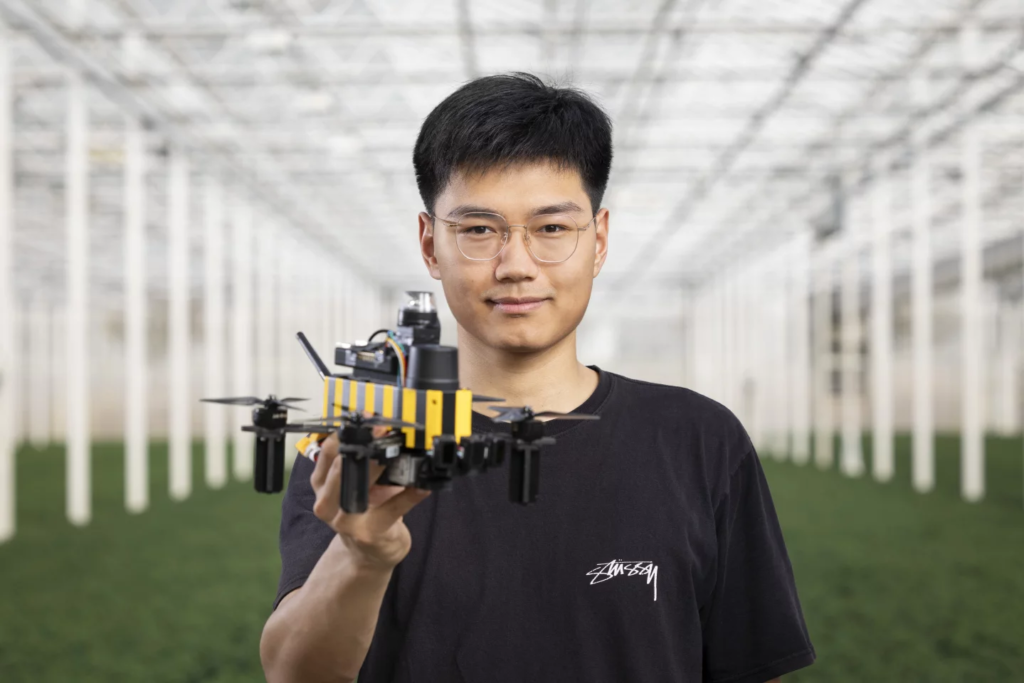
Honeybees routinely travel up to 2 miles (3 km) from their hive in search of food before returning home, with remarkable accuracy. Relative to body size, this is comparable to a human traveling hundreds of miles and finding their way back without a map, compass, GPS, or smartphone. Despite possessing brains smaller than a sesame seed, bees accomplish this feat with astonishing efficiency. Now, researchers have adapted those same biological principles into a drone navigation system that can guide lightweight flying robots home using just 42 KB of memory. Developed by a team led by Delft University of Technology in the Netherlands, the system, dubbed Bee-Nav, enables drones to autonomously navigate and return to their starting point without GPS or computationally intensive mapping systems. The researchers demonstrated the technology in both indoor and outdoor environments, including a flight covering more than 600 m (1,970 ft), while using neural networks thousands of times smaller than those typically associated with modern AI systems. Delft University of Technology PhD candidate Dequan Ou with the Bee-Nav droneDelft University of Technology – Micro Aerial Vehicles Lab The work, published in the journal Nature, addresses one of the most fundamental challenges in robotics: navigation. Whether inspecting industrial infrastructure, delivering packages, monitoring crops, or exploring disaster zones, autonomous robots must be able to determine where they are and how to get where they need to go. Modern autonomous drones typically rely on GPS and detailed environmental maps. Another common technique is simultaneous localization and mapping (SLAM), which continuously builds and updates three-dimensional representations of the environment while tracking the robot’s position within them. While highly effective, these approaches require significant computing power, memory, and energy, resources that may be difficult to scale down to small flying robots, in which every gram of weight and every milliwatt of power matters. Honeybees appear to have found a much more efficient solution. Their secret? Odometry, a process that estimates movement based on motion cues gathered during flight. In simple terms, the insect keeps track of roughly how far it has traveled and in what direction, based on its body movements. Much like a person mentally tracking their steps while walking through a dark room. The problem is that these estimates gradually accumulate errors over time, causing the navigational equivalent of a slowly drifting compass. To compensate, bees also appear to rely on visual memories of their surroundings. Before embarking on longer journeys, they perform short “learning flights” around their hive, carefully observing nearby landmarks and scenery. A sort of “checking out the neighborhood” trip. These visual memories later help guide them back home. After a learning flight, the Bee-Nav drone is able to travel back from different location inside the learnt area to the home location – the robot does not need to see the home, as learning is based on odometryDelft University of Technology – Micro Aerial Vehicles Lab The Bee-Nav system attempts to replicate that strategy. Like a honeybee leaving its hive for the first time, the drone begins with a short learning flight around its home. During this phase, it captures panoramic images of the surrounding environment. These images are then processed by a small neural network trained to estimate both the direction and distance back to the starting point. Rather than requiring precise positional data, the system learns using odometry estimates that are themselves imperfect and subject to drift. According to the researchers, one of the key questions was whether those errors would prevent the drone from learning useful visual cues. Surprisingly, they did not. In one indoor experiment, the team demonstrated successful homing using a neural network occupying just 3.4 KB of memory. The drone analyzed panoramic views of its surroundings and estimated both which direction it should travel and how far it remained from home. The distance estimate allowed the drone to adjust its behavior, moving quickly when farther away and slowing as it approached its destination. The researchers then scaled the system up to larger indoor and outdoor environments. In tests conducted at the Dutch drone research facility Unmanned Valley, the drone traveled more than 600 m before successfully returning home, using a neural network that required only 42 KB of memory, about the size of a WhatsApp sticker! In large indoor environments such as aircraft hangars, the system successfully completed every test. Outdoor performance proved more challenging, particularly under windy conditions, where success rates fell to around 70%. The team found that wind-induced tilting altered the drone’s view of its surroundings, making visual recognition more difficult. Improving robustness to these real-world environmental effects remains an important area for future development. A long-exposure visualization of the Bee-Nav drone wayfindingDelft University of Technology – Micro Aerial Vehicles Lab One of the most promising applications may be agricultural monitoring. Lightweight drones equipped with Bee-Nav could autonomously inspect crops inside greenhouses, identifying diseases, pests, or other problems before they spread. Because the system requires so little processing power and memory, it could enable much smaller, safer drones that can operate around workers without carrying heavy onboard computers. Beyond agriculture, the approach could find applications in warehouse robotics, environmental monitoring, industrial inspection, and future drone swarms. The technology may be particularly attractive in situations where GPS signals are unavailable or unreliable, and where weight and power consumption are critical constraints. The work may also offer fresh insights into the insects themselves. While scientists have studied bee navigation for decades, successfully recreating their homing strategy in machines could help reveal how creatures with brains smaller than a grain of rice routinely accomplish navigational feats that continue to challenge modern robots. Bee-Nav: Efficient robot navigation inspired by honeybee learning flights Source: Delft University of Technology source

Honeybee trick helps drones fly home without GPS Read More »