Dow Jones Futures Pare Losses As Oil Prices Reverse Despite Trump Threat; Nvidia Earnings Ahead

Dow Jones futures fell slightly early Monday, along with S&P 500 futures and Nasdaq futures. Oil prices reversed lower amid an Iranian media report that the U.S. could waive Iran oil sanctions. President Donald Trump warning Iran that “the Clock is Ticking.” Dow giants Nvidia (NVDA) and Walmart (WMT) headline earnings reports this week. The stock market’s major indexes were… Copyright ©2026 Investor’s Business Daily, LLC. All rights reserved. 87990cbe856818d5eddac44c7b1cdeb8 source

Dow Jones Futures Pare Losses As Oil Prices Reverse Despite Trump Threat; Nvidia Earnings Ahead Read More »

Singapore refreshes retail digital plan to boost AI adoption among SMEs

Singapore’s retail sector is getting a sharper push into AI adoption, as Enterprise Singapore and Infocomm Media Development Authority (IMDA) roll out a refreshed Retail Industry Digital Plan (IDP) aimed at guiding more than 2,000 SME retailers beyond basic digital tools and into more advanced, AI-enabled solutions. Unveiled at the ‘Retail reimagined – From now to next’ event, the updated plan was unveiled by senior minister of state Low Yen Ling, who said the sector needs to move past foundational adoption and focus on technology that directly improves competitiveness amid rising costs, manpower pressures, and intensifying eCommerce competition. First launched in 2017 and refreshed in 2023, the IDP has helped drive strong baseline adoption across the sector, with more than 75% of SME retailers now using entry-level digital solutions and 45% adopting intermediate tools, according to IMDA’s 2025 retail survey. However, adoption of more advanced technologies remains limited, even as AI tools become more widely available and retail use cases mature. Don’t miss: Singapore looks to strengthen position as trusted AI financial hub The refreshed framework shifts away from organising solutions by stages of digital readiness, and instead maps them across end-to-end business touchpoints, including front-of-house, back-of-house, and corporate operations. The aim is to make it easier for retailers to identify operational pain points and match them with relevant digital solutions. A stronger emphasis has also been placed on AI-enabled tools. For customer-facing operations, the IDP highlights AI concierge systems and generative AI chatbots designed to enhance in-store and online engagement through personalised recommendations and support. On the operations side, demand forecasting tools are being positioned to help retailers manage inventory more efficiently using predictive analytics. At the corporate level, generative AI solutions for marketing, sales content creation, and digital training are also being promoted as productivity levers. The approach has already shown results among some early adopters. Florist Far East Flora, for instance, reportedly cut content production time by around 50% after adopting GenAI tools for marketing and sales content generation. The plan also introduces a “Cybersecurity and data protection roadmap” to help SMEs strengthen digital resilience. This includes practical toolkits and solutions such as anti-malware systems, firewalls, and backup protection. Beyond technology adoption, the government is also encouraging retailers to rethink job roles and invest in reskilling, with businesses urged to work with Workforce Singapore to develop integrated enterprise and workforce transformation plans. Industry input was gathered in developing the refreshed IDP, with organisations including the Singapore Retailers Association, Singapore Fashion Council, and Singapore Furniture Industries Council involved in consultations. Additionally, a “Retail Accelerator at L^IFE by Innovate360” was also launched to support early-stage brands. Backed by EnterpriseSG, the two-year programme will house 16 local brands at *SCAPE, offering subsidised retail space, mentorship, and structured support in areas such as marketing, PR, merchandising, and livestreaming. Digital tools from the IDP will also be embedded into the accelerator programme, alongside opportunities for brands to explore partnerships and internationalisation support as they scale. In her speech, Low said the refreshed plan reflects a broader commitment to ensuring retailers are not left navigating transformation alone, but are supported at every stage of their journey. “Whether you are taking your first steps in digitalisation, testing a new retail concept, or scaling your operations to the next level, you do not have to do it alone. I am confident that together, we can build a retail sector that is resilient, competitive, and future-ready,” she added.  The refreshed IDP comes as Singapore continues pushing for broader AI adoption across industries, despite many businesses still being in the early stages of implementation. According to a recent report by Singapore’s Ministry of Manpower, 71.5% of firms have yet to adopt AI, while only 28.5% have started integrating the technology into their operations. Of those, just 3.8% said AI had been fully embedded into core business processes, with most companies still in planning or pilot phases. The study, conducted between January and March 2026, surveyed 2,560 private sector establishments employing about 486,600 workers. Related articles:  AI momentum builds across Southeast Asia, but gaps persist  AI use rises, but so do trust demands from Singaporeans  More companies miss revenue targets as AI and volatility reshape B2B growth    source

Singapore refreshes retail digital plan to boost AI adoption among SMEs Read More »

Transparent solar cells could be mounted right on windows

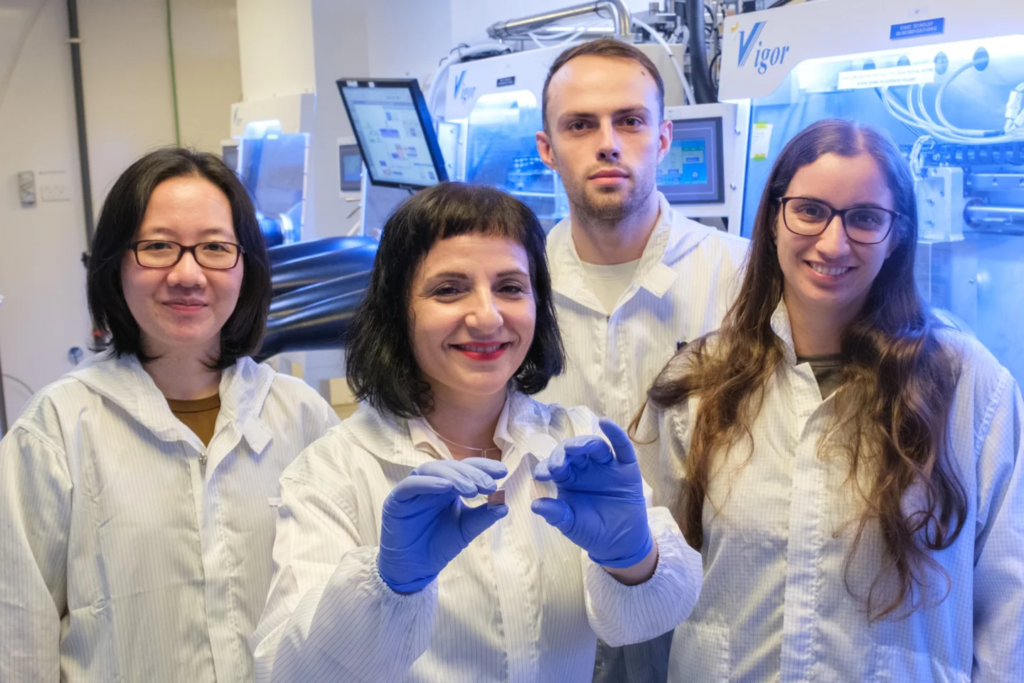
One of the hindrances to large-scale solar adoption, especially in cities, is where to install the chunky panels. Rooftops? Skyscraper walls? Vast open spaces that dense urban centers barely have in the first place? Researchers from Nanyang Technological University (NTU) Singapore say they may have solved part of this problem with solar cells so thin they are invisible enough to install directly onto windows. The team claims to have developed ultrathin, semi-transparent perovskite solar cells that are roughly 10,000 times thinner than a strand of human hair and about 50 times thinner than conventional perovskite solar cells, while still retaining some of the highest efficiencies yet reported for devices in this ultrathin category. Their work, recently published in ACS Energy Letters, could eventually pave the way for electricity-generating windows, glass facades, smart glasses, vehicle sunroofs, and other surfaces that currently sit passively in the sunlight. The idea of transparent solar cells is not entirely new. Researchers around the world have spent years trying to create photovoltaics that can blend into glass and urban infrastructure. The problem is that solar panels are fundamentally designed to absorb sunlight. The more light a solar cell captures, the less transparent it tends to become. Existing commercial solar panels are also physically bulky systems consisting not just of photovoltaic materials but also of thick protective glass, encapsulation layers, metallic contacts, mounting hardware, and structural framing. Typical residential solar panels weigh around 18 to 23 kg (40 to 50 lb) each and generate roughly 350 to 450 W of power under ideal conditions. A modern office tower can easily consume several gigawatt-hours of electricity annually. Now, imagine the sheer amount and weight of solar panels powering such a building independently. Where could they possibly be mounted? In this context, the roofs appear ridiculously small. An alternative would be vast open land, but many cities simply do not have it. What of the walls, you ask? They are everywhere and in abundance. Well, mounting heavy opaque panels across glass skyscraper facades radically changes the appearance, weight, and thermal characteristics of the building itself. But what if they didn’t have to be heavy, or bulky, or even visible at all? These questions form the basis of NTU researchers’ technology aimed at turning glass surfaces that already dominate modern cities into active power-generating systems. The team, led by Associate Professor Annalisa Bruno from NTU’s School of Physical and Mathematical Sciences and School of Materials Science and Engineering, developed the new devices using perovskites: a class of crystalline materials that have become one of the hottest areas in solar research over the last decade due to their potentially low manufacturing costs, high efficiencies, and ability to function under lower-light conditions. From left: NTU scientists, Dr. Herlina A. Dewi; Assoc. Prof. Annalisa Bruno; Mr. Edoardo Albanesi; and Dr. Daniela De LucaNTU Singapore The researchers fabricated ultrathin perovskite absorber layers measuring just 10 nanometers thick while still retaining useful photovoltaic performance. For perspective, a human hair is typically around 80,000 to 100,000 nanometers thick. Unlike conventional silicon solar cells, which perform best under direct sunlight, perovskite-based devices can continue generating electricity even under indirect or diffuse lighting conditions. That is particularly relevant in high-rise cities, where skyscrapers create heavily shaded urban canyons and cloud cover frequently reduces direct solar exposure. Instead of relying solely on rooftops facing the sun, vertical glass surfaces across entire city blocks could theoretically generate power throughout the day. The researchers tested multiple thicknesses. Opaque devices with 10-, 30-, and 60-nanometer perovskite layers achieved power conversion efficiencies of roughly 7%, 11%, and 12%, respectively. Meanwhile, a semi-transparent version using a 60-nanometer-thick layer achieved 7.6% efficiency while still allowing roughly 41% of visible light to pass through the device. Modern solar panels achieve above 20% efficiency. However, when you consider the relatively zero weight, low-light performance, and other beneficial characteristics of the new perovskite, the technology shines through. That balance between transparency and efficiency is one of the central engineering challenges in transparent photovoltaics. The more transparent a device becomes, the less sunlight it absorbs and, therefore, the less electricity it generates. The NTU team says their results rank among the best reported performances for semi-transparent perovskite solar cells made using similar materials. Importantly, the devices were also described as color-neutral, meaning they would not dramatically tint windows or radically alter the appearance of glass-covered buildings. According to the researchers, the cells’ transparency can be adjusted during manufacturing by precisely controlling the thickness of the deposited perovskite layers. The real breakthrough of the technology may not simply be the thinness of the solar cells, but how the NTU team manufactured them. The researchers used an industrially compatible vacuum-based technique called thermal evaporation, in which materials are heated in a vacuum chamber until they vaporize and settle onto a surface as an ultrathin film. According to the team, this may be the first time ultrathin perovskite solar cells have been produced entirely using vacuum processing, an approach already widely used in semiconductor and display manufacturing. Unlike liquid chemical processing methods commonly used for experimental perovskite cells, the vacuum-based technique allows highly uniform, large-area films with precise thickness control while avoiding toxic solvents and reducing structural defects that can hurt efficiency and scalability. The researchers estimate that if scaled successfully, the technology could theoretically turn the glass facade of a tower like New York’s One World Trade Center into a solar-generating surface, producing several hundred megawatt-hours a year, roughly enough electricity to power about 40 average US homes annually. “The built environment accounts for roughly 40% of global energy consumption, so technologies that seamlessly convert buildings’ surfaces into power-generating assets are gaining urgency,” said Bruno. NTU research fellow Dr. Daniela De Luca examining a prototype ultrathin perovskite solar cell in the vacuum chamber in the labNTU Singapore Reality, however, is more complicated. Perovskite solar cells have generated enormous excitement for years, but commercialization has repeatedly run into one major obstacle: durability. Perovskites are notoriously vulnerable to moisture, oxygen, heat, and prolonged

Transparent solar cells could be mounted right on windows Read More »

Dow Jones Futures Rise, Oil Prices Dive On Iran Deal Hopes; Tesla, 5 AI Stocks Near Buy Points

Dow Jones futures rose solidly Monday night, along with S&P 500 futures and Nasdaq futures, while crude oil prices tumbled. The U.S. and Iran appear to be inching toward an interim deal that would open the Strait of Hormuz, even as the U.S. carried out “self-defense” strikes on Monday. The stock market last week shrugged off a brief, orderly pullback,… Copyright ©2026 Investor’s Business Daily, LLC. All rights reserved. 87990cbe856818d5eddac44c7b1cdeb8 source

Dow Jones Futures Rise, Oil Prices Dive On Iran Deal Hopes; Tesla, 5 AI Stocks Near Buy Points Read More »

Beyond impressions: Why effectiveness goes well beyond attention

Most ads today are seen, but very few are remembered. For years, attention has been treated as the gold standard in digital advertising. If an ad appeared on screen and held someone’s gaze for a few seconds, it was considered a job well done, but marketers know that is only part of the story. In a landscape shaped by endless scrolls and fragmented screens, attention without emotion rarely translates into memory. That gap between being seen and being remembered is increasingly pushing the industry to ask a tougher question: what actually makes advertising effective? It is this question that Gameloft for brands explores in its “Attention and emotion in play” white paper, developed with Mediamento and ActFuture. The research argues that attention is only the starting point. To create a lasting impact, brands need to pair attention with emotional engagement which can then drive significantly stronger outcomes such as a whopping 35% brand affinity, and almost 25% more ad recall. Purchase intent can also increase by 12.8% versus pre-roll video formats should the right factors come into play. To explore this relationship, the study combines eye-tracking and biometric analysis to measure not only what users see, but also what they feel and ultimately remember. The battle for attention In Southeast Asia and ANZ, audiences move fluidly across multiple platforms. They bounce from TikTok to YouTube, reply to WhatsApp messages, scroll Instagram and jump into a game, all within a short span of time. In this environment, the challenge is no longer simply capturing attention. It is creating moments that leave a lasting imprint. According to Statista and Dentsu data, the APAC advertising market is expected to reach US$424.7 billion in 2026, with digital channels continuing to dominate overall media spend. Within this landscape, in-game advertising is projected to generate US$62.9 billion in revenue, positioning gaming as one of the region’s largest and fastest-growing digital media environments. While TV and video will remain the biggest advertising segment overall, gaming is rapidly strengthening its strategic role thanks to the convergence of entertainment, mobile consumption, and highly engaging interactive experiences, particularly across key markets such as China, Japan, and India. Why attention alone is no longer enough We all know of those ads that look great, but leave limited impact on the consumer. While some might be inclined to simply say marketers are playing it safe, the issue goes much deeper. For starters, media consumption which is becoming increasingly fragmented and non-linear, is causing ads to be rendered ineffective. But all is not lost. Areas such as gaming tackle this head on. Unlike passive media environments, gaming creates sustained and intentional attention driven by active participation rather than passive viewing. “Players are actively involved, not simply exposed, resulting in up to 30% higher attentive exposure compared to traditional digital media,” said Florent Vallauri, senior managing director APAC at Gameloft for brands. Beyond attention, emotion also plays a big role in gaming. Behavioural science and neuroscience research consistently show that emotions play a critical role in memory formation and decision-making – influencing not only what people notice, but what they ultimately remember. As such, the true challenge for brands is not in capturing attention, but in creating experiences that audiences genuinely retain. (Source: Data taken from “Attention and emotion in play” white paper) Why gaming changes the equation Gaming works differently from most digital media environments. Players are not sitting back and consuming content. They are actively participating by competing, solving problems, making decisions and progressing through structured experiences. This creates a deeper form of attention that is sustained and intentional. In Southeast Asia, gaming has become a daily habit for millions of people. The region had an estimated 277 to 290 million gamers in 2025, making it one of the largest gaming audiences globally. “In SEAP, mobile gaming is one of the few digital activities used every day, often multiple times,” Vallauri said. “In ANZ, gaming cuts across evenings, shared household time, and solo downtime.” This shifts gaming away from passive, scroll-based or skippable media environments where attention is briefly captured and quickly lost, and instead positions it as a habitual behaviour, closer to messaging or social platforms than traditional advertising environments. This gives brands an opportunity to do more than interrupt attention; they become part of the experience itself and spark credibility with the player. This can take shape through playable challenges similar to those seen in titles such as Asphalt Legends, alongside reward-based systems that offer in-game currency, upgrades or progression incentives in exchange for continued play or interaction. It can also extend to sponsored, time-limited in-game events or immersive, branded placements with custom, high-impact, and strong PR-able value to support the campaign or product launch. One such example was Hyundai Motor Company’s “Electric Race” in partnership with Asphalt Legends. The time-limited in-game activation and new-car integration were designed to position the automaker as an innovator in electrification and provide an innovative branded gaming experience for its players. The experience invited players to compete in electric-themed races within the game, with top performers rewarded with real-world incentives, including a trip to South Korea and the opportunity to experience Hyundai vehicles on a real-track, effectively linking in-game performances with tangible brand engagement. Where emotion comes in Gaming is emotional by design. Every session is filled with moments of anticipation, frustration, competition and reward. Furthermore, the emotions are not layered on top of the experience, but rather are built into it. “Video games are the only digital medium where emotion is not simply observed – it is lived with deepened cultural integration. Players experience challenge, reward and achievement in real time,” Vallauri said. This is redefining how effectiveness is measured, not as attention alone, but as the interaction between attention and emotion. As Vallauri notes, gaming is no longer experimental: “With scale, structure, and proven effectiveness, gaming has evolved beyond experimentation. It is now a channel that can be confidently integrated alongside video, social, and display in modern media strategies.” (Source: Data


Beyond impressions: Why effectiveness goes well beyond attention Read More »

'Zebra striping' your drinks can cut hangovers (just not the way you'd think)

Cathy Montgomery & Abi Rose, Liverpool John Moores University/The Conversation On a typical night out, the rhythm of drinking can be hard to control. Rounds arrive quickly, glasses are topped up before they’re empty, and intentions to “take it slow” often dissolve by the second or third drink. If you’re not careful, you’ll find yourself waking up with a dreaded hangover the next morning. A drinking trend known as “zebra striping” promises to help you reduce the negative effects of alcohol on a night out. The idea is simple: after having a glass of wine or a pint of beer, reach for a soft drink or glass of water for the next round, before having your next alcoholic drink. Recent market insights suggest that this practice is becoming increasingly popular in the UK, with 34% of adults reporting they’ve tried zebra striping in 2025. But while this may help you pace yourself better, it’s by no means a hangover cure. A useful pacing strategy The human body metabolises alcohol at a relatively fixed rate – roughly one standard UK unit (a small glass of wine, single spirit measure or half pint of beer) per hour. Drinking faster than this raises your blood alcohol concentration (BAC), leading to intoxication and increasing other physiological stresses on the body. By alternating non-alcoholic alternatives with alcoholic drinks, zebra striping slows overall alcohol consumption. This not only reduces your peak BAC (meaning you’re less intoxicated at any given point), it also tends to reduce the total number of alcoholic drinks consumed. Both outcomes matter when it comes to the short- and long-term consequences of alcohol. Drinking too much too quickly can lead to harm, from impaired planning and decision-making to injury. These patterns of heavy social drinking are also associated with memory impairments, with our research into binge drinking showing that heavy social drinkers show impaired inhibitory control, verbal fluency and attention switching. In this sense, zebra striping can be seen as a form of harm reduction – but only if it decreases overall consumption. There’s also a potential behavioural advantage to zebra striping. Holding a drink can reduce social pressure to keep drinking. This makes it easier to moderate your alcohol intake, especially in societies like the UK where social drinking is seen as the norm. Hydration helps a little Another commonly cited benefit of zebra striping is hydration, which many say will help to stave off hangovers the next day. Alcohol acts as a diuretic – meaning it makes us need to wee more often and causes fluid loss. This can contribute to dehydration and electrolyte imbalance. Alternating alcohol with water or soft drinks on a night out should help offset some of the dehydration that drinking causes. This may help with some common hangover symptoms, such as thirst, dizziness, and headaches. But research suggests that while dehydration and hangover symptoms frequently occur together, they’re not the same thing. Correcting fluid balance alone does not reliably prevent hangovers. Hangovers are complex and not fully understood. They’re probably caused by a combination of factors including the accumulation of toxic byproducts such as acetaldehyde, inflammation, disrupted sleep and altered immune responses. The bottom line is that the severity of a hangover is closely tied to the amount of alcohol consumed. The more you drink and the higher your BAC, the greater the likelihood and intensity of hangover symptoms. Research shows the level of alcohol in urine is directly related to hangover severity. People who are able to process and eliminate alcohol faster report less severe hangovers. Another important thing to consider is the choice of soft drink. Carbonated drinks speed up the absorption of alcohol into the bloodstream, increasing BAC more rapidly. This is because the bubbles increase pressure in the stomach and force alcohol into the small intestine. Fizzy soft drinks won’t get you more drunk overall, but they may make you drunk faster. Should you try it? Our expert verdict on zebra striping is that it can work – but not in the way you might hope. Zebra striping doesn’t prevent hangovers in itself, because alternating drinks and staying hydrated does not counteract the biological processes that cause hangovers. If you drink a large total amount of alcohol, you can still wake up feeling dreadful – regardless of how you spaced your drinks. This is why, despite decades of research into remedies, there is still no reliable “hangover cure”. However, zebra striping can reduce hangovers if it leads you to drink less overall. By slowing the pace and extending the time between alcoholic drinks, you might end up drinking less. But if you compensate for zebra striping by extending your night out or drinking stronger drinks, the benefits quickly disappear. There’s also an element of planning and cognitive control required to maintain this drinking pattern, which could disappear rapidly as you become tipsy. If the goal is to avoid a hangover entirely, the evidence shows you should drink less, or not at all. Cathy Montgomery, Professor of Psychopharmacology, Liverpool John Moores University and Abi Rose, Reader, School of Psychology, Liverpool John Moores University This article is republished from The Conversation under a Creative Commons license. Read the original article. source

'Zebra striping' your drinks can cut hangovers (just not the way you'd think) Read More »

WWF-Singapore names new CEO

WWF-Singapore has appointed Chew Sutat as its new chief executive officer, effective 1 June 2026. In his new role, Chew will focus on strengthening WWF-Singapore’s conservation efforts and deepening partnerships across Singapore and the wider region, according to a statement by the organisation. Chew brings more than 25 years of experience across the corporate and financial sectors, including DBS Bank, OCBC and Standard Chartered. He has served as a non-executive director and advisor to companies, start-ups, investment committees, foundations and non-profit organisations. The appointment comes as WWF-Singapore looks to expand its efforts across biodiversity conservation, climate action and community engagement. Don’t miss: JA Worldwide appoints former WWF-Singapore chief to lead APAC operations Among its ongoing initiatives is Canopy, a nature finance facility aimed at supporting up to 12,000 hectares of ecosystem restoration across Southeast Asia. The organisation is also a founding member of the Action for a Resilient Climate (ARC) Coalition, which brings together corporates, financial institutions, philanthropic organisations and government partners to support integrity and transparency in global carbon markets. According to WWF-Singapore, the initiatives are designed to mobilise climate and nature financing at scale while delivering measurable outcomes for both communities and ecosystems. At the same time, the organisation is stepping up public engagement efforts through science, education and digital innovation. WWF-Singapore said it is developing new initiatives to make conservation more accessible through hands-on experiences and collaborations with educators, researchers, conservationists and government partners across Asia. “Chew brings a strong sense of purpose, strategic focus and a deep appreciation of WWF-Singapore’s role in advancing climate and nature outcomes. The board is confident in his ability to build on the organisation’s progress and strengthen its impact across Singapore and the region,” said Hsieh Fu Hua, chairman of WWF-Singapore.  Speaking on his new role, Chew said, “It is a privilege to take on this role at WWF-Singapore at such a significant milestone, as WWF-Singapore marks its 20th anniversary alongside 65 years of WWF globally.” “As we honour two decades of conservation impact from Singapore, I look forward to working with the team, the Board and our partners to carry that purpose forward and deliver greater impact for climate, nature, community and our shared future together,” he added.  The appointment follows the departure of former CEO Vivek Kumar earlier this year, after more than four years with the organisation. In conversation with MARKETING-INTERACTIVE at the time, Kumar said he was stepping down to pursue a new role focused on youth empowerment across Asia Pacific. During his tenure, he led initiatives aimed at strengthening WWF Singapore’s position as a regional conservation hub, while expanding partnerships and sharpening its strategic priorities. Related articles: Reliance-Meta AI venture REIL names Parminder Singh as founding CEO  Tim Cook to step aside as Apple CEO, handing reins to John Ternus   Capital A taps former CIMB heavyweight as deputy CEO source

WWF-Singapore names new CEO Read More »

Brain-cell breakthrough supercharges GLP-1 weight loss and prevents plateaus

Scientists have identified a new way to supercharge the GLP-1 receptor agonist semaglutide, opening the door to boosting the drug’s weight-loss power and helping long-term users push past plateaus that not even this “wonder drug” can circumvent. Researchers from the US National Institutes of Health (NIH) investigated how semaglutide works within neurons, using fluorescence imaging to track the drug’s influence on intracellular activity in living brain tissue. By inhibiting or removing selected signaling molecules, they pinpointed the precise chemicals that play a pivotal role in weight loss. “We know much less about the nuts and bolts of what goes on within the neurons that these medications target,” says co-corresponding author Andrew Lutas, an investigator at NIH’s National Institute of Diabetes and Digestive and Kidney Diseases (NIDDK). “By digging into these mechanisms, we’re beginning to answer some of these questions.” They found that the drug’s weight-loss power is closely tied to levels of the signaling molecule cyclic adenosine monophosphate (cAMP) in the area postrema – the region of the brain critical for controlling appetite and regulating metabolism. You might also know it as the “toxin detector” that triggers nausea and vomiting. “It was not an all-or-nothing phenomenon,” says co-corresponding author Michael Krashes, senior investigator at NIDDK. “We observed that cAMP responses across cells varied on a continuum.” While this discovery was made using a mouse model, it’s the first time scientists have been able to identify individual neurons doing the heavy lifting in weight loss, paving the way to developing therapeutics that target those specific nerve cells. It could also help scientists understand why some people have greater weight-loss results from semaglutide than others, and why most people will eventually plateau while taking the drug. And, in turn, improve outcomes for both issues. The researchers found that while some neurons had sustained elevated levels of cAMP, others spiked and then dropped – which the team suggests could be due to those cells having “internalized or degraded” their GLP-1 receptors. Fortunately, they were able to counter this temporary rise in those neurons with roflumilast – a phosphodiesterase-4 (PDE4) inhibitor traditionally used to treat chronic obstructive pulmonary disease (COPD). By inhibiting PDE4, roflumilast blocked the degradation of cAMP, manipulating the neurons into maintaining elevated levels of this key signaling molecule. Giving these cells a helping hand to sustain cAMP levels could also mean less frequent administration of the medication. The authors note that the fluorescence technique limited them to a short window of observation. Their next move will be to observe neuronal activity under the influence of GLP1s for longer periods, from a few days to weeks. “Our systematic characterization of semaglutide’s signalling mechanisms in the hindbrain reveals the intracellular signalling architecture through which semaglutide engages cAMP and calcium to regulate body weight, providing avenues for improving obesity therapeutics,” the researchers note. The study was published in the journal Nature Metabolism. Source: National Institutes of Health Fact-checked by Mike McRae source

Brain-cell breakthrough supercharges GLP-1 weight loss and prevents plateaus Read More »

Dow Jones Futures Rise After S&P 500, Nasdaq Hit Highs; 5 AI Stocks In Buy Areas

Dow Jones futures edged higher early Wednesday, while S&P 500 futures and Nasdaq futures rose modestly as crude oil prices continued to slide. Zscaler (ZS), Modine Manufacturing (MOD) and Semtech (SMTC) were overnight earnings movers. The stock market rally had a strong Tuesday. The Dow Jones fell slightly but the S&P 500, Nasdaq composite and small-cap Russell 2000 all hit… Copyright ©2026 Investor’s Business Daily, LLC. All rights reserved. 87990cbe856818d5eddac44c7b1cdeb8 source

Dow Jones Futures Rise After S&P 500, Nasdaq Hit Highs; 5 AI Stocks In Buy Areas Read More »

Dutch timber homes hit carbon-negative milestone with Delft Red reboot

With the constant pressure for architecture to reduce its massive carbon footprint, studios are always looking for solutions beyond traditional materials. ORGA from the Netherlands has taken on this challenge, rewriting the rulebook by building a carbon-negative neighborhood prototype in the village of Marknesse. The neighborhood is intended for first-time buyers and low-income households. It was commissioned by housing association Mercatus, and consists of 12 affordable rental homes designed to minimize environmental impact from the ground up. The neighborhood is made up of 12 affordable rental homes designed to minimize environmental impactORGA The region is known for its traditional ‘Delft Red’ aesthetic, historically characterized by red clay bricks with orange-red roof tiles. ORGA’s design offers a modern reinterpretation of that by replacing materials with a high carbon footprint with natural, renewable alternatives. In doing so, the architects have achieved something you don’t see often – a structure that actually stores more carbon than is produced. The designers also factored in local wildlife by incorporating wooden chimneys that serve as nesting sites for bats. What’s even more impressive is that the prototype achieves a 76% share of bio-based and circular raw materials. Everything is made from renewable materials, except for the foundation (still concrete) and other essential components like windows and fasteners. This approach of using predominantly natural raw materials for building construction is similar to the 3D-printed Lib Earth House Model B in Japan, which uses a soil-based mixture instead of cement for a large portion of the building’s material. The homes use prefabricated timber manufactured off-site and assembled on-site to reduce construction time and local environmental impactORGA The Dutch homes use prefabricated timber elements. These were manufactured off-site but assembled on-site, which, in addition to minimizing environmental impact, significantly reduced construction time. As we saw with the 230 Royal York mass timber tower in Toronto, Canada, prefabricated timber can be used to reduce construction time by three to four months, with the structure itself designed to rise within 90 days. Inside, the timber framing of the Marknesse homes is insulated with wood fibers and other natural materials. This allowed ORGA to achieve a completely foil-free, vapor-permeable construction. It doesn’t wrap the building in synthetic plastic layers like your typical timber-frame structure. Instead, the architects designed a breathable wall system that allows the climate indoors to self-regulate. Essentially, the walls passively control moisture and temperature without relying on air conditioners and other active solutions. The design reboots the region’s “Drift Red” aesthetic, replacing materials with a high carbon footprint with natural, renewable alternativesORGA The homes were mapped using the Madaster dossier, an online Material Passport that catalogs all materials and their uses, making maintenance and reuse easier and ensuring long-term sustainability. The occupants of the houses received clear user manuals to that effect. This negative-carbon neighborhood prototype proves that bio-based architecture can scale to the level needed for affordable municipal housing. This project will likely set a new standard for eco-friendly design in the region. Source: ORGA source

Dutch timber homes hit carbon-negative milestone with Delft Red reboot Read More »