Dow Jones Futures Fall As Oil Prices Top $100; Nvidia Wavers, Walmart Falls, SpaceX Files For Huge IPO

Dow Jones futures fell slightly early Thursday, along with S&P 500 futures and Nasdaq futures as oil prices moved back above $100 a barrel on fading Iran deal hopes. Nvidia (NVDA) was steady overnight after better-than-expected earnings and guidance. Walmart (WMT) fell early Thursday, on weak guidance. Elon Musk’s SpaceX filed for a mammoth IPO, while Tesla (TSLA) got a… Copyright ©2026 Investor’s Business Daily, LLC. All rights reserved. 87990cbe856818d5eddac44c7b1cdeb8 source

Dow Jones Futures Fall As Oil Prices Top $100; Nvidia Wavers, Walmart Falls, SpaceX Files For Huge IPO Read More »

Dow Jones Futures Rise, Target Beats Views With Nvidia Due; Micron, Sandisk, Astera Extend Gains

Dow Jones futures rose modestly early Wednesday, along with S&P 500 futures and Nasdaq futures, as oil prices and Treasury yields eased. Target (TGT) and Analog Devices (ADI) beat views before the open, with all eyes turning to Nvidia (NVDA). A Samsung Electronics union plans to go on strike on Thursday. That could create memory-chip supply issues for AI hardware.… Copyright ©2026 Investor’s Business Daily, LLC. All rights reserved. 87990cbe856818d5eddac44c7b1cdeb8 source

Dow Jones Futures Rise, Target Beats Views With Nvidia Due; Micron, Sandisk, Astera Extend Gains Read More »

75 years of the Fender Telecaster: The guitar that changed the world

This year Fender is celebrating the 75th anniversary of the Telecaster, and Nashville was chosen to host the Tele Town birthday party. I arrive in Nashville from Perth after three flights and around 35 hours, which involve the guy in the row in front of me on the Perth-to-Sydney leg vomiting uncontrollably for half the flight, then an unscheduled and unwanted seven-hour layover in LAX, all accompanied by very little sleep. After a much-needed shower and dinner, I find myself nursing a beer in Robert’s Western World, one of the last remaining genuine honky tonks on Broadway. The trio ripping it up onstage is Kelley’s Heroes, and they’re something of an institution, playing here four nights a week, and evolving from the decades-long mentorship of Broadway icon Don Kelley, who has now retired. On lead guitar is Luke McQueary, a smiley guy in his mid-twenties who can cluck like Buck Owens, wail like James Burton, jab like Steve Cropper, and sound like a train whistle, a siren, a dive-bomber, and just about anything else he desires. Luke McQueary playing to more than 2,000 at the Ryman Auditorium in NashvilleFender Robert’s is not a big place, but it’s packed to the gills and rowdy. The following night I see McQueary play again in very different circumstances, this time in front of over 2,000 people on the most sacred stage in Nashville, the Ryman Auditorium, the co-called Mother Church Of Country Music. He’s there for a night called Tele Town, alongside legends including Jack White, Brad Paisley, Billy Gibbons, Ricky Skaggs, Brent Mason and Tommy Emmanuel, and younger axe-slingers such as Larkin Poe, Brothers Osborne and Christone “Kingfish” Ingram. These players have one thing in common. They all play Fender Telecasters, the guitar that’s having its 75th anniversary this year. That’s the reason I’m here. Nashville has transformed itself into Tele Town, as a celebration of the beloved and enduring instrument Leo Fender dreamed up in 1951. The blueprint for the iconic Telecaster headstockFender Turns out that Edward “Bud” Cole, the newly installed Fender CEO, after previously serving for over a decade as Fender President of Asia Pacific, has a long association with the Telecaster that predates his time with the company. His very first electric guitar was a 1969 Fender Thinline Telecaster he bought at a Guitar Center in 1988. He still owns it, still loves it, and still plays it onstage with a band. And he’s still amazed that Leo Fender, an engineer who didn’t play guitar himself, created the Telecaster in 1951 and pretty much hit it out of the park. “You think about that time, in the early 1950s, and electric guitars were big hollow-bodied instruments, and anything new was just an evolution from that,” says Cole, sitting in a conference room at Fender’s offices in East Nashville. “Whereas Leo thought, ‘I’m going to take a quantum leap here and I’m going to create a totally new electric guitar.’ It wasn’t an evolution, it was starting from a blank space, and he threw away the playbook. “He created something that was simple, that he could mass produce, that didn’t have feedback problems. The Telecaster was an instrument where you could change the pickups, you could take off the neck, and most importantly you could bring your own playing style to it. He created something that is timeless.” Numerous famous guitar players took to the stage at Nashville’s Ryman Auditorium, but the star of the show was the Fender TelecasterFender Because it was so different to what everyone thought of as an electric guitar, in the beginning it received its fair share of criticism, and even ridicule. “They called it things like The Plank and The Boat Paddle and The Snow Shovel,” says Cole. “But real working musicians took it out on the road and realized it could survive the long drives and the drops and playing it night after night. It met the reality of life on the road. “And the reason we’re sitting here in Nashville right now is because it’s a city that embraced and defined the Telecaster. We owe a debt to them because they showed all these other genres what the guitar could do, and that’s why we’re celebrating the Telecaster here.” Also in this building is the research and development floor and an artists’ showroom, where well-known musicians can come in to discuss signature models, try out new innovations and even jam together. Tommy Emmanuel trading licks with Ricky SkaggsFender I sit down in one of the offices with Justin Norvell, Fender Chief Product Officer, and ask him about why he thinks the Telecaster is an instrument that has translated so well to so many different genres of music. You couldn’t get guitarists as different to each other as Albert Collins, Keith Richards, Joe Strummer, Bruce Springsteen, Prince and Jonny Greenwood – yet they all famously use(d) Telecasters. “I think it’s because the Telecaster is so simple,” says Norvell. “So 50 percent is the sound of the guitar and 50 percent is the sound of the player. It’s this solid body with two pickups, which leaves it a lot of headroom to shapeshift as music changes.” But if Leo Fender got it so right in 1951, doesn’t that present a problem for Fender? How do they come up with new twists on the same guitar? “It’s evolution, not revolution,” says Norvell. “We’re definitely not changing the shape or reinventing the guitar. We like to say that we’re coloring between the lines. But there’s always room to innovate and to add refinements, whether that’s advanced pickup design, trying new materials, experimenting with colors and finishes, or making a better playing instrument.” Power trio: Larkin Poe on stage at Tele Town with Billy GibbonsFender Case in point is the latest range of 75th anniversary models. There are five of them, all riffing on the classic ’50s Tele, and, as Norvell would say, “coloring between the lines.” The series rocks out as the Vintera Road


75 years of the Fender Telecaster: The guitar that changed the world Read More »

Why Legal Rights Shouldn’t Sit Within the Investment Function

Institutional investors often describe themselves as “universal owners,” but ownership is not defined by portfolio size, it is defined by behavior. Across institutional portfolios, legal and contractual protections routinely go unenforced, not because claims lack merit, but because decisions about pursuing them are shaped by competing incentives. In many cases, the same people responsible for maintaining manager relationships, preserving access, and defending past allocations are also deciding whether to pursue recovery.  The result is a structurally uneven system: smaller claims are quietly abandoned, oversight becomes discretionary rather than systematic, and fiduciary responsibility is subordinated to relationship management. When actionable claims go unpursued, it signals that enforcement is optional. Over time, counterparties adjust to a world in which scrutiny is inconsistent and consequences are uncertain. Weak governance becomes less costly, the consequences of misconduct are increasingly borne by investors, and accountability across markets gradually erodes.  Chief Investment Officers (CIOs), boards, and investment committees should govern legal rights with the same discipline as capital allocation decisions, not leave them to biased, relationship-driven judgment. source

Why Legal Rights Shouldn’t Sit Within the Investment Function Read More »

Samsonite names new VP for marketing, APAC and Middle East

Samsonite has appointed Richard Que as vice president for marketing, APAC and Middle East, as the company looks to deepen regional growth and strengthen its digital and brand capabilities across key markets. In the role, Que will lead Samsonite’s regional marketing efforts across Asia Pacific and the Middle East, overseeing brand and product marketing, digital and performance strategies, CRM, and media across all APAC markets. He will report directly to Subrata Dutta, president, APAC and Middle East, with a dotted line to the company’s global marketing and eCommerce leadership. Speaking with MARKETING-INTERACTIVE, Que said his primary objective is to lead Samsonite’s regional marketing efforts as a strategic growth engine for the company’s portfolio, while delivering commercial performance and building long-term brand equity across the region. Don’t miss: UOB Bank taps former Lazada CMO Marcus Chew to lead retail marketing  Among his priorities in the new role are driving commercial performance through data-driven insights and performance marketing, strengthening the positioning of Samsonite’s brand portfolio, and delivering “a seamless, world-class customer experience across all digital touchpoints”. Que also said he aims to enhance go-to-market operating models to encourage stronger collaboration between global strategy and local market execution, while championing innovative marketing and product storytelling that resonates with the cultural nuances of the APAC and Middle East markets. Que joins Samsonite after more than four years at Meta, where he served as head of marketing for SMB and partners in APAC, driving growth through AI-powered product roadmaps and scaled performance marketing initiatives. Before Meta, he held senior leadership roles at Lazada, Hilton, L’Oréal and Procter & Gamble, leading global and regional brand portfolios across APAC, the US and international markets.  Commenting on his appointment, Dutta said: “As we set out to fill up this important position, we were looking for a person who has worked in both the conventional marketing environment as also in the new age of digital communication.” “Que, with his rich experience and credentials, suited the role the best. We are delighted to have him join the senior leadership team,” Dutta added.  According to Que, the move to Samsonite represented an opportunity to return to the world of consumer goods and travel lifestyle. “While my time at Meta was transformative in terms of leading at the intersection of technology and marketing, I was drawn to the challenge of applying those digital-first, data-driven strategies to a tangible, global leader such as Samsonite,” he said. The appointment is part of what Samsonite described as a strategic evolution in its regional leadership structure, aimed at further integrating global brand strategy with regional commercial execution as it expands its digital and eCommerce capabilities. Que added that he will serve as “the key conduit between Samsonite’s global brand strategy and regional execution”, ensuring campaigns maintain global consistency while achieving maximum local market relevance. He added that Samsonite’s strategic focus on the APAC region and commitment to digital modernisation made the role the perfect next step in his career journey. “These are incredibly dynamic markets with immense cultural and commercial diversity. My focus will be on navigating this complexity to strengthen Samsonite’s leadership and capture growth opportunities across these territories,” he said. “I look forward to working with Dutta and the entire regional team to build on Samsonite’s legacy and drive our next chapter of growth,” added Que. The appointment comes amid a wave of senior marketing leadership moves across the region. Earlier this month, Tim Hortons named Minjoo Lee-Zeitler as its new director of marketing for APAC, as the Canadian coffee chain looks to deepen its presence and grow brand relevance across the region. In the role, Lee-Zeitler will lead brand strategy, consumer marketing and product innovation across APAC markets including China, South Korea, Singapore, Malaysia, Thailand and Pakistan, while overseeing overall marketing performance and advising franchise partners on growth opportunities. At the same time, KFC appointed Tuck Wai Yue as head of eCommerce, loyalty and digital for South Asia. In the newly created role, Tuck will support KFC’s Southeast Asian markets with a focus on digital, CRM and loyalty initiatives, which he described as key business accelerators for the brand.  Related articles:  Can your luggage defy gravity? Samsonite tries to   Samsonite, dentsu turn discarded luggage into noise-reducing panels for schools This pet fish just hitched a ride on a Samsonite suitcase for a campaign  source

Samsonite names new VP for marketing, APAC and Middle East Read More »

'Super sleeping bag' takes its name from near-indestructible micro-animal

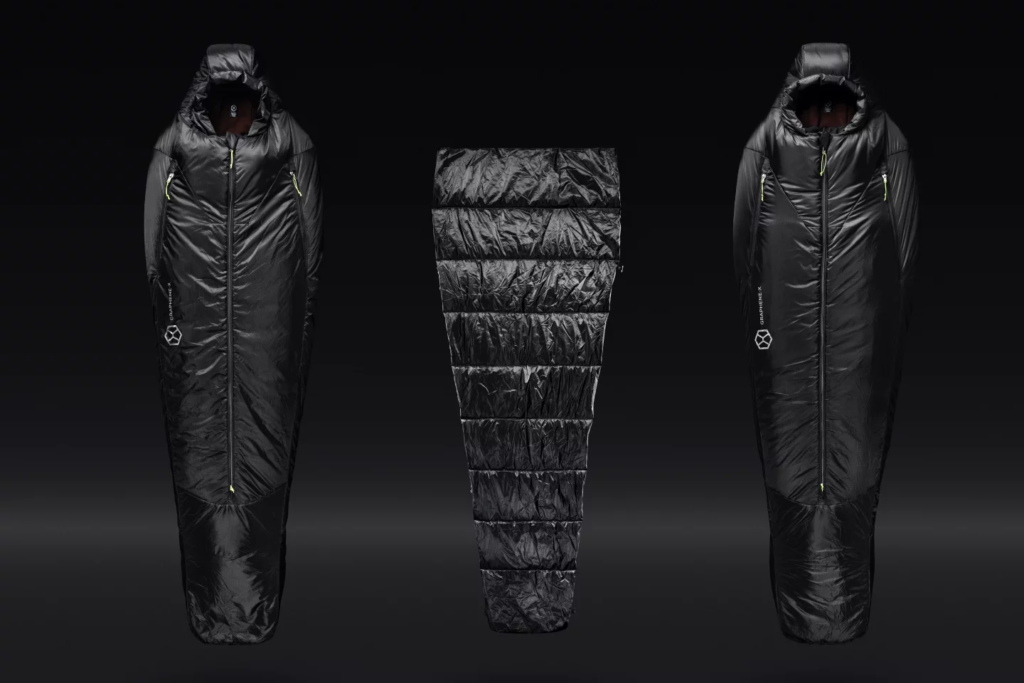
Graphene-X is a Hong Kong-based company that produces outdoor clothing and gear. This time around it’s entering the camping market with a product called the Tardigrade Sleeping System, currently available for backing on Kickstarter. The product is named after the tardigrade – a tiny organism famous for being one of the toughest life forms on Earth, capable of surviving temperatures between -272 °C and 150 °C (-458 °F and 302 °F). The new sleeping system from Graphene-X might not match that extreme range, but it’s promised to offer a good solution for both summer and winter camping. The complete Tardigrade Sleeping SystemGraphene-X With so many sleeping bags already available, it may seem like there’s little room for innovation. The team at Graphene-X sees this market differently though. The company argues that choosing the right sleeping bag still comes with a lot of compromises. And this is a fair point: a high-quality bag can be quite expensive, and we understandably expect a lot from it. Ideally, every camper wants a single solution that works across all seasons instead of buying several separate bags. And this is the main inspiration behind the Tardigrade Sleeping System. It’s not a single product, but rather a modular system that combines three components: Tardigrade Extreme – a winter-oriented sleeping bag rated down to -30 °C (-22 °F) and weighing 1.9 kg (67 oz) Tardigrade Lite – a lighter three-season sleeping bag rated down to -10 °C (14 °F) and weighing 1.4 kg (49 oz) Modular Cover – a thin layer with 150 g/m2 Graphinsulate fill that can be attached inside either sleeping bag using buckles for extra warmth. It weighs 334 g (12 oz) The biggest challenge was to make the whole system adaptive to different conditions, and that was achieved through a smart combination of materials. It involves two key technologies: Graphinsulate insulation and WAI (Weather Adaptive Insulation). Graphene is a one-atom-thick layer of carbon atoms arranged in a hexagonal structure. This material is incredibly strong and conducts heat very efficiently. It has a better warmth-to-weight ratio than down insulation and maintains its quality after multiple washes. The second important component is aerogel, an ultra-light material made by removing the liquid from a gel and replacing it with air. Because of its low density and strong insulating properties, it has been used in space missions by NASA. The aerogel fibers used in the sleeping bagGraphene-X The creators of Tardigrade integrated aerogel into polyester fibers by filling special internal fabric tubes with it. Those tubes can inflate or deflate depending on the temperature outside. This is part of the WAI system, which allows the sleeping bag to adapt to different weather conditions without becoming heavy or bulky. There are several additional features worth mentioning. One of the priorities for the team was to create a product that feels more like sleeping in a bed rather than in a sleeping bag, so a lot of effort went into reducing typical inconveniences. Sleeping in a traditional bag often feels like being in a cocoon where you can’t move freely, and need to unzip the whole thing to reach your phone or water bottle. To address this, Tardigrade features zippers just for the arm areas, so cold air doesn’t enter the bag as quickly. The sleeping bags stuff down into an included compression packGraphene-X Another common issue is sliding off the sleeping pad, and this was solved by adding stretchy hoops to the bags to hold the inflatable mattress underneath. Both versions (Extreme and Lite) are compatible with mattresses measuring 220 x 56-65 x 8 cm (86.6 x 22.0-25.6 x 3.1 in). Both sleeping bags come in the same size, measuring 210 x 80 x 50 cm (82.7 x 31.5 x 19.7 in). Tardigrade sleeping bags also feature an additional graphene layer at the foot end for added warmth, and an internal pocket. Early Kickstarter backers can get all three components for US$629, with a planned retail price of $979, or purchase them separately: Lite for $249, Extreme for $359, and the modular cover for $109. A compression packing bag is included in each system. Assuming the campaign is successful, shipping will begin in November. Tardigrade Sleeping System Source: Kickstarter Note: New Atlas may earn commission from purchases made via links. source

'Super sleeping bag' takes its name from near-indestructible micro-animal Read More »

Ferrari's first EV is a surprisingly practical 5-seater

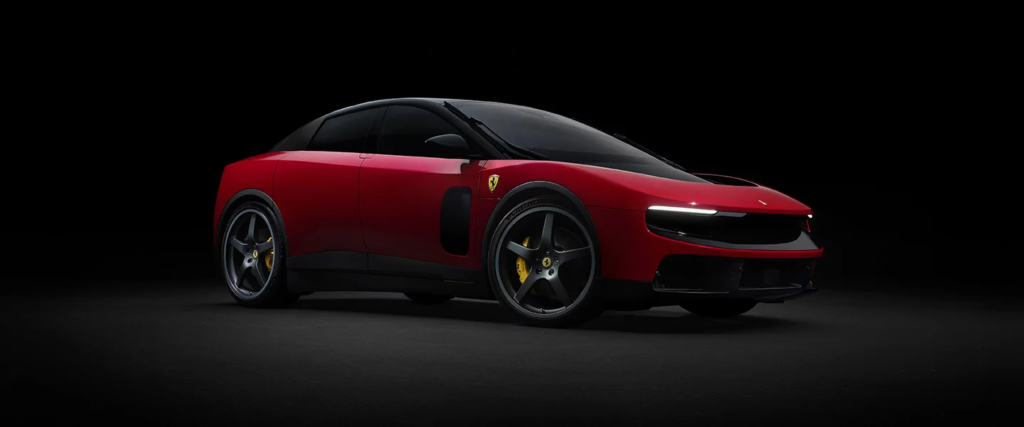
I certainly didn’t have a zero-emissions Ferrari sedan on my 2026 Bingo card, but that’s what we’re getting with the Luce. Its name is inspired by the brand’s focus on the future; it means light, the sort that shows you the way forward. Given the company’s done about nine hybrids thus far, this certainly sounds like the logical next step. Combining practicality with track-day performance in a way that the brand has never done before, the Luce is the first Ferrari to feature five seats. It also gets four F80-derived electric motors designed and built in-house in Maranello, making for a monstrous 1,035 hp and 730 lb.ft (990 Nm) of torque to keep up with today’s unnecessarily fast hypercars. The Luce features large 23- and 24-inch wheels, doors that open at the B-pillar, and a large glass house with a panoramic roofFerrari Appearance-wise, there’s a lot to take in here. The car has been designed by LoveFrom, a collective founded by the legendary Sir Jony Ive (who fashioned the iMac, iPod, and iPhone at Apple) and Marc Newson, both of whom are avid Ferrari collectors. The team collaborated deeply with Ferrari over the last five years to bring this to life. The Luce isn’t as aggressive-looking as any of Ferrari’s performance machines – but it accommodates plenty of aerodynamic elements for downforce and drag reductionFerrari While the company insists this is an electric Ferrari that shouldn’t simply be mistaken for any old EV, it does look rather tame compared to just about every other car from its stable. Indeed, it feels more like an industrial design product than the result of automotive designers pushing the boundaries as they adopt a wholly different technology. Up front, you’ve got slim daytime running lights above the headlights, and a sloping hood graced with a large front splitter. This makes for a sizeable air gap that allows air to flow over the seamless canopy for downforce at high speeds. Tall windshield wipers rest on either side of the glass house rather than resting in a well in front of the windshield to help maintain an aerodynamic profile. The hood gets a large front splitter to let air flow under it and over the seamless windshieldFerrari Instead of a prominent grille, you’ll find a series of vertical louvers that can open for airflow to enable cooling or close to reduce drag as needed. Let’s come around to the side. Large 23-inch and 24-inch wheels on the front and rear respectively give the Luce a bold profile, while the wheel arches allow air to flow through from the front to the back. Both doors open at the B-pillar with discreet door handles, revealing remarkably spacious interiors that should comfortably seat three in the rear. The Luce’s styling isn’t for every Ferrari fanFerrari On to the rear end, where you’ll find round taillights in groups of two that echo the F40 from the late 1980s. Large ventilation spaces surrounding them make the tail section appear inset into the vehicle’s structure. The sweeping glass house, meanwhile, dominates the mid-section, and features an optional panoramic roof. Refreshingly, LoveFrom has gone with a whole lot of analog touches across the interior to engage the driver. There are tactile controls for everything from switching driving and traction modes, to adjusting the temperature. This cabin design is arguably what really sets the Luce apart from anything else you can buy right now. Everything you touch in here is essentially metal, glass, and leather or Alcantara depending on your configuration. Each element, including knobs on the steering wheel, the launch control toggle, and the grab handles are all shaped and finished in such a way that you’ll enjoy interacting with them every time. There’s even a bit of drama in the way the key fob lowers into a slot on the central console to fire up the car. With metal, leather or Alcantara, and glass everywhere, the Luce’s cabin is designed for a tactile experienceFerrari I love how the cockpit gets circular dials that appear to be analog, but are actually digital displays that can subtly change what they show you depending on your driving mode and preferences. The center-mounted infotainment center can be swiveled around to face the driver or passenger, and it has a clock inset at the top right corner that can switch between functions like telling the time, a stopwatch, and more. There’s attention to detail to be found everywhere inside the Luce, down to the typography and this inset clock in the infotainment clusterFerrari That central screen can of course do Apple CarPlay, but what’s neat about it is that it’s got physical switches for adjusting temperature, seat heating and cooling, and other functions – and they’re beautifully integrated into the system for quick and intuitive interactions. Refreshingly, the majority of the car’s controls are physical knobs and switchesFerrari The team drew inspiration from an F1 steering wheel for the three-spoke example in here. It’s a lot simpler than the tech-heavy steering wheels we’ve seen in many other performance cars, with a view to reduce distracting you from the road ahead while still keeping the bare essentials – drive and traction modes – within easy reach. The electric all-wheel-drive powertrain, paired with a 122-kWh battery optimized to operate on an 800V architecture, can take you from 0-60 mph (0-100 km/h) in just 2.5 seconds. Not bad for a 5,070-lb (2,300-kg) sedan, which Ferrari says feels 1,000 lb (450 kg) lighter on its feet thanks to the control systems that adjust the four wheels independently 500 times a second. They’re tuned to provide assistance without interrupting your flow. Conservative driving, meanwhile, can get you up to 329 miles (529 km) on a single charge. Welcome the Ferrari Luce You can also look forward to a 21-speaker audio system with 3,000 watts output, an active suspension system, and a bunch of styling options to customize the interiors. Can you believe this is the rear seat in a Ferrari and

Ferrari's first EV is a surprisingly practical 5-seater Read More »

Bizarre triple zipper creates rigid 3-D shapes in seconds

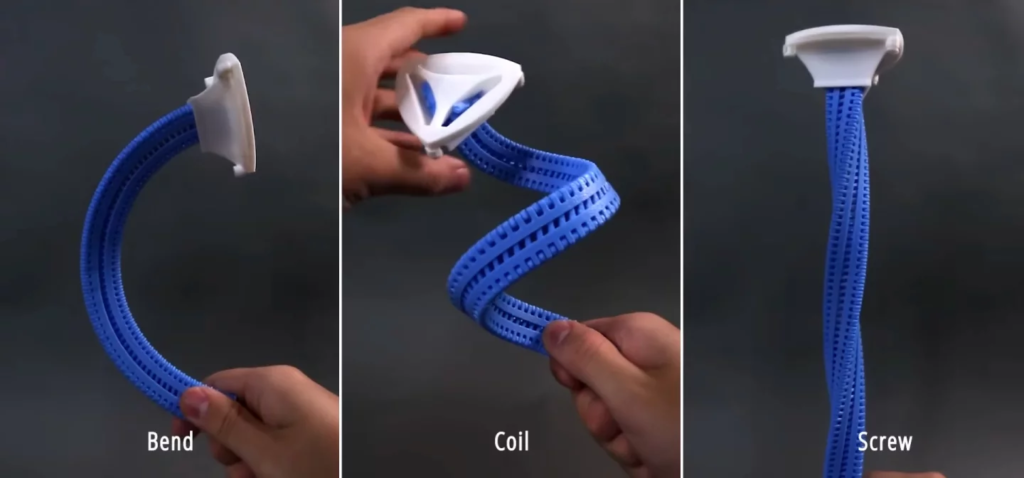
A patent filed in 1985 is being dusted off as a source of inspiration for a new 3D-printed triangular-shaped zipper that seamlessly fastens chairs, tents, robots and purses, making them simpler to pack and set up just with a press of a button. In 1985 William Freeman, then an electrical engineer at Polaroid but now an MIT Professor of Electrical Engineering and Computer Science, responded to an ad placed by the Innovative Design Fund in Scientific American. That ad offered support of up to $10,000 for innovative solutions for the clothing, housewares and textiles industry. Freeman came up with the three-sided zipper, which functioned just like a regular zipper but pulled up into a triangular tube that could easily transform items like chairs, tents and purses from soft form to full size making them simpler to carry and set up. His proposal was rejected but Freeman patented his prototype anyways, with the hope that the concept would be revisited in the future. Building on his concept, researchers at MIT CSAIL (Computer Science and Artificial Intelligence Laboratory) have now come up with an automated and adaptable fastener called the “Y-zipper.” Some of the various rigid forms the Y-zipper can take on, using different types of slidersTim Malieckal/MIT CSAIL “A regular zipper is great for closing up flat objects, like a jacket, but Freeman ideated something more dynamic. Using current fabrication technology, his mechanism can transform more complex items,” says MIT postdoc and CSAIL researcher Jiaji Li, lead author of an open-access paper on the project “We’ve developed a process that builds objects you can rapidly shift from flexible to rigid, and you can be confident they’ll work in the real world.” CSAIL’s 3D software modeling program aids users in envisioning how the Y-zipper will appear when zipped up while choosing customizations such as the length of each strip, the direction and angle it curves, as well how it will appear when straight, bent, coiled or twisted before printing a 3D model using plastics. The researchers stress-tested two types of plastic compounds commonly used in 3D printing: polylactic acid (PLA) and thermoplastic polyurethane (TPU) with a machine that bent the Y-zippers, finding that PLA handled heavier loads better, and TPU was more malleable. The team also machine-tested the Y-zipper through a cycle of continuously opening and closing to check its endurance limit before it snapped, reaching about 18,000 cycles. 3D software modeling showed that the elastic component was key to helping disperse the stress of big loads. When the Y-zipper is undone it resembles a three-tentacled squid, and when zipped up it forms a rod-like structure. It could have useful applications such as in camping equipment, with easy and fast pitching of a tent that normally can take “up to six minutes to do alone” but with the Y-zipper pares down to under two minutes. When used as the ribs of a tent, the Y-zipper drastically reduces setup timeTim Malieckal/MIT CSAIL The Y-zipper could be useful in the medical field. Researchers wrapped the Y-zipper around a wrist cast so the patient could adjust normally inflexible equipment to be more comfortable during daytime or night time usage depending on their needs. Other applications might include robotics, such as adaptive robotic quadrupeds. The robot could adapt the size of its legs either by zipping for height or unzipping for lowering down, which could be beneficial for the robot to manage exploring uneven surfaces such as forest areas or canyons. The team also built art installations with the Y-zipper, creating a long winding mechanical flower with a static motor that zipped up the installation imitating a flower in “bloom.” Li states there are still other applications in which the Y-zipper could be beneficial, such as space exploration where a built-in arm attachment could be used to gather rock samples, or in structures that can be constructed quickly such as emergency shelters or medical tents for use during catastrophes and rescues. Y-Zipper: 3D Printing Flexible-Rigid Transitions in One Click Source: MIT source

Bizarre triple zipper creates rigid 3-D shapes in seconds Read More »

Mag-locking carabiner keychains boast three levels of security

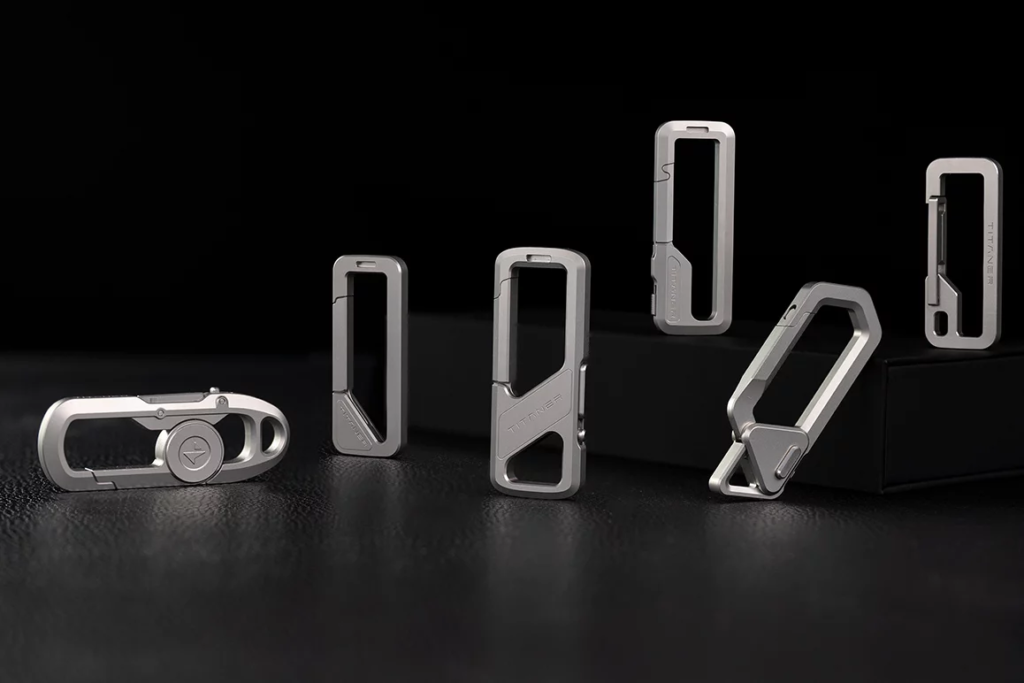
Titaner is a company that has been producing titanium everyday carry (EDC) gear for more than 20 years. Its products typically focus on compact form, durability, and smart mechanical design. Its latest offering is called the Titaner Matrix. Currently available on Kickstarter, it’s a series of titanium carabiner keychains built around a unique multi-level locking system. Standard keychains are usually treated as simple accessories. They often have fun designs and don’t cost much. Over time, however, the mechanism can loosen, increasing the risk of accidental opening. The consequences of losing keys can be very unpleasant and also pricey: not only do you need to replace the keys, but you may also have to deal with locksmith services, car towing fees, and maybe even replacing an entire lock for your house. This realization became the inspiration behind the Matrix. The main idea was to create a secure keychain that prevents accidental release and keeps your keys safely secured at all times. The full Titaner Matrix lineupTitaner Security has been Titaner’s focus for some time now. Previously, the company introduced a zipper lock, and this concept has now expanded into a full lineup of carabiners called the Matrix Family. It’s not just one product, but rather a whole series of keychains that vary in size, shape, security level, and price range, so everyone can find something for their individual needs. The naming system combines the series type, security level, and production year. There are currently three levels of security, which represent the number of locking mechanisms. Level 1 uses a basic autolock system that offers the fastest access. Level 2 has both an autolock and a toggle switch to reduce accidental opening of the carabiner, while Level 3 combines the autolock, toggle switch, and an additional release button for extra security. The creators assure us that even the keychains with Level 3 are designed to be easy and intuitive to use, with locking and unlocking taking just one second. The Titaner Matrix S3Titaner Traditional springs inevitably lose tension after thousands of presses. Since Titaner aims to create lifetime products, it replaced the standard mechanical spring with a more stable and long-lasting magnetic system. The magnetic spring structure is powered by precision-aligned neodymium magnets that rely on controlled magnetic repulsion. Titaner claims that this mechanism feels smoother and can withstand up to one million presses without noticeable rebound loss. As for the different series, each level includes models with slightly different shapes and configurations. For example, the G3 measures 70 x 27 x 5.5 mm (2.76 x 1.06 x 0.22 in), making it the largest product, while the N1 measures 61 x 24 x 5 mm (2.4 x 0.94 x 0.20 in), making it the most compact version. The L series is the lightest and the most affordable option, and it is also the only version that uses a conventional spring. All other keychains in the lineup feature the magnetic spring system. Backers can choose between Micro-Blasted Titanium and DLC Black finishesTitaner Made from Grade 5 titanium, the carabiners are designed to withstand both heat and cold, while also resisting bending and corrosion. Every edge is chamfered through CNC machining to help prevent scratches inside the pocket, which often happens with cheap keychains. Importantly, even though the Matrix is claimed to be extremely durable, those carabiners are not intended for use in climbing. The Titaner Matrix is available in two finishes: Micro-Blasted Titanium and DLC Black. The product also includes optional tritium tube inserts for better visibility in the dark. Every model comes with a 32-mm (1.26-in) stainless steel key ring. The L1 is the most affordable option overall – it’s available to early backers for a pledge of US$29, with a planned retail price of $42. Models with the magnetic spring are more expensive and start at a pledge of $39, with a retail price of $59. If the Kickstarter campaign is successful, shipping is expected to begin in September. Titaner Matrix: The 3-Level Keychain Security System Source: Kickstarter Note: New Atlas may earn commission from purchases made via links. source

Mag-locking carabiner keychains boast three levels of security Read More »