Mag-locking carabiner keychains boast three levels of security

Titaner is a company that has been producing titanium everyday carry (EDC) gear for more than 20 years. Its products typically focus on compact form, durability, and smart mechanical design. Its latest offering is called the Titaner Matrix. Currently available on Kickstarter, it’s a series of titanium carabiner keychains built around a unique multi-level locking system. Standard keychains are usually treated as simple accessories. They often have fun designs and don’t cost much. Over time, however, the mechanism can loosen, increasing the risk of accidental opening. The consequences of losing keys can be very unpleasant and also pricey: not only do you need to replace the keys, but you may also have to deal with locksmith services, car towing fees, and maybe even replacing an entire lock for your house. This realization became the inspiration behind the Matrix. The main idea was to create a secure keychain that prevents accidental release and keeps your keys safely secured at all times. The full Titaner Matrix lineupTitaner Security has been Titaner’s focus for some time now. Previously, the company introduced a zipper lock, and this concept has now expanded into a full lineup of carabiners called the Matrix Family. It’s not just one product, but rather a whole series of keychains that vary in size, shape, security level, and price range, so everyone can find something for their individual needs. The naming system combines the series type, security level, and production year. There are currently three levels of security, which represent the number of locking mechanisms. Level 1 uses a basic autolock system that offers the fastest access. Level 2 has both an autolock and a toggle switch to reduce accidental opening of the carabiner, while Level 3 combines the autolock, toggle switch, and an additional release button for extra security. The creators assure us that even the keychains with Level 3 are designed to be easy and intuitive to use, with locking and unlocking taking just one second. The Titaner Matrix S3Titaner Traditional springs inevitably lose tension after thousands of presses. Since Titaner aims to create lifetime products, it replaced the standard mechanical spring with a more stable and long-lasting magnetic system. The magnetic spring structure is powered by precision-aligned neodymium magnets that rely on controlled magnetic repulsion. Titaner claims that this mechanism feels smoother and can withstand up to one million presses without noticeable rebound loss. As for the different series, each level includes models with slightly different shapes and configurations. For example, the G3 measures 70 x 27 x 5.5 mm (2.76 x 1.06 x 0.22 in), making it the largest product, while the N1 measures 61 x 24 x 5 mm (2.4 x 0.94 x 0.20 in), making it the most compact version. The L series is the lightest and the most affordable option, and it is also the only version that uses a conventional spring. All other keychains in the lineup feature the magnetic spring system. Backers can choose between Micro-Blasted Titanium and DLC Black finishesTitaner Made from Grade 5 titanium, the carabiners are designed to withstand both heat and cold, while also resisting bending and corrosion. Every edge is chamfered through CNC machining to help prevent scratches inside the pocket, which often happens with cheap keychains. Importantly, even though the Matrix is claimed to be extremely durable, those carabiners are not intended for use in climbing. The Titaner Matrix is available in two finishes: Micro-Blasted Titanium and DLC Black. The product also includes optional tritium tube inserts for better visibility in the dark. Every model comes with a 32-mm (1.26-in) stainless steel key ring. The L1 is the most affordable option overall – it’s available to early backers for a pledge of US$29, with a planned retail price of $42. Models with the magnetic spring are more expensive and start at a pledge of $39, with a retail price of $59. If the Kickstarter campaign is successful, shipping is expected to begin in September. Titaner Matrix: The 3-Level Keychain Security System Source: Kickstarter Note: New Atlas may earn commission from purchases made via links. source

Mag-locking carabiner keychains boast three levels of security Read More »

Why is Valentino Beauty throwing a house party?

Valentino Beauty is bringing its “Born in Roma” universe to Singapore this June with a “House party” pop-up at CQ @ Clarke Quay, reimagining nostalgia, fragrance and nightlife culture as an immersive brand experience. Running from 5 to 14 June 2026 at CQ @ Clarke Quay, the activation marks the Southeast Asian debut of ‘Born in Roma purple melancholia’. The pop-up follows its global introduction in London and translates the concept through Singapore’s own cultural lens, where memory, music and modern city life collide. At the centre of the experience is a multi-room “House” that reinterprets familiar domestic spaces through a nostalgic 90s and early-2000s lens. Visitors move through the living room, kitchen, teen’s room and master bedroom, each layered with retro broadcast textures, scent moments and beauty touchpoints. The concept positions nostalgia not as sentimentality, but as a creative trigger for self-expression and reinvention. Don’t miss: How luxury pop-ups are redefining exclusivity  “House party” activation during London Fashion Week 2026 The launch introduces the new fragrance duo to the region. ‘Born in Roma purple melancholia Donna’ is built on plum and Madagascar vanilla, while ‘Uomo’ blends cardamom and coconut over an ambery woody base. Together, the scents reframe melancholia as a space for imagination and creative depth rather than absence. Beauty sits within the environment rather than beside it. Valentino Beauty’s makeup icons, including the ‘Spike lip’ (disco balm, matte and dew shine), ‘Colour crush blush’, ‘Go-cushion glow’ and ‘V-filter powder’, are integrated into the rooms, encouraging visitors to experiment and build looks as they move through the space. The activation also leans into music-led culture moments. Two DJ sessions will take place on 6 and 13 June, transforming the space into a day-to-night social experience with regional guest DJs. Entry is complimentary via registration on Eventbrite, with time-slot ticketing due to capacity limits. Beyond fragrance and beauty, the brand is extending the experience through local collaborations. Birds of Paradise is translating the scent profiles into artisanal ice cream, Equate Coffee is introducing a bespoke drinks menu, and Concocted Affairs is serving cocktails and mocktails inspired by the collection’s mood. The pop-up runs daily from 11am to 8pm on weekdays and Sundays, and 11am to 11pm on Saturdays. Valentino Beauty said the “House party” is designed to explore “legendary nights and the emotional power of gathering”, positioning the home as a space where beauty, culture and emotion intersect. Luxury beauty brands have increasingly turned to immersive pop-ups to deepen storytelling and drive discovery beyond traditional retail environments, particularly within fragrance where emotion, memory and sensory interaction play a central role. From themed cafés to gamified installations and social-first spaces, brands are leaning into experiential formats that blur beauty, culture and entertainment to create longer-lasting consumer engagement. One recent example came from Marc Jacobs Fragrances, which launched an experiential pop-up in Singapore in April for its Daisy Marc Jacobs x Takashi Murakami collaboration. Held at 265 Beach Road, the activation transformed the fragrance collection into a multi-zone sensory playground featuring colour-coded scent rooms, bottle-painting stations, themed treats, claw machines and blind-box discovery experiences. The campaign extended the collaboration’s pop-art visual identity into a physical retail space designed around play, immersion and social sharing. Related articles:   How Coach is winning over Gen Z one experience at a time Luxury goes pop: How music videos are the new catwalks for high fashion brands   Louis Vuitton unveils exclusive Murakami pop-up in Singapore  source

Why is Valentino Beauty throwing a house party? Read More »

Surprising osteoporosis warning sign found in the eyes

For many people, osteoporosis is only diagnosed following their first broken bone. Finding a cheap, accessible method for predicting this common bone-weakening condition early could help prevent the pain, debilitation, and potential death from serious fractures in more people around the world. A recent study led by researchers from the Duke-NUS Medical School in Singapore has shown that the inside of a person’s eye could hide signs of declining bone density. The results could lead to new screening tools that indicate who may be at increased risk of developing the disease. Osteoporosis is a chronic condition that affects around one in five people around the world. It arises as bones lose minerals faster than they can be replaced, resulting in a weaker, more brittle skeleton prone to breaking. Driven by aging and changes in hormones, it’s a disease linked closely with menopause, with women over the age of 50 accounting for around 80% of known cases. It’s also likely that the condition is underdiagnosed in men, adding further incentives to improve screening tools. Right now, the gold-standard method for measuring bone mineral density is via dual-energy X-ray absorptiometry (DEXA). Despite being accurate and noninvasive, the procedure isn’t cheap, nor is it widely accessible, relying on large, expensive devices to deliver the low doses of radiation to targeted areas of the body. That means in practice, it is reserved for those most in need, such as those who have already experienced a serious fracture. Having an inexpensive and mobile means of distinguishing who may benefit from health interventions long before they break a bone could be a literal lifesaver for many. Blood vessels running across the retina inside the eye are sensitive to a variety of changes in the body, including factors connected to osteoporosis. “However, direct evidence connecting retinal aging to bone mineral density loss remains limited, and few studies have examined whether a homogeneous biological aging process underlies changes in both tissues,” the researchers write in their recently published report. To determine whether a map of the eye’s interior may provide a sound indication of osteoporosis risk, the researchers behind this latest study turned to a system called retinal biological aging marker, or RetiAGE. Based on a deep-learning analysis of retinal scans, RetiAGE uses images of vasculature within the eye to predict a person’s age. The team compared retinal scans from just under 2,000 adult participants with their DEXA scores, finding ‘old’-looking retinas were more likely to have lower bone densities. A second investigation confirmed the link using retinal images and medical records taken from nearly 44,000 participants in the UK Biobank. The association was consistent across men and women and was further strengthened when combined with existing tools for predicting osteoporosis risk. While the RetiAGE model was trained on more than 100,000 eye images, they were largely of individuals of Korean descent, limiting the tool’s predictive power. Expanding the database of retinal scans and testing the process in other demographics could determine whether the retina truly is a suitable window into bone health. This research was published in PLOS Digital Health. Fact-checked by Bronwyn Thompson source

Surprising osteoporosis warning sign found in the eyes Read More »

Earth’s outer core reversed direction in 2010 and scientists may finally know why

Deep beneath the Pacific near the equator, Earth’s outer core now flows east instead of west. Dynamics deeper within our planet’s core may help explain the change and what to expect in the near future. A recent analysis in the Journal of Studies of Earth’s Deep Interior combines data from ground observations, the European Space Agency’s Swarm and Cryosat missions, the German Challenging Minisatellite Payload, and Denmark’s Ørsted Earth science satellite to reveal that the perplexing reversal more than 1,400 miles (2,200 km) beneath the surface began in 2010 and is now weakening once again. The findings point to events afoot deep within the very heart of the planet, providing critical insights into the dynamics that churn away within. Earth’s core is a hot, dense ball of iron and nickel spinning within a thick mineral soup. The movements of these materials are largely responsible for the generation of our planet’s protective field – a fluctuating shell of magnetism extending tens of thousands of miles into space. Monitoring changes in this field using equipment on the ground and in orbit can reveal details on the inner core’s rotation and the outer core’s flow. Models based on such data indicate that the liquid outer core has weak, westward flow primarily caused by a large, off-center pattern of circulating material known as the eccentric planetary gyre. An area near the equator, deep beneath the Pacific, is considered to be relatively unaffected by this gyre, though geologists have assumed the entire outer core has remained relatively stable in its overall motion. Several years ago, studies of core-surface waves suggested this region was no longer following the weak, westward trend and was instead flowing strongly in an easterly direction. To gain a better understanding of this reversal, a team of researchers led by University of Edinburgh PhD candidate Frederik Dahl Madsen used variations in geomagnetic data collected between 1997 and 2025 and three different modeling techniques to construct a more detailed timeline of Earth’s core-surface flow. By breaking down their description into its fundamental components, their new model predicted the imbalanced influences of the gyre and other deep planetary forces on waves moving along the core’s surface, determining that the flip took place around 2010 and has been slowly weakening again since 2020. They also hypothesized that the reversal may be a consequence of events that took place deeper within the planet’s core that same year, pointing out seismic signatures that marked changes in periodic cycles and the appearance of magnetic waves along the core surface soon after. While it seems as if the reversal may be short-lived, the swinging pendulum of turbulence and oscillating rotations suggests this might not be the last time we see such dramatic changes in our outer core’s flow, and it could help us predict the chaos of our planet’s protective magnetic shield. “The large-scale flow reversal beneath the Pacific raises new questions about the behavior of Earth’s deep interior,” says Dahl Madsen. “Scientists now want to understand whether the reversal represents a short-lived fluctuation, part of a repeating oscillation, or a new stable equilibrium for core circulation. Continued monitoring will be essential to determine how the flow evolves over the coming years.” This research was published in the Journal of Studies of Earth’s Deep Interior. Source: European Space Agency Fact-checked by Bronwyn Thompson source

Earth’s outer core reversed direction in 2010 and scientists may finally know why Read More »

Marriott Bonvoy checks Singaporeans into an endless staycation loop

Marriott Bonvoy has launched a three-episode comedy series, in collaboration with creative agency :Teeth, as the hospitality group looks to reposition staycations as an everyday lifestyle choice rather than a once-in-a-while indulgence. Titled “The never-ending staycation”, the campaign was built around the insight that while staycations are already embedded in Singapore culture, they are often reserved for birthdays, anniversaries or special milestones. Through the series, Marriott Bonvoy aims to show there is always another reason to check in, with 19 participating hotels across Singapore. The campaign stars singer-songwriter Annette Lee, who takes on three recurring roles throughout the series: Tiffany, a part-time influencer; Mei Lin, a busy mother; and Sharon, a retired aunty. Don’t miss: Marriott Bonvoy hits the fast lane with F1’s Mercedes team in star-studded travel series Across the episodes, the characters repeatedly cross paths at different hotels while awkwardly attempting to explain why they are back for yet another staycation. Each character was designed to reflect different motivations behind local staycations. Tiffany uses them for self-care, friendships and relationship time, while Mei Lin turns to them to reconnect with family and escape daily routines. Meanwhile, Sharon embraces staycations as a way to celebrate herself, enjoy good food and spend time people-watching without needing a major occasion. Filming took place across Courtyard by Marriott Singapore Novena, JW Marriott Hotel Singapore South Beach and The Singapore EDITION, with each property representing different styles of escape ranging from family-friendly to urban luxury. Rather than centring the series on individual hotel brands, the campaign positions the wider Marriott Bonvoy portfolio as offering different experiences for different moods and occasions. The hero content is being distributed through Lee’s personal social channels, supported by trailers, key visuals and short-form cutdowns across Marriott Bonvoy’s own platforms. The campaign has also expanded into a consumer activation at Frasers House, a Luxury Collection Hotel, Singapore through “The never-ending staycation giveaway”. Consumers can enter through Instagram by following the property, tagging two friends and sharing their reasons for wanting a staycation. Fifteen winners will receive a two-night stay, while another 15 will receive dining vouchers for Man Fu Yuan, Luce and The Lobby Lounge Afternoon Tea. “We didn’t want to simply tell people there are 19 hotels to choose from,” said Mikey Batt, creative director at :Teeth. “We wanted to give them characters, stories and reasons to keep watching. The idea behind the campaign is that one great stay is never the full story. So instead of making one ad, we made a series.” The latest push comes as Marriott Bonvoy continues to sharpen its positioning around everyday travel experiences. Earlier this year, Marriott International teamed up with BBH Singapore to launch an Asia Pacific campaign titled “Loyalty’s just that easy“. The campaign aimed to reposition Marriott Bonvoy’s loyalty programme as simple and accessible for all travellers, rather than being reserved for frequent flyers or business travellers. It also highlighted how consumers could earn points through everyday experiences such as hotel stays, dining and spa visits. At the centre of the campaign was a hero film following an everyday traveller discovering Marriott Bonvoy for the first time and realising that even small moments of relaxation could earn loyalty points. Related articles: Marriott Bonvoy celebrates the art of wine and food pairing across HK   Marriott Bonvoy, Bank Mandiri launch Indonesia’s first co-branded travel credit card   Marriott Bonvoy pours local pride into travelling coffee rave source

Marriott Bonvoy checks Singaporeans into an endless staycation loop Read More »

I predicted the enhanced games 25 years ago. Here’s what I think now.

Never considering myself much of a writer in my youth, I entered the Young Queensland Writers’ Award in Australia with a throwaway short story I’d whipped up on a whim one weekend in my early twenties. In just a few thousand words, it described a world nostalgic for athletic records, in which an Olympics-style event was established for competitors willing to be pharmaceutically enhanced. It centered on one hopeful entrant and his dream of gold. At the cost of their long-term health, people could juice up on the latest drugs and literally run their little hearts out in the name of riches and glory. Of course, the true competitors in the story were Big Pharma, vying with one another to develop compounds that could push the human body to absurd limits. The story fell short of first place, but it earned me a consolation prize and a conversation with the judges over the wild fantasy of an enhanced Olympics. Two decades later, I wrote a book on the definition of health, called Unwell. In writing it, I interviewed scientists about their views on disability and technology in sport. I was reminded again of my short story – only in light of my research, I was feeling far less whimsical about my fiction. Forced to consider the blurred lines between biology and technology in physical competition, especially in the Paralympics, I found that the philosophy of sport itself is far more malleable than I’d ever considered. Gone are the days when a finish line determines which naked Greek has the fastest, strongest physique. Now it’s about nutrition as much as metabolism. Shoes as much as grit. The trainer as much as the mindset. The finance as much as the experience. So, why not the dope as much as the drive? It’s 2026. Artificial intelligence, driverless cars, and drone warfare make it hard to deny that we are now living in a version of the future that a 22-year-old me would have pictured. And at last, after several years of controversial debate, we have it. The inaugural “Enhanced Games” in Las Vegas. Olympics on steroids. You know there’s more, the official website tells us. Announced in 2023 and founded by Australian businessman Aron D’Souza, CEO of an AI tech firm backed by the likes of Peter Thiel, the games were sold as a way to change how we do sports. Performance-enhancing drug tests are out. FDA-approved pharmaceuticals are in. Doping is, after all, inevitable, and harder to weed out. So, why not lower the barriers? “People love to watch events like the Olympic Games to see humans test the limits of their abilities, and this takes that idea one step further,” says Matthew Dunn, a researcher in performance and image-enhancing drugs at the Institute for Health Transformation at Deakin University in Australia. “People have been using substances to enhance their athletic abilities for millennia, and this is no different.” Whether it’s “one step” or a 10-story pole vault is a question now being debated. At its core, it is a matter of ethics that goes beyond sports and into society’s obligation to protect individuals from choices that put their health at risk. In an age where we’re putting protocols in place to protect college footballers from traumatic brain injuries, should we permit experimenting with drugs that risk long-term damage in the name of sport? “The Enhanced Games are a unique opportunity to see how illegal methods and substances can impact sports performance,” argues sport scientist Kagan Ducker, the Head of Program for Exercise Science at Curtin University in Australia. The right to be a guinea-pig aside, the question of what we’re truly cheering over is a question laid bare by the games. Ducker goes on to say, “While most sports viewers are used to seeing fairly equal athletes competing against each other, what they will see at the Enhanced Games is a quite diverse set of athletes with diverse preparations, because these aren’t a nice equal group of world finalists in their sports, there are some medal-quality athletes competing against elite but much lower-ranked athletes, and that alone will likely create diversity in results and a poor viewing experience.” Perhaps bizarrely, competitors were all classified by their “chromosomal sex”. You know, to avoid controversy. After all, you can pop whatever FDA-approved pills or wear augmented shoes and suits, but hey, we can’t have trans folk bringing unfair advantages to this unfair competition. In many ways, we’re continuing to struggle with the philosophical foundations of sport. Just what defines competing? Muscle against muscle? Testosterone against testosterone? Pharma against pharma? Should it matter? It’s with perhaps a touch of irony that despite promises of shattering the biological ceiling holding back world records, only a single record was actually broken, by Greek swimmer Kristian Gkolomeev (aided by a synthetic supersuit and months of performance-enhancing drugs). Even then, he shaved just 0.07 seconds off the record in a 50-meter freestyle event. Perhaps it’s early days for this new chapter in sporting history. If it continues, The Enhanced Games may one day take the world’s best athletes while young, foster their dreams, marry them with the best enhancements sponsorship money can buy, and send them forth to crack the three-minute mile, the 90-minute marathon, or the 9-second 100-meter dash. At the end of my consolation prize-winning story all those years ago, my protagonist was overtaken at the last second in a blur of fur and spots, as a man with cheetah genes tore past. All of those body-destroying drugs for nothing, as the age of genetic enhancements had arrived. Which is ludicrous, of course. The Enhanced Games would never allow such a thing. We all have our limits when it comes to what we’d do for gold and glory, after all… source

I predicted the enhanced games 25 years ago. Here’s what I think now. Read More »

Your handwriting might reveal more about your brain than you realize

Many of us probably don’t get much time to put pen to paper these days, with our world of correspondence now dominated by digital communication. But a new study from Portugal’s University of Évora suggests that changes in handwriting could be an early red flag of serious age-related cognitive decline. While we don’t think a whole lot about our handwriting as we scrawl it (besides how much slower it is than sending an email, perhaps), the process involves a lot of coordination between our brain and networks of muscles guiding locomotion. And the researchers believe that while everyone has different mental aptitude when it comes to what they’re writing about, how they’re writing it is the key. One hallmark of early cognitive decline can be seen in the way we put things on paper, producing signs that the brain isn’t coping with the complex sensory interactions that allow us to write at speed. If the brain isn’t processing the information you take for granted when writing, it could be because it needs to step down a gear to process the signals it’s receiving. “Writing is not just a motor activity, it’s a window into the brain,” said senior author Dr Ana Rita Matias, an assistant professor at the University of Évora. “We found that older adults with cognitive impairment displayed distinct patterns in the timing and organization of their handwriting movements. Tasks involving higher cognitive demands showed that cognitive decline is reflected in how efficiently and coherently handwriting movements are organized over time.” The team examined handwriting characteristics in 58 older adults aged between 62 and 92 years living in aged-care facilities. These characteristics included speed and stroke organization – features that show a marked difference in people with cognitive decline. In this cohort, 38 people had cognitive decline reported in their medical history. All participants performed two tasks using an inking pen on a tablet. To many of us, the tasks might seem simple – participants were required to draw 10 horizontal lines on a page within 20 seconds and mark 10 dots or more within the same time frame. Then, the researchers conducted two copying and two dictation exercises while recording handwriting speed. “Timing and stroke organization are closely linked to how the brain plans and executes actions, which depends on working memory and executive control,” explains Matias. “As these cognitive systems decline, writing becomes slower, more fragmented, and less coordinated. “In contrast, other features can remain relatively preserved, especially in the early stages of cognitive decline, making them less sensitive indicators,” she adds. The scientists found that these simple tasks were not reliable indicators of potential cognitive decline, nor was a copying exercise undertaken by the 58 participants. The copying task – more demanding than the lines and dots, but less demanding than writing from dictation – offered subtle, indistinct signs of the brain’s condition. However, the dictation exercise – which involved listening, processing, and then writing – was more revealing. “Dictation tasks are more sensitive because they require the brain to do multiple things at once: listen, process language, convert sounds into written form, and coordinate movement,” says Matias. “Even within dictation tasks, differences can emerge. A longer, less predictable, or linguistically demanding sentence places greater strain on cognitive resources.” Among the 38 individuals with a medical history of cognitive impairment, start time and number of strokes differed from those of the others in the group in the dictation task that featured short sentences – the simpler exercise. When sentences became more complex, not two but three indicators set the participants apart – handwriting vertical size, start time and duration. While cognitive decline is more complex to diagnose, the researchers believe these results offer a practical test for healthcare professionals to monitor brain health in a low-cost, non-invasive way. And the authors point out the study has limitations, including the limited population involved and omitting potential influences like medication that could impact writing performance and speed. “The long-term goal is to develop a tool that is easy to administer, time-efficient, and affordable, allowing integration into everyday healthcare contexts without requiring specialized or expensive equipment,” adds Matias. The study was published in the journal Frontiers in Human Neuroscience. Source: University of Évora via EurekAlert! Fact-checked by Mike McRae source

Your handwriting might reveal more about your brain than you realize Read More »

Penguin-inspired material can switch between heating and cooling modes

You know that frustration after you gear up for a snowy day, only to have to take it all off in a heated office? Well, penguins don’t. Come sweltering heat or frigid cold, they just chill. Inspired by these clumsy masters of thermal management, scientists have created a material that can passively switch between heating and cooling modes. The material – developed by a joint team of researchers from Harbin Institute of Technology, Henan Normal University, and Suzhou Laboratory – can absorb sunlight to heat up, reflect sunlight to stay cool, and even block or transmit microwaves depending on temperature. It also repels ice and water. Earth’s tilt and orbit create seasons with wildly shifting temperatures. Some regions can swing from blistering summer heat to deep winter freezes within the same year. To stay comfortable in these extremes, we’ve engineered countless thermal management technologies. On the passive side of things, we use specialized coatings and materials on vehicles and infrastructure to either absorb heat or keep it out. The problem, as we’ve established, is that the temperatures don’t stay the same, and materials are usually good at either one thing or the other. A surface that is excellent at rejecting heat in summer may become horribly wasteful in winter, reflecting away useful solar warmth. As if the thermal issues were not enough, modern technology has made things even messier. We now coexist with antennas, wireless communications systems, radar equipment, sensors, satellites, drones, and increasingly crowded electromagnetic environments. Unfortunately, thermal management and electromagnetic control sort of cancel each other out. Cooling materials are usually designed to reflect sunlight and avoid absorbing energy. Microwave shielding materials, on the other hand, often rely on electrical conductivity and strong electromagnetic interactions – properties that can also increase heat absorption. Trying to combine both capabilities into one material system without compromising either has been extremely difficult. Engineers have developed excellent thermal coatings that can either heat or cool. They have also created excellent electromagnetic shielding materials. But a material that can dynamically switch between heating and cooling while simultaneously changing how it interacts with microwaves has remained the stuff of science fiction. Until now. The researchers created a “Janus” film, named after a two-faced god in Roman mythology, that does exactly this. At the heart of the design is a material called vanadium dioxide (VO₂), a rather strange compound famous for its split personality. At lower temperatures, VO₂ behaves like an insulator. When it’s heated to around 68 °C (154 °F), however, it abruptly switches to a much more conductive, metal-like state. That transition causes its electrical resistance to plummet by roughly four orders of magnitude, about a 10,000-fold change. This dramatic switch is what allows the film to manipulate microwaves dynamically. To build the material, the researchers embedded VO₂ into microscopic fiber-like structures within a flexible polymer layer. One side of the film acts as the “heating” side. It strongly absorbs sunlight, about 94.5% of incoming solar energy, allowing the material to warm under illumination rapidly. In laboratory tests, the surface reached temperatures of around 73 °C (163 °F), roughly 52 °C above ambient. Outdoor testing pushed temperatures even higher, to around 87 °C (188 °F). As the VO₂ heats and transitions into its conductive state, those embedded microscopic structures begin forming conductive pathways throughout the material, fundamentally changing how the film interacts with microwaves. At room temperature, microwave signals largely pass through the film with minimal loss. Once heated, however, the material effectively flips modes and begins to strongly absorb and reflect microwaves instead. The researchers demonstrated broadband microwave modulation over the 8.2 to 40 GHz frequency range, spanning several important radar and communications bands. In the X-band, commonly used in radar and satellite communications systems, the effect became particularly dramatic. Microwave transmission dropped from 83.6% to just 0.06% after heating, while shielding effectiveness exceeded 30 dB, well above practical electromagnetic interference-blocking thresholds. To make the behavior easier to visualize, the researchers demonstrated a Bluetooth connection operating normally at low temperatures before being cut off after heating the material. All that is only one side of the film. The opposite face is engineered for the exact opposite purpose: cooling. This cooling layer uses silica particles and a porous structure to scatter and reflect sunlight while simultaneously emitting thermal energy extremely efficiently in the mid-infrared spectrum, the region through which heat can escape into the sky. The cooling side reflects over 90% of incoming sunlight while achieving a mid-infrared emissivity of 97.1%. In outdoor testing, it maintained temperatures roughly 4–12 °C below ambient conditions. So the same sheet can effectively behave like a solar heater on one side and a radiative cooling system on the other. The penguin inspiration comes from how the animals manage heat using layered structures, directional insulation, waterproofing, and environmental adaptation. Penguins are essentially masters of thermal management engineering wrapped in feathers. The film also borrows another useful penguin trait: water resistance. Both sides of the material are superhydrophobic, meaning water beads up and rolls off the surface instead of spreading across it. In addition to keeping the surface clean, this characteristic provides the film with anti-icing and de-icing capabilities. During testing, freezing was delayed by up to 812 seconds. Even under relatively weak sunlight and temperatures around -6 °C (21 °F), accumulated ice melted within roughly 17.4 minutes. Thermal management materials already exist, so do microwave shielding materials, radiative cooling coatings, and anti-icing surfaces. But integrating all those capabilities into a single adaptive material without relying on motors, active mechanical systems, or complicated electronics is what makes the project immensely interesting. Buildings, for example, could potentially use one side of the film during colder seasons to absorb solar heat, then switch orientations during hotter periods to reduce cooling loads. The researchers estimate annual energy savings of around 38.9 MJ per square meter, equivalent to roughly 11 kWh. Vehicles and aircraft could use adaptive thermal skins that dynamically regulate both temperature and electromagnetic signatures. Outdoor electronics enclosures could potentially allow wireless

Penguin-inspired material can switch between heating and cooling modes Read More »

Xiaohongshu Business outlines three major outbound travel trends at the Singapore Outbound Tourism Forum

The 2026 Xiaohongshu Business x Singapore Outbound Tourism Forum was convened in Singapore, bringing together representatives of the Singapore Tourism Board, senior executives from the global cultural tourism sector, and Xiaohongshu’s marketing leadership to examine sustainable growth opportunities within China’s outbound travel market. The forum addressed the structural transformation of consumer demand and travel behaviour, positioning data-driven collaboration as a pathway for industry growth across the Asia Pacific region. From landmark tourism to interest-driven travel: A structural shift in consumer behaviour In the post-pandemic period, Chinese outbound travel has undergone a fundamental shift in consumer behaviour, with traveller preferences evolving beyond traditional destination-based planning. Platform data indicates that more than 130 million users engage monthly to discuss and plan international travel, with over 90% conducting targeted searches for specific information, including accommodation options, family travel guidance, and itinerary planning upon arrival (data source: Xiaohongshu Data Center, January–December 2025). Interest has also emerged as the primary determinant of travel decisions, reflecting a broader transition in user behaviour from destination-centric planning to interest-led exploration. Tim Zhang, general manager of Xiaohongshu’s commercial cross-border and internet industry group, characterised the approach of younger travellers as an experiential discovery – approaching each destination as a unique experience to be explored rather than a predetermined itinerary. A growing proportion of travellers return to the same destination repeatedly, motivated by emotional attachments and personal connections. Concurrently, another segment seeks immersive experiences beyond conventional sightseeing, favouring extended stays that facilitate deeper engagement with local communities. Singapore: A converging destination for diverse travel motivations Singapore has emerged as a destination that satisfies all three of these distinct traveller motivations. Dodo Kwong, regional head of Xiaohongshu’s commercial cross-border, Asia and the Middle East, presented data indicating that one in three Chinese visitors to Singapore first discovered the destination through content on Xiaohongshu. The decision-making cycle from the initial discovery to a confirmed booking continues to accelerate (data source: Xiaohongshu Data Center, January–December 2025). Analysis indicates that consumer decision timelines have shortened significantly, with users transitioning from content consumption to trip confirmation at an accelerating rate. Platform search behaviour for Singapore has shifted substantially from conventional travel guide content towards demand for authentic and locally rooted experiences. This evolution presents a substantive opportunity for the development of new travel product categories, including curated local experiences, extended residential-format stays, and wellness-oriented slow travel, all of which offer potential for co-development with industry partners. The “Colour walk” trend, which encourages urban exploration through colour-themed itineraries, has gained significant traction on the platform. Singapore’s multicultural neighbourhoods and tropical environment provide a particularly suitable setting for this form of engagement. Complemented by a robust calendar of international events and cultural performances, Singapore is transitioning from a single-visit destination to a market that consistently attracts repeat visitors from China. At the forum, Sisi Lai, strategy head of Xiaohongshu’s commercial cross-border, introduced the “2026 Singapore outbound travel marketing three-step strategy”, which establishes a structured marketing framework for Singapore and the wider Asia Pacific market. Step one: Pre-decision engagement – establish brand presence among high-intent traveller segments through targeted and multi-channel communications prior to the final travel decision-making. Step two: Destination positioning – develop signature campaigns to clearly associate Singapore as a defined lifestyle proposition that delivers experiential outcomes. Step three: Performance-driven growth – implement measurement and optimisation frameworks for content-led demand generation. Continuous data feedback enables the progressive refinement of a campaign’s performance. The forum reinforced the strategic partnership between Xiaohongshu Business and the Singapore Tourism Board and established a framework for sustained growth across the Asia Pacific outbound travel sector. As traveller expectations continue to exceed current market supply, future growth will depend upon rigorous demand analysis and the strategic development of emerging travel categories. This article is done in collaboration with Xiaohongshu. source

Xiaohongshu Business outlines three major outbound travel trends at the Singapore Outbound Tourism Forum Read More »

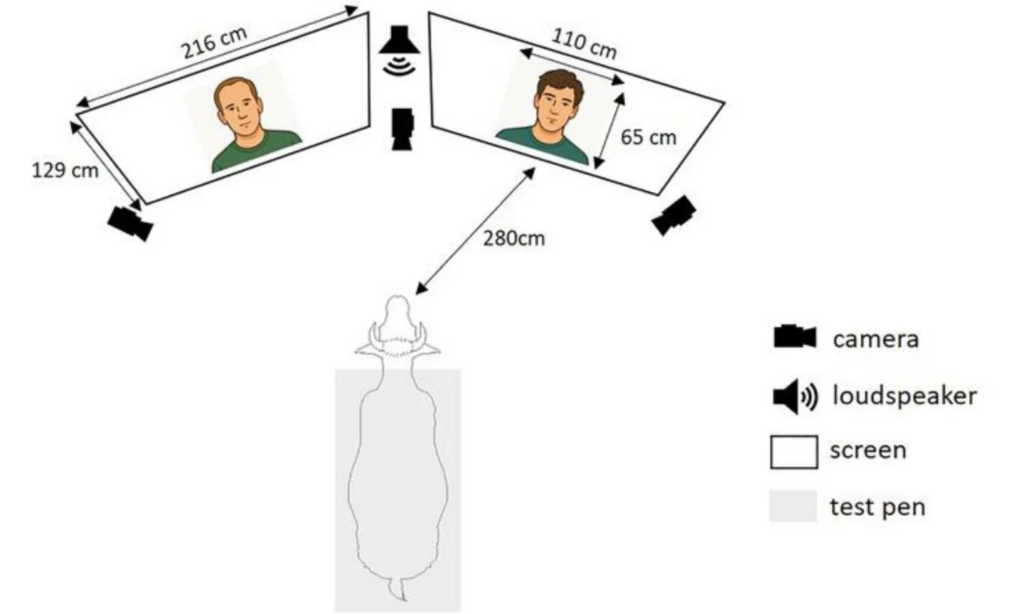
Cows can tell by your face whether you're friend or foe

Humans and cattle share a long history. Domesticated from a now-extinct ox species around 10,500 years ago, cows have become a major source of protein, dairy, and leather worldwide. While we think we know a lot about them, it’s not clear whether they know a lot about us. Studies have found that some domestic animals, such as sheep and pigs, can recognize individual humans, but these abilities have not been tested in cows. Now, a study led by Léa Lansade, a senior researcher in animal cognition and welfare at the French National Research Institute for Agriculture, Food and Environment (INRAE), has shown that cows can differentiate between familiar and unfamiliar faces. Facial perception is considered a key element of social recognition among primates, as faces convey important information, like age, sex, and individual identity. Lansade explains that people who work with cattle often have very different opinions about their cognition. Some consider them rather “simple” animals, while others describe them as highly observant and socially intelligent. Researchers wanted to bring scientific data into this debate and better understand what cows actually perceive, remember, and understand about us. Researchers included 32 Prim’Holstein cows (Bos Taurus Taurus) aged between 21 and 15 months. Four caretakers had been engaged in the daily care and feeding of each cow since birth, but the animals may have occasionally encountered other individuals, such as students or colleagues visiting the farm. Cows used in this research had no prior exposure to similar experimental procedures. The researchers filmed eight adult men between 30 and 60 years of age, including four familiar caretakers and four unfamiliar colleagues, whom the cows had never seen before. Researchers then conducted two tests: a visual preference test and a cross-modal test. During the visual preference test, researchers played two muted videos, which were simultaneously shown to the cows. Each video displayed either a familiar or an unfamiliar human face. Measuring the amount of time each cow stared at the silent videos, they found their test animals looked longer at videos of unfamiliar persons. During the cross-modal test, a congruent or an incongruent voice accompanied the videos. The cows looked significantly longer at videos that were congruent with the voice being played. Experimental setup for visual preference and cross-modal tests.Amichaud et al., 2026, PLOS One, CC-BY 4.0 These two results show that cows do not perceive all humans as “a single, undifferentiated category”. Instead, they can distinguish between familiar and unfamiliar individuals, recognizing people they have previously met. Furthermore, they can form cross-modal representations of these people, linking different details about a person’s face and voice into a single, cohesive framework. Lansade suggests that their observations of the cross-modal recognition reveal that cows form mental representations of familiar people and process social information in a much more sophisticated way than previously assumed. The research team also assessed the cows’ heart rates as they watched the videos. Neither familiar nor unfamiliar faces or voices appeared to affect the cows’ emotional response. These findings also suggest that cows can integrate multiple sensory cues. This is indicative of a higher level of cognitive processing than that required for unimodal recognition, for example. Unimodal recognition helps identify an individual using only a single type of sensory input. Researchers note in the paper, “In this study, using visual preference and cross-modal tests, we showed that cows are able to process human faces presented in 2D on videos and to associate familiar and unfamiliar faces with the corresponding voices by integrating multiple sensory modalities.” The team is hopeful that these findings pave the way to examine a wider range of cognitive abilities in cows, such as how they acquire knowledge, process information, and develop selective interactions with humans. Lansade shares, “These findings profoundly change the way we look at farm animals. And we know that the better we understand an animal, the better we tend to treat it.” This research was published in PLOS. Source: Scimex Fact-checked by Mike McRae source

Cows can tell by your face whether you're friend or foe Read More »