Cows can tell by your face whether you're friend or foe

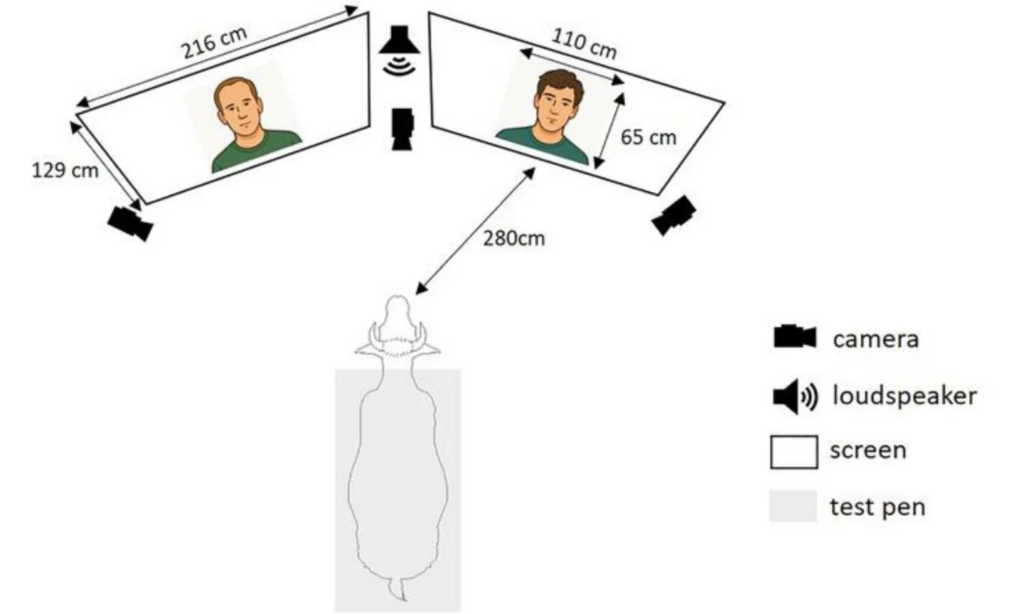
Humans and cattle share a long history. Domesticated from a now-extinct ox species around 10,500 years ago, cows have become a major source of protein, dairy, and leather worldwide. While we think we know a lot about them, it’s not clear whether they know a lot about us. Studies have found that some domestic animals, such as sheep and pigs, can recognize individual humans, but these abilities have not been tested in cows. Now, a study led by Léa Lansade, a senior researcher in animal cognition and welfare at the French National Research Institute for Agriculture, Food and Environment (INRAE), has shown that cows can differentiate between familiar and unfamiliar faces. Facial perception is considered a key element of social recognition among primates, as faces convey important information, like age, sex, and individual identity. Lansade explains that people who work with cattle often have very different opinions about their cognition. Some consider them rather “simple” animals, while others describe them as highly observant and socially intelligent. Researchers wanted to bring scientific data into this debate and better understand what cows actually perceive, remember, and understand about us. Researchers included 32 Prim’Holstein cows (Bos Taurus Taurus) aged between 21 and 15 months. Four caretakers had been engaged in the daily care and feeding of each cow since birth, but the animals may have occasionally encountered other individuals, such as students or colleagues visiting the farm. Cows used in this research had no prior exposure to similar experimental procedures. The researchers filmed eight adult men between 30 and 60 years of age, including four familiar caretakers and four unfamiliar colleagues, whom the cows had never seen before. Researchers then conducted two tests: a visual preference test and a cross-modal test. During the visual preference test, researchers played two muted videos, which were simultaneously shown to the cows. Each video displayed either a familiar or an unfamiliar human face. Measuring the amount of time each cow stared at the silent videos, they found their test animals looked longer at videos of unfamiliar persons. During the cross-modal test, a congruent or an incongruent voice accompanied the videos. The cows looked significantly longer at videos that were congruent with the voice being played. Experimental setup for visual preference and cross-modal tests.Amichaud et al., 2026, PLOS One, CC-BY 4.0 These two results show that cows do not perceive all humans as “a single, undifferentiated category”. Instead, they can distinguish between familiar and unfamiliar individuals, recognizing people they have previously met. Furthermore, they can form cross-modal representations of these people, linking different details about a person’s face and voice into a single, cohesive framework. Lansade suggests that their observations of the cross-modal recognition reveal that cows form mental representations of familiar people and process social information in a much more sophisticated way than previously assumed. The research team also assessed the cows’ heart rates as they watched the videos. Neither familiar nor unfamiliar faces or voices appeared to affect the cows’ emotional response. These findings also suggest that cows can integrate multiple sensory cues. This is indicative of a higher level of cognitive processing than that required for unimodal recognition, for example. Unimodal recognition helps identify an individual using only a single type of sensory input. Researchers note in the paper, “In this study, using visual preference and cross-modal tests, we showed that cows are able to process human faces presented in 2D on videos and to associate familiar and unfamiliar faces with the corresponding voices by integrating multiple sensory modalities.” The team is hopeful that these findings pave the way to examine a wider range of cognitive abilities in cows, such as how they acquire knowledge, process information, and develop selective interactions with humans. Lansade shares, “These findings profoundly change the way we look at farm animals. And we know that the better we understand an animal, the better we tend to treat it.” This research was published in PLOS. Source: Scimex Fact-checked by Mike McRae source

Cows can tell by your face whether you're friend or foe Read More »
Spin this dial to scroll through your ebooks

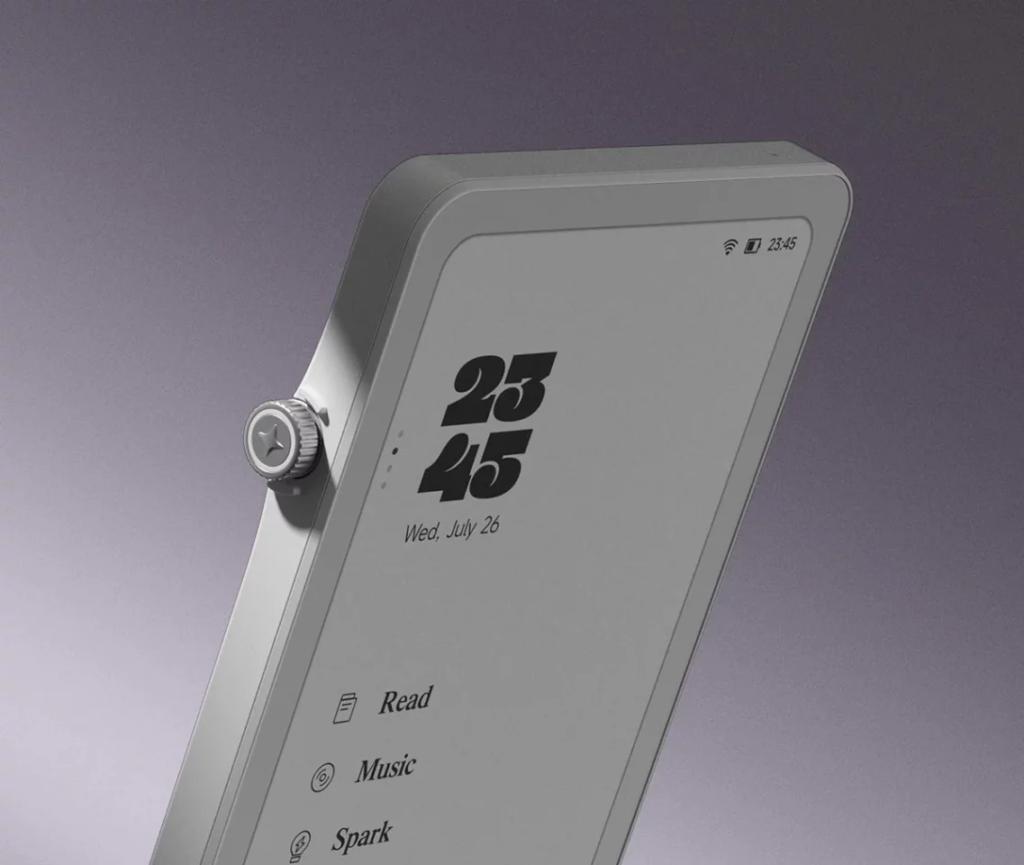
I’ve always felt like the Kindle could do with a better way to flip ebook pages. DuRoBo might have solved exactly that problem, with a little dial on the side of its compact E Ink device. The Krono features a paper-like 6.13-inch display, and looks like a lot of other Android-based ebook readers out there. But its knurled Smart Dial acts as a scroll wheel for books, web pages, and other content – offering a much more intuitive way to read with one hand. This is the first product from the Netherlands-based firm, and it was successfully crowdfunded on Kickstarter last year. It’s billed as more than an e-reader, with full-fat Android 15 on board, as well as a bit of AI functionality sprinkled on top, and the ability to capture ideas instantly. Introducing DuRoBo Krono: Your 6.13” Smart ePaper Focus Hub That last bit really got me going, and I’ll get to that soon. But first, let’s look at this functional little knob. It’s handily located where your right index finger can easily reach it. This allows for precise scrolling through pages of text, and it works in a bunch of apps, including the Kindle app, Kobo Books, Google Play Books, and browsers; it also delivers haptic feedback. That’s a much more reassuring interaction than trying to aim and tap at the edge of a Kindle’s screen to flip a page while the screen delays just a bit before it refreshes. The 6.13-inch 300 PPI display and Smart Dial should make for a comfortable one-handed reading experienceDuRoBo Beyond scrolling, you can also refresh the E Ink screen to clear ghosting, and adjust brightness by pressing the knob like a button. Double pressing it brings up DuRobo AI, which is basically a chatbot like ChatGPT or Claude; you can type in queries about anything that’s on your mind and get text responses with this. Now, if you press and hold, the Krono will begin recording a voice note – which you can then play back, and have transcribed and summarized. I frequently record notes on my phone and smartwatch – ideas for articles and fiction, reminders for things I need to get done, and loud thinking that helps me clarify concepts I’ve been struggling to understand. Being able to do this while reading thought-provoking books and papers sounds like a great way to track what I’ve learned or been inspired by. Press and hold the dial to begin instantly recording a voice note that’ll then be transcribed and summarizedDuRoBo Although it’s not a phone (it doesn’t have a SIM card slot), the Krono can run just about any Android app from the Play Store. Of course, given that it’s an E Ink display, I wouldn’t expect a great experience playing videos on it. There’s a high refresh rate mode that you can enable, but that only really improves the way system animations and screen refreshes appear. Since it runs Android, you can install all kinds of apps on the Krono – including third-party ebook and comic readers, and audio appsDuRoBo On the inside, it’s powered by an octa-core processor paired with 6GB RAM, and there’s 128GB of storage onboard. That should be more than enough for a vast library of ebooks, podcasts, audiobooks, and recordings. DuRoBo says the 3,950-mAh battery should last you several days on a full charge. With 128GB of onboard storage, the Krono has plenty of room for your ebooks, audiobooks, and podcastsDuRoBo At US$279, the Krono costs just a bit more than the popular Boox Palma 2, which has nearly identical specs. As someone who loves physical controls on gadgets, I’d happily fork over the extra $20 for the Smart Dial. DuRoBo has also been continually updating the device with improvements to the reading experience post-launch, so hopefully this handy little e-reader will continue to get better as you use it. The monochromatic Krono comes in black and white colorwaysDuRoBo Find the Krono on the company’s site and on Amazon US, where it’s available in black and white colorways. Note: New Atlas may earn commission from purchases made via links. source

Spin this dial to scroll through your ebooks Read More »

APAC brands lead on AI ambition, but execution can’t keep up with hype

Asia Pacific consumers are warming to agentic AI faster than brands may be ready for, but a widening trust and execution gap is threatening to slow down adoption at scale. New Adobe research shows that while 42% of consumers in Asia Pacific are willing to interact with a brand’s AI agent, and more than half are already using AI for personalised recommendations and customer support, expectations around transparency and human fallback remain firmly in place. The findings, drawn from the “Adobe 2026 AI and digital trends report”, suggest the region is approaching a tipping point in AI-driven customer experience, where enthusiasm for automation is rising but comfort is conditional. More than half of consumers (53%) are already using AI tools to search for personalised product recommendations, while 48% rely on AI for instant customer service or support. A further 42% say they are open to shopping via a virtual AI concierge, underscoring how AI is increasingly embedded in everyday purchasing journeys. Don’t miss: The AI performance boom is real, but it’s trapped in search and social  However, trust remains a critical constraint. While 47% of consumers say they do not care whether a brand uses AI as long as their needs are met, 38% say they would stop engaging if they discovered they were speaking to AI when expecting a human. In addition, 70% say AI-driven interactions should still feel human rather than robotic, and the ability to switch to a human at any time is the most important reassurance for 26% of respondents. The report also points to a growing disconnect between consumers and organisations on how AI success is defined. While consumers prioritise trust, transparency and usefulness, many brands continue to measure success through efficiency gains and cost savings, signalling a potential misalignment in expectations as AI becomes more embedded in customer experience strategies. On the enterprise side, adoption of agentic AI remains in its early stages. Just 14% of brands in Asia Pacific have embedded agentic AI across customer support functions, while 12% have done so in brand discovery and search. Despite this, ambition remains high. More than a third of organisations are prioritising emerging technologies such as agentic AI over more established AI deployments, with 75% saying generative AI has already improved content speed and production, particularly in enabling non-creative teams to produce content. Yet scaling remains a challenge, with 74% of organisations citing data integration and quality as a key barrier to adoption. Only 46% say their data quality and accessibility is adequate for AI use, while less than half report having a shared customer data platform capable of supporting agentic AI. Attention constraints are also reshaping urgency around adoption, with the report finding that consumers give brands just two to five seconds to capture their attention, while 17% make engagement decisions in under two seconds. Regionally, adoption patterns vary. India shows the strongest consumer appetite for agentic AI, with 58% comfortable with agent-to-agent interactions, significantly outpacing both regional and organisational expectations. Singapore, meanwhile, is taking a more cautious, governance-led approach, with only 33% of consumers comfortable with agent-to-agent interactions but stronger internal alignment than regional peers.  Australia and New Zealand lead in identifying practical AI use cases, but continue to face execution challenges linked to data and alignment gaps. Adobe said the findings highlight a pivotal moment for brands as they move from experimentation to scale, but warned that success will depend on trust, transparency and stronger data foundations rather than AI capability alone. As Duncan Egan, vice president of enterprise marketing, Asia Pacific and Japan at Adobe puts it, while AI is already improving experience delivery and content production, most organisations still need to build the governance and orchestration capabilities required to scale agentic AI responsibly across markets. “Consumer behaviours are shifting across Asia Pacific, with AI already rising in brand discovery and now set to play a greater role in purchasing journeys. Many consumers are comfortable with agentic AI, but say adoption relies on defined, transparent contexts with options for human support,” said Egan.  Against this backdrop, wider consumer research from Accenture suggests the stakes for brands are rising further as AI reshapes not just how experiences are delivered, but how relationships with brands are formed. The report found that consumers are increasingly turning to generative AI for recommendations and advice, with some describing it as a “good friend”, while active users now rely on AI as a primary purchase recommendation source ahead of social media and online marketplaces. It also found that a growing share of consumers would switch preferred brands if another makes them feel more valued, underscoring how emotional resonance, trust and relevance are becoming central to loyalty in an AI-mediated discovery landscape. Related articles:  AI adoption still stuck at the starting line for most firms in Singapore  AI use rises, but so do trust demands from Singaporeans AI momentum builds across Southeast Asia, but gaps persist  source

APAC brands lead on AI ambition, but execution can’t keep up with hype Read More »

Portable 4K projector doubles as a karaoke party machine

Portable projectors have come a long way from the simple movie-night gadgets they used to be not so long ago. Recently, companies have been adding features like built-in streaming platforms, better speakers, automatic setup, and outdoor-friendly designs. The Audiray X5, now on Kickstarter, takes this trend a step further by packing a projector, stereo speaker system, karaoke machine, and smart TV hub into one modular unit. Its headline features include high-resolution projection, powerful brightness, detachable audio modules, and dual wireless microphones. The X5’s flexible projection setup allows content to be aimed upward, making ceiling projection possible from a bed or sofaAudiray Rather than just being a way to shrink a home theater, Audiray is trying to turn the projector into a mobile, grab-and-go entertainment station for movies, music, karaoke, camping trips, and fun nights in the backyard. The X5 projector’s specs are its main draw. It offers native 4K UHD resolution at 3,840 x 2,160, 1,200 ANSI lumens of brightness, and a claimed 20,000:1 dynamic contrast ratio. It also comes with a 1.0:1 short-throw ratio, which should make it easier to use in smaller spaces like apartments, RVs, or compact living rooms, where throw distance can be restrictive. Automatic focus and keystone correction handle the image calibration instantly, minimizing setup friction. The brightness chops should help when lighting isn’t quite perfect, too – though like most portable projectors, it will perform best in dimmer environments. The detachable speaker modules allow the Audiray X5 to double as a standalone stereo system for music playbackAudiray Audio is where the X5 sets itself apart from typical compact models. It includes 60-W sound through detachable speakers for stereo separation, with the promise of stronger bass and clearer vocals than most built-in systems. The speakers can work as part of the theater setup, or function more like a standalone stereo system. Throw in two wireless microphones, and the X5 turns into a karaoke machine without needing extra audio gear – a useful twist for parties, where projector speakers often don’t quite cut it. The X5 also includes Google TV, offering access to apps like Netflix, YouTube, Prime Video, Spotify, and more without an external streaming stick. Connectivity includes Wi-Fi 6, Bluetooth 5.4, and ports such as HDMI, USB, AUX, and audio input. Portability is central to the design: the unit features an integrated carrying strap for over-the-shoulder transport, emphasizing a grab-and-go setup that avoids the need for a fixed installation. However, it lacks a built-in battery so you’ll need to factor in a wall outlet, and quite possibly an extension cable. Dual wireless microphones turn the X5 into an instant karaoke setup without requiring separate audio gearAudiray The Audiray X5 is currently raising funds on Kickstarter, with early pledges starting at around US$399. Crowdfunding campaign always carry an element of risk, but this is not Audiray’s first outing – a previous Full HD version of the all-in-one projection party machine ran late last year, was successfully funded and shipped to backers recently. According to the campaign’s roadmap, rewards for the X5 are estimated to begin shipping around July this year. Ultimately, the device attempts to solve the logistical headache of outdoor entertainment by condensing an entire gear bag into a single, cohesive unit. If each component of the setup works well, the X5 could be a fun, versatile entertainment hub. The All-in-One Karaoke Theater for Movies, Music & Parties Source: Kickstarter Note: New Atlas may earn commission from purchases made via links source

Portable 4K projector doubles as a karaoke party machine Read More »

Soundcore's screen-equipped earbuds moonlight as a meeting note-taker

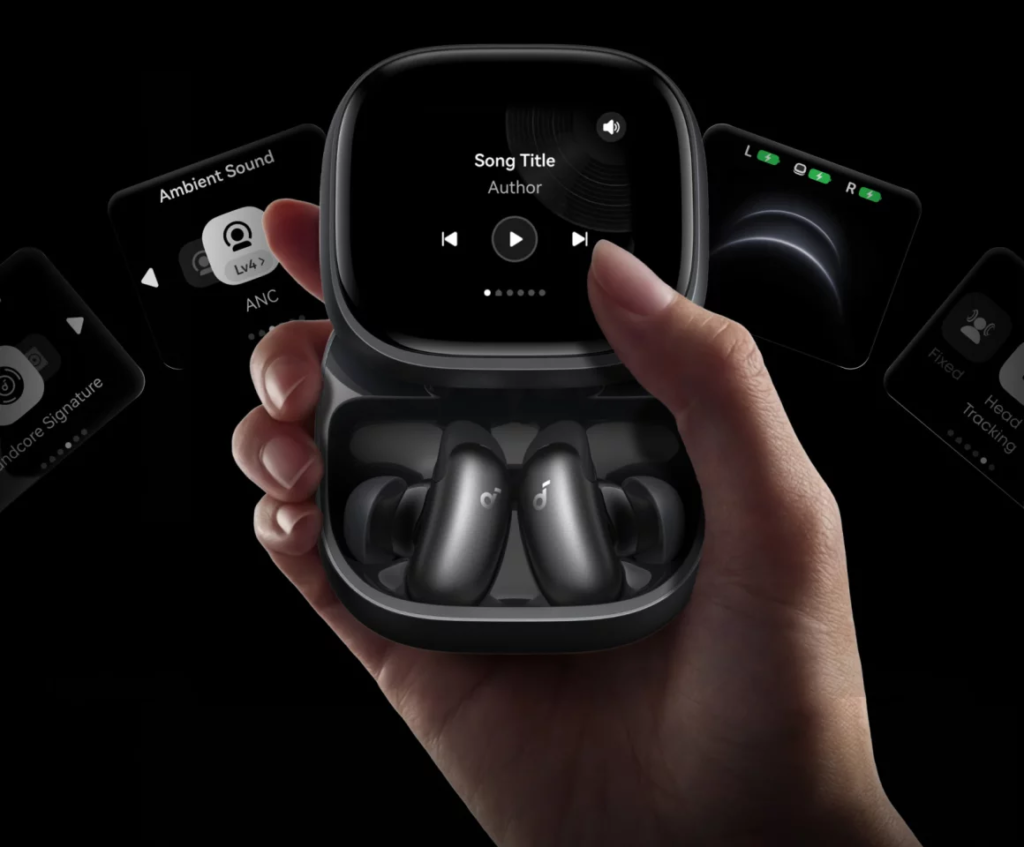
Anker’s audio hardware brand Soundcore has expanded its Liberty lineup of wireless earbuds with a new feature-packed model aimed at productivity nerds. Armed with a powerful new AI processor, the Liberty 5 Pro Max buds go beyond playing audio, and also listen in on your in-person meetings. They can then transcribe them – complete with timestamps, highlight points, and labels for each person speaking – and provide you with a summary. That should come in handy for people who frequently collaborate across teams or see a lot of clients. And I should be clear: it’s not the buds that do the recording, but rather the charging case. And that’s worth a look in itself. Liberty 5 Pro / Liberty 5 Pro Max | World’s Clearest Earbuds, Powered by ANKER Thus™ AI Chip The chubby squircular case has a 1.78-inch AMOLED touchscreen that you can use to control the buds’ various functions without reaching for your phone. It also visually indicates when it’s recording, so you’re never in doubt as to whether it’s on the job. You can also mark highlights during your meeting for easy reference by pushing a button on the case, just like on full-featured note-taker devices like the Plaud Note or HiDock P1. Like other screen-equipped earbud cases, the 5 Pro Max lets you control a range of functions without having to whip out your phoneAnker Innovations Transcription works in 154 languages, and happens over the cloud. That might not be ideal if you work in a security-sensitive industry, but Anker says you have full control over your data and can delete recordings and transcriptions from its servers via a web interface anytime. It’s worth noting these aren’t the first-ever buds to include note-taking in their feature set. The Mobvoi Ticnote Pods that launched in March do this too, and with a 4G connection at that for $299. The companion app displays your meeting transcriptions, along with manually marked highlights and labels for each attendeeAnker Innovations Beyond that, the Liberty 5 Pro Max buds promise “2x deeper noise cancellation” than the previous-gen model, which I’ve owned. The Liberty 4 line was already pretty strong, but Soundcore says you can expect these to additionally drown out low-frequency rumbles and ambient voices. If these really deliver on the promise of “2x deeper noise cancelation” compared to the previous-gen lineup, you’re in for a good timeAnker Innovations 9.2-mm wool-paper diaphragm drivers handle audio reproduction in regular and LDAC Hi-Res modes. They’re aided by AI-powered enhancement over Bluetooth connections, as well as Soundcore’s HearID EQ personalization tool that can have a profound effect on the way your content sounds. The buds feature 9.2-mm wool-paper diaphragm drivers for audio output, and can run for 6.5 hours on a full chargeAnker Innovations These buds can also translate speech in real time so you can understand what someone speaking to you is saying. They also get Bluetooth 6.1 which should allow for a stable connection, and Multipoint for pairing with up to three devices simultaneously. Plus, you can track these down using Apple’s Find My service. The 5 Pro Max should get you about 6.5 hours of playback time with ANC engaged; the case will keep the music going for a total of 28 hours, and a 5-minute charge is enough for four hours on the move. Another thing I like the sound of is the use of its AI chip for responding to 20 preset voice commands in under a second each, unlike bloated models like Alexa. Soundcore also claims these buds literally hold a Guinness World Record for call clarity. This video demonstrating what your voice would sound like on a call didn’t really blow me away – but the 10-mic array does an impressive job of quieting ambient sounds and other voices while you chat. The Liberty 5 Pro Max buds are available from today for US$229.99, which isn’t cheap – and that doesn’t include the cost of the recurring subscription required for transcription. However, the hardware pricing isn’t bad when you consider it doubles as a full-fat AI note-taker. If subscriptions are similar to Soundcore’s Work note-taking device, you’re looking at roughly $100 a month for 1,200 minutes of transcription, or $240 for unlimited minutes. That’s a bit cheaper than Mobvoi’s $119/$299 annual subscriptions, but not by much. Given that AI enthusiasts are already spending about $240 a year on other AI services like Claude with many more capabilities, I’d say that pricing is awfully steep. Check out the Liberty 5 Pro Max – as well as the $170 Liberty 5 Pro, which has a smaller screen and skips the note-taking, but retains the higher-end model’s ANC and audio chops – on Soundcore’s site, Amazon, or Best Buy. Source: GlobeNewsWire Note: New Atlas may earn commission from purchases made via links. source

Soundcore's screen-equipped earbuds moonlight as a meeting note-taker Read More »

Maker Lab elevates Intan Mokhnar to CEO

Maker Lab, the in-housing partner and lead AI agency for Miroma Group, has elevated Intan Mokhnar (pictured) to chief executive officer. As CEO, Intan will continue to oversee overall business operations and drive growth across Maker Lab’s client portfolio. Intan steps into the CEO role after a three-year tenure as managing director, during which the agency expanded its client portfolio and deepened its embedded model with global brands. Under her leadership, Maker Lab secured new business wins including KFC Singapore, Grab, P&G, Samsung and Nike, while extending existing partnerships with clients such as Google and YouTube. Prior to joining Maker Lab, Intan was senior consultant at Ebiquity, managing director at Jones Knowles Ritchie and managing director at BBDO Indonesia. Don’t miss: Koto launches SG hub in SEA push, names APAC growth director In tandem, founder and former CEO Matt Shoult has been elevated to executive chairman, where he will focus on long-term strategic direction as the agency scales its embedded operating model amid rising demand for in-housing and AI-enabled workflows. “Since Intan joined Maker Lab, we’ve seen a material step change in the business, in how we operate, the strength of our client relationships, and the pace at which we’re growing,” said Shoult. “What stands out is a rare combination of authenticity and commercial judgement. There is a deep understanding of both the work and the business behind it, and a clear ability to build the conditions for teams to perform at their best.” Shoult added that Maker Lab has always been about embedded teams delivering real outcomes, and that Intan has pushed that model further than he thought possible. “I’m stepping into this role with a leadership team I trust deeply, and with Shoult’s continued partnership. That’s what gives me confidence in what we’ll build next. Our focus is simple: stay close to our clients, stay sharp in how we operate, and keep finding new ways to create value,” said Intan. She added that the agency’s strength lies in its proximity to clients. “The Maker Lab difference is in our proximity to the work. We’re not advising from the outside. We’re sat with the clients, accountable, and much closer to the decisions and outcomes that matter.” The leadership transition comes as Maker Lab enters its next phase of growth, with rising demand for embedded teams, AI-enabled workflows and more accountable marketing delivery models. Looking ahead, the agency will continue scaling its in-housing model while developing AI-powered systems to help brands move faster and operate closer to culture. Earlier in January, the Singapore Tourism Board also renewed its two-year contract with the agency. Under the renewed contract, Maker Lab will continue to deliver end-to-end social media services for Visit Singapore, spanning content creation, community management and social performance analysis. The work will be handled by an embedded social team supported by Maker Lab’s proprietary AI tools and workflows, aimed at accelerating delivery and improving creative output. The renewal follows a period of strong performance across Visit Singapore’s digital channels, including TikTok, Instagram and YouTube. Since the partnership began in 2024, Maker Lab’s remit has expanded from creative production to full-scale social content operations, anchored by an in-house team of creators. Related articles: McCann Singapore names new CEO as Paul Soon exits Monks’ Munas van Boonstra moves on from SEA MD role Havas Play Singapore names new general manager, CEO Kenny Yap exits source

Maker Lab elevates Intan Mokhnar to CEO Read More »

Humanoids are heading to school as China readies them for real life

The first humanoid “training school” for robots of all shapes and sizes will open its doors in July, bringing together more than 100 different models made by a host of companies. As well as mastering real-world skills, the humanoids will provide unique data that’ll be used to advance the bots that follow in their footsteps. For some, this sounds like a dystopian nightmare, but if you’ve been lucky enough to spend time witnessing the emergence of this technology first-hand in China, as I have, it’s hard not to be excited about the country’s first heterogeneous humanoid training center. Here, more than a dozen companies have enrolled 100-plus robots to take part in the pilot training program at the 5,000-square-meter (53,800-sq-ft) facility in Shanghai’s high-tech heart of Zhangjiang (张江). Here, they will finetune their motor skills in order to ease into everyday life for people who can afford a domestic bot, as well as master tasks needed for specialized workplaces across the country. Then, millions of data points gathered from this inaugural Class of 2026 will be used to train larger and even more diverse robots at a faster rate. Depending on their capabilities, the humanoids are expected to be trained to work in a variety of fields including industrial, medical, service and agriculture. It’s also worth noting here that this facility and the groundwork it’s laying are key aspects of China’s robotics industry. The sector operates more like a tech ecosystem – from startups to established companies – centered around crowded clusters of manufacturing and innovation hubs. With this comes the sharing of infrastructure, hardware suppliers and components between tech firms. Of course, there’s still plenty of competition, but there’s also collaboration. Which, generally speaking, results in faster, cheaper and more efficient advances. And this robot training school is a pretty good reflection of that. Operated by the National and Local Co-built Humanoid Robotics Innovation Center, the new facility, which has been a few years in the making, will train a wide range of humanoids, with two goals. Firstly, to get these models ready for life in the real world – and also to build a massive database of learning intel to help future facility intakes of robots get up to speed quicker. The first lesson will be how to actually grip a book (not confirmed) As the facility’s general manager Xu Bin told People’s Daily Online, the center is designed to advance the humanoid robot industry through shared technologies and fine-tuning the robots for real-world use. “We established the center to enable large-scale data sharing and utilization, empowering the entire industry,” Xu said. The diversity of the robots – which come in all shapes and sizes and have varying degrees of movement – will help researchers gather data on performance, strengths and ways to best work with specific humanoid designs in the future. The “students” will have no time for R&R, with the robots expected to begin their learning by mastering 45 “atomic skills” including grasping, picking, placing and transporting items, crucial for the humanoids to function in industries like hospitality and in factories. “The embodied robots being trained at the center are expected to accomplish more complex tasks requiring a sequence of actions based on their autonomous judgments formed through searching and matching the data collected through training,” Yang Zhengye, director of market systems at the center, told People’s Daily Online. Much like my own experience in the science laboratories at university, the robots will need to understand directives from their human teachers, then follow through with the task on their own. They’ll also be put through more repetitive drills, like the surprisingly difficult art of grasping objects like humans can. This has been one area of movement that robots in the past have struggled with – yes, looking at you, Neo – but will be integral to their integration into fields that depend on precision and, well, knowing when to let go of a frying pan when it’s time to. (Though perhaps the joke is on that YouTuber who spent US$80,000 on his pan-flipping-and-tripping Unitree G1 late last year, which you can now buy for $13,500.) The robot training center’s primary focus will be on gathering all the data possible, across a diverse collection of robots, in an effort to be able to fine-tune methods to teach new bots old tricks. According to the paper, a scientist may be tasked with watching and guiding a humanoid as it performs a single core movement or action up to 600 times a day, collecting important data along the way. The 2026 class of assorted robots will primarily be trained to master 10 key tasks needed for work in the industries they’re most likely to be deployed to – domestic labor (of course), in industrial settings and in tourism. And while humanoids have come a very long way in a few short years, they still have some work to do when it comes to what we’d consider basic tasks: folding clothes, moving objects from one spot to another, tidying shelves and cleaning equipment. Incidentally, folding a T-shirt is one of the most challenging jobs for a robot as this article explains. (Just wait until someone introduces them to fitted sheets.) Yang added that the training center, which is expected to be fully operational in July – and hopefully New Atlas will be able to check it out – will generate around 50,000 data points each day, amounting to an incredible 10 million pieces of intel a year. This critical foundational work will help China fast-track training and spot problems regardless of model. True to China’s collaborative system, the center is also expected to create a data-exchange model for robotics firms to access and allow them to to focus on specific industries for their products, like healthcare, and to improve efficiency. Consider it home schooling, but with robust scientific data at the center of the curriculum. And that’s not all. The mountain of data will be pooled, creating a general

Humanoids are heading to school as China readies them for real life Read More »

Africa's tallest tower rises with a mask-inspired design

The Ivory Coast’s skyline has gained a dramatic new addition in the form of the massive La Tour F, or Tower F. It’s a 76-story supertall skyscraper nearing completion in the Administrative City of Abidjan. Once it’s finally built later this year, it will claim the title of being Africa’s tallest building. The Tower F will dethrone the Iconic Tower in the New Administrative Capital of Egypt, which is 400 m (1,292 ft) tall. The newcomer’s main structure is 333 m (1,093 ft) tall, but the spire at the top pushes it to 421 m (1,381 ft), representing a significant milestone in Africa’s architectural ambitions. Tower F will join five other towers already in the administrative complex, towers A through E. The building is an effort by the government to bring together scattered offices across the city while making rent more affordable. It’s a practical approach to bringing a wide range of services into a single building without occupying too much land. The top of the building, called the “lantern,” will be accessible to the public, offering panoramic views of the city and lagoonPFO Africa The project’s architect, Pierre Fakhoury, designed the building to evoke the emotion of an African mask, as reflected in its symmetrical form. It has both functional purpose and cultural significance in that regard. At the summit, you have what has been dubbed the ‘lantern,’ an observation deck enclosed in glass, set 30 m (almost 100 ft) high. It’s a public viewing platform that overlooks the city and the Ebrié lagoon, marking a difference from other office towers that remain closed to outsiders. Access to the lantern will be through its very own panoramic elevator. It will provide an immersive experience as people ascend to the top to enjoy 360-degree panoramic views of the surroundings. Plans for Tower F began in the 1970s, and the vision will be fulfilled once it opens later this yearPFO Africa Building on unstable ground meant that Tower F’s foundations needed serious engineering. The structure weighs 170,000 tons, which required drilling 70 steel bars 60 to 70 meters (197 to 230 ft) into the earth. Each support measures 2.8 by 1.5 m (9.2 by 4.9 ft) and is connected to a 3.5-m-thick (11.5-ft) reinforced concrete slab. The interior measures 140,000 sq m (1.5 million sq ft) and will hold government offices, conference rooms, restaurants, and auditoriums. It will also feature underground parking. People will get around using 21 standard elevators, but there are also two freight lifts for heavy-duty use (bulk cargo and equipment, for example). Tower F is 333 meters tall, but the spire at the top pushes it to 421 meters, representing a significant milestone in Africa’s architectural ambitionsPFO Africa The facade has two layers that have earned Tower F the EDGE certification – a global gold standard for green buildings. The outer layer has 16,000 glass panels that reflect direct sunlight from the building, effectively reducing solar heat gain. An inner layer provides the building with further protection from water and fire. The plans for Tower F began in the 1970s, and the vision will be fulfilled once it opens later this year. The skyscraper solves a practical building problem and provides the public with a landmark they too can enjoy. Its combination of efficiency, public access, and climate-friendly design will define the future of skyscraper construction in the region. Source: PFO Africa source

Africa's tallest tower rises with a mask-inspired design Read More »

World Bee Day: They do more for nature than just pollinate, you know

Alex Dittrich, Nottingham Trent University/ The Conversation The importance of bees for pollinating wild plants and crops is well known. If we lose the bees, we lose our food. But this is only part of the picture. Bees also support a hidden network of other species, sometimes as mutual partners, sometimes as prey, sometimes as other unwilling victims. Many organisms depend on bees for survival, and many of these interactions are not mutually supportive. Some predators focus on bees, for example, bee wolves (Philanthus triangulum), capture bees to feed their young in their underground nests. Crab spiders, also known as the white death spider, are often found camouflaged on the top of flowers. They wait for bees to sip on some nectar, and then the spider consumes the bee, and afterwards vomits the corpse back up. It’s not just insects; vertebrates depend on bees too. Birds such as bee‑eaters and great tits, as well as some species of bat, consume bees as part of their diet, while badgers and foxes often raid nests for larvae and honey. And, of course, humans have been eating honey from before there were written records. Playing host to unwelcome guests Around 40% of animals are actually parasites, and bees support a wide range of these species. The wingless fly Braula coeca, sometimes referred to as the bee louse, lives on honey bees, feeding on their secretions. Though small, these parasites are a constant presence in some colonies. A spider preparing to eat a bee. EUIP/ShutterstockAnother parasite, Sphaerularia bombi, the nematode (a type of worm-like creature), enters bumblebee queens during hibernation. Once inside, they inflate, filling much of the queen’s body. When she emerges in the spring, this queen has been neutered by the parasite and is no longer able to find a new family. She instead just acts as a vehicle to spread the parasite to new sites. Some bees need other bees to help them survive. Cuckoo bees infiltrate the nests of bumblebees. After they gain access, they suppress the bumblebee queen and force her workers to raise their young. Invading the lives of bees Sometimes parasitic interactions go one step further and ultimately kill the bee by spending part of their lifecycle within their host. Strepsiptera are an unusual insect, which most people may not have heard of. Stylops are one genus of Strepsiptera that live in the abdomens of bees, visible only by a small protrusion in the abdomen. But when it is time for Stylops to mate, they explode from the abdomen of their bee host, killing it. Bee flies definitely deserve a mention, as they bear a striking resemblance to bees. In the UK, species such as Bombylius major dance around flowers with their fuzzy, bee‑like bodies. While the adults are harmless and actually serve a role as pollinators themselves, their larvae are parasitoids of solitary mining bees. Parasitoids are defined as those that live on (or in) their host, eventually killing it, a subset of parasites. The females flick their eggs into the entrances of bee nests, and when they hatch, the larvae consume bee eggs or young larvae before feeding on the pollen stores. Using bees to hitch a ride Some species just use bees for transport. Mites such as Chaetodactylus attach themselves to solitary bees in order to travel between nests. Their larvae, however, are less benign. They greedily consume the pollen stores of nests, occasionally eating eggs. Perhaps even weirder, however, are the trigulins (or larvae) of blister beetles. These often cluster around flowerheads. They wait for bees, only to then climb on board for a free ride – using them as a free taxi to a nest where they feed on their contents with a particular fondness for bee eggs. Pseudoscorpions are distant relatives of scorpions. They bear a striking resemblance to true scorpions, but these, instead of carrying a sting in their tail, use the bee for a free ride. Hanging on to the bees with their pincers, they use the bees as a taxi, but in their case, just as a way to save energy on long-distance travel. In the end, bees – whether they are solitary bees, mining bees, honey bees or bumble bees – are far more than pollinators. They support a much wider ecosystem. Countless other organisms rely on bees as hosts, prey, transport, or providers of food and shelter every day. Without bees, we would not only lose those plants they pollinate but also those animals that need the bees to feed them and help them reproduce. Alex Dittrich, Senior Lecturer in Zoology, Nottingham Trent University This article is republished from The Conversation under a Creative Commons license. Read the original article. source

World Bee Day: They do more for nature than just pollinate, you know Read More »

Fusing silk gives it Kevlar-like strength for next-gen implants

Silk isn’t just great as a smooth fabric for luxurious clothing: it’s finding a wide range of uses in everything from edible food-preserving wrappers to skin-friendly wearable health monitoring sensors. There’s plenty of scope to enhance its characteristics too, and a simple new approach has allowed it to get about as tough as Kevlar. Silk fibers are typically harvested and dissolved before they’re turned into other forms for the aforementioned applications. A group of researchers from Tufts University, Imperial College London, and the University of Michigan went a different way: fusing the fibers together under precisely controlled heat and pressure. By aligning the fibers in a single direction and then processing it in this way, you get a remarkably strong and tough solid bio-derived material. You can even control the structure depending on its target application by applying more or less heat and pressure, as the team noted in its paper that appeared in Nature Sustainability this month. The leftmost bar of fused silk was created at 203 deg F and the rightmost bar at 473 deg F, both at 5,100 atmospheresQichen Zhou / Tufts University Silk fibers are first treated to remove the sticky sericin that enables insects to build cocoons. They’re then hot-pressed at temperatures between 257-419 ºF (125-215 ºC) and pressures between 1,900-9,800 atmospheres, during which the amorphous phase of the fiber proteins enable the fibers to strongly fuse together. The bond between these fibers transfers stress between them, making the fused material much stronger than before, similar to wood or carbon-fiber composites. Dr. Emiliano Bilotti inspecting fused silk fibers at Imperial College LondonImperial College London This fused silk has numerous properties that open it up to a wide range of applications. It can withstand ballistic impact – demonstrating toughness similar to that of Kevlar. It’s transparent to visible light, and it’s biocompatible. Tufts research assistant professor Chunmei Li noted that, “because of its strength, it could potentially be used for fixation devices like plates, pins, and screws as supports for bone fractures.” Tuning the processing conditions could also produce platforms for softer and more flexible implants. Magnified images of fused silk at different conditions of heat pressing. Left: 5,100 atmospheres and 203 deg F, Right: 10,200 atmospheres and 311 deg FQichen Zhou / Tufts University It can also polarize terahertz radiation, and the team believes this material could be deployed in next-gen communication systems like 6G networks that will quickly transmit high volumes of encoded information. Lastly, this approach to treating silk could allow for upcycling used textiles, which previously would have to be dissolved before processing, or simply discarded. The researchers’ next steps involve exploring ways to scale up production of this material, and exploring its role in sensing technologies. Source: Tufts University source

Fusing silk gives it Kevlar-like strength for next-gen implants Read More »