TEAM LEWIS opens new Singapore creative studio, expands sector focus

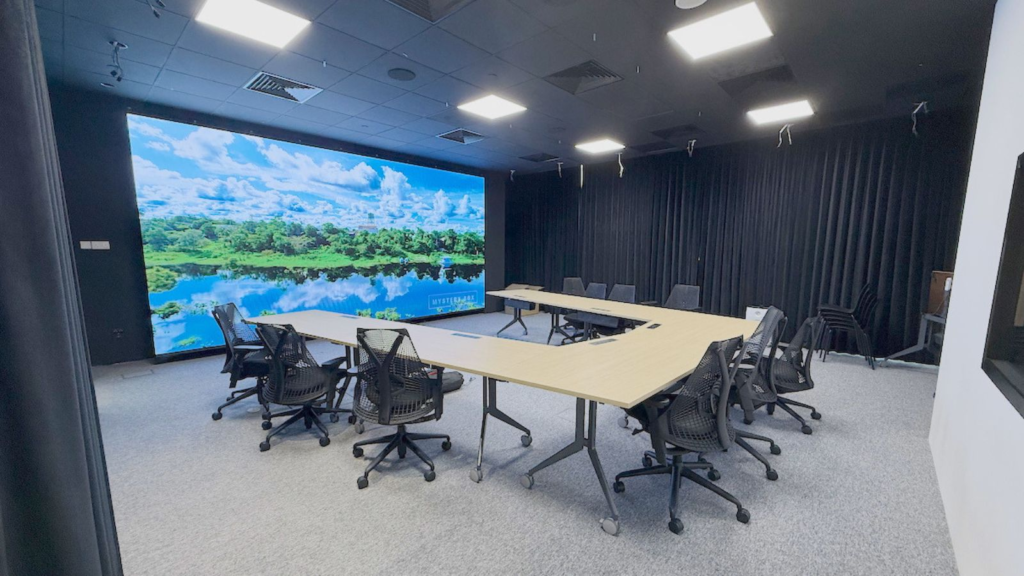
Global marketing agency TEAM LEWIS has opened a new Singapore office at Orchard Gateway @ Emerald, alongside the expansion of new practice areas including defence, energy and healthcare. Located on level seven of the building, the approximately 6,000 sq ft office houses a new creative studio featuring a 5.4m by 2.8m LED wall. The move marks the agency’s second studio investment in the region following its Kuala Lumpur office. The Singapore office is also home to the Pacific Creative Hub (PCH), TEAM LEWIS’ regional production team specialising in creative design, UI/UX, website development and video production. The hub supports the agency’s global client base. Don’t miss: TEAM LEWIS launches Sino Global Practice to steer Chinese brands overseas According to the agency, the investment is part of its broader push to strengthen its creative and AI-driven campaign capabilities. TEAM LEWIS added that its network of studios across global markets enables a “follow-the-sun” model, allowing teams to collaborate across different time zones. The new office also includes multiple meeting rooms and floor-to-ceiling windows, with additional space to support future team expansion. For over a decade, TEAM LEWIS has operated in Singapore, offering services spanning research and analytics, public relations, creative, social media, digital marketing, brand reputation, corporate communications and crisis management. The agency’s Singapore client roster includes Audi Singapore, CapitaLand, Pizza Hut and Sport Singapore. “This new Singapore office is a major step forward for our team and clients. With a purpose-built creative studio, we can collaborate faster, produce at a higher level, and bring integrated ideas to life under one roof,” said Pamela Tor Das, VP of TEAM LEWIS Singapore and emerging markets. She added, “Just as importantly, it strengthens how we operate across the region and we continue to deepen our capabilities and investment in Indonesia, where we see strong momentum and growing demand. This move reflects our ambition to expand our talent, broaden our specialist vertical expertise, and deliver more impact for brands that want to lead in a fast-changing landscape.” In tandem, Keso Kendall, SVP of TEAM LEWIS APAC, said, “As we open the doors to our new Singapore office, we’re making a clear statement about the future we’re building in APAC. This space is designed for the way modern communications works fast, visual, content-led and always-on.” “With a state-of-the-art studio at its core, it’s a tangible investment in creativity and craft, so we can create, produce and amplify standout work for our clients, in real time. Just as importantly, the additional capacity gives us room to scale our global practice areas from Singapore as a regional hub,” she added.  The Singapore office opening also comes amid TEAM LEWIS’ broader regional expansion efforts. Earlier this year, the agency opened a representative office in Jakarta, marking its sixth market in Asia-Pacific and strengthening its presence across the region. The Indonesia office complements TEAM LEWIS’ existing operations in Kuala Lumpur, Hong Kong, Beijing and Sydney, alongside its regional headquarters in Singapore. The move followed the agency’s Shenzhen expansion and will see the Jakarta team focus on sectors including sustainability and energy, enterprise technology, consumer technology and food security. Related articles: TEAM LEWIS taps Havas exec to lead new media buying division, expands creative firepower TEAM LEWIS Singapore names new directorTEAM LEWIS scores a hat-trick of global technology wins source

TEAM LEWIS opens new Singapore creative studio, expands sector focus Read More »
How CHAGEE is making tea worth reading

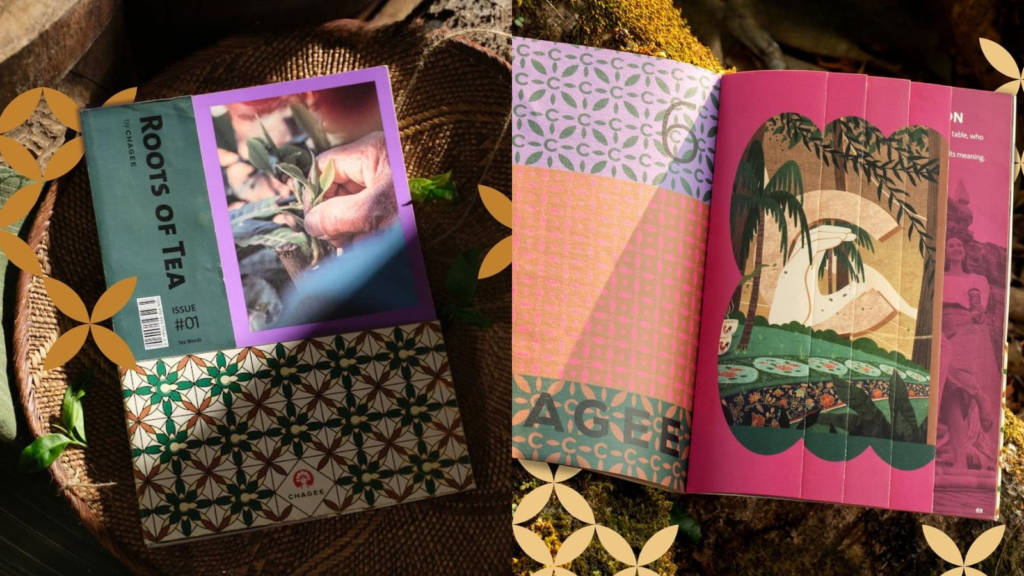
CHAGEE is stepping beyond beverages into cultural publishing with the launch of a limited-edition magazine, Roots of Tea, unveiled in conjunction with International Tea Day. Positioned as more than a brand brochure, the publication frames tea as a cultural artefact shaped by centuries of trade, tradition and shifting lifestyles. Released on 21 May, it traces tea’s journey from the Ancient Tea Horse Road to modern-day rituals across Asia and beyond, blending heritage storytelling with contemporary consumption. Simeng Li, director of branding and marketing at CHAGEE APAC, said the magazine was designed to bring people closer to tea in a more meaningful way. “More than a brand publication, it is an invitation to see tea not just as a drink, but as something woven into land, culture, livelihood, and everyday life across different parts of the world,” she said. She added that the intent was to deepen appreciation for the origins and people behind every cup. “Every cup of tea carries thousands of years of heritage and the journeys of countless people across mountains, trade routes, and generations. We wanted readers to walk away with a deeper appreciation of where tea comes from, and what it means to the people who grow, craft, and share it.” Don’t miss: Content360: How CHAGEE replaces traditional media with content ecosystems  For CHAGEE, the idea emerged organically from its broader brand philosophy. As the brand expands beyond China, Li said there is a growing responsibility to carry tea culture with it. “Tea has travelled across mountains and borders for thousands of years, connecting people and cultures along the way, and we see ourselves as part of that continuing story,” she said. “We wanted to tell it properly, to trace how tea travels from ancient forests and trade routes all the way into the cup you hold in your hand. International Tea Day felt like the right moment to do that.” Rather than adopting a product-led approach, Roots of Tea is structured as a curated editorial experience, moving through tea-growing regions across Asia, from the ancient forests of Jingmai and the Tea Horse Road to landscapes in Vietnam, Thailand, Malaysia, Indonesia, South Korea and China. It also breaks down the six major tea types and explores how tea culture manifests differently across markets, from Malaysia’s teh tarik to British afternoon tea and China’s Pu’er traditions. A more reflective section, titled ‘Harmony’, features conversations with artists and creatives on how tea informs their practice and daily lives, while another highlights the story behind CHAGEE’s BO-YA Jasmine Green Milk Tea and its traditional scenting process. The magazine was released on 21 May via the CHAGEE app, redeemable using 1,000 Tea Leaves points, with a digital version also available through the platform. Physical copies are being distributed across selected experiential touchpoints including CHAGEE Orchardgateway, VivoCity, Pagoda House, and the Asian Civilisations Museum, where it anchors part of the brand’s wider International Tea Day activation. Beyond Singapore, copies are also available at partner bookstores across Malaysia, Thailand, South Korea and China, while select editions were showcased at the LA Art Book Fair, signalling the brand’s ambition to position tea within global cultural and creative spaces. The launch is supported by a multi-layered campaign that extends the magazine into a wider ecosystem of engagement, including merchandise bundles, digital quizzes and experiential workshops. CHAGEE also introduced limited-edition bundles such as the Tea Icons Keychain Bundle and Tea Roots Mini Tumbler Bundle, pairing beverages with collectible items as part of its push into lifestyle-led consumption. A daily quiz running from 15 to 21 May on the CHAGEE app allowed users to unlock vouchers by answering tea-related cultural questions, adding a gamified layer to the campaign. At the experiential level, CHA masters hosted immersive workshops at the Asian Civilisations Museum pop-up store, where participants took part in guided tastings and blending sessions, creating personalised tea sachets to take home alongside exclusive merchandise. Entry was redeemable via 5,000 Tea Leaves points, with limited slots across multiple sessions from 21 to 23 May. CHAGEE’s magazine launch and experiential activations form part of a broader shift towards participatory brand building, where consumers are invited to move between content, culture and creation. From editorial storytelling through Roots of tea to hands-on workshops and product co-creation, the brand is increasingly treating tea culture as something to be read, experienced and shaped with its community rather than simply consumed. This approach is also reflected in its “First harvest matcha series” rollout in Malaysia, where consumers were invited to influence product development through social media feedback and in-store QR code voting, ultimately shaping the relaunch of “Matcha 2.0” with a more intense flavour profile tailored to local preferences. Related articles:  Digital-native CHAGEE bets on localisation to crack the Philippines’ experience economy   Ex-foodpanda MY marketing director joins CHAGEE to lead user ops CHAGEE’s Indonesia playbook: scaling tea culture across Jakarta and Bali   source

How CHAGEE is making tea worth reading Read More »

Affordable humanoid robot aims for the teaching hands of developers

Until now, pretty much all humanoid robots have come with an eye-watering price tag. Rotaku, a startup from the San Francisco Bay Area, thinks that’s a solvable engineering problem and made its first move to change that. The company just emerged from stealth with Domo, a humanoid robot starting at US$2,999. “Our goal is to make humanoid hardware more accessible to developers, educators, researchers, and smaller robotics teams,” founder Takuzen Lu (also known as Zhuoran Lu) told me via email. Lu studied computer science at the University of Wisconsin–Madison and spent years living in Japan. This experience, he says, “shaped my interest in how technology can combine engineering, art, and everyday life.” His team spans mechanical and industrial design, electrical engineering, embedded systems, motion control, and AI algorithm development. We are a humanoid robotics startup from the Valley. For the past year, we’ve been quietly building humanoid robots. Today, we want to share something special with the world:Domo — a $2,999 humanoid robot built for developers, creators, researchers, and anyone ready to build… pic.twitter.com/rY1gqGes9j — Takuzen (@Takuzennn) May 11, 2026 Domo’s central idea is whole-body policy learning – an AI training technique that lets the robot learn complex tasks through demonstration or reinforcement, rather than being explicitly coded for each one. You don’t have to know programming; just show Domo how to pick up an object, navigate a room, or handle a tool, and it learns to repeat it. The robot runs entirely cable-free, with all electronics, battery, sensors, and computing packed into an aluminum chassis. Developers connect via Wi-Fi, deploy AI models directly on the robot, and access the system through SSH (a standard protocol for secure remote control over a network). The battery lasts up to two hours of continuous use and recharges in 30 minutes, with hot-swappable packs so work doesn’t have to stop for long. The platform also includes VR-based teleoperation for two-arm motion capture, data collection pipelines for training, gesture recognition for intuitive commands, and a voice assistant powered by a large language model for natural interaction. “Testing has been ongoing throughout Domo’s development, including internal engineering tests for motion control, hardware reliability, system integration, and user interaction,” Lu noted. Domo comes in two sizes – 90 cm (35 in) and 130 cm (51 in) – to fit everything from a developer’s desk to a full research labRotaku Domo ships in two versions. The entry-level Domo Developer, at $2,999, stands 90 cm (35 in) tall, weighs 20 kg (44 lb), offers 23 degrees of freedom, and delivers 70 Nm (51.6 lb.ft) of motor torque – built for rapid experimentation and custom behavior research. The Domo Plus Developer, at $9,899, steps up to 130 cm (51 in), 35 kg (77 lb), 25 degrees of freedom, and 110 Nm (81 lb.ft) of torque, aimed at labs and established research teams that need more power for dynamic movement. For context, Unitree’s R1 robots run between $4,900 and $5,900 depending on version, and its G1 starts at $13,500. Cheaper platforms like Reachy Mini exist, but they’re desktop-scale devices – nowhere near Domo’s claimed full-body movement and AI training capabilities. Throughout its development, Domo underwent internal engineering tests covering motion control, hardware reliability, and system integrationRotaku Domo is designed in California and manufactured through an international supply chain. “Key mechanical components, electronic parts, and assembly partners are selected based on cost, quality, and production capability,” Lu explained. Rotaku has secured early-stage backing and is preparing its next financing round, though it isn’t disclosing the fund name or seed amount at this time. Reservations for the devbot are open now, with the first production batches already being prepared for early customers – though the company still has much to prove. Robotics startups have a well-documented habit of nailing the demo and stumbling at the factory door. “We are speaking with developers and partners to better understand their needs and prepare for the next stage of rollout,” Lu said. Source: Rotaku source

Affordable humanoid robot aims for the teaching hands of developers Read More »

China's "budget" supersport bike is putting WorldSSP on notice

I admit, I was a little perplexed when I read the news that ZXMoto had become the first Chinese manufacturer to win a World Supersport race. Surely not? ZXMoto? Who’s that? So many questions. And when I started wrapping my head around the brand and the significance of this victory, I truly understood why the emergence of ZXMoto matters. That win becomes even more impressive when you realize that, for years, only a select group of European and Japanese manufacturers – Ducati, Yamaha, Honda and Kawasaki among them – have dominated the World Supersport Championship (WorldSSP). For a relatively unknown Chinese bikemaker to suddenly emerge victorious in three races in WorldSSP is genuinely unprecedented. And the motorcycle that French rider Valentin Debise rode to several victories is almost identical to the road-going version – which is typical in production-based moto racing – except you can buy it in China for the equivalent of around US$6,400 (CN¥43,800). I’ve seen Honda Groms go for more than that. The 800RR costs around a third of what the Ducati Panigale V2 and Yamaha R9 doZXMoto I’m not kidding, the ZXMoto 820RR costs roughly a third of what other WorldSSP bikes like the Ducati Panigale V2 and Yamaha R9 do. In street-legal production form, it’s powered by an 819cc triple-cylinder engine producing 135 hp while weighing 421 lb (191 kg). That’s actually lighter than the Yamaha R9 with the same inline-triple config. The race-spec version, meanwhile, produces 150 hp while tipping the scales at just 385 lb (175 kg). That gives it a power-to-weight ratio of 0.39 hp/lb. For reference, most premium production liter-class superbikes, such as the BMW S 1000 RR and Kawasaki Ninja ZX-10R, typically hover around 0.44 to 0.46 hp/lb. That performance also comes packaged out-of-the-box with primo hardware including Öhlins suspension, Brembo GP4 brakes, a full Akrapovič titanium exhaust, and magnesium and carbon-fiber components. Usually, you’d expect to see such exotica on a limited-edition MV Agusta or Ducati – not on a sub-US$10,000 Chinese supersport. Even more remarkable, that souped-up race-spec 820RR reportedly costs only around $2,000 more than the road-going version. That’s the kind of money you’d normally spend on an aging used hatchback – not a brand-new race-ready motorcycle. ZXMoto became China’s first World Supersport-winning motorcycle brandZXMoto And it was aboard that very machine that Debise crossed the finish line with a lead of nearly four seconds at the Algarve International Circuit in Portimão, Portugal. Four whole seconds in a sport where races are often decided by mere milliseconds. Debise did the double in Portugal. He went on and claimed another victory in Hungary (and a DNF due to bike issues), before getting the double-win and scoring maximum points at Autodrom Most this past weekend in the Czech Republic. That puts Debise, on the Chinese newcomer ZXMoto, squarely in second position overall in the Championship. We reached out to Debise, but haven’t heard back yet. When we do, we’ll be sure to toss in an update. Probably more than anything else, these wins help dispel the persistent idea that Chinese manufacturing is limited to cheaply made, low-quality products. And that’s precisely why the Chinese bikemaker has become such a talked-about name in the motorcycle world of late. But how is it that a motorcycle this affordable can go toe-to-toe with machines costing two or even three times as much, many of which have benefited from decades of engineering development? The answer lies in Chongqing – the city where ZXMoto was founded. The metropolis produces roughly one out of every three motorcycles exported from China. More than 50 motorcycle manufacturers and over 400 parts suppliers are based there, with more than 80% of China’s fuel-powered motorcycles sourced from the region. ZXMoto sold around 25,000 units in 2025ZXMoto That means a company like ZXMoto can source high-quality components within just a few miles of its own factory at prices that would likely leave European rivals speechless. Cheaper components and lower production costs translate directly into more competitive pricing. And since its racing success, ZXMoto has reportedly seen a significant surge in demand. Brand founder and owner Zhang Xue stated in an interview with China Media Group that the company generated “half a year’s worth of sales in just one month” following the victory. Revenue is projected to exceed around $262 million (CN¥1.8 billion), while annual sales are expected to hit 60,000 units. In 2025 alone, the company reportedly sold around 25,000 motorcycles, making it one of the top domestic brands in China’s mid- to large-displacement segment, according to Chongqing Daily News Group. But racing credentials alone aren’t driving the company’s growth. ZXMoto’s expansion is also being fueled by its engineering capabilities. Zhang has previously stated that the company prioritizes full in-house development, covering everything from engine systems to materials engineering and overall vehicle design, while sourcing more than 90% of its components locally. A full-blown European launch is on the horizonZXMoto The 820RR is already on sale in China, and internationally, ZXMoto is steadily building a dealer and distribution network, with Australian and New Zealand dealerships already lined up for a spring (Southern Hemisphere) 2026 launch. The UK market has also reportedly been secured through an agreement with Devon-based Llexeter Ltd. One of the first motorcycles ZXMoto plans to bring to those markets is the 500RR, a sportsbike powered by a 470cc inline four-cylinder engine. It’s expected to compete directly against models like the Kawasaki ZX-4RR and QJMotor SRK 421 RR. The company is already setting its sights on the Motocross World Championship at MXGP China 2026 following its WorldSSP success. In fact, Zhang has openly stated ambitions to eventually compete in the Dakar Rally and MotoGP as well. It might sound like ZXMoto is biting off more than it can chew, but if the company can produce results anything like they have with the 820RR-RS, the rest of the paddock better start paying more attention. The 500RR is supposed to take on the Kawasaki ZX-4RR and QJMotor SRK 421

China's "budget" supersport bike is putting WorldSSP on notice Read More »

Samsonite taps ex-Meta marketer as VP for marketing, APAC and Middle East

Samsonite has appointed Richard Que as vice president for marketing, APAC and Middle East, as the company looks to deepen regional growth and strengthen its digital and brand capabilities across key markets. In the role, Que will lead Samsonite’s regional marketing efforts across Asia Pacific and the Middle East, overseeing brand and product marketing, digital and performance strategies, CRM, and media across all APAC markets. He will report directly to Subrata Dutta, president, APAC and Middle East, with a dotted line to the company’s global marketing and eCommerce leadership. Speaking with MARKETING-INTERACTIVE, Que said his primary objective is to lead Samsonite’s regional marketing efforts as a strategic growth engine for the company’s portfolio, while delivering commercial performance and building long-term brand equity across the region. Don’t miss: UOB Bank taps former Lazada CMO Marcus Chew to lead retail marketing  Among his priorities in the new role are driving commercial performance through data-driven insights and performance marketing, strengthening the positioning of Samsonite’s brand portfolio, and delivering “a seamless, world-class customer experience across all digital touchpoints”. Que also said he aims to enhance go-to-market operating models to encourage stronger collaboration between global strategy and local market execution, while championing innovative marketing and product storytelling that resonates with the cultural nuances of the APAC and Middle East markets. Que joins Samsonite after more than four years at Meta, where he served as head of marketing for SMB and partners in APAC, driving growth through AI-powered product roadmaps and scaled performance marketing initiatives. Before Meta, he held senior leadership roles at Lazada, Hilton, L’Oréal and Procter & Gamble, leading global and regional brand portfolios across APAC, the US and international markets.  Commenting on his appointment, Dutta said: “As we set out to fill up this important position, we were looking for a person who has worked in both the conventional marketing environment as also in the new age of digital communication.” “Que, with his rich experience and credentials, suited the role the best. We are delighted to have him join the senior leadership team,” Dutta added.  According to Que, the move to Samsonite represented an opportunity to return to the world of consumer goods and travel lifestyle. “While my time at Meta was transformative in terms of leading at the intersection of technology and marketing, I was drawn to the challenge of applying those digital-first, data-driven strategies to a tangible, global leader such as Samsonite,” he said. The appointment is part of what Samsonite described as a strategic evolution in its regional leadership structure, aimed at further integrating global brand strategy with regional commercial execution as it expands its digital and eCommerce capabilities. Que added that he will serve as “the key conduit between Samsonite’s global brand strategy and regional execution”, ensuring campaigns maintain global consistency while achieving maximum local market relevance. He added that Samsonite’s strategic focus on the APAC region and commitment to digital modernisation made the role the perfect next step in his career journey. “These are incredibly dynamic markets with immense cultural and commercial diversity. My focus will be on navigating this complexity to strengthen Samsonite’s leadership and capture growth opportunities across these territories,” he said. “I look forward to working with Dutta and the entire regional team to build on Samsonite’s legacy and drive our next chapter of growth,” added Que. The appointment comes amid a wave of senior marketing leadership moves across the region. Earlier this month, Tim Hortons named Minjoo Lee-Zeitler as its new director of marketing for APAC, as the Canadian coffee chain looks to deepen its presence and grow brand relevance across the region. In the role, Lee-Zeitler will lead brand strategy, consumer marketing and product innovation across APAC markets including China, South Korea, Singapore, Malaysia, Thailand and Pakistan, while overseeing overall marketing performance and advising franchise partners on growth opportunities. At the same time, KFC appointed Tuck Wai Yue as head of eCommerce, loyalty and digital for South Asia. In the newly created role, Tuck will support KFC’s Southeast Asian markets with a focus on digital, CRM and loyalty initiatives, which he described as key business accelerators for the brand.  Related articles:  Can your luggage defy gravity? Samsonite tries to   Samsonite, dentsu turn discarded luggage into noise-reducing panels for schools This pet fish just hitched a ride on a Samsonite suitcase for a campaign  source

Samsonite taps ex-Meta marketer as VP for marketing, APAC and Middle East Read More »

Partipost faces creator backlash over alleged payment delays across SEA

Singapore-based influencer marketing platform Partipost has come under fire after content creators across Southeast Asia accused the company of delaying payments, with some outstanding dues allegedly dating back to 2024. MARKETING-INTERACTIVE first became aware of the situation last week when Malaysian content creator Kezia Zhang made a public post on Threads seeking payment she claimed was due in April. According to Zhang, the campaign she participated in had taken place a year earlier. Despite the alleged non-payment, she said she was later invited to participate in another campaign by the platform. Responses to Zhang’s post revealed similar complaints from other Malaysian influencers, with a WhatsApp group reportedly formed to discuss recovery of unpaid fees from Partipost. Don’t miss: BrandTok founder issues statement, SMEs want ‘taking of accountability’ not just ‘talking’ In Singapore, content creator Deborah Kwek also shared her experience via Instagram Stories. Screenshots of the posts were later circulated online and within group chats involving micro-influencers and UGC creators in Singapore. In screenshots seen by MARKETING-INTERACTIVE, Kwek alleged that the influencer marketing platform had “refused to pay” her full invoice despite work being completed in September 2025. She further claimed the company only began making payment after legal action was threatened. “I contemplated sharing this, but I really feel like creators need to be protected. We’re in this weird industry where we do months of work without real guarantee we will get paid and it’s all based on promises with clients or agencies we thought we could trust,” wrote Kwek. MARKETING-INTERACTIVE has reached out to Kwek for a statement.  Meanwhile, a creator in the Philippines who goes by the handle @Mimirykat also publicly appealed to Partipost to release payment for a campaign completed in 2025. “This matter is extremely urgent for me, especially since my children are currently sick and I am relying on the earnings from the completed campaigns,” the creator said. “The prolonged non-payment is not only unfair but has also caused significant distress, not just for me but for many other content creators who are experiencing the same issue. We have honoured our commitments and deadlines, and we expect the same level of professionalism and accountability from your company. If this issue is not resolved immediately, we will be left with no choice but to pursue appropriate legal action to claim what is rightfully due to us,” the post added. Separately, checks by MARKETING-INTERACTIVE found that Partipost’s Instagram account appears to have been deleted or removed. When contacted by MARKETING-INTERACTIVE, Jonathan Eg, founder and CEO of Partipost, acknowledged that some creators had experienced payout delays, but maintained that the company does not intentionally withhold payments for completed and approved work. “Partipost acknowledges that there have been cases where creator payouts were delayed beyond our usual timelines, and we understand the frustration this has caused affected creators. Our standard payment process requires deliverables to be completed and approved, alongside internal verification and finance processing procedures. Payment timelines are communicated upfront within the platform before creators accept campaign,” said Eg.  Eg said that at times, there is a high volume of enquiries from creators, particularly as the company works with “thousands of micro and nano influencers across the region”. “While response times may occasionally take longer than expected, we do work to address each case individually. Our commitment remains the same: creators who successfully fulfil campaign requirements are entitled to payment for approved work. While there have been delays in certain cases, the reasons vary from case to case, including operational, administrative, and client-side processing factors. However, we have not withheld payment for legitimate completed work,” he added.  Additionally, the CEO also said creators may continue receiving new campaign invitations even if previous payment issues remain unresolved, as campaign management and payout processing are handled through separate operational workflows. “We have formal support and escalation channels in place for payout-related matters, including in-app support and local market teams. Campaign invitations and payout processing are managed through separate operational workflows, which is why creators may continue receiving campaign opportunities while earlier payment matters are still being resolved,” explained Eg.  “To address late payment concerns, we have strengthened internal finance processes, improved coordination across teams, and prioritised the resolution of outstanding cases. These operational improvements are ongoing as we continue working to improve payout reliability and creator experience,” Eg added. The scrutiny comes amid wider conversations in the creator economy around payment reliability and operational accountability within influencer-led and boutique digital agencies. In a separate but comparable case earlier this year, clients of marketing agency BrandTok Media also took to social media to allege undelivered content, refund disputes and unpaid commitments.  In response, BrandTok founder Noor Hidayat Samion, also known as Sam Heedy, apologised to affected clients, freelancers and partners, stating that the company had “failed operationally” due to rapid scaling, weak systems and internal disruption. He denied allegations of intentional misconduct, stressing that the issues were not an attempt to withhold client funds. He added that while the company accepted responsibility for operational shortcomings, it was not “hiding behind excuses”, and said efforts were being made to stabilise operations and rebuild trust through more careful project commitments moving forward. Related articles:    Creative agency founder calls out Pizza Hut Singapore over ‘OG’ campaign concept  Bobby’s Burgers’ KL opening: Why influencer F&B’s are fast becoming a trend  Is bigger no longer better in the APAC influencer scene?  source

Partipost faces creator backlash over alleged payment delays across SEA Read More »

Koto launches SG hub in SEA push, names APAC growth director

Global creative studio Koto has opened a Singapore studio, appointing Mark Teal (pictured) as growth director, APAC, as it steps up its Southeast Asia expansion. The Singapore office marks Koto’s seventh globally and its second in Asia Pacific, following its Sydney launch in 2023. It will act as the studio’s Southeast Asia hub as the company looks to deepen its presence in one of the region’s fastest-growing digital markets. Since entering APAC, Koto has already worked with Singapore-based brands including fintech company Coda and Riot Games’ League of Legends, which the studio pointed to as early proof of the region’s appetite for ambitious brand building. Don’t miss: TEAM LEWIS opens new Singapore creative studio, expands sector focus  Teal joins to lead Koto’s growth strategy across APAC, bringing more than two decades of experience across brand strategy, marketing technology and customer experience. He has held senior roles across Singtel, Standard Chartered and Prudential, and most recently served as CMO at VCCP Singapore as well as in client growth leadership roles at Wunderman Thompson. His earlier career includes stints at Ogilvy & Mather, DigitasLBi, Mezzo Labs and Geometry Global. “With over 4,000 regional headquarters and over 30 unicorns, a digital economy worth SG$128 billion, Singapore isn’t just a market; it’s where the most ambitious companies make their brand decisions for Southeast Asia,” said Teal. “These companies need a partner that can handle the full picture – brand, digital experience and campaigns – not just one piece of it. That’s exactly where we sit, and it’s a space very few studios here can confidently claim,” he added.  Damian Borchok, managing director, APAC at Koto, said Singapore was a natural next step for the studio’s regional strategy. “Singapore was always part of the plan as it’s one of the most connected cities in ASEAN and the base from which regional ambitions are built. The brands here are increasingly thinking globally, and they need partners who can match that ambition,” he said. In tandem, James Greenfield, CEO of Koto, said Singapore had long been part of the studio’s global growth ambitions. “Koto has always wanted to work with the world’s best brands in the world’s best cities. Singapore has long been one of those cities for us, so opening here is a big moment. Working with brands such as Coda and Riot Games showed us there’s a real energy and ambition here that feels very aligned with Koto. Bringing Mark on board is an important step in building Koto’s long-term presence in the region,” added Greenfield.  Founded in 2015 by Caroline Matthews, James Greenfield and Jowey Roden, Koto has grown from a three-person London studio into a global team of more than 160 people, with offices in Berlin, London, Los Angeles, New York and Sydney. Its client roster includes Amazon, Google, JP Morgan, Lyft, Meta, Mars, Microsoft, Netflix, Tripadvisor and WhatsApp. Related articles:      McCann Singapore names new CEO as Paul Soon exits MAG International opens Singapore hub to deepen APAC push Monks’ Munas van Boonstra moves on from SEA MD role   source

Koto launches SG hub in SEA push, names APAC growth director Read More »

Watch: Daredevil fish climb 50-foot waterfall in never-seen-before video

At the end of the rainy and beginning of the dry season, thousands of small fish, about 5 cm (2 inches) in length, begin scaling a near-vertical rock face soaked in waterfall splash. They cling, rest, and cling again, till they work their way up a 15-m (50-ft) waterfall in the Democratic Republic of Congo. Supplementary video 3 (Kiwele et al. Scientific Reports) The ability of the shellear fish (Parakneria thysi) to scale falls has been observed before. But this is the first time that the behaviour is documented with cinematographic and photographic evidence (which you’ll have to see in the study). “For me, the major surprise was going and seeing them performing this spectacle for the first time,” first author Pacifique Kiwele Mutambala from the University of Lubumbashi, tells Refractor. Study co-author Emmanuel Vreven explains to us us that the fish population upstream and downstream are often genetically different, even if they are the same species. But there’s “no genetic difference between the downstream population and the upstream population, which was amazing,” Vrenen explains. This split in behavior isn’t about bravery or laziness, but as the team soon uncovered, it’s a complex mix of biological need, resource drive and physical agility – something the larger fish don’t risk the journey for. Kiwele and his colleagues observed migration in 2018, 2019, and 2020, and recorded the first visual proof of the feat. The team documented how the fish utilize the area surrounding the falling water, perpetually wet from spray – a space known as the splash zone. This is a sweet spot for climbing, allowing the fish to breathe and stay humid while avoiding being washed down by the force of the fall. To cling to the waterfall, fish use pectoral and pelvic fins, covered with tiny, unicellular hook-like projections, or unculi. When these unculi are pressed against the wet rock, the fish “grip” the wet surface. Then they propel themselves vertically using lateral undulatory movements (similar to swimming). However, the progress is slow. A fish needs 30-to-60 seconds of active movement to climb the waterfall, followed by eight or nine rests along the way of up to 30 minutes. Overall, it takes around nine hours for a successful rock climb under these risky conditions. Vreven observes that the phenomenon appears to be a non-breeding, partial migration. Only the smaller fish choose the path of most resistance to migrate upstream. The larger fish, which are most likely to be reproductively active, shy away from joining their peers as their size adds many levels of difficulty. Basically, it’s risk management. And because the fish separate in this way, the team speculates that the genetic shift within the population is most likely because the adventure shellears can then seek out a larger “dating pool” on the other side. In 2022, scientists also involved in this latest study described how genetic divergence in another Parakneria that morphological changes triggered by waterfall-climbing had actually created a new species. It’s an evolutionary act that doesn’t occur that often nor be easily observed in many populations, let alone underwater species. The biologist says that the rainy season creates a lake-like or pool-like environment downstream, crowded with fish. As the base of the fall is more prone to predators, the fish who can have no interest to “FAFO” – something that’s more often talked about in human terms in 2026. The relaxed competition for food might also drive this ambitious migration mission, adds Vreven. The study has been published in the journal Scientific Reports. Source: University of Lubumbashi via Phys.org Fact-checked by Bronwyn Thompson source

Watch: Daredevil fish climb 50-foot waterfall in never-seen-before video Read More »

GYG exits US market to refocus on Australia, Singapore and Japan

Guzman y Gomez will exit the US market and close its Chicago restaurants with immediate effect, after deciding the business was unlikely to deliver the performance needed to justify further investment. The ASX-listed Mexican fast-food chain said its US operations had made progress on brand building, guest experience and operational standards, but financial performance had not met its targets. Founder and co-CEO Steven Marks said the decision followed three months spent in the US assessing the business. “I have always been confident in the differentiation of our food and guest experience, however this was not translating to an improvement in sales momentum. Having spent the last 3 months in the US, I realised this was going to take significantly more time and capital than we had expected,” Marks said. SEE MORE: Claire West steps up as GYG global CMO “In assessing the trajectory of the current network, the Board and I have concluded that the business is unlikely to deliver the performance that would justify continued investment of shareholder capital.” The move shifts attention back to Australia, where GYG said its business remains in a strong position with solid growth, strong unit economics and a significant pipeline of future restaurant sites. The company remains on track to open 32 restaurants in Australia this financial year and expects to deliver Australia Segment underlying EBITDA of about $85 million in FY26, representing 29% growth on the prior year. Marks said concentrating capital and infrastructure behind the Australian opportunity was the clearest path to long-term value creation. “We have a long runway ahead of us in Australia as we progress towards our long-term target of 1,000 restaurants and segment underlying EBITDA as a percentage of network sales of 10%,” Marks said. “Concentrating our capital, focus and infrastructure behind this opportunity is the most effective way to compound shareholder value over the long-term.” GYG said the US exit does not change its belief in the global appeal of the brand, but signals a more disciplined approach to international expansion. The company pointed to Singapore and Japan as stronger examples of its international model, where master franchise partners continue to deliver sales growth and healthy unit economics. Both markets are planning new restaurant openings in the next 12 months, with Singapore opening its 24th restaurant earlier this week. “We are very proud of our international partners in Singapore and Japan and see substantial growth ahead in each market. Beyond Singapore and Japan, we continue to believe there will be the right opportunities, in the right markets, with the right models,” Marks said. “When those opportunities arrive, we will be ready. Today’s decision is about the US specifically, it is not a statement about GYG’s global potential.” The US exit is expected to result in a one-off profit and loss impact of between US$30 million and US$40 million in GYG’s 2026 full year results, subject to audit review. The cash component of the exit costs is not expected to exceed US$15 million and includes lease liabilities, employee costs, contractual commitments and other exit costs. GYG said the one-off items are not expected to affect its final dividend for FY26. The company’s buyback program will remain active, with its blackout period now starting from the close of ASX trading on 30 June 2026. source

GYG exits US market to refocus on Australia, Singapore and Japan Read More »

Comfort or ambition? UOB explores life’s tough choices

UOB has launched its new brand campaign, “Make tomorrow yours”, anchored by a film titled Homecoming that explores the emotional tension between returning to familiarity and choosing long-term ambition. Created with BBH Singapore, the film follows Eli, a young man returning home after completing his overseas studies. His homecoming is filled with warmth and familiarity as his family welcomes him back with a shared meal, laughter, and a sense of togetherness. But beneath the comfort of being home, Eli grapples with a difficult decision about his next step. While his family celebrates his return, it becomes clear that Eli is preparing to leave again. Only this time it’s for a job opportunity in London. The emotional centre of the film comes when his mother, sensing his hesitation, gently acknowledges the choice he is about to make. Although she wishes he could stay closer to home, she encourages him to pursue his ambitions and do what is right for his future. Don’t miss: UOB Bank taps former Lazada CMO Marcus Chew to lead retail marketing The film positions the idea that meaningful progress often requires stepping away from comfort, even when it is emotionally difficult. “Sometimes the most powerful stories come from the simplest and most familiar moments. On the surface, this is a homecoming story. But at its heart, it’s about growth – and what that asks of us,” said Janson Choo, executive creative director at BBH Singapore. Sivea Pascale, outgoing managing director of group retail marketing at UOB, said the campaign reflects a core belief within the bank. “The right way forward isn’t always the easiest. But meaningful progress often comes from being able to look beyond the present to do the right thing. It’s a mindset we deeply believe in at UOB,” she said. The campaign marks a repositioning of UOB’s personal financial services and will serve as the unifying theme across future strategic campaigns designed to support customers’ life aspirations. Beginning in Singapore and Malaysia, “Make tomorrow yours” will roll out progressively across Indonesia, Thailand and Vietnam as part of UOB’s wider regional marketing push.’ The new brand campaign builds on the spirit of UOB’s earlier “Make TMRW yours” platform for its UOB TMRW app, which positioned the bank as a partner in helping customers turn aspirations into reality by treating each day as an opportunity to build a better tomorrow. The 2024 short film, titled “Take charge of today”, follows a woman named Jessica through a full day shaped by ambition and intention. She begins her morning at her bakery, before heading to a gym session. Her day continues with a teppanyaki dinner and concludes with her taking the stage at a live gig. Through Jessica’s journey, the campaign reinforced UOB TMRW’s positioning as a digital companion designed to support customers in actively shaping both their present decisions and future goals. Related articles:  UOB flexes its ‘financial fitness’ push in cinematic short  UOB head of strategic comms steps down, moves into social services  UOB lights up city skyline with world-record projection show for SG60 and 90th year  source

Comfort or ambition? UOB explores life’s tough choices Read More »