GYG exits US market to refocus on Australia, Singapore and Japan

Guzman y Gomez will exit the US market and close its Chicago restaurants with immediate effect, after deciding the business was unlikely to deliver the performance needed to justify further investment. The ASX-listed Mexican fast-food chain said its US operations had made progress on brand building, guest experience and operational standards, but financial performance had not met its targets. Founder and co-CEO Steven Marks said the decision followed three months spent in the US assessing the business. “I have always been confident in the differentiation of our food and guest experience, however this was not translating to an improvement in sales momentum. Having spent the last 3 months in the US, I realised this was going to take significantly more time and capital than we had expected,” Marks said. SEE MORE: Claire West steps up as GYG global CMO “In assessing the trajectory of the current network, the Board and I have concluded that the business is unlikely to deliver the performance that would justify continued investment of shareholder capital.” The move shifts attention back to Australia, where GYG said its business remains in a strong position with solid growth, strong unit economics and a significant pipeline of future restaurant sites. The company remains on track to open 32 restaurants in Australia this financial year and expects to deliver Australia Segment underlying EBITDA of about $85 million in FY26, representing 29% growth on the prior year. Marks said concentrating capital and infrastructure behind the Australian opportunity was the clearest path to long-term value creation. “We have a long runway ahead of us in Australia as we progress towards our long-term target of 1,000 restaurants and segment underlying EBITDA as a percentage of network sales of 10%,” Marks said. “Concentrating our capital, focus and infrastructure behind this opportunity is the most effective way to compound shareholder value over the long-term.” GYG said the US exit does not change its belief in the global appeal of the brand, but signals a more disciplined approach to international expansion. The company pointed to Singapore and Japan as stronger examples of its international model, where master franchise partners continue to deliver sales growth and healthy unit economics. Both markets are planning new restaurant openings in the next 12 months, with Singapore opening its 24th restaurant earlier this week. “We are very proud of our international partners in Singapore and Japan and see substantial growth ahead in each market. Beyond Singapore and Japan, we continue to believe there will be the right opportunities, in the right markets, with the right models,” Marks said. “When those opportunities arrive, we will be ready. Today’s decision is about the US specifically, it is not a statement about GYG’s global potential.” The US exit is expected to result in a one-off profit and loss impact of between US$30 million and US$40 million in GYG’s 2026 full year results, subject to audit review. The cash component of the exit costs is not expected to exceed US$15 million and includes lease liabilities, employee costs, contractual commitments and other exit costs. GYG said the one-off items are not expected to affect its final dividend for FY26. The company’s buyback program will remain active, with its blackout period now starting from the close of ASX trading on 30 June 2026. source

GYG exits US market to refocus on Australia, Singapore and Japan Read More »

Comfort or ambition? UOB explores life’s tough choices

UOB has launched its new brand campaign, “Make tomorrow yours”, anchored by a film titled Homecoming that explores the emotional tension between returning to familiarity and choosing long-term ambition. Created with BBH Singapore, the film follows Eli, a young man returning home after completing his overseas studies. His homecoming is filled with warmth and familiarity as his family welcomes him back with a shared meal, laughter, and a sense of togetherness. But beneath the comfort of being home, Eli grapples with a difficult decision about his next step. While his family celebrates his return, it becomes clear that Eli is preparing to leave again. Only this time it’s for a job opportunity in London. The emotional centre of the film comes when his mother, sensing his hesitation, gently acknowledges the choice he is about to make. Although she wishes he could stay closer to home, she encourages him to pursue his ambitions and do what is right for his future. Don’t miss: UOB Bank taps former Lazada CMO Marcus Chew to lead retail marketing The film positions the idea that meaningful progress often requires stepping away from comfort, even when it is emotionally difficult. “Sometimes the most powerful stories come from the simplest and most familiar moments. On the surface, this is a homecoming story. But at its heart, it’s about growth – and what that asks of us,” said Janson Choo, executive creative director at BBH Singapore. Sivea Pascale, outgoing managing director of group retail marketing at UOB, said the campaign reflects a core belief within the bank. “The right way forward isn’t always the easiest. But meaningful progress often comes from being able to look beyond the present to do the right thing. It’s a mindset we deeply believe in at UOB,” she said. The campaign marks a repositioning of UOB’s personal financial services and will serve as the unifying theme across future strategic campaigns designed to support customers’ life aspirations. Beginning in Singapore and Malaysia, “Make tomorrow yours” will roll out progressively across Indonesia, Thailand and Vietnam as part of UOB’s wider regional marketing push.’ The new brand campaign builds on the spirit of UOB’s earlier “Make TMRW yours” platform for its UOB TMRW app, which positioned the bank as a partner in helping customers turn aspirations into reality by treating each day as an opportunity to build a better tomorrow. The 2024 short film, titled “Take charge of today”, follows a woman named Jessica through a full day shaped by ambition and intention. She begins her morning at her bakery, before heading to a gym session. Her day continues with a teppanyaki dinner and concludes with her taking the stage at a live gig. Through Jessica’s journey, the campaign reinforced UOB TMRW’s positioning as a digital companion designed to support customers in actively shaping both their present decisions and future goals. Related articles:  UOB flexes its ‘financial fitness’ push in cinematic short  UOB head of strategic comms steps down, moves into social services  UOB lights up city skyline with world-record projection show for SG60 and 90th year  source

Comfort or ambition? UOB explores life’s tough choices Read More »

Great Pyramid's natural frequency could be the secret to its survival

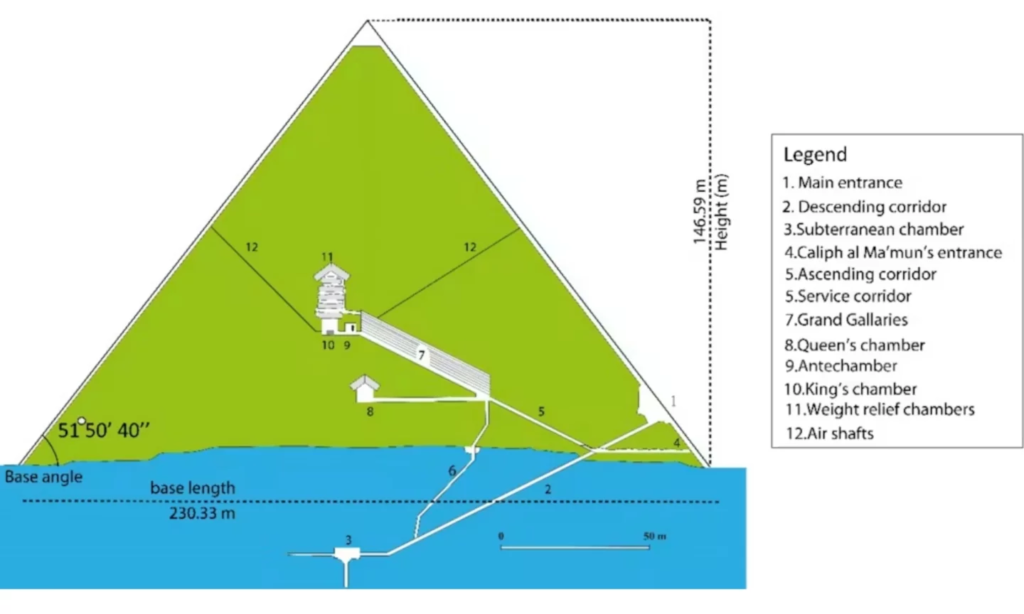
Colin Caprani, Monash University & Scott Menegon, Swinburne University of Technology/ The Conversation The Great Pyramid of Giza in Egypt has survived for more than 4,500 years. Earthquakes have repeatedly shaken the region, including the magnitude 5.8 Cairo earthquake in 1992, which dislodged some of the pyramid’s outer casing stones. Yet the main body remained essentially intact. How has it survived so well? A new study of the pyramid’s vibrations by Egyptian geophysicist Asem Salama and colleagues provides insight into its performance during earthquakes and identifies some interesting features. But we should be cautious in concluding that its impressive longevity is proof of its builders’ knowledge of earthquake engineering. What the research found The researchers measured the pyramid’s vibrations in ambient conditions. They found that its natural frequencies – the frequencies at which it “prefers” to vibrate – are mostly between about 2.0 and 2.6 hertz (cycles per second). The surrounding soil has a much lower dominant frequency, around 0.6Hz. Every structure has a natural rhythm. Push a child on a swing at the right moment, and the motion grows; push at the wrong moment, and little happens. Buildings and monuments behave similarly. If earthquake shaking matches a structure’s natural frequency, the motion can be amplified. This is called resonance, and it can be catastrophic. A diagram of the inside structure of the Great Pyramid. Salama et al./Scientific Reports/2026 The study also reports reduced vibrations near the so-called relieving chambers above the King’s Chamber. These chambers are understood to redirect the enormous weight of stone above and may also affect how vibration energy moves through the pyramid. These findings suggest some behaviour that may be helpful during an earthquake, including a frequency mismatch between the pyramid and the soil. But they do not, by themselves, prove that people intentionally built the pyramid to be resilient to earthquakes. How the researchers measured it The study used a method called horizontal-to-vertical spectral ratio analysis, or HVSR. This records tiny background motions from wind, traffic, human activity, and natural ground vibration. By comparing the horizontal and vertical components of these motions, researchers can estimate dominant frequencies in the soil and structure. In this case, instruments were placed at 37 locations in and around the pyramid, including internal passages, exterior stones, and nearby soil. This suits a heritage structure. Engineers cannot drill into the Great Pyramid, load it experimentally, or put instruments on it like a modern bridge. The method provides useful information without damage. However, it only measures the response to small background vibrations, not the severe shaking of an earthquake. The importance of frequency mismatch When shaking from an earthquake happens at a frequency that matches a structure’s natural frequency, it can cause resonance. Resonance can be catastrophic. So the measured difference matters. If the ground and the structure vibrate at different rates, the ground is less likely to feed energy efficiently into the structure. But this addresses only one possible mechanism of earthquake damage. There are plenty of examples of structures performing poorly in earthquakes, even though there was a frequency mismatch to the soil below. Earthquake resilience is more complicated Modern earthquake design does not assess resilience from one frequency comparison. Instead, we look at a whole list of questions. How severe is the expected shaking? What ground is the structure on? How heavy and flexible is the structure? Can the structure deform and dissipate energy without sudden collapse? How serious would failure be? The structure’s natural period or rhythm (which is related to its natural frequency) is part of that assessment. But it sits alongside many other factors. In practice, earthquake damage depends not only on the earthquake but on the structures that receive it. Australia’s 1989 Newcastle earthquake, for example, was not huge by global standards, but many buildings fared poorly, and 13 people died. For the Great Pyramid, the behaviour of the stonework is especially important. Ambient vibration testing measures behaviour under very small motions. During strong earthquake shaking, masonry can crack, open joints, rock, slide, and lose stiffness. Each of these changes the structure’s natural period, complicating the behaviour. Beware survivorship bias In evaluating the pyramid’s longevity, we should also consider survivorship bias. Famously, in the Second World War, statistician Abraham Wald was asked where armour should be added to aircraft. The obvious answer was to reinforce the places where returning aircraft had the most bullet holes. Wald argued the opposite: those aircraft had survived. The aircraft that did not return were missing from the data. Ancient structures pose a similar problem. We admire ancient aqueducts, temples, and pyramids because they are still here. The failed structures, poor foundations, weak details, and abandoned experiments are mostly gone. That does not diminish the Great Pyramid. It simply means that looking at structures that survive today does not tell us everything about the design intentions behind them. What the pyramid does teach us The pyramid may not have been intentionally designed for resilience in an earthquake. But its survival is not an accident, either. From an engineering point of view, it has many favourable features: a broad base, low centre of mass, tapering form, symmetrical plan, competent limestone foundation, and massive masonry load path. It is squat, stiff, and well-founded rather than tall, slender, and flexible. The safest conclusion is that the builders made excellent empirical engineering choices. Those choices may have been driven by construction experience, observation, structural necessity, or cultural intent. Their seismic benefits may be real without being the original purpose. The Great Pyramid’s survival is not magic, and it is not proof of ancient seismic design. As evidence, this study is important and impressive, but incomplete. Colin Caprani, Associate Professor, Civil Engineering, Monash University, and Scott Menegon, Senior Lecturer, Civil and Construction Engineering, Swinburne University of Technology This article is republished from The Conversation under a Creative Commons license. Read the original article. source

Great Pyramid's natural frequency could be the secret to its survival Read More »

Dow Jones Futures: Trump Iran Delay Saves Dow, But Sandisk, Bloom Energy, AI Leaders Sell Off

Dow Jones futures fell modestly early Tuesday, along with S&P 500 futures and Nasdaq futures. The stock market closed mixed after trading lower for much of Monday. With about an hour left in the session, President Donald Trump said on social media that he postponed a “scheduled attack of Iran tomorrow” at the request of Persian Gulf allies, saying “serious… Copyright ©2026 Investor’s Business Daily, LLC. All rights reserved. 87990cbe856818d5eddac44c7b1cdeb8 source

Dow Jones Futures: Trump Iran Delay Saves Dow, But Sandisk, Bloom Energy, AI Leaders Sell Off Read More »

A different kind of soda may actually lower your blood sugar levels

Intake of too little dietary fiber and too much added sugar is a major contributor to obesity, type 2 diabetes, and heart disease. One major source of added sugar is traditional soda, which has long been linked to obesity, cardiovascular disease, kidney problems, fatty liver disease, tooth decay, and other health complications. Now, a small preprint study suggests that one commercially available prebiotic soda may produce lower short-term post-meal glucose spikes than Coca-Cola in adults with overweight or obesity. Prebiotic soda is a popular beverage containing dietary fibers that our body can’t digest, feeding the microbes in our gut. These drinks are often claimed to help with constipation, bloating, irritable bowel syndrome, and inflammatory bowel disease. Prebiotics occur naturally in fruits, vegetables, and whole grains such as bananas, leeks, onions, garlic, asparagus, artichokes, wheat, and barley. Traditional sodas, meanwhile, are sugar-sweetened beverages associated with obesity, heart disease, kidney disease, non-alcoholic fatty liver disease, cavities, and other health complications. Compared to traditional sodas, prebiotic sodas generally contain less sugar and fewer calories while including plant-based prebiotic dietary fibers. In the new study, a research team led by Colleen F. McKenna and Chad Cook of Biofortis compared a commercially available prebiotic soda containing 3 g of total sugars and 6 g of dietary fiber with a traditional soda containing 39 g of total sugars and no dietary fiber, with or without a meal, to examine after-meal, glucose responses in generally healthy adults. However, the findings should be interpreted cautiously. The study involved only 30 participants, measured responses over just a few hours, and has not yet undergone peer review. It was also an open-label trial, meaning participants knew which beverage they were consuming, and the study was funded by OLIPOP, the manufacturer of the prebiotic soda tested. The study included 30 men and women aged 18-65 years with obesity or overweight, but who were otherwise healthy. Participants were selected because their weight status puts them at an increased risk of heart disease. Researchers screened participants based on fasting glucose levels below 126 mg/dL, controlled blood pressure below 140/90 mm Hg, and non-use of tobacco/nicotine or marijuana products. Individuals with a diagnosed history of diabetes, eating disorders, gastrointestinal disorders, or other clinically relevant conditions were excluded. Pregnant women and lactating mothers were also excluded. In an at-home setting participants consumed either a prebiotic soda or a traditional soda with or without a carbohydrate-rich meal as a daily lunch in a randomized controlled crossover design for four consecutive test days. Each test day, participants were asked to consume breakfast no later than 8am. From 8am to the time of the experimental lunch, participants were instructed to refrain from consuming any food or beverages, with the exception of water. The experimental lunch included a 12-fluid-ounce (355-ml) carbonated beverage – either a modern prebiotic soda or traditional soda – with or without a plain bagel and cream cheese. Participants were asked to complete the lunch within 15 minutes. The following three hours served as a post-meal observational period, during which participants were asked to refrain from any food or beverage, again, with the exception of water. Participants were instructed to maintain their usual diets and physical activity patterns throughout the study, while avoiding alcohol, vitamin C supplements, and fiber or prebiotic supplements. Vigorous physical activity was prohibited for the 24 hours leading up to screening and the mornings of test days throughout the study period. Researchers recorded that after-lunch (postprandial) glucose levels were lower with the prebiotic soda, with or without a carbohydrate-rich meal. Glucose rise was also lower with the prebiotic soda than with the traditional soda. The team also reported that the prebiotic soda did not significantly affect post-meal glucose dips, second-meal timing or energy intake, perceived hunger, or alertness. The findings are notable because they measured the impact of a lower-sugar prebiotic soda on postprandial blood glucose compared to a traditional sugar-sweetened soda in adults with overweight or obesity. The prebiotic soda resulted in significantly lower post-meal glucose excursions compared to the traditional soda when consumed either alone or with a meal. Importantly, the researchers say the lower sugar and carbohydrate content of the prebiotic soda was likely the primary reason for the reduced glucose response. The study was not designed to determine whether prebiotic fiber itself improved blood sugar regulation or gut health. The prebiotic soda tested in this study contained 28 (72%) fewer grams of total carbohydrate and 36 (77%) fewer grams of total sugars than the traditional soda. The researchers wrote, “This lower carbohydrate load is likely the primary contributing factor to lower glucose flux with [the prebiotic soda].” They added, “Overall, acute prebiotic soda consumption with and without a meal reduces postprandial glucose excursion, without affecting second meal behavior or perceived hunger and alertness, compared to traditional soda.” The researchers suggest prebiotic sodas may serve as lower-sugar alternatives to traditional soft drinks. However, the study did not directly test gut microbiome changes or long-term health outcomes. The study has not yet been peer reviewed and was published as a preprint on medRxiv. Because it was a small, short-term, sponsor-funded study comparing a single prebiotic soda product against Coca-Cola, the findings should not be interpreted as proof that prebiotic sodas generally improve blood sugar control or gut health. Source: medRxiv Fact-checked by Darren Quick source

A different kind of soda may actually lower your blood sugar levels Read More »

UOB Bank taps former Lazada CMO Marcus Chew to lead retail marketing

UOB Bank has appointed Marcus Chew as its new managing director, group retail marketing. Chew joins the bank from Lazada Group where he was previously group chief marketing officer at Lazada and Daraz.  Chew joined Lazada in 2021, overseeing the eCommerce platform’s end-to-end marketing strategy across Southeast Asia and South Asia. In the role, he led brand strategy, creative development, media execution and go-to-market planning across 11 markets. Prior to Lazada, Chew was CMO at NTUC Income from 2013 to 2021. As part of the insurer’s executive leadership team, he led the transformation of its marketing function, including building out its martech stack and scaling its digital business. Don’t miss: Why StanChart’s ‘lower-value human’ layoffs became a PR problem, not just a job cuts announcement Earlier in his career, Chew held regional marketing leadership roles at adidas, overseeing brand marketing and PR across China and Southeast Asia. He also previously served as regional marketing director at Sime Darby, and began his career at Unilever, where he managed brands including Sunsilk, Dove and Lux across Singapore and Malaysia. MARKETING-INTERACTIVE has reached out for a statement.  His appointment comes amid wider leadership movements across the banking sector. Earlier in April, Sameer Gupta stepped down from his role as group chief analytics officer at DBS Bank, ending a 12-year tenure during which he helped shape the bank’s data and AI transformation efforts at scale. Following his departure, Gupta joined Lloyds Banking Group as chief data and AI officer, reporting to Ron van Kemenade. His remit includes overseeing the responsible, transparent and secure use of AI across the organisation, alongside governance and regulatory oversight. Meanwhile, HSBC Singapore appointed Mayank Dutt as head of propositions and customer life cycle management (CLCM) for international wealth and premier banking. Reporting to Alice Fok, Dutt oversees customer engagement, proposition development and portfolio management across the bank’s premier, international and emerging affluent segments. Related articles:  HSBC names first chief AI officer   Former VML CEO Audrey Kuah joins DBS as group marketing and communications head Standard Chartered names new global corporate coverage marketing director   source

UOB Bank taps former Lazada CMO Marcus Chew to lead retail marketing Read More »

Howie Lau bids farewell to NCS Group after five years

Howie Lau has stepped down from his role as NCS Group’s chief corporate development and synergy officer and greater China business, effective 21 May 2026, marking the end of a five-year stint that helped reshape the homegrown technology firm into a regional player with growing ambitions in AI, digital and cloud services. The decision comes as NCS enters a new phase of growth following years of regional expansion, capability building and business diversification. Lau first joined NCS in 2021 with a mandate to help transform and scale the company into what he described as a “regional tech services powerhouse”. His departure also comes as NCS sharpens its focus on becoming an AI-led technology services company. Over a seven-year period through FY2026, the company grew from SG$1.8 billion to SG$3.2 billion in revenue, while expanding from 7,000 to 15,000 employees across more than 20 cities in Asia. “It has been an absolute privilege to be deeply involved in so many facets of this transformation journey, and we have achieved wonderful success together,” Lau told MARKETING-INTERACTIVE. “With good foundations in place, it is the right time to step aside and chase new rainbows, leaving the stage for a new leadership team to steer NCS through its next exciting phase of growth and transformation,” he added.  Don’t miss: NCS picks new lead brand and web agency of record  During his tenure, NCS underwent a sweeping transformation that stretched beyond business growth. The company broadened its footprint across the region, expanded into new sectors while deepening its government business, and built out capabilities across digital, AI, data and cloud. Lau said these moves were underpinned by a three-pronged growth strategy focused on regional expansion, service diversification and capability building. Among the milestones he looks back on most fondly is the company’s July 2021 brand refresh and the launch of platforms such as “IMPACT”, which aimed to reposition NCS’ presence in the market and elevate its standing within the broader B2B technology ecosystem. “Our marketing and comms teams pioneered and drove many innovations in the B2B marketing space which brought us closer and more credible with our clients,” he said. Under Lau’s watch, NCS also launched NCS NEXT in 2022, expanded into markets such as Australia and Greater China, and completed six acquisitions as part of its regional growth strategy. At the same time, the company deepened partnerships with global technology giants including Google, Microsoft, Dell Technologies, Amazon Web Services and NVIDIA, helping position NCS more firmly within the enterprise technology and AI ecosystem. “While having absolute strategic clarity was key to this journey, execution agility proved to be even more critical,” Lau said. “Every marketing and brand play, M&A deal, regional expansion, or partnership is based on a roadmap which we executed was grounded in a unified culture. That shared purpose is what binds a rapidly growing, diverse team together across borders.” Prior to joining NCS, Lau held leadership roles across Singapore’s technology landscape, including at Infocomm Media Development Authority, StarHub, Lenovo and IBM. Reflecting on the industry more broadly, Lau said Singapore has evolved into a globally recognised technology and AI hub, fuelled by strong digital infrastructure, talent and trust. “We have truly solidified our position as a premier global technology hub, with undeniable credentials in driving AI adoption across every major industry and sector,” he said, pointing to the presence of companies such as OpenAI and Google DeepMind. “Crucially, in a fractured and chaotic global landscape, Singapore’s ‘trust credentials’ have become an incredibly valuable and highly sought-after commodity.” The next generation of leadership  Having spent decades across Singapore’s technology ecosystem, Lau said leadership today looks vastly different from when he first entered the industry, particularly as technology, marketing and business transformation become increasingly intertwined. For Lau, one constant throughout his career has been the importance of people and teamwork. “First, if you take care of your people, they will naturally take care of the client and the business. Second, leadership is a team sport. In today’s hyper-complex world, a single leader is never smart enough or all-knowing enough to navigate the landscape alone. You have to build a strong, trusted core team – and when you have that alignment, magic happens.”  At the same time, Lau believes the next generation of leaders will need a far broader and deeper skillset than before, particularly as AI reshapes industries, business models and consumer engagement. “Go deep and be hands-on. In the past, we talked a lot about ‘T-shaped’ skills — having a broad horizontal understanding with one area of deep specialisation. today, that is no longer enough,” he said. According to Lau, future leaders will need a strong, horizontal platform of foundation skills including first-principles thinking, complex problem solving, empathy and people management, alongside deeper expertise in both technology and industry domains. For businesses and leaders alike, the reality is simple: either you become part of creating that new play, or the new play will win. Looking ahead, Lau believes the marketing and advertising industry is also approaching a major inflection point, driven by AI, first-party data and the rise of direct-to-consumer ecosystems. “The long-held dream of true, 1-to-1 personalised marketing is finally on the immediate horizon as AI, first party data as well as democratised D2C have already passed tipping points,” he said. As for what comes next, Lau said he is currently exploring opportunities with “high transformational potential, opportunity to grow, a great team, great culture and a healthy dose of good fun.” Related articles:     After $600m splurge, NCS unifies Australian operations and launches AI-driven brand push Singapore looks to strengthen position as trusted AI financial hub  NCS group names new senior director of strategic communications   source

Howie Lau bids farewell to NCS Group after five years Read More »

LG’s 1000-Hz FHD gaming monitor is overkill – but that’s the point

Gaming monitor refresh rates have been steadily climbing over the years: from 144 Hz to 240 Hz, 360 Hz, and beyond, with each jump promising a slight visual feedback edge for competitive players. The UltraGear 25G590B pushes this ascent into new territory, with the company calling it the world’s first native 1,000-Hz Full HD gaming monitor. And from what we can tell, this claim seems to be true: the Acer Predator XB273U F6 did break the 1000-Hz barrier earlier this year, but only for a downsized 1,280 x 720 resolution. Unlike broader showcases, such as its recent 5K UltraGear GM9, this model is built with a much more specific purpose in mind. Its 24.5-inch 1080p panel, its lightning-fast native refresh rate, and FPS-focused design make it less about high-quality cinematic immersion, and more about speed, consistency, and reducing every little bit of response time for e-sports play. In theory, a screen that can refresh up to 1,000 times per second reduces visual delay and makes fast motion easier to read. In FPS games, this can help players track fast movements, spot enemies and identify their positions sooner, and maintain better aim during rapid lateral shifts. For most casual gamers, this sounds a bit over the top – and in many cases, it probably is. To the untrained eye, the difference between 240 Hz and 1,000 Hz is barely noticeable. The people who stand to gain the most from this record-setting refresh rate are high-level competitors with PCs that can push extremely high frame rates, for whom shaving down the smallest fractions of latency can make a real difference. “Designed for competitive gaming, the monitor delivers faster visual confirmation and supports quicker reactions, giving players a decisive edge in FPS titles”LG LG is also emphasizing that 1,000 Hz is available at the monitor’s default Full HD resolution: a distinction that sets it apart from other ultra-high refresh gaming monitors. At 1080p, it’s easier to achieve extreme frame rates, and keeps things readable; this resolution remains the standard in e-sports today. The inclusion of Motion Blur Reduction Pro is intended to sharpen fast-moving objects and reduce blur during rapid movements. Overall, every decision the company has made for this panel prioritizes consistency, motion clarity, and visual confirmation over pixel density. The 25G590B’s 24.5-inch display size is very much a deliberate choice. It’s also a format widely used in e-sports because you can see the entire screen in your natural field of view, without needing to excessively move your eyes – or worse, turn your head. The compact stand means that there’s more room for mouse movement, and the height, swivel, and tilt adjustability help fine-tune positioning. The panel also comes with calibration markers, making it easier to replicate your preferred setup wherever you are. LG is adding a few AI-assisted extras, too, including AI Scene Optimization for genre-based picture adjustment, and AI Sound for spatial audio and clearer in-game comms with compatible headsets. Certainly useful additions, but at the same time, secondary to the monitor’s core mission. The UltraGear 25G590B is expected to launch in select markets in the second half of 2026, with additional regions following soon afterward. It sits firmly in specialist territory, somewhere between e-sports hardware and enthusiast gaming gear. For most players, this piece of kit is likely overkill. But for competitors trying to gain any edge they can, this could be exactly the kind of excess that makes sense. “This is a defining moment for gaming monitors,” said Lee Choong-hwoan, head of the Display Business at the LG Media Entertainment Solution Company. “By delivering the world’s first native 1000-Hz FHD gaming monitor, LG has established a new performance benchmark for competitive gaming.” Full specs will likely be revealed ahead of availability, along with pricing. Source: LG UltraGear source

LG’s 1000-Hz FHD gaming monitor is overkill – but that’s the point Read More »

Meta cuts jobs across APAC as AI restructuring deepens

Meta carried out a round of cuts across the Asia Pacific region earlier today as part of a broader restructuring tied to its push into artificial intelligence, according to sources familiar with the matter. Staff in Singapore were notified at 4am local time today. It remains unclear which roles and markets in the region were affected. MARKETING-INTERACTIVE has reached out to Meta for comment. The move comes as Meta Platforms reassigns about 7,000 employees into new AI-focused roles, while also reducing headcount in select areas. The changes are part of a wider reorganisation aimed at reshaping teams around AI products, including agents and applications. Don’t miss: Why StanChart’s ‘lower-value human’ layoffs became a PR problem, not just a job cuts announcement  In an internal memo dated 18 May, chief people officer Janelle Gale reportedly said staff would be moved into newly created groups focused on AI initiatives, with the company shifting towards a “flatter” structure and smaller teams. The changes are intended to improve productivity and make work more rewarding, she added.  The restructuring reflects chief executive Mark Zuckerberg’s push to position AI at the centre of Meta’s long-term strategy, with significant investment flowing into large language models, infrastructure and talent as the company competes with rivals such as Google and OpenAI. Meta has also been encouraging wider adoption of AI tools internally, including agent-based systems to support engineering and coding work, as it explores more automated workflows across the business. Alongside the redeployment of workers, Meta has also reportedly closed roughly 6,000 open roles as part of the restructuring process. New internal groups include Applied AI Engineering and Agent Transformation Accelerator, both focused on developing AI agents that can perform tasks traditionally handled by employees. Central Analytics will focus on measuring productivity and supporting agent development, while details on an Enterprise Solutions unit are expected later. The changes have reportedly triggered internal pushback from employees, including concerns over surveillance tools used in AI training and frustration over the handling of the layoffs, with more than 1,000 staff reportedly signing a petition raising privacy concerns. The latest cuts build on changes initiated in February last year, when Meta began streamlining operations and recalibrating its workforce around efficiency and artificial intelligence priorities, setting in motion a wider restructuring that has unfolded in stages since. Related articles:   Meta’s AI ad machine powers 33% revenue surge as new campaign connectors roll out Meta APAC head of comms for product and partnerships steps down  Meta set to overtake Google in global digital ad revenue source

Meta cuts jobs across APAC as AI restructuring deepens Read More »

JCB's hydrogen car chases 350 mph to nearly double world record

JCB, the British construction equipment giant best known for its signature yellow construction machinery, is returning to the Bonneville Salt Flats in Utah with the Hydromax – a hydrogen-powered land speed racer 32.8 ft (nearly 10 m) long – with a declared target of exceeding 350 mph (563 km/h). The attempt is scheduled for this coming August. If it hits that mark, it will nearly double the current land speed record for a hydrogen internal combustion vehicle set by BMW’s H2R prototype at 187.62 mph (301.95 km/h). Yet the best mark for any hydrogen-powered vehicle of any kind belongs to Ohio State University’s fuel-cell Buckeye Bullet 2, which clocked 303 mph (487.7 km/h) back in 2009. JCB is aiming to beat both in a single run. Introducing JCB Hydromax | All-New Hydrogen-Powered Combustion Car The Hydromax is powered by two of JCB’s own hydrogen internal combustion engines – essentially modified versions of the kind already going into the company’s production excavators – tuned to deliver 800 horsepower each. Both engines drive all four wheels through a twin-clutch dual-transmission system. The bodywork has been redesigned from the ground up to be more aerodynamically efficient than its predecessor, the diesel-powered JCB Dieselmax, and every component – from suspension geometry to traction control calibration to camera placement – has been validated through simulation and stress testing before touching salt. The speed demon behind the wheel will be Andy Green, a Royal Air Force Wing Commander and fighter pilot. Green is no stranger to Bonneville. In 2006, he drove the Dieselmax to a diesel land speed record of 350.092 mph (563.5 km/h), a mark that still stands. He also happens to be the only human to have broken the sound barrier on land, holding the outright world record at 763.035 mph (1,227.9 km/h). “The JCB Hydromax car is lighter, more powerful, and faster than its predecessor of 20 years ago,” Green says. “Once again, we’re going to show the world just how good British engineering and technology really is. This August we’re going to smash the hydrogen-powered vehicle record in the world’s fastest (and most exciting!) zero-emissions vehicle. I can’t wait.” Andy Green, the only human to break the sound barrier on land, will be the pilotJCB Behind the spectacle sits a serious industrial bet. JCB has invested £100 million (roughly US$127 million) over five years developing its hydrogen combustion engine technology – the same engines now shipping in its commercial excavators. The Bonneville attempt comes just ahead of the inauguration of a new $500 million manufacturing megafactory in San Antonio, Texas. Hydrogen internal combustion isn’t the only green powertrain out there, battery-electric and hydrogen fuel cells are both more established in automotive contexts. But JCB argues it offers a practical path for the heavy machinery sector, where energy density and refueling time matter enormously. A land speed record is, in that sense, a proof-of-concept run on the world’s most visible stage. “JCB Dieselmax was always a bit of an unusual idea – but it proved a point,” says company chairman Anthony Bamford. “Putting an advanced engine into a land-speed car showed the world what it could do in a way a digger never could. It’s the same thinking with hydrogen today. If you’re serious about emissions, you have to be serious about hydrogen – and a land-speed project is the perfect way to prove it.” Source: JCB source

JCB's hydrogen car chases 350 mph to nearly double world record Read More »