JCB's hydrogen car chases 350 mph to nearly double world record

JCB, the British construction equipment giant best known for its signature yellow construction machinery, is returning to the Bonneville Salt Flats in Utah with the Hydromax – a hydrogen-powered land speed racer 32.8 ft (nearly 10 m) long – with a declared target of exceeding 350 mph (563 km/h). The attempt is scheduled for this coming August. If it hits that mark, it will nearly double the current land speed record for a hydrogen internal combustion vehicle set by BMW’s H2R prototype at 187.62 mph (301.95 km/h). Yet the best mark for any hydrogen-powered vehicle of any kind belongs to Ohio State University’s fuel-cell Buckeye Bullet 2, which clocked 303 mph (487.7 km/h) back in 2009. JCB is aiming to beat both in a single run. Introducing JCB Hydromax | All-New Hydrogen-Powered Combustion Car The Hydromax is powered by two of JCB’s own hydrogen internal combustion engines – essentially modified versions of the kind already going into the company’s production excavators – tuned to deliver 800 horsepower each. Both engines drive all four wheels through a twin-clutch dual-transmission system. The bodywork has been redesigned from the ground up to be more aerodynamically efficient than its predecessor, the diesel-powered JCB Dieselmax, and every component – from suspension geometry to traction control calibration to camera placement – has been validated through simulation and stress testing before touching salt. The speed demon behind the wheel will be Andy Green, a Royal Air Force Wing Commander and fighter pilot. Green is no stranger to Bonneville. In 2006, he drove the Dieselmax to a diesel land speed record of 350.092 mph (563.5 km/h), a mark that still stands. He also happens to be the only human to have broken the sound barrier on land, holding the outright world record at 763.035 mph (1,227.9 km/h). “The JCB Hydromax car is lighter, more powerful, and faster than its predecessor of 20 years ago,” Green says. “Once again, we’re going to show the world just how good British engineering and technology really is. This August we’re going to smash the hydrogen-powered vehicle record in the world’s fastest (and most exciting!) zero-emissions vehicle. I can’t wait.” Andy Green, the only human to break the sound barrier on land, will be the pilotJCB Behind the spectacle sits a serious industrial bet. JCB has invested £100 million (roughly US$127 million) over five years developing its hydrogen combustion engine technology – the same engines now shipping in its commercial excavators. The Bonneville attempt comes just ahead of the inauguration of a new $500 million manufacturing megafactory in San Antonio, Texas. Hydrogen internal combustion isn’t the only green powertrain out there, battery-electric and hydrogen fuel cells are both more established in automotive contexts. But JCB argues it offers a practical path for the heavy machinery sector, where energy density and refueling time matter enormously. A land speed record is, in that sense, a proof-of-concept run on the world’s most visible stage. “JCB Dieselmax was always a bit of an unusual idea – but it proved a point,” says company chairman Anthony Bamford. “Putting an advanced engine into a land-speed car showed the world what it could do in a way a digger never could. It’s the same thinking with hydrogen today. If you’re serious about emissions, you have to be serious about hydrogen – and a land-speed project is the perfect way to prove it.” Source: JCB source

JCB's hydrogen car chases 350 mph to nearly double world record Read More »

Gen Z perspectives: IKEA gets playful, Spotify goes disco and Swatch x AP

Happy Friday, MARKETING-INTERACTIVE readers and welcome back to Gen Z Perspectives, your go-to feature where we unpack the week’s top stories and trending topics through the eyes of Gen Z. From the biggest industry moves to viral moments and marketing controversies worth dissecting, we’re bringing the heat with authenticity, awareness and probably a few unfiltered takes. This week, IKEA Singapore is turning a childhood game into a full-scale retail playground, Spotify traded its logo for a disco ball, and Swatch x Audemars Piguet dropped a collaboration that sent hype levels through the roof. Yes, this week’s hype is very real. Don’t miss: Gen Z perspectives: The great millennial vs Gen Z marketing debate  1. IKEA is hiding something… and one million points are up for grabs IKEA Singapore is turning a childhood favourite into a full-scale retail experience, inviting shoppers to compete in its first-ever hide and seek event at IKEA Alexandra. Dubbed “IKEA Play date: Hide & seek”, the event will see teams of two race through the store to locate eight hidden characters within 45 minutes. The winning duo will walk away with one million IKEA Family points. Read more here.  2. Spotify swaps logo for a disco ball, and audiences are split Spotify is leaning heavily into nostalgia for its 20th anniversary, unveiling a mobile-only in-app experience that takes users through a personalised look back at their listening history. While users took to social media to share their music milestones, much of the online attention shifted elsewhere – a quiet visual change to the app icon from Spotify’s familiar green circle into a glittering disco ball. The shift quickly became the focal point of conversation, sparking debate over whether it enhanced the anniversary storytelling or distracted from it. Read more here.  3. Have Swatch and AP turned hype into the real product? The launch of the Swatch x Audemars Piguet (AP) “Royal pop” collection has sparked massive queues, store closures and heated scenes across several cities worldwide. From Singapore, Hong Kong and Kuala Lumpur to London, Milan and New York, crowds gathered overnight outside Swatch stores as collectors, resellers and watch enthusiasts rushed to get their hands on the colourful timepieces. Much like the viral Omega x Swatch MoonSwatch launch in 2022, the latest partnership has caught the attention of industry observers, with many saying the collaboration feels bigger than a typical product drop. Read more here.  Related articles: Why StanChart’s ‘lower-value human’ layoffs became a PR problem, not just a job cuts announcement   In Conversation: IKEA Singapore on why awareness must be earned, consistently    Sir Martin Sorrell says advertising’s AI reckoning is really an efficiency reckoning source

Gen Z perspectives: IKEA gets playful, Spotify goes disco and Swatch x AP Read More »

How safe are creative ideas in Singapore’s pitch culture?

Singapore’s creative industry is finding itself in the middle of an uncomfortable conversation around pitch culture, idea ownership and where inspiration crosses the line into imitation. The discussion gained traction after VJ Anand, founder of creative shop Ballsy, called out Pizza Hut Singapore over its recent “OG of good times” campaign, alleging similarities to a concept his agency had pitched earlier this year. To which, Pizza Hut said the “OG” theme surfaced across concepts the brand received – which was not surprising given “OG” had already been incorporated as part of its creative approach since March 2024. Shortly after, another Singapore-based creative studio also came forward with a similar experience with an unnamed client. In a statement on social media, branding studio Roots alleged that a global financial institution had launched an identity refresh for one of its public programmes, that closely resembled one of the concepts the studio had presented during a paid tender process, including face-to-face presentations where the team was walked through the proposals in detail.  The post said the pitch fee was only paid after “chasing” the client and clarified to MARKETING-INTERACTIVE that the payment was “a token fee for participation and submission of concepts” rather than the use of them. Don’t miss: UNIQLO ‘Cai fan’ keychain kerfuffle: Where does inspiration end and imitation begin? In conversation with MARKETING-INTERACTIVE, Jonathan Yuen, founder and creative director of Roots, said the studio was unable to share further details of the case due to an NDA signed prior to the tender. He explained that while such agreements are common in large organisations, they left the studio unable to publicly address the matter. Moreover, there was no protection for the ideas submitted during the pitch. He added that the experience has prompted the studio to be more cautious moving forward, including pushing for mutual NDAs and clearer protections around intellectual property and proposal use in future tenders. While both cases differ in circumstance, they have reignited longstanding industry frustrations around speculative work, blurred creative boundaries and the power imbalance smaller agencies often face during pitch processes. Protecting the rice bowl For agency leaders, the recent issues are not isolated incidents, or one offs. On conditions of anonymity, some say idea reuse, speculative pitching and blurred creative ownership have quietly become accepted realities within parts of the industry. According to Fiona Bartholomeusz, managing director of creative agency formul8, instances of uncredited idea reuse happen “more often than it’s called out”. “Usually it’s ‘tweaks’ to a concept, idea or name that originated with one agency and then dispensed to another ‘less expensive’ one to execute,” she said. Bartholomeusz added that agencies are mostly reluctant to publicly challenge clients due to the small and interconnected nature of Singapore’s advertising industry. “The reality is…the Singapore ad industry is a small community and clients have long memories,” she said, adding: Most agencies need to protect their rice bowl and it’s just not worth the grief. Even when similarities are obvious, she argued that brands are unlikely to openly acknowledge wrongdoing, often framing overlaps as coincidence or parallel thinking. Bartholomeusz also pointed to what she described as “dud pitches”, where agencies are given extremely tight timelines to develop extensive campaign proposals, despite suspicions that another agency may already have an inside track. “How can [clients] expect a response from agencies in less than a week for a global through-the-line campaign, complete with data and research and fully fleshed-out concepts?” she said. While she acknowledged that enforcing punitive measures may be difficult in Singapore, Bartholomeusz said the industry ultimately comes down to ethics and professionalism across both clients and agencies. Still, she said it was “brave and heartening” to see agencies publicly speaking up, adding that she hopes it encourages greater accountability around creative ownership and originality. Where inspiration ends and accountability begins Not everyone, however, believes such situations are always clear-cut. According to Marcus Chew, former group chief marketing officer at Lazada Group, ideas rarely emerge in complete isolation, with creative work often shaped by existing cultural references, trends, past campaigns and even subconscious exposure to similar executions. “Unless something is almost identical in execution, messaging, structure, or distinctive creative assets, it becomes very difficult to definitively claim ownership of a broad concept or direction,” he said. Chew likened the issue to intellectual property law, where inspiration and overlap can exist, but proving deliberate replication is significantly more complex unless there is clear evidence of direct copying. Still, he stressed that beyond legal considerations, the issue ultimately comes down to professional ethics and client responsibility. “The client is the only party exposed to all the pitches and ideas presented across agencies,” he said, adding that brands should never pass an idea from one agency to another for execution without permission or compensation. In instances where a client genuinely wishes to move forward with an idea originated by another agency, Chew said there should at minimum be transparency and fair compensation for the originating agency’s strategic and creative contribution. “Otherwise, it risks damaging trust across the broader agency-client ecosystem,” he added. To minimise unintentional overlap, Chew said brands should implement stronger governance during pitch processes, including clearer documentation of concepts presented, tighter confidentiality practices and limiting unnecessary pitch rounds. Ultimately, trust and ethical conduct matter as much as legal ownership in the creative industry. Pitch culture’s uncomfortable truth Taking a broader industry view, Goh Shufen, co-founder of R3 and APAC president of MediaSense, said one of the biggest challenges lies in defining what truly constitutes an “original” idea in the first place. “Does the fact that more than one agency presented the same idea or strategic route make it less original or more affirmative?” she questioned. From a consultancy perspective, Goh argued that project-based pitching is often not an efficient use of time, resources or reputation for either clients or agencies. She said:  For agencies who choose to pitch, they should go in with eyes wide open on the risk of ideas being stolen. She also noted that in some

How safe are creative ideas in Singapore’s pitch culture? Read More »

Stock Market Today: Dow Closes Above 50,000; Nvidia Rises Ahead Of Earnings (Live Coverage)

The Dow Jones Industrial Average and other major indexes posted hefty gains and closed near the day’s highs on Wednesday, amid oil prices that sank on a reported U.S.-Iran deal, and the release of the Federal Reserve’s April meeting minutes. Meanwhile, Nvidia (NVDA) closed higher on the stock market ahead of its quarterly results, due after the closing bell. The… Copyright ©2026 Investor’s Business Daily, LLC. All rights reserved. 87990cbe856818d5eddac44c7b1cdeb8 source

Stock Market Today: Dow Closes Above 50,000; Nvidia Rises Ahead Of Earnings (Live Coverage) Read More »

Toyota's best pickup truck gets even better for work and off-road play

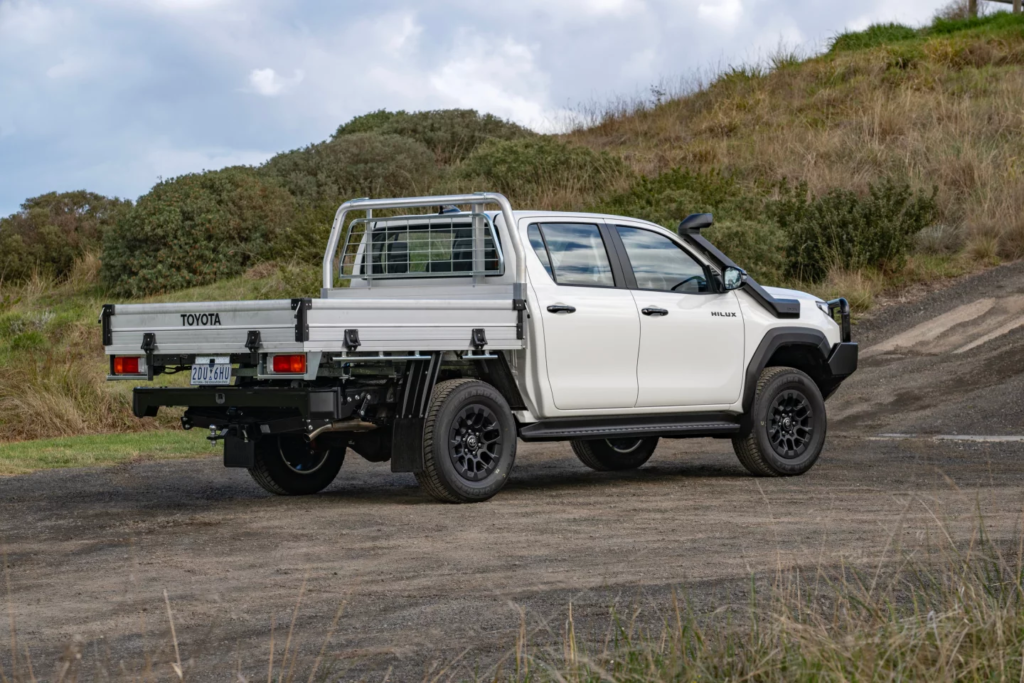
Toyota’s global-market Hilux pickup platform and its turbo-diesel engine is already highly coveted unobtainium in the US, and it’s about to get more attractive than ever. A forthcoming upgrade will make it even better for trades workers, off-roaders, overlanders and other diehard truck fans, boosting available payload so the incomparably rugged little truck can carry more weight, whether we’re talking stacks of landscaping rock or expansive camper setups. Midsize trucks are one of the modern world’s best street-legal tools for off-roading thanks to their particularly effective combination of compact size and rugged 4WD construction. But there’s one spec that holds them back from really excelling in all 4×4 roles: payload. American midsize trucks like the Toyota Tacoma and Ford Ranger can be woefully under-specced for carrying heavy work loads or campers and overlanding gear. Toyota shows the first pre-production Hilux with GVM upgrade, a double cab-chassis modelToyota Australia One of the reasons Americans covet the out-of-market Toyota Hilux, despite having access to the similarly positioned Tacoma, is because it’s a more utilitarian platform that packs more payload out of the gate. The standard Australian-market Hilux, for example, offers up to 2,756 lb (1,250 kg) of payload, whereas the Tacoma tops out more than 1,000 lb (454 kg) below that at 1,710 lb (776 kg). That gap is only widening. Toyota Australia announced this week that it’s developed a new factory-engineered Gross Vehicle Mass (GVM, GVWR in the US) upgrade option that increases the total weight rating of Hilux trucks to boost payload by hundreds of kilograms. More specifically, Toyota’s Australian arm says the kit increases payload by between 820 and 1,047 lb (372 and 435 kg), depending upon the specific Hilux to which it’s applied. Load it up with a towering pallet of goods, heavy building supplies or a roomy family camper, the Toyota Hilux with GVM upgrade is ready for itToyota Australia With the GVM upgrade, max available Hilux 4×4 payload gets bumped up to a robust 3,362 lb (1,525 kg), nearly double what’s available on a Tacoma. The new GVM upgrade offering is clearly a direct counter to the Ford Ranger Super Duty that recently launched in Australia and beyond. We like the ring of “Hilux HD,” but Toyota didn’t float any model name updates in its announcement. Either way, that’s a ton (or a tonne and a half, really) of payload with which to work, whether you’re muling heavy construction materials and tools to remote job sites or sliding on a large pickup camper and accessories. It’s quite a contrast to a US midsize truck market that’s spawned an ever-growing aftermarket of ultralight camping toppers that weigh a few hundred pounds so as not to eat the entirety of the truck’s payload. The new GVM upgrade package is available exclusively for 4×4 Hilux variants and includes higher-capacity front and rear axles and longer rear mono-tube shocks that boost ride height by up to 10 mm (0.4 in). Buyers will be able to add the new factory-fitted kit to five different work-focused Hilux 4×4 double-cab models: the Workmate double cab-chassis, Workmate pickup, SR Extra cab-chassis, SR double cab-chassis and SR5 pickup. Each model will come equipped with Toyota’s 201-hp 2.8-liter turbo-diesel engine that’s good for up to 369 lb-ft (500 Nm) of torque, a six-speed automatic transmission and dual-range part-time 4WD. The 2026 Toyota Hilux Workmate is a basic, affordable commercial-oriented pickup truckToyota Australia Toyota will launch the GVM package on the aforementioned Hilux trims in August for AU$4,000 (approx. US$2,855). Current base prices of the Hilux 4×4 with the aforementioned turbo-diesel powertrain start at AU$58,428 (US$41,725) in Melbourne. That’s for the Workmate double-cab pickup truck. The Workmate double cab-chassis starts at AU$60,272 (US$43,025). Both truck prices are before the $4K GVM upgrade or any other options. Because the GVM kit is fitted at the factory, the truck maintains Toyota’s full five-year warranty. The first Ford Ranger Super Duty camper trucks have started showing up in and outside Australia, and we can’t wait to see what truck camper builders do with the Hilux HD. We’ll be watching. Source: Toyota Aus source

Toyota's best pickup truck gets even better for work and off-road play Read More »

Sony's wearable 'air conditioner' gets better fit and stronger cooling

Don’t sweat it if you didn’t know there’s such a thing as a wearable air conditioner. It’s not a miniature version of the real thing in your home, and only a couple of brands make this sort of thing, so they haven’t yet gone properly mainstream. One of those brands, though, is Sony. It launched the first of these Reon Pocket devices back in 2019, and it’s now launched an updated version that’s better in practically every way – except the name. The Reon Pocket Pro Plus applies the Peltier effect, in which cooling caused by an electric current flowing across the junction of two different conductors can cause heating or cooling. It’s worn around your neck and sits between your shoulders; when placed against your skin where it can impact your circulatory system, this device can lower or raise your skin temperature by several degrees. It won’t affect your core temperature. REON POCKET PRO Plus Wearable Thermo Device with Advanced Cooling and Heating Technology The idea is it’ll make things a bit more comfortable if you often face a crowded commute, an overly chilly AC in the office, or sultry weather while working outdoors. If you’re prone to hot flashes, this might be worth a try too. The device allows for heating and cooling your body on demand, whether you’re stuck in a stuffy train or a chilly officeSony The first model was said to cool you down by as much as 23 °F (13 °C), or raise the temperature by 14 °F (8 °C). This new one’s said to be far more effective, beating the last model from 2025 with an additional 3.6 °F (2 °C) cooling capability. It also features a revamped neckband that allows for a more secure fit for a stronger cooling effect, and the airflow exhaust that faces upwards is now easy to adjust behind high collars for optimal performance. The Reon Pocket Pro Plus can run for hours on a single charge, and its companion tag serves as an ambient temperature and humidity sensorSony The Pro Plus manages 5.5 hours of cooling on its highest setting from a full two-hour charge; turning it down all the way allows it to run for a maximum of 34 hours. It also comes with an ambient temperature and humidity sensing tag that can go on your bag and inform the Pro Plus’ automatic adjustments. You can control the device using buttons on it, or via a companion mobile app. The new Reon is designed to be more comfortable to wear, with an updated air vent that can rise above high collars and enable better performanceSony While it certainly sounds cool, I’d recommend trying this out for yourself before placing an order for one, as your perception of the effect may differ from the numbers you’re reading. Back in 2018, I had a chance to try out the first Embr Wave wrist-worn personal climate control device developed by a team including MIT graduates, and it was underwhelming to say the least. Your mileage may vary, and it’s possible Sony has made more headway in delivering on the promise of this type of gadget. Cool or warm, naturally The Reon Pocket Pro Plus is on sale in some Asian markets including Singapore, where it’s listed at S$349 (US$273). It’s set to go on sale in the UK and Europe through Sony’s online store and via other retailers – but it likely won’t arrive stateside, so you’ll need to get your hands on it some other way. There’s also a more recent version of the Embr Wave, which now features a smartwatch-like design and can be purchased outright or as a $20 monthly rental in the US. That might be more accessible for some, if you want to see what all the personal-cooling fuss is about. Check out Sony’s Reon Pocket Pro Plus on the company’s Singapore site. Source: Sony source

Sony's wearable 'air conditioner' gets better fit and stronger cooling Read More »

Storage-packed tiny house provides spacious family friendly layout

The Byron Bay tiny house is a spacious model that’s centered around an open kitchen and living area. The towable home also has multiple upgrades available, including an off-grid setup, and would be a good fit for small families. The Byron Bay is designed by Removed Tiny Homes and is based on a triple-axle trailer. It has a length of 8.4 m (27.5 ft) and a width of either 2.4 m (7.10 ft) or 3 m (9.10 ft), with the latter size being depicted in the images. The former allows for regular travel, while the larger width variant provides a roomier layout that would probably be a better choice unless a nomadic lifestyle is important to the owner. The Byron Bay tiny house’s layout is centered around a large living areaRemoved Tiny Homes The home’s exterior is finished in corrugated metal and timber, with a metal roof, and is shown in the promo pics with an optional deck area. The interior measures 33 sq m (355 sq ft) and is finished in what looks like drywall, with its wood tones and white walls creating a Scandi feel. Glass double doors open onto the large kitchen. This is jam-packed with storage, including both upper and lower cabinetry, and is equipped with a sink, an oven and cooktop, plus a microwave and a fridge/freezer. A breakfast bar that seats two rounds out the space. Nearby lies the living room. This is spacious by tiny house standards, while the high ceiling and large picture window help fill the interior with natural light. It has a sofa and an entertainment center. Elsewhere on the ground floor, on the opposite side of the home to the kitchen, is the bathroom. It contains a glass-enclosed shower, a flushing toilet, and a vanity sink. Both of the Byron Bay’s bedrooms are located upstairs and are reached by a staircase in the living room. A lowered platform connects the two rooms and provides useful standing space, making it easier to get in and out of bed. Each bedroom contains a double bed, some built-in wardrobe units, and has a low ceiling. Each space is located on opposite sides of the house, providing some separation, which should prove useful for family living. The Byron Bay tiny house’s spacious interior measures 33 sq m (355 sq ft)Removed Tiny Homes The Byron Bay has lots of options available, including the materials and colors used, and even its layout. As mentioned, Removed Tiny Homes also offers full off-grid functionality with solar panels and a composting toilet at additional cost. It starts at AUD 143,990 (for reference, this works out at around US$104,000), with delivery available throughout Australia. Source: Removed Tiny Homes source

Storage-packed tiny house provides spacious family friendly layout Read More »

Stock Market Today: S&P 500, Nasdaq Score Weekly Wins As Dow Logs Record High

The Dow Jones Industrial Average and other major stock indexes finished higher Friday, with easing bond yields helping them lock in gains for the week. Merck (MRK) shares jumped on the stock market today following a recommendation for a cancer regimen in Europe. Meanwhile, Kevin Warsh was sworn in as the new chair of the Federal Reserve. The Dow ended… Copyright ©2026 Investor’s Business Daily, LLC. All rights reserved. 87990cbe856818d5eddac44c7b1cdeb8 source

Stock Market Today: S&P 500, Nasdaq Score Weekly Wins As Dow Logs Record High Read More »

M1-Simba deal collapses after regulatory probe stalls review

Singapore’s proposed telco consolidation between M1 and Simba Telecom has officially fallen through, after the parties terminated the sale and purchase agreement tied to the deal. In a statement released on 22 May, Tuas Limited said the agreement relating to Simba’s proposed acquisition of shares in M1 had been terminated after several conditions precedent were not met before the long-stop date of 21 May 2026. The agreement, first announced in August 2025, was between Tuas and its subsidiary Simba Telecom, and Keppel entities Keppel Konnect and Konnectivity. Don’t miss: StarHub concludes media pitch According to Tuas, the agreement ceased to have effect after the conditions were not fulfilled or waived by the extended deadline. The parties have also been released from their respective obligations under the deal, except for certain surviving clauses. Tuas added that Simba continues to cooperate with an ongoing investigation by the Infocomm Media Development Authority (IMDA) into potential breaches of the Telecommunications Act and the conditions of Simba’s Facilities-Based Operator Licence. The company said it will continue to update shareholders in relation to the investigation. The collapse of the deal comes after IMDA suspended its review of the proposed consolidation following concerns that Simba may have used radio frequency bands that were not assigned to it. At the time, the regulator said the alleged unauthorised use of spectrum could constitute a breach of the Telecommunications Act 1999 and Simba’s licence conditions, adding that investigations and possible enforcement action were ongoing. IMDA had also been assessing whether the proposed merger would substantially lessen competition or raise public interest concerns under Singapore’s Telecom and Media Competition Code. The proposed acquisition was first unveiled in August last year, when Keppel announced plans to divest M1’s telco business to Simba in an all-cash transaction valued at an enterprise value of SG$1.43 billion. Under the proposed deal, Keppel was set to receive close to SG$1 billion in cash proceeds for its 83.9% effective stake in M1, while retaining the company’s ICT business. At the time, Keppel said the merger would create a “nimble and competitive digital-first telco” by combining M1’s cloud-native network with Simba’s digital consumer model. The proposed consolidation also drew scrutiny from industry players. In November last year, Circles.Life warned that the merger could negatively impact competition and consumer choice if sufficient regulatory safeguards were not put in place. Related articles:  Interview: Lynette Poh takes on expanded role at Singtel   StarHub, NeutraDC forge quantum-safe link between Singapore and Indonesia StarHub and Mediacorp join forces to create stronger content and ad opportunities    source

M1-Simba deal collapses after regulatory probe stalls review Read More »

Spacious tiny house skips loft living for single-floor comfort

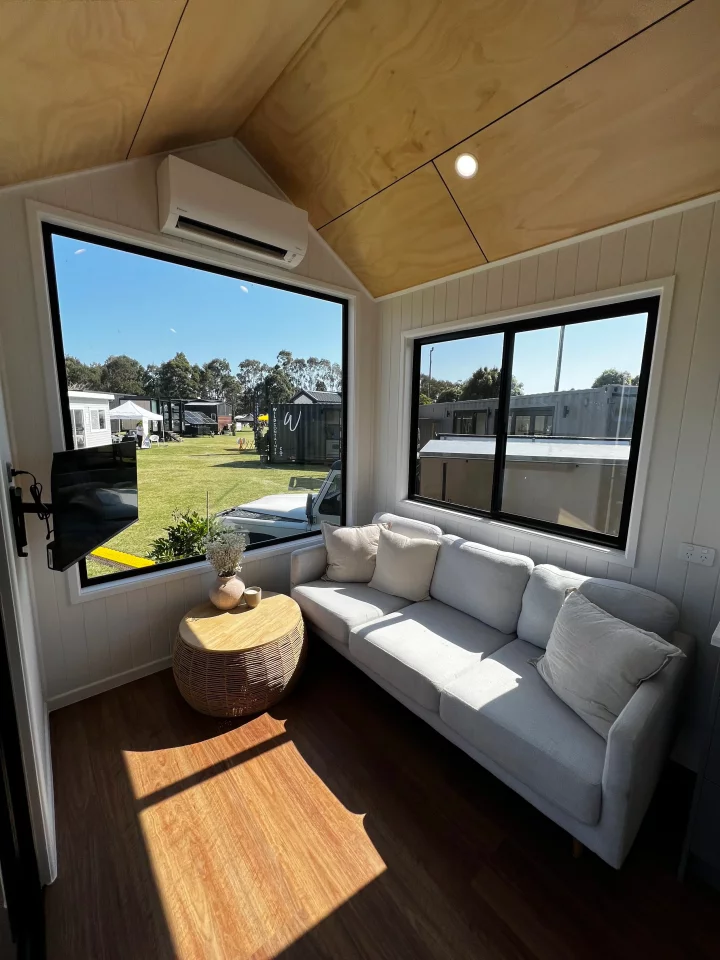
Not everyone is cut out for climbing into cramped tiny house loft bedrooms. The Tallebudgera addresses this with a spacious layout suitable for full-time living that’s arranged on a single floor. Designed by Removed Tiny Homes, the Tallebudgera is based on a triple-axle trailer and finished in Colorbond steel, a coated metal that’s popular with Australian tiny house firms thanks to its durability. The home has a length of 9.6 m (31.5 ft) and a standard width of 2.4 m (7.10 ft), though it can optionally come with an increased width of 3 m (9.10 ft) for those who don’t plan on regularly towing it – this would be a good move since the extra width really does make a big difference. The Tallebudgera tiny house’s living room includes a large sofa and a wall-mounted TVRemoved Tiny Homes Given there’s not a huge amount of space available inside, the home looks very comfortable for one or two people. It’s finished in tongue-and-groove-style wall panels, with a plywood ceiling, and vinyl flooring. Double glass doors open onto the living room, which is furnished with a sofa and a wall-mounted TV, plus a large picture window framing the view. The kitchen is adjacent and takes up a good portion of the available floorspace. It’s equipped with a sink, an oven and a propane-powered two-burner cooktop, a microwave, and a fridge/freezer. Additionally, it includes a lot of cabinetry, as well as a breakfast bar dining area for two. The Tallebudgera’s bathroom is accessed from the kitchen via a pocket sliding door and contains a flushing toilet, a vanity sink, and a glass-enclosed shower, with the glass panels removed for travel in the photos. There’s also a washer/dryer installed. The bedroom is located at the opposite end of the home to the living room and looks open and light-filled, thanks to the high ceiling and generous glazing, including double glass doors that help open it up to the outside. It hosts a double bed, plus additional storage, including a small crawl space above the bathroom. The Tallebudgera tiny house’s kitchen includes a breakfast bar dining areaRemoved Tiny Homes The Tallebudgera is up for sale from AUD 132,990 (for reference, this works out at roughly US$94,500) and has lots of options available, such as configuring its layout and choosing off-grid operation with solar panels, as shown in this example model. Delivery is available throughout Australia, but you’ll need to contact the firm directly for rates. Source: Removed Tiny Homes source

Spacious tiny house skips loft living for single-floor comfort Read More »