Sub-zero lighter throws out powerful flame for survival fires

The average $2 Bic lighter is great for lighting up a cigarette but not as great for lighting campfires or grills. Minnesota startup Radlight presents an intriguing alternative developed specifically for such outdoorsy tasks … and for fending off hypothermia when things really go south. Its oversized weatherproof lighter delivers a confident, reliable starter flame, even if you’re battling squall winds, horizontal rain or temperatures as low as -40. We’re not looking to knock Bics or other throwaway butane lighters. In fact, we have every intention of continuing to use them – they’re familiar, easy to operate, lightweight, readily pocketable and found at stores all over the map for a few bucks. And they do an excellent job when the task calls for lighting something from below, as their flame rises naturally upward. We can confirm, though, that basic spark-wheel disposables are not ideal when it comes to lighting a fire near the ground, when you need to angle the lighter head down under the tinder. The flame still rises straight upward …this time, right into your thumb. That’s not so bad if you can light it quickly and pull out of there, but if you’re having trouble getting it lit or lighting it in multiple places, it can take a serious toll on one’s thumb skin. That’s not to mention that the spark wheel tends to be small and entirely unfriendly to the gloves that could otherwise protect your thumb from the flame (and fingers from the frigid cold that inspired the fire in the first place). A little wind or water can also mean “lights out.” Radlight took home an Outdoor Innovation Award earlier this monthRadlight Radlight’s lighter, which we’re just gonna’ call the Radlighter to avoid continued redundancy, offers a more tailored solution specially designed for sparking fires in the wild, not so much for lighting cigarettes. The design starts with a hardwearing, oversized build aimed at in-field durability and reliable, easy use, trip after trip. The large flint wheel is designed to be operated with or without gloves on, while the aluminum outer chassis and stainless steel insert are built to hold up to use and abuse – no cheap plastic to crack through on the first accidental drop on hard rock. Radlight also reorients its flame assembly, installing the spark wheel directly below the lighter hood, which itself is flipped perpendicular to the lighter handle to direct the flame upward away from the thumb when holding the lighter sideways to get into the tinder. Better yet, the flame is self-sustaining and keeps burning without having to hold down a valve, as you would on other lighters. So you can pull your fingers back away from the hot lighter head and onto the ridged-grip handle. The Radlighter is built to handle wind, wetness and temperatures well into sub-zero territory Radlight If that’s not far enough away, the flip-top that rotates open can pull back to further extend the body, pushing the flame-sparking head out farther like an integrated long neck. That lighter top then flips around and closes over the flame assembly for storage and transport. The Radlighter has been developed to soldier through all the treacherous conditions Mother Nature might be inclined to throw at it, especially when you need it most. Radlight says it’s certified to an IP68 waterproof standard, and while it won’t be firing out a flame while submerged in the river, it’s designed to light up reliably, even after you accidentally drop it in a puddle, expose it to a downpour or drench it while wading through water. The conical holes on the outside of the flame hood, meanwhile, serve to slow gusting wind down to keep the flame firing steadily through fierce wind conditions. Radlight uses basic physics to deliver better wind performanceRadlight Instead of butane, Radlight fuels its refillable lighter with naptha fuel it identifies as more reliable in cold weather conditions down to -40°F/C. The lighter does not come prefilled but can be topped up with easy-to-find naptha lighter fluid like that from Zippo. Radlighter isn’t exactly innovating a new market, as there are plenty of existing lighter alternatives that address inadequacies of basic BICs when it comes to lighting campfires, grills and survival fires. We’ve become particularly fond of basic long-neck lighters for use at home and when car camping, and non-wheel push-button Bic EZ Reach lighters are great for lighter travel, fitting comfortably in a pocket. They’re basically a regular Bic with a 1.4-in (3.5-cm) neck extension and a simpler push-button operation. Even better for pocketing than Bic EZ Reach, the Soto Pocket Torch XT features a telescopic neck that extends for use and retracts for carry. The Radlighter isn’t quite as compact as a disposable, but the 3.2 x 1.8 x 0.9-in gadget fits right in with other EDC gearRadlight That said, Radlight does aim to comprehensively solve weather challenges that might still plague those lower priced designs, and if its lighter performs as reliably as intended, it might just be worth its place in any backcountry kit. The company recently took home a 2026 Outdoor Innovation Award alongside the Dragan Pocket Winch in the Overland & Travel category. We’re hoping to get one and put it through hell to see how well the 4.2-oz (119-g) lighter completes its mission. The Radlighter is available now for a retail price of US$59.00. That’s a lot more than the 3 bucks you’d spend on the aforementioned pocketable Bic EZ Reach but in line with what you might spend on a nice Zippo or similar refillable lighter. Source: Radlight source

Sub-zero lighter throws out powerful flame for survival fires Read More »
Tiny house keeps things small and simple with single-level layout

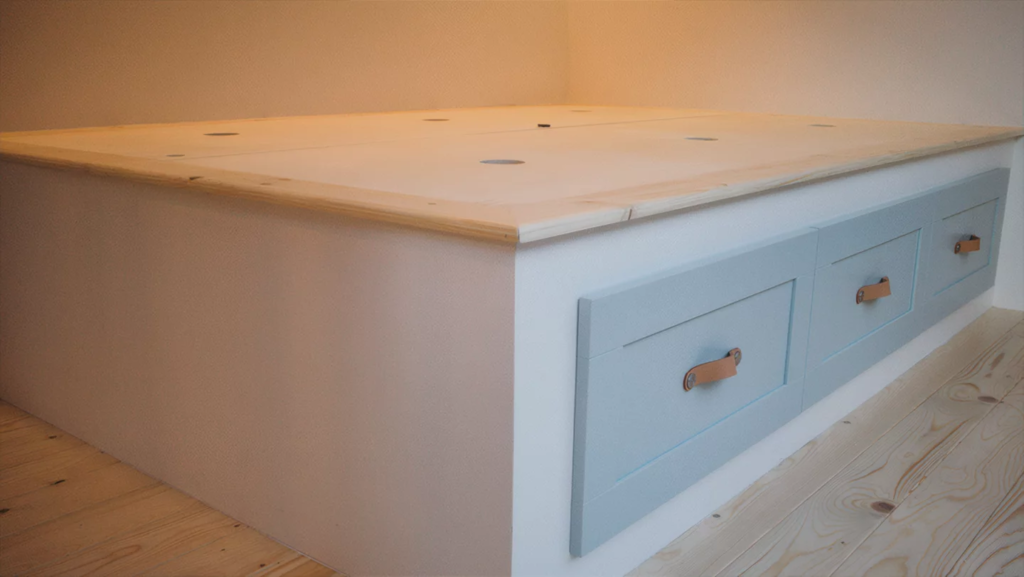
Not every tiny house needs to be the size of an apartment to feel comfortable and livable. The Algarve embraces the simple side of small living with a single-level layout and lots of glazing that helps open the home up to the outside. The Algarve is designed by Portugal’s Casagaea and looks modern and stylish with its use of engineered wood and a sloping roof. The home is based on a double-axle trailer and comes in three lengths: 7.2 m (23.6 ft), 7.8 m (25.6 ft), and 8.2 m (27 ft) – with even the largest being relatively small compared to a typical North American tiny house nowadays. The Algarve tiny house’s bed is installed on top of a wooden platform with integrated storageCasagaea Its interior is light-filled thanks to all that glazing, which includes two sets of double glass doors. This might seem like overkill for such a compact home, but will help open it up to the outside, especially if paired with a couple of optional deck areas to expand living space. It features a studio-style arrangement that’s centered around a sleeping/living area. This area hosts a bed built on top of a wooden platform containing generous storage. The kitchen is nearby and is equipped with a stainless steel sink, an oven and an induction cooktop, plus a fridge. There’s lots of cabinetry and some nice little touches here you’d usually expect to see in a more luxurious model, like a pop-up power outlet integrated into the countertop, and indirect lighting installed in the upper cabinetry. There’s also a dining area for two. The Algarve’s bathroom is situated on the other side of the living/sleeping area to the kitchen and includes a flushing toilet, a vanity sink, and a shower. The Algarve tiny house’s kitchen includes an oven, an induction cooktop, a sink, and a fridgeCasagaea The Algarve has multiple optional upgrades available, including an off-grid package with solar power and rainwater collection. Additionally, the home’s materials and furniture can be customized to suit the owner. We’ve no word on the price or delivery options for this model, so those interested are best getting in touch with the firm directly. Source: Casagaea source

Tiny house keeps things small and simple with single-level layout Read More »

US company claims it made an artificial egg in a plan to 'de-extinct' birds

Nic Rawlence, University of Otago/ The Conversation Today’s announcement by Texas-based de-extinction company Colossal Biosciences about a successful hatching of chicks from an artificial egg would represent a major innovation, if the claims can be verified. The company says its artificial egg supports the full development of bird embryos outside a biological eggshell, without the requirement for supplemental oxygen. The work is part of its plan to “de-extinct” birds, including the giant moa and dodo. Colossal’s artificial egg could be groundbreaking science and deliver a useful tool for conservation. But its announcement and slick video include no data or peer-reviewed scientific publications, making it difficult to independently assess the claim. Artificial egg technology, which involves transferring and growing a developing chick embryo outside a natural eggshell, has been around since the 1980s. Live birds have been hatched from these systems before and grown to adulthood. The technology is currently used for research purposes such as studying how embryos develop, how tumours grow, and creating genetically modified chickens. It also has applications for drug and vaccine development. But several stumbling blocks to the widespread use of artificial eggs persist. To improve hatching efficiency, pure oxygen needs to be directly supplied to the developing embryo. This is a double-edged sword because it can also affect chick viability. Colossal claims to have solved this problem by replacing the hard eggshell and membrane separating the yolk from the shell. Its version is based on the key innovations of an open, latticed half-shell and a transparent, silicone-based membrane that allows oxygen to freely diffuse from the air into the developing embryo. The company’s plan is to transfer a fertilised embryo and yolk from a real egg to their artificial egg, which would then be housed in incubators. Embryo development would be observed directly through the transparent membrane, as in other artificial systems. A chick Colossal Biosciences says they hatched from an artificial egg.Colossal Biosciences A gene-edited emu Colossal is planning to genetically modify an emu genome to look more like that of a moa (as they did with grey wolves and dire wolves), create an embryo inside an emu egg, and then bring it to term using this new artificial egg. The technology could also be used in Colossal’s attempts to genetically engineer a Nicobar pigeon to look more like a dodo. Key to Colossal’s goal is that its artificial egg could be scaled in size. However, this still requires a fertilised embryo and yolk. Given the large size differences between chicken eggs and emu (up to 12 times bigger) and giant moa (up to 80 times bigger), there is not enough yolk and egg white in any living birds’ eggs to support the development of a giant moa chick. An egg yolk is a single cell. It will not be as simple as injecting extra yolk into this fragile cell to make it giant. Bird embryo development is a complex process, unique to each species. A lot happens in an egg, and only time will tell whether this new technology reflects natural processes and produces healthy individuals. But as our work on other extinct species shows, there is also widespread Māori and public opposition in New Zealand to the company’s plans to “de-extinct” the moa for an ecotourism venture. A potential conservation tool The company claims its artificial egg technology “has broad applications for the conservation of threatened species”. Artificial egg technology requires considerable amounts of funding, which Colossal has mobilised from private sources. This is funding that would not have otherwise been available for conservation. One area where it could make a significant difference is the captive breeding of critically endangered species (such as kākāpō, kakī black stilt, and pukunui southern dotterel) for reintroduction into the wild. This is especially true for long-lived and slow-breeding species, which tend to produce fewer eggs. For example, eggs damaged by inexperienced new parents, misadventure, or adverse weather events could be rescued into artificial eggs to help developing chicks survive. When combined with genome engineering techniques, the use of artificial eggs could help to reintroduce lost genetic diversity or make birds resistant to diseases. The technology may also be able to reverse the impacts of inbreeding on low hatching success in some species. However, for critically endangered birds with few natural eggs, the development of transgenic birds would be necessary to produce enough chicks. For example, chickens could provide sperm and egg cells containing genetically modified DNA from a different species. After mating, the fertilised embryo and yolk could be transferred to the artificial egg. Ethical questions remain about whether such steps should be taken, even if technologically possible. The use of artificial egg technology in conservation, especially in combination with genome engineering and transgenic birds, would require transparent and increased levels of engagement with Indigenous communities as the kaitiaki (guardians) of endangered species. It is also vital that this technology (and conservation in general) is not privatised. If Colossal’s artificial egg technology is to make a meaningful difference in saving species from extinction, it must be available to conservation organisations in the public sector. If the technology lives up to the hype, it won’t be a silver bullet or panacea for stopping species declines, but it might just help. In the short term, at least, saving species from extinction will still come down to predator control and habitat restoration. Nic Rawlence, Associate Professor in Ancient DNA, University of Otago This article is republished from The Conversation under a Creative Commons license. Read the original article. source

US company claims it made an artificial egg in a plan to 'de-extinct' birds Read More »

StanChart's internal memo softens the tone, but does it fix the trust?

Standard Chartered chief executive officer Bill Winters has moved to calm employee concerns following backlash over his remarks describing certain roles as “lower-value human capital”.  In a memo seen by Bloomberg News, Winters acknowledged that recent coverage of his comments on artificial intelligence and workforce restructuring may have unsettled employees. “Many of you will have seen media coverage following the Investor Event in Hong Kong, particularly the reporting around automation, AI and workforce changes,” he wrote, adding: “I know this may be unsettling when reduced to simple headlines or a quote out of context.” He explained further that the bank’s future depends on “talent, judgement, relationships and commitment”, and reiterated continued investment in technology and automation. Don’t miss: Why StanChart’s ‘lower-value human’ layoffs became a PR problem, not just a job cuts announcement  The memo follows earlier remarks in which Winters explained that AI-driven changes would involve replacing some “lower-value human capital” – a framing which understandably triggered backlash across social media and among public figures in Asia. Among the critics was Singapore former president Halimah Yacob who described the terminology as “disturbing” in a Facebook post.  “Workers are human beings with families, not just a form of capital. It’s demeaning to describe them as ‘lower-value human capital’,” said the former president. “Carry out retrenchments humanely. Treat workers with respect.”  Winters’ remark was made in response to a question asked regarding how the bank is thinking about the shift in its workforce mix. As such, the comment was said to be made in reference to a shift from lower value to higher value work, not people. While the internal note certainly was aimed to qualm fears and uncertainties, industry professionals MARKETING-INTERACTIVE spoke to said the more difficult and pressing question is whether the language correction alone can repair the perception already made. Is reassurance enough? For some, the memo reflects necessary damage control but not necessarily trust repair. Eugenie Chan, managing director at Access Coms Malaysia and co-founder of Suppagood, explained that the reaction shows how language can override intent. “The fact that this statement became the headline tells you everything you need to know about how it landed emotionally with people,” she said. “Once language starts assigning different levels of human value, even unintentionally, people stop hearing the broader point the CEO may have been trying to make.” A wider concern across communications professionals is that the memo addresses perception, but not accountability or clarity around transition. Ashvin Anamalai, chief executive officer of DNA Creative Communications, said the issue is not just about clarification, but reframing how change is communicated. “It needs a more human reset of the message. Not necessarily a defensive apology, but a clear recognition that people should not be described in a way that diminishes their contribution,” said Anamalai. He added that employees will be looking for specifics rather than reassurance. Most importantly, he added, “employees should not have to understand their future through headlines” – pointing to training, timelines and support as key gaps. That sentiment is reinforced by Lara Jefferies, founder of Plug Agency, who said recovery requires visible action, not just softened messaging. She argued that any recovery must extend beyond communication into tangible support such as retraining and transition planning. Leadership communication under scrutiny  The incident reflects a wider problem in how leaders communicate transformation in the age of AI. Asiya Bakht, founder of Beets PR observed that political and corporate leaders and heads have dropped curated PR messaging for candid and honest takes. “From a PR perspective, less curation and speaking your mind is a good strategy, but it has to be balanced with sensitivity and empathy,” said Bakht. “One needs to give credit to Winters, though for recognising this faux pas and addressing it in a timely manner through an internal memo.” Meanwhile, Arun Saha, co-founder and chief communications officer at INFLUENCE opined that language, particularly at a CEO level is never incidental, and in moments of restructuring becomes part of the risk itself.  “AI does not scare your team as much as your actions, or in this case, your words, do,” she said adding that: Transformation doesn’t fail because of technology. It fails because leaders avoid the right conversations, especially the uncomfortable ones about impact, transition, and what comes next. Earlier in the week, the London-headquartered bank revealed that it would cut 15% of its back-office roles by 2030, resulting in about 7,000 redundancies from its roughly 80,000-strong global workforce by 2030. The reduction is reported to be driven by the growing use of automation and artificial intelligence as the lender seeks to streamline operations and reallocate resources.  Related articles:    Meta cuts jobs across APAC as AI restructuring deepens  Polarisation, politics and post-truth: Halimah Yacob on leading in a fractured world  How Standard Chartered is navigating the future of global banking  source

StanChart's internal memo softens the tone, but does it fix the trust? Read More »

Winnebago Ram 4×4 camper truck swings for fences, whiffs big on bath

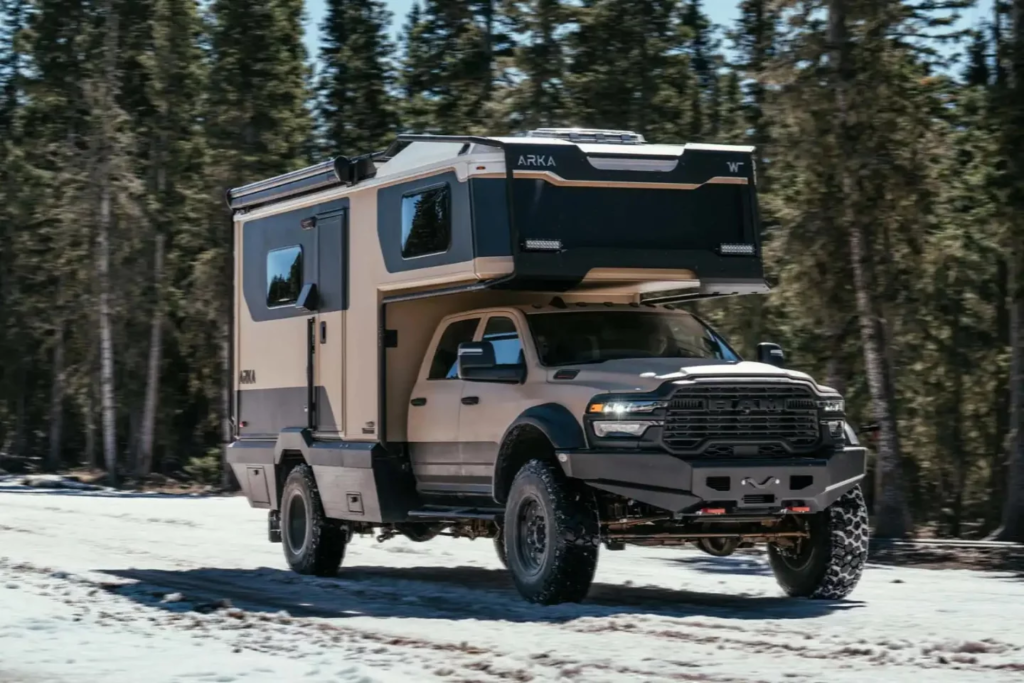
Far removed from its days as a synonym for “huge Class A motorhome,” Winnebago is now known for a diverse lineup of on- and off-road RVs of all sizes. Building out its “Backcountry Series,” the company adds its most ruggedly luxurious offering yet: the Arka truck camper. This off-grid expedition behemoth is prepared to spend up to 2 full weeks at a time in the deep, dusty backcountry. It’s sure to have the Earthroamers and Krugs of the world peering back over their shoulders. Just don’t expect a spa bathroom. Developed from the ground up for “travelers who go farther and stay longer,” the Arka is the third in Winnebago’s Backcountry family, following the Revel 4×4 camper van and Ekko B+ adventure motorhome. The new big rig essentially picks up where those two leave off, giving restless travelers a vessel for achieving their most ambitious dream adventures – an off-road RV that’s bigger, more capable and more self-sufficient than anything Winnebago offers currently, or has sold previously. Winnebago hasn’t designed the Arka down to Arctic temperatures, the way some overland truck camper builders do, but it says the truck is ready for anything from -10 to 120 FWinnebago Winnebago starts with a Ram 5500 chassis cab that runs a huge, grunting 6.7-liter Cummins I-6 turbo-diesel pushing up to 360 hp and 800 lb-ft of torque out to its four wheels. The roomy crew cab seats up to six people, but the Arka sleeps only four, so expect a very comfortable journey. Winnebago doesn’t do quite as much off-road upgrade work as some smaller customizers and expedition rig outfitters, but it does hoist the 5500 chassis up onto 41-in tires, bolt on a winch-ready Buckstop Truckware front bumper, affix an onboard air compressor. As for the camper module exterior, Winnebago cages out the alcove face and lower front sides with thick tubular branch guards, wires in a set of floating front auxiliary lights, adds a swing-away full-size spare carrier in back, and secures on under-body aluminum storage lockers. Winnebago uses tubular branch guards to protect the front of the Arka moduleWinnebago Many camper trucks in this class go with a solid rear wall, but Winnebago ports over double doors from the adventure van market, giving the Arka more flexible loading capabilities and an al fresco-friendly rear lounge – kick those doors open and enjoy meals in the front row of Mother Nature’s grand amphitheater. A fold-out ladder clips into the rugged rear bumper for easy access inside, and the rearmost section of the U-shaped sofa removes for loading through large cargo like bicycles and kayaks. There’s also L-track on the floor below that removable sofa section to tie everything down so it doesn’t go flipping and flying during the bumpy trip to camp. Is it really a modern RV if it doesn’t take remote laptop work into account? Winnebago Winnebago has crafted the Arka to withstand the full spectrum of weather from window-icing -10°F (-23°C) nights in snowy forests to 120°F (49°C) midsummer afternoons in open desert. It’s not quite Arctic-ready, but it’s prepped for a wider temperature spread than many RVers will experience in a lifetime. The all-weather package starts with a 2-in-thick fiberglass-sandwich wall construction with a core of residential-grade insulation. Winnebago tops those R12-insulated walls with a single-piece R15 fiberglass roof arched subtly for shedding water quickly and efficiently. A Timberline hydronic heating system keeps the inside temperature comfy on cold days while in-floor heating keeps things prevents bare feet from freezing. Winnebago also includes a Pioneer heat recovery and circulation system it calls a first for the US market. Air conditioning is optional, but the prep work is done to make it an easy add-on. The central touchscreen panel and accompanying app make it easy to monitor and control Arka featuresWinnebago The electrical system is another key component of a robust off-grid build meant to supply an estimated 14 days of self-sufficient living outside civilization’s footprint of fill-up stations and electrical hookups. It starts with a 165-Ah 51-V Lithionics battery and preparation for an opotional second 165-Ah battery for drop-in convenience. Those batteries charge off-grid via 800 watts of rooftop solar (expandable to 1,200 W) and an auxiliary 6,500-W alternator, keeping the 48-V electrical system live and ready for the full two weeks, with that running A/C will drive the battery reserves down much quicker. Other electrical hardware includes a 3,600-W inverter, EcoFlow power hub with solar controller and tablet-size energy management system with touchscreen interface. Of course, there’s also a 30-A shore power hookup for the truck’s grand return to grid-connected terrain. The Arka’s fresh water supply stores away in a 227-L tank, augmented with help from a UV water purification system from Guzzle H20. A tankless continuous water heater ensures that hot water remains at the ready so long as there’s water in the main fresh tank. Winnebago gives the Arka such an oversized rear lounge with extra-long sofas, we cant quite understand why it doesn’t chop off part of one or both side benches to add a full-time bathroom Winnebago As for the floor plan, the generously sized wraparound-sofa lounge to which we alluded above comes with not one but two individual swivel tables to meet the dining and workstation needs of everyone seated around them. The lounge also converts over into a 60 x 75 in (152 x 191-cm) transverse double bed or, when the rear sofa section has been removed to clear garage storage, a smaller, tapered 54 x 75-in (137 x 191-cm) double bed. Similarly, the master bed up in the front cabover offers multiple configurations, starting as a pair of 30 x 80-in (76 x 203-cm) single beds separated by a central nightstand. That nightstand is actually two removable cushion-back modules that can flip over and drop into the center between the two mattresses to complete a 72 x 80-in (183 x 203-cm) RV king-size bed. A third option is to push the two mattresses together into a 60

Winnebago Ram 4×4 camper truck swings for fences, whiffs big on bath Read More »

Dow Jones Futures Fall As Yields Top 4.5%, Oil Prices Jump On Trump; Xi Summit Ends

Dow Jones futures fell solidly early Friday, along with S&P 500 futures and especially Nasdaq futures. Oil prices rose on President Trump’s comments and Treasury yields pushed above a key level. The Trump-Xi summit has concluded. Applied Materials (AMAT) fell despite a beat-and-raise earnings report. The stock market rally had broad-based gains, with the S&P 500 and Nasdaq composite hitting… Copyright ©2026 Investor’s Business Daily, LLC. All rights reserved. 87990cbe856818d5eddac44c7b1cdeb8 source

Dow Jones Futures Fall As Yields Top 4.5%, Oil Prices Jump On Trump; Xi Summit Ends Read More »

Grab and IMDA join forces to scale AI adoption among Singapore SMEs

The Infocomm Media Development Authority (IMDA) has partnered with Grab to help 10,000 small and medium-sized enterprises (SMEs) across Singapore’s food and beverage, retail and eCommerce sectors adopt artificial intelligence. The initiative, dubbed the “Grab AI Programme for SMEs”, will provide businesses with complimentary online training, masterclasses and webinars aimed at raising AI awareness, improving AI literacy and accelerating adoption. Delivered through GrabAcademy, the programme is designed to address common barriers to adoption, including limited understanding of AI, uncertainty over practical use cases and a lack of implementation support. Don’t miss: OpenAI deepens Singapore bet with SG$300m investment Participating businesses will gain exposure to IMDA pre-approved AI solutions tailored to their sectors, while those ready to move beyond the basics can enrol in a two-day course, co-developed with the Singapore University of Technology and Design. The course will guide SMEs through identifying relevant use cases, understanding AI’s business value and developing a practical roadmap for implementation. After completing the programme, businesses will receive support from Grab and IMDA-approved vendors to identify suitable AI solutions. The Grab partnership forms part of IMDA’s Digital Enterprise Blueprint, a national initiative launched in 2024 to help local businesses strengthen their digital capabilities. To date, the blueprint has supported more than 26,000 enterprises. Alongside the Grab initiative, IMDA has also partnered with RSM Stone Forest IT to launch the RSM Cyber2SME Programme, which will offer complimentary phishing simulation exercises and cybersecurity workshops to 2,000 SMEs. Together, the two programmes aim to uplift 12,000 SMEs and keep IMDA on track to reach its goal of supporting 50,000 enterprises by 2029. According to Alejandro Osorio, managing director of Grab Singapore, the programme aims to close the gap between larger companies with dedicated innovation teams and smaller businesses that often lack the time and resources to explore emerging technologies. “Our ongoing work with small and medium-sized enterprises (SMEs) highlights a growing divide – not between humans and machines, but between larger firms with dedicated resources and smaller businesses operating with limited bandwidth. Many SMEs are simply too busy to explore new technologies. That is why practical AI matters most,” said Osorio. “Through GrabAcademy, we have long supported our partners with accessible, applied learning, and this collaboration with IMDA allows us to deepen that support. We are helping SMEs adopt AI in tangible ways that translate into real productivity gains and business growth,” he added.  Grab joins a growing roster of Digital Enterprise Blueprint partners including Google, Microsoft, Salesforce, Amazon Web Services and DBS Bank, all of which are working with IMDA to accelerate AI adoption and digital transformation among Singapore businesses. Last year, it announced partnerships with Alibaba Cloud, Prudential Singapore, and ST Engineering. Under the partnership, Alibaba Cloud will support up to 3,000 SMEs and digital solution providers through its ‘Digital accelerator programme’ while Prudential Singapore, working with Republic Polytechnic, will roll out the ‘GenAI Xponential programme’, offering a series of explainer videos and workshops to help SMEs better understand and adopt pre-approved GenAI solutions under IMDA’s scheme.  Meanwhile, ST Engineering will provide up to 2,000 SMEs with a one-time cyber threat scan via IMDA’s CTO-as-a-Service platform, along with events designed to help businesses recognise and defend against emerging cyber threats. Related articles:  IMDA partners SBS on global content co-productions and AI solutions  IMDA sets guardrails for agentic AI with new framework  IMDA in talks with X as Grok misuse sparks safety concerns  source

Grab and IMDA join forces to scale AI adoption among Singapore SMEs Read More »

Cooling copper plates could slash data center energy use by 90%

In 2025, data centers consumed 485 TWh of electricity. Thirty percent of that, more than the entire annual power consumption of Sweden, went to cooling. Scientists have developed a 3D-printed copper-plate cooling tech that can slash this figure by over 90%! The technology combines a mathematical algorithm with 3D printing to create pure copper cooling plates that dramatically outperform conventional cold plates used in direct-to-chip cooling systems. According to the researchers from the University of Illinois Urbana-Champaign, applying the technology across an entire data center could reduce cooling-related electricity consumption from roughly 30% to just 1.1%. The AI boom has driven data center electricity consumption to staggering levels, to the point that companies are considering building data centers in space to gain more direct access to solar energy! What makes AI’s power demand more striking is that one-third of this power has absolutely nothing to do with computation. It all goes to cooling the hardware. A single NVIDIA GB200 chip runs at 1,200 watts, consuming 28.8 kW-hours of electricity daily. That’s roughly equivalent to the average daily consumption of a US household, calculated from the total yearly consumption. One chip. But that’s not even our pain point. Due to a phenomenon known as Joule heating – an unavoidable consequence of how they operate at a fundamental level – chips dissipate almost exactly the amount of power they consume as heat. Therefore that GB200 chip also dissipates 1,200 watts of heat. Over an hour, that’s enough energy to theoretically boil over 50 cups of water. Again, one chip. Now imagine thousands to hundreds of thousands of these chips stacked in racks, as they are in large AI data centers. Without intervention, xAI’s Colossus 1 data center with its 220,000 GPUs and 300 MW consumption would generate enough heat to raise the temperature of the 785,000-sq-ft space to 1200 °C (2192 ºF) in one hour, hotter than molten lava. This is why cooling is a crucial, non-negotiable aspect of running data centers. Cooling systems require electricity. “Cooling is the bottleneck in computer-chip design,” says Behnood Bazmi, mechanical engineer and the paper’s first author. “By bridging the gap between computational design and manufacturing capability, our approach provides a pathway for more energy-efficient liquid cooling of chips and other electronics.” Traditionally, data centers have relied on air cooling to prevent computer chips from overheating. In these systems, metal heat sinks are mounted directly onto CPUs and GPUs, allowing heat to spread out across thin metal fins while powerful fans blow air across them. This method consumes large amounts of electricity because facilities must power several large air-handling units. Additionally, modern AI accelerators are generating heat at levels that conventional air cooling is increasingly struggling to handle efficiently. As a result, newer systems are shifting toward liquid-based direct-to-chip cooling, in which a metal “cold plate” is mounted directly onto the processor and coolant flows through microscopic internal channels within the plate. Heat from the chip transfers to the metal plate and is then carried away by the circulating liquid far more efficiently than air can. Conventional cold plates already exist commercially, but their internal fins and fluid channels are typically designed around manufacturing simplicity rather than maximum thermal performance, often using relatively simple rectangular or cylindrical geometries and materials such as aluminum alloys or stainless steel. The researchers’ solution addressed two critical aspects of existing technologies: material and fin design. In a technique known as topology optimization, the researchers used a mathematical optimization algorithm to redesign the tiny internal fin structures from the conventional rectangular or cylindrical geometries into far more complex, jagged, and pointed shapes that maximize heat transfer and thermal performance, while minimizing the pumping effort required to move coolant through the plate. Because the intricate geometries they arrived at would be difficult to manufacture conventionally, the team used an advanced additive manufacturing technique, electrochemical additive manufacturing (ECAM), to build the structures layer by layer. They selected pure copper, a material prized for its exceptionally high thermal conductivity but notoriously difficult to fabricate into highly detailed forms using traditional 3D printing methods. Another reason for the ECAM route. “ECAM can manufacture pure copper parts with very fine detail – down to 30 to 50 micrometers, less than the width of a human hair,” says Nenad Miljkovic. senior author and mechanical engineer. The researchers reported that their optimized copper cold plates delivered up to 32% better cooling performance than conventional cold plates in liquid cooling, while also reducing pressure drop by as much as 68%, meaning significantly less energy was required to pump coolant through the system. Together, these achievements translate to significant energy savings. At the data-center scale where air-cooling still dominates, the team estimated that a 1 GW facility using conventional air cooling could require roughly 550 MW of additional power dedicated to cooling infrastructure alone. By contrast, their optimized liquid-cooling approach would reduce that cooling overhead to around 11 MW. In other words, cooling could drop from roughly 30–35% of a data center’s total energy consumption to close to 1.1%, a stark reduction of over 95%, while still dissipating the extreme heat generated by modern AI hardware. If those projections can be replicated at real hyperscale, the implications for data center efficiency could be enormous. The researchers’ figures would translate to a Power Usage Effectiveness (PUE) of roughly 1.011, meaning nearly every watt drawn from the grid would go directly to computation rather than to cooling overhead. This figure assumes other support infrastructure consumption to be negligible. For context, a perfect data center would have a PUE of exactly 1.0, a theoretical ideal where no energy whatsoever is wasted on cooling, pumps, lighting, or other supporting infrastructure. Many of the world’s most advanced hyperscale facilities typically operate at around 1.1 to 1.3. Reaching something close to 1.01 at AI-scale compute densities would therefore represent an extraordinarily efficient facility, approaching the practical limits of modern thermal engineering. That said, the researchers’ full data center energy figures remain modeled projections rather than demonstrated

Cooling copper plates could slash data center energy use by 90% Read More »

畢馬威與香港英商會第22屆年度欖球晚宴 為牽手香港籌得42萬港元善款

香港七人欖球賽期間年度慈善盛事 凝聚社會各界力量推動本地義工服務發展 5 月 22 日,約 180 名來自商界及專業界別的嘉賓出席畢馬威與香港英商會第 22 屆年度欖球晚宴,活動合共籌得 420,000 港元善款,並全數撥捐牽手香港。 是次晚宴由畢馬威與香港英商會攜手舉辦,現已成為香港七人欖球賽周末期間的焦點活動之一,匯聚業界領袖、客戶及社區夥伴,攜手推動正面的社會影響。 本年度晚宴所籌得的善款,將支持牽手香港持續推動其使命,動員更多義工參與社區服務,回應多元社區需要,並加強對弱勢社群的支援。 畢馬威香港區首席合夥人及中國副主席張頴嫻表示:「透過年度欖球晚宴,畢馬威與社會各界攜手創造正面改變。我們深信協作能帶來深遠的社會影響,活動亦彰顯我們積極參與社區的承諾,以及『For Better——增益社會,構築未來』的核心價值觀。」 香港英商會執行董事麥冠明表示:「過去一年,香港英商會一直倡導『LIVE、WORK、 PLAY、LEARN(生活、工作、玩樂、學習)』的理念,而本屆欖球晚宴正以『PLAY』為主題。嘉賓因精彩講者及美食而聚首,但更重要的是大家齊心協力,為我們的重要慈善夥伴牽手香港籌募善款,衷心感謝各界鼎力支持。」 牽手香港執行總監唐韻芝表示:「『獅子山精神』最能體現香港人守望相助、同舟共濟的精神,而晚宴現場的熱烈氣氛正是這座城市團結友愛的最佳寫照。我們衷心感謝畢馬威及香港英商會多年來的支持,讓牽手香港能成為這項延續 22 年的七人欖球賽前夕傳統活動的一部分。 是次籌得的 420,000 港元善款來得恰逢其時,隨著社會對連結的需求日益增加,這筆資金將有助我們動員數以千計的義工,關懷及支援香港最有需要的社群。」 LinkedIn Email Facebook Twitter WhatsApp The post 畢馬威與香港英商會第22屆年度欖球晚宴 為牽手香港籌得42萬港元善款 appeared first on VeriMedia. source

畢馬威與香港英商會第22屆年度欖球晚宴 為牽手香港籌得42萬港元善款 Read More »

You can soon create AI-powered remixes on Spotify

Spotify and Universal Music Group (UMG) are set to launch a new responsible AI-powered tool that will allow Spotify Premium users to create licensed covers and remixes of songs from participating artists and songwriters. The tool, which will be offered as a paid add-on to Premium subscriptions, is powered by generative AI and marks a new licensing model designed to open up additional revenue streams while boosting music discovery on the platform. Under the agreements, artists and songwriters will be able to opt in and earn royalties from fan-made AI-generated covers and remixes. Spotify said the system is built on “consent, credit and compensation”, ensuring rightsholders are paid when their work is used in AI-assisted creations. Don’t miss: Spotify swaps logo for a disco ball, and audiences are split  Spotify co-CEO Alex Norström said the initiative extends the platform’s long-standing focus on evolving the music ecosystem through technology, adding that the company is working to ensure fan-made remixes are both “more beneficial for fans and more rewarding for artists and songwriters”. “Solving hard problems for music is what Spotify does, and fan-made covers and remixes are next. What we’re building is grounded in consent, credit, and compensation for the artists and songwriters that take part. Through each technological transformation, we have worked together with Sir Lucian and his team to evolve the music ecosystem into a richer, more beneficial experience for fans and a more rewarding outcome for artists and songwriters,” said Norrström Sir Lucian Grainge, chairman and CEO of UMG, said the initiative is designed to bring artists and fans closer together while supporting human creativity. He added that the tool is “firmly artist-centric” and rooted in responsible AI, with the aim of driving growth across the wider music ecosystem. “The most valuable innovations in the music business always bring artists and fans closer together. That principle is at the heart of this pioneering AI-enabled superfan initiative, which is designed to support human artistry, deepen fan relationships, and create additional revenue opportunities for artists and songwriters,” said Grainge.  The launch signals one of the most significant mainstream moves yet towards licensed generative AI use in music creation, with monetisation and rights management built directly into the fan experience. The announcement also builds on Spotify’s broader efforts to develop licensed AI-powered music tools alongside major rights holders. In October last year, Spotify said it was collaborating with Sony Music Group, Universal Music Group, Warner Music Group, Merlin and Believe to develop generative AI products designed to support artists rather than compete with them. At the time, Spotify said the partnerships would be guided by four key principles: upfront agreements with rights holders, artist choice in participation, fair compensation and stronger artist-fan connections. The streaming platform also revealed plans to build a dedicated generative AI research lab and product team focused on creating AI-powered music experiences in collaboration with artists, songwriters and producers. Related articles:  You noticed Spotify’s disco ball, and brands noticed you noticing  Listeners can soon swipe on ads as Spotify turns up its ad mix  Spotify turns ad education into earworms with ‘Tunetorials’  source

You can soon create AI-powered remixes on Spotify Read More »