
You can soon create AI-powered remixes on Spotify

Spotify and Universal Music Group (UMG) are set to launch a new responsible AI-powered tool that will allow Spotify Premium users to create licensed covers and remixes of songs from participating artists and songwriters. The tool, which will be offered as a paid add-on to Premium subscriptions, is powered by generative AI and marks a new licensing model designed to open up additional revenue streams while boosting music discovery on the platform. Under the agreements, artists and songwriters will be able to opt in and earn royalties from fan-made AI-generated covers and remixes. Spotify said the system is built on “consent, credit and compensation”, ensuring rightsholders are paid when their work is used in AI-assisted creations. Don’t miss: Spotify swaps logo for a disco ball, and audiences are split  Spotify co-CEO Alex Norström said the initiative extends the platform’s long-standing focus on evolving the music ecosystem through technology, adding that the company is working to ensure fan-made remixes are both “more beneficial for fans and more rewarding for artists and songwriters”. “Solving hard problems for music is what Spotify does, and fan-made covers and remixes are next. What we’re building is grounded in consent, credit, and compensation for the artists and songwriters that take part. Through each technological transformation, we have worked together with Sir Lucian and his team to evolve the music ecosystem into a richer, more beneficial experience for fans and a more rewarding outcome for artists and songwriters,” said Norrström Sir Lucian Grainge, chairman and CEO of UMG, said the initiative is designed to bring artists and fans closer together while supporting human creativity. He added that the tool is “firmly artist-centric” and rooted in responsible AI, with the aim of driving growth across the wider music ecosystem. “The most valuable innovations in the music business always bring artists and fans closer together. That principle is at the heart of this pioneering AI-enabled superfan initiative, which is designed to support human artistry, deepen fan relationships, and create additional revenue opportunities for artists and songwriters,” said Grainge.  The launch signals one of the most significant mainstream moves yet towards licensed generative AI use in music creation, with monetisation and rights management built directly into the fan experience. The announcement also builds on Spotify’s broader efforts to develop licensed AI-powered music tools alongside major rights holders. In October last year, Spotify said it was collaborating with Sony Music Group, Universal Music Group, Warner Music Group, Merlin and Believe to develop generative AI products designed to support artists rather than compete with them. At the time, Spotify said the partnerships would be guided by four key principles: upfront agreements with rights holders, artist choice in participation, fair compensation and stronger artist-fan connections. The streaming platform also revealed plans to build a dedicated generative AI research lab and product team focused on creating AI-powered music experiences in collaboration with artists, songwriters and producers. Related articles:  You noticed Spotify’s disco ball, and brands noticed you noticing  Listeners can soon swipe on ads as Spotify turns up its ad mix  Spotify turns ad education into earworms with ‘Tunetorials’  source

You can soon create AI-powered remixes on Spotify Read More »
Better bee-lieve it – World Bee Day is time to celebrate our fuzzy life-givers

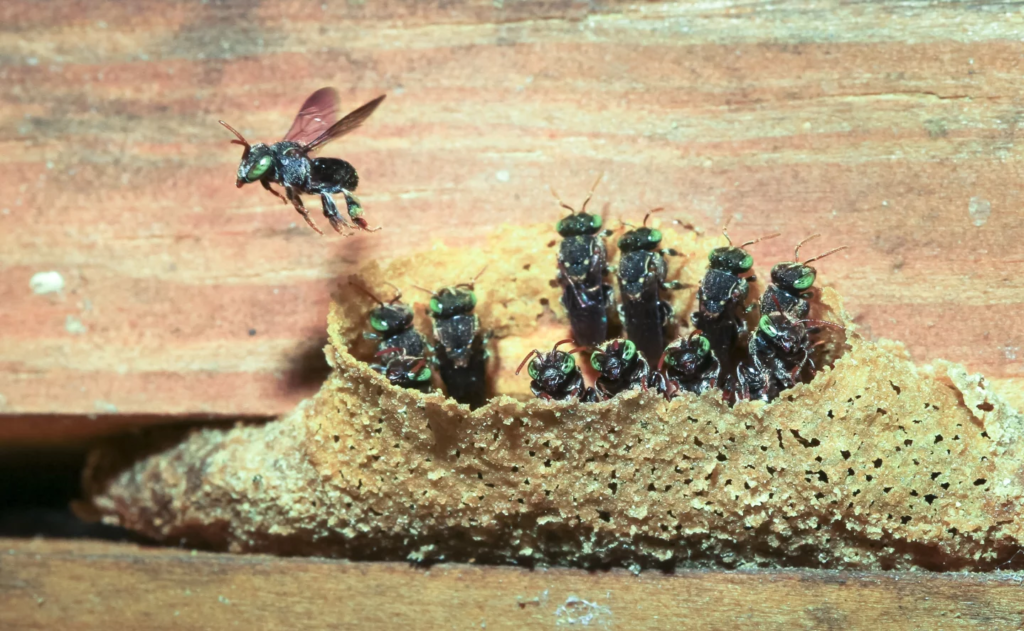
For many years, bees were among New Atlas readers’ favorite animals. But then things went south, and you guys switched off from learning about these fuzzy little flyers. Maybe it was tall poppy syndrome – since bees are quite obsessed with these nectar treasure chests – but they’re staging a comeback framed around World Bee Day. Since we’ve moved out of “Mom and Dad’s house” (the wonderful New Atlas) and have BEEn (sorry) working hard to establish our own identity and audience with Refractor, focusing on science that had been neglected for much of 2026, we feel we also need to bring back the bees. Figuratively at least. So, since May 20 is officially World Bee Day, we think it’s critical to seek research that’s 100% bee positive. I acutely know that scientists and the media can hyperfocus on doomy discoveries – which is one reason we’re not that fun at parties – but it’s important to understand others and how they work. It’s pretty challenging even studying insects due to size and how morphologically removed they are from mammals like us. However, there’s movement afoot to make us think about our insect preconceptions. And I am certainly guilty of forgetting how important it is to celebrate the wins that help us understand the world of these vastly varied little guys when it comes to their intelligence, resourcefulness, teamwork, complex decision-making, and resilience in challenging environmental times like these. After all, these animals have many talents we know from studying them – and besides that, they possess the kind of work ethic and community spirit we should recognize in their greatness. But hey, whatever makes you buzz, who are we to judge? In January, stingless bees became the poster-bugs for the rights of insects when several Peruvian officials made a monumental move to recognize the world’s most maligned animals, insects, campaigning for us to give them agency and respect. “Stingless bees (Meliponini spp.) are now recognized as legal entities in the municipalities of Satipo and Nauta-Loreto, Peru,” scientists, including long-time bee researcher Abebe Jenberie Wubie from Bahir Dar University, wrote in a letter in Nature. “They are the first insects in the world to hold legal rights, marking a turning point in environmental jurisprudence. Legislation grants native stingless bees the right to exist, thrive, and be represented in court.” As The Guardian noted earlier, stingless bees – cultivated by Indigenous peoples from those areas since pre-Columbian times – are now believed to be key rainforest pollinators that shield biodiversity loss and bolster ecosystem health. But like most bees, stingless or otherwise, have been under a lot of both external pressures and battles with other insects for resources. These bees can’t sting, but they’re part of a movement to give insects legal agency in our human-dominated world “This ordinance marks a turning point in our relationship with nature: it makes stingless bees visible, recognises them as rights-bearing subjects, and affirms their essential role in preserving ecosystems,” says Constanza Prieto, Latin American director at the Earth Law Center. “And that they appear to play a key role in the pollination of about 80% of tropical plants. This includes cacao (chocolate), coffee, and avocados.” Whether lip service or something that could put a fissure in the hive mind of their haters, it’s a massive step in seeing them as living creatures – all with one life like our own – and encourages a new level of respect for both these Peruvian stingless species and other insects too. I’d be remiss for not mentioning again that we wouldn’t be alive without their silent – and yes, often not so silent – work, be it pollinating flowering plants or being tasty snacks at the bottom of important trophic chains. And in the case of bees, giving us honey that scientists have found may have huge impacts on human disease and infection. Spending years studying the incredible world of evolutionary biology and animal communication – and the myriad ways different species survive in a complex ecosystem with many humans who would rather they all be wiped off the planet. For some people, however, bees and their fellow insects aren’t “real” animals, but as “pests” to be wiped out – which all really comes down to perception. And let’s be honest, you can be a self-proclaimed animal lover that tears up over WWF content, but we bet you can’t name every known insect (just kidding, but there are about 1.4 billion insects for every person on Earth, and scientists believe that even though we only know a million by name, the likely diversity is 10 times that.) To all the queens and their tireless people (sorry, bees), happy World Bee Day this week. Why not spend an hour or two in the park or yard counting how many insects you can see, or learn about a single species of bee you’ve never heard of? Their visibility is not just important to their (and our) survival, but you might gain an appreciation for these animals. If you have any bee stories or news to share with us today or anytime, we’d love to hear from you. Just give us a buzz. (Again, sorry.) Meanwhile, address any stinging comments to me … Source: Nature source

Better bee-lieve it – World Bee Day is time to celebrate our fuzzy life-givers Read More »

Habitable bridge spans 100 feet over two streams in rural India

Somewhere in the hills outside the city of Karjat in India, there is a marvelous house that bridges the gap between two pieces of land. Built by Wallmakers, the Bridge House spans 100 feet (30 m) across two streams that have carved a 30-ft (7-m) gorge through the landscape, and expertly combines mud, steel and thatch to create a simple yet functional four-bedroom home. Building the Bridge House had its own set of unique challenges. Wallmakers needed to connect the two land parcels while keeping the foundation 100 ft within the spillway width, since a JCB excavator needed to be used for clearing the build space. However, something made this even more challenging – the firm pretty much had only wild grass to work with as a construction material within a five-mile radius. Remember, this is in the hills, so hauling other construction materials there would have been extremely difficult. Construction shot of the Bridge HouseWallmakers Leave it to architects to turn limitations into a design opportunity. Wallmakers built the structure with four hyperbolic parabolas supported by just four footings. This minimizes the disruption to the natural contours of the streams. Steel pipes and tendons provide tensile strength, while thatch and mud bear its crushing weight. It’s an elegant structural solution that recalls how other architects have conquered difficult terrain through innovative approaches. A good example is Nova Scotia’s East River Residence, which hovers above its rocky valley on slender steel columns. The thatch roof is worth mentioning because it draws inspiration from a pangolin’s scales. But it’s not just for show; it provides thermal insulation and effective passive cooling, all while keeping this massive roof incredibly light. There’s also a mud layer at the top of the thatch, which was a critical addition to prevent rodents and other pests from burrowing inside. Thatch roofing alone has declined in popularity in the region because of these critters. “The thatch layer inspired by the scales of a pangolin, providing thermal insulation and effective cooling also allowed us to push for a long-span, lightweight structure with just 4 footings, ensuring very less intrusion into the natural contour of the land”Wallmakers The result is a 4,500-sq-ft (418-sq-m) dwelling that appears to float above the landscape, allowing the terrain and water to flow uninterrupted beneath. The living spaces inside take advantage of the Bridge House’s elevated position. These include four bedrooms, as well as the kitchen and dining areas. A shower/bathing room opens to the outside, and features decorative pools. The central courtyard area is topped by a netted oculus that opens the space to sunshine or rain, while offering shading from both. The volumes have strategically placed windows that maximize natural light and ventilation while providing great views of the surrounding landscape. The design maintains strong connections to the outdoor environment, which also features a swimming pool, while providing shelter from Karjat’s seasonal weather patterns. Floor to ceiling windows make the most of natural light in the dining areaWallmakers Whether it’s regulatory or environmental obstacles, creative architects always seem to find a way of turning location challenges into architectural wonders – including Chic Vid House, Trim House and the Vipp Tunnel. Source: Wallmakers source

Habitable bridge spans 100 feet over two streams in rural India Read More »

Dow Jones Futures Rise; Amazon, Credo Lead AI Stocks In Buy Areas

Dow Jones futures rose modestly early Friday, along with S&P 500 futures and Nasdaq futures. The stock market reversed higher Thursday as oil prices reversed lower, back below $100 a barrel. The Dow Jones set a record close. Nvidia (NVDA) fell slightly despite strong earnings and guidance. Walmart (WMT) dived on a weak outlook. But many AI stocks continued to… Copyright ©2026 Investor’s Business Daily, LLC. All rights reserved. 87990cbe856818d5eddac44c7b1cdeb8 source

Dow Jones Futures Rise; Amazon, Credo Lead AI Stocks In Buy Areas Read More »

Ever wonder what Dua Lipa’s multiverse would feel like?

Nespresso has launched its latest global campaign film, “Step into Nespresso’s new Vertuo world”. Fronted by its newest global brand ambassador British pop-star Dua Lipa, the campaign positions coffee as a gateway to immersive, experience-led moments. The campaign centres on the idea that every cup of coffee opens a different world, brought to life through cinematic visuals that shift across settings inspired by culture, creativity and everyday rituals. It continues Nespresso’s long-running brand narrative around coffee as more than a product, but a sensory experience tied to mood, identity and lifestyle. At the heart of the film, Lipa takes viewers through a series of coffee-led moments across locations, from a morning Melozio mug in New York to an afternoon iced Double Espresso Chiaro by the pool, and later a French lavender and vanilla decaf moment. The narrative leans into spontaneity and curiosity, anchored by the recurring idea that each coffee choice unlocks a different world of experience. Don’t miss: Nespresso SG marketing head steps down after seven years  The campaign also plays on Nespresso’s heritage, with Lipa referencing George Clooney’s iconic “What else?” line, reinterpreting it as a prompt for exploration rather than routine. Clooney also makes a brief appearance in a nod to the brand’s long-standing ambassador legacy. Alongside the film, Nespresso has introduced a refreshed creative direction developed with newly appointed agency Leo Constellation. The refreshed direction features updated visual codes and a bespoke typeface aimed at balancing structure with spontaneity. The brand said the direction reflects a broader shift towards a more expressive identity for coffee drinkers who see their ritual as an extension of personal lifestyle, while maintaining its positioning around quality and global coffee culture. The launch also coincides with Nespresso’s summer 2026 collection, which includes new limited-edition coffees and iced recipes such as ‘Yuzu vanilla over ice’, alongside accessories including the Travel iced tumbler in bubblegum. Nespresso said the seasonal range is designed to reflect “laid-back summer energy” and a continued focus on iced coffee innovation, with at-home recipes positioned as part of the broader experiential push. The coffee brand first appointed Lipa as its global brand ambassador in March this year, joining longtime ambassador Clooney. The partnership marked what Nespresso described as a “striking new chapter” for the brand. At the time, Nespresso said Lipa’s qualities mirrored the brand’s own focus on curiosity, experimentation and cultural relevance. Known for her music, fashion influence and global appeal, the singer was positioned as a natural fit for a campaign centered on exploration and elevated coffee experiences. The appointment also reflected Nespresso’s broader push to connect with a younger generation of consumers through lifestyle, creativity and culture-led storytelling. “We’re excited to welcome Dua Lipa to the Nespresso family. She’s a true explorer, always curious, always trying something new, and that energy fits beautifully with the direction we’re taking as a brand,” said Leonardo Aizpuru, chief marketing officer at Nespresso. Lipa similarly described the partnership as an “easy decision”, adding that she had “grown up with Nespresso” and admired how the brand continued to evolve through new flavours and experiences. Related articles:  How Nespresso is making craft coffee a one‑touch brew  Nespresso elevates brand heritage via SKYE culinary activation  Samsung denies using Dua Lipa’s image on TV packaging amid US$15m lawsuit  source

Ever wonder what Dua Lipa’s multiverse would feel like? Read More »

DJI's new phone gimbal gets a detachable display for remote framing

With the new Osmo Mobile 8P, DJI’s borrowing a handy feature from its high-end Ronin gimbals for mirrorless cameras for its latest smartphone stabilizer – and then taking things up a notch. Like the Ronin lineup, you now have a touchscreen monitor on the Osmo Mobile 8P’s handle to let you see what you’re shooting on your phone. The cool thing is you can actually snap this display off the handle and use it as a remote monitor and trigger, making the gimbal a far more versatile tool for composing shots. The magnetic FrameTap remote, as it’s called, mirrors your phone’s view on its little screen. That lets you compose selfies and direct solo vlogging shots with a lot more flexibility. It also has the joystick and record button on there, so you can control the gimbal’s movement and zoom, and start capturing video right away. You can use the FrameTap remote to flexibly compose your shot without having to head back to your phone and see what it looks likeDJI If you’re using the company’s Multifunctional Module 2 which has an object-tracking lens as well as a fill light, the remote lets you see what it’s seeing, and adjust the light’s brightness level and temperature. The remote also lets you control the Multifunctional Module 2’s fill lightDJI That’s pretty darn neat for a tiny detachable display, and it greatly enhances the utility of this little stabilizer for solo content creators. Insta360’s phone gimbals allow for remote framing too – but only on an Apple Watch. Introducing DJI Osmo Mobile 8P, Pro Framing and Tracking Phone Gimbal The built-in extension rod and tripod legs are useful in that regard too, as they let you set up a range of shots in all kinds of locations without having to rely on additional accessories. DJI says it’s upgraded the tracking technology on this one, so it’s better at following people, pets, and objects you lock on to in the frame (like cars and landmarks), even in crowded environments. If you shoot street scenes, sports events, or live performances, this should make your work a little easier. Plus, if you’re rocking an iPhone, you can take advantage of Apple’s tracking system instead, thanks to Apple DockKit support like we’ve seen in some Insta360 products. DJI says it’s upgraded tracking capabilities for people, pets, and a variety of objects so you can stay focused on them even in dynamic sequencesDJI This gimbal can also do proper 360-degree pan rotation, which allows for continuous tracking and motion shots, and more flexibility in how you have the camera follow you. DJI’s Mimo app also has new cinematic shooting modes and timelapse effects for you to add some pizazz to your footage. Together, these features could make a case for upgrading your existing phone gimbal if you’re still using one from a couple of years ago – or if you badly need a better way to compose frames. The Osmo Mobile 8P is available around the world now via DJI’s site and its authorized retailers. As with the company’s other products, these aren’t officially being made available in the US, so you’ll need to find third-party stockists stateside or hop over to Canada to get your hands on one. The 8P is listed at US$159 on DJI’s online store for Canada – that’s a chunk more than the $109 you’d pay for the older Mobile 8 model. Source: DJI via PR Newswire source

DJI's new phone gimbal gets a detachable display for remote framing Read More »

Omnicom PR announces new leadership structure with Joanne Wong as APAC CEO

Omnicom PR has unveiled a new regional leadership structure across Asia-Pacific, EMEA and Canada as part of a broader effort to streamline operations across its agency portfolio outside the US and UK, according to a statement from the firm. Under the new structure, FleishmanHillard’s Joanne Wong has been elevated to the role of APAC CEO at Omnicom PR, effective 1 July. Weber Shandwick EMEA CEO Hugh Taggart will become Omnicom PR’s EMEA CEO, and Weber Shandwick Canada CEO Greg Power has been appointed to lead as Canada CEO for Omnicom PR. The three executives will report directly to Omnicom PR global CEO Chris Foster and oversee all OPR agency brands within their respective regions, working closely with local leadership and drawing support from global agency leaders. Don’t miss: Omnicom PR reportedly restructures agency portfolio  In Asia-Pacific, Wong will oversee Weber Shandwick, FleishmanHillard and Golin. She had rejoined FleishmanHillard as Asia Pacific president in late 2023, marking a return after serving as a senior managing director at FTI Consulting.  Meanwhile according to Earned First, at the market level, Omnicom PR is also consolidating leadership across several countries. Weber Shandwick Singapore leader Carolyn Devanayagam and Weber Shandwick Korea leader Elizabeth Bae are among those taking on expanded Omnicom PR leadership responsibilities. The restructuring will also reportedly see several senior regional roles eliminated. The Weber Shandwick Asia Pacific CEO role, previously held by Tyler Kim based in South Korea, and the Golin regional president role held by Darren Burns will no longer exist under the new structure. The combined fee income of the agencies in the region is estimated at approximately US$150 million, accounting for roughly 5% of Omnicom PR’s global revenue. The restructuring follow a series of consolidation moves within Omnicom PR earlier this year, including the merger of Ketchum with Golin and the integration of Porter Novelli into FleishmanHillard. At that point in time, reports stated that there will be no changes to Weber Shandwick or MMC. OPR’s public affairs agencies, including Mercury, GMMB and Vox Global had also remained unchanged. The moves are part of Omnicom PR’s wider strategy to simplify its global PR network operations, as Omnicom Group continues efforts to streamline operations following its acquisition of IPG.  The changes also follow recent leadership shifts within Omnicom’s APAC operations. In February, Mei Lee stepped down as managing director of FleishmanHillard Singapore after a year in the role. Related articles: Omnicom Advertising Asia unveils regional leadership team Omnicom’s first results post-IPG show merger costs bite, underlying performance holds Omnicom seals Interpublic takeover, structural details to be revealed next week  source

Omnicom PR announces new leadership structure with Joanne Wong as APAC CEO Read More »

In Conversation: IKEA Singapore on why awareness must be earned, consistently

For IKEA Singapore’s recently appointed country retail director and chief sustainability officer, Michael la Cour, strong brand recognition is not something retailers can afford to take for granted, even for globally recognised brands such as IKEA. Speaking on Marketing Connected’s “In conversation” series, la Cour said the challenge today is not just awareness, but continuing to “deserve” it. “The awareness is so high, and it is high in Singapore, but it kind of commits in a way,” he said. We need to consistently deserve that awareness, so it’s a consistent focus of ours to become or stay relevant for customers in Singapore. According to la Cour, IKEA Singapore sees about 8.5 million visitors annually across its stores, making the retailer deeply embedded in many Singaporeans’ lives and upbringing. However, evolving consumer expectations and intensifying eCommerce competition are reshaping how retailers connect with audiences. Don’t miss: In conversation: Singapore’s arts scene wants your attention Catch the full interview here:  “The relationship with customers is an ongoing relationship,” he said. “It comes with the range, how we meet customers, and how we interact with them. That’s what really creates a brand.” Despite rapid online growth, la Cour believes physical retail experiences remain critical, particularly in the home furnishing category. “There’s no doubt we will play in both areas,” he said of online and brick-and-mortar retail. “People tend to want to go to the store when it’s about a sofa, a kitchen or wardrobes. You need to feel it, you need to see it.” Although IKEA is currently testing the use of these eCommerce marketplaces in China and several other markets, la Cour explained that the brand is still undecided on their effectiveness. “We can’t carry everything. But do we see them as competition? I’d say we usually focus on ourselves. The focus is on ensuring that you always think about IKEA first. If we do the range well enough, if we do the presentation well enough, and if we can inspire you well enough, then I’m happy,” he said. At the same time, IKEA Singapore is increasingly exploring experiential retail formats to attract younger consumers seeking more immersive interactions with brands. Referencing initiatives such as IKEA Malaysia’s house party concept and past in-store sleepovers globally, la Cour described IKEA stores as “the original social media”. “It was where people met,” he said. “Nowadays it can be many other places online, but the stores are our medium to bring people together.” Looking ahead, la Cour said IKEA Singapore will continue expanding how it reaches customers through smaller city-store formats, home design services and more customer touchpoints across the island. “We’ll explore a lot of different avenues over the next few years,” he said. “We hope to be a continuous part of the Singapore story that we’ve been since we opened our first store here.” Also tune in to the full conversation on Spotify: Tune into the rest of this conversation on your favourite podcast platforms, by searching up Marketing Connected. For all the visual people out there, we’ve got your back as well, with our vodcasts on YouTube. Related articles: In conversation: How Airwallex channels sports energy into B2B impact In Conversation: Are we forgetting what makes marketing work? IKEA is hiding something… and one million points are up for grabs  source

In Conversation: IKEA Singapore on why awareness must be earned, consistently Read More »

New 3D printing tech is set to give robots human-like muscles

The day is coming when you may walk past a robot and have no idea it was a robot. Over years of engineering, we’ve given robots skeletons, brains, senses, and even a nervous system. Muscles have proven particularly complex (not that the other things were easy). Researchers at the Harvard John A. Paulson School of Engineering and Applied Sciences have developed a method for 3D-printing artificial muscle-like filaments whose movement is effectively programmed directly into the material. Their work seems to be the closest to human-like muscles that robot muscle systems have gotten. Before we continue, you don’t have to worry about competing for gym space during the robot uprising. It’s not that type of muscle … yet. Now that we’ve gotten that out of the way, why bother giving robot muscles in the first place? The thing is, the natural world requires flexibility. Everything from trees to octopuses bends and twists. We’ve also built a human world that demands this same adaptability. Infrastructures, clothing, tools, and even social interaction were all designed around the mechanics of soft biological bodies. Flexibility aside, interacting with our world is one reason robotics engineers keep trying to make machines more human-like, equipping them with vision systems (eyes), microphones (ears), speakers (mouths), touch sensors, and many other systems. These systems have been tremendously functional and effective. Muscles, however, have been difficult to replicate. For humans, muscles are just another thing we overlook. You think of moving your arm, and suddenly it levitates as though by magic. Except it isn’t magic. It’s an absurdly sophisticated biological actuation system. The same muscles that can gently guide a paintbrush across a canvas can also kick down doors, throw axes, perform ballet, or catch falling glassware before it hits the floor. That level of control is astonishing from an engineering perspective. Traditional robots already move extremely well using electric motors, hydraulics, and pneumatic systems. However, these systems are usually rigid, mechanically complex, and not particularly graceful. Truly fluid, organic movement has remained much harder to reproduce. In fact, researchers have actually developed soft robotic muscles before. Pneumatic artificial muscles, for example, use compressed air to create smooth, biological-like motion. Other systems use heat-sensitive metals, electrically responsive polymers, magnetic materials, or cable-driven tendon systems inspired by the human body itself. Many of these are remarkably effective. The problem is the tradeoffs. These systems typically require bulky external compressors, plumbing, or heavy support systems. Others need extremely high voltages, generate excessive heat, move slowly, or are difficult to manufacture into complex shapes. In many cases, the “muscle” itself is only one part of a much larger mechanical system. The researchers may have found a more elegant approach. Instead of building robots with separate motors and moving mechanisms, the team developed a method for 3D-printing artificial, muscle-like filaments whose movement is effectively programmed directly into the material. A closer look at one of the muscle latticesLewis Lab / Harvard SEAS Their system combines two types of soft materials: an “active” liquid crystal elastomer that changes shape when heated, and a passive elastomer that resists deformation. By printing both materials side-by-side through a rotating nozzle, the researchers can precisely control how different parts of the filament will behave later. The active material contracts along a preferred molecular direction when heated. Since the passive material resists this contraction, the mismatch forces the filament to bend, curl, twist, or coil. Rotating the nozzle during printing adds another layer of control by writing helical molecular alignment patterns directly into the structure. A single filament can be programmed to straighten, spiral, tighten, shrink, or expand depending on how its internal materials are arranged, without gears, rigid joints, or post-assembly mechanical systems. The team demonstrated this by printing soft lattices and wavy filaments that deform in dramatically different ways under heat. Some structures expanded when heated, while others contracted. In one demonstration, flat lattices transformed into dome-like shapes. In another, the researchers created soft grippers capable of lowering onto objects, tightening around them, lifting them, and later releasing them. 3D-Printed, Muscle-Like Materials That Twist and Coil on Demand The researchers say the technology could eventually enable adaptive soft robotic grippers, active filters, biomedical devices, temperature-responsive structures, and shape-morphing robotic systems. Because the approach is compatible with 3D printing, it also opens the door to highly customizable architectures that would be difficult to build with conventional actuators. There are still major limitations, though. The system currently relies on heat for activation, meaning response times and energy efficiency remain challenges. The structures are also still experimental and nowhere near ready to replace traditional robotic actuators in high-power applications. Source: Harvard University source

New 3D printing tech is set to give robots human-like muscles Read More »

Grayling rolls out GEO platform in APAC

Grayling has launched a new insights platform in Asia Pacific aimed at helping brands understand how they appear in AI-generated search results, as traditional search behaviour continues to shift towards generative engines. The Generative Engine Optimisation Radar (GEO Radar) tracks brand visibility across AI platforms, identifies which sources influence AI-generated responses, and flags reputational risks such as misinformation, outdated content or incomplete narratives. The tool was launched in Singapore today (22 May) and will be rolled out across Grayling’s Asia Pacific network in the coming months. The move comes as AI-generated summaries increasingly replace traditional search listings, reshaping how consumers discover and evaluate brands online. According to McKinsey & Company, around 50% of Google searches now include AI-generated summaries, a figure expected to rise to more than 75% by 2028. Don’t miss: When zero-click becomes the norm, are PR teams still in control of the narrative? Grayling said the platform is designed to address a growing visibility gap for brands in this new search environment, where inclusion in AI-generated answers is becoming as important as ranking on search engines. “Brands used to compete to be one of many on the first page of Google. Today, they are competing to be included in the AI-generated summary at the top of the page, or in conversations with AI models that are increasingly sophisticated,” said Danny Tan, managing director of Grayling Singapore. “As large language models change the way brands are discovered and perceived, organisations must have visibility into how they show up in this new environment,” he added. The platform also reflects broader industry concern that brands are losing control over how they are represented online, as AI models increasingly rely on third-party sources to generate responses. Grayling said GEO Radar will help organisations identify which domains and media sources are shaping AI-generated narratives, and assess how those inputs may influence brand perception. From June, the platform will be deployed across Grayling’s regional offices and partners in Malaysia, Thailand, the Philippines, Vietnam and Australia. GEO is increasingly being positioned as the successor to traditional SEO in the AI search era, as brands and marketers adjust to how discovery is shifting from static search rankings to AI-generated answers. The shift comes as AI search tools become more embedded in everyday behaviour, with Google recently noting that Gen Z is now the most active generation on Search, issuing more daily queries than any other age group globally. This trend is particularly pronounced in Southeast Asia, where AI is reshaping how users search, learn and make decisions. Search itself is also evolving from keyword-based inputs into a more conversational, multimodal experience powered by generative AI, allowing users to ask follow-up questions, refine intent and combine text, voice and image inputs. In markets like Singapore, IPSOS research in December 2025 found that 78% of social media users rely on Google Search to validate discoveries made on social platforms, underscoring its role as a verification layer between discovery and decision-making. Related articles:   The AI performance boom is real, but it’s trapped in search and social The uncomfortable truth of AI search: marketing teams are still working in silos Beyond the click: How marketers can score in the zero-click search era   source

Grayling rolls out GEO platform in APAC Read More »