240-Hz gaming AR glasses are coming for your eyeballs

You can already work and game on a virtual screen using the current crop of augmented reality glasses – but what if you’re a demanding gamer who lives for high-fidelity graphics and buttery smooth animation? That’s where the Asus ROG Xreal R1 glasses come in. They boast a refresh rate of 240 Hz on their Micro-OLED displays, making them arguably quicker than anything else on the market today. These were first revealed in January, and now we know they’ll cost you US$849. The keen-eyed among our readers will notice that the ROG glasses are largely the same inside and out as the Xreal One Pro, which cost $649. They both feature the aforementioned 1080p Micro-OLED panels to conjure up a 171-inch virtual display at 700 nits of brightness with a 57-degree field of view and 0.01-ms response time, and built-in speakers with Bose-tuned sound. The R1 glasses create a 171-inch virtual display to feast your eyes on – and you’ll want a beefy rig to take advantage of its 240-Hz refresh rateAsus They also do automatic electrochromic dimming, which blocks everything outside from view so you can focus on your game while you’re looking at it, and make your environment visible again when you look away from the screen. The glasses can lock your virtual display in a fixed position in space, or have it follow your eyes using 3DoF (three degrees of freedom) tracking technology. They also promise instant 2D-to-3D conversion for whatever you’re watching or playing, though I imagine your mileage may vary with different kinds of content. ROG XREAL R1 Gaming Glasses – Global Launch Trailer The ROG version supports twice the refresh rate of the regular One Pro, and it comes with a docking station to quickly connect to three other devices (like gaming consoles) with a single USB-C cable and no additional software. The dock comes with two HDMI 2.0 ports and one DisplayPort 1.4 port. With 2 HDMI 2.0 inputs and a DisplayPort 1.4 input, the docking station lets you switch between consoles with a single USB-C cable connected to your glassesAsus Beyond that, it gets a couple of gamer-y software features, like a crosshair in the center of your screen to help with aiming at opponents, and an FPS counter. Sadly, it doesn’t get HDR. At just over 3 oz (91 g), the R1 glasses are meant to deliver a big-screen experience when you’re gaming on the go with a connection to your handheld console or laptop. You’ll likely get closer to seeing that 240-Hz refresh rate in action when you’re plugged into a beefier desktop rig with a powerful graphics card though. These glasses can pair with a handheld gaming console for immersive big-screen gaming on the goAsus That sure sounds like fun, if you’ve got the scratch. Asus does somewhat justify the R1’s price bump over the One Pro with the included docking station and higher refresh rate, but you really have to want to be able to move between consoles instantly or play at your desk for this to make sense on your face. Most gamers will be able to enjoy a wide range of titles on PC, PS5, Xbox, and Switch without those, and the Xreal One Pro should do the trick for them. You can pre-order the R1 glasses at $849 over on Asus’ site, Xreal’s site, or Best Buy now; orders are slated to begin shipping June 1. Source: Asus source

240-Hz gaming AR glasses are coming for your eyeballs Read More »

Stock Market Today: Dow, Nasdaq End In The Red As Yields Jump; Alphabet Drops On I/O Day (Live Coverage)

The major stock indexes finished in negative territory Tuesday as inflation worries drove up Treasury yields, elevating borrowing costs for companies and consumers. The S&P 500 and the Nasdaq composite each fell for a third straight session after recent record highs. The tech sector pulled back, with Alphabet (GOOGL) sliding as its developer conference got underway. The Dow Jones Industrial… Copyright ©2026 Investor’s Business Daily, LLC. All rights reserved. 87990cbe856818d5eddac44c7b1cdeb8 source

Stock Market Today: Dow, Nasdaq End In The Red As Yields Jump; Alphabet Drops On I/O Day (Live Coverage) Read More »

Family oriented tiny house prioritizes personal space and privacy

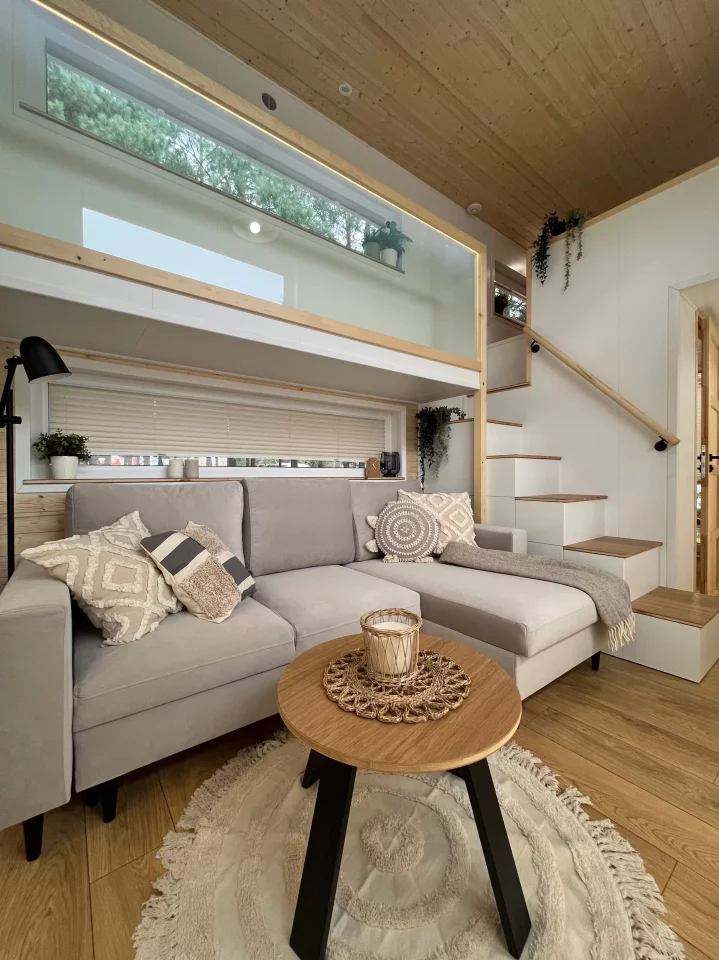
Downsizing is never easy if you have a family in tow. However, with its larger-than-average dimensions and clever layout that provides separation and privacy, the River tiny house is much better suited to full-time family living than many other models. Designed by Vagabond Haven, the River is based on a double-axle trailer, though like the firm’s Smile model its wheels are rated only for small on-site movements and the home must be delivered by truck. It has a length of 8.5 m (27.8 ft) and a width of 3 m (9.8 ft), which is an increase over the 2.5 m (8.2 ft) tiny house standard, enabling a much more spacious interior. The home is clad in engineered wood, with metal siding. The River tiny house’s living room includes a large sofa, a coffee table, and a wall-mounted TVVagabond Haven Its interior is finished in a choice of spruce or ply, with laminate flooring. The living room occupies the center of the home and is furnished with a large sofa and a coffee table, plus a wall-mounted TV. Nearby is the kitchen, which is equipped with a sink, an induction cooktop, a fridge, a washer/dryer, and even a dishwasher, which is a nice luxury in a tiny house. A dining table seats up to four people. Over on the other side of the living room, the bathroom includes a shower (with a curtain or optional glass enclosure), a sink, some cabinetry, and a choice of flushing, composting, or incinerating toilet. A key consideration with these spacious tiny houses is that it’s not always just about size, but how the home is arranged. On this note, the River would suit family life thanks to the large sofa and dining table mentioned, plus the separation offered between its bedrooms. The River tiny house’s living room occupies the center of the homeVagabond Haven The bedrooms are located on the opposite sides of the house to each other, over the kitchen and bathroom, respectively, and are accessed by a storage-integrated staircase linked to a gangway. Each has space for a double bed and some storage, plus one bedroom has a lowered standing platform area to make it easier to get dressed. The other bedroom can be fully closed off with a door, providing privacy. As is the case with other Vagabond Haven models, there are lots of optional upgrades available for the River, including a full off-grid system with solar panels, batteries, and water harvesting, as well as a choice of finishes. The tiny house starts at roughly €49,500 (US$57,000). We’ve no word on delivery, so those interested are advised to contact the firm. Source: Vagabond Haven source

Family oriented tiny house prioritizes personal space and privacy Read More »

From recognition to movement: How PVPA 2025 won gold by redefining giving in Singapore

This post is sponsored by the National Volunteer and Philanthropy Centre. At a time marked by economic uncertainty and shifting social priorities, one national platform has quietly, but steadily, strengthened its role in shaping how Singapore thinks about giving. The President’s Volunteerism and Philanthropy Awards (PVPA) 2025 was awarded gold at the PR Awards 2026 for “Best Engagement for a Targeted Community” – a recognition that spoke as much to strategy as it did to substance. At first glance, the PVPA may appear to be just another awards programme in an increasingly crowded recognition landscape. But a closer look reveals something more deliberate: a long-term effort to redefine how volunteerism and philanthropy are understood, recognised, and ultimately sustained in Singapore. Organised by the National Volunteer and Philanthropy Centre (NVPC), the PVPA is widely regarded as the country’s highest national accolade for giving. Conferred by the President of Singapore, it honours individuals, organisations, leaders, and communities whose contributions have created meaningful social impact. What sets the PVPA apart is its diversity. The awards cut across sectors and profiles – recognising everyone from youth volunteers and grassroots organisers to corporate leaders who are embedding purpose into business models. Categories such as “People of Good”, “Leaders of Good”, “Organisations of Good”, “City of Good”, and “Communities of Good” reflect a fundamental premise: that building a more caring society is not the responsibility of any single group, but a shared national endeavour. Beyond recognition: shaping narratives of giving The PR Awards win offers a useful lens into why the PVPA continues to gain traction. PVPA 2025 received a record 451 submissions – more than 50% higher than the year before, and the highest in its history. Nevertheless, it is crucial to look beyond visibility metrics to assess how effectively a campaign can connect with a clearly defined audience. In this respect, the PVPA’s approach stood out. Rather than broad and generic messaging, the campaign focused on engaging those already adjacent to giving – non-profits, corporate purpose leaders, community groups, and individuals contributing in less visible ways. By narrowing in on this group, the PVPA was able to shift perceptions from the inside out. A key part of this strategy lay in storytelling. Instead of highlighting only outputs – dollars raised or hours logged – the stories examined the intent, complexities, and challenges underpinning social impact work. Profiles of award recipients delved into motivations, trade-offs, and the sustained effort behind their work. The result was a more nuanced portrayal of giving, one that felt relatable and accessible rather than aspirational. This matters in a climate where audiences are increasingly sceptical of polished narratives. Authenticity, in this case, was not a buzzword, but a prerequisite for sustained engagement. Precision in engagement Another factor behind the PVPA’s success was its targeted and multi-layered outreach. Corporate leaders were engaged through the lens of business purpose and sustainability. Ground-up groups were approached through community networks where they operated. Younger audiences encountered PVPA stories on social platforms where discovery was organic and peer-driven. This segmentation allowed for relevance, arguably one of the most undervalued drivers of participation in social campaigns. Equally important was the campaign’s multi-platform execution. The PVPA’s use of video, digital content, and social media amplification reflected a recognition that attention today is fragmented. Meeting audiences where they were, rather than expecting them to seek out information, helped expand the awards’ reach without diluting its core message. From an awards platform to a national movement Perhaps the most significant shift in recent years is how the PVPA has been positioned. It is no longer framed solely as a recognition mechanism, but as part of a broader national movement to normalise giving – towards NVPC’s vision of Singapore as a “City of Good”. This reframing is subtle, but consequential. Recognition becomes a means of social proof, demonstrating what is possible and, importantly, what is already happening. In doing so, the PVPA contributes to a feedback loop: visibility drives participation, which in turn generates more stories to amplify. The growing number and diversity of nominations suggests this approach is bearing fruit. This growth signals a mindset shift in how society views giving, where more people see genuine value in sharing about it. More first-time nominees, ground-up initiatives, and cross-sector collaborations are entering the fold, indicating a giving landscape that is both widening and deepening in participation across sectors and demographics. Why this matters now The timing of this recognition is notable. Across many markets, corporate social responsibility is being tested by economic pressures, while individuals face rising costs of living and uncertainty around employment. In such conditions, giving can often be perceived as optional. The PVPA’s continued momentum challenges that assumption. By highlighting stories where purpose is integrated – into business models, community action, and everyday life – it reinforces the idea that giving can be central to how we live and contribute to society. For businesses, this aligns with a broader global shift towards stakeholder capitalism and purpose-driven strategies. For individuals, it reframes giving as something accessible, meaningful, and relevant for everyone, rather than reserved for those with excess resources. An open call for stories that matter Now in its 14th edition, the PVPA once again extends an invitation – not just to be recognised, but to be part of a larger narrative about what it means to give. Those who have made a difference – whether through time, talent, treasure, ties or testimony – are encouraged to step forward. Equally, nominators play a critical role in surfacing stories that might otherwise remain unseen. Entries for PVPA 2026 can be submitted by 1 June 2026 here: https://nvpc.org.sg/programmes/pvpa-2026/ Ultimately, winning the gold award at the PR Awards 2026 was less about validation and more about direction. It signalled that thoughtful and targeted engagement grounded in authenticity and purpose can do more than raise awareness. It can shift mindsets. And in a society where the challenges ahead will increasingly require collective action, that may be the most valuable outcome of

From recognition to movement: How PVPA 2025 won gold by redefining giving in Singapore Read More »

Dow Jones Futures: Techs Lead As Intel Powers Chips; New Iran Talks Seen

Dow Jones futures were little changed early Friday, while S&P 500 futures and especially Nasdaq futures rose. Iran talks may be back on while AI plays Comfort Systems (FIX) and Intel (INTC) jumped on earnings. Intel’s positive results and guidance also lifted Advanced Micro Devices (AMD) and Arm Holdings (ARM) in extended action. The stock market rally fell Thursday amid… Copyright ©2026 Investor’s Business Daily, LLC. All rights reserved. 87990cbe856818d5eddac44c7b1cdeb8 source

Dow Jones Futures: Techs Lead As Intel Powers Chips; New Iran Talks Seen Read More »

Snow City to close after 26 years with farewell campaign

Singapore’s iconic indoor snow attraction Snow City will close its doors on 30 September 2026, marking the end of a 26-year run. In a statement on Monday (19 May), the Science Centre Board said the closure reflects its commitment to keeping offerings “fresh and relevant” amid changing visitor interests and an evolving attractions landscape, while continuing to align with its science education mission and future plans. To commemorate its final months, Snow City will launch a farewell campaign titled “One last snowfall” from June to September 2026. The campaign will invite Singaporeans to revisit the attraction and celebrate memories made over the years through a series of limited-time experiences and promotions. Don’t miss: Science Centre Board picks new PR agency Among the offers is a Snow Play package priced at SG$19 for adults and SG$16 for children, representing a 30% discount from the usual ticket prices of SG$27 and SG$23 respectively. The package includes one hour of snow play and a bumper car ride. More details on the campaign will be announced via Science Centre Singapore and Snow City’s official websites and social media channels in the coming weeks. The Science Centre Board added that it will support affected employees through the transition. Snow City currently employs eight full-time staff, all of whom have been offered redeployment opportunities within the organisation. Employees who opt to pursue opportunities elsewhere will receive outplacement assistance and severance support in line with Ministry of Manpower guidelines and applicable employment terms. The organisation also said it will honour contractual obligations to vendors. Opened in 2000, Snow City was Singapore’s first indoor snow centre and has become a staple attraction for families, schools and tourists over the past two decades. The closure also comes amid a wider wave of long-running Singapore institutions exiting the local retail and attractions landscape. Late last year, Isetan Tampines shuttered after three decades of operations, marking the end of an era for one of Singapore’s most recognisable Japanese department stores. The closure took effect on 9 November 2025 following the expiry of the store’s lease. In a social media post, Isetan Singapore thanked customers and stakeholders for their support over the years, while encouraging shoppers to continue visiting its remaining outlets at Scotts and Serangoon Central. Prior to that, independent cinema and arts venue The Projector unveiled it would enter voluntary liquidation after more than a decade of showcasing alternative films and community-focused programming. Related articles: Cathay Cineplexes enters voluntary liquidation amid creditor demands  Twelve Cupcakes SG criticised for ‘irresponsible’ closure and lack of due process     Singapore private club 1880 abruptly shuts down as financial troubles mount     source

Snow City to close after 26 years with farewell campaign Read More »

Gardenia shifts production to Malaysia, 141 jobs affected at Singapore facility

Singapore bakery staple QAF Limited is relocating its Gardenia production footprint across the Causeway, with its wholly owned subsidiary confirming that manufacturing will be consolidated in Malaysia and 141 employees at its Pandan Loop facility will be retrenched. In a statement, Gardenia Foods (S) Pte Ltd said it is shifting its bakery production from Singapore to Johor Bahru, Malaysia as part of efforts to enhance operational efficiency and stay competitive amid an increasingly challenging global environment. Production at the Pandan Loop manufacturing facility will cease on 30 June 2026. Don’t miss: Tiger Beer to cease brewing operations in Singapore by 2027 In conversation with MARKETING-INTERACTIVE, a Gardenia spokesperson said the brand “remains a Singapore brand” and continues to be deeply rooted in the country, noting its origins at Bukit Timah Plaza in 1978. The spokesperson added that Singapore remains a key market and strategic hub, while the group’s headquarters, QAF Limited, is based in Singapore. “The move does not change our commitment to Singapore. In fact, it further strengthens our ability to continue serving Singapore consumers over the long term,” the spokesperson said. On product quality, Gardenia said all manufacturing facilities adhere to stringent food safety, quality assurance and regulatory standards in line with requirements from the Singapore Food Agency and Health Promotion Board. It added that these standards are applied consistently across locations to ensure the same taste, texture and product consistency for consumers. “There are no intended changes to product specifications. Gardenia is committed to maintaining the same taste, texture and quality that consumers in Singapore are familiar with,” the spokesperson said, adding that any potential variations are tightly managed through rigorous quality checks before products reach shelves. The company also confirmed there are no immediate changes to pricing as a result of the transition, saying it remains focused on delivering value while maintaining quality standards. On the rationale for the shift, Gardenia said the move is part of efforts to improve operational efficiency, address labour constraints, and respond to the need for industrial space for large-scale production. It added that leveraging regional capabilities, including its Johor facilities, will help enhance capacity utilisation and strengthen supply chain resilience. “We can operate more efficiently at scale, enhance capacity utilisation, and build a more resilient and flexible supply chain to support long-term growth,” the spokesperson said. The company acknowledged potential concerns around the transition, saying it is committed to transparent communication with stakeholders and will continue engaging retailers and consumers throughout the process. “We understand that changes of this nature may raise concerns. That is why we are committed to transparent communication and maintaining the quality and reliability that consumers trust,” the spokesperson said. The Food, Drinks and Allied Workers Union (FDAWU), an affiliate of the National Trades Union Congress (NTUC), was informed in advance and has been working with the company to support affected workers. This includes assistance on retrenchment terms, training, and job placement support, as well as tapping its partner network to identify suitable vacancies. FDAWU said it will connect affected employees to the Labour Movement’s network, including NTUC’s e2i (Employment and Employability Institute), which provides job matching, career coaching and skills upgrading advisory services. In the coming weeks, the union will also organise on-site job fairs and training sessions, alongside resume writing and interview preparation support. Despite the operational shift, Singapore will remain Gardenia’s central hub for key functions, including brand management, innovation, product development, quality and regulatory oversight, customer engagement, and daily distribution and supply chain operations. The local team will continue to ensure compliance with Singapore Food Agency and Health Promotion Board requirements. The update follows comments made at QAF Limited’s annual general meeting on 24 April 2026, where the company indicated it was already consolidating bakery production capabilities from Singapore to Malaysia. With the latest confirmation, the move is now officially on record, marking a significant restructuring of one of Singapore’s most recognisable bread brands. Gardenia, founded in 1978 at Bukit Timah Plaza, has grown into a household name with more than 60 varieties of bread, buns, rolls and wraps. Following QAF’s acquisition in 1985, the group has expanded across the region, with bakery operations in markets including Malaysia, the Philippines and Australia. The move comes amid a broader pattern of regional restructuring among multinational and Singapore-based firms reassessing their Southeast Asia footprints. Most recently, fashion retailer H&M unveiled it is reportedly restructuring its Asia Pacific operations, with its Southeast Asia regional headquarters set to move from Singapore to Kuala Lumpur. According to reports, 78 roles will be removed from a regional headcount of 256 under the former East Asia region, with most redundancies expected to affect employees based in Singapore. The restructuring will also see about 30% of its regional support workforce cut, according to Malay Mail. Meanwhile, in March this year, beverage company Yeo Hiap Seng (Yeo’s) said it was laying off 25 employees at its Senoko facility as part of a consolidation of its can manufacturing operations in Malaysia. The company said production will be shifted to its Johor and Selangor facilities to “optimise capacity utilisation and strengthen overall manufacturing efficiency”. The Senoko site will continue to operate as headquarters, a cross-border logistics hub and a smaller-scale manufacturing site. Related articles: Meta cuts jobs across APAC as AI restructuring deepens   Amazon confirms 16,000 job cuts following internal email misfire     Why StanChart’s ‘lower-value human’ layoffs became a PR problem, not just a job cuts announcement source

Gardenia shifts production to Malaysia, 141 jobs affected at Singapore facility Read More »

The 'red flag' you might miss in the early detection of Alzheimer’s disease

Sleep loss is often one of the most challenging symptoms of Alzheimer’s disease, affecting patients long before memory loss and a formal diagnosis is made. Research from the University of Kentucky has likened poor sleep to a canary in a coal mine, an early symptom of neurodegeneration that could serve as a potential new biomarker to identify the disease. Researchers have long known that tau protein plays a central role in Alzheimer’s disease, but a new study reveals a surprising twist: rather than simply depleting the brain’s energy supply, tau buildup may actually preserve it – while quietly tipping the brain’s chemical balance toward dangerous over-excitement. The findings suggest that tau steers glucose away from calming, inhibitory processes and toward fueling runaway neural activity. As a result of this changing chemistry, the brain remains overly active rather than transitioning into the synchronized, restorative rhythms needed for normal sleep, study author Riley E. Irmen explains. This suggests sleep is not just a side effect of Alzheimer’s but may be part of the disease process itself, with poor sleep acting as an early warning sign that shows up long before classic cognitive symptoms. “When somebody is awake, their brains are more active and can overproduce toxic proteins, while deep sleep helps quiet the brain, supports restorative processes, and clearance of metabolic waste,” explained Irmen. “When sleep becomes fragmented, that balance may tilt in the wrong direction to too much activity and not enough clearance and quiet. At this stage, sleep is best thought of as a promising biomarker and risk signal, not a standalone diagnostic test.” Earlier work has revealed that Alzheimer’s disease involves a breakdown in the brain’s energy system, creating a vicious cycle in which the disease causes sleep disruption, and poor sleep further accelerates the disease. Previous research has also suspected that disrupted sleep could be an early indication of Alzheimer’s disease. The new study adds to this body of work by observing the way tau is involved in hijacking the brain’s fuel supply, driving it into a state of constant overdrive, and creating an imbalance between stimulatory and calming signals. Engine trouble Because researchers believe the brain’s “engine” is misusing fuel during this process, some of these effects may be reversible, suggesting that the pattern could be interrupted with existing drugs, a theory that’s been supported by other studies. “Our study points to the idea that existing drugs which restore inhibitory tone or rebalance sleep-related brain activity could potentially ease some symptoms associated with Alzheimer’s,” explains Irmen. “Targeting sleep and excitability may be a practical way to reduce downstream harm, restore sleep, and precisely target the brain circuits that are disrupted.” The researchers will next build upon these findings and believe that, until a cure is found, targeting lifestyle-related risk factors, such as sleep and metabolism, can reduce vulnerability to disease or potentially slow progression. “That’s what these studies lay the groundwork for,” Irmen says. “The paper gives some evidence that sleep has early-stage biomarker potential, as the sleep change may be measurable years before cognitive symptoms,” says Timothy Hearn, assistant professor in the Department of Medical Genetics at the University of Cambridge, who was not involved in the study. “Small losses of slow-wave or REM sleep could indicate stress caused by … tau long before atrophy would appear on an MRI.” Hearn said that, as the findings come from transgenic mice, human confirmation would be essential as a next step. “Whether correcting sleep and metabolism will slow cognitive decline remains to be demonstrated in longitudinal trials,” he also adds. The study has been published in NPJ Dementia. Fact-checked by Mike McRae source

The 'red flag' you might miss in the early detection of Alzheimer’s disease Read More »

VivoCity turns into a giant toy box for Disney and Pixar’s 'Toy Story 5'

VivoCity is going to infinity and beyond this June with a month-long activation inspired by Disney and Pixar’s Toy Story 5, turning the mall into a giant toy box packed with oversized installations, carnival games and shopper rewards. Running from 29 May to 28 June, the campaign comes ahead of the film’s cinema release on 18 June and is designed to immerse visitors in the world of Woody, Buzz Lightyear and friends. At the heart of the activation is the outdoor plaza, which will be transformed into a larger-than-life play destination modelled after Bonnie’s bedroom. The space will feature two key zones: the ‘Toy box adventures zone’, where shoppers can explore oversized photo-worthy installations, and a Toy Story-themed carnival zone complete with game booths, mini express train rides, pedal karts and prize grabber machines. Don’t miss: Here are the brands strutting The Devil Wears Prada 2 runway Beyond the outdoor plaza, the activation extends across the mall with character-themed photo spots, themed photo booths and a stamp quest that encourages visitors to collect stamps from four stations around VivoCity. The first 100 shoppers each day who complete the quest can redeem a complimentary sticker set. Fans can also shop exclusive merchandise at a Toy Story-themed retail pop-up at East Court and across participating stores including ActionCity, Cotton On Kids, luckin coffee, MINISO, MONTIGO, Toys“R”Us and UNIQLO. Products range from collectible figurines and apparel to drinkware and accessories inspired by the franchise. To drive spending, VivoCity is offering a series of shopper rewards. Customers who spend at least SG$250 in up to two same-day receipts can redeem a Toy Story-themed thermal lunch box and carrier, while Kids Club members who spend SG$150 in a single receipt can redeem a pair of Toy Story 5 movie tickets. New Kids Club members can also enjoy a complimentary weekday pedal kart ride, while new VivoRewards members will receive a SG$5 eVoucher upon their first qualifying spend. The activation is part of VivoCity’s 20th anniversary celebrations, which also include the return of its “Flash 20” deals and a new scratch and win feature on the VivoRewards app, offering shoppers the chance to win from a prize pool worth more than SG$450,000. VivoCity is not the only brand tapping into the buzz around Disney and Pixar’s Toy Story 5. In celebration of World Milk Day, F&N Magnolia has partnered with the franchise to launch limited-edition milk packaging and collectible glass tumblers featuring characters such as Woody, Buzz Lightyear, Jessie and the Aliens. Available from 18 May, the promotion spans specially designed fresh milk cartons and redemption mechanics across participating supermarkets, hypermarkets and convenience stores. Timed to coincide with both World Milk Day and the film’s release, the campaign leans into the multigenerational appeal of Toy Story and positions the brand within everyday family rituals. It follows a teaser-led social media rollout, with the brand using Instagram to build anticipation ahead of the launch. Related articles:  How LEGO Malaysia is turning fandom into footfall this May the Fourth Stitch invades SEA in Disney’s latest activation blitz  Max brings the apocalypse region-wide to mark return of ‘The Last of Us’  source

VivoCity turns into a giant toy box for Disney and Pixar’s 'Toy Story 5' Read More »

Nissan builds $14K tiny camper using crazy-versatile everyday material

Nissan keeps the factory camper vans coming. Its newest is built atop its smallest van, the Clipper kei van, which measures in under 3.4 meters (11.2 feet) long. To make it a micro-camper, Nissan relies on a basic household staple with which everyday DIY handymen have been familiar for ages: pegboard. The van’s integrated peg panels serve as a simple, affordable means of holding up the bed and providing highly versatile storage organization for related (and unrelated) outdoor adventures. If you’re not familiar with the Clipper name but feel like you’ve seen its puggish face before, that’s likely because it’s a rebadged Suzuki Every, another Japanese kei van that pops up occasionally in micro-camper and tiny off-roader guise. Nissan’s unassuming little Clipper commercial van doubles as a tiny camper and micro-adventurer Nissan The Clipper is the smallest van in Nissan’s domestic commercial vehicle lineup, sitting below the NV200 that’s still on offer in Japan, long after being discontinued in the US and Europe. The Clipper was previously called the NV100 Carry, numbering it neatly as the smallest in a van family that also includes the Caravan (NV350). Nissan shortened it to just Clipper Van in 2024. We’ve seen Nissan offer various camper packages and concepts for the two larger Japanese-market vans, and now it’s advertising one as part of a Clipper refresh it announced this month. The package was developed by Nissan’s Motorsports & Customizing arm NMC and is technically more of a sleeper kit than a full camper van. In fact, the bed isn’t even the most critical part of the package, which NMC calls the “Multi-Rack” after the quartet of custom pegboard panels that line the insides of the D-pillars. Pegboard will always remind us of dad’s garage workshop, but it’s also quite useful for a camper vanNissan Unlike the pegboard that you, your father and his father before him might have used or still use to organize all manners of tools, hardware and accessories in the garage, basement, shed, home workshop or all of the above, the pegboard panels in this case don’t use simple rows of holes but a more proprietary design with cross-shaped cutouts surrounded by round holes. They ultimately function the same, though, serving as a fast, simple attachment interface for various hooks and brackets that can then be used for hanging gear directly or hanging and creating more complex layouts. The available 5-cm-thick (2-in) multi-piece mattress sets up atop longitudinal support beams that secure to the pegboard. Finished with a rugged, water-repellent Cordura exterior shell fabric, that mattress fills out the entirety of the tiny Clipper’s rear cabin behind the front seats, offering a sleeping area of 180 x 117 cm (71 x 46 in). The support bars adjust to four different heights, letting users dial it in exactly what’s most comfortable for them. The mattress measures in at a cozy 71 x 46 in, well on the short side at just under 6 feet but not bad for a 340-cm-long kei van Nissan The Multi-Rack variant also comes with a stain-resistant load area floor and is designed to double as an effective tiny adventurer, DIY transporter, everyday bag carrier and all-around cargo workhorse. The pegboard in this case doubles to hold in place various hanging and storage accessories for carrying fishing rods, tools, camping gear and more. The collapsed mattress can double as a shelf for splitting the storage area into two separate spaces. Below, you see how Nissan transforms the Clipper into a bicycle shuttle and micro-workshop, using the pegboard and its accompanying brackets to hold tools and accessories while carrying two bicycles via a fork mounting system secured directly to the floor. The Nissan Clipper Van Multi-Rack turns tiny bike workshop and transporter Nissan The Clipper commercial cargo van that serves as the basis of the Multi-Rack kit and the Clipper Rio light passenger van have also received tech updates as part of the minor refresh. An improved driver assistance suite now packages standard lane departure prevention, traffic sign recognition, intelligent emergency braking, and pedal misapplication collision prevention. The adorable pint-sized vans also get a modest facelift with redesigned front bumper and black grille and side mirror caps. Nissan isn’t the first to think of creating a pegboard camper conversion, as Austria’s Cargo Clips is another company that’s used it to impressive effect, but we like how it manages to wring loads of versatility out of such a tiny, affordable van. The Multi-Rack package can be ordered for the high-roof Clipper Van in GX or GX Turbo trims, each of which features Suzuki’s 658cc R06A three-cylinder engine with a continuously variable transmission. It’s available in both 2WD and part-time selectable 4WD varieties. Pricing starts at an absolutely delightful ¥2,238,500 (US$14,075). Source: Nissan via Carscoops source

Nissan builds $14K tiny camper using crazy-versatile everyday material Read More »