Nissan builds $14K tiny camper using crazy-versatile everyday material

Nissan keeps the factory camper vans coming. Its newest is built atop its smallest van, the Clipper kei van, which measures in under 3.4 meters (11.2 feet) long. To make it a micro-camper, Nissan relies on a basic household staple with which everyday DIY handymen have been familiar for ages: pegboard. The van’s integrated peg panels serve as a simple, affordable means of holding up the bed and providing highly versatile storage organization for related (and unrelated) outdoor adventures. If you’re not familiar with the Clipper name but feel like you’ve seen its puggish face before, that’s likely because it’s a rebadged Suzuki Every, another Japanese kei van that pops up occasionally in micro-camper and tiny off-roader guise. Nissan’s unassuming little Clipper commercial van doubles as a tiny camper and micro-adventurer Nissan The Clipper is the smallest van in Nissan’s domestic commercial vehicle lineup, sitting below the NV200 that’s still on offer in Japan, long after being discontinued in the US and Europe. The Clipper was previously called the NV100 Carry, numbering it neatly as the smallest in a van family that also includes the Caravan (NV350). Nissan shortened it to just Clipper Van in 2024. We’ve seen Nissan offer various camper packages and concepts for the two larger Japanese-market vans, and now it’s advertising one as part of a Clipper refresh it announced this month. The package was developed by Nissan’s Motorsports & Customizing arm NMC and is technically more of a sleeper kit than a full camper van. In fact, the bed isn’t even the most critical part of the package, which NMC calls the “Multi-Rack” after the quartet of custom pegboard panels that line the insides of the D-pillars. Pegboard will always remind us of dad’s garage workshop, but it’s also quite useful for a camper vanNissan Unlike the pegboard that you, your father and his father before him might have used or still use to organize all manners of tools, hardware and accessories in the garage, basement, shed, home workshop or all of the above, the pegboard panels in this case don’t use simple rows of holes but a more proprietary design with cross-shaped cutouts surrounded by round holes. They ultimately function the same, though, serving as a fast, simple attachment interface for various hooks and brackets that can then be used for hanging gear directly or hanging and creating more complex layouts. The available 5-cm-thick (2-in) multi-piece mattress sets up atop longitudinal support beams that secure to the pegboard. Finished with a rugged, water-repellent Cordura exterior shell fabric, that mattress fills out the entirety of the tiny Clipper’s rear cabin behind the front seats, offering a sleeping area of 180 x 117 cm (71 x 46 in). The support bars adjust to four different heights, letting users dial it in exactly what’s most comfortable for them. The mattress measures in at a cozy 71 x 46 in, well on the short side at just under 6 feet but not bad for a 340-cm-long kei van Nissan The Multi-Rack variant also comes with a stain-resistant load area floor and is designed to double as an effective tiny adventurer, DIY transporter, everyday bag carrier and all-around cargo workhorse. The pegboard in this case doubles to hold in place various hanging and storage accessories for carrying fishing rods, tools, camping gear and more. The collapsed mattress can double as a shelf for splitting the storage area into two separate spaces. Below, you see how Nissan transforms the Clipper into a bicycle shuttle and micro-workshop, using the pegboard and its accompanying brackets to hold tools and accessories while carrying two bicycles via a fork mounting system secured directly to the floor. The Nissan Clipper Van Multi-Rack turns tiny bike workshop and transporter Nissan The Clipper commercial cargo van that serves as the basis of the Multi-Rack kit and the Clipper Rio light passenger van have also received tech updates as part of the minor refresh. An improved driver assistance suite now packages standard lane departure prevention, traffic sign recognition, intelligent emergency braking, and pedal misapplication collision prevention. The adorable pint-sized vans also get a modest facelift with redesigned front bumper and black grille and side mirror caps. Nissan isn’t the first to think of creating a pegboard camper conversion, as Austria’s Cargo Clips is another company that’s used it to impressive effect, but we like how it manages to wring loads of versatility out of such a tiny, affordable van. The Multi-Rack package can be ordered for the high-roof Clipper Van in GX or GX Turbo trims, each of which features Suzuki’s 658cc R06A three-cylinder engine with a continuously variable transmission. It’s available in both 2WD and part-time selectable 4WD varieties. Pricing starts at an absolutely delightful ¥2,238,500 (US$14,075). Source: Nissan via Carscoops source

Nissan builds $14K tiny camper using crazy-versatile everyday material Read More »

OpenAI deepens Singapore bet with SG$300m investment

OpenAI is investing more than SG$300 million in Singapore to launch its first Applied AI Lab outside the United States, in partnership with the Ministry of Digital Development and Information. The OpenAI Singapore Applied AI Lab will build a team of more than 200 forward-deployed engineers and technical specialists over the next few years to help organisations deploy AI applications across sectors such as public services, finance, healthcare and digital infrastructure. Beyond the lab, OpenAI will launch a dedicated bootcamp in Singapore to train mid-career software engineers in building real-world AI systems. The company will also work with educational institutions, the Infocomm Media Development Authority and AI Singapore on workshops, hackathons and capability-building programmes. Don’t miss: OpenAI names new APAC marketing head Furthermore, the partnership will also introduce AI accelerator programmes for startups, technical support for businesses and workshops for SMEs and micro-entrepreneurs. Localised content will be developed for SkillsFuture programmes to help build AI capabilities across the wider workforce. Chng Kai Fong, permanent secretary (digital development and information) said the partnership with OpenAI reflects the government’s commitment to developing Singapore’s AI capabilities, strengthening enterprise adoption of AI and securing good jobs for Singaporeans.  “With AI reshaping economies, businesses and the workforce, Singapore’s response has been deliberate: growing new sectors, anchoring global frontier companies here, and equipping our people with the skills to thrive in this new environment,” he added.  In tandem, Denise Dresser, chief revenue officer at OpenAI said Singapore has a strong technical talent, trusted institutions and a clear ambition to use AI to drive long-term growth and improve people’s lives.  “Through ‘OpenAI for Singapore’ we want to help more organisations put frontier AI to work, develop local talent and expand access to the benefits of AI,” added Dresser.  The partnership comes as Singapore continues to attract major technology investments. Earlier in February, it was reported that the Economic Development Board secured SG$14.2 billion in fixed asset investment commitments in 2025, with semiconductor, technology and R&D projects expected to create 15,700 jobs over the next five years, including emerging roles such as AI research scientists, data scientists and product managers. The initiative also aligns with OpenAI’s broader regional ambitions. In a previous conversation with MARKETING-INTERACTIVE, Jennifer Lien, head of marketing for APAC said that over the next six to 12 months, the company is expected to deepen its footprint across priority markets, with a stronger focus on driving practical AI use cases and expanding enterprise adoption. Related articles:   SG tables international standard for GenAI testing   STB partners OpenAI to boost innovation in tourism Singapore Airlines taps OpenAI to reimagine travel with AI-first customer journey  source

OpenAI deepens Singapore bet with SG$300m investment Read More »

DJI's new dual-lens, 3x zoom Osmo Pocket camera is here

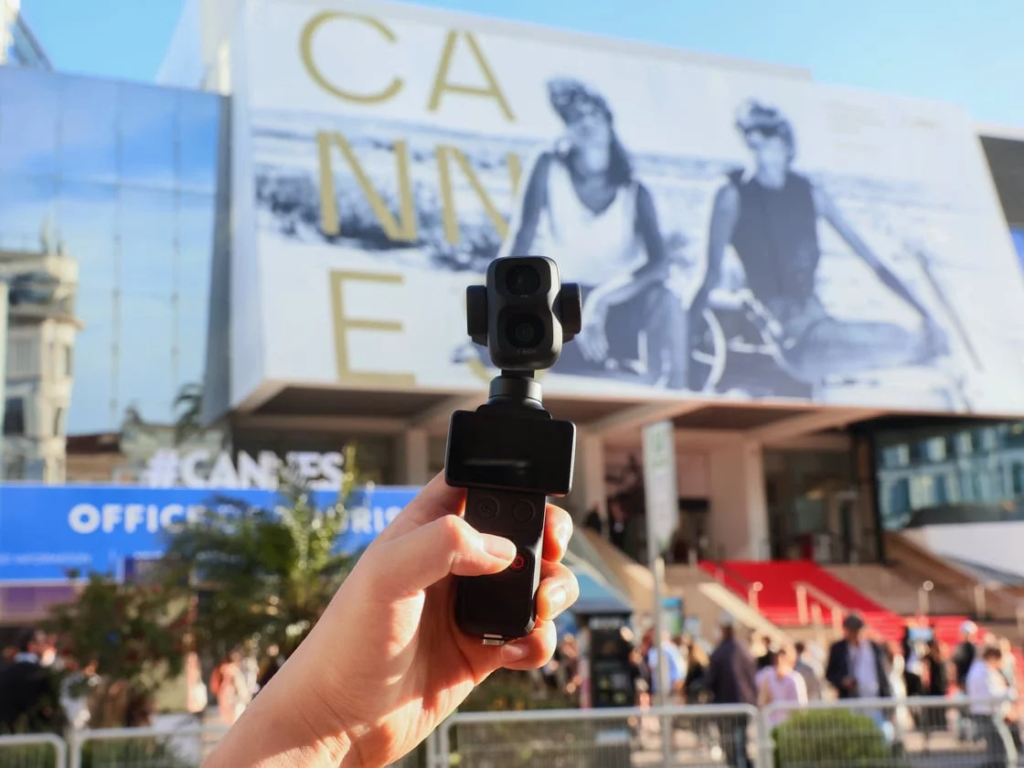
What better place to pull the covers off of your latest and greatest pocket camera than the Cannes Film Festival? “By unveiling the Osmo Pocket 4P at one of the most prestigious stages in global filmmaking, DJI signals a bold evolution of the Pocket series from a creator tool into a cinematic imaging device capable of professional-grade storytelling,” says the company. That statement pretty much sums up the new Pocket 4P camera, which is aimed at professional, independent filmmakers as opposed to the Pocket 4, which is meant for everyday vlogging and mainstream content creation. “In Cannes, the Osmo Pocket 4P is already being explored by filmmakers, documentary creators, and visual storytellers seeking agile, high-quality production tools,” the company notes. The Osmo Pocket 4P was unveiled at the Cannes Film FestivalDJI It comes packed with powerful yet compact hardware, though details are slim at the moment, given this was more of a reveal than an official launch. What we do know is that it builds on both the Ronin and Inspire ranges of cameras, now boasting full 10-bit D-Log2 color, with a “cinematic-level dynamic range” and “rich tonal depth.” The Pocket 4P houses at least one 1-inch-type sensor with what it calls “enhanced portrait capabilities” to better offer natural skin tones. There’s also an improved 3x zoom feature and incremental algorithm advancements that enable low-light filming while preserving crisp, detailed footage. The Pocket 4P is set to get dual cameras with a 1-inch sensor on the main lensDJI There have been a good number of leaks up until now that do give us some idea about what the specs might look like. Of course, it sports dual cameras with a 1-inch main sensor, variable aperture, and a 3x telephoto lens. The camera should be capable of capturing a video up to 6K, 60 frames per second, and boasts an improved low-light performance and depth-of-field management, thanks to f/1.7–f/2.8 aperture. It’s expected to come with Hasselblad tuning, 17 stops of dynamic range, and around 128 GB of built-in storage. DJI offering storage from the factory itself has always been a handy feature I’ve appreciated in their action cameras – that 128 gigs as standard means you wouldn’t have to run to get an SD card soon after getting the camera. On top of that, there are also leaks of a flip-out touchscreen, upgraded ActiveTrack stabilization, and a 3-axis mechanical gimbal built in. As for expected pricing, it’s rumored to come between €749 and €799 in Europe. If that turns out to be true, that would indeed be a massive price increase over the Pocket 4’s starting price of €499. The hardware had better be good. 3x zoom, Hasselblad tuning, 17 stops of dynamic range and D-Log2, plus around 128 GB of built-in storageDJI This camera seems to be the clearest shift we’ve seen in DJI’s target audience yet. The company is heavily leaning into the premium end of the market this time, with words like “professional” and “filmmaker” instead of the “content creator” the Pocket line has typically catered to. There’s no word yet on when the camera will be officially released but it doesn’t look like we’re far out. As for the camera making its way to the US, that’s not likely to happen officially owing to DJI’s ongoing issues with the FCC and the US drone ban. The Osmo Pocket 4P almost feels like DJI looking at the creator market and realizing that “good enough for vlogging” isn’t enough anymore. A dual-camera setup, cinematic color profiles, absurd dynamic range claims, Cannes debut theatrics; it’s clear DJI wants this thing to be taken seriously by filmmakers now, not just YouTubers filming coffee runs and airport B-roll. And honestly, it makes sense. Smartphones have become so good at casual video that pocket cameras can’t survive on convenience alone anymore. They need character, flexibility, and a reason to exist beyond “slightly better than your iPhone.” See More. Tell More.| Osmo Pocket 4P, Grand Release Coming Soon. At the same time, there’s something slightly hilarious about how cinematic this launch itself has become. DJI rolled the thing out at Cannes with dramatic language about “professional storytelling,” while simultaneously revealing almost nothing concrete about price or availability. Source: DJI source

DJI's new dual-lens, 3x zoom Osmo Pocket camera is here Read More »

MAG International opens SG hub to deepen APAC push

MAG International has opened a new office in Singapore’s Marina Bay, as the media agency expands its international footprint and strengthens its presence across Asia Pacific. The new hub at IOI Central Boulevard Towers marks the latest addition to the company’s global network, which includes offices in New York, London, Manchester and Dubai. It is aimed at bringing the agency closer to clients, partners and media networks across the region. From Singapore, the team will work across APAC while staying connected to MAG International’s wider network across Europe, the Middle East and North America, supporting what the company describes as a more continuous, 24/7 operating model for globally active brands. Don’t miss: Experiential agency Verve expands into Asia with Singapore office The expansion comes as brands increasingly seek media strategies that can operate across borders while maintaining local relevance. MAG International said the Singapore office will help it respond to that demand by improving cross-market campaign delivery. The hub will focus on cross-market media planning, buying and execution across digital, programmatic, out-of-home, connected TV, radio and integrated media. It will also support regional campaign development for World Sports Advertising, the sports advertising arm of MAG International and Media Agency Group FZ-LLC, connecting brands with sports properties, rights holders and major sporting events across APAC and global markets. MAG International has worked with brands including Xiaomi, Oppo, Komatsu, China Southern Airlines and China Tourism across digital, programmatic, out-of-home, connected TV and radio campaigns. “Singapore is a natural next step for MAG International,” said Lee Dentith, founder and group CEO of WSA, MAG International and Media Agency Group (UK). He added, “Our clients are thinking internationally, and they need agency partners that can move with the same speed and connectivity. This hub gives us a stronger presence in the region and brings our teams closer to the brands and partners we work with across Asia.” Singapore’s appeal as a regional hub continues to draw agency investment, with Mediaplus Group among those expanding its presence. In March 2026, it launched Mediaplus Singapore through a joint venture with The Media Shop to strengthen its foothold in Asia’s high-growth markets. Operating under Mediaplus (HOC Singapore), the entity combines Mediaplus’ global, data-driven media capabilities with The Media Shop’s regional expertise, while The Media Shop continues to operate independently alongside the joint venture. Positioned as Mediaplus’ Southeast Asia hub, the office supports media strategy, planning, buying and data-led marketing solutions for Mediaplus and Serviceplan Group clients. In July this year, UK-based social media agency Battenhall launched its new regional hub in Singapore in a move to strengthen its footprint across the Asia Pacific region. Led by Rhian Robinson as managing director, the expansion will see new roles created in social media consulting, creative and client management.  Related articles:   Brand and growth consultancy MOMENTRA opens shop in Singapore  COMCO Mundo expands SEA footprint with Singapore launch Design consultancy Elephant stomps into Singapore with new APAC hub   source

MAG International opens SG hub to deepen APAC push Read More »

The fate of a collapsing star could depend on the turn of a ghost

Like the spin of a cosmic coin, a unique set of particle oscillations could ultimately decide the fate of the Universe’s biggest suns. Simulations by a team led by physicists from Waseda University in Tokyo suggest the quantum flip-flopping of tiny particles known as neutrinos makes a critical difference in whether a massive star ends in a spectacular explosion or quietly collapses into oblivion. While the researchers acknowledge their modeling could benefit from some fine-tuning, their findings suggest that current descriptions of core-collapse supernovae may be incomplete unless they take into account subtle changes in neutrino properties. Neutrinos aren’t referred to “ghost particles” for nothing. With near-zero masses and no electromagnetic charge, they barely interact with other particles, despite flooding space in vast numbers. It’s understood that they come in three forms called flavors, each associated with the electron, muon, and tau elementary particle. For more than half a century, it’s been clear that the quantum nature of individual neutrinos oscillates between these flavors as they move. Deep inside the dense confines of a dying star, swarms of neutrinos swap flavors with split-second tiny over distances measured in fractions of an inch. These “fast flavor conversions” aren’t easily dismissed under the extreme conditions of a stellar core, yet according to the researchers, previous simulations have delivered contradictory results. In a new attempt to understand the neutrino’s dynamics, the scientists implemented a model that hadn’t been applied before. Known as a subgrid, it allowed them to represent processes that couldn’t be refined computationally. Using this new approach, the team showed how fast flavor conversions inside a massive star’s packed core lead to one of two outcomes – a core-collapse supernova, or a failed explosion. Core-collapse supernovae are among the Universe’s most violent events, emitting as much energy as our Sun will in its entire lifespan in a few short seconds. The recoil of the collapsing core casts heavy elements far through surrounding space, leaving behind a dense ball of matter known as a neutron star. At the other extreme, a core can forgo the energetic bounce and fall forever into itself as a black hole, shrugging off its layers of hot gas quietly and silently. Which event unfolds depends on the thermodynamics of the core, or “proto-neutron star”. This, in turn, depends on the precise interactions of neutrino flavors as they pass through the crowd of atomic nuclei. The researchers discovered that the rate at which matter is squeezed into the core makes all the difference. A slower accretion of material allows fast flavor conversion to deliver enough heat to drive a supernova. A rapid pile-up is more likely to lead to a failed explosion. As neutrino observatories like the ICE experiment in Antarctica continue to collect data on neutrinos streaming down from above and up through our planet, we may learn more about the role some of physics’ smallest particles play in astronomy’s most powerful phenomena. This research was published in Physical Review Letters. Fact-checked by Bronwyn Thompson source

The fate of a collapsing star could depend on the turn of a ghost Read More »

Johnson & Johnson shines a light on what IBD patients can’t see, but should care about

Ahead of world inflammatory bowel disease (IBD) day, Johnson & Johnson has launched an immersive “Gut tunnel” experience in Singapore, aiming to raise awareness of endoscopic remission as a key but often overlooked treatment goal in IBD.  The initiative forms part of its ongoing “Dual control” campaign across Asia Pacific, which encourages people living with IBD to manage both symptoms and long-term disease progression in partnership with their doctors. CD (Crohn’s Disease) and UC (Ulcerative Colitis), the two main forms of IBD, affect around 10 million people globally, with rising prevalence across Asia. In Singapore, an estimated 3,000 people live with the condition. Don’t miss: Johnson & Johnson rolls out ‘The 3rd Opinion’ to empower patients in lung cancer care Typically emerging in adolescence, IBD can cause symptoms such as abdominal pain, diarrhoea, and blood in stool. However, the condition is often driven by underlying gut inflammation that can persist even when symptoms appear controlled. The “Gut tunnel” experience is designed to translate this hidden disease activity into a tangible journey, reinforcing the message that symptom relief does not always equal disease control. New findings presented at Digestive Disease Week 2026 underline the clinical importance of endoscopic remission, defined as the absence of disease activity seen during a colonoscopy. According to the data, ulcerative colitis patients achieving endoscopic remission had a 68% lower risk of symptom worsening and were four times less likely to require IBD-related surgery. Crohn’s disease patients saw a 41% lower risk of symptom worsening, were three times less likely to need surgery, and had reduced steroid use. Despite these outcomes, more than 60% of people living with IBD are unaware of endoscopic remission as a treatment target, pointing to a significant patient knowledge gap. To address this gap, Johnson & Johnson has developed an “IBD patient conversation guide”, available in English, Simplified Chinese and Korean, to support discussions between patients and healthcare professionals on long-term treatment goals. The company also hosted an APAC “IBD patient dialogue” in Singapore on 17 May, bringing together 14 patient advocacy leaders from 11 organisations across Asia Pacific and the US to discuss unmet patient needs and improve support frameworks for those living with the condition. “We share a common goal to help people with IBD achieve more than symptom relief and advance toward deeper disease control,” said Earl Dancel, vice president of commercial strategy, Asia Pacific strategy office, Johnson & Johnson Innovative Medicine Asia Pacific. He added, “For more than 30 years, we have driven scientific innovation in IBD and remain committed to supporting shared decision-making to empower patients to speak up, align on treatment goals, and help people with IBD pursue what matters most in their lives.” Speaking on the “Gut tunnel”, Shim Hang Hock, consultant gastroenterologist, Acorn Gastroenterology, Singapore said, “Symptom improvement does not necessarily indicate that inflammation has resolved. The ‘Gut tunnel’ experience helps make this invisible disease activity visible and understandable, helping patients recognise why deeper treatment goals such as endoscopic remission matter.” Building on its broader patient empowerment efforts, Johnson & Johnson previously launched its “Dual control” campaign across Asia Pacific to encourage people living with inflammatory bowel disease (IBD) to better manage their condition while still pursuing life goals. At the centre of the initiative is a patient empowerment video titled “#MyDualControl: Don’t let IBD put your dreams on hold”, which features real conversations between patients and healthcare professionals and highlights the role of shared decision-making in improving outcomes. Related articles: Johnson & Johnson names new Vision Care marketing lead for 4 regionsJohnson & Johnson Vision searches for APAC marketing leadJ&J’s new consumer health biz Kenvue files to become independent firm source

Johnson & Johnson shines a light on what IBD patients can’t see, but should care about Read More »

Slicked Airstream camping trailer goes full-on IKEA to hit lower price

Airstream trailers boast a lot of positives, but “cheap” and “lightweight” are not typically among them. In fact, we never expected to use those two terms in an Airstream description, but the new World Traveler trailer is in fact designed as a lighter, more affordable Airstream travel trailer option. True, it carries the big asterisk of being light and cheap *for an Airstream, but it does demonstrate clearly that the iconic Silver Bullet badge is continuing to adapt its near-century-old design to the changing trends of modern times. Never a company to shy away from innovation or evolution, Airstream has been doing some expanding over the past decade, not merely by introducing new models but by embracing new markets. In 2016, it brought a compact adventure camping trailer to market over a decade after playing around with the idea as a concept. It followed up a couple years later with the short-lived Nest, its first production fiberglass trailer. More recently, it expanded further into off-road adventure with a series of Sprinter AWD adventure camper vans. You might say, it’s a whole new Airstream, but that would grossly shortchange the company and the evolutionary innovation to which it has been committed since its inception. The World Traveler doesn’t appear at first to be quite as dramatic a shift as those previous examples, but it does show Airstream adapting to a changing marketplace, one that increasingly embraces smaller motor vehicles and electric powertrains. Similarly, the 3,700-lb (1,678-kg) weight might not sound that light in comparison to the types of smaller trailers already roaming the streets, but a quick comparison with other Airstreams shows the 22-foot (6.7-m) World Traveler is actually 200 lb (91kg) lighter than the shorter Bambi 20FB 20-footer and 400 lb (181 kg) lighter than the 20-ft (6-m) Caravel 20FB. World Traveler travel trailer – bit of a tongue twister Airstream Airstream did a lot of streamlining and weight-cutting to get to that weight point, starting by thinning the trailer out into a long fuselage measuring 7.5 feet (2.3 m) wide, narrower than the shorter 8-ft-wide (2.4-m) Caravel/Bambi 20FB trailers and the 7.8-foot-wide Basecamp 20X. The company has also simplified the exterior, eliminating the usual panoramic front triple window array for a single window and giving the Traveler a clean, uncluttered roofline by relocating the air conditioner below the interior bench seating. Airstream’s exterior reduction and smoothening enhances the World Traveler’s easier-towing performance and also pays homage to some of the simpler early Airstream profiles from the post-WWII era – back when a hardier generation of wilderness lover didn’t need air conditioning, Wi-Fi or microwaves to survive a three-night camping trip. “With World Traveler, we delivered all the comfort and craftsmanship we’re known for in a new lightweight model that owners can tow with many light-duty trucks and SUVs,” said Airstream boss Bob Wheeler in introducing the World Traveler earlier this year. “[That] may even be a vehicle they already own or their daily driver.” Like other Airstreams, the lustrous World Traveler stands out in any surroundingsAirstream Airstream’s focus on lightweight efficiency continues inside, where it installs what it classifies a minimalist Scandinavian-inspired interior. The floor plan comes anchored by an oversized 80 x 80-in (203 x 203-cm) primary bed at the rear, notched into a V shape to make it easier for each sleeper to get in and out of bed. The second and last bed in the four-sleeper layout is located on the opposite end, all the way against the front wall. The dual-bench dinette transforms over into an 86 x 35-in (218 x 89-cm) double(ish) bed. An under-bench fridge drawer is available to augment the main kitchen fridge/freezerAirstream Separating those two sleep-in ends are the entry-side kitchen block and far-side dry bathroom. The kitchen comes standard with a dual-burner gas stove, stainless steel sink, 116-L refrigerator and extendable countertop. Buyers can also add a secondary drawer fridge below the dining bench for extra cold storage. To further aid in weight savings, Airstream sizes certain equipment down or switches it over to the options sheet. For instance, it outfits the World Traveler with a 72-L fresh water tank instead of the 87-L tanks equipped to smaller Caravel, Bambi and Basecamp models. Looking back toward the spacious super-king bed areaAirstream Still, the World Traveler comes thoroughly outfitted and includes a Truma Combi Eco Plus furnace/water heater, the aforementioned air conditioner, a JBL Bluetooth stereo with speakers and a 24-in HD smart TV, all standard. The electrical system has a shore power hookup, multi-stage 120-V converter and solar prewiring. A heated lithium battery bank with 300-W solar charging setup is available optionally. The World Traveler debuted earlier this year at the Florida RV SuperShow and is available now for a base price of US$69,400. Airstream imagines it serving as an entry-level model for first-time buyers, whom it would love to retain and upgrade when they’re ready for something larger and more luxurious. The new Traveler is a full $9,500 cheaper than the next 22-foot trailer up in Airstream’s lineup, the Bambi 22FB, and only $500 more than the much smaller Bambi 16RB. Source: Airstream source

Slicked Airstream camping trailer goes full-on IKEA to hit lower price Read More »

Dow Jones Futures Rise, Oil Prices Dive Below $100 On Report U.S.-Iran Deal Close; AMD Soars On Earnings

Dow Jones futures jumped early Wednesday, along with S&P 500 futures and Nasdaq futures, while crude oil prices plunged to $90 a barrel. A U.S.-Iran deal reportedly is close, though President Donald Trump said Tehran better agree or “bombing” returns. Late Tuesday, Trump “paused” the effort to move ships through the Strait of Hormuz, citing “Great Progress” toward an Iran… Copyright ©2026 Investor’s Business Daily, LLC. All rights reserved. 87990cbe856818d5eddac44c7b1cdeb8 source

Dow Jones Futures Rise, Oil Prices Dive Below $100 On Report U.S.-Iran Deal Close; AMD Soars On Earnings Read More »

Four weeks of small diet tweaks can shift needle on your biological age

New research shows that small changes in diet practiced for less than a calendar month can potentially improve your biological age – supporting the key functions that together lead to healthier lives later in life. While it’s not the first study to investigate the role different diets have on key aging biomarkers, this work out of the University of Sydney demonstrates just how little you may have to do to invest in your health as you get older. It’s these biomarkers that make the so-called “super-agers” not only live longer but live without the chronic conditions that become more prevalent with the passing of each calendar year. “As we age, our health tends to decline,” says lead researcher Caitlin Andrews from the University of Sydney’s School of Life and Environmental Sciences. “It’s an inconvenient biological truth. This is where the idea of biological age comes in: it doesn’t just measure the passage of time but asks how well your body is holding up under its share of wear and tear.” In the new study, Andrews and colleagues investigated whether a four-week dietary intervention could rapidly improve biomarkers in 104 individuals aged between 65 and 75 years. As part of the Nutrition for Healthy Living study, participants were randomly assigned one of four diets – omnivorous high-fat (OHF), omnivorous high-carbohydrate (OHC), semi-vegetarian high-fat (VHF), or semi-vegetarian high-carbohydrate (VHC). While each diet delivered the right amount of energy required from protein each day, the protein’s source varied: omnivores got half their protein requirement from animal sources, while the semi-vegetarian plans delivered 70% of it in the form of plant-based foods. To align the data as closely as possible, the 104 participants all had a body mass index (BMI) between 20 and 35, were non-smokers and non-vegetarians, had no serious food allergies, and had no chronic health conditions. Data from 20 biomarkers – such as blood pressure, cholesterol, and insulin levels – were then incorporated using the Klemera-Doubal Method (KDM) to score the participants before and after the four weeks. Interestingly, the OHF group had health markers that barely changed from their baseline measures, while the other three all showed improved biological age. Statistically speaking, the biggest improvement was seen in the OHC group, where individuals’ daily energy was made up of 28-29% fat and 53% carbohydrates, in addition to the 14% protein. In this group, which saw carbs dominate, they scored 3.5 to 4 years younger in biological age compared with the OHF group. It’s worth noting that the “high-carb” diets excluded refined sugars and/or ultra-processed foods, with the macronutrient largely sourced from complex carbohydrates (whole foods, high in fiber and lower in fat). Still, the researchers stress that the findings do not prove that aging can be reversed (unfortunately, that’s a universal experience for us all). The results, though preliminary, do suggest that short-term, non-drastic changes in diet could boost the body’s response to stress, inflammation, and metabolic function. “Longer-term dietary changes are needed to assess whether dietary changes alter the risk of age-related diseases,” says Associate Professor Alistair Senior, from the School of Life and Environmental Sciences and the Charles Perkins Centre, who supervised the research. “It’s too soon to say definitively that specific changes to diet will extend your life. But this research offers an early indication of the potential benefits of dietary changes later in life. Future research should explore whether these findings extend to other cohorts and whether the changes recorded are sustained or predictive of long-term outcomes,” he adds. It pays to keep in mind that the participant pool was small, the trial only lasted four weeks, and these older individuals had no serious health issues. But it does, however, show promise that some tiny changes for short periods could be more beneficial than we realize. And it gives us more insight into how biological signs of aging may be more malleable – and sensitive to our lifestyle choices – than we currently believe. The research was published in the journal Aging Cell. Source: University of Sydney Fact-checked by Mike McRae source

Four weeks of small diet tweaks can shift needle on your biological age Read More »