Microsoft AI CEO: ‘It’s Smarter to Be 6 Months Behind’

Microsoft AI CEO Mustafa Suleyman. Image: Microsoft At a time when tech giants are racing to build the most powerful AI models on the planet, Microsoft is choosing a different lane — one that’s a little slower but potentially smarter. Mustafa Suleyman, Microsoft’s CEO of AI, says the company isn’t in a rush to lead the frontier of AI development; instead, it’s intentionally choosing to lag a few months behind leaders like OpenAI. That might sound like a setback, but Suleyman says it’s a strategic move that could give Microsoft an edge. “It’s cheaper to give a specific answer once you’ve waited for the first three or six months for the frontier to go first. We call that off-frontier,” Suleyman said in a recent interview with CNBC. “That’s actually our strategy — to really play a very tight second, given the capital-intensiveness of these models.” A new chapter in Microsoft’s AI playbook The comments come as Microsoft celebrates its 50th anniversary, during which it announced several new features to its AI assistant Copilot. These include Copilot Vision, Deep Research, and a new “Memory” feature that remembers details about users to personalize responses — a capability previously introduced by OpenAI’s ChatGPT. Microsoft’s AI systems, including Copilot, are heavily powered by OpenAI’s models. The tech giant has invested nearly $14 billion in the San Francisco startup, making it a key partner in Microsoft’s AI journey. But Suleyman also made it clear that Microsoft is gradually working toward self-sufficiency. “Long-term, it’s absolutely mission-critical that we are able to do AI self-sufficiently at Microsoft,” he said. “Until 2030 at least, we are deeply partnered with OpenAI, who have had an enormously successful relationship with us.” That long-term view reflects Suleyman’s broader strategy. While the company still relies on OpenAI for large models like GPT-4, it’s also developing its own smaller, open-source models under the Phi project. These models are designed to run on personal computers rather than massive GPU clusters, making them more accessible and cost-effective to deploy. DOWNLOAD This IT Leader’s Guide to Generative AI From TechRepublic Premium Cracks in the Microsoft-OpenAI partnership? The close ties between Microsoft and OpenAI have started to show some strain. Last year, Microsoft quietly added OpenAI to its list of competitors. And in January, OpenAI surprised many by teaming up with Oracle on its $500 billion Stargate project — a move that ended Microsoft’s exclusive status as OpenAI’s cloud provider. Further escalating tensions, OpenAI’s latest GPT models have reportedly raised concerns within Microsoft over performance and cost. Industry insiders believe Microsoft has already begun developing its own frontier models, and some observers, including Salesforce CEO Marc Benioff, believe Microsoft is already moving to stand on its own two feet. More must-read AI coverage The bigger picture Microsoft may not be chasing the AI crown, but it’s still playing a long game. With a powerful AI team, deep investments in infrastructure, and a broad customer base, it doesn’t need to lead the race to win it. By staying just behind the bleeding edge, the company hopes to avoid costly mistakes and offer more stable, reliable solutions to real-world problems. “We have an incredibly strong AI team, huge amounts of compute, and it’s very important to us that, you know, maybe we don’t develop the absolute frontier, the best model in the world first,” he said. “That’s very, very expensive to do and unnecessary to cause that duplication.” source

Microsoft AI CEO: ‘It’s Smarter to Be 6 Months Behind’ Read More »

3 Ways to Build a Culture of Experimentation to Fuel Innovation

Building a thriving tech company isn’t all about better code or faster product launches — you have to foster an environment where experimentation is the norm. Establishing a culture where employees can safely push boundaries encourages adaptability, drives long-term innovation, and leads to more engaged teams. These are critical advantages in the face of high turnover and intense competition.    Through my own process of trial and error, I’ve learned three key strategies engineering leaders can use to make fearless experimentation part of their team’s DNA.  Strategy #1: Normalize failure and crazy ideas A few months into my first job, I took down several production servers while trying to improve performance. Instead of blaming me, my manager focused on what we could learn from the experience. That moment gave me the confidence to push boundaries again. From then on, I knew that failure was not an end, but a steppingstone to future wins. It’s now a mindset that I encourage every leader to adopt.  Innovation is messy and risky — here’s how leaders can embrace the chaos and bold thinking:  Build a “no-judgment zone”: Before every brainstorming and feedback session, re-establish that there are no bad ideas. This might seem straightforward, but it can make the team feel safe, suggesting radical solutions and voicing their opinions.   Related:Breaking Down the Walls Between IT and OT Encourage “what if?” questions: Out-there ideas like “What would this look like if we had no technical constraints?” or “What would it take to make this 10x better instead of just 10%?” encourage teams to consider problems and solutions from a new perspective. Leaders should walk the walk by asking these same types of questions in meetings.  Celebrate the process, not just the outcome: Acknowledge smart risks – even if they don’t succeed. Whether it’s a shoutout in a team meeting or a more detailed discussion in Slack, take the time to highlight the idea and why it is worth pursuing.     Use failure to fuel future successes: If a project falls short of its goals, don’t bury it and move on right away. Instead, hold a session to discuss the positives and what can be done differently next time. This turns missteps into momentum and helps the team get more savvy with every experiment.   Strategy #2: Give experimentation a framework For experimentation to flourish, leaders must provide teams with the guidelines and resources they need to turn bold thoughts into tangible products. I suggest the following:  Allow for proof-of-concept testing: Dedicate space for testing in the product development lifecycle, especially when designing technical specifications.  Related:How to Tell When You’re Working Your IT Team Too Hard Make room for wild ideas: One of my favorite approaches is adding a “Crazy Ideas” section to our product or technical spec templates. Just having it there inspires the team to push boundaries and propose unconventional solutions.  Establish hackathons with purpose: At our company, we encourage hackathons that step outside our product roadmap to broaden our thinking. And don’t forget to make them fun! Let teams pitch and vote on ideas, adding some excitement to the process.  Use AI to unlock creativity: AI allows developers to build faster and focus on higher-order thinking. Provide the team with AI tools that automate repetitive tasks, speed up iteration cycles, and generate quick proofs-of-concept, allowing them to spend more time innovating and less on process-heavy tasks. AI also helps teams prototype multiple versions of a new solution, letting them test and adjust at speed.  I’ve seen these strategies produce incredible results from my teams. Our hackathons have led to some of our most important breakthroughs, including our first AI feature and the implementation of internal tools that have significantly improved our workflows.  Related:Today’s Technology Should Be Designed By and For All Minds Strategy #3: Test, learn, and refine High-performing teams know that experimentation isn’t failure — it’s insight in disguise. Here’s how to maintain a strong understanding of how each project is progressing:  Set clear success metrics: Experimentation works best when teams know what they’re testing for. The key is setting a clear purpose for each experiment and determining quickly whether it’s heading in the right direction. Regularly ask internal teams or customers for feedback to get fresh perspectives.  Share what works (and what doesn’t): Prioritize open knowledge-sharing across teams, breaking down communication silos in the process. Whether through Slack check-ins or full-company meetings, the more teams learn from each other, the faster innovation compounds.   Run micro-pilots: Leverage these small-scale, real-world tests with a subset of users. Instead of waiting to perfect a feature internally, my team launches a basic version to 5-10% of our customers. This controlled rollout lets us quickly gather feedback and usage data without the risk of a full product launch missing the mark.  Make experimentation visible: For example, host weekly “demo days” where every team presents its latest experiments, including wins, failures, and lessons learned. Moments like this foster cross-team collaboration, which is key to staying agile.  Most transformative technologies — from email to generative AI — probably sounded off the wall at first. But because the engineers behind them were allowed to push boundaries, we have tools that have changed our lives.  Leaders must create an environment where engineering teams can take risks, even if they sometimes fail. The companies that experiment today will be the ones leading innovation tomorrow.  source

3 Ways to Build a Culture of Experimentation to Fuel Innovation Read More »

Atlassian’s AI Offensive Is Changing Work Forever

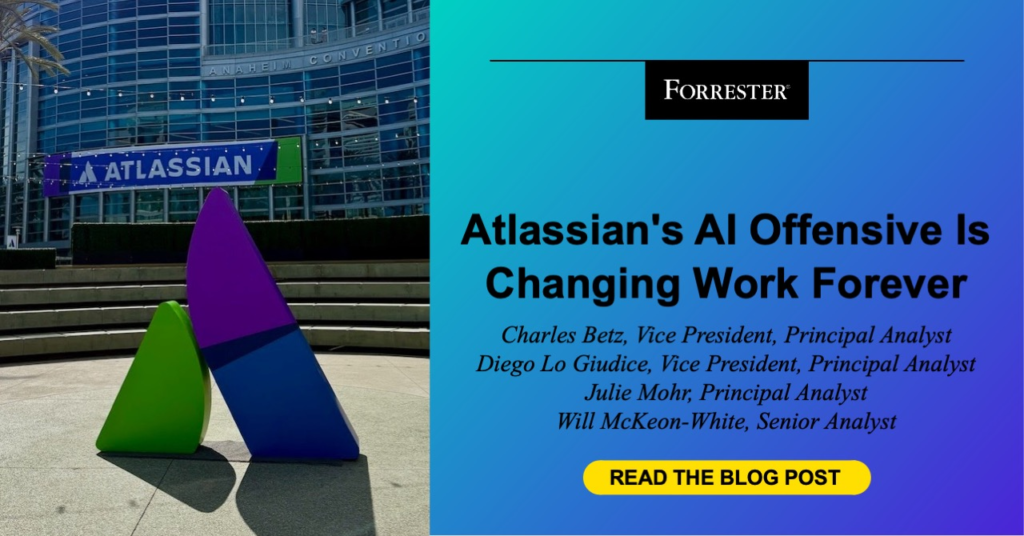
Atlassian has launched a sweeping upgrade to its platform, and the message is crystal-clear: AI isn’t just a feature; it’s the foundation. If you’re working in tech, managing teams, or even just part of a business using Jira or Confluence, this isn’t a subtle shift; it’s a tectonic one. Atlassian dropped a full suite of AI-integrated upgrades on April 9. The centerpiece? Rovo, an AI-powered enterprise assistant that offers deep integration with Atlassian’s ecosystem — Jira, Confluence, Jira Service Management — and external tools such as Google Drive and SharePoint. Key Moves Rovo goes GA (Generally Available) for all paying users — no extra cost. Over 20 customizable AI agents help automate everything from HR onboarding to DevOps workflows. New Teamwork Collection and Strategy Collection apps roll out as interconnected, AI-native experiences. AI-driven service management with Rovo agents suggests actions and triages issues. Analysts Charles Betz, Diego Lo Giudice, Julie Mohr, and Will McKeon-White provide their insights on Atlassian’s annual event announcements. With Rovo, Atlassian Prepares For The AppGen World At Team ’25, Atlassian announced a pivot toward Forrester’s AppGen platform trend, highlighted by its infusion of AI and generative AI technologies in its suite of tools such as Jira, Confluence, and Align and leveraging its golden source of IT data and metadata organized in a graph, together with the beta announcement of the Rovo Dev suite. This demonstrates a potential move to try to dominate the market by blending low-code/no-code and large language model (LLM) capabilities with Forrester TuringBots (aka AI and GenAI software development tools). As CEO Mike Cannon-Brookes put it, the strategy is to generate software, not just snippets of code. We agree with that strategy, but Atlassian will need to fill a broader gap by generating not just “software” (assets) but large portions or even entire software applications, since that is what the AppGen trend will bring. The Rovo Dev Beta Announcement Proves Good Intentions But Is Playing Catchup The announcement of the Rovo Dev Beta by Atlassian at Team ’25 showcased the company’s forward-thinking approach to offering various vertical use cases to developers to speed up development work for creating code plans, generating code, reviewing pull requests, automating changes in bulk, and simplifying deployments. Although Atlassian does not position it this way, it is automating several steps of the software development lifecycle (SDLC). The thinking needs to shift, however, more toward automating the process of building applications — new ones — and not just maintaining or fixing issues. The industry is rapidly evolving with AI technologies such as Cursor and Windsurf that integrate LLM coding capabilities to truly reshape the SDLC by offering advanced coding capabilities and challenging traditional methods with the ability to generate significant portions of applications. Rovo Studio’s launch as a free beta version emphasizes automation and productivity enhancements across the SDLC, yet Atlassian’s modest promotion of Rovo’s capabilities suggests this as an area with room for improvement before it can fully leverage its potential to transform software development. The System Of Work/Teamwork Graph Continues To Gain Traction According to its leadership, Atlassian has been working toward a graph-based “system of work” for about five years, and its messaging around this vision picked up noticeably in the past couple of years. Customers seem to be resonating with the idea that a unified graph of people, work, and knowledge offers organizational visibility and a critical semantic foundation for generative AI, supplying enterprise context to answers and actions. The Teamwork Graph spans Jira and Confluence and is expanding with Rovo into more general-purpose search, giving Atlassian a flexible architecture for cross-functional knowledge and coordination. As LLMs demand structured context to reduce hallucinations, the graph becomes not just helpful but essential. A significant question for us at Team ’25 was Atlassian’s replacement strategy for Device42, a discovery and IT asset management partner recently acquired by Freshworks. The answer, confirmed from several directions, is Lansweeper. This sets the stage for Atlassian to deepen its ITAM and CMDB capabilities, a territory where ServiceNow still dominates. But the strategic play is bigger: If Atlassian can extend the Teamwork Graph into asset and infrastructure data, it could start to challenge ServiceNow’s ontological lock-in with its Common Service Data Model. That opens up a deeper discussion about whether Atlassian mirrors some of those ontology structures or defines an alternative aligned with its own modular vision. The broader architectural issue — surfacing repeatedly in conversations — is control over the graph. This plays out in three ways: physical access (can systems read from each other?), semantic alignment (do different graphs agree on the meaning of entities such as “pull request”?), and commercial control (who can access the data, and under what terms?). These aren’t theoretical concerns — they’re already creating friction. For example, small startups may seek to pull inordinate amounts of data into their systems for analysis. There already is a looming “tragedy of the commons” with public resources such as Wikipedia suffering from excessive AI agent-driven scraping. Atlassian leadership confirmed that these tensions are front of mind, and rightly so. Any enterprise architect serious about AI enablement and platform convergence will need to grapple with the messy, political, and strategic implications of graph ownership. Atlassian Is Now A Full-Fledged ESM Player Forrester has long focused on enterprise service management (ESM) — the expansion of IT service desk practices into broader business domains like HR, facilities, and marketing. Atlassian’s Jira Service Management has always been used this way, but until recently, the company hadn’t offered domain-specific solutions beyond IT. That changed with the announcement of new offerings for HR, customer service, and marketing workflows. Predictably, this raised questions about whether Atlassian is trying to compete with Workday, prompting leadership to clarify that they’re not replacing systems of record but layering engagement and request routing on top of them. That’s always been the ESM logic: HR analysts live in Workday, but they need a robust system to manage incoming requests, and Workday lacks that. Now that Atlassian has the low-code/no-code

Atlassian’s AI Offensive Is Changing Work Forever Read More »

HubSpot CRM Review 2025: Features, Pros & Cons

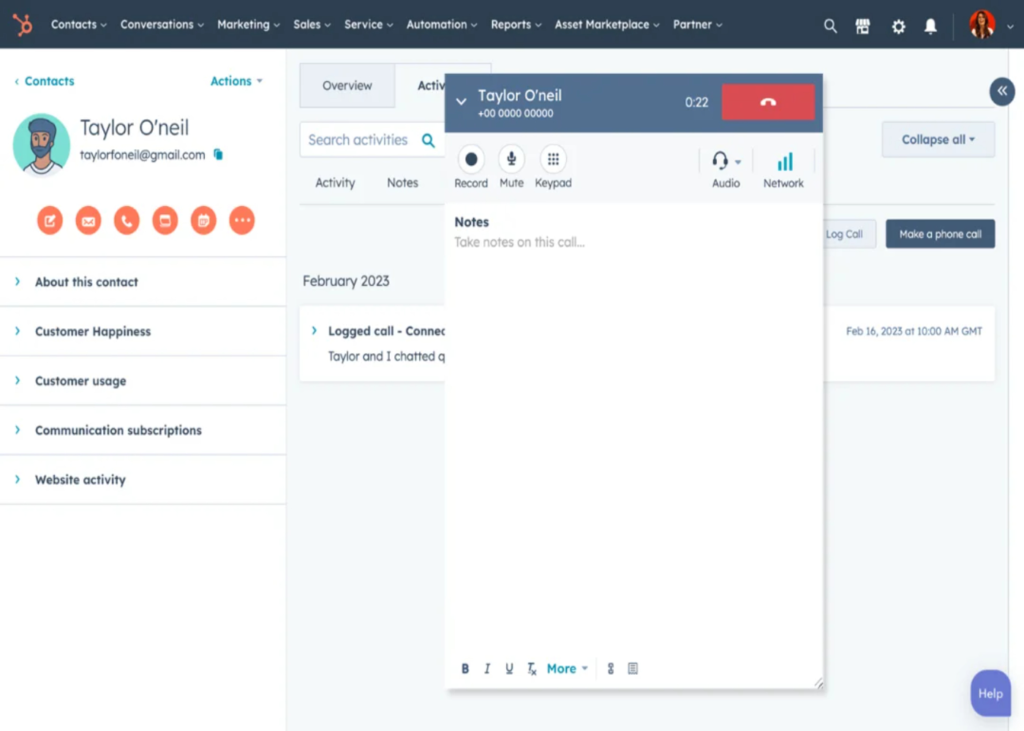
HubSpot’s fast facts Our star rating: 4/5 Pricing: Robust free version for up to 5 users. Paid tiers start at $15 per seat per month when billed annually. Key features: Lead prospecting and generation. Email templates and tracking. Document and payment management. Business forecasting. Powerful AI tools. 1,500+ integrations. Supports multiple industries. 1,500+ integrations. HubSpot is a popular customer relationship management platform with robust free and paid features that help streamline entire sales and marketing strategies. Its custom pipelines and activity tracking make it easily scalable to fit any organization’s sales and customer management needs. HubSpot remains a top-rated CRM for customer support and integration capabilities However, if you need software with more advanced technology and reporting features, other options are available. Pricing Free CRM: Free for up to 5 users with contact management, quotes, live chat, and more. Sales Hub Starter: $15 per seat per month, billed annually, or $20 when billed monthly. Starter Customer Platform: $15 per seat per month, billed annually, or $20 when billed monthly. This plan includes access to Marketing and Service Start Hub. Sales Hub Professional: $90 per seat per month, billed annually, or $100 when billed monthly, and a one-time $1,500 onboarding fee. Sales Hub Enterprise: $150 per seat per month, with an annual commitment. A one-time $3,500 onboarding fee applies. SEE: For more details about HubSpot’s offerings and pricing, check out HubSpot’s Product and Services Catalog. Key features of HubSpot Call tracking HubSpot’s call tracking system allows users to place and record client calls directly from the browser platform. This system automatically logs and tracks each call to the correct customer profile. It also prioritizes outbound calls, enabling sales reps to start daily calls sooner and begin selling faster. Hubspot call tracking software. Image: HubSpot Sales playbooks HubSpot’s sales playbook software equips sales reps with interactive sales plays, scripts, guides, and more. Users can customize the playbooks to align with their organization and selling style. The software also provides real sales data, drawing from structured notes and multiple-choice questions and answers. HubSpot interactive playbook feature. Image: HubSpot Conversation intelligence HubSpot’s conversation intelligence tracks sales rep performance on customer calls and provides coaching tips based on data-driven insights. Users don’t need to switch dialing software or waste time training on a new calling service. This feature works with HubSpot’s calling tool, Zoom, JustCall, Kixie, and more. Client engagement tracking and coaching from conversation intelligence feature. Image: HubSpot Sales analytics and reporting Users can choose from dozens of pre-made report styles or customize their own to view business analytics. The reports display pipeline revenue, individual sales progress, or target attainment. HubSpot’s analytic feature allows admins to monitor sales activities and create unique coaching insights. This tool benefits businesses of all sizes, including small businesses that need to identify market and customer patterns. Sample Hubspot sales dashboard. Image: HubSpot PREMIUM: Explore a full CRM feature comparison.     HubSpot pros and cons Pros Cons Free demo. 1,500+ app integrations. 24/7 customer support. Higher support tiers are costly. No live support for free users. Limited customization options. More CRM coverage Alternatives to HubSpot HubSpot’s dashboard and pipeline customization have limitations, and its higher support tiers and add-ons can be costly. Some alternatives, like Pipedrive, Zoho CRM, and Creatio, offer similar core features in their free tiers with additional technology features.. When researching the right CRM for your organization, first consider your budget, whether the software specializes in your industry, and it scales to meet the size and needs of your business. For our full review of alternatives, see our HubSpot Alternatives page. DOWNLOAD: Compare the top CRMs for small businesses. Software HubSpot CRM Pipedrive Zoho CRM Creatio Custom dashboards Limited Yes Limited Yes Native integrations Yes Yes Yes Yes Third-party integrations Yes Yes Yes Yes AI-powered features Yes Yes Yes Limited Free trial No 14 days 15 days 14 days Starting price* Free starting price $14 per user per month Free starting price $15 per user per month * Pricing details are based on annual subscription rates. Different rates may apply for per-month billing. Pipedrive Pipedrive is a user-friendly CRM known for its visual pipelines that simplify sales processes. It is a great option if you want sales-focused software without any additional marketing tools. Although Pipedrive doesn’t offer a free-for-life version, its starting price remains competitive. For a closer look, check out my detailed comparison of Pipedrive and HubSpot. SEE: For more information on Pipedrive, check out my Pipedrive review. Zoho CRM Zoho CRM offers sales and marketing features, similar to HubSpot but places a greater emphasis on social media marketing and online lead generation. The platform is easy to navigate and offers more advanced data and forecasting features than HubSpot. I have a full comparison breakdown of Zoho CRM and HubSpot that I recommend checking out. SEE: For more details, explore this in-depth review of Zoho CRM. Creatio Creatio is a no-code platform that supports marketing, sales, and service teams. It offers end-to-end sales management tools to completely automate workflows. While you can easily customize Creatio without any coding expertise, it doesn’t provide a free version of its platform. If you want a free CRM with even more AI functionality, I recommend HubSpot over Creatio. SEE: Want to know more? Read my review of Creatio. Review methodology To review HubSpot and its offerings, we used our inhouse rubric of criteria that we consider most important for assessing general CRM software. Next, we compared HubSpot against industry standards in this scoring tool. We relied on HubSpot’s own online resources and incorporated real user feedback and ratings. Below is the breakdown of the criteria used to score HubSpot: Cost: Weighted 25% of the total score. Core features: Weighted 25% of the total score. Customizations: Weighted 15% of the total score. Integrations: Weighted 15% of the total score. Ease of use: Weighted 10% of the total score. Customer support: Weighted 10% of the total score. FAQs Is HubSpot a good CRM? Yes, HubSpot is a well-rounded and

HubSpot CRM Review 2025: Features, Pros & Cons Read More »

MITREGEDDON Averted But Fragility In CVE Processes Remain

This week, we saw the common vulnerabilities and exposure (CVE) process, as we know it, come hours from the brink of collapse when a memo started circulating on LinkedIn that the US Department of Homeland Security would cut funding to MITRE’s CVE cataloging on April 16. MITRE’s role in the CVE process is the crucial first step in assigning IDs to vulnerabilities so that practitioners, vendors, researchers, and governments across the globe can consistently reference the same vulnerability. The process also allows for responsible disclosures and accountability for vulnerabilities to software companies. The panic highlighted the elephant that’s been hanging out in the data center for too long: The CVE process is convoluted and has too many single points of failure. CVE submission processes have been falling apart for several months now, notably with NIST falling behind on assessing CVEs, scoring them with the Common Vulnerability Scoring System, and adding them to its separately maintained vulnerability catalog in the National Vulnerability Database (NVD), which many security companies utilize for their source of vulnerability truth. Without this first step of reporting vulnerabilities to an independent arbitrator like MITRE, the security community loses its ability to consistently communicate vulnerability issues in software and specify which components and versions are vulnerable. If this process ceases with no replacement, responsible and objective disclosure around newly discovered vulnerabilities would fall to the wayside, giving threat actors leverage and leaving a lack of accountability for software companies. CVE Program Renovation Leaves Uncertainty The security community recognized the need for better resilience in the CVE process. When US federal funding to a nonprofit can jeopardize so much, there is something inherently wrong. Even though MITRE ended up with funding, the status quo has proven to be unacceptable given the volatile reality of today’s cybersecurity and political landscape. Although MITRE-geddon approached and passed without disruption, many other entities have raised their hands to take on managing new vulnerabilities, including: The CVE Foundation. Members of the CVE board emphasized concerns about the global reliance on a process funded by single entities such as CISA and announced intentions to build a more resilient solution that can uphold imperatives in sustainability and neutrality. But as of now, the CVE Foundation has only released a memo and stood up thecvefoundation.org, which only states that more details about transitions will be announced. On Friday, the Dutch Institute for Vulnerability Disclosure posted its support for centralization through the CVE Foundation on LinkedIn. The European Union. Cybersecurity leaders and industry experts outside the US have expressed concern about the risks of relying on a single funding source for a critical global resource such as CVE. The European response to the uncertainty around the CVE system has been swift. Key organizations such as ENISA launched the European Vulnerability Database to enhance regional resilience and reduce reliance on a single US-funded entity. At the same time, the European Cyber Security Organization issued a clear call for European stakeholders to step up with trustworthy and transparent alternatives, reinforcing the need for sovereignty in cybersecurity infrastructure. Broader community initiatives, including CIRCL’s decentralized global CVE system, further underscore Europe’s commitment to building a robust and autonomous vulnerability management ecosystem. Many European institutions (including, again, ENISA) are already CVE Numbering Authorities, and it appears that those roles could expand. Cybersecurity vendors. Although CVE identifiers provide a consistent language for security professionals and vendors detecting and tracking vulnerabilities, vulnerability enrichment vendors like Flashpoint and VulnCheck provide their own catalogs. We anticipate that disruption to the process will provide more opportunities for vulnerability enrichment and threat intelligence solutions to sell their independent solutions. This opens the door for fragmented, paywalled alternatives, introducing new risks, costs, and dependencies. A standard, free CVE process on which everyone has relied for the past 25 years is likely to see more commercialization — with CISO budgets footing the bill. Other organizations cropping up to save the day doesn’t necessarily address the core problem. The value of having one organization responsible for maintaining CVEs is that there is then a single source of truth: a unified global ID system for security vulnerabilities, a common language across security vendors, researchers, and IT teams. This allows seamless integration into security tools such as scanners, security information and event management platforms, and vulnerability databases. What It Means For Security Teams The April 2025 incident shows that a lapse in support can disrupt a global system. When there are too many entities, like governments or commercial entities, that have their own vulnerability database, the lack of consistency will lead to more confusion. A disruption to CVE services could trigger fragmentation across the cybersecurity ecosystem, making it difficult for vendors and researchers to assign or reference vulnerabilities consistently, in turn hampering disclosure and remediation. Security researchers may need to report vulnerabilities to multiple institutions, leading to duplication and inefficiency. Additionally, most vulnerability scanners and patch management tools rely on timely and consistent CVE updates. Without those updates, systems risk becoming unreliable. Vulnerability management teams will also face new challenges with remediation prioritization efforts without consistent, up-to-date intelligence, further increasing exposure and risk. All of this won’t go unnoticed by adversaries. Expect a surge in opportunistic attacks as threat actors seek to exploit the confusion and gaps in visibility. It is also conceivable that new “vulnerability intelligence sources” could, in fact, be threat vectors, with so many authoritative sources out there. What Security Teams Can Do Now Most security teams rely on a variety of tooling and vendors to identify CVEs in their environment. Given the fragility of today’s CVE process, and an unknown future for how new CVEs will be handled, security teams should: Understand vendor plans for CVE source of truth. If your security tooling (such as vulnerability management, web application firewalls, and software composition analysis solutions) refers to CVEs to help users prioritize discovered issues, work with your vendors to understand how they will adapt if CVE updates stall or CVE ownership changes. Many vendors rely on the NVD, so

MITREGEDDON Averted But Fragility In CVE Processes Remain Read More »

Travel Tech Co. Accused Of Misclassifying Sales Workers

By Emmy Freedman ( April 17, 2025, 4:18 PM EDT) — A travel technology company incorrectly classifies sales employees as exempt from earning overtime wages despite their job duties not falling under any overtime exemption, a proposed class action filed in Colorado state court said…. Law360 is on it, so you are, too. A Law360 subscription puts you at the center of fast-moving legal issues, trends and developments so you can act with speed and confidence. Over 200 articles are published daily across more than 60 topics, industries, practice areas and jurisdictions. A Law360 subscription includes features such as Daily newsletters Expert analysis Mobile app Advanced search Judge information Real-time alerts 450K+ searchable archived articles And more! Experience Law360 today with a free 7-day trial. source

Travel Tech Co. Accused Of Misclassifying Sales Workers Read More »

How scientists detected the 'strongest evidence' yet of alien life

Astronomers using the James Webb Space Telescope say they have detected the “strongest evidence yet” that life exists outside our solar system.   Scientists at the University of Cambridge found signs of the gases dimethyl sulfide (DMS) and/or dimethyl disulfide (DMDS) in the atmosphere of exoplanet K2-18b. On Earth, these gases are only produced by living organisms like phytoplankton, suggesting that K2-18b may also support life.  Located 124 light years away, K2-18b is almost three times the size of Earth and inhabits a region in space where temperatures might allow liquid water. This has long made the exoplanet a top candidate in humanity’s search for alien life.  Armed with the world’s most powerful space telescope, scientists are closer than ever to unearthing the mysteries of this far-off world.  How did the team spot signs of extraterrestrial life? From Shark Tank to Tinder Swindler TNW Conference 2025 combines the latest breakthroughs in tech, the startup ecosystem & enterprise innovation To arrive at their conclusions, the scientists employed a technique known as transit spectroscopy.  When K2-18b transits in front of its parent star, some of the starlight passes through its atmosphere before reaching Earth. Different gases absorb specific colours or wavelengths of the starlight, which can be picked up by James Webb’s instruments.  By studying the “missing” light colours, the scientists could piece together which gases are present in the exoplanet’s atmosphere.  The new findings support existing theories that K2-18b is a “hycean planet” — home to vast oceans and a hydrogen-rich atmosphere. “Given everything we know about this planet, a Hycean world with an ocean that is teeming with life is the scenario that best fits the data we have,” said Professor Nikku Madhusudhan from Cambridge’s Institute of Astronomy, who led the research.  Madhusudhan and his team admit that an unknown chemical process may be the source of these gases. However, the observations reached a “three-sigma” level of statistical significance, meaning there’s only a 0.3% probability they occurred by chance. That’s not the 0.00006% needed to reach the accepted classification for a scientific discovery — but it’s compelling evidence nonetheless. In 2023, the same team of Cambridge researchers found signs of methane and CO2 in K2-18b’s atmosphere using two different James Webb instruments — the Near-Infrared Imager and Slitless Spectrograph (NIRISS) and the Near-Infrared Spectrograph (NIRSpec). This marked the first detection of carbon-based molecules on an exoplanet within the habitable zone.  During these first observations, the researchers also noticed faint signals that potentially indicated DMS. Intrigued by this possibility, the team conducted follow-up observations two years later, this time using the Mid-Infrared Instrument (MIRI).  “This is an independent line of evidence, using a different instrument than we did before and a different wavelength range of light, where there is no overlap with the previous observations,” said Madhusudhan. “The signal came through strong and clear.”  The researchers estimate that 16 to 24 hours of follow-up observation time with JWST may push the findings past the threshold for a scientific discovery.   source

How scientists detected the 'strongest evidence' yet of alien life Read More »

GAO Won't Redo Decision On Cancellation Of VA Display Deal

By Tom Lotshaw ( April 16, 2025, 3:07 PM EDT) — The U.S. Government Accountability Office denied a Virginia company’s push to reconsider a decision affirming the Department of Veteran Affairs’ choice to revisit a flawed solicitation for display monitors rather than award a contract to the company that didn’t fully meet requirements…. Law360 is on it, so you are, too. A Law360 subscription puts you at the center of fast-moving legal issues, trends and developments so you can act with speed and confidence. Over 200 articles are published daily across more than 60 topics, industries, practice areas and jurisdictions. A Law360 subscription includes features such as Daily newsletters Expert analysis Mobile app Advanced search Judge information Real-time alerts 450K+ searchable archived articles And more! Experience Law360 today with a free 7-day trial. source

GAO Won't Redo Decision On Cancellation Of VA Display Deal Read More »

9th Circ Won't Rethink Nixed Zillow, NAR Antitrust Case

By Bryan Koenig ( April 18, 2025, 9:05 PM EDT) — The Ninth Circuit won’t be rethinking a panel decision refusing to revive a defunct brokerage platform’s case accusing Zillow and the National Association of Realtors of anticompetitively relegating its listings from Zillow’s main page…. Law360 is on it, so you are, too. A Law360 subscription puts you at the center of fast-moving legal issues, trends and developments so you can act with speed and confidence. Over 200 articles are published daily across more than 60 topics, industries, practice areas and jurisdictions. A Law360 subscription includes features such as Daily newsletters Expert analysis Mobile app Advanced search Judge information Real-time alerts 450K+ searchable archived articles And more! Experience Law360 today with a free 7-day trial. source

9th Circ Won't Rethink Nixed Zillow, NAR Antitrust Case Read More »