LUX wants women to hold their heads high, literally

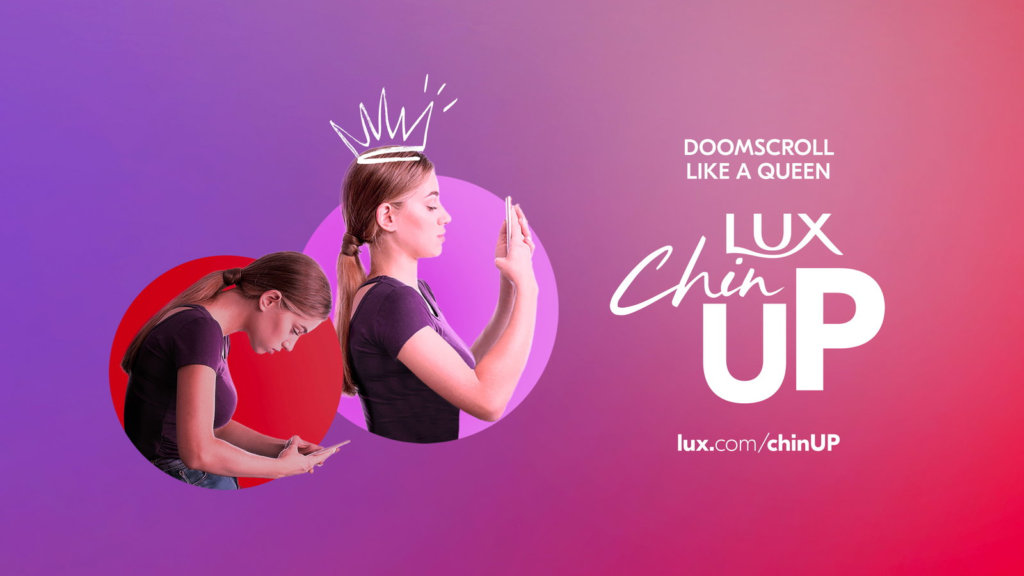
LUX has launched a digital tool aimed at tackling “text neck”, a posture issue caused by prolonged smartphone use that the beauty brand says can affect how women carry themselves. Called “LUX Chin up”, the free web-based tool uses a phone’s built-in motion sensors to detect when users tilt their devices below an optimal viewing angle. When that happens, the screen blinks as a prompt for users to raise their phones and straighten their posture. The initiative is based on the insight that extended periods of scrolling often lead to slouching, which can reduce posture, poise and physical presence over time. Don’t miss: LUX turns social ads into ‘algorithm cleansers’ in global campaign with VML  Developed by VML and WPP@Unilever, the tool is designed to work without requiring an app download or wearable device. Users can run the web page in split-screen mode, allowing it to remain visible as a small tab while they browse social media or other content. The tool encourages users to maintain their phone at a 90-degree angle. If the device dips below that threshold, the sensor detects the change and triggers a visual reminder. Once the user corrects their posture, they can continue using their phone as usual. “LUX always inspires women to boost their presence and own their beauty power,” said Gaurav Datta, global brand vice president at LUX. “Our phones are amazing for self-expression, but there’s a catch. While they elevate our digital selves, they often shrink our real-world presence. That constant downward scroll quietly chips away at posture, poise, and bold beauty. With ‘Chin up’, we’re offering a simple way for women to realign, lift up, and step back into their power,” he added. In tandem, Marco Versolato, chief creative officer at VML and WPP@Unilever said, “Poor posture quietly dims the bold beauty every woman carries. LUX will never let your beauty down, so we went after the habit, not the symptom.” “LUX Chin Up is a free, simple tool that runs alongside your life. It uses your phone’s own tech to correct the patterns that hold you back, ensuring you carry your main character energy on and off the screen,” he added. LUX said the initiative extends its positioning around confidence and self-expression, framing posture as part of a modern beauty routine. By encouraging women to adopt better posture habits, the brand aims to help restore what it describes as a more confident, “room-commanding” presence both online and offline. The launch follows another digitally led initiative from LUX aimed at helping women take greater control of their online experiences. Earlier this year, the brand teamed up with VML on “LUX my algorithm”, a global campaign that repositioned paid media as a tool to influence, rather than interrupt, social media feeds. Rolling out across China, India, Thailand, Brazil, Egypt, Indonesia and Vietnam, the campaign introduced what LUX called “algorithm cleansers” – ads designed to generate behavioural signals that could gradually diversify the content users see. According to the brand, the initiative was rooted in the idea that what people engage with shapes both what appears in their feeds and how they feel, extending LUX’s broader positioning around confidence, self-expression and intentional digital habits. Related articles:   LUX empowers women in China to take control of their identities  LUX reflects feminine strength with new social campaign  LUX taps on the nostalgic power of scent in new campaign  source

LUX wants women to hold their heads high, literally Read More »

New document reveals surprising truth of Black Death survivors

Alex Brown & Grace Owen, Durham University/ The Conversation In our research in the British Library’s medieval collections, we have identified a previously unnoticed document that provides fresh insights into the survivors of the outbreak of plague known as the Black Death (1346–53). The document – a scrap of parchment inserted into an account of the Ramsey Abbey manor of Warboys in Huntingdonshire – records how much time peasants were absent from work when struck down by the plague. It also reveals the names of those who survived and how long their employers believed recovery could take. In our recent paper with Barney Sloane, we shed new light on a group of 22 tenants who probably contracted plague, languished on their sickbeds for several weeks, and then recovered. As one of the deadliest pandemics in recorded history, it has been estimated that between a third and two-thirds of the population of medieval Europe died during the Black Death. Given the sheer scale, many historians have focused on discovering details about those who died. Yet this has left the histories of those who contracted plague and recovered largely untold. Despite the deadliness of the disease, it was possible to recover from plague, and medieval chroniclers mention the possibility – however unlikely – of survival. For example, Geoffrey le Baker, a clerk of Swinbrook in Oxfordshire, wrote in the following decade that he thought recovery depended on people’s symptoms: People who one day had been full of happiness, on the next were found dead. Some were tormented by boils which broke out suddenly in various parts of the body, and were so hard and dry that when they were lanced, hardly any liquid flowed out. Many of these people escaped by lancing the boils or by long suffering. Other victims had little black pustules scattered over the skin of the whole body. Of these people, very few, indeed hardly any, recovered life and health. But who recovered? Why did so many succumb to the disease when others survived? And just how long was this “long suffering”? Unfortunately, there is remarkably little documentary evidence because most medieval sources record information about mortality rather than ill health. Unique list of plague survivors A unique inclusion in the account of the manor of Warboys details a group of people who fell ill between the end of April and the start of August 1349. The monks of Ramsey Abbey wrote a list of their tenants who had fallen sufficiently sick that they could not work on the lord’s lands and detailed the length of time that they were absent. People were clearly affected differently by their experience of plague. The quickest recovery was that of Henry Broun, who missed just a single week of work. By contrast, John Derworth and Agnes Mold had much more protracted illnesses and were both absent for nine weeks. The average length of illness was between three and four weeks, with three-quarters of people returning to work in under a month. The speed of their recoveries is all the more surprising given that they were entitled to up to a year and a day of sick leave from work. This list of survivors includes a preponderance of tenants who occupied larger holdings on the manor. It has long been debated by historians and archaeologists whether the plague killed indiscriminately, with no regard to status, sex, or age, or whether the poor and elderly were more vulnerable. The survival of so many wealthier tenants could indicate that their higher living standards enabled them to recover more readily than their poorer neighbours, perhaps because they were able to stave off secondary infections and complications. We should not read any significance into the fact that 19 out of the 22 people were men: this reflects the gender bias of manorial landholding rather than any sex-selectivity of plague. Although 22 people may not seem like many, in a regular year during the 1340s, only two or three absences were recorded during the summer months. It, therefore, represents a tenfold increase in regular illnesses on the manor. Put another way, these sick tenants were absent for 91 weeks’ worth of labour services during just a 13-week period. Our understanding of the impact of the Black Death has been influenced by the appalling scale of death. Yet it is only when we add those who fell ill and recovered back into the picture that we can truly understand the seismic shock the pandemic had on society. The dead, dying, and sick must have considerably outnumbered the living in villages and cities across Europe. The consequences of this can be seen in medieval accounts and chronicles, one of which records that “there was so great a shortage of servants and labourers that there was no one who knew what needed to be done”. As a result of this combination of high mortality, unprecedented illness, and abysmal weather, the two harvests of 1349 and 1350 have been described as the worst experienced in medieval England, worse even than those that caused the great famine of 1315-17. This archival discovery allows us to write the history of sickness and recovery back into the Black Death, demonstrating that recovery was possible even during one of the worst pandemics in recorded history. This new evidence reveals the remarkable resilience of medieval peasants. Many of them lay languishing on their sickbeds, exhibiting buboes (the painful, swollen, and inflamed lymph nodes on the groin and neck that were typical of the Black Death), vomiting blood, and wracked by fevers, and not only survived but returned to work in just a few short weeks. Alex Brown, Associate Professor of Medieval History, Durham University and Grace Owen, Postdoctoral Research Associate (Late Medieval History), Durham University This article is republished from The Conversation under a Creative Commons license. Read the original article. source

New document reveals surprising truth of Black Death survivors Read More »

Singapore Navy reminds women they were never afraid to make waves

The Republic of Singapore Navy (RSN) has launched a new campaign aimed at positioning the Navy as an attainable and rewarding career choice for women. Titled “There was a time (When nothing was too crazy for her)”, the campaign was developed in partnership with McCann Singapore and targets female students across junior colleges, ITEs, polytechnics and universities. The campaign was created in response to research showing that 82% of young women rule out a Navy career because they feel it does not align with their perceived passions. Meanwhile, 58% believe a career in the Navy would be too physically demanding. Don’t miss: LUX wants women to hold their heads high, literally Rather than addressing these barriers directly, the campaign takes women back to a time before such self-imposed limits existed. It builds on the insight that young girls often begin life fearless, curious and unconstrained, willing to try anything before societal expectations begin shaping what they believe is or is not meant for them. Through this lens, the campaign seeks to remind women in Singapore that qualities such as strength, leadership and bravery are not traits they lack, but ones they may have stopped recognising in themselves. The campaign features out-of-home, social and direct mailer activations showing young girls in moments of uninhibited play, commanding the room, taking charge and deciding for themselves what is fun. These moments are intended to reflect the qualities that can support a successful career in the Navy. “There was a time (When nothing was too crazy for her)” is the latest chapter in McCann Singapore’s six-year partnership with RSN. It builds on the Navy’s recruitment platform “It’s not crazy, it’s the Navy“, which sought to challenge perceptions of Navy careers and defence marketing. This new campaign extends the platform to a female audience by shifting the focus from external perceptions of the Navy to the internal perceptions young women may hold about themselves. “We believe that the most effective recruitment work does not just showcase what’s on offer but shifts how people see themselves in relation to it. Guided by McCann’s “Truth well told” philosophy, this idea is powerful because it is rooted in a simple truth – that there is a version of every woman that existed before society placed limits on her ambitions,” said Daniel Kee, chief creative officer at McCann Singapore.  He added, “We wanted to reframe not only how women perceived the Navy, but the beliefs they hold about themselves. To do that, the work had to feel personal, rather than fact-driven.”  Kee said the campaign was shaped around the visual language of childhood memories, with a grainy and intimate feel reminiscent of old family photographs. The intention, he explained, was to connect with women at a point before societal limits and expectations were learned, and to encourage them to recognise the qualities they have always had. He also noted, “It is also worth noting that this campaign idea was developed by an all-female creative team, which could explain why it feels less like an advertisement and more like recognition.” The campaign follows other recent defence recruitment efforts in Singapore that have used more audience-specific storytelling to challenge perceptions of military careers. Last year, the Republic of Singapore Air Force (RSAF) launched “Find your squad. Find your #AboveAll”, a Gen Z-focused campaign built around an immersive, mission-based mobile film experience. The campaign moved away from conventional recruitment ads to spotlight teamwork and belonging, while reframing perceptions of the RSAF beyond pilots to highlight the wider range of roles that support the force. Related articles: Why CARiNG Pharmacy is making women’s health an everyday priority  How SAFI is helping young women paint their own futures this Raya    IWD podcast roundup: 5 women leaders to hear from source

Singapore Navy reminds women they were never afraid to make waves Read More »

Extra-wide tiny house makes full-time small living comfortable

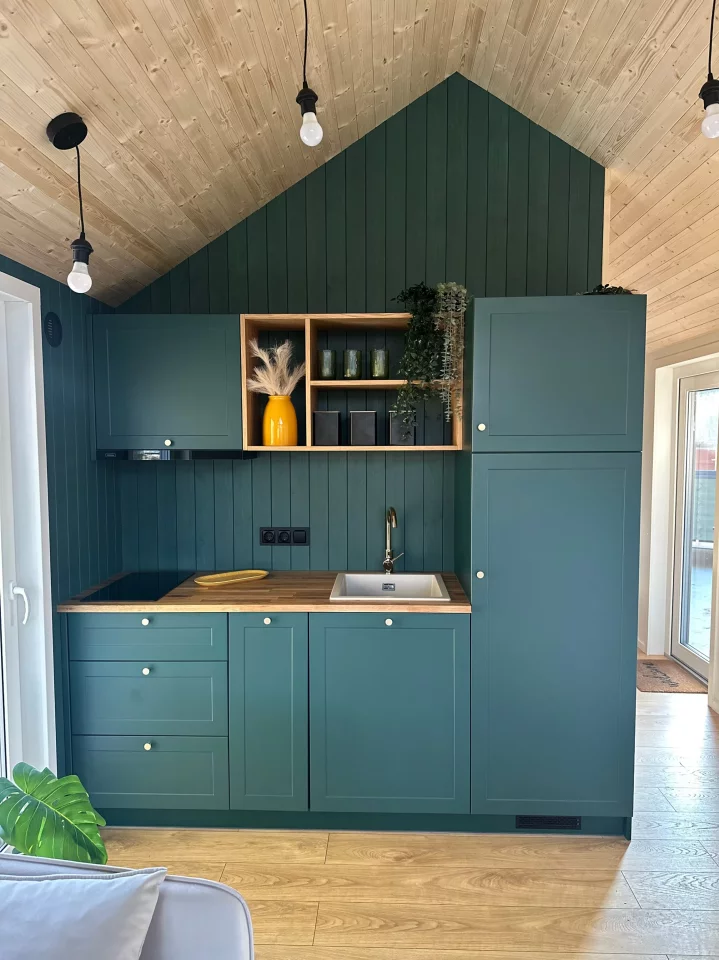
This extra-wide tiny house features a spacious interior specifically designed to make full-time small living comfortable. Arranged on a single floor, it would be a good fit for a couple or a family, and includes a generous living area and two bedrooms. The Sky is designed by Vagabond Haven and has a length of 11 m (36 ft), which is definitely on the larger side for a European tiny house, while its additional width of 3.45 m (11.3 ft) means it has a more apartment-like interior than most tiny houses. It’s based on a trailer, though its wheels are only rated for minor on-site movements and it must otherwise be transported by truck. The exterior is clad in an attractive combination of engineered wood and metal siding, and topped by a metal roof. The Sky tiny house’s kitchen contains an induction cooktop, a sink, a fridge/freezer, and cabinetryVagabond Haven The interior is finished in wood and features laminate flooring, generous glazing, and a high ceiling height of 3.05 m (10 ft), helping create an open and airy feel. The living room contains a large sofa and a coffee table, positioned opposite a wall-mounted TV. A dining table seats four. Like Vagabond Haven’s somewhat similar Smile model, the nearby kitchen is quite simple and is equipped with a sink, an induction cooktop, a small fridge/freezer, and cabinetry, plus there’s space to add more appliances. The bathroom is accessed from the kitchen via a door and contains a glass-enclosed shower, a sink, and a choice of flushing, composting, or incinerating toilet. It also has space for a washer/dryer to be fitted. As mentioned, there are two bedrooms in the Sky, both of which have ample headroom to stand upright thanks to the home’s single-floor layout. The master bedroom includes a king-sized bed, a couple of bedside tables, and a wardrobe. It also has its own glass door providing direct access to the outside. The second bedroom is the smaller of the two and can fit either a single bed or bunk beds, plus a desk and chair, allowing it to double as a guest room or office. It also has a little more storage space. The Sky tiny house features a spacious living room with a high ceiling and generous glazingVagabond Haven There are lots of optional upgrades available for the Sky, including a full off-grid setup with solar panels, batteries, and rainwater capture. The tiny house starts at roughly €60,000 (US$71,000). We’ve no word on delivery, so those interested are advised to contact the firm directly. Source: Vagabond Haven source

Extra-wide tiny house makes full-time small living comfortable Read More »

Do heights make your feet buzz? An expert explains why

Michelle Spear, University of Bristol, The ConversationI wouldn’t say that I’m afraid of heights. I can stand on a cliff path or look out from a tall building without the rush of panic people often associate with vertigo. What I really dislike is something much harder to explain: the peculiar feeling in my feet. It’s a sensation that’s difficult to describe. It isn’t numbness, it isn’t tingling either. The closest I can come is a strange awareness in the soles of my feet – a kind of buzzing. For a long time I assumed this was just an odd personal quirk. But many people report something similar when standing near a drop. Around one-quarter of people describe some level of discomfort at height, and in experimental settings most participants show measurable changes in balance and posture when exposed to a drop. Far from being irrational, it reflects a remarkably elegant piece of neurological engineering. At height, the nervous system shifts balance control. Sensory input from the feet is “upregulated” (dialled up), postural muscles (muscles that help you stay upright, balanced and stable) stiffen slightly, and movements become more cautious. This is part of normal proprioception – the body’s internal sense of where it is in space. Unlike vision, which tells you where things are around you, proprioception tells you where you are. Near a drop, the brain begins to rely more heavily on signals from the feet, effectively turning up their volume. Small shifts in pressure and sway are amplified, and control of movement becomes tighter and more deliberate. This is quite different from vertigo. Vertigo arises from disturbances in the inner ear or its connections, creating a false sensation of movement, often described as spinning. The feeling at height is not that the world is moving, but that the body is being held more carefully in place. What’s striking is that this response is not unique to those who notice it. The nervous system makes these adjustments in almost everyone. For most, it remains in the background. For others, it rises into awareness as a peculiar sensation. Why the feet? As the body’s primary point of contact with the ground the feet are one of its richest sources of sensory information. The soles contain a dense population of specialised receptors, including Merkel cells, Meissner corpuscles and Pacinian corpuscles, each tuned to different aspects of pressure, stretch and movement. Merkel cells respond to sustained pressure, giving a continuous readout of how weight is distributed across the foot – whether you are leaning slightly forward, back, or to one side. Meissner corpuscles are more sensitive to light touch and subtle changes, detecting the small shifts that occur as the body sways. Pacinian corpuscles, deeper in the tissue, are exquisitely sensitive to vibration and rapid changes in pressure, allowing the nervous system to detect even the smallest disturbances in contact with the ground. Under ordinary conditions, these receptors work quietly in the background, allowing you to stand, walk and shift your weight without conscious thought. But near an edge with a drop, their importance is suddenly elevated. The margin for error narrows. Small changes in pressure – the subtle sway of the body, the shifting of weight from heel to forefoot – carry greater consequence. The nervous system responds by increasing the gain on these signals. In effect, it listens more closely to the feet. That heightened input does not feel the same for everyone. Some people describe a buzzing or tingling in the soles. Others report a sense of heaviness, as though their feet are being drawn more firmly into the ground. Some feel an urge to grip with their toes, or to widen their stance. Others notice a faint unsteadiness, a need to hold still, or a curious reluctance to move forward. Why is it that some people experience this so vividly, while others are unaware? Part of the answer lies in how we process sensory information. The signals from the feet are being generated in almost everyone standing near an edge, but not all of them reach conscious awareness. The brain continuously filters incoming information, prioritising what seems most relevant. In some people, that filter is more permissive. Subtle changes in pressure, sway and muscle activity are allowed through, registering as a distinct sensation in the soles. In others, the same information is handled automatically, without ever rising to conscious notice. Attention plays a role too. Once a sensation has been noticed, the brain becomes more likely to detect it again. There are also differences in sensory sensitivity. Some people are simply better at detecting fine changes in touch and position – a heightened form of proprioception. For them, the shift in balance control near an edge may feel more pronounced. Context matters as well. Fatigue, stress, or unfamiliar surroundings can all make the system more noticeable. What this means is that the sensation itself is not unusual. What varies is the degree to which it is perceived. The same neurological adjustment is taking place either way – quietly in the background for some, and vividly, almost curiously, present for others. Michelle Spear, Professor of Anatomy, University of Bristol This article is republished from The Conversation under a Creative Commons license. Read the original article. source

Do heights make your feet buzz? An expert explains why Read More »

HGC環電年度夥伴日匯聚約200名業界精英

HGC 環球全域電訊(「HGC 環電」或「集團」),香港及國際電訊營辦商及全方位資訊及通訊技術(ICT)方案供應商,昨日舉辦第四屆年度夥伴日,匯聚來自全球不同 ICT 領域、超過 80 間公司業界領袖、行業協會及政府代表等,約 200 名嘉賓齊聚一堂。 是次活動以「探索數碼尖端,推動共贏未來」為主題,凸顯集團日益堅實的合作夥伴聯盟,以及其作為人工智能(AI)賦能者及服務驅動型企業的定位,透過自有數字基礎設施,協助個人、企業及國際商務合作夥伴以具規模的方式部署 AI 等新興科技應用。 實現 AI 抱負,連繫現實:AI 賦能者為企業客戶實現落地方案 在瞬息萬變的 AI 格局中,HGC 環電正鞏固其作為 AI 賦能者及服務驅動型企業的定位,專注於將企業對 AI 的抱負,轉化為安全、可擴展及可實際營運的成果。 作為 AI 賦能者,HGC 環電提供令企業具信心作部署及營運 AI 所需的關鍵基礎,當中包括支援 AI工作負載的 AI 就緒基礎設施,以及連接數據中心和雲端環境的高速、低延遲連線;用以提升網絡管理及服務交付的智能營運平台,例如獲獎的自主研發「GodEye 智能平台」;及涵蓋由測試、推出、監控到優化的端到端 AI 生命週期支援。同樣關鍵的是,HGC 環電將 AI 治理與安全融入其中,確保 AI 解決方案保持合規、具備韌性並可全面掌控。憑藉服務骨幹的核心定位,HGC 環電讓客戶及合作夥伴能專注於創造價值和創新。 這些核心能力建基於 HGC 環電作為服務驅動型企業的定位,其透過一站式服務模式、專業知識和問責制創造價值,而非一次性的服務交付。HGC 環電全面負責解決方案的服務流程,協助客戶妥善管理從方案設計、部署落地,以至 24/7 監察服務及持續支援,確保解決方案長期穩定運作。透過結合專業人才的深厚經驗與 AI 驅動智能技術,HGC 環電為企業客戶建立長期、以訂閱模式為合作夥伴關係,確保企業級 AI 系統在安全、可靠及未來應用準備方面持續保持領先。 多個市場領域表現強勁 反映成功策略 作為提供整合服務的 AI 賦能者,其帶來的實際影響已反映於不同市場領域的表現上。 HGC 環電行政總裁郭詠邦 Andrew 總結道:「在 HGC 環電,我們將繼續把握由環境變化所創造出的每一個機遇,但不隨波逐流,而是堅守我們的核心優勢,同時與市場同步,變革我們的業務模式。邁向 AI 賦能者及服務驅動型企業,只是 HGC 環電轉型旅程的起點。展望未來,HGC 環電將保持靈活、務實和極強的適應力,為 AI 新興技術應用鋪設『高速通道』,讓合作夥伴能專注於創造價值。我深信,透過攜手合作,我們可把 AI 時代的不確定性轉化為這世代的關鍵機遇。」 LinkedIn Email Facebook Twitter WhatsApp The post HGC環電年度夥伴日匯聚約200名業界精英 appeared first on VeriMedia. source

HGC環電年度夥伴日匯聚約200名業界精英 Read More »

Radically rethought hydration pack is a 'masterpiece of minimalism'

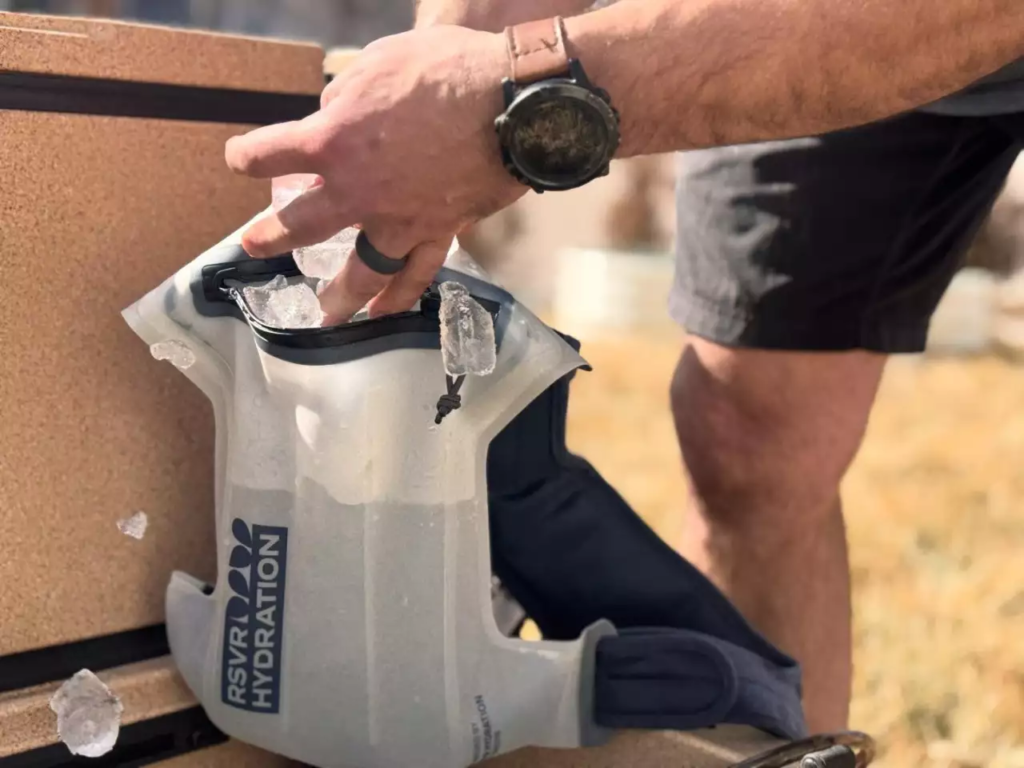
According to the folks at Colorado-based RSVR Hydration, traditional hydration packs are basically backpacks with bags of water in them. The company’s new pack is claimed to be different, however, in that it’s made to be sleek and light. Currently the subject of a Kickstarter campaign, the RSVR Hydration pack is quite a simple – yet clever – setup. The water is stored in the user’s choice of a 1.8- or 2.8-liter bladder that is contoured to fit flat against their back. Multiple baffles within the bladder help keep the liquid from sloshing around excessively, while a wide waterproof zipper across the top makes for easy filling, cleaning, and adding of electrolytes. The wide zipper allows easy access to the bladderRSVR Hydration And importantly, the bladder does not sit within a separate backpack. It’s hooked up directly to either a minimalist chest harness, or to a front vest/harness with six pockets that can be used to carry snacks, tools, and various other bits and bobs. Users may choose between the two, depending on how epic of an outing they’re planning. Users can choose between a simple harness and a six-pocketed vest (pictured)RSVR Hydration It should be noted that the underside of the bladder (which is in contact with the user’s back) is coated with soft-touch fabric, plus an optional mesh back panel can be added for extra breathability. The designers additionally point out that because the bladder is translucent, it allows users to see how much water they have left … although in actuality, they’d have to take the bladder off to do so, or get someone else to look for them. Backers can choose between 1.8- and 2.8-liter bladders – or they can get bothRSVR Hydration Another touted selling feature is the aerodynamic routing of the drinking hose under the arm instead of over the shoulder, but it’s hard to say how much of a difference this might actually make under real-world conditions. RSVR is presently offering various combinations via its Kickstarter, with pledges ranging from US$85 for a combo that includes a 1.8L bladder and a harness (planned retail $120), up to $185 for a package including both sizes of bladders along with both a simple harness and a vest (retail $265). Assuming everything works out, shipping should commence in August. RSVR Hydration: Athlete driven hydration system Sources: Kickstarter, RSVR Hydration Note: New Atlas may earn commission from purchases made via links. source

Radically rethought hydration pack is a 'masterpiece of minimalism' Read More »

Blind boxes are a Gen Z hit, but what about older consumers?

Blind boxes have moved firmly into mainstream consumer behaviour across Malaysia and Singapore, with 55% of Singaporeans and 59% of Malaysians reporting they have purchased one before, according to new research from GrowthOps Asia. Adoption is strongest among younger consumers, with 85% of Gen Z in Singapore and 73% in Malaysia having bought a blind box, while participation drops sharply among older cohorts who are far more likely to reject the mechanic outright. The findings come from a nationally representative survey of 1,352 consumers across Malaysia and Singapore, conducted in Q1 2026 with research platform Ideally and published in GrowthOps Asia’s whitepaper “Blind boxes: A polarising growth strategy”. The data shows the format has clearly moved beyond novelty into mainstream retail behaviour, but its commercial impact is far from evenly distributed. Among consumers who have previously purchased blind boxes, the commercial upside is significant. These buyers are approximately 2.2 times more likely in Singapore and 2.5 times more likely in Malaysia to shop with a brand that offers one, while also demonstrating materially higher spend on collectibles compared to non-buyers. Don’t miss: SG looks to regulate blind boxes sales, but maybe brands should learn to self-regulate instead At the highest engagement level, regular buyers show around 1.8 times higher price elasticity in Singapore and 2.3 times higher in Malaysia, suggesting the format can meaningfully shift willingness to spend when deployed to the right audience. That effect, however, is highly conditional. The report finds blind boxes function less as a broad-based retail tactic and more as a targeted behavioural trigger, with value concentrated among younger consumers already attuned to collectability, fandom, surprise and socially shareable consumption. For this group, the format also aligns with the “lipstick effect”, where smaller emotionally rewarding purchases persist even as larger discretionary spending tightens, making blind boxes an accessible form of affordable indulgence. However, the same mechanism that drives engagement also fuels rejection elsewhere. Among non-buyers – particularly Gen X and Baby Boomers – responses frame blind boxes as luck-based, wasteful, poor value and in some cases exploitative. Several respondents explicitly likened them to gambling, a framing that is increasingly sensitive in both markets and especially relevant in Singapore’s regulatory context. The implication for marketers is not that blind boxes are ineffective, but that they are highly segmented in impact. Performance depends on precise audience targeting, category fit and a clear commercial purpose beyond trend adoption. When aligned correctly, they can deepen engagement and increase spend. When applied broadly, they risk creating distrust among sceptical audiences while running ahead of emerging regulatory expectations. “Blind boxes are not a shortcut to relevance. They work when the audience, product, and brand experience all make sense together. For the right segment, they can create excitement, repeat purchase, and stronger brand pull. Used without discipline, they risk becoming another overextended retail trope,” said Chris Greenough, general manager of GrowthOps Asia. “In a market such as Singapore, that risk has a regulatory dimension that brands cannot ignore,” he added.  That tension is already moving into policy territory. In February 2026, Home Affairs Minister K. Shanmugam confirmed in Parliament that blind boxes would be regulated, with the Ministry of Home Affairs and the Gambling Regulatory Authority actively drafting a framework governing how such products are sold, including collectible trading card formats. The development introduces a compliance layer for brands already operating in or considering the space. Industry professionals previously told MARKETING-INTERACTIVE that while blind boxes are driving strong engagement through “mystery marketing”, the same mechanics that make them effective – chance, scarcity and surprise – also require careful calibration. “Unboxing is content, and content is currency. What used to be a retail transaction is now a social performance,” said Lesley John, CEO of Virtue Asia, who added that consumers are “buying into a moment of anticipation, a community ritual, and a story that can be shared”. Others pointed to a sharper strategic line between engagement and overreach. One industry view noted that “scarcity without story feels manipulative. Scarcity with meaning feels magical”, while cautioning that brands “can chase the buzz, but they can’t gamble with trust”. Related articles:  Loyalty marketing gets cute with plushie strategy   MY LITTLE PONY trots into blind box plushie trend CHAGEE’s new Bes-tea plushies are here to spill the cute in MY, SG, TH   source

Blind boxes are a Gen Z hit, but what about older consumers? Read More »

Plants may literally hear the sound of approaching rain, study finds

Stuart Thompson, University of Westminster, The Conversation Researchers at MIT have suggested that rice seeds can hear the sound of rain, according to a new study. MIT calls it “the first direct evidence that plant seeds and seedlings can sense sounds in nature”. Perhaps surprisingly, the effects reported in this new study are not as radical as they may appear. Playing music to your plants may sound eccentric, but a few previous studies have found it has some effect. For example, a 2024 study found bok choi grew better to classical music but less well to rock and roll. Nor is this an isolated phenomenon. Sound can have a range of effects on plant behaviour. For example, some flowers use the pitch of an insect’s buzz to determine whether they will release their pollen. Both Arabidopsis (thale cress) and tobacco plants produce higher levels of toxins, such as nicotine, in response to the sound of caterpillars chewing on neighbouring plants. There have also been reports that notes from a synthesiser can increase seed germination and seedling growth in mung beans, cucumber, and rice. In contrast to previous experiments using electronic tones from a speaker, the MIT researchers instead tested the effect of a natural sound upon rice germination: the fall of rain. Rice can grow in soil or under water, and the researchers started by measuring the sound made by raindrops falling onto shallow puddles similar to the paddies they sowed seed in. The volume of sound waves created by drops landing on water was incredibly loud, equivalent to someone shouting straight into your ear, but mostly at frequencies too low or too high for a human to hear. They then poured simulated rain on some of the pools containing rice and compared their rate of sprouting with seeds in still water. They found that although water droplets imitating light rain had little effect, heavier rain increased germination, and the heaviest by more than 30%. They also picked up on an important clue from a previous study about how the rice might be detecting the sound. A 2002 study found that mutant Arabidopsis plants, which can’t make starch, didn’t respond to vibration in the same way that normal Arabidopsis do. Sound waves are just vibrating energy traveling through a gas, liquid, or solid that makes objects, such as the eardrum membranes we use to hear, shake as they pass. Sound is one way we detect vibrations. The MIT researchers theorised that perhaps plants needed to be able to make starch to detect sound. This drew their attention to structures called statoliths, from the Greek for “standing stone”. Plant cells that can detect gravity each contain several statoliths filled with highly dense starch, which sink through the cell. As they fall, the statoliths brush against other structures in the cell and come to rest pressing on its bottom, telling the plant which way is down. To test their theory, the researchers modelled the effect of the recorded sound upon statoliths in the rice seeds. They found that the rain sounds could make the statoliths bounce up from the bottom of the cell like beads on a drum. Light rain would have little effect, but as the rain sound got heavier, the statoliths jumped higher and faster, matching the stimulation of germination. It also seemed that the layer of statoliths at the bottom of the cell would behave almost like a liquid, similar to the balls in a children’s ball pit, and that the sound energy would stir this “liquid” and help spread chemical messages to the rest of the plant. The mutant Arabidopsis from the previous study probably couldn’t sense vibrations because they can’t make the starch that their statoliths need to work. This suggests that statoliths may be one way that plants “hear”. Although there is now little doubt among scientists that plants can detect and respond to sounds, is this really hearing or is a mind needed to perceive the signal? Plants don’t have a nervous system and a centralised brain like humans and most other animals. There has, however, been a lively debate amongst scientists about whether plants demonstrate some type of intelligence or not. Observations of plant behaviour that appear intelligent include a 2017 study in which pea roots seemed to follow the sound of water through a simple maze, and 2016 research that claimed pea shoots learned that they would find light if they followed the direction of wind from a fan. Scientists have observed electrical signals in plants of a similar type to those in our nerves, even if they are not carried by specialised structures like our nervous system. In many cases, we don’t know what they do, but this may be because plants often respond in ways that aren’t obvious to us. For example, electrical signals are used to trigger Venus flytraps to close and then crush their prey. They are also used in Mimosa pudica (also known as shyplants), which rapidly close their leaves when touched. Perhaps a more delocalised type of intelligence is possible. And there may be other factors at play. Hearing may require an organism that is conscious to sound. There are many definitions of consciousness. But mother and daughter scientists Lynn Margulis and Dorian Sagan have argued that, at its most fundamental, consciousness is simply an awareness of the world outside the organism. If so, this is surely something that all species must possess if they are to respond to their environment and survive, even if it varies in complexity and nature. Maybe the world of a rice seedling is too different from ours for us to understand, but it may not be too much of a stretch to say that they hear the sound of rain. Stuart Thompson, Senior Lecturer in Plant Biochemistry, University of Westminster This article is republished from The Conversation under a Creative Commons license. Read the original article. source

Plants may literally hear the sound of approaching rain, study finds Read More »

12-in-1 ratchet screwdriver fits in your pocket for anytime DIY fixes

Screwdriver sets with multiple bits are a dime a dozen, but if you’re working on smaller projects or struggling with screws in tight corners, a ratchet screwdriver is a better bet. And that’s where the A06 looks like the right tool for the job. Developed by Hong Kong-based ApexDrive, this is a compact set of 12 bits that fit into a two-port ratchet head, which delivers up to 44 lb.ft (60 Nm) of torque. They all slot into a modular magnetic case designed to hold each piece securely so they don’t rattle around noisily. The ratchet comes with four magnetic handle segments that snap together and can attach to any of the ratchet head’s four sides, so you can tackle screws in hard-to-reach spots from various angles. That means you can combine them into a long handle, a short one, or a T depending on the best way to tackle the screw. A06:The 18-in-1 Ratchet That Lives in Your Palm The head’s simple design allows you to magnetically slot a bit into one port of the head to tighten screws, and flip it over to loosen them. Slot a bit into one of the head’s ports to tighten a screw, and into the other to loosen itApexDrive The bits are made from high-strength Chrome Vanadium Steel that resists corrosion, and they should cover everything from furniture assembly to car repairs to opening up your laptop for upgrades. The CRV bits promise high hardness and strength, and won’t deform with extended useApexDrive The compact box is made from ABS plastic, with a soft molded inner holder to keep the bits, ratchet head, and handle segments in place. The entire package is designed to easily slip into a pocket, and weighs just over half a pound (246 g) in total. The case is small enough to easily slide into pockets, and the entire package weigh just over half a poundApexDrive ApexDrive is crowdfunding the A06 on Kickstarter, where it’s calling this an 18-in-1 set that counts the handle segments and two-sided ratchet head; I’m going with ’12-in-1′ because that’s how many bits come in the box. The A06 includes a range of bits to handle DIY projects big and small – from furniture and bikes to computersApexDrive In any case, it’s set to retail at US$90, but you can snag one for as little as $26 via the A06 campaign page. Shipping varies by delivery location and the number of sets you order; a single unit will add about $10-$15 to your bill. All crowdfunding campaigns carry an element of risk, so you’ll want to keep that in mind if you choose to back this campaign. For what it’s worth, ApexDrive has previously launched and shipped a screwdriver kit on Kickstarter last year, and has already covered its pledge goal for this one. If all goes to plan, orders are slated to ship worldwide from August, and delivery costs will be calculated once the campaign ends. Source: Kickstarter Note: New Atlas may earn commission from purchases made via links. source

12-in-1 ratchet screwdriver fits in your pocket for anytime DIY fixes Read More »