Gen Z perspectives: The great millennial vs Gen Z marketing debate

Happy Friday, MARKETING-INTERACTIVE readers and welcome back to Gen Z Perspectives, your go-to feature where we unpack the week’s top stories and trending topics through the eyes of Gen Z. From the biggest industry moves to viral moments and marketing controversies worth dissecting, we’re bringing the heat with authenticity, awareness and probably a few unfiltered takes. This week, Great Eastern saw its head of group corp comms exit, KFC made a fresh digital hire, and we unpacked the millennial versus Gen Z debate taking over the internet. Safe to say, this week ate. Don’t miss: Gen Z Perspectives: Lazada CMO exits and The Devil Wears Prada 2 1. Great Eastern head of group corp comms and CSR exits Great Eastern Holdings’ head of group corporate communications and corporate social responsibility Pamela Pung (pictured above) has stepped down from her role after about a year in the position. Speaking to MARKETING-INTERACTIVE, Pung said the decision came after a period of reflection and marked the start of a new chapter following a 30-year career spanning corporate communications, public affairs and strategic leadership roles across multinational organisations. Read more here.  2. KFC South Asia picks McDonald’s regional marketing and digital lead for newly created role KFC has appointed Tuck Wai Yue (pictured) as its head of eCommerce, loyalty and digital for South Asia. In this newly created role, Tuck will support KFC’s fast-growing markets in Southeast Asia and build on the progress made by the brand’s teams in the region. He will focus on digital, CRM and loyalty, which he described as key business accelerators for KFC, while continuing to drive fan excitement for the brand. Read more here.  3. If Gen Z isn’t reading all that copy, how are brands persuading them? For years, brands have been told to meet consumers where they are. Now, that increasingly means meeting them in lowercase, with fewer words, more emojis and just enough context to say, “If you know, you know” The recent “Millennial vs Gen Z” copy trend has pushed that tension into the spotlight, with brands rewriting their marketing messages for two generations with very different online instincts. But beneath the humour lies a serious challenge for marketers: how do brands sound culturally relevant without losing the message they are trying to sell? Read more here.  Related articles: Sorry millennials, Gen Z isn’t reading all that copy   DBS Foundation’s Karen Ngui says ageing isn’t the problem, outdated perceptions are  In conversation: Singapore’s arts scene wants your attention  source

Gen Z perspectives: The great millennial vs Gen Z marketing debate Read More »

JWST discovers a galaxy that doesn’t spin in the early Universe

Observations of a far-distant galaxy several times the size of the Milky Way reveal a surprising stillness overcoming the sea of early stars. Using spectral data collected by the James Webb Space Telescope (JWST), an international team led by scientists at the University of California, Davis, measured the relative movement and distribution of matter in three distant galaxies as they appeared roughly 1.8 billion years after the Big Bang. One clearly rotated as expected. Another was described as “kind of messy”. It was the third that really caught the astronomers’ attention. Spotted as part of a previous survey, the galaxy XMM-VID1-2075 was earmarked for its immense size and the fact that it was no longer producing new stars. It was also surprisingly devoid of spin. XMM-VID1-2075 (left panel), shows minimal difference in color, suggesting little to no rotationForrest et al/Nature Astronomy While it’s not unusual to find nearby behemoths brought to a halt by eons of collisions, the Universe was barely 2 billion years old at the time XMM-VID1-2075 was observed, raising questions regarding the forces that may have robbed it of its rotation. “This type of work has been done a lot with nearby galaxies because they’re closer and larger, and so you can do these kinds of studies from the ground, but it’s very difficult to do with high redshift galaxies because they appear a lot smaller in the sky,” says study lead author Ben Forrest. Newborn galaxies typically begin to rotate as material in their expansive cloud of dust and gas falls inward, transferring angular momentum as it whips around a dense core. Through the eons, a succession of collisions and mergers with other galaxies can send stars flying in random directions, potentially slamming the brakes on this cosmic whirlpool. Time is a critical factor, though. While plenty of battle-scarred slow-rotators have been seen sitting relatively close by, astronomers never expected to stumble upon anything like it so far away. “There are some simulations that predict that there will be a very small number of these non-rotating galaxies very early in the Universe, but they expect them to be quite rare,” says Forrest. One possibility is a chance impact with a counter-spinning neighbor. With each galaxy swirling in opposite directions, any rotation would be cancelled out. It’s an explanation supported by the distribution of light in XMM-VID1-2075, too. “For this particular galaxy, we see a large excess of light off to the side,” says Forrest. “And so that’s suggestive of some other object which has come in and is interacting with the system and potentially changing its dynamics.” It’s yet another way the JWST is challenging our understanding of the early Universe, from galaxies that are “impossibly massive” to those that are “impossibly mature”. As our catalogue of ancient objects continues to grow, models describing our cosmic origins will be fine-tuned in ways that will almost certainly make your head spin. This research was published in Nature Astronomy. Source: University of California, Davis Fact-checked by Bronwyn Thompson source

JWST discovers a galaxy that doesn’t spin in the early Universe Read More »

Heated PLA robo-octopus gripper goes limp to grapple, hard to lift

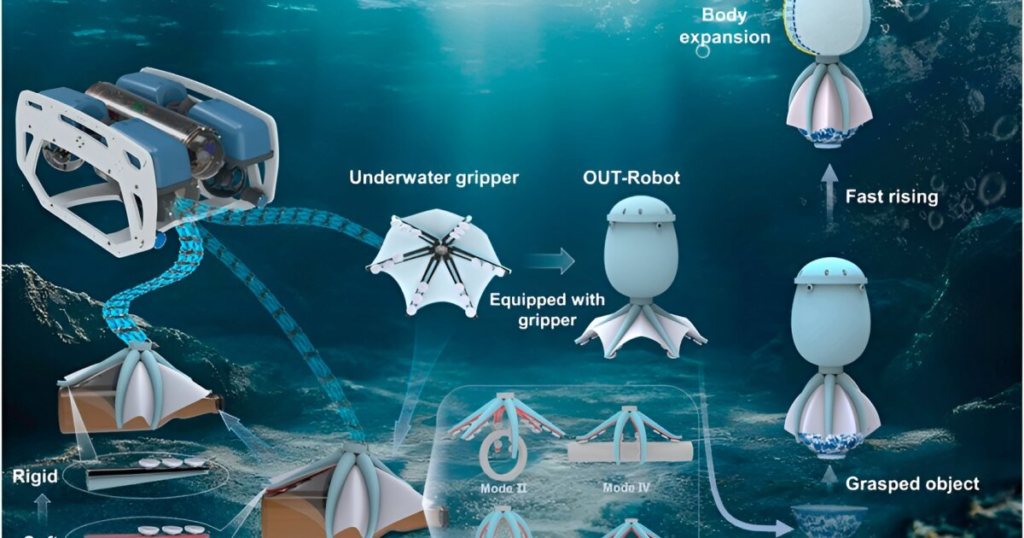
Countless industrial tools and robots need to grip things, and because we humans learn to grip since infancy, we can easily underestimate how complex gripping actually is. If our grip is too rigid, we can snap or shatter our payload; if our grip is too soft, our payload may slip from our fingers or exceed lift capacity. Human hands have advantages: rigid bones covered in pliable skin and muscles. So, what’s a poor mechanism to do when it simply wants to lift? The solution is biomimicry. Various engineers seeking superior grip performance have employed biomimicry in their designs, which have been inspired by seed pods, elephant trunks, lobster tails (in fact, using actual lobster tails), and, of course, octopus limbs. In theirCyborg and Bionic Systems paper, researchers from Peking University in Beijing, National University of Singapore, Zhejiang University, and the Beijing Institute of Technology describe how their Octopus-Inspired Upward Transport Robot (OUT-Robot) outperforms previous gripping systems. The OUT-Robot’s advantage is its unprecedented ability to shift swiftly to its pliable state (in 1.3 seconds) and into its rigid state (0.8 seconds). Deploying six arms featuring this rapidly tunable stiffness, the OUT-Robot mimics the multimodal grasping strategy of cephalopods, allowing it to sort through and grip objects of varying shapes, pliability, and weight. Made from a shape memory polymer (SMP) of polylactic acid (the same PLA plastic used in many 3D printers), the arms soften during application of voltage, and become inflexible once electrical heating ceases. The quick tuning from flexible to rigid is possible because of the OUT-Robot’s thermal interface of three layers which synergizes the robot’s shape and materials with the watery environment for fast cooling. According to Professor Xie Guangming at Peking University, the leader of the international research team, typical SMP grippers require tens of seconds for air-cooling, a massive underperformance compared with the operation of the OUT-Robot. “The inner silicone layer diffuses heat uniformly, the outer layer acts as a transient barrier during heating, and the surrounding water becomes an active heat sink during cooling,” says Xie. “Our stiffness transition time is substantially faster than [that of] any previously reported actuator.” Like real octopuses, the OUT-Robot can maneuver through its liquid environment by shooting jets of water, and also by using its tentacles to crawl at up to 70 cm (27.6 inches) in 55 seconds. When those tentacles are pliable – and each one can function independently using a different grasping mode – they can use suction or gripping along irregular surfaces, using positive pressure to drive the arms before rigidity locks the hold without any added energy. As Xie says, “This zero-energy shape-locking is a game-changer for long-duration underwater missions.” His team’s experiments back his bold claim: an SMP tentacle is approximately 25 times more rigid than a non-SMP arm, allowing the OUT-Robot’s six arms to exceed 4 Newtons (more than 400 g, or 0.88 lb). In a pool 2 m (6.6 ft) deep, the OUT-Robot alternated pliability to sort among debris at the bottom (including rocks, bottles, scallops, and sea cucumbers) and remove a light fishing net less weighing less than a gram, collect fragile biological samples, and lift a glass bottle. “Our robot,” says Xie, “can handle objects from extremely light debris to heavy solid waste over 500 grams, all in one continuous operation.” Once the OUT-Robot has firmly grasped its cargo, it employs active buoyancy control by inflating its soft-shelled “head” like a balloon, allowing zero-fuel vertical lift that massively reduces energy consumption compared with previous systems that use power continuously. “The grasping phase consumes about 75 joules for 1.3 seconds,” says Xie, “while the subsequent ascent uses almost zero energy.” According to Xie, the OUT-Robot – perhaps operating in swarms – offers numerous applications for oceanic protection, restoration, and recovery, as well as resource exploitation. “We are providing a robust, efficient, and quiet solution to protect our oceans,” says Xie, “one grasp at a time.” Source: Beijing Institute of Technology Press Co. Ltd. via EurekAlert source

Heated PLA robo-octopus gripper goes limp to grapple, hard to lift Read More »

Samsung denies using Dua Lipa’s image on TV packaging amid US$15m lawsuit

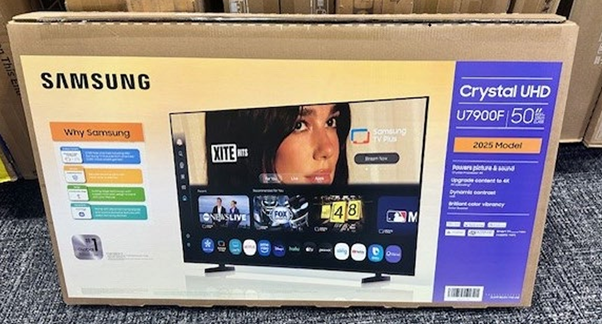
Samsung has denied allegations of unauthorised use of Dua Lipa’s image on its television packaging, following a lawsuit filed by the singer in the United States. In a statement reported by The Straits Times, Samsung said that the claim that the artiste’s image was used without authorisation is not true. The company added that it had confirmed the right to use the image through a content-providing partner before use. Additionally, the company rejected the claim that it refused to stop using the image after being asked to do so. It added that it had halted box production and replaced packaging after concerns were raised. While Samsung has not provided a public response, it reportedly had continued talks with Lipa and her team to resolve the matter amicably. MARKETING-INTERACTIVE has reached out to Samsung for a statement. Don’t miss: Dua Lipa brews Nespresso’s next era as global brand ambassador Last week, the British pop star filed a US$15 million lawsuit against Samsung Electronics, alleging the company used her image without authorisation, consent or compensation in a way that implied endorsement of its products. The complaint, filed on 8 May in the US District Court for the Central District of California, centres on a backstage photograph of Lipa taken at the 2024 Austin City Limits Festival. According to the filing seen by MARKETING-INTERACTIVE, the image was used on the front of Samsung television packaging as part of a mass-market retail campaign, which Lipa’s team argues created a false impression that she was affiliated with or endorsing the product. The filing further alleges that Samsung “exploited Ms. Lipa’s carefully curated and extremely valuable brand identity to sell televisions without authorisation,” despite there being no partnership or endorsement agreement between both parties. It states that Lipa “has developed substantial commercial value in her name, image, and likeness,” which she has monetised through brand sponsorships and endorsements, and argues that Samsung improperly capitalised on that value for commercial gain. The filing also claims Samsung’s actions amounted to “willful copyright and trademark infringement, and a violation of Ms. Lipa’s right of publicity,” intended to benefit from what the filing describes as an implied association with the artist. It further alleges that Samsung ignored repeated “demand[s] that it cease and desist from infringing on her rights,” and continued distributing the packaging despite being notified of the issue. The complaint also cites social media posts referenced in the filing, where users suggested the image influenced purchasing decisions, including comments such as “I wasn’t even planning on buying a TV but I saw the box so I decided to get it,” and “I’d get that TV just because Dua is on it.” The lawsuit comes amid a growing wave of legal action over the use of celebrity likenesses in commercial campaigns. In December last year, the estate of late country singer Johnny Cash sued Coca-Cola, alleging the beverage giant used a Cash impersonator and replicated his voice in a campaign without permission or compensation. The campaign itself is the third iteration of Coca‑Cola’s fall sports push, which celebrates college football’s “Best fans ever” and features several of Coca‑Cola’s partner schools. The estate described it as an unauthorised exploitation of his identity and artistic legacy. “Stealing the voice of an artist is theft. It is theft of his integrity, identity and humanity,” said the estate. “Coca-Cola selected the sound-alike singer to sing the vocal track for the specific purpose of ensuring that the infringing ad sounded as close as possible to the voice.” Related articles: Nike sues HK star Edison Chen over alleged breach of contract Actors’ union sues Fortnite over AI use of Darth Vader Dua Lipa writes, co-directs and stars in wildly imaginative new Porsche ad source

Samsung denies using Dua Lipa’s image on TV packaging amid US$15m lawsuit Read More »

Update: Presbyond surgery gave my eyes two different focal points

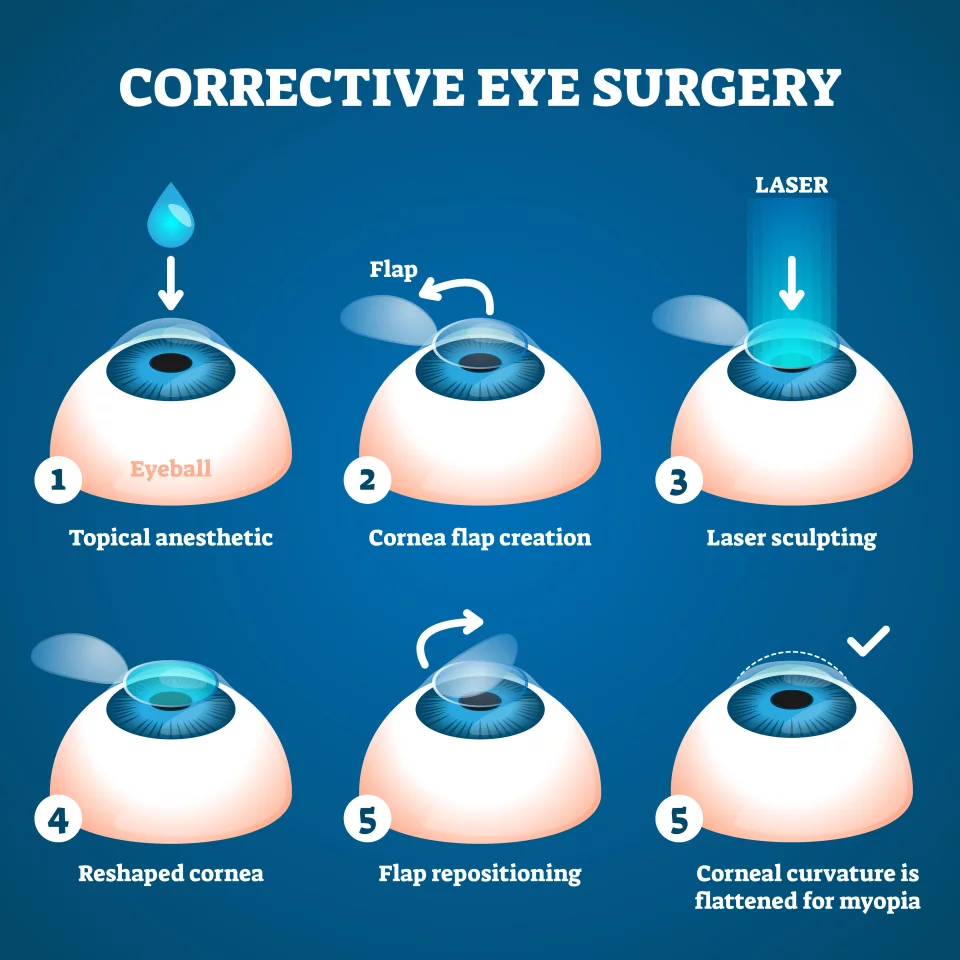
All I wanted to do was get rid of my glasses, but when my local laser eye surgery clinic recommended some odd-sounding, advanced Presbyond treatment developed by Zeiss, I said sure, if that’s what the cool kids are getting. Here’s what’s happened. Editor’s note: Readers often ask us for follow-ups on memorable stories. What has happened to this story over the years? This article was originally published in 2023 but has been re-edited and updated with new information, current as of May 13, 2026. Enjoy! I’m sharing my experience for a few reasons: firstly, I’m a big experience-sharer from way back. It’s kinda what I do. Secondly, while Presbyond appears to have been around since at least as far back as 2013, I’d never heard of it. And thirdly, I went looking for reviews that weren’t posted on the same websites that were trying to sell it to me, and didn’t find many. You’re welcome! So what is Presbyond, and how’s it different from Lasik? Laser eye surgery is designed to reshape the bumps on the front of your otherwise pretty spherical eyeballs. These bumps, known as corneas, play a key role in determining how light passing through your iris and lens finds its focal point. If your cornea’s a bit too flat, the light focuses behind your retina, and boom, you’re long-sighted. If your cornea has too much of a bump, the image focuses before it gets to your retina, and you’re short-sighted. Laser eye surgery uses largely automated machinery to cut little flaps in the outer skin of your eyeball. It then performs a laser ablation treatment on the tissue of the cornea, blasting away tiny bits to create a new shape, precisely tailored to perfectly correct your vision. Yes, the process is gross to think about – but that goes for most surgeries Presbyond takes things a step further. As we age, the lenses in our eyes gradually become harder to squish into different shapes. As a result, it starts becoming more and more of an effort to read, even if your distance vision is perfect. My grandad used to hold books well down below his waist and tell me he was reading with his balls, but he was funny like that. If you’re a glasses wearer, you might choose to have two sets of glasses at this point: one for distance and one for reading. Or you might go for a bifocal or multifocal set of glasses that correct your vision in different ways, depending on where you’re looking. If you get your eyes laser-corrected for distance vision, you’ll probably need reading glasses again at some point. Presbyond uses regular laser eye surgery machinery and techniques, but it’s designed to correct your eyes to two different focal lengths. Your dominant eye is corrected to be great — but not perfect — for distance, and your non-dominant eye is corrected to be great — but not perfect — for reading. These not-quite-perfections are designed to give you a fairly broad intermediate area where both eyes can deliver detail. Zeiss calls this the “blend zone.” The Presbyond process creates two different focal lengths, giving you a reading eye and a distance eye – but rather than perfectly correcting for these two distances, changes are made to create a “blend zone” in the intermediate distanceZeiss Your brain, the specialist told me, just figures it out, and you end up with excellent all-around vision that’ll have you reading restaurant menus in your 90s and seeing just fine at a distance as well. If you don’t like it, they told me, you can get it fixed back to double-distance vision for free. It sounded weird and interesting, so I went for it. The Presbyond operation: An icky but fascinating experience The surgery was over and done with in less than 10 minutes, I’d guess. Skip ahead if you don’t want gory details, but I found it fascinating. If you want extra gory details, there are plenty of videos on YouTube showing the entire process, live and close up. One eye at a time is held open, Clockwork Orange-style, and you lie down under the first machine, which is lowered down, snug. You’re told to look into a light and hold your eye still for about 7-8 seconds. If you can’t, it doesn’t matter; the machine is tracking your eye and adjusting its aim a thousand times a second, and will shut down if you freak out and look too far away. I felt something as it cut the flaps into my eyes, but it wasn’t painful. Friends told me to expect the smell of chicken, but sadly, that did not eventuate. Then the surgeon, ever-so-gently, folded those flaps back, and the world went very blurry. At this point, it’s off to the laser ablation machine and the most unpleasant part of this whole affair. Again, your job is to fixate on a point, only now you can’t see clearly because there’s no front on your eyeball, and it’s hard to stay locked on thanks to a disco array of bright, red points around your visual field. This time, it takes closer to 30 seconds each side, and apart from the discomforting glare, there’s really not much to feel. Once that’s done, the surgeon smooths the flap back down over your eyeball, with the delicate touch of somebody trying to put a screen protector on a new phone without any bubbles. You know when he’s got it, because at that instant the world snaps into sharp focus. That’s it, you’re in and out shockingly quickly, and then off into a darkened room to get some eye drops and dorky sunnies. The small text on my phone looked absolutely crystal clear pretty much immediately, but distance was more confusing. Don’t plan too much for the rest of that first day; the next few hours, you’re going to want to be in bed, because your eyes really don’t want to be open. These

Update: Presbyond surgery gave my eyes two different focal points Read More »

Billie Eilish just turned Roblox into her concert stage

Billie Eilish has brought her 3D documentary film HIT ME HARD AND SOFT: THE TOUR, co-directed by James Cameron, into Roblox through an immersive activation that blends cinema, gaming and live music in a single virtual environment. Live on Roblox’s “The Block”, the platform’s always-on music and entertainment space, the experience had been reimagined into a Billie Eilish-inspired world modelled after her concert stage. Fans could enter the space, interact within the environment and roleplay as the artist in a virtual recreation of her performance setting. According to Roblox, the activation reflects the platform’s growing ambition to position itself as a destination “where music, identity, and digital self-expression converge”. Don’t miss: Ready player Alpha: Why gaming is the new brand playground By recreating Eilish’s tour environment within the platform, Roblox said fans are able to celebrate their fandom not just through virtual wearables, but through participation and creation within the experience itself. From 6 to 10 May, the activation featured an exclusive broadcast of Billie’s BIRDS OF A FEATHER performance from the film, alongside its trailer. It incorporated 3D visuals, dynamic lighting effects and appearances from Billie’s avatar to mirror the scale of the cinematic production within a gaming environment. Roblox added that interactivity remains central to how it adapts entertainment IP onto the platform, as Gen Z and Gen Alpha audiences increasingly seek participatory experiences rather than passive viewing formats. “We view these activations as nurturing ongoing fan ecosystems rather than moment-in-time release cycles,” the company said, adding that immersive fan engagement can help turn “a casual listener into a lifelong super fan”. Beyond the performance, Roblox users can access limited-edition Billie-inspired items via the platform’s marketplace, including a tour-themed animation pack and a Billie avatar, available now. The activation also integrates karaoke functionality, with tracks such as Ocean Eyes and when the party’s over, positioning “The Block” as an interactive fan destination that extends engagement with the artist’s catalogue beyond the film itself. Roblox added that “The Block” is intended to function as an ongoing entertainment venue, with its Innovation Studio team developing new music performance tools to help artists activate on the platform more quickly and cost-effectively. The move comes as more brands and organisations experiment with immersive retail and entertainment formats on Roblox to reach younger digital-native audiences. Earlier this year, The Salvation Army stepped into the metaverse with the launch of “Thrift score”, the world’s first digital thrift store on Roblox. Developed in collaboration with immersive game studio The Gang and led by independent agency BarkleyOKRP, the experience reimagines a traditional thrift shop as a fully explorable digital environment. Players can browse virtual racks of items for their avatars, including creator collaborations, player donations and replicas of real Salvation Army products, blending rarity, accessibility and community-driven participation within Roblox’s ecosystem. Related articles:  Roblox makes gameplay social with new ‘Moments’ sharing tool   essence levels up its glam game with new Roblox experience       How Monde Nissin is levelling up snacks for Roblox fans source

Billie Eilish just turned Roblox into her concert stage Read More »

New cage-like crystal found in the waste of the world’s first nuclear explosion

More than 80 years after the world-famous Trinity test showed humanity what to expect from an atomic detonation, researchers are still sifting new discoveries out of its twisted remains. An analysis conducted on material left from the famous experiment has revealed a cage-like crystal structure known as a clathrate, representing the first example of such a material being formed under the forces generated by a nuclear explosion. On July 16, 1945, a plutonium bomb was detonated in the New Mexico desert as part of the Manhattan Project. The blast released an energy equivalent to about 21 kilotons of TNT, vaporizing rock and metal support structures at ground zero, and swept up vast quantities of the surrounding desert sand, blending it all together into a spectacularly violent atomic cocktail. Under extraordinary heat and intense pressure of tens of thousands of atmospheres, this mist of molten sand, clay, metals from the 30 m (100-foot) high test tower, and copper wiring, fused and cooled to form a glassy material dubbed trinitite. Much like its mythical cousin, kryptonite, trinitite comes in different forms – a common green variety, and a red form containing higher quantities of metals from the mix of copper cabling and framing surrounding the bomb. Once a popular souvenir collected by tourists visiting the historic site, trinitite is now attracting attention from researchers keen to better understand the kinds of unique chemistry that take place under immense forces. In 2021, a study led by University of Florence geologist Luca Bindi identified a new kind of icosahedral quasicrystal in samples of red trinitite. Using a combination of X-ray diffraction and electron microprobe analyses, Bindi and his colleagues have now found yet another new material in copper-rich droplets of red trinitite, one found in close association with their previous discovery. “We report the discovery of a previously unknown [calcium, copper, silicon] type-I clathrate formed during the Trinity nuclear test, representing the first crystallographically confirmed occurrence of a clathrate among the solid products of a nuclear detonation,” Bindi and his team write in their recently published report. Clathrate compounds are found throughout nature, commonly trapping other materials in their cage-like structures. While they differ in arrangement from their non-repetitive cousins, the quasicrystal, similarities in the composition of the two trinitite materials made the researchers wonder whether they might share a deeper structural relationship. “As both the clathrate and the quasicrystal are made of typical elements found in either desert sand or the metallic tower, it seems evident that both were formed in the detonation,” the researchers write. Computer models based on the composition of ingredients suggested the clathrate would only have been stable at copper concentrations of around 10 percent, far lower than the 21 percent found in the trinitite. In other words, the cage-like crystals would have formed in the blink of an eye that it took for temperatures and pressures to rise and then fall. “These findings rule out a simple clathrate-based structural interpretation for the Trinity quasicrystal and emphasize the distinct nature of silicon-rich phases generated under extreme conditions,” the researchers state. It’s a set of conditions that we can only hope we never see again, making Trinity’s legacy of glassy rocks a rare example of creation amid a moment of pure destruction. This research was published in the Proceedings of the National Academy of Sciences. Fact-checked by Loz Blain source

New cage-like crystal found in the waste of the world’s first nuclear explosion Read More »

DBS Foundation's Karen Ngui says ageing isn’t the problem, outdated perceptions are

In the race to stay young, relevant and culturally plugged in, brands have long prioritised younger audiences, often overlooking the growing influence, needs and spending power of older consumers. That disconnect is becoming harder to ignore. As Singapore enters “super aged” status, with more than one in five people aged 65 and above, rising to one in four by 2030, Karen Ngui, head of DBS Foundation, believes the bigger – and more fundamental – issue is not about societies ageing, but how ageing is framed. Ngui was a keynote speaker at Content360 Singapore. Spending over 20 years leading the marketing and communications function at DBS, most recently Ngui took on the role of head of DBS Foundation. Don’t miss: ‘It’s not about the biggest title in the room’: Love, Bonito co-founder Rachel Lim on CLOSER conversations Too often, she said, ageing and retirement are viewed through a deficit lens. That gap, she noted, presents both a societal and marketing challenge. “Businesses that are forward thinking would realise that there is a whole longevity economy,” she explained during a fireside chat. As a bank, DBS has always believed in doing well by doing good and, with its history as the Development Bank of Singapore, this comes with the idea of building forward. She added that often brands take the stance of “giving back” when going about their impact efforts – but that suggests maintaining the status quo. Instead, it should be around building forward, which means making things better. That thinking underpins DBS Foundation’s focus on helping vulnerable segments to build better and break out of cycles of disadvantage. With many of its key markets ageing rapidly – including Singapore, which faces a roughly 10-year gap between lifespan and health span – the Foundation is also ramping up on helping people “age with dignity and purpose”.  “The assumption is that retirement is linear. You’re born, you go to school, you get an education, you work, you have kids and then you stop work, right? But that’s not the case anymore,” said Ngui. Instead, she pointed to a more fluid model, where younger people take breaks or “mini-retirements”, while older individuals continue contributing in different ways. “I don’t think life should be that binary, and seniors still have much to contribute,” said Ngui, adding:  To not tap into what seniors can offer, it’s a huge loss to society. In an AI-driven world, that balance becomes even more critical. Seniors bring “the wisdom of experience, critical thinking skills, problem solving skills, decision making skills,” while younger generations bring digital fluency. Across her work, Ngui is deliberate about impact, even if it takes time. DBS Foundation does not support programmes unless they are scalable, sustainable and have the potential to help drive systemic change. That same philosophy extends into marketing. From storytelling to story-doing At a time when every brand is trying to tell a story, Ngui’s view is stark. “Brands must walk the talk, you know, not just talk the talk,” she said. “The best way to be authentic is not just tell stories, but actually do it first before we tell the stories.” That insistence on “story-doing” has quietly underpinned one of Asia’s biggest brand transformations. When Ngui first joined DBS in 2005 as managing director and head of group strategic marketing and communications, she did not see a clear brand. What she found instead was a long-standing purpose that had not been fully articulated. DBS began life as a spin-off from Singapore’s Economic Development Board, set up to support national development. Its early history includes decisions that prioritised quality of life, from pioneering AutoSave accounts to anchor-tenant concepts that reshaped mall culture. Rather than invent a new purpose, Ngui returned to that DNA and made it explicitly customer-centric. “Live more, bank less” became the clearest expression of that shift, despite internal resistance at first. “The customer wants to spend less time, less hassle banking. Of course, we want the customer to bank more with DBS, but that’s about us. But if you put it from a customer perspective, that’s when it resonates,” said Ngui. The line was tested through research, with customers interpreting “bank less” as a signal of strong digital capabilities. Putting “Sparks” back into the bank The same thinking carried into content. Long before branded entertainment became standard, DBS launched “Sparks”, a mini-series built around human stories of bankers and clients. It was designed to answer a simple question Ngui set herself: “Why DBS?” At the time, she noticed there were plenty of shows about doctors or lawyers, with Suits among the inspirations, but none about banking, creating an opportunity. Those stories didn’t come from a boardroom brainstorm. They came from business colleagues and front liners who shared real stories and moments that felt particularly special. “Banking is not just about a transaction, it’s about a relationship that you build with your client, so we wanted to hear stories of those relationships,” said Ngui. The results show that, done right, this kind of content does more than entertain. Sparks currently has four seasons, 32 episodes, 1.5 billion views and over 86 million engagements, said Ngui, adding that Sparks also helped shape brand perceptions along the way. Perhaps most interestingly, Sparks became a recruiting tool. Ngui recalls meeting colleagues who told her that Sparks was “life changing”. “When they were interviewing in different banks they went to Google to search to see and learn more about the banks, and that’s when Sparks popped up,” said Ngui. “Some of our colleagues shared that they would not have joined DBS if not for the fact that they saw Sparks and thought that banking isn’t so boring after all.” Across both brand and foundation work, the throughline remains consistent: Impact must be lived, not just told. Her final advice reflects that belief. “Feel free to swim outside your swim lanes. Don’t be afraid to be a rebel with a cause. Just learn and if it doesn’t work, fine, at least you’ve learned something,”


DBS Foundation's Karen Ngui says ageing isn’t the problem, outdated perceptions are Read More »

250cc V-twin cruiser makes a lot of sense, but you'll likely never get one

In a land far, far away is a motorcycle brand that has been around for longer than anyone can remember, yet it has spent the better part of the last few years in the shadows. I’m talking about Hyosung, which was born in South Korea in the late 1970s, building Suzuki-derived motorcycles under license. For much of its existence, Hyosung spent years trying to position itself as the affordable alternative to the Japanese giants, especially with bikes like the GT650R and Aquila cruisers that punched above their price tags in terms of presence and performance. For a while, the formula worked; in markets like India, Australia, and parts of Europe, Hyosungs became the “budget big bikes” for riders who wanted V-twin drama without Ducati money. But the bikemaker slowly got pushed out of the spotlight with the onset of a thousand new Chinese rivals. Now, after what seems like years, Hyosung looks set on becoming relevant once again. The tool? An all-new small-bore V-twin cruiser. Plenty of cruiser touches: twin exhaust pipes, round headlight, round instrument cluster and a chopped front fenderHyosung At the heart of the Hyosung GV250X is a 248.4cc liquid-cooled 60-degree V-twin. Yup, you read that right – 248.4cc twin cylinder. Weird, right? I’d think so, too, but having recently covered the Morbidelli N125V, a 125cc V-twin moto, I think the tides are turning. And for good. Back to the Hyosung. The V-twin here produces around 25.3 horsepower at 9,500 rpm and 14.75 lb-ft (20 Nm) of peak torque at 7,000 rpm. Those numbers prove that Hyosung isn’t chasing peak numbers. Instead, there’s a clear focus on a low-end feel and the overall rideability. Adding to the old-school V-twin rumble are neat touches like the twin exhaust pipes, a classic round headlight, a round instrument cluster and bar-end mirrors, alongside a chopped front fender. It’s a very well-styled motorcycle with sharp, angular lines running through the length of it. Even the 3.7-gallon (14-liter) fuel tank sports geometric lines to make it easy for you to grip the bike. Suspension duties are taken care of by 41-mm telescopic inverted front forks and a swingarm at the rear. It gets disc brakes both at front and back – a 270-mm disc with opposed 4-piston callipers at the front and 250-mm disc with 2-piston callipers at the rear. You won’t get peak power numbers with the Hyosung; instead, it’s all about that low-end feel and V-twin rumbleHyosung Then there are oddballs – traction control – pretty rare in this class, alongside ABS, and a belt drive. Now that’s usually what you’d expect to see in big-name middleweight motorcycles. Good on Hyosung for trying to punch above its weight. The seat height is listed at a nice, comfortable 29.1 inches (740 mm), curb weight at 397 lb (180 kg), with a wheelbase of 1,460 mm and a ground clearance of 5 inches (125 mm). Lighting, of course, is all LED, with USB charging ports offered in the cockpit, which also hosts a hybrid LCD/analog display. And in typical cruiser fashion, it rolls on 16/15-inch wheels front and back, respectively. Overall, I think it’s a pretty neat option for anyone who’s just getting started with their motorcycling journey and has a knack for cruisers. Of course, space and luxury won’t be at a premium as a conventional Harley, but then again, it’s great value for the money you’d be shelling out for something like this. Speaking of which, the Hyosung GV250X is priced at 731,500 yen (roughly US$4,650) and is expected to launch in Japan as early next month. Now, as far as availability in the West is concerned, people in the USA can forget about it. As for regions like Europe, you can never say never, given that Hyosung has sold motorcycles there from time to time. The GV250X is priced at 731,500 yen (roughly US$4,650) in JapanHyosung Now, honestly speaking, this won’t be everyone’s cup of tea. Some might look at the engine and wonder why it’s got awkwardly packaged wires and pipes running across it, some might not appreciate the use of plastic in there, and some might even argue it’s not a “real” motorcycle. But then again, I’d argue it’s not meant for people who have already been riding for years and have progressed with their motorcycles. Beginner riders will never complain about more options, and if it does indeed make its way outside of Asia, I can see a lot of entry-level, younger riders considering the GV250X. Source: Hyosung source

250cc V-twin cruiser makes a lot of sense, but you'll likely never get one Read More »

Stock Market Today: Nasdaq Charges Higher On Trump-Xi Iran News; This Biotech Stock Plummets (Live Coverage)

Major indexes finished with clear gains Thursday as investors cheered updates from President Donald Trump’s meeting with China President Xi Jinping. The Dow Jones Industrial Average held a key level, getting a lift from Cisco Systems (CSCO) and Nvidia (NVDA), as the latter hit an all-time high. The Dow climbed 0.8%, or nearly 400 points, in Thursday’s stock market trading.… Copyright ©2026 Investor’s Business Daily, LLC. All rights reserved. 87990cbe856818d5eddac44c7b1cdeb8 source

Stock Market Today: Nasdaq Charges Higher On Trump-Xi Iran News; This Biotech Stock Plummets (Live Coverage) Read More »