Stock Market Today: Nasdaq Ends Strong As AI Leads; Cybersecurity Stock Attempts Breakout (Live Coverage)

The Dow Jones Industrial Average kept losses modest all session long Wednesday while rising tech and chip stocks, including Nvidia (NVDA) and Micron Technology (MU), helped the Nasdaq composite finish with a solid gain and hover near record highs on the stock market today. The Dow Jones Industrial Average cut relatively small losses to 0.1%, finishing the day at 49,693… Copyright ©2026 Investor’s Business Daily, LLC. All rights reserved. 87990cbe856818d5eddac44c7b1cdeb8 source

Stock Market Today: Nasdaq Ends Strong As AI Leads; Cybersecurity Stock Attempts Breakout (Live Coverage) Read More »

Record-breaking volcanic eruption somehow cleaned up its own pollution

Volcanoes are messy things, what with all that ash, water vapor, sulfur, and greenhouse gases polluting the atmosphere. As one of the largest blasts seen in modern history, the 2022 Hunga Tonga-Hunga Ha’apai eruption in the South Pacific could be considered one of the messiest. At least the colossal blast had the good graces to clean up after itself, according to a surprising discovery by a team of researchers from across Europe. A recently published investigation led by Maarten van Herpen, a physicist from Acacia Impact Innovation BV in the Netherlands, used satellite data to uncover evidence of methane breaking down in the volcano’s plume, high in the stratosphere. “It is known that volcanoes emit methane during eruptions, but until now it was not known that volcanic ash is also capable of partially cleaning up this pollution,” says van Herpen. Methane is a rather notorious greenhouse gas, with a heat-trapping potency some 28 times that of carbon dioxide. It’s with some small fortune, then, that the molecule breaks down comparatively readily, combining with ozone to form CO2 and water within around a decade of its release. While the most concerning sources of emission include fossil fuel industries and fermentation involving livestock and landfill, volcanoes contribute a small amount of the gas by breaking down organic material in the planet’s crust or through inorganic geological reactions and ejecting it into the atmosphere during eruptions. Researchers typically monitor the emission and breakdown of methane using satellites that detect signature infrared reflections from the surface. Over the dark, open ocean, this isn’t possible, forcing scientists to get creative. Knowing that methane temporarily oxidises to form formaldehyde, which has a long-wave ultraviolet signature, van Herpen and his team hunt for this short-lived molecule in the plume of the Hunga Tonga-Hunga Ha’apai eruption. “When we analysed the satellite images, we were surprised to see a cloud with a record-high concentration of formaldehyde,” says van Herpen. “We were able to track the cloud for 10 days, all the way to South America.” By the team’s estimates, around 300,000 metric tons of methane – the equivalent of emissions from 2 million cows – was released from the eruption. It was being removed at a rate of around 900 metric tons a day. Given that formaldehyde disintegrates into water and carbon dioxide in just a few hours, some mysterious process must have been churning it out of the plume’s methane. The solution, the team claimed, was in another discovery made by van Herpen and his colleagues half a world away, just a few years prior. In 2023, they published the results of a modeling study that showed sunlight could release chlorine from sea spray when combined with iron-bearing dust blown from the Sahara. This chlorine, they argued, could react with methane to form hydrochloric acid. Was it possible that the same reaction was taking place in the ash and seawater spewed up by the Hunga Tonga-Hunga Ha’apai eruption? If so, models predicting the global methane budget may need a bit of tweaking. “We now know that atmospheric dust – for example, from a volcanic eruption – impacts the methane budget, meaning the budget of how much methane is added to the atmosphere and how much is removed,” says University of Copenhagen atmospheric chemist Matthew Johnson. “Because dust has not previously been taken into account, it is important that we correct the data on which these estimates are based.” This research was published in Nature Communications. Source: University of Copenhagen Fact-checked by Bronwyn Thompson source

Record-breaking volcanic eruption somehow cleaned up its own pollution Read More »

One essential vitamin may have a surprising link to cancer

Ahmed Elbediwy & Nadine Wehida, Kingston University/ The Conversation We’ve all heard the advice: eat your fruit and vegetables, get your vitamins, and stay healthy. For the most part, that guidance holds up. But some nutrients have a more complicated story, and vitamin B12 is a fascinating example. Also known as cobalamin, B12 is essential for life. It helps the body produce red blood cells, keeps the nervous system functioning, and plays a central role in how cells copy and repair DNA. B12 is found naturally in animal products such as meat, fish, eggs, milk, and cheese. Some cereals and breads are also fortified with it, helping people who do not eat meat get enough. Most people following a varied diet get the recommended amount, but vegans, people with certain gut conditions, and older adults who absorb nutrients less efficiently may need supplements. Without enough B12, things can go wrong, sometimes seriously, especially if the deficiency is not recognised and treated. Yet in recent years, researchers have been asking whether high levels of B12 intake or high levels of B12 in the blood could be linked to cancer. Staying balanced The body is constantly making new cells. Every time a cell divides, it needs to copy its DNA accurately. Vitamin B12 is critical to that process. When levels are too low, DNA can be copied incorrectly, leading to mutations that, over many years, may increase the risk of certain cancers, particularly colon cancer. This is why B12 deficiency is taken seriously. A 2025 case-control study from Vietnam found what researchers described as a U-shaped relationship between B12 intake and cancer risk, with both lower and higher intakes associated with increased risk. Because this kind of study can show an association but cannot prove cause and effect, the takeaway is not that B12 is dangerous. It is that balance that matters. It might seem logical that if B12 helps healthy cells thrive, taking extra doses should offer extra protection against cancer. But research does not fully support this. Vitamin B12 supports cell growth generally, not only the growth of healthy cells. One concern is that, if pre-cancerous cells are already present, very high availability of growth-supporting nutrients such as B12 could, in theory, support their growth too. But this remains difficult to prove in humans. Overall, studies of high-dose B vitamin supplements taken over long periods have not shown clear protective effects against cancer incidence or cancer deaths. One analysis did report a reduced risk of melanoma, but this was a cancer-specific finding rather than evidence that high-dose B vitamins prevent cancer generally. Some observational research has also suggested a slight increase in lung cancer risk linked to long-term, high-dose B6 and B12 supplementation, particularly among men and smokers, although this kind of study cannot prove that the supplements caused the cancers. Doctors have noticed that many cancer patients show unusually high levels of B12 in their blood. This raises an important question: does elevated B12 contribute to cancer, or can cancer itself cause B12 levels to rise? Research in 2022 concluded that high B12 in cancer patients is often an “epiphenomenon”. In other words, the vitamin appears alongside the disease but does not necessarily trigger it. Further research from 2024 reached a similar conclusion. This effect is thought to involve two main mechanisms. First, tumours can affect the liver, which stores large amounts of B12. When the liver is damaged or under strain, it may release more B12 into the bloodstream. Second, some tumours may increase proteins that bind to B12 in the blood. This can push blood test readings higher without necessarily meaning the body’s cells are receiving or using more B12. Useful indication Researchers are also recognising that elevated B12 may not be a cause of cancer, but it could be a useful marker of whether cancer is present or progressing. A large 2026 study found that colon cancer patients with very high B12 levels survived a median of around five years, compared with nearly eleven years for those with normal levels. Similar patterns have been found in oral cancer and in patients receiving immunotherapy, where elevated B12 has been associated with poorer outcomes. This means that unexplained, persistent high B12, especially when it is not caused by supplements, should not be ignored. It may point to liver disease, blood disorders, or an underlying cancer that has not yet been detected. For most people, this is not something to worry about. B12 from a normal diet containing meat, fish, eggs, dairy, or fortified foods is not usually the issue: it is very difficult to consume too much B12 from food alone. Deficiency remains a more common and better-established problem than excess. The concern is prolonged high-dose supplementation without medical advice, or a blood test showing persistently high B12 when someone is not taking supplements. The broader message is simple: more is not always better. Cancer cannot be prevented by loading up on any single vitamin. Long-term habits matter more: eating a balanced diet, exercising regularly, avoiding smoking, protecting your skin, and attending routine health screenings. So what about vitamin B12? Get enough through food or supplementation if you need it, especially if you are vegan, older, or have a condition that affects absorption. But leave the megadoses on the shelf unless a doctor advises them. With B12, as with many nutrients, the goal is not as much as possible. It is the right amount. Ahmed Elbediwy, Senior Lecturer in Cancer Biology & Clinical Biochemistry, Kingston University and Nadine Wehida, Senior Lecturer in Genetics and Molecular Biology, Kingston University This article is republished from The Conversation under a Creative Commons license. Read the original article. source


One essential vitamin may have a surprising link to cancer Read More »

Brilliant beacon may awaken your inner Jedi knight

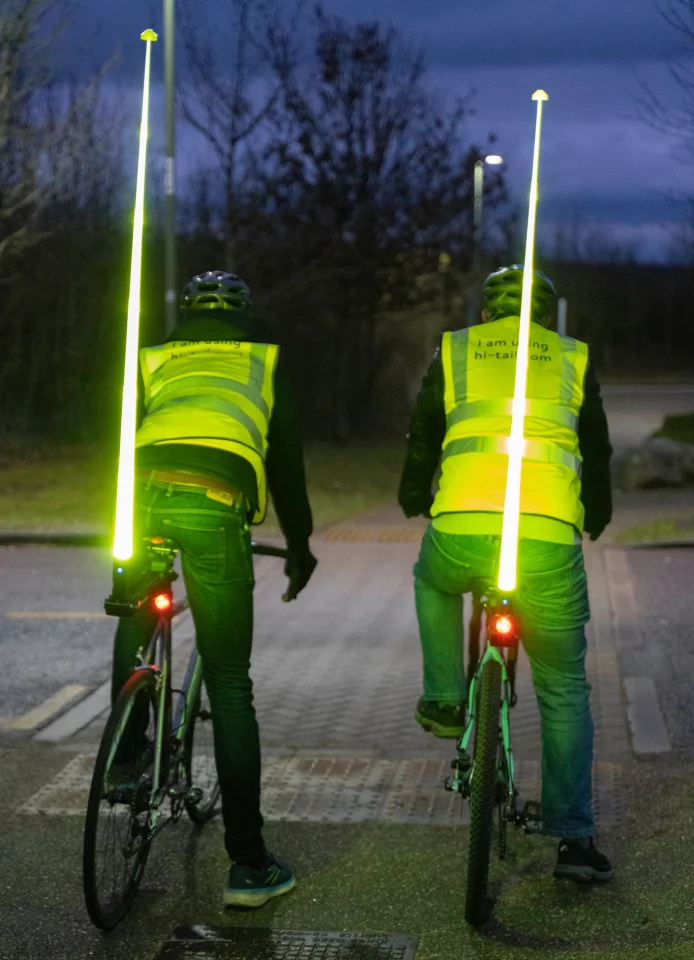
Bicycle tail lights have a way of playing second fiddle to their brighter, more interesting headlight siblings. We’re sure you’ll agree, however, that the Hi-Tail is one tall, telescoping safety beacon that definitely won’t be “outshined.” The Hi-Tail was developed by British cyclists/engineers Paul Costigan and Brian McIntyre. In fact, McIntyre initially got the idea when exploring methods of increasing visibility for underground mining equipment. The Hi-Tail is waterproof, so rain shouldn’t be a problemHi-Tail The device is available in three models – one for recumbents, cargo bikes and adult trikes; one that mounts directly onto the seat post; and one with a built-in cargo rack. In all three cases, the light-saber-like lighting unit itself quickly attaches/detaches to and from a bayonet mount at the rear end of the main bracket. So yes, you can easily pull it off and pretend you’re Luke Skywalker … or you can recharge its battery. The seat post mount model of the Hi-TailHi-Tail When not in use, the lighting unit telescopes down to a length of 37 cm (14.5 inches). Once it’s time to ride, though, its six segments can all be pulled out, reportedly making it tall enough to be seen even in the side mirrors of transport trucks and buses. An LED in the base provides 360-degree illumination all the way up the translucent tube. According to Costigan and McIntyre, one 4-hour USB-charge should be good for seven to eight hours of runtime in high-intensity intermittent mode, or approximately 14 hours in the lowest-intensity steady output mode. Low-sitting recumbents are definitely good recipients for the Hi-Tail Hi-Tail The Hi-Tail is available now via the product website, with prices for the three models ranging from £120 to £130. North American pricing works out to approximately US$200. Source: Hi-Tail via BikeRadar source

Brilliant beacon may awaken your inner Jedi knight Read More »

Retail is out, experiences are in: Orchard Road’s next phase targets brand engagement

Singapore’s Orchard Road is accelerating its shift into an experience-led destination, with a fresh wave of initiatives from 2026 that will turn the precinct into a testbed for pop-ups, immersive brand activations and large-scale placemaking. Led by the Singapore Tourism Board (STB) alongside the Urban Redevelopment Authority (URA) and National Parks Board (NParks), the latest phase of the Orchard Road Rejuvenation Plan is designed to move the precinct beyond retail, positioning it as a platform for experiential marketing, cultural programming and mixed-use destination building. At the centre of the push is a new short-term retail model that opens Orchard Road to faster brand experimentation. STB will launch a tender in May 2026 for up to three pop-up spaces along the pedestrian mall between Wisma Atria and Ngee Ann City. The spaces, available until end-2028, will host rotating local and international brands on leases of one to six months, with the first wave expected by end-2026. Don’t miss: All aboard Marina Bay’s Disney adventure as precinct bets on experiences  The move signals a growing emphasis on flexible retail formats, giving brands access to high-footfall space to trial concepts, launch limited-time experiences and test audience response in a physical, high-visibility environment. Beyond retail, STB is also expanding Orchard Road’s role as a live experiential canvas. A precinct-wide activation initiative launching mid-2026 will invite landlords, brands and event organisers to pitch façade transformations, immersive installations and night-time programming including projections, night markets and extended operating hours. Selected proposals may receive funding support under a two-year programme. For marketers, the initiative effectively widens the inventory of “brand surfaces” across Orchard Road, from digital façades and interactive building exteriors to shared public spaces designed for installations and experiential storytelling. Placemaking will also be strengthened through a new “Creative exploration system” launching in the second half of 2026, featuring artistic precinct markers designed by local studio PLUS Collaboratives alongside poetry by Singaporean writers. The system will span Orchard Road’s four sub-precincts — Tanglin, Orchard, Somerset and Dhoby Ghaut — guiding visitor movement through a more curated physical experience. In parallel, eight bench designs selected from a Singapore Furniture Industries Council (SFIC) competition will be installed along the pedestrian mall by end-2026, reinforcing the shift towards interactive public infrastructure and design-led dwell spaces. Several major developments are also reshaping the precinct’s longer-term brand and entertainment ecosystem. In Somerset, a new 3,000-capacity Grange Road Events Venue is being developed through a partnership between Live Nation, Lendlease Global Commercial REIT and STB. The venue will host concerts, touring acts and MICE events, while also integrating a public terrace, activation walkway and year-round F&B offerings. Hospitality is also being repositioned with the former Faber House redeveloped into a 19-storey hotel that will open as Asia Pacific’s first NoMad Singapore under Hilton by end-2026, adding a new lifestyle-led stay and dining offering to the precinct. Further along the pipeline, STB will launch a tender in 2026 for the redevelopment of 37 Emerald Hill into a mixed-use heritage-led lifestyle development, while the Somerset Belt is set to become a youth-focused district by 2027 with zones dedicated to creative incubation, skate culture and community gathering. At the same time, Tanglin Shopping Centre is slated for redevelopment into a mixed-use hub spanning retail, office, wellness and cultural uses, while Dhoby Ghaut’s Istana Park expansion will introduce a significantly larger green civic space, including a 500-metre pedestrianised stretch of Orchard Road. Taken together, the changes point to a broader repositioning of Orchard Road as a multi-surface marketing environment, where retail, culture, public space and entertainment increasingly overlap, creating new entry points for brands seeking physical-world engagement in an experience-first economy. The push to reimagine Orchard Road sits within a wider trend of precinct transformation across Singapore. In one such move, the Singapore Sports Hub has been renamed “The Kallang” as it evolves into a multi-use destination spanning sport, entertainment, lifestyle and community experiences. Under the new identity, the area is being positioned as a year-round destination for shared public experiences, with planned upgrades from 2026 including new alfresco dining concepts, refreshed family-friendly zones, a sheltered padel ecosystem, and enhancements to existing sports facilities such as climbing and bouldering walls. The repositioning is part of a broader effort to make the precinct more accessible and emotionally resonant, supported by initiatives such as community partnerships and the Kallang Pass, as it looks to establish itself as Singapore’s next major “excitement epicentre”. Related articles:    StarHub scoops up Orchard Road with unlimited ice cream  Orchard Road descends into nightmare in Warner Bros.’ IT activation  Lazada turns Orchard Road into a giant bingo playground in new campaign  source

Retail is out, experiences are in: Orchard Road’s next phase targets brand engagement Read More »

Mexico City is sinking – and NASA is watching it happen

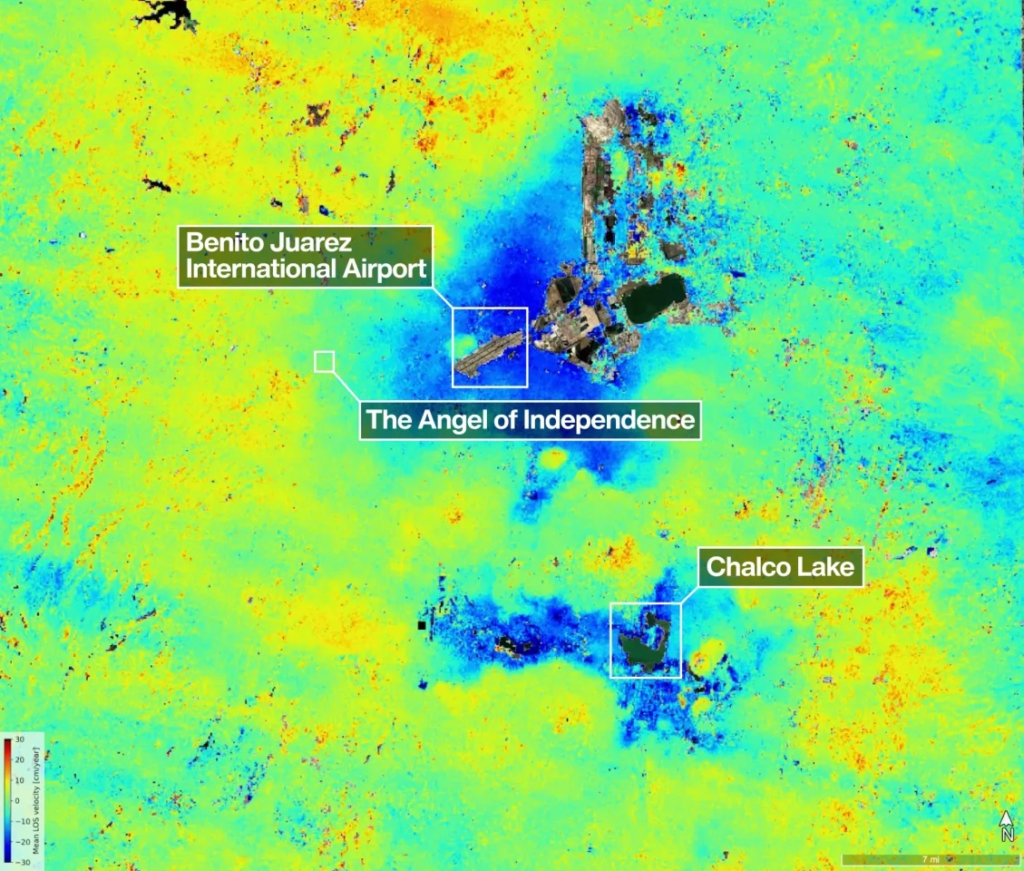
Mexico City is trapped in a dangerous feedback loop. As groundwater is pumped from beneath the city, the ground subsides, with some entire regions sinking far faster than others. This lopsided descent damages pipes, sewers, and wells, leading to leaks and water loss. To compensate, the city must pump even more groundwater, accelerating the sinking process even further. Scientists have tracked this problem for years. The city’s subsidence was first identified by an engineer called Roberto Gayol in 1925. Recently, though, NASA and the Indian Space Research Organization (ISRO) trained one of the world’s most powerful radar systems on the sinking metropolis. The NASA-ISRO Synthetic Aperture Radar (NISAR) satellite can track changes in Earth’s surface with unprecedented precision. Trained on Mexico City, it revealed how the city’s subsurface was shifting, highlighting regions subsiding more than half an inch (2 cm) per month. NASA’s $1.5-Bn NISAR telescope eyes sinking city Mexico City, once known as the Aztec city of Tenochtitlan, was built on an island in Lake Texcoco in the 14th century. Though that lake was drained over centuries, Mexico City today still stands above an aquifer – a layer of porous rock saturated with water. Since Mexico City’s subsidence problem was first identified in 1925, the capital city’s population has grown to more than 22 million. Unsurprisingly, more people mean more problems. Groundwater pumping has snowballed as demand for water has steadily risen, with one report stating it accounts for roughly 60% of the city’s total supply. The problem is sharply illustrated in the new NISAR image. While the dark blue marks represent areas subsiding more than half an inch every month, the areas marked in yellow and red are likely “residual noise signals that are expected to decrease as NISAR collects more data.” NASA’s new NISAR image highlights how Mexico City has subsided at an uneven rate for centuries.NASA / JPL-Caltech / David Bekaert NISAR features a 39-ft (12-m) wide, unfolding radar antenna reflector, making it the largest NASA has ever sent to space. The satellite monitors the Earth twice every 12 days. It cost US$1.5 billion to build, making it the most expensive Earth-imaging satellite in history. The new NISAR images, captured between October 2025 and January 2026, show that the Benito Juarez International Airport is located inside one of those dark blue spots. “Images like this confirm that NISAR’s measurements align with expectations,” says Craig Ferguson, deputy project manager at NASA. It’s far from being the only important transport infrastructure affected in the city. In 2021, an overpass collapsed resulting in 26 deaths. This was partly attributed to the effects of subsidence on the underground rail network – one of the busiest in the Americas. Charting “differential subsidence” worldwide In 2024, taps in Mexico’s capital city came within months of running dry. The feedback-loop intensified, and more groundwater was pumped to the surface. That same year, a study by Dario Solano-Rojas highlighted the problem of “differential subsidence” in Mexico City. Solano-Rojas, a remote-sensing specialist at the National Autonomous University of Mexico, has been charting Mexico City’s highly uneven subsidence for years. His 2024 paper showed that while some regions were sinking at a rate of 50 centimeters per year, others were barely moving at all. Such jagged sinking is incredibly dangerous, as large infrastructure systems often run through regions that are subsiding at different rates. A Metro tunnel, for example, could collapse if one stretch is constantly moving while the other remains steady. Now, NASA and ISRO’s new data may help researchers find a fix for this serious issue. Don’t be surprised to see a NISAR image of Jakarta in the near future. The Indonesian capital, which was built on a series of aquifers, is known as the fastest-sinking city in the world. It is also plagued by infrastructure instability caused by differential subsidence. Unlike Mexico City, Jakarta is coastal and low-lying, making the problem even more alarming. According to some estimates, roughly 40% of Jakarta sits below sea level. “Mexico City is a well-known hot spot when it comes to subsidence, and images like this are just the beginning for NISAR,” says David Bekaert, a member of the NISAR science team. “We’re going to see an influx of new discoveries from all over the world, given the unique sensing capabilities of NISAR and its consistent global coverage.” Venice is another city that is famously sinking, though comparing it to Mexico City and Jakarta puts things into perspective. While the Italian city is also affected by subsidence, groundwater pumping is largely controlled, limiting sinking to roughly 1 to 2 millimeters annually. Still, anyone living in a sinking settlement will likely welcome precision readings from one of the most advanced radar systems ever built. It won’t stop the sinking, but it could save lives by highlighting some of the most unstable regions. “NISAR’s long wavelength L-band radar will make it possible to detect and track land subsidence in more challenging and densely vegetated regions such as coastal communities where they may have the compounding effects of both land subsidence and sea level rise,” Ferguson says. Source: NASA Fact-checked by Mike McRae and Bronwyn Thompson source

Mexico City is sinking – and NASA is watching it happen Read More »

Vancouver community hub pairs exposed mass timber with ultra-green design

A new community center is nearing completion in Vancouver’s Oak Park, and it has done something quite rare. It has combined mass timber construction with hyper-efficient Passive House engineering and a LEED Gold sustainability rating. The Marpole Community Centre, which was designed by Diamond Schmitt, proves that public buildings can be kind to the planet while also being beautiful. The most striking feature is the exposed mass timber construction. The building uses large, engineered wood beams instead of relying solely on carbon-heavy steel or concrete. This is an interesting choice, because not only does it create a warmer, more inviting interior, but it helps reduce the building’s overall embodied carbon by 41%. At the same time, it creates an approachable atmosphere that echoes the surrounding greenery. Construction of the Marpole Community Centre is nearing completionAndor Geller, Diamond Schmitt “Our vision for the Marpole Community Centre was to create an inclusive and welcoming high-performance facility that embodied the City’s ambitious sustainability and accessibility targets while also supporting the community’s goals for how they wanted to use the building and grow their programming,” said architect Caroline Inglis. However, there’s more than wood holding up the Marpole. It’s aimed at strict Passive House standards, which architecture firms look to when they want to achieve the gold standard for efficiency. The building is wrapped in a super-insulated, airtight shell that acts like a high-quality thermos. During the winter months, the heat stays inside, and when it gets hot during the summer, it is pushed out using very little energy. All systems are electric to support the City’s climate goals, and complemented by passive design measures that include orientation, shading and daylight optimization to ease reliance on mechanical systems. The architects embraced the natural beauty of the wood in the interior, creating a warm and comfortable spaceAndor Geller, Diamond Schmitt The building itself spans about 3,700 sq m (40,000 sq ft) and replaces an older facility from 1949 that the neighborhood has long outgrown, offering space for a gymnasium, a childcare center, a basketball court, community gathering spots, and various multipurpose rooms. The project also expands the community space outward to sports courts, gathering spaces and an ethnobotanical garden. On the inside, the wood is exposed, which gives the interior a natural feel throughout – something that your typical public building often doesn’t have. We have seen this kind of design philosophy with the Fyrtornet in Sweden and the TRÆ in Norway, where architects used timber to create a sense of warmth and escape from the usual concrete dominance. The Marpole Community Centre will offer modern amenities to the residents, including a gym, daycare, basketball court, and a multipurpose roomAndor Geller, Diamond Schmitt By hitting the trifecta that is LEED Gold, Passive House, and mass timber, the new Marpole Community Centre is truly a marvelous technical feat that shows how public buildings meant for daily use can achieve high-performance environmental standards. The facility is expected to open its doors to the neighborhood later this year. Source: Diamond Schmitt source

Vancouver community hub pairs exposed mass timber with ultra-green design Read More »

Yes, You Should Gamble (Sometimes)

A few years ago, I transferred-in an account for a client. As I looked through the positions to prepare recommendations about which positions to sell and which to keep, I noticed a handful of penny stocks. Actually, to call them penny stocks would be an exaggeration. They were each worth fractions of a penny and, of course, only traded over-the-counter. I assumed that these were positions-gone-bad—stocks that had fallen far from grace, trophies to amateur overconfidence. I called my client to discuss removing them. “…Oh, and one more thing. I’ll send you a form to remove these stocks from your account since they don’t trade and aren’t worth anything.” “What?! No, don’t do that!” was his urgent reply. “Those are my lottery tickets! I put about a hundred bucks into each of them and I want to see if they pay off!” I chuckled. “Alright, no problem, we’ll leave them, but I’m not going to follow them, okay? Just let me know if you change your mind.” I didn’t know it then, but I gave him terrible advice that day. In fact, I should have been the one to tell him to put some money in those micro-penny stocks. * * * Before you excommunicate me as a heathen, at least hear me out. Let’s take a step back and remember where the advice “never gamble” comes from. A standard utility function taught in the CFA Program curriculum (sometimes called quadratic utility) determines an investor’s happiness from her portfolio’s expected return, minus the variance (volatility) of those returns, times her risk aversion parameter. The more averse to risk, the more unhappy she is with variance (volatility). In this model, all else equal, higher volatility is always bad. In this model we would never expect an investor to choose a high volatility, low-return portfolio (i.e., a gambling portfolio) when low-volatility, high-return portfolios are on offer. We have this expectation because this model assumes that the thing our investor wants to avoid is volatility. By contrast, goals-based theories of choice take a different approach. Rather than define risk as volatility, goals-based utility defines risk as “not having the money you need when you need it,” to quote my friend Martin Tarlie. Risk, in goals-based investing, is not volatility, but the probability that you fail to achieve your goal.  Running with this more intuitive definition yields some surprising results because it changes the math of the portfolio choice problem. We move from an equation in which return and volatility are the only two variables, to a probability equation of which return and volatility are inputs, but not the only inputs. All the variables which define our goal (minimum wealth level, time horizon, current wealth, etc), are also inputs in the probability equation. Lastly, when we remove the inexplicable academic assumption that investors can borrow and sell short without limit, then we find that the efficient frontier has an endpoint, the last efficient portfolio. Here’s the catch: sometimes, investors have return requirements that are greater than what the last efficient portfolio can offer. When that happens, her probability of achievement is maximized by increasing variance rather than decreasing it, even if returns are lower. And so we enter the world of rational gambles. Rational gambles are those portfolios to the right of and below the last efficient portfolio, but for which the probability of achievement continues to rise. Irrational gambles are those for which the probability of achievement begins to fall. The plot below illustrates the point. source

Yes, You Should Gamble (Sometimes) Read More »

Muslim travellers projected to hit 245m by 2030 as women reshape tourism demand

The global Muslim travel market is entering a new phase of growth, with Muslim women emerging as one of its most influential traveller segments and destinations facing increasing pressure to deliver more trusted, inclusive and digitally enabled experiences. New reports released by Mastercard and CrescentRating project international Muslim visitor arrivals to reach 245 million by 2030, up from an estimated 186 million in 2025, highlighting the scale of opportunity for tourism brands, destinations and hospitality players seeking to capture the expanding market. The findings, published in “Halal Travel Trends 2026” and “Muslim Women in Travel 2026”, also show Muslim women accounting for 90 million international arrivals in 2025, representing 48% of all Muslim visitor arrivals globally. That compares with 63 million arrivals and a 45% share in 2019. Don’t miss: Muslim travel index shifts: Malaysia reclaims crown as Indonesia slips The reports suggest the Muslim travel sector is evolving beyond basic halal-friendly offerings such as prayer spaces and halal food availability, with travellers now placing growing importance on safety, digital assurance, seamless payments and culturally aligned experiences. At the centre of the research is CrescentRating’s RIDA framework – responsible, immersive, digital and assured – designed as a guide for destinations and travel businesses looking to strengthen their appeal among Muslim travellers. Asia continues to dominate the Muslim travel landscape, according to the reports, attracting nearly 120 million Muslim visitors in 2024, equivalent to 65% of the world’s 176 million Muslim travellers. The study attributes the region’s strength to established halal ecosystems, strong regional connectivity and cultural familiarity between source and destination markets. Southeast Asia is expected to remain a key beneficiary of the trend. Malaysia, Indonesia, Singapore and Brunei were identified among the preferred destinations for Muslim women travellers, while Southeast Asia itself generated 5.8 million Muslim women travellers as a source market. The reports also indicate that non-Muslim-majority destinations could gain a competitive advantage if they improve the visibility and reliability of Muslim-friendly services, particularly as travellers increasingly seek reassurance before booking. Muslim women, meanwhile, are becoming increasingly influential in shaping travel decisions across family holidays, solo travel, religious journeys and women-led group trips. Safety emerged as the leading consideration, with 60% of Muslim women travellers citing general safety and comfort as the most important destination factor, followed by Muslim-friendliness at 30%. Digital platforms are also playing a growing role in travel discovery and planning. The reports found that 68% of respondents said social media influenced their travel decisions, with Instagram ranked as the most-used platform, followed by YouTube and TikTok. AI tools are also increasingly being used to evaluate destinations, identify halal dining options, locate prayer spaces and assess safety considerations. “Muslim travel is entering a more sophisticated phase, where confidence, inclusion and purpose are becoming as important as access and convenience,” said Aisha Islam, senior vice president, customer solutions centre, Southeast Asia at Mastercard. “Through the RIDA framework, destinations and businesses have a practical way to think about the full traveller journey from trusted digital information and secure payments to meaningful experiences that respect faith, culture, safety and personal values.” The reports argue that destinations must now shift focus from simply offering Muslim-friendly services to ensuring those services are consistently visible, verifiable and trusted. “For destinations, the opportunity is to move from availability to assurance,” said Raudha Zaini, director of operations, CrescentRating. “Muslim travellers are looking for experiences that are meaningful, inclusive and easy to trust. The destinations that clearly communicate their readiness and deliver consistently across the journey will be best positioned to earn long-term loyalty.” Be part of PR Asia Indonesia 2026 on 15 July 2026 – the first time this regional communications flagship lands in Jakarta – bringing together communications leaders ready to redefine influence, reputation, and impact! Related articles:How Muslim-led brands prove faith and commerce can coexistThe trust economy of Ramadan: How brands are winning Indonesia’s most reflective seasonWhat’s shaping consumer demand this Ramadan? source

Muslim travellers projected to hit 245m by 2030 as women reshape tourism demand Read More »

Sound-wave 'sunscreen' shields delicate plant leaves from UV

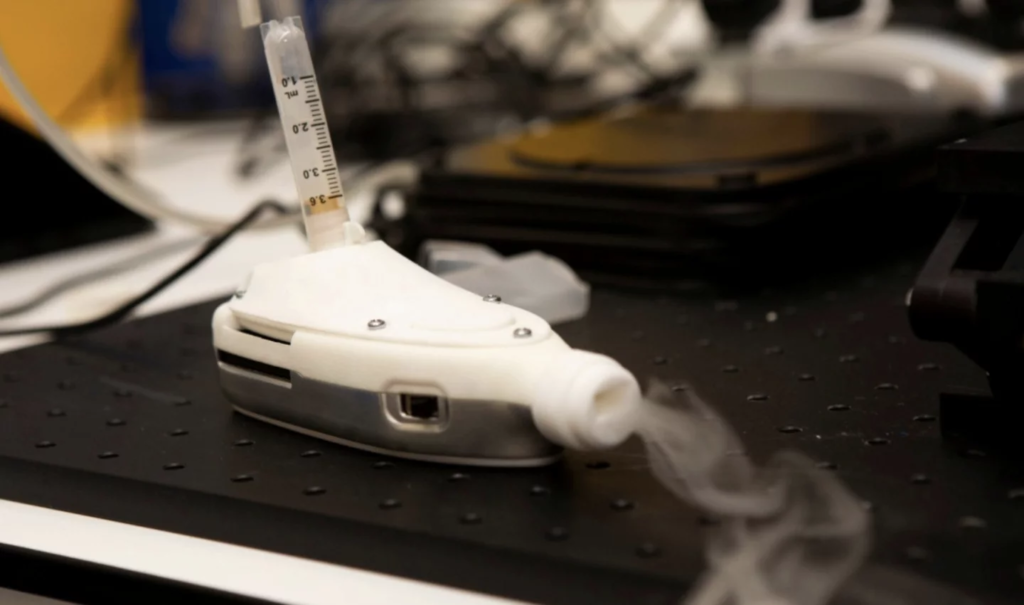
Scientists have developed a way to use sound waves to create microscopic layers of protection, demonstrating the method’s delicate handling on the leaves of the common houseplant Epipremnum aureum by blocking damaging ultraviolet (UV) rays without impeding photosynthesis. Researchers from Melbourne’s RMIT University tested their work on the plants, proving just how gentle yet functional this coating is. Yet the technology is aimed squarely at other materials – including textiles, plastics, glass, and silicon. “The coating absorbs harmful UV light while allowing visible light through,” says Javad Khosravi Farsani, lead author and PhD researcher at RMIT University. “That means the plant can continue photosynthesis while being protected from damage.” The process works by using high-frequency sound waves to destabilize liquid transferred to the leaves in the form of a fine mist, with the “micrometer-sized aerosol droplets” creating a covalent organic framework (COF) that acts as a consistent but ultra-fine layer of protection. The sound waves create a fine mist that can act like a plant sunscreenRMIT University “As proof of concept, we demonstrate that COFs can constitute protective coatings on plant leaves for solar ultraviolet shielding, thus highlighting the potential of the platform to extend the deployment of COFs in real-world devices, biological systems, and environmental interfaces,” the scientists describe in the paper. COFs are a class of highly porous crystalline materials often described as molecular scaffolding, a latticed structure with nanoscale holes that can be engineered to absorb light, trap chemicals, or protect surfaces. But the building blocks that form COFs are notoriously “fussy” with their self-assembly, which has been hard to master in the laboratory and even more difficult to apply beyond it. As such, COFs have largely remained lab materials, requiring precursor materials, extreme heat, and lengthy processing that would do more harm than good to delicate surfaces in the real world. “These materials have extraordinary properties, but you’ve typically had to choose between preserving their structure and protecting the surface you’re applying them to,” says Distinguished Professor Leslie Yeo, from RMIT’s School of Engineering and a senior author on the study. “What this work shows is a way to avoid that trade‑off by forming and coating the material under very gentle conditions.” The researchers used acoustomicrofluidics – ultra-high-frequency sound vibrations – to manipulate liquids, using a tiny chip that generates 10-MHz waves. Essentially, when a precursor liquid flows onto the vibrating chip, sound waves stretch the liquid, blasting its structure into the fine mist. As the aerosol travels through the air, the droplets organize themselves into protective layers on the surfaces of materials, even those as delicate as tissue. “Our method effectively combines manufacturing and coating into a single step,” says Associate Professor Joseph Richardson, a co‑corresponding author, who adds that the process is even simpler because it doesn’t need heat or lab controls; it works in open air at room temperature. “That simplicity is what makes it adaptable across different surfaces and applications.” Associate Professor Amgad Rezk, from RMIT’s School of Engineering, adds that this method greatly increases the use of COFs in real-world scenarios – and, as such, the team filed for an Australian Provisional Patent Application at the end of February. Associate Professor Amgad Rezk, PhD researcher Javad Khosravi Farsani and Associate Professor Joseph Richardson (from left) in the Melbourne labWill Wright/RMIT University “By using sound waves, we’re able to form and deposit the coating within minutes without heating or damaging the surface,” Rezk says. “That’s a major shift from conventional coating methods, and it allows us to work with fragile materials, including living plant tissue.” “That opens up opportunities for industries working with sensitive materials that simply couldn’t be processed this way before,” he adds. While the team’s demonstration was on plant leaves – which retained no damage for a measured period (60 days), following application, UV exposure, and coating removal – there are plenty of questions about the technology’s staying power when exposed to the elements. Still, finding a way to coat new electronics, sensors, and membranes, which are traditionally too heat-sensitive for current techniques but still need protection, could change how we see COFs. And the researchers have no concerns about scalability, which has been another limiting factor. “Owing to its miniature, lightweight footprint, the chipscale acoustomicrofluidic platform can readily be mounted on a drone or autonomous vehicle to enable precision deposition on plant leaves, while the chip’s low costs, enabled by leveraging the economies of scale inherent in mass nanofabrication, offers a path toward massive parallelization for deployment in large-scale real-world biotechnology applications,” the scientists conclude in the paper. The research was published in the journal Science Advances. Source: RMIT Fact-checked by Mike McRae. source

Sound-wave 'sunscreen' shields delicate plant leaves from UV Read More »