Dow Jones Futures Fall, Oil Prices Rise; Trump Says Iran Response 'Totally Unacceptable'

Dow Jones futures fell slightly Monday morning, along with S&P 500 futures. Nasdaq futures were roughly flat. Crude oil prices rose. President Donald Trump said Iran’s response to a U.S. peace proposal is “totally unacceptable.” Intel (INTC), Lumentum Holdings (LITE) and Moderna (MRNA) were early winners on news. The stock market rally powered higher again last week, buoyed by lower oil… Copyright ©2026 Investor’s Business Daily, LLC. All rights reserved. 87990cbe856818d5eddac44c7b1cdeb8 source

Dow Jones Futures Fall, Oil Prices Rise; Trump Says Iran Response 'Totally Unacceptable' Read More »

Is this robot with a projector for a head the future of office work?

Let’s answer the question in the headline right away: probably not. But it’s worth thinking about why that might be the case, despite this being an interesting idea in some regards. Amid all the chatter about integrating AI into enterprise and productivity applications to get things done, Lenovo is exploring what it would be like to physically embody artificial intelligence in the workplace. Its AI Workmate Concept, which it’s showcasing at the MWC trade expo in Barcelona, puts a friendly face – and a projector – to your chatbot for office tasks. This little stationary robot has a 3.4-inch LCD screen for a ‘face,’ cameras, and a Pico projector mounted on an articulating arm with a swiveling base. It’s meant to sit on your desk, respond to voice and gesture commands, and recognize what you’re writing and sketching on paper. The idea is that it’ll have access to your office communications and work files, and be able to answer questions you have about ongoing projects, messages you’ve received, and updates from your team. It uses its own synthesized voice to do all that, while its face is only really for animated ‘expressions.’ Meanwhile, it can use its cameras to capture anything you write or draw, and add it to slide decks; it can also project content from your work apps, like a presentation or document, onto a wall or desk. You can see what this might look like in Lenovo’s slightly awkward promo video below: Introducing the Lenovo AI Workmate Concept (2026) – Your Reliable AI Work Companion It’s hard to fully imagine integrating this kind of Workmate into my daily routine, particularly when it comes to thinking about granting it access to sensitive data and emails – and about how accurate its responses will be. That said, Lenovo describes this as running LLMs locally, so you don’t have to upload or expose anything to the cloud for processing. I also appreciated the depiction of the Workmate capturing a handwritten signature in real time and using that to digitally sign a document. It’s not the worst idea for AI-powered hardware we’ve seen in the last couple of years, but it’s far from the most sensible. Most of its utility really boils down to whether the LLMs it’ll run locally will be up to the task of reliably and consistently making sense of your data and queries, and not responding with bogus sales figures, or booking meetings for February 31 on your calendar. And you’ve gotta wonder whether it really needs to be a gadget rather than an app on your various devices: the cameras, projector, and especially the LCD face aren’t making your life a whole lot easier. The other thing to note is it’s hard to get businesses with hundreds or thousands of employees to adopt any new service or product like this, because it needs to be secure, maintainable, and cost-effective over years. Unless it’s mission-critical, IT administrators aren’t going to love the idea of adding yet another type of device to their list of things to manage for the teams they serve. At this point, Lenovo’s only showing off its vision for the Workmate, and doesn’t yet have details to share on it whether it’ll go into production or what it might cost. I don’t see this becoming a thing in the immediate future – certainly not until it meaningfully earns its keep on your desk the way a company-managed phone or laptop might. Source: Lenovo source

Is this robot with a projector for a head the future of office work? Read More »

Stock Market Today: Dow Falls 313 Points, Nasdaq Cut Losses; IBD 50 Leader SiTime Soars But Fastly Plunges (Live Coverage)

The Dow Jones Industrial Average and other major stock indexes reversed lower Thursday as Wall Street digested initial unemployment claims data. Small caps sank the hardest, while other financial markets swung amid an uncertain future over Iran. Advanced chip designer and AI play Arm (ARM) was a significant loser, sliding about 10% on the stock market today. At the close,… Copyright ©2026 Investor’s Business Daily, LLC. All rights reserved. 87990cbe856818d5eddac44c7b1cdeb8 source

Stock Market Today: Dow Falls 313 Points, Nasdaq Cut Losses; IBD 50 Leader SiTime Soars But Fastly Plunges (Live Coverage) Read More »

Ghost ships can't hide from new space-based tracking system

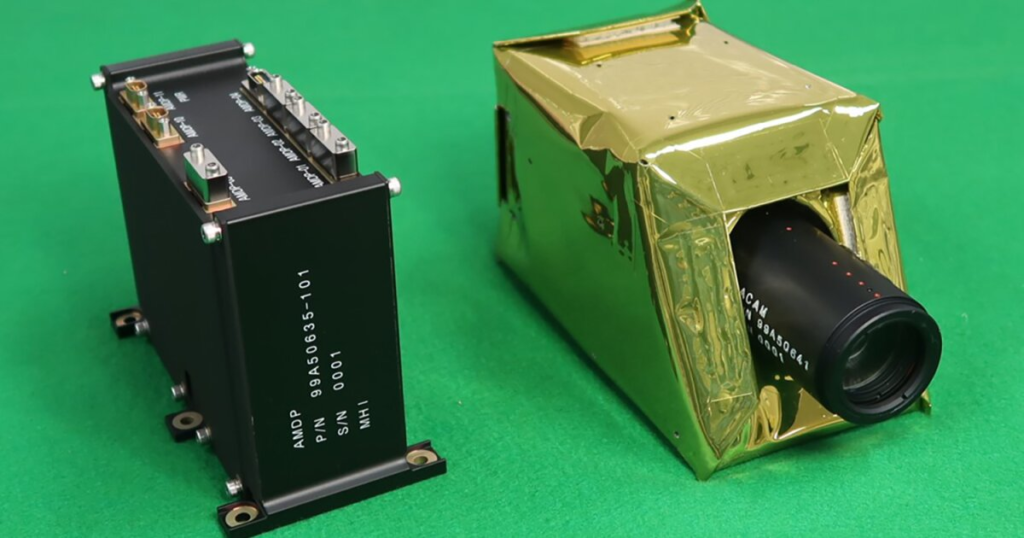
Infamous “ghost ships” may not be able to hide on the high seas much longer thanks to new technology being developed by Mitsubishi Heavy Industries. The system uses a dynamic satellite camera and advanced data processing to visually track ships in real time. Continue Reading Category: Marine, Transport Tags: Satellite, Artificial Intelligence, Shipping source

Ghost ships can't hide from new space-based tracking system Read More »

Headlight projectors turn your car into a drive-in theater

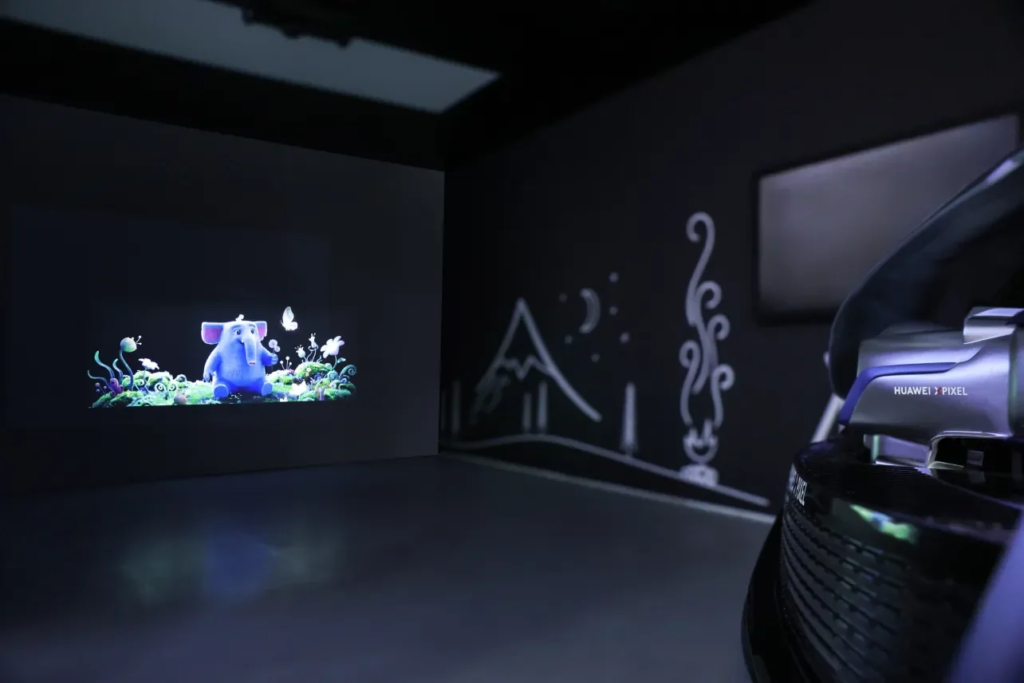
Huawei’s latest XPixel smart headlights upgrade automotive lighting from a safety feature into a full-color projection system that can play movies, render games, and guide drivers – all from the front of the car. Smart headlights have been creeping toward this future for the better part of a decade. We’ve previously covered Mercedes’ early Digital Light concept that projected street signs and markings onto the road, as well as the Maybach version that packed a million pixels into each lamp for driver-assist graphics. Those systems were monochrome, though, and focused solely on driving. Huawei’s XPixel headlights project a full-color 100-inch image onto a wall, effectively turning a parked EV into an open-air cinemaHuawei Huawei’s pitch is different. Shown off at the Beijing Auto Show alongside its Qiankun technology conference, the new XPixel platform is the first car-headlight system to do full-color projection. Think welcome-mat light shows in your driveway, a Tron-style grid on the garage floor for your kids, or an outdoor film night thrown straight from the hood of the car. Under the skin, XPixel is a high-resolution, pixel-controlled LED headlight platform that Huawei has been shipping in a monochrome form for around three years (it already appears in vehicles like the Stelato S9). The new generation adds full RGB output on top of Huawei’s adaptive lighting stack, enabling what Huawei calls an “open-air cinema” mode that can throw a roughly 100-inch image onto any nearby wall with surprisingly crisp clarity. XPixel’s million-pixel resolution lets the system render movies, live sports, navigation arrows, and game graphics with surprising clarityHuawei Demos at the show ran the gamut from movies and video clips to live soccer matches, navigation arrows, and turn-by-turn cues painted directly onto the road. Huawei’s own automotive optics materials describe the module as a “three-in-one” smart car-light unit that combines illumination, projection, and color output, paired with a high-precision ADB (adaptive driving beam) system for finer-grained masking around other road users. It’s not all party tricks, either. Huawei says the headlights can intelligently shift color temperature in rain or fog to improve light penetration and visibility, and the system supports “lighting carpet” effects that follow the curve of the road, plus driving-assist light signals to communicate silently with other drivers and pedestrians. The full-color XPixel system is set to debut on an upcoming version of the Huawei-backed Aito M9 SUVAito Huawei hasn’t put a standalone price on XPixel (it’s sold to automakers rather than consumers) but the company has confirmed that the full-color version will debut in an upcoming version of the Aito M9, the self-driving electric SUV that Huawei has co-developed since 2023. The bigger picture is what’s interesting here. Western automakers have spent years trickling pixel-headlight features out cautiously, partly because regulations in markets like the US have historically been slow to allow adaptive driving beams in the first place. Meanwhile, Chinese EV brands – buoyed by suppliers like Huawei – are skipping straight past the cautious phase and into headlights that double as projectors and infotainment surfaces. Whether XPixel is the future of automotive lighting or just an extremely flashy waypoint, it’s a strong sign that the humble headlight is about to become one of the more expressive parts of the car. Source: Huawei source

Headlight projectors turn your car into a drive-in theater Read More »

Dow Jones Futures Rise As Cisco Soars On AI Orders; Trump-Xi Summit Begins

Dow Jones futures rose modestly early Thursday, along with S&P 500 futures and Nasdaq futures, as Cisco Systems (CSCO) soared on strong earnings and guidance. AI chipmaker Cerebras (CBAS) priced its initial public offering high. President Donald Trump and Chinese President Xi Jinping met starting Thursday morning local time. The Xi-Trump summit is set to last for two days. Trade… Copyright ©2026 Investor’s Business Daily, LLC. All rights reserved. 87990cbe856818d5eddac44c7b1cdeb8 source

Dow Jones Futures Rise As Cisco Soars On AI Orders; Trump-Xi Summit Begins Read More »

Calbee goes monochrome amid Middle East supply crisis

Japanese snack brand Calbee will switch its flagship potato chip packaging to black-and-white due to Middle East tensions disrupting supplies of printing ink and other raw materials. Expected to arrive in stores from 25 May, a total of 14 product variants, including potato chips, Kappa Ebisen prawn crackers, and Frugra breakfast cereal, will be subject to the change, with packaging limited to just two ink colours. According to its notice, Calbee said the measure is intended to help maintain a stable product supply, emphasising that the change applies only to a limited number of products and will not affect product quality. “Calbee will continue to respond flexibly and promptly to changes in its operating environment, including geopolitical risks, and remains committed to maintaining a stable supply of safe, high‑quality products,” the notice reads. The announcement has sparked shock and discussion among netizens on social media platforms such as X, MARKETING-INTERACTIVE  confirmed. A number of netizens said the new measure of switching Calbee’s packaging to black and white may make the oil shortage tangible and visible to the public, which seems like a good idea.  Meanwhile, some have even used AI to imagine products on Japanese store shelves gradually “turning black and white”. MARKETING-INTERACTIVE has reached out to Calbee for more information.  Don’t miss: Oil, outrage and opportunity: The US‑Iran war’s shockwaves through the Philippines Since the US and Israel launched a joint military strike against Iran, shipping through the Strait of Hormuz has remained disrupted, leading to a spot shortage of naphtha in Asia, with prices nearly doubling from pre-war levels. Asian countries rely heavily on the Middle East for oil, and the shipping crisis in the Gulf has hit them hard. Japan, for example, got over 90% of its crude oil and 70% of its naphtha from the region before the conflict. In March, Japan’s crude oil imports dropped 30% from the previous month to about 52 million barrels-their lowest level since 2013. The impact is also spilling into other industries. In early May, Japanese foodmaker Mizkan suspended some products and raised prices for others after running short of polystyrene containers for its fermented soybean snacks. Furthermore, The Philippines, declared a national energy emergency in March. President Ferdinand Marcos Jr. made the Philippines the first country in the world to issue such a declaration, citing the “imminent danger” the conflict poses to the nation’s energy supply. Disruptions in the Middle East, including the near-closure of the Strait of Hormuz, a vital global oil route, have roiled world oil markets and strained supply chains. Mark your calendars for 24 June! #Content360 Hong Kong returns with a dynamic, one-day event dedicated to pivotal trends—from the silver economies to breakthrough IP collaborations, sports, and beyond. Let’s dive into the art of curating content with creativity, critical thinking and confidence! Related articles: Godiva turns 100 with reimagined signature chocolates and packagingMcDonald’s CNY packaging sparks debate over cultural symbolismYeo’s bets on fortune horse packaging and gamified social play this CNY source

Calbee goes monochrome amid Middle East supply crisis Read More »

Netflix ramps up global ad push with AI tools and 250M monthly viewers

Netflix is accelerating its transformation into a global advertising platform, unveiling a major expansion of its ad-supported business alongside new AI-powered buying tools, audience planning systems and broader international rollout plans. At its annual Upfront presentation, Netflix revealed its advertising tier now reaches more than 250 million monthly active viewers globally, as the streaming giant intensifies its push for a larger share of global media budgets. The company also confirmed its ad-supported tier will expand into 15 additional countries from 2027, including New Zealand, Indonesia, the Philippines and Thailand – markets increasingly viewed as critical battlegrounds for streaming and digital advertising growth across APAC. The updates mark a major evolution in Netflix’s advertising ambitions. What began as a cautious move into ad-supported streaming is rapidly evolving into a much broader ecosystem play spanning AI-driven ad buying, clean room integrations, audience forecasting, contextual targeting and expanded programmatic infrastructure. SEE MORE: Streaming take aim at TV’s old measurement system Netflix president of advertising Amy Reinhard said the company was now moving beyond simply proving advertising could work on the platform. “If the last couple of years were about proving we’re a durable player, this year is about establishing ourselves as a formidable one,” Reinhard said. AI is becoming central to that strategy. Netflix said it is testing AI agents capable of managing and purchasing ads, while also using AI to dynamically adapt creative assets across different ad formats including vertical video and pause ads. The company is additionally expanding contextual advertising capabilities that match brand creative with specific Netflix shows and viewing environments, technology already tested with advertisers including DoorDash, Target and TurboTax. Netflix said the capability will roll out across all ad-supported markets by the end of the year. The streaming giant is also continuing to deepen its advertising infrastructure, expanding partnerships around clean room technology, measurement and audience planning as competition across streaming intensifies. The announcements come at a pivotal moment for the broader video market. Streaming platforms globally are increasingly pushing for a larger share of advertising budgets, while simultaneously challenging legacy television measurement systems and planning models that many believe no longer reflect modern viewing behaviour. For Netflix, the message from this year’s Upfront was increasingly clear: the company no longer sees advertising as a side business attached to streaming. It is building a full-scale advertising platform designed to compete for a much larger share of global media investment. source

Netflix ramps up global ad push with AI tools and 250M monthly viewers Read More »

Stock Market Today: Nasdaq Ends Strong As AI Leads; Cybersecurity Stock Attempts Breakout (Live Coverage)

The Dow Jones Industrial Average kept losses modest all session long Wednesday while rising tech and chip stocks, including Nvidia (NVDA) and Micron Technology (MU), helped the Nasdaq composite finish with a solid gain and hover near record highs on the stock market today. The Dow Jones Industrial Average cut relatively small losses to 0.1%, finishing the day at 49,693… Copyright ©2026 Investor’s Business Daily, LLC. All rights reserved. 87990cbe856818d5eddac44c7b1cdeb8 source

Stock Market Today: Nasdaq Ends Strong As AI Leads; Cybersecurity Stock Attempts Breakout (Live Coverage) Read More »

Record-breaking volcanic eruption somehow cleaned up its own pollution

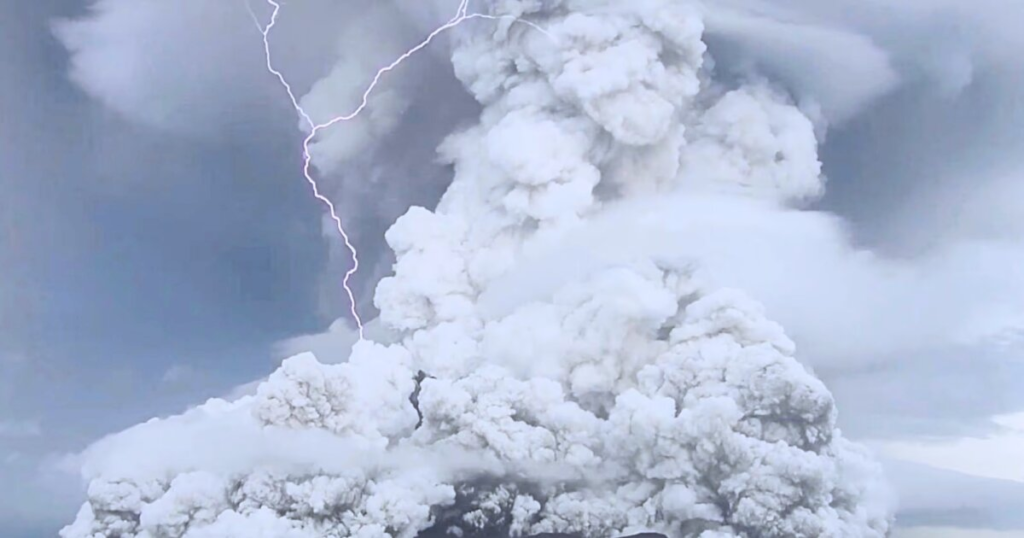
Volcanoes are messy things, what with all that ash, water vapor, sulfur, and greenhouse gases polluting the atmosphere. As one of the largest blasts seen in modern history, the 2022 Hunga Tonga-Hunga Ha’apai eruption in the South Pacific could be considered one of the messiest. At least the colossal blast had the good graces to clean up after itself, according to a surprising discovery by a team of researchers from across Europe. A recently published investigation led by Maarten van Herpen, a physicist from Acacia Impact Innovation BV in the Netherlands, used satellite data to uncover evidence of methane breaking down in the volcano’s plume, high in the stratosphere. “It is known that volcanoes emit methane during eruptions, but until now it was not known that volcanic ash is also capable of partially cleaning up this pollution,” says van Herpen. Methane is a rather notorious greenhouse gas, with a heat-trapping potency some 28 times that of carbon dioxide. It’s with some small fortune, then, that the molecule breaks down comparatively readily, combining with ozone to form CO2 and water within around a decade of its release. While the most concerning sources of emission include fossil fuel industries and fermentation involving livestock and landfill, volcanoes contribute a small amount of the gas by breaking down organic material in the planet’s crust or through inorganic geological reactions and ejecting it into the atmosphere during eruptions. Researchers typically monitor the emission and breakdown of methane using satellites that detect signature infrared reflections from the surface. Over the dark, open ocean, this isn’t possible, forcing scientists to get creative. Knowing that methane temporarily oxidises to form formaldehyde, which has a long-wave ultraviolet signature, van Herpen and his team hunt for this short-lived molecule in the plume of the Hunga Tonga-Hunga Ha’apai eruption. “When we analysed the satellite images, we were surprised to see a cloud with a record-high concentration of formaldehyde,” says van Herpen. “We were able to track the cloud for 10 days, all the way to South America.” By the team’s estimates, around 300,000 metric tons of methane – the equivalent of emissions from 2 million cows – was released from the eruption. It was being removed at a rate of around 900 metric tons a day. Given that formaldehyde disintegrates into water and carbon dioxide in just a few hours, some mysterious process must have been churning it out of the plume’s methane. The solution, the team claimed, was in another discovery made by van Herpen and his colleagues half a world away, just a few years prior. In 2023, they published the results of a modeling study that showed sunlight could release chlorine from sea spray when combined with iron-bearing dust blown from the Sahara. This chlorine, they argued, could react with methane to form hydrochloric acid. Was it possible that the same reaction was taking place in the ash and seawater spewed up by the Hunga Tonga-Hunga Ha’apai eruption? If so, models predicting the global methane budget may need a bit of tweaking. “We now know that atmospheric dust – for example, from a volcanic eruption – impacts the methane budget, meaning the budget of how much methane is added to the atmosphere and how much is removed,” says University of Copenhagen atmospheric chemist Matthew Johnson. “Because dust has not previously been taken into account, it is important that we correct the data on which these estimates are based.” This research was published in Nature Communications. Source: University of Copenhagen Fact-checked by Bronwyn Thompson source


Record-breaking volcanic eruption somehow cleaned up its own pollution Read More »