Supertall skyscraper comes with a cool terracotta twist

In a world dominated by glass rectangular towers, the recently completed Wasl Tower takes a different approach to skyscraper design. The supertall features a twisting form wrapped in thousands of sculpted terracotta fins that help shade and cool the building in Dubai’s scorching heat. First revealed almost a decade ago, Wasl Tower is designed by UN Studio, in collaboration with engineering expert Werner Sobek, and is located near the world’s tallest skyscraper, the Burj Khalifa. The building reaches a height of 302 m (991 ft), making it just about a supertall – the designation is given for towers over 300 m (984 ft) – and has one of the world’s tallest terracotta facades. Wasl Tower’s twisting exterior is wrapped in thousands of terracotta finsJohnseyePhotography The skyscraper twists as it rises to produce a distinctive form enveloped in both glass and a ceramic “cloak” made up of terracotta fins, lending it a unique textured look and enabling it to take the sting out of the extreme local heat. It also hosts an intricate custom lighting system, designed in partnership with Arup Lighting, that’s programmed to give the building subtle shifts in appearance. “Thousands of ceramic fins provide shading, reduce heat radiation and capture high winds, adapting to the desert climate while reducing cooling loads by approximately 10% compared to older towers in the city,” explains the studio. “Ceramics, a traditional material in the region, were reimagined by UNS for high-rise application, combining low-tech manufacturing methods with advanced design techniques. Its reinvention at scale signals a continuity between material heritage and modern innovation. “Each composite ceramic fin features a custom terracotta profile, baked with a metallic glaze that enables it to transform visually throughout the day and seasons. As the fins channel wind around the building, integrated aluminum grills enable the airflow to cool the heat absorbed by the ceramic modules, while the cavity between the fins and the tower’s interior curtainwall system further supports passive cooling. This dual-purpose envelope combines functionality with expressive design, creating a facade that is both energy efficient and visually striking.” Inside, the tower contains a luxury hotel, as well as office space, residences, restaurants, wellness facilities, and event spaces. Elevated social and dining areas are distributed throughout the interior, and an adjacent low-rise building, linked by a skybridge, hosts a carpark and ballroom. There are also multiple terrace areas with swimming pools. Wasl Tower includes multiple terrace areas and swimming poolsAhmad Alnaji/SARAB Dubai is one of the world’s skyscraper capitals, with many other high-profile projects planned for the Arab Emirate, including several by Mercedes-Benz, MVRDV, and even the Chelsea soccer club. Source: UN Studio source

Supertall skyscraper comes with a cool terracotta twist Read More »

Tantan unveils new identity in push for better dating

China-born dating app tantan has established Singapore as its new global headquarters as it looks to expand across APAC and international markets. The move comes as the dating platform rolls out a refreshed brand identity and new positioning, “Date better”, which aims to reflect a more intentional, inclusive and locally nuanced approach to modern dating. The brand refresh marks a new chapter for tantan as it seeks to broaden its appeal beyond its Asian roots and connect with a more diverse global audience. As part of the reintroduction, tantan will be focusing on product upgrades, community-led experiences and market-specific activations across key markets including Malaysia, Thailand, Hong Kong, Taiwan and the US. Don’t miss: AI reshapes dating platforms, but singles set clear limits on emotional automation  According to tantan, the decision to anchor its international business in Singapore was driven by the city’s digitally mature population, progressive social outlook and role as a regional gateway for culture and talent. Meanwhile, the new “Date better” positioning is intended to serve as both a brand promise and call to action. It focuses on creating better matches, better conversations, safer environments and more affirming spaces for users. Unlike some dating platforms that have shifted towards serious, commitment-led matchmaking, tantan said it will continue to champion casual dating, but with greater intention, honesty and respect for individuals. As part of the refresh, tantan is also investing in product enhancements, including a revamped UI/UX, improved trust and safety features and AI-enabled tools. These features will be rolled out gradually to support more relevant connections and help identify and deter bad actors on the platform. The app will also introduce community-driven discovery features and culturally rooted product elements, including daily horoscope prompts inspired by Asian traditions. A fuller product roadmap is expected to be shared in the next phase of the brand’s global reintroduction. In addition, tantan said it is strengthening its commitment to creating a safe and inclusive space for users, including the LGBTQ+ community across APAC and globally. Its safety features include verification badges, privacy controls such as “Who can see me”, and reporting tools. The platform said its community guidelines take a zero-tolerance approach to hate speech, homophobia and transphobia. The rebrand also aims to reset perceptions of the platform as it reintroduces itself to users in Singapore, Southeast Asia and beyond through a refreshed identity and on-ground community activations. “Our global reintroduction is about more than a new look. It is about redefining tantan’s narrative as a safe and innovative platform for a new generation,” said Willynn Ng, regional head, international markets at tantan. “By anchoring our APAC hub in Singapore and prioritising interest-based discovery, we are setting a new standard for authentic, secure and meaningful connections on a global scale,” she added. tantan’s renewed focus on Singapore and APAC comes as dating apps continue to evolve their positioning amid shifting consumer expectations around safety, authenticity, inclusivity and the role of AI in matchmaking. tantan’s refreshed positioning also comes as dating platforms in Singapore lean further into intentional, experience-led connections beyond the app. Earlier this year, Coffee Meets Bagel partnered SG Culture Pass in a year-long collaboration aimed at encouraging singles to pursue more meaningful dates through arts and culture. The tie-up, themed “Date with intention: Culture brings us closer”, positioned workshops, performances, museums and heritage spaces as alternatives to traditional dinner or café meet-ups. Related articles:  Let Thy Swipe: Tinder taps Bridgerton fever with ‘year of yearning’ campaign  Is your GRC killing your dating game? Coffee Meets Bagel thinks so  Dating apps see Olympic level engagement in Paris during games  source

Tantan unveils new identity in push for better dating Read More »

Impossibly tiny, adorable camper truck designed for US, not Japan

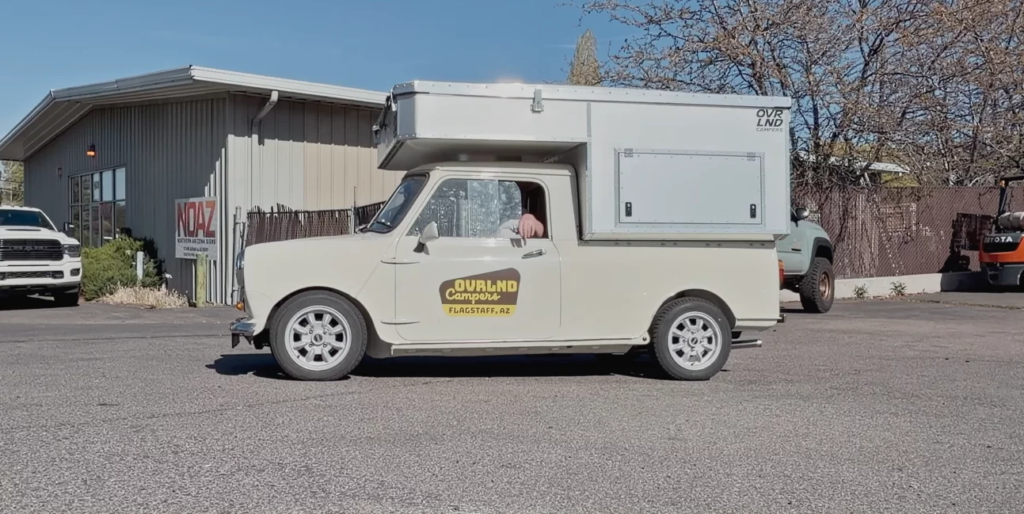
We’ve become big fans of Ovrlnd Camper’s innovative ultralight pickup toppers and even bigger fans of its videos. This time around, the Flagstaff builder outdoes itself on both fronts with a pop-up camping topper sized to a 1980 Mini 95 pickup, creating a camping truck that sizes comparably to a Japanese kei camper. And though it looks more like a toy at first, the rig is fully functional, offering over 6 feet (1.8 m) of standing room inside and a bed that can comfortably sleep two people. It’s the cutest camper you’ll see in the US this year (or probably any year). Originally called just the Mini Pick-Up, the little truck shared a platform with the Mini Van and was built between 1961 and 1983. It took on the name 95 during a revamp in 1978, a nod to its 0.95-tonne gross vehicle weight rating. With original engine options starting at 848cc, the tiny Mini truck that was built between 1961 and 1983 never had quite as small an engine as actual 660cc Japanese kei cars, but it did measure within the 134-in (340-cm) length that’s the maximum for kei vehicle designation. Its height of just 53.5 in (136 cm) and width of 55.5 in (141 cm) also fell well within modern kei regulations, giving the classic Mini a proper kei presence today. Ovrlnd’s Mini 95 makes an adorable camper for two people Ovrlnd Campers Ovrlnd says it won the 1980 Mini 95 at auction for a bid of US$22,000. It then went about building a custom-sized version of its wide-set Chubby pop-up camping topper fit to the tiny truck and its 4.5-foot bed. The decision to go with the Chubby sizing, which is 7 in (18 cm) wider than Ovrlnd’s standard models, was an easy one, expanding the sleeping proportions to a more feasible double bed width of 55 inches (140 cm) atop a slim pickup bed that measures roughly 43 inches (109 cm) wide from rail to rail. That double bed extends 74 inches (188 cm) in length. The rear sleeper platform panel pulls out to complete the bed, sliding away atop the front alcove panel during the day to clear out more volume inside. Even with the bed fully deployed, there’s still space just past the foot to drop down into the pickup box without having to slide the bed back. At 6.2 feet long, the bed is shorter than the 6.8-ft extended beds on its standard cabover toppers but still long enough for most adultsOvrlnd Campers Ovrlnd’s Mini 95 topper’s high-rising pop-up roof opens a full 6.5 feet (198 cm) of standing height atop the pickup bed floor – plenty for most full-size humans to stand comfortably when changing clothes. The topper even includes rails on the roof for adding a bike rack or other carrier system. Unlike on the typical truck, you could even reach cargo mounted to the top of the Mini 95 Ovrlnd topper from the ground, no need to jump up on the tailgate or a ladder to pull things on and off. On the downside, there may not be much of any payload to work with after accounting for the topper itself, driver and passenger, and basic camping gear and luggage. Ovrlnd estimates the miniaturized topper’s weight at 280 lb (127 kg) so with two people and other obligatory cargo, it might be pushing rather close to the 95 truck’s 560-lb (254-kg) payload. Even after that monster 1/2-in lift, the Mini 95 camper truck is low enough to mount a bike on the topper roof without a ladder Ovrlnd Campers As far as the actual truck goes, it features much of the original equipment, including bi-pane sliding windows that slide both forward and backward, the latter designed for dangling and ashing a cigarette. The original sub-1.0-liter engine was swapped with a slightly larger 1,275cc unit, and Ovrlnd gave the truck a big, ol’ off-road “lift” by simply adjusting the height nut on the rubber cone suspension. This raises ride height by about a 1/2 inch (1.3 cm) to compensate for the sag from the weight of the topper. The truck also received a full tune to perform comfortably at Flagstaff’s 7,000-ft (2,134-m) elevation after traveling from much closer to sea level at its previous home in Florida. Original components that lend to the truck’s character include the externally mounted door hinges, the stamped single-piece body-color grille, and the pin-drop tailgate that’s held in place by sliding pins rather than a modern locking closure. A very simple two-seat cabOvrlnd Campers Much like the giraffe-inhabited Puccino from earlier this year, Ovrlnd’s build brings a little innocent joy and whimsy to an overland (yay vowels!) space that has a tendency to take itself way too seriously. Consider it a counterpoint to the lifted Tacoma parked downtown every day with a roof full of Pelican boxes, rooftop tent out back, and all means of traction boards, LPG tanks, Rotopax canisters, shovels and jacks hanging off of every free space along the sides. We bet Ovrlnd has even driven it to more rugged places than some of those Tacomas will ever see. It looks like this custom build will exist solely as show truck and not evolve into any type of product. In fact, Ovrlnd founder and boss Jay Wellman can be heard in the walkthrough video saying, “No one’s ever gonna buy this.” Wellman does have the tendency to roll forward with a delightfully impromptu stream of consciousness throughout his videos, though, so maybe if you send an email request with some photos of your own wicked lil’ Mini 95 pickup he’ll build you one. Or maybe he’ll sell the complete shop camper truck somewhere down the line. Meanwhile, a standard Ovrlnd topper for a midsize truck starts at US$7,700 for the boxy, straight-popping Bivy or $8,700 for the cabover model. Adding the “Chubby” flared sidewall package tacks on $1,150. For a more in-depth dive of both Ovrlnd’s 1980 Mini 95 truck and its

Impossibly tiny, adorable camper truck designed for US, not Japan Read More »

Dow Jones Futures Rise, Oil Prices Fall; Google, Amazon, Meta, Microsoft, Caterpillar Are Big Earnings Movers

Dow Jones futures rose modestly early Thursday, along with S&P 500 futures and Nasdaq futures. Oil prices reversed solidly lower from overnight highs. Google parent Alphabet (GOOGL), Amazon.com (AMZN), Meta Platforms (META) and Microsoft (MSFT) topped views late but their stocks diverged. The titans’ generally strong capital spending plans are good news for Nvidia (NVDA) and the entire AI ecosystem.… Copyright ©2026 Investor’s Business Daily, LLC. All rights reserved. 87990cbe856818d5eddac44c7b1cdeb8 source

Dow Jones Futures Rise, Oil Prices Fall; Google, Amazon, Meta, Microsoft, Caterpillar Are Big Earnings Movers Read More »

NASA pushes next-gen Mars helicopter rotors through the sound barrier

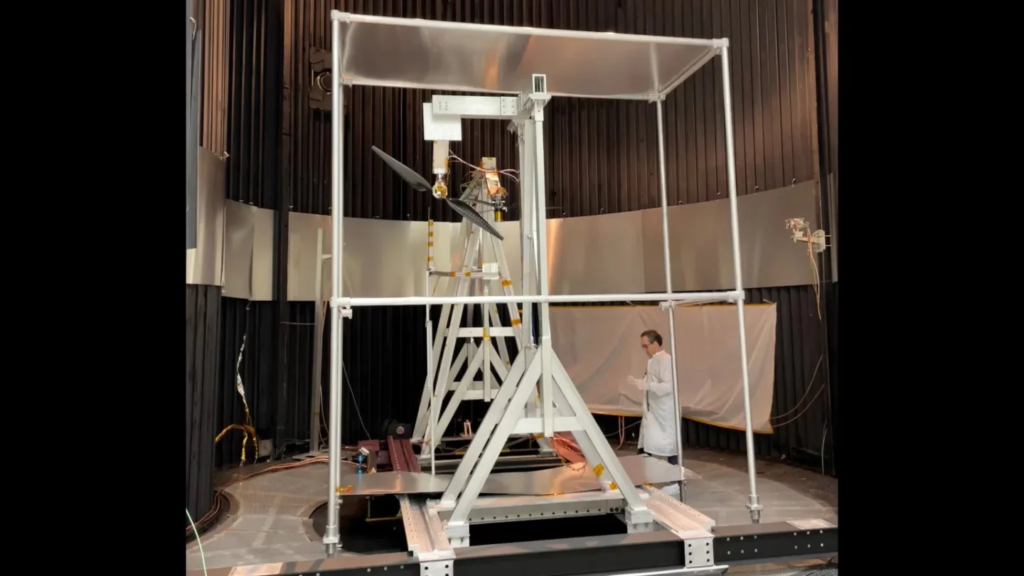
Engineers at NASA’s Jet Propulsion Laboratory (JPL) in Pasadena, California, have demonstrated that the blades of their next-generation Mars helicopter rotors can punch past the speed of sound and come out intact. In recent tests, a three-bladed rotor reached Mach 1.08 in simulated Martian conditions, boosting lift capacity by 30% without a single blade fracturing. Making something that can fly on Mars is a brutal challenge. The red planet has air density roughly 1% of that here on Earth, meaning every meter of altitude gained demands a disproportionate amount of effort. To generate meaningful lift in that near-vacuum, you have only two options: spin the blades faster, or make them longer. Both paths lead toward the speed of sound, where aerodynamics becomes deeply unpredictable. What makes this especially tricky is that the speed of sound (Mach 1) isn’t a universal number. At sea level on Earth, it clocks in around 1,223 km/h (760 mph). On Mars, where the thin, cold atmosphere is mostly CO2, the sound barrier sits closer to 869 km/h (540 mph). Crossing it on any planet means entering a physical frontier where shock waves can suddenly overwhelm a rotor structure. That’s why NASA’s Ingenuity helicopter – which made history on April 19, 2021 as the first powered, controlled aircraft to fly on another world – was deliberately kept away from that frontier. Its composite foam-covered rotors never exceeded 2,700 rpm across 72 flights, keeping blade tips at a maximum of Mach 0.7. “If Chuck Yeager were here, he’d tell you things can get squirrely around Mach 1,” said Jaakko Karras, who led the rotor testing at JPL. “With that in mind, we planned Ingenuity’s flights to keep the rotor blade tips at Mach 0.7 with no wind so that if we encountered a Martian headwind while in flight, the rotor tips wouldn’t go supersonic. But we want more performance from our next-gen Mars aircraft. We needed to know that our rotors could go faster safely.” JPL’s 25-Foot Space Simulator, where engineers replicated Martian atmospheric conditions to push the rotors past Mach 1NASA/JPL/Caltech The tests took place inside JPL’s historic 25-Foot Space Simulator, a room-sized chamber capable of replicating Martian surface conditions. Engineers evacuated the air, replaced it with low-density carbon dioxide, and subjected the rotor to increasing speeds while blasting it with simulated wind gusts. To preserve the integrity of the blades, the team lined part of the chamber walls with steel sheeting in case they disintegrated at the supersonic threshold. After 137 test runs, no shielding was needed. The rotor tips reached Mach 1.08, and the blades held. The rotors were designed and built by AeroVironment in Simi Valley, California. Two configurations were tested: the three-bladed rotor and a slightly longer two-bladed rotor from the SkyFall project, which approached supersonic speeds at 3,570 rpm. SkyFall is NASA’s next major leap in Martian aerial exploration. Unlike Ingenuity – which was a pure technology demonstrator with no scientific instruments – SkyFall-generation helicopters are being designed to carry real payloads: sensors, science instruments, and larger batteries for extended flights. The goal is to support both robotic and future human missions by exploiting the unique advantages of low-altitude aerial reconnaissance. The SkyFall design team has already incorporated the March test results into its performance specifications. Three next-generation Mars helicopters are currently targeted for a December 2028 launch. “We thought we’d be lucky to hit Mach 1.05, and we reached Mach 1.08 on our last runs,” said Shannah Withrow-Maser, an aerodynamicist at NASA’s Ames Research Center. “We’re still digging into the data, and there may be even more thrust on the table. These next-gen helicopters are going to be amazing.” Testing the Next Generation of Mars Helicopter Rotor Blades Source: NASA source

NASA pushes next-gen Mars helicopter rotors through the sound barrier Read More »

Hyundai leaves cars behind to ride the K-wave

Hyundai is tapping into the global rise of Korean culture with its support of K-Everything, a new four-part CNN original series hosted and executive produced by Korean American actor Daniel Dae Kim, best know for his roles in Lost and Hawaii Five-0. Premiering on CNN International and streaming on HBO Max, the series explores the forces behind Korea’s growing influence across music, film, food and beauty. For Hyundai, the move marks a shift away from product-focused messaging towards culture-led storytelling, as the automaker looks to strengthen its connection with global audiences through its Korean roots. Don’t miss: Hyundai appoints new PR agency in Malaysia  Additionally, the partnership aligns with Hyundai’s “Progress for humanity” platform and positions the company alongside a broader narrative about Korea’s rise as a global cultural powerhouse. According to Hyundai, the collaboration reflects the company’s own journey from a domestic automaker to a global mobility brand, mirroring Korea’s transformation into a major exporter of culture and innovation. Across four episodes, K-Everything features voices from some of Korea’s biggest cultural industries. The music episode includes artists such as Psy, Taeyang and Jeon Somi, while the film episode features Lee Byung-hun and screenwriter Kim Eun-sook. The food episode spotlights chefs including Corey Lee and Mingoo Kang, while the beauty episode features model Irene Kim and beauty creator Leo J. “K-Everything marks a significant milestone as we develop a CNN Original Series with our long-standing brand partner HMC for our global audience,” Cathy Ibal, senior vice president, CNN International Commercial, said. “We are proud to reach this inaugural moment where K-Everything will showcase the forces behind Korea’s cultural rise, tracing how distinct traditions evolved into global phenomena.” The series forms part of Hyundai’s broader global campaign with CNN International Commercial and builds on a 22-year partnership between the two companies. As brands increasingly look beyond traditional advertising, Hyundai’s latest move underscores how cultural storytelling is becoming a powerful way to build relevance and emotional resonance with audiences worldwide. Hyundai’s latest content push also reflects its broader efforts to align brand storytelling with social and environmental themes beyond mobility. Earlier this year, the company launched “Forests without names“, a global Earth Month campaign spanning South Korea, Argentina and Australia to spotlight underwater “sea forests” and their role in supporting biodiversity and absorbing carbon. The initiative invited the public to help name a marine ecosystem in Australia and built on Hyundai’s wider sustainability efforts, including seaweed restoration projects in Korea and marine waste clean-up programmes across 10 countries. Related articles:   Hyundai hands Malaysia creative duties to The SHOUT GROUP  Cheil Indonesia wins HD Hyundai account, leads creative and digital revamp Shah Rukh Khan and Deepika Padukone embroiled in Hyundai vehicle complaint   source

Hyundai leaves cars behind to ride the K-wave Read More »

Neanderthal dentists used stone drills to fix ancient teeth

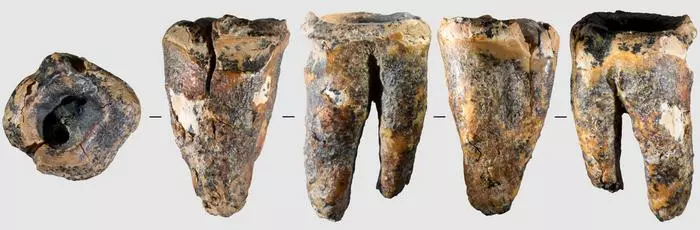
Few of us enjoy the dentist – but next time you’re in the chair, think about how lucky you are not to have been visiting a Neanderthal tooth doctor. New research on a single tooth from a Russian cave has found that its center is marked with the kind of grooves made by stone tools used as rudimentary drills. The tooth, dating back nearly 60,000 years, is now our oldest evidence of dental procedures being performed. While finding the tooth – at Chagyrskaya Cave, a rich source of Neanderthal fossils in southern Siberia – was an achievement in its own right, what it revealed was even more remarkable. Chagyrskaya 64 molar tooth and its macro-features: General view of the tooth in five projections At the center of the molar, scientists noticed a deep hole extending into the area that would have housed nerve endings. What’s more, marks on the tooth and the overall shape of the hole hinted at purposeful modification not the result of an accident. “We were intrigued by the unusual shape of the concavity on the tooth’s chewing surface,” says Alisa Zubova of Peter the Great Museum of Anthropology and Ethnography (Kunstkamera), St. Petersburg. “It differed from the normal morphology of the pulp chamber and did not match the typical pattern of carious lesions seen in Homo sapiens. Moreover, distinctly visible scratches suggested that the concavity was not the result of natural damage but of intentional actions.” Yes, the researchers confirm, the procedure would have been painful – but the hollowing-out of the tooth by a stone “drill” tool suggests it was done to alleviate a condition far more unpleasant and risky long-term. Infections back then could easily result in death, and there’s evidence that Neanderthal communities used plants as medicinal tools to treat such ailments and pain. This is the first time such a practice has been observed in a species not Homo sapiens. “This finding currently represents the world’s oldest evidence of successful dental treatment,” the authors note in the study. “The damage documented on the Neanderthal tooth from Chagyrskaya Cave in Siberia points not only to intentional pulp removal but also to antemortem wear – wear that could only have developed if the individual kept using the tooth while alive. We also identified areas of demineralization where remnants of carious damage were preserved, further indicating that the concavity in the tooth was associated with treatment. “Computed microtomography revealed changes in dentin mineralization consistent with severe caries,” the team adds. “Human manipulation of carious lesions has already been documented for the Upper Paleolithic, Mesolithic, and later periods. We therefore hypothesized that the damage we observed could also represent traces of such medical intervention – but from a significantly earlier period.” The scientists conducted a thorough investigation of the fossil, using modern technology and what we know of the Neanderthal societies of the region. Because of this, they’re confident of their research. “To interpret the concavity on the occlusal surface of the tooth, we conducted experimental manual drilling on a series of specimens: a modern human tooth and two H. sapiens teeth from a Holocene archaeological collection of uncertain temporal and cultural provenance,” says researcher Lydia Zotkina. “Comparison of the microscopic traces on the original Neanderthal specimen with those produced experimentally revealed a clear match,” she adds. “The findings demonstrate that drilling a carious lesion using a sharp, thin stone tool is entirely effective, permitting the rapid removal of damaged dental tissue.” The research was published in the journal PLOS One. Source: Peter the Great Museum of Anthropology and Ethnography via EurekAlert! source

Neanderthal dentists used stone drills to fix ancient teeth Read More »

Sound-wave 'sunscreen' shields delicate surfaces from damage

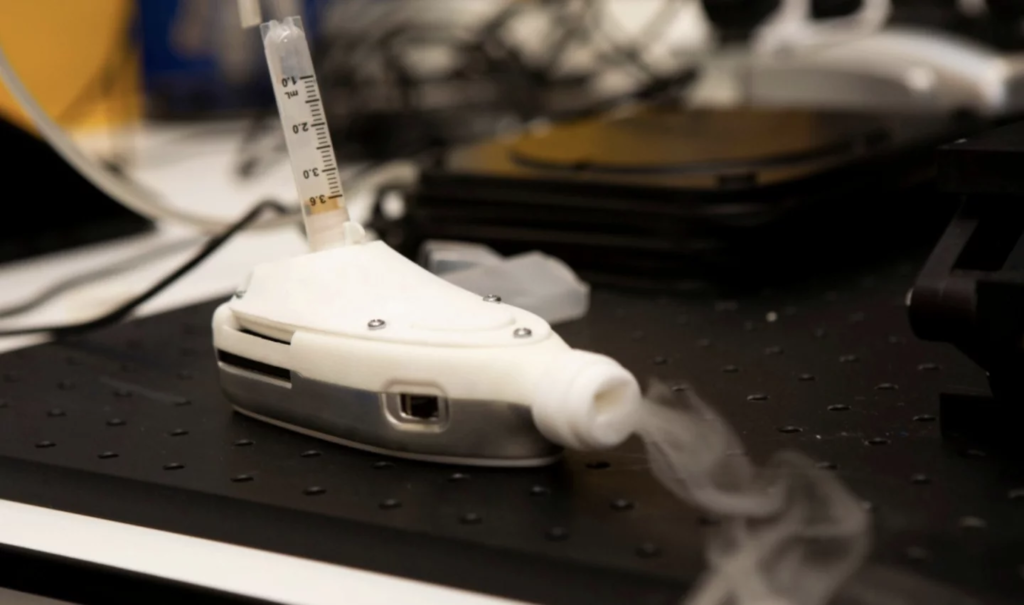
Scientists have developed a way to use sound waves to create microscopic layers of protection, demonstrating the method’s delicate handling on the leaves of the common houseplant Epipremnum aureum by blocking damaging ultraviolet (UV) rays without impeding photosynthesis. Researchers from Melbourne’s RMIT University tested their work on the plants, proving just how gentle yet functional this coating is. Yet the technology is aimed squarely at other materials – including textiles, plastics, glass, and silicon. “The coating absorbs harmful UV light while allowing visible light through,” says Javad Khosravi Farsani, lead author and PhD researcher at RMIT University. “That means the plant can continue photosynthesis while being protected from damage.” The process works by using high-frequency sound waves to destabilize liquid transferred to the leaves in the form of a fine mist, with the “micrometer-sized aerosol droplets” creating a covalent organic framework (COF) that acts as a consistent but ultra-fine layer of protection. The sound waves create a fine mist that can act like a plant sunscreenRMIT University “As proof of concept, we demonstrate that COFs can constitute protective coatings on plant leaves for solar ultraviolet shielding, thus highlighting the potential of the platform to extend the deployment of COFs in real-world devices, biological systems, and environmental interfaces,” the scientists describe in the paper. COFs are a class of highly porous crystalline materials often described as molecular scaffolding, a latticed structure with nanoscale holes that can be engineered to absorb light, trap chemicals, or protect surfaces. But the building blocks that form COFs are notoriously “fussy” with their self-assembly, which has been hard to master in the laboratory and even more difficult to apply beyond it. As such, COFs have largely remained lab materials, requiring precursor materials, extreme heat, and lengthy processing that would do more harm than good to delicate surfaces in the real world. “These materials have extraordinary properties, but you’ve typically had to choose between preserving their structure and protecting the surface you’re applying them to,” says Distinguished Professor Leslie Yeo, from RMIT’s School of Engineering and a senior author on the study. “What this work shows is a way to avoid that trade‑off by forming and coating the material under very gentle conditions.” The researchers used acoustomicrofluidics – ultra-high-frequency sound vibrations – to manipulate liquids, using a tiny chip that generates 10-MHz waves. Essentially, when a precursor liquid flows onto the vibrating chip, sound waves stretch the liquid, blasting its structure into the fine mist. As the aerosol travels through the air, the droplets organize themselves into protective layers on the surfaces of materials, even those as delicate as tissue. “Our method effectively combines manufacturing and coating into a single step,” says Associate Professor Joseph Richardson, a co‑corresponding author, who adds that the process is even simpler because it doesn’t need heat or lab controls; it works in open air at room temperature. “That simplicity is what makes it adaptable across different surfaces and applications.” Associate Professor Amgad Rezk, from RMIT’s School of Engineering, adds that this method greatly increases the use of COFs in real-world scenarios – and, as such, the team filed for an Australian Provisional Patent Application at the end of February. Associate Professor Amgad Rezk, PhD researcher Javad Khosravi Farsani and Associate Professor Joseph Richardson (from left) in the Melbourne labWill Wright/RMIT University “By using sound waves, we’re able to form and deposit the coating within minutes without heating or damaging the surface,” Rezk says. “That’s a major shift from conventional coating methods, and it allows us to work with fragile materials, including living plant tissue.” “That opens up opportunities for industries working with sensitive materials that simply couldn’t be processed this way before,” he adds. While the team’s demonstration was on plant leaves – which retained no damage for a measured period (60 days), following application, UV exposure, and coating removal – there are plenty of questions about the technology’s staying power when exposed to the elements. Still, finding a way to coat new electronics, sensors, and membranes, which are traditionally too heat-sensitive for current techniques but still need protection, could change how we see COFs. And the researchers have no concerns about scalability, which has been another limiting factor. “Owing to its miniature, lightweight footprint, the chipscale acoustomicrofluidic platform can readily be mounted on a drone or autonomous vehicle to enable precision deposition on plant leaves, while the chip’s low costs, enabled by leveraging the economies of scale inherent in mass nanofabrication, offers a path toward massive parallelization for deployment in large-scale real-world biotechnology applications,” the scientists conclude in the paper. The research was published in the journal Science Advances. Source: RMIT Fact-checked by Mike McRae. source

Sound-wave 'sunscreen' shields delicate surfaces from damage Read More »

Extra-wide tiny house focuses on storage without sacrificing comfort

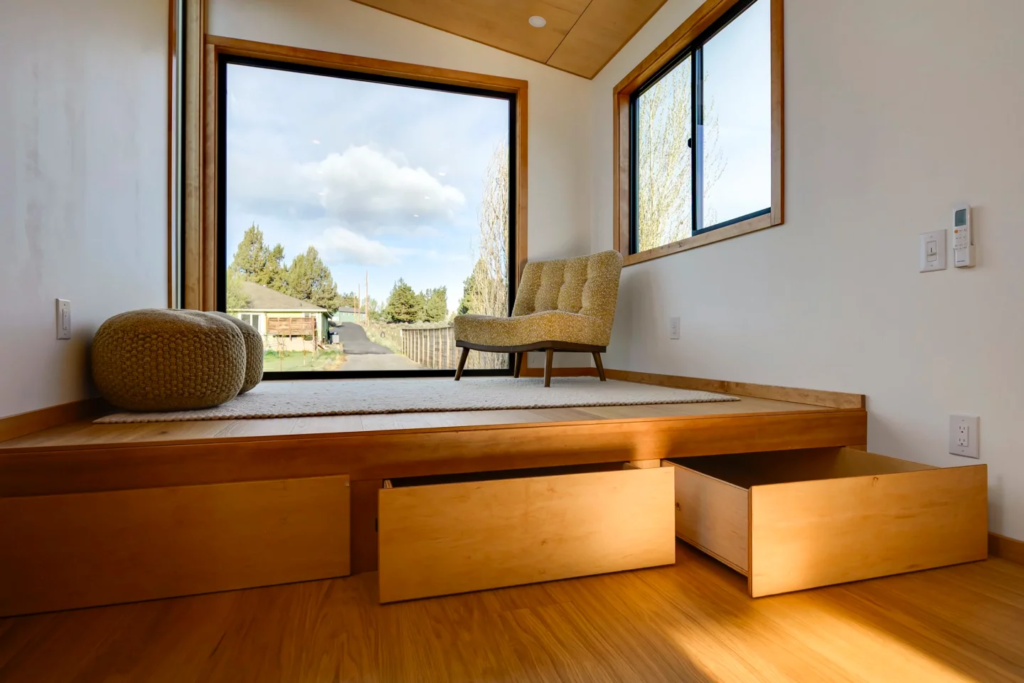
The Black Butte tiny house uses some clever interior design ideas to create an open and storage-packed layout that still makes room for some nice touches, including a bathroom with a freestanding tub. The Black Butte is designed by Spindrift Homes. Clad in a distinctive dark-stained wood, the home is based on a triple-axle trailer and has a length of 30 ft (9.1 m), which is around mid-size for a North American tiny house nowadays. However, its increased width of 10 ft (3 m) definitely helps it seem larger inside, albeit at the cost of it requiring a permit to tow on a public road. The Black Butte tiny house’s living room is raised slightly, creating lots of storage spaceSpindrift Homes The interior decor contrasts white drywall with a birch ceiling and engineered hardwood flooring, with wooden trim throughout. It also looks light-filled thanks to generous glazing, including a large picture window in the living room. Spindrift Homes has taken an interesting approach here and chosen to raise the floor slightly, creating generous underfloor storage space with drawers that are 8 ft (2.4 m) long. The room is shown sparsely furnished with just one chair but could comfortably fit a sofa and an entertainment center. The open layout places the kitchen nearby. This has custom birch cabinetry topped by stone counters and includes a sink, oven and gas cooktop, and a stainless steel fridge/freezer. From the photos, it looks like there would be enough space to add a small dining table too. The Black Butte tiny house’s kitchen includes custom cabinetry, with a sink, oven and gas cooktop, and a stainless steel fridge/freezerSpindrift Homes The bathroom is a definite standout in this model. Inspired by a spa, it’s finished in stone-look tiles and boasts the freestanding tub/shower, which is a rare luxury in a tiny house. It also has a vintage-looking wall-mounted sink with brass fixtures, and a composting toilet. Additionally, the bathroom contains a laundry area with a washer/dryer and some shelving. There’s just one bedroom in the Black Butte, which is situated up in the mezzanine loft. Accessed by a storage-integrated staircase, it has a double bed and yet more storage. It also has a lowered standing platform area, allowing the owner to stand upright. These are increasingly common in tiny houses lately and are very useful, making getting dressed in the morning much less of a chore. The Black Butte tiny house’s bedroom is situated in the loft and includes a double bedSpindrift Homes The actual Black Butte model shown has already been purchased by a customer, but if you want another like it, it will set you back around US$160,000. Delivery is available throughout the US, though we’ve no word on shipping costs, so those interested should contact the firm directly. Source: Spindrift Homes source

Extra-wide tiny house focuses on storage without sacrificing comfort Read More »