This dangerous bird has a secret hiding in plain sight

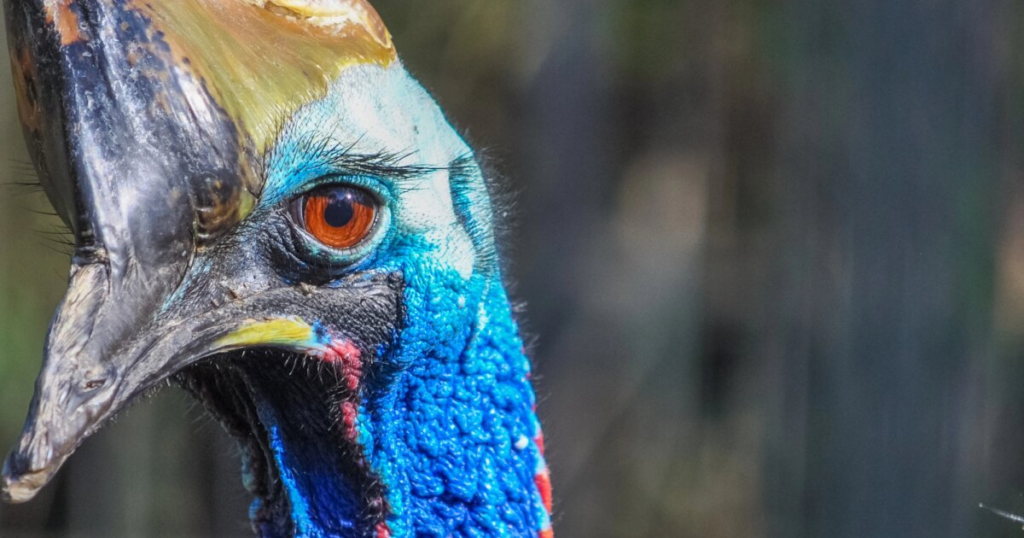
One of the world’s most dangerous birds may carry signals invisible to the human eye. Scientists have found that the helmet-like casque atop a cassowary’s head fluoresces under ultraviolet (UV) light, revealing striking patterns that differ between species. Researchers led by Dr. Todd L. Green of the New York Institute of Technology College of Osteopathic Medicine say the discovery could help scientists better understand cassowary biology, and may eventually provide new ways to identify individuals or populations in the wild. Like a real-world version of Marvel’s Photon, cassowaries – which belong to the genus Casuarius – may exhibit ultraviolet patterns invisible to the human eye. But while the glowing patterns initially hinted at a hidden communication system, the deeper researchers looked, the more complicated the mystery became. Found in the dense rainforests of New Guinea and northeastern Australia, cassowaries are among the most visually striking birds on Earth. With vivid blue skin, towering bodies, and dagger-like claws, cassowaries are often described as living dinosaurs. An image no doubt reinforced by the fact that scientists study them as modern analogs for extinct dinosaurs with elaborate cranial structures. Despite their intimidating reputation, cassowaries are also ecological heavyweights. As the largest fruit-eating animals in their ecosystems, they are considered keystone species, dispersing the seeds of hundreds of rainforest plants and helping maintain the structure of the forest itself. Yet much about the birds remains poorly understood, including the purpose of that strange helmet-like casque crowning their heads. For decades, researchers have debated what the casque is actually for. Is it a weapon, a shield, an ornament? The strongest theories have suggested it functioned as a weapon during combat. While other scientists have suggested it may help regulate temperature, amplify sound, or serve as a visual display during territorial encounters. That uncertainty is part of what made the structure so compelling to Dr. Green and his colleagues. The casque is large, visually prominent, and central to cassowary behavior, particularly during upright “stretch displays” used when confronting rivals. It feels like the kind of feature that should have an obvious explanation, yet no single theory has fully held up. Cassowaries are also notoriously difficult to study in the wild. Often solitary, they can become highly territorial, making direct observation both difficult and potentially dangerous for researchers. “When coauthor Dr. Paul Gignac (University of Arizona College of Medicine) shone the first UV torch on our frozen cassowary specimen to see biofluorescence, we knew we needed to investigate this concept more fully,” Dr. Green tells Refractor. Under UV light, the mystery deepened. What the team found was not a uniform glow, but distinct patterns that varied dramatically between species. The southern cassowary (C. casuarius) and northern cassowary (C. unappendiculatus) both showed extensive biofluorescence across large portions of the casque, with some individuals exhibiting coverage across more than 90% of the structure. The dwarf cassowary (C. bennetti), meanwhile, showed almost none. Even within the same species, the fluorescent regions varied between individuals, creating sharply contrasted patterns rather than an even wash of light. “My first inclination that the biofluorescent casque patterns differed between species occurred when I was visiting the Cassowary Conservation Project in 2021,” says Green. “We noticed that the casques of their southern cassowaries fluoresced in the rostral (front) portion and the casques of their northern cassowaries fluoresced in the caudal (back) portion or completely depending on the subspecies.” At first glance, the finding seemed to point toward communication. Many birds can see ultraviolet wavelengths invisible to humans, raising the possibility that cassowaries may also perceive visual cues hidden within the rainforest canopy. But the deeper the team looked, the less straightforward the discovery became. The casque not only fluoresces under ultraviolet light; it also reflects ultraviolet wavelengths across its surface – two processes that are fundamentally distinct. Biofluorescence occurs when a material absorbs ultraviolet light and re-emits it as visible color, producing the glowing patterns seen in the study. Reflectance, by contrast, simply causes ultraviolet light to bounce off the casque’s surface. When researchers tested the casque for ultraviolet reflectivity, they found that the reflected patterns did not match the fluorescent ones, complicating the idea that cassowaries see the same glowing patterns observed in the lab. Conditions within the rainforest itself may complicate things even further. Cassowaries live beneath dense canopies where light is constantly filtered, scattered, and shifting. Researchers note that ultraviolet signaling may behave very differently under those natural conditions than under controlled laboratory lighting. “We do want to be careful not to over-speculate based on our studies alone,” says Green. “To better tackle the idea of UV-based signaling in cassowary casques, we must first analyze three main areas: (1) How is UV reflectivity achieved molecularly? (2) Is UV reflectivity intense enough despite the reflectivity of visible light, and (3), can UV wavelengths reach cassowaries in dense foliage?” If these hidden patterns do serve a purpose, the implications may extend beyond communication alone. The fluorescence patterns became especially compelling to Green and his colleagues, because the same high-contrast signatures observed under ultraviolet light could also offer a new way to identify individual birds or populations in the field. “Because the fluorescence allows for highly contrasted patterns to appear, photographs can be digitally analyzed in more detail by computational imaging programs and tested statistically,” he explains. The researchers suggest that these ultraviolet-sensitive trail cameras or imaging systems could eventually help track cassowaries in dense rainforest environments where traditional monitoring methods often struggle. Because the fluorescent patterns appear to vary between individuals, the signatures could potentially function much like visual “fingerprints.” The next steps for Dr. Green and his team are to untangle the complexities of ultraviolet light beneath dense rainforest canopies, and to determine whether the idea of cassowary signaling holds up outside the controlled conditions of the lab. Answering those questions may require expertise that stretches beyond biology alone, bringing together researchers in ecology, optics, evolution, and animal behavior. “Unraveling the nuances of optical physics, ecology, and evolution is a process that

This dangerous bird has a secret hiding in plain sight Read More »
Hate the dentist? At least you're spared the Neanderthal treatment

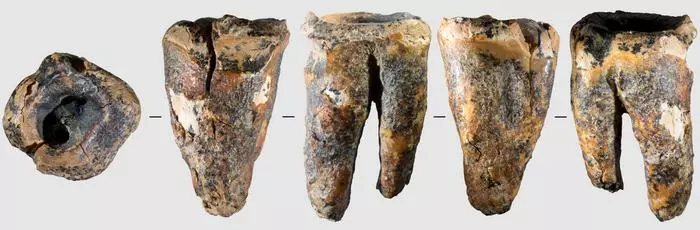
Few of us enjoy the dentist – but next time you’re in the chair, think about how lucky you are not to have been visiting a Neanderthal tooth doctor. New research on a single tooth from a Russian cave has found that its center is marked with the kind of grooves made by stone tools used as rudimentary drills. The tooth, dating back nearly 60,000 years, is now our oldest evidence of dental procedures being performed. While finding the tooth – at Chagyrskaya Cave, a rich source of Neanderthal fossils in southern Siberia – was an achievement in its own right, what it revealed was even more remarkable. Chagyrskaya 64 molar tooth and its macro-features: General view of the tooth in five projections At the center of the molar, scientists noticed a deep hole extending into the area that would have housed nerve endings. What’s more, marks on the tooth and the overall shape of the hole hinted at purposeful modification not the result of an accident. “We were intrigued by the unusual shape of the concavity on the tooth’s chewing surface,” says Alisa Zubova of Peter the Great Museum of Anthropology and Ethnography (Kunstkamera), St. Petersburg. “It differed from the normal morphology of the pulp chamber and did not match the typical pattern of carious lesions seen in Homo sapiens. Moreover, distinctly visible scratches suggested that the concavity was not the result of natural damage but of intentional actions.” Yes, the researchers confirm, the procedure would have been painful – but the hollowing-out of the tooth by a stone “drill” tool suggests it was done to alleviate a condition far more unpleasant and risky long-term. Infections back then could easily result in death, and there’s evidence that Neanderthal communities used plants as medicinal tools to treat such ailments and pain. This is the first time such a practice has been observed in a species not Homo sapiens. “This finding currently represents the world’s oldest evidence of successful dental treatment,” the authors note in the study. “The damage documented on the Neanderthal tooth from Chagyrskaya Cave in Siberia points not only to intentional pulp removal but also to antemortem wear – wear that could only have developed if the individual kept using the tooth while alive. We also identified areas of demineralization where remnants of carious damage were preserved, further indicating that the concavity in the tooth was associated with treatment. “Computed microtomography revealed changes in dentin mineralization consistent with severe caries,” the team adds. “Human manipulation of carious lesions has already been documented for the Upper Paleolithic, Mesolithic, and later periods. We therefore hypothesized that the damage we observed could also represent traces of such medical intervention – but from a significantly earlier period.” The scientists conducted a thorough investigation of the fossil, using modern technology and what we know of the Neanderthal societies of the region. Because of this, they’re confident of their research. “To interpret the concavity on the occlusal surface of the tooth, we conducted experimental manual drilling on a series of specimens: a modern human tooth and two H. sapiens teeth from a Holocene archaeological collection of uncertain temporal and cultural provenance,” says researcher Lydia Zotkina. “Comparison of the microscopic traces on the original Neanderthal specimen with those produced experimentally revealed a clear match,” she adds. “The findings demonstrate that drilling a carious lesion using a sharp, thin stone tool is entirely effective, permitting the rapid removal of damaged dental tissue.” The research was published in the journal PLOS One. Source: Peter the Great Museum of Anthropology and Ethnography via EurekAlert! source

Hate the dentist? At least you're spared the Neanderthal treatment Read More »

Wingstop turns its Jurong flagship into a neon-lit rave

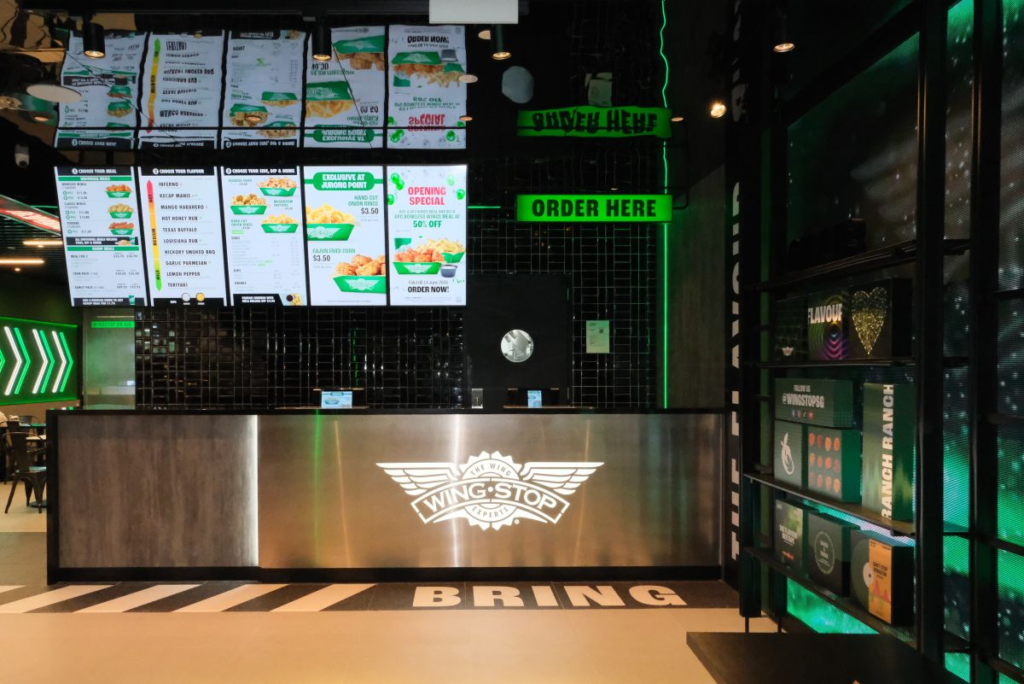
Wingstop is turning up the flavour in Singapore with the launch of its first flagship restaurant at Jurong Point, as the fast-food chain looks to deepen its connection with customers through a more immersive brand experience. Opened on 13 May, the outlet is Wingstop’s biggest store in Singapore to date and its 27th in the market. Replacing the brand’s previous Jurong Point location, the flagship features a more open layout, music-inspired interiors and a dedicated merchandise corner. The move is aimed at elevating the customer experience rather than simply expanding Wingstop’s footprint. When MARKETING-INTERACTIVE reached out, the company said Jurong Point was chosen because it has consistently performed well for the brand, making it the right location to introduce a larger-format store and test new ideas. Don’t miss: Are food courts the new lifestyle experience hubs?  The flagship also reflects Wingstop’s efforts to position itself beyond a traditional quick service restaurant, using physical space to reinforce the brand’s personality and cultural relevance. “Product will always be the hero, but the space is what brings the Wingstop brand to life,” a Wingstop spokesperson said. “For us, the store is a big part of the Wingstop experience, and it should feel energetic, fun, and like a place customers actually want to hang out in, including design, music and hospitality.” Central to the concept is a music-inspired design theme, which Wingstop said draws from one of its core identity pillars. Music has long been part of the brand’s DNA, and the new store is designed to bring that energy to life in a way that feels fresh and relevant to Singapore consumers. The flagship also introduces two exclusive menu items available only at the Jurong Point outlet: hand-cut onion rings and Cajun fried corn. The sides are designed to complement Wingstop’s cooked-to-order wings and signature sauces. Alongside the food offerings, the restaurant includes limited-edition merchandise and streetwear-inspired uniforms as part of a broader push to extend the brand into lifestyle and culture. “Customers come to Wingstop for the flavour, but the brand can show up way beyond the food,” the spokesperson said. “Exclusive menu items, street-style uniforms, and upcoming merch drops let us tap into culture and lifestyle in a way that feels fresh, fun, and true to who we are.” To mark the launch, Wingstop is offering 50% off a six-piece boneless combo with the purchase of any six-piece classic or boneless combo from 13 May to 14 June. On 16 May, the first 300 students who present a valid student ID or matriculation card will receive five free boneless wings. Wingstop said the flagship will also serve as a testing ground for future innovations in Singapore. While the brand will track metrics such as footfall, repeat visits and social buzz, its broader objective is to understand what resonates most with local consumers and use those insights to shape the brand’s next phase of growth in the market. Wingstop’s new flagship comes as more quick service restaurant brands in Singapore rethink their physical spaces as extensions of the brand rather than purely functional dining outlets. In late 2025, KFC Kallang reopened after a major renovation, introducing neon-lit interiors, interactive features and the brand’s first physical merchandise corner in the market. The revamped outlet also launched a limited-edition capsule collection with local streetwear label AMOS X ANANDA, underscoring how QSR brands are increasingly blending food, fashion and culture to engage younger consumers. Related articles:   Wingstop SG Instagram account “hacked” by unhinged hardcore fan in marketing stunt  Wingstop appoints Hello as full-service agency ahead of Sydney launch   Nando’s just turned ‘cincai lah’ into a menu item  source

Wingstop turns its Jurong flagship into a neon-lit rave Read More »

David Beckham bends Lenovo’s AI capabilities to the max

Lenovo has tapped football icon David Beckham for a new global campaign aimed at showcasing how its artificial intelligence portfolio supports creativity, productivity and performance. Called “Maximum David”, the campaign highlights Lenovo’s AI-powered devices, solutions and services, and how they are used across Beckham’s ventures in sport, business, travel and content creation. The campaign launches one month ahead of the FIFA World Cup 2026 and builds on Lenovo’s role as the official technology partner for both the tournament and the FIFA Women’s World Cup 2027. Don’t miss: Can Brand Beckham survive its very public family feud?  The campaign will roll out across film, digital, social media, retail, experiential and event activations in markets worldwide. In the hero film, Beckham is asked during a podcast interview whether he has “a lot going on”. What follows is a montage of Beckham juggling the many facets of his life. He is seen riding his motorbike, stopping to let his chicken Gary cross the road, and using Lenovo’s AI-powered tools to design a chicken coop, tune his motorcycle and unwind with a gaming session between shoots. The film closes with Beckham returning to the interviewer’s question and replying, “I wouldn’t say a lot,” underscoring how Lenovo positions its AI portfolio as helping users manage busy lives with greater ease and efficiency. According to Lenovo, the campaign is designed to demonstrate how AI can support smarter operations, improve fan experiences, generate performance insights for teams and players, and create new ways for audiences to engage with the sport. “Beckham’s world looks a lot like ours: sport, business, technology, creativity, and a passion for redefining what’s possible,” said Santi Pochat, vice president, AI innovation and brand strategy at Lenovo.  “From the beginning, Beckham and his team shared our creative ambition and a genuine curiosity about what Lenovo is building. This campaign brings together Lenovo’s growing role in global football with a partner who understands what it takes to perform at the absolute highest level,” he added.  Beckham, whose career has expanded well beyond football, is currently co-owner of Inter Miami CF and is involved in a range of business and investment ventures. Fans attending World Cup 2026 events in the US and Mexico will also be able to experience Lenovo-powered activations, including AI-enabled experiences featuring Beckham. “As AI radically changes our lives, Beckham helps us show the technology supporting real ambition, real work, and real moments of connection,” added Pochat. The launch of “Maximum David” marks the first major campaign to emerge from Lenovo’s global partnership with the icon, which was announced in April last month.  As part of the partnership, Beckham is working with Lenovo to spotlight the company’s AI-driven technologies across the football ecosystem, from tools that help teams analyse performance and make faster decisions to innovations designed to enhance fan experiences and streamline operations. In a previous conversationwith MARKETING-INTERACTIVE, Lenovo said Beckham was chosen for his influence across sport, business and culture, and for his ability to demonstrate how AI-powered technology can help individuals and organisations perform at their best. Commenting on the partnership, Beckham said, “Lenovo is a global leader with a proven track record on the world’s biggest stages. I am proud to partner with Lenovo for the FIFA World Cup and beyond. Football will always be defined by talent, instinct, hard work and the unforgettable moments that make the game special.” Related articles:     Why David Beckham’s response to CNBC post-family feud was a total win From fame to fit: What brands need for the perfect ambassador Why are so many football athletes becoming the face of eCommerce lately?  source

David Beckham bends Lenovo’s AI capabilities to the max Read More »

Strap into this real-life mecha suit for just $650,000

Unitree has just gone and made many a kid-at-heart’s wildest dream come true. The Chinese robotics firm has created the GD01, a functional mecha suit that you can hop into and walk about on two legs or four. Dubbed a “civilian vehicle,” the robot has room for a pilot to climb aboard and strap in, as the GD-01 lumbers about on two legs at a moderate walking pace. It can also bend over and use its arms as another set of legs, and crawl around if height poses an issue. You can see the 8 ft 10 inch (2.7 m) mecha in action – reportedly with Unitree CEO Wang Xingxing on board piloting it – in a clip below, which actually raises more questions than it answers. Unitree Unveils: GD01, A Manned Transformable Mecha, from $650,000 Right, so the machine has a rather janky design, and I imagine you wouldn’t want to hit the transform button while you’re in the cockpit because you’ll find yourself on your back, staring up at the sky. The GD01 stands nearly 9 ft tall – see human and humanoids for scale on the rightUnitree We also don’t know much about what this 1,100-lb (500-kg) robot is capable of, beyond noisily ambling through movie sets and knocking down hastily built walls like in the video. Can it lift objects, or navigate stairs and slopes? And how long will its battery last? If its height presents a challenge, the GD01 can get to crawling like a gorillaUnitree I’m also not sure why we’re looking at an especially scratched up model, with what looks like old tires surrounding the cockpit that has exposed tubes and wires all over the place. And how do you drive this thing? There’s no control panel or dashboard in front of the seat. The scratched up paint job, zip-tied rubber tires on the frame, exposed wiring, and tricky ingress don’t inspire much confidenceUnitree Unitree says it’s welcoming suggestions from the public, and aims to continually make improvements to the GD01. I sure would hope so, as this doesn’t seem remotely ready even for private trials. The company hasn’t wasted time in pricing it, though, at US$650,000 a pop. For that sort of dough, I’m not expecting anything out of Mobile Suit Gundam, but it’ll need to do a lot better than moving unsteadily at walking pace. Source: Unitree on Bilibili source

Strap into this real-life mecha suit for just $650,000 Read More »

CNB spotlights the stories drugs leave unfinished

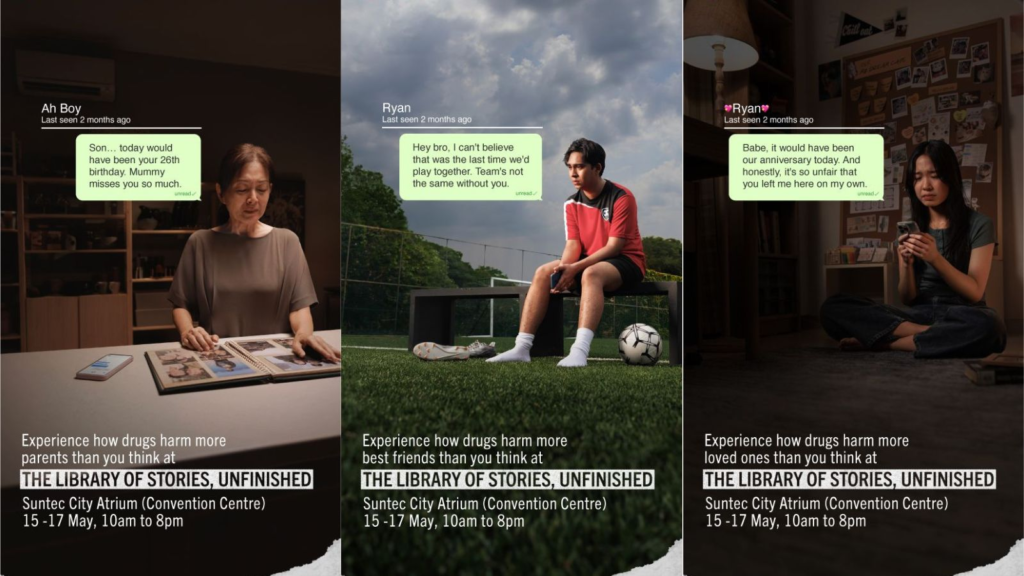
Ahead of Singapore’s third Drug Victims Remembrance Day on 15 May, Central Narcotics Bureau (CNB) and Ogilvy Singapore have launched “Stories, unfinished”, an integrated public education campaign spotlighting the often-overlooked victims of drug abuse. The campaign aims to shift the conversation around drug abuse from the individual to the wider circle of families, friends and loved ones affected by it. At the heart of the campaign is a short film titled “Stories, unfinished”, which follows the fictional story of Ryan before and after drug abuse. The film traces how his choices fracture relationships, alter futures and leave meaningful moments unresolved. Don’t miss: CNB’s immersive activation challenges youth to resist drug influence The story is further expanded through three teaser films told from the perspectives of Ryan’s best friend, girlfriend and mother, offering a closer look at the emotional ripple effects of drug abuse. Extending the campaign beyond the screen is “The library of stories, unfinished”, an immersive public exhibition held at Suntec City from 15 to 17 May. The exhibition features three immersive room sets, a stadium, café and dining room, inspired by scenes from the campaign film. Actors will portray the characters within each space, allowing visitors to interact with them, ask questions and hear their experiences firsthand. According to CNB, the campaign combines narrative storytelling, spatial design and public participation to create a more empathetic and memorable anti-drug education experience. Beyond the immersive installations, the exhibition will also feature “Real people, real stories”, which showcases real-life accounts, alongside “The reference collection”, which presents research-based information on drug harm. A children’s section will also be included to offer family-friendly learning experiences around the impact of drugs on both individuals and society. Other sections of the exhibition explore the broader societal consequences of drug abuse. “The periodicals collection: The collateral damage of drugs” examines the violence and devastation linked to addiction, while “Weighing the deals” explores the motivations of former drug dealers. Meanwhile, “Addicted: A dark world of illicit drugs” highlights the hidden harms faced by communities affected by youth drug addiction. Visitors can also explore the “ASEAN collection: United against drugs”, which showcases prevention, enforcement and rehabilitation efforts across ASEAN member states. The exhibition is free to the public and will run at Suntec City Atrium from 15 to 17 May. Pop-up installations will later travel across various heartland locations from 23 May to 27 June. “It is our endeavour to present the gravity of the drug issue truthfully, from the effects of abuse on an individual to how loved ones and the wider community are affected. Our selection of content for the pop-up library, from biographies to news articles, is curated to help visitors understand this,” said Audrey Ang, director of communications at CNB.  She added, “The campaign narrative itself explores the complex emotions victims of drug abuse may experience, and presents these through participatory interaction with live performers on set. Through ‘Stories, unfinished’, we hope to help Singaporeans reflect on the profound impact that drug abuse has and on our role as conscious members of society too.” For Ogilvy, the creative opportunity was to move the conversation from passive awareness to emotional participation. Troy Lim, group creative director, Ogilvy Singapore, said, “Public education messages are often communicated through facts, warnings or enforcement. They can sometimes be heard but not deeply felt. “With ‘Stories, unfinished’, we wanted to create an experience that shifts audiences from passive awareness to emotional understanding by showing not just what drug abuse does to a person, but what it leaves unresolved for everyone around them, By unfolding the story across film, social perspectives and physical space, we hope to make that ripple effect more immediate, human and lasting,” he added.  The latest campaign builds on CNB’s continued use of immersive storytelling to drive anti-drug education efforts. Last year, the organisation partnered with Edelman Singapore on an integrated campaign centred around “Museum of us”, a story-driven exhibition. The campaign aimed to encourage empathy and reflection on the wider impact of drug abuse through real-life stories of pain, love and recovery. Supporting the exhibition was a suite of short films developed in collaboration with The Hummingbird Co. The films featured a character named Jon and followed his friends, parents and sibling as they face the consequences of his drug use.  Related articles: Health Promotion Board uses toxic toys to warn against vaping  IMDA pulls plug on Wild Rice performance over drug depictions  Have you checked out this multi-sensory and interactive drug exhibit and campaign?   source

CNB spotlights the stories drugs leave unfinished Read More »

Review: Fraimic smart canvas splashes AI art into the real world

Fraimic wants to turn AI art into something you can put on your wall, rather than forgotten images somewhere in your phone’s gallery. And honestly? That’s a pretty neat idea. I’ve been testing a preproduction Standard Canvas unit for a while now, and while the software is still under active development, it’s been interesting watching features and fixes roll out over the last two months. New gallery functionality suddenly appeared. API access showed up. Local integrations evolved. There were definitely bugs in the beginning. For example, my unit initially tried redirecting me to a broken dashboard, or API docs pointed to invalid endpoints … but really, none of this matters because I was testing a product that hasn’t even launched yet. It was still in active development. And seeing the real-time updates when I’d mention to them that something was broken, and Fraimic would reply the next day saying “fixed!” was pretty neat. Fraimic itself won’t fully launch until June, and everything is looking very polished on the software side now. Sometimes it’ll hiccup, like when I used a prompt asking for a robot raven in the style of Banksy and trash Polka. Ultimately, your art is at the hands of OpenAI when it boils down to it.JS @ New Atlas But onto the art frame itself: The Standard Canvas (US$499) uses a 13.3-inch color e-ink Spectra 6 display housed in a 14x18x1-inch walnut frame, while the larger Large Canvas bumps things up significantly in size and price: $1,499 for the 31.5-inch Spectra 6 display in a 24 x 36 x 2-inch (61x 91 x 5.1-cm) frame. Pricing isn’t for the faint of heart, but what price do you put on art, really? At least the Fraimic won’t shred itself at auction. Banksy – Shredding his artwork at Sotheby’s live auction on October 5th 2018 (October 5, 2018) I had the opportunity to talk to Anthony Mattana, CEO and creator of Fraimic. I did ask him about pricing, to which he said the Spectra 6 e-ink displays are really expensive. And it’s true. Just the 13.3-inch display alone – without battery, software, circuit boards, frame, etc – averages into the hundreds of dollars. That being said, Spectra 6 is the latest and greatest in e-ink technology. Unlike traditional displays, it’s reflective rather than emissive, meaning no backlight or screen glare. It looks more like canvas than a screen. If it’s dark in the room, the Fraimic will also look dark, just like any other photo on your wall. According to the specs, the Spectra 6 can reproduce up to 60,000 colors with better saturation and contrast than any previous e-ink tech. The standard frame has a 1,200 x 1,600 screen at 150 DPI, while the large has a 2,560 x 1,440 screen at 94 DPI, so you’re very much “getting what you paid for.” Mattana’s entire ethos around Fraimic is “artists first.” Instead of leaning into “AI-slop generator” territory, Fraimic is planning an ecosystem where real artists can upload and feature their work, create custom style prompts, and potentially monetize their creations through the platform. When Fraimic launches in June, they’ll do so with artwork from The Met. That’s kind of a big deal, I think. This is the “Fraimic style.” Cubist retrofuturist synthwave low-poly cinematic neo-noir illustration? I’m just taking a guess. I don’t know what the real prompt looks like. Ha!JS @ New Atlas Mattana repeatedly emphasized during our conversation that he doesn’t view the device as a “smart frame,” but rather as a “smart canvas.” The guts of the frame itself run on an ESP32 platform – a low-power chipset – paired with a relatively massive 10,000-mAh battery (about two iPhones’ worth of power). It sounds silly when you think about how e-ink works: the display only really draws power when the image changes. Once an image is on the screen, it basically just sits there passively. No backlight. No constant refresh. No OLED burn-in. No LCD glow. Just art. Granted, the matte around the display does have a Wi-Fi chip and completely invisible touch panel used to activate voice control to prompt your frame into generating a new image, so there is a little bit more power draw than just the display, but it’s peanuts, really. Fraimic says the battery can last for years between charges, depending on usage. I believe it, because even with all my tinkering on it, the battery is still at 85% after a few months. And it’s as easy as plugging in a USB-C cable to charge it. Voice-generated AI artwork is pretty much the headliner of Fraimic’s display. Tap that touchpad I mentioned to activate the mic (it doesn’t listen constantly) and a red LED comes on, then tell it what you want and tap it again to end voice input. The red LED turns white for a moment as it thinks about it (really, it’s a ChatGPT model that it relays the prompt to), and within a minute or so, you’ll have a brand new piece of AI art on your wall tailored the way you want it. From Fraimic’s website, this was the result of the prompt: “A black and white 35mm film photograph of a cinematic nighttime cityscape with reflections” Looks cool, but I’m not sure what language 6OETSI LOEWS is. Fraimic As it stands, users get 100 free AI image generations per year, which works out to roughly one new image every three-ish days if you get your prompt right the first time. Results may vary, and sometimes you’ll end up doing a couple in a row until you’re satisfied. You can buy more generations if you burn through those (best bang for your buck is 50 smackeroos to get 400 more generations … there are a few other cheaper options as well), but otherwise, there are no subscription fees. AI image generation does require internet access, of course, but one of the coolest bits is that the frame itself doesn’t turn into a paperweight

Review: Fraimic smart canvas splashes AI art into the real world Read More »

Financial Analysts Journal, Second Quarter 2026, Vol. 82, No. 2

The Fallacy of ConcentrationMark Kritzman, CFA, and David Turkington, CFA Emotional Yields of CollectiblesElroy Dimson, Kuntara Pukthuanthong, and Blair Vorsatz Fundamental GrowthRob Arnott, Chris Brightman, CFA, Campbell Harvey, Que Nguyen, and Omid Shakernia   Value versus Growth: What Drives the Value Premium?Linda H. Chen, CFA, Wei Huang, and George J. Jiang Rethinking Variable Importance in Machine Learning: An Economic Perspective on Empirical Asset PricingYonghwan Jo and Yong Hwi Kim The Performance of Small Business Investment CompaniesGregory W. Brown, Wendy Hu, David T. Robinson, and William M. Volckmann II A Reassessment of Hedge Fund Returns Using Daily Return DataChristos Antoniadis and Spyros Skouras source

Financial Analysts Journal, Second Quarter 2026, Vol. 82, No. 2 Read More »

Renault’s retro-inspired EV gets a giant folding fabric roof for summer

Just when modern EVs are starting to feel like interchangeable tech pods on wheels, Renault has decided to bring a little romance back into the equation. The newly revealed open-top version of the Renault 4 E-Tech takes the retro-inspired electric hatch and gives it something the EV world desperately lacks these days – personality. It comes in the form of an electrically folding roof, which looks set to bring back open-top charm to the EV segment. In fact, Renault claims the new 4 E-Tech Electric “Plein Sud” trim is “the only electric car in its segment that offers a fully opening roof.” It’s an obvious nod to the iconic original Renault 4, from which it already borrows several styling cues. The original car also featured a fabric roof design back in the day, making the connection feel especially fitting. And with summer just around the corner in the Northern Hemisphere, it could well be the timely marketing push Renault needed. The fabric opening measures 31.5 by 36.2 inches (800 by 920 mm), meaning its bigger than most sunroofs on modern carsRenault Gimmicks aside, it’s technically far more useful than a conventional sunroof. That’s because the fabric opening, which measures 31.5 by 36.2 inches (800 by 920 mm), electrically folds back in multiple stages to provide a more immersive experience for both front and rear passengers. You can control it either via Renault’s “Reno” voice assistant or through a toggle switch mounted above the windscreen. To accommodate the folding roof, Renault removed the antenna and SUV-style roof bars found on the standard R4. Even beyond this nifty upgrade, the Renault 4 has already looked like a solid EV option. It’s powered by a 147-hp front-mounted motor producing 180 lb-ft (245 Nm) of torque, while the onboard 52-kWh battery delivers a claimed range of 242 miles (389 km). Charging is respectable too: a DC fast charger can replenish the Plein Sud at up to 100 kW, allowing a 15-to-80% charge in around 30 minutes. The 4 E-Tech Plein Sud comes powered by a 147-hp motorRenault The Plein Sud remains largely mechanically unchanged from the standard Renault 4, including its 14.8-cubic-foot (420-liter) trunk capacity and 0-60 mph (97 km/h) time of 8.2 seconds. What has been added is a suite of 28 safety systems, including an emergency stop system and a driver-drowsiness monitoring camera, helping the EV comply with the EU’s latest GSR2.3 safety standard. As for pricing, the Plein Sud starts at £27,445 (around US$37,140) for the Techno+ trim. Standard features include 18-inch diamond-cut alloy wheels, keyless entry, dual-zone climate control, part-leatherette upholstery, a 10-inch Google-powered central touchscreen, wireless smartphone mirroring, wireless phone charging, adaptive cruise control, and hands-free park assist. Above that sits the Iconic+ trim, priced at £29,445 (approx. US$39,850). That version adds bespoke black alloy wheels, a powered tailgate, heated front seats, a heated steering wheel, contrasting yellow interior accents, and an expanded suite of driver-assistance features. The 4 E-Tech Plein Sud starts at £27,445Renault Orders for the Renault 4 Plein Sud are now open, with deliveries expected to begin in the third quarter of this year. And in case you were wondering, “Plein Sud” translates to “due south” in English – the direction that receives the most sunlight in the Northern Hemisphere. Timed rather appropriately for summer, then. Cars like the Fiat 500e and MINI Cooper Electric have already proven there’s genuine demand for compact EVs that feel emotional rather than purely utilitarian commuter vehicles, while newer entries like the Citroën ë-C3 are pushing affordability harder than ever. Renault’s advantage, though, is that the 4 E-Tech sits somewhere in the middle: less fashion accessory than the Fiat, less premium-focused than the MINI, and arguably more charming than the increasingly generic crop of small electric crossovers. Source: Renault source

Renault’s retro-inspired EV gets a giant folding fabric roof for summer Read More »

Supertall skyscraper comes with a cool terracotta twist

In a world dominated by glass rectangular towers, the recently completed Wasl Tower takes a different approach to skyscraper design. The supertall features a twisting form wrapped in thousands of sculpted terracotta fins that help shade and cool the building in Dubai’s scorching heat. First revealed almost a decade ago, Wasl Tower is designed by UN Studio, in collaboration with engineering expert Werner Sobek, and is located near the world’s tallest skyscraper, the Burj Khalifa. The building reaches a height of 302 m (991 ft), making it just about a supertall – the designation is given for towers over 300 m (984 ft) – and has one of the world’s tallest terracotta facades. Wasl Tower’s twisting exterior is wrapped in thousands of terracotta finsJohnseyePhotography The skyscraper twists as it rises to produce a distinctive form enveloped in both glass and a ceramic “cloak” made up of terracotta fins, lending it a unique textured look and enabling it to take the sting out of the extreme local heat. It also hosts an intricate custom lighting system, designed in partnership with Arup Lighting, that’s programmed to give the building subtle shifts in appearance. “Thousands of ceramic fins provide shading, reduce heat radiation and capture high winds, adapting to the desert climate while reducing cooling loads by approximately 10% compared to older towers in the city,” explains the studio. “Ceramics, a traditional material in the region, were reimagined by UNS for high-rise application, combining low-tech manufacturing methods with advanced design techniques. Its reinvention at scale signals a continuity between material heritage and modern innovation. “Each composite ceramic fin features a custom terracotta profile, baked with a metallic glaze that enables it to transform visually throughout the day and seasons. As the fins channel wind around the building, integrated aluminum grills enable the airflow to cool the heat absorbed by the ceramic modules, while the cavity between the fins and the tower’s interior curtainwall system further supports passive cooling. This dual-purpose envelope combines functionality with expressive design, creating a facade that is both energy efficient and visually striking.” Inside, the tower contains a luxury hotel, as well as office space, residences, restaurants, wellness facilities, and event spaces. Elevated social and dining areas are distributed throughout the interior, and an adjacent low-rise building, linked by a skybridge, hosts a carpark and ballroom. There are also multiple terrace areas with swimming pools. Wasl Tower includes multiple terrace areas and swimming poolsAhmad Alnaji/SARAB Dubai is one of the world’s skyscraper capitals, with many other high-profile projects planned for the Arab Emirate, including several by Mercedes-Benz, MVRDV, and even the Chelsea soccer club. Source: UN Studio source

Supertall skyscraper comes with a cool terracotta twist Read More »