EDB and Enterprise SG open China agency pitch

The Singapore Economic Development Board (EDB) and Enterprise Singapore (EnterpriseSG) are seeking a content marketing and communications agency to strengthen their digital engagement with Chinese business audiences. According to tender documents seen by MARKETING-INTERACTIVE, the appointed agency will provide strategic counsel and manage content operations for the agencies’ joint WeChat official service account and channels account. Furthermore, the tender seeks to position Singapore as an attractive destination for investment and innovation, while promoting Singapore companies as trusted partners for Chinese enterprises looking to expand internationally. Don’t miss: GovTech picks agency to manage digital and social media channels  Under the scope of work, the winning agency will be tasked with developing an annual content marketing and communications strategy, producing and publishing at least 12 articles and two videos a month, and managing regular media monitoring, community engagement and performance reporting. The agency will also be expected to provide strategic recommendations to deepen engagement on WeChat and explore expansion onto other Chinese digital platforms such as Zhihu, Bilibili, Xiaohongshu and Douyin. As part of the mandatory retainer, the agency must deliver a minimum of 36 original articles, 108 translated or adapted articles, four newly produced videos and 20 videos created from existing assets each year. Additional responsibilities include media relations support, crisis and reputation management, localisation of English-language content into Mandarin, and optimisation of WeChat content through SEO, tagging and customer relationship management integration using JING Digital. Optional project work may include campaign ideation and execution, ad-hoc creative development, media partnerships, expansion into new platforms and proactive media pitching. The tender requires agencies to demonstrate fluency in English and Mandarin, strong experience working with multinational B2B companies and government organisations, and a deep understanding of China’s marketing and communications landscape. The tender comes as EDB continues to step up its global brand storytelling efforts to engage overseas business audiences. EDB’s marketing efforts are global in scope, reflecting Singapore’s need to attract investments from a diverse range of markets including the US, Europe, Japan and China. Its recent March 2025 campaign, “Your business needs Singapore“, developed in collaboration with The Secret Little Agency (TSLA), sees the agency position Singapore as a stable and trusted base for companies navigating global uncertainty. The one-minute film highlighted how Singapore’s predictability and safety provide a foundation for bold innovation, contrasting global volatility with the country’s business environment. It also featured examples of local innovation and reinforces the message that trust and stability remain central to Singapore’s value proposition. Related articles:   Heineken wraps global agency review in bid for scale and consistency  Lazada Singapore picks new PR agency  Intellectual Property Office of Singapore picks new PR agency source

EDB and Enterprise SG open China agency pitch Read More »
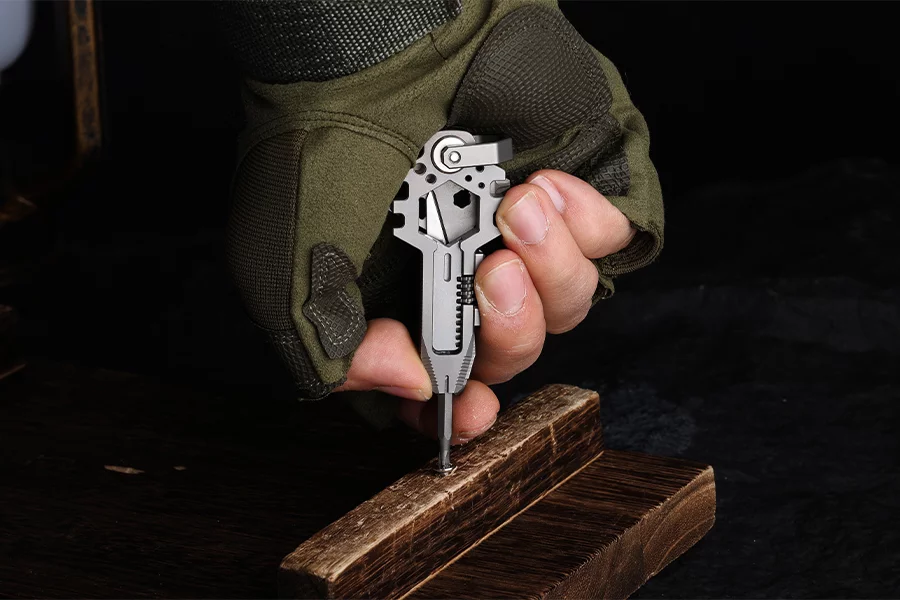
3rd-Gen multitool packs 20 functions into funky key form

EDC Monster is a team of everyday carry (EDC) tool enthusiasts that has been creating compact gear since 2022. One of its signature products is a key-shaped multitool introduced three years ago. The idea behind the series is to create a multifunctional tool that is small and lightweight enough to stay on a keychain – essentially a full toolbox in the shape and size of a key. The original KeyMaster included over a dozen basic tools, followed by the KeyMaster 2.0, which added more functions and improved versatility. The latest generation, KeyMaster 3.0, is currently seeking backing on Kickstarter and is presented as the most refined version yet. The tool is designed as a practical tool for emergencies, unexpected repairs, and outdoor adventures – situations when you may not know exactly what you’ll need but still want to have a few backup options. Along with being able to accommodate attachable bits (pictured), the 3.0 also features integrated Phillips and flathead screwdriversEDC Monster KeyMaster 3.0 weighs 53.7 grams (2 oz) and measures 74.5 x 35 x 11 mm (2.93 x 1.38 x 0.43 inches). It is compact and lightweight enough to stay on a key ring or in a pocket without being bulky or noticeable. Despite its small size, the 3.0 combines more than 20 tools. These include some standard EDC tools such as a pry bar, two screwdrivers, a mini knife, wrench, mini ruler, and bottle opener, along with a nail file, firestarter edge, mini saw, and even a fishhook bender. All the tools are integrated into two key-shaped plates held together at the top, following the same design as the original version. The EDC Monster team says that it focused less on adding new features this time around, and more on organizing the tools within the compact body and improving how they work together. The body is once again made from Grade 5 titanium, which is commonly used for EDC tools because it’s durable, lightweight, and corrosion-resistant. The tool comes standard with a sandblasted titanium finish, which can be upgraded to matte blackEDC Monster Although the overall concept remains consistent with previous versions, several new features have been added. While earlier generations of the KeyMaster had fixed wrench sizes, the 3.0 version includes a fully adjustable spanner with a 0-16 mm range. The second plate becomes a handle for a better grip. This feature can be used for quick bike repairs or light furniture fixes. The screwdriver system has also been upgraded. The tool features a magnetic driver setup designed to reduce slipping during use. It supports 4-mm and 6-mm (1/4 and 1/6-inch) hex bits as well as top-mounted drivers. There is also a magnetic bit storage slot inside the body of the tool, that can hold two bits. The tool takes a standard #11 replacement bladeEDC Monster And for cutting tasks, the KeyMaster 3.0 features a user-replaceable precision blade. Assuming the Kickstarter campaign is successful, an early bird pledge of US$79 will get you the tool with two 1/6-inch bits. The planned retail price is $119. If everything goes according to plan, shipping will begin in September. KeyMaster 3.0: The Next Evolution of Key-Shaped Toolbox Source: Kickstarter Note: New Atlas may earn commission from purchases made via links. source

3rd-Gen multitool packs 20 functions into funky key form Read More »

KFC South Asia picks McDonald's regional marketing and digital lead for newly created role

KFC has appointed Tuck Wai Yue (pictured) as its head of eCommerce, loyalty and digital for South Asia. In this newly created role, Tuck will support KFC’s fast-growing markets in Southeast Asia and build on the progress made by the brand’s teams in the region. He will focus on digital, CRM and loyalty, which he described as key business accelerators for KFC, while continuing to drive fan excitement for the brand. He reports to Jack Foley, interim chief marketing officer of KFC South Asia. In conversation with MARKETING-INTERACTIVE, Tuck said the brand’s unique combination of a people-centric and performance-driven culture drew him to the role. “I had originally planned to take some time out before my next role, but the people, energy and ambition within the organisation made this opportunity very difficult to pass up,” he said. Don’t miss: KFC and Pizza Hut conclude media pitch for SG  Prior to taking on the role, Tuck spent eight years at McDonald’s, most recently serving as regional marketing and digital director for the fast-food chain’s Asia business unit. In the role, he supported markets across North, Southeast and South Asia, focusing on digital, media, value and marketing, according to his LinkedIn profile. He first joined the company as director and digital acceleration lead. He also previously served as country head at social media agency We Are Social Singapore, as well as general manager of digital creative agency Nokomai. Speaking about his new role, Tuck said there is a “strong desire at KFC to challenge convention and continue evolving as a challenger brand”. “I’m excited to work alongside a talented team to rethink how digital, CRM and loyalty can create more meaningful and engaging experiences for our fans across Southeast Asia,” said Tuck. Tuck’s appointment comes as the fast-food chain ramps up its campaigns across the region, collaborating with fan-favourite IPs and tapping into local cultural nuances. Earlier in April, the brand teamed up with Butterbear for its “KFC x Butterbear Cuti-cuti Malaysia” campaign, blending collectibles, travel and in-store experiences into a nationwide activation. The campaign brought together KFC’s menu icons and Butterbear through a series of exclusive blind box collectibles, as well as a “tour” across selected KFC outlets. In Singapore, the brand tapped into Singaporeans’ love for K-culture and Samyang Buldak with a limited-time menu pairing KFC’s Double Down burger with the Korean brand’s signature carbonara sauce. The campaign also featured immersive in-store experiences, including themed photobooths, to further build on the Korean-inspired experience. Meanwhile, earlier this year, Madhav Nayak, former chief marketing officer for KFC Asia at Yum! Brands, joined Kenvue as its vice president and chief marketing officer for Asia Pacific. In his new role, Nayak will lead the APAC marketing organisation across all markets in the region, including China, India, Southeast Asia, Japan, Korea, Australia and New Zealand. Related articles:   KFC Philippines turns Quezon Avenue store gold for Garlic Butter Fest comeback KFC turns Songkran chaos into flip-flop stunt with giant Colonel takeover  How KFC SG is making fans feel like VIPs at concerts source

KFC South Asia picks McDonald's regional marketing and digital lead for newly created role Read More »

Are food courts the new lifestyle experience hubs?

Food courts in Singapore are evolving beyond just quick meals and familiar flavours. Increasingly, they are becoming spaces of nostalgia, storytelling and shared experience, with Food Republic betting big on that shift. Its latest expression of this vision can be seen at Mandai Wildlife Reserve, where diners are transported back to 1970s Singapore through an immersive street food atrium. Life-sized shophouse facades, vintage signage, old cinema references and interactive photo spots such as durian carts and tau huey (‘tofu pudding’) pushcarts recreate the textures of a bygone era, while more than 20 heritage food vendors anchor the experience in familiar flavours. Don’t miss: Hotel vibes at hawker prices? Kopitiam bets big on its next food hall evolution   For Andy Kiu, general manager of Food Republic, this is not an isolated concept, but part of a wider reinvention of what a food court can be. “Food Republic is evolving the food court into a destination for experience and connection. Beyond offering a wide variety of well-loved dishes, each outlet is designed to create a thematic experience that tells a story — drawing from heritage, culture and everyday life in Singapore,” said Kiu in conversation with MARKETING-INTERACTIVE.  This strategy comes to life through immersive environments, open kitchens and curated tenant mixes designed to make dining more social and memorable. At Mandai, that means a full-scale nostalgia play. Elsewhere, it takes a lighter, more programme-led approach. This May, for example, Food Republic is rolling out a Mother’s Day initiative that invites families to take part in DIY “Bestie bracelets” sessions inspired by friendship bracelet culture, alongside a one-day makeover and photoshoot experience at VivoCity set against a 1960s Chinese heritage backdrop.  The aim is to move beyond passive dining into something more participatory. “Beyond good food and a pleasant dining experience, Food Republic has been enhancing its thematic concepts to create added value for our diners,” said Kiu. Food Republic’s approach reflects a wider shift in how food courts are being reimagined across Singapore. Kopitiam, for instance, has recently introduced a more design-led food hall concept that blends the accessibility of a hawker centre with a hotel-inspired dining environment. The outlet features 25 curated stalls, including a mix of heritage brands and newer concepts, alongside open layouts, natural lighting and seating designed for different dining occasions. As consumer expectations shift, Food Republic has been layering experience onto its food-first foundation, repositioning itself around storytelling, cultural relevance and shared moments. Kiu said the move is both a response to changing behaviour and a deliberate strategy to push the category forward. “Changing consumer expectations have made it clear that dining needs to be more engaging and memorable. At the same time, we have been intentional in repositioning Food Republic as more than a traditional food court,” he said. That thinking extends to how the brand approaches curation. Rather than chasing trends, Food Republic looks for cultural signals rooted in local behaviour, from the demographics of each outlet to shifts in how consumers spend their time. From Mandai’s nostalgia-led build to hands-on programmes and heritage-inspired experiences, Food Republic is increasingly positioning itself as more than a place to eat, but a space for participation and connection. Kiu believes this evolution will continue as food courts move towards hybrid formats that blend dining with retail and entertainment. “Food courts are increasingly becoming multi-dimensional spaces that bring together dining, retail and elements of entertainment. We see this as a natural progression, as people look for places where they can do more within a single visit,” he said. “Moving forward, the role of the food court will continue to expand, serving not just as a place to eat, but as a vibrant space that integrates seamlessly into everyday lifestyle experiences,” he added. Related articles:   How Lau Pa Sat transformed a CNY zodiac carousel into a Raya showcase  Tiong Bahru Bakery flips hawker food on its head with Lau Pa Sat collab  Accenture Song reinvents local hawker culture in unscripted documentary  source

Are food courts the new lifestyle experience hubs? Read More »

Slim power bank slides under a laptop for juice on the go

Whether your laptop is your main source of income or you just use it for entertainment, running out of juice just when things get interesting can be a major annoyance. The Edge power bank has been designed to alleviate such things. There are a good many power banks already in the wild that can provide extra up time for your laptop while you’re on the move. But many of those are heavy bricks that you need to find space for in your cramped train seat, or don’t hold enough juice for all-day working. The Edge measures 270 by 190 mm (10.6 x 7.5 in) and is designed to slip under your 13 to 16-inch mobile workhorse to top up its battery. It has a slight wedge design – standing 12.88 mm (0.5 in) at the back and 8.5 mm (0.3 in) to the front – and supports 65-W output via USB-C. A braided fabric cable is included. A second USB-C port plus two Type-A ports are also included for charging other devices while you work. The Edge’s plastic top has ridges to allow air between it and the laptop resting aboveKrafted Inside its aluminum alloy body and plastic top panel (which is made from waste recovered from the oceans) are four 5,000-mAh battery packs, for a total capacity of 20,000 mAh. According the Krafted, that should be enough four full laptop recharges or five smartphone top-ups before the Edge itself needs to be plugged in for a couple of hours. And if the Edge’s own battery cells start to fade under the pressure of your excessive workload, you can just unscrew the housing and replace any spent ones – instead of just tossing the whole thing in the trash without so much as a “thank you for your service.” “Most power banks are bricks,” said company co-founder, Vinal Patel. “They sit in your bag and they die in landfill. We built Edge to disappear under your laptop, charge whatever you need throughout the day, and stay with you for years because the only thing you have to replace is the cells.” The Edge power bank ships with a braded charging cable, and supports output of 65 wattsKrafted As someone who is regularly frustrated by the relatively short battery life of my Dell XPS laptop, this project excites me way more than it should. The Edge is currently raising production funds on Kickstarter. If you’re quick, you can grab an Edge for US$129, which represents a saving of 35% on the expected retail price. Crowdfunding campaigns always carry an element of risk, and this is Krafted‘s first venture on the platform. However, the UK-based company does have a couple of products already on sale via its webshop and is aiming to start shipping of this new addition from next month. Krafted Edge | Ultra-Slim Laptop Power Bank Source: Krafted Note: New Atlas may earn commission from purchases made via links source

Slim power bank slides under a laptop for juice on the go Read More »

Monomaterial running shoes could be fully recycled – into new shoes

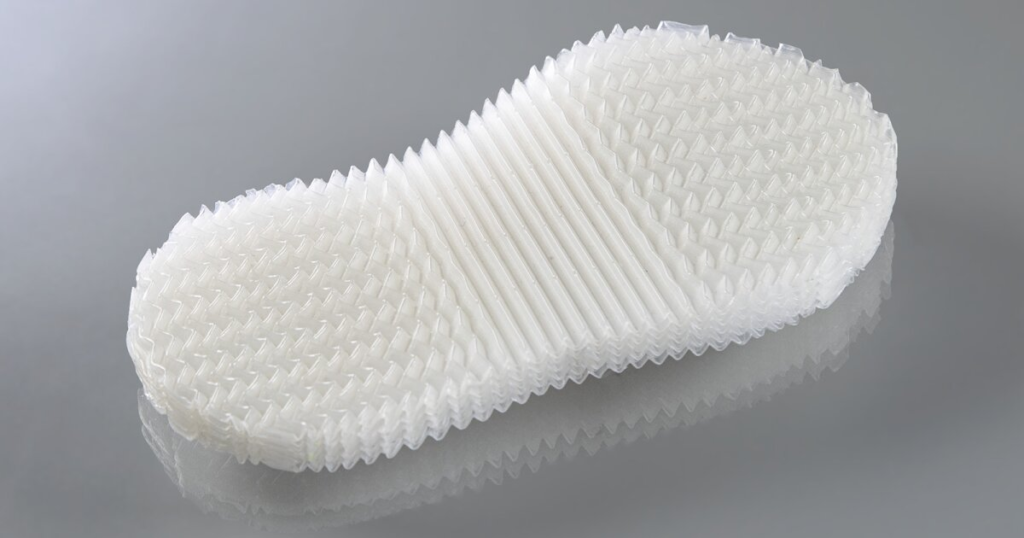
With running more popular than ever, production of running shoes has reached a new level. Global footwear manufacturing has increased significantly over the last 15 years, and the industry itself has become a form of advanced engineering. Big companies are competing to build lighter, faster, and more energy-efficient shoes using complex combinations of foams, fabrics, and plastics. While performance continues to improve, sustainability still remains a secondary concern. The typical running shoe lifespan is at most 800 km (497 miles), which means avid runners go through a pair every four to six months. There are several ways you can recycle worn-out shoes, and some big brands have developed special programs where they collect old shoes and shred them into rubber and foam particles. These materials can be used for building playgrounds or running tracks, but this is downcycling rather than true recycling, as old pairs are not used as raw material for new ones. A full cycle is pretty hard to achieve right now, and here is why. One of the biggest environmental challenges with modern running shoes is that they are made from many different materials. The upper is typically made from woven fabric, the sole combines soft, bouncy foam and hard rubber, and some elements are often made from plastics. Such a design helps produce high-performance shoes, but it also makes them very difficult to recycle. Researchers at Germany’s Fraunhofer group – who have brought us shoe tech innovations before – are now exploring an innovative new approach: what if a running shoe could be made almost entirely from a single material? This is the goal of the ZiProMat project, which focuses on developing “programmable monomaterial” for athletic footwear. Modern running shoes are all about cushioning and energy efficiency. Ideally, the heel should be soft and shock-absorbing, the midsole should provide a smooth transition during the stride, and the forefoot needs to be firm for efficient push-off. This complex combination can be achieved using just one material – thermoplastic copolyester elastomer. Instead of combining different materials, the researchers basically modify the structure of the same material. Making the upper of the shoe is relatively straightforward, and the main challenge is the sole. Sheets of copolyester are heated and thermoformed into molds. By using ribs and ridges, each layer can be shaped to be softer in some areas and firmer in others. After each layer is formed individually, they are then stacked together to form a complete shoe sole. This process seems fairly complex, but it has major environmental advantages. Since both the upper and sole of the shoe are polyester-based, the entire shoe could be fully recycled at the end of its life. Instead of ending up in landfills, shoes can be reused as raw material for new pairs. The project has already moved beyond the theoretical stage. Fraunhofer collaborated with Puma to test the feasibility of monomaterial athletic shoes. The testing has shown that the concept can definitely work in real-world prototypes and shoe production. There is still a long way to go before this technology reaches mass production. If successful, the researchers are also hoping to apply it to work footwear, where durability is the main priority. The ultimate goal of the ZiProMat project is to establish a technology platform for programmable materials. In a few years this approach could shift the footwear industry to focus not just on speed and durability, but also on sustainability. Source: Fraunhofer source

Monomaterial running shoes could be fully recycled – into new shoes Read More »

Bacteria-boosted 'living plastic' breaks down on command

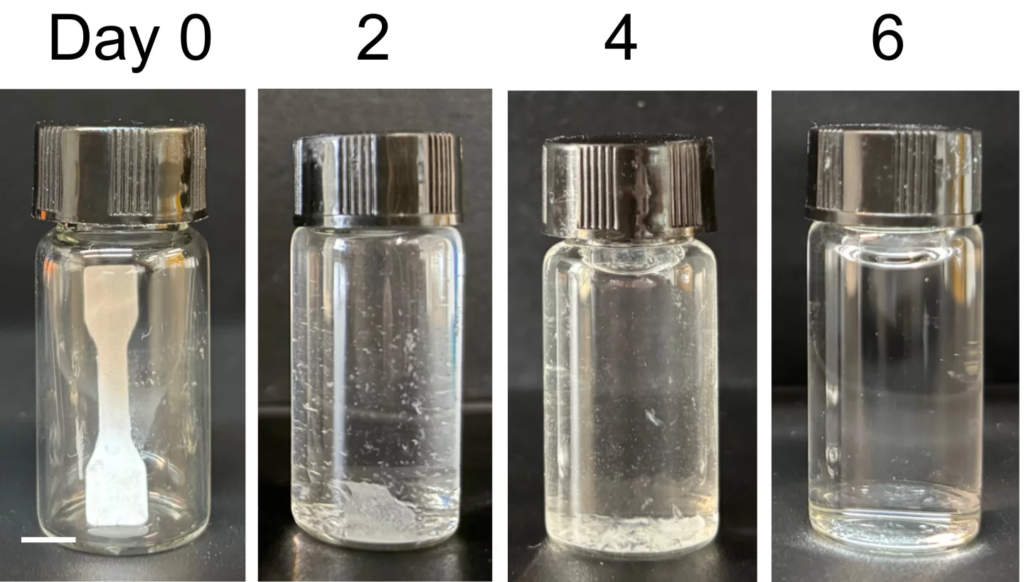
Living things degrade, die, and decompose. Even when we turn plant and animal material into furniture or clothes, the process is inevitable. On the other hand, left alone, plastics are practically indestructible. Scientists are rethinking this characteristic with a simple but consequential question: What if plastics were alive? A team of scientists from the Chinese University of Hong Kong has created a living plastic that can “self-destruct” on command. They achieved this by embedding plastic-eating microbes directly into the plastic material. The microbes remain dormant until they are activated by a hot “nutrient broth,” after which they proceed to fully consume the plastic within days, leaving no microplastics behind. Plastics can take up to 1,000 years to decompose. That’s an awfully long time for something we often use only once. Even then, they leave behind toxic microplastics. Factor in the fact that humans live for an average of 73.8 years, and you realize that we are creating problems that could last generations. The key characteristic of materials that decompose is that they are composed of living cells. This characteristic formed the entire basis of the research study. “The realization that traditional plastics persist for centuries, while many applications, like packaging, are short-lived, led us to ask: Could we build degradation directly into the material’s life cycle?” said Zhuojun Dai, a corresponding author on the paper. Certain microbes are capable of breaking down long polymer chains using enzymes they produce. Guess what is made of long polymer chains? Plastics. The scientists took advantage of this ability by engineering Bacillus subtilis spores to produce plastic-degrading enzymes, before embedding the dormant microbes directly into a plastic matrix. When activated by heat, the spores awaken and begin secreting enzymes that chemically break down the material from within. When combined with a pair of “plastic-busting” enzymes, the plastic degraded completely within six daysAdapted from ACS Applied Polymer Materials 2026, DOI: 10.1021/acsapm.5c04611 This is not the first time scientists have used microbes to break down plastic. In fact, the material the research team used, polycaprolactone (PCL), is itself a biodegradable plastic that has previously been degraded using microbe-produced enzymes. However, the team’s innovation is two-fold. First, most previous attempts to degrade PCL relied on a single enzyme system. In contrast, the researchers engineered separate strains of Bacillus subtilis to produce two cooperative polymer-degrading enzymes that work in tandem. One of the enzymes cuts the long polymer chains at multiple points, rapidly weakening the plastic structure. The second enzyme progressively breaks the fragmented chains down into much smaller molecules for further microbial processing. Together, the two-enzyme system proved significantly more effective than single-enzyme approaches, enabling near-complete degradation of the PCL matrix within six days. The second innovation lies in embedding the engineered microbial spores directly into the plastic matrix itself. Doing this makes the plastic “alive” and endows it with a self-destructive characteristic, as the microbes and plastic are now a single material. The resulting material has mechanical properties similar to those of plain PCL films. Now, the material doesn’t just spontaneously self-destruct. The catalyst is a nutrient broth at 122 °F (50 °C). Once the broth comes into contact with the material, it activates the spores, initiating degradation. To test their technology, the researchers created a wearable electrode from the material and added the catalyst. The material completely broke down in two weeks, leaving no microplastics behind. Now for the caveat. First, the technology currently works with PCL, an already biodegradable plastic. Also, there have been other studies on “living” plastic in which microbes were embedded in the material. The researchers’ double enzyme method is the innovation that makes the process faster and more efficient. Secondly, as with most “biodegradable” plastics, degradation still depends heavily on environmental conditions. Embedding engineered microbes directly into the material is a clever solution. However, unless you have the secret formula for brewing the researchers’ nutrient broth, you are left with what seems like good ol’ plastic. Well, not exactly. PCL is known to biodegrade in soil and compost environments containing naturally occurring plastic-degrading microbes. Despite these reality checks, the potential of the research is significant. The scientists aim to develop a water-based trigger, as most plastic pollution ends up in water bodies. They are also looking to apply the work beyond PCL to other plastic types, especially those commonly used in single-use plastics. The study was published in the Applied Polymer Materials Journal. Source: American Chemical Society source

Bacteria-boosted 'living plastic' breaks down on command Read More »

New technique radically boosts biogas yields from sewage sludge

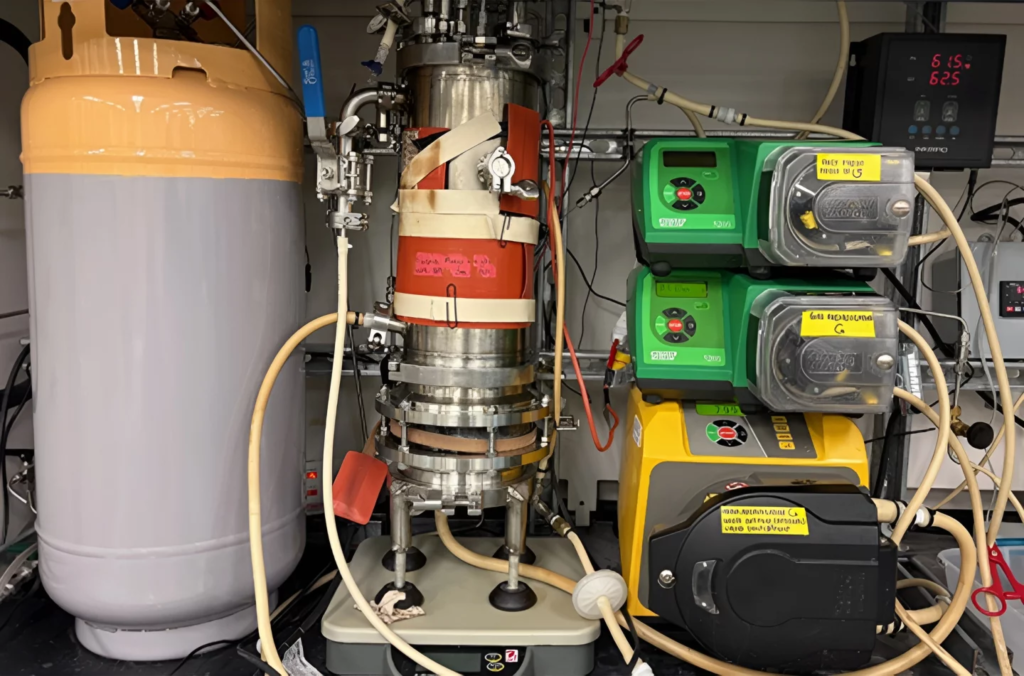
Could one man’s trash truly be another’s treasure? Well, scientists have unveiled a technique that dramatically increases fuel extraction from one of humanity’s most abundant byproducts – sewage sludge, a.k.a. poop – while cutting disposal costs. The researchers from Washington State University say they have developed a pretreatment step and a novel bacterial strain that together can triple the amount of extracted biogas from biowaste water, while slashing disposal costs by half. According to the study published in the Chemical Engineering Journal, wastewater treatment facilities account for 3% to 4% of total electricity consumption in the United States. For context, the US Energy Information Administration reports that electric vehicle charging accounted for roughly 0.5% of total US electricity consumption in 2025! Conventional treatment processes also add about 21 million metric tons of greenhouse gases to the atmosphere annually. The study notes that roughly half of the United States’ nearly 15,000 wastewater treatment facilities use anaerobic digestion, a process in which microbes break down sewage sludge in oxygen-free conditions to reduce waste volume while producing biogas. Some facilities use this biogas to offset part of their electricity demand, helping lower the massive energy consumption associated with wastewater treatment. However, conventional anaerobic digestion remains relatively inefficient, with the process typically converting less than 40% of the sludge’s carbon into usable gas. Large amounts of carbon-rich residual sludge, known as biosolids, remain after digestion and often end up in landfills, where they can generate additional greenhouse gas emissions. Meanwhile, the biogas itself contains large amounts of carbon dioxide – often around 35% to 40% – reducing its direct usefulness as a fuel and requiring additional upgrading before it can be injected into natural gas infrastructure as renewable natural gas. To address these limitations, the researchers developed a two-stage system called the Advanced Pretreatment and Anaerobic Digestion (APAD) process. Rather than discarding the residual sludge left behind after conventional anaerobic digestion, the system subjects it to an additional treatment stage known as Advanced Wet Oxidation and Steam Explosion (AWOEx). During this process, the digested sludge is exposed to high temperatures, pressure, and controlled amounts of oxygen, helping to break apart resistant organic compounds that conventional digestion struggles to fully decompose. The treated sludge is then fed into a secondary anaerobic digestion stage, allowing microbes to extract additional biogas from material that would otherwise remain as waste. In a separate downstream stage, the resulting biogas is upgraded into higher-purity renewable natural gas using a trickle-bed bioreactor containing a novel methanogenic bacteria strain, Methanothermobacter wolfeii BSEL (we know you didn’t pronounce that). Fed with hydrogen, the microorganism biologically converts carbon dioxide in the biogas into additional methane, increasing the fuel quality of the final gas stream. A bioreactor that was utilized in the studyWashington State University “This (bacterial strain) bug doesn’t need anything – it is a workhorse,” says Birgitte Ahring, WSU professor and corresponding author on the paper. “It doesn’t need organic additives or a lot of nursing. It does well with water and a vitamin pill.” The researchers report substantial gains from the system. By extracting far more usable material from sludge that would normally remain as waste and by converting much of the carbon dioxide in the resulting biogas into additional methane, the integrated process increased renewable natural gas output by 200% compared to conventional anaerobic digestion alone. The system also achieved an overall carbon conversion efficiency of 83%, meaning a much larger portion of the sludge’s carbon was converted into usable fuel rather than remaining trapped in residual waste. The researchers additionally report that the pretreatment stage reduced sludge treatment costs from $494 to $253 per dry ton by significantly lowering the volume of leftover biosolids requiring disposal. Smells like money. “This technology basically converts up to 80% of the sewage sludge into something valuable. If we can replicate this work on other organic materials, we’ll have a waste treatment technology that is world-class when it comes to efficiency,” says Ahring. The team has patented the bacteria strain and is now looking to develop a larger-scale version of the project with an industrial partner. Technically speaking, if successfully scaled nationally and if the underlying economics hold up in real-world deployment – among many other “ifs” – the researchers’ modeling suggests the pretreatment portion of the system could potentially translate into billions of dollars in annual savings across US sewage sludge treatment operations. The work was funded by the US Department of Energy Bioenergy Technologies Office, a clear indication that the researchers are definitely onto something. Source: Washington State University source

New technique radically boosts biogas yields from sewage sludge Read More »

Dow Jones Futures: Seagate, Bloom Energy, Teradyne Lead Earnings Movers As Oil Prices Jump

Dow Jones futures were little changed Wednesday morning, while S&P 500 futures and Nasdaq futures rose, even as oil prices rallied above $100.  AI stocks Seagate Technology (STX), Bloom Energy (BE) and Teradyne (TER) were big earnings movers overnight. Google-parent Alphabet (GOOGL), Amazon.com (AMZN), Meta Platforms (META) and Microsoft (MSFT) report after the close. The stock market rally had a… Copyright ©2026 Investor’s Business Daily, LLC. All rights reserved. 87990cbe856818d5eddac44c7b1cdeb8 source

Dow Jones Futures: Seagate, Bloom Energy, Teradyne Lead Earnings Movers As Oil Prices Jump Read More »

185 years later, Watsons is banking on heroes, smiles and feel-good retail

Watsons is celebrating 185 years in business with a multi-pronged campaign spanning product discovery, gamified rewards, sustainability efforts and limited-time promotions, as the health and beauty retailer leans into everyday essentials and emotional brand recall. Running from 14 May to 16 September 2026, the anniversary campaign centres on “185 product heroes”, a curated selection of staples across beauty, personal care and health designed to spotlight items already embedded in consumers’ daily routines. These include a mix of health supplements, own-brand essentials and skincare staples spanning daily wellness and beauty routines, alongside personal care products such as hair treatments and oral care solutions. Don’t miss: How Watsons turned a debate about mismatched Raya outfits into a festive musical Watsons said the campaign is designed to make discovery easier, with in-store gondola shelf wings and digital placements on its eCommerce platform highlighting the selected items. Beyond product curation, the retailer is introducing a gamified layer through “185 big smile rewards”, an interactive feature on the Watsons app available from 18 May to 12 July 2026. The mechanic allows users to activate the feature, take a selfie and receive a “Smile score”, which unlocks eCoupons based on performance. Higher scores trigger better rewards, with SG$6 off vouchers tied to perfect scores and tiered discounts for lower scores across two campaign phases. The initiative positions everyday facial expressions as a trigger for rewards, tying into broader themes of self-care and light engagement within retail experiences. Watsons is also linking its anniversary to sustainability through a partnership with WWF Singapore. The “Plant 185 trees with us” initiative will roll out tree-planting activities in July 2026 exclusively for members, with participation tied to purchases of sustainable choice products marked with a green label in-store and online. The mechanics effectively connect purchase behaviour with environmental impact, positioning retail transactions as a pathway to collective climate contribution. To round out the campaign, Watsons will run 185 “buy one get one free” deals from 14 to 20 May 2026 across health, beauty and personal care categories. Offers include a mix of health supplements, skincare essentials and personal care items spanning daily wellness staples, cleansing products and oral care devices. The anniversary framing underscores Watsons’ positioning around everyday wellness rather than episodic campaigns, leaning on repeat-use products as its core brand equity driver. According to the brand, the 185-year milestone reflects its evolution across generations of consumers, from in-store essentials to digital discovery and increasingly social commerce-led shopping behaviour. “Reaching 185 years is a meaningful milestone, but what truly matters is how Watsons continues to be part of people’s everyday lives,” said Irene Lau, managing director of Watsons Singapore and new markets – Watsons International. “It’s in the small, familiar moments — the product you reach for on a busy morning, or the simple comforts that carry you through the day — that we find our purpose. This celebration is our way of saying thank you: by honouring those moments, making everyday care more accessible, and giving back in ways that feel genuine and lasting,” she added. Watsons has also been steadily building out its engagement strategy beyond retail and promotions, leaning into more experiential and storytelling-led formats to deepen emotional connection with customers. In line with this shift, the brand unveiled “The Watsons family” last year, an original character-driven intellectual property designed to strengthen customer engagement across Asia. The concept introduces 16 characters inspired by different MBTI personality types, aimed at turning everyday health and beauty routines into more interactive, emotionally resonant and shareable experiences. Related articles: Watsons MY’s star-studded CNY film puts a fun twist on family reunions   Watsons champions hair confidence through immersive ‘Flip it, flaunt it’ experience   Watsons and ClimatePartner join forces to fight against climate change   source

185 years later, Watsons is banking on heroes, smiles and feel-good retail Read More »