Issues To Watch At ABA's Antitrust Spring Meeting

By Jan Rybnicek, Jenn Mellott and Emily Strickland ( April 1, 2025, 6:44 PM EDT) — This week, U.S. and international antitrust lawyers once again convene in Washington, D.C., for the American Bar Association’s annual Antitrust Spring Meeting. Front and center on the agenda will be the future of competition enforcement amid changes in political and agency leadership across key jurisdictions including the U.S., EU and U.K…. Law360 is on it, so you are, too. A Law360 subscription puts you at the center of fast-moving legal issues, trends and developments so you can act with speed and confidence. Over 200 articles are published daily across more than 60 topics, industries, practice areas and jurisdictions. A Law360 subscription includes features such as Daily newsletters Expert analysis Mobile app Advanced search Judge information Real-time alerts 450K+ searchable archived articles And more! Experience Law360 today with a free 7-day trial. source

Issues To Watch At ABA's Antitrust Spring Meeting Read More »

A new, enterprise-specific AI speech model is here: Jargonic from aiOla claims to best rivals at your business’s lingo

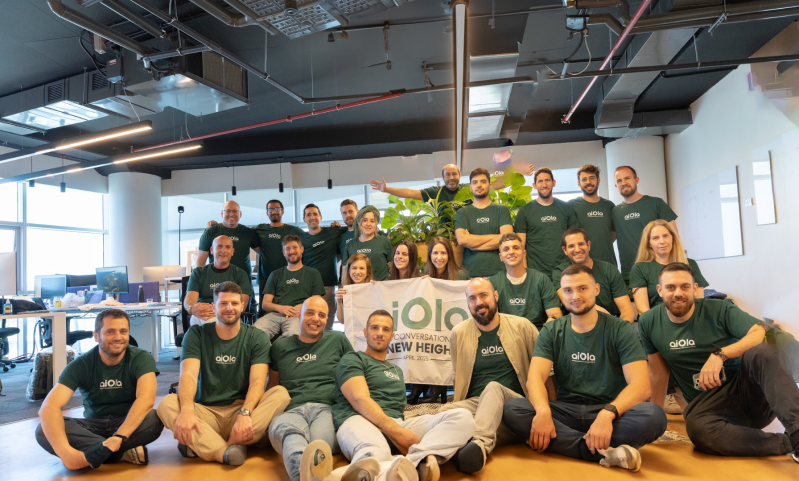
Join our daily and weekly newsletters for the latest updates and exclusive content on industry-leading AI coverage. Learn More Speech recognition models have become increasingly accurate in recent years. However, they may be built and benchmarked under ideal conditions—quiet rooms, clear audio and general-purpose vocabulary. For enterprises, however, real-world audio is far messier. That’s the challenge aiOla aims to address with the launch of Jargonic, its new automatic speech recognition (ASR) built specifically for enterprise use. The Israeli startup is unveiling Jargonic today. Jargonic is a new speech-to-text model designed to handle specialized jargon, background noise and diverse accents without extensive retraining or fine-tuning. “Our model focuses on three key challenges in speech recognition: jargon, background noise and accents,” said Gill Hetz, aiOla vice president of AI. “We built a model that understands specific industry jargon in a zero-shot manner, handles noisy environments and supports a wide range of accents.” Available now via API on aiOla’s enterprise platform, Jargonic is positioned as a production-ready ASR solution for businesses in industries such as manufacturing, logistics, financial services and healthcare. aiOla team. Credit: aiOla From product-first to AI-first The launch of Jargonic represents a shift in focus for aiOla itself. According to company leadership, the team redefined its approach to prioritize AI research and deployment. “When I arrived here, I saw an amazing product company that had invested heavily in advanced AI capabilities, but was mostly known for helping people fill out forms,” said Assaf Asbag, aiOla’s Chief Technology and Product Officer. “We shifted the perspective and became an AI company with a great product, instead of a product company with AI capabilities.” “We decided to open our capabilities to the world,” Asbag added. “Instead of serving our model only to enterprises within our product, we developed an API and are now launching it to make our enterprise-grade, bulletproof model available to everyone.” Jargon recognition, zero-shot adaptation One of Jargonic’s distinguishing features is its approach to specialized vocabulary. Speech recognition systems typically struggle when confronted with domain-specific jargon that does not appear in standard training data. Jargonic addresses this challenge with a proprietary keyword spotting system that allows for zero-shot adaptation—enterprises can simply provide a list of terms without additional retraining. In benchmark tests, Jargonic demonstrated a 5.91% average word error rate (WER) across four leading English academic datasets, outperforming competitors such as Eleven Labs, Assembly AI, OpenAI’s Whisper and Deepgram Nova-3. However, the company has not yet disclosed performance comparisons specifically against newer multimodal transcription models like OpenAI’s GPT-4o-transcribe, which came nine days ago, boasting top performance on benchmarks such as WER, with only 2.46% in English. aiOla claims its model is still better at picking out specific business jargon. Jargonic also achieved an 89.3% recall rate on specialized financial terms and consistently outperformed others in multilingual jargon recognition, reaching over 95% accuracy across five languages. “Once you have heavy jargon, recognition accuracy typically drops by 20%,” Asbag explained. “But with our zero-shot approach, where you just list important keywords, accuracy jumps back up to 95%. That’s unique to us.” This capability is designed to eliminate the time-consuming, resource-intensive retraining process typically required to adapt ASR systems for specific industries. Optimized for the enterprise environment Jargonic’s development was informed by years of experience building solutions for enterprise clients. The model was trained on over one million hours of transcribed speech, including significant data from industrial and business environments, ensuring robustness in noisy, real-life settings. “What differentiates us is that we’ve spent years solving real-world enterprise problems,” Hetz said. “We optimized for speed, accuracy, and the ability to handle complex environments—not just podcasts or videos, but noisy, messy, real-life workplaces.” The model’s architecture integrates keyword spotting directly into the transcription process, allowing Jargonic to maintain accuracy even in unpredictable audio conditions. The voice-first future For aiOla’s leadership, Jargonic is a step toward a broader shift in how people interact with technology. The company sees speech recognition not only as a business tool, but as an essential interface for the future of human-computer interaction. “Our vision is that every machine interface will soon be voice-first,” Hetz said. “You’ll be able to talk to your refrigerator, your vacuum cleaner, any machine—and it will act and do whatever you want. That’s the future we’re building toward.” Asbag echoed that sentiment, adding, “Conversational AI is going to become the new web browser. Machines are starting to understand us, and now we have a reason to interact with them naturally.” For now, aiOla’s focus remains on the enterprise. Jargonic is available immediately to enterprise customers via API, allowing them to integrate the model’s speech recognition capabilities into their own workflows, applications, or customer-facing services. source

A new, enterprise-specific AI speech model is here: Jargonic from aiOla claims to best rivals at your business’s lingo Read More »

Visualize, Control, And Optimize Your Spend With Software Asset Management Tools

In a climate of economic and political uncertainty, tech budgets are under pressure. According to Forrester’s Industry- And Customer-Supporting Software Survey, 2025, 23% of organizations cite budget as their number one software challenge. Currency depreciation, ranging from 6 to 12% in EMEA/APAC, adds further strains on US-dollar-denominated renewals. Making things worse, 27% of organizations report that over 50% of non-IT tech spending occurs without IT oversight (source: Forrester’s Security Survey, 2024). This fragmentation undermines cost management and increases risk. In this environment, software asset management (SAM) tools emerge as a critical lever to gain visibility, regain control, and optimize license utilization — tracking usage in real time and driving cost efficiency across the technology landscape. Reclaiming Control In A Complex Tech Stack SAM tools bring discipline to the entire software lifecycle by automating discovery, deployment, and retirement. They centralize software-as-a-service (SaaS) management, giving IT clear visibility into subscriptions, usage patterns, and costs. This enables smarter license utilization and prevents waste. In addition to cost tracking, high-performance IT organizations utilize SAM budget forecasting and identification of underutilized assets. Leading platforms reduce the risk of surprise true-ups by automating license reconciliation and real-time usage monitoring to maintain continuous compliance. SAM also enforces governance by aligning software usage with policy, reducing audit risks and unexpected spend. In The Forrester Wave™: Software Asset Management Solutions, Q1 2025, we highlight the following features as crucial when selecting a SAM tool. Ensure that the tool offers: AI/ML in contract and license management. Vendors should integrate AI/ML to automate contract term extraction, ensure compliance, and provide predictive insights into software usage trends. SaaS management with extended FinOps capabilities. Providers should offer comprehensive SaaS management with real-time visibility into subscriptions, license utilization, and spending optimization. Support for the entire software lifecycle management process. Vendors should enable end-to-end lifecycle management, streamlining software acquisition, requests, approvals, and compliance. Choosing The Right Vendor Is Half The Battle No two IT environments are the same. Each operates with its own blend of tech stacks, philosophies around build vs. buy, asset management practices, and definitions of success. Accordingly, selecting the right SAM vendor that meets the IT team’s needs is crucial. IT teams should start by identifying their most critical criteria, such as avoiding true-ups, managing security vulnerabilities, or optimizing costs. They should then examine these criteria in detail to identify the essential functionalities of a SAM tool that can best meet their needs. Refer to our latest Forrester Wave evaluation of the SAM solutions space to gain insight into each type of functionality, helping you choose the right vendor that aligns with broader organizational goals and objectives. source

Visualize, Control, And Optimize Your Spend With Software Asset Management Tools Read More »

Price Drop: Upgrade to Windows 11 Pro for Only $14.97

Microsoft is basically the biggest name in the business world, whether we’re talking about Microsoft Office apps or Windows running on our computers. One thing they have nailed down is recognizing that their products are well-loved for their simple and familiar interface, but still offering regular updates. Windows 11 Pro was specifically designed for business professionals. You’ll find new tools for productivity and balancing hybrid or remote work with life. With this deal, you can upgrade three devices to Windows 11 Pro — rated 4.5/5 stars by verified purchasers — for just $14.97 at TechRepublic Academy through April 27, 2025. New look, new features The first thing you’ll notice is a redesigned user interface. Rounded app corners, a centered bottom taskbar, snap layouts and widgets all give your computer a refreshed, yet familiar, appearance while offering the latest tools. Then, there are layers of security features like Microsoft Information Protection that protects your personal data from leaks and BitLocker device encryption that encrypts your hard drive with a key. Both of these are excellent for shielding your personal and work information from harm. Designed for the workforce If you’re a remote or hybrid worker, or a business owner or manager with employees around the globe, you’ll appreciate things like: Windows Information Protection allows you to separate work and personal data on the same device. Remote desktop access is included from anywhere. Connect to your Windows 11 Pro computer from another computer, a tablet, or a smartphone. Group Policy Management tools allow enforcement of policies and compliance. Administrators can create settings or access for different devices, users, and groups. Upgrade your operating system to Windows 11 Pro on three devices for only $14.97 (reg. $199), now at TechRepublic Academy, so be sure to take advantage of it before this offer ends on April 27, 2025. Prices and availability are subject to change. source

Price Drop: Upgrade to Windows 11 Pro for Only $14.97 Read More »

Once More Unto The Breach: Tech Leaders Face Another Year Of Volatility And Cuts

The past five years have been a whirlwind of change, with unprecedented disruption, turbulent global financial markets, and geopolitical and social upheaval. This volatility has upended carefully crafted tech strategies, budgets, and priorities, leaving technology leaders feeling unsure and overwhelmed. For many, this is a familiar feeling, as we have been down this same path over these past few years. Many leaders and individual contributors alike are running on empty. As much as we want to regain control, lead people through difficult times, and navigate the ongoing chaos gracefully, it can feel like an insurmountable goal in the current reality. To lead through this change, the best approach is to keep it simple and tangible. Focus on clarifying the unclear, celebrating successes, managing risk, and giving employees the space to innovate and take ownership to drive a better path forward. At the same time, tech leaders won’t have a choice — we will need to do more with even less. This will mean dusting off the cost-cutting playbook from prior years to seek out additional optimization opportunities but without sacrificing your AI ambitions. What are a few cost-cutting measures to focus on? Assess and rationalize your portfolio (duh!). We know this one well — and also know that it is easier said than done. Eliminating redundancy is crucial as sprawling portfolios drain budgets and increase security risks. Focus on consolidating contracts, standardizing across business units, and eliminating redundant capabilities. You’ll need a way to prioritize your cuts; lean on your IT financial management practice if you’ve got one. Remember, these cuts aren’t just about freeing up the cash you need, but more importantly, this effort also creates a tighter, cleaner tech stack that enhances data consistency, security, and AI readiness. Quick wins include reclaiming software-as-a-service licenses, sunsetting underutilized software, and removing operational overhead for end-of-life technology. Eliminate cloud waste and seek out discounts. Often hidden within cloud bills is waste, and for those who haven’t formally addressed this, this waste can typically be 30% of the total bill. Use native cloud cost management tools (practically free) or third-party platforms to identify unused, untagged, and poorly fitted instances, potentially yielding significant savings. For larger enterprises, negotiating discounts with hyperscalers can also provide substantial cost reductions. For some organizations, virtualization sprawl or mainframe prioritization can also fend off new purchases by freeing up existing resources for new use. Examine abstraction layers. While virtualization improved IT cost efficiencies, today’s multiple layers, such as hypervisors, app servers, and containers, can create redundancies and high costs. Simplifying these layers can enhance performance and security as well as reduce license costs. Consider managed public cloud services for container runtimes and explore alternative Kubernetes paths and cost-effective open-source options. We include a longer list of options in our report, Technology Leaders: How To Thrive Through Volatility, while digging into enterprise risk management and change leadership to help you navigate these difficult times — again. We will also be hosting a webinar for clients, Leading Through Volatility: Technology Expert Panel, on April 29 at 11 a.m. ET. Join us live or watch it on demand later. Lastly, a few reminders for managing through volatility: Do not abandon long-term, North Star strategies already in place or in development. This will not only hurt your organization but your long-term ability to lead, as your best talent wants to be part of progressing toward a better end state, and when that vision is put aside in times of strife, you risk losing their presence and sliding backwards from any cultural gains when it comes to embedding continuous improvement and curiosity. Your employees will not be quick to forget this and will be less ready to follow you in sunnier times or into the next battle. Without your best talent playing a key part in taking major cultural strides, it will be near impossible to drive the long-term success and transformation needed for your organization. If you want to discuss the report or ways to respond to circumstances specific to your organization, please reach out to schedule an inquiry. source

Once More Unto The Breach: Tech Leaders Face Another Year Of Volatility And Cuts Read More »

Small Business Website Design: Best Practices, Tips & Tools in 2025

In 2025, having a well-designed website isn’t merely optional — it’s essential for small businesses seeking credibility, expanded reach, and sustained growth. With 97% of consumers turning to online searches for local businesses, your digital presence directly influences your business’s success. This guide explores essential best practices, tips, and top tools for creating a small business website that effectively builds trust, enhances brand visibility, and converts visitors into loyal customers. Why do small businesses need a website? Everybody now goes online when they need to look up something. In fact, according to a BrightLocal survey, 97% of consumers search online for local businesses, and 12% even do so daily. Suffice to say, a professional website is no longer just optional for small businesses — it’s a necessity. As of 2023, 73% of small businesses in the US already had a website. If these numbers haven’t convinced you yet, here are more reasons, backed by statistics, to convince you that your business needs a digital home — a website. To increase credibility: Having a website signals legitimacy and establishes trustworthiness. An astounding 81% of shoppers research businesses online before purchasing, with 47% specifically seeking out a business’s website. In addition, 75% of consumers judge a company’s credibility based on its website design alone since most transactions are now done online. To expand reach: Roughly 99,000 searches occur on Google every second — over 8 billion per day — making it critical for businesses to be visible online. A website allows your small business to reach customers far beyond your local community. To control their brand narrative: Owning your website ensures you fully control your brand story, accurately showcasing your values, mission, and unique offerings — 50% of consumers believe that a website is central to a business’s overall brand image. To increase visibility in search results: Over 90% of web traffic originates through Google searches, highlighting the importance of a website optimized for search engines. Without a search-friendly website, your business misses out on substantial organic traffic and growth opportunities. To build trust through social proof: Since 55% of consumers specifically search for online reviews when researching businesses online, prominently displaying testimonials and reviews on your site significantly increases consumer confidence, encouraging new customers to trust and buy from your business. To generate and convert leads: Your website can be a powerful marketing and sales funnel. A well-designed website captures visitor information and generates quality leads. With strategic calls-to-action and integrated tools, you can convert these leads faster. Unfortunately, while the majority of small businesses have a website, many still lack an effective online presence. Without a well-designed and updated website, businesses risk appearing outdated, unreliable, or even invisible to potential customers actively searching online. On the other hand, having a well-designed site does far more than just improve your online credibility — it also broadens your reach, attracts new leads, strengthens your brand’s reputation, and ultimately boosts revenue or sales. How to design a small business website Creating a small business website in 2025 requires more than just picking a nice layout and launching a few pages online. To truly stand out and effectively connect with customers, your website needs thoughtful planning, a clear purpose, and attention to modern design principles like mobile optimization, user-friendliness, and compliance with the latest online regulations. This step-by-step guide walks you through the specifics of how to design your small business website, from setting your objectives and mapping out your site’s content to selecting the right tools and ensuring your website is ready to deliver an exceptional customer experience from day one. Step 1: Determine the purpose of your website Building a website for a small business starts with clearly identifying its purpose. Doing so helps you make decisions from budgeting and hosting to design choices. Consider how your customers will interact with your site — whether to gain information, make purchases, or contact you directly. For example, if you want your site to be a credible source of information for your business, then a simple landing page using a free website builder might work already. However, if your website’s primary purpose is to book more clients or sell products, you need to consider additional security and features. These will also likely entail additional costs. TIP: Part of determining your website’s purpose is to understand your audience or potential customers so you can design a customer-centric (user-friendly and intuitive) website. To do this, make sure to: Determine your ideal customer profile, including demographics, preferences, and behaviors. Map out a clear customer journey, from initial discovery through to conversion. Identify the content types your audience engages with most effectively. Step 2: Plan your website structure and pages The next step after determining your website’s purpose is to map out your website structure and identify non-negotiable website pages or key information to include. Here are my recommended site pages every small business website should have, regardless of industry and site purpose: Home: Think of your site’s homepage as the front door for visitors (with your site as your online home on the Internet). It will be the first impression of your brand, so make it engaging, clear, and easy to navigate. About: Use this page to share your company’s background, mission, and what sets you apart. A well-written “About us” section is frequently referenced by journalists, local business organizations, and content creators, making it a valuable resource for external exposure. Contact us: Clearly display your company’s location, phone numbers, professional email addresses, and social media accounts here so contacting your business is straightforward and convenient. Products or services: This is where you showcase what your company offers — whether you’re selling online or providing information. Provide detailed descriptions or images to help visitors easily understand your offerings. Legal notices: Websites now require more than just basic disclaimers or copyright notices. Increasing regulations mean you might need dedicated pages for privacy policies, data protection details, or cookie notices to comply with local and international laws. Examples of these are GDPR, ADA, and CCPA. Beyond these foundational pages, I recommend you also consider adding these helpful sections: FAQs: A Frequently Asked Questions page can save time for both

Small Business Website Design: Best Practices, Tips & Tools in 2025 Read More »

Google DeepMind Proposes AI ‘Monitors’ to Police Hyperintelligent Models

Google DeepMind has introduced a new approach to securing frontier generative AI and released a paper on April 2. DeepMind focused on two of its four key risk areas: “misuse, misalignment, mistakes, and structural risks.” DeepMind is looking beyond current frontier AI to artificial general intelligence (AGI), human-level smarts, which could revolutionize healthcare and other industries or trigger technological chaos. There is some skepticism over whether AGI of that magnitude will ever exist. Asserting that human-like AGI is imminent and must be prepared for is a hype strategy as old as OpenAI, which started out with a similar mission statement in 2015. Although panic over hyperintelligent AI may not be warranted, research like DeepMind’s contributes to a broader, multipronged cybersecurity strategy for generative AI. Preventing bad actors from misusing generative AI Misuse and misalignment are the two risk factors that would arise on purpose: misuse involves a malicious human threat actor, while misalignment describes scenarios where the AI follows instructions in ways that make it an adversary. “Mistakes” (unintentional errors) and “structural risks” (problems arising, perhaps from conflicting incentives, with no single actor) complete the four-part framework. To address misuse, DeepMind proposes the following strategies: Locking down the model weights of advanced AI systems Conducting threat modeling research to identify vulnerable areas Creating a cybersecurity evaluation framework tailored to advanced AI Exploring other, unspecified mitigations DeepMind acknowledges that misuse occurs with today’s generative AI — from deepfakes to phishing scams. They also cite the spread of misinformation, manipulation of popular perceptions, and “unintended societal consequences” as present-day concerns that could scale up significantly if AGI becomes a reality. SEE: OpenAI raised $40 billion at a $300 billion valuation this week, but some of the money is contingent on the organization going for-profit.    Preventing generative AI from taking unwanted actions on its own Misalignment could occur when an AI conceals its true intent from users or bypasses security measures as part of a task. DeepMind suggests that “amplified oversight” — testing an AI’s output against its intended objective — might mitigate such risks. Still, implementing this is challenging. What types of example situations should an AI be trained on? DeepMind is still exploring that question. One proposal involves deploying a “monitor,” another AI system trained to detect actions that don’t align with DeepMind’s goals. Given the complexity of generative AI, such a monitor would need precise training to distinguish acceptable actions and escalate questionable behavior for human review. source

Google DeepMind Proposes AI ‘Monitors’ to Police Hyperintelligent Models Read More »

5 Fed. Circ. Clashes To Watch This Month

By Ryan Davis ( April 2, 2025, 11:45 PM EDT) — The Federal Circuit will hear arguments this month in patent cases involving Moderna’s COVID-19 vaccine and a blockbuster Johnson & Johnson schizophrenia drug, and the court will itself be the subject of a case at another appeals court as Judge Pauline Newman seeks to end her suspension…. Law360 is on it, so you are, too. A Law360 subscription puts you at the center of fast-moving legal issues, trends and developments so you can act with speed and confidence. Over 200 articles are published daily across more than 60 topics, industries, practice areas and jurisdictions. A Law360 subscription includes features such as Daily newsletters Expert analysis Mobile app Advanced search Judge information Real-time alerts 450K+ searchable archived articles And more! Experience Law360 today with a free 7-day trial. source

5 Fed. Circ. Clashes To Watch This Month Read More »

Generative AI Innovation In Security Tools Is Finally Getting Interesting

Last week, I spoke at The-C2 conference in London. The-C2 conference is an invite-only threat intelligence conference run by the team at SE LABS. The core themes of the event were timely and provoked interesting discussion: artificial intelligence, supply chain security, and cyber hygiene. All three of these dominated the conversations surprisingly equally and were — unsurprisingly — very interlinked. Below are a few thoughts on each coming out of the conference. Generative AI Innovation In Security Tools Starts Now We’ve had over two years of generative AI (genAI) developments in security tools, from copilots to AI analyst claims to a resurgence of the autonomous security operations center. “The Blob” strikes again! Yet we’ve seen that many of the features introduced aren’t providing the value that analysts really need. The most common use cases have been content creation (such as human-readable case descriptions or query language conversion) or knowledge articulation (such as chatbots). Human-readable case descriptions are novel, but few security professionals want to read paragraphs on paragraphs of text instead of getting a fast and direct answer. Query language translation from human language is interesting but is only really effective for simple queries. Plus, it may give you less efficient output. Chatbots can be fun to interact with but take the analyst out of their workflow and require even more context switching to use, negatively affecting analyst experience. There are a few cases where genAI features have been very useful, such as automating report writing, translating and localizing between human languages (i.e., Japanese to English, etc.), and script analysis. But the true innovation is on the horizon with AI agents. Some vendors have already released agents that automate alert triage for phishing use cases and some others, including endpoint. Others have built generative AI features to simplify security information and event management (SIEM) migration via translation between SIEM query languages and parsers at scale. The combination of simplifying mundane tasks and doing it all at scale in an explainable way is driving better outcomes for analysts. These innovations are where security professionals should be looking for feature enhancements. Supply Chain Resilience Is A Messy Hair Ball That’s Just Getting Messier Supply chain resilience comes from two sides: securing the software supply chain and building resilience with the nth-party vendors you use via third-party risk management. The software supply chain becomes more complex as generative AI applications grow, particularly when it comes to understanding how data is being used and how to protect it. In some ways, it’s the same old principles. In others … it’s a bit different. One of the highlights of the conference was the conversation around software bills of materials (SBOMs). SBOMs should be a critical requirement for software providers to produce, as they enable teams to know exactly what software is being used and why. And yet the industry has lagged. In my Forrester Wave™ evaluations, I always include a question regarding SBOMs to push security vendors to lead the charge in providing better visibility for customers into their software supply chain. None Of This Matters If You Don’t Do Basic Security Hygiene Enterprise cybersecurity is all about managing trade-offs and resources. All the flashy new technology in the world may help solve the problem but only incrementally. In contrast, if you have a list of critical common vulnerabilties and exposures that you haven’t patched, prioritizing and addressing the ones at the top can have a major, positive impact. Forrester’s research on proactive security strategies shows how to continuously enhance visibility, prioritization, and remediation while customizing prioritization to your business case. We expect these three topics to be major themes in 2025. Check out our report, Top Recommendations For Your Security Program, 2025, to read more about how to defend against the most important changes happening this year. If you have more questions about AI, supply chain resilience, or security hygiene, book an inquiry or guidance session with me or one of my colleagues. source

Generative AI Innovation In Security Tools Is Finally Getting Interesting Read More »

Why Vendor Relationships Are More Important Than Ever for CIOs

Vendor relationships have been changing over the years, with more vendor organizations becoming consultative in nature. For decades companies have been adding a service arm to expand their share of wallet, a KPI that doesn’t necessarily benefit customers. The ultimate test of a vendor’s value is the business value realized as the result of the partnership.  “Vendor relationships are more important than ever before,” says AJ Thompson, chief commercial officer at IT consultancy any Northdoor. With technology solutions now so complex and constantly changing, he says you can’t underestimate how important solid relationships between organizations and vendors have become. “This is true in several ways. Tech is getting more complicated by the day, so vendors who really know their stuff are worth their weight in gold. They share knowledge and provide the support you just can’t get elsewhere.”  One of the big benefits of a strong vendor relationship is that enterprises get early access to new technologies and features, which helps chief information officers stay current. It’s also important to have trustworthy vendors that maintain decent security and compliance amid increasingly complex regulatory landscapes.  “When you’ve found good relationships, you end up with solutions that actually fit your needs and more wiggle room during implementation,” says Thompson. “Plus, when things go wrong — and they always do — problems get sorted much faster when you’re on good terms.”  Related:How to Prioritize Multiple Innovation Projects Trust is the necessary foundation, which is built through open communication, solid performance, relevant experience, and proper security credentials and practices.  “[P]eople buy from people they trust, no matter how digital everything becomes,” says Thompson. “That human connection remains crucial, especially in tech where you’re often making huge investments in mission-critical systems.”   For example, when Northdoor was implementing a complex solution for a client with an extremely tight deadline and hit a snag, its primary vendor’s account manager brought in the senior engineering team within hours to resolve the issue.  “[That account manager] knew our business well enough to understand the stakes and trusted us when we emphasized the urgency,” says Thompson. “That kind of responsiveness simply doesn’t happen with transactional vendor relationships. In fact, the client later mentioned that watching how our vendor partner responded during that crisis gave them more confidence in our overall solution than any sales presentation could have.”  Related:Should IT Add Automation and Robotics Engineers? AJ Thompson, Northdoor That’s why Thompson invests significant time in regular face-to-face meetings with Northdoor’s key vendors discussing products and roadmaps and the people behind them.  “Vendors who don’t hide their limitations and are upfront about their capabilities tend to earn trust quickly. Meeting SLAs consistently matters enormously,” says Thompson.   “Those who [understand] the specific challenges of your industry are gold dust, particularly in IT and cybersecurity where proper security practices and the right certifications make all the difference to confidence levels.”   Ashish Malhotra, president at management advisory firm Ampalyst Advisors, says selecting a vendor and executing a professional services agreement is relatively straightforward, but getting it wrong is prohibitively expensive.   “In today’s dynamic technology landscape, vendor selection is more critical than ever,” says Malhotra. “As companies increasingly favor a ‘buy’ over ‘build’ approach, choosing the right vendors becomes paramount.”  Vendors can provide significant value in several ways, such as providing access to global talent and ecosystems, having the flexibility to scale resources up or down as needed, and shifting human capital from fixed to variable costs.   Related:Task Delegation Mistakes IT Leaders Need to Avoid Vendors can also help their customers address in-house skills gaps and reduce managerial overhead costs. Importantly, customers can benefit from the industry expertise gained from multiple client engagements and innovative problem-solving approaches while ensuring adherence to proven methodologies and upskilling internal staff in emerging technologies. However, most important of all is trust.  “Trust is fundamental in partnerships, but in customer-vendor relationships, it must be paired with verification. Third-party governance is a critical function that should remain independent of the outsourcing arrangement,” says Malhotra. “Yet, many organizations make the mistake of allowing vendors to self-govern through dashboards, report cards, and operational meetings leading to weakened oversight.”  An executive-level technology governance framework helps ensure effective vendor oversight. According to Malhotra, it should consist of five key components, including business relationship management, enterprise technology investment, transformation governance, value capture and having the right culture and change management in place.  Beneath the technology governance framework is active vendor governance, which institutionalizes oversight across ten critical areas including performance management, financial management, relationship management, risk management, and issues and escalations. Other considerations include work order management, resource management, contract and compliance, having a balanced scorecard across vendors and principled spend and innovation.  “Vendors that excel in these areas build greater trust,” says Malhotra. “Trust is not an abstract concept — it is measurable through quantifiable performance indicators.”  Igor Epshteyn, president and CEO at digital product engineering company Coherent Solutions, believes as AI, cybersecurity, and compliance requirements are growing more complex, cooperating with a trusted vendor means having a partner who can provide up-to-date solutions.   “For businesses cooperating with IT vendors, it is crucial to choose digital engineering partners who have a proven track record and recommendations and, importantly, can guarantee strong cybersecurity measures,” says Epshteyn.  The Biggest Mistakes Vendors Make  One of the biggest mistake vendors make is failing to drive tangible value for customers. Instead, the relationship is more transactional in nature, with the goal of upselling and cross selling products or solutions regardless of how the implementation will likely playout in the long term.  “Over-promising and under-delivering, poor communication, being stuck in their ways or vanishing after the sale absolutely kill trust and damage relationships beyond repair,” says Northdoor’s Thompson. “Vendors who refuse to adapt to changing needs are a write-off, and those who focus too much on closing deals rather than providing ongoing support won’t keep clients for long.”  Ampalyst’s Mahotra says one of the biggest mistakes vendors make is bundling their services into rigid, all-inclusive packages that customers cannot easily modify.


Why Vendor Relationships Are More Important Than Ever for CIOs Read More »