Help Your People Navigate Unprecedented DOGE Changes

Let’s face it: As a US government leader, you are facing unprecedented change. The speed, depth, and widespread nature of the current change in the US government is dramatic, and you are uniquely challenged at this moment in helping your people stay engaged to deliver great outcomes while under significant mental stress. Our research shows that government workers who see how their work contributes to their organization’s overall success are four times more likely to put effort into their growth and development. They’re also three times more likely to be productive at work than those who do not see how their work contributes. Consider further that 41% of employees who remain after a layoff experience a 36% decline in organizational commitment and a 20% decline in job performance. When you pair both factors together, it is easy to see the importance of keeping your employees engaged and connected to their work after a layoff, when motivation is a challenge. Even if it is a deliberate strategy by executive leadership to further reduce headcount in response to continued uncertainty, you, as the directly aligned manager of your people, need to assume that they will stay for the long term. Forrester can help you navigate this uncertainty with some practical guidance. Go Beyond Surface-Level Conversations And Tactics This is not a time for leaning too heavily on team lunches, “How are you?” statements in a one-on-one, or other surface-level approaches. Colleagues losing their jobs around you can trigger deeply rooted psychological fears and emotions. Consider that many of your employees might be the sole or primary earner of a household. Many may be concerned about feeding their family if they are “next.” How do you, as their leader, respond to this moment of strong emotion? You respond by leaning into it and doing the uncomfortable work of connecting with your people on a deeper level: Open the door to deep sharing of how your people are feeling by telling a relatable story from your past (along with how you currently feel about the environment). Share the immense impact it had on you, how you navigated it, and what the end result was. If you do not have this story or are uncomfortable with this approach, find someone in your network who is willing and ensure that this employee is fully open to this type of dialogue before beginning. Focus on what you can control by continuing the dialog. Stay committed to it; not every conversation needs to be deep and painful, but your employees should know that this door is always open to them. Check in on them regularly after your initial deep work to let them know that you are there for them any time they need. As with any organizational change, you cannot control every variable. Focus on what you can control with your teams to stay focused on the task at hand. Delivering outcomes while change swirls around you will build resilience both within your team and in yourself as a leader. After you cover the personal side of the conversation, keep a sharp focus on how their work drives meaningful outcomes for overall goals. Make a plan that establishes a strong and purposeful line of communication between you and your team. Employees who have a strong understanding of how their work ties to organizational goals are much more likely to deliver strong results because they can see a tangible impact. Failure to establish this linkage will result in a precipitous decline in results. Do Not Forget To Practice Self-Care It is imperative as a leader to routinely practice self-care. If you are not in the best mental state, you will not be able to optimally support your employees and the aforementioned tactics will not succeed at achieving high engagement in your teams. Self-care takes many forms and is highly individualized. Some people exercise, read, or sit on a riding lawn mower for 3 hours. Our guidance is to deploy any techniques that bring about mental calm and help reduce stressors so that you can bring absolute clarity to supporting your teams. Effective self-care mindfulness routines have been found to moderately reduce symptoms of anxiety and depression, two very common conditions experienced during times of stress such as a period of layoffs. Don’t make the mistake of believing that the highly productive people you are relying on to steer your ship in a new direction aren’t also burning out. Our research finds that employees can be both burning out and highly engaged — and this includes you. As a leader, practice what you preach. Leverage the power of storytelling to share what you are doing to manage your emotions during these difficult times. It is easy to avoid these difficult topics and stay focused on the day’s tasks. To be truly effective as a change leader, we urge you to lean heavily into the challenge — for yourself and your people. If you want to dig deeper into managing change in these unprecedented times, please reach out to us by scheduling a guidance session or an inquiry via email: . source

Help Your People Navigate Unprecedented DOGE Changes Read More »

7 common transformation mistakes and how to avoid them

In Italy alone, over 60% of large companies hinge their strategies for success on digitalization, indicating a lack of awareness and perspective of what digital transformation actually means. Investment isn’t the issue, but there’s a culture of thinking that technological change alone, rather than organizational change, creates digital transformation, which is a big first mistake to make on a path to evolution and modernization. “Whatever your needs are, the technology is there; that’s not the problem,” says Tommaso Pagnini, CIO of global aluminium processor Profilglass. “You might evaluate which type of cloud to choose or whether an AI application is useful, but the real issue is management and process, and how to effectively address challenges by putting the focus on people.” For Marco Foracchia, CIO of AUSL, thelocal health authority that administers services in Italy’s Reggio Emilia province, the biggest mistake is not thinking strategically. “Taking many unrelated steps without an overall vision gets you nowhere,” he says. “You risk buying ICT systems randomly and accumulating technologies, and losing the possibility of grafting wider logic into strategies for cybersecurity, privacy, cloud, and AI. These aren’t individual purchases, but transversal elements of a broad strategy.” source

7 common transformation mistakes and how to avoid them Read More »

7 Best Enterprise CRM Systems For Your Business

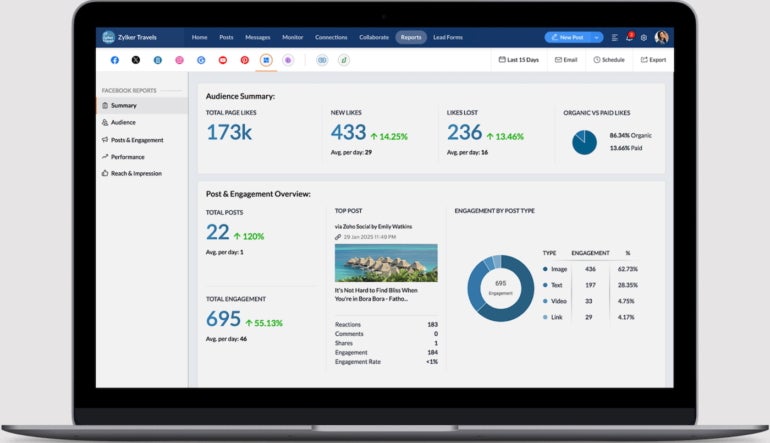
Enterprise CRM software is a customer relationship management platform specifically designed for midsize to large organizations that need a solution that can handle the bandwidth of a large-volume business. With the right software, businesses can scale high-level automation, such as deal tracking, client engagement, and team management. Some of the most notable providers include Zoho CRM, HubSpot, and Pipedrive for their scalability, cost efficiency, and marketing and sales features (they’re also among the best AI-powered CRMs). The providers I examine below organize and track current and past client activity through custom workflows and pipelines with advanced tech features. These tools help teams, departments, and entire enterprises access the same up-to-date information through visually digestible dashboards. 1 monday CRM Employees per Company Size Micro (0-49), Small (50-249), Medium (250-999), Large (1,000-4,999), Enterprise (5,000+) Any Company Size Any Company Size Features Calendar, Collaboration Tools, Contact Management, and more 2 Pipedrive CRM Employees per Company Size Micro (0-49), Small (50-249), Medium (250-999), Large (1,000-4,999), Enterprise (5,000+) Any Company Size Any Company Size Features Calendar, Collaboration Tools, Contact Management, and more 3 Creatio CRM Employees per Company Size Micro (0-49), Small (50-249), Medium (250-999), Large (1,000-4,999), Enterprise (5,000+) Large (1,000-4,999 Employees), Enterprise (5,000+ Employees) Large, Enterprise Features Dashboard, Document Management / Sharing, Email / Marketing Automation, and more Top enterprise CRM software compared The top enterprise CRM tools offer a variety of core features, like contact and account management, basic reports and dashboards, and activity tracking. After building pipelines and reports in the software, information and activity updates can be shared through the CRM’s integrations with other applications, both native and third-party. This way, accounts and pipelines are visible across teams and entire departments. Key enterprise features Marketing automation: Manage campaigns with marketing attribution, send mass emails, and use the Social Tab to launch Facebook and X campaigns. Advanced CRM analytics: Run anomaly detection, comparator, cohort analysis, and quadrant analysis for an in-depth understanding of customer behavior. Zia AI: Zoho CRM’s native AI tools include smart lead scoring, recommendations, data enrichment, email summarization, sentence auto-complete, call transcription, and sentiment analysis. Advanced customizations: You can customize page layouts, subforms, web tabs, reports, dashboards, email templates, and buttons. Zoho CRM social media analytics. Image: Zoho Pros and cons Pros Cons Social Tab for social media marketing and management Workflow rules and automation are available across all plans 24/7/365 data security Difficult UI due to advanced and robust features 24/7 customer support requires an add-on User-reported issues with data migration and deduplication HubSpot CRM: Best all-in-one enterprise CRM Overall rating: 4.62/5 Cost: 4.31/5 Core features: 4.53/5 Ease of use: 5/5 Support: 4.38/5 Expert score: 4.38/ Image: HubSpot HubSpot CRM offers a variety of sales, marketing, and customer service management tools. You can organize and engage with clients through phone, live chat, and email, and manage activities within a custom dashboard. Then, you can sync customer data across an array of third-party integrations. Moreover, despite its robustness, it uniquely maintains a low learning curve, making it great for those who want to deploy an easy-to-use CRM across a large organization. Why I chose HubSpot CRM HubSpot CRM is top-rated for its robust set of features. In addition to its sales, marketing, and service capabilities, it also offers specialty tools for managing commerce, content, and operations. Its notable features include company insights, an AI email writer, live chat software, and a meeting scheduler. Enterprise-level features include lead form routing, recurring revenue tracking, deal journey analytics, and custom user roles. For more information, read our HubSpot CRM review. Pricing Free CRM: Free for up to two users with contact management, quotes, live chat, and more. Sales Hub Starter: $15 per seat per month, billed annually, or $20 when billed monthly. The Starter plan includes all free tools, simple automation, e-signature, conversation routing, and more. Sales Hub Professional: $90 per seat per month, billed annually, or $100 when billed monthly, and a one-time $1,500 onboarding fee. This plan includes all Starter features and prospecting workspace, playbooks, forecasting, and more. Sales Hub Enterprise: $150 per seat per month, with an annual commitment and a one-time $3,500 onboarding fee. Users of this plan receive all Professional tools plus advanced permissions, predictive lead scoring, conversation intelligence, and lead form routing. Key enterprise features Breeze Prospecting Agent: Leverage AI-powered research to build a qualified sales pipeline and personalized outreach strategies. Sensitive data storage: Securely store sensitive data like demographics, financial data, and government ID inside your HubSpot database. Advanced permissions and notifications: Create custom user roles, granular permissions, and default notifications for all users or profiles in your HubSpot account. HubSpot CRM email marketing template. Image: HubSpot Pros and cons Pros Cons All-in-one CRM with sales, marketing, service, and commerce tools Intuitive user interface Offers specialty tools for content and operations management Enterprise tier requires an annual commitment Mandatory one-time onboarding fee for higher tiers AI-powered data enrichment requires a $45 per month add-on fee Pipedrive: Best for visual pipeline management Overall rating: 4.54/5 Cost: 4.25/5 Core features: 4.53/5 Ease of use: 5/5 Support: 4.06/5 Expert score: 4.19/5 Image: Pipedrive Pipedrive is a straightforward CRM system that focuses on building competent sales pipelines for tracking deals and managing leads. Businesses can automate their sales process with Kanban drag-and-drop tools, making it an easy platform to navigate and customize. This platform also offers resources on implementing the tool according to your niche industry, like automotive sales, call centers, banking, or B2B/B2C organizations. SEE: 10 Best CRM Software for 2025 Why I chose Pipedrive Pipedrive offers a highly visual drag-and-drop interface, making it great for reflecting sales and marketing processes. Creating these Kanban-like pipelines makes it easier to manage new leads and existing clients from one place. Pipedrive is intuitive software that allows individuals to navigate and identify potential sales opportunities, making it the best enterprise CRM for visual pipeline management. Pipedrive’s pipeline builder is pretty clear-cut and visually appealing, so if you want a similar intuitive interface for creating sales processes at a lower cost,

7 Best Enterprise CRM Systems For Your Business Read More »

CIO Leadership Live Middle East with Kenneth Lindegaard, CIO at Space42

Overview In this episode, we’re joined by Kenneth Lindegaard, the visionary CIO of Space42. Kenneth brings a unique blend of strategic insight and hands-on expertise to the table.As CIO of Space42, Kenneth is at the forefront of integrating cutting-edge technologies such as AI, satellite communications, and geospatial insights. His mission is to optimize these technologies for both operational efficiency and customer satisfaction, driving digital transformation that enhances business outcomes. Join us as we delve into Kenneth’s approach to balancing innovation with operational demands, and explore how he is shaping the future of IT in the Middle East. Register Now source

CIO Leadership Live Middle East with Kenneth Lindegaard, CIO at Space42 Read More »

House Dems Seek FCC Answers On Media Probes

By Christopher Cole ( April 2, 2025, 5:49 PM EDT) — A trio of leading House Democrats on the Energy and Commerce Committee are calling on the Federal Communications Commission’s Republican chief to explain his pursuit of “political goals” through a bevy of news network investigations since taking office in January…. Law360 is on it, so you are, too. A Law360 subscription puts you at the center of fast-moving legal issues, trends and developments so you can act with speed and confidence. Over 200 articles are published daily across more than 60 topics, industries, practice areas and jurisdictions. A Law360 subscription includes features such as Daily newsletters Expert analysis Mobile app Advanced search Judge information Real-time alerts 450K+ searchable archived articles And more! Experience Law360 today with a free 7-day trial. source

House Dems Seek FCC Answers On Media Probes Read More »

From concept to reality: A practical guide to agentic AI deployment

Deployment: Automating the LLM operations lifecycle Keep in mind that everything surrounding artificial intelligence and agentic AI is still evolving. We are seeing models being released faster, which introduces model management activities that we didn’t have to manage previously. Tooling is evolving and new frameworks are being released that make processes easier and more streamlined and that can reduce technical debt. You need to ensure your AI solution evolves as well. You will need to iterate your solutions more frequently than you would have with your traditional non-AI solutions. You also need to ensure that you have a versioning strategy to keep up with modifications and new features.  If you aren’t planning updates, with a versioning strategy, as well as updating the iterative tests, your AI system will become obsolete. This can cause unreliability and it becomes a technical debt that you will struggle to maintain.  The benefits of fully automating the LLM operations lifecycle to enhance efficiency, consistency and reliability, while also supporting continuous improvement, cost-effectiveness and compliance far outweigh the cost.  Agentic AI solutions have immense potential for businesses seeking to automate tasks, enhance efficiency and incorporate the benefits of agentic AI. But if you aren’t deploying, testing, monitoring and automating the process it doesn’t matter how good your solution is or what the potential could have been.  In this article, we have covered the processes around agentic AI DevOps but I want you to take away five things that you should ensure are your foundational baseline required as the basis for every successful implementation:  Automate, automate, automate: Automate tasks, create automation pipelines, automate testing, automate evaluations, automate the deployment of monitoring.  Deploy to containers and virtual environments: Run solutions in Docker containers to isolate the agents and constrain their access.  Restrict access: Limit the agents’ access to resources, and to the internet, as well as data repositories to prevent unauthorized access or data oversharing.  Monitor: Monitor output logs, performance logs and custom metrics during and after execution to identify issues that require human review. Create and compare against the baseline to identify and easily identify unintended behavior.  Human oversight: Run tests with humans in the loop to supervise the agents and ensure that you have included all scenarios that will require human intervention.  Fully automating the LLM operations lifecycle will enhance efficiency, consistency and reliability, while also supporting continuous improvement, cost-effectiveness and compliance.  Stephen Kaufman serves as a chief architect in the Microsoft Customer Success Unit Office of the CTO focusing on AI and cloud computing. He brings more than 30 years of experience across some of the largest enterprise customers, helping them understand and utilize AI ranging from initial concepts to specific application architectures, design, development and delivery.  This article was made possible by our partnership with the IASA Chief Architect Forum. The CAF’s purpose is to test, challenge and support the art and science of Business Technology Architecture and its evolution over time as well as grow the influence and leadership of chief architects both inside and outside the profession. The CAF is a leadership community of the IASA, the leading non-profit professional association for business technology architects. source

From concept to reality: A practical guide to agentic AI deployment Read More »

3 Firms Guide MDA Space's $269M SatixFy Deal

By Al Barbarino ( April 1, 2025, 4:22 PM EDT) — MDA Space said Tuesday it will acquire SatixFy Communications Ltd. at an equity value of approximately $193 million in a push by the Brampton, Ontario-based firm to bolster its end-to-end satellite systems offerings, with at least three law firms steering the deal…. Law360 is on it, so you are, too. A Law360 subscription puts you at the center of fast-moving legal issues, trends and developments so you can act with speed and confidence. Over 200 articles are published daily across more than 60 topics, industries, practice areas and jurisdictions. A Law360 subscription includes features such as Daily newsletters Expert analysis Mobile app Advanced search Judge information Real-time alerts 450K+ searchable archived articles And more! Experience Law360 today with a free 7-day trial. source

3 Firms Guide MDA Space's $269M SatixFy Deal Read More »

Emergence AI’s new system automatically creates AI agents rapidly in realtime based on the work at hand

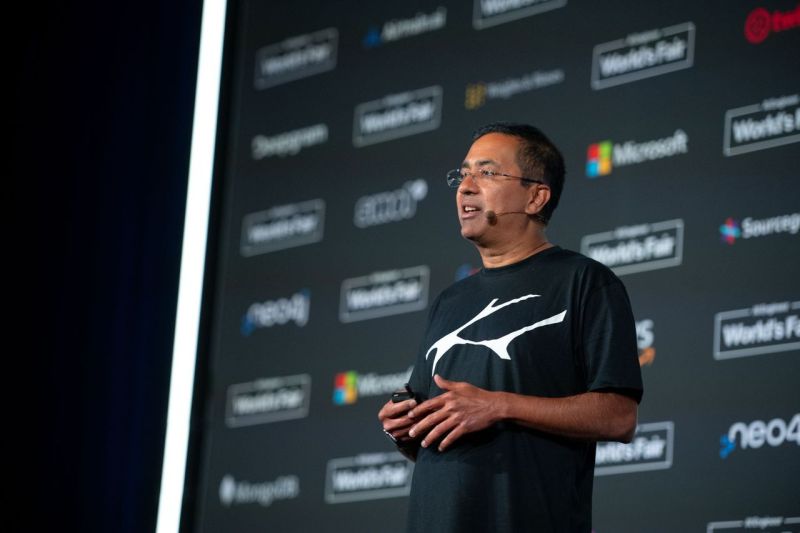
Join our daily and weekly newsletters for the latest updates and exclusive content on industry-leading AI coverage. Learn More Another day, another announcement about AI agents. Hailed by various market research reports as the big tech trend in 2025 — especially in the enterprise — it seems we can’t go more than 12 hours or so without the debut of another way to make, orchestrate (link together), or otherwise optimize purpose-built AI tools and workflows designed to handle routine white collar work. Yet Emergence AI, a startup founded by former IBM Research veterans and which late last year debuted its own, cross-platform AI agent orchestration framework, is out with something novel from all the rest: a new AI agent creation platform that lets the human user specify what work they are trying to accomplish via text prompts, and then turns it over to AI models to create the agents they believe are necessary to accomplish said work. This new system is literally a no code, natural language, AI-powered multi-agent builder, and it works in real time. Emergence AI describes it as a milestone in recursive intelligence, aims to simplify and accelerate complex data workflows for enterprise users. “Recursive intelligence paves the path for agents to create agents,” said Satya Nitta, co-founder and CEO of Emergence AI. “Our systems allow creativity and intelligence to scale fluidly, without human bottlenecks, but always within human-defined boundaries.” Image of Dr. Satya Nitta, Co-founder and CEO of Emergence AI, during his keynote at the AI Engineer World’s Fair 2024, where he unveiled Emergence’s Orchestrator meta-agent and introduced the open-source web agent, Agent-E. (photo courtesy AI Engineer World’s Fair) The platform is designed to evaluate incoming tasks, check its existing agent registry, and, if necessary, autonomously generate new agents tailored to fulfill specific enterprise needs. It can also proactively create agent variants to anticipate related tasks, broadening its problem-solving capabilities over time. According to Nitta, the orchestrator’s architecture enables entirely new levels of autonomy in enterprise automation. “Our orchestrator stitches multiple agents together autonomously to create multi-agent systems without human coding. If it doesn’t have an agent for a task, it will auto-generate one and even self-play to learn related tasks by creating new agents itself,” he explained. A brief demo shown to VentureBeat over a video call last week appeared duly impressive, with Nitta showing how a simple text instruction to have the AI categorize email sparked a wave of new agents being created, displayed on a visual timeline showing each agent represented as a colored dot in a column designating the category of work it was designed to help carry out. Animated GIF image showing Emergence AI’s user interface for automatically creating multiple enterprise AI Agents. Nitta also said the user could stop and intervene in this process, conveying additional text instructions, at any time. Bringing agentic coding to enterprise workflows Emergence AI’s technology focuses on automating data-centric enterprise workflows such as ETL pipeline creation, data migration, transformation, and analysis. The platform’s agents are equipped with agentic loops, long-term memory, and self-improvement abilities through planning, verification, and self-play. This enables the system to not only complete individual tasks but also understand and navigate surrounding task spaces for adjacent use cases. “We’re in a weird time in the development of technology and our society. We now have AI joining meetings,” Nitta said. “But beyond that, one of the most exciting things that’s happened in AI over the last two, three years is that large language models are producing code. They’re getting better, but they’re probabilistic systems. The code might not always be perfect, and they don’t execute, verify, or correct it.” Emergence AI’s platform seeks to fill that gap by integrating large language models’ code-generation abilities with autonomous agent technology. “We’re marrying LLMs’ code generation capabilities with autonomous agent technology,” Nitta added. “Agentic coding has enormous implications and will be the story of the next year and the next several years. The disruption is profound.” Emergence AI highlights the platform’s ability to integrate with leading AI models such as OpenAI’s GPT-4o and GPT-4.5, Anthropic’s Claude 3.7 Sonnet, and Meta’s Llama 3.3, as well as frameworks like LangChain, Crew AI, and Microsoft Autogen. The emphasis is on interoperability—allowing enterprises to bring their own models and third-party agents into the platform. Expanding multi-agent capabilities With the current release, the platform expands to include connector agents and data and text intelligence agents, allowing enterprises to build more complex systems without writing manual code. The orchestrator’s ability to evaluate its own limitations and take action is central to Emergence’s approach. “A very non-trivial thing that’s happening is when a new task comes in, the orchestrator figures out if it can solve the task by checking the registry of existing agents,” Nitta said. “If it can’t, it creates a new agent and registers it.” He added that this process is not simply reactive, but generative. “The orchestrator is not just creating agents; it’s creating goals for itself. It says, ‘I can’t solve this task, so I will create a goal to make a new agent.’ That’s what’s truly exciting.” Bet lest you worry the orchestrator will spiral out of control and create too many needless custom agents for each new task, Emergence’s research on its platform shows that it has been designed to — and successfully carries out — the additional requirement of winnowing down the number of agents created as it comes closer and closer to completing a task, adding agents with more general applicability to its internal registry for your enterprise, and checking back with that before creating any new ones. Graph showing the number of tasks increasing while the number of Emergence AI “core agents” and “multi agents” level off over time. Credit: Emergence AI Prioritizing safety, verification, and human oversight To maintain oversight and ensure responsible use, Emergence AI incorporates several safety and compliance features. These include guardrails and access controls, verification rubrics to evaluate agent performance, and human-in-the-loop oversight to validate key decisions. Nitta

Emergence AI’s new system automatically creates AI agents rapidly in realtime based on the work at hand Read More »

FCC Pulls Texas Station's License For Unpaid Fees

By Nadia Dreid ( April 1, 2025, 9:53 PM EDT) — A Texas radio station nestled right on the border with New Mexico just had its license yanked by the Federal Communications Commission after it failed to pay its regulatory fees for more than a decade, the agency has revealed…. Law360 is on it, so you are, too. A Law360 subscription puts you at the center of fast-moving legal issues, trends and developments so you can act with speed and confidence. Over 200 articles are published daily across more than 60 topics, industries, practice areas and jurisdictions. A Law360 subscription includes features such as Daily newsletters Expert analysis Mobile app Advanced search Judge information Real-time alerts 450K+ searchable archived articles And more! Experience Law360 today with a free 7-day trial. source

FCC Pulls Texas Station's License For Unpaid Fees Read More »

NVIDIA GTC 2025: Reasoning And Robotics Converge

San Jose was abuzz with excitement as AI enthusiasts gathered for the 2025 NVIDIA GTC AI conference. NVIDIA showcased its expanding data center offerings, along with a commitment to joint developments with server and network vendors. Everyone had high expectations, as this is a world-renowned AI infrastructure event, and this year, it did not disappoint. Sovereign AI led off the agenda, with UK Secretary of State for Science, Innovation, and Technology Peter Kyle highlighting the UK’s ambitious AI strategy and representatives from Denmark, India, Italy, South Korea, and Brazil also sharing their sovereign AI initiatives. Italy’s Colosseum and Brazil’s WideLabs stood out as prime examples of innovative international AI applications. Another highlight was the collaboration between DeepMind and Disney Research that demonstrated AI’s potential to revolutionize fields such as robotics, drug discovery, and energy grids, along with the introduction of Dynamo, both as an open-source project and a framework for NVIDIA’s hardware, which promises to accelerate industrywide advancements in AI infrastructure. GTC also brought forward NVIDIA’s news of the disaggregation of NVLink, partnerships with Cisco for future telecommunications, and the expansion of its hardware certification program. Here’s a roundup of some of the most notable announcements: Vera Rubin and Rubin Ultra. Jensen Huang introduced the Vera Rubin architecture, named after astronomer Vera Rubin. This next-generation GPU, launching in 2026, is designed to significantly enhance system performance. Rubin Ultra, expected in 2027, will further boost these capabilities. Disaggregated NVLink. NVIDIA’s NVLink72 is an advanced interconnect architecture that facilitates ultra high-speed communication between GPUs and CPUs in large-scale computing setups. It connects 72 NVIDIA Blackwell GPUs and 36 NVIDIA Grace CPUs within a single rack, enabling them to function as a unified, massive computational resource. Partnerships with Cisco. NVIDIA and Cisco are collaborating to develop an AI-native wireless network stack, focusing on radio access networks for 6G technology. This partnership focuses on performance, efficiency, and scalability in telecommunications. Expanded certification program. NVIDIA’s certification program validates servers equipped with NVIDIA GPUs to handle diverse AI workloads, including deep learning training and inference tasks. The rigorous testing ensures optimal performance, manageability, and scalability. Systems from Dell Technologies, HPE, and storage providers like NetApp and VAST Data have achieved NVIDIA-certified status. AI Data Center Blueprint. Recognizing the unique requirements of AI data centers, NVIDIA is partnering with vendors like Cadence, Vertiv, and Schneider to develop AI Factory Blueprints. These blueprints streamline the design, testing, and optimization of AI data centers, creating visual models to simulate and refine aspects such as power, cooling, and networking before construction, ensuring efficiency and reliability. Dynamo. NVIDIA released Dynamo, an open-source framework for scalable model inferencing. Although not every organization will be inferencing models directly on their own hardware, NVIDIA aspires to become to AI what Kubernetes is to cloud. Cohere is an early explorer of this project. Some more tactical updates: CUDA-X libraries. Powered by GH200 and GB200 superchips, these libraries accelerate computational engineering tools by up to 11x and enable 5x larger calculations. With over 400 libraries, key microservices include NVIDIA Riva for speech AI, Earth-2 for climate simulations, cuOpt for routing optimization, and NeMo Retriever for retrieval-augmented generation capabilities. NVIDIA Llama Nemotron reasoning. This feature enhances multistep math, coding, reasoning, and complex decision-making with Llama models. It boosts accuracy by 20% and optimizes inference speed by 5x, reducing operational costs. NVIDIA Cosmos World Foundation Models (WFMs). WFMs introduce customizable reasoning models for physical AI. Cosmos Transfer WFMs generate controllable photorealistic video outputs from structured video inputs, streamlining perception AI training. NVIDIA Isaac GR00T N1. New models GROOT and Newton accelerate reliable robot deployment across various industries, using real and synthetic training data. These are enhanced by the latest Cosmos WFM. As firms build agentic AI, the need for optimized hardware to run inferencing reasoning models becomes ever more critical. Targeted inferencing frameworks such as NVIDIA’s Dynamo that are released as open-source projects are very valuable for the early movers of the agentic world, allowing for broader community co-innovation. What It Means NVIDIA is driving a vertical integration story based on its prowess in AI hardware and is now extending this to libraries, open–source AI models (generic and industry-specific), edge, and robotics. This certainly is good news for organizations (the idea of a one-stop shop), but business and tech leaders must address challenges extraneous to their NVIDIA relationship, such as export controls, trade sanctions that limit infrastructure availability, power requirements, business cases for AI, skills, cost increases, and risks including security, privacy, and compliance. Specifically, power requirements for AI ambitions remains an ongoing challenge. Jensen Huang talked about how AWS, Azure, GCP, and Oracle Cloud will procure nearly 3.6 million Blackwell GPUs in 2025. In another session, Schneider execs talked about additional 150-gigawatt capacity requirements now through 2030. For reference, one rack full of NVIDIA Blackwell servers with NVLink72 requires approximately 150+ kilowatt power (compared to 10–30 kWs for traditional systems). These massive deployments across the globe require thinking outside of the box to make it all sustainable. We are looking forward to publishing a few research reports on this market very soon. If you’re exploring AI potential and want to discuss it further, please submit an inquiry request. source

NVIDIA GTC 2025: Reasoning And Robotics Converge Read More »