Masers are the future of clean energy – according to Quaise

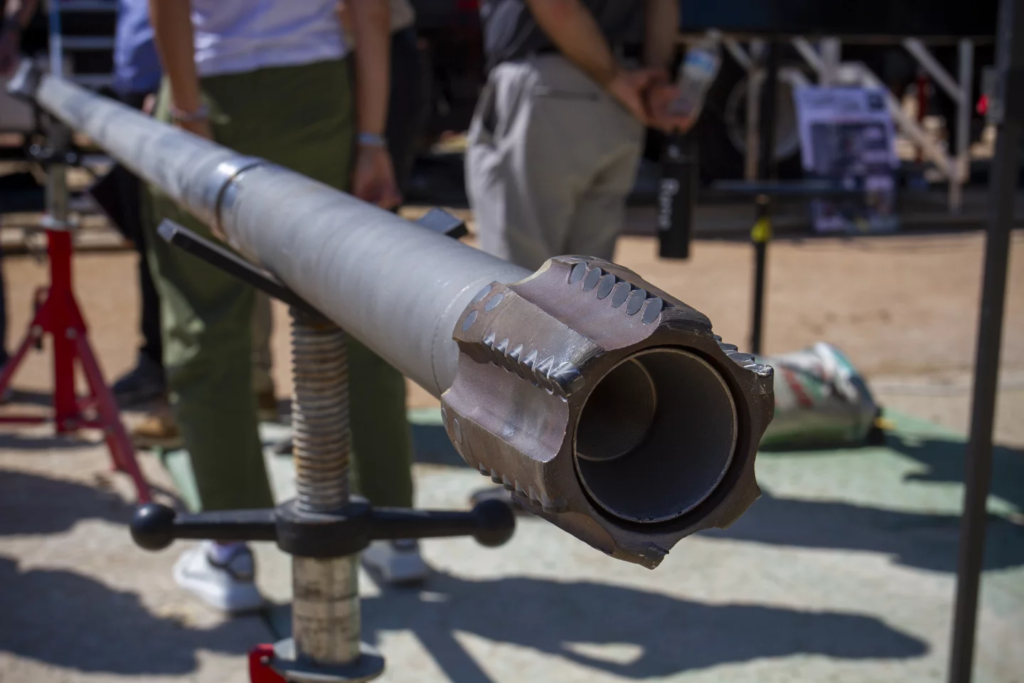
Quaise Energy isn’t chasing the kind of geothermal energy where Mother Earth was already kind enough to put hot rocks near the surface. Quaise is trying to make geothermal work almost anywhere on the planet, by drilling deeper than we ever have before … with masers. If you’re unfamiliar with masers (Microwave Amplification by Stimulated Emission of Radiation), think of them as the microwave-frequency equivalent of lasers. Instead of visible light, they generate tightly focused beams of high-frequency electromagnetic radiation. In Quaise’s case, that means 105-GHz millimeter waves powerful enough to ablate, melt, and even vaporize rock without physically touching it. In most cases outside of active volcanic zones like Iceland, truly “superhot geothermal” rock at 752 °F (400 °C) is pretty far below the Earth’s surface. The general rule of thumb is a geothermal gradient of about 77 °F per mile (25 °C per km), meaning 9-10 or more miles (14-16 km) to hit that sweet spot for superhot rock. Conventional geothermal typically works around 302–392 °F (150–200 °C). With superhot temperatures, water carries much more usable heat and circulates more efficiently, and scientists estimate superhot systems could produce 5-10 times more energy per well. Slightly different design on the launcher than the Nabors test, but also different methodology on the bore. That being said, for over a football field in depth, that bit barely looks touchedJS @ New Atlas For example, Iceland’s Deep Drilling Project Krafla borehole hit 846 °F (452 °C) superheated steam at around 2,059 psi (142 bar). It was estimated to have a production potential of 36 MWe, which would be about 10x that of conventional geothermal. “Estimated” because irreparable equipment failures led to the plugging of the borehole and nothing has become of it … yet. And Krafla hadn’t even reached supercritical water temperatures yet, where temps would need to reach 705 °F (374 °C) and about 3,200 psi (221 bar) of pressure, which is on Quaise’s to-do list as well. Supercriticality is a strange phenomenon where temperature and pressure change the state of water, so it acts as neither a gas nor a liquid, but has liquid-like density and the flow characteristics of a gas, making it especially energy dense and fast flowing. But that’s for a later date. For now, Quaise is focusing on its first-ever geothermal plant, Project Obsidian, which is set to go online in 2030. Phase 1 construction of the 50-MW plant is already underway. If you’ve ever wondered what a 100-kW gyrotron looks like, well this is it! This is the one in the M1 mobile unit at Marble Falls.JS @ New Atlas It’s situated just south of Bend, Oregon. What makes the area special is the 75-mile-long (121-km), 27-mile-wide (43-km) active volcano that sits nearby, called Newberry Volcano. Geologists figure the volcano’s last eruption was around 1,300 years ago. Having personally been through there several times, it’s evident that it wasn’t all that long ago on the human timescale; old, hardened lava flows are visible in nearly every direction, still devoid of trees after more than a millennium. Quaise considers this to be a Tier I site, the “easiest” tier, where geothermal activity is closest to the surface, making superhot rock more accessible. To get its very first project off the ground – the very first of its kind, in fact – Quaise’s target is the lower threshold of superhot geothermal, as high as 689 °F (365 °C), with an average temp of 599 °F (315 °C) at about three miles (4.8 km) deep. Quaise intends to be online by 2030, producing 50 MW of clean, renewable geothermal power ’round the clock. It turns out, copper is a very effective mirror to direct millimeter waves. JS @ New Atlas Phase two plans to go even hotter with a second well system – as high as 779 °F (415 °C). No one has ever done that before. “[599 °F average] is on the cusp of what is achievable today, so it’s lower technical risk,” says Quaise senior mechanical engineer Daniel W. Dichter. “With what we learn from that system, we’ll go to the hotter one, which is riskier. Most of our analysis, which is based on several models, was dedicated to trying to understand some of these uncertainties … If these first wells work the way we think they will, they will be on par with exceptionally productive oil and gas wells in terms of equivalent power output.” And that’s pretty cool. I’ve personally been to two Quaise demos over the last year, and more recently, I visited Quaise HQ for a personal tour of the facility where the millimeter-wave technology is being developed. The Nabors F rig at the Houston location – it’s designed in such a way that it’s fairly easy to swap from conventional drilling over to millimeter-wave drilling on the same rigJS @ New Atlas On May 21, 2025, I attended the demo at the Nabors facility in Houston, Texas. Quaise was using high-powered millimeter-waves – essentially the shorter-wavelength and higher-frequency cousin of the microwave in your kitchen – to vitrify rock, melting the borehole walls into a glass-like encasement using a 100-kW gyrotron mounted on a standard oil and gas Nabors F rig. While I was there, Quaise bored down to about 10 feet (3 m). Just a few months later, on September 4, 2025, I attended a demo in Marble Falls, Texas, where the company had stuck its very mobile 100-kW gyrotron into a container on the back of a Hino truck, rather than an oil and gas rig. Quaise had also shifted tactics: instead of vitrifying the rock into glass, the team lowered the power just enough to ablate it – turning rock into dust while pumping high-pressure air into the hole to blow it out (capturing and filtering it all at the surface). Quaise’s new way of doing it: ablating rock into dustJS @ New Atlas When I asked about the change, Quaise told me it’s much faster and

Masers are the future of clean energy – according to Quaise Read More »
Robotic vac-mop cuts a full day of housework off the schedule: Review

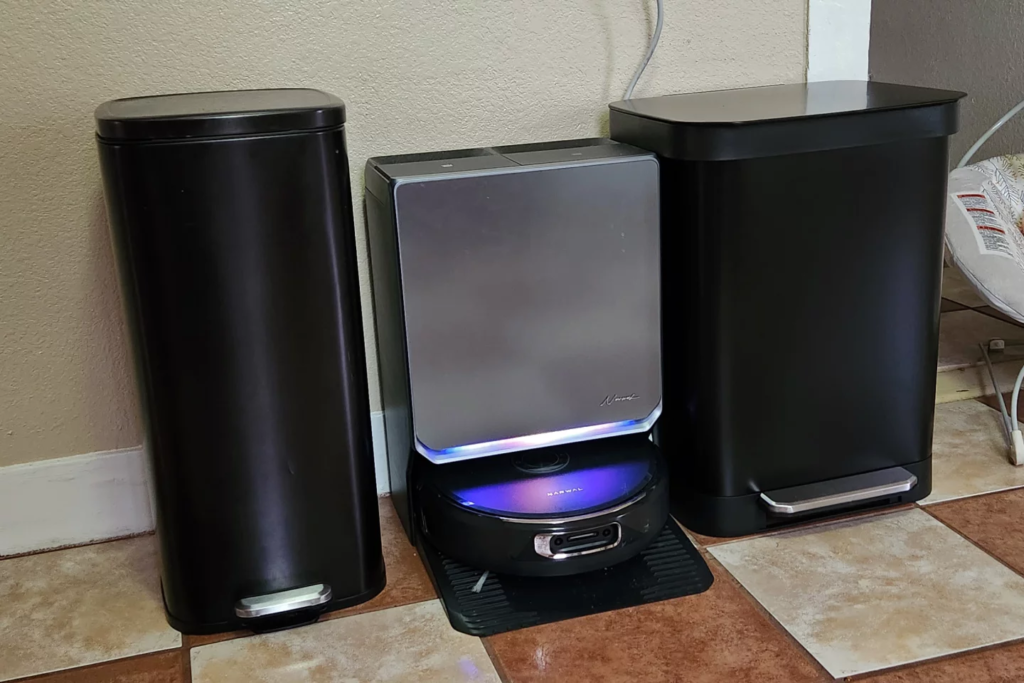
This is one of the few review proposals that I had to get permission from my better half for … and frankly, she told me no, but I did it anyway. You see, my wife is extremely hard-headed in an old-school “it’s my way or the highway” sense. She’s also the antithesis of me in terms of embracing technology of any sort. She has a smartphone, but good luck getting ahold of her. And only in the last few weeks, as she’s started her own garden for the first time, has she used AI on purpose to look up gardening tips. We also have three small children, a poodle small enough to be a squirrel, and live blocks from the beach. Neither of us had ever had a robovac before. All this is to say she was absolutely adamant about sweeping, vacuuming, and mopping her own floors and not leaving it to an inferior robot. At least once a day, the vacuum would come out for a whole-home session that would take her an hour or so when all was said and done. Moving chairs, rugs, children’s toys, etc. And at least once a week, the mop would come out after the vacuum, also taking her an additional hour. Not to mention all the spot cleanups from a less-than-one-year-old deciding that crushing her Goldfish snacks is way more fun than eating them, never mind the three and four year old’s antics … and the sannnnnd. Home base. For reference, those are both 13-gallon (42-liter) trash cans … we take our recycling – and our flooring – seriously here. JS @ New Atlas Why didn’t I pitch in and help, you ask? Well, obviously, because I don’t do a good enough job, and she’ll just end up cleaning behind me, wasting both of our time. I’m sure, whether you’re a man or woman reading this right now, you understand exactly what I’m talking about. Husbands are also inferior house cleaners.* The short version: Wife is pleased. Very much pleased, in fact. She now vacuums, at most, once a week, and she mops, also at most, once a month now. This awesome little robovac-mop is literally shaving a full workday a week off her already insane I’m-a-mom schedule. And this pleases me. It’s a solid 9.5/10 on the vac-scale and also a 9.5/10 on the mop-scale. The long version: I waited until she’d left for the grocery store to unbox it and set it up. It took me 15 minutes, at most, to get the base station put together and ready for action. After clicking in the Narwal’s “whisker-sweeper,” I chucked it into the dock and let it charge up a little while I made sure the floor was clear of any obstacles and opened all the doors inside. Maybe 10 minutes later, I paired it up with the app on my phone and followed the prompt that unleashed the beast into the wild to fend for itself. It disembarked from the dock, did a little 360-spin, then just started going. It zigged and zagged all over the kitchen, pausing for more 360s now and then, before moving from room to room, repeating the pirouette-process. For some reason, I was surprised when it went under the bed in the bedroom as it auto-mapped out our house. This is what the app looks like. Well, two separate screens, actually, but you get the driftJS @ New Atlas It took all of 25-30 minutes to fully build out its map of our ~1,250-sq-ft (~116-m²) house – far less time than any cat I’ve ever had as a pet before. And as quickly as it started, it happily announced it was done and charging. The app showed my entire floor layout with surprising accuracy, even having auto-labeled every room correctly and with little notes where it had seen power cords or shoes on the ground. Again, for some reason, I was surprised by all this. Overall impressions: It’s been nearly two months since firing up the Narwal for the first time. In that time, we’ve experienced exactly one issue with it. It refused to go into the bathroom for some reason for the first few weeks. After I assured it there were no crocodiles in the toilet (there was also a firmware update), it suddenly wasn’t scared anymore and would just as eagerly vacuum and mop the bathroom as any other room. Per my logs, we’ve tasked it 102 times for a total of just under 43 hours of work, cleaning over 18,500 sq ft (1,719 m²) of area. In that time, I’ve refilled the freshwater tank three or four times (also simultaneously emptying out the dirty water), and that’s it. It very efficiently uses water for mopping. I’ve flipped the robovac over three times to check sensors, brush, mop head, etc., and only once did I have to pull out a small wad of hair. But even then, it wasn’t wrapped around the brush like with a traditional vacuum. It was just kind of sitting there, waiting to be plucked. Nawa’s underbelly after 55 days of use, never having been cleaned before. I’d say it’s doing a solid job of self-cleaningJS @ New Atlas The Narwal Flow 2 is just sooo easy. Robovac specs at a glance: Suction: up to 30,000 Pa (that’s a lot) Battery: 7,000 mAh Li-ion (after whole-house vac/mop, ~55% battery remaining) Runtime: ~190 min (my house isn’t 190 minutes long) Obstacle avoidance: dual 1080p RGB cameras + AI/VLM object recognition Mop system: rolling/crawler mop with real-time self-cleaning Mop pressure: 12 N downward pressure (that’s basically 2.6 lb / 1.2 kg) Hot-water mop washing: up to 158 °F (70 °C) Anti-tangle floating brush and side brush Robot dimensions: ~13.8 x 14.3 x 3.7 in (35.1 x 36.3 x 9.4 cm) Dock dimensions: ~17.7 x 14.1 x 20.8 in (45.0 x 35.8 x 52.8 cm) Robot weight: ~11 lb (5 kg) Cleaning modes – vacuum only, mop only, simultaneous vac and

Robotic vac-mop cuts a full day of housework off the schedule: Review Read More »

Garmin reframes invisible maternal burnout into an art and data story

Garmin is reframing the idea of endurance, not through marathons or elite athletes, but through the everyday realities of motherhood. The wearable technology brand has launched its “Women of endurance” campaign, spotlighting the often invisible physical and mental fatigue women experience while juggling caregiving, work and daily responsibilities. At the centre of the campaign is a creative tension marketers are increasingly leaning into: translating emotional or unseen labour into something visible, measurable and relatable. Through a series of illustrated visuals created in collaboration with Taiwanese artist Chouyi, Garmin draws parallels between everyday motherhood and athletic performance. One visual likens carrying a child and groceries upstairs to a HIIT workout, while another compares chasing toddlers around the house to completing a 10km obstacle course. Don’t miss: Why CARiNG Pharmacy is making women’s health an everyday priority  The campaign, rolled out in the Malaysian, Singaporean and Thailand markets, positions these everyday moments as a form of “invisible training”, turning domestic labour and emotional resilience into the equivalent of endurance sport. Alongside the illustrations, Garmin is also leaning on wearable data to ground the campaign in measurable insights. Metrics pulled from Garmin devices, including heart rate variability (HRV), stress tracking, sleep quality and the brand’s “Body battery” energy scoring system, are used to help women better understand fatigue and recovery patterns. According to Garmin, the campaign was developed in response to the growing recognition that women’s exhaustion is frequently normalised or underestimated, despite research showing women report fatigue more often than men. Rather than focusing solely on performance optimisation, the brand is positioning wearable technology as a wellness companion that can help users visualise strain before burnout escalates. The campaign also extends into experiential territory. On 24 May, Garmin Malaysia will host “Women of Endurance – Here’s to Her” at PARC, Subang, featuring a community wellness activation blending movement, creativity and education. The event will include beginner-friendly walk and run sessions, kid-friendly mat pilates classes for mothers and children, as well as a guided painting workshop. The campaign reflects a broader shift in wellness and tech marketing, where brands are increasingly moving beyond product specifications to tap into emotional storytelling, identity and lived experience. In Garmin’s case, wearable data becomes less about performance metrics and more about validating the unseen effort many women navigate daily. This May, brands in Southeast Asia have also been rethinking their approach to marketing Mother’s Day. CARiNG Pharmacy is doubling down on women’s wellness with a new long-term campaign aimed at shifting behaviour from reactive care to proactive health management. Launched together with Georgetown Pharmacy and Wellings Pharmacy under BIG CARING Group, the “Empowering women, inspiring wellness” campaign takes a holistic approach to women’s health, connecting inner wellness, outer wellbeing and mental health into a more integrated, everyday practice.Related articles: What women’s sports reveal about the future of branding Garmin Thailand encourages users to pursue goals with ‘zero to hero’ campaignGarmin rewrites content rules with Ugly Duckling Projects source

Garmin reframes invisible maternal burnout into an art and data story Read More »

Harley-Davidson may revive the 883 Sportster with a $10,000 price tag

Harley-Davidson has been on an interesting trajectory of late. The company seems to have put big, heavy, chrome-laden cruisers on the back burner, at least for the time being, to focus more on lightweight, entry-level motorcycles. From the surprisingly capable Pan America 1250 to the India-developed X440, Harley’s newer strategy increasingly revolves around accessibility, affordability, and broader appeal rather than pure old-school Americana. The same shift has been seen with its electric sub-brand, LiveWire, and the upcoming 125cc-equivalent Honcho. Now, it seems the next motorcycle in this evolving strategy has just been revealed. Last week, Harley-Davidson unveiled its “Back to Bricks” business plan, complete with concrete details on a pair of upcoming motorcycles. One of them is the iconic 883 Sportster, which is set to be resurrected four years after it was dropped from Harley-Davidson’s portfolio. Snapshot of the details shared in Harley’s Back to the Bricks planHarley-Davidson Keep in mind: it will use an air-cooled Evolution engine, the same powerplant that powered models like the Iron 883. Now, the term “air-cooled” might draw some criticism in 2026, but then again, “air-cooled” and Harley-Davidson are almost synonymous with one another. In its last iteration, the engine produced 54 horsepower at 6,000 rpm and 54 lb-ft (73.2 Nm) of torque at 3,750 rpm, offering plenty of grunt for urban riding and interstate cruising alike. But the engine is only one side of the equation. The other is the design – and that should get Harley loyalists excited. The new 883 Sportster appears to retain the Iron’s low handlebars, mid controls, and circular air-filter cover. What looks different in the teaser images is the extended rear fender, a shorter front fender, and a smaller front wheel paired with a wider tire. There are also hints of telescopic forks, a minimally styled fuel tank, and a two-into-two exhaust system. Of course, the motorcycle will likely be highly customizable, as most Harleys are, with a wide range of in-house accessories. And according to circulating rumors, the bike could be priced at around US$10,000. The orange markers highlight the gaps which H-D aims to fill with upcoming modelsHarley-Davidson When it does arrive, it will likely serve as the entry point into Harley’s V-twin experience. The Sportster name itself dates back to 1957 and has appeared in various forms ever since, so the new model will have a lot riding on its shoulders. All of this forms part of Harley’s “Back to Bricks” strategy, which traces its roots back to the tenure of former CEO Matt Levatich. Levatich originally launched the “More Roads to Harley-Davidson” plan in 2018, aiming to expand Harley’s lineup to include sportbikes, streetfighters, adventure bikes, and electric models. His successor, Jochen Zeitz, quickly reversed much of that strategy. Zeitz steered Harley back toward its traditional cruiser market, particularly at the premium end, shelving many of the company’s more unconventional ambitions. The second motorcycle of the two will be the adorable SprintHarley-Davidson Now, in 2026, instead of attempting to extract more money from the high end of the market, CEO James Starrs’ “Back to Bricks” concept appears focused on attracting younger and first-time riders. You might remember I mentioned Harley was working on two upcoming motorcycles. If the revived 883 Sportster is one, what’s the other? That bike is reportedly the $6,000 Sprint, a model Harley has apparently been developing for more than four years. I actually covered the Sprint last year when the story first surfaced, but things have gone surprisingly quiet since then. Based on what we know so far, the Sprint will likely launch before the 883 Sportster. Together, the two motorcycles fit into Harley’s broader goal of releasing 20 new models over the next three years – machines aimed more at making existing motorcycle categories accessible than at developing entirely new platforms or powertrains. The Sprint will largely be based on the Indian-made X440Harley-Davidson Interesting times for the American bikemaker. Your thoughts? Source: Harley-Davidson source

Harley-Davidson may revive the 883 Sportster with a $10,000 price tag Read More »

Dow Jones Futures: Iran Attacks Spark Stock Market Losses; Palantir Slides On Earnings

Futures for the Dow Jones Industrial Average and other major stock indexes traded slightly lower ahead of Tuesday’s open. The Dow Jones industrials sold off more than 550 points Monday as Iran attacked warships and commercial vessels in the Strait of Hormuz. Broadcom (AVGO), Micron Technology (MU), Nvidia (NVDA) and Sandisk (SNDK) were key movers Monday. Meanwhile, Palantir Technologies (PLTR) reported… Copyright ©2026 Investor’s Business Daily, LLC. All rights reserved. 87990cbe856818d5eddac44c7b1cdeb8 source

Dow Jones Futures: Iran Attacks Spark Stock Market Losses; Palantir Slides On Earnings Read More »

Superfast power bank charges itself with built-in solar

Power banks are a dime a dozen, but this one caught my eye with a feature I haven’t seen before: a built-in solar panel to recharge it using the power of the sun. The Solly actually ticks a lot of boxes. Its 20,000-mAh capacity is enough to recharge your iPhone 17 Pro Max four times, and it’s got two Type-C ports capable of 140-W output for really quick charging. As you’d expect with these specs, it can also power laptops. The battery itself is a solid-state affair, which means it uses a solid electrolyte instead of a flammable liquid one – so it should be safer to use in the long run, and won’t burst into flames when it’s damaged or even drilled into. The company also says this is housed in a shock-proof, water-resistant exterior. Solly: 300W Solar Power Bank with Built-in Wall Charger We’ve only just started to see these arrive in the market; one of the first options I came across appeared last August. Solly says you can expect the battery in this one to retain over 80% of its performance and charge capacity over at least 3,500 cycles, or roughly three years of regular usage. With a 20,000-mAh battery capacity and dual 140-W Type-C ports, the Solly can quickly top off power-hungry devices in a flashSolly The device itself can be fully charged in just 26 minutes when plugged into a wall outlet. It can also serve as a travel adapter, with US, UK, and EU plugs available. An optional accessory makes it compatible with other outlet types for the rest of the world. In addition, it supports pass-through charging, so it can simply power your devices when plugged in without charging the internal battery and deliver maximum output to your demanding gear, like a workstation laptop or gaming handheld. The Solly is both a power bank capable of running your laptop and other gear, as well as an adapterSolly If you’re outside, the solar panel wrapped around the exterior can top it off at a rate of 800-mAh per hour. That means you’ll need more than a full day of sunlight to fully recharge it, but if you’re in the middle of nowhere, that’s a whole lot better than nothing. While there are solar power banks out there, I haven’t found any other model that also handles travel adapter duties, or features a solid-state battery. Plus, the Solly includes a third USB-A port to fast charge other devices, and a protective layer to keep the solar panel from getting scratched. You can get the Solly with foldable US, UK, or EU wall plug prongs built in – this allows for fast charging and pass-through chargingSolly This model measures 3.15 x 2.36 x 1.38 in (8 x 6 x 3.5 cm), which is fairly compact – and the wall outlet prongs fold into the body to make it easier to slide into a pocket or bag. The Solly is currently being crowdfunded on Kickstarter, where it can be had for as little as US$79 – discounted from its $115 expected retail price. You can get it in three different colorways, and add on neat accessories like a short Type-C cable that can double as a lanyard, and a charging dock to top off five Sollys at once. The 20,000-mAh Solly comes in three colorways, and weighs a reasonably light 14 ozSolly All crowdfunding campaigns carry an element of risk, and this appears to a new brand’s first product – so you’ll want to keep that in mind if you choose to back this campaign. However, if all goes to plan, orders are slated to ship worldwide in August 2026, and delivery costs will be calculated later in the year. Find the Solly on Kickstarter. Note: New Atlas may earn commission from purchases made via links. source

Superfast power bank charges itself with built-in solar Read More »

Leon Communications strengthens financial content capabilities

Leon Communications has formed a strategic partnership with editorial advisory firm Edington Advisors, in a move aimed at deepening its editorial offering across thought leadership, awards submissions and long-form content for financial and professional services clients in Asia Pacific. The partnership, formalised through a formal agreement, brings together Leon’s regional financial services communications expertise with Edington Advisors’ editorial specialism in private banking, wealth management and global finance. At the centre of the collaboration is Elliot Wilson (pictured right), founder of Edington Advisors and former global private banking and wealth management Editor at Euromoney. He will serve as consulting editor to Leon. Don’t miss: PR Newswire partners SPH Media to expand SG reach In this role, Wilson will work closely with Leon’s senior leadership team to advise clients on structured content programmes, awards strategy, and executive profiling, including LinkedIn-led thought leadership initiatives for senior leaders. The partnership also extends beyond client work. Leon and Edington Advisors will jointly participate in client pitches and industry networking events across Singapore, Hong Kong and other key markets in the region, bringing together senior stakeholders from financial services and communications. For Leon, the move comes as financial brands increasingly compete on credibility and content depth rather than pure visibility, with agencies under pressure to deliver more structured editorial output that can cut through in crowded markets. Edington Advisors, meanwhile, continues to position itself as a specialist advisory firm supporting financial institutions on narrative development and senior leadership positioning, particularly within wealth and private banking segments. The partnership is expected to roll out immediately across existing client engagements in Asia Pacific. “Everything we do is built around helping clients communicate with substance, clarity and credibility. That matters particularly in financial and professional services, where clients need more than just visibility. They need strong ideas, well-structured arguments and content that stands up to scrutiny,” said Tim Williamson (pictured left), managing director, Leon Communications. He added, “Wilson is one of the most respected editorial voices in wealth management and private banking. His experience adds real depth to the work we already do for clients across thought leadership, awards and strategic content. We’re delighted to bring that perspective into Leon and to work together on opportunities across the region.” In tandem, Wilson said, “Leon has the strategic relationships and communications capability across Asia Pacific. What I add through Edington Advisors is editorial rigour: including helping senior professionals find their public voice. I’m excited to be working with Williamson and the Leon team.” This comes amid a broader industry push towards more integrated content capabilities, as agencies look to close the gap between strategy and execution. Last year, Ellerton & Co marked its 10th anniversary with the launch of Ellerton Creative Studio, a dedicated division aimed at strengthening visual storytelling alongside its existing communications and advisory services. The move reflected a broader shift in the industry towards integrated storytelling, where brand narratives are increasingly consumed across both digital and offline channels. The studio brings together creative, content, and digital capabilities under one roof, spanning branding and identity, multimedia production, digital design and strategy, and advanced copywriting, effectively bridging the gap between PR strategy and execution. Related articles: Ellerton & Co. elevates leadership trio amid rapid expansion across Asia   Ashbury strengthens Singapore advisory leadership with senior appointment   Edelman expands Southeast Asia public affairs bench with senior hires source

Leon Communications strengthens financial content capabilities Read More »

Private Equity Best Practices: What Drives Outcomes

Innovations are rarely just about superior performance. They are also about experimentation. And all new experiments breed their fair share of miscarriages. Given the extraordinary impact that financial leverage has on equity returns, PE fund managers have spent the past 40 years sharpening their use of debt funding. It is the area where the industry has witnessed the most innovation, because leverage is the principal means through which PE fund managers maximize returns3. Since the 2008 financial crisis, institutional lenders and PE firms have greatly benefited from increased regulation of the banking industry. In the past 15 years, they have grown their share of the corporate debt market. Large-cap PE firms are now among the largest corporate lenders: Apollo, Ares, Blackstone, Carlyle, and KKR all play on both sides of the capital structure4. That allows them to do two things. They can use their private debt divisions’ ability to underwrite loans as a bargaining tool when negotiating terms with third-party lenders, and they can acquire companies on the cheap by buying distressed debt at a discount, with the option of taking full control of the leveraged business if the latter defaults on its debt. Lender-led buyouts have become common. With so much spare capital in the financial system, borrowers are frequently granted exceedingly generous terms, including the ability to draw interest-only loans (meaning that the principal is only repayable upon the sale of the business or when the loans reach maturity) or without the need to meet strict financial ratios (debt covenants). Today, most buyouts with an enterprise value above $100 million are financed with covenant-lite bullet loans, meaning that the debt raised is not amortized but only repayable in full upon maturity or change of control, giving the borrower years to operate without constraint from its lenders. The golden rule is to keep debt as a proportion of total funding at a manageable level. Up to 60% seems to work for most sectors, unless they are subject to sudden regulatory changes, technological disruption, or fierce cyclical downturns, in which case leverage ratios should be set much lower5. The risk of default on debt obligations for many LBOs can be unusually high. Lengthy renegotiations with lenders, to amend covenants and extend maturities or, increasingly, via liability management exercises6, are just the start. Default can also lead to bankruptcy. That makes the adoption of best practice principles imperative. Since few deal targets ever meet all the criteria to qualify as perfect LBO candidates7, practitioners must embrace investment and management discipline that can weather the test of time. Parts of this post were adapted from The Good, the Bad and the Ugly of Private Equity by Sebastien Canderle. source

Private Equity Best Practices: What Drives Outcomes Read More »

Pizza Hut Singapore director of marketing and food innovation to exit

Pizza Hut Singapore’s director of marketing and food innovation, Jayss Rajoo, is set to step down from her role, marking the latest leadership change within the brand’s local marketing team. In a statement to MARKETING-INTERACTIVE, a spokesperson for Pizza Hut Singapore said the brand is appreciative of her contributions during her tenure. “Pizza Hut Singapore is grateful for the leadership and commitment Jayss has brought in her time with us. She is currently still leading the marketing team and focused on our 45th anniversary campaign. We have began the search and will share more details in due time,” said the spokesperson. Don’t miss: Pizza Hut quietly rolls out new logo According to her LinkedIn profile, Rajoo has been with Pizza Hut Singapore since 2020, first as head of marketing and food innovation before taking on the director role in 2022. She is currently still leading the marketing function and overseeing the brand’s 45th anniversary campaign. Before joining Pizza Hut Singapore, Rajoo was director of sales, marketing and communications at Palm Tree Investments Group between 2019 and 2020. She also held senior marketing roles at 4FINGERS from 2015 to 2019, including head of brand marketing and senior marketing manager, where she worked across brand building and regional marketing initiatives. Earlier in her career, she held roles at Shangri-La Hotels and Resorts, JP Pepperdine Group and Fish & Co., building experience across hospitality, lifestyle and QSR segments. The leadership update comes as Pizza Hut Singapore leans further into its milestone year strategy. This month, the brand marked its 45th anniversary with a refresh anchored on its global “Feed good times” platform, as it looks to shift perception from an occasional indulgence to an everyday dining option. The repositioning reflects changing consumer habits, with the brand targeting more frequent touchpoints such as solo meals, midweek breaks and spontaneous gatherings. As part of the refresh, Pizza Hut Singapore also rolled out an updated visual identity spanning its logo, typography and touchpoints across in-store, digital, packaging and menu boards, aiming for a more cohesive brand experience across dine-in, takeaway and delivery channels. Related articles: KFC and Pizza Hut conclude media pitch for SG   Pizza Hut SG teams up with POP MART for exclusive Molly merchandise   Pizza Hut SG stretches into pop culture with Fantastic Four-inspired pizza source

Pizza Hut Singapore director of marketing and food innovation to exit Read More »

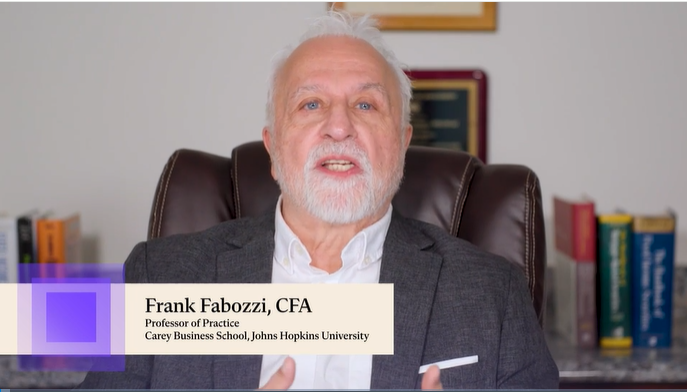
Conversations with Frank Fabozzi, CFA, Featuring Sue Brake

How can investment professionals improve decision-making in increasingly complex and uncertain markets? In this episode of Conversations with Frank Fabozzi, CFA, Susan Brake offers practical perspectives on the total portfolio approach, governance, and the evolving role of AI in investment decision-making. Key Discussion Points: Rethinking the total portfolio approach Where it works, and where firms get it wrong What actually drives better investment decisions Beyond structure, models, and collaboration Using AI in practice How the role of the investment professional is changing Seeing risk through a systems lens Beyond traditional portfolio models Governance as a performance lever Why decision processes matter more than expected source

Conversations with Frank Fabozzi, CFA, Featuring Sue Brake Read More »