Semi-solid-state battery tech rolls into ebike territory

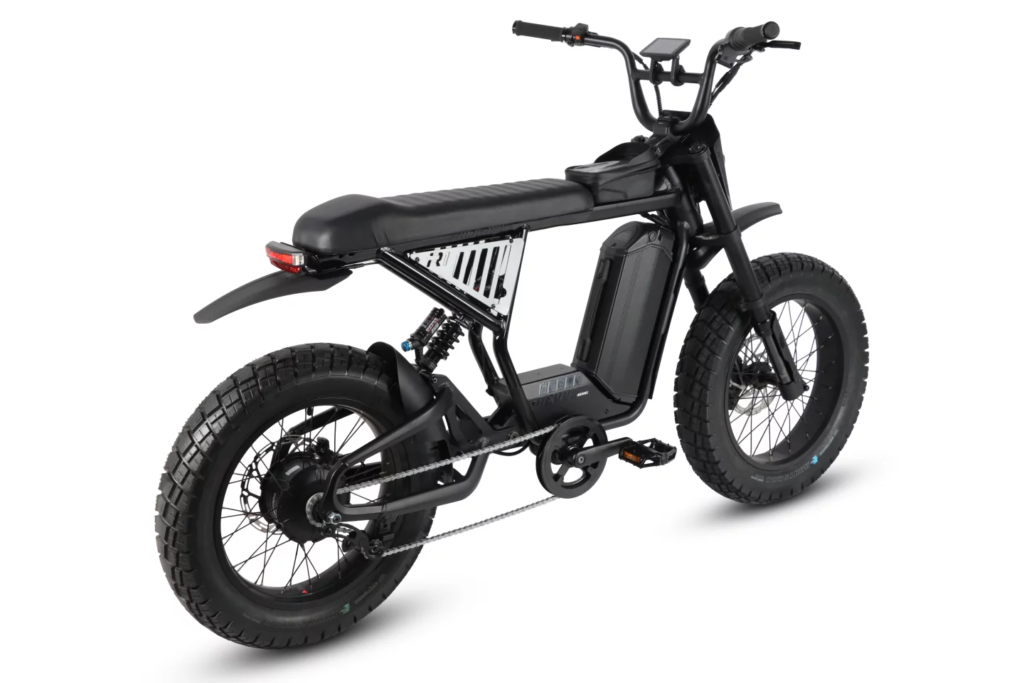
The battery has long been the weak link of the electric bike. It degrades in the cold, ages poorly with fast charging, and rarely survives more than four years of heavy use. Ride1Up thinks it has a fix – and it’s priced it for regular people. The California-based brand has launched the Revv1 evo, a moped-style ebike built around a semi-solid-state battery that’s billed as the first with this chemistry to be made available to mainstream US consumers at an accessible price point. That claim deserves a small asterisk. Models like the Dimentro DP-Pro and the Naxeon I AM – more motorcycle‑like than what riders typically think of as an ebike – had already incorporated semi-solid-state batteries before the evo’s launch, and component suppliers like Joycube and T&D had been shipping similar packs to other brands for months. What does seem more defensible is that the evo is the first moped-style ebike with this battery chemistry available for direct purchase. The semi-solid-state battery should be good for 1,200 charge cycles, boasts a 2-hour full charge, and operates at 70% capacity at -20 °C (-4 °F)Ride1Up So what is a semi-solid-state battery, exactly? Think of a standard lithium-ion battery as a sponge soaked in a flammable liquid – that liquid is the electrolyte, the medium that lets ions travel between the two electrodes during charging and discharging. A semi-solid-state battery replaces that liquid with a gel or a low-liquid mixture, which reduces fire risk and improves chemical stability under extreme conditions. This is not the same as the fully solid-state batteries that electric-vehicle manufacturers have been promising for years but have yet to reach mass production. Semi-solid-state is a middle step: safer and more durable than conventional lithium-ion, but without the manufacturing complexity that still blocks full solid-state technology from scaling. Ride1Up claims that the Revv1 evo’s battery survives more than 1,200 charge cycles before dropping to 80% of original capacity. A standard lithium-ion pack typically hits noticeable degradation around 500 cycles. For a rider charging three or four times a week, that’s roughly 8-10 years of use versus the usual 3-4. The bike also supports a full charge in two hours – and according to Ride1Up, without the usual penalty. In conventional batteries, fast-charging generates excess heat that accelerates wear; the semi-solid-state chemistry, the company says, handles it more gracefully. In extreme cold, down to -20 °C (-4 °F), the ebike’s battery reportedly retains around 70% of its capacity, not spectacular but a meaningful improvement over the erratic behavior of conventional lithium-ion cells when temperatures drop hard. Per-charge range is reported to be between 30 and 60 miles (48 – 96.5 km). The Revv1 evo is billed as the world’s first ebike sporting semi-solid-state battery technologyRide1Up The evo is built on Ride1Up’s existing Revv1 platform, shared with the DRT and FS models. It packs a 750-W motor with 100 Nm (73.7 lb.ft) of torque and pedal-assist to 28 mph (45 km/h), DRT-spec suspension, and Vee Huntsman all-terrain tires, managed by an onboard battery management system that the brand says actively monitors pack health on every cycle. The whole thing weighs around 90 lb (41 kg) – closer to a gas-powered moped than a traditional ebike. That means it’s built for open roads and longer commutes, not for locking up at a bike rack or hauling up a stairwell. If you’re looking for something to replace your car on a city commute, this model could make sense in some scenarios. If you want a bike you can carry into the office or apartment, look elsewhere. At US$2,395, the Revv1 evo undercuts competitors that have adopted semi-solid-state chemistry – such as German brand Nicolai, whose upcoming semi-solid-state e-mountain bikes target a premium segment at considerably higher prices. Pre-orders are open on Ride1Up’s website, with shipping expected from August for the US market only. The real story may not be this single bike but what its price signals about the maturity of semi-solid supply chains. When a technology that spent years confined to high-end prototypes and boutique models becomes viable at a mainstream price point, other brands tend to follow quickly. Source: Ride1Up Note: New Atlas may earn commission from purchases made via links source

Semi-solid-state battery tech rolls into ebike territory Read More »

How CUCKOO Singapore is turning Lee Junho’s star power into a 'healthy home' play

CUCKOO Singapore is positioning Singapore as a key hub in its 2026 brand strategy, as it rolls out its “Creating healthier homes, every day” direction alongside the appointment of South Korean entertainer Lee Junho as its global brand ambassador. In conversation with MARKETING-INTERACTIVE, Anthony Chua, country head and director of CUCKOO Singapore said, “Singapore serves as our ‘innovation and lifestyle sandbox’. By anchoring our 2026 direction here, we continue to set a premium benchmark by testing and growing our ‘healthy home’ kitchen and home appliances.” Chua added that the strategy reflects a deeper focus on urban living, with the brand developing compact, high-efficiency solutions tailored for HDB and condominium environments, as well as fast-paced professionals. Don’t miss: Skechers taps Thai actor Apo Nattawin as APAC ambassador in expanded role  “In the Singapore context, this means active wellness integration,” he said. “It’s the peace of mind that comes from beyond-standards water and air filtration in a dense urban environment, making health a background utility.” Against this backdrop, CUCKOO has expanded its partnership with Lee, elevating his ambassadorship from Korea, which began in 2022, to a global role. While the ambassadorship is global in scope, CUCKOO is tailoring its approach to ensure relevance in Singapore. “In a crowded market, Lee serves as a bridge between Korean innovation and the Singaporean lifestyle,” said Chua, noting that the move reinforces CUCKOO’s positioning as a leading Korean healthy home appliance brand. The campaign will go beyond global creative assets, with localised messaging and product offerings designed for Singapore consumers. This includes solutions built for space-constrained homes, such as compact water purifiers. For instance, its CUCKOO ACE under-sink water purifier features steam sterilisation technology, aimed at addressing local hygiene expectations and urban living needs. The brand is also tying the campaign to tangible business outcomes. According to Chua, success will be measured by increased uptake of CUCKOO+ Care Service subscriptions, as well as a rise in households owning more than one CUCKOO appliance. Lee, who has built a strong international following through roles in The Red Sleeve and King the Land, brings cross-market appeal to the campaign. His latest appearance in Cashero has further strengthened his global reach. “Having journeyed with CUCKOO since 2022, I have long admired the brand for making healthy living accessible and meaningful to families everywhere,” Lee said. “It is a privilege to now take this partnership to a global scale.” The Singapore push comes as CUCKOO ramps up its regional ambassador strategy. CUCKOO International Malaysia recently expanded Lee’s role to a global level, signalling a broader effort to strengthen its “healthy home creator” positioning across markets. In Malaysia, Lee joins local ambassadors Siti Nurhaliza and Phei Yong, forming a mix of global and local personalities to support the brand’s #SAMASAMAHealthier platform, while fronting campaigns promoting its wider ecosystem of home and wellness products. Related articles: Dua Lipa brews Nespresso’s next era as global brand ambassador   UNIQLO nets tennis star Emma Raducanu as global brand ambassador  Chow Tai Fook taps Yang Yang as global brand ambassador source

How CUCKOO Singapore is turning Lee Junho’s star power into a 'healthy home' play Read More »

24-hour beer station lets you play 'stock market' for cheapest price

In a particularly vibrant nightlife precinct of Shenzhen, in China, the main attraction may be a massive landlocked cruise ship that’s been turned into hotels, bars and restaurants. But in its shadow, is an equally bizarre but less obvious novelty: a round structure that resembles a public restroom from afar, but on closer inspection is a 24-hour self-service beer stop where each tap’s price changes based on demand. It’s like playing the stock market, but your gains come in a giant plastic cup and your skill at pouring your brew of choice. The novelty “bar” – surrounded by a few deck chairs and one person on hand to offer technical and pouring help more than anything, is the work of the Tsingtao Brewery Co., a company founded more than a century ago by German and British merchants. While Tsingtao is widespread across China’s mainland these days, this mode of self-service street brewery has become a hit for pretty obvious reasons. This was even cheaper than chips – the McDonald’s fries I bought – as 18 RMB is around US$2.60New Atlas The first “360-degree smart beer column” – as China Daily described it following the first of its kind that opened in Qingdao, Shandong province, last year – is a circular structure featuring 10 or so taps of different kinds of Tsingtao beers, from low-alcohol fruit-infused lighter drinks to stronger dark ales and IPAs, where a digital screen displays price changes for what’s on offer, influenced by what’s been purchased. The more popular, the higher the price. That said, the price structure is a little more gimmick than functional – it updates every 10 minutes, but the “dynamic pricing” has more interactive and entertaining appeal than real bang for buck. Particularly since the savings made in service-staff costs and brick-and-mortar bar space, not to mention the affordability of buying booze here in China’s RMB currency, aren’t that far off grabbing a can or bottle from a nearby 24-hour convenience store. Then there’s also the payment system, which I have mentioned previously, that can be tricky for foreigners to navigate. Basically, the idea is that you choose your beer, scan its adjacent QR code, which ideally takes you to your browser to confirm purchase. And I admit that while on this trip I managed to master the QR-based AliPay linked to my bank account, which made daily life immeasurably easier, WeChat (微信) is the primary payment avenue. I got a little flustered trying to access this station and instead used my camera, which opened Google Chrome on my phone. Even if you have an efficient VPN that lets you use any Google apps in China, it’s still pretty hit and miss. So without wanting to seem like a dumb tourist, I forgot I could have scanned with AliPay to see if that worked (even though I’d just bought two large fries from McDonald’s right next door with this system, so this one is on me). Just make sure you have the right apps to access this do-it-yourself bar New Atlas However, I did stand back and watch the experts – or, at least, someone who looked like they’d earned a beer after a long cycle. After some help scanning the QR code, a cup-holder next to the tap released a rather larger plastic container for you to then test your beer-pouring skills. You also get a lid if a walk-and-sip is more your style. “Backseat drivers” made sure their friend had the right angle for his beer pourNew Atlas It’s by no means a new concept – in 2024, Sports Nation attached to Taipei’s baseball stadium opened a similar “beer stock market exchange” bar, and The Drink Exchange in Miami, Florida, has been in operation even longer. Again, both venues and others around the globe operate on a system of price fluctuation based on demand. Novelty? Sure. But it’s also weirdly fun. Still, if you find yourself wandering around the Shekou area in Shenzhen late at night – or any time of the day, who are we to judge? – I highly recommend avoiding the bright lights of the admittedly incredible Minghua cruise ship and check out one of the most unique ways you can grab a beer in China that we’ve found so far. Regardless of price, it’s cheaper than nearby bars and you might even score a camping chair to enjoy the hoppy fruits of your minimal labor. The landlocked cruise ship is a stunning site – even without setting foot insideNew Atlas However, particularly at night, it’s hard to draw your attention away from the Minghua – which takes “floating restaurant” to a very Shenzhen-style next level. Source: Tsingtao source

24-hour beer station lets you play 'stock market' for cheapest price Read More »

Wildly slim dual-burner capsule stove brings more power to base camp

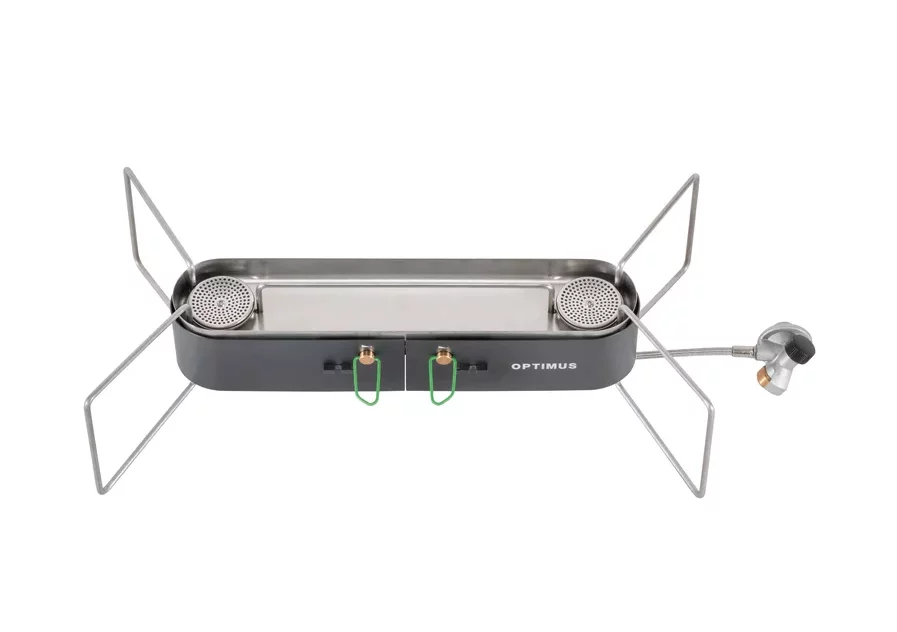
In 2021, Optimus debuted the Gemini stove, a sleek, uniquely shaped dual-burner stove that split the difference between backpacking and car camping gear. The brand immediately took home several prestigious awards for its design efforts, including an ISPO Award in Europe and an Outdoor Retailer Innovation Award in the US. Now it’s doubling down on what makes the Gemini stove great, debuting a Gemini II that packs over a third more power per burner while still managing to drop a couple ounces. Founded in 1899, Optimus, a Swedish-heritage brand now part of Switzerland’s Katadyn Group, has over a century-long history of building lightweight stoves for expedition, military and outdoor recreational use. We’ve long considered it a specialist in ultralight backpacking stoves and cookware, but it turned over a new leaf with the Gemini, toeing the line between traditional categories with a stove perfect for lightweight car, motorcycle and muscle-driven vehicle camping but still sleek and light enough for casual backpacking … at least the type of backpacking that doesn’t involve stripping one’s kit down to the barest of minimums. The burners are sunken below the outer lip of the Gemini II stove, providing wind protection without a separate screenOptimus Toward that end, the Gemini series makes use of a slim pill-shaped chassis with two sunken burners and integrated wind protection. Four wiry legs fold outward to deliver low, stable support, packing right up against the main body to fit neatly in a backpack compartment, bike pannier or kayak hatch. While well heavier than true backpacking stoves that are essentially twist-on gas canister caps, the Gemini delivers the burner space, low-set stability and flame security to cook full meals, with pots and pans full of real ingredients. So, as with the all-new TrailCook series from JetBoil, you aren’t cornered into eating rehydrated boiled-bag backpacking fare, meal after meal, day after day. With two burners, you can even cook an entree and side dish at the same time. Don’t just boil water – fry up a full meal atop the Optimus Gemini II Optimus The second-gen Gemini improves upon everything that made the first one great, most notably boosting output to 4,600 watts per burner, from 3,400 watts on the original. Each burner features a spindly fold-out flame control for precise adjustment, while an integrated pressure control valve keeps output steady and dependable through changing conditions. Optimus estimates boil time at four minutes for a liter of water. The Gemini II doesn’t drop a huge amount of weight, but it loses 2 ounces (57 g) and now weighs in at an estimated 26.8 oz (1.7 lb, 760g). Dimensions remain the same at 12 x 2.8 x 4.1 in (30.5 x 7 x 10.5 cm). The new Optimus Gemini II cooks real backcountry meals on two boosted burnersOptimus Optimus announced the Gemini II last month and will sell it through select retailers at a price of US$199.95. It strikes us as a great stove for those who mix vehicle-based activities like overlanding and car camping with bikepacking, canoe camping, motorcycle camping, backpacking and related light, space-constrained backcountry endeavors. A freshly simmered and sautéed meal certainly has potential to provide a bigger end-of-day boost than rehydrated non-perishables. Source: Katadyn/Optimus source

Wildly slim dual-burner capsule stove brings more power to base camp Read More »

Guerrilla 450 Apex takes Royal Enfield's entry-level roadster a step further

When you think of Royal Enfield, you’d inevitably think of the Classic, the Bullet, and more recently, the Super Meteor – mostly bulky cruisers and retro motorcycles – because that’s essentially what the company has specialized in for a major part of its history. Things began to change when the first-generation Himalayan 411 was introduced around a decade ago. Then came the new-generation Himalayan 450 based on an all-new liquid-cooled “Sherpa” platform. And soon enough, RE came up with a road-biased roadster, called the Guerrilla, based on that very same Himalayan 450 skeleton. Now, barely a couple of years after the Guerrilla was introduced, Enfield has quickly launched a souped-up spinoff that makes the brand’s entry-level roadster even sharper. That means the new trim, called the Guerrilla 450 Apex, boasts more than just visual changes for the sake of it. Pricing starts at £4,995 in the UK, which converts to around US$6,758Royal Enfield That starts with a sportier riding position, all thanks to the aluminum handlebar, which is now repositioned lower to make the riding triangle far more aggressive. You now lean forward more than on any other Enfield, and that’s actually a very good feeling on the Guerrilla. That’s because the 452cc Sherpa engine, making 39.5 horsepower and 29.5 lb-ft (40 Nm) of torque, was always a very enjoyable motor to ride on. It’s relatively quick to find its pace in the city, and there’s enough juice in there for short to medium highway sprints too. There’s a subtle tweak to the electronics that Enfield has made, though. It has updated the ride modes, giving the Street and Sport modes a far more refined touch, also allowing you to easily choose between modes and keep the last one you’ve chosen throughout ignition cycles. Adding to the list of changes is a reworked seat cowl that now feels much more integrated with the design. You can, however, swap it for a standard two-person riding seat. There’s also a color-matched front cowl alongside rim tapes on the wheels that do add more character to the overall styling. The Guerrilla 450 Apex still produces 39.5 horsepower and 29.5 lb-ft (40 Nm) of torqueRoyal Enfield The 17-inch wheels now sport Vredestein Centauro ST tires, which are intended to improve grip on wet and low-friction conditions. Underpinnings like the steel twin spar remain the same as before, as do the 43-mm telescopic front forks and linkage-type mono-shock at the rear. Also carried forward are the hydraulic disc brakes, 310 mm at the front and 270 mm at the rear. As is the Tripper Dash, a 4-inch TFT display with Google Maps-powered navigation, which comes standard on pretty much all modern Enfields. There’s a new Twilight Blue colorway that’s available now, which will be offered alongside Shadow Ash, black, and red. Pricing in the UK starts at £4,995, which converts to around US$6,758. There are widespread reports that the bike will hit North America in 2027, and I’m more or less certain it will. RE has updated the ride modes, with the Street and Sport modes now far more refinedRoyal Enfield Royal Enfield’s motorcycles have never been about ridiculous speeds or track performance. If you’ve ever ridden one, you know Enfields are all about the “soul” and less about raw power, and I think that’s the essence of motorcycling. You don’t always need the fastest bike out there. Most times, you need the retro underdog with a big heart that just chugs along with zero complications. And that’s exactly what the Guerrilla 450 Apex is. Source: Royal Enfield source

Guerrilla 450 Apex takes Royal Enfield's entry-level roadster a step further Read More »

One-off Ferrari 3.5-liter V8-powered superbike sold for more than $500,000

There aren’t many times in my life when I’ve seen a motorcycle command a price tag of over half a million dollars. But then again, there aren’t many motorcycles that come fitted with a 3.5-liter V8 engine from the Ferrari F355. Here at New Atlas, we’ve covered Max Hazan’s bespoke HF355 from its early days right up to the living, breathing, pre-finished motorcycle. Now, not only has the motorcycle been completed, but it’s also been quickly bought, fetching more than US$500,000! It took Hazan, an award-winning custom motorcycle builder from Los Angeles, around 18 months to finish the HF355. What we see now is a fire-spitting red-colored monster that revs to nearly 10,000 rpm! The HF355 is named after its 1999 Ferrari F355 donor, which sacrificed its 3.5-liter V-8 for the custom motorcycle. That engine produces around 400 hp at the crank, bolstering a top speed of 187 mph (~300 km/h). That kind of power on a motorcycle that weighs 585 lb (265 kg) dry means that the HF355 boasts a power-to-weight ratio akin to some hypercars. The HF355 is almost entirely bespoke, with every component designed, built, and put together by Hazan himselfShaik Ridzwan / Hazan Motorworks Of course, that kind of engine couldn’t possibly sit in a traditional motorcycle frame. So Hazan built a bespoke chromoly front trellis frame in which the engine acts as a stressed member, with the transmission and rear suspension mounted to its rear and sides, respectively. And for all the bulk of that supercar engine on there, you’d think the HF355 would be unbalanced. But instead, the weight is almost equally distributed. Almost every component you see on there was designed, built, and put together by Hazan himself, down to every nut and bolt. That’s all the more impressive when you consider he uses a 6,500-lbMoriseki lathe and manual mills to shape parts by hand instead of CNC equipment. The HF355 is nothing like traditional superbikes you’d spot on the roadsShaik Ridzwan / Hazan Motorworks The bodywork is made up of 16 unique carbon-fiber components, which is hand-shaped from foam blocks. Each piece was molded and reproduced using carbon-fiber resin infusion, a process more commonly seen in aerospace manufacturing. As for the components on board, you get Marchesini wheels, Brembo GP4X brakes, Öhlins FGR forks, and a TTX rear shock. Electronics? They’re almost entirely stripped away. Hazan took apart the original Ferrari systems and replaced them with a specially designed configuration that uses an AMP EFI ECU. It keeps an eye on everything and logs everything, but there is zero intervention anywhere. The HF355 gets its 3.5-liter V-8 from the 1999 Ferrari F355Shaik Ridzwan / Hazan Motorworks For all its engineering, there are no rider aids, no traction control, no cornering assist, nothing on there that would match superbikes that cost a tenth of the HF355. Thus, the quiet, analog-style cockpit. But electronics are hardly the reason someone would shell out $500,000 on this motorcycle. It’s the engine. “It sounded like an Indy car in the pits,” says Hazan. “At full throttle, it’s absolutely wild – like warp speed in a sci-fi.” On an early test run, Hazan thought he had gone all out, only to realize he had only pulled on half of the throttle. Sheesh. But you’d imagine something like this would be a menace to control at slower speeds. On the contrary, it’s surprisingly “manageable,” as Hazan explains. And, for reference, here’s how it sounds in real life. This utter monstrosity wears a deep, bespoke red paint job, which was carried out by Hitoshi, a renowned expert in bespoke car paint and Hazan’s longstanding colleague. I love how the engine is left to be the main attraction; everything else is purely in a supporting role. The one-off motorcycle recently fetched more than $500,000 to a lucky collector we don’t know much about. What we do know is that someone somewhere would be sleeping happily tonight knowing they’ve got a motorcycle in the garage that could smoke most superbikes – and embarrass a few Ferraris while it’s at it. Source: Hazan Motorworks via Robb Report source

One-off Ferrari 3.5-liter V8-powered superbike sold for more than $500,000 Read More »

Stock Market Today: Nasdaq, S&P 500 Score Record Closes On Iran Hopes; Nvidia Hits Highs (Live Coverage)

The Nasdaq composite and the S&P 500 rose to finish at record closes Friday, finding support from a better-than-expected jobs report for April and the potential for a U.S.-Iran peace deal. The Dow Jones Industrial Average tipped into positive territory, aided by Nvidia (NVDA), which hit an all-time high on the stock market today. The Nasdaq composite surged 1.7%. The… Copyright ©2026 Investor’s Business Daily, LLC. All rights reserved. 87990cbe856818d5eddac44c7b1cdeb8 source

Stock Market Today: Nasdaq, S&P 500 Score Record Closes On Iran Hopes; Nvidia Hits Highs (Live Coverage) Read More »

Mini amp disguised as a Bluetooth speaker packs infinite tones

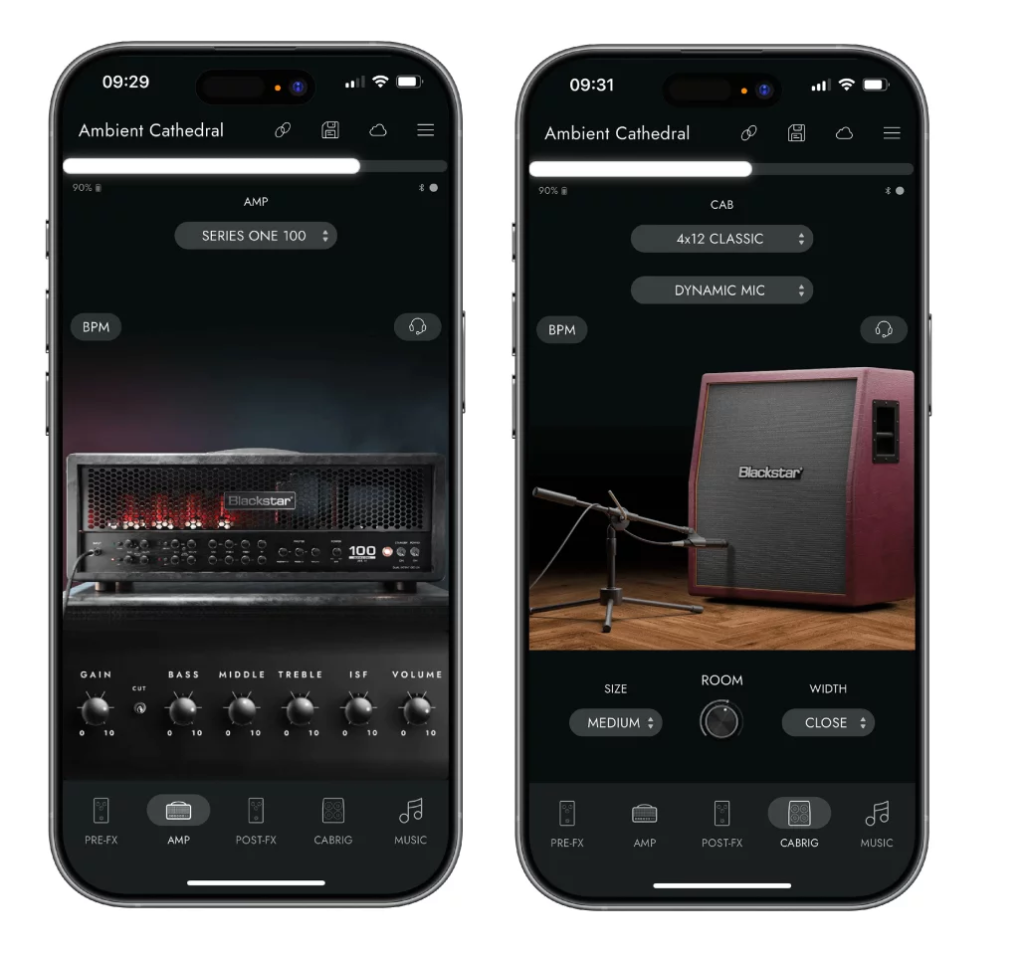
Blackstar has not only crammed a guitar amp into a little box the size of a Bluetooth speaker, but also packed it with high-tech features to get a vast array of tones out of it to practice any style of playing, anywhere they’ll tolerate you. The British outfit announced the Beam Mini back in January, with a bunch of familiar capabilities and a couple of standout features that separate this from other desktop amps. It’s got a load of built-in amp models and configurable effects like you’d expect, but the big draw that’s got a gear nerd like me excited is Neural Amp Modeler (NAM) compatibility. NAM is a piece of open-source tech that lets anyone capture the characteristics of audio gear including amps, cabinets, and pedals, train a neural network with signals from that gear, and create a profile that you can dial in to record and perform with. It works surprisingly well, and some say it’s just as good as sophisticated capturing hardware that costs upwards of a thousand dollars. It’s even more remarkable when you recall that NAM is completely free. What are TONE3000 and Neural Amp Modeler (NAM)? For example, if you’ve got a lovely old amp and your favorite distortion pedal lying around, you can go through a few simple steps to capture a profile of that combination using NAM, and then use it on your computer like you would with a patch on a multi-effects processor. You can also share it with the world via the Tone3000 community (and any other way you can reach people), and also grab profiles from other creators and start playing. So, NAM compatibility – which is slated to become available on the Mini shortly – means your little practice amp can sound like virtually any gear you can capture, or find a profile of. You can also mix and match amps and cabs and effects, so the possibilities are truly endless. That’s nuts for something so small, and fairly affordable. Okay, on to the rest. The Mini comes with two 60-mm full-range drivers, and two 55-mm bass radiators that promise 18-W output across all kinds of tones. There are 17 amp models and over 35 effects on board, along with a cab simulator that has a number of cab-and-mic combos, and supports impulse responses from your own collection. The mobile app lets you create tones using a wide range of built-in amps, cabs, and effectsBlackstar Amplification You’ll likely want to configure patches on the flexible mobile app, but you can also tweak parameters without firing that up by simply twisting the knobs at the top of the speaker. Handily, you can even save your changes using these physical controls too. The simple controls allow for a lot of control over the parameters of your patchesBlackstar Amplification The Mini doubles as a recording interface, which means you can plug it into your computer and record multichannel audio straight to your DAW (digital audio workstation); Blackstar says it’s got a quality preamp inside for the job. This even supports a headset with mic input via a 3.5-mm jack, so songwriters can record demos of themselves singing and playing at the same time. The recording interface functionality and NAM compatibility make this a compelling option for guitarists starting outBlackstar Amplification This model also features a built-in tuner, gets an IP66 rating for water and dust resistance, and boasts 18 hours of streaming audio playback from a full charge over USB-C. At just over 26 oz (750 g), it’s packing way more functionality than its size would suggest. At just 24 oz, the Beam Mini is just as easy to carry around as most Bluetooth speakersBlackstar Amplification The Beam Mini costs US$229.99, and is available to pre-order from authorized Blackstar dealers and retailers like Sweetwater now. It’s expected to ship later this month. This is the sort of thing I wish I had when I started plugging my axe into a bellowing locally-made amp decades ago – and I reckon my neighbors would’ve appreciated its quieter nature too. Introducing Beam Mini | Mini Amp. Major Tone. | Blackstar Product page: Blackstar Beam Mini source

Mini amp disguised as a Bluetooth speaker packs infinite tones Read More »

Yellow Ribbon Singapore names new PR agency

Yellow Ribbon Singapore (YRSG) has appointed Ninemer Communications as its new public relations agency, to provide PR consultancy services for a firm period of two years, with an option to extend for a further two years on a yearly basis. This follows a tender on GeBIZ, and the engagement had commenced in April 2026. According to tender documents, the appointment aims to increase public awareness of the Yellow Ribbon cause and support the reintegration of ex-offenders into society. It also seeks to build greater social acceptance and encourage action from stakeholders and the public, while safeguarding the organisation’s reputation. The scope of work spans strategic communications, media engagement, issues management and training. Don’t miss: Sentosa names PR agency    Following the appointment, Ninemer Communications will lead the strategic planning and execution of YRSG’s communications efforts, including audience segmentation, message development and media engagement strategies across mainstream and digital platforms. The agency will also support media events and campaigns, from developing key messages and press materials to facilitating interviews and handling media queries. This includes proactive pitching, relationship-building with journalists, and post-event reporting on media outcomes and sentiment. In addition, Ninemer Communications will develop an integrated yearly media grid, covering planned campaigns, social content and marketing initiatives, while coordinating with other appointed agencies on joint activities. Beyond campaign execution, the agency will provide ongoing account management, including daily media monitoring across traditional and online platforms, as well as environmental scanning and sentiment analysis. This includes maintaining a risk management framework to track emerging issues and trends. The remit also places a strong emphasis on issues and crisis management. Ninemer Communications will be tasked with providing strategic counsel, developing crisis communications frameworks, handling media responses and supporting press conferences when required. Separately, the contract includes the development and delivery of crisis simulation exercises, with up to two runs during the firm period, alongside customised spokesperson training programmes for YRSG staff and stakeholders. As part of the engagement, the agency is required to deliver regular reports, including monthly media coverage updates, quarterly performance reviews and an annual evaluation of communications outcomes. MARKETING-INTERACTIVE has reached out for more information.  The appointment comes amid a steady stream of public sector PR tenders in Singapore. Most recently, the Intellectual Property Office of Singapore (IPOS) appointed IPG DXTRA as its PR agency, with incumbent Ruder Finn Asia previously handling the account. Under that contract, IPG DXTRA will provide PR consultancy and media monitoring services on a one-year retainer, with an option to extend, with work expected to begin in May 2026. Additionally, Science Centre Board (SCB) appointed Alsoknownas (AKA) as its PR agency on a one-year contract running from 1 April 2026 to 31 March 2027, with an option to extend. The remit covers communications across SCB’s portfolio, including Science Centre Singapore, KidsSTOP, Omni-Theatre, Snow City, and Singapore Science Centre Global. Related articles: Stanley 1913 picks PR agency for Singapore and Malaysia   Singapore Tourism Board picks PR agencyRaffles Hotels & Resorts picks regional PR agency for Asia    source

Yellow Ribbon Singapore names new PR agency Read More »

Cyberpunk ebike-moto 'hybrid' breaks US$2 million on KickStarter

Aotos’ Flux X26 cyberpunk-tinged “hybrid” ebike has built on the buzz it generated at CES, raising over US$2.8 million in crowdfunding in a month. As well as offering an excellent launch price on the two models, the team has now expanded countries it’ll ship to. There are two models of the Flux X26 – standard ($1,199) and Pro ($1,599). However, when you look at the overall pledge numbers compared to the individual backers, it’s clear which model people want to get their hands on. And the good news is that after such an overwhelming first 24 hours – where the team had 660% of its fundraising goal met – Aotos announced they’d be expanding their shipping beyond the US. “We plan to ship to most major regions including the United States, Canada, Europe, and parts of Asia-Pacific,” Aotos wrote on March 28. “Shipping availability may vary depending on local regulations for electric mobility products.” World’s First Wheelie-Capable E-Moto: The Flux X26 Pro I was lucky enough to get a look of the Flux X26 when I was in Shenzhen, China recently. While I do have my motorcycle license, my international permit was back in Taipei – and, frankly, I am happy for the excuse. Because this thing looks like a beast – a sleek, futuristic and aesthetically pleasing beast, that is. I did get to see it briefly in action, however, where it handled well on slow turns despite its weight of 97 lb (44 kg) for the standard and 100 lb (5.5 kg) for the Pro). At the time, I noted that it didn’t look like it’d be that heavy – and then realized I’d already forgotten it was an ebike and not an electric motorcycle. On paper, the two models share the same foundation: strong, angular 6061-T6 aluminum frame (330-lb/150-kg load), inverted front forks, dual rear suspension, 20 x 4-inch all-terrain tires, four-piston hydraulic brakes, strong front beam for night riding, and hydraulic brakes. Both also have a bright 5.5-inch-thin-film transistor LCD display with turn-by-turn navigation, smart anti-theft protection, and access to the Flux OS app with over-the-air/firmware updates. Customer support, spare parts and service across the US is currently detailed, but expect this to expand now that shipping regions have broadened. Meanwhile, both models are best suited for riders between 5 ft 3 in and 6 ft 4 in (160 to 193 cm) – but can accommodate heights of 5 ft 2 in to 6 ft 6 in (157 to 198 cm). The Flux X26 looks more at home alongside this Yadea electric scooter New Atlas How do the two measure up against each other? According to AOTOS: Flux X26 Motor: 750 W (~1,200-W peak output)Max speed: 20 mph (32 km/h)Torque: ~80 NmBattery: 48V 18Ah (~864 Wh)Range: ~50 miles Flux X26 Pro Motor: 1500 W (~2,000 W peak, but comes set at 750 W)Max speed: 28 mph (45 km/h)Torque: ~100 NmBattery: 48V 21Ah (1,008 Wh)Range: ~70 miles/113 km As well as impressive torque – made for powering up steep hills and conquering off-road trails – the Pro also has one-button custom lift assist, making it an estimated 20% less effort to execute smooth wheelies during your ride. (However, check your state’s laws for the latest regulations regarding Class 3 ebikes as the unique design of the Flux X26 is likely to draw attention even when it’s at a standstill.) At the push of a button, it’ll work with you to make wheelies a breezeAOTOS Both models have Bluetooth connectivity, but the Pro also has built-in 4G, enabling continuous real-time GPS tracking. Note that you’ll need to install the Flux app, scan a QR code on the bike’s display and successfully connect – then you can create a PIN unlock code. Once that’s out of the way, you should be able to unlock the bike several ways – when you’re nearby with your phone, via the app or by entering the four-digit PIN on the display. While the display shows you the essentials – battery, speed – the app is where you’ll find all your ride data. Even in daylight, the 5.5-inch display was bright and easy to readNew Atlas Finally, the standard Flux X26 is by no means substandard to the Pro – rather, it comes down to usefulness (and budget). Either way, you won’t have to wait long to ride either model, with the first round of deliveries expected to ship during May. Check out the campaign page for shipping specifications. With just under a week left on Kickstarter, the Flux X26 has a special launch price of $1,199 (MSRP $1,699) and the Pro, $1,599 (MSRP $2,299). There are also a range of discounted add-ons available – the Pro will already come be equipped with the storage unit and mechanical lock. Source: Kickstarter Note: New Atlas may earn commission from purchases made via links. source

Cyberpunk ebike-moto 'hybrid' breaks US$2 million on KickStarter Read More »