Want to make earthquake-resistant buildings? Try butterfly wings

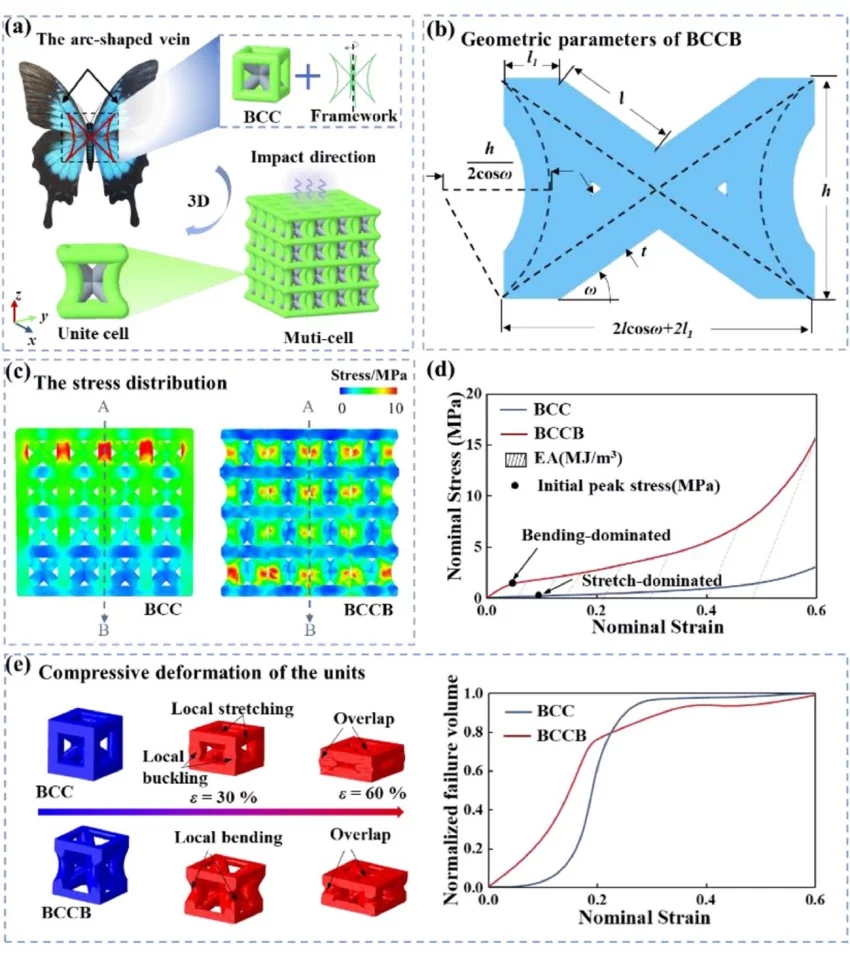
When you hear about designers biomimicking butterflies, your first thought is probably about creating remote-controlled flying toys or small, artificial flying machines that could be useful in pollination, especially in regions experiencing bee colony collapse. But butterfly mimicry goes far beyond those uses to include scattering light to replace toxic paints or as an anti-fraud mechanism against counterfeiters, advancing optical computing, and even creating superior eye implants. And it now also includes making buildings. Because when you think of designing massive, heavy, structures that require durability to withstand hundreds of tons of pressure from people, furniture, equipment, and their own components – not to mention the stresses of wind and the potential for earthquakes – why wouldn’t you immediately think of applying the structure of the tiny, delicate, organic stained-glass windows that we call butterfly wings? In their International Journal of Mechanical Sciences paper, Jing Wei, Xiao Wong, and colleagues at Wuhan University of Technology in China, and Eric Jianfeng Cheng at Japan’s Tohoku University, explain how despite the low-mass and high energy-absorbing design value of traditional lattices, their vulnerability is in stress concentration. One hit in the wrong place and boom! – total collapse and disaster. To counter that shatterability, the researchers applied the uniform stress distribution of butterfly wings to architecture, using a butterfly-inspired body-centered cubic (BCCB) topology (shapes that can sustain twisting or stretching). The superpower of this design, which increases its ability to absorb energy and resist impact, is its anisotropic lattice. In anisotropy, the opposite of isotropy, a structure isn’t uniform in all directions. Think of a tree – hit a cut section of it with an axe along the grain of its wood, and it easily splits. Hit that tree with that same axe against the grain, and it takes forever to make it fall. Polarized lenses, crystals, steel polymers, and 3D-printed objects are all anisotropic, whereas a rubber ball or the contents of a glass of water are isotropic. By applying anisotropy to architecture, the designers achieve controlled deformation and, during compression, non-destructive stress redistribution. As Chen explains, “This structural mechanism is particularly remarkable, since most lightweight lattice materials aren’t able to withstand forces like local buckling or shock. In contrast, our design shows a much greater resistance to sudden mechanical loading.” A diagram shows how the structure of butterfly wings could be incorporated into load-bearing structuresEric Jianfeng Cheng et al. If the researchers continue achieving useful results with anisotropic designs, their aim is applying its strength and light weight to designing automobiles, aircraft, and even spacecraft, and of course to creating earthquake-resistant infrastructure. The imperative for such innovation in that field is massive. For instance, despite lasting only 20 seconds, the 1995 earthquake that struck Kobe, Japan destroyed 100,000 buildings, and the 2011 earthquake/tsunami that smashed Tōhoku, Japan killed more than 15,000 people and forced 130,000 to abandon their homes temporarily or permanently. The 2004 earthquake at the Sumatra-Andaman Islands initiated tsunamis, resulting in 280,000 deaths and 1.1 million people displaced across East African and South Asian countries. Therefore, buildings employing the Wuhan and Tohoku anisotropic design offer great hope for preventing widespread injury and death during earthquakes, or quicker repairs and fewer abandoned homes. In both simulations and mechanical tests involving dynamic impact loading and quasi-static compression, the anisotropic designs significantly outperformed conventional lattices designs, and redistributed stress via deformation resembling a butterfly’s outstretched wings, thus preventing total collapse. Source: Tohoku University source

Want to make earthquake-resistant buildings? Try butterfly wings Read More »
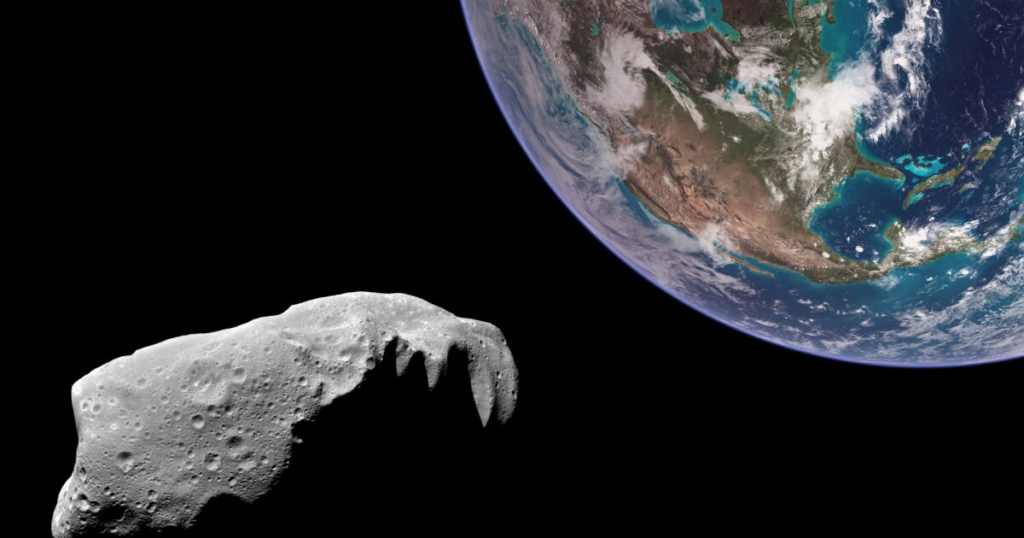
Debris from Earth-bound asteroids may be a problem if they hit the Moon

Atari made it look so simple: press a few buttons to move, rotate, vanish through hyperspace, fire missiles, and boom: total asteroid destruction. But unless asteroid-defense completely deflects or entirely reduces a massive space object to space dust, any rubble from a partially-destroyed asteroid could still threaten humanity through wind-blasts hurling humans through the air and flattening forests, shockwaves rupturing internal organs, and heat roasting entire populations to death. So, humanity really needs a way to detect killer asteroids on collision-course for Earth while we still have time to do stop them. At least there’s an app for that, right? Sort of – there is free software NASA distributed to aid in asteroid early detection. While Japan used its Hayabusa2 deep space probe to bomb asteroid Ryugu, that mission was to collect samples for analysis, rather than learning how to “Bruce Willis” the asteroid to smithereens as in the movie Armageddon. But since the 1980s-era US Strategic Defense Initiative, someone has been trying to make space-based lasers effective at destruction, even for zapping comets. If detection works and deflection won’t, there’s the hours-before-impact “shotgun” defense which shoots 10 X 10 arrays of 100-kg (220-lb) steel rods to rip killer asteroids – including Apophis, which will come very close to Earth in 2029 – into countless meteors which might burn to cinders in the atmosphere. But what if we shred an asteroid into boulders that don’t hit the Earth, and instead hit the Moon? According to Aaron Rosengren at the Department of Mechanical and Aerospace Engineering at UC San Diego, such an impact would be devastating not simply for future lunar bases, but for terrestrial civilization itself. That’s because, as he and his fellow researchers at the University of Arizona, have learned, the impact on the Moon would eject lunar chunks into space similar to near-Earth asteroid Kamo’oalewa and object 2024 PT5, and a horrifyingly large proportion of those chunks would form a co-orbital disaster field that could make Han Solo nervous to navigate. “The problem is no longer just ‘Will something hit the ground’” on Earth, says Rosengren, “but ‘What are the long-term consequences for the Earth-Moon system we now rely upon?”. That’s because debris from such a collision could initiate the Kessler syndrome, a chain-reaction in which the shrapnel of shredded satellites in turn shreds more satellites and on and on until low-Earth orbit is inaccessible for centuries, looking like that near-space frag-field in WALL-E. Traveling through that would be the least of our problems, given that humanity needs its satellites for GPS navigation, cellular networks, satellite telephones, search-and-rescue, weather-forecasting, escaping hurricanes, military action, and a little thing called the World Wide Web. So now we’re back to early detection – as in really early. “For the class of objects we worry most about from a planetary-defense standpoint [which is] hundreds of meters across,” says Rosengren, “a realistic goal is to have at least five to 10 years of warning. That sounds like a long time, but in engineering terms it’s barely enough: we would need to detect the threat, converge on a reliable impact probability, design and fund a deflection mission, build and launch a spacecraft, and then give it time to reach the asteroid and gently ‘nudge’ it so that, many orbits later, it misses Earth.” While it’s hardly easy to detect massive space objects that could one day collide with Earth, it’s much easier than detecting small ones that could still be hyper-destructive. That’s why Rosengren, UCSD colleagues Thomas Bewley and Ben Hanson, and colleagues at the University of Arizona are investigating rare, low-probability chances for destruction, thereby offering authorities the best advice on when to launch deflection missions. Instead of crowd-sourcing such risk-assessing calculations, their work coordinates detection from numerous observatories and telescopic arrays including in South Africa, Chile, and the Pan-STARRS telescopes in Hawaii, sending the results to the Minor Planet Center at Harvard’s Smithsonian Astrophysical Observatory. Then the Solar System Dynamics Group at NASA’s Jet Propulsion Laboratory analyzes the objects that will come closest to Earth, using infrared-scanning telescopes such as NEOWISE to estimate the size of asteroids, especially darker ones that are difficult to see in the visible spectrum. The work is productive: now we can detect an estimated 95% of planet-killing space objects at least 1 km (0.625 miles) across. In 2022, similar detection work resulted in NASA’s Double Asteroid Redirection Test (DART) mission, which slammed the DART spacecraft into the small asteroid Dimorphos orbiting the larger asteroid Didymos, changing the orbits of both child and parent around the sun. Unfortunately, any of the giant armada of smaller objects tens of meters wide is still large enough to annihilate Beijing, Lagos, or New York – objects such as the one that exploded over Chelyabinsk, Russia in 2013 – and those are far harder to detect. As Bewley warns, “There are many near-Earth objects which could create such collisions, and astronomers identify several more each and every year.” So, don’t sleep tight, Earthlings … instead, watch the skies. Source: UC San Diego source

Debris from Earth-bound asteroids may be a problem if they hit the Moon Read More »

Bose takes on Sonos in your living room with its wired speaker lineup

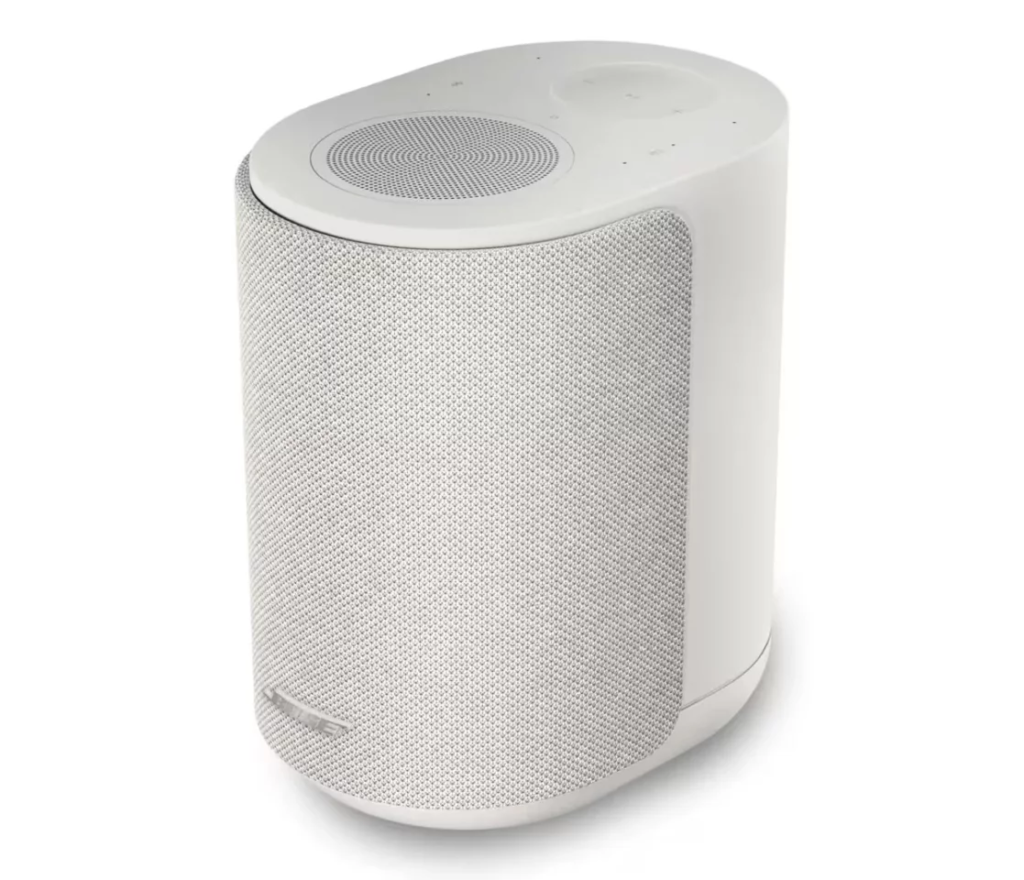
Bose is bringing back the Lifestyle badge after ages for a new range of speakers meant to grace your living room. With their feature sets and pricing, they’ll go head to head against the latest offerings from Sonos, and the hope is that (mostly) new audio engineering chops for these three models will win you over. While they support Bluetooth and Wi-Fi for streaming audio via Google Cast, Apple AirPlay, and Spotify Connect, the speakers in this lineup will need to remain tethered to wall outlets. They can pair up with each other, as well as with models from other brands for multi-room audio. The lineup includes the Lifestyle Ultra Speaker, which is a compact smart speaker that features classic Bose styling in a minimalist cylindrical form. It’s got three drivers, including an up-firing one for a broad soundstage, and its woofer and acoustic opening promise powerful bass that will belie its size. Two Ultras can be paired for stereo output, with increased depth and sound separation. The Ultra Speaker features an up-firing driver for a greater sense of depth from its small form factorBose At US$300, it comes in at a significantly higher price point than Sonos’ $189 Era 100 SL that arrived earlier this year. $300 can also net you Sonos’ revamped Play portable speaker which launched this March. Two Ultra Speakers can be paired for stereo outputBose Up next, you’ve got the Lifestyle Ultra Soundbar that’s meant to do music and movies well without taking up a lot of space. Having equipped it with six full-range drivers and two additional PhaseGuide drivers, Bose says you can expect it to sound like additional speakers are aimed at you to the right and left of the soundbar. This one supports Dolby Atmos, and can tune its output based on the dimensions and surfaces of your room, with the help of your phone’s mic. The Ultra Soundbar features six drivers and two additional PhaseGuide drivers to create the sense of an expanded soundstageBose For extra low-end oomph, you can tack on the wireless Lifestyle Ultra Subwoofer. It’s essentially the same on the inside as Bose’s Bass Module 700, but with updated connectivity. Together, these two can sync with a pair of Ultra Speakers for a proper 7.1.4 channel home theater setup. The Ultra Subwoofer is mostly the same as the outgoing Bass Module 700, albeit with new radios for improved connectivityBose The soundbar and subwoofer are priced exactly the same as Sonos’ Arc Ultra and Sub 4, at $1,099 and $899 respectively. The trio of Lifestyle models can come together to deliver 7.1.4-channel home-theater audioBose The Lifestyle range can be had in black or white finishes, and the Ultra Speaker additionally comes in a limited-edition beige colorway with a classy solid white oak base for $50 more. They all work with Bose’s mobile app for adjusting settings, connecting to streaming services, and grouping speakers for multi-room playback – and you can control them using voice commands, courtesy of Alexa+. Given the mostly similar price points, this bunch gives you more options if you’re not keen on dealing with Sonos’ troubled app. The trio will be available May 15, and pre-orders are already open on Bose’s site. Find the Lifestyle Ultra Speaker, Soundbar, and Subwoofer on Bose’s website. Source: Bose Note: New Atlas may earn commission from purchases made via links. source

Bose takes on Sonos in your living room with its wired speaker lineup Read More »

Record-breaking timber tower incorporates recycled wind turbine blades

Rising to a height of 78 m (256 ft), this extraordinary tower sets a new record as Denmark’s tallest wooden building – and is one of the tallest in the world too. More than just its scale, though, the project impresses with its use of recycled materials, including everything from wind turbine blades to old windows. Described as the world’s first upcycled timber skyscraper, TRÆ is located in Aarhus. It’s designed by Lendager Arkitekter and developed by Kilden & Hindby and PFA Ejendom. Its height places it at around the fifth-tallest modern timber tower currently, with the world’s tallest, Milwaukee’s Ascent, roughly 6 m (20 ft) taller. TRÆ’s interior consists of 20 floors, most of which is taken up by office spaceRasmus Hjortshøj Its name means tree, timber, and three – the latter a nod to the project’s three-building layout. Two smaller structures rise to six floors each, alongside the 20-story main tower. They mostly host office space, plus a restaurant and some shared facilities, and the decor leans heavily on the natural beauty of the wood used. Like most timber high-rises nowadays, it’s actually a hybrid structure made up of engineered wood, with concrete cores, and even some steel in key places, while a variety of recycled materials are used in the facade. The original concept was to use only wind turbine blades for the exterior, since they are plentiful in the area and usually end up in landfills – which is also the idea behind the Niels Bohr parking garage. However, this turned into a headache for the architects as the blades turned out to be flammable, which is clearly not something you want in a timber tower. To tackle this, the turbine blades were heavily processed, treated, and tested, and then used for sun shading elements rather than for the whole facade. Other notable uses of recycled materials include a mixture of reclaimed wood and offcuts for flooring, while interior glass walls are made from discarded windows. Even the lighting fixtures are recycled, and reclaimed bricks were used to build a bar on the rooftop terrace. “TRÆ combines glulam columns and CLT floor slabs, with low-carbon concrete cores ensuring stability and fire safety,” explains Lendager. “Nearly all visible surfaces are reused, upcycled, or biobased. Timber cassettes form the facade, clad with aluminum sheets salvaged from industrial and farm roofs and water-damaged post boxes. Wind turbine blades provide solar shading, while reused windows, waste textiles, and PET felt form acoustic surfaces. Interior finishes include reclaimed timber flooring and panels, while mature trees relocated from municipal sites reinforce the ‘tree’ concept and create an immediate green setting.” Structurally, TRÆ consists of modern engineered timber, concrete, steel, and lots of recycled materialsRasmus Hjortshøj Lendager Arkitekter says that compared to a similar building made from concrete, TRÆ achieved a 26% reduction in CO2 emissions. High-rise timber construction continues to grow in popularity worldwide, with Australia’s incredible Atlassian Central wooden skyscraper due to smash all records once completed. Source: Lendager Arkitekter source

Record-breaking timber tower incorporates recycled wind turbine blades Read More »

New anti-tank round punches through high-tech explosive armor

Saab has developed a new anti-tank round that’s designed to take on the modern high-tech armor of the 21st century. Built for Saab’s Carl-Gustaf 84-mm (3.31-in) recoilless rifle system, the HEAT 758 munition can even defeat modern reactive armor. People whose knowledge of armor and the weapons to penetrate it come from popular entertainment tend to underestimate the complex battle between offense and defense that has played out over the past century – especially when it comes to developing handheld weapons that can take on main battle tanks. It’s a lot more than large, fiery explosions hitting slabs of recalcitrant metal. When the first tanks emerged during the First World War, they were protected by riveted plates of mild steel that could be penetrated by a high-powered rifle. By the Second World War, the steel alloys had improved in composition, metal fabrication methods made armor more homogeneous, and the thickness was increased to create much tougher plating. This was improved even more by learning how to slope the armor to deflect incoming shells and dissipate the impact. HEAT 758 This was countered by new anti-armored weapons like the German Panzerfaust and Panzerschreck, the American. Bazooka, and the British PIAT, all of which used shaped charges to concentrate the explosive force of the warhead into a jet of white-hot metal that burned through thick plating. This counter was counter-countered then counter-counter-countered as composite armors were invented that consisted of steel, ceramics, and composites, which then later to contend with high-velocity darts made of depleted uranium. One particularly effective advance was Explosive Reactive Armor (ERA), where the tank’s hull is covered with steel boxes filled with high explosives. These boxes are designed to detonate if hit by a shaped charge, generating a counter-explosion that disrupts and deflects the incoming projectile or blast. This reactive armor has become increasingly sophisticated, so Saab and other defense contractors have had to become increasingly sophisticated as well. The Carl-Gustaf recoilless rifleSaab Demonstrated on May 7 in Karlskoga, Sweden , the HEAT 758 is that latest round made for the Cold War-vintage Carl-Gustaf family of recoilless rifles. It’s specifically engineered to take on heavy armored vehicles protected by modern reactive armor, including the Kontakt-1, Kontakt-5, and Relikt systems. The HEAT 758 is what is known as a tandem-charge anti-tank munition consisting of two stages. Earlier versions of such tandem-charge rounds defeat the reactive armor by having the first charge hit the explosive box, setting it off. This allows the second stage to penetrate to the now unprotected steel plate and blast through it with a shaped charge. It’s a sound concept, but that first explosion can be counterproductive as it interferes with the secondary main charge jet. The HEAT 758 tries to overcome this with a Non-Initiating Precursor (NIP) in the second stage that takes advantage of a weakness of reactive armor. Contrary to popular belief, explosives are not easy to set off. Dynamite won’t go BOOM if you drop it, you can toss gelignite like it’s putty, and I’ve actually seen TNT burn in a camp fire. To make any of these explode, you need a chain of increasingly sensitive explosives added to the main charge leading back to a detonator to set off the big show. This is important when it comes to reactive armor because having it sitting on a tank means it has to be sensitive enough to explode if hit by hostile fire, but not if the vehicle happens to rear-end a Honda, which would make people talk. What the HEAT 758 does is to exploit the sweet spot by hitting the reactive armor hard enough to penetrate it and open up a path for the shaped charge, but not hard enough to detonate it. According to Saab, this is the result of using AI to run 50,000 digital simulations of how the HEAT 758 hits its target. In addition, the round uses Firebolt technology, which employs a digital communication link between the munition, the Carl-Gustaf M4 launcher, and the Fire Control Device 558 to retrieve data about the specific ammunition type and propellant temperature to calculate the optimal ballistic trajectory for maximum effect. The new round is designed to handle the latest tank armorSaab The HEAT 758 can penetrate Rolled Homogeneous Armor up to 700 mm thick at an effective range of up to 700 m (766 yd) with a muzzle velocity of 255 m/s (570 mph). Each round weighs about 7 kg (16 lb) and is less than 1 m (39 in) long, with a sleeve made of carbon composites and a titanium barrel liner. According to the company, the HEAT 758 is already under production for an undisclosed customer. “This round is our response to developments on the battlefield where reactive explosive armor has become a major problem for regular munitions trying to defeat armored vehicles,” said Michael Höglund, head of Saab’s business unit Ground Combat. “HEAT 758 is an example of how Saab continues to generate ever more capable products while decreasing the armored vehicle threat to the operator.” Source: Saab source

New anti-tank round punches through high-tech explosive armor Read More »

Heineken wraps global agency review in bid for scale and consistency

Heineken has concluded its global marketing agency ecosystem review, appointing a streamlined roster of creative, production and media partners as it looks to accelerate the next phase of growth for its global and power brands portfolio. The move forms part of the brewer’s wider EverGreen 2030 growth strategy, which aims to create a more “streamlined, effective and future-fit” agency model capable of delivering stronger creative impact, operational efficiency and consistency at scale. Following a competitive pitch process, Heineken reappointed dentsu as its global media agency and Publicis Groupe for global secondary production duties. Don’t miss: Heineken takes a swing at AI friendships with cheeky OOH ad  Meanwhile, its global creative roster has been consolidated across three holding companies: Publicis Groupe, WPP and Stagwell. The review did not include creative responsibilities for the flagship Heineken brand, which remains with Publicis. According to the brewer, the revised structure will support brands including Amstel, Birra Moretti, Desperados and Tiger, alongside selected priority local power brands, through a smaller group of strategic partners aimed at enabling deeper collaboration and greater consistency across markets. Bram Westenbrink, chief commercial officer at Heineken, said the move marks “a significant step” in the company’s commercial transformation efforts. “Moving to fewer, better and bigger agency partners is part of our broader Freddyai Commercial transformation,” he said, adding that the company was looking to build a more scalable and future-ready model for global brand building. Jorn Socquet, senior director global brand impact and growth transformation at Heineken, added that the new agency ecosystem is intended to sharpen strategic focus while improving operational speed and efficiency. “By partnering with a smaller number of world-class agencies, we are creating the conditions for deeper collaboration, sharper strategic focus, and more impactful creativity,” he said. “At the same time, this model allows us to operate with greater speed and efficiency, ensuring we can deliver high-quality work consistently across our global and local brand portfolio.” Heineken said the transition to the new agency structure will begin immediately, with a phased rollout aligned to brand planning cycles to maintain continuity across markets. The review comes amid broader shifts across the global marketing landscape, as brands increasingly reassess sprawling agency ecosystems in favour of more consolidated structures designed to reduce complexity, improve integration and maximise efficiencies amid growing economic pressures. Earlier in October, Heineken chimed in on the growing chatter around AI companionship with a tongue-in-cheek campaign that reminded consumers where real connections are made, over an actual beer. Created in collaboration with LePub New York, the campaign extends Heineken’s SocialOffSocials initiative, which champions authentic human interaction in an age of digital substitutes. That same month, Heineken launched “Rooftop revival“, a campaign in Seoul that transformed unused urban rooftops into social hubs, tackling what the brewer called the “proximity paradox” of city life — where people live close together but still feel isolated. The campaign, also created by creative agency LePub, invited Seoulites to rediscover their city through a series of rooftop events revealed via satellite imagery, each marked by Heineken’s red star against the city’s green rooftops. Related articles: Heineken Singapore hijacks CBD office elevator in new stunt Heineken unites football, F1 and music under new sponsorship platformHeineken uses satellite imagery to turn forgotten rooftops into vibrant hangout source

Heineken wraps global agency review in bid for scale and consistency Read More »

Startup's squeezable solid could upend cooling and refrigeration

A startup founded by a material physicist has been working for the past seven years to change the way we cool our food and interior spaces, and it’s now taken a big step toward that goal. Here’s the short version: instead of an ozone-depleting substance that can leak out and cause enormous damage to the environment, Barocal is developing a class of solid materials that can absorb and transfer heat when subjected to pressure, with a high degree of efficiency and safety. Expect to see these in action in refrigerators and air conditioning systems. TechCrunch reported the company, founded by University of Cambridge professor Xavier Moya, has just raised US$10 million to commercialize its solution. That’s on top of the $4.5 million in funding it had previously received from the European Innovation Council and a $1 million prize in the TERA-Award energy solutions competition, so this fresh injection will likely help accelerate its efforts. Barocal founder Xavier Moya with crystals of a solid-state refrigerant his company’s developingBarocal To understand Barocal’s approach, let’s first look at how refrigeration works. Today’s fridges circulate a liquid refrigerant (typically a greenhouse gas) through coils inside the fridge’s cold compartment. As it evaporates into a gas, it absorbs heat from the food and air around it, cooling the interior. The refrigerant gas is drawn into a compressor, which pressurizes and heats it. The hot pressurized gas flows through coils on the back of the fridge, where a fan helps dissipate the heat to the outside air. As it cools, the gas condenses back into a liquid, and this passes through an expansion valve which reduces pressure, and it then flows back to the evaporator coils. The cycle then repeats in this loop. Barocal is working on an inexpensive solid-state refrigerant in the form of plastic crystals which have molecules freely rotating inside them at rest, and can absorb heat in that state – and their temperature can stably vary by 90 ºF (50 ºC). When they’re compressed, the molecules stop rotating, and the crystals give off heat. Transferring heat out from a fridge can be achieved by flowing water past the material toward a radiator where said heat can dissipate. Barocal’s refrigerant applies the barocaloric effect, in which a material absorbs heat when it’s at rest and releases that heat when it’s compressedBarocal It’s basically the barocaloric effect at work – hence the firm’s name. This could negate the need to use greenhouse gases for cooling, which can not only cause outsized global warming effects when they leak out, but are also energy inefficient and require plenty of electricity (used in your refrigerator’s compressor). It’s worth noting that Moya and his team aren’t the only ones working on this tech. AFP noted last year that several groups are developing cooling solutions along these lines, and we covered a Harvard team working on this back in 2022. In fact, the University of Cambridge had a program focused on this for 15 years before Barocal formed. If this company can stick the landing, it could pave the way for massive reductions in energy demand for cooling, as well as the elimination of those nasty greenhouse gases from the billions of refrigerators and air conditioners the world is going to need in the coming decades. Barocal is exploring the use of its refrigerant in large-scale HVAC systems where it can significantly impact energy use Barocal is presently exploring the application of its waxy solid refrigerant in commercial-grade HVAC and refrigeration systems. Beyond developing the material, there’s a lot of engineering required to make these cooling systems compact, efficient, cost-effective, and quiet. The company noted last year it was trialing its tech with multiple international companies, and aimed to have a product out within three years, so hopefully we’re not in for a long wait before we can experience the fridge of the future. Source: Barocal via TechCrunch source

Startup's squeezable solid could upend cooling and refrigeration Read More »

Smart cycling inner tube sends real-time pressure readings to your phone

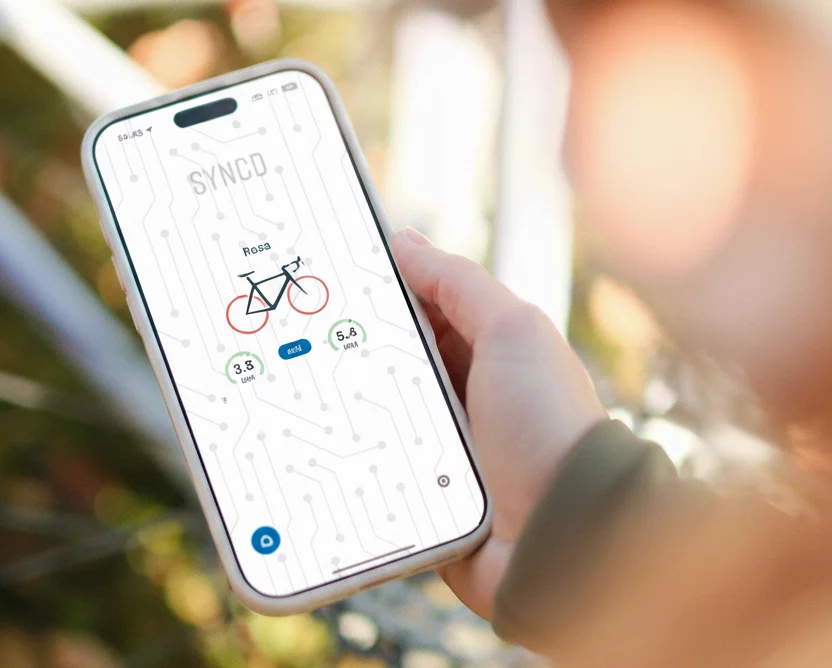
Austrian company Tubolito is known for manufacturing bicycle inner tubes from TPU (thermoplastic polyurethane), a high-tech material originally used for smartphone speaker membranes. The material turned out to work very well for tubes, outperforming traditional rubber and latex options. TPU tubes are lighter, offer lower rolling resistance, and at the same time are highly robust. Tubolito has gone beyond experimenting with new materials. Over the last couple of years, the company has been developing smart tube technology. In 2021, it introduced its first inner tube with a built-in NFC (near-field communication) chip – the Tubo-MTB PSENS. The chip basically monitors tire pressure and sends the data to a mobile app, so you can quickly check the pressure by holding a phone within a few centimeters of the wheel. This time the company has taken the concept a step further with its new Tubo-Road SYNCD tube for road bikes. The main upgrade is a battery-powered Bluetooth sensor. Riders no longer need to stop, get off the bike, and hold a phone close to the tire. Instead, the sensor transmits pressure data in real time to a smartphone or compatible Garmin bike computer, so you can monitor tire pressure while riding. The SYNCD tube works with an iOS/Android appTubolito Using the smart tube is pretty straightforward. It installs like a regular inner tube, and the sensor activates simply by spinning the wheel. The mobile app is compatible with both iOS and Android operating systems. Through the app, users can set minimum and maximum pressure thresholds to keep tires within an ideal performance range. If the pressure suddenly drops or rises, the app instantly sends a notification. In the case of a puncture, the rider will be warned immediately, which prevents further damage to the wheel and improves safety. The main drawback is that the battery isn’t replaceable. Tubolito claims it can last up to two years (or around 10,000 km/6,214 miles), although the lifespan of the battery will vary depending on how often the sensor was synchronized, or if it was exposed to extreme temperatures. Once the battery is dead, you can continue using the tube as a regular one. If you want to keep enjoying the smart features, however, the whole thing needs to be replaced. The tube also works with Garmin cycling computersTubolito Tubolito offers a special battery exchange program, where you can return the SYNCD sensor from the used tube (which means destroying the tube as you have to cut the sensor out) and receive 30% off a new one. The Tubo-Road SYNCD is available in three valve length options: 42 mm, 60 mm, and 80 mm. Depending on the valve size, the tube weighs between 44 and 46 grams (1.5 and 1.6 oz) and is compatible with tires ranging from 23 to 35 mm in width. Priced at €39.95 (approximately US$47) for a set of two, the smart tube costs roughly four times more than a standard butyl inner tube. It is available for order through the company website. Tubolito SYNCD Source: Tubolito source

Smart cycling inner tube sends real-time pressure readings to your phone Read More »

Confessions of a CMO: Why I’m opting out of the 'Mother’s Day circus'

I’ve spent my career in the think-tanks and ‘war rooms’, sat through the brainstorms where we discuss how to capture the hearts of our guests, and leverage emotional triggers to drive revenue over special moments and occasions. Here’s my confession. Every time a Mother’s Day promo hits my personal inbox, I don’t feel honoured. It actually feels targeted. As a mother who lives life at 120km/h (sometimes more), balancing work, family, raising a child, being a wife and daughter, I’m officially calling time-out on the Mother’s Day specials. Shouldn’t every day be Mother’s Day? I have the same thoughts for Valentine’s Day and Father’s Day. The fundamental problem with Mother’s Day marketing is that it’s a performance. It’s a 24-hour window where society and brands pretend that a scented candle or a 15% discount on a floral arrangement is a fair trade for the invisible, relentless labour of motherhood. More than a promo code We treat Mother’s Day like a tactical peak period to be conquered. We look for that white space in our consumer’s mind, hoping to fill it with a tear-jerker video that ends with a logo. Now, as a mother, I see the void. If you’re only “celebrating” me in May, you don’t actually see me. You see a demographic, a wallet. You don’t see the woman who is navigating the “mental load” every other Tuesday of the year when a family member is sick, deadlines are looming and groceries haven’t been bought. My philosophy is simple: Every day should be Mother’s Day. That sounds like a greeting card sentiment, but from a marketing perspective, it’s a radical shift. It means moving away from too much “moment-based” marketing and toward “consistency-based” marketing. If you want my loyalty, don’t give me a promo code in May. Share a product that works every time or to celebrate milestones. We’ve reached a point where opt-out buttons for Mother’s Day emails are the most innovative thing to happen. Why? Because they acknowledge that the day is fraught. They acknowledge that for many women, the constant bombardment of “Celebrate mum!” is either a painful reminder of loss or an annoying reminder of societal expectations. As brands, we should look for authenticity. We should recognise milestones that mean something to individuals. Birthdays should still be a thing because it allows reflection on your last chapter and what lies ahead. Motherhood isn’t a campaign. This article was written by Adora Sarah Chou, chief marketing officer at GYG Singapore (Guzman y Gomez Mexican Kitchen). source

Confessions of a CMO: Why I’m opting out of the 'Mother’s Day circus' Read More »

Review: 2026 Mazda CX-70 is the CX-90 without a third row. And that’s fine

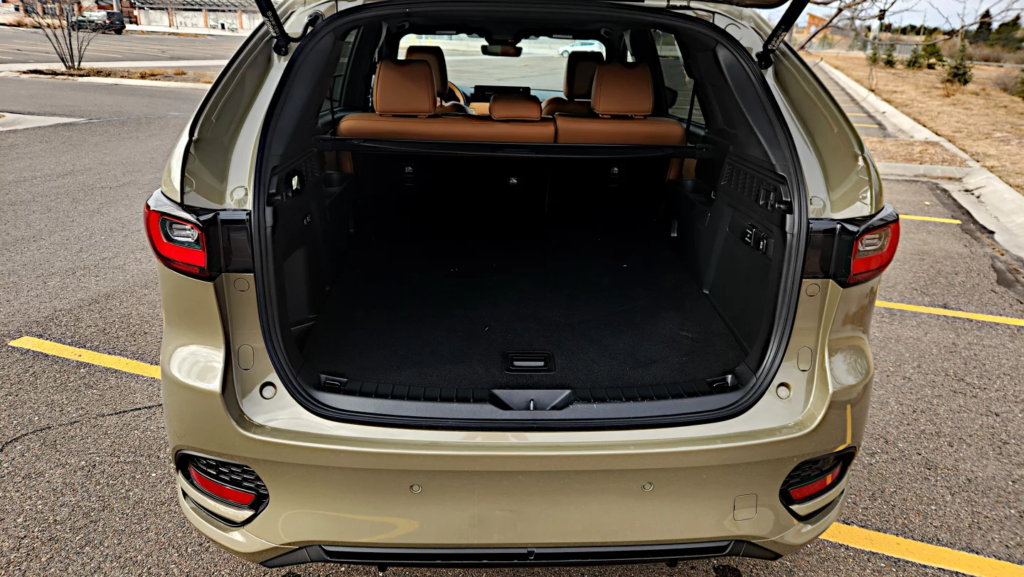
I bet that if Mazda had a dollar for every time someone said, “Wait, isn’t that just the CX-90 without the third row?” it could probably fund a Wankel comeback. At a glance A CX-90 but without the extra seats Six-cylinder powertrain PHEV available Large cargo space Premium interior The 2026 Mazda CX-70 is, in the most literal sense, that: take the brand’s flagship three-row, remove the back seats, shrink it just a tad, and call it a day. But sometimes, subtraction is addition. And in classic Mazda fashion, the result is far more interesting than it has any right to be. The 2026 CX-70 exists because not everyone wants to haul around extra seats they’ll never use. It’s a two-row midsize SUV built on the same bones as its slightly bigger sibling, sharing a platform, basic dimensions, and powertrains nearly wholesale. That sounds lazy (and it kind of is), but it also solves a real problem. Three-row, mid-sized crossovers often carry the burden of compromise: cramped rearmost seats, limited cargo space, and ponderous handling. The CX-70 sidesteps all of that. The payoff is more usable cargo space, a cleaner interior layout, and a vehicle that feels purpose-built rather than obligation-driven. Mazda didn’t reinvent anything here. Others have done the same. But the CX-70 gets Mazda’s Zoom-Zoom too. At least a little bit. A larger, more usable cargo area is the reason for a two-row versus three-row crossoverAaron Turpen / New Atlas Mazda’s big moment is really with what’s under the hood. Instead of the usual turbo-four you’ll find in competitors, the CX-70 offers a turbocharged 3.3-liter inline-six. Yes, an inline-six. In a Mazda. In this economy. It’s genius. Output ranges from 280 horsepower (206 kW) to a stout 340 hp (250 kW) in “S” trims, with a mild-hybrid system providing a little extra shove and efficiency. There’s also a plug-in hybrid variant, which leans more toward efficiency than excitement, offering roughly 30 miles (48 km) of electric-only driving for 2026. On paper, this is a knockout setup. In practice? It’s mostly great. The 2026 Mazda CX-70 is surprisingly agile for its sizeAaron Turpen / New Atlas The inline-six is smooth, refined, and sounds like it belongs in something wearing a German badge. It delivers power in a confident, linear way that makes merging feel like a polite suggestion rather than a desperate plea. But (there’s always a “but”) the transmission occasionally behaves like it’s still waking up from a nap. Low-speed shifts can feel hesitant or awkward, a trait that keeps popping up in Mazda’s newer rear-drive platform. It’s not a constant nor is it a death knell. It’s just … well … noticeable. Like that family photo on your coworker’s desk where nobody looks like each other. Then there’s the SUV’s handling characteristics. This is where the CX-70 reminds you why Mazda exists. Despite its size, the CX-70 genuinely wants to be driven. Steering is precise, body control is tight, and there’s an underlying athleticism that most midsize crossovers abandoned years ago in favor of numb compliance. This is the engaging part of Mazda’s “Zoom Zoom” philosophy. Upscale refinements like Nappa leather and higher-end materials don’t go unnoticed Aaron Turpen / New Atlas On the inside, the CX-70 does its best impression of a luxury SUV, and it’s pretty convincing. Materials are excellent, with available Nappa leather, clean design lines, and a general sense of restraint that feels more Teutonic than mainstream. The cabin is spacious, thanks to the missing third row, and the cargo area is genuinely useful rather than theoretical. This is a vehicle built for people who carry things. Tech-wise, Mazda continues its love-it-or-hate-it approach. A 12.3-inch display is standard, but the infotainment interface can feel overly complicated, occasionally requiring more clicks than necessary. It’s functional. It’s just not intuitive in the way your smartphone has spoiled you into expecting. It does eventually become easy to use, once that learning curve is surmounted. Sleek lines and design mark the 2026 Mazda CX-70 as a little more upscale than its rivalsAaron Turpen / New Atlas Pricing starts around US$43,780 (after destination) and climbs to the high-$50,000 range, depending on trim. That puts the CX-70 in an interesting position: it’s priced like a premium mainstream SUV but delivers a near-luxury experience. It competes with everything from the Jeep Grand Cherokee to the Volvo XC60, and somehow manages to feel like it belongs in both conversations. That’s because the CX-70 does something most SUVs forgot how to do: it makes you feel … in a “maybe I’ll take the long way home” kind of way. And in today’s crossover-saturated world, that’s about as close to magic as it gets. Product page: 2026 Mazda CX-70 source

Review: 2026 Mazda CX-70 is the CX-90 without a third row. And that’s fine Read More »