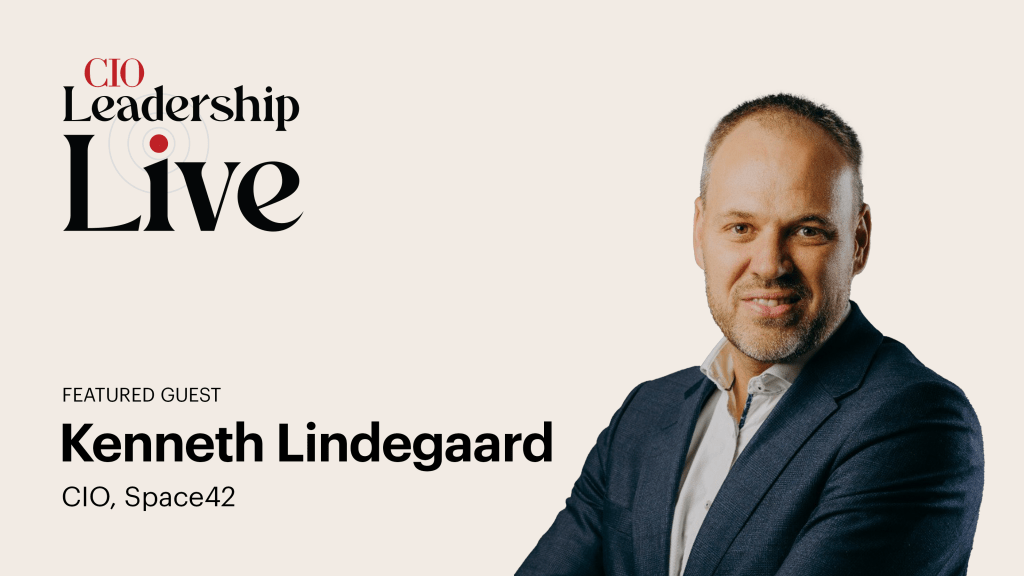
CIO Leadership Live Middle East with Kenneth Lindegaard, CIO, Space42

Overview In this episode, we’re joined by Kenneth Lindegaard, the visionary CIO of Space42. Kenneth brings a unique blend of strategic insight and hands-on expertise to the table.As CIO of Space42, Kenneth is at the forefront of integrating cutting-edge technologies such as AI, satellite communications, and geospatial insights. His mission is to optimize these technologies for both operational efficiency and customer satisfaction, driving digital transformation that enhances business outcomes. Join us as we delve into Kenneth’s approach to balancing innovation with operational demands, and explore how he is shaping the future of IT in the Middle East. Register Now source

CIO Leadership Live Middle East with Kenneth Lindegaard, CIO, Space42 Read More »

Judge OKs $51.75M Clearview AI Deal Despite AG Objections

By Hailey Konnath ( March 20, 2025, 11:55 PM EDT) — An Illinois federal judge Thursday granted final approval to Clearview AI’s $51.75 million settlement resolving multidistrict litigation challenging the company’s practice of automatically collecting biometric facial data online, rejecting objections from 22 state attorneys general and the District of Columbia…. Law360 is on it, so you are, too. A Law360 subscription puts you at the center of fast-moving legal issues, trends and developments so you can act with speed and confidence. Over 200 articles are published daily across more than 60 topics, industries, practice areas and jurisdictions. A Law360 subscription includes features such as Daily newsletters Expert analysis Mobile app Advanced search Judge information Real-time alerts 450K+ searchable archived articles And more! Experience Law360 today with a free 7-day trial. source

Judge OKs $51.75M Clearview AI Deal Despite AG Objections Read More »

Have Some Spare Cash? You’ll Need it for OpenAI’s New API

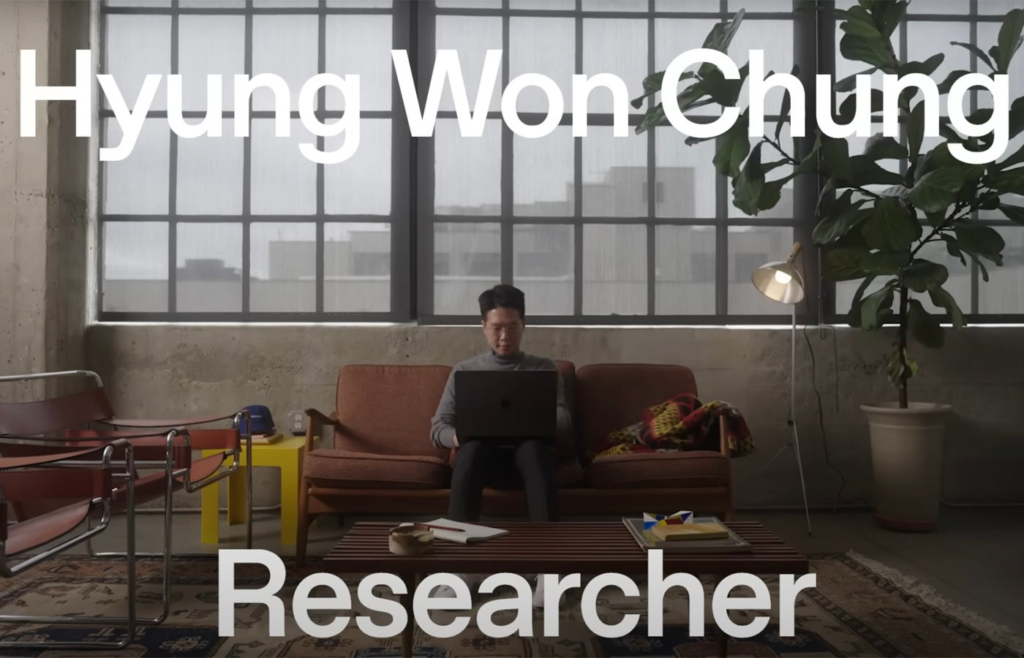
OpenAI researcher Hyung Won Chung. Image: OpenAI/YouTube Reasoning models, which dedicate time to thoroughly thinking through prompts, are at the front of the generative AI pack. OpenAI announced on March 20 o1-pro, a heavy-duty version of one of its reasoning models. Developers on any of OpenAI’s paid tiers can find o1-pro in the OpenAI API starting today. Those with higher usage tiers will have higher request and batch queue limits. The price reflects greater compute power: o1-pro costs $150 for 1 million input tokens and $600 for 1 million output tokens. Compare that to $15.00 for 1 million tokens and $60 per 1 million output tokens when using the base model of OpenAI o1. See: OpenAI Recap: o3 Model Wraps 12 Days of Announcements More must-read AI coverage What capabilities does $600 per one million tokens unlock? The price point makes OpenAI o1-pro one of the priciest AI models. It takes the crown from API access to the Silicon Valley darling’s own GPT-4.5. (GPT-4.5 costs $75 per million input tokens and $150 per million output tokens.) What do you get for that cash? OpenAI is probably hoping for o1-pro to bring in a deep-pocketed handful of researchers, engineers and other professionals using generative AI for science, medicine, or technology. While o1-pro is optimized for reasoning tasks, OpenAI offers separate models for transcription or moderation. A smaller, cheaper model can probably meet users’ needs for those. For the price of o1-pro you get a 200,000 context window and 100,000 max output tokens. OpenAI said o1-pro can interpret data from machine vision, with text and image input. However, it only produces text output. In the API it also supports: Function calling. Structured Outputs, which ensure the model’s response will conform to the developer’s JSON Schema. Integration with the Responses API, which can be used to create AI agents that can interact with the web in various ways, including running searches. Integration with the Batch API, which allows for asynchronous requests, providing lower costs and higher rate limits for jobs with a 24-hour turnaround time. OpenAI has not publicly specified the exact knowledge cutoff date for o1-pro, but previous models had real-world knowledge of up to late 2023. AI companies compete to dominate the “reasoning model” landscape OpenAI introduced o1 as “Strawberry” in September 2024. It competes with DeepSeek’s R1, Anthropic’s Claude Sonnet 3.7, Grok 3, Google’s Gemini 2.0, and other reasoning models. Meta is working on “theory of mind reasoning,” but that’s a slightly different matter: Meta says it is an adversarial project for evaluating advanced AI models. source

Have Some Spare Cash? You’ll Need it for OpenAI’s New API Read More »

Beyond ChatGPT: Secret robotics plans and the $38 billion humanoid revolution

In the next 30 days, the company will show something that no one has ever seen before in a humanoid robot. Figure has secured several large companies as customers, including BMW. The company plans to deliver 100,000 robots over the next four years. AI and robotics — a symbiotic development The exponential advances in AI, particularly in large language models and machine learning, are laying the foundation for the next generation of humanoid robots. AI-driven humanoids show great promise for industrial applications, from manufacturing to logistics and beyond. However, challenges remain, including regulatory frameworks, cost efficiency, and hurdles to market adoption. As AI and robotics continue to develop in parallel, the coming years will determine how seamlessly these intelligent machines can be integrated into human-centered environments. Whether in industrial automation, personal assistance or even entertainment, the AI-first approach is shaping a future in which humanoid robots will play an increasingly central role in society. source

Beyond ChatGPT: Secret robotics plans and the $38 billion humanoid revolution Read More »

Remote Work Dreams Fade as Economic Reality Bites

Image: simonapilolla/Envato Elements The days of everyone working from their kitchen tables or Amazon-purchased standing desks are fading fast. LinkedIn’s latest Workforce Confidence survey shows that remote work has been steadily declining in since 2020. While nearly half of workers were remote in October 2020, that number has dropped to just 26%, with most people (55%) back in the office full-time. Meanwhile, hybrid and on-site arrangements are on the rise. A separate LinkedIn research shows most workers favor hybrid schedules. But among companies pushing for a return-to-office, one in three executives say they would like their employees back onsite full time. “Before the pandemic, I never imagined working from home — I thrived on gathering people in person to collaborate and solve problems creatively,” says Andy Ramirez, head of marketing for Docker, in the comment section. “Now, after nearly five years of remote work, I make an intentional effort to create them whenever possible, whether in person or by finding meaningful ways to replicate them digitally,” he continued. “Hybrid work isn’t a binary choice; it’s a spectrum. The best companies recognize this and continuously iterate, experiment and refine their approach to get it right.” What’s hot at TechRepublic The remote work lottery Those who prefer working at their kitchen table, finding remote work has become something like winning the lottery. These positions make up only 8% of all job listings — down from 20% in 2022 — yet they attract nearly 40% of all applications. It’s no surprise that 70% of Americans feel stuck, believing it’s nearly impossible to find something better than what they have now. Additionally, government job cuts and waves of corporate layoffs have lots of white-collar workers feeling trapped in their current roles. Recruiter Craig Murphy’s has some advice: Stay nimble and watch industry trends closely. “Now’s the time to level up your skills,” he warns, especially with AI. “The people who can work with automation tools and think critically are going to thrive — everyone else risks being left behind.” Economic pressures mount “It’s a tough market right now for job seekers in the US.,” says Claire Ballentine, personal finance reporter at Bloomberg News. “Tariffs are sending shockwaves through the economy and stock market, and businesses are cutting back on hiring. That’s leaving white-collar workers with a sense of pessimism. Those with stable jobs are just hanging on, fearing there is nothing better out there. In related news, a record number of Americans are working multiple jobs — 8.9 million people according to recent data, the highest number recorded since 1994. The reason isn’t hard to guess: Inflation is still squeezing household budgets despite showing signs of easing. The job market looks solid on paper, with more openings in January and fewer layoffs, but there’s growing anxiety about what trade policies impact this stability. Whether you’ve swapped your slippers for slingbacks and are back at the office full-time, are juggling multiple jobs to make ends meet, or one of the lucky few still working remotely, one thing is clear: Adaptability is key. As economic weirdness continues and what defines the workplace keeps evolving, those who can embrace and leverage new technologies will have the edge. The year was 2022. Companies were luring workers back to the office, but employees increasingly wanted to be remote full-time, and searches for remote jobs had increased significantly. Read on to compare the sentiment towards remote work to now. source

Remote Work Dreams Fade as Economic Reality Bites Read More »

From Cost Control to Culture: CFOs Shift Strategies for Retaining IT Talent

Finance and IT leaders are shifting their approach to retaining top technology talent as traditional methods of salary increases and financial incentives alone are proving insufficient. This is prompting companies to focus on career development, workplace culture, and employee engagement.  Meanwhile, demand for tech talent remains strong as companies across industries continue to prioritize hiring, according to CompTIA’s latest analysis of US Bureau of Labor Statistics data.   With demand outpacing supply in key areas like AI and cybersecurity, businesses are competing for top talent while also increasing job postings to meet future workforce needs and tech professionals are expecting meaningful growth opportunities.  Chief financial officers and HR leaders must work together to implement strategies that prioritize professional development, mentorship, and internal mobility.  Professional Growth Prioritized Over Pay   One of the most effective ways to retain IT professionals is by offering clear career development pathways.  According to TEKsystems’ State of Digital Transformation Report, 82% of digital leaders are poised to reskill or upskill their workforce.  Cosmin Pitigoi, CFO at Flywire, emphasizes that employees are more engaged when they have continuous opportunities to strengthen their skills and expand their experiences. “One of the best ways to keep top talent engaged is to have a clear professional development pathway and provide them opportunities to keep strengthening their skills and rounding out their career experiences,” he says in an email interview.   Related:How WFH and RTO Burnout Differ Leslie Deutsch, vice president of people strategy at TEKsystems, says upskilling has become a major priority. “Offering continuous learning and upskilling programs helps employees feel valued and invested in,” she explains via email.   Mentorship also plays a key role in this strategy, with Pitigoi stressing the importance of both formal and informal mentoring relationships to provide long-term career guidance. “I’ve benefited from a ‘doors always open’ philosophy in my career and pay that forward in my current role,” he says.  He says when IT professionals feel they have support and guidance, they are more likely to stay engaged with their employer.  Collaboration Between IT, Finance Leaders  Balancing cost control with investments in professional development requires close collaboration between IT and finance teams.  Both Deutsch and Pitigoi emphasize that talent retention should be viewed as a strategic investment rather than an expense.  Related:Tech Company Layoffs: The COVID Tech Bubble Bursts “Organizations should be leveraging data and analytics to understand how development is impacting productivity and have that inform any investment,” Pitigoi says.  Deutsch highlights the importance of forming cross-functional teams that include IT, finance, and HR stakeholders.  These collaborations ensure that professional development investments align with both financial and operational goals, maximizing their impact on workforce retention.  Another key aspect is fostering an “owner” mindset among employees, where individuals take responsibility for improving efficiency and identifying new ways to work smarter.  Flexible Work, Internal Mobility, and Employee Retention  Beyond professional development, flexibility in work arrangements continues to be a crucial factor in IT retention.  Remote work and hybrid models are now expected benefits rather than perks; IT professionals, in particular, value autonomy and flexibility in managing their workloads.  “Implementing hybrid work models that allow employees to balance in-office and remote work is essential,” Deutsch says.  Internal mobility also plays a significant role in keeping employees engaged.  Deutsch and Pitigoi both stress that organizations must create clear pathways for employees to move into new roles and take on greater responsibilities.  Related:What CIOs Should Know About Post-Election Winners and Losers “As part of this, organizations should encourage leaders to allow their best talent to move on to other roles, which is hard to do, but best for allowing talent to develop through diverse opportunities,” Pitigoi says.  This approach not only keeps employees engaged but also reduces the need for costly external recruitment.  Deutsch adds that companies should structure internal mobility programs with well-defined career pathways and transparent role expectations.  “Creating clear pathways for career advancement within the organization encourages employees to take on new roles and responsibilities,” she says.  CFOs, CIOs, and HR Leaders Shape Talent Retention  Retaining IT professionals requires collaboration across multiple leadership roles.  According to Deutsch, CIOs, CFOs, and HR leaders each play a unique part in crafting effective retention strategies. “CIOs drive technological advancements and provide necessary tools, CFOs align financial resources with retention strategies, and HR leaders create a positive workplace culture,” she says.  Pitigoi says he agrees, adding that product and data analytics leaders also contribute by identifying innovation opportunities and ensuring that investments align with business needs.  “A few key factors of success are having a clear collaboration framework between departments, making data-driven decisions together, and having clear role accountability with implementation,” he says.  Consistent communication among these stakeholders ensures that employee experience remains a top priority.  Overcoming the Challenges of a Culture-Driven Retention Model  However, shifting from a pay-driven retention model to one focused on engagement and culture comes with challenges.  Employees accustomed to salary increases as a primary motivator may take time to adjust to a new approach that prioritizes career development and well-being.  “Prioritizing engagement and well-being over financial incentives requires open communication and transparency,” Deutsch says.   Organizations must build trust by explaining why they are making these changes and how employees will benefit in the long run.  Recognition and rewards programs are also effective in reinforcing engagement; while salary growth may be slowing, companies can still show appreciation through meaningful recognition initiatives.  “Implementing systems that recognize and reward employee contributions in meaningful ways fosters a sense of appreciation and belonging,” Deutsch says.  Pitigoi emphasizes the importance of enabling employees to focus on high-value work. Employees who feel they are making an impact are more likely to stay with their organization.  “Investing in systems, automation, and tools helps your best talent focus on doing work they enjoy rather than more mundane tasks,” he says.  Measuring the Success of New Retention Strategies  For companies transitioning to culture-driven retention strategies, measuring success is critical.   Deutsch suggests using employee engagement surveys, tracking professional development participation, and analyzing internal mobility rates. “HR leaders can

From Cost Control to Culture: CFOs Shift Strategies for Retaining IT Talent Read More »

Get Lifetime Access to Microsoft Office 2021 for Just $50

Growing up, most millennials got a little experience using Microsoft Office. Older generations got the same training from their employers. While we’ve all come to recognize Microsoft Office as essential in the modern workplace, you don’t really think about how expensive it is until it comes time to get it for your personal computer. Whether you’re starting a new business venture and need Microsoft Office’s help or you just want to get better organized in your personal life, it’s a good time to take advantage of this limited-time deal to get Microsoft Office Professional 2021 for Windows: Lifetime License for just $49.97 through March 30 and Microsoft Office Home & Business for Mac 2021: Lifetime Access for just $79.97. With this deal, you’ll get Word, Excel, PowerPoint, Outlook, Teams, and OneNote for one computer for use at home or at work. That’s a complete bundle to basically handle all of your business and personal needs from word processing and data management to email, note-taking, and more. You’ll get a lifetime license to each product and be able to download and install them instantly as soon as you purchase. As soon as you’ve submitted payment, you’ll get a personal activation code via email and download instructions so you can start using Microsoft Office immediately. Right now, you can get a lifetime license to Microsoft Office Professional 2021 for Windows for just $49.97 each, which is 77% off the regular price of $219.99, or Microsoft Office Home & Business for Mac 2021 for just $79.97 each, which is 63% off the regular price of $219.99. Prices and availability are subject to change. source

Get Lifetime Access to Microsoft Office 2021 for Just $50 Read More »

OpenAI Gives Its Agents a Voice

Image: serhiibobyk/Envato Elements OpenAI is expanding its controversial stable of AI voices to include agentic models. Agentic models are the hot trend in generative AI, enabling two-step processes such as asking an AI to buy plane tickets or change a customer’s order. Specifically, the new models include: Gpt-4o-transcribe and gpt-4o-mini-transcribe, both of which are speech-to-text models. Gpt-4o-mini-tts, a text-to-speech model. Developers can access them on the OpenAI API and integrate them with the Agents SDK. Adding text-to-speech and speech-to-text to the API allows them to be used in a variety of AI applications, including agentic tools. More must-read AI coverage Advanced synthetic voices can make scams more convincing The company wants to enable “deeper, more intuitive interactions with agents beyond just text,” but adding flexibility and greater autonomy in voice models raises the possibility of more convincing scam bots. “We’re continuing⁠ to engage in conversations with policymakers, researchers, developers, and creatives around the challenges and opportunities synthetic voices can present,” according to a news release. SEE: Have Some Spare Cash? You’ll Need it for OpenAI’s New API Models have been tuned for accuracy, reliability, and realism On March 21, OpenAI released new speech-to-text and text-to-speech audio tools in the API. The models have been tuned for accuracy and reliability, particularly in conversations including “accents, noisy environments, and varying speech speeds.” The models are intended for customer call centers or transcribing meetings. They can also be instructed to speak in specific ways, from intentionally specific to dramatic or cheerful. OpenAI envisions some of these AI models being used for “expressive narration for creative storytelling experiences.” I can imagine this being used at theme parks or theatrical events – use cases that raise the specter of AI replacing creative professions. Example voices OpenAI suggests include “bedtime story,” “surfer,” “true crime buff,” and “medieval knight.” Gpt-4o-transcribe and gpt-4o-mini-transcribe are designed to transcribe speech more accurately, particularly in conversations with accents, background noise, or varying speech speeds. Gpt-4o-mini-tts can follow instructions to match tone or take on personas. OpenAI is careful to point out that all of the text-to-speech voices on the API are “artificial, preset voices” – definitely not Scarlett Johansson, who has accused the company of mimicking her voice without consent. Agentic video AI may be on its way Next, OpenAI said developers will be able to bring “custom voices” for “personalized experiences in ways that align with our safety standards.” The company is also pursuing ways to use video in agentic AI experiences. source

OpenAI Gives Its Agents a Voice Read More »