GPUs go biological: BBB unveils Bionode, lab-grown, living neuron compute for AI applications

Join our daily and weekly newsletters for the latest updates and exclusive content on industry-leading AI coverage. Learn More Graphics processing units (GPUs), the expensive computer chips made by companies like Nvidia, AMD, and Sima.ai, are no longer the only way to train and deploy artificial intelligence. Biological Black Box (BBB), a Baltimore-founded startup developing a new class of AI hardware, has emerged from stealth with its Bionode platform—a computing system that integrates living, lab-grown neurons with traditional processors. The company, which has been operating quietly while filing patents and refining its technology, believes its biological computing approach — growing new neurons specifically to act as computer chips using donor human stem cells and rat-derived cells — could offer a low-power, adaptive alternative to conventional GPUs. “Over the last 20 years, three independent fields—biology, hardware, and computational tools—have advanced to the point where biological computing is now possible,” said Alex Ksendzovsky, BBB’s co-founder and CEO, in a video call interview with VentureBeat. A member of Nvidia’s Inception incubator, BBB is positioning itself as an advancement and augmentation to the dominant silicon-based AI chips that Nvidia and others produce. By leveraging neurons’ ability to physically rewire themselves, the company aims to reduce energy costs, improve processing efficiency, and accelerate AI model training—challenges that have become increasingly urgent as AI adoption expands. This isn’t sci-fi, despite the incredible premise: BBB’s neural chips are already powering computer vision and LLMs for customers. The company has entered talks with two partners to license its tech for computer vision apps—though the company declined to name its customers and partners specifically, citing confidentiality agreements. It is also accepting inquiries from prospective partners and clients on its website. Blending biology and hardware At the core of BBB’s approach is the Bionode platform, which uses lab-grown neurons wired into computing systems. “We have multiple models that we use,” Ksendzovsky told me. “One of those models is from rat cells. One of those models is from actually human stem cells that are converted into neurons.” The co-founder said that “hundreds of thousands of them” are integrated into a dish containing 4,096 electrodes, which forms the basis of one Bionode chip. He also said they live for over a year before needing to be replaced. The idea is to harness neurons’ natural adaptability for AI processing, creating a hybrid computing system that differs fundamentally from today’s rigid, transistor-based chips. Microscopic image of BBB neural compute cell with information flowing through it. Credit: BBB Ksendzovsky, who has been working with neurons on electrodes since 2005, originally considered using them to predict the stock market. His mentor, Steve Potter, dismissed the idea at the time. “Why aren’t we using neurons to predict the stock market so we can all be rich?” Ksendzovsky recalled asking Potter, who laughed it off as impractical. “At the time, he was right,” Ksendzovsky admitted. Since then, improvements in electrode technology, computational tools, and neuron longevity have made biological computing viable. “The biological network has evolved over hundreds of millions of years into the most efficient computing system ever created,” Ksendzovsky explained. This setup offers two immediate advantages: • More Efficient Computer Vision: Bionode has been tested as a pre-processing layer for AI classification tasks, reducing both inference times and GPU power consumption. • Accelerated Large Language Model (LLM) Training: Unlike GPUs, which require frequent retraining cycles, neurons adapt on the fly. This could significantly reduce the time and energy needed to update large language models (LLMs), addressing a key bottleneck in AI scaling. “One of our biggest breakthroughs is using biological networks to train LLM’s more efficiently, reducing the massive energy consumption required today,” Ksendzovsky said. Building a viable, living GPU with Nvidia’s help Nvidia’s GPUs have been instrumental in AI’s rapid advancement, but their high energy consumption and increasing cost have raised concerns about scalability. BBB sees an opportunity to introduce a more power-efficient alternative while still operating within Nvidia’s ecosystem. “We don’t see ourselves as direct competitors to Nvidia, at least in the near future,” Ksendzovsky noted. “Biological computing and silicon computing will coexist. We still need GPUs and CPUs to process the data coming from neurons.” In fact, according to the co-founder, “we can use our biological networks to augment and improve silicon-based AI models, making them more accurate and more energy-efficient.” He argued that the long-term vision for AI hardware will be a modular ecosystem in which biological computing, silicon chips, and even quantum computing each play a role. “The future of computing will be a modular ecosystem where traditional silicon, biological computing, and quantum computing each play a role based on their strengths,” he said. Although BBB has yet to disclose a commercial launch date, the company is relocating from Baltimore, Maryland, to the Bay Area as it prepares to scale its technology. The future of hybrid AI processing While silicon-based GPUs remain the industry standard, BBB’s brain-on-a-chip concept presents a glimpse into a future where AI hardware is no longer limited to transistors and circuits. The ability of neurons to reconfigure themselves dynamically could enable AI systems that are more energy-efficient, adaptive, and capable of continuous learning. “We’re already applying biological computing to computer vision. We can encode images into a biological network, let neurons process them, and then decode the neural response to improve classification accuracy,” Ksendzovsky said. Beyond efficiency gains, BBB also believes that its biological approach can provide deeper insight into how AI models process data. “We’ve built a closed-loop system that allows neurons to rewire themselves, increasing efficiency and accuracy for AI tasks,” he explained. Despite the potential, Ksendzovsky acknowledges that ethical considerations will be an ongoing discussion. BBB is already working with ethicists and regulatory experts to ensure its technology is developed responsibly. “We don’t need millions of neurons to process the entire environment like a brain does. We use only what’s necessary for specific tasks, keeping ethical considerations in mind,” he emphasized. BBB is betting that living tissue, not just silicon, could be the key to


GPUs go biological: BBB unveils Bionode, lab-grown, living neuron compute for AI applications Read More »

Software Co. Smart ERP Failed To Prevent Breach, Suit Says

By Rae Ann Varona ( March 19, 2025, 11:04 PM EDT) — California software company Smart ERP Solutions Inc. failed to protect social security numbers and other sensitive personal information during a summer 2024 data breach, leaving more than 78,700 customers at risk of fraud and identity theft, one man has alleged in a putative class action in California federal court…. Law360 is on it, so you are, too. A Law360 subscription puts you at the center of fast-moving legal issues, trends and developments so you can act with speed and confidence. Over 200 articles are published daily across more than 60 topics, industries, practice areas and jurisdictions. A Law360 subscription includes features such as Daily newsletters Expert analysis Mobile app Advanced search Judge information Real-time alerts 450K+ searchable archived articles And more! Experience Law360 today with a free 7-day trial. source

Software Co. Smart ERP Failed To Prevent Breach, Suit Says Read More »

3. Teens’ friendships and emotional support networks

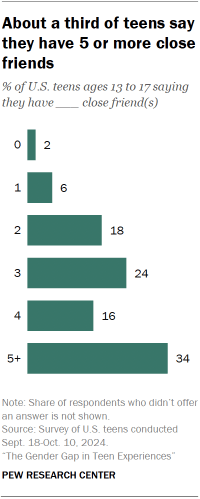
Friendships play a large role in many teens’ lives. Relationships with friends can also be a predictor of long-term outcomes for teens, including the quality of their adult relationships and work performance. We asked U.S. teens a few questions about their friend networks, and more specifically, whether they can turn to these networks for emotional support. Number and gender of friends Roughly two-thirds of teens (64%) say they have between one and four close friends. About a third (34%) say they have five or more close friends – fairly similar to the share of U.S. adults who say the same. Only 2% of teens say they have no close friends. Teens’ friends are often the same gender as them. About half of teens who have at least one close friend (49%) say all of their friends are the same gender as them. Another 48% say their friends are a mix of genders, while only 2% of teens say none of their friends are the same gender as them. There are no major differences between teen boys and girls in the number of friends they have or the gender makeup of their close friend circles. This is slightly different from what we found among adults – women are more likely than men to say all or most of their close friends are their same gender as them (71% vs. 61%). Emotional support networks Among teens with at least one close friend, most teens (89%) say they have at least one friend they can turn to for emotional support, while 11% say they do not. However, there are some notable gender gaps on this question. Boys are less likely than girls to say they have a close friend they can turn to if they need emotional support. Still a large majority of boys (85%) say they do; 16% say they don’t have a friend they can turn to. Among teen girls, 95% say they have a close friend they can go to for emotional support, while only 5% say they don’t. Relatedly, a recent Center survey of adults found a significant gap in the shares of women and men who said they would be extremely or very likely to turn to a friend as a source emotional support (54% of women vs. 38% of men). We also asked teens whether they think boys or girls have it easier when it comes to having friends they can turn to for emotional support. A 58% majority of teens say girls have it easier. About a third (35%) say it’s about the same for both, while only 7% say boys have it easier. Teen girls and boys gave similar answers on this question, with majorities of each group saying girls have it easier. Still, girls were more likely than boys to say boys have it easier (10% vs. 3%). source

3. Teens’ friendships and emotional support networks Read More »

What CIOs Should Know About Post-Election Winners and Losers

The Trump Administration is making big changes faster than any other modern president. The movement of many kinds of levers — tariffs, buyout packages, government layoffs, and more are disrupting the status quo, and the effects will affect tech companies and enterprise chief information officers.  Like the pandemic, the extreme and rapid changes require extreme organizational agility, Monte Carlo simulations, an open mind, and a CIO unafraid to lead. As with all major changes, organizations need to have a strong vision and the ability to execute it within the context of changing circumstances.  Organizations Will Depend More on MSPs  Jonathan Lerner, president and CEO at MSP InterVision Systems, believes deregulation will create a lot of confusion.   “It’s about your customers, the people you work with every day, who are going to have a lot of questions right now,” says Lerner. “Small business owners, CIOs and people just trying to keep their systems running smoothly will be asking their MSPs, ‘How does this affect my data, network security, and software updates? How will I continue to innovate and better serve in a period of uncertainty?’ In this business, our job is to simply provide stable, reliable business solutions, and these kinds of rapid changes make that harder.”  Related:Tech Company Layoffs: The COVID Tech Bubble Bursts InterVision Systems will focus on strengthening its security and compliance expertise to stay a step ahead. Lerner says his company will be spending a lot of time helping its customers understand the new rules and how to adapt to them.   Jonathan Lerner, InterVision Systems Jonathan Lerner, InterVision Systems “We’re going to have to be flexible, focusing on sustaining strong relationships, listening to our customers and providing clear, practical advice focused on outcomes to drive their strategy,” says Lerner. “I hope this leads to less red tape so that businesses can thrive. But, in the meantime, my advice to anyone in our field, especially MSPs, is to be prepared to become a guide.”  Businesses Will Also Turn to Consultants  Jenny Rae Le Roux, CEO at consulting industry news publisher and business skills training company Management Consulted, says while there are always economic winners and losers, the consulting industry is “the canary in the coal mine” for who is who.  “Outsized demand for services from one sector [or] function usually indicates robust growth or big challenges in the broader economy,” says Le Roux. “The sectors that will grow in 2025 [are] supply chain, healthcare, and cloud services. The losers [will be] businesses that focus on DEI, ESG, and federal government consulting work.”  Related:Key Attributes That Lead to an Ethical IT Department There is also a strategic shift occurring among clients that is driving demand for more consulting assistance.  Jenny Rae Le Roux, Management Consulted Jenny Rae Le Roux, Management Consulted “2025 is bringing with it a reordering of traditional business cycles. Typically, firms think about macro business cycles in eight-year increments. The first four years are focused on growth, and the second four years are focused on cost optimization,” says Le Roux. “As AI and trade policy transform the way the world does business, clients are now asking firms to help them deliver on a dual mandate: Drive growth and optimization simultaneously. This is a meaningful driver of increased demand for consulting services.”  Data Security Will Remain a Priority  Arnaud Treps, CISO at Salesforce data security platform Odaseva, expects that some companies will find themselves unprepared for policy changes and will be forced to scramble to catch up.   “Organizations that aren’t proactive or are incapable of rapidly pivoting in the face of shifting regulatory environments will suffer,” says Treps. “Regardless of changes in regulations, policy, or administrations, underlying security challenges remain. Even if there are fewer regulatory requirements, security threats don’t just disappear if the regulations do. As a result, data security investments will be driven more by business needs rather than investing in security just because regulations require companies to do so.”  Related:8 Ways Generative AI Can Help You Land a New Job After a Layoff Odaseva is encouraging its customers to implement the strongest security and management capabilities, so that regulatory or policy changes don’t require exponential or rapid scaling up of data security and management approaches.  “We will carefully monitor policy changes and identify trends, while continuing to offer products and services to our customers that allow them to independently secure their data at the highest level and achieve agility so they can pivot as necessary based on policy and/or geopolitical changes,” says Treps.   Of course, it’s unclear where regulations, policy, and geopolitics are headed in the short term and long term.  Arnaud Treps, Odaseva Arnaud Treps, Odaseva “Securing and managing SaaS data is the most important thing you can do in the face of regulatory uncertainty,” says Treps. “Understanding your data model and how employees, third parties, fourth parties, and customers all interact with it puts you in the best possible position to navigate regulatory changes as they emerge.”  Accessibility Will Suffer  Josh Miller, co-CEO at media accessibility company 3Play Media, the leader in media accessibility says with the Trump administration’s focus on abolishing DEI and a suit filed by 17 states against Section 504 of the Rehabilitation Act, there is obvious risk to the accessibility space.  “As a vendor that provides accessibility services, we are close to the impact on people with disabilities, vendors that provide accessibility services [and] businesses that have prioritized accessibility and are now questioning whether they still should or need to,” says Miller. “Ultimately, it would be naive to think that the current political climate won’t have a negative impact on accessibility.  Some businesses will deprioritize making their websites, products and spaces accessible.”  Federal enforcement of accessibility law may wane, but individual or independent litigation and state enforcement will persist. People with disabilities will continue to fight for their right to access, and many organizations will continue to support them.  Miller says 3Play Media began pushing into the video localization space to expand its footprint beyond accessibility. In the

What CIOs Should Know About Post-Election Winners and Losers Read More »

QXO Pushes Deadline As Beacon Takeover Talks Press On

By Grace Dixon ( March 19, 2025, 6:21 PM EDT) — QXO extended its Tuesday deadline for Beacon Roofing Supply Inc. shareholders to tender their shares until Wednesday, after announcing earlier in the month that friendly discussions had begun amid the once-hostile takeover bid…. Law360 is on it, so you are, too. A Law360 subscription puts you at the center of fast-moving legal issues, trends and developments so you can act with speed and confidence. Over 200 articles are published daily across more than 60 topics, industries, practice areas and jurisdictions. A Law360 subscription includes features such as Daily newsletters Expert analysis Mobile app Advanced search Judge information Real-time alerts 450K+ searchable archived articles And more! Experience Law360 today with a free 7-day trial. source

QXO Pushes Deadline As Beacon Takeover Talks Press On Read More »

Dutch unicorn Mews mulls IPO in US amid concerns over startup support

Dutch unicorn Mews will most likely list in the US instead of in Europe if the hospitality management company goes public, its CEO and co-founder Matthijs Welle told TNW.  “An IPO is one of the options that we would consider for the future, and if we were to go down that route, a listing in the US is the most likely option, although it is too early to specify further details regarding a potential listing,” Welle said. “Most other vertical SaaS companies, who are comparable to us, are listed in the US, where there are deeper capital markets and a strong presence of SaaS-focused investors and analysts.” However, Welle stressed that his current priority is growth.  “While we have thought about a potential exit, we are currently very focused on and committed to building one of the most exciting hospitality technology brands in the world,” he said.    TNW Conference – The 2025 Agenda has just touched down Discover the insightful and dare we say controversial sessions that will take place June 19-20. Mews, based at TNW City in Amsterdam, has built a cloud-based system that helps hotels and other hospitality businesses handle tasks like booking rooms, checking guests in and out, processing payments, and managing housekeeping. It also provides tools for reporting and analytics. Earlier this month, Mews raised $75mn, bringing its total funding to date to $411mn, according to PitchBook data. To date, the company has acquired 12 competitors as it looks to increase its market share. The scaleup is riding sustained growth in global travel to fuel its expansion. Mews reported 50% year-on-year growth in 2024, processing more than $10bn in payments volume and surpassing $200mn in revenue. Last year, the scaleup also earned unicorn status after raising $110mn at a valuation of $1.2bn.  While things are going well at Mews, Welle feels that the Dutch government isn’t doing enough to support entrepreneurs. “There’s no plan for tech startups,” Welle said in a recent interview. “That is the biggest problem.” Growing concerns over Dutch plans for startups Welle is not the only Dutch tech leader frustrated with the lack of support for up-and-coming businesses.  Robert Vis, co-founder and CEO of Bird, announced last month that the company plans to move most of its operations out of the Netherlands. He didn’t mince his words, either. “Both The Hague and Brussels enjoy being in meetings and talking more than they get shit done,” Vis told TNW, adding that EU policymakers are “killing innovation.”    Job van der Voort, CEO and founder of Remote, an HR platform valued at over $3bn, believes Europe as a whole is not doing enough to nurture the next big tech success stories.  Van der Voort also warns that burdensome tech regulation is encouraging moves beyond the continent. “It’s becoming unattractive to start and maintain a business here,” he told TNW last month. “That’s why I tell startups to leave Europe if they want to succeed.” Van der Voort has followed his own advice. After he and Marcelo Lebre founded Remote in 2019, the partners decided to base the company in San Francisco. “It was simply easier to start it there,” he said. The future of Dutch tech will be a hot topic at TNW Conference, which takes place on June 19-20 in Amsterdam. Tickets for the event are now on sale. Use the code TNWXMEDIA2025 at the check-out to get 30% off the price tag. source

Dutch unicorn Mews mulls IPO in US amid concerns over startup support Read More »

ServiceNow And Salesforce Cross Battle Lines In An Escalating CRM War

Customer relationship management (CRM) systems initially focused on supporting core front-office functions such as sales and marketing, but the value proposition of CRM has expanded significantly through strategic tech convergence, driving substantial revenue growth for vendors. CRM moved into the middle office to enable order management and subscription billing. This expanded the platform’s utility, enabling businesses to manage the entire customer lifecycle from initial contact to post-purchase processes. Then, CRM further expanded capabilities into employee experience to support employee help desks. As CRM’s value is compounded with its tight alignment to enterprise resource planning, vendors such as Oracle and SAP started to offer connected suites and industry clouds. The impact of tech convergence has enabled vendors to increase revenue by offering a broader range of capabilities, enhance customer value with integrated platforms, strengthen market position by expanding market reach, and increase customer lock-in with a concentrated dependency on a single vendor. Up until recently, market dominance was relatively stable, and battle lines remained fairly established between vendors. Salesforce And ServiceNow Make Bold Moves Into Each Other’s Territory This all changed in 2024 when ServiceNow, a revolutionary of the IT service management (ITSM) space and leading ITSM vendor, entered the CRM market with its Sales and Order Management application. When coupled with ServiceNow’s customer service and field service application, this suite allows companies to launch, sell, fulfill, and service products on a unified platform. This combination is particularly attractive to industries such as financial services and communications. The application’s workflows cut across the front, middle, and back office in order to orchestrate work between customer operations, finance, and inventory management. This approach reduces operational errors and fulfills products faster; it also makes enterprise data more accessible. It doesn’t necessarily compete with Salesforce’s CRM head on, but it does look appealing for organizations where seamless cross-departmental coordination is paramount. ServiceNow offers a different take on CRM that may be better aligned to the needs of particular industries with complex operations. Salesforce responded to this threat by doubling down on its employee help desk offering. The vendor offers a market-leading customer service application that, when used for employees instead of customers, can be configured to be a robust employee help desk. Salesforce Service Cloud can also be used for ITSM via features such as case management, knowledge management, and incident management, though right now, it is not a dedicated ITSM platform. Yet Marc Benioff, CEO of Salesforce, hints that Salesforce is about to launch an ITSM product. This would move Salesforce right into the crown-jewel territory of ServiceNow. Why Is This Important? This potential move signals once again that the era of siloed enterprise software applications and processes is over. Enterprises must orchestrate workflows to support end-to-end customer journeys that cross departments and applications. The AI race is on. All enterprise software vendors are releasing AI agents, including Salesforce and ServiceNow. Last year, Salesforce released AI agents for the front office and just announced its newest version of Agentforce. ServiceNow, with its decades of knowledge in addressing complex enterprise workflows, has just released AI agents for CRM, HR, and IT. The vendor that is able to best unlock enterprise data for AI agents will be the one that ultimately wins. Keep an eye on this space. source

ServiceNow And Salesforce Cross Battle Lines In An Escalating CRM War Read More »

CIO Leadership Live Middle East with Gaurav Manaktala, Group Head IT at RAK Hospital

Overview In this episode, we sit down with Gaurav Manaktala, Group Head of IT at RAK Hospital, to explore how technology is transforming healthcare. From digital innovation to cybersecurity in patient care, Gaurav shares his strategic vision and the role of IT in driving operational excellence. Stay tuned for an engaging conversation on the future of healthcare technology in the Middle East! Register Now source

CIO Leadership Live Middle East with Gaurav Manaktala, Group Head IT at RAK Hospital Read More »

Samsung's Phone Screen Patent Case Dies At ITC

By Andrew Karpan ( March 20, 2025, 7:15 PM EDT) — Samsung has failed to convince the U.S. International Trade Commission to second-guess an administrative law judge who decided last year that the smartphone giant could not bring a patent case at the agency against a major Chinese rival that makes replacement screens for smartphones…. Law360 is on it, so you are, too. A Law360 subscription puts you at the center of fast-moving legal issues, trends and developments so you can act with speed and confidence. Over 200 articles are published daily across more than 60 topics, industries, practice areas and jurisdictions. A Law360 subscription includes features such as Daily newsletters Expert analysis Mobile app Advanced search Judge information Real-time alerts 450K+ searchable archived articles And more! Experience Law360 today with a free 7-day trial. source

Samsung's Phone Screen Patent Case Dies At ITC Read More »