The sub-2 hour marathon, and the technology that made it possible

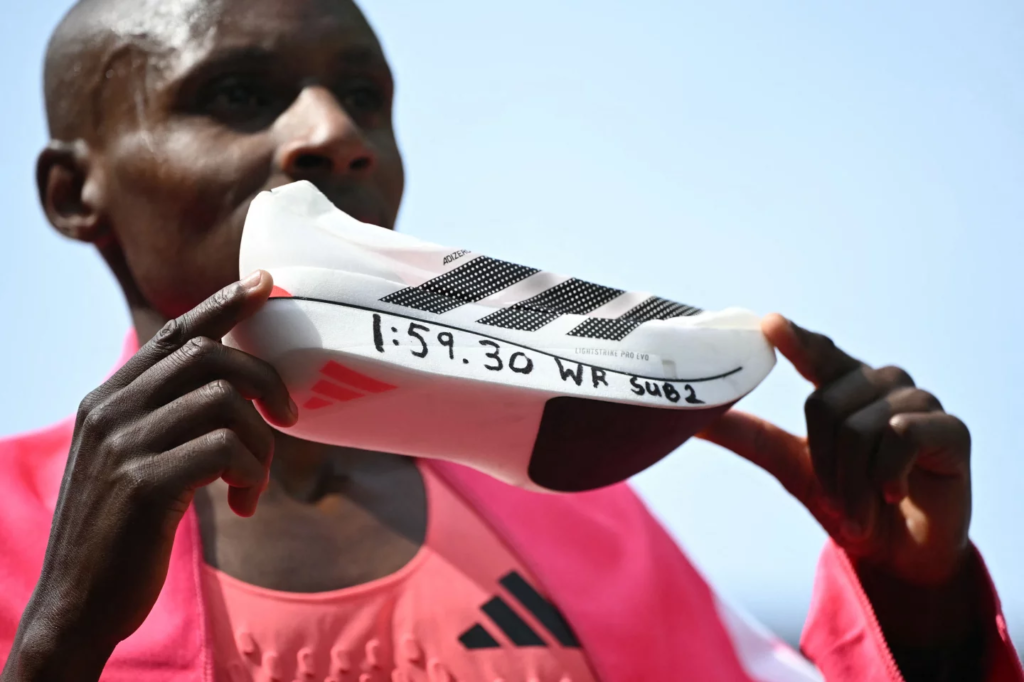
For decades, the idea of a sub-two-hour marathon occupied a near-mythical place in endurance sport. Like Roger Bannister’s four-minute mile, it represented a physiological and psychological frontier that seemed just beyond human reach. That barrier finally fell in an official race at the 2026 London Marathon on April 26th, when Kenya’s Sabastian Sawe ran 1:59:30, followed moments later by Ethiopia’s Yomif Kejelcha in 1:59:41. This was not merely a new world record, it was a transformative moment that may redefine the limits of human endurance. Yet, as quickly as celebrations began, debate intensified: how much of this achievement belongs to the athlete, and how much to technology, specifically, the latest generation of Adidas “super shoes”? The sub-two-hour marathon has been pursued with increasing intensity over the past decade. In 2019, Eliud Kipchoge famously ran 1:59:40 during the INEOS 1:59 Challenge, proving the barrier could be broken under controlled conditions. However, that effort was not officially recognized due to rule violations, including rotating pacemakers and external assistance. What changed between 2019 and 2026 was not simply athlete capability, but the convergence of multiple performance-enhancing factors: improved training methodologies, advanced nutrition strategies, and crucially, dramatic innovations in footwear. By 2026, the conditions were aligned. Two athletes breaking the barrier in the same race suggests that this was not a one-off anomaly but the arrival of a new performance plateau. Sabastian Sawe poses with his new world record time written on his running shoeJUSTIN TALLIS/AFP via Getty Images Central to this transformation is the emergence of so-called “super shoes” – highly engineered racing footwear designed to improve running economy. The shoes worn in London, Adidas’ Adizero Adios Pro Evo 3, represent the cutting edge of this technology. Weighing just 97 grams, or roughly the mass of a bar of soap, these shoes are significantly lighter than previous elite racing models. Their design incorporates three key innovations: A carbon-fiber plate: Embedded in the sole to provide stiffness and forward propulsion Advanced foam (Lightstrike Pro Evo): Highly responsive cushioning that returns energy with each stride Ultra-light upper materials: Minimizing weight while maintaining structural integrity Collectively, these features improve “running economy,” which is the amount of energy required to maintain a given pace. Adidas claims an efficiency gain of around 1.6%, which, over a marathon, can translate into minutes of time saved. This is not trivial. At elite levels, marginal gains of even 1% can be decisive. Academic studies of earlier super shoes, such as Nike’s Vaporfly series, suggest performance improvements in the range of 1–3% for elite runners. In marathon terms, that equates to roughly 2–4 minutes, more than enough to bridge the gap between 2:01 and sub-2:00 performances. Importantly, every sub-two-hour marathon performance to date, whether official or not, has been achieved in carbon-plated shoes. This consistency strongly indicates that footwear technology is not merely a contributing factor, but a necessary one at the current limits of human performance. While the focus on footwear is justified, it risks oversimplifying a more complex reality. The 2026 London Marathon was the product of a broader ecosystem of innovation. One major factor is nutrition. Modern marathoners are now able to consume unprecedented levels of carbohydrates during races, thanks to hydrogel delivery systems that reduce gastrointestinal distress. This allows athletes to sustain higher intensities for longer durations. Training methods have also evolved. Advances in altitude training, data analytics and recovery protocols enable athletes to push closer to physiological limits while minimizing injury risk. In this context, the super shoe is best understood not as a standalone breakthrough, but as one component of a highly optimized performance system. The rise of super shoes has inevitably sparked controversy. Critics argue that such technology risks undermining the integrity of the sport by introducing an uneven playing field, particularly when access to the latest models is limited or prohibitively expensive. Indeed, the Adios Pro Evo 3 is not widely available and may cost hundreds of dollars per pair, with limited durability of perhaps just a single marathon per pair. This raises questions about equity and accessibility, especially for athletes outside major sponsorship networks. On the other hand, proponents argue that technological evolution has always been part of sport. From synthetic tracks to aerodynamic cycling equipment, innovation is often embraced once it becomes standardized. World Athletics has attempted to strike a balance by regulating shoe dimensions and availability, ensuring that performance gains remain within acceptable limits. The fact that Sawe’s run was fully compliant with these rules underscores its legitimacy. Sabastian Sawe with his Adidas “super shoes”Alex Davidson/Getty Images Perhaps the most profound impact of the sub-two-hour marathon is psychological. Once a barrier is broken, it often falls repeatedly. Bannister’s four-minute mile was followed by a wave of similar performances within months. The same dynamic may now unfold in marathon running. With two athletes already under two hours in a single race, the achievement is no longer unimaginable, it is replicable. As one commentator noted, this moment may divide the sport into “pre- and post-sub-two” eras. The sub-two-hour marathon is both a triumph of human endurance and a testament to technological innovation. It challenges traditional notions of what constitutes “pure” athletic performance, forcing us to reconsider the relationship between athlete and equipment. Adidas’ super shoes undoubtedly played a significant role, perhaps even a decisive one, in enabling this breakthrough. Yet they did not run the race. The discipline, physiology, and mental resilience required to sustain a 4:33/mile pace for 26 miles and 285 yards remain extraordinary. Ultimately, the achievement reflects a new reality: elite sport is no longer defined solely by the limits of the human body, but by the interplay between biology, technology, and ingenuity. The two-hour barrier has fallen, not because of one factor alone, but because everything aligned at once. And now that it has fallen, the question is where to next? source

The sub-2 hour marathon, and the technology that made it possible Read More »

Potatoes may have given Indigenous Andeans digestive superpowers

Our taste for bread and pasta wouldn’t be the same if not for our ability to break down starch, a talent Peru’s Andean populations have taken to the extreme. A genome-wide study conducted by researchers from the University of California, Los Angeles (UCLA), has revealed that Indigenous Andeans have, on average, up to four times the number of genes for a starch-busting digestive enzyme in their spit than any other population. Closer inspection of the gene’s sequences suggests this extraordinary count is the result of a selection event some 10,000 years ago, right around the time potatoes were coming into culinary fashion. Senior author and biologist Omer Gokcumen doesn’t think this timing is a mere coincidence. “Biologists have long suspected that different groups of humans have evolved genetic adaptations in response to their diets, but there are very few cases where the evidence is this strong,” says Gokcumen. Starch is a complex sugar used by plants for energy storage. Like many animals, humans rely on a suite of enzymes to break the material down into a form that can be quickly metabolized. One of these enzymes, called salivary amylase, is encoded by the gene AMY1. Most of us have at least two copies of this gene, thanks to its duplication some 800,000 years ago, boosting our ability to start breaking down starch the moment we pop a morsel into our mouths. Some populations have more than a few copies of AMY1, though whether these multiples are a direct consequence of dietary changes has been a difficult question to answer. To uncover solid evidence, UCLA researchers conducted a genome-wide analysis on more than 3,700 individuals across 83 populations and compared the typical number of AMY1 genes in each. Indigenous Andeans were found to have 10 copies of the gene on average, compared to an average of sevencopies in other populations around the world. One explanation for this unusual mix could be a sudden decline in population size, incidentally excluding some genetic profiles. To rule out the brutal impact of disease, violence and population collapse resulting from European contact in recent centuries, the team used different techniques to compare sequences of the amylase genes. They identified a clear signature of selection favoring individuals who happened to have numerous copies of AMY1, at a time when potatoes were being added to the Andean menu. “It’s not as if Indigenous Andeans gained additional AMY1 copies once they started eating potatoes,” says Gokcumen. “Instead, those with lower copy numbers were eliminated from the population over time, perhaps because they had fewer offspring, and the ones with the higher copy numbers remained.” Having more copies of the salivary amylase gene delivers a slightly higher concentration of starch-digesting enzymes, which, by the researchers’ calculations, gave the ancient Peruvians a 1.24% greater chance of surviving long enough to have more children. This might not seem like much, but over thousands of years, it has made Indigenous Andeans world leaders in starch digestion. The food we eat shapes our bodies and our genome in countless ways, allowing us to comfortably drink milk well into adulthood, store fat, or indulge in a few beers. There’s no doubt that our modern diet will leave its signature in our genes for generations to come, just as the potato once did. This research was published in Nature Communications. Source: University of California, Los Angeles Fact-checked by Darren Quick source

Potatoes may have given Indigenous Andeans digestive superpowers Read More »

Get paid to watch the World Cup? Yes, it's a real job

FOX Sports, FOX One and Indeed are turning football fandom into a paid gig with the launch of a nationwide search for a “FOX One chief World Cup watcher hired through Indeed.” The role, created for the FIFA World Cup 2026, offers a US$50,000 salary and tasks one selected candidate with watching all 104 matches of the tournament live across 39 days, streamed in 4K on FOX One. The hired fan will do so from a custom-built viewing office in New York City’s Times Square, designed as a public-facing “dream watch space” surrounded by thousands of daily commuters and tourists. FOX Sports said the role is designed to elevate fandom into a cultural performance, turning solo viewing into a continuous 104-match public watch party. Don’t miss: Monks Film takes World Cup storytelling global with Disney+ documentary A launch video starring actor Keyla Monterroso Mejia and produced by Shadow Lion supports the campaign, positioning the role as part job listing, part cultural experiment, and part fandom theatre. According to a statement, the “Chief World Cup watcher” role goes beyond passive viewing. The selected candidate will be expected to create and share social content throughout the tournament, capturing live reactions, emotional moments and match-day energy in real time. FOX Sports said the aim is to find someone who can embody the highs and lows of global football fandom, while documenting it as an always-on creator narrative. Indeed’s hiring technology will be used to identify candidates, with applicants required to update their profiles and signal their interest directly on the platform. To be considered, fans must set their profiles to “open to opportunities,” highlight relevant content creation or storytelling experience, and submit a short video on social media explaining why they are the right fit, using the hashtag #ChiefWorldCupWatcher. FOX Sports said the match-making process is designed to surface not just traditional talent, but cultural superfans who can translate live sport into digital storytelling at scale. The chosen candidate will be revealed live on June 6 during FOX’s broadcast of the Boston Red Sox and New York Yankees game, ahead of the tournament kickoff. Their tenure will begin a week before the World Cup starts and continue until 26 July, extending slightly beyond the final match to capture post-tournament reflection and wrap-up content. “This FIFA World Cup will be a historic tournament that calls for an equally historic hire,” said Robert Gottlieb, president, marketing, FOX Sports. “One engaged applicant will get the job of a lifetime to experience and celebrate every story, every nation and every exhilarating moment that defines the beautiful game.”  James Whitemore, chief marketing officer at Indeed added, “As a leading global hiring platform, matching candidates and employers is at the core of what we do. It’s how we help people find jobs faster and how employers hire more efficiently. This partnership with FOX Sports is a great example of our mission to help people get jobs.” FOX One’s CMO Brian Borkowski said the initiative is designed to match the scale and energy of a landmark sporting event, giving a dedicated fan the chance to channel their passion into a bespoke role that spotlights the excitement of the FIFA World Cup. “We look forward to sharing the thrill of every moment on the pitch through the lens of a devoted World Cup watcher and highly engaging streaming experience,” he added. The football season has also seen brands increasingly place fans at the centre of the narrative. Most recently, Pepsi rolled out its global platform “Pepsi football nation”, bringing together a roster of football stars to spotlight fan culture beyond matchday. Positioned as a multi-year initiative, the platform aims to embed football into everyday life, leaning into the conversations, rituals and rivalries that extend well beyond the 90 minutes on the pitch. Coca-Cola has also stepped into the conversation with “Uncanned emotions”, its second global brand film for the FIFA World Cup. The spot, part of a three-film series, follows “Bubbling up” and continues the brand’s focus on emotionally charged storytelling around football fandom. While the first instalment centred on anticipation and energy, this chapter zooms in on the raw highs and lows fans experience during live matches. Related articles: LEGO builds its own World Cup lineup of football heavyweights adidas Trefoil logo makes a World Cup comeback after 36 years    TikTok named FIFA’s ‘preferred platform’ for World Cup source

Get paid to watch the World Cup? Yes, it's a real job Read More »

Stock Market Today: Dow Falls 300 Points, Nasdaq Keeps Losses Small; IBD 50 Leader SiTime Soars (Live Coverage)

The Dow Jones Industrial Average and other major stock indexes reversed lower Thursday as Wall Street digested initial unemployment claims data. Small caps sank the hardest, while other financial markets swung amid an uncertain future over Iran. Advanced chip designer and AI play Arm (ARM) was a significant loser, sliding about 10% on the stock market today. At the close,… source

Stock Market Today: Dow Falls 300 Points, Nasdaq Keeps Losses Small; IBD 50 Leader SiTime Soars (Live Coverage) Read More »

Pricey backpacking tent is so light & airy, it's fairly see-through

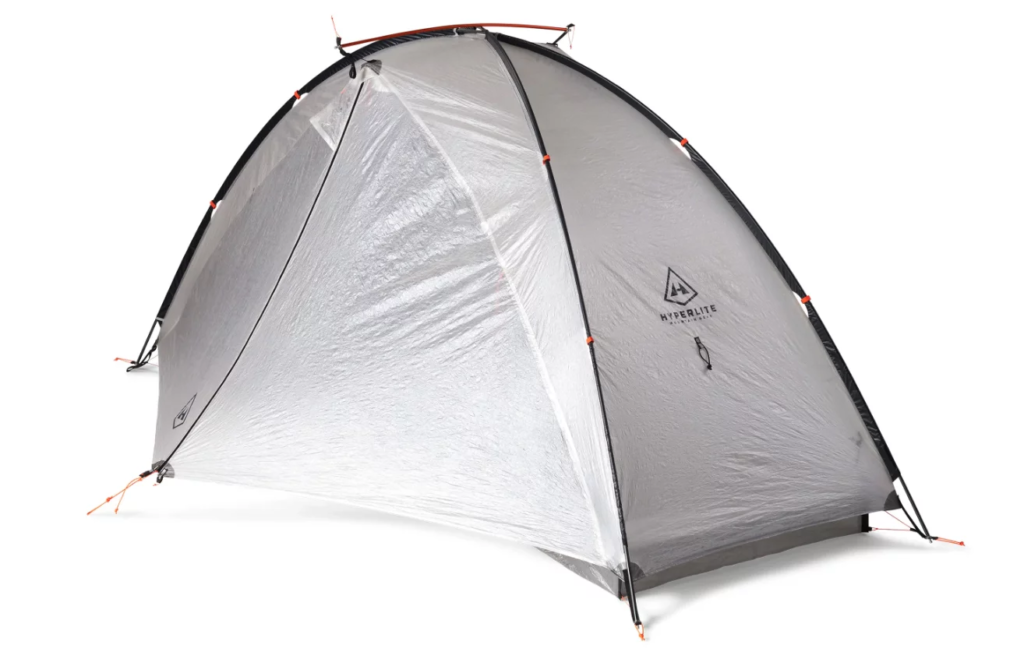
A year ago, we took a look at the Crosspeak 2 tent from Hyperlite Mountain Gear. The impressive cut of Dyneema fabric weighed in barely over 2 pounds (907 g), adding yet another intriguing option to an ultralight freestanding tent market that was running white hot at the time. On the downside, it cost more than a dollar per gram. Now Hyperlite has launched the solo version: the Crosspeak 1. The new Dyneema freestander drops well below 2 lb to become one of the lightest out there and also gets a lower price … but it still follows the same dollar-per-gram+ pricing model. While ultralight two-person tents can run lighter per backpacker when splitting up the pieces, the absolute lowest weight figure among tents will, of course, come from their single-person counterparts. At a mere 28.7 oz (1.8 lb, 813 g), the Crosspeak 1 becomes one of the lightest freestanding tents available the world over. The exterior door zips down the middle to deliver weather protection and create a vestibuleHyperlite Mountain Gear The new tent handily undercuts the 35-oz (985-g) X-Dome 1+ that Durston Gear introduced in 2024 and the 44-oz (2.8-lb, 1.3-kg) Lunar Orbiter solo tent Six Moon Designs launched a few months later. Both those are competitors in the freestanding ultralight backpacking tent segment. In fact, despite bringing along its own DAC Featherlight 8.7 aluminum pole frame, the Crosspeak 1 nearly drops to the same level as Durston’s 26-oz (745-g) X-Mid 1 non-freestanding trekking pole tent … but not quite to the 17.6-oz (499-g) depths of the Dyneema X-Mid 1 Pro. And while those looking to save the most weight might not care about a freestanding design, it can make for faster, simpler setup, improved comfort and easier tent relocation around the campsite. That’s not to say the Crosspeak 1 is the lightest freestanding tent out there. A quick search brought us back to the Samaya Radical 1 we looked at a few years ago, a freestanding 4-season tent that compacts down to a rather amazing packed weight of just 24.5 oz (1.5 lb, 695g ). Another model that just edges out Hyperlite’s latest is the U.L. Dome Shelter from Montbell, which weighs in at 27.7 oz (785 g). Of course, a tent is much more than just a weight on the scale. And Hyperlite gives the Crosspeak 1 some camping advantages that neither the single-wall Samaya nor the Montbell tents have. Hyperlite calls it a single-wall design, but it’s really more of a hybrid single/double-wall with a body that pairs ample mesh with waterproof Dyneema Composite Fabric (DCF) 0.55. Hyperlite Mountain Gear manages to create a solo ultralight tent weighing well under 2 lb that is both freestanding and of hybrid single/double-wall constructionHyperlite Mountain Gear More specifically, the solo Crosspeak features a full-height mesh door inside a weatherproof Dyneema outer door. The outer door can be staked out to create a vestibule for storing dirty shoes, backpacks and gear. The remaining three walls are solid Dyneema fabric, save for a ventilation strip that wraps around just over top the entirety of the DCF 0.96 tub floor. That mesh strip works with the inner door to deliver ample airflow and prevent condensation build-up. The Crosspeak 1’s tub floor measures 88 in (224 cm) long with a width that tapers slightly from 32 in (81 cm) at the head to 29 inches (74 cm) at the foot. That’s well narrower than the 34-in-wide (86-cm) floor of the Six Moon Lunar Orbiter or the tapered 50-to-29-in (127-to-74-cm) polygonal floor of the Durston X-Dome 1+. But both those freestanding double-wall tents weigh considerably more, as noted previously. Hyperlite stretches the peak out with a small crossbarHyperlite Mountain Gear The Crosspeak 1 delivers 42 inches (107 cm) of headroom at its peak, extending that peak height from sidewall to sidewall via a lateral crossbar that lifts the fabric. That crossbar is joined by two crisscrossing primary poles that run corner to corner for fast, straightforward setup. Hyperlite says it opts to attach those poles using sil-nylon sleeves in place of clips to promote better structure and stability. Just like the Crosspeak 2, the Crosspeak 1 can be reinforced with trekking poles at both sides for boosted stability in rough weather. It includes lower grommets to secure the trekking pole tips and upper straps for tightening down around the handles. Trekking poles can be added for strength and stability Hyperlite Mountain Gear Other Crosspeak 1 features include two upper vents, a small mesh interior pocket for holding a phone and other pocket contents, and magnetic door ties for quick opening of the outer vestibule door. Hyperlite includes separate Dyneema stuff sacks for the tent fabric and the poles. The stuffed tent measures as little as 8 x 6 x 5 in (20 x 15 x 13 cm) packed, while the poles extend into a packed 15.3 x 2.3-in (39 x 6-cm) cylinder. Hyperlite launched the Crosspeak 1 this week for US$825, a lofty price that isn’t quite the highest among the competitor tents mentioned above (that’s the $1,340 Samaya Radical 1) but is well above the remainder, which all start at $600 or less. Source: Hyperlite Mountain Gear source

Pricey backpacking tent is so light & airy, it's fairly see-through Read More »

Klook rides China tourism spike as social media becomes the new travel agent

Klook is doubling down on China as travel appetite from Southeast Asia surges, launching its first Southeast Asia edition of its creator summit “KREATORVERSE SEA” amid a sharp rise in bookings to Mainland China. The experiences platform revealed that travel demand to Mainland China from Southeast Asia has grown 134% year-on-year in early 2026, with Singapore outpacing the regional average at 136% growth. KREATORVERSE SEA brought together over 100 creators and influencers from Singapore, Indonesia, Malaysia, Thailand and Vietnam for an eight-day, multi-city trip across Beijing and Shanghai, designed to translate social-first inspiration into bookable travel moments. Don’t miss: Travel creators cash in as Agoda launches new ambassador programme The initiative reflected how creator-led content is increasingly shaping travel decisions, with Klook citing its Travel Pulse 2026 report showing that four in five travellers now book experiences influenced by social media platforms including TikTok, Instagram, Facebook and Xiaohongshu. Beyond traditional sightseeing hotspots such as Beijing and Shanghai, Southeast Asian travellers are increasingly branching out to cities including Chengdu, Chongqing, Hangzhou, Suzhou, Xi’an, Shenzhen and Guangzhou, signalling demand for more immersive, culturally driven itineraries. Klook said emerging travel behaviours are being driven by what it calls “aesthetic travel” and “vibe-based itineraries”, with demand rising for scenic night views, curated “citywalks”, café hopping in cities such as Guiyang and niche food tours in Chongqing. Experiences previously driven by viral content are also moving into bookings, including Chongqing motorbike tours, traditional Chinese costume shoots, and themed attractions such as Shanghai Disneyland and Universal Studios Beijing. According to Klook, the initiative is designed to convert social media inspiration into bookable travel experiences, linking creator-led discovery more directly with in-app bookings. Creator participants documented a mix of landmark and niche experiences, including the Great Wall at Mutianyu, the Forbidden City, the Beijing–Shanghai high-speed rail, and curated day trips to Suzhou. Klook is also expanding its Muslim-friendly travel offerings across Mainland China, targeting destinations including Xi’an, Beijing, Shanghai and Xinjiang. The platform said it is strengthening partnerships with local merchants to improve access to halal dining and prayer facilities. The initiative builds on its 2025 partnership with CrescentRating and HalalTrip, which introduced verified Muslim-friendly ratings to help travellers identify suitable experiences, including halal dining availability and prayer access. As social commerce continues to influence travel planning, Klook said it is focused on linking inspiration directly to bookings, positioning creator-led discovery as a key driver of travel demand across the region. “Being on the ground in Beijing and Shanghai for KREATORVERSE SEA, we are seeing first-hand how social inspiration translates into immediate travel decisions. A single moment captured by a creator can quickly influence where and how people choose to explore,” said Sarah Wan, general manager, Singapore, Indonesia, Malaysia, and Thailand, Klook. She added, “At Klook, we aim to spark joy in travel discovery by bridging creator-led inspiration with authentic experiences, making it easier for travellers to turn what they see online into memorable journeys they can book with just a few taps.”  Klook has also been expanding its focus on Muslim-friendly travel across key destinations in the region. In August last year, the Hong Kong Tourism Board (HKTB) partnered with the platform on a multi-market campaign to enhance the Muslim travel experience in the city. This came after Muslim leisure travellers were observed to have faith-based needs when exploring new cultures, including access to halal-friendly food, prayer facilities and privacy considerations. Targeting millennial and Gen Z Muslim travellers in Singapore, Malaysia and Indonesia, Klook is offering a curated range of Muslim-friendly activities and accommodations, alongside prayer-friendly day trips to family attractions and cultural sites. Related articles: Klook seeks for chief spring officer to navigate cherry blossom season   Klook, SOSD give Singapore’s street dogs a walk in the spotlight    Klook and PlayStation refine experiential travel with exclusive Hokkaido tour   source

Klook rides China tourism spike as social media becomes the new travel agent Read More »

3-way modular filter system makes for drinkable water wherever you are

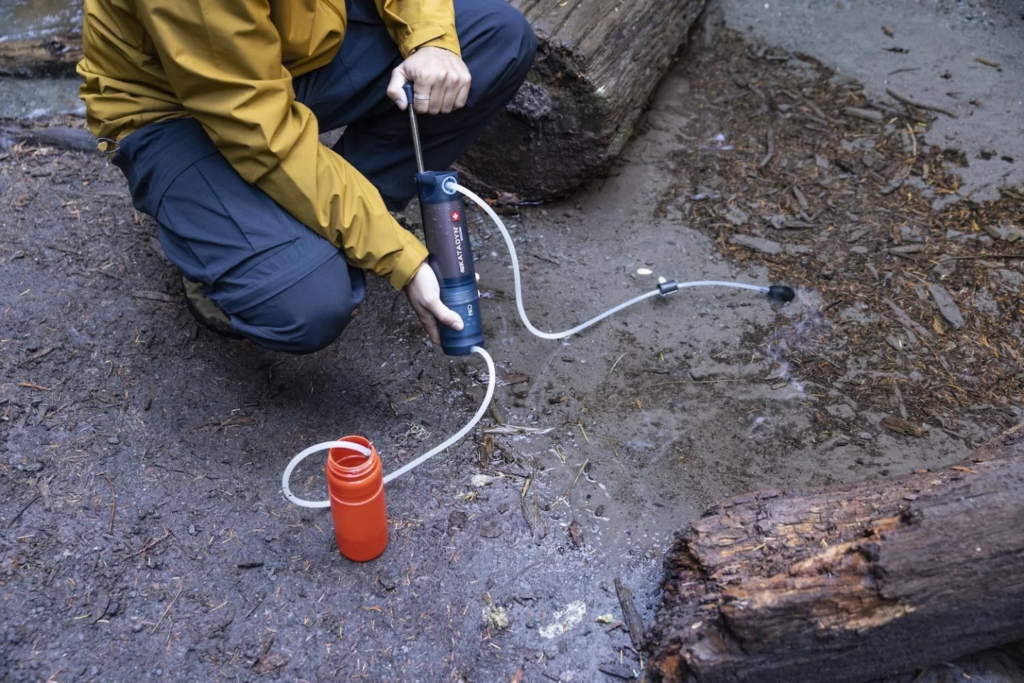
Swiss outdoor kit specialist Katadyn has launched a state-of-the-art modular outdoor water filter system that uses a combination of three sophisticated filtration processes. Katadyn’s Explorer Water Filter and Purifier Series is serious professional expedition-quality gear. This probably isn’t designed for your next trip to the beach or picnic by a mountain stream. Built with a heavy-duty steel pump piston and reinforced housing, it’s a water filter system engineered to withstand frequent use in seriously harsh terrain and deals with the most unappetizing silty stagnant water. Extra hoses and state-of-the-art filters are available as part of the modular systemKatadyn Group The units offer the chance to combine field-cleanable ceramic and activated carbon filters with a hollow fiber membrane for virus removal. That’s going to give you safe clean water wherever you are – and the prices give you a hint of the sort of pro expeditions that are going to be excited by Katadyn’s new system. The Explorer Microfilter is US$199.95 and the Explorer Pro (which adds the virus filter) is a hefty $449.95. The technologies used are fairly established high-end outdoor stuff but the combination of choosing the filters you want in a modular design is new. Users can just opt for the ceramic/carbon combo in the Explorer, which is based on Katadyn’s legendary indestructible 1950s ceramic pump. The Pro’s extra virus-grade membranes can be combined from the start or added later. Mix and match your filter systems. A carrying case, hose kits and replacement cartridges for the virus membrane, ceramic filter and activated carbon are also available. The cartridge can be cleaned and stored dry between usesKatadyn Group The long-life ceramic filter is designed “to remove bacteria, protozoa and particulates” from water in the wild. The activated carbon meanwhile is a chemical sponge made from organic materials like coconut shells and uses its voracious absorption properties to pull chemicals (like chlorine) out of the water. It’s particularly good at making water taste fresher. Finally, adding in the virus filter makes for a very significant filtration system. Most standard backcountry filters are fine enough to catch bacteria and protozoa but are too large to stop viruses. The hollow fiber tech involved uses much smaller pores (typically 0.02 microns) to physically block viruses. The Explorer system lets you choose which of the filters you need for each trip and all the bits can be dismantled and stored dry and mold-free between trips. The heavy-duty manual steel pump piston offers a flow rate of a liter per minute. A ceramic filter should be good for up to 20,000 liters, the carbon can treat 500 liters before a replacement is needed, and the virus membrane lasts around 10,000 liters. The heart of the Explorer system is a tough heavy-duty steel pump operated by a pull-up manual piston, no batteries requiredKatadyn Group Katadyn has impressive pedigree in this field. From humanitarian response, disaster relief and professional operations to outdoor and expedition use, it is a source of gear that gives people water they can trust, effective food for the backwoods and reliable gear for all conditions. Readers with a long memory however will recall a less impressive launch by the company back in 2009. We reported on the indignation that greeted its attempt to introduce powdered beers and wines for backwoods adventurers. European wine makers in particular were horrified. Source: Katadyn Group Note: New Atlas may earn commission from purchases made via links source

3-way modular filter system makes for drinkable water wherever you are Read More »

If social goes more private, where do brands go next?

For years, the social media playbook was simple: post, optimise, repeat. The more visible the content, the better it performs. That logic is now being challenged. For starters, Instagram is reportedly testing a new standalone app, “Instants”, designed around sharing unfiltered photos and videos that disappear after being viewed once within a 24-hour window. Alongside this, legacy platform Friendster has also made a comeback in a new form focused on private, friend-to-friend connections, signalling a broader nostalgia-driven shift toward smaller, more intentional digital spaces. Together with platforms such as Snapchat and Locket, these developments point to a growing preference for low-pressure, intimate sharing over mass broadcasting. As social behaviour moves behind closed doors, marketers must rethink not just where they show up, but how they stay relevant when visibility is no longer guaranteed. Don’t miss: Is messy content the new route to authenticity? For Shermaine Wong, founder and CEO of Cult Creative, the shift is far from fleeting. “This move isn’t a trend. It’s a quiet revolt,” she said, pointing to growing fatigue with performative, algorithm-driven social media. Wong added that the resurgence of more intimate platforms taps into a deeper desire for smaller, more meaningful digital interactions, particularly in Southeast Asia where early social experiences were rooted in closer-knit networks. She said: When two completely different generations arrive at the same conclusion — I want a smaller, more honest digital life — that’s not a phase. That’s a shift. Wei Sian Soh, marketing lead at Kobe, echoed this sentiment, framing the rise not as a platform trend, but a behavioural one. “In many ways, this feels like a correction in social behaviour,” Soh said, adding that users are gravitating toward sharing with close friends rather than wider audiences. Less performance, more presence Meanwhile, for industry professionals, what sets these platforms apart is not just functionality, but the emotional experience they offer. These platforms have removed pressure points that traditional platforms often incite. By contrast, apps such as Instants and Locket lower the barrier to sharing by limiting editing and narrowing audiences. Soh explained that these platforms feel “more like communication than publishing”, with less emphasis on visibility and more focus on authentic, everyday moments. Judy Byun, head of talent at Gushcloud for the US and Korea, pointed to “radical low friction” as a key differentiator. She explained that removing the effort required to produce polished content strips away the performance layer that has come to define mainstream platforms. “You’re no longer sharing a moment — you’re producing a version of yourself,” she said, adding that newer platforms are reversing that dynamic to create a more natural sense of connection. A new kind of opportunity For marketers, however, these spaces don’t present opportunity in the traditional sense. “Traditional advertising doesn’t belong here,” Wong said bluntly, warning that brands approaching these platforms with conventional paid strategies risk immediate rejection. Instead, she pointed to creator-led recommendations built on genuine trust as the real lever for impact. Soh similarly cautioned against viewing these environments as ad inventory. “The bigger opportunity is not ad inventory, but intimacy and relevance,” he said, highlighting formats such as creator-led drops, referral mechanics and shareable content designed for private circulation. He added that this shift also requires marketers to rethink how success is measured. In more private and ephemeral environments, traditional metrics such as reach and impressions carry less weight. Instead, brands should focus on signals such as private shares, replies and referrals, which better reflect whether content is driving meaningful interaction. Byun echoed this sentiment, noting that the most effective brand presence will be organic — embedded within real-life moments rather than inserted between them. “The aspiration for brands should be to become a natural part of someone’s day, not an interruption to it,” she said. She added that engagement depth may become more valuable than scale. In environments where content disappears and views are intentional, “a user actively choosing to open brand content carries far more signal than a passive scroll,” she said. This shift toward deeper, more intentional engagement also raises a broader question for brands: what happens when visibility is no longer guaranteed? The reality check As social platforms become more “friends-first”, the risk for brands is not just reduced visibility, but exposure. Soh noted that brands can quickly become irrelevant if they continue to rely on presence alone, rather than value. Instead, he said brands need to create content that people would genuinely want to share with friends, rather than simply pushing for visibility. “The role of the brand shifts from trying to be the centre of attention to creating value that people choose to bring into their private conversations. That is what keeps a brand welcome rather than intrusive,” he added.  Byun added that these spaces are also where cultural signals are forming earliest, particularly among younger audiences. Brands that invest in understanding and participating authentically now will be better positioned as these platforms scale, she said. For Wong, however, the shift is even more telling. “The risk isn’t that brands become less relevant,” she said. “It’s that these spaces will expose which brands were never genuinely relevant… they were just good at buying visibility.” Brands that survive this shift will not do so through smarter targeting alone, she said. Instead, they will need to have already earned a meaningful place in people’s lives before entering these more private spaces. “The question I’d ask any brand is simple: would a real person share this with someone they love? Not a follower, but someone they love,” she said. “If the answer is no, no platform is going to fix that.” Related articles: How Instagram’s skinny cinematic reels are stealing the scroll  From chatter to change: Why comments are your most underrated focus group      How brands can put the ‘social’ back into social media     source

If social goes more private, where do brands go next? Read More »

Superfast power bank brings its own solar panel for recharging

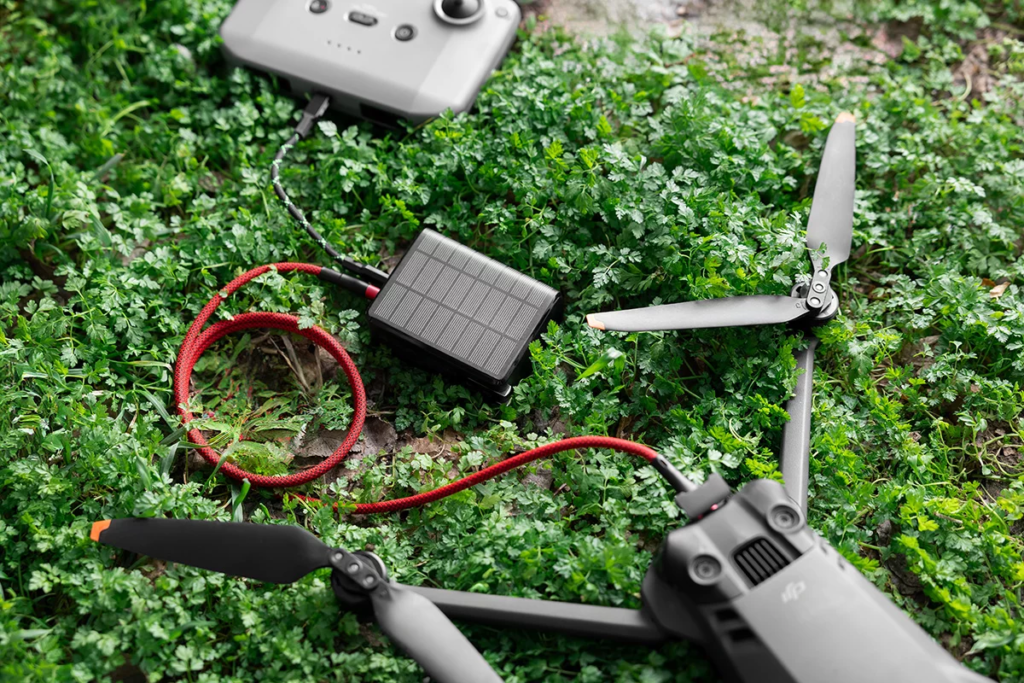
Power banks are a dime a dozen, but this one caught my eye with a feature I haven’t seen before: a built-in solar panel to recharge it using the power of the sun. The Solly actually ticks a lot of boxes. Its 20,000-mAh capacity is enough to recharge your iPhone 17 Pro Max four times, and it’s got two Type-C ports capable of 140-W output for really quick charging. As you’d expect with these specs, it can also power laptops. The battery itself is a solid-state affair, which means it uses a solid electrolyte instead of a flammable liquid one – so it should be safer to use in the long run, and won’t burst into flames when it’s damaged or even drilled into. The company also says this is housed in a shock-proof, water-resistant exterior. Solly: 300W Solar Power Bank with Built-in Wall Charger We’ve only just started to see these arrive in the market; one of the first options I came across appeared last August. Solly says you can expect the battery in this one to retain over 80% of its performance and charge capacity over at least 3,500 cycles, or roughly three years of regular usage. With a 20,000-mAh battery capacity and dual 140-W Type-C ports, the Solly can quickly top off power-hungry devices in a flashSolly The device itself can be fully charged in just 26 minutes when plugged into a wall outlet. It can also serve as a travel adapter, with US, UK, and EU plugs available. An optional accessory makes it compatible with other outlet types for the rest of the world. In addition, it supports pass-through charging, so it can simply power your devices when plugged in without charging the internal battery and deliver maximum output to your demanding gear, like a workstation laptop or gaming handheld. The Solly is both a power bank capable of running your laptop and other gear, as well as an adapterSolly If you’re outside, the solar panel wrapped around the exterior can top it off at a rate of 800-mAh per hour. That means you’ll need more than a full day of sunlight to fully recharge it, but if you’re in the middle of nowhere, that’s a whole lot better than nothing. While there are solar power banks out there, I haven’t found any other model that also handles travel adapter duties, or features a solid-state battery. Plus, the Solly includes a third USB-A port to fast charge other devices, and a protective layer to keep the solar panel from getting scratched. You can get the Solly with foldable US, UK, or EU wall plug prongs built in – this allows for fast charging and pass-through chargingSolly This model measures 3.15 x 2.36 x 1.38 in (8 x 6 x 3.5 cm), which is fairly compact – and the wall outlet prongs fold into the body to make it easier to slide into a pocket or bag. The Solly is currently being crowdfunded on Kickstarter, where it can be had for as little as US$79 – discounted from its $115 expected retail price. You can get it in three different colorways, and add on neat accessories like a short Type-C cable that can double as a lanyard, and a charging dock to top off five Sollys at once. The 20,000-mAh Solly comes in three colorways, and weighs a reasonably light 14 ozSolly All crowdfunding campaigns carry an element of risk, and this appears to a new brand’s first product – so you’ll want to keep that in mind if you choose to back this campaign. However, if all goes to plan, orders are slated to ship worldwide in August 2026, and delivery costs will be calculated later in the year. Find the Solly on Kickstarter. Note: New Atlas may earn commission from purchases made via links. source

Superfast power bank brings its own solar panel for recharging Read More »

Emotional Yields of Collectibles

We propose a novel method to estimate emotional yields of collectibles based on factor-mimicking portfolios. Using up to 110 years of collectibles returns for 13 distinct asset classes, we apply machine learning techniques to address challenges from non-synchronous trading. We use these estimates to study how emotional yields affect equilibrium pricing. Emotional yield estimates for 24 of our 30 collectibles return series are positive, with an annualized mean (median) of 2.64% (2.53%). Despite various forms of underestimation, these results provide evidence that assets with positive emotional returns have lower equilibrium financial returns. source

Emotional Yields of Collectibles Read More »