Google enters the screenless health tracker race with new Fitbit Air

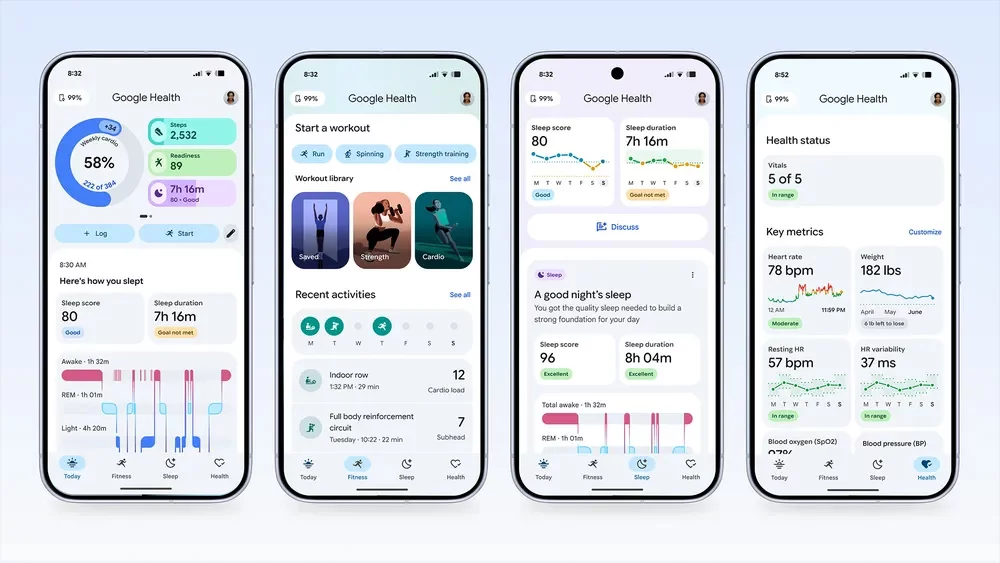
Google’s just launched the Fitbit Air, a screenless wearable that slips onto your wrist to track your fitness activities, sleep, and other health stats. It’s a lot like the Whoop Band and others you’ve seen on the market – and it comes in at a compelling price point without the need for a subscription to cover the basics. This practically weightless tracker (0.4 oz/11 g including a band) can be worn with three different styles of wrist wraps, and does all the tracking you’d expect – activities, steps, and sleep. It can also track your heart rate, blood oxygenation, skin temperature, cardio load, and heart rhythm with FDA-approved background AFib detection. Since it doesn’t have a screen, there’s no fiddling with controls or getting distracted by notifications, and you can look forward to a full week of battery life. Five minutes of charging will top it off for a day’s worth of tracking. Meet Google Fitbit Air | Lighter, Gets Mightier The Air will automatically detect biking, running, walking, elliptical, and rowing. It’ll track other stuff that gets your heart rate up too – but it just may not accurately label what activity that is. It will also learn exactly what activities you’re getting into over time, based on your inputs in the app. Speaking of the app, the Fitbit app is being rebranded to Google Health, along with a major revamp of the interface to make it more intuitive and customizable on both iOS and Android. All your stats will appear in there, and they can sync with other fitness services like Strava. Basic logging is included at no charge, while a subscription unlocks a raft of premium features. The Fitbit app’s got a major glow-up and is now called Google HealthGoogle That includes coaching to meet your fitness goals, proactive workout suggestions, AI-powered insights from your activity stats, medical record summaries, a workout library developed by expert trainers, and access to an AI assistant that can answer your health questions with evidence-backed responses. You don’t have to infer what your stats and trends mean all on your own, because it’s all presented as wordy content. You’ll also find mindfulness sessions covering meditation, guided breathing, and more. Plus, you can adjust your workout schedule as needed (to accommodate days on vacation, for example) and get tips on the best way to do that by chatting with the AI coach. That’ll cost you US$9.99 a month or $79 a year. Beyond the usual fitness tracking capabilities, the Air can also track heart rhythm in the background and deliver afib alertsGoogle The tracker supports connected GPS when it’s paired to your phone, so it can chart the routes you take on a map and combine that with your fitness stats, for logging on Strava and the like. It’s rated for 164-ft (50-m) water resistance, so you should be fine swimming in a pool with it. Lastly, it can vibrate to wake you up in the morning, and alert you when its battery is low. The Air is priced at $99.99, which is about the same as the Amazfit Helio Strap, and half what you’d pay for a Polar Loop – both of which are subscription-free. That’s great for tracking the essentials. If you want more insights from Google Health, it’s cheaper with the annual subscription than the basic Whoop package (which starts at $199, goes up to $359 depending on the features you want). You can get a range of bands in three different styles for the Air (top), and there’s even a Steph Curry special edition (bottom) for $30 moreGoogle On the face of it, the Air’s price and updated app make a strong case for it against its rivals. The inclusion of mindfulness features and content could effectively negate the need for additional dedicated services like Calm or Headspace, which each cost $70-$80 a year. For hardcore athletes, the proof is in the insights and post-workout analysis, and those folks might want to wait for detailed reviews and head-to-head comparisons with Whoop’s offering to see how they stack up. But any way you slice it, the Air looks like a well priced deal if you’re happy to hop on the screenless wearable train. Find the Fitbit Air in the Google Store where you can pre-order it now, and snag a three-month free trial of Google Health Premium. Deliveries begin around May 26 in the US. Source: Google source

Google enters the screenless health tracker race with new Fitbit Air Read More »

ChatGPT introduces 'Trusted Contact' feature for self-harm safety alerts

OpenAI is rolling out a new safety feature in ChatGPT called Trusted Contact, allowing adult users to nominate a person they trust who may be notified if the system detects signs of serious self-harm-related risk during conversations. The feature is positioned as an additional layer of support for users who may be in distress, designed to help connect them more quickly with someone they already know, alongside existing crisis helplines and in-app safety resources. It is currently being rolled out as an optional setting for users aged 18 and above globally, and 19 and above in South Korea. Users can select one Trusted Contact, such as a friend, family member or caregiver, through ChatGPT settings. That person receives an invitation explaining the role and must accept within a week before the feature is activated. If they decline, users can choose someone else. Don’t miss: OpenAI eyes deeper APAC growth with new marketing head If automated systems detect potentially serious self-harm-related content, ChatGPT will prompt the user with a suggestion to reach out to their Trusted Contact and may offer conversation starters. The case is then reviewed by trained human reviewers. If the reviewers determine there is a serious safety concern, the Trusted Contact may receive a notification via email, text message or in-app alert if they use ChatGPT. OpenAI stressed that the notification is intentionally limited. It does not include chat logs or transcripts, and only indicates that self-harm was raised in a potentially concerning context, encouraging the recipient to check in. Every alert is subject to human review before being sent, with the company aiming to complete reviews within an hour where possible. Trusted Contact does not replace professional care or crisis services, which remain part of ChatGPT’s safety responses. Users can also edit or remove their Trusted Contact at any time, and the contact can opt out through OpenAI’s help centre. The feature builds on existing safeguards, including parental safety notifications for teen accounts and crisis resource prompts within ChatGPT. It also forms part of OpenAI’s broader safety framework, which includes collaboration with clinicians, researchers and mental health organisations such as its Global Physicians Network and the American Psychological Association. OpenAI said it works with more than 170 mental health experts to refine how ChatGPT detects distress signals, responds to risk, and encourages real-world support. In addition to Trusted Contact, ChatGPT may suggest breaks during extended use, refuse self-harm-related instructions, and surface local crisis resources when needed. The company said the aim is to ensure AI systems do not operate in isolation, but instead help connect users to real-world care, relationships and support networks when it matters most. The launch of Trusted Contact comes as OpenAI continues to expand ChatGPT’s role beyond conversation into more functional, real-world use cases. Earlier this month, BBC reported that a neurologist identified only as “Taka” became deeply reliant on ChatGPT after using it for work discussions, eventually developing delusions that led him to believe he was carrying a bomb in his backpack. The incident escalated into police involvement and later hospitalisation following violent behaviour at home. OpenAI responded by expressing sympathy and stating that it is continuing to train its models to better support users in real-world contexts. Meanwhile according to a Guardian report, a UK inquest heard that 16-year-old Luca Cella Walker asked ChatGPT for the “most successful” way to die on a railway line hours before his suicide. The case intensified scrutiny over AI chatbot safeguards, with OpenAI saying it has since strengthened mental health intervention responses. Related articles: OpenAI shuts down Sora, reportedly ending Disney partnership talks   OpenAI pushes back against order to hand over millions of ChatGPT convos   PayPal partners OpenAI to drive agentic commerce in ChatGPT source

ChatGPT introduces 'Trusted Contact' feature for self-harm safety alerts Read More »

Sorry millennials, Gen Z isn’t reading all that copy

The internet has found a new way to pit millennials against gen Z, and this time, brands are joining the group chat. A growing social media trend is seeing brands rewrite their marketing copy for both audiences, spotlighting just how differently each generation communicates online. Millennials tend to favour fuller explanations, polished storytelling and structured messaging. Gen Z, meanwhile, prefers speed, brevity and vibes. Think fewer words, more emojis, lowercase captions and an “if you know, you know (iykyk)” energy. What began as light-hearted jabs over side parts, skinny jeans and crying-laughing emojis has now evolved into a commentary on marketing itself. Same product, same campaign objective, completely different language instincts. Naturally, brands wasted no time jumping in. From food and beverage players to lifestyle and finance names, companies are using the trend to show they can speak fluent millennial and gen Z, sometimes with surprising accuracy, and sometimes with the energy of a dad discovering slang on TikTok. Here’s how some brands are putting their “Millennial vs Gen Z” marketing personas to work. Don’t miss: Here are the brands strutting The Devil Wears Prada 2 runway 1. American Express 2. Care Bears 3. Cerave 4. Crocs 5. Darlie Singapore 6. DBS Bank 7. Dutch Lady Malaysia 8. Gong Cha Malaysia 9. Listerine 10. MAMEE MONSTER 11. Nespresso 12. Secret Recipe Malaysia 13. Stanley1913 14. Typo  15. ZUS Coffee Related articles: Over 400,000 KitKats were stolen, but no one is taking it seriously  April Fool’s Day pranks that had us doing double takes this year   Why marketing leaders are ditching polished headshots for AI caricatures source

Sorry millennials, Gen Z isn’t reading all that copy Read More »

Brembo's fluid-free braking system is coming to a car near you

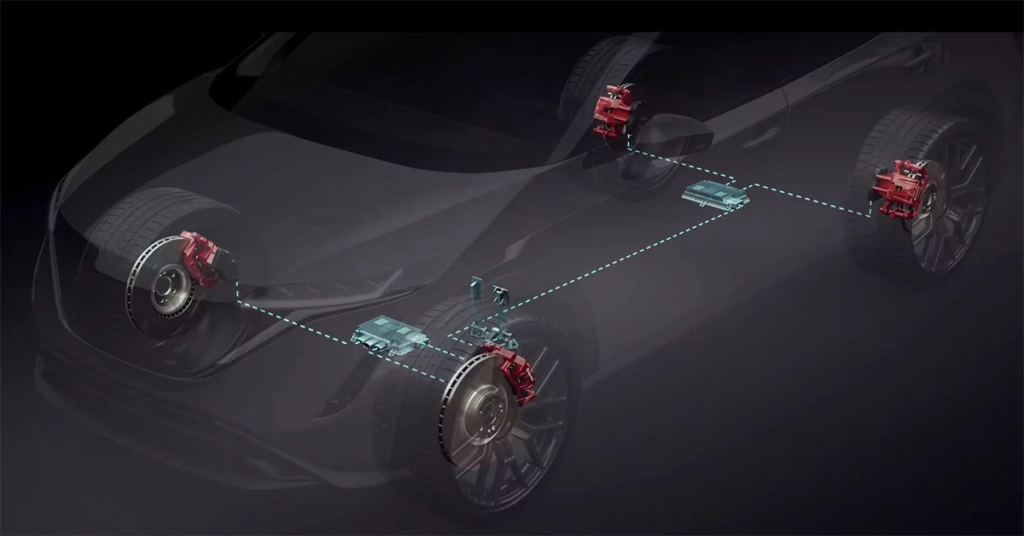
For the past few years, Brembo has been working on a whole new way to stop a vehicle in its tracks. The company says its fluid-free Sensify system is going into production, and it shouldn’t be long before you can stomp the pedals on one of these in a new car. The all-electronic Sensify tech has been in development for years now – we last wrote about it in 2021, and the Italian components giant showed it off to content creators in the flesh on a test track the following year. With a wholly different approach compared to hydraulic braking systems, it boldly promises safer, more precise braking, and enhanced driving pleasure. Indeed, folks who tried it reported that making a hard stop felt smoother, more exact and linear, and without the usual stutter of a hydraulic ABS system. By and large, you’ll use a Sensify brake the same as a traditional one. A pedal simulator in the footwell will allow you to deliver input as before, and it’ll give you the sort of pedal feel you’re used to. But rather than having that connect to the wheels like a conventional setup, the system reads your pedal stroke, and sends a signal to its electronic control units (ECUs). SENSIFY: the intelligent braking system brings the driving experience into the future These in turn create pressure requests directed at the front calipers, where electrohydraulic actuators with pistons push on them to apply braking pressure to the wheels. Each wheel gets its own actuator, so the system can independently optimize the braking intensity. Brembo says this allows for a more enjoyable experience, and better performance across a range of road conditions. The main advantage here is the driver’s physical action is decoupled from the wheels, so there’s more precise control in the way braking pressure is applied, and the driver gets more consistent feedback. And since there’s no brake fluid like in a hydraulic braking system, you no longer have to refill or bleed your brakes, and you can look forward to lower maintenance costs and more accurate braking. The system uses electromechanic actuators to apply optimal pressure to the rotors for each wheelBrembo Brembo says it’s developing Sensify as a plug-and-play platform, which means it should be easy for manufacturers to integrate into all kinds of models. It can also work with ADAS and autonomous driving systems, which can allow for enhanced safety on the road in both self-driving cars, and those with a human behind the wheel. As the tech is finally entering production after years in development and testing, the company says it’s signed on with multiple customers and “expects to equip hundreds of thousands of vehicles per year,” though it won’t yet say which automakers and models will get it first. It also told The Drive, “The series production already started for a leading global vehicle manufacturer.” Sensify systems are currently in production for unnamed automakers to integrate into their vehiclesBrembo All that means we’ll likely see Sensify in action on a road-faring vehicle soon enough. I imagine this will be key for upcoming robotaxis that rely heavily on smart tech to provide safe rides, and they could benefit from more components under the hood that can talk to each other. Source: Brembo via PRNewswire source

Brembo's fluid-free braking system is coming to a car near you Read More »

Audiobooks go physical in Audible’s immersive 'Story House' pop-up

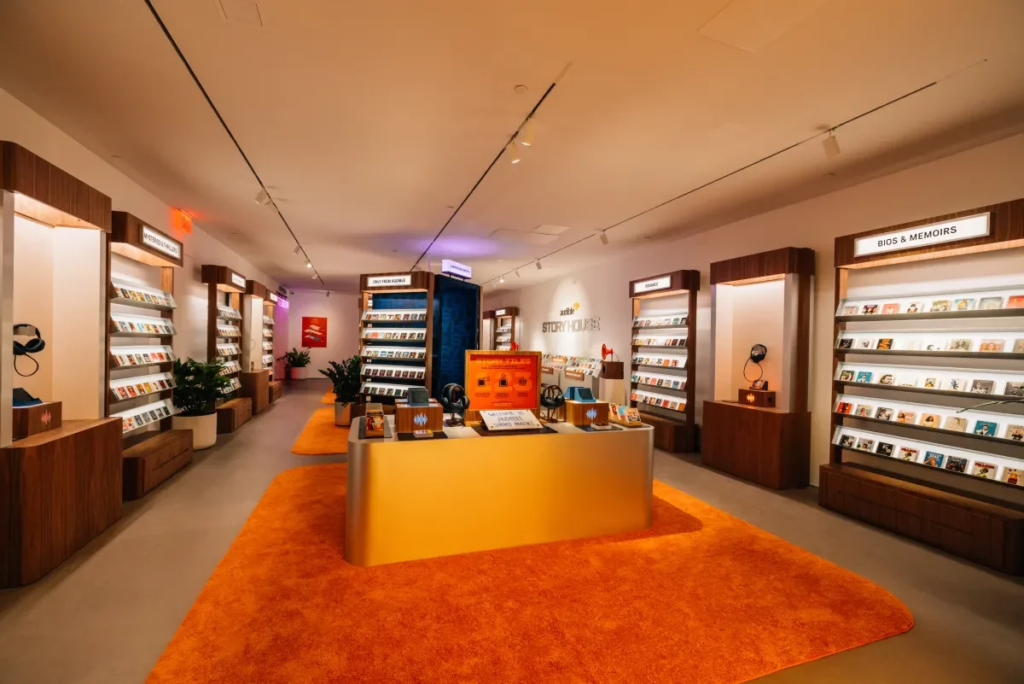
Audible is opening a pop-up “bookless bookstore” in New York City, turning audiobooks into a social experience with listening lounges and live events. The concept might sound a little gimmicky, but Audible thinks it may be the next evolution of how we discover stories. And the company is effectively running a trial of this idea with the Audible Story House, open through May. The New York City pop-up reimagines traditional bookstores as a listening-first space, designed entirely around audio-based storytelling. Instead of browsing physical books, visitors explore audiobooks through carefully curated tactile displays, alongside dedicated listening spaces. Visitors can browse more than 300 titles using tactile Story TilesAudible The venue isn’t a ‘store’ in the conventional sense; it’s about shared discovery and interaction rather than ownership of the content. The Audible Story House’s timing couldn’t be better: it lines up with a broader shift toward more social, offline experiences, and the rave reviews from early visitors reflect this. The experience is set across three floors, spanning around 6,000 sq ft (560 sq m). Visitors can browse more than 300 titles using tactile “Story Tiles,” which can be tapped to stream content, or taken over to one of the listening stations to hear through high-end Sony headphones. The space is divided into six distinct environments, including a Dolby Atmos lounge for immersive, spatial audio, a gallery area for talks and panels, and a ‘listening bar’ where staff offer their own personal recommendations. Extras like ‘immersion reading,’ which syncs audiobook narration with on-screen text, add another dimension to the experience. Meanwhile, a cafe run by Land to Sea offers a place to take a break and chat over a cup of coffee, which, as it happens, reviewers on Google have had high praise for. A cafe run by Land to Sea offers a place to take a break and chat over a cup of coffeeAudible A key aspect of the concept is its programming, expanding the experience from passive listening to active participation. A packed calendar of events brings together authors, narrators, and fans for everything from panel discussions to social meetups. Highlights include ‘The Sound of Love,’ a romance-focused panel exploring how voice and performance shape emotional storytelling, and a Creator Open House, which offers behind-the-scenes insights into audiobook production. Some less conventional events include speed dating for audiobook fans and Silent Book Club sessions, where attendees listen together, followed by an optional discussion. Add in literary trivia nights, including a Harry Potter-themed session tied to the upcoming full-cast audiobook release, alongside workshops and other interactive formats, and the Story House starts to really look like a legitimate cultural venue. The Gallery hosts panels, book clubs, and shared listening sessions, doubling as a relaxed space for visitors to experience audiobooks togetherAudible The pop-up lands at a time when audiobooks are one of the fastest-growing formats in publishing, fueled by strong fan communities across platforms like BookTok and podcasts. Simultaneously, there’s a growing appetite for ‘third spaces’ – physical places where people can form communities away from screens. The concept taps into both these trends, and so far, it’s been a big hit. For Audible – which has a catalog of more than a million titles – this also signals a shift beyond app-based listening toward a space for in-person engagement. The company blends the nostalgia of bookstore browsing with modern, audio-first habits, testing what storytelling spaces may look like in the future. The Audible Story House is open at 260 Bowery (NY10012) throughout May, Wednesdays through Sundays from 11am to 7pm. Source: Audible Note: New Atlas may earn commission from purchases made via links source

Audiobooks go physical in Audible’s immersive 'Story House' pop-up Read More »

Gen Z Perspectives: Lazada CMO exits and The Devil Wears Prada 2

Happy Friday, MARKETING-INTERACTIVE readers and welcome back to Gen Z Perspectives, your go-to feature where we unpack the week’s top stories and trending topics through the eyes of Gen Z. From the biggest industry moves to viral moments and marketing controversies worth dissecting, we’re bringing the heat with authenticity, awareness and probably a few unfiltered takes. This week, Lazada Group CMO Marcus Chew stepped down, Pizza Hut Singapore served up a 45th anniversary brand refresh, and we dug into some standout campaigns inspired by The Devil Wears Prada 2. Trust us, you won’t want to miss this.  Don’t miss: Gen Z Perspectives: Sameer Gupta exits DBS, Claude Design & Content360 SG 1. Lazada Group CMO Marcus Chew steps down Marcus Chew (pictured above), group chief marketing officer at Lazada Group, has stepped down from his role, MARKETING-INTERACTIVE understands. Chew joined Lazada in 2021 as group CMO, overseeing the eCommerce platform’s end-to-end marketing strategy across Southeast Asia and South Asia, including its Daraz business. In the role, he led brand strategy, creative development, media execution and go-to-market planning across 11 markets. Read more here.  2. 45 years on, Pizza Hut SG refreshes brand for a slice of everyday life Pizza Hut Singapore is marking its 45th anniversary with a brand refresh anchored on its global “Feed good times” platform, as it shifts from being associated with special occasions to becoming part of everyday dining habits. The move reflects changing consumer behaviour, with the brand aiming to show up more frequently across day-to-day moments such as solo meals, midweek breaks and spontaneous gatherings. It is positioning itself as a go-to option beyond traditional group occasions. Read more here.  3. Here are the brands strutting The Devil Wears Prada 2 runway Nearly two decades after The Devil Wears Prada first turned fashion into a cultural shorthand for ambition, its sequel has made a sharp, high-heeled return. The Devil Wears Prada 2 hit theatres on 1 May 2026, reuniting its original cast at a time when nostalgia is doing serious box office heavy lifting. However, the real story is happening off-screen. The sequel has quickly become a marketing playground, with fashion-led playlists, character-driven menus, and even vodka-fueled runway cocktails all pulling from the same cultural playbook. Read more here.  Related articles: In conversation: How Airwallex channels sports energy into B2B impact   If social goes more private, where do brands go next?   Visa names new APAC head of media, social, data, content, and digital innovation source

Gen Z Perspectives: Lazada CMO exits and The Devil Wears Prada 2 Read More »

Spacious tiny house brings on the luxury for a family living small

Fritz Tiny Homes has expanded its Halcyon line with the Grand, a 400-sq-ft (37.1-sq-m) park model that takes livability to the next level. It builds off of the Halcyon Stay model, but makes it a more practical dwelling, with two bedrooms and clever storage solutions that maximize space. It may be tiny, but the Canadian builders ensured it can function as a primary residence for a growing family. One of the things that the Alberta-based company is proud of is the ground-floor master suite. The king-sized bed sits underneath a soaring ceiling, with a patio door that opens onto a covered deck. Natural light floods the inside through floor-to-ceiling glass on the window facing the bed. The partition wall separating the bedroom from the rest of the ground floor has glass panels along the upper portion. Fritz made this interesting design decision to ensure that there is a sound barrier for privacy without interrupting the visual flow of the ceiling. Considering there is a bedroom on the upper floor, it makes sense as a good compromise – creating a quiet space that doesn’t disrupt the dramatic architecture. Wall-to-ceiling windows bring in natural lightFritz Tiny Homes The bed is fitted with a hydraulic lift system, revealing generous storage space underneath. This is one of the details that shows the Halcyon Grand is more than just a showpiece, but a genuinely livable tiny home. The nightstand has deep drawers and built-in USB ports, while the double-sided wardrobe and adjustable white oak shelving show that Fritz understands the assignment – storage space isn’t optional. The kitchen, which is also on the main floor, is compact but full-featured – with visually concealed appliances like a refrigerator-freezer combo. The inclusion of a dishwasher marks a meaningful departure from the compromises typical of tiny living – this is similar to Betty by Decathlon Tiny Homes and Dogwood by Mustard Seed Tiny Homes, which also emphasize full-size appliances. Opposite this space is a dining area that can seat four people. A roomy living area nearby hosts a large sofa and coffee table while offering views through the floor-to-ceiling glass entrance. Full-sized fridge/freezer, four-burner range, main oven plus microwave and lots of storage in the kitchenFritz Tiny Homes Fritz also put a lot of thought and craftsmanship into the bathroom, which offers a spa-like experience that shows real spatial problem-solving rather than just miniaturizing conventional layouts. The builders stepped the floor down to provide ample headroom despite the loft being directly above it, installed underfloor heating and covered the surface in custom-made and easy-to-maintain single-piece tiles. You have an enclosed shower with mini bath and on-demand hot water, a double vanity sink and a tidy toilet with hidden cistern. A utility zone is in here too, with a washer/dryer combo as standard – though there is room to optionally upgrade to full side-by-side appliances. A second bedroom is on the upper floor, with slanted ceiling that gives its entrance almost full-height appeal. Configured here for a child’s space, there are colorful LED accents, deep pull-out drawers for storing toys, and a safety railing to prevent little ones from accidentally tumbling. The space can easily fit a king mattress or two queens if kids aren’t in the picture. When making a midnight bathroom run, the stairs sport LED lighting like runway lights at an airfield. The loft set up as a child’s roomFritz Tiny Homes Elsewhere, the entire structure is wrapped in spray foam between inner and outer surfaces, and the floors have hydronic heating to prevent what is arguably the biggest source of discomfort in homes without foundations – perpetually cold floors. Fritz handled airflow nicely by installing three ERV (Energy Recovery Ventilator) units that constantly bring in fresh air through ceramic heating. Dual mini-split heat pumps have been installed too. Since the Halcyon Grand is like a tightly sealed envelope, this is essential for maintaining air quality while keeping the home air-conditioned. This attention to the thermal performance of the Halcyon Grand ensures a climate-controlled environment that works year-round regardless of location. This tiny house is built to last generations, whether it’s in sunny Florida or the freezing Canadian North. Described as the company’s “largest and most ambitious tiny home yet,” the Halcyon Grand starts at CAD 330,225 (which converts to around US$243k) and can be delivered across North America. It’s a certified park model RV, but if zoning requirements in the client’s area don’t allow it, it can be built as a modular home on a permanent foundation with no loft – a second bedroom can be attached to the back of the home if desired. This 400sqft Tiny Home is PURE LUXURY Source: Fritz Tiny Homes source

Spacious tiny house brings on the luxury for a family living small Read More »

McCann Singapore names new CEO as Paul Soon exits

McCann Singapore has promoted Gonzalo Olivera (pictured left) to chief executive officer as part of a planned leadership transition that also sees Paul Soon (pictured right) step down from his role and relocate to the US for personal reasons. Olivera was previously president at McCann Singapore, having helped oversee the integration of McCann and MullenLowe Singapore into a single operating structure following Omnicom’s US$13.3 billion acquisition of Interpublic Group. In his new role, Olivera is tasked with steering McCann Singapore towards its ambition of becoming a “more valuable growth partner” to clients. The agency said it will lean on a challenger mindset, underpinned by its “Truth well told” philosophy, to build a more integrated operating model focused on demand creation, cultural relevance, trust and measurable growth. Don’t miss: Agency agenda: Tony Harradine outlines Omnicom Media APAC’s post-deal plan Olivera has been with McCann Worldgroup since 2013, when he relocated to Singapore to manage global Unilever accounts. He went on to spend nearly 13 years across MullenLowe Singapore, including as managing partner, before moving into leadership roles within the merged McCann structure following the McCann–MullenLowe integration. The agency said Soon’s departure forms part of a structured six-month succession plan designed to ensure continuity for clients and teams. It described the transition as one that allowed leadership to be firmly embedded ahead of the change. At McCann, Soon led the combined Singapore business following the McCann–MullenLowe integration and played a key role in strengthening its digital and government client portfolio, as well as advancing its AI capabilities. Prior to McCann, Soon was CEO of MullenLowe Singapore and China from 2020 to 2025, after first taking on the Singapore CEO role in 2018. He previously led POSSIBLE Singapore between 2015 and 2018, and Mirum Agency from 2011 to 2015. Earlier in his career, he held senior roles at JWT, XM Asia Pacific, Arc Worldwide, Saatchi & Saatchi and AKQA. “We wish Soon well in his next season of life. Under his leadership, McCann Singapore has sharpened its point of view, deepened client relationships, and demonstrated that creativity with commercial rigour is one of the most powerful things an agency can offer,” said Sean Donovan, president, Asia, Omnicom Advertising. He added, “Soon is leaving behind an agency that knows who it is, and under Olivera’s leadership and direction, is positioned to grow in its next phase. On a personal note, I want to thank Soon for his partnership and leadership over the past six months as we re-imagined McCann Singapore.” In tandem, Olivera thanked Soon for his contribution in building McCann Singapore into the agency it is today, noting its creative ambition, clear philosophy and commercial credibility. “This industry may be measured in dollars, but it is built on relationships. Having had the chance to work with someone I can count as a friend has been a real privilege. The culture of this agency has been built on ethics, honesty, transparency and camaraderie, and even with Paul on the other side of the world, that spirit will remain very much alive here,” he added.  Commenting on his departure, Soon said, “First, I am deeply grateful for the 20 odd years I have had the privilege to be part of Singapore’s creative industry, working alongside some of the finest talents and competing against each other, while maintaining compassion and respect for one another’s craft and perspectives.” “Second, to my colleagues, new and old, at McCann Singapore, ‘Truth well told’ should never sound easy, should never hide behind more slides, and most importantly, it should be embodied with meaning in everything you do, your work and in your life. The truth will always set anything free. I look forward to more amazing work ahead.,” he added.  Soon also expressed appreciation to Donovan and Olivera for their support and partnership during the transition period, noting the strong relationships built over his tenure and thanking them for their collaboration. The leadership change comes as Omnicom continues to reshape its regional operations following its acquisition of IPG. Last month, Omnicom Advertising Asia unveiled a new regional leadership team aimed at accelerating growth and helping brands navigate an increasingly fragmented market. Reporting to Donovan, the team includes Peter Khoury as chief creative officer, Melissa Daniels as chief innovation officer and Emmanuel Sabbagh as chief strategy officer, alongside expanded regional roles for Andreas Krasser, Ellie Brocklehurst and S. Subramanyeswar. Working across TBWA, McCann and BBDO, the regional group has been tasked with driving creative, strategic and technological integration across the network. Related articles: TBWAGroup Singapore elevates Mandy Wong to CEO  Omnicom’s first results post-IPG show merger costs bite, underlying performance holds  Omnicom PR reportedly restructures agency portfolio source

McCann Singapore names new CEO as Paul Soon exits Read More »

This egg-shaped mouse is the latest to offer less wrist strain

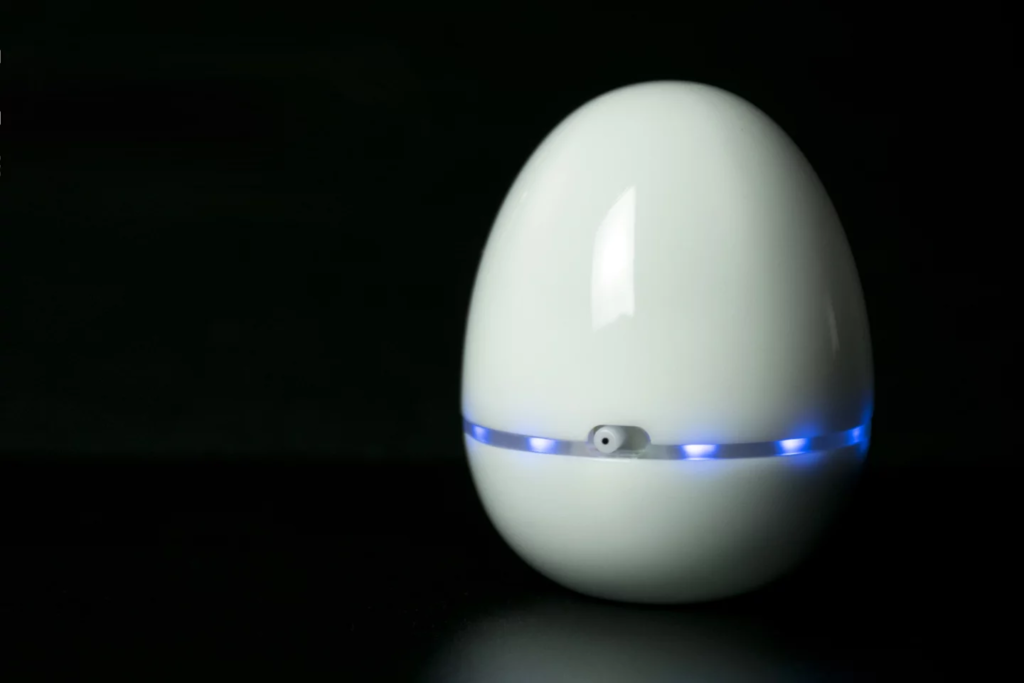
Engineers have been experimenting with alternatives to the traditional mouse for years, producing pen-shaped, flat, and even ring-shaped mice. And just when it seems like we’ve seen it all, UK-based startup NextAxis Design has introduced an egg-shaped mouse called Ovo, currently available for backing on Kickstarter. Ovo weighs 98 grams (3.5 oz) and measures 48 x 61 mm (1.9 x 2.4 in). It is designed to fit comfortably in the palm of your hand and reportedly supports more natural hand movement and positioning. It can be used in the air or on a mouse pad, but in both cases, it’s claimed to reduce wrist strain. However, such an innovative design definitely comes with some learning and adaptation, which might be one of the device’s main drawbacks. Unlike a traditional mouse, Ovo does not require a surface to slide on. Instead, it’s designed to interpret the orientation and movement of the user’s hand in 3D space. You move the cursor by rotating and tilting the device instead of dragging it across a desk. Ovo also supports standard features such as clicking and scrolling. Kickstarter pledges for Ovo start at $109NextAxis Design The device requires no drivers, and operates wirelessly across all major operating systems including Windows, macOS, Linux, Android, and iOS. It can support multiple devices and connects via Bluetooth or Wi-Fi. It is also compatible with smart home systems. One of the key features is customization. Users can adjust sensitivity, assign personalized macros and gestures, and create profiles for different workflows. With the two-part-shell design, different actions can be assigned for each part: the top can be used for tapping and cursor control, while the bottom section can be used for swiping/scrolling. The mouse is said to have a stable and precise cursor, so it should work well for 3D operations, presentations, and design software. For example, if you do a lot of work in video editing, you may find it easier to navigate along the timeline through continuous rotation instead of drag-and-drop movement with the traditional mouse. One of these things is not like the othersNextAxis Design Although Ovo has all the same functions as a traditional mouse, the creators acknowledge that it might not fully replace one in all workflows. It’s primarily designed as a pointing device, which means that for some high-precision tasks you might still want to use your old-school mouse. Ovo includes a rechargeable battery with up to 80 hours of use per charge and can be charged wirelessly or via USB-C. It features a glossy polymer finish and is available in three colors: black, white, and orange. The early backing price on Kickstarter is US$109, with a planned retail price of $199. This includes the Ovo device, the USB-C cable, and a charging pad. If the campaign is successful, shipping will begin in December. OVO: Not a Mouse. A New Way to Point. Source: Kickstarter source

This egg-shaped mouse is the latest to offer less wrist strain Read More »

The sub-2 hour marathon, and the technology that made it possible

For decades, the idea of a sub-two-hour marathon occupied a near-mythical place in endurance sport. Like Roger Bannister’s four-minute mile, it represented a physiological and psychological frontier that seemed just beyond human reach. That barrier finally fell in an official race at the 2026 London Marathon on April 26th, when Kenya’s Sabastian Sawe ran 1:59:30, followed moments later by Ethiopia’s Yomif Kejelcha in 1:59:41. This was not merely a new world record, it was a transformative moment that may redefine the limits of human endurance. Yet, as quickly as celebrations began, debate intensified: how much of this achievement belongs to the athlete, and how much to technology, specifically, the latest generation of Adidas “super shoes”? The sub-two-hour marathon has been pursued with increasing intensity over the past decade. In 2019, Eliud Kipchoge famously ran 1:59:40 during the INEOS 1:59 Challenge, proving the barrier could be broken under controlled conditions. However, that effort was not officially recognized due to rule violations, including rotating pacemakers and external assistance. What changed between 2019 and 2026 was not simply athlete capability, but the convergence of multiple performance-enhancing factors: improved training methodologies, advanced nutrition strategies, and crucially, dramatic innovations in footwear. By 2026, the conditions were aligned. Two athletes breaking the barrier in the same race suggests that this was not a one-off anomaly but the arrival of a new performance plateau. Sabastian Sawe poses with his new world record time written on his running shoeJUSTIN TALLIS/AFP via Getty Images Central to this transformation is the emergence of so-called “super shoes” – highly engineered racing footwear designed to improve running economy. The shoes worn in London, Adidas’ Adizero Adios Pro Evo 3, represent the cutting edge of this technology. Weighing just 97 grams, or roughly the mass of a bar of soap, these shoes are significantly lighter than previous elite racing models. Their design incorporates three key innovations: A carbon-fiber plate: Embedded in the sole to provide stiffness and forward propulsion Advanced foam (Lightstrike Pro Evo): Highly responsive cushioning that returns energy with each stride Ultra-light upper materials: Minimizing weight while maintaining structural integrity Collectively, these features improve “running economy,” which is the amount of energy required to maintain a given pace. Adidas claims an efficiency gain of around 1.6%, which, over a marathon, can translate into minutes of time saved. This is not trivial. At elite levels, marginal gains of even 1% can be decisive. Academic studies of earlier super shoes, such as Nike’s Vaporfly series, suggest performance improvements in the range of 1–3% for elite runners. In marathon terms, that equates to roughly 2–4 minutes, more than enough to bridge the gap between 2:01 and sub-2:00 performances. Importantly, every sub-two-hour marathon performance to date, whether official or not, has been achieved in carbon-plated shoes. This consistency strongly indicates that footwear technology is not merely a contributing factor, but a necessary one at the current limits of human performance. While the focus on footwear is justified, it risks oversimplifying a more complex reality. The 2026 London Marathon was the product of a broader ecosystem of innovation. One major factor is nutrition. Modern marathoners are now able to consume unprecedented levels of carbohydrates during races, thanks to hydrogel delivery systems that reduce gastrointestinal distress. This allows athletes to sustain higher intensities for longer durations. Training methods have also evolved. Advances in altitude training, data analytics and recovery protocols enable athletes to push closer to physiological limits while minimizing injury risk. In this context, the super shoe is best understood not as a standalone breakthrough, but as one component of a highly optimized performance system. The rise of super shoes has inevitably sparked controversy. Critics argue that such technology risks undermining the integrity of the sport by introducing an uneven playing field, particularly when access to the latest models is limited or prohibitively expensive. Indeed, the Adios Pro Evo 3 is not widely available and may cost hundreds of dollars per pair, with limited durability of perhaps just a single marathon per pair. This raises questions about equity and accessibility, especially for athletes outside major sponsorship networks. On the other hand, proponents argue that technological evolution has always been part of sport. From synthetic tracks to aerodynamic cycling equipment, innovation is often embraced once it becomes standardized. World Athletics has attempted to strike a balance by regulating shoe dimensions and availability, ensuring that performance gains remain within acceptable limits. The fact that Sawe’s run was fully compliant with these rules underscores its legitimacy. Sabastian Sawe with his Adidas “super shoes”Alex Davidson/Getty Images Perhaps the most profound impact of the sub-two-hour marathon is psychological. Once a barrier is broken, it often falls repeatedly. Bannister’s four-minute mile was followed by a wave of similar performances within months. The same dynamic may now unfold in marathon running. With two athletes already under two hours in a single race, the achievement is no longer unimaginable, it is replicable. As one commentator noted, this moment may divide the sport into “pre- and post-sub-two” eras. The sub-two-hour marathon is both a triumph of human endurance and a testament to technological innovation. It challenges traditional notions of what constitutes “pure” athletic performance, forcing us to reconsider the relationship between athlete and equipment. Adidas’ super shoes undoubtedly played a significant role, perhaps even a decisive one, in enabling this breakthrough. Yet they did not run the race. The discipline, physiology, and mental resilience required to sustain a 4:33/mile pace for 26 miles and 285 yards remain extraordinary. Ultimately, the achievement reflects a new reality: elite sport is no longer defined solely by the limits of the human body, but by the interplay between biology, technology, and ingenuity. The two-hour barrier has fallen, not because of one factor alone, but because everything aligned at once. And now that it has fallen, the question is where to next? source

The sub-2 hour marathon, and the technology that made it possible Read More »