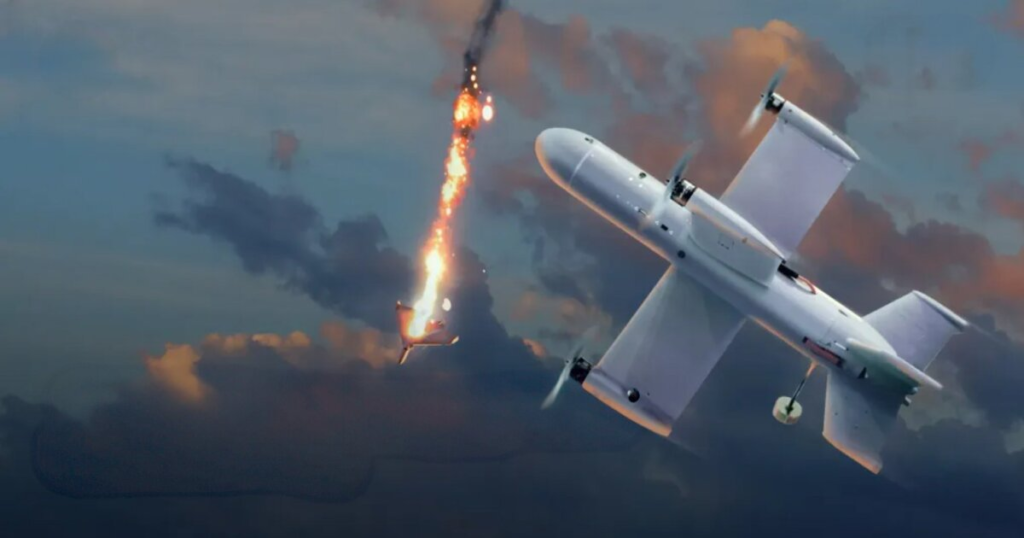
Ukraine’s rapid rise as an anti-drone powerhouse

In only four years after the Russian invasion, Ukraine went from being a country knocked back on its heels and scrambling for military aid to emerging as a leading provider of battlefield-tested counter-drone expertise and exporter of anti-drone weapons systems. How did this happen? Let’s find out. In February 2022, it looked as if Ukraine would fall in short order as the Russian forces poured over the border. So bad did things seem in those early days that US aid to Kyiv consisted mainly of offers to evacuate President Zelensky before the capital fell. However, events took a very unexpected turn. Instead of being overrun, the Ukrainian forces regrouped, managed to form a defensive line, and even pushed back the Russians. And another unexpected thing happened. Instead of reaching some decisive crisis point, the conflict devolved into a deadlock – a war of attrition where neither side could achieve much more than small gains of territory in one place while suffering small losses of land in another. In other words, the biggest European war of the 21st century was looking a lot like the First World War of the 20th century. Instead of the fast maneuvering of forces combined with air superiority that is typical of modern combat, the two forces were well locked into what were essentially fixed frontiers and trenches with neither side gaining dominance in the skies. But the truly unexpected thing was what came next. Instead of simply being bogged down and hammering on each other’s positions, the reaction of both sides was to embrace military drones of various sizes to spy on or attack the enemy. This not only changed the nature of war in Ukraine, it also turned the conflict into a laboratory yielding results that the rest of the world is still trying to adapt to and learn from. And it isn’t just theoretical. It’s having real world repercussions in the Iran conflict and elsewhere. It’s also turned Ukraine into one of, if not the, leaders in the field of anti-drone countermeasures. As of 2025, the global anti-drone market is valued at approximately US$3.11 billion, with North America maintaining a dominant 45.2% revenue share. While Ukraine accounts for roughly 5% to 8% of global spending in this sector, these figures underrepresent its true impact; due to lower domestic production costs and a high reliance on decentralized, low-cost electronic warfare systems, Ukraine’s volume of successful interceptions and active deployments far exceeds what its revenue share suggests. Ukraine has become a major player in counter-drone technology, moving from a recipient of security assistance toward a provider of battlefield-tested counter-drone expertise and selected technologies, especially in the Middle East. However, wartime export controls still limit direct commercial exports. The Kyiv School of Economics (KSE) estimates Ukraine’s broader recovery and defense-sector development potential over the decade after hostilities cease at $690 billion. According to President Zelensky, Ukraine is providing hardware and over 200 specialists to Saudi Arabia, the United Arab Emirates (UAE), Qatar, Kuwait, and Jordan. Their main job is to fill in the gaps left by other advanced Western systems like Patriot that are too expensive to deal with massed drone attacks. Along with this, the Ukrainian teams advise local forces on radar positioning, signal intelligence (SIGINT), and the coordination of “Mobile Fire Groups” to intercept drones at a fraction of the cost of traditional missiles. In Europe, Ukraine is making direct hardware sales and helping to integrate Ukrainian combat logic into NATO systems. Customers include Lithuania, Poland, Germany, Britain, Italy, the Netherlands, Latvia, and Denmark. Other recipients or interested parties are Nigeria and Colombia. Even the Americans are using Ukraine’s Sky Map system at Prince Sultan Air Base in Saudi Arabia to protect US assets and in the training of American personnel. Part of this Middle East push has been sparked by the conflict in Iran, though Ukraine is trying to keep its involvement at a distance, given the alliance between Iran and Russia. “Ukraine has no plans to put boots on the ground in Iran,” President Zelensky said after an awards ceremony marking the Day of Ukrainian Volunteers. “The only Ukrainian personnel going there would be experts in anti-drone defense. These specialists can help our strategic partners defend their territory against Shahed drone attacks.” The goods and services provided by Ukraine make for quite a list and it would be longer if it weren’t for Ukraine’s wartime export controls. Over the past few years, they have made developments in a number of fields – especially in electronic warfare and interceptor systems, along with expertise in analyzing and countering drone threats. In electronic warfare and detection, Ukraine’s Proximus LLC builds the Bukovel-AD, which is a vehicle-mounted, multi-frequency jamming system designed for early drone detection and neutralization that can detect threats to a range of 43 miles (70 km) and can jam data links and GPS signals to 12 miles (20 km). There’s also the Piranha Tech SF-3 that’s an anti-drone gun for point defense against small drones on up to three simultaneous frequencies at a range of 1.8 miles (3 km). Perhaps the most ambitious in this class is the aforementioned Sky Map networked command and control system. This is an AI-integrated C2 platform that combines data from over 10,000 passive acoustic and RF sensors to track “low and slow” loitering munitions and is currently deployed in Saudi Arabia to protect Saudi and American forces. In terms of interceptors, Ukraine exports its Sting high-speed drone interceptor that’s designed to take out specialized quadcopters and fixed-wing drones. These can fly at up to 150 knots (174 mph, 280 km/h) at an altitude of 10,000 ft (3,000 m) and have a unit cost of only about $2,000 to $6,000. Meanwhile, there is also the Magura V7 interceptor variant that Ukraine has been exhibiting at export shows and the US is building under license. It is an autonomous boat that can launch aerial interceptors from rails or AI-guided turrets. According to its makers, it can carry out

Ukraine’s rapid rise as an anti-drone powerhouse Read More »

Heineken turns Keong Saik into a three-storey afterwork escape

Heineken is turning afterwork drinking into a full-blown experience with the launch of “First sip house”, a three-storey pop-up designed to get CBD workers to rethink the moment they clock out. The activation runs from 7 to 16 May 2026 at Keong Saik Road, positioning itself as an afterwork destination where the first sip sets the tone for the night. The concept follows a recent CBD stunt by Heineken where the brand brought the “first sip forward” through a surprise elevator activation targeting office workers. “First sip house” builds on that idea, stretching it into a physical space that encourages guests to prioritise their first beer over their final email. Entry is free for guests aged 18 and above, with the experience centred on Heineken’s pure malt, premium quality proposition. Visitors can move through curated food, drink and experiential zones designed to make afterwork feel more intentional, social and immersive. Don’t miss: Heineken unites football, F1 and music under new sponsorship platform At the core of the pop-up is the “First sip bar”, where award-winning mixologist June Baek and culinary creator Justin Hammond return with a new menu of four pairing experiences. The concept leans into intentional incompletion, with chefs stepping away mid-prep for their own afterwork drink, leaving guests to finish the dishes themselves. Pairings range from tuna tartare with pure malt crostini matched with a Heineken Original and Omija berry soju bomb, to a mushroom parfait with malt caramel paired with a grapefruit and ginger Heineken Silver spritz. Other highlights include malted peanut butter soba with a layered malt sour, as well as slow-cooked beef short rib tacos paired with a customisable michelada (Mexican cocktail). Beyond food and drink, the experience expands into interactive zones built around social play and participation. “Star tap” turns networking into a gamified activity where wristband taps unlock rewards and leaderboard rankings, while “Art jam” offers a free-form creative space for guests to build personalised graffiti-style pieces without rules or structure. The “Pourfection lounge” shifts focus to craft, where guests are guided through a five-step perfect pour led by draught masters. Participants also get early access to the StarMark glass, a precision-designed glass aimed at enhancing aroma, carbonation and flavour, with successful pourers taking one home while stocks last. The brand has also been experimenting with city-based experiential formats in other markets recently. In Seoul last year, Heineken rolled out “Rooftop revival“, a campaign that transformed unused urban rooftops into social hubs to address what it called the “proximity paradox” of city life, where people live close together but still feel disconnected. Created by LePub, the activation used satellite imagery to reveal rooftop event locations marked with Heineken’s red star, drawing more than 8,000 applicants. Experiences included a K-pop set by SEVENTEEN’s DINO, a design workshop with artist Cha Inchul, and an interactive tasting led by chef Cho SeoHyeoung. Each event centred on a red star Pyeong-sang, a modern take on a traditional Korean communal platform redesigned with built-in icebox storage and Bluetooth speakers. Related articles: Heineken opens self-service bars for late-night football fans   Heineken taps Joe Jonas to ditch social media and pour into real connections   Heineken creates immersive pop-up music series at unconventional venues source

Heineken turns Keong Saik into a three-storey afterwork escape Read More »

Audi's latest V16 supercar is a 1935 record-breaker

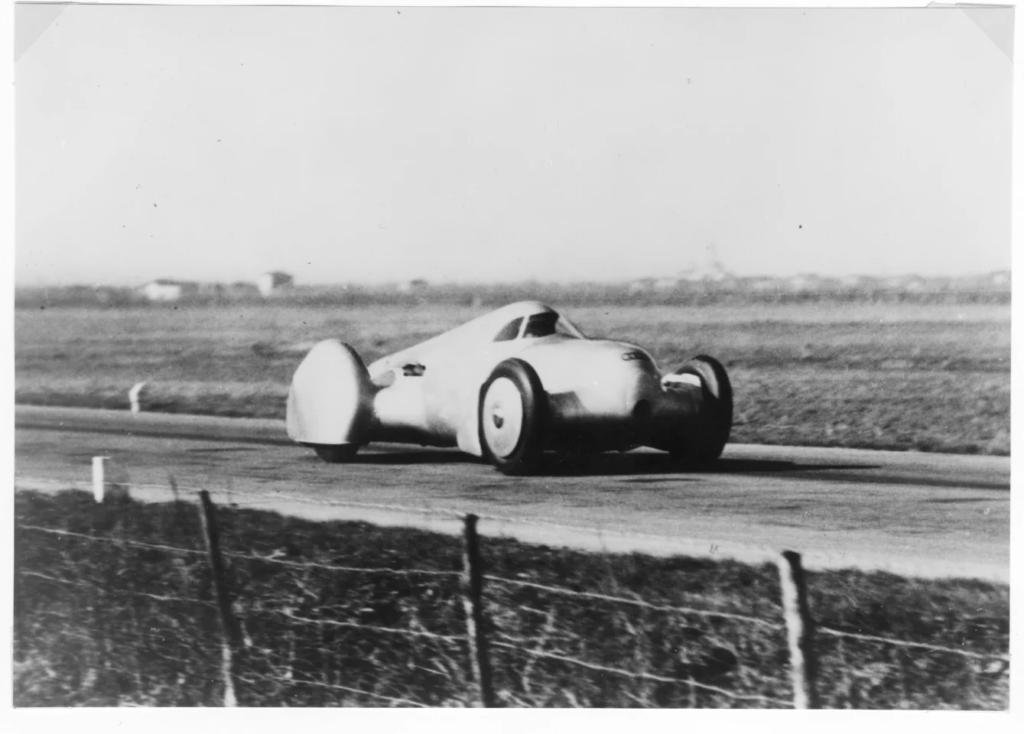
Audi has built a new V16-engined multi-million-dollar mid-engined supercar… but it looks like a version of the Batmobile made by an eccentric backwoods mechanic using a pile of old aircraft bits. Looks can be deceptive though and this one-off project by Audi is a celebration one of the most important cars in the brand’s back catalog. The Auto Union Lucca was, in its day, the fastest road-going car in the world. You are looking at a cool 203-mph (326.975-km/h) supercar that was built an amazing 90 years ago. The original 1935 car was blisteringly fast, even by today’s standards. It cracked 203 mph on an autostrada in ItalyAudi AG The original one-off road-speed record-breaker was lost in World War Two, so Audi has spent an undisclosed seven-figure fortune recreating it. After three years work by specialist historic restorers, the ‘new’ Lucca has just been unveiled – with the promise it will perform at the UK’s Goodwood Festival of Speed in July (9-12). That will be something worth seeing because this car is an extraordinary beast. The sound of its huge supercharged six-liter V16 will probably be heard across much of southern England. The Lucca has been re-created by Crosthwaite & Gardiner, a high-end specialist workshop in leafy Sussex, also in southern England. How high-end? Well among its claims to fame are holding the biggest stock of Bugatti parts in the world and normally manufacture brand new engines for historic race cars like Maseratis and Jaguars. Three years of careful construction by British restoration specialists Crosthwaite & GardinerAudi AG The Lucca must have been a daunting job, even for C&G. With the original car and most of the technical drawings and specs missing, it had to be entirely built from scratch, mainly from old photographs and a few old 1930s engineering drawings. Every panel and component had to be handmade. Crosthwaite & Gardiner report that fitting the streamlined bodywork, cockpit canopy and tail fin over the wooden frame was particularly labor-intensive. It looks like a version of the Batmobile made by an eccentric backwoods mechanic using a pile of old aircraft bitsAudi AG Like me you might wonder why it looks, well, sort of unfinished. It turns out that German racers of the era were stripped of paint down to bare metal to save weight (and were known as ‘Silver Arrows’). Even then the metal was sanded finely and in the Lucca’s case the radiator and spoked wheels were fitted with covers for improved aerodynamics. Fuel? That’s a handy vintage mix of 50% methanol, 40% premium unleaded and 10% toluene. Audi hasn’t said anything about the potential speed of the newly revived car yet. The supercharged V16 is rated at 513 hp and the car only weighs just over 2,000 lb (960 kg), around the same as a Mazda MX-5. Those involved may not want to push their expensive retro recreation to the limit but it is certainly got the potential to embarrass plenty of more modern machines. The Auto Union Lucca is a one-off recreation of a 1935 record breakerAudi AG It was named Lucca incidentally because Auto Union star driver Hans Stuck set its record-breaking speed on a stretch of straight autostrada near the Italian town in 1935. The car was nicknamed ‘Rennlimousine’ or ‘racing sedan’ at the time. It was the prize creation of Auto Union and its designer Ferdinand Porsche in a long-standing ding-dong battle to be faster than Mercedes. Auto Union went on to become Audi, of course, which is now part of the VW empire. Source: Audi source

Audi's latest V16 supercar is a 1935 record-breaker Read More »

Review: 2026 Lexus RX 450h+ is a true realtor’s car

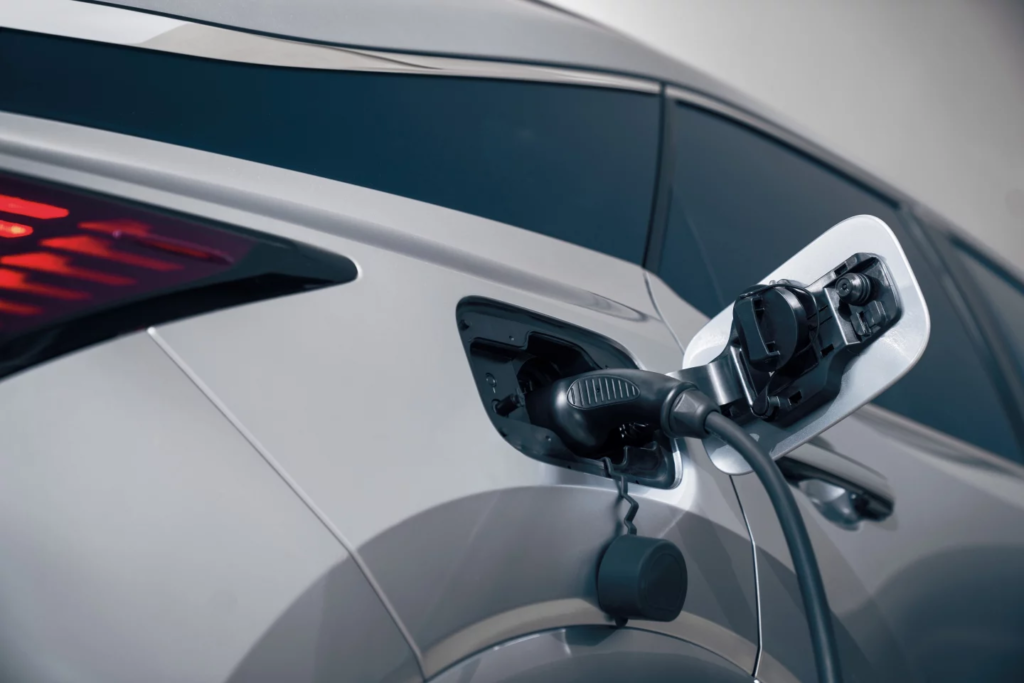
The RX 450h+ plug-in hybrid luxury SUV sits right at the intersection of pragmatism and indulgence, sipping electrons like a monk but wrapped in enough leather to make a cattle ranch nervous. At a glance Practical, dependable, and smart New lower-priced trim makes plug-in hybrid more accessible 38 miles of all-electric range and no range anxiety Premium Lexus interior experience Pricey compared to its standard hybrid model Lexus didn’t wake up one morning and decide to reinvent the RX. That would be unwise, given its steady sales and good fit in its market. Instead, the RX continues doing what it has always done: being the default answer to “I want something nice that won’t annoy me.” This Lexus is often referred to as a “realtor’s car.” That’s a category that those in the car business refer to when talking about practically-sized, semi-luxurious, but not over-indulgent or pricey vehicles. They are models which give the impression that those driving them are practical, smart with money, and dependable. The RX is the epitome of that “realtor’s car” ideal. Electron-based driving without the EV commitment is the biggest appeal plug-in hybrids offerLexus For 2026, the biggest tweak for the Lexus RX is accessibility. A new lower-priced Premium trim brings the plug-in hybrid RX 450h+ down a notch in price, widening its appeal. That’s important, because previously the 450h+ lived in a financial neighborhood that required either a generous bonus or a very understanding accountant. It was definitely not in “realtor’s car” territory. Stylistically, nothing about the RX screams for attention. It’s handsome in that Lexus way with sharp lines, a big grille, and lots of “I have opinions about interior stitching” energy. It won’t turn heads like one of its German rivals, but that’s intentional. The RX has always been about quiet confidence, not loud ambition. Under the hood, things get more interesting. The RX 450h+ pairs a 2.5-liter four-cylinder engine with electric motors for a combined output of about 304 horsepower (223.6 kW). That’s good for a fairly fast sprint, but it’s only slightly better than average for this segment overall (electrons or no). The real story is the battery. With roughly 38 miles (61 km) of all-electric range, the RX 450h+ can handle most daily commutes without burning a drop of fuel. That’s a magic number. It means grocery runs, school pickups, and your daily commute (existential dread not included) can all happen in near silence. And when the battery runs dry? It becomes a regular hybrid, returning around 35 mpg (6.7 l/100km) combined. No range anxiety. No charging panic. Just a seamless transition back to gasoline like nothing ever happened. It’s a happy middle ground between gasoline and batteries. A best of both worlds design. Electrification without commitment issues. Driving the RX 450h+ is like sitting in a well-appointed living room that happens to be moving at highway speed. In EV mode, it’s eerily quiet. Not “luxury quiet,” but “Did I accidentally turn the car off?” quiet. The transition between electric and gasoline power is smooth, almost invisible, which is exactly what Lexus buyers want. This isn’t a driver’s SUV, though. The ride quality is where this thing earns its luxury badge. It’s plush without being floaty, controlled without being harsh. It soaks up bumps like it’s contractually obligated to protect your coffee. The steering, however, is numb and the handling is competent but uninspiring. The overall experience prioritizes comfort over engagement. Most of the time, the powertrain is unobtrusive and behind the scenes as you drive. It’s efficient and smooth, but it can get a bit noisy when really pushed. That four-cylinder engine doesn’t have the charisma of the old V6, and under hard acceleration, it reminds you of that fact. The electric bits help keep the power curve somewhere in the vicinity of a well-tuned, natural six, but there’s only so much that can be done there. Lexus interiors are what set the brand’s vehicles apart from its German competitorsLexus Interiors are where Lexus sets itself apart. Take a seat inside, and the RX 450h+ reminds you why Lexus continues to dominate this segment. The materials are excellent. Soft-touch surfaces are everywhere. The seats are supportive, comfortable, and feel like they’ve been engineered by people who care deeply about your spine. Higher trims bring semi-aniline leather, ambient lighting, and a panoramic roof that makes the cabin feel airy and upscale. It’s less flashy than some competitors, but more cohesive. There’s a sense of calm here that other makes often miss in their rush to impress you with screens and LEDs. Speaking of screens, the infotainment system is, well, better. Not best, not revolutionary, but better. A lot better than it was just a couple of years ago. The available 14-inch touchscreen is large and functional, with wireless Apple CarPlay and Android Auto standard. Still, it’s not class-leading. Some rivals offer sharper interfaces and faster responses. Lexus has improved, but it’s still playing catch-up in the software game. There’s no natural voice prompts, for example, and sometimes graphics quality can feel a little dated. The RX 450h+ has adequate cargo space. Not exceptional, just good enough. The RX has never been the roomiest option in the segment, and that continues here. If you’re hauling a family, a dog, and a weekend’s worth of gear, you’ll start making choices. But most buyers in this segment aren’t doing those things. They’re thinking about it, but not actually doing it. They upsize if it’s their reality. Rear seat space, for example, is comfortable for most adults; but, again, not class-leading. This is a midsize SUV that leans slightly toward the “mid” side of that equation. On the plus side, Lexus loads the RX with safety tech. The standard Lexus Safety System+ 3.0 includes adaptive cruise control, lane-centering, automatic emergency braking, and more. It’s comprehensive, intuitive, and, unlike Lexus models of the past, fairly unobtrusive. Here’s the thing about plug-in hybrids: they’re only as good as your willingness to plug them in.

Review: 2026 Lexus RX 450h+ is a true realtor’s car Read More »

Adaptable carbon tripod is designed to hang out wherever needed

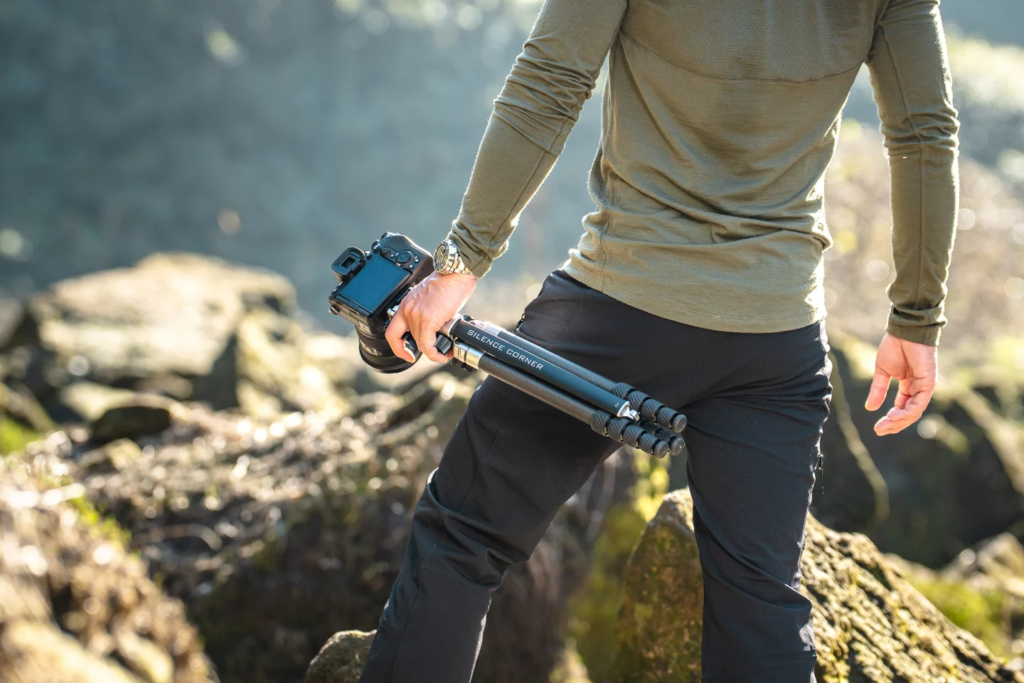
When the cityscape frustrates urban photographers with uneven terrain or limited spaces, photographic gear company Silence Corner strikes back with the Viperpod – a hybrid tripod designed to hang anywhere in seconds for unencumbered solo shooting. Currently the subject of a Kickstarter campaign, it’s named “Viperpod” because it looks like a viper focused onto its prey when its central axis is flipped over, and its three extendable carbon fiber/aluminum legs are extended into position. The device weighs 2.55 lb (1.16 kg) and is engineered with an external center column (unlike traditional tripods with a vertical center column) thus eliminating that extra step of pulling it out first and flipping it over for usage, saving time in setup. The Viperpod all folded downSilence Corner With the center column fitted outside, the folded diameter (17.7 in/45 cm) is reduced by 20%, making it lighter and more streamlined to carry in a backpack, pocket or in the included bag. Maximum extended height is 61.8 inches (157 cm), minimum 17.5 in (44.4 cm) and the tripod can support up to 17.6 lb (8 kg) of gear. Photographers can experiment with capturing shots lower, higher, or anywhere in between with the external flip-center column that converts the Viperpod into a pan and tilt handle for stable, smooth video shooting, though the designers note it’s not a fluid head system – for that, a separate fluid head is needed. The Viperpod’s external center column can be used as a pan/tilt handleSilence Corner For more creative composition options, the Viperpod is designed with an C-shaped inverted ball head with two panoramic modes, allowing the photographer “the most freedom in composition of any ball head on the market” to shoot at different angles. The enlarged locking knob feature makes it easier to wear gloves during long nighttime exposures. Located on the bottom of the center column is an extra-strength aluminum alloy hook to hang your backpack during windy weather, adding extra weight stability. With its legs spread wide, the Viperpod is able to get down very lowSilence Corner There is also a Viperpod Light model that weighs 2.1 lb (960 g) that is a bit shorter and lighter. It holds 13.2 lb (6 kg) of gear that is made of the same carbon fiber/aluminum material. Folded size is 15.4in (39.3 cm) with a maximum extension of 53 in (135 cm) and a minimum height of 15.5 in (39.5 cm). The Viperpod Light is available for a US$279 Kickstarter pledge (MRSP$369) with the standard Viperpod going for $309 (MSRP$409). If all goes accordingly with funding and production, it should ship in September. VIPERPOD | First full-size tripod doesn’t rely on the ground Source: Kickstarter Note: New Atlas may earn commission from purchases made via links. source

Adaptable carbon tripod is designed to hang out wherever needed Read More »

World's first vaccine for Lyme disease could be available in 2027

Based on the results of two completed Phase III trials, scientists are confident that we could see an effective vaccine against Lyme disease by next year. The final hurdle will be US Food and Drug Administration (FDA) approval, which the drug-makers will seek despite some study endpoints not being met. It remains to be seen whether this will be enough to derail the vaccine’s progress to market. Pfizer’s researchers have had their fair share of optimism and letdowns in their quest to develop the first-of-its-kind vaccine. Despite hopes in 2022 that the pharmaceutical company would be the first to deliver a Lyme disease vaccine within a few years, progress stalled during later stages of the high-stakes Vaccine Against Lyme for Outdoor Recreationists (VALOR) trial. This time the drug-maker is hoping regulatory bodies focus on the vaccine’s efficacy, which was found to be more than 70%. “Lyme disease can cause potentially serious consequences – where individuals and families face symptoms that can disrupt daily life, work, and long-term health – and there is currently no vaccine available,” says Annaliesa Anderson, Senior Vice President and Chief Vaccines Officer at Pfizer. “The efficacy shown in the VALOR study of more than 70% is highly encouraging and creates confidence in the vaccine’s potential to protect against this disease that can be debilitating.” According to the US Centers for Disease Control and Prevention (CDC), 89,000 cases of tick-borne Lyme disease were reported in the US in 2023. Accurate measures are uncertain due to factors, including the treatment of symptoms without a diagnosis. Researchers suggest figures could be closer to nearly 500,000 people being infected annually. Transmission also makes things more difficult. While it’s primarily contracted following a bite from a certain species of infected ticks (deer ticks, or Ixodes scapularis) that carry the bacteria Borrelia burgdorferi, people often don’t realize they’ve come in contact with the parasites until the appearance of symptoms, which includes fever, fatigue, joint pain and rashes, and, at the more serious end of the spectrum, chronic cardiovascular, and nervous-system conditions. And while the tick’s common name suggests deer are its only host, these efficient vectors live on many animals – rodents, birds, for example. While seasonal weather changes don’t impact Lyme disease prevalence, warming climates with increased humidity broaden the tick’s range. An effective vaccine for those at risk – hikers, campers, people who work or spend a lot of time where ticks are prevalent – could drastically reduce the health issues associated with the disease. The vaccine candidate, PF-07307405 (or LB6V), works by homing in on the protein A (OspA), which is found on the outer surface of the B. burgdorferi bacterium. This activates the production of bacteria-fighting antibodies in the human immune system. PF-07307405 was 73.2% effective 28 days after the fourth dose, compared with a placebo. While Pfizer and French pharmaceutical company Valneva announced that their Lyme disease vaccine is effective, they also failed to satisfy the Phase III primary endpoint based on statistical outcomes. They attributed this to a surprisingly low incidence of cases in the study, which featured more than 9,000 people aged five years and older from sites in “areas of high incidence of Lyme disease” across the US, Canada and Europe. However, the devil is in the detail. The data itself was clinically meaningful (side note: the entire research paper is yet to be released), which has Pfizer and Valneva eager to seek FDA approval. So what at first may seem like convincing spin to keep this drug development moving forward, it’s so far our greatest candidate in fighting Lyme disease. The final research paper, when released, should offer more clarity given that statistical analysis is not a foolproof method in scientific research. “These results bring us a step closer to our goal of delivering a much-needed vaccine to help protect against Lyme disease,” says Thomas Lingelbach, CEO and a board member of Valneva. “We are grateful to our partner Pfizer for their strong commitment which we both share in developing this vaccine as quickly as possible.” The candidate has of course passed its safety benchmarks in earlier trials, so even with a skeptical view of Pfizer’s statements on the Phase III results, PF-07307405 remains a strong possibility of becoming the first vaccine in the fight against Lyme disease. The results from this drug candidate’s Phase II trial has been published in the journal The Lancet. The results of the Phase III study are yet to be peer-reviewed and released in full. Source: Pfizer Fact-checked by Mike McRae. source

World's first vaccine for Lyme disease could be available in 2027 Read More »

Stock Market Today: Nasdaq, S&P 500 End At Record Highs As Techs Rise; Intel Shares Surge (Live Coverage)

The stock market closed at record highs Tuesday, as technology names flexed their muscles and oil prices slumped. Chipmaker Intel (INTC) hit its highest price ever on a report about a potential production deal with a Magnificent Seven company. Palantir Technologies (PLTR) shares, meanwhile, ended in the red on the stock market today. The Nasdaq composite and the S&P 500… Copyright ©2026 Investor’s Business Daily, LLC. All rights reserved. 87990cbe856818d5eddac44c7b1cdeb8 source

Stock Market Today: Nasdaq, S&P 500 End At Record Highs As Techs Rise; Intel Shares Surge (Live Coverage) Read More »

How adidas turned backyard football into World Cup mythology

Athletic apparel brand adidas is leaning into nostalgia, star power and street football mythology with its latest FIFA World Cup 2026 campaign, Backyard Legends, a five-minute film that reframes everyday play as the origin story of global legends. Built on its long-running “You got this” platform, the film pushes a simple idea, that greatness does not start under stadium lights, but in backyards, cages, parking lots and any patch of ground where the ball rolls. Fronted by Academy Award-nominated actor Timothée Chalamet, the film follows a fictional narrative where he assembles a team to challenge a feared local trio, Clive, Ruthie and Isaak, whose undefeated run has reportedly survived generations. Their legend is so entrenched it has already seen off imagined challengers including 90s football icons Zinedine Zidane, David Beckham and Alessandro Del Piero. Don’t miss: adidas Trefoil logo makes a World Cup comeback after 36 years The cast expands into a cross-cultural mix of sport and entertainment. Lionel Messi appears alongside Bad Bunny, with younger football stars Lamine Yamal, Jude Bellingham and Trinity Rodman adding generational contrast to the storytelling. Cameos from Ballon d’Or winner Ousmane Dembélé, Raphinha, Pedri, Florian Wirtz and Santiago Gimenez further build out the mythos of backyard football as a breeding ground for greatness. The film leans heavily into 90s-inspired football culture, blending street and terrace aesthetics with analogue tech, retro styling and era-specific haircuts. This is layered with modern CGI and visual effects to elevate everyday playground moments into something almost cinematic in scale. At its core, the campaign circles back to a familiar adidas message: pressure disappears when the game is played freely. Whether it is a cage pitch or the World Cup stage, the pitch is framed as equal ground for expression, creativity and chaos. “Everyone remembers that feeling: playing for the joy of it, no pressure, no expectations. With ‘Backyard Legends’, we celebrate that freedom. It’s a reminder that self-belief and playfulness are the real winning mindset,” said Florian Alt, VP global brand communications at adidas. According to Alt, the brand is cognizant of the pressures that the athletes and federations go through as part of the sport, as they take to the biggest sporting stage this summer. He added, “While we encourage competitiveness, our ambition is to inspire everyone, to disarm that pressure through playing free and believing, ‘You got this’. The game isn’t defined by the stage, the crowd, or the cameras. It’s defined by those who play free, where everyone can create a legend.” Chalamet reflects on growing up immersed in football culture, saying he used to idolise moments from players such as David Beckham, Alessandro Del Piero and Zinedine Zidane while playing at Pier 40 as a kid, recreating their moves in his own way. He describes football as a lifelong passion and calls the opportunity to work with adidas alongside some of the game’s most iconic names “unbelievable”, adding that the campaign brings together his love for the sport with its biggest legends. “Backyard legends” follows adidas’ broader World Cup storytelling push, where the brand had previously set the tone for its 2026 campaign direction last November with another cinematic release, “LA PREPARACIÓN AMERICANA” (“The American preparation”). The short film followed world football stars experimenting with unconventional training environments ahead of the FIFA World Cup 2026. According to the brand, it signalled adidas’ wider creative direction for the World Cup cycle, blending humour, surrealism and global football star power to reframe preparation as something unpredictable, cultural and increasingly entertainment-led. Related articles: Get paid to watch the World Cup? Yes, it’s a real job  LEGO builds its own World Cup lineup of football heavyweights     Coca-Cola pops the lid on fan emotions in high-drama World Cup film source

How adidas turned backyard football into World Cup mythology Read More »

Is AirAsia flying into hospitality next?

Capital A is exploring a significant expansion of the AirAsia brand beyond aviation, with the group confirming it is in discussions with a major hotel chain to extend AirAsia into the hospitality sector through a licensing agreement. The update was disclosed as part of the group’s first-quarter 2026 financial commentary, where AirAsia Next was positioned as a key driver of Capital A’s brand licensing, technology and ecosystem strategy. The unit currently manages the AirAsia, AirAsia MOVE and Santan brands, and is also in the process of finalising agreements to oversee two additional Capital A entity brands. The potential move into hotels signals a broader ambition to evolve AirAsia from an airline-led identity into a multi-category lifestyle ecosystem spanning travel, food, mobility and potentially accommodation. If finalised, the agreement would mark one of the most direct extensions of the AirAsia brand into a physical hospitality environment to date.Don’t miss: Did AirAsia just flip a flight fiasco into a brand win? Tune Hotels, the budget hotel chain owned by AirAsia’s founder Tony Fernandes and Kamarudin Meranun, operates independently under Tune Group. Beyond the hotel discussions, Capital A highlighted continued momentum across its wider ecosystem businesses. Capital A reported steady first-quarter FY2026 growth across its aviation-adjacent and digital ecosystem businesses following completion of its PN17 regularisation plan. Asia Digital Engineering (ADE) saw workshop orders rise 12 percent year-on-year to 7,331, supported by stronger third-party demand and an expanded airline client base. Teleport recorded strong logistics growth, with tonnage up 25 percent and parcels surging 122 percent, driven by eCommerce demand and its hybrid cargo network. MOVE Travel’s monthly active users increased 23 percent to 17.7 million, lifting AirAsia seat sales by 4 percent and ancillary sales by 15 percent. The wider ecosystem, including BigPay and Santan, also posted steady incremental growth. This also comes as AirAsia X took a formal step towards rebranding itself as AirAsia Group Berhad, in a move that would cement the airline’s role as the listed aviation arm of the wider AirAsia ecosystem. The move follows earlier signals from the group that AirAsia X would eventually house the consolidated airline business under a single AirAsia-branded listed vehicle, after confirming plans to acquire 100% equity interest in AirAsia Berhad and AirAsia Aviation Group from Capital A. Be part of #Content360 Malaysia, 13 May 2026, where creativity and community collide. Explore how AI-powered imagination, culturally resonant storytelling, and platform-savvy strategies are shaping the future of content. Gain practical insights, discover new tactics, and learn how the region’s top creators and brands are crafting campaigns that truly resonate.Related articles: AirAsia X moves to rename itself AirAsia Group as consolidation completes AirAsia responds to US-Iran ceasefire with peace campaign Can a Raya anthem sell flights? AirAsia taps Siti Nurhaliza for festive MV  source

Is AirAsia flying into hospitality next? Read More »

Google enters the screenless health tracker race with new Fitbit Air

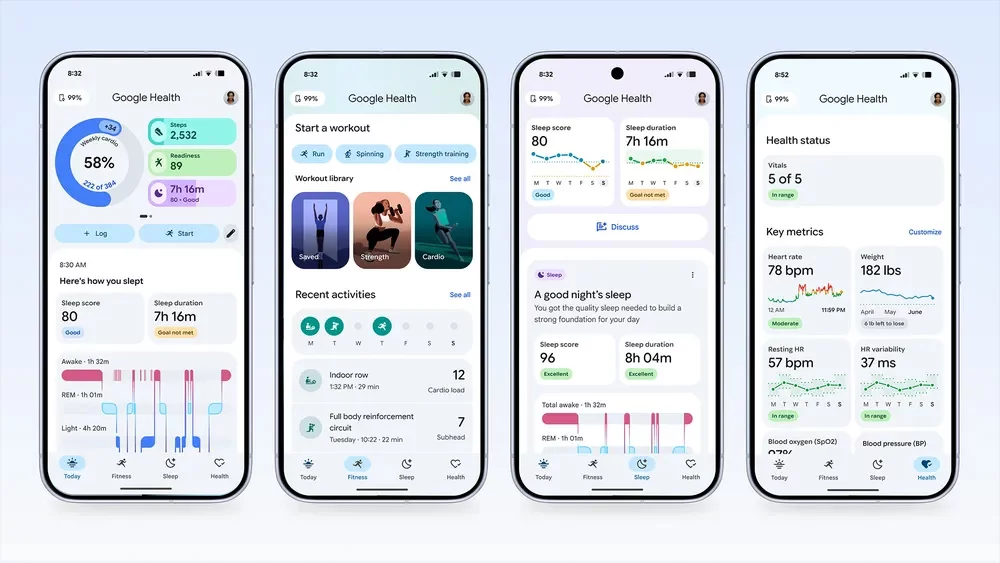
Google’s just launched the Fitbit Air, a screenless wearable that slips onto your wrist to track your fitness activities, sleep, and other health stats. It’s a lot like the Whoop Band and others you’ve seen on the market – and it comes in at a compelling price point without the need for a subscription to cover the basics. This practically weightless tracker (0.4 oz/11 g including a band) can be worn with three different styles of wrist wraps, and does all the tracking you’d expect – activities, steps, and sleep. It can also track your heart rate, blood oxygenation, skin temperature, cardio load, and heart rhythm with FDA-approved background AFib detection. Since it doesn’t have a screen, there’s no fiddling with controls or getting distracted by notifications, and you can look forward to a full week of battery life. Five minutes of charging will top it off for a day’s worth of tracking. Meet Google Fitbit Air | Lighter, Gets Mightier The Air will automatically detect biking, running, walking, elliptical, and rowing. It’ll track other stuff that gets your heart rate up too – but it just may not accurately label what activity that is. It will also learn exactly what activities you’re getting into over time, based on your inputs in the app. Speaking of the app, the Fitbit app is being rebranded to Google Health, along with a major revamp of the interface to make it more intuitive and customizable on both iOS and Android. All your stats will appear in there, and they can sync with other fitness services like Strava. Basic logging is included at no charge, while a subscription unlocks a raft of premium features. The Fitbit app’s got a major glow-up and is now called Google HealthGoogle That includes coaching to meet your fitness goals, proactive workout suggestions, AI-powered insights from your activity stats, medical record summaries, a workout library developed by expert trainers, and access to an AI assistant that can answer your health questions with evidence-backed responses. You don’t have to infer what your stats and trends mean all on your own, because it’s all presented as wordy content. You’ll also find mindfulness sessions covering meditation, guided breathing, and more. Plus, you can adjust your workout schedule as needed (to accommodate days on vacation, for example) and get tips on the best way to do that by chatting with the AI coach. That’ll cost you US$9.99 a month or $79 a year. Beyond the usual fitness tracking capabilities, the Air can also track heart rhythm in the background and deliver afib alertsGoogle The tracker supports connected GPS when it’s paired to your phone, so it can chart the routes you take on a map and combine that with your fitness stats, for logging on Strava and the like. It’s rated for 164-ft (50-m) water resistance, so you should be fine swimming in a pool with it. Lastly, it can vibrate to wake you up in the morning, and alert you when its battery is low. The Air is priced at $99.99, which is about the same as the Amazfit Helio Strap, and half what you’d pay for a Polar Loop – both of which are subscription-free. That’s great for tracking the essentials. If you want more insights from Google Health, it’s cheaper with the annual subscription than the basic Whoop package (which starts at $199, goes up to $359 depending on the features you want). You can get a range of bands in three different styles for the Air (top), and there’s even a Steph Curry special edition (bottom) for $30 moreGoogle On the face of it, the Air’s price and updated app make a strong case for it against its rivals. The inclusion of mindfulness features and content could effectively negate the need for additional dedicated services like Calm or Headspace, which each cost $70-$80 a year. For hardcore athletes, the proof is in the insights and post-workout analysis, and those folks might want to wait for detailed reviews and head-to-head comparisons with Whoop’s offering to see how they stack up. But any way you slice it, the Air looks like a well priced deal if you’re happy to hop on the screenless wearable train. Find the Fitbit Air in the Google Store where you can pre-order it now, and snag a three-month free trial of Google Health Premium. Deliveries begin around May 26 in the US. Source: Google source

Google enters the screenless health tracker race with new Fitbit Air Read More »