Software Sourcing in the Age of AI

If software sourcing is a major headache for your organization, you’re not alone. 70% of North American IT executives consider software sourcing and vendor selection a major source of frustration. And, it’s no wonder.  The average software sourcing process involves 28 stakeholders and takes six months. That’s six months of manual research, vendor meetings, demos, internal debates, and ultimately, a decision that still may not be fully informed.   It’s time to embrace a faster, smarter way forward.  Introducing IDC TechMatch, the first AI-driven software sourcing platform that empowers you to make confident software investment decisions faster using the industry’s leading technology market research and data.  IDC TechMatch: Software Sourcing Designed for Tomorrow’s Tech Leaders   Today’s CIOs are taking on more responsibility to shape the future of their organizations. They are expected to make strategic decisions that drive innovation and business growth with limited time and resources. With the pressure to deliver results quickly and efficiently, having the right tools at hand is critical.   With its AI-enhanced capabilities, IDC TechMatch offers a revolutionary approach that dramatically reduces the time, effort, and complexity traditionally involved in the process. IDC TechMatch uses AI to streamline your software sourcing process, simplify collaboration, and give you the research-backed information you need to make confident investments faster.  The Impact: What Industry Leaders Are Saying IDC TechMatch transforms software sourcing effectively and efficiently. But don’t  take our word for it. Here’s what we’ve heard from your peers: “40% of our lifecycle is spent on research. A tool like this would save us significant time and ensure we find the right fit the first time.” – Healthcare CIO  “Having a shortlist generated instantly would have saved us from contacting 15 vendors, sitting through demos, and manually narrowing down options.” – Business Services CIO  “I see this tool as a way to bring structure and transparency to software decisions, improving communication with senior leadership.” – Manufacturing CIO  Personalized, Data-Driven Recommendations IDC TechMatch analyzes your selected business requirements and delivers vendor recommendations that are based on IDC’s trusted and objective research. This eliminates guesswork and bias, ensuring that the vendors you spend time with are the best fit. Tailored Shortlist That Updates in Real-Time Traditional procurement can be a maze of lengthy vendor pitches, spreadsheets, and expensive consultants. IDC TechMatch generates a tailored vendor shortlist in real-time as you add and prioritize requirements, allowing you to focus on the best-fit solutions without manually sifting through endless options.  AI-Guided Vendor Evaluation IDC TechMatch goes beyond simple recommendations by providing AI-guided insights throughout the vendor evaluation process. IDC’s controlled AI environment protects your interactions, as opposed to risky web tools that may expose sensitive information or use incorrect data. This approach ensures you receive tailored vendor suggestions that align precisely with your requirements. The platform also incorporates G2 ratings and review data to provide users with peer-generated feedback.   Collaborative Decision-Making and Governance  With your teammates actively working their own tasks, bringing them together at multiple stages in the sourcing process can be daunting. IDC TechMatch allows you to add or remove colleagues, to collaborate on evaluations, all within a single platform. You can add comments, tag collaborators, and prioritize requirements to ensure that every aspect of the evaluation process is well-documented and aligned with your organizational goals.  Instantly generate an AI-powered vendor shortlist summary in an editable PowerPoint presentation to drive C-Suite alignment.  Trusted Market Research at Your Fingertips IDC TechMatch offers easy access to IDC industry-specific market data, including IDC’s unbiased MarketScape and ProductScape research. You’ll have a comprehensive view of the software market, so you can make well-informed decisions based on the latest insights. Whether you’re leading digital transformation initiatives or need tools to drive efficiency and productivity, IDC TechMatch makes it easy to navigate and find the information you need, all within a single interface. Streamline RFP Development with AI Assistance When you are ready to engage with your short-list of software vendors, an AI Sourcing Assistant provides you with an RFP template that includes a library of category-specific requirements from IDC’s research knowledge base and IT best practices to guide you through the vendor evaluation process.  Prepare for Negotiations with Confidence AI-driven insights and vendor-specific Commercial Guides enable you to negotiate contracts with a higher level of market insight to secure the best terms and reduce costs. And, for added context, simply open the AI Chat and ask questions about the vendors and get answers in real-time It’s Time to Transform Software Sourcing with IDC TechMatch Visionary leadership also requires practical solutions — tools that simplify complex processes and ensure their decisions align with long-term business goals.   By combining IDC’s trusted research with AI-powered automation, IDC TechMatch enables technology leaders to make informed software sourcing decisions faster and navigate the future with trust and confidence.  Explore IDC TechMatch and unlock the future of software sourcing, today. source

Software Sourcing in the Age of AI Read More »

Venus Williams backs French startup that rewards you for walking

Venus Williams is most famous for being one of the best tennis players of all time, but she’s also a prolific angel investor. In her latest business move, Williams has backed French startup WeWard. WeWard is a free app that offers real-world rewards for walking. It tracks your steps and lets you earn points (called “Wards”), which can be exchanged for gift cards, donations, or discounts. The goal is to encourage people to be more active while benefiting from their daily movement. Williams has invested an undisclosed sum in the company and will also act as an ambassador. WeWard, meanwhile, has committed to donating $25,000 to her charity, CARE, and will host a month-long “Venus Williams Championship” where users can unlock up to $40,000 in donations by reaching step milestones.  “A large part of staying well and active is simply by moving your body whichever way you can, and with WeWard, walking becomes a fun and rewarding experience,” said Williams, whose portfolio also includes French social investing app Shares and Pelago, a British startup tackling substance abuse via “virtual clinics.” The 💜 of EU tech The latest rumblings from the EU tech scene, a story from our wise ol’ founder Boris, and some questionable AI art. It’s free, every week, in your inbox. Sign up now! Beyond physical rewards, users can collect virtual trading cards — dubbed WeCards — placed at specific locations on the map, a bit like Pokémon Go. Users can compete with friends or join virtual leagues, tracking their progress on leaderboards and earning gold, silver, or bronze medals based on activity levels.  The idea is to incentivise people to walk further and more often — and it seems to be working. Approximately 6.5 million WeCards are collected daily by the roughly 20 million people who use the app, the company said. Walking plans WeWard’s CEO, Yves Benchimol, founded the startup in 2019 alongside Nicolas Hardy and Tanguy de la Villegeorges. The company is almost completely bootstrapped, save for a few hundred thousand euros in seed funding raised in 2020.  While WeWard has not raised much capital itself, it has handed plenty of money out. To date, the company has given $20mn in cash back to users and $1mn to charity partners, it claims. WeWard generates revenue through retail partnerships, advertising, and features like “Playtime,” where users can earn additional rewards by engaging with third-party mobile games directly through the app.  WeWard is just one of a cohort of pro-walking fitness startups. Rivals include Walk15, a Lithuanian company that’s trialled its tech with public healthcare services. Walk15’s co-founder and CEO, Vlada Musvydaitė-Vilciauske, told TNW last year that she wants to create “a pharmacy for walking.” source

Venus Williams backs French startup that rewards you for walking Read More »

Is your business data forward enough to capitalize on what’s coming?

One challenge we’ve faced on this journey is language consistency. It might sound simple, but when different teams use different terms for the same capability or process, it creates confusion and slows us down. A few years ago, we created a working group to tackle this issue head-on. We brought together representatives from across the organization to agree on a common taxonomy for our data and capabilities.  It wasn’t easy. People asked, “Do we need to go back and update all our systems to reflect this new language?” The answer was no, but we did have to be consistent going forward. Now, when we talk about our products and services internally and externally, we’re speaking the same language. That consistency has made it easier to collaborate, market our offerings, and differentiate ourselves from competitors.  Being data-forward isn’t just about technology. It’s about aligning people, processes and purpose to drive meaningful outcomes. It’s about being willing to test hypotheses, learn from the results and continuously improve.  source

Is your business data forward enough to capitalize on what’s coming? Read More »

What Travis Hill's Vision For FDIC Could Portend For Banks

By Chris Napier and Andrea Mitchell ( February 21, 2025, 5:08 PM EST) — On the heels of his appointment as acting chairman of the Federal Deposit Insurance Corp., Travis Hill, formerly vice chairman, issued a statement on Jan. 21 outlining his priorities for the FDIC in the coming months should he be selected to lead the agency.[1]… Law360 is on it, so you are, too. A Law360 subscription puts you at the center of fast-moving legal issues, trends and developments so you can act with speed and confidence. Over 200 articles are published daily across more than 60 topics, industries, practice areas and jurisdictions. A Law360 subscription includes features such as Daily newsletters Expert analysis Mobile app Advanced search Judge information Real-time alerts 450K+ searchable archived articles And more! Experience Law360 today with a free 7-day trial. source

What Travis Hill's Vision For FDIC Could Portend For Banks Read More »

OpenAI’s ChatGPT explodes to 400M weekly users, with GPT-5 on the way

Join our daily and weekly newsletters for the latest updates and exclusive content on industry-leading AI coverage. Learn More OpenAI’s ChatGPT has surpassed 400 million weekly active users, a milestone that underscores the company’s growing reach across both consumer and enterprise markets, according to an X post from chief operating officer Brad Lightcap on Thursday. The rapid expansion comes as OpenAI faces intensifying competition from rivals such as Elon Musk’s xAI and China’s DeepSeek, both of which have recently launched high-performing models aimed at disrupting OpenAI’s dominance. Despite this, OpenAI has seen significant traction in the business sector, with more than two million enterprise users now using ChatGPT at work — doubling from September 2024. “ChatGPT recently crossed 400M WAU, we feel very fortunate to serve 5% of the world every week,” Lightcap wrote. He also noted that usage of OpenAI’s reasoning model API has surged fivefold since the launch of its o3 Mini model, which is designed to enhance logical inference and structured problem-solving capabilities. chatgpt recently crossed 400M WAU, we feel very fortunate to serve 5% of the world every week 2M+ business users now use chatgpt at work, and reasoning model API use is up 5x since o3 mini launch we’ll bring GPT-4.5 and GPT-5 to chat and the API soon, with unlimited GPT-5 for… https://t.co/7hfyUcIyBW — Brad Lightcap (@bradlightcap) February 20, 2025 AI is reshaping the workplace: 2 million businesses now rely on ChatGPT The surge in enterprise adoption represents a crucial validation of OpenAI’s strategy to position ChatGPT as not just a chatbot for casual queries, but as a serious productivity tool for businesses. Companies such as Morgan Stanley, Uber and T-Mobile have integrated OpenAI’s models into their workflows, using AI to generate reports, automate customer service and streamline decision-making. Notably, OpenAI’s progress comes amid heightened scrutiny over the role of generative AI in business-critical applications. The company recently secured its first federal agency customer, USAID, which is deploying ChatGPT Enterprise to reduce administrative burdens and streamline partnerships, according to FedScoop. The expansion into government contracts suggests OpenAI is succeeding in navigating the regulatory hurdles that have slowed adoption of AI in public-sector institutions. At the same time, OpenAI is deepening its presence in Japan through a joint venture with SoftBank, dubbed SB OpenAI Japan. The partnership, which involves a $3 billion annual investment from SoftBank, aims to integrate OpenAI’s technology into major Japanese enterprises, with initial deployments inside SoftBank’s own ecosystem, including its semiconductor subsidiary Arm and digital payments platform PayPay. GPT-5 is coming: OpenAI’s next leap in artificial intelligence Lightcap also revealed that OpenAI is preparing to launch GPT-4.5 and GPT-5, with the latter set to merge the company’s GPT and o-series models into a single, more powerful system. “We’ll bring GPT-4.5 and GPT-5 to chat and the API soon, with unlimited GPT-5 for free users (plus users can run at even higher intelligence),” he wrote. This move signals OpenAI’s ambition to consolidate its AI offerings into a unified model that can handle both general conversational AI tasks and more specialized reasoning-based applications. By integrating the capabilities of its flagship GPT models with the structured problem-solving of the o-series, OpenAI is betting that a one-model-to-rule-them-all approach will give it a competitive edge over rivals that are still segmenting their AI offerings. OPENAI ROADMAP UPDATE FOR GPT-4.5 and GPT-5: We want to do a better job of sharing our intended roadmap, and a much better job simplifying our product offerings. We want AI to “just work” for you; we realize how complicated our model and product offerings have gotten. We hate… — Sam Altman (@sama) February 12, 2025 The timing of the GPT-5 release is particularly critical. Musk’s xAI recently introduced Grok 3, a model that the company claims outperforms OpenAI’s GPT-4o in certain benchmarks, including math, science and coding. Meanwhile, DeepSeek’s rapid rise in China has added to the pressure on OpenAI to maintain its lead in AI sophistication and accessibility. The AI wars: OpenAI, xAI and DeepSeek battle for global dominance OpenAI’s expansion comes at a moment of fierce competition in the AI sector, with rival companies racing to secure market share in both consumer and enterprise applications. Musk, who co-founded OpenAI before departing in 2018, has been vocal about his concerns regarding the company’s shift toward a for-profit model. The billionaire recently launched an unsolicited $97 billion bid to take control of OpenAI, a move that was swiftly rejected by the company’s board. OpenAI has since positioned itself as the leader in enterprise AI deployments, with Microsoft’s backing providing both financial stability and cloud infrastructure. Meanwhile, DeepSeek has disrupted the market with low-cost, open-source AI models that have gained traction, particularly among developers wary of OpenAI’s pricing model. The Chinese firm has claimed that it trained its latest model for under $6 million — an order of magnitude lower than what OpenAI and xAI are spending on comparable systems. What’s next for OpenAI? The future of AI in business and beyond OpenAI’s latest user metrics suggest that the company is still expanding at a rapid clip despite the mounting competition. The leap from 300 million to 400 million weekly active users in just three months indicates that demand for AI-powered tools continues to grow, with businesses increasingly integrating them into their everyday operations. The launch of GPT-5 will be a crucial test of OpenAI’s ability to maintain its leadership in AI. If the model delivers on promises of higher reasoning capability, better personalization and improved efficiency, it could cement OpenAI’s position as the go-to provider for both consumer and enterprise AI applications. However, with Musk’s xAI, DeepSeek and Google’s Gemini models all vying for dominance, OpenAI cannot afford to slow down. The next 12 months will likely determine whether it remains the uncontested leader in generative AI, or whether a new player will disrupt the balance of power in artificial intelligence. source

OpenAI’s ChatGPT explodes to 400M weekly users, with GPT-5 on the way Read More »

全港商會第四屆就職 李立航任總會長 新設委員會對接大灣區與東盟

全港商會日前(22日 )舉辦七周年誌慶暨蛇年春節聯歡暨第四屆就職典禮。李立航榮膺第四屆總會長。當日中聯辦經貿部處長劉斌、新界工作部副處長陳煜、九龍工作部副處長簡德金、香港工作部科長黃正元,立法會議員林筱魯、梁子穎,中國亞洲經濟執行會會長劉紅路等擔任主禮嘉賓,場面熱鬧。 李立航致詞時表示,商會自2018年成立以來,一直秉持「凝聚商企力、維護『一國兩制』、守護香港繁榮」的使命。他指出,穩定的法治環境是香港繁榮的基石。他宣布商會將以「背靠祖國,社區深耕」為年度主題,推動三大重點工作:將加強國安法與基本法的教育,協助企業理解法律精神,並融入企業文化;商會將深化大灣區的區域協作,商會今年新設「家族辦公室委員會」及「中國及東盟事務委員會」,目標是強化大灣區城市間的資源對接,協助企業拓展東盟市場,並促進跨境金融、科技與專業服務合作;另一方面,  商會將擴大與內地二三線城市的教育合作,設立專項獎助學金,並推動校企實習計劃,為青年搭建跨境發展平台,計劃推動校企合作以及創業孵化基地,助力青年在國家發展中找到定位。 第三屆總會長及永遠榮譽會長劉麗斯回顧了過去兩年工作,強調團隊合作的重要性。劉提到,期間成功召開了76場活動,促進了商會的發展。 她指出,商會積極參與各類國慶和地區活動,接待了多個省市的訪問團,並安排了多個地區考察,涵蓋澳門、中山、廣州等地,幫助會員企業了解營商環境,拓展業務。劉麗斯特別提到與湖南省婁底市等地的工商團體簽署戰略合作協議,促進兩地的經濟交流。此外,她提及增設境外聯絡站的計劃,包括澳門和青島,這些計劃將有助於商會成員擴展業務。 LinkedIn Email Facebook Twitter WhatsApp The post 全港商會第四屆就職 李立航任總會長 新設委員會對接大灣區與東盟 appeared first on VeriMedia. source

全港商會第四屆就職 李立航任總會長 新設委員會對接大灣區與東盟 Read More »

OpenAI drops Deep Research access to Plus users, heating up AI agent wars with DeepSeek and Claude

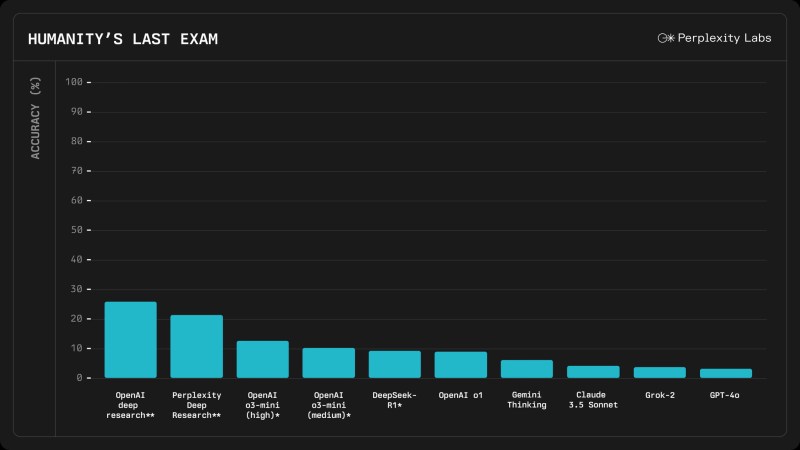
Join our daily and weekly newsletters for the latest updates and exclusive content on industry-leading AI coverage. Learn More OpenAI announced today that it is rolling out its powerful Deep Research capability to all ChatGPT Plus, Team, Education and Enterprise users, significantly expanding access to what many experts consider the company’s most transformative AI agent since the original ChatGPT. According to an announcement on OpenAI’s official X account, Plus, Team, Education and Enterprise users will initially receive 10 deep research queries per month, while Pro tier subscribers will have access to 120 queries monthly. Deep Research, which is powered by a specialized version of OpenAI’s upcoming o3 model, represents a significant shift in how AI can assist with complex research tasks. Unlike traditional chatbots that provide immediate responses, Deep Research independently scours hundreds of online sources, analyzes text, images and PDFs and synthesizes comprehensive reports comparable to those produced by professional analysts. Deep research is now rolling out to all ChatGPT Plus, Team, Edu, and Enterprise users ? — OpenAI (@OpenAI) February 25, 2025 The AI research arms race: DeepSeek’s open challenge meets OpenAI’s premium play The timing of OpenAI’s expanded rollout is hardly coincidental. The generative AI landscape has transformed dramatically in recent weeks, with China’s DeepSeek emerging as an unexpected disruptor. By open-sourcing their DeepSeek-R1 model under an MIT license, the company has fundamentally challenged the closed, subscription-based business model that has defined Western AI development. What makes this competition particularly interesting is the divergent philosophies at play. While OpenAI continues to gate its most powerful capabilities behind increasingly complex subscription tiers, DeepSeek has opted for a radically different approach: Give away the technology and let a thousand applications bloom. Chinese AI company Deepseek recently made waves when it announced R1, an open-source reasoning model that it claimed achieved comparable performance to OpenAI’s o1, at a fraction of the cost. But for those following AI developments closely, Deepseek and R1 didn’t come out of… pic.twitter.com/FUahYP0HHz — Y Combinator (@ycombinator) February 5, 2025 This strategy echoes earlier eras of technology adoption, where open platforms ultimately created more value than closed systems. Linux’s dominance in server infrastructure offers a compelling historical parallel. For enterprise decision-makers, the question becomes whether to invest in proprietary solutions that may offer immediate competitive advantages or embrace open alternatives that could foster broader innovation across their organization. Perplexity’s recent integration of DeepSeek-R1 into its own research tool — at a fraction of OpenAI’s price point — demonstrates how quickly this open approach can yield competing products. Meanwhile, Anthropic’s Claude 3.7 Sonnet has taken yet another path, focusing on transparency in its reasoning process with “visible extended thinking.” deepseek’s r1 is an impressive model, particularly around what they’re able to deliver for the price. we will obviously deliver much better models and also it’s legit invigorating to have a new competitor! we will pull up some releases. — Sam Altman (@sama) January 28, 2025 The result is a fragmented market where each major player now offers a distinctive approach to AI-powered research. For enterprises, this means greater choice, but also increased complexity in determining which platform best aligns with their specific needs and values. From walled garden to public square: OpenAI’s calculated democratic pivot When Sam Altman writes that Deep Research “probably is worth $1,000 a month to some users,” he’s revealing more than just price elasticity — he’s acknowledging the extraordinary value disparity that exists among potential users. This admission cuts to the heart of OpenAI’s ongoing strategic balancing act. The company faces a fundamental tension: Maintaining the premium exclusivity that funds its development while simultaneously fulfilling its mission of ensuring that “artificial general intelligence benefits all of humanity.” Today’s announcement represents a careful step toward greater accessibility without undermining its revenue model. i think we are going to initially offer 10 uses per month for chatgpt plus and 2 per month in the free tier, with the intent to scale these up over time. it probably is worth $1000 a month to some users but i’m excited to see what everyone does with it! https://t.co/YBICvzodPF — Sam Altman (@sama) February 12, 2025 By limiting free tier users to just two queries monthly, OpenAI is essentially offering a teaser — enough to demonstrate the technology’s capabilities without cannibalizing its premium offerings. This approach follows the classic “freemium” playbook that has defined much of the digital economy, but with unusually tight constraints that reflect the substantial computing resources required for each Deep Research query. The allocation of 10 monthly queries for Plus users ($20/month) compared to 120 for Pro users ($200/month) creates a clear delineation that preserves the premium value proposition. This tiered rollout strategy suggests OpenAI recognizes that democratizing access to advanced AI capabilities requires more than just lowering price barriers — it necessitates a fundamental rethinking of how these capabilities are packaged and delivered. Beyond the surface: Deep Research’s hidden strengths and surprising vulnerabilities The headline figure — 26.6% accuracy on “Humanity’s Last Exam” — tells only part of the story. This benchmark, designed to be extraordinarily challenging even for human experts, represents a quantum leap beyond previous AI capabilities. For context, achieving even 10% on this test would have been considered remarkable just a year ago. What’s most significant isn’t just the raw performance, but the nature of the test itself, which requires synthesizing information across disparate domains and applying nuanced reasoning that goes far beyond pattern matching. Deep Research’s approach combines several technological breakthroughs: multi-stage planning, adaptive information retrieval and, perhaps most crucially, a form of computational self-correction that allows it to recognize and remedy its own limitations during the research process. Yet, these capabilities come with notable blind spots. The system remains vulnerable to what might be called “consensus bias” — a tendency to privilege widely accepted viewpoints while potentially overlooking contrarian perspectives that challenge established thinking. This bias could be particularly problematic in domains where innovation often emerges from challenging conventional wisdom. Moreover, the system’s reliance on existing web

OpenAI drops Deep Research access to Plus users, heating up AI agent wars with DeepSeek and Claude Read More »

Sellful: Automate and Grow Your Business With a Strong Brand Identity

TL;DR: With Sellful, you can create a white-label website, automate communication and outreach, and so much more — all with help from AI for $399 for life (regular price is $23,940.00). Every small business owner or entrepreneur knows that you’re not just trying to grow your business by building awareness  — you have to juggle marketing, invoicing, sales, customer outreach, and more. Instead of relying on a third party to help (which can cost a fortune), let Sellful assist. Sellful is an AI-powered platform designed to help small businesses and agencies streamline their operations, providing a neat space for you to manage daily growth tasks, automate outreach, and even create a website. Grab lifetime access while it’s discounted to only $399. What you might appreciate most about Sellful is its white-label website builder, which makes it easy for you to create a website for your own brand or for a client. You won’t just be able to create a website, however — this tool lets you develop sales funnels, landing pages, and more in seconds with the help of AI. You might just save thousands on hiring a full development team, and put those savings toward additional marketing of your business. Aside from its white-label website builder, you can use this platform to handle customer relationships and even automate several customer-facing tasks. You could have Sellful’s AI automate customer communication and outreach while tracking your customers with native CRM. Check out what else the platform offers for streamlined operations: Receive payments quickly and securely through payment gateways like PayPal, Stripe, and Square. Have the AI assistant and chatbot handle customer inquiries efficiently. Manage internal processes like employee recruitment, payroll, and more. Grow and organize your business with help from this Sellful lifetime subscription, now $399 while supplies last. StackSocial prices are subject to change. source

Sellful: Automate and Grow Your Business With a Strong Brand Identity Read More »

Just Eat bought for €4.1B in one of Dutch tech’s biggest-ever deals

Europe’s biggest food delivery firm Just Eat Takeaway.com is set to be acquired by tech investor Prosus for €4.1bn, in one of the biggest acquisitions in the history of Dutch tech.  Prosus — the investment arm of South African tech firm Naspers — has agreed to buy Just Eat Takeaway’s shares at €20.30 each in an all-cash offer. That’s a 22% premium over the delivery app’s recent three-month high but only a fifth of its pandemic-era peak of above €100 per share. Following the announcement, Just Eat Takeaway’s shares climbed 53% on the Amsterdam Stock Exchange this morning. Just Eat Takeaway was formed in 2020 through the merger of UK-based Just Eat and Dutch company Takeaway.com. The €7.4bn deal made the Amsterdam-based company — which has been both a speaker and partner at TNW Conference — one of the world’s largest food delivery platforms. However, it’s been a turbulent few years for Just Eat Takeaway since then, amid cooling demand and tough competition from rivals. The company also had a few missteps, most notably its botched takeover of US delivery app Grubhub. Just Eat Takeaway acquired Grubhub for $7.3bn in 2021 only to sell it off for $650mn just three years later.  TNW Conference FLASH SALE is LIVE Meet investors from Sequoia, Walden Catalyst Ventures, and more. Take advantage of our 50% our Startup, Scaleup and Investor Programs. Ends 21 February. For Prosus, the deal is an opportunity to turn Just Eat Takeaway into a “European tech champion,” said its CEO, Fabricio Bloisi. The Prosus plan for Just Eat Takeaway Prosus already owns iFood, Latin America’s largest food delivery platform. The firm also has stakes in Germany’s Delivery Hero, Chinese shopping platform Meituan, and Swiggy, a grocery delivery app in India. Prosus has wanted to add Just Eat Takeaway to its delivery empire for years. The South African-owned firm tried to hijack the merger of Just Eat and Takeaway.com in 2019 with a £5.1bn (€6.1bn) bid.    Just Eat Takeaway announced the deal today alongside its annual results, reporting a 35% jump in pre-tax profits for 2024, reaching €460mn. Jitse Groen, the company’s CEO, said it was “now a faster growing, more profitable, and predominantly European-based business.” Groen hopes that Prosus’ expertise in the delivery sector and AI technology will bring further profits for Just Eat Takeaway.   “Prosus fully supports our strategic plans, and its extensive resources will help to further accelerate our investments and growth across food, groceries, fintech and other adjacencies,” said Groen.   Just Eat Takeaway confirmed that its current leadership would remain in place under the agreement, which is still subject to shareholder approval.  If the deal is approved by shareholders and the relevant authorities, it will be one of the largest acquisitions of a Dutch tech company in history.  Other notable buyouts in the country include Warburg Pincus and Apax Partners’ €5.1bn acquisition of T-Mobile Netherlands in 2021 and Siemens’ €628mn purchase of Rotterdam-based software startup Mendix in 2018. US chip maker Qualcomm’s $44bn attempt to acquire its Dutch rival NXP in 2018 would’ve been by far the largest buy, but it fell through after failing to win approval from Chinese regulators. Dutch tech will be a hot topic at TNW Conference, which takes place on June 19-20 in Amsterdam. Tickets for the event are now on sale. Use the code TNWXMEDIA2025 at the check-out to get 30% off the price tag. source

Just Eat bought for €4.1B in one of Dutch tech’s biggest-ever deals Read More »

7 Best Payroll Software for UK Businesses

UK payroll software reports PAYE information automatically after each payroll, keeps track of changing labour laws, manages employee pension deductions, distributes end-of-year P60s and P45s, and is HMRC-compliant. But, the best payroll software layers on functionality, such as automation, employee self-service, and advanced payroll cadences like managing Construction Industry Scheme (CIS) returns. I’ve researched seven top UK payroll solutions and ranked them from best to worst according to an objective scoring rubric. 1 Paycor Employees per Company Size Micro (0-49), Small (50-249), Medium (250-999), Large (1,000-4,999), Enterprise (5,000+) Micro (0-49 Employees), Small (50-249 Employees), Medium (250-999 Employees) Micro, Small, Medium Features API, Check Printing, Document Management / Sharing, and more 2 Deel Employees per Company Size Micro (0-49), Small (50-249), Medium (250-999), Large (1,000-4,999), Enterprise (5,000+) Any Company Size Any Company Size Features 24/7 Customer Support, API, Document Management / Sharing, and more 3 Velocity Global Employees per Company Size Micro (0-49), Small (50-249), Medium (250-999), Large (1,000-4,999), Enterprise (5,000+) Any Company Size Any Company Size Features Employee Database, Multi-Country Payroll, Onboarding, and more Top payroll software for UK businesses comparison Plans and pricing are up to date as of 17/02/2025.* Pricing excludes VAT.** Starting price is for Xero Grow, the cheapest plan that includes payroll. Sage Payroll: Best overall My rating: 4.25 out of 5 Image: Sage Payroll Sage Payroll is Sage’s starter payroll platform suitable for small and medium-sized businesses (SMBs). You have access to critical payroll features, including automatic Real Time Information (RTI) submissions to the HMRC for each payroll plus pension enrolments. Sage Payroll also includes basic HR features in every plan, like document, leave, and absence management, preventing you from integrating with a third-party human resources information system (HRIS) for this functionality. You can also combine Sage Payroll with other Sage products for additional HR and accounting capabilities. This allows you to manage people and finances in one centralised system for more streamlined processes. Pricing With a score of 4.13 out of 5 for pricing, Sage Payroll rates one of the highest in my roundup due to its transparent pricing, 30-day free trial, and cheapest starting price. It does get more expensive as you progress through its product tiers and gain access to HR features like org charts and scheduling. But if you’re concerned with affordability, I’d look to BrightPay instead for immediate cost savings. Plans:* Payroll Essentials: £10/mo. + 20% VAT Payroll Standard: £20/mo. + 20% VAT Payroll Premium: £30/mo. + 20% VAT * All plans include up to 5 employees. For six employees and more, you’ll need to pay an additional £2, £4, and £6 per month on the Essentials, Standard, or Premium plans, respectively. Note: Sage Payroll is currently running a three-month free promotion for new customers. Check out its website for the latest. Key features Access to HR and payroll support Employee self-service Basic scheduling capabilities in the Premium plan Custom automations for approvals in Standard plan and up Sage Payroll pros and cons Pros Cons Integrates with Sage Accounting and Sage HR HR features in all plans Easy-to-navigate Timesheet limited to Standard plan and up 150-employee cap Too simplistic for businesses with complex payroll cadences Why I chose Sage Payroll Sage Payroll is a great stepping-stone for new businesses that must balance compliant payroll processes with basic HR features to maintain a small workforce. It is the only platform in my lineup to offer both in all its product tiers while maintaining a transparent pricing structure. But one of the best reasons to go with Sage Payroll is its over 40 years of experience with UK companies and its enterprise-level selection of products to fit any business cadence. This means you can stay within the Sage family of products as your business evolves, reducing data migration headaches and new product learning curves. For example, once you exceed Sage Payroll’s 150-employee cap, you can upgrade to Sage 50 and access advanced payroll capabilities, such as departmental views of the organisation. This more granular look at business costs allows you to adapt quickly to financial headwinds and even aid in strategic workforce planning. View of Sage Payroll’s 4-step payroll process. (Source: Sage) Hire and pay people internationally? Check out the 5 Best Global Payroll Services. BrightPay: Best for affordability My rating: 4.03 out of 5 (if applicable) Image: BrightPay BrightPay is Bright’s payroll platform solution that recently released a cloud version of its desktop application. BrightPay is the only solution in my roundup to offer this, making it a more versatile option if you favour a more traditional software experience. Because BrightPay’s cloud application is so new, it still reserves several capabilities for its desktop version, such as some statutory payroll reports, document uploads, and even CIS support. In the case of the latter, Bright allows you to use the desktop version free of charge to facilitate CIS returns, while the others remain on the product’s 2025 roadmap. Interestingly, access to features like employer and employee portals is still only available in BrightPay’s desktop version with the BrightPay Connect add-on that provides automated data backup to the cloud. Pricing BrightPay offers all of its features to its customers in each plan. Its price depends first on whether you want a desktop or cloud version and then on how many employees you have. BrightPay desktop plans Up to 3 employees: £84/year + VAT Up to 10 employees: £149/year + VAT Up to 25 employees: £239/year + VAT Unlimited employees: £339/year + VAT BrightPay cloud example costs* 3 employees: £8.25/mo. + VAT or £84/year + VAT 10 employees: £22.95/mo. + VAT or £235.20/year + VAT 25 employees: £40.95/mo. + VAT or £415.20/year + VAT 50 employees: £68.55/mo. + VAT or £691.20/year + VAT 100 employees: £103.55/mo. + VAT or £1,051.20/year + VAT 250+ employees: Call for a quote. You can also add BrightPay Connect, BrightPay’s automated data cloud backup service, to the desktop version for an additional monthly fee. Plans are based on the number of employees you have, with some example costs

7 Best Payroll Software for UK Businesses Read More »