New SEC Task Force Eyes 'Sensible' Crypto Regulations

By Elaine Briseño ( January 21, 2025, 3:49 PM EST) — A day after being appointed acting chairman of the U.S. Securities and Exchange Commission, Mark T. Uyeda on Tuesday launched a cryptocurrency task force to develop “a comprehensive and clear regulatory framework” for such assets…. Law360 is on it, so you are, too. A Law360 subscription puts you at the center of fast-moving legal issues, trends and developments so you can act with speed and confidence. Over 200 articles are published daily across more than 60 topics, industries, practice areas and jurisdictions. A Law360 subscription includes features such as Daily newsletters Expert analysis Mobile app Advanced search Judge information Real-time alerts 450K+ searchable archived articles And more! Experience Law360 today with a free 7-day trial. source

New SEC Task Force Eyes 'Sensible' Crypto Regulations Read More »

大埔超級城推《福貓團圓慶新年》料生意額升逾1成

新鴻基地產(新地)旗艦商場大埔超級城推出《福貓團圓慶新年》大型推廣活動,以一連串精彩活動迎接農曆新年的來臨,新鴻基地產代理副總經理 (租務)蘇蔭彪表示,推廣費較去年同期升約1成,預計整體生意額都可以升逾1成。 大埔超級城以「招財富貴貓的聚會」為主題設計大型農曆新年裝飾。在富貴貓身旁有應景裝飾例如放大版的金桔、飽滿的餃子、巨大的筷子及茶杯等。這些超乎尋常尺寸的道具充滿趣味,象徵著新年是團圓聚餐的美好時光。另外六大禮遇計有《新春雙重狂賞》、《新春印花賞》、《1元招財開年飯》、《旅客開運福袋》、《跨區消費賞》及《新春禮遇》換領等帶旺消費,並以創意推廣活動包括受歡迎的親子工作坊、年廿九慶祝活動與及新春年宵市集,吸引年輕家庭客群,與顧客歡渡一個喜氣洋洋的農曆新年。 蘇蔭彪指出,我們保持與社區的連結,包括推廣由民政處舉辦的冬日消費大抽獎及林村許願節活動,倍大協同效應,鞏固區內客群。另一方面,針對內地旅客消費模式轉變,我們與戲院合作舉辦觀影購物團,為旅客提供多層次消費體驗。預期大埔超級城農曆新年推廣期 (1月24日至2月16日) 人流及生意按年升逾1成 。 租務方面,大埔超級城位於傳統住宅區,外遊的影響相對較少。 2024年12月表現亮麗,生意額按年升1成 ,個別行業錄行顯著升幅,當中首3位為:1) 休閒娛樂 ,生意按年升2成 ,坪效達 $600;2) 特色餐飲,生意按年升1成,坪效達 $1,500;3) 電子及影音產品,生意按年升1成,坪效達 $3,000 。 總結大埔超級城2024年新租及續租租戶逾100 個品牌 ,涉及面積31萬平方呎,佔整體商戶5成。引入逾40個新品牌,當中9成為大埔區内首店,每5個租戶就有1個新品牌,做到月月有新舖。 大埔超級城適時調整租務策略,因應時下「快感消費文化」和「可愛消費」盛行,積極引入逾10個相關行業品牌,包括全港最大面積達7,500呎日本連鎖遊戲中心Taito Station、新界東北最大人氣玩具精品奇趣天地、全港首間開業限定Pokemon主題Miniso,打造出青年人喜愛的休閒娛樂區。 去年12月恢復深圳市戶籍居民赴港「一簽多行」,預期農曆新年有較多家庭探親團聚和拜年。大埔超級城是區內最大型的旗艦商場,將受惠於過境探親客。 三大行業料率先受惠 預期今年農曆新年大埔超級城的生意持續暢旺,以下行業將率先受惠: 1) 餐飲業:有中式餐飲表示年尾團年飯已經訂枱爆滿,預計普遍做到2至3輪生意。 2) 蔘茸海味及保健產品:節日送禮及自用,在香港購買相對較有信心保證。 3) 時裝:近日天氣寒冷,不少市民選購禦寒衣物,同時趁年尾添置新衣飾和鞋履,將進一步帶旺時裝的生意。 商戶普遍對零售市道感到樂觀,農曆新年期間,大埔超級城有逾4成租戶將會在延長營業時間。 LinkedIn Email Facebook Twitter WhatsApp source

大埔超級城推《福貓團圓慶新年》料生意額升逾1成 Read More »

This robot worm digs for geothermal energy in your backyard

Four billion years ago, Earth was a fiery, tumultuous world of molten rock, volcanic eruptions, and toxic skies, with searing heat and the constant threat of asteroid impacts. Thankfully, our planet has cooled off a bit since then. Nevertheless, the Earth still radiates vast amounts of geothermal energy. It’s a clean, limitless, always-on power source lying beneath our feet — we just have to dig for it. Or get robots to do the hard work for us.  Borobotics, a startup from Switzerland, has developed an autonomous drilling machine — dubbed the “world’s most powerful worm” — that promises to make harnessing geothermal heat cheaper and more accessible for everyone.  “Drilling will become possible on properties where it would be unthinkable today — small gardens, parking lots, and potentially even basements,” Moritz Pill, Borobotics’ co-founder, tells TNW.   The next big thing? It might be you… TNW Conference is here to support startups & scaleups to become the next big thing. Be part of the journey. Price increase on Friday. At just 13.5 cm wide and 2.8 metres long, the compact boring robot can silently burrow just about anywhere. It could make geothermal a viable backyard energy source. A 3D render of Borobotics’ geothermal drilling rig. Credit: Borobotics The machine — nicknamed “Grabowski” after the famous cartoon mole — is the world’s first geothermal drill that operates autonomously, according to the startup. Sensors in Grabowski’s head mean it can detect which type of material it’s boring through. If it bumps into a water spring or gas reservoir on its way down, the robot worm automatically seals the borehole shut. And unlike the diesel-powered drills typical to the industry, the machine plugs into a regular electrical socket.  However, Grabowski’s humble frame has a few drawbacks. The device is less powerful than bigger rigs. It’s also slower and can only dig to a maximum depth of 500 metres. But for Borobotics’ target market, that’s more than adequate, it says. Limitless heat just below our feet  While most geothermal startups look to produce utility-scale electricity by digging many kilometres below the Earth’s crust, Borobotics is going shallow.  “In many European countries, at a depth of 250 metres, you have an average temperature of 14 degrees C,” says Pill. “This is ideal for efficient heating in winter, while still being cold enough to cool the building in summer.” Borobotics wants to tap the burgeoning demand for geothermal heat pumps. These devices use a network of subterranean pipes to transfer heat from below the ground to a building on the surface. Under the right conditions, they double-up as air conditioning.  Heating and cooling buildings accounts for half of global energy consumption, the lion’s share of which comes from burning fossil fuels like natural gas.  To curb emissions, the EU has committed to installing 43 million new heat pumps between 2023 and 2030, as part of the bloc’s €300bn REPowerEU plan.  The advantages are obvious. Heat pumps use electricity instead of fossil fuels to transfer heat or cold air. They are up to three times more efficient than the equivalent gas boiler. If they plug into a renewable energy source, even better.  The EU backs both geothermal and air-source heat pumps, but the latter dominate thanks to lower costs and easier installation. That’s despite geothermal heat pumps being more efficient because they rely on stable subterranean heat rather than fluctuating outdoor temperatures. “The potential of geothermal heat pumps to decarbonise Europe is substantial, as long as the cost comes down,” Torsten Kolind, managing partner at Underground Ventures, tells TNW. “The minute that happens, the market is open.” Underground Ventures, based in Copenhagen, is the world’s first VC dedicated entirely to funding geothermal tech startups. The firm led Borobotics’ CHF 1.3mn (€1.38mn) pre-seed funding round, announced this week. The Borobotics team, based in Zurich, just raised their first major funding round. Credit: Borobotics Due to their small size, Borobotics says its drill is “very resource efficient” to produce and maintain. What’s more, Grabowski’s autonomous capabilities, other than being cool, have a hidden advantage.  Pill paints the following picture: “A small team arrive to a site with a Sprinter van containing everything necessary to drill,” he explains. “They set the drill in half a day and from then on it works autonomously.”  Pill predicts that one or two people will be able to handle 10-13 drill sites simultaneously. If correct, this means drilling companies can cover more ground in less time, even if Grabowski is a little more sluggish than its fossil-fuelled relatives.  Given the EU’s chronic shortage of heat pump installers, an autonomous drilling robot may be a welcome helping hand.   Despite the apparent potential, it’s still early days for Borobotics. Founded in 2023, the company is currently developing its first working prototype. Fuelled by its first major pot of funding, it looks to test the robot in real conditions this year.  Geothermal tech is heating up    In December, the International Energy Agency (IEA) released its first report on geothermal energy in over 10 years. In the report, the IEA predicted that geothermal could cater to 15% of global energy demand by 2050, up from just 1% today.  Geothermal projects of old were largely state-led, and confined to volcanically active regions like Iceland or New Zealand where hot water bubbles at or near the surface. But the next wave of installations looks to be led by startups armed with state-of-the-art technology that allows them to dig deeper and more efficiently. Geothermal energy startups attracted $650mn in VC funding in 2024, the highest value ever recorded, according to Dealroom data. One of those is US-based Fervo Energy, backed by Bill Gates’ Breakthrough Energy Ventures. Google has already plugged into Fervo’s geothermal plant in Nevada to power one of its data centres. Another upstart is Canada’s Eavor, which is currently building a giant underground “radiator” in Germany that could heat an entire town. “The problem has always been geology and economics, but the advances of startups like Fervo and


This robot worm digs for geothermal energy in your backyard Read More »

What Happens if AI No Longer Has Access to Good Data to Train On?

In a world dominated increasingly by AI, access to relevant data becomes paramount — but what if such streams of information dry up? Regulators at state, national, and international levels continue to watch how businesses capture and use data that could be used to train AI. If restrictions emerge that cut off access to data that AI needs, would the technology stall out despite its promises of innovation? Alternatives such as synthetic data exist, but are they sufficient to properly train AI and deliver results that actually matter to operations? This episode features Shobha Phansalkar, vice president of client solutions and innovation for Wolters Kluwer; Olga Megorskaya, founder and CEO of Toloka; Pete DeJoy, co-founder and senior vice president of product for Astronomer; Melissa Bischoping, senior director of security and product design research at Tanium; and Omar Khawaja, Field CISO, Databricks. They discussed types of data that is necessary and relevant for training AI, how organizations might determine if data is useful or simply junk, what happens if policy stonewalls data access, and whether or not AI simply dies without data. Listen to the full podcast here. source

What Happens if AI No Longer Has Access to Good Data to Train On? Read More »

Introducing the Forrester IT Management Systems Architecture

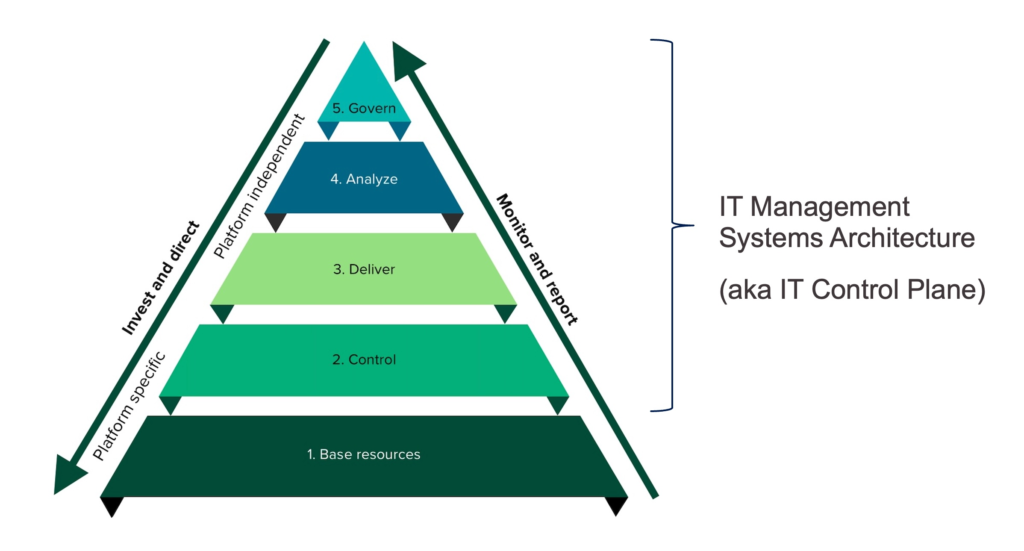
I’m pleased to announce the recent publication of the Forrester IT Management Systems Architecture. IT (information technology) uses a wide variety of systems to effectively run itself. Unlike other business areas, the discipline of IT management still relies on point, best-of-breed solutions, which require extensive integration to make them all work together. This foundational report presents a new layered architecture for understanding the systems used for secure IT delivery and discusses how this architecture will evolve in the future. This new report is a companion architecture to the Forrester Reference IT Capability Map. We maintain these two different views, in keeping with architecture best practices: The capability map shows your IT management concerns from an operating model perspective. In general, you own the development and evolution of these capabilities — they are not simply a matter of sourcing. The systems architecture classifies what you can source in the market to support your IT management capabilities, assisting you with managing this complex portfolio and identifying key integration areas and systems redundancy.   A key scoping boundary is between layer 1 and 2. Most of the multi-trillion global IT budget is spent at layer 1, representing the actual computing resources under management. Layer 1 is not in scope for the IT management systems architecture, per se. The systems in layers 2–5, while numerous and representing billions of dollars economically, are orders of magnitude less in terms of the overall share of the global IT market. The layers are defined as follows, with example systems (see the report for complete system classifications): Layer Description 5. ​Govern This is the layer at which IT investments are directed, monitored, and evaluated at the highest enterprise level and risks are tracked and controlled. It includes strategic portfolio management, enterprise architecture, risk management, and IT financial management.​ 4. ​Execute Work is defined, planned, and tracked here at a higher level, roughly aligned to a “team of teams.” This is where finances are tracked as well as higher-order concerns such as engineering performance, architecture, and technical debt. ​It includes value stream management (aka engineering performance), AIOps, and the recent trend toward security data pipeline management, among other categories. 3. ​Deliver This is the level of work management, the primary team layer. Work is coordinated and executed here, including preplanned as well as interrupt-driven work (which still must be resourced). ​It includes enterprise service management, security analytics, collaborative work management, and other products supporting team-level collaboration, among other categories. 2. ​Control This is the “closest to the metal” layer of the overall control plane. It is the layer of the individual contributor. It represents element management tooling that directly interacts with the resources under management, discovering, instantiating, and configuring them, facilitating the construction and deployment of new software, and monitoring and correcting exceptions.​ It includes products such as integrated software delivery platforms (DevOps platforms), testing automation (including security testing such as software composition analysis), endpoint management, and infrastructure automation, among other categories. 1. ​IT resources These are the core IT “things”: physical and virtual machines, clusters, serverless resources, software installed on them, networking, storage/data, and security infrastructure, along with the myriad configuration settings controlling all of this. This may be on-premises, in the cloud, or hybrid.​ This layer is out of scope for the architecture per se. What’s next in this research stream? Patterns of integration, which may ultimately drive market behavior. Recently, we’ve identified five major integration focal points in the overall architecture:   Core portfolio (configuration management database [CMDB] + enterprise architecture) AIOps Engineering performance/value stream management FinOps Risk and security operations These focus areas bring together data from most of the rest of the IT management systems. From an architecture perspective, the core portfolio is leveraged heavily by the other four (hence the durability of the often-maligned CMDB), and there is growing concern among enterprise architects I talk to about redundancy across the data marts that these product categories represent — integrations add complexity and maintenance costs. If you are an end user figuring out the big picture of your IT management systems or a vendor with a value proposition here (especially an integrative value proposition), I’d love to talk to you. source

Introducing the Forrester IT Management Systems Architecture Read More »

Trump Names Senate Commerce Aide As FCC Commissioner

By Christopher Cole ( January 16, 2025, 4:24 PM EST) — President-elect Donald Trump on Thursday named Olivia Trusty, a top Republican aide on the U.S. Senate Commerce Committee, as his pick for the next GOP commissioner on the Federal Communications Commission…. Law360 is on it, so you are, too. A Law360 subscription puts you at the center of fast-moving legal issues, trends and developments so you can act with speed and confidence. Over 200 articles are published daily across more than 60 topics, industries, practice areas and jurisdictions. A Law360 subscription includes features such as Daily newsletters Expert analysis Mobile app Advanced search Judge information Real-time alerts 450K+ searchable archived articles And more! Experience Law360 today with a free 7-day trial. source

Trump Names Senate Commerce Aide As FCC Commissioner Read More »

Order Management Systems And A Story Of Augmented Evolution

Findings From The Forrester Wave™: Order Management Systems, Q1 2025 Digital leaders know that order management systems (OMSes) are true workhorses at the heart of the commerce tech ecosystem, providing inventory, order, logistic, and operational tools. But the current OMS market shakes off all the basics. It is a story of evolution — on the part of both the vendors and the users of these systems. Our latest Forrester Wave™ evaluation of the market uncovered this new evolutionary tale. The majority of digital leaders with an OMS are happy enough to keep it (though not nearly as many as those sticking with their B2C commerce solution). But many also aren’t just blindly relying on their vendor to keep them ahead of the innovation curve. The state of the enterprise OMS market in 2025 is about: More businesses augmenting their current solution with individual modules of another — usually more modern — solution. We saw certain vendors used this way in the previous evaluation. In 2025, the rip-and-replace is less common than ever as businesses avoid (or at least delay) a replacement in favor of an incremental evolution. (Stay tuned for our fascinating Forrester Total Economic Impact™ [TEI]-based report on exactly this topic!) Broader business impacts from OMSes. Beyond expected — though matured — functionality such as AI-driven routing logic to the less expected, these solutions are going further than their traditional remit. Vendors find competitive differentiation in their solutions’ support for in-store processes (like servicing pickup orders), how they enable end customers to self-serve, and even how they deploy their solutions, creating easier on-ramps for digital businesses. Servicing different users in different ways. Although we know that unified commerce is not a thing, unification matters. Specifically, it matters that any given user has a consistent, unified, nonfrustrating experience. The market is out of patience with juggling multiple, disparate, integrated (but not unified) experiences from a single vendor. But when users are truly unique (e.g., technical users, nontechnical practitioners, and in-store associates), some OMS vendors serve uniquely appropriate experiences for each. Digital businesses selecting replacement OMS solutions — or adding pieces on top of their existing one — have a new set of decisions to make. The functionality is broader, the tooling more specialized, and the delivery more modular. Forrester clients, get in touch so I can walk you through the results of our brand-new evaluation, The Forrester Wave™: Order Management Systems, Q1 2025, the new Wave model, and Forrester’s interactive digital experience for the Wave. source

Order Management Systems And A Story Of Augmented Evolution Read More »

Demand and Supply Issues May Impact AI in 2025

This may well be a sobering year when it comes to AI adoption, use and scaling. On the demand side, organizations will be pulling investments back prematurely because they’re not seeing the value they expected. On the supply side, supply shortages, unmet expectations and investor pressure have caused one big tech company to reduce AI infrastructure investments and others will follow, according to Forrester.  To date, organizations have been investing heavily in AI and GenAI, not necessarily with a view toward ROI, though ROI can be difficult to quantify from a hard dollar perspective, which senior executives and boards now want. The anticipated shortage of infrastructure will also likely have an impact.  What’s Happening on the Demand Side  Organizations will not continue to increase investments in AI if they’re not seeing the value they expect.  “[C]ompanies are scaling back on their AI investments or too impatient in terms of ROI. They will [likely] scale back on their AI investment prematurely, which is not a good strategy,” says Jayesh Chaurasia, analyst at Forrester. “The other factor that might be fueling this is the current economic climate. In the last three months, almost everyone is trying to cut back on any type of investment that is not generating a clear ROI, and not only the AI-related stuff.”  Related:What Happens if AI No Longer Has Access to Good Data to Train On? Executives are asking for ROI numbers on analytics, data governance, and data quality programs, and they are demanding dollar values as opposed to “improving customer experience” or “increasing operational efficiency.”  “In 2023 and this year too, we are seeing more focus on ROI related to generative AI,” says Chaurasia. “Almost every executive was talking about how generative AI is going to just change the world, but it’s not as easy as just deploying a model or a generated AI function and then say your job is done because there is a foundational data analytics requirement that will eventually enable it, and which means you need to have proper privacy and security protocols, [such as] access management and data governance. You also must supply better data quality [because] these models are trained on the entire data set from the internet.”  The fact that people know the models are trained on internet data has inspired internet postings that are intentionally inaccurate or misleading, so the models won’t work right.  “The better answer is, of course, to use your own industry enterprise data, which gives the AI model more information about your company,” says Chaurasia. “You can very easily set up a connection with your data warehouse and get all the data into the model, but it’s not that easy because privacy, security, and governance are not in place. So, you’re not 100% sure whether you’re sharing your data with the model or the entire world.”  Related:AI Risk Management: Is There an Easy Way? Organizations have expected quick returns but not realized them because the initial expectations were unrealistic. Later comes the realization that the proper foundation has not been put in place.  “Folks are saying they expect ROI in at least three years and more than 30% or so are saying that it would take three to five years when we’ve got two years of generative AI. [H]ow can you expect it to perform so quickly when you think it will take at least three years to realize the ROI? Some companies, some leadership, might be freaking out at this moment,” says Chaurasia. “I think the majority of them have spent half a million on generative AI in the last two years and haven’t gotten anything in return. That’s where the panic is setting in.”  Explaining ROI in terms of dollars is difficult, because it’s not as easy as multiplying time savings by individual salaries. Some companies are working to develop frameworks, however.  “Some managers are reaching out to every business unit to ask the benefits that they have received with proper understanding of ownership, where the data exists [and] lineage of particular data set. They are using some custom surveys to reach out to all the employees in the organization to for their suggestions as well as their metrics,” says Chaurasia. “Unfortunately, there is no single framework that I would suggest works for every company.”  Related:Are We Ready for Artificial General Intelligence? Jayesh Chaurasia, Forrester Chaurasia is working on KPIs for the various domains, in terms of quality, governance, MDM, data management, data storage and everything that companies can track over the time to see the improvement, but they’re not connected to dollar value.   “What I’m recommending is find at the tactical, managerial, and executive levels what matters to them [and have] KPIs for each of those different layer levels to maintain and calculate that ROI regularly, so that they can use that KPI those metrics to show the benefit of whether they have improved over time or not.”  View From the Supply Side  If enterprises are reducing AI investments because the anticipated benefits aren’t being realized, vendors will pull back. Meanwhile, China has banned the export of critical materials required for semiconductors and other tech-related technologies in response to President-elect Donald Trump’s planned tariffs, not to mention the downstream impacts of tariffs — higher production costs and therefore higher tech prices IT departments will have to bear when budgets are already tight and may become tighter.  Bottom Line  Infrastructure shortages due to reduced AI investments on the demand side combined with higher prices and a potential US chip shortage due to lack of materials on the supply side would in turn impact the calculus of AI ROI. There are also broader impacts of the incoming administration’s policies such as mass deportation, which could impact tech workers, including AI talent, and their employers.    source

Demand and Supply Issues May Impact AI in 2025 Read More »

Australian IT Sector Maintains Strong Employment Outlook for 2025

The IT sector remains a bright spot in the Australian job market heading into 2025, boasting the most positive employment outlook of any economic sector. Recruitment firm ManpowerGroup’s Employment Outlook Survey for Q1 2025 revealed that the Australian IT sector has a net employment outlook of +27%, leading all other sectors. IT outshines other industries The IT hiring outlook outpaced other Australian sectors, including health care and life sciences (+21%), financials and real estate (17%), and transport, logistics, and automotive (17%). The IT sector exceeded the national net employment outlook of +11% for the quarter. The outlook score is calculated by subtracting the percentage of employers expecting to reduce staff from the percentage expecting to increase hiring. A positive figure indicates more employers plan to hire than cut jobs. SEE: How To Prepare for the Future of IT Jobs in Australia However, the IT sector’s net employment outlook has slightly declined — dropping 1% since Q4 2024 and 2% compared to last year. A global phenomenon: IT leads in hiring outlook Globally, IT continues to dominate hiring trends. ManpowerGroup reported that the worldwide IT net employment outlook across 42 countries stands at +37%, a 2% increase since the previous year. Australia’s IT sector trails behind some Asia-Pacific peers, ranking 36th globally with its +11% overall employment outlook. Within APAC, Australia placed fifth, behind India (+40%), China (+29%), Singapore (+25%), and Japan (+15%). The Asia-Pacific region as a whole recorded a stronger hiring outlook (+27%) than Australia, though this represents a 3% decline compared with the same period last year. More Australia coverage Challenges persist despite positive outlook Despite the promising numbers, securing an IT role in Australia may not be straightforward. A reasonably tight labour market means strong competition for roles, with reports showing a growing number of job seekers relative to the number of advertised positions. SEE: Why Now Could Be a Great Time To Upskill For Tech Jobs A survey from the online jobs website SEEK found that job applications per ad in the information and communications sector have more than doubled since 2022. This means there are still jobs for those searching, but they are not as easy to snare as they once were. A Gartner HR survey released in December 2024 found that 39% of Australian job seekers reported difficulties finding a job, while only 25% felt ample jobs matched their skills. Opportunities with mid-sized employers For IT professionals seeking opportunities, mid-sized companies may offer the best prospects. ManpowerGroup noted that employers with 250-999 employees reported the highest hiring intentions, with a net employment outlook of +17% for 2025. In comparison, larger employers with 1000-4,999 employees reported a more modest outlook of +7%. Salaries are expected to remain relatively stable in 2025 IT recruitment firms say Australian IT employees are expected to continue earning some of the highest salaries available in the country, though salary increases may remain modest. According to recruiter Blue Wave Digital: Front-end software developers: $100,000-$140,000 for mid-level roles; $150,000+ for senior positions AI/ML engineers: $130,000-$180,000 for mid-level experience; $200,000+ for senior positions. Data scientists: $120,000-$160,000 for mid-level roles; $170,000+ for senior positions. Cybersecurity analysts: $100,000-$140,000 for mid-level roles; $150,000+ for senior positions. Cloud engineers: $120,000-$150,000 for mid-level roles. Mercer’s Australian Salary Outlook 2025 predicts that salary increases across the Australian economy — not specifically IT — will remain at 4% in 2025. source

Australian IT Sector Maintains Strong Employment Outlook for 2025 Read More »

Balancing the costs and opportunities of GenAI adoption

Generative AI (GenAI) is reshaping how businesses operate, offering unprecedented opportunities for greater efficiency, streamlined operations, revolutionized customer service, and enhanced decision-making. But alongside its promise of significant rewards also comes significant costs and often unclear ROI. For CIOs tasked with managing IT budgets while driving technological innovation, balancing these costs against the benefits of GenAI is essential. In this article, we will explore the cost-related barriers to GenAI adoption, including high implementation expenses, ineffective cost management, and infrastructure demands. We’ll also examine strategies CIOs can use to address these challenges, ensuring their organizations can recognize the rewards of GenAI without compromising financial stability. While the article’s focus is on GenAI, many of the strategies discussed here are broadly applicable to other innovations in IT, as they provide CIOs with a flexible framework for balancing costs and opportunities presented by emerging technologies. Let’s begin by examining the specific cost-related concerns CIOs face when adopting GenAI technologies. source

Balancing the costs and opportunities of GenAI adoption Read More »