Forrester

Revenue Operations: Hot Topics from B2B Summit EMEA 2024

Analyst one-on-one sessions at Forrester’s B2B Summit EMEA event present the opportunity for delegates to speak with an analyst on a specific topic or particular piece of research. This year’s Summit wrapped up earlier this month, and as always, we had some great conversations. Here are some of the revenue operations hot topics that came up this year. Why Is Adopting The Right Operating Model The Best Approach To Delivering Revenue Operations? Revenue leaders increasingly recognize the need to move away from thinking in terms of org charts and job titles when contemplating how to deliver revenue operations for their organizations. Instead, they are adopting an operating model for the revenue ecosystem that avoids leaving them overreliant on restructuring as the primary lever of change. This ensures avoiding a focus that is too narrow to deliver the necessary orchestration of technology, data, process, and measurement. An operating-model-led approach to RevOps enables leaders in revenue operations, sales operations, or marketing operations to design, implement, and evolve the right approach to delivering business and customer value. Is It Feasible To Pilot Changes To Our Revenue Process Before Full Deployment? On the face of it, contemplating a pilot of changes to the revenue process sounds like the UK planning a switch to driving on the right by having cars change in the morning and trucks in the afternoon. In fact, it’s more like trialing the new approach for all vehicles on a few streets before rolling it out to the rest of the country. Most large businesses have revenue motions for specific segments, geographies, or products that involve particular teams across marketing, qualification, and sales. Look for a sales leader in such an area who recognizes the efficiency and pipeline uplift benefits of adopting a new approach to the revenue process, then make the changes there. Alternatively, difficulties reaching targets also provide a great motivator for trying something new. Most CRMs can handle the necessary platform changes for specific motions without affecting the rest of the business. Initially working with a smaller group is easier, so carefully capture the results from the pilot to prove the case for a wider adoption. Most likely, the rest of the business will beat a path to your door after they see what’s possible, regardless of which side of the road they’re on! How Can Revenue Operations Teams Deploy AI To Drive Sales Engagement With Buyers? Empowering individual sellers to orchestrate their engagement with buyers is key to unlocking peak performance. Equally, providing sellers with insight into B2B purchasers is crucial, particularly visibility over the buying groups that are typically making these complex decisions. Fortunately, a new category of revenue technology recently identified by Forrester is making this much easier for B2B organizations across new business acquisition, growth, and retention. Known as revenue orchestration platforms, these tools harness AI to automate repetitive prospecting tasks, help eliminate manual activity tracking, and centralize buyer signal capture that contributes to buyer group identification. Although the solutions in this space are represented by a wide range of vendors with varying capabilities that require close scrutiny, smart RevOps leaders will embrace this new opportunity to optimize seller performance. How Do We Get The Most Value From Our Event Data? The benefits of event data are often overlooked despite the many options available to take advantage of it, as well as the fact that other data sources are fast disappearing. Indeed, we’ve found that half of marketers recognize they are not getting the most from data captured at events. Among other opportunities, event data can be used to improve the event experience itself (before, during, and afterward), buyer understanding, product development, and, of course, pipeline generation. Put simply, the barriers to realizing these benefits are siloed data, technology, and processes. Overcome these issues by ensuring that event technology is integrated with the wider revtech stack so that owned and third-party event data is fully activated. This necessitates frontline and event marketing teams working with revenue operations and avoiding the temptation to “go it alone.” Similarly, RevOps leaders must take on the responsibility to embrace event systems and data for the benefit of the business. What Is The Best Approach To Building Our Executive Dashboard? Dashboards are the most visible form of reporting and analytics delivery, widely used throughout the revenue ecosystem and beyond, yet are frequently the result of inadequate planning and design. Among the biggest problems with executive dashboards is that they can only be as good as the underlying measurement strategy they reflect. Revenue operations leaders responsible for insight delivery must determine the measures that reflect actual business performance and not succumb simply to displaying vanity metrics. When establishing dashboard requirements, ensure that the specific audience, their objectives, and the necessary refresh cadence are clear. An executive-level dashboard in particular should not merely be a rollup of metrics across marketing or sales and should focus on impact, not activity. And remember, the hallmark of a great dashboard is one that includes customer value metrics, not just internal-facing ones! *** Strategy, execution, and, of course, AI were recurring themes this year for revenue operations leaders. If you’re a Forrester client, arrange a follow-up discussion to continue the conversations. Otherwise, we’ll see you again next year! source

Revenue Operations: Hot Topics from B2B Summit EMEA 2024 Read More »

HLTH 2024: Bold Commitments And Key Takeaways

This year’s HLTH conference embraced the theme of “Be Bold.” Speakers committed strongly to tackling some of the toughest challenges in healthcare, such as lack of access, clinician shortages, and frustrating prior authorization (PA) processes. As one speaker put it, paraphrasing Ralph Waldo Emerson, “What you do speaks so loudly that I cannot hear what you say.” This sentiment resonated throughout the event, highlighting the need for more action over words. Actions That Spoke Loudly Provider and health insurers alike shared the steps they took to tackle key challenges, from administrative burden to prior authorization, and where those actions have yielded more challenges for women’s health: Building capacity using AI to tackle administrative burden. Amazon announced that One Medical providers will be able to use HealthScribe to capture details discussed in real time during patient visits. Clinicians will be able to review, update, and approve the notes before submission. The new AI-powered capabilities will also review and summarize a patient’s outside medical records to provide details to physicians on screening exams, test results, and medications. AI messaging will also help care teams respond to the influx of patient messages. Offering AI avatars to support patient prep. NVIDIA’s VP of healthcare, Kimberly Powell, shared the company’s collaboration with Deloitte to develop AI-driven virtual agents, built on the NVIDIA AI Enterprise software platform, offering real-time, humanlike support. A patient-facing pilot with the Ottawa Hospital is expected to go live by the end of the year. *Note: A live interactive demo was not available at HLTH. Only prerecorded videos of the experience were shared. Digitizing data to decrease the turnaround for prior authorization. In a standout video by Blue Shield of California and Salesforce, executives recreated a famous “Office Space” scene, smashing a fax machine to symbolize the outdated prior authorization process. Paul Markovich, president and CEO at Blue Shield of California, described the payor’s efforts to digitize medical data and implement a cloud infrastructure to streamline the PA process. By partnering with Salesforce to leverage the Fast Healthcare Interoperability Resources (FHIR) standard, Blue Shield went from 20 systems being used for prior authorization to one and can process transactions in near real time. Promoting responsible AI with a new scorecard from CHAI. A CHAI working group unveiled its draft Model Cards at the CHAI Global Summit on Saturday (held in conjunction with HLTH). The Model Card includes the identity of the health AI’s developer, intended uses, targeted patient populations, AI model type, data types, key performance metrics, security and compliance accreditations, maintenance requirements, known risks and out-of-scope uses, known biases, ethical considerations, and third-party information. The CHAI certification process and Model Card design are expected to be available by the end of April 2025. Elevating the conversation on women’s health. A panel featuring Jennifer Klein from the White House Gender Policy Council and Chelsea Clinton discussed reproductive freedom, government policy, and the impact on women’s health. The panelists discussed how restrictive laws are causing a rise in maternal and infant mortality. Making clinicians second-guess the care they offer to women delays care and worsens outcomes. The panel also highlighted that, in order to pass their medical boards, some OB-GYN residents must travel across state lines to learn about abortion care. Amid severe capacity issues, adding more barriers for medical practitioners entering the profession runs counter to the goal of improving population health. Flowing government funding to women’s health. First Lady Jill Biden, PhD, announced $110 million in funding for women’s health research and product development through the Advanced Research Projects Agency for Health. Dr. Biden shared that 23 awardees will receive funding, including for projects focusing on advancing menopause treatment, creating a noninvasive blood test for endometriosis, and assessing brain disorders with a noninvasive MRI imaging biomarker. The funding announcement builds on the White House Initiative on Women’s Health Research, which launched in November 2023. More Buzz Than Breakthrough Conversations on combating rising medical spend took multiple forms, including a focus on GLP-1s, testing new models such as individual-coverage Health Reimbursement Arrangements (ICHRAs), the critical role of primary care, and a renewed interest in high-performance narrow networks. Notably, employers and associations representing employers were more prominent than in years past. Conversation hasn’t yet translated into meaningful action. Here are some prominent calls to action and a new vernacular for the industry to learn: Employers must push for performance metrics. Dan Mendelson, CEO of Morgan Health, encouraged employers to demand key performance metrics in contracts with health insurers, including for well-controlled HbA1cs, consistent cancer screenings, and cardiovascular health. Ellen Kelsay, CEO and president of Business Group on Health, issued a call to action for health insurers to include these metrics without waiting for employers to ask for them, saying, “Should we really have to ask this? Why aren’t you doing it already?” Employers and health insurers equally need to seize the moment to ensure better outcomes for employees and members. Employers and insurers consider abandoning GLP-1 rebates. The cost and peanut-butter spread prescribing trends of GLP-1 medications are unsustainable. Key stakeholders made a call for investing more in care management, advocates that can support increased shared decision-making, and care models that start not with a prescription but with more testing, as well as coaching and education on changing your diet. Speakers recommended that primary care play a more central role in managing holistic health for these individuals to better manage costs and ensure that these therapies are only given to individuals for whom meaningful improvement will be achieved. ICHRA is a term few understand. Many at the conference either didn’t know or misunderstood this alternative option for employees. While speakers noted that ICHRAs can be a compelling option for small and midsized business with employees concentrated in a small number of geographies, adoption remains limited. Furthermore, ICHRAs do not address health outcomes directly. Employers continue to increasingly focus on mental health, family planning, and musculoskeletal issues, which ICHRAs do not solve. Regardless of these shortfalls, as employees grow increasingly mobile across jobs, the gig

HLTH 2024: Bold Commitments And Key Takeaways Read More »

In North America, Mobile Banking Apps Are Sufficient But Undifferentiated

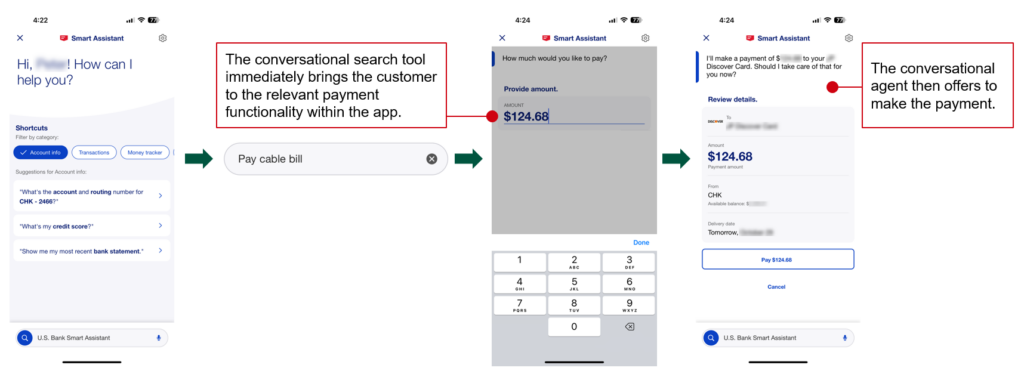
Forrester recently evaluated mobile banking apps in Canada and the US in our latest Digital Experience Review™ (DXR). It shows that: Banks’ apps are barely keeping up with customers’ needs and expectations. Mobile banking usage is rising and evolving, and the pace of change has been accelerating since 2020. Yet few customers feel their primary bank’s app is markedly better than those of other brands (fewer than one in three feel this way in both the US and Canada). Our DXR findings reveal similar trends: Just half of the banking apps we reviewed earned a score above 75 (out of a possible 100). Leading banks use digital capabilities to expand options and reduce barriers. The banks that offer leading mobile experiences design and build their apps so customers can conveniently complete a wide range of tasks. U.S. Bank provides users with an effective conversational assistant that answers their questions and guides them to the right feature or content. For example, when a customer wants to pay a bill, they can do so within the search interface (see images below). U.S. Bank’s app also offers external account aggregation, a money movement hub, credit score monitoring, and in-app budgeting insights. Other leading bank apps offer similar search mechanisms and financial well-being features. To remain competitive, banks will need new ideas. Gone are the days when a bank could expect to meet a customer’s needs (let alone exceed those needs and differentiate the brand) by building an app with limited features. Going forward, your digital teams will need to explore new ways to help customers get jobs done. Our research uncovers some of these emerging needs, such as personal data hubs and autonomous savings. In many cases, banks will need to harness emerging technologies to design and build new offerings for customers. AI is just starting to transform mobile banking. As we’ve seen in other markets, US and Canadian banks are using AI technologies to level up their in-app search (often with sophisticated conversational agents). This foreshadows a future when banking is more invisible and immersive. Combining graphical interfaces with chat and voice interactions and proactive notifications, apps are set to become an (almost) invisible yet essential part of everyday financial decisions and actions. Leveraging AI, leading banks will anticipate customer needs and offer personalized guidance, transforming apps from an informational and transactional tool into a trusted advisor. This shift lays the foundation for the future of beyond-the-app experiences, requiring a set of new competencies. Digital teams: You already have the tools you need to strengthen your app. But even before you assemble a team of futurists and AI engineers, you can make major strides to improve your mobile banking app. Digital banking teams are underusing a number of established capabilities that — when incorporated into a well-designed user experience within your app — will drive engagement, stickiness, and better business outcomes for your firm. Digital banking leaders and teams should incorporate in-app search functionality; video content and interactive media; and personalized, proactive alerts and notifications. For a deeper dive into our DXR research and further insights from our reviews, I urge Forrester clients to check out the full report here: The Forrester Digital Experience Review™: North American Mobile Banking Apps, Q4 2024. Clients can also check out our Forrester webinar from this research. [U.S. Bank’s In-App Conversational Search Lets Users Pay Bills Within The Interface] source

In North America, Mobile Banking Apps Are Sufficient But Undifferentiated Read More »

The New Creative Stack: What Adobe MAX Reveals About Our Future

When we look back at the evolution of creative and content work, 2023 and 2024 will stand out as the great divide: the period when generative AI (genAI) fundamentally changed how we create. Last week at Adobe MAX, this sense of “before and after” deepened as Adobe unveiled its latest innovations and reinforced its position as a leader in this revolution for creatives. Welcome To AI-Enhanced Creativity’s Next Chapter In a year defined by relentless AI advancement — but not without growing mistrust around how companies use customer data — Adobe has made a deliberate effort to communicate its stance on the role of genAI in creativity and its approach to training models. Their point of view is one we agree with: GenAI is not a replacement for human creativity, and models are only commercially safe when they’re trained on content where there’s permission for use. Even as they’ve expanded their family of Firefly genAI models, Adobe emphasized that the perspective creatives bring to their work – their unique way of coloring the world – stems from imagination, experience, and carefully honed processes. Here are the key developments that caught my eye as windows into creative work’s future: More power, precision, and speed. Adobe launched several new Firefly offerings that will help creators compress and improve time spent on tasks that accelerate time to market with the high-quality content audiences expect. The Firefly Video Model, while still in beta, is the first publicly available video model designed to be safe for commercial use. With it, creators can add video frames to extend a clip that’s too short, speed up editing, and create videos from text or images. The new Firefly Image 3, Generative Workspace in Photoshop, and new Illustrator tools, like Generative Shape Fill, are designed to help creators experiment with new ideas and iterate faster. This accelerates the creative process, leads to faster initial drafts, and allows designers to focus on perfecting the final deliverable. Expanded collaboration and integrated creative workflows. The new Frame.io is expanding beyond video post-production to support collaboration across all creative workflows (photo, audio, design, etc.). This is an interesting move, especially for enterprise firms. It means creative teams can use Frame.io as a central collaboration hub, regardless of the medium, and break down the silos that often exist between different creative disciplines or teams in large organizations. If this works, it will bring critical consolidation to the nonlinear creative process, where teams today often use multiple tools to store, share, and communicate about work in progress. Focus on concepting. The earliest stage of the creative process is crucial, yet it’s usually the most constrained by limited time and resources. Adobe announced Project Concept, an AI-first product for mood-boarding and concepting. As creatives spend less time on mundane, repetitive production tasks, they’ll be able to dedicate more energy to exploring better ideas. Project Concept uses the latest capabilities from Firefly models to help creatives mix images together; transform regions of an asset; and remix styles, backgrounds, and other assets as “ingredients” at the idea stage. And continuing the theme of collaboration, Project Concept will enable creatives to work with other people in Adobe Creative Cloud and Adobe Express so they can source, organize, ideate, edit, and showcase concepts in one tool. Again, if Adobe delivers on this promise, organizations will have a tool that allows teams to try out a variety of ideas and identify the best ones. Be Intentional With Your Creative Tools And Processes As we look ahead to 2025, it’s clear that the pace of change will continue. Creative teams will have a slew of new opportunities and ideas, but it’s impossible to pursue them all. What should you do? Evaluate how your creative toolset can enhance the way you ideate, create, and iterate, leveraging different types of feedback loops and collaboration styles at each stage of the creative process. For some teams, this means extending the use of Adobe Creative Cloud and Adobe Express, as well as consolidating tools across the creative lifecycle with key stakeholders. The opportunities to step into the future of creative work are here and continuing to arrive at a fast pace. The distance between idea and implementation is shrinking, and the organizations with the best ideas, tools, and processes will be well positioned for this future. We’re here to help you transform your content strategy and content creation process to better engage your audiences. If you’re a Forrester client and want help evaluating your tech stack, refining your workflows, or assessing your team’s readiness for AI-driven approaches to content, connect with your account team or schedule a guidance session today. source

The New Creative Stack: What Adobe MAX Reveals About Our Future Read More »

Our Latest Evaluation Reveals A Shifting SSP Market

I am excited to announce The Forrester Wave™: Sell-Side Platforms, Q4 2024. This is the first Forrester Wave of the sell-side platform (SSP) provider category since 2014, and a great deal has changed in those 10 years. In 2014, ad exchanges and SSPs converged, but mobile and video advertising remained siloed from display advertising — programmatic’s bread and butter. As the market matured, SSPs pushed closer to agencies and the buy side, seeking to cultivate unique, consistent advertiser demand and improve deal economics for publishers. At the same time, header bidding empowered publishers to access demand from multiple SSPs to increase fill rates with greater control. When the dust appeared to have finally settled, a tsunami of antitrust lawsuits broke in 2024, promising to permanently reshape the SSP landscape. Today, publishers rely on SSPs to build addressable audiences, manage multiple deal types, and integrate a variety of third-party data sources — all in the service of filling every ad slot with the highest bid available from a trusted advertiser. Digital publishers now exist across more surfaces than ever, from the Las Vegas Sphere to the podcast in your ear. As a result, Forrester now defines an SSP as: Technologies that empower digital publishers to sell, manage, and optimize advertising space across connected environments. Given the importance and business impact of customer experience, we focused the evaluation on customers — specifically, which vendors help publishers deliver the cleanest, most user-friendly experience possible. This meant focusing on how the vendor connects publishers with relevant buyers while transacting less personally identifiable information and more anonymized tokens. Our evaluation revealed three significant differentiators among the vendors. Publishers should: Look for a vendor that plays well with others. SSP customers we interviewed consistently validated that interoperability, with flexible header bidding solutions for multiple environments, is key to SSP partnerships. A few vendors offer their own bid wrapper solution, potentially sacrificing their own revenue on some deals to provide publishers greater control and transparency. Short-list vendors that prioritize ad security. With more consumers blocking ads than ever before, and the technology to spoof and deepfake more accessible than ever, the long-term financial health of publishers and the safety of the open web are dependent on keeping bad actors in check. Expect more than “works with common identity solutions.” With data deprecation eroding the presence of third-party cookies across browsers and beginning to impact the presence of IP addresses and cookies, publishers need SSPs to provide alternative methods to maximize yield using zero- and first-party data connections, as well as provide clean room technologies to transact identifiers in a safe environment. Our research also observes a shift in vendor dominance. While some stalwarts remain leaders in the space, others have ceded ground to smaller, or newer, rivals more closely attuned to publisher demands and responsive to industry trends. To help you navigate the evolving SSP market, The Forrester Wave™: Sell-Side Platforms, Q4 2024, is now live. It identifies the 10 most significant SSP vendors — Adform, Amazon Ads, Equativ, Google, Index Exchange, InMobi, Magnite, Microsoft, OpenX, and PubMatic — and scores them on 33 criteria. Use this report to identify the SSP capabilities that matter most to you, including curating your inventory for agency and endemic buyers, leveraging new identity currencies to create seller-defined audiences, and more. source

Our Latest Evaluation Reveals A Shifting SSP Market Read More »

The Great DEX-pansion Of 2025

We (still) have an incomplete view of DEX. For years, enterprises have approached digital employee experience (DEX) initiatives in silos — IT is doing one thing, HR another, and the business something totally different — all of which has made it difficult for organizations to successfully drive DEX outcomes for employees. At Forrester, we hear the symptoms of a fractured approach to DEX all the time from clients. “If only HR knew how we could help improve DEX,” remarked one IT leader, while an HR leader said, “IT thinks they own DEX, but they aren’t responsible for any employee outcomes like talent attraction and retention.” At Forrester, we’re seeing signs that this may be changing. Organizations are starting to bring various stakeholders to the table to tackle DEX at the executive level, focusing on improving the daily work of employees. There’s an additional problem, though: Not only are enterprise teams siloed when it comes to DEX, so are their tools — one tool for monitoring end user computing and the service desk, another for corporate communications, and yet another for digital adoption … and that’s just the start. So many tools, so little visibility. As we move into the end of 2024, clients are consistently asking for their DEX tools to do more in order to help them: Illuminate blind spots in tech experience. Understand and drive adoption of new technologies. Diagnose the user experience of key business applications. Measure employee outcomes using experience-level agreements. Improve search and application access. That need for a consistent experience is hard to do when your organization has so many tools in its arsenal, none of which are integrated. The good news? Vendors understand the problem. Vendors in the end-user experience management space have responded with a slew of innovations in the past year, driving the beginning of a “DEX-pansion” in which vendors strive to obtain a more holistic and accurate view of DEX. For example: 1E acquired Exoprise in October 2024, significantly bolstering 1E’s application monitoring capabilities with in-depth real user monitoring, comprehensive synthetic testing, and improved support for unified-communications-as-a-service monitoring. The company also announced a new partnership with Goliath, a virtual desktop monitoring tool focused on electronic health record systems such as Epic and Cerner. 1E also announced a partnership with B2M Solutions to create a mobile endpoint experience product, further demonstrating 1E’s commitment to expanding its DEX visibility. Riverbed released Aternity Mobile earlier this year, expanding its vision to better serve an often forgotten segment of the workforce: frontline employees. Aternity Mobile features multivendor mobile device, application, networking, and sentiment monitoring capabilities, one of the only dedicated mobile DEX solutions in the market today and more evidence of DEX-pansion. Nexthink acquired AppLearn, a digital adoption platform vendor, in January 2024, expanding the company’s visibility into employee application usage with built-in guidance and learning. A top priority among digital workplace leaders, driving digital adoption helps bring Nexthink even closer to understanding DEX holistically. While expansions like these pose tremendous opportunities for both vendors and customers, they’re also risky. Customers should ensure that they: Review the quality of integration between converging product sets. Ask questions about changing pricing and packaging models. Prepare for any gaps in support as vendors seek to up-level their expertise in unfamiliar DEX territory. My prediction? The DEX-pansion will begin at full force in 2025. As the need for holistic DEX grows, organizational silos break down, and interest rates fall, consolidation will increasingly characterize the DEX market. Mergers, acquisitions, full-scale product releases, and net-new partnerships will dominate the 2025 DEX market, resulting in the most exciting year for DEX since 2020. If you’re interested in learning more about my thoughts on the future of this market, reach out to me on LinkedIn. Forrester clients can also submit an inquiry request at [email protected]. If you’re a vendor that’s doing cool things in this space, submit a briefing request. source

The Great DEX-pansion Of 2025 Read More »

Embracing AIOps: Transforming IT Operations In The Digital Age

In today’s fast-paced digital landscape, the integration of artificial intelligence (AI) into IT operations (ITOps) is revolutionizing the way that organizations manage and optimize their technology infrastructure. This innovation, known as AIOps (AI for IT operations), is rapidly gaining traction across enterprises worldwide and cutting across industries. The transformative power of AIOps is staggering; it will play a critical role in enhancing efficiency, reducing downtime, and driving innovation. This blog is part of a four-part series of blogs. The series delves into the intersection of AIOps with: The future of AI-driven IT operations (Carlos Casanova). DevOps and agile (Devin Dickerson and Andrew Cornwall). Autonomous networks and business-optimized networks (Andre Kindness and Octavio Garcia Granados). Edge, IoT, and OT computing (Michele Pelino). Proactive Issue Resolution One of the most significant advantages of AIOps is its ability to predict and resolve IT issues before they impact business operations. Traditional IT operations often rely on reactive measures, addressing problems only after they have occurred. AIOps, however, leverages AI algorithms to analyze data in real time, identifying potential issues before they escalate. This proactive approach ensures seamless continuity and minimizes disruptions, allowing businesses to maintain high levels of service availability and performance. By preventing outages and reducing downtime, AIOps helps organizations save time and resources, ultimately enhancing their operational efficiency across the IT estate. Enhanced Decision-Making In IT operations, making informed decisions quickly and accurately is crucial. AIOps excels in this area by analyzing vast amounts of data to provide actionable insights. AI algorithms sift through logs, metrics, and events to identify patterns and anomalies, offering IT teams a comprehensive understanding of their infrastructure. These insights enable IT professionals to make data-driven decisions, optimizing performance and addressing issues with precision. Enhanced decision-making capabilities not only improve the efficiency of IT operations but also support strategic planning and innovation. Automation And Efficiency Automation is a cornerstone of AIOps, driving efficiency across IT operations. By automating routine tasks, AIOps frees up IT personnel to focus on more strategic initiatives. Tasks such as monitoring, alerting, and incident response can be handled by AI, reducing the manual workload and minimizing the risk of human error. This shift toward automation allows IT teams to allocate their time and resources more effectively, fostering a culture of innovation and continuous improvement. As a result, organizations can achieve higher levels of productivity and operational excellence. Scalability And Flexibility As businesses grow and evolve, their IT operations must be able to scale and adapt to changing demands. AIOps provides the scalability and flexibility needed to meet these challenges. AI-driven ITOps can seamlessly integrate with existing infrastructure, scaling up or down based on business needs. This adaptability ensures that IT operations remain efficient and effective, regardless of the size or complexity of the organization. By providing flexibility to incorporate new technologies and respond to market changes, AIOps supports long-term business growth and success. Security And Compliance In an era when cyberthreats are constantly evolving, enhancing security measures is paramount. AIOps can help security operations detect and mitigate issues in real time that could be exploited by operational weaknesses. AI algorithms continuously monitor network traffic, user behavior, and system activities, identifying potential weaknesses before they are used to harm the enterprise. Additionally, AIOps ensures compliance with industry standards and regulations, protecting organizations from legal and financial repercussions. By embedding principles of security and Zero Trust into the fabric of IT operations, AIOps helps organizations safeguard their data and maintain trust with their stakeholders. Embracing AIOps Is A Strategic Imperative For Every Tech Leader The integration of AI into IT operations via the practice of AIOps is transforming the way organizations manage and optimize their technology infrastructure. By providing proactive issue resolution, enhancing decision-making, driving automation and efficiency, offering scalability and flexibility, and strengthening security and compliance, AIOps is a game-changer for businesses in the digital age. As the adoption of AIOps continues to grow, its impact on IT operations will only become more profound, enabling organizations to achieve new levels of innovation and operational excellence. Embracing AIOps is not just a technological advancement; it is a strategic imperative for any organization looking to thrive in today’s dynamic digital landscape. Starting in January of 2025, for Forrester clients, we’ll offer a series of webinars that align with this series of blogs. Be sure to mark these dates in your calendar for the upcoming webinars. Follow the analysts below for notification when the registration links are available.   Be sure to look for the other blogs in this series coming this week: source

Embracing AIOps: Transforming IT Operations In The Digital Age Read More »

Retailers, Reward Loyalty With Value-Based Personalization This Holiday Season

The holiday season is the time to show those closest to you that you care. Holiday shoppers select gifts to show their loved ones appreciation and affection, and companies must do the same for their loyal customers. US shoppers want offers tailored to them … Fifty-four percent of US online adults say that receiving offers that are tailored to their preferences or available only to them is a key reason they join loyalty programs, per Forrester’s Retail Topic Insights Survey, 2023. When used effectively, personalization can deliver value to loyal customers. To do so, companies should leverage loyal customer insights to tailor moments, such as reward redemption and surprise and delight offers, to customers’ unique shopping habits and preferences. … but to succeed, ground your personalization tactics in customer values A personalization tactic is only as good as the value a customer gets from it. But consumers still have mixed feelings about personalized interactions from companies. This holiday season, use personalization in your loyalty program to allow customers to realize value across four dimensions (see Figure 1 below): Economic value. Personalized offers and promotions help customers save money through the holiday season heavy spending blitz. For example, retailers might offer their most loyal customer segments free expedited shipping so that program members in a pinch can get gifts to their loved ones before holiday celebrations. Functional value. To reduce decision fatigue, implement product and service recommendation tools to help consumers make an easier choice. For example, you could offer personalized shipping and in-store pick-up options to get customers their purchases quickly and encourage them to redeem rewards by granting early access to those products with program points. Experiential value. Seventy-four percent of US online adults who belong to customer loyalty programs say they are more likely to participate in a loyalty program if brands make it easy to use. If shoppers go to brick-and-mortar stores, ensure that in-store customers (and the store associates helping them) can access their personalized program benefits or rewards while checking out through point-of-sale systems or on their mobile phone. Symbolic value. Use personalized moments to show customers that you understand and appreciate them. For example, a retailer may surprise and delight customers with personalized thank-you notes for shopping with them, an acknowledgement of how long they’ve been a loyal customer, and/or offers for future purchases in the new year. Figure 1: Use Program Personalization To Deliver Four Types Of Customer Value Be sure to read our new report, Use Personalization To Activate Loyalty Program Value, for more specifics on how to get personalization in loyalty programs right this holiday season. Forrester clients should feel free to schedule a guidance session or inquiry with us to continue this conversation! And stay tuned for our upcoming “The State Of US Consumer Personalization, 2024” report, publishing in November, for more insights on how consumers really feel about personalization. Happy holiday planning! source

Retailers, Reward Loyalty With Value-Based Personalization This Holiday Season Read More »

GenAI Is A Land Of Confusion For Revenue Leaders

One of the benefits of the analyst’s role at Forrester is engaging with B2B leaders to understand their business challenges and priorities. This month, I was fortunate to spend time in person with a broad range of sales and operations leaders at Forrester’s B2B Summit EMEA and other events in London. Much of the conversations focused around how generative AI (genAI) is impacting and will impact go-to-market (GTM) efforts, specifically within sales. I came away from these valuable discussions with three clear conclusions: 1) Revenue leaders are confused by the pace of change around genAI. 2) Leaders are bombarded and frequently bamboozled by vendor hype around their new AI ‘game-changer’ for sales. 3) Sales and operations leaders are slow and hesitant to react because they lack a clear AI strategy — or even a broader technology strategy — to help understand AI changes and guide their decision making. Keeping up with the pace of AI changeBusy executives face the challenge of keeping up-to-date with the rapid changes in genAI, including the relentless pace of large language model innovations from Anthropic, OpenAI, Microsoft, and others. They must understand these changes and their broad implications, while addressing their own concerns (and those of others) about being left behind. They share concerns about other functions in their organizations moving faster, or competitors and peers finding ways to leverage AI innovation for competitive differentiation. This sense of ‘FOMO’ among revenue leaders is also partly cultivated by the messaging from providers of sales tech selling to these personas. AI snake oil messaging is core to sales confusionSeveral leaders expressed their frustration with the ambiguity around what’s being defined as AI across sales tech by providers. For example, leaders are cynical about attempts to dress up basic rule-based functionality as AI agents by providers who are desperate to differentiate in the market and garner the attention of sales leaders — think of it as ‘agent washing‘. As a result, revenue leaders are struggling to separate fact from fiction, or separate tomorrow’s vision (e.g., fully autonomous multi-agent workflows) from today’s reality (most newly launched agents are simple reflex models responding to triggers with predefined responses). AI ambiguity distracts from strategic clarityAcross these conversations, it became obvious that there was frequently an absence of strategy, not just in terms of AI, but more broadly with regards to technology management and the need to envision, design, deliver, and evolve solutions that meet the changing needs of B2B organizations. The ambiguity around AI and resulting market confusion isn’t helping; it distracts sales leadership from focusing on strategic foundations. In what is a highly confusing and fast-paced environment, AI creates new pressure for impactful technology leadership in operations to help guide GTM AI investment. Taking control of your AI and tech strategyIt’s critical that revenue leaders take ownership for developing a proactive strategy for applying AI for performance impact. It’s also critical to separate reality from vision (or hype) in order to make the right decisions moving forward. Don’t wait for others in your organization to address your needs and use cases for you. Forrester recommends three steps to get started: Put rev ops in charge of your go-to-market AI strategy. Rev ops is the glue across GTM functions — its primary purpose is to unify data, insights, technology, and processes. Rev ops is ideally positioned to leverage AI to enable the unification of buyer and customer orchestration efforts. Help elevate the tech capabilities of your ops team. Like any other tech, AI must deliver value, from enhancing buyer experiences and perceptions of value to transforming frontline productivity and effectiveness. Delivering against this requires operations teams to not only balance technical capabilities with delivery and management, but also requires strategic vision, change management, and the ability to demonstrate and communicate investment value. Define and align your AI themes and use cases. Creating key themes for AI provides an opportunity to define your goals and objectives clearly, align with strategic initiatives, and avoid the many distractions surrounding AI. Define and prioritize your specific use cases under themes to provide clarity and purpose for communicating to stakeholders and building support and buy-in. If you could do with help bringing clarity to your understanding of AI’s impact on sales or if you’d like to talk further about your AI or tech strategy, please reach out to me at [email protected]. source

GenAI Is A Land Of Confusion For Revenue Leaders Read More »

US and Canadian 2024 NPS Results – Another Year of Decline

Forrester recently published Net Promoter Score℠ (NPS) rankings for brands in the United States and Canada. As part of our annual Customer Experience Benchmark Survey, we surveyed 98,363 consumers in the United States and 43,324 Canadian consumers, asking about their likelihood to recommend brands they interacted with in the past 12 months as a measure of customer loyalty. Our analysis revealed: Overall scores suffered deep decline. NPS fell significantly for the majority of industries for both countries. NPS improved for only one industry in each country: airlines in the US and auto/home insurers in Canada. Interestingly, the investment industry is the only industry in both countries that maintained level NPS performance. Scores declined across the board. A higher percentage of brands (36% in each country) had significant decreases compared to drops in 2023. For the majority of brands, NPS remained stable and a small proportion of brands (6% in the US and 4% in Canada) improved. Many previous industry leaders prevailed. Despite drops in NPS, many industry leaders retained their top spots by continuing to outperform competitors. Top-ranked brands in 11 of 13 US industries remained on top, as did leaders in three of nine Canadian industries in the study. What to do next: Don’t compare these scores to the ones you measured internally. Even if you measure NPS internally, we don’t recommend comparing your scores directly to ours (or other third-party national benchmarks). It is not an apples-to-apples comparison, since survey methodologies and sampling differ. In most cases, the NPS you measured will probably be higher than an NPS derived by a third party such as Forrester, partly because people tend to be more candid when responding to blinded third-party surveys. Instead, focus on trended information. Ask yourself if your company’s scores are moving in the same direction as your industry or key competitors. Are your scores improving at a faster rate? These answers will be more useful than simply looking at absolute scores. Keep in mind that NPS measures loyalty, not CX quality. If your company uses NPS to gauge the success of the customer experience (CX) program, bear in mind that NPS is a loyalty metric, not a direct measure of CX quality. It is only effective at improving CX when it’s part of a CX measurement and improvement system that measures the performance of your customers’ journeys. The Net Promoter Scores in this report are more like relationship Net Promoter Scores than transactional Net Promoter Scores. As such, they tell only one part of your customers’ stories. Dig more deeply to understand drivers of customer intent. Understand key drivers of NPS and performance on specific journey-level moments of truth to more directly help you identify opportunities to improve your CX. Link information from more targeted studies, seek unsolicited and unstructured sources of customer feedback, and link to internal operational data. All of these provide additional perspectives to what happened as your customers engaged with your brand. Don’t neglect broader factors that impact customer perceptions and what they value, including your organization’s culture, employee experience, and marketplace conditions. The impact of these factors are explored in this recent Forrester report. Let’s Talk Forrester clients can schedule a guidance session with me to discuss how to interpret these scores and next steps for improving CX quality. source

US and Canadian 2024 NPS Results – Another Year of Decline Read More »