marketing interactive

OpenAI shuts down Sora, reportedly ending Disney partnership talks

OpenAI has unveiled it will discontinue its Sora app, marking an abrupt end to one of its most high-profile generative video tools. In a statement posted on X, the Sora team said, “We’re saying goodbye to Sora,” thanking users who created, shared and built communities around the platform. It added that more details will be shared soon, including timelines for the app and API, as well as how users can preserve their work. In conversation with MARKETING-INTERACTIVE, an OpenAI spokesperson said the company has “decided to discontinue Sora in the consumer app and API,” as it reallocates focus and compute resources. The spokesperson added that the Sora research team will continue work on world simulation to advance robotics aimed at solving real-world, physical tasks. The move comes as a surprise given the buzz surrounding Sora since its unveiling in 2024, when it was positioned as a breakthrough in text-to-video generation. At the time, the model was able to create realistic and imaginative scenes from simple text prompts, generating videos up to a minute long with strong visual coherence. Don’t miss: OpenAI pushes back against order to hand over millions of ChatGPT convos Sora was designed to simulate the physical world in motion, combining language understanding with visual generation. It could produce complex scenes with multiple characters, specific movements and detailed backgrounds, while also supporting image-to-video animation and multi-shot sequences within a single clip. The technology built on diffusion models and transformer architectures, similar to those used in large language models, enabling it to interpret prompts and generate video by progressively refining visual “noise” into coherent footage. At launch, industry observers said Sora could significantly reduce production time and costs, enabling rapid prototyping and hyper-personalised content at scale. At the same time, concerns around misinformation, copyright and brand safety persisted, with experts warning that the technology could outpace regulation. OpenAI had previously acknowledged limitations in the model, including challenges with complex physics, spatial consistency and cause-and-effect sequences. It also said it was working with domain experts to address risks such as bias, harmful content and misleading outputs. MARKETING-INTERACTIVE has reached out for more information.  The decision also appears to have ripple effects beyond OpenAI’s own ecosystem. According to Reuters, The Walt Disney Company had been working with OpenAI on a Sora-linked project shortly before the shutdown was confirmed, with sources saying the media giant was caught off guard by the move. The development reportedly halts a previously announced US$1 billion partnership between the two companies. The deal would have seen Disney invest in OpenAI and make more than 200 of its characters available for use in AI-generated short-form videos. However, the transaction was never finalised and no funds were exchanged, according to sources familiar with the matter. A Disney spokesperson told Reuters that the company respects OpenAI’s decision to exit the video generation space, adding that both parties are exploring alternative ways to collaborate or invest in one another. Be part of #Content360 Singapore, 22–23 April 2026, where creativity and culture collide. Explore how AI-driven storytelling is shaping the future of content, gain practical insights, discover new tactics, and learn how the best in Asia are creating campaigns that truly resonate.  Related articles:   OpenClaw for dummies: 101 on how marketers can leverage the ‘lobster fever’   101 on Moltbook: The AI social network that could change marketing     Goku AI for dummies: 101 on how marketers can revolutionise content creation source

OpenAI shuts down Sora, reportedly ending Disney partnership talks Read More »
A run club… by a burger brand? Why Shake Shack is getting people moving

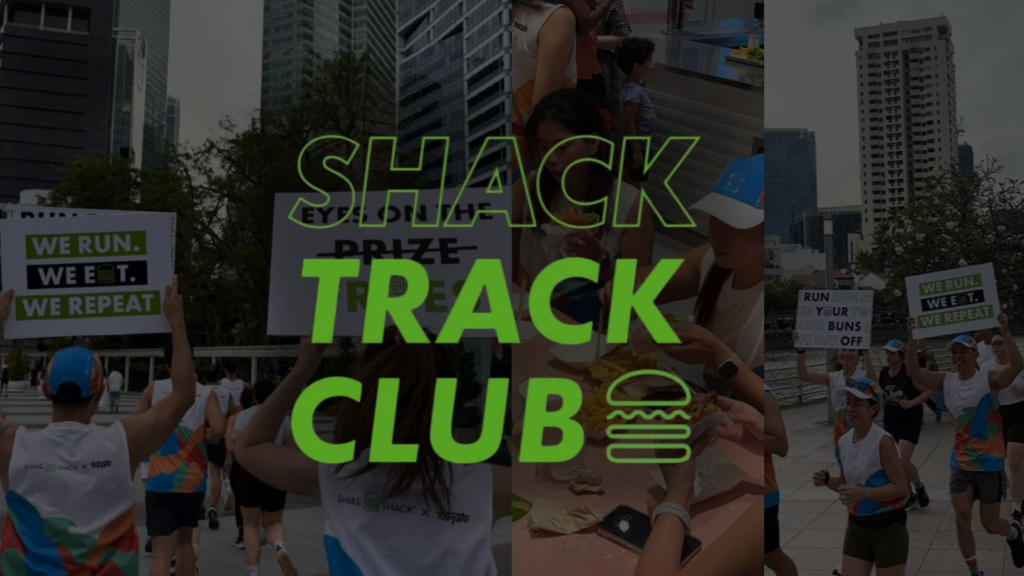
Shake Shack Singapore is tapping into the city’s growing fitness culture with the launch of Shack Track Club, a community-led run initiative designed to bring people together beyond the dining table. First introduced in January, the initiative sees participants sign up for scheduled runs that typically begin and end at Shake Shack outlets, blending movement with post-run social experiences, and naturally, burgers. It is held on a quarterly basis with the brand exploring increased frequency in response to demand and community interest. The next run is set to take place on 29 March in collaboration with local running club Jolly Pace Group. According to Shake Shack Singapore, the concept was born out of a desire to create a platform that extends beyond food, teaming up with local artists such as Tobyato to bring people together through shared experiences. Don’t miss: Why Anytime Fitness is putting community before competition The initiative is open to a wide audience, from casual runners to fitness enthusiasts, with a particular focus on young, urban consumers seeking lifestyle-led experiences. While the programme is spearheaded internally, Shake Shack Singapore said it works with community partners and collaborators to support route planning, engagement and on-ground execution. A sprint into lifestyle The move comes as brands increasingly look to build deeper connections through offline, experience-driven activations. Shake Shack Singapore said the run club aligns with its broader push towards lifestyle-led engagement. It added that lifestyle-led brand experiences allows it to engage its community in a more authentic, offline setting while reinforcing Shake Shack as “more than just a place to eat, but a lifestyle.”  The initiative also ties back to the brand’s “Stand for something good” ethos, with a focus on fostering community and shared experiences. Since its launch, the brand has seen encouraging traction, citing strong sign-ups and positive feedback from participants. Shake Shack Singapore has also seen organic sharing across social media, with participants responding well to the social and inclusive nature of the runs, it said. Beyond the runs, the brand is also extending engagement through social content, community storytelling, as well as perks such as post-run treats and exclusive merchandise. Looking ahead, Shake Shack Singapore said it views Shack Track Club as a long-term platform, with potential to scale into a broader lifestyle ecosystem. This could include more frequent runs, themed sessions, brand collaborations, and extensions into other community-driven activities. The move comes amid a broader push by brands in Singapore to tap into fitness-led communities and everyday lifestyle touchpoints. Earlier this week, Great Eastern rebranded the 888-metre sheltered track around the National Stadium as the Great Eastern Promenade, in partnership with The Kallang Alive Sport Management Co. The space will serve as a hub for year-round programming aimed at encouraging active living and social connection, as the insurer shifts from episodic campaigns to always-on community engagement. As part of the launch, Great Eastern also introduced a run club in collaboration with The Running Department, signalling a growing trend of brands embedding themselves within fitness communities through sustained, on-ground activations. Be part of #Content360 Singapore, 22–23 April 2026, where creativity and culture collide. Explore how AI-driven storytelling is shaping the future of content, gain practical insights, discover new tactics, and learn how the best in Asia are creating campaigns that truly resonate.  Related articles: Have you spotted these men in yellow?  HYROX record crowd shows fitness is where brands flex muscle   UOB flexes its ‘financial fitness’ push in cinematic short source

A run club… by a burger brand? Why Shake Shack is getting people moving Read More »

Exit interview: Mondelēz’s MY, SG, TH affairs lead signs off after 13 years

After more than a decade at Mondelēz International, Raja Zalina Raja Safran (pictured) is stepping down from her role as head of corporate and government affairs, Malaysia, Singapore and Thailand, closing a 13-year chapter defined by high-stakes challenges, relationship-building and team growth. In conversation with A+M, Raja Zalina said that looking back, three moments stood out as the most meaningful. The first was navigating complex and often high-pressure situations, from the Cadbury halal-related issue in 2014, to the COVID-19 pandemic and periods of heightened public scrutiny. “These were tough, high-pressure times, but they brought out the very best in me and my team,” she said, adding that despite being a small team, they tackled “big challenges together” across corporate communications and stakeholder engagement. “The teamwork, resilience, and quiet strength we showed is something I will carry with me always.” Equally significant was the role her team played in building long-term trust with stakeholders. Over the years, Raja Zalina said the function went beyond communications to shaping narratives and bridging understanding between business, government and communities. “Corporate and government affairs is ultimately about trust, and I’m proud of the credibility we built over time,” she said. “It didn’t happen overnight, but through consistency, transparency, and a strong commitment to doing the right thing.” Don’t miss: Cadbury celebrates everyday acts of generosity with limited-edition packaging Her third highlight was more personal – watching her team grow into leaders in their own right. “Watching my team step into leadership, both within and beyond the organisation, and gain confidence in their voice has been deeply fulfilling,” she added. Raja Zalina first joined Mondelēz International in 2012, and had the additional market of Thailand added onto her Malaysia-Singapore cluster around 2024. Prior to joining the snacks company, she lead corporate communications at Konsortium Logistik, and had a five-and-a-half-year stint at Malaysian Agrifood Corporation (MAFC).  Shaping narratives for lasting impact Reflecting on what kept her at Mondelēz for over a decade, Raja Zalina pointed first to the brands, from Cadbury to Oreo and Twisties. “I mean, who wouldn’t love being surrounded by these iconic, delicious products every day?” But beyond that, it was the purpose-driven nature of the role and its constant evolution. “No two days were ever the same, and that kept things exciting,” she said, adding: It was the chance to make a real difference, to shape narratives, bridge understanding between business and communities, and create a lasting, positive impact. She also highlighted initiatives such as Cadbury Kuih Raya Dari Hati (Raya desserts from the heart) and Mondelēz Trash Right as examples of programmes that extended beyond business into meaningful community engagement. Still, she emphasised that it was ultimately the people who made the biggest difference. “The relationships built over the years made it far more than just a job, it became a shared journey full of learning, fun and purpose,” she said. As she steps into retirement, Raja Zalina leaves her team with a simple but enduring piece of advice: “Always lead with both head and heart. Be strategic and authentic, and strive to turn good into great, but never lose sight of empathy, humility, and purpose.” She added;  At the end of the day, it is the people and the relationships you nurture that will carry you through the toughest moments. To her successor, Raja Zalina encouraged openness and adaptability. “Make this role your own in meaningful ways. Enjoy the ride. Stay open to learning from others, and don’t be afraid to explore new approaches,” she said, adding that Mondelēz offered a strong support system across its leadership and corporate affairs teams. “I will be quietly cheering you on from the sidelines.” Her advice to young professionals Looking at the broader industry, Raja Zalina noted that the communications landscape in Malaysia has become faster, more complex and increasingly visible, driven by digital and social media. “Narratives can shift in an instant, and expectations for transparency and authenticity are higher than ever,” she said, adding that communicators today are expected to play a more strategic role in navigating reputation, purpose and stakeholder expectations. Her advice to young communicators is grounded in credibility and integrity. “Build credibility for the long term. People trust what others say about you and your organisation far more than what you say about yourself,” she said. She also urged practitioners to stay informed, develop sound judgement, and consider the broader impact of their work. “In a fast-moving world, trust will always be your greatest asset.” What you say, how you say it, and when you say it truly matters. As she steps away from the full-time corporate life, Raja Zalina assured that her passion for policy dialogue, industry development and purposeful leadership remains strong. “I look forward to staying connected and contributing in new ways, either through board, advisory, or mentorship roles. The job status may have changed, but the purpose continues,” she said.  Be part of PR Asia Malaysia, 12 August 2026, for candid conversations and practical insights. Explore how opportunities can be found amidst uncertainties, as discovery becomes AI-shaped, regulations tighten, and scrutiny intensifies, communications now doubles down as a strategic infrastructure. Related articles:OSK Group names Amelia Lim to lead group corporate communications Unilever Indonesia elevates communications head Nurdiana Darus to board director Mondelez names new SEA vice president of marketing  source

Exit interview: Mondelēz’s MY, SG, TH affairs lead signs off after 13 years Read More »

Meta and YouTube lose key battle in social media addiction trial

Meta and YouTube, owned by Google, have been found liable in a landmark social media addiction trial in the US. A Los Angeles jury handed a win to a young woman who sued the two companies over her childhood addiction to social media. Meta is the parent company of Instagram, WhatsApp and Facebook. The tech giants were deemed by jurors to have intentionally built addictive platforms that harmed the 20-year-old’s mental health and hooked young users without sufficient concern for their wellbeing. She was awarded US$6 million in damages, with Meta liable for US$4.2 million and Google for US$1.8 million. While the amounts may be small for multibillion-dollar companies, the verdict could open the door for hundreds of similar cases to make their way through US courts. Both Meta and Google have said they disagree with the ruling and will appeal. Based on international media reports, the plaintiff, identified as Kaley or by her initials KGM, testified that she became addicted to social media as a minor, worsening her mental health struggles. She began using the platforms at age six and was on them “all day long” as a child. By age 10, she had become depressed and engaged in self-harm, and by 13, her therapist diagnosed her with body dysmorphic disorder and social phobia, which she attributed to her use of Instagram and YouTube. Don’t miss: Meta to acquire AI social network Moltbook Meta argued in its defence that her struggles stemmed from a turbulent home life, and that none of her therapists identified social media as the primary cause. Meanwhile, YouTube likened its platform to television and pointed to her declining usage over time. After 40 hours of deliberation, jurors found both companies negligent in the design of their platforms and concluded they failed to adequately warn users about potential risks. However, they determined that Meta bore a larger share of responsibility, at about 70%, compared to Google’s 30%, reflected in the damages awarded. TikTok and Snap were also named in the case initially but settled before the trial began, leaving Meta and YouTube as the remaining defendants. Google spokesperson Jose Castañeda said the verdict misrepresents YouTube “which is a responsibly built streaming platform, not a social media site.” A Meta spokesperson added that teen mental health is “profoundly complex and cannot be linked to a single app.” This marks the second verdict against Meta this week. In New Mexico, a jury found the company had harmed children’s mental health and safety in violation of state law, ordering it to pay US$375 million in civil penalties for misleading users about platform safety and enabling harm, including child sexual exploitation. The trial is the first in a consolidated group of cases in California against Meta, TikTok, YouTube and Snap, involving more than 1,600 plaintiffs, including over 350 families and 250 school districts. KGM’s case is also the first of more than 20 “bellwether” trials set to unfold over the next few years, which will help gauge jury sentiment and set legal precedent. The next bellwether case is scheduled for July, while a separate series of federal lawsuits involving hundreds of plaintiffs is set to go to trial in San Francisco in June.Related articles: Three months in, Australians say social media ban is working – but only just Indonesia moves to bar under-16s from social media in sweeping digital safety push How agencies in M’sia are preparing for the under-16 social media ban source

Meta and YouTube lose key battle in social media addiction trial Read More »

Vogue Singapore just made print shine, glow-in-the-dark style

Vogue Singapore has unveiled a glow-in-the-dark collector’s edition for its March 2026 issue, marking a first for the title as it doubles down on experiential print. Fronted by Devon Ross and shot by Dana Tripp, the issue themed “Ignite” explores individuality and self-expression, inspired by the spring/summer 2026 season. The limited-edition cover transforms in low light to reveal a luminous finish, designed to reflect self-discovery and creative confidence. It also signals the publication’s continued push to reimagine print as a collectible format in an increasingly digital landscape. In conversation with MARKETING-INTERACTIVE, Natasha Damodaran, publisher at Vogue Singapore said the move is part of a continued effort to reimagine print publishing as well as approach it as a collectible and an experience for readers. “In a highly digital landscape, we see value in creating physical editions that offer a sense of surprise and interaction, elevating the magazine beyond the page,” she explained.  Don’t miss: Can luxury and comics go together? Style by SCMP thinks so  The March issue also examines the growing intersection of fashion and technology, from AI-driven storefronts to real-time recommendations, and how these are reshaping consumer behaviour and the wider fashion ecosystem. According to Damodaran, innovation decisions are guided by editorial intent rather than technology for technology’s sake. Past experiments have included NFC-enabled covers, AI-generated editions and audio-led storytelling. For instance, the October 2024 “Voices” issue incorporated poetry by Alfian Sa’at and sound art by Jeremy Sharma, while its March 2023 “Roots” edition explored AI’s role in creativity. These initiatives have been shaped by shifting audience expectations. “In today’s saturated digital landscape, readers are looking for experiences that feel both engaging and distinctive. These print editions offer an added layer of interaction that extends beyond traditional print,” said Damodaran. This feedback continues to inform how Vogue Singapore thinks about future editions, ensuring that each innovation enhances both engagement and storytelling. The strategy also reinforces Vogue Singapore’s positioning in the region. Vogue Singapore has, from its inception, positioned itself at the intersection of fashion and technology. The publication has also looked to the future of fashion through a more progressive, digital-first lens. The experimental print editions are a natural extension of that position, explained Damodaran.  Looking ahead, Damodaran said such experiments will remain selective. “Our print innovations are thoughtfully curated for key tentpole issues—such as March, September and our anniversary editions, when we have the scale and depth of content to fully explore new formats,” she said. “As consumer behaviour continues to evolve—with audiences engaging across video, audio and digital platforms—storytelling is becoming increasingly multi-layered and with each collectible cover, we ensure that each activation remains special and purposeful.”  Damodaran first took on the role of publisher in April last year following Bettina von Schlippe’s elevation to publisher-at-large and vice president of business development and innovation at Media Publishares. That said, Damodaran has been key in establishing Vogue in Singapore, building Vogue-first initiatives, launching new and innovative content formats, as well as spearheading local partnerships for cultural impact.  Be part of #Content360 Singapore, 22–23 April 2026, where creativity and culture collide. Explore how AI-driven storytelling is shaping the future of content, gain practical insights, discover new tactics, and learn how the best in Asia are creating campaigns that truly resonate.  Related articles:    GQ to make SG debut this June, under Condé Nast license Outrage erupts as Vogue runs Guess ad with AI-generated model Berita Harian to go compact in 2026 as part of newsroom transformation  source

Vogue Singapore just made print shine, glow-in-the-dark style Read More »

VFS Global picks PR agency for ASEAN

VFS Global has appointed Ellerton & Co. as its public relations agency for ASEAN, tasking the firm with overseeing communications across Singapore, the Philippines, Indonesia, Thailand and Vietnam. The mandate centres on strengthening VFS Global’s engagement with media and key stakeholders, while streamlining public communication around official visa and consular application processes. A key focus will be promoting verified information channels and guiding travellers during peak travel periods. The agency is also tasked to ensure that VFS Global’s communications remain clear, timely and locally relevant as demand for travel services continues to rise across the region.  Don’t miss: Singapore Tourism Board picks PR agency  Headquartered in Zurich and Dubai, VFS Global supports governments and diplomatic missions by managing the administrative and non-judgmental components of visa, passport and consular services. Operating in 167 countries with more than 4,000 application centres worldwide, the company has processed over 533 million applications since its founding in 2001. Ellerton & Co. was chosen due to its experience within Southeast Asia’s startup ecosystem where it has supported companies from early funding stages through to later-stage growth and exits, according to a statement seen by MARKETING-INTERACTIVE. Furthermore, the agency has built a presence across finance and technology, handling mandates spanning startups, investments, sustainability and consumer brands. Its current client roster includes Nebius, backed by NVIDIA, and Atome Finance. VFS Global joins Ellerton & Co.’s list of new clients including Ethiopian Airlines, where the agency will lead PR works across Singapore, Australia and New Zealand. Other recent additions including coworking provider ARCC Spaces and ride-hailing platform TADA, alongside expanded remits for existing clients such as BDx Data Centers, Kintone and Sansan. Be part of #Content360 Singapore, 22–23 April 2026, where creativity and culture collide. Explore how AI-driven storytelling is shaping the future of content, gain practical insights, discover new tactics, and learn how the best in Asia are creating campaigns that truly resonate.  Related articles:   Veeam picks PR agency partner to amplify data resilience across APJ  Emirates takes flight with new PR agency for SEA  Moomoo Singapore names new PR agency  source

VFS Global picks PR agency for ASEAN Read More »

Agency agenda: Moonfolks' Anish Daryani sets eyes on new market entries this year

Moonfolks is setting its sight on regional expansion, with Vietnam emerging as the agency’s next growth market, just after its newly launched presence in Brunei. Speaking on Marketing Connected’s Agency Agenda podcast, the CEO of Moonfolks, and also president director of Havas Moonfolks, revealed that the Vietnam move has long been in the works. “We could have done this expansion way back, since before COVID, but the pandemic happened and our plans were derailed,” he said. Now, with a strong 2025 behind the agency, he said, “The timing is perfect, and we all feel confident to go out and start winning the world over.” The move also marks a return to familiar ground for Daryani, who previously spent time working in Vietnam. He credits the market for shaping his entrepreneurial mindset, describing it as a place defined by “the hustle, the excitement, and the impatience to get things done,” alongside a strong appetite for digital innovation. In contrast, Brunei presents a different opportunity. While smaller in population, Daryani pointed to its strong economic fundamentals and untapped potential. “They have big ambitions as clients and brands there, but they also have gaps in terms of the industry being able to support them,” he said, adding that a single visit was enough to spark the expansion decision. Don’t miss: Agency agenda: Burson APAC’s HS Chung on resetting culture for the futureCatch the full conversation here:  Both markets will be supported by a hub-and-spoke model, with Indonesia remaining the agency’s anchor. “We’ll have Indonesia as the hub team, but we will have specialists coming onboard with market understanding on the ground,” he explained. Expansion, however, is just one part of Daryani’s broader agenda for Moonfolks. He is also focused on strengthening capabilities in tech and data, while ensuring the agency’s culture scales alongside its footprint. “We have a very strong culture at Moonfolks, and we need to translate that into our new markets” he said, noting that providing support and backing to its new Vietnam and Brunei units will be a key priority. That culture is rooted in an entrepreneurial spirit that Daryani actively fosters within the agency. “We often tell our folks: ‘We wish this is your last job’, because when they get out of here, they should be doing something on their own, whether its a creative business or an agency business,” he said. “So we’re actually grooming a whole lot of entrepreneurs.” For Daryani, that mindset is personal. Having grown up in a family of entrepreneurs, he credits early exposure to business, from working in his father’s shop to learning how to read customers, as foundational to his leadership today. “A lot of the confidence my brother and I have, and our understanding of people, we learned in our very early years, and it became intuition,” he said. With expansion underway and capabilities evolving, Daryani is bright-eyed for 2026 ahead, as he said: The only reward for doing good work is more work. Also tune in to the full conversation on Spotify: Tune into the rest of this conversation on your favourite podcast platforms, by searching up Marketing Connected. For all the visual people out there, we’ve got your back as well, with our vodcasts on YouTube.Related articles: Agency agenda: Rana Barua charts Havas’ growth across AsiaMoonfolks plants flag in Brunei, signals wider Southeast Asia push Havas Moonfolks appoints chief strategy and growth officer amid leadership expansion source

Agency agenda: Moonfolks' Anish Daryani sets eyes on new market entries this year Read More »

adidas Trefoil logo makes a World Cup comeback after 36 years

Adidas has returned its iconic Trefoil logo to the FIFA World Cup for the first time in 36 years, unveiling official away kits for 25 partner federations, including 13 nations that have qualified for FIFA World Cup 2026.  The Trefoil’s return marks a nod to the 1990s, the last era in which the logo appeared on World Cup kits. Each design blends retro aesthetics with modern performance features, featuring geometric patterns, stylised vertical lines, and colourways that celebrate the culture and heritage of each nation. Standout designs include Argentina’s swirling blue motifs inspired by traditional art, Germany’s navy chevrons referencing decades of DFB history, Italy’s light blue suit-inspired pattern, Japan’s 12-colour stripe representing players and fans, Mexico’s Grecas architecture motif, and Spain’s pyrite pattern inspired by classic manuscripts. Don’t miss: What ‘authentically Singaporean’ means for global brands like adidas Beyond style, the jerseys are engineered for high-performance play. Body-mapped 3D mechanical stretch fabrics incorporate CLIMACOOL+ technology to wick sweat and keep players cool, while jacquard finishes allow freer movement. Three-stripe herringbone stitching improves ventilation, and shapeshifting lenticular logos add an innovative visual flair. The kits were unveiled at a high-energy launch event in Los Angeles, transforming a standstill of cars into a street-style celebration of football culture with performances by Kaytranada and Baby Keem. The reveal highlighted how adidas bridges the gap between elite football, fan culture, and lifestyle expression. “As we approach an immense World Cup, travelling across three incredible host nations, we felt it was a fitting and inspired moment to bring the trefoil back to the biggest stage in world football,” said Sam Handy, GM Football at adidas. “This is a defining era of football culture. Its style travels more walks of life and pockets of sub-culture than ever before, and the jersey is perhaps the truest representation of this. With that, these designs pay homage to each country, while offering all fans a catalogue of football designs that comfortably transcend the pitch and the stands,” added Handy.  In addition to the away kits, adidas has released “LA PREPARACIÓN AMERICANA” (‘The American preparation’), a short film following football stars as they explore unconventional ways to get ready for FIFA World Cup 2026. The journey begins in Manhattan with American player Trinity Rodman at a busy newsstand, before moving to Germany, where Florian Wirtz trains under coach Julian Nagelsmann against ice hockey players and Mexican luchadores. Spanish forward Lamine Yamal tests his control atop a mechanical horse in a western-style saloon, while Lionel Messi lines up strikes at a US bowling alley, culminating in Mexico City with Edson Álvarez spiralling into action. The film also highlights adidas’ long-standing 50-year partnership with FIFA, celebrating both the players and the tournament’s cultural impact.  Be part of #Content360 Singapore, 22–23 April 2026, where creativity and culture collide. Explore how AI-driven storytelling is shaping the future of content, gain practical insights, discover new tactics, and learn how the best in Asia are creating campaigns that truly resonate.  Related articles:   Coca‑Cola gets fans bubbling ahead of FIFA World Cup 2026  How Coca-Cola turned the FIFA trophy tour into a Malaysian fan experience TikTok named FIFA’s first ‘preferred platform’ for 2026 World Cup source

adidas Trefoil logo makes a World Cup comeback after 36 years Read More »

How ECOVACS is turning chores into a helping hand for caregivers

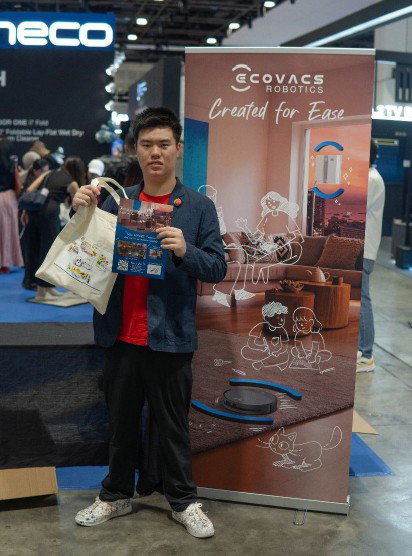
ECOVACS Robotics is rolling out its “Created for ease” brand platform across APAC, localising it with a new campaign tagline, “Always in your corner”, as it looks to connect more deeply with regional audiences. The campaign builds on ECOVACS’ global positioning around ease, reframing it for APAC consumers as not just physical convenience, but mental relief. The brand said it aims to reduce everyday burdens by offering technology that works quietly in the background, allowing users to focus on more meaningful priorities. At the centre of the campaign is a focus on caregivers, particularly those in the “sandwich generation” who balance work commitments with caring for both children and ageing parents. ECOVACS positions its home service robotics ecosystem as a support system for these individuals, helping to ease household responsibilities. Don’t miss: Standard Chartered redefines wealth through wellness via content push As part of the initiative, the brand has partnered with Elijah, a special needs artist behind the Instagram account @Eli_lailai, to design exclusive merchandise. The collaboration was facilitated by SG Enable through its i’mable Collective, which supports persons with disabilities in the creative sector. The campaign also highlights ECOVACS’ product ecosystem, including its DEEBOT robotic vacuum cleaners and WINBOT window cleaning robots. The company said its technologies, such as OMNI station and OZMO roller, are designed to deliver efficient, low-effort cleaning across different home environments. The “Always in your corner” push will be activated across multiple APAC markets, including Singapore, Australia, Vietnam, India, Thailand, Malaysia and Indonesia, through a mix of local partnerships, storytelling and community engagement efforts. The move comes as ECOVACS looks to strengthen its positioning in the service robotics space, with its broader “Robotics for all” mission focused on making intelligent home technologies more accessible. The company currently serves more than 38 million households across nearly 180 markets worldwide. This regional campaign builds on ECOVACS’ global brand narrative, first unveiled in January through the “ECOVACS, created for ease” film in partnership with Monks. The video emphasised the brand’s commitment to easing household tasks while humanising innovation, and marked the start of a strategic partnership with BSH Home Appliances Group to jointly develop intelligent floor cleaning solutions, aiming to set new standards in smart home appliances. Be part of #Content360 Singapore, 22–23 April 2026, where creativity and culture collide. Explore how AI-driven storytelling is shaping the future of content, gain practical insights, discover new tactics, and learn how the best in Asia are creating campaigns that truly resonate.  Related articles: Sentosa evolves brand to inspire wellness and balance with new campaign   How Fernleaf’s SmartGro campaign spotlights the tech-savvy children of today   StarHub calls time on mindless scrolling with wellness festival source

How ECOVACS is turning chores into a helping hand for caregivers Read More »

Need a pause from everyday life? CHAGEE thinks Hojicha can help

Hojicha, the roasted Japanese tea, is quietly building momentum across Asia. Tapping on this trend, CHAGEE is relaunching its Hojicha genmai milk tea in Singapore from 27 March 2026.  The launch is guided by “The art of lightness”, a campaign that frames tea as an act of calm in a busy day. Hojicha, known for its naturally low caffeine, roasted aroma and smooth, mellow finish, fits this philosophy as its flavours encourages one to slow down, said CHAGEE.  The campaign video opens with a woman painting in a sunlit field, before shifting focus to a local tea farmer tending her crops. A writer is then shown working nearby, pausing as the warm aroma of roasted tea leaves drifts through the air. Drawn by the scent, the painter and writer leave their work behind and follow it to the tea farmer’s home, where the three women come together to enjoy CHAGEE’s Hojicha genmai milk tea. Don’t miss: CHAGEE ventures into South Korea as part of regional expansion  This intention is further shaped by activations across Singapore throughout the months of March and April. Sampling booths in the CBD, drink drops at university campuses, and in-store tastings invite consumers to engage with the tea beyond the cup. Complementing the drink are limited-edition merchandise items, including a tea-scented sachet charm, a hand-poured candle featuring the Hojicha genmai visual, a canvas tote bag, and a thermal tumbler. All of which are designed to extend the calm of tea into daily life. Bundled purchases are available while stocks last at CHAGEE outlets and via the CHAGEE App. Furthermore, the brand is also running a sip and win lucky draw. Customers can play a mini game on the CHAGEE app and stand a chance to win a grand prize of more than SG$500.  “At CHAGEE, we are always looking ahead at where tea is going and what our consumers are ready to discover,” said Eileen Lau, head of marketing, CHAGEE Singapore. “Hojicha has been building momentum globally, and we knew it was ready for its moment here. We wanted to be the ones to bring it properly: with the sourcing, the craft, and the experience to match,” Lau added.   The Hojicha launch follows CHAGEE’s wider push to encourage consumers to slow down and savour tea as part of everyday life. Earlier this year, the brand’s “Garden of senses: A tea reverie” exhibition at the Asian Civilisations Museum invited visitors to explore tea through sight, scent, sound, touch, taste, and thought. Alongside the museum activation, CHAGEE also launched Camellia oolong milk tea, a limited-time Chinese New Year drink inspired by the camellia flower, symbolising devotion, harmony, and enduring relationships. Be part of #Content360 Singapore, 22–23 April 2026, where creativity and culture collide. Explore how AI-driven storytelling is shaping the future of content, gain practical insights, discover new tactics, and learn how the best in Asia are creating campaigns that truly resonate.  Related articles:  CHAGEE opens first family-friendly store in Singapore at Suntec City  Eugene Lee steps into expanded APAC role at CHAGEE  CHAGEE and Sanrio sweeten the holidays with Tanned Hello Kitty collab  source

Need a pause from everyday life? CHAGEE thinks Hojicha can help Read More »