marketing interactive

How Carlsberg turned Singapore’s kopitiam culture into an award-winning brand experience

Most brands spend years trying to earn a place in culture. Carlsberg took a different approach. It looked at a cultural space it had already occupied for decades. That thinking led to Jalan Carlsberg, an immersive brand activation created by Carlsberg Singapore, and independent creative agency The Ad Makers, winning silver in the Most Creative – Immersive Brand Activation category at the MARKies Awards Singapore 2026. For years, Carlsberg has been a familiar sight across Singapore’s kopitiams. Long before experiential marketing became an industry buzzword, generations of Singaporeans were already encountering the brand in neighbourhood coffee shops, gathering with friends over meals, conversations, and beer. Yet, despite this long-standing association, few consumers would consciously describe Carlsberg as a brand deeply connected to Singaporean culture. That observation became the starting point for Jalan Carlsberg. Rather than creating an entirely new experience platform, the team asked a different question: what if the place that helped build Carlsberg’s relationship with Singaporeans became the experience itself? The answer was a retro-reimagined Singaporean street inspired by the sights, sounds and social rituals of kopitiam culture. Located at GastroBeats 2025, Jalan Carlsberg transformed familiar local icons into a contemporary brand world. Red plastic chairs became larger-than-life landmarks. Traditional mini-marts were reinterpreted as branded retail experiences. Everyday neighbourhood details were elevated into interactive moments designed for exploration and sharing. The result was an activation that felt both familiar and unexpected. Visitors immediately recognised the environment because it reflected a space they already understood. At the same time, they were invited to experience it in a way they never had before. Instead of introducing consumers to a new cultural territory, Carlsberg amplified one that had always belonged to the brand. In many ways, that was what made the campaign stand out. While experiential marketing often focuses on creating worlds that transport audiences somewhere else, Jalan Carlsberg demonstrated the power of looking closer to home. By drawing from a setting that already held meaning for Singaporeans, the activation turned everyday cultural cues into a shared experience that felt authentic rather than manufactured. The campaign also reflected a broader trend in modern brand building. As consumers become increasingly skeptical of borrowed cultural relevance, brands are finding greater value in uncovering truths that already exist within their own histories. For Carlsberg, that truth was found in kopitiams. For marketers, the Jalan Carlsberg brand activation served as a reminder that sometimes the strongest ideas are the ones that recognise the value of a space a brand already occupies. source

How Carlsberg turned Singapore’s kopitiam culture into an award-winning brand experience Read More »

Netflix sets guardrails for AI use in content production

Streaming giant Netflix has developed a guideline for the safe use of generative AI in content production, according to a report by Nikkei Asia. Speaking to journalists during a visit to Japan, co-CEO Greg Peters said the company is committed to maintaining a creator-centric approach to AI while exploring opportunities to deploy the technology across user experience, content production and advertising. According to the report, Peters said Netflix aims to support creators in using AI throughout the creative process, adding that the company believes AI should be led by creators rather than replace them. Don’t miss: Netflix chairman to step down as streamer posts strong Q1 results  As part of that effort, Netflix has published a set of guidelines for production partners on the use of generative AI in content creation. The guidance is designed to help filmmakers, production partners and vendors understand when and how generative AI tools can be used in productions destined for Netflix. It also includes a framework for assessing AI use cases and managing potential risks. “To support global productions and stay aligned with best practices, we expect all production partners to share any intended use of GenAI with their Netflix contact, especially as new tools continue to emerge with different capabilities and risks,” Netflix said in the guideline seen by MARKETING-INTERACTIVE. The document outlines several principles that productions should follow before adopting generative AI tools. These include ensuring outputs do not replicate or substantially recreate identifiable characteristics of unowned or copyrighted material, preventing infringement of copyright-protected works, and using tools that do not store, reuse or train on production data inputs and outputs. The guidelines also state that generative AI should not be used to replace or generate new talent performances or union-covered work without consent. The move comes as Netflix expands its AI ambitions across both content and advertising. Earlier this year, the company said it was investing in generative AI applications spanning content production, advertising and user experiences, while continuing to position the technology as a tool that supports human creativity. At its annual Upfront presentation, Netflix also unveiled a range of AI-powered advertising capabilities as it accelerates the growth of its ad-supported business. These include AI agents designed to manage and purchase advertising inventory, as well as tools that dynamically adapt creative assets across formats such as vertical video and pause ads. The company is also expanding contextual advertising capabilities that match brand creative with specific shows and viewing environments. The technology has already been tested with advertisers including DoorDash, Target and TurboTax, and is expected to roll out across all ad-supported markets by the end of the year. Related articles:  Netflix joins the attention war with new ‘Clips’ feature  Mediacorp takes local drama regional with Netflix deal  Netflix bows out as Paramount raises the stakes in Warner Bros. bidding war  source

Netflix sets guardrails for AI use in content production Read More »

Orange you upset? Yakult discontinues legacy flavour, leaving fans divided

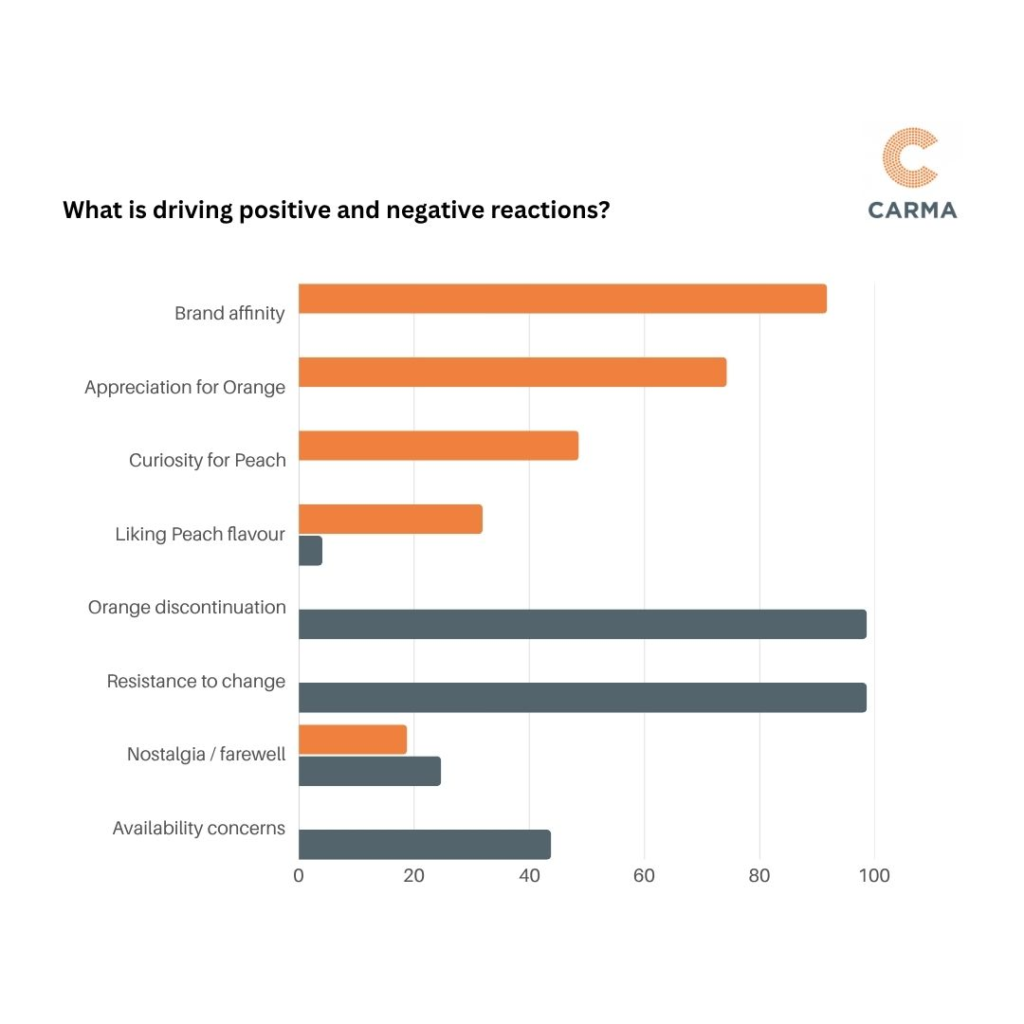
Yakult Singapore is retiring its orange-flavoured Yakult and replacing it with a new peach flavour, marking the brand’s first flavour change since it hit Singapore’s shores in 1979. The orange-flavoured Yakult will be phased out locally from July 2026.  The original lineup of flavours at launch included orange, grape, green apple and the original classic version. The change is due to production capacity constraints at its Singapore factory, with production of the orange-flavoured Yakult set to cease at the end of June. Don’t miss: How Yakult Malaysia is evolving with its iconic Yakult ladies for 90th anniversary  In an interview with The Straits Times, Masaaki Sunami, Yakult Singapore’s managing director, said the company had received requests from customers to bring the peach-flavoured Yakult to Singapore, a flavour that has performed “very well” in other markets and is popular among international consumers. He added that the peach-flavoured Yakult offers a strong alternative to the orange flavour and that the company is encouraged by its success in other countries. The move has divided fans on the internet. Checks by MARKETING-INTERACTIVE on Yakult Singapore’s social media pages found several users urging the brand to keep the orange flavour. On its latest post, one user commented that orange was “the reason why consumers choose Yakult over Vitagen”, positioning the flavour as a point of differentiation from its competitor. Another appealed to the brand to “please listen to your consumers” and reconsider the move. Meanwhile, media intelligence firm CARMA found that the online conversation is driven more by nostalgia rather than rejection of the new flavour, with the strongest theme being product discontinuation (44%), followed by flavour preference (36%), suggesting that consumers are primarily reacting to the loss of orange Yakult, rather than expressing direct dislike toward peach Yakult.  Positive discussions were driven by Yakult’s strong brand affinity (91.7%) and curiosity toward the new peach flavour (48.6%). “Orange Yakult’s discontinuation highlights how legacy products can hold emotional value far beyond their commercial performance. While Yakult says orange was its least popular flavour, online discussions suggest it may have been one of the brand’s most emotionally significant products,” said CARMA. The conversation had also moved beyond nostalgia into action, with consumers sharing plans to stock up on orange Yakult before its discontinuation. This suggests the announcement created a scarcity effect, transforming a routine flavour change into a consumer-led farewell moment. This was broadly echoed by Truescope Singapore, which found that the announcement triggered a sharp spike in attention, with coverage rising from three items before the announcement to 257 after it. This marked a near 8,500% increase, reaching close to 49.4 million in potential audience within 36 hours. However, Truescope’s analysis suggests that sentiment varied depending on where the conversation was taking place. While social posts leaned slightly negative due to nostalgic and farewell-style reactions around the retirement of orange Yakult, audience comments were more positive. According to Truescope, the dominant sentiment at the comment level was “positive-to-relieved”, with many users saying orange was their least preferred flavour and welcoming the switch to peach. Rather than rejecting the new peach flavour, much of the conversation centred on consumers defending their preferred Yakult flavours. Truescope noted that users were more concerned about Yakult potentially discontinuing favourites such as original, grape and green apple, with comments such as “just don’t touch my original and green apple” and “just don’t touch the purple one please” drawing high engagement. “Majority of commenters across TikTok, Instagram, and Facebook expressed that orange was their least preferred flavour and welcomed the change. The key themes audiences are raising centre not on grief for orange, but on protective anxiety about grape and green apple,” explained Truescope.  Yakult Singapore has yet to publicly respond to the reaction. The brand’s recent marketing efforts have largely centred on Yakult Gold, which it positions as a healthier version of its probiotic drink without “compromising the taste”. Other initiatives include an ongoing recipe-led campaign showcasing different ways consumers can enjoy Yakult, from matcha and strawberry shakes to ice cream. Meanwhile in Malaysia last year, Yakult celebrated its 90th anniversary with a series of consumer engagement efforts, including grocery and hypermarket roadshows, bottle-shaped mascots and a “Spin to win” campaign offering customers the chance to win flights to Japan amongst other prizes. The brand also evolved its door-to-door service led by the iconic “Yakult ladies” with a phygital layer, where receipts include QR codes directing customers to a mobile site for registration, gamified experiences and reward redemption.  Photo courtesy of Yakult Singapore, Facebook. Related articles:  ‘Unlike other nutri-grade D cultured milk’, says Vitagen in latest competitor jab  Yakult SG takes consumers on a gut health adventure with 3-part mini game Yakult plastic straws marketed on Carousell as ‘vintage’, reselling at SG$1,000  source

Orange you upset? Yakult discontinues legacy flavour, leaving fans divided Read More »

In conversation: The business of belief and marketing national pride

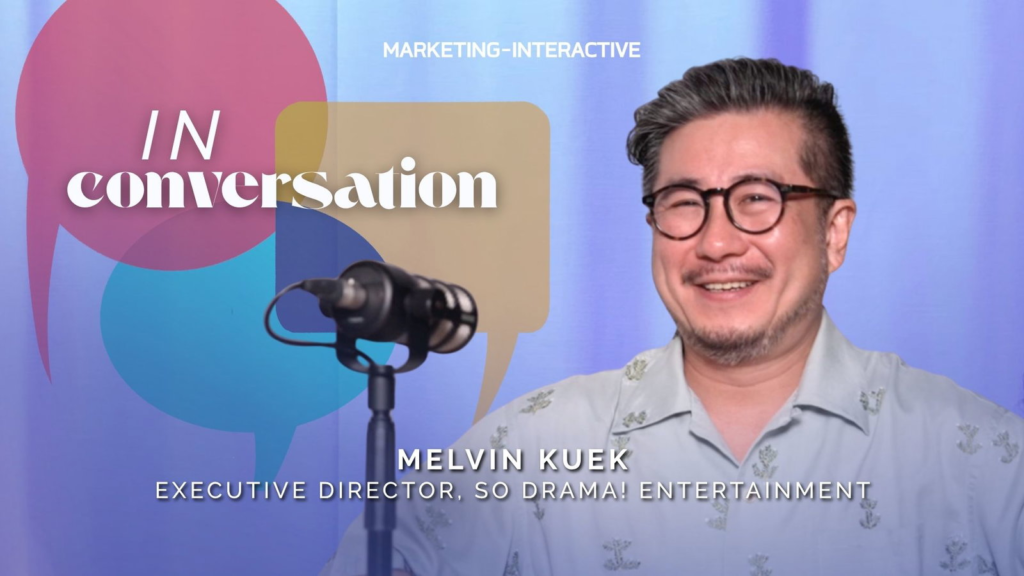
Singapore’s content landscape is increasingly crowded, but for Melvin Kuek, executive director of So Drama! Entertainment, success today is no longer measured by revenue, margins or pitch wins alone. Speaking on Marketing Connected’s “In conversation” podcast series, Kuek shared that his move from agency life to content creation, has brought a significant shift in his perspective of how success is measured. While agencies often focus on financial metrics, So Drama! increasingly looks at audience engagement and community signals. “We look at shares, comments and people saying they’re looking forward to the next episode,” he said. “At the end of the day, it’s about knowing who your audience is, where they are and what they want to see.” Catch the full interview here:  That change required a broader mindset shift, from “dollars and cents” to what Kuek describes as “optimising for trust and belief”. “It’s incredibly freeing because you’ve taken away the constraints of a client brief,” he said. “Ultimately, it’s about understanding what your audience wants and needs.” As a proudly Singaporean media and entertainment company, a major part of So Drama’s mission is championing local talent and stories. Through initiatives such as Homegrown, its annual music festival, the Kakee lifestyle app, and an upcoming action-drama film slated for release during National Service 60 celebrations next year, Kuek hopes to showcase what Singapore creators can achieve. Don’t miss: In Conversation: IKEA Singapore on why awareness must be earned, consistently  “We want to change the narrative from ‘Can Singapore do it?’ to ‘What should Singapore do next?’” he said. For Kuek, that ambition ties closely to the idea of marketing national pride, a concept that goes beyond patriotic messaging.  Marketing national pride is about making people proud of who we are and the work that we do “The work should never have a call to action that says ‘like this because it’s Singapore’. Instead, create something that people resonate with, connect with, and want to share.” As audiences become more selective and fragmented, Kuek believes trust, belief and cultural relevance have become some of the hardest, yet most valuable, metrics for marketers to earn. “Everybody thinks it’s a soft metric,” he said. “Actually, it’s a hard metric, because it’s completely binary. It’s either yes or no.” Much of his views anchor on his transition from agency leadership roles at the likes of BBDO Singapore, DDB Asia and Foxtrot Charlie, to leading the content and entertainment business focused on telling Singaporean stories. Although he made the switch out of agency life, Kuek said that they’re not that different.  “At the end of the day, storytelling still sits at the heart of everything that we do,” he said. “We tell proudly made-in-Singapore stories that we hope will resonate with audiences and narratives Singaporeans can be proud of.” Also tune in to the full conversation on Spotify: Tune into the rest of this conversation on your favourite podcast platforms, by searching up Marketing Connected. For all the visual people out there, we’ve got your back as well, with our vodcasts on YouTube. Related articles: In conversation: Singapore’s arts scene wants your attentionIn conversation: How Airwallex channels sports energy into B2B impact In Conversation: Are we forgetting what makes marketing work?  source

In conversation: The business of belief and marketing national pride Read More »

Media optimism anchors global AI narrative despite gap in public trust

While the media increasingly balances AI risks, the massive commercial and operational opportunities brought by the technology remain the dominant narrative. Optimism characterises 57% of all AI coverage, though scrutiny and caution are slowly intensifying. The findings come from media intelligence firm CARMA’s latest report, “The Global Story of AI.” The study comprehensive in scope, benchmarking public sentiment against media narratives by surveying over 6,300 respondents across 19 markets alongside an analysis of 500 tier-one global media outlets spanning 37 markets, including China, Japan, Indonesia, the UK, and the US. According to the report, the global conversation around AI is firmly anchored in “build and deploy” narratives rather than “doom and disruption.” The perceived benefits of AI are most heavily amplified by CEOs (43%), academics (26%), and regulators (20%), while fear and pushback primarily originate from creators, NGOs, and labour unions. Business adoption and investment announcements serve as the primary drivers of positive media coverage. Notably, the business implications of AI integration generated nearly 10 times the volume of coverage dedicated to workforce or talent implications. In the generative AI space, ChatGPT continues to dominate both user traffic (holding an 80% share) and media real estate. Over one-third of all AI product coverage features OpenAI’s flagship tool, followed by Chinese challenger DeepSeek at 19%. Conversely, enterprise-grade platforms maintain a minor, fragmented presence with very limited media exposure. The report also highlights that high-profile feuds and rivalries among tech leaders consistently capture global headlines as the war for talent intensifies. While a common media narrative attempts to position OpenAI as the “bad guy” and safety-oriented rivals such as Anthropic as the “good guy,” Anthropic’s safety-first positioning has not yet translated into strong public differentiation—presenting a strategic messaging challenge for the broader industry. AI sentiment divides sharply along geographic lines. Asia frames AI as a decisively transformational tool, placing heavy emphasis on economic acceleration and competitive advantage, whereas Europe discusses AI gains much more cautiously, heavily emphasising conditional or managed implementation. Globally, excitement is strongest in high-growth economies outside of Western Europe, Canada, and Japan. While the media effectively mirrors public excitement regarding automation and operational efficiency, it frequently overestimates overall positivity and trust signals compared to actual audience data, particularly in Western markets. One of the report’s most critical findings for communications professionals is a distinct gap between what the media portrays as frightening versus what the public actually fears. The media narrative focuses heavily on a abstract “loss of human control,” data privacy violations, and the existential threat of automation. AI-enabled content creation and editing stand out as the strongest media triggers for fear and anger. However, audience data shows that everyday citizens are far more concerned with tangible threats such as cybercrime and the spread of misinformation, particularly its impact on democratic elections. This anxiety is highest among the 20–29 and over-60 demographics. Furthermore, while the media accurately maps where AI anxiety exists, it routinely overstates its emotional intensity in more than half of the surveyed countries. The markets boasting the highest public trust and excitement are China, Saudi Arabia, and South Korea—areas where the media landscape and audience sentiment are almost perfectly aligned. Mark your calendars for 24 June! #Content360 Hong Kong returns with a dynamic, one-day event dedicated to pivotal trends—from the silver economies to breakthrough IP collaborations, sports, and beyond. Let’s dive into the art of curating content with creativity, critical thinking and confidence! Related articles: How will AI reshape the PR industry in HK?Survey: Over half of APAC PR pros embrace AI, but lack strategic adoption source

Media optimism anchors global AI narrative despite gap in public trust Read More »

What if the best seat at the World Cup isn't in the stadium?

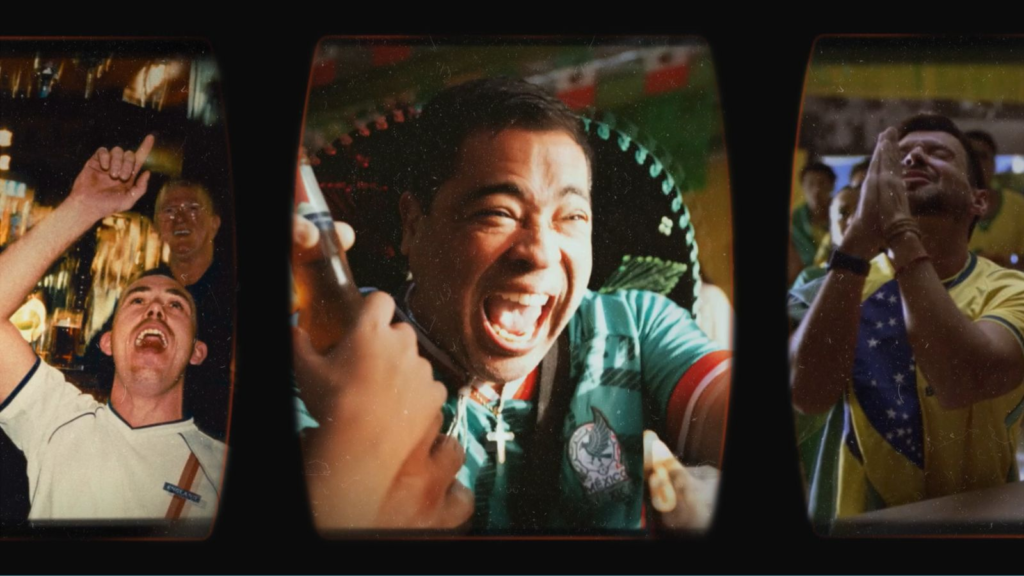
AB InBev is turning bars into football viewing hubs around the world as it launches a new global platform ahead of the FIFA World Cup 2026. Titled “Cheers to bars”, the initiative celebrates the role bars play as community gathering spaces while supporting bar owners through a series of trade programmes and activations tied to the tournament. The move comes as the FIFA World Cup 2026 prepares to become the largest edition of the tournament to date. AB InBev’s global beer brands, Budweiser and Michelob ULTRA, are serving as official beer sponsors of the competition. Don’t miss: Why the World Cup’s biggest screen may no longer be the only one that matters As part of the campaign, AB InBev has partnered with creative agency GUT to launch a global anthem film that pays tribute to the atmosphere, passion and social connections created in bars.  The nearly two-minute film opens with nostalgic scenes of football fans gathered in bars, setting the stage for a tribute to the emotions that come with the game. Through a series of voiceovers, viewers are taken through moments of love, passion, heartbreak and triumph that unfold both on and off the pitch. The film then cuts between scenes of fans celebrating victories and mourning defeats in bars around the world, highlighting the role these venues play in bringing communities together. It closes with the message: “Bars are where the world comes together.” The brewer is also rolling out a series of market-specific initiatives designed to drive footfall and support local businesses during the tournament. Among them are plans to host 200,000 watch parties across more than 40 countries, transforming bars into match-day destinations for football fans. In the US, Stella Artois is introducing a “Work From bar” initiative, which will reimburse up to US$100,000 for consumers aged 21 and above who enjoy a Stella Artois or Stella Artois 0.0 while watching weekday FIFA World Cup matches from their local bar. Meanwhile in Brazil, AB InBev’s subsidiary Ambev will invest more than R$100 million in 2026 to provide mentoring and financial support for entrepreneurs operating up to 250,000 points of sale across the country. The company said the platform aims to recognise both the social and economic contributions of bars, which have long served as venues for celebrations, friendships and shared experiences. In line with its responsible drinking commitments, AB InBev said events under the platform will feature no- and low-alcohol options alongside responsible beverage service training for participating venues. The campaign forms part of the brewer’s broader FIFA World Cup strategy, positioning bars as key gathering points for fans as billions of viewers tune in to the tournament next year. “During the FIFA World Cup 2026, bars will become the beating heart of every neighborhood – places where strangers become friends, every goal is celebrated as one, and collective memories are created with every raised glass,” said Michel Doukeris, CEO, AB InBev. He added, “Beer and football have long been catalysts for bringing people together to create moments of joy and belonging. Nowhere is this spirit of beer and football more alive than in bars, where they share a special place in culture.” As brands ramp up their FIFA World Cup 2026 marketing efforts, many are leaning into the emotional side of fandom. Last week, Coca-Cola unveiled “No better feeling”, the final instalment of its three-part global “Feel it all” platform ahead of the tournament. Positioned as a cinematic tribute to football supporters, the film focuses on the emotional highs and lows of matchday rather than the action on the pitch. Using VAR decisions as a storytelling device, it follows fans through moments of anticipation, anxiety, triumph and disappointment, capturing how quickly emotions can shift during a game. Related articles: Get paid to watch the World Cup? Yes, it’s a real job  How adidas turned backyard football into World Cup mythology  The FIFA World Cup is coming to McDonald’s, and Grimace made the squad source

What if the best seat at the World Cup isn't in the stadium? Read More »

Is Muslim tourism the next growth engine for sports?

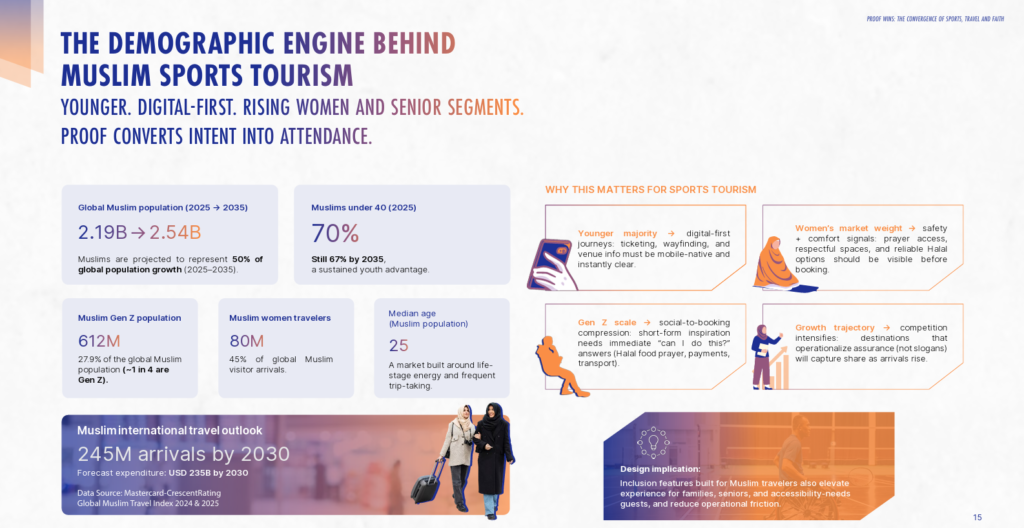
Muslim-friendly sports tourism could grow into a US$21 billion global opportunity by 2030, according to a new report by Mastercard and CrescentRating, as demand for sports-related travel continues to rise among Muslim travellers worldwide. The report, titled “Proof wins: The convergence of sports, travel and faith 2026”, found that while enthusiasm for sports travel is high among Muslim consumers, destinations and event organisers continue to lose potential bookings when essential information around faith-based and practical travel needs is unclear. According to the study, Muslim sports-event travel currently represents an estimated US$11 billion market. By 2030, that figure could rise to US$21 billion if destinations improve visibility around Muslim-friendly facilities and services during both the booking and event experience. The projected growth would be driven by two factors: a 25% increase in attendance when Muslim-friendly essentials are clearly communicated before booking, and a 20% uplift in on-site spending when halal food options are accessible, trusted and clearly labelled. Don’t miss: Muslim travellers projected to hit 245m by 2030 as women reshape tourism demand The findings come amid broader growth in the Muslim travel market. Muslim international arrivals are forecast to rise from 186 million in 2025 to 245 million by 2030, generating an estimated US$235 billion in travel expenditure globally. Despite this, only 6% of international Muslim trips currently involve attending a sporting event, highlighting what the report describes as a significant untapped opportunity for destinations and organisers. Confidence drives conversion At the centre of the report is the concept that “proof” matters as much as interest when it comes to converting sports tourism demand. Researchers found that Muslim travellers require clear and verifiable information around halal food availability, prayer facilities, transport options, ticketing and payment methods before committing to travel. Affordability remains the most important booking driver, cited by 61% of respondents. This was followed by access to halal food and prayer facilities (48%), as well as safety and crowd management considerations (45%). The report also found that 87% of Muslim travellers consider prayer flexibility important when selecting sports events. However, challenges remain. Nearly half (46%) of respondents said they had encountered limited or unavailable prayer facilities at sports venues, while 36% reported a lack of ablution facilities and 28% struggled to find halal food options during events. “What this research clearly shows is that demand alone is not the constraint, confidence is,” said Fazal Bahardeen, founder and CEO of CrescentRating. “Muslim travellers are highly motivated by major sporting events. However, participation increases only when essential needs such as halal food, prayer access and transport are clearly communicated and trusted well before travel begins.” A younger, digitally connected audience The report paints Muslim sports travellers as a young and highly connected audience segment. Globally, there are 612 million Muslim Gen Z consumers, accounting for almost 28% of the total Muslim population. Meanwhile, 70% of Muslims worldwide are under the age of 40. Social media emerged as the dominant event discovery channel, with 72% of respondents learning about sports events through platforms such as Instagram, TikTok and X. However, discovery alone does not guarantee conversion. The report found that official event websites remain the most trusted ticket purchasing channel, used by 59% of respondents. Digital payment convenience also plays an important role, with e-wallets emerging as the most preferred payment method, ahead of credit and debit cards. According to Aisha Islam, SVP, customer solutions center, Southeast Asia at Mastercard, major sporting events increasingly represent opportunities to connect fans, destinations and businesses. “Muslim travellers represent one of the fastest-growing segments in global travel. When destinations provide clarity and confidence, from payment security to halal dining and prayer access, they unlock significant participation and spending potential,” she said. Lessons from major sporting events Meanwhile, the report also highlighted examples of how major sporting events are integrating Muslim-friendly considerations. The FIFA World Cup Qatar 2022 was cited as a benchmark, having incorporated prayer facilities, halal-compliant food standards and culturally aligned hospitality into the visitor experience. The tournament attracted more than 1.2 million visitors and generated an estimated US$4.1 billion in tourism revenue. Meanwhile, the Singapore Grand Prix was identified as an opportunity for greater inclusion. While halal dining and prayer facilities are available around the Marina Bay precinct, the report noted that clearer venue-based prayer access and more extensive halal food options could help boost participation among Muslim visitors. Looking ahead, researchers also identified eSports, padel and pickleball tourism as emerging growth areas, particularly among younger Muslim travellers who expect mobile-first experiences and seamless access to information. Across all event types, the report concludes that Muslim-friendly readiness must be visible before booking, not buried in FAQs or communicated only after arrival. For destinations and organisers, making faith-friendly services easy to find may prove to be one of the most effective ways to convert growing demand into attendance and spending. Earlier this year, Mastercard and CrescentRating released two other reports titled “Halal Travel Trends 2026” and “Muslim Women in Travel 2026”, projecting international Muslim visitor arrivals to reach 245 million by 2030, up from an estimated 186 million in 2025, highlighting the scale of opportunity for tourism brands, destinations and hospitality players seeking to capture the expanding market. Based on the findings, Muslim women emerged as one of its most influential traveller segments and destinations facing increasing pressure to deliver more trusted, inclusive and digitally enabled experiences.  Related articles: Why Southeast Asia can’t afford to ignore halal travellers HKTB and Klook partner up to enhance Muslim travel experienceMuslim travel index shifts: Malaysia reclaims crown as Indonesia slips  source

Is Muslim tourism the next growth engine for sports? Read More »

Singapore's getting a front-row seat to Formula 1's biggest stories

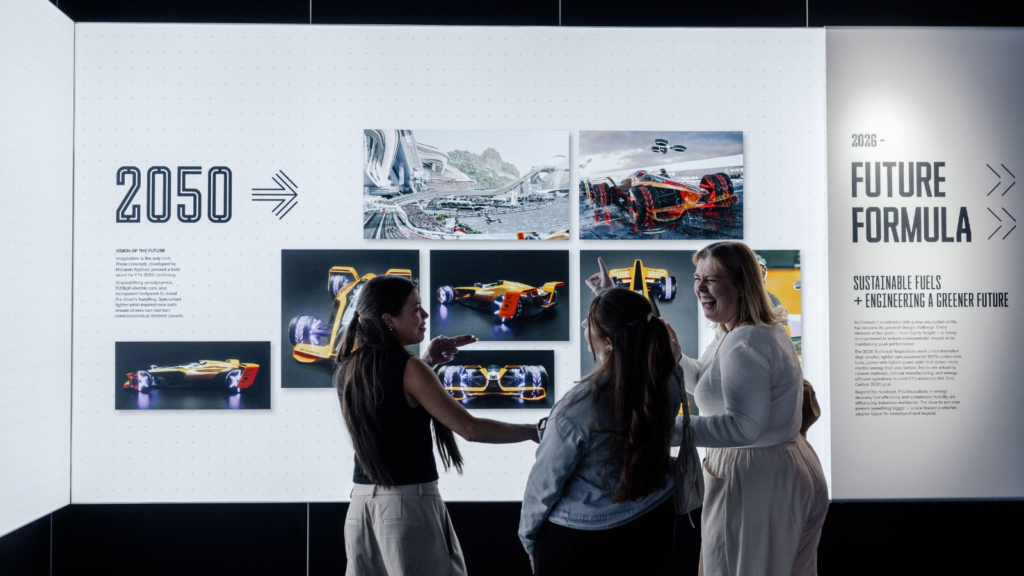
The award-winning “Formula 1 exhibition” is set to make its Asian debut in Singapore next month, bringing fans closer to the sport’s history, technology and biggest moments through an immersive experience at Gardens by the Bay. Opening to the public on 23 July for a limited run, the exhibition marks the first time the global attraction has been staged in Asia. Singapore will become the 11th city to host the exhibition following runs in Madrid, Vienna, Toronto, Buenos Aires, London, Amsterdam and Melbourne. Located at Gardens by the Bay near Satay by the Bay, the exhibition will showcase Formula 1’s 76-year history through a series of interactive galleries, racing simulators, rare artefacts and behind-the-scenes content. According to the organisers, almost two million tickets have been sold globally since the exhibition launched. Don’t miss: Beyond the track: How brands took pole position online at 2025 Formula 1 Singapore GP The exhibition features seven immersive rooms that explore the sport’s past, present and future. Visitors will begin in “Once upon a time in Formula 1”, which highlights defining moments from the championship’s history, before moving through experiences focused on engineering, innovation, legendary rivalries and technological advancements. Among the key attractions are several iconic Formula 1 cars, including the championship-winning Red Bull RB7 driven by Sebastian Vettel and Mark Webber during the 2011 season. The car secured 12 race victories that year, including a win at the Singapore Grand Prix. Additionally, the BAR Honda 005 will also be on display, driven by Jenson Button and Jacques Villeneuve during the 2003 season, with additional vehicles expected to be announced closer to the opening. The exhibition will also feature racing simulators that allow visitors to tackle the Marina Bay Street Circuit, alongside rare race suits, helmets and interactive displays examining the technology behind modern Formula 1. One of the centrepieces is “Survival”, which tells the story of Romain Grosjean’s dramatic crash at the 2020 Bahrain Grand Prix through parts of his HAAS car, as well as personal items including his gloves and boots. The experience concludes with “Singapore drive”, a dedicated space celebrating Singapore’s contribution to Formula 1 and its place on the global racing calendar. Tickets will be available through Ticketek, alongside a premium Pole Position package that includes simulator access. A waitlist is currently open, with presale tickets available from 17 June before general sales begin on 19 June. “After welcoming more than 1.3 million fans across major cities around the world, we’re delighted to bring ‘The Formula 1 exhibition’ to Asia for the first time in Singapore,” said Emily Prazer, chief commercial officer at Formula 1.  She added, “As one of Formula 1’s most iconic destinations, Singapore is the perfect backdrop to host the critically acclaimed immersive experience, offering fans, both old and new, a compelling way to explore the sport’s history, innovation and excitement beyond the track.” In tandem, Jonathan Linden, co-CEO of Round Room Live and Producer of The Formula 1 Exhibition said, “Since its debut in Madrid in 2023, ‘The Formula 1 exhibition’ has continued to go from strength to strength, and we’re thrilled to be bringing the experience to Asia for the first time.” “Singapore, renowned for one of the most exciting Grand Prix events on the circuit, is the perfect destination, and we anticipate strong interest from both devoted fans and newcomers alike. We’re excited to open our doors and invite visitors to discover the world of F1 through this immersive and cutting-edge experience,” he added.  According to Gordon Pitt, senior vice president of Sony Music Australia, Singapore’s strong connection to Formula 1 and its status as the home of the sport’s first night race made it a fitting location for the exhibition’s Asian debut. He added that the showcase gives fans a new way to experience Formula 1 beyond the track. Meanwhile, Shane Harmon, managing director of TEG Experiences, highlighted Singapore’s place as one of the sport’s most iconic race destinations. He added that visitors will be able to revisit key moments from the Singapore Grand Prix, including viewing Sebastian Vettel’s Red Bull RB7 from his 2011 championship-winning season. MARKETING-INTERACTIVE has reached out for more information.  The exhibition arrives as Singapore continues to lean into Formula 1-themed experiences beyond the race weekend itself. Last year, ION Orchard launched its “Live the race at ION Orchard” campaign, blending the excitement of Formula 1 with luxury retail through race-themed activations, car displays, immersive pop-ups and seasonal promotions. The initiative formed part of the mall’s wider “A new season, a new silhouette” campaign during Grand Prix Season Singapore. Related articles: Formula 1 revs up 2026 season with star-studded campaign film  Standard Chartered shifts gears with Formula 1 partnership   Is Formula 1 the right track for Disney’s Gen Z ambitions? source

Singapore's getting a front-row seat to Formula 1's biggest stories Read More »

AS Watson and L’Oréal Paris debut exclusive product co-creation

AS Watson Group has joined forces with L’Oréal Paris to unveil an exclusive, co-created beauty product: the L’Oréal Paris Infallible Setting Mist Cherry Edition. Developed, produced, and launched exclusively for AS Watson Group, this limited-edition release reimagines L’Oréal Paris’ best-selling, viral hero formula to capture the fast-growing setting spray segment. Featuring a bold cherry-inspired twist and distinctive pink packaging, the product was purpose-built to resonate deeply with Gen Z beauty consumers, aligning with L’Oréal Paris’ ongoing commitment to making innovative beauty accessible to an even wider audience. The highly anticipated product is already live in the UK, with a further rollout planned across 14 additional global markets spanning Europe, Asia, and the GCC. Following strong early momentum in Europe, the new product is set to expand into the GCC and Asia later this year, with highly anticipated launches in Malaysia, Thailand, the Philippines, and Singapore. To support the global expansion, the brand will deploy localised social media activation, high-impact in-store maximisation, and immersive brand experiences anchored under the vibrant theme, “Cherry Fix Summer Soirée.” Driving the launch is a comprehensive, end-to-end O+O (Offline plus Online) strategy designed to optimise every touchpoint of the consumer journey. This ecosystem begins with social-first teaser campaigns and creator-led content to fuel desirability, followed by high-impact in-store theater and dominant online placement to maximise conversion. The O+O activation model ensures that consumers experience a frictionless transition from initial digital discovery to final purchase. Given that 75% of consumers are more likely to buy limited-edition packaging, this strategy effectively positions the setting mist as a collectible must-have, elevating a daily beauty essential into a bona fide social and cultural statement. This exclusive co-creation underscores the shared commitment of both L’Oréal Paris and AS Watson to build next-generation beauty ecosystems where data, creativity, and operational excellence converge to deliver greater value for consumers and stakeholders alike. Malina Ngai, Group CEO of AS Watson Group, said, “This co-creation with L’Oréal Paris reflects how we are redefining the role of the retailer—from distributor to true innovation partner. By combining our deep consumer insights, omnichannel execution strength and L’Oréal Paris’ world-class R&D and brand power, we are creating products that are culturally relevant, commercially powerful and truly differentiated.” MARKETING-INTERACTIVE has reached out to AS Watson for more information.  Related articles: AS Watson empowers customers to feel great with new brand refreshAS Watson and Hang Seng University ink deal to nurture young talents source

AS Watson and L’Oréal Paris debut exclusive product co-creation Read More »

Are KFC fans truly loyal to their favourite chicken?

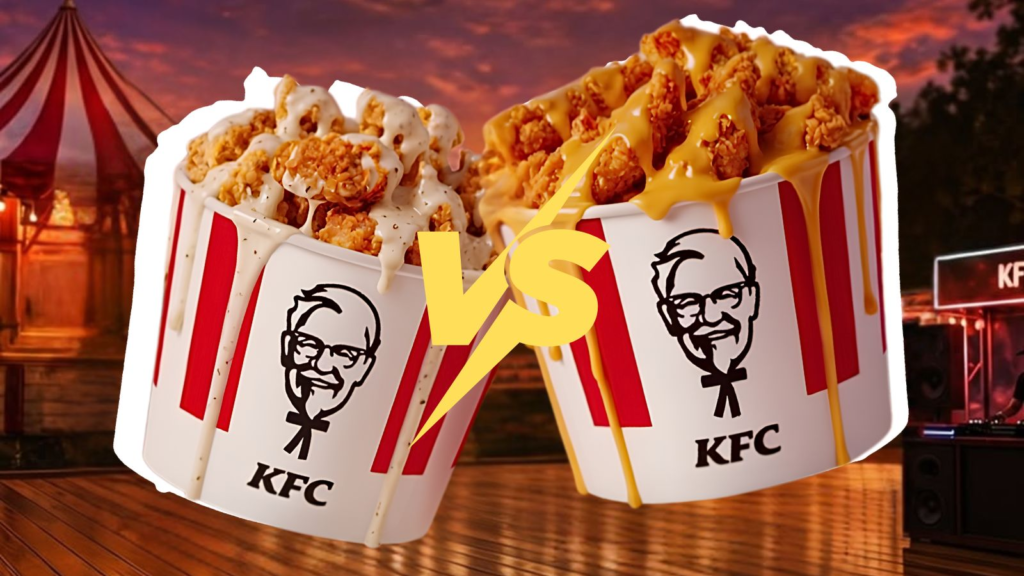
KFC Singapore is launching its first-ever KFC Karnival Showdown for International Fried Chicken Day 2026, turning the long-running fan divide between its Original Recipe and Hot & Crispy chicken into a ticketed team battle featuring games, food rewards and brand activations. Taking place on 4 July at KFC SCAPE, the one-night event will see fans choose between ‘Team Original’ and ‘Team Crispy’, compete in carnival-style challenges and earn points for their chosen side. The campaign is backed by BYD, Coca-Cola and Red Bull, with each brand playing a role in the wider Karnival experience. The reveal follows a teaser posted by KFC Singapore on Instagram a week earlier, where the brand told followers: “You can’t be both. Time to pick a side. Choose wisely. Your side could unlock something big soon.” Don’t miss: Can the KFC x Butterbear collectibles turn fast food into a destination experience? At the heart of the campaign is the rivalry between Original Recipe and Hot & Crispy. Rather than treating International Fried Chicken Day as a conventional promotion, KFC is using the occasion to turn product preference into participation, asking consumers not only what they want to eat, but which side they are willing to represent. Every ticket holder will receive a KFC x Coca-Cola goodie bag containing either a ‘Team Original’ or ‘Team Crispy’ jersey, a tote bag, a Dollop photobooth voucher and other merchandise. Guests will also receive a KFC bucket meal before taking part in a series of carnival stations and team challenges under the campaign line, “The more you play, the more you feast”. Participants can earn additional food rewards, vouchers and team points through activities such as the Red Bull F1 agility challenge and the Finger lickin’ match game. Coca-Cola and Red Bull will also host dedicated activity zones, while KFC x Red Bull beverage infusions will be available for sampling. The event will feature live entertainment hosted by Mediacorp 987 DJs Sonia and Avery Aloysius, alongside fringe activities including free ice cream and photobooth sessions linked to a spin-and-win mechanic. KFC is also extending the celebration beyond the main event. From 1 to 3 July, the brand will bring back its two-for-SG$10 deal, featuring two sets of two-piece chicken, regular whipped potatoes and Coke Zero. The offer will be available for dine-in and takeaway at participating outlets. MARKETING-INTERACTIVE has reached out for more information.  Following the Karnival, the winning team will unlock exclusive islandwide SG$6.70 meal deals on 6 and 7 July, featuring either Original Recipe or Hot & Crispy favourites depending on which side emerges victorious. The campaign follows KFC Singapore’s “Picnic under the stars” activation at Dhoby Ghaut Green Lawn for International Fried Chicken Day 2025, reflecting the brand’s efforts to grow the occasion into a larger experiential platform. The Karnival also reflects a broader push by KFC markets to turn signature menu items into fan-led cultural moments. Last month, KFC Australia launched a campaign positioning its Zinger burger as the benchmark for spicy chicken burgers, staging tongue-in-cheek reviews of rival products through influencer trials, outdoor activations and social content. While the execution differed, both campaigns tap into existing consumer loyalties and product rivalries to drive participation beyond traditional food promotions.  Related articles:    KFC South Asia picks McDonald’s regional marketing and digital lead for newly created role   KFC and Pizza Hut conclude media pitch for SG  KFC Singapore turns up the heat with return of Samyang collab   source

Are KFC fans truly loyal to their favourite chicken? Read More »