marketing interactive

Need a pause from everyday life? CHAGEE thinks Hojicha can help

Hojicha, the roasted Japanese tea, is quietly building momentum across Asia. Tapping on this trend, CHAGEE is relaunching its Hojicha genmai milk tea in Singapore from 27 March 2026.  The launch is guided by “The art of lightness”, a campaign that frames tea as an act of calm in a busy day. Hojicha, known for its naturally low caffeine, roasted aroma and smooth, mellow finish, fits this philosophy as its flavours encourages one to slow down, said CHAGEE.  The campaign video opens with a woman painting in a sunlit field, before shifting focus to a local tea farmer tending her crops. A writer is then shown working nearby, pausing as the warm aroma of roasted tea leaves drifts through the air. Drawn by the scent, the painter and writer leave their work behind and follow it to the tea farmer’s home, where the three women come together to enjoy CHAGEE’s Hojicha genmai milk tea. Don’t miss: CHAGEE ventures into South Korea as part of regional expansion  This intention is further shaped by activations across Singapore throughout the months of March and April. Sampling booths in the CBD, drink drops at university campuses, and in-store tastings invite consumers to engage with the tea beyond the cup. Complementing the drink are limited-edition merchandise items, including a tea-scented sachet charm, a hand-poured candle featuring the Hojicha genmai visual, a canvas tote bag, and a thermal tumbler. All of which are designed to extend the calm of tea into daily life. Bundled purchases are available while stocks last at CHAGEE outlets and via the CHAGEE App. Furthermore, the brand is also running a sip and win lucky draw. Customers can play a mini game on the CHAGEE app and stand a chance to win a grand prize of more than SG$500.  “At CHAGEE, we are always looking ahead at where tea is going and what our consumers are ready to discover,” said Eileen Lau, head of marketing, CHAGEE Singapore. “Hojicha has been building momentum globally, and we knew it was ready for its moment here. We wanted to be the ones to bring it properly: with the sourcing, the craft, and the experience to match,” Lau added.   The Hojicha launch follows CHAGEE’s wider push to encourage consumers to slow down and savour tea as part of everyday life. Earlier this year, the brand’s “Garden of senses: A tea reverie” exhibition at the Asian Civilisations Museum invited visitors to explore tea through sight, scent, sound, touch, taste, and thought. Alongside the museum activation, CHAGEE also launched Camellia oolong milk tea, a limited-time Chinese New Year drink inspired by the camellia flower, symbolising devotion, harmony, and enduring relationships. Be part of #Content360 Singapore, 22–23 April 2026, where creativity and culture collide. Explore how AI-driven storytelling is shaping the future of content, gain practical insights, discover new tactics, and learn how the best in Asia are creating campaigns that truly resonate.  Related articles:  CHAGEE opens first family-friendly store in Singapore at Suntec City  Eugene Lee steps into expanded APAC role at CHAGEE  CHAGEE and Sanrio sweeten the holidays with Tanned Hello Kitty collab  source

Need a pause from everyday life? CHAGEE thinks Hojicha can help Read More »
Are spandex stunts in Singapore stretched too far?

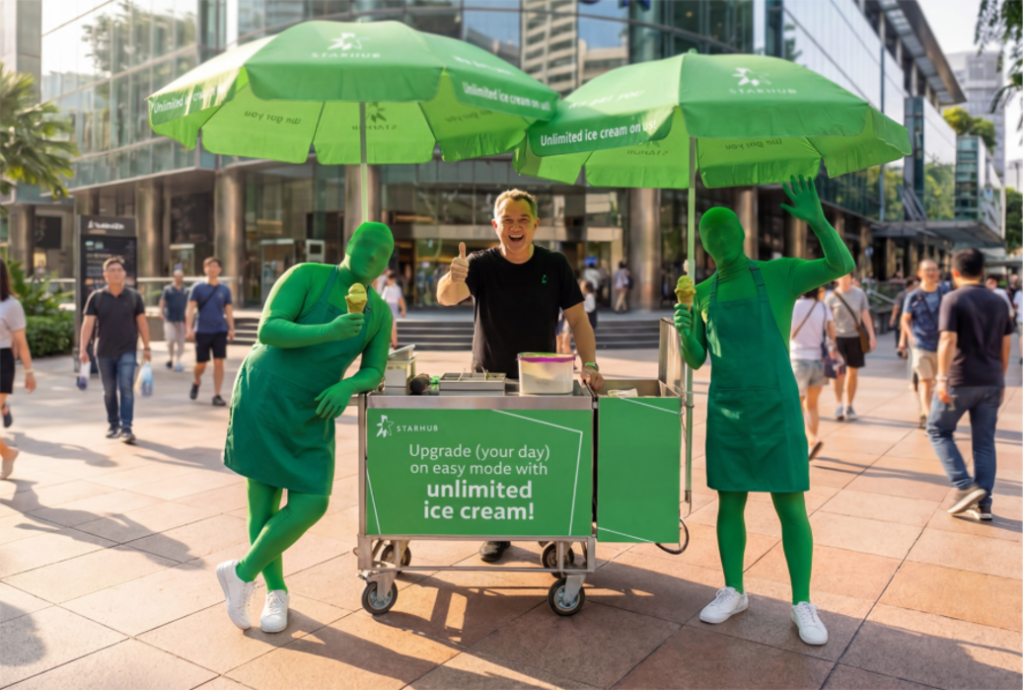
In recent months, people in spandex suits have become a popular choice for on-ground activations due to it being fun, eye-catching and cost-efficient. Just this week, Tiger Brokers enlisted men in bright yellow spandex to challenge strangers to pull-ups, sprints and broad jumps in unbranded teaser activations around Bedok Reservoir and Collyer Quay. The activation aimed to nudge participants toward its “Where’s your next step” campaign. Meanwhile, StarHub’s “Hublings” took over Orchard Road in March, handing out unlimited matcha ice cream to bring the telco’s “We got you” promise to life. For the uninitiated, the Hublings are a cast of non-speaking characters clad in green spandex, representing the brand’s reliability and care.  These ideas are not new. In 2024, fashion and lifestyle eCommerce platform ZALORA painted the town red over its 11.11 sale, sending people in red spandex through Singapore and Kuala Lumpur with trolleys and boxes reading “Shop more. Save more.” According to industry players such as Jian Yi Lay, group creative director at VaynerMedia APAC, the approach “feels a bit tired now”. Some activations, Lay notes, fit the brand story seamlessly, while others leave one wondering what the stunt has to do with the product. Don’t miss: Can one purple mascot cause this much chaos?  According to Lay, StarHub’s “Hublings” move, for example, resonated with its 2025 campaign. By aligning the stunt with the campaign’s narrative, the activation felt purposeful and on-brand. Tiger Brokers’ yellow spandex stunt, in contrast, raises a broader question about how such activations connect to a brand’s story. The stunt marks the start of a wider push, which includes partnerships with groups such as Easy Pace Run Club, Urban Milers, and Pickle Academy of Singapore, as well as wellness players such as Beam World Yoga and Shelter by ReFormd. However, Lay notes that the stunt itself illustrates a common challenge: creating attention-grabbing activations that feel genuinely relevant to the brand. “Why focus on the fitness category instead of everyday activities to give people a head start?” he asked, highlighting the importance of aligning spectacle with strategic messaging. Not everyone sees the spandex approach as overdone. VJ Anand, co-founder and chief experiment officer of Ballsy, welcomes the move. In today’s advertising climate, he said, any brand investing in and experimenting with new ideas is already taking a meaningful step. Naturally, some will love it, and some won’t, but that’s part of the process, Anand added. This frames spandex stunts as one of many ways for brands to spark engagement and curiosity in crowded markets. In all, Lay said what separates a culturally sharp execution from a tired stunt is whether people are talking about it. Successful activations should tap into excitement and create conversation. He highlighted YouTrip’s “Purple sky” stunt in Malaysia and its follow-up “Purple orb” in Singapore to show how a little mystery can spark organic engagement, with netizens speculating, joking, and sharing widely across social media. “YouTrip’s stunts created so much buzz because people kept seeing purple clouds in different spots. It even had people speculating about a BTS comeback, which shows how a stunt can truly root itself in pop culture,” he explained.  Do stunts lead to conversions?  Stunts featuring people in spandex are just one of many ways brands attempt guerrilla marketing. While they can cut through the clutter, they do not automatically drive conversions. In a previous conversation with MARKETING-INTERACTIVE, Ron Graham, management team member at Plan B Media and former COO of Kinetic Worldwide, said: “Without a solid message and specific value proposition, such activations are unlikely to translate into meaningful action.” He added that even in busy locations, small-scale on-ground stunts have limited reach. “The hope for viral amplification on social channels will give some uplift, but realistically, that exposure is fleeting and will be forgotten quickly if the activation doesn’t offer value to viewers,” said Graham. Echoing his sentiment, Goh Shufen, founder of R3, noted that awareness alone does not equate to sales. Consumers might remember the outfits or the spectacle, but not the message. To improve effectiveness, brands should focus on stronger O2O integration, ensuring seamless conversion and clear messaging with easy-to-follow calls-to-action that are as attention-grabbing as the stunt itself, added Goh. Be part of #Content360 Singapore, 22–23 April 2026, where creativity and culture collide. Explore how AI-driven storytelling is shaping the future of content, gain practical insights, discover new tactics, and learn how the best in Asia are creating campaigns that truly resonate.  Related articles:     Wingstop SG Instagram account “hacked” by unhinged hardcore fan in marketing stunt Duolingo’s owl passes on, investigations ongoing  Grab takes Singapore’s ‘chope’ culture to the next level with restaurant stunt  source

Are spandex stunts in Singapore stretched too far? Read More »

Gen Z perspectives: IBM and Ogilvy part ways, Grab in Taiwan & our favourite Raya campaigns

Happy Friday, MARKETING-INTERACTIVE readers and welcome back to Gen Z Perspectives, your go-to feature where we unpack the week’s top stories and trending topics through the eyes of Gen Z. From the biggest industry moves to viral moments and marketing controversies worth dissecting, we’re bringing the heat with authenticity, awareness and probably a few unfiltered takes. This week, IBM and Ogilvy called time on a 32-year partnership, Grab made its move into Taiwan, and we took a closer look at the Raya campaigns that stuck with us this year.  Swing into the buzz you need to see. Don’t miss: Gen Z perspectives: Creative Labs, Starbucks x Harry Potter and PR Awards 2026 1. IBM and Ogilvy part ways after three decades WPP’s Ogilvy has concluded its tenure as IBM’s creative agency of record, bringing a 32-year partnership – one of the longest in modern advertising – to a close. An Ogilvy spokesperson told MARKETING- INTERACTIVE the agency would not participate in IBM’s creative RFP. The relationship started in 1994, when IBM placed its US$500 million advertising business with Ogilvy, leading to campaigns that shaped the company’s identity over multiple eras. The two firms celebrated the three-decade milestone in August 2024 at Ogilvy’s 3 World Trade Center headquarters. Read more here.  2. Grab to expand into Taiwan via foodpanda acquisition Grab Holdings is set to enter Taiwan for the first time through the acquisition of Delivery Hero’s foodpanda delivery business in the market, marking a major milestone in its regional expansion strategy. The deal, valued at US$600 million on a cash-free and debt-free basis, will see Grab establish a presence in its ninth market and its first outside Southeast Asia. The transaction remains subject to regulatory approvals and is expected to close in the second half of 2026. Read more here.  3. 11 Raya campaigns that hit the right notes in 2026 2026 is the year brands truly went all out for their Ramadan-Raya campaigns. We’ve seen everything from musicals to social-first activations, microdramas, heartwarming tearjerkers and, did we already mention… musicals? For brands with longstanding legacies of releasing Raya films each year, expectations were higher than ever. Notably, some big names have chosen to sit this year out, despite delivering memorable campaigns in the past. While they are missed, this year’s lineup has more than made up for it, bringing both tears and festive joy, offering a much-needed spark amid everything happening in the world right now. Read more here.  Be part of #Content360 Singapore, 22–23 April 2026, where creativity and culture collide. Explore how AI-driven storytelling is shaping the future of content, gain practical insights, discover new tactics, and learn how the best in Asia are creating campaigns that truly resonate.  Related articles: Agency agenda: Burson APAC’s HS Chung on resetting culture for the future   Why PUMA’s SG trademark war with Tiger Woods’ Sun Day Red was a leap too big  13 Raya packets that brought more than just duit this 2026 source

Gen Z perspectives: IBM and Ogilvy part ways, Grab in Taiwan & our favourite Raya campaigns Read More »

Tiger Beer to cease brewing operations in Singapore by 2027

Singapore’s homegrown beer icon Tiger Beer is set to end large-scale brewing at its Tuas brewery by the end of 2027, marking the close of 95 years of local production.  Following the closure, approximately 130 roles may be affected, with severance, reskilling, and career support coordinated with the Food and Drink Allied Workers Union (FDAWU) and NTUC’s e2i, according to a statement seen by MARKETING-INTERACTIVE.  Looking ahead, HEINEKEN’s Asia Pacific Breweries Singapore (APBS) will move to an import-based supply model, with production shifting to regional hubs in Malaysia and Vietnam. Don’t miss: Heineken launches first global GenAI lab in SG Beyond brewing, APBS plans to repurpose the Tuas site for regional logistics and innovation, including a pilot brewery. Singapore will also host HEINEKEN’s GenAI Lab, supporting productivity and decision-making across the region. Since its 1932 founding, Tiger Beer has grown into one of Asia’s most recognisable global brands. According to APBS, more than 95% of its volume is sold outside Singapore today, across over 60 markets. The brand has also boosted its global profile through official partnerships with Manchester United and Tottenham Hotspur, cementing its international reach while keeping strategic leadership rooted in Singapore. “For generations, our Tuas brewery has contributed to Singapore’s brewing heritage, and we recognise the colleagues who have built that legacy. As we position the business for the next decade, we will further build Singapore-based capabilities in GenAI, brand leadership and innovation, alongside stronger regional commercial and logistics support,” said Kenneth Choo, managing director, HEINEKEN APAC.  He added, “We recognise this is a difficult transition, and we are committed to supporting impacted colleagues with fairness, dignity and respect. Singapore will remain the home of Tiger Beer, and we will continue to invest in its future.” On the job impact, Sankaradass Chami, FDAWU general secretary said, “FDAWU recognises that the shift in its business model is a difficult decision as it affects its employees. We appreciate that APBS engaged the union in advance and worked together with us to work through our support for affected employees.” “Through close union-management engagement, we have worked to ensure that affected employees are treated fairly with negotiated severance packages and are supported responsibly, including access to the necessary employment and career support as they move forward,” he added.  The Tuas brewery phase-out comes as Tiger Beer continues to engage Singaporeans with localised experiences. Earlier this year, the brand rolled out its first-ever Chinese New Year lion dance troupe, the ‘Huat squad’, alongside digital greeting videos to spread festive cheer across the island. The troupe featured five lions representing the five blessings Singaporeans wish for—longevity, wealth, health, kindness and peace—and made appearances at six roadshows from 30 January to 15 February, bringing traditional sights and sounds to supermarkets and neighbourhood kopitiams. Complementing the in-person activations, Tiger launched the digital “Send the Huat” experience, allowing festive greetings to double as prize-winning opportunities, extending the celebration beyond physical events. Be part of #Content360 Singapore, 22–23 April 2026, where creativity and culture collide. Explore how AI-driven storytelling is shaping the future of content, gain practical insights, discover new tactics, and learn how the best in Asia are creating campaigns that truly resonate.  Related articles: Heineken unites football, F1 and music under new sponsorship platform  Tiger Beer taps ‘kiasu’ spirit in Monopoly campaign for SG60   Tiger Beer roars with Singaporean pride in eclectic campaign source

Tiger Beer to cease brewing operations in Singapore by 2027 Read More »

Unilever taps SAMY to scale global influencer strategy across foods division

Unilever has appointed social-first agency SAMY to lead its global influencer strategy for the foods division, covering brands including Hellmann’s and Knorr. The remit spans 13 markets and forms part of Unilever’s push toward a “many-to-many” brand-building model, as it leans further into creator-led marketing across digital platforms. The strategy will centre on a social-first approach, using creators, AI and real-time cultural signals to drive reach and engagement, alongside continued investment in brand marketing. Don’t miss: Unilever’s independent ice-cream unit picks Publicis Groupe as global media AOR At the heart of the strategy is SAMY’s proprietary Maia platform, which gives Unilever Foods access to more than 120 million influencers globally, alongside performance data to track and optimise impact. A multi-market, ‘glocal’ SAMY team will support execution across key regions including the United States, the United Kingdom, Mexico, Brazil, Indonesia, the Philippines, Germany, France, Poland, Pakistan, Argentina, Canada and Turkey. In addition, the agency will provide hyper-local cultural insight to guide where and how Unilever brands show up, while ensuring relevance in each market. Beyond activation, SAMY will also build systems and frameworks to ensure consistency in how creators and partners represent Unilever brands, as well as measurement models to track and grow audience connections across brands such as Hellmann’s and Knorr. Sonsoles Piñeiro Kruik, chief growth officer at SAMY, said the appointment marks a milestone for both companies as Unilever pilots its social-first approach within Foods. “Taking on Unilever’s ambition to deliver a strategy that can be translated across 13 markets, within an organisation operating at that scale, is a complex challenge,” she said. “With teams working across continents, we’ll bring hyper-local intelligence into a shared global system, enabling Unilever to orchestrate influencer activity at scale while ensuring creator partnerships are shaped by the realities of each local market, rather than a one-size-fits-all approach,” added Kruik. Meg Bass, global media manager at Unilever’s Foods, added that the strategy is centred on meeting consumers where they are and building “desire at scale”. “This means leaning strongly into creators who can help our stories travel further, feel more authentic and resonate more deeply,” she said. “Working with SAMY will allow us to combine technology and data with deep knowledge of the whole social ecosystem, leading to more informed decisions around where and how we activate creator partnerships across markets.” This will also give markets a clearer structure for working with creators, while still allowing them to respond to local behaviours, tastes and cultural context in a way that feels credible, she explained. Last year, Unilever appointed Publicis as its media agency of record for its newly formed independent ice-cream business. The global remit covers media planning, buying and strategy in key global markets, including China, India and Indonesia. The incumbent on the account is WPP Media’s Mindshare, which handled Unilever globally. Related articles: Unilever Indonesia elevates communications head Nurdiana Darus to board director Unilever Indonesia communications director Kristy Nelwan departs after six years Unilever to exit SariWangi as Indonesia tea business changes hands in US$89m deal source

Unilever taps SAMY to scale global influencer strategy across foods division Read More »

Beyond kick off: How travel intent will build before, during, and after the World Cup

The 2026 FIFA World Cup is not just rocking the sporting world, but is shaping up to be a global marketing spectacle. According to the “World Cup Lookahead Travel” report by Microsoft Advertising, an estimated six million travellers are expected, giving brands a rare opportunity to capture audiences on the move, influence last-minute decisions, and compete in ad auctions hotter than a World Cup final. But this is not business as usual. In fact, with the onset of the sporting event, travel patterns are expected to be more complex than ever as fans juggle multi-city itineraries and last-minute flights. According to the report, timing will be critical, as ticket releases, match outcomes, and even team losses will drive waves of search behaviour and travel bookings outside the usual seasonal patterns. With digital competition expected to be fiercer than ever, advertisers must fight for attention in an environment where visibility is key. Brands that miss the mark risk losing their audiences entirely. So, how can you win in the world of fandom? We’ve got you covered. Here is your playbook to succeed this season: 1. Travel demand will be complex and multi-city Fans attending the 2026 World Cup are likely to plan multi-city itineraries that combine match attendance with sightseeing and trips to neighbouring countries. This behaviour will be shaped by the distribution of match locations, the prominence of international hubs, and limited high-speed travel options – which makes air travel and car rentals the default choice for most fans. According to Microsoft Advertising’s report, Airbnb alone is expected to host 2.7 million guest nights during the tournament, with a further 1.7 million projected over the next five years. Online travel agents are expanding across multiple categories, with car rentals seeing a 222% increase in visibility, flights up 61%, vacation rentals growing 44%, and hotel searches increasing 40%. Key international hubs in the region are expected to experience sustained surges in travel interest, while secondary host cities will see shorter, event-focused spikes. Historical patterns such as last-minute research surges observed during the Taylor Swift Eras Tour suggested that reactive, on-the-fly planning, will be a major factor during the World Cup and brands must be ready to capitalise on the trend. 2. Timing and flexibility are critical Timing is going to be key. The World Cup will disrupt traditional travel seasonality, creating waves of demand that will challenge even experienced marketers. Ticket releases, match outcomes, and fan behaviour will drive multiple surges in travel interest, often outside normal booking windows. Events of the past such as England’s loss in the Euro 2024 final showed fans can be reactive. It saw travel-related clicks jumping 69% the following day, representing a 58% larger day-over-day increase compared with the two weeks before and after. Travel auction competitiveness also tends to grow in phases, peaking around ticket releases and major event milestones. “In Southeast Asia, major football moments bring people together and drive real-time reactions. Fans research travel, tickets, and experiences in bursts, so brands that combine local insights, a broad reach, and agility will be best placed to cut through when intent peaks.” Tae Kyu Kim, senior partner sales executive, Microsoft Advertising Southeast Asia and Korea. Nonetheless, infrastructure and logistical constraints add complexity. For example, Visa processing can slow travel planning in many countries across the region. Meanwhile, airports in key hubs are expected to experience significant surges in passenger traffic, requiring marketers to anticipate last-minute decisions and shifting booking behaviour. Brands that can respond quickly to spikes in demand, offer flexible travel options, and communicate adaptable booking or cancellation policies will be best placed to capture undecided or last-minute travellers. 3. Visibility and digital competition will define success In the crowded digital landscape, reaching the right audience at the right time will be as important as clicks themselves. Fans in Southeast Asia will be researching travel, tickets, and experiences, generating surges in online activity that make standing out essential. Data from past events shows that campaigns with broad cross-channel reach and visually engaging formats, including display, multimedia, and feed-based ads, are more likely to capture attention and influence decision-making. Nearly 94% of B2B marketers in Singapore and 91% globally say that capturing and keeping attention has become the biggest campaign challenge, according to a 2025 LinkedIn study. Many have turned to video and influencer-led strategies to cut through the noise in an increasingly fragmented landscape. Automation tools such as Performance Max can also help by identifying high-value opportunities across channels, allowing brands to maintain efficiency while remaining flexible to last-minute changes in demand. Marketing campaigns should focus on creative formats that stand out, align targeting with evolving travel behaviours, and remain nimble enough to respond to sudden surges. By combining strategic audience planning, cross-channel reach, and selective automation tools, brands can maximise reach, influence decisions, and ensure campaigns perform effectively during one of the year’s most dynamic marketing periods. The 2026 FIFA World Cup will test how well brands can operate in moments of uncertainty. Travel demand will be fragmented, timing will be unpredictable, and competition for attention will be intense. Success will depend on preparation combined with flexibility such as understanding how fans move, anticipating reactive surges linked to match outcomes, and staying visible when intent peaks. Anticipating fan behaviour, maintaining visibility at critical moments, and responding swiftly to shifting demand will be essential. Brands that combine strategic planning with agility will be best placed to turn fleeting World Cup moments into meaningful engagement and lasting impact. This article was done in collaboration with Microsoft Advertising APAC. Visit Microsoft Advertising’s Content Hub for more ideas and insights for the modern marketers. source

Beyond kick off: How travel intent will build before, during, and after the World Cup Read More »

Have you spotted these men in yellow?

Those bright yellow figures challenging strangers to pull-ups and sprints across the city were not just a passing fitness fad. They were part of a new campaign by Tiger Brokers Singapore aimed at nudging people to take their “next step” into investing. Over the past few weeks, the brokerage rolled out an unbranded teaser activation at locations including Bedok Reservoir and Collyer Quay, featuring so-called “Yellow men” dressed head-to-toe in the brand’s signature colour. The figures approached passersby with spontaneous fitness challenges, offering SG$50 cash prizes to those who could beat them. The activation forms the first phase of Tiger Brokers’ “Where’s your next step” campaign, designed to spark curiosity before revealing its link to investing. Across multiple sessions, more than 80 participants stepped forward to take part in challenges such as pull-ups, standing broad jumps and sprint races. Don’t miss: Tiger Brokers trades charts for hearts in emotive brand shift Each activation drew crowds of onlookers, turning the encounters into what the brand described as “mini community moments”, while videos and photos from the challenges circulated on social media through participants and spectators. While the challenges appeared purely physical at first glance, the campaign draws parallels between sports and investing. Both require individuals to step out of routine, test their limits and take action, with the brand positioning the first step as the most important. The “Yellow men” activation marks the beginning of a broader push that will continue in the coming months through community-led fitness and wellness initiatives. As part of its next phase, Tiger Brokers will partner with groups including Easy Pace Run Club, Urban Milers and Pickle Academy of Singapore, alongside wellness players such as Beam World Yoga and Shelter by ReFormd. Through these collaborations, the brokerage aims to create more accessible entry points for first-time investors, positioning the act of starting an investment journey as similar to trying a new workout or joining a run club. Tiger Brokers added that its investment representatives will be present at selected sessions to guide participants, with the goal of helping individuals build confidence and better understand available tools and products. “Progress often begins with a small moment of decision. Whether it’s stepping up to a pull-up bar, racing someone down the track, or starting your investing journey, the biggest barrier is often simply getting started. Many people already understand the importance of investing, but the first step can feel intimidating,” said Ian Leong, CEO of Tiger Brokers Singapore. “Through this campaign, we wanted to show that the act of stepping forward is often the hardest part. Once you take that step, whether in sport or in investing, progress becomes possible,” he explained. Leong added that “Where’s your next step” is ultimately about encouraging people to move from thinking to doing, and to realise that every journey, including building your financial future, starts with a single step. In tandem, Ernest Teh, associate director of marketing, Tiger Brokers Singapore said, “Younger investors today don’t necessarily engage with finance through traditional channels. They’re discovering new interests through communities, whether that’s running clubs, fitness groups, or hobby circles. These spaces naturally bring together people who are open to trying something new, learning through experience, and encouraging one another along the way.” “That’s why this campaign begins with simple challenges in familiar community spaces. It lowers the barrier to participation and creates moments that are fun, social, and shareable. From there, we’re building towards the next phase where we collaborate with run clubs and wellness communities, creating environments where conversations about personal growth, including financial growth, can happen more organically,” he added.  Tiger Brokers has been experimenting with community-driven engagement for some time. In December last year, the brokerage hosted its flagship “Tiger Trade Experience 2025: What’s your secret sauce” event at Plaza Singapura, attracting over 4,000 attendees. The pop-up transformed Plaza Singapura’s atrium into “Tastemakers Corp”, a themed space blending finance and play. Attendees completed interactive missions, explored Tiger Trade tools at the Tiger Innovation Lab, and engaged in life-sized games such as giant Jenga and a human claw machine at Tiger PLAYce, winning limited-edition Tiger merchandise. Be part of #Content360 Singapore, 22–23 April 2026, where creativity and culture collide. Explore how AI-driven storytelling is shaping the future of content, gain practical insights, discover new tactics, and learn how the best in Asia are creating campaigns that truly resonate.  Related articles: StarHub introduces Hublings in playful ‘We got you’ brand push   SharkNinja’s shark squad hits the streets to keep Singapore breezy   Lazada turns Orchard Road into a giant bingo playground in new campaign source

Have you spotted these men in yellow? Read More »

Singapore’s first-ever Content360 Awards shortlist announced

MARKETING-INTERACTIVE has unveiled the finalists for the inaugural Content360 Awards, recognising the brands, agencies, and creators raising the bar for content marketing effectiveness and creativity across Singapore. Created to honour excellence in content strategy, storytelling, and performance, the awards programme spotlights work that goes beyond reach and visibility to drive meaningful engagement and tangible business impact. This year’s finalists reflect a marketing landscape that is increasingly insight-led, format-fluid, and results-focused, demonstrating how powerful content can shape perceptions, influence behaviour, and deliver measurable outcomes. Entries were assessed by a distinguished panel of senior marketing leaders, who brought sharp industry perspective and rigorous evaluation to the judging process. Reflecting on the overall standard of submissions, Alex Chan, head of brand, communications and marketing at Geneco said that each campaign reflected bold thinking, sharp craft and genuine audience insight. “As judges, it’s inspiring to witness brands and creators not just telling stories, but elevating what great campaigns can achieve. Most encouraging of all is what this signals for our industry: together, we’re raising the gold standard, and the future of content marketing has never looked stronger,” he added.  Innovation and fresh thinking also stood out among this year’s shortlisted work. Kenneth Lim, assistant chief executive of the marketing group at the Singapore Tourism Board, said the ideas will “undoubtedly inspire both myself and others across the industry”.  Beyond creativity, judges observed a stronger emphasis on accountability and outcomes. According to Debra Soon, group head of brand, communications, marketing and experience at Singlife, the entries this year were better focused on outcomes and results, with marketing teams able to articulate the value of their campaigns and projects to metrics driven by either brand, sales or conversions. “Marketers face challenges of having to justify and articulate spends all the time, but I would also like to encourage everyone to remember that creativity, entertainment value, thumb-stopping content, content and campaigns which resonate are what we are about. Those who scored the best combined both to deliver campaigns for clients and customers,” Soon added.  Meanwhile, the growing role of content as a strategic business driver was underscored by Joanne Theseira, chief growth officer for Southeast Asia and chief executive officer at Publicis Communications Singapore. “Content marketing is critical infrastructure for any brand today, but volume and visibility alone aren’t enough. The marketers I’m most excited to discover are those creating content that’s sticky and memorable yet also incredibly fluid in deployment. That’s the standard we should all be aspiring to,” said Theseira. With strong representation from a diverse mix of sectors and disciplines, this year’s shortlist reflects the evolving sophistication of Singapore’s content marketing community. The finalists have also exemplified how strategic creativity continues to redefine what effective marketing looks like today. Winners of the inaugural Content360 Awards will be announced at an awards reception on the evening of Day 1 of the Content360 conference on 22 April 2026, where the industry will gather to recognise the teams and campaigns shaping the future of content marketing. Curious to see who made the cut? Explore the full list of Content360 Awards finalists here. For awards packages, speak to our project managers for more info: Adrian Ray Senior Regional Project Manager Tel: +65 6692 9031 Ext 812 Mobile: +63 9975330853 [email protected] Luisa Sarmiento Regional Project Manager Tel: +65 6692 9031 Ext 817 Mobile: +63 994 232 2355 [email protected] Advertising & Sponsorship Opportunities [email protected] source

Singapore’s first-ever Content360 Awards shortlist announced Read More »

Bobby's Burgers' KL opening: Why influencer F&B's are fast becoming a trend

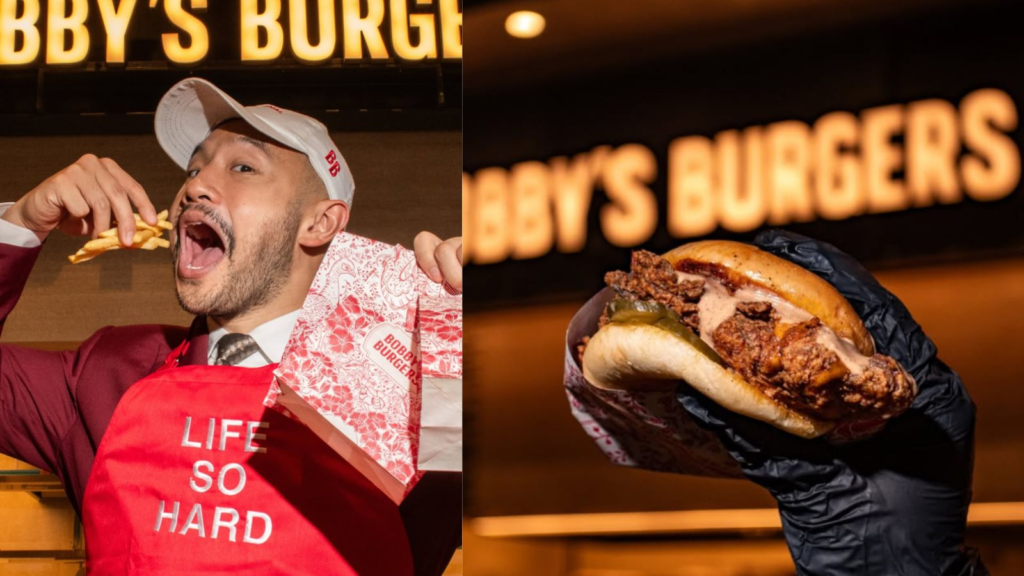
Bobby’s Burgers, the burger joint sensation with four locations in Indonesia, has officially landed in Malaysia, opening its first international outlet at The Exchange TRX in Kuala Lumpur, which officially launched on 26 March, yesterday. Serving wagyu smash burgers, fries and fried chicken cooked in 100% beef tallow, the brand also leans into occasional indulgence with limited-edition toppings such as caviar or foie gras. But who’s behind Bobby’s Burgers? The brand is the brainchild of content creator Ben Sumadiwiria (@supercoolben), best known for his comedic persona Bobby Saputra, an Indonesian “billionaire” and fictional heir to a bottled water empire. If you’ve come across his content, you’d know the drill, Lamborghinis, Ferraris, caviar on everything, and a wardrobe of luxury watches, all delivered with tongue firmly in cheek. What started as satire poking fun at ultra-wealthy lifestyles has since evolved into something much bigger, a full-fledged F&B business. Aptly named Bobby’s Burgers, the brand leans heavily into the character, using Bobby as its ambassador, complete with catchphrases such as “99 China points” and “Eat like a billionaire”. Even the details are on-brand, from takeaway bags reading “The burger you brag about” to gold-lined burger boxes and staff aprons stamped with “Life so hard, this bite’s easy”. On selected days, Bobby himself even shows up for fan meet-and-greets in full character. Don’t miss: YouTuber Uncle Roger to open his first restaurant in Malaysia  It’s a model that’s becoming increasingly familiar. We’ve seen Nigel Ng turn his viral persona into Fuiyoh! It’s Uncle Roger, a fried rice chain built around the “Haiyah”-spouting uncle character. However, while the concept drew crowds early on, the brand recently shuttered its IPC outlet, with the team admitting it had expanded “too quickly” to capitalise on initial momentum. It has since shifted towards a leaner operation, even as Ng looks to open a new concept, Kawan, in London. Across the causeway in Singapore, rapper Yung Raja has been running his Indian-Mexican fusion cafe The Maha Co, located at Fusionopolis Link, successfully for the past four years. At the time, Yung Raja told MARKETING-INTERACTIVE that his venture into F&B with his partner Quan came from his love for food and how it brings people together. “It’s always been a dream of mine to have a space to catch a vibe at. A place to chill with family and friends- a place that’s an extension of me,” he said. Over the past few years, influencer monetisation has clearly moved beyond merchandise drops and brand deals into full-scale businesses. More recently, we’re seeing a new layer to that evolution, where creators are building F&B brands not just around themselves, but around distinct on-screen personas, from Uncle Roger to Bobby Saputra. At the same time, others such as Malaysian food content creator Khairul Aming and British influencer collective The Sidemen have found success with ventures rooted in their real-life identities. A not-so-coincidental shift This shift is no coincidence. The creator economy today offers far more ways to turn influence into business. MARKETING-INTERACTIVE spoke to industry professionals in the content creator and influencer space, to dig deeper. As Karl Mak, co-founder and CEO of HEPMIL Media Group, explained, “The way influencers monetise their audiences has evolved significantly over the past five years. Beyond sponsorships, creators can now activate their communities through live commerce, affiliate sales, merchandise, and increasingly, their own entrepreneurial ventures in categories like F&B.” F&B, in particular, stands out because it brings something tangible into the mix. “It allows creators to translate their personal brand, taste, community, and even content into something audiences can experience and buy into,” Mak added. More importantly, audiences themselves have changed. “They are no longer just passive viewers.” Audiences are increasingly willing to spend to support creators they feel connected to. Similarly, Lee Li Ping, director of strategic partnerships at Gushcloud International, points to a broader cultural shift. “We’re seeing a move toward identity-led branding. Consumers are gravitating to brands that resonate with them on deeper cultural and personal levels,” she said. Food is no longer just functional, it’s a form of self-expression and belonging. The challenge of lasting beyond novelty However, while persona-led brands may be great at grabbing attention, the real question is whether they can last. According to Shermaine Wong, co-founder and CEO of Cult Creative, personas are powerful, but only to a point. “Personas are rocket fuel for launch. Authentic identity is what keeps the engine running,” she said. “A fictional character is an incredible acquisition machine. But a character doesn’t evolve the way a real person does. When the cultural moment shifts, and it always does, you lose your narrative engine. You’re essentially running a theme park. And theme parks need constant reinvestment just to stay relevant.” Wong explained further, that the ones who fail are the ones who believe the character is the business. “It’s not. It’s the marketing budget.” Mak echoed this, noting that while creators may enjoy a strong head start, “sustaining a long-term business requires much more than initial hype, consumers may be drawn in by the personality, but they will only return if the product genuinely delivers.” He added, “Ultimately, the brands that move beyond hype are the ones that turn creator influence into genuine consumer trust and product relevance. Feastables by MrBeast is a strong example of the scale this model can unlock when audience connection is paired with disciplined brand-building and mass-market appeal.” Meanwhile, Lee said that ultimately, the fundamentals still apply. “Creators can use fame as a springboard for attention, but fundamentals don’t change, strong product, clear positioning, and solid execution.” And in the F&B space, those fundamentals matter even more. As Wong pointed out, creator fame can drive footfall, but it can also mask deeper issues. Fame gets you the line outside the door. Everything after that is just business. Wong pointed to Uncle Roger as a case where early hype didn’t necessarily translate into repeat visits. “That’s not a content problem. That’s a product problem.” Operational discipline is equally critical. “F&B is unforgiving. Location decisions, lease

Bobby's Burgers' KL opening: Why influencer F&B's are fast becoming a trend Read More »

AI chatbots are getting 'aggressively' data hungry

Popular AI chatbot apps – including Meta AI, Google Gemini, and ChatGPT – collect a wide range of user information such as contact details, search and browsing history, and other user content. Meanwhile, 70% of popular AI chatbots now collect user location data, up from 40% last year, according to an analysis by Surfshark. Surfshark identified the 10 most popular AI chatbots and analysed their privacy details on the Apple App Store. The comparison was based on how many types of data each app collects, whether any data is linked to users, and whether the app includes third-party advertisers. Surfshark also reviewed the privacy policies of DeepSeek and ChatGPT to better understand what data is retained on servers and for how long. According to the analysis, Meta AI continues to collect the most user data among the apps examined, gathering 33 out of 35 possible data types—nearly 95% of the total. It remains the only app that collects data in the financial information category. Meta AI, alongside Google Gemini, also collects sensitive information, which includes racial or ethnic data, sexual orientation, pregnancy or childbirth information, disability, religious or philosophical beliefs, trade union membership, political opinion, genetic information, and biometric data. Google Gemini collects 23 out of 35 possible data types. Gemini also collects a significant amount of data across various other categories, such as users’ names, email addresses, phone numbers, amongst others, user content, contacts, search history, browsing history, precise location, and several other types of data. This extensive data collection may be seen as excessive and intrusive by those concerned about data privacy and security. According to the Apple App Store, ChatGPT may now collect 17 out of 35 data types, according to the developers. This represents a 70% increase from the 10 data types identified in last year’s AI chatbots review, indicating a notable broadening in the extent of user data collection. The additional data types now collected include coarse location, health and fitness, search history, audio data, advertising data, and customer support. Most of the data types collected by ChatGPT (14) are intended for app functionality. However, the user information may also be used for other purposes, including analytics (7), product personalisation (4), developers’ advertising or marketing (3), and third-party advertising (2). Notably, health and fitness data, as well as advertising data, are not required for app functionality. Claude, the fourth most data-hungry chatbot, collects 13 out of 35 data types, each of which is crucial for app functionality. These data types support activities such as authenticating users, enabling features, preventing fraud, implementing security measures, maintaining server uptime, reducing app crashes, improving scalability and performance, and delivering customer support. However, many of the data types collected by Claude may also be used for other purposes, such as analytics and developers’ advertising or marketing, indicating a fairly extensive exploitation of user data. This includes data such as user coarse location or content such as photos or videos.  DeepSeek is the fifth-hungriest chatbot and collects 13 unique types of data, including user input, chat history, and claims to retain information for as long as necessary, storing it on servers located in China.  Unlike other AI chatbots which operate under US federal law and collaborate with regulatory bodies, DeepSeek is not subject to comparable legal frameworks such as General Data Protection Regulation (GDPR), according to Tomas Stamulis, chief security officer at Surfshark, adding that this lack of oversight further increases concerns about accountability and data protection. “Chatbots are becoming increasingly aggressive with user data. Our research shows that 70% of popular AI apps now collect location data, a sharp rise from just 40% last year. This surge in data hunger is also evident in platforms such as ChatGPT, which recently increased its collection by 70% to include everything from health and fitness metrics to search history and audio data,” explained Stamulis. “Unlike traditional search engines, these bots now handle highly sensitive uploads such as tax documents and medical records, which can be shared across massive third-party networks for targeted ads. To protect your privacy, you must treat every prompt as a public record: audit your settings, disable chat history, and never share what you wouldn’t want to be publicly known,” he added.  Mark your calendars for 24 June! #Content360 Hong Kong returns with a dynamic, one-day event dedicated to pivotal trends—from the silver economies to breakthrough IP collaborations, sports, and beyond. Let’s dive into the art of curating content with creativity, critical thinking and confidence! Related articles: The end of the blank page: What Google Gemini in HK means for marketersChatGPT’s parent company OpenAI to open SG office amidst regional expansion source

AI chatbots are getting 'aggressively' data hungry Read More »