marketing interactive

Perplexity and Cristiano Ronaldo launch interactive CR7 experience

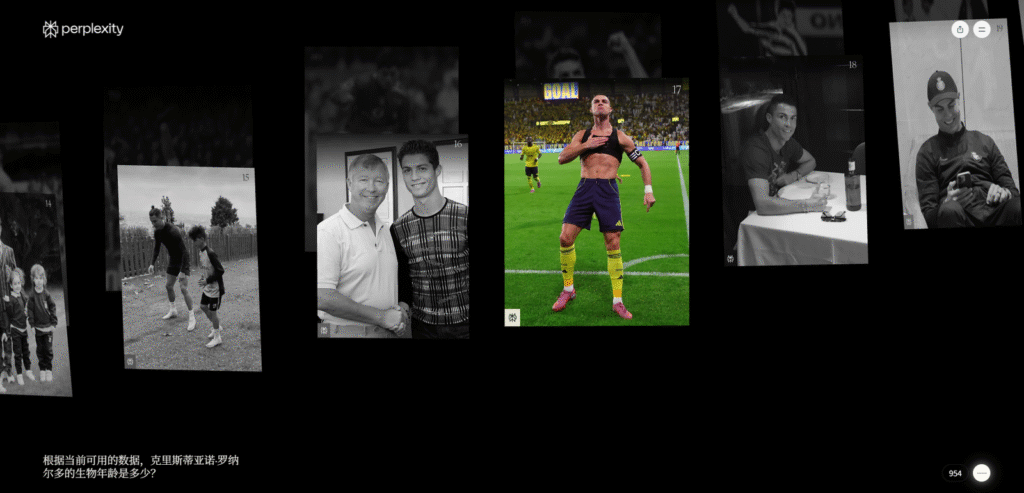
Perplexity has partnered with global football superstar Cristiano Ronaldo to launch an interactive CR7 experience on the AI answer engine, unveiling his personal archive and previously unseen images. Perplexity and Ronaldo share a belief that greatness is driven by relentless curiosity. The new CR7 experience marks the start of a multi-year global partnership, emphasising how Ronaldo, his fans, and Perplexity users can ask questions to unlock their full potential. While it targets curious individuals everywhere, Perplexity expects that Ronaldo’s fans will particularly connect with this, as he is a global icon who inspires people—whether they’re avid soccer fans or striving to excel in their own fields. In addition to providing additional content experiences and exclusive merchandise to fans through this partnership, Ronaldo will also join Perplexity as an investor. As part of this partnership, starting today, fans around the world can visit the Ronaldo hub to flip through previously unseen images from Ronaldo’s personal archive, delve into curated questions covering all eras of his life, and relive the greatest goals from his legendary career on an interactive pitch. Through Perplexity’s hub, Ronaldo fans can dive deeper into his statistics and ask their own questions, bringing them closer than ever to the legendary footballer. To promote the partnership, Perplexity has released a video on YouTube to encourage more people to explore their curiosity. The video features two children, who are fans of Ronaldo, discussing his achievements. As they approach a food truck, they continue their conversation. When they say the word “Siuu”, the food truck owner looks confused, searches on Perplexity, and discovers that it refers to Ronaldo’s iconic goal celebration.  This celebration, which means “Yes!” in Spanish and Portuguese, involves him leaping, spinning mid-air, landing with arms spread, and shouting, and it originated spontaneously during a 2013 Real Madrid match. In the coming years, Perplexity will conduct more activations through this partnership, including video content, merchandise, and new in-app features that Ronaldo will help create. Marketing strategies will vary with each initiative; for example, for this launch, Perplexity developed the in-app experience and promoted it across YouTube, Instagram, Twitter, Threads, and through press coverage. “Every milestone in my career has come from the same drive: pushing myself to be better than I was yesterday, and break my own records. Perplexity understands that excellence starts with the will to know more and to ask the right questions. That’s why I’m proud to partner with them in a mission to inspire the world to ask unlimited questions,” said Ronaldo.  “Ronaldo’s passion and drive have inspired me for decades. He embodies how curiosity unlocks greatness, and we’ll keep building new experiences for his fans,” said Aravind Srinivas, co-founder, president, and CEO at Perplexity. Don’t miss: Perplexity taps Lewis Hamilton and Eric André to bring AI to life in comedy short Back in November, Perplexity released a comedy short starring seven-time Formula 1 champion Lewis Hamilton and comedian Eric André (The Eric André Show, The Lion King, Man Seeking Woman). The short, produced by London-based Black-owned Sata Studios, highlights Perplexity’s athlete partnerships, showcasing shared values with top performers and the enthusiasm people have for the brand. In this case, the short features Hamilton, a global partner and investor who embodies the brand’s values: curiosity, a drive for excellence, and the belief that champions are made by asking better questions. Related articles: Perplexity taps Lewis Hamilton and Eric André to bring AI to life in comedy shortAI platform Perplexity to in talks to double valuation to US$8 billionCristiano Ronaldo to launch first-ever CR7 LIFE flagship store in HK source

Perplexity and Cristiano Ronaldo launch interactive CR7 experience Read More »

TBWA's leadership for Greater China, SG and MY unchanged amid Omnicom-IPG merger

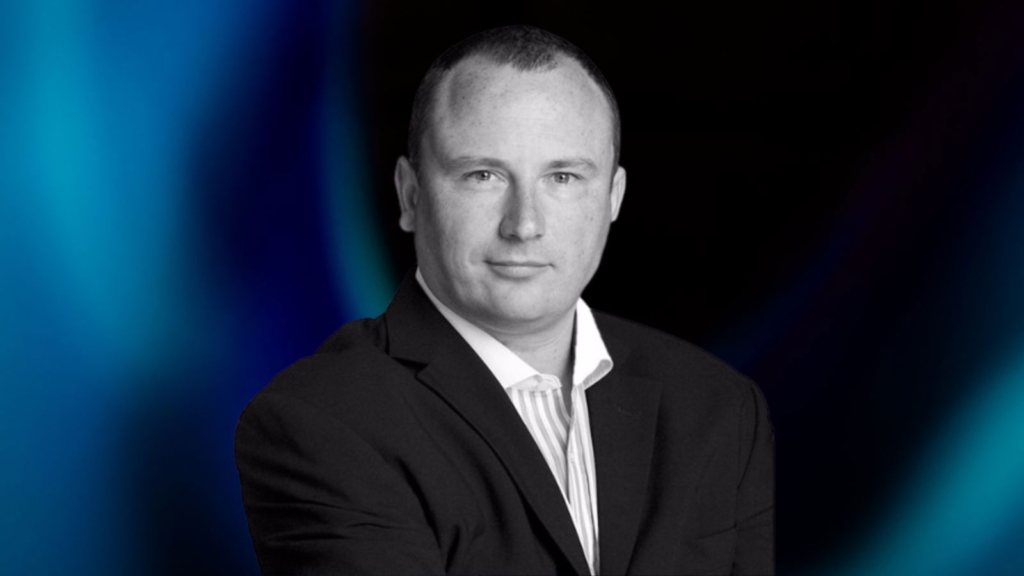
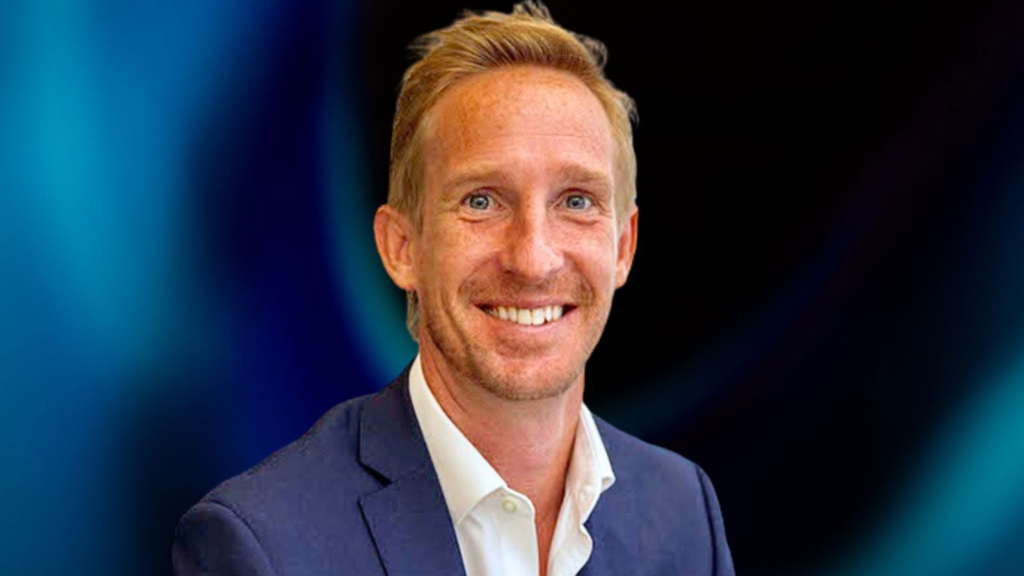
TBWA’s latest leadership structure for Greater China, Singapore and Malaysia will remain unchanged following the US$13.3 billion merger between Omnicom and Interpublic, as confirmed to MARKETING-INTERACTIVE.  Under the current structure, Joanne Lao (pictured middle) will remain as CEO of TBWAGreater China, while Mandy Wong (pictured left) will continue as the president for TBWASingapore. Meanwhile, Yee Hui Tsin (pictured right) will remain as the CEO of TBWAMalaysia.  In a statement sent to MARKETING-INTERACTIVE, a spokesperson from Omicom Advertising (OA) said its leadership structure in Asia remains unchanged. Due to the complementary footprint of the OA and IPG creative agency brands, most markets in Asia remain unchanged. Some new roles will be announced in January. Lao, based in Shanghai, oversees nearly 600 employees across six offices and seven group brands. Before joining TBWA, Lao spent seven years in the travel industry. Lao was then transferred to Singapore as Banyan Tree’s head of corporate communications. After seven years in Singapore, Lao moved to Hong Kong, and in 2006 was appointed managing director of TBWAHong Kong, before taking up her position in 2015 running Greater China operations.  Wong has been with TBWASingapore for over two decades, where her experience and expertise have led her to focus on driving highly demanding and complex global and regional accounts within the collective. During her time at the agency, she had worked with various renowned brands such as the Singapore Tourism Board, Standard Chartered Bank, Airbnb and Carltex.  On the other hand, Yee has been the CEO of TBWAMalaysia since 2021, three years after she was promoted to managing director from COO following the departure of Aaron Cowie.  She was also the general manager of TBWA Digital Arts Network at one point. Most recently under her watch, TBWA bagged the Wipro Unza Malaysia creative account for its fragrance and kids categories, following a competitive pitch in August 2025.  The confirmation of TBWA’s stable leadership comes amid sweeping changes at Omnicom following its acquisition of Interpublic. As part of the integration process, Omnicom is consolidating overlapping networks—FCB is being folded into BBDO, while DDB and MullenLowe are being absorbed into TBWA. Though Omnicom’s public announcement did not explicitly mention the retirement of these legacy brands, the updated Omnicom website reflects the shift. DDB, FCB, and MullenLowe no longer appear in the creative network structure, which is now streamlined around three global agencies: BBDO, McCann, and TBWA. In Asia, Sean Donovan will lead Omnicom Advertising. The three global networks will be supported by a collection of 12 creative boutiques, including Alma, antoni, Carmichael Lynch, Goodby Silverstein & Partners, Lucky Generals, and The Martin Agency, all of which retain their individual leadership. Related articles: Omnicom to shutter key brands, cut 4,000 jobs following IPG mergerOmnicom Media unveils new APAC leadership structure source

TBWA's leadership for Greater China, SG and MY unchanged amid Omnicom-IPG merger Read More »

PepsiCo deepens F1 push with multi-brand Mercedes partnership

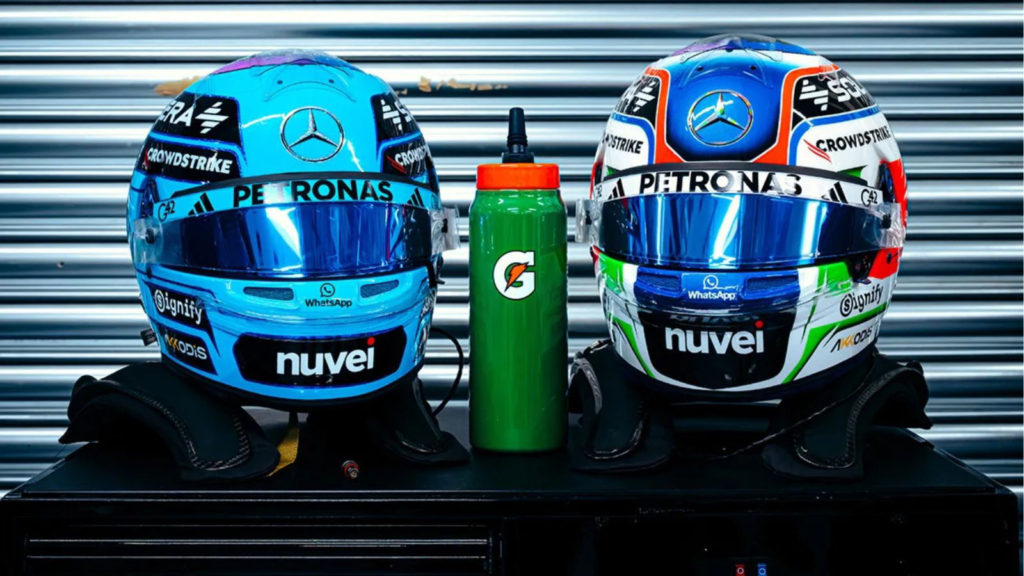
PepsiCo is deepening its Formula 1 ambitions with a major multi-brand partnership with the Mercedes F1 Team, bringing Gatorade, Sting and Doritos into the paddock from 2026 in a first-of-its-kind deal for the sport. The agreement builds on PepsiCo’s broader global F1 partnership signed in 2025 and marks the first time three category-leading brands have united under a single team partnership. It positions PepsiCo at the centre of F1’s explosive global momentum, combining performance science, youth culture and fan-first brand activations. Gatorade will introduce its performance hydration expertise, anchored by the Gatorade Sports Science Institute, into Mercedes’ operations for the first time. In a sport where drivers can lose up to four kilograms through sweat during a race, hydration plays a decisive role. Don’t miss: What Barilla’s F1 move means for sports ads beyond Super Bowl Mercedes will implement a customised Gatorade program designed to give drivers a competitive edge in a competition defined by milliseconds. The partnership also taps into the cross-generational appeal of Mercedes F1 Team drivers George Russell and 18-year-old rising star Kimi Antonelli. Both will feature in global fan engagement initiatives across Gatorade, Sting and Doritos, including behind-the-scenes content and immersive race-weekend activations. Sting will use the partnership to extend its Gen Z positioning into F1. Its growth footprint mirrors F1’s expansion into high-growth regions, giving Mercedes and PepsiCo a stronger cultural and commercial link to some of the sport’s fastest-growing territories. Doritos, meanwhile, will activate its flavour-forward identity through global fan experiences designed to match the intensity and precision of Grand Prix racing. Eugene Willemsen, PepsiCo’s chief executive officer, international beverages, said the partnership unites performance, energy and culture at a pivotal moment for the sport. “This partnership unites performance, energy and flavour under one banner – connecting three of PepsiCo’s most iconic brands with the world’s most successful Formula 1 team,” he said. “Through Gatorade, Sting and Doritos, we’re inside the culture of the sport, fuelling both the athletes and the fans who live for the thrill of F1.” Toto Wolff, team principal and CEO, Mercedes-AMG PETRONAS F1 Team, said the partnership aligns with the team’s push for performance through innovation. “Welcoming a company with a portfolio as strong as PepsiCo’s into our partner ecosystem is another sign of the strength of our team and our sport,” he said. Richard Sanders, chief commercial officer at Mercedes-AMG PETRONAS F1 Team, said the partnership would elevate both team performance and the overall fan experience across the racing calendar.  The expanded PepsiCo–F1 partnership covers rights across the 21-race global calendar and more than 200 broadcast territories, including trackside visibility, fan zone activations, branded content, hospitality and on-pack promotions. It also extends to the F1 Sprint series and the F1 Academy. Related articles: Audi F1 Team and adidas team up for high-performance style on and off the track   PepsiCo unveils new global brand identity after 25 years PepsiCo says it will be ‘agentic AI-first’ by 2026 source

PepsiCo deepens F1 push with multi-brand Mercedes partnership Read More »

The ‘phygital’ maze: Moving from fragmented insights to smarter activations

For marketers, the “last mile of marketing” has expanded into a complex and “channel-less” puzzle. The customer journey is no longer linear, but a web of online research, in-store browsing, and AI-driven search. While 88% of retail transactions still happen offline, brands are struggling to bridge the gap between digital engagement and real-world business outcomes – not just in measurement, but in planning and activation. This challenge of turning fragmented insights into smarter campaigns was the central theme at a recent MARKETING-INTERACTIVE roundtable hosted in partnership with Locala. Leaders from across the automotive, CPG, retail, finance, music and QSR industries gathered to dissect the “phygital” consumer. The insight and planning gap The first hurdle identified was not just measuring the end result, but having the right insights to plan effectively. Speaking from the perspective of the coffee retail sector, Peilin Lee, head of marketing at Nespresso, encapsulated the core problem of planning in the dark. “We’re seeing the performance drop … clicks are dropping … bounce rates are going up,” she said. And now with AI, people are not going directly to sites for first-hand information. “This is a black box with the blind leading the blind … even agency partners can’t give absolute solutions as this is new to them as well.” This lack of visibility makes budget allocation a high-stakes gamble across various sectors. In B2B finance, for example, participants noted that sales cycles can last 12 to 18 months, making it difficult to determine where marketing input is actually driving consideration over such a long period. The areas of attribution remain “grey”, with marketers struggling to prove their worth in a relationship-heavy sales process. In the complex world of global travel retail, the planning challenge is geographical. One attendee highlighted the difficulty of never knowing if marketing targeted in a source market such as Thailand actually works to drive sales in a destination such as New York. While marketing mix models help get a “rough idea”, they often cannot pinpoint exactly which channel deserves the budget. Similarly, for FMCG giants, where the majority of transactions occur in physical stores, attribution remains the industry’s toughest question. The consensus was that linking an offline purchase all the way back to an upper-funnel digital exposure such as a TikTok video remains a complex challenge that few have fully cracked. The activation disconnect Even when insights exist, organisational silos often prevent smarter, seamless activation. Vincent Pang, managing director for APAC at Locala, defined the modern path as “loop zigzags and spirals”, where consumers move fluidly between offline and online touchpoints. However, activation strategies often fail to mirror this fluidity. Kenneth Lau, global digital commerce marketing lead at Mondelēz International, revealed how siloed structures hinder omnichannel executions. “We spend a majority of our media on awareness,” he said. “We get people to click and go to a website and then they sometimes disappear.” He added that in the FMCG space, clicks don’t always connect to a commerce outcome – a function of how brands sometimes remain siloed. This leads to media ineffectiveness, particularly in high-consideration categories such as automotive. Neri Miclaus, managing director at Piaggio Asia Pacific, argued that a generic social media activation is often not worth the spend if it fails to bridge the gap to the showroom. Meanwhile, Petromil Petkov, head of the innovation hub at Volkswagen Group Singapore, shared a strategy to tighten this activation loop. By linking its digital “car configurator” to physical showroom visits, it is “able to connect these dots in a meaningful way”, ensuring the digital interest is captured and activated in the real world. Smarter engagement and community With the traditional funnel breaking down, leaders are looking for smarter ways to activate budgets that drive the most consideration. For the fast-paced QSR (quick-service restaurant) sector, Jayss Rajoo, head of marketing and food innovation at Pizza Hut, noted this means moving beyond a broad reach to precision timing. “Moments are the new media channel. When the old funnel collapses, what matters is the micro intent – the right message, at the right craving, at the right moment,” Rajoo said. “AI will help enable such interactions – it can get us about 70% of the way by spotting patterns, but the final 30% still comes from understanding people, culture, emotions. Tech can predict behaviour, but it cannot manufacture desire. That’s why the best work comes at the intersection of AI precision and human intuition.” For Cassandra Tan, vice president, strategy, CRM and eCommerce, Southeast Asia and Korea from Universal Music Group, smarter activations means translating digital fandom into tangible products. Speaking on the broader music ecosystem, she noted that fans are co-creators and community drivers. While music is intangible, she explained there is a continued desire from fans to hold onto tangible products – memorabilia from an experience – which can lead to sales wins in merchandising when activated correctly. As the discussion concluded, the conversation turned to the future of intelligent advertising. Pierre Padiou, chief operating officer of Locala, emphasised that the solution lies in smarter planning and activation before a dollar is even spent. “You need to have access to the whole inventory to be able to target the right people at the right place on the right device,” he explained. He noted that by combining online and offline signals, brands can gain the visibility needed to focus budgets where they need consideration the most, bridging the gap between raw insights and effective, real-world activation. This roundtable and article were made possible by our partner, Locala, the leading location-based omnichannel advertising platform that helps brands bridge the gap between digital marketing and real-world business outcomes by solving the omnichannel planning, activation, and attribution challenges. By unifying online and offline signals, Locala helps marketers to zoom in on a brand’s local context, assess audience relevance, and deploy tailored and scalable campaigns without media waste. To learn more about how Locala can help you increase engagement with your customers, go to asklocala.com. To request

The ‘phygital’ maze: Moving from fragmented insights to smarter activations Read More »

Global ad spend set to surpass US$1 trillion in 2026, APAC leads growth

Global advertising spend is on track to pass US$1 trillion for the first time in 2026, according to dentsu’s December 2025 Global Ad Spend Forecast. The projected 5.1% rise outpaces the expected 3.1% expansion of the global economy, underscoring the continued strategic importance of media investment despite ongoing macroeconomic volatility. Dentsu reports that 86% of CMOs expect their budgets to increase over the next 12 months, with most viewing media as a direct driver of business growth. The optimism reflects steady resilience across both advanced and emerging markets, supported by easing inflation, accelerating AI adoption and ongoing investment in digital infrastructure. Next year’s major global events – including the Olympic Winter Games, FIFA World Cup and the US midterm elections – are expected to deliver further incremental spend, creating strong conditions for brands looking to capture attention and build momentum in a high-demand media environment. Don’t miss: APAC lags behind in consumer receptiveness to ads APAC remains the growth engine Asia Pacific region remains the fastest-growing advertising market, forecast to reach $376.4 billion in 2026, up 5.4% from 2025. China’s ad spend is projected to grow 6.1%, driven by short-form video and lifestyle platforms, while India accelerates at 8.6%, fuelled by retail media and major sporting events such as the ICC Men’s T20 Cricket World Cup and IPL 2026. Australia is set for 4.1% growth, and Japan slows to 2.9%, yet APAC overall continues to expand its global share – expected to reach nearly 40% by 2028. In the Americas, the US ad market is projected to reach $460.5 billion in 2026, with digital channels (particularly search, social, and streaming) driving double-digit growth. Brazil emerges as the most dynamic top-12 market, with 9.1% growth, supported by presidential elections and FIFA World Cup spending. EMEA markets are also on the rise, with the UK leading Europe at 5.7% growth, while Italy, France, and Germany see moderate acceleration through digital adoption and event-driven opportunities. Digital and algorithm-driven advertising dominate Digital advertising remains the primary growth engine, expected to account for 68.7% of total spend in 2026. Retail media is the fastest-growing digital segment for the fifth consecutive year, expanding 14.1% as brands leverage first-party shopper data and closed-loop measurement. Online video and social media advertising continue to see strong acceleration at 11.5% and 11.4% respectively. Programmatic trading dominates digital, with 81.4% of digital spend expected to be programmatically traded. Artificial intelligence is central to the advertising landscape. dentsu forecasts that 71.6% of ad spend will be algorithm-driven by 2026, rising to 76% by 2028. CMOs are prioritising AI to enhance efficiency, data analysis, and campaign performance, while also exploring the opportunities and risks of generative AI and agentic AI deployment. Evolving channels and consumer engagement Brands are increasingly engaging consumers through emerging content formats and channels. Sports docuseries, Japanese anime, microdramas, and influencer-led social commerce are capturing attention across demographics, particularly Gen Z. Business messaging platforms are gaining traction in Western markets, enabling brands to deliver integrated, conversational experiences across media, commerce, and customer service. Television remains a powerful channel, with connected TV and sports programming driving both scale and precision. Meanwhile, print continues to decline, and out-of-home and audio advertising grow modestly, with digital formats expanding steadily. In this “algorithmic era,” dentsu advises CMOs to adopt holistic strategies that integrate AI, programmatic media, data-driven measurement, and evolving content formats to capture consumer attention, drive engagement, and maintain competitive advantage. Related articles: CMOs must adapt, as global ad spend becomes overwhelmingly digitalGlobal digital ad spend hits US$690 billion, poised to dominate in 2030 Survey: HK ad spending saw 6% YOY decline in Q2 2025  source

Global ad spend set to surpass US$1 trillion in 2026, APAC leads growth Read More »

Leigh Terry exits IPG Mediabrands APAC amid Omnicom–IPG integration

Leigh Terry has exited his role as CEO of IPG Mediabrands APAC as the Omnicom–IPG merger triggers major leadership consolidation across the region, MARKETING-INTERACTIVE has confirmed. Tony Harradine will take on responsibility for Omnicom Media across APAC following Terry’s departure. In a statement on LinkedIn, Terry said that he will be leaving the business but not the industry. “I want to thank our people, clients and partners for a chapter I’m incredibly proud of. Leading this team has been a privilege, and I’m grateful for the trust and support shown throughout my time here,” he wrote. “I’ll be taking some time out before considering my next chapter, and I leave with deep appreciation for the work we’ve done together,” Terry added. Terry has led Mediabrands across 16 markets since January 2017, overseeing more than 5,000 staff across the region, and guiding the network through shifts in digital, data and media investment. His remit included oversight of its full-service agency networks UM, Initiative and Mediahub in addition to specialised business units Healix, KINESSO, MAGNA, Mediabrands Content Studio, Orion Holdings, Rapport, and the IPG Media Lab during a period of rapid technological and consumer change. Don’t miss: Omnicom to shutter longstanding agencies, cut 4,000 jobs following IPG merger   Before joining Mediabrands, Terry spent nearly six years as CEO of Omnicom Media Group Australia and New Zealand, where he oversaw agencies including OMD, PHD, M2M and Resolution. Earlier in his career, he held the position of managing director at OMD Australia alongside Peter Horgan and also served as managing partner at OMD Australia. He had relocated from the UK in 2005 after launching OMD Digital and later led the network’s early direct and data capabilities. A long-time digital operator, Terry built his reputation on navigating evolving media ecosystems and advising brands through market fragmentation, consumer shifts and new technology adoption. His exit marks a major chapter change for Mediabrands APAC as the merged Omnicom–IPG organisation realigns leadership structures across Asia Pacific. Further regional changes are expected as integration plans roll out in the coming weeks. Related articles:  ‘A defining moment’: Omnicom ANZ folds DDB and FCB into new regional structure The Omnicom–IPG mega merger changes everything, especially for CMOs  How are industry players coping with the consolidation wave?  source

Leigh Terry exits IPG Mediabrands APAC amid Omnicom–IPG integration Read More »

Edelman names new APAC and Vietnam leaders

Edelman has expanded its Asia Pacific leadership bench with two senior appointments, naming Pooja Rawat (pictured left) as chief strategy officer for APAC and Quang Nguyen (pictured right) as managing director for Vietnam. The moves signal the firm’s intent to elevate its strategic consulting capabilities across the region while deepening its investment in high-growth markets, the company shared.  Rawat, a seasoned strategist with 18 years of experience across India, Southeast Asia, Central Asia and China, joins Edelman from MullenLowe Lintas and will be based in Mumbai. Her portfolio includes shaping narratives for major brands such as Axis Bank, Tata Motors, Jeep, Vim and Lifebuoy. Edelman’s APAC CEO Rakesh Thukral said her arrival comes at a pivotal time for the region. “Pooja’s appointment strengthens our strategic consulting capabilities across the region. Her analytical rigor, creative vision and cultural instinct will help us deliver even greater value to clients,” he said. “This is a moment of transformation for Edelman APAC, and Pooja’s leadership will be instrumental in shaping how we show up for our clients and our people.” Don’t miss: Edelman names new APAC COO Rawat said she looks forward to shaping strategy across diverse markets and collaborating with teams to develop bold, integrated solutions. “Edelman’s commitment to creativity, data-driven insights and cultural relevance aligns perfectly with my passion for building meaningful connections between people and brands,” she added. In Vietnam, Edelman has appointed Quang Nguyen as managing director as the firm sharpens its focus on expanding its capabilities in the market. She succeeds former CEO Thi Thien Thanh (TT) Nguyen, who remains with the firm in an advisory capacity to ensure continuity. With more than 15 years of experience across marketing, branding and communications, Quang brings a track record of growth and team leadership, most recently serving as managing director at BCM Vietnam, where she led a 100-strong team and built partnerships with clients including Unilever Food Solutions, Organon, Masan and Vinamilk. Thukral said Quang’s leadership marks “an exciting new chapter for Edelman Vietnam,” praising her strategic vision and collaborative approach. “Her proven ability to drive growth makes her the ideal leader to build on TT’s legacy and lead our business into its next phase,” he said. Quang shared her enthusiasm for the role, noting the momentum within both the market and the industry. “I am thrilled to join Edelman Vietnam at such a pivotal moment. I look forward to working with the firm’s talented teams and valued clients to drive growth, build trust, and deliver impactful work that elevates Vietnam’s reputation on the global stage,” she said. Edelman said both leaders will be instrumental in strengthening the firm’s regional footprint and accelerating its commitment to delivering integrated, insight-driven solutions across APAC. These two appointments come half a year after Christiane Schulz was named Edelman’s new chief operating officer for Asia Pacific, effective 1 April. She reports to Thukral, and is focusing on enhancing operational excellence and client growth across the region. Schulz transitioned from her role as CEO of Edelman Germany, a position she has held since 2019. During her tenure, she successfully expanded the firm’s presence, strengthened its market position and drove business growth. Related articles:Leading the charge: Edelman’s Delicia Tan on confidence and inclusivenessEdelman’s Delicia Tan takes on expanded role as SG CEOEdelman lays off 330 people globally amidst restructuring source

Edelman names new APAC and Vietnam leaders Read More »

James Hawkins departs IPG Mediabrands APAC as merger reshapes region

As the fallout from the Omnicom–IPG merger takes shape, James Hawkins has also departed IPG Mediabrands APAC, leaving his role as chief client officer a year after it was created as the merger claims more senior IPG leaders.  In conversation with MARKETING-INTERACTIVE, Hawkins said that he’s had “a fantastic year working with the IPG Mediabrands team across Asia Pacific.”  “Rolling out the Craft model and seeing real impact across existing and new business has been a highlight. It’s a chapter that now comes to a close for me but I take-away a huge sense of pride in the client wins (Volvo, H&M, KFC, Bayer, Unilever etc.) and real sense of accomplishment,” said Hawkins. ”As always it’s the people that make an organisation and there is some exceptional talent across the network that are a real pleasure to work with. I wish all my ex-colleagues and friends from both organisations all the best for the integration. Time to recharge and focus on my next chapter, news to follow,” he added. Don’t miss: Leigh Terry exits IPG Mediabrands APAC amid Omnicom–IPG integration  Hawkins is a well-established industry leader with close to two decades of experience across media and creative agencies. Before joining Mediabrands, he spent six years as CEO of PHD Asia Pacific, where he was tasked with sustaining the agency’s regional momentum and strengthening its future-facing capabilities. He previously held several senior roles within dentsu, including managing director of Asia Pacific at dentsu X, chief digital officer at Dentsu Media, and president of digital capabilities at Dentsu Aegis Network Asia Pacific. He also served as CEO and managing director at DM2.  In tandem, Leigh Terry has also exited his role as CEO of IPG Mediabrands APAC, as the Omnicom–IPG merger triggers major leadership consolidation across the region, MARKETING-INTERACTIVE has confirmed. Tony Harradine will assume responsibility for Omnicom Media across APAC following the departures of Terry and Hawkins. The dual exits mark a significant chapter change for Mediabrands APAC as the merged Omnicom–IPG organisation realigns leadership structures across the region. Further regional changes are expected in the coming weeks as integration plans take shape. Related articles:Omnicom to shutter longstanding agencies, cut 4,000 jobs following IPG merger ‘A defining moment’: Omnicom ANZ folds DDB and FCB into new regional structure The Omnicom–IPG mega merger changes everything, especially for CMOs   source

James Hawkins departs IPG Mediabrands APAC as merger reshapes region Read More »

Standard Chartered doubles down on investment guidance in latest wealth push

Standard Chartered has rolled out the second phase of its “Now’s your time for wealth” campaign, putting its chief investment office (CIO) at the centre of its regional wealth narrative. The latest phase is targeted at affluent clients managing cross-border portfolios, as more investors diversify into regional wealth hubs and reassess their risk exposure amid market volatility. At the core of the campaign is the delivery of CIO-led market intelligence, including real-time outlooks, sector calls and cross-market guidance. Standard Chartered said the insights will be distributed through a mix of editorial partnerships and digital content releases timed to market movements. Don’t miss: How StanChart inspires consumers to maximise wealth right here, right now The bank added that the move is aimed at giving clients more direct access to its investment expertise across markets and cycles. To support the rollout, the full-funnel integrated media strategy is led by dentsu Singapore. The campaign spans out-of-home advertising as well as digital channels such as Meta, LinkedIn, YouTube, programmatic media, Google Demand Gen and AI-enabled search. Offline-to-online retargeting will also be used to align messaging with users’ investment behaviours across traditional and digital touchpoints. Additional channels include podcasts, online radio and connected TV to reach audiences based on evolving media consumption patterns. Standard Chartered is also leveraging its customer data platform (CDP) to personalise messaging, with clients receiving CIO insights based on their investment behaviours and preferences. “Investors today are navigating a far more complex landscape, with geopolitical developments and market shifts influencing decisions across borders. With this next phase of our ‘Now’s your time for wealth’ campaign, we aim to give clients clearer access to the insights and connections that matter most,” said Haymans Fung, Global head of marketing for wealth and retail banking at Standard Chartered. She added, “By combining our international network with our 170 years of expertise, and timely perspectives from our Chief Investment Office, we are committed to supporting clients in making confident, well-informed decisions wherever they are in their wealth journey.” In tandem, Sumeet Parab, client president, media, dentsu Singapore, said, “Reaching affluent investors today requires a fully connected strategy that brings together data, content and media in a meaningful way. Our role was to ensure that Standard Chartered’s insights reach the right audiences across the platforms they trust, supported by an integrated mix of formats and personalised journeys. “This collaboration reflects how strategic media, powered by data and technology, can help financial institutions engage clients with relevance and consistency across markets,” he added.  The latest wealth push follows a broader shift in how the bank is framing its relationship with affluent clients. In August, Standard Chartered rolled out its “WellnessNOW” campaign, which positioned financial wellness as part of overall well-being. The three-part video series explored themes such as breathwork, mindfulness, Ayurveda and detox, drawing parallels between personal routines and financial decision-making. Unlike traditional bank advertising, the campaign carried no direct call-to-action or product placement, and was aimed at affluent consumers prioritising emotional, physical and mental clarity alongside wealth growth. Related articles: How Standard Chartered ditches the numbers to tell real stories of wealth   Standard Chartered’s new global platform champions bold moments and decisive action    Standard Chartered names new global corporate coverage marketing director source

Standard Chartered doubles down on investment guidance in latest wealth push Read More »

Maybank Singapore picks new PR agency

Maybank Singapore has appointed Ampersand Advisory Singapore to handle PR duties, MARKETING-INTERACTIVE understands. The move follows a PR pitch conducted earlier this year. The scope is understood to cover media management, PR strategy, and crisis communications. MARKETING-INTERACTIVE has reached out for more.  Don’t miss: Maybank SG goes full wrap from heartlands to causeway in biggest bus campaign The appointment coincides with a recent surge in the bank’s PR initiatives. In September, it hosted “The Kindness Market” at Singapore Expo Hall 2B for Global CR Day, supporting 2,000 seniors and families with SG$100 worth of essentials, guided by 1,500 Maybank volunteers acting as personal shoppers and senior befrienders. The initiative drew social media attention, prompting the bank to release a follow-up video that reinforced authenticity while highlighting stories of inclusion, ageing, and community connection. In addition, the bank has been strengthening its brand and corporate positioning with a full-wrap corporate bus fleet for its 65th anniversary. In a previous conversation with MARKETING-INTERACTIVE, Annie Lee, head of country corporate office at Maybank Singapore said the brand campaign focuses on the bank’s commitment to client-centricity and its promise to deliver reliable services and expertise for its clients. Maybank Singapore adds to Ampersand Advisory’s list of growing clients. In Malaysia, the agency has worked with notable brands including Etika, delivering award-winning campaigns such as “Goodday Kidstart 2.0,” as well as AI-driven projects for Mead Johnson and branding work for Coway Malaysia. Related articles:  Maybank Singapore and American Tourister turn everyday spending into a getaway  Maybank SG connects ‘kopi kakis’, communal dining traditions and banking Maybank serves up cross-border bonds with ‘Hungry neighbours’ campaign  source

Maybank Singapore picks new PR agency Read More »