marketing interactive

Public relations in Southeast Asia is evolving, not disappearing

Across Southeast Asia, the news business is undergoing a structural reset. In Vietnam alone, a proposed media restructuring could shutter around 180 outlets and impact over 8,000 journalists and editors. Similar consolidation and tightening efforts in Indonesia, Malaysia, the Philippines and Thailand could mean smaller newsrooms, multi-beat reporters and tighter deadlines. Last October, it was reported that Media Chinese International looks to lay off at least 44% of its staff within two years as it integrates artificial intelligence (AI) into its operation Branded or sponsored content is now standard fare, with editorial scrutiny far sharper around local relevance. The message to PR folks is clear: your pitch must land fully formed, supported by verified data and a local context that removes extra work from the journalist’s plate. Despite the churn, three things remain constant. First, founders, investors and policymakers still judge success partly by how often their ideas appear in trusted publications. Second, brands still rely on third-party validation to build reputational capital that advertising alone cannot buy. Third, respectful relationships with journalists still open doors, particularly when a crisis places the organisation under sudden scrutiny. Technology can speed research and drafting but it cannot replace the human ingredient of trust built over time. New rules for earning trust  The traditional news release sent to a mass mailing list seldom earns more than a polite glance. Reporters want clear angles that answer “why now?”, concise quotations and assets that accelerate production, such as charts, photographs and locally relevant case studies. They expect stories to move beyond product details and address wider industry implications. Pitches that focus solely on what the brand wishes to announce, without considering what audiences need to know, are usually ignored or downgraded to paid placement. Influence today is diffused across many channels. Fewer career journalists are complemented by a much larger pool of niche creators, analysts and subject-matter experts. Successful campaigns, therefore, rely on highly targeted, data-led outreach rather than blanket distribution. Artificial intelligence assists with background research and first-draft writing, freeing practitioners for deeper insight and relationship building. From the planning stage, teams design amplification strategies that treat an earned headline as “hero content” to be repackaged for LinkedIn, X, TikTok and corporate newsletters. Audiences regularly engage more with a senior executive’s personal post than with the company page, so individual voices carry growing weight. The localisation imperative  Southeast Asia may be discussed as one region, yet its media expectations are fiercely local. A fintech story that lands in Singapore likely needs regulatory nuances for Malaysia and a consumer-protection context for Indonesia. Without adjustments, even strong regional news can fall flat. Communicators must map priority markets early, secure local spokespeople where possible and prepare tailored press materials that respect language, cultural references and differing news cycles. Trust is scarce, and misinformation travels fast, particularly on social media. The 2024 accounting scandal involving Indonesian aquaculture firm eFishery demonstrated how rapidly local issues become global headlines. Companies that had already invested in transparent relationships with journalists could explain their exposure, correct errors and contextualise the risk. Those without prior goodwill found it harder to gain a fair hearing. Whether the incident is a data breach, product recall or executive departure, pre-crisis credibility often determines how a narrative unfolds. Preparing for PR’s next evolution Modern PR is increasingly data-driven. Beyond headline counts, practitioners track share of voice, sentiment and referral traffic to prove how earned media supports organisational goals. This shift does not diminish creativity, but it does require alignment with marketing analytics and clear key performance indicators agreed in advance. Looking ahead, communicators in Southeast Asia should invest in story development by mining internal data, customer insight and sector trends to uncover themes that move markets, not just brand agendas. They should also strengthen reporter relationships by offering genuine value, including expert access, independent research and local case studies. Moreover, communicators should blend channels thoughtfully, coordinating earned, owned and paid media so each amplifies the others, acknowledging that audiences move fluidly across platforms. They should adopt AI responsibly, using it to streamline tasks while preserving human judgment for nuance, ethics and tone. Finally, communicators should prioritise localisation, equipping spokespeople and materials to answer the “So what for us?” question in every target market. In Southeast Asia, public relations is on the trajectory of ripening. Brands that adapt to leaner newsrooms, multi-channel influence and data-driven evaluation will keep reaping the credibility that only independent coverage can deliver. The human touch (context, empathy and follow-through) remains the constant that separates a fleeting mention from a story that shapes opinion. This article was written by Prayaank Gupta, executive director at Ellerton & Co. Public Relations. source

Public relations in Southeast Asia is evolving, not disappearing Read More »
When scale meets strategy: Agency shake-ups that shaped 2025

2025 has been a transformative and highly dynamic year for the global marketing and advertising industry. Holding companies and major agencies moved aggressively, reshaping the landscape through mergers, acquisitions, realignments, and rebrandings. Longstanding rivalries ended, reporting structures were overhauled, and global networks expanded its creative and data capabilities in pursuit of scale and efficiency. The year highlighted a clear trend: scale alone is no longer enough. The world’s largest marketing groups raced to consolidate resources, unify talent, and integrate data, media, and technology in ways that promised smarter, more connected growth. From blockbuster acquisitions to the formation of entirely new creative entities, each agency rethought traditional structures, prioritising collaboration and agility to meet evolving client needs. Overall, 2025 was a year of consolidation, reinvention, and rapid change, as holding companies and agencies navigated a more complex, competitive, and data-driven marketplace. The pace of transformation signals that the industry is entering a new era, one defined not just by size, but by the ability to integrate creativity, technology, and intelligence in ways that were unimaginable even a few years ago. Below, MARKETING-INTERACTIVE has tracked five of the biggest agency shake-ups this year, highlighting just how fast the landscape is evolving. Don’t miss:  How are industry players coping with the consolidation wave?  Omnicom completed acquisition of IPG Omnicom completed its acquisition of Interpublic, creating the world’s largest holding group with more than US$25 billion in combined revenue. CEO John Wren described the move as the start of the “next era” of intelligent, connected growth. The deal united two of the industry’s longstanding rivals under Omnicom. As of this writing, Wren remains as chairman and CEO, with Phil Angelastro continuing as EVP and CFO, while Philippe Krakowsky and Daryl Simm were appointed co-presidents and co-COOs.  Rumours of an Omnicom–IPG merger had circulated earlier in 2025 amid margin pressures, slower global growth, and the need for deeper integration across data, media, and CRM. The merger ended one of the industry’s longest rivalries and shifted the balance of power among the Big Four networks including Omnicom, Publicis, WPP, and Dentsu, creating a scale player surpassing WPP in revenue and headcount. Read more here.  Publicis acquired HEPMIL In October 2025, Publicis Groupe signed a definitive agreement to acquire HEPMIL Media Group, the parent company of SGAG, a leading influencer, content, and social agency in Southeast Asia. The acquisition combined HEPMIL’s expertise in building digital communities and managing local creators with Publicis’ data capabilities, including Lotame and Epsilon’s ID graph covering more than 800 million consumer profiles in the region. The integration strengthened Publicis’ position in identity-driven influencer marketing, offering a unified creator practice across social strategy, influencer management, and data-led content creation. Read more here. WPP realigned Grey under Ogilvy Earlier this September, WPP moved creative agency Grey under Ogilvy, shifting its reporting line from the AKQA group. Grey global CEO Laura Maness began reporting to Ogilvy global CEO Devika Bulchandani. The move aimed to strengthen collaboration, unlock growth across WPP, and reflect Grey’s creative resurgence and profitable trajectory. Grey continued to operate as a standalone brand within Ogilvy, and existing collaborations with AKQA remained in place. Read more here. WPP rebrands GroupM In May, WPP rebranded its media investment arm, GroupM to WPP Media, marking a significant shift after two decades.  The move is part of a broader effort to deliver more integrated, AI-enabled solutions to the world’s largest advertisers. With more than US$60 billion in annual media investment under management and clients across 80 markets, WPP Media consolidates the group’s media, data and production capabilities under a single, AI-driven operating model. Mindshare, Wavemaker and EssenceMediacom will continue to exist as agency brands within WPP Media, working closely with clients through dedicated teams.  Read more here.  Publicis merged Leo Burnett and Publicis Worldwide to form Leo Kicking off the year, Publicis Groupe combined Leo Burnett and Publicis Worldwide into a new global creative entity called Leo. The move united 15,000 creative professionals (8,000 from Leo Burnett and 7,000 from Publicis Worldwide) to drive scaled transformation, personalised content, and connected brand experiences. Leo was co-led by Marco Venturelli and Agathe Bousquet as co-presidents, with Gareth Goodall as chief strategy officer. Andrew Bruce, CEO of Publicis Groupe Canada, also took on the role of Chairman, Leo North America. The new unit joined Publicis’ creative roster alongside Saatchi & Saatchi, LePub, and BBH, with a redesigned logo symbolising “the firepower of a name with the roar of a lion.” Read more here.  Related articles:  Agency agenda: Ogilvy ASEAN CEO Kunal Jeswani on his 3 big bets for 2026   Next wave of creativity: What’s in store for 2026? Next in digital: How agencies in SG are staying ahead in 2026  source

When scale meets strategy: Agency shake-ups that shaped 2025 Read More »

Campbell’s rebuts ‘absurd’ claims of 3D-printed chicken after alleged recording surfaces

Campbell’s is pushing back against misinformation about its ingredients following the release of an alleged audio recording tied to a retaliation lawsuit filed by a former employee. The recording was released by Robert Garza, who is suing the company for allegedly retaliating against him after he raised concerns about then–information technology vice-president Martin Bally. According to details reported by ABC News, the lawsuit cites an alleged conversation between Bally and Garza that Garza secretly recorded during a meeting in 2024. In the audio, Bally is reportedly heard making disparaging remarks about Campbell’s consumers and its products, including crude comments about the healthiness of the soups and claims that they contained “bioengineered meat” or “3D-printed” chicken. Don’t miss: Campbell’s cooks up grilled cheese and chicken noodle soup scented candles The suit reportedly states that Garza planned to report Bally’s behaviour to HR but was dismissed weeks later. Campbell’s told ABC News that Garza, who had been with the company for less than five months, was terminated for “good reason”. Garza is reportedly suing for retaliation and a hostile work environment, and is seeking emotional and economic damages. Campbell’s said it first became aware of the litigation, and segments of the recording, on 20 November. After reviewing the clip, the company said it believes the voice to be Bally’s. The company also described the comments as “vulgar, offensive and false,” adding that the behaviour “does not reflect our values”. Bally is no longer with the company as of 25 November. In addition, the company moved quickly to address claims circulating online suggesting its soups contain artificial, lab-grown or 3D-printed chicken. Campbell’s called the claims “patently absurd,” reiterating that all its soups are made with real chicken sourced from long-trusted, USDA-approved US suppliers. The brand said its chicken meets strict safety, quality and animal-welfare standards. All soups are produced with “no antibiotics ever” chicken, and Campbell’s does not use lab-grown meat, 3D-printed ingredients or any form of bioengineered meat. Its facilities are subject to USDA oversight, including in-person inspections, and the company works only with approved and audited suppliers. Campbell’s added that it remains committed to “acting with character, integrity and transparency,” emphasising the trust it has built over more than 150 years. The incident comes as food brands continue to battle viral misinformation about their ingredients. In 2021, McDonald’s publicly debunked long-running “pink slime” rumours after an image of a bright pink substance circulated online and was wrongly linked to its chicken McNuggets. The fast-food giant clarified that its nuggets are made from USDA-inspected boneless white-meat chicken, not the “pink goop” depicted in the viral photo. Related articles: Nike blends sports and Cantonese soup culture with pop-up in Guangzhou    Jiang Nan, GIGIL continue ‘Gallery of mess’ campaign with soup flavours     The Soup Spoon looks to help Singaporeans stay on track with their New Year’s resolutions source

Campbell’s rebuts ‘absurd’ claims of 3D-printed chicken after alleged recording surfaces Read More »

Interactive ads and AI-led optimisation define 2025’s global mobile gaming ad landscape

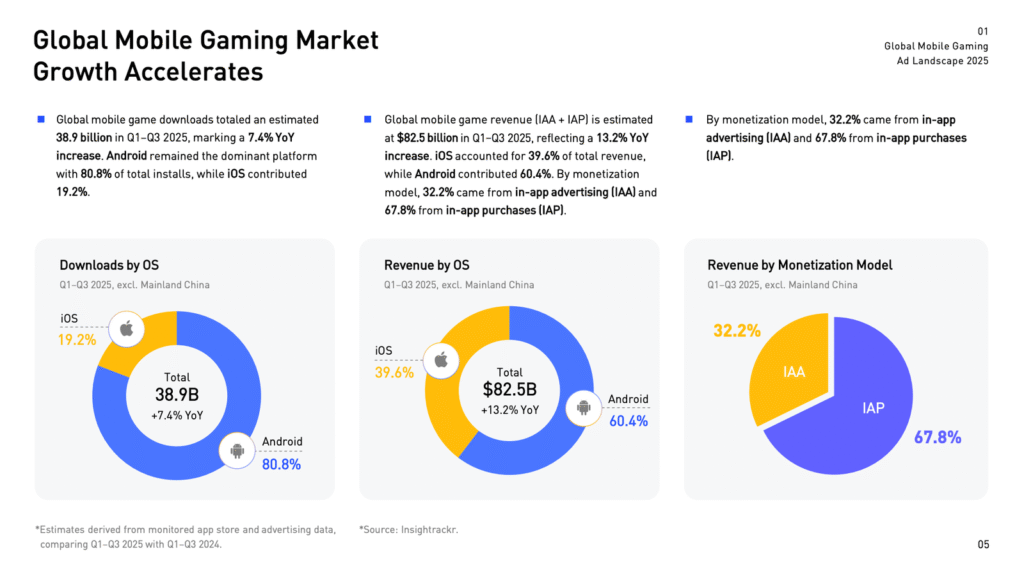
Mobile gaming advertisers spent much of 2025 in acceleration mode, fuelled by rising installs, surging creative volumes and a rapid shift toward interactive and AI-generated ad formats. According to XMP’s latest Global Mobile Gaming UA Trends & Strategy Report, the year marked a turning point for performance marketers navigating a more competitive and data-fragmented mobile ecosystem. The report, which analysed global activity across 147 markets (excluding Mainland China) and more than 150 advertising media between January to September 2025, highlighted that mobile gaming installations rose 7.4% year-on-year to 38.9 billion. Android continued to dominate with 80.8% of installs, while total mobile gaming revenue grew 13.2% y-o-y to reach US$82.5 billion. While hyper-casual titles remained the most downloaded category, puzzle and action games sustained strong traction. For ad-driven monetisation, shooting and puzzle games topped the charts. An indication that high-engagement genres continue to fuel advertiser demand. Don’t miss: Ready player Alpha: Why gaming is the new brand playground Interactive formats go mainstream A core trend highlighted in the report is the mainstreaming of interactive creative formats. Playable ads and hybrid video-playable executions, which were once treated as experimental “nice-to-have” units, are now central to many marketers’ user acquisition strategies. Video-dominated ad formats accounted for 81% of all global gaming creatives. However, hybrid formats surged the fastest, suggesting wider adoption of immersive ad experiences that help bridge entertainment and performance. South America emerged as the most active advertising region, producing the highest creative volume worldwide, with video creatives making up nearly 85% of all ads in the region. Europe, North America, and Southeast Asia each exceeded 2 million creatives. Europe showed relatively higher adoption of playable ads, while North America and Southeast Asia exhibited balanced format distributions, indicating similar creative strategies across mature markets. Meanwhile, Meta maintained its leadership in global spend across both casual and hardcore genres, followed by Google and TikTok, reinforcing advertisers’ continued reliance on large, optimised ecosystems for scale. AI reshapes creative production One of the report’s defining findings is the rapid rise of AI-generated creatives. Video templates, AI avatars and automated editing tools are now widely used to personalise engagement and improve conversion efficiency. “As advertisers prepare for 2026, we’re seeing a clear shift toward more automated, cross-channel workflows that streamline planning, execution and measurement across major media networks,” said Zidan Tang, head of XMP by Mobvista. “2025 marked a turning point for mobile advertising as advertisers moved from volume-based campaigns to creative-led, performance-driven strategies powered by AI and cross-channel visibility.” Tang added that hybrid ad strategies and AI-led optimisation “are now the rule, not the exception,” as marketers look to unify fragmented ecosystems and improve measurable growth. Major challenges remain Despite strong global performance, advertisers also faced rising user acquisition (UA) costs and increased complexity managing campaigns across multiple platforms. Cross-channel fragmentation, especially in creative, bidding and reporting workflows, remains a key barrier for marketers chasing efficiency. The report noted that advertisers are now placing heavier emphasis on four operational pillars. They are cross-channel campaign management across Meta, Google, TikTok and SDK networks; centralised creative management for video, images and playables; AI-powered optimisation for bidding, budgeting and creative rotation; and full-funnel transparency through integrated analytics and unified ROI tracking. With both global ad spending and mobile game downloads continuing to climb, the findings indicate a sector moving decisively into an “intelligent era”, one defined by creative innovation, automation and tighter performance measurement. Related articles:CMOs must adapt, as global ad spend becomes overwhelmingly digitalAPAC leads in mobile gaming growth in 2024: What marketers need to know Gaming surges, but news sites slip as Australians spend more time online source

Interactive ads and AI-led optimisation define 2025’s global mobile gaming ad landscape Read More »

SEA shoppers turn to verified stores as authenticity drives eCommerce choices

Southeast Asia’s eCommerce landscape is moving decisively toward authenticity-driven, quality-first shopping, according to new research from Cube Asia. The regional study, commissioned by Lazada and unveiled at the LazMall brand gala, surveyed 6,000 consumers across Singapore, Malaysia, Indonesia, Thailand, the Philippines and Vietnam. Cube Asia found that 90% of online shoppers now engage with mall-style environments, signaling rising demand for trusted products, reliable fulfilment and verified brand stores. The shift towards authenticity-led eCommerce, defined as buying branded goods through authorised mall environments, has grown from 12% of total eCommerce sales in 2020 to 30% in 2025, representing roughly US$40 billion in market value. The segment is projected to account for 55% of Southeast Asia’s eCommerce retail by 2030, or around US$150 billion. Don’t miss: Study: 81% of APAC shoppers want AI-powered shopping tools Premiumisation is evident across the region. 86% percent of respondents qualify as active mall shoppers, defined as having made at least 20% of recent online purchases from mall stores. 90% said they are willing to pay more for branded goods purchased in trusted environments, with 31% willing to spend 10–30% extra for authenticity and assurance. Thailand and Vietnam recorded mall shopper penetration above 90%, while Indonesia and the Philippines were around 80%. Three key factors are driving the trend: wider access to quality brand assortments, stronger omnichannel behaviour, and increasing reliance on AI for discovery and comparison. More than 80% of consumers said they face supply gaps when searching for authentic branded products, although 91% discovered overseas brands that exceeded expectations. Showrooming is also widespread, with 73% visiting physical stores before purchasing online. AI usage is highest during product discovery (66%) and comparison (78%), though only 16% use it for final purchase decisions. The findings indicate that Southeast Asian consumers are moving towards “confidence commerce”, where verified brands, quality assurance, and reliable fulfilment increasingly shape purchasing decisions. According to Lazada, its investments in AI listing tools, automated marketing, personalisation, and omnichannel integrations position the platform to capture this next wave of “confidence commerce” as quality-led shopping becomes the default across SEA. “The findings from Cube Asia validate Lazada’s brand-led strategy and reinforce our commitment to building a high-trust, quality-first ecosystem for both consumers and brands. As consumers increasingly seek authenticity, Lazada’s strong position in the mall ecosystem gives us a unique opportunity to lead the region’s next phase of eCommerce growth,” said Iris Wei, president, Lazada Group.  In fact, AI is increasingly shaping consumer expectations in eCommerce across Asia Pacific. DHL eCommerce’s “eCommerce Trends Report 2025“, which surveyed 24,000 shoppers across 24 markets, found that 81% expect AI-powered features such as visual try-ons, voice search, and smart shopping assistants. Nearly half (47%) are already using voice commands to shop. The report highlights that AI, social commerce, delivery expectations, and sustainability are redefining what it takes to win and retain customers. Virtual try-ons, AI assistants, and voice-enabled search have shifted from “nice-to-have” to essential tools, signaling that investing in AI is now a must for retailers to stay competitive in the rapidly evolving digital retail landscape. Related articles: Study: 73% of SEA shoppers say yes to AI but still want human support   Report: 77% of SG consumers turn to online ads for holiday shopping   From AI to aisles: How shoppers are balancing tech and touch in retail source

SEA shoppers turn to verified stores as authenticity drives eCommerce choices Read More »

How are industry players coping with the consolidation wave?

As the European Commission gave the green light to the Omnicom-IPG deal, 2025 is shaping up to be a landmark year for mergers and acquisitions in the marketing and advertising world. On paper, the Omnicom-IPG merger creates the world’s largest agency network with unprecedented scale and buying power. The promise is US$750 million in cost savings, enhanced data capabilities, and better integrated solutions. From industry giants consolidating their power to strategic divestments reshaping agency landscapes, the momentum shows no signs of slowing. Among the latest developments stirring industry buzz is the potential sale of Dentsu International – signaling yet another major shift in the global agency ecosystem. Meanwhile, Stagwell is merging Assembly and ADK Global, bringing together its media network with one of Asia’s most established creative players to create a full-service challenger agency across 12 APAC markets. Rumours of WPP exploring a potential tie-up with Havas have also been circulating, despite it being debunked by Havas CEO Yannick Bolloré, telling staff that the company is “not in discussions” with its British rival.  Don’t miss: Assembly and ADK Global merge to form Stagwell’s APAC powerhouse Sentiments of the industry For some brands, particularly those operating at global scale, this could mean stronger negotiating leverage with platforms and more sophisticated technology infrastructure, said Leela Nair, managing director, APAC, Ebiquity. However, Nair is seeing some anxiety around execution as mergers and acquisitions result in restructuring and this can create disruption for clients. “Agencies must be careful that as they restructure that institutional knowledge does not walk out the door, and they maintain service quality during transition.” Echoing her thoughts was Hattie Marsden, managing director, TruWater Advisory, who said people sense change, and change usually arrives with some discomfort. “But there’s also a quiet understanding that this kind of reshuffling often leads to clearer propositions and healthier structures over the long term.” While M&A isn’t new in the industry, it’s the mechanism that refreshes it, and one of the key drivers for innovation, she added. “Entrepreneurs take big risks and create real value – acquisitions give them the platform and capital to start the next cycle of innovation. That’s the healthy side of consolidation.” “On the buy-side, the holding companies that are still acquisitive – Publicis being the clearest example – are moving with intent. They’re not buying for scale alone; they’re buying to deepen client partnerships and expand the capabilities they can credibly put on the table.” Shufen Goh, president, APAC, mediasense said that the industry’s sentiment is a mix of pragmatism and unease. “Many marketers recognise the logic of consolidation, as scale becomes more important in areas such as data and AI, but merger fatigue is real. Clients are already dealing with higher-than-normal team turnover, which heightens concerns about operational stability.” Meanwhile, Forrester’s VP principal analyst Jay Pattisall said the slow, reluctant agency evolution just exploded into the agency big bang. “Shrinking margins from cost-cutting, competition from insourcing and consultancies, multiple client stakeholders, and tech-partner disintermediation pushed agencies to consolidate capabilities and include technology as part of their offerings. Agencies now race to keep up with the blistering pace of technology.”  The big six global agencies are becoming the big three: Omnicom Group, Publicis Groupe, and a WPP variant. And all operate as burning platforms for change. While agency options contract, remits expand, he said. “They no longer act solely as partners delivering client-centric services. They also operate as merchants reselling proprietary media and software, vendors executing projects, consultants implementing technology solutions, and affiliates contributing expertise to matrixed organizations. Put simply, your agency is no longer just an agency.”  Opportunities M&A creates According to Mardens, from the outside, it’s easy to assume M&A reduces opportunities – especially when you see the scale of headcount reductions from something such as the Omnicom-IPG merger. But, arguably, most of those reductions reflect structural changes that were already overdue. “A more interesting dynamic sits beneath the surface: when founders exit, capital and experience flow back into the ecosystem.” It isn’t just M&As that are changing the job market, said Nair, but also the focus on AI and automation is also changing what skills are valued. “It incumbent all of us as an industry to reinvent our skillset and to use AI as a copilot and drive forward in this new technology driven world. The industry needs to invest in reskilling and create clearer pathways for professionals to adapt, or we risk losing the next generation of talent entirely.” In theory, the entity will have more resources, more data, more technology platform and offer seamless integration across creative, media, data, production, and technology, she added. The challenge will be to optimise the merging of cultures, systems, processes, and ways of working. That takes years, not months. “The brands I’m confident will benefit are those who don’t simply accept integrated solutions at face value and work with organisations such as Ebiquity to measure ROI rigorously and optimise outcomes.” How does it affect agency-client relationships? In fact, M&As trigger a period of recalibration, with brands paying closer attention to governance, conflict management, and continuity, especially in specialist markets, said mediasense’s Goh. At the same time, consolidation can create opportunities. “In our agency reviews globally and in APAC, we’ve seen brands reassess whether their model remains fit for purpose, prioritising emerging areas like influencer marketing and retail media. Testing hybrid ecosystems and diversifying partners can also help reduce dependency risk,” she added. The practical impacts the industry is seeing include service disruption, said Nair. “When agencies merge back-office functions and client-facing teams, your day-to-day contacts may change, response times can slow, and the quality of work can become inconsistent.” As such, this is where brands need to be most vigilant, said Nair. “In our advisory work with clients, we’re counselling them to strengthen governance and oversight immediately, because M&A transitions invariably create risks to the partnership.” A useful proxy for understanding this is AOR tenure, according to Marsden. “While it’s not perfect, the Association of National Advertising (ANA’s) data does show independents retaining clients longer on average than the holding groups, which

How are industry players coping with the consolidation wave? Read More »

Four agencies shortlisted for STB creative pitch

The Singapore Tourism Board is holding the second round of presentations today for its creative pitch. MARKETING-INTERACTIVE understands that four of the eight shortlisted agencies, TBWASingapore, BLKJ Havas, Publicis Singapore, and Ogilvy Singapore, are returning to the table. The initial lineup also included Forsman & Bodenfors, McCann Worldgroup Singapore, Toaster, and TSLA, according to GeBIZ. The pitch is being managed by marketing consultancy Ebiquity. Don’t miss: STB taps Ebiquity to power up global agency strategy   The latest round follows STB’s call for a new creative agency partner in October to drive its global marketing and communications strategy from 2026 onwards. The upcoming appointment, slated to begin in February 2026, will run for two years and two months, with options to renew for a further two years and an additional one-year extension. According to tender documents on GeBIZ, the selected agency will work closely with STB’s marketing group to deliver destination marketing across leisure and business tourism, support strategic communications and ensure integrated creative, digital, media and comms efforts. Key services outlined in the RFP include account management, marketing strategy counsel, creative conceptualisation and execution, social media management, influencer marketing and marketing innovation. The agency will also participate in STB’s annual scoping exercise, which historically covers one large, three medium, and five small campaigns each year, alongside opportunistic initiatives. STB has also asked the appointed agency to propose an approach for developing diverse creative responses, potentially coordinating multiple creative teams to deliver distinct concepts for competitive selection. The tender is part of STB’s broader Tourism 2040 roadmap, aimed at keeping Singapore top-of-mind amid shifting travel behaviours and a rapidly evolving marketing landscape. The scope also includes adopting generative AI to enhance outputs and performance measurement. Related articles: Singapore Tourism Board names new PR and digital marketing agency for HK  STB names veteran Oliver Chong assistant chief executive of international group STB seeks integrated agency to amplify SG brand in UK source

Four agencies shortlisted for STB creative pitch Read More »

Submariners take centre stage in RSN's latest recruitment campaign

The Republic of Singapore Navy (RSN) has unveiled a new campaign titled “It’s not crazy. It’s the Submariners of the Navy.” The campaign, created in collaboration with MullenLowe Singapore, aims to raise awareness of the Navy’s submariners while addressing recruitment concerns. The campaign coincides with the launch of the Navy’s latest ‘Invincible class’ submarines, with a central film portraying the highly secretive, high-stakes life of submariners, whose missions and routines remain largely unknown even to their families and fellow Navy personnel.  The film also highlights how life aboard the submarines is defined by close-quarters teamwork, requiring precision, trust, and efficiency, with no margin for error. Operating at great depths and distances, the submariners are seen quietly accomplishing tasks that remain largely unknown to both the wider Navy and the public. Don’t miss: RSAF challenges Gen Z to squad up in mobile-first mission  Drawing inspiration from high-end automotive advertising, the launch film positions submarines as aspirational and almost unattainable platforms, akin to hypercars in their exclusivity and allure. The campaign currently runs online and at the Navy@Vivo event, with plans for a cinema placement in 2026. Beyond recruitment, the campaign seeks to build brand equity and inspire appreciation for the Navy’s work beneath the waves, highlighting the dedication and skill of submariners in a narrative that remains largely hidden from public view. “The Navy, by nature of being out at sea, is one of the least visible branches of the Singapore Armed Forces. Within the Navy, the submariners are practically invisible. The launch of the new ”Invincible class’ submarines gave us the perfect opportunity to tell their story – to capture the mystery, the oppressive tension and to deliver a victory no one will ever see. It’s as much an inspiration piece, as it is an appreciation piece,” said Daniel Kee, executive creative director at MullenLowe Singapore. The campaign follows the Navy’s “Is it crazy..?” campaign from December 2024 but takes a different tone. “Is it… crazy?” highlights the thrilling and varied experiences of a Navy career, showcasing purpose, progression, and excitement without the desk-bound routine. The film depicts Navy personnel charting courses, jumping out of helicopters, and engaging in diplomacy, while also showing lighter moments such as playing soccer, gaming, singing karaoke, and celebrating milestones such as weddings and graduations. Past iterations of the campaign also highlighted other teams within the navy, including the divers, experts and engineers.  Related articles:   RSAF jets off with timely adrenaline-pumping Top Gun-like adRSN’s recruitment campaign dives into why joining the navy isn’t as crazy as some think  The Singapore Army challenges career stereotypes in recruitment campaign  source

Submariners take centre stage in RSN's latest recruitment campaign Read More »

Singapore Sports Hub becomes The Kallang as precinct gears up for a major glow-up

Singapore Sports Hub has been renamed The Kallang as the precinct prepares for a wave of new experiences across sport, entertainment, lifestyle and community. The change was unveiled by Kallang Alive Sport Management, which has also adopted a new corporate name, The Kallang Group. The brand was launched today at the National Stadium’s Bank of Singapore Lounge by chairman Keith Magnus and CEO Quek Swee Kuan, joined by staff and more than 300 stakeholders across sport, entertainment, lifestyle and community. The company said The Kallang will now serve as a broader destination that encompasses all infrastructure and assets previously operating under Singapore Sports Hub, with The Kallang Group continuing to oversee management, programming and delivery of events. Don’t miss: Great Eastern refreshes logo as it marks 117 years The precinct’s new tagline, “Feel alive”, reflects its stated focus on connection, vibrancy, excellence and leadership. The Kallang Group added that it plans to build meaningful community networks through a mix of events, shared spaces and curated experiences that reinforce its position as an accessible, multi-use destination. The renaming sits alongside a series of upgrades planned from 2026, including new alfresco dining concepts, a sheltered padel ecosystem, refreshed family-friendly zones and enhancements to the existing climb and bouldering walls. Splash-N-Surf will also be transformed into a larger playscape that blends water play with active zones, while the waterfront will evolve into an esplanade anchored by experiential dining options. Work begins in phases from Q2 2026, with the mall staying open throughout until the full completion targeted for 2028. The precinct’s first major event under its new identity will be “Countdown 2026 at The Kallang”, a programme that includes a concert headlined by K-pop group Super Junior, family-friendly activities and what the company said will be Singapore’s longest fireworks display at 35 minutes. To mark the change, The Kallang Group has introduced the Kallang Pass, which will give one winner a pair of tickets to selected events at the National Stadium and Singapore Indoor Stadium in 2026. All Singapore residents aged 18 and above attending the countdown event on 31 December will be eligible. The developments build on momentum from the 2022 government takeover, which the company said has driven more event days, higher attendance and a busier calendar. The Kallang has hosted world-class events including the World Aquatics Championships, the World Para Swimming Championships and performances by Lady Gaga, who selected Singapore as her only Asia stop. Community events such as the National School Games, Majulah Fiesta, GetActive! and ONE Countdown have also contributed to stronger year-round activation. The brand shift is positioned as an evolution grounded in history. According to the company, “Kallang” has long been associated with Singapore’s sporting identity, having housed both the former and current National Stadium and served as the backdrop for moments such as the “Kallang Roar” and “Kallang Wave”. The company said the move from Singapore Sports Hub to The Kallang aims to broaden the precinct’s identity while honouring the memories and collective experiences tied to the area. The Kallang Group added that it remains committed to engaging schools, charities and social organisations to make sport and entertainment more accessible, while supporting youth, families, seniors and underserved communities through inclusive programmes and volunteer-led initiatives. Magnus said the launch of The Kallang marks a new chapter for the precinct, which he noted has evolved over the past three years into a dynamic hub for world-class sport, entertainment and community life. He pointed to more than 4,000 event days and nine million visitors, adding that the group’s focus goes beyond numbers to the spirit the precinct now carries. He said the ambition is for The Kallang to become Singapore’s “excitement epicentre”, a place where global acts, local athletes and everyday Singaporeans come together for shared experiences that strengthen the national fabric. The rebrand, he added, is meant to position The Kallang as more than a venue, framing it as an emotional touchpoint that feels owned by the community and a destination the group hopes will be among the region’s most loved for generations. “As we enter this next phase of growth, we are elevating both the curation and the hardware of the precinct with major upgrades, new national facilities and an even bolder calendar of marquee events. At the same time, we remain grounded in purpose. Since 2023, The Kallang Group has partnered more than 100 charities to create thousands of opportunities for their beneficiaries to enjoy world-class live experiences. We are now exploring a philanthropic fund to give donors and well-wishers a direct role in uplifting the communities we serve. Together, these efforts express who we are today and the kind of impact we aim to make for the future,” he said.  The launch follows a series of major brand shifts across Singapore’s attractions ecosystem. Earlier this year, Resorts World Sentosa (RWS) completed the rebranding of the S.E.A. Aquarium into the Singapore Oceanarium, marking a move from marine tourism toward purpose-led edutainment. The refreshed attraction tripled its footprint and repositioned itself as a marine institute centred on conservation, research and education. It introduced 22 thematic zones spanning coastal shallows to the deep sea, including one of the world’s largest kreisel habitats and a gallery that brings prehistoric marine species to life. Related articles: Singapore Sports Hub taps Mutant Communications for PR duties  BreadTalk picks brand refresh partner amid 25th anniversary push    HSBC introduces ‘HSBC Red’ and hand-drawn logo to celebrate 160 years source

Singapore Sports Hub becomes The Kallang as precinct gears up for a major glow-up Read More »

Omnicom seals Interpublic takeover, structural details to be revealed next week

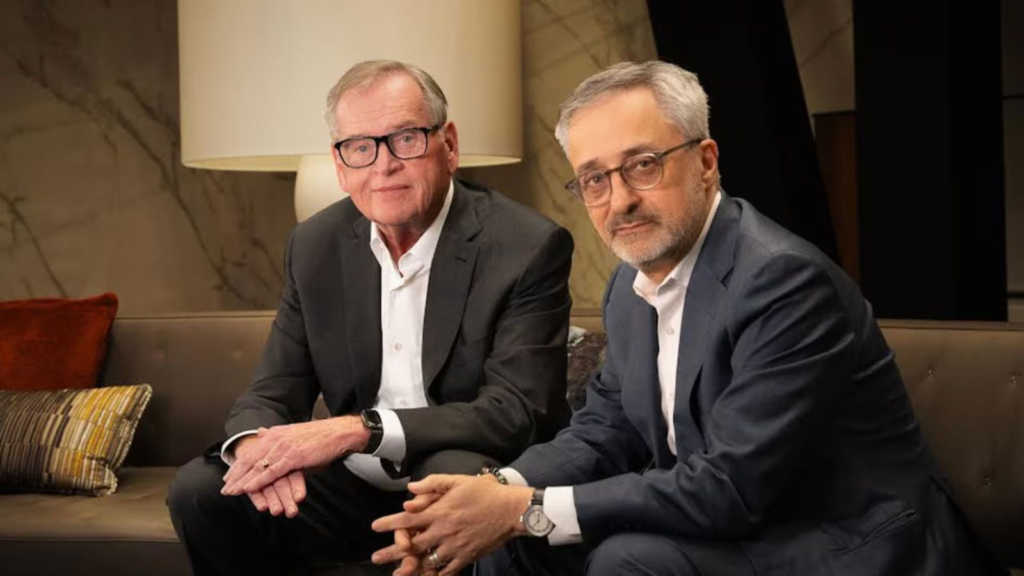
Omnicom has completed its acquisition of Interpublic, forming the world’s largest holding group with more than US$25 billion in combined revenue and a mandate to lead what CEO John Wren calls the “next era” of intelligent, connected growth. The deal unites two of the industry’s biggest holding companies under the Omnicom umbrella. Wren remains chairman and CEO, with Phil Angelastro staying on as EVP and CFO. Philippe Krakowsky and Daryl Simm become co-presidents and co-COOs. The full leadership slate will be announced on 1 December. SEE MORE: The Omnicom–IPG merger changes everything, especially for CMOs “This is a defining moment for our company and our industry,” Wren said. “Omnicom is setting a new standard for modern marketing and sales leadership — creating stronger brands, delivering superior business outcomes, and driving sustainable growth.” The enlarged group will continue to trade under the OMC ticker and operate a portfolio spanning media, creative, commerce, precision marketing, PR, branding, production, healthcare and experiential. All divisions will be powered by Omni, Omnicom’s intelligence platform that the company claims is central to its pitch for integrated, data-led growth. For CMOs, the merger marks the most significant consolidation move in advertising since the 2013 Publicis–Omnicom attempt, reshaping the competitive dynamics across global brand, media and CRM accounts. Omnicom is positioning the combined company as a single, connected partner capable of unifying data, creativity and technology across the full marketing and sales spectrum. Regulatory filings warn of risks tied to integration, talent retention, client conflict management and potential client loss, as well as broader macro factors such as shifts in marketing spend, credit conditions, cybersecurity threats and the complexity of scaling AI safely across the business. The combined company will outline more structural details next week. A reshaped industry model? Rumours of an Omnicom–IPG tie-up began circulating in early 2025 after both holding companies signalled pressure on margins, slower global growth and the need for deeper integration across data, media and CRM. The merger also ends one of the industry’s longest rivalries. Omnicom and IPG have spent decades competing for the same global clients across creative, media, PR, CRM and health. Bringing them together alters the balance of power among the Big Four networks – Omnicom, Publicis, WPP and Dentsu and creates a new scale player that surpasses WPP in revenue and headcount. For brand marketers, the deal signals the most significant restructuring of the agency landscape in more than a decade. The consolidation raises key questions around account conflict management where both groups share clients across automotive, FMCG, retail, financial services, health and government. Managing these overlaps without losing business will be a critical early test. Across the APAC region, there is little to suggest a management overhaul, but again details on this front will become clearer as the weeks progress. Omnicom is positioning the combined group as a fully connected marketing and sales engine powered by its Omni intelligence platform, a direct play against WPP’s Open, Publicis’ CoreAI and Dentsu’s Merkury stack. With thousands of overlapping roles across creative, media, PR and production, the integration period will be closely watched for redundancies, senior departures and potential destabilisation of flagship agencies. For now, WPP loses its long-running title as the world’s largest marketing group and now faces a more data-integrated rival. Publicis, coming off strong growth in AI, retail media and its Epsilon acquisition becomes the network most directly challenged by Omnicom’s new intelligence-led positioning. Dentsu, mid-transformation and still integrating Merkle globally, faces renewed pressure in media, CX and CRM. As the largest consolidation in advertising in over a decade, the Omnicom–IPG deal puts the industry on notice: scale, intelligence platforms and connected capabilities are no longer optional; they are now the baseline for competing in the AI-led era of marketing. source

Omnicom seals Interpublic takeover, structural details to be revealed next week Read More »