Knife-edged camper slices out of the wind tunnel & into the bush

Polydrops once noted it went through more than 100 CFD simulations to finalize the thin, tapered form of its wing-like P21 family camping trailer. But apparently, it wasn’t finished. Because as it ruggedized the P21 into off-road form, it also further massaged the vessel’s already slippery aerodynamic profile. So whether you’re worried about draining the battery of your Rivian R2 or sipping up every last drop of gas during a far-flung backcountry tour, the P21X helps ensure that doesn’t happen … and then it sleeps you and the family comfortably. The first thing we noticed about the P21X wasn’t its lifted, slightly ruggedized build but the new aerodynamic design, particularly the fin-like spoiler extending off the rear roofline. But that aerodynamic update came as a result of the off-road modification program. A blade-like nose helps the P21X achieve superior aerodynamics, providing more efficient towingPolydrops Polydrops started off by lifting the X trailer by 4 inches (10 cm), sliding on some all-terrain tires in the process. The P21X now sits 15 inches (38 cm) clear off the ground and rides on an independent axle-less suspension. Drop your eyes down to the tires, and you can definitely notice some extra aluminum standing behind and above them compared to the P21. To compensate for the lifted body, Polydrops went back to the CFD software to analyze and tweak the aerodynamics package. The P21 always had a rough canoe-like form as viewed from above, its cabin swelling out at the sidewalls to crack open livable space before tapering in at the front and rear ends for better aerodynamics. The P21 has an almost canoe- or surfboard-like tapered shape that gets slightly more pinched at the rear in the P21X updatePolydrops The P21X body kit pushes that shape further into marine vessel-like territory by adding fins at the tail-end of the roofline, angled inward to further taper the upper rear-end in a way Polydrops can’t do with the entire body without squeezing out critical livable space inside. This gives the new trailer a rear profile that looks like a fishtail or swallowtail. The new tail treatment doesn’t add to the total length of the new trailer, which lists in at the same namesake 21 feet (6.4 m) as the original P21. That’s thanks to the slight slope of the slim, tapered rear wall, which sticks out farthest at the bottom corner. The Polydrops P21X is built for taking the family farther off the beaten pathPolydrops Beyond that big addition, the P21X form looks largely the same as the P21, faceted sides angling outward from the thin rear wall to create interior space, then back inward to meet the hard-dropping roofline at the sharp front edge. Just above that front edge, you’ll find the triangular Aptera nameplate at the nose of the flush-fit full-length rooftop solar panel array. For the P21X, Polydrops grows that setup to 1,300 standard watts, up from the 920-W standard kit atop the P21. The LFP battery bank maintains the same 5-kWh standard capacity with the option to double it to 10 kWh. Campers monitor that electrical system and other hardware using the 7-in touchscreen inside the trailer, which includes Bluetooth connectivity. The P21X includes the full-blown 1,300-W Aptera solar charging system that is an optional upgrade on the original P21Polydrops To help conserve power, Polydrops installs a downsized 10,000-BTU air conditioning/heatpump unit. The trailer also includes a 30-A shore power hookup. The P21X comes with its floor plan standard, not sold in individual add-on modules like in the original P21. The layout is the same as the fully furnished P21, though, splitting the two boat-like V-berth double beds with an aisle-spanning kitchen. The kitchen has a sink console on one side of the trailer and a taller cooking console on the other side. The latter comes equipped with an induction cooktop and microwave, along with cabinetry and counter space. The cooler-style 25-L Dometic CFX3 fridge stows away under the front bed. The dinette transformed into the 58 x 80-in master bedPolydrops Polydrops fully deconstructs its bathroom and plumbing system, storing a shower pan with drain away inside a chest next to the kitchen sink cabinet. The faucet is a portable Dometic Go unit piped to a 34-L fresh water tank, while the shower is a portable Geyser system drawing from the same tank. A standard water heater ensures there’s warm water for showering and dishwashing. The P21X webpage doesn’t mention anything about a shower curtain, but Polydrops has developed a ceiling-secured deployable curtain for the P21. We assume it will offer it on the P21X as well, at least optionally. That would also create a private space for using the portable toilet, though toilet use might be better left outdoors as the shower room packs up to serve as part of the front bed – so good luck using it at night. Polydrops deployable shower curtain system shown in the original P21Polydrops The P21X cabin also includes two swivel tables that double as part of the bed platforms. The main table attaches to a pedestal to create a U-shaped dinette at the rear of the trailer. That dining lounge converts into the main 58 x 80-in (147 x 203-cm) bed at night. The second table attaches to a mount up front to create a more informal dining area/workstation at the cushioned seat atop the stored shower pan and the edge of the bed. The P21X’s main rear queen bed transforms into a dinette with vis-a-vis benches and a sofa seat behind itPolydrops The two beds together are aimed at sleeping a family of four. The interior stands 6 feet (1.8 m) high at its peak, offering comfortable standing room for most adults. The 2,100-lb (953-kg) P21X checks in a few hundred pounds heavier than the P21 but is still quite lightweight and compatible with a variety of vehicles, including electrics. Polydrops has listed the 21X as a limited-edition trailer and only plans to hand-build 20 examples at its California facility.

Knife-edged camper slices out of the wind tunnel & into the bush Read More »

Breakthrough drug nearly doubles survival rate for advanced pancreatic cancer

Christopher Lieu, University of Colorado Anschutz/ The Conversation For a long time, the likelihood of surviving pancreatic cancer has been extremely low. For patients who were diagnosed with metastatic pancreatic cancer between 2015 and 2021, about 97% died within five years of their diagnosis. Pancreatic cancer is so deadly in part because there are no effective screening tests, and it rarely causes noticeable symptoms in its earliest stages. By the time a patient experiences signs, such as jaundice – a yellowing of the skin – or abdominal pain, the cancer has often already spread to other organs. As a gastrointestinal oncologist and researcher specializing in early-phase clinical trials, I have seen the critical need for more effective therapies for patients with pancreatic cancer. For decades, successfully targeting the central mechanism that causes the vast majority of pancreatic cancers was considered impossible. However, that narrative is rapidly changing with a new drug that can shut down the key protein that drives pancreatic cancer, nearly doubling survival rates for patients with advanced stages of the disease. ‘Undruggable’ tumors The standard treatment for advanced pancreatic cancer has historically relied on chemotherapy, potent drugs designed to kill rapidly dividing cells. While chemotherapy can slow the progression of the disease, its effectiveness is often limited by the ability of pancreatic cancer cells to develop resistance against these drugs. Pancreatic cancer’s success lies in its genetics. More than 90% of pancreatic tumors are driven by mutations in a gene called KRAS. This gene codes for proteins that function as switches that turn cell growth on and off. When the KRAS gene is mutated, the switch becomes permanently stuck in the “on” position, commanding cancer cells to multiply endlessly. For decades, scientists considered KRAS to be “undruggable.” The surface of the protein is exceptionally smooth, lacking the molecular pockets that standard drugs require to bind to and turn the switch off. Because existing drugs haven’t been able to target this protein, treatment for pancreatic cancer has primarily relied on toxic drugs that act more like blunt instruments than precise tools. Chemotherapy attempts to control the disease through widespread cell destruction, causing significant collateral damage to healthy tissues that lead to side effects. What is daraxonrasib? A new drug called daraxonrasib offers a critical advance in treating metastatic pancreatic cancer. Daraxonrasib is taken daily by mouth. Instead of binding to KRAS directly, it attaches to a molecule called cyclophilin A in cells that helps fold proteins into their final 3D structures. This protein complex is then able to bind to the active KRAS protein and shut down its ability to signal cancer cells to multiply. The company developing the drug, Revolution Medicines, presented results on May 31, 2026, from its Phase 3 clinical trial of 500 patients with metastatic pancreatic cancer who had received prior treatment. Compared to standard chemotherapy, daraxonrasib nearly doubled overall survival from 6.7 months to 13.2 months after diagnosis. Overall, daraxonrasib reduced the risk of death for metastatic pancreatic cancer patients by 60%. Experimental pancreatic cancer drug offers new hope in major trial The most common side effect is a prominent skin rash, which affected more than 86% of patients in the study. Patients also frequently dealt with stomatitis – painful swelling and sores inside the mouth – as well as diarrhea, nausea, and vomiting. However, patients taking daraxonrasib were far less likely to stop treatment due to severe side effects compared to chemotherapy, and they had improved quality of life with reduced pain. Next steps for daraxonrasib By successfully targeting the specific genetic mutation that drives the vast majority of pancreatic cancers, researchers have demonstrated that this “undruggable” disease is treatable with targeted therapy. The immediate next step is regulatory review of the drug’s readiness for the clinic. With data now officially published, Revolution Medicines will use these findings to seek formal approval from the Food and Drug Administration and other global regulatory bodies. Because advanced pancreatic cancer is notoriously difficult to treat, breakthrough therapies that demonstrate this kind of significant survival benefit are often granted expedited or priority review. When daroxonrasib becomes available to patients will depend on the review timeline. Should the drug obtain approval, it could be available in clinics within months. For the broader landscape of drug development, this milestone represents a likely shift in pancreatic cancer treatment. I expect more clinical trials exploring combination therapies pairing KRAS inhibitors with other drugs to prevent tumors from developing resistance to treatment. Should daraxonrasib succeed, it could help set the stage for more precise, personalized, and effective treatments for pancreatic cancer in the years to come. Christopher Lieu, Professor of Medical Oncology, University of Colorado Anschutz This article is republished from The Conversation under a Creative Commons license. Read the original article. source

Breakthrough drug nearly doubles survival rate for advanced pancreatic cancer Read More »

Anthropic builds Singapore footprint with hiring push

Claude-maker Anthropic is expanding its footprint in Singapore, with several job postings indicating plans to build out regional teams across accounting, product support and economic research. Among the roles, the company is hiring an APAC accounting lead based in Singapore to head its regional corporate accounting function. Reporting to the head of international accounting in Dublin, the role will oversee end-to-end finance operations across Asia Pacific, including statutory reporting, payroll, procure-to-pay, intercompany processes and regional finance systems. The position will also be responsible for building and leading the regional accounting team, managing outsourced providers, and strengthening internal controls as Anthropic scales its presence in the region. Don’t miss: Anthropic files confidentially for proposed IPO  The firm is also recruiting a regional economic research lead focused on studying AI’s impact on economies. The role will involve working with governments, academia and industry partners to develop the Anthropic Economic Index, while building methodologies to measure AI’s effects on labour markets, productivity, inequality and broader economic outcomes. Separately, Anthropic is hiring product support specialists in Singapore, marking its first locally based support team in the market. The team will handle user issues, strengthen technical support processes and support enterprise customers as the company scales its AI offerings globally. MARKETING-INTERACTIVE has reached out to Anthropic for more information. The hiring push comes as OpenAI ramps up its presence in Singapore through a more than SG$300 million investment to establish its first Applied AI Lab outside the US, in partnership with the Ministry of Digital Development and Information. The OpenAI Singapore Applied AI Lab will house more than 200 engineers and specialists over the coming years to support organisations across sectors including public services, finance, healthcare and digital infrastructure. The company will also roll out training programmes, including a bootcamp for mid-career software engineers, as well as workshops and capability-building initiatives with government agencies, education institutions and SMEs. Related articles:    Anthropic appoints Theo Hourmouzis to lead ANZ as Sydney office officially opens  OpenAI eyes deeper APAC growth with new marketing head  Singapore to create registry for AI agents  source

Anthropic builds Singapore footprint with hiring push Read More »

FGS Global appoints Singapore head as it builds out APAC advisory push

FGS Global is strengthening its Singapore business with a leadership shake-up and the expansion of its public affairs capabilities, as the strategic communications consultancy deepens its Asia push. The firm has appointed Harry Florry (pictured) as head of Singapore, where he will oversee the local business and bolster its equity advisory and financial transactions practice across Singapore and Southeast Asia. Florry relocates from Hong Kong, where he spent the past five years with FGS Global, and brings more than 16 years of experience across capital markets in Asia, Europe and the Middle East. He has advised companies on IPOs, M&A and investor relations, and previously worked at Rothschild in Hong Kong, Dubai and London. In his new role, Florry will focus on helping clients sharpen equity stories, deepen investor engagement and navigate valuation challenges, as demand for capital markets advisory grows in the region. Don’t miss: Omnicom PR builds out APAC leadership team following regional overhaul  FGS Global has also appointed Andrew Yeo as global policy partner, Asia, alongside four public affairs specialists, expanding its regulatory, political risk and stakeholder engagement capabilities in the region. The new hires include managing director Raihan Zulimran, formerly of the Monetary Authority of Singapore (MAS), director Nicholas Lee, previously with Sea Limited and SGX Group, and associate directors Brendan Pinto, formerly of Singapore’s Ministry of Finance, and Dedi Dinarto, an Indonesia-based policy expert. Yeo will focus on the intersection of business and policy across Asia, as companies increasingly navigate complex regulatory environments and stakeholder expectations. “Singapore presents an exciting opportunity for us, as one of Asia’s most dynamic markets that is undergoing significant transformation,” said Florry. “Our market-leading offering meets increasing demand from clients for integrated expertise in investor relations and capital markets transactions. Combined with our strong capabilities in public affairs and strategic communications, we offer a unique proposition to deliver significant value for our clients in Singapore and Southeast Asia,” he added.  In tandem, Yeo said that the intersection of business and policy has never been more consequential for companies in Asia. “FGS Global’s depth across practices and its global reach give us the ability to deliver advice that is genuinely integrated and can help our clients succeed in moments of real impact and importance,” stated Yeo.  Faeth Birch, chief executive officer of UKMEA at FGS Global, said Singapore remains central to the firm’s Asia strategy. “Singapore is central to our Asia strategy and to our global ambitions. These appointments reflect our commitment to investing in exceptional leadership and deepening our strategic advisory capabilities for clients across the region,” she said. The appointments follow the earlier naming of Susan Ho as Asia chair in January this year, as the firm continues to scale its regional leadership bench.  In this newly created role, Ho will drive the firm’s multi-year growth strategy across Asia, provide strategic counsel to clients, and strengthen governance and collaboration across key markets. Related articles:  PLUG lands in Singapore with new MD leading expansion  TEAM LEWIS opens new Singapore creative studio, expands sector focus  Omnicom PR announces new leadership structure with Joanne Wong as APAC CEO  source

FGS Global appoints Singapore head as it builds out APAC advisory push Read More »

Stock Market Today: Dow Jumps 875 Points; Ciena Slammed Yet Holds Key Mark; These 2 Areas Shine (Live Coverage)

The Dow Jones Industrial Average presented a rare day of outperformance Thursday as the technology sector came under pressure from some heavyweights in the buildout of AI infrastructure. Chipmaker Broadcom (AVGO) and fiber-optic equipment giant Ciena (CIEN) were slammed on the stock market today, but Ciena survived a test of its 50-day moving average. Bank stocks pushed higher. The Dow… Copyright ©2026 Investor’s Business Daily, LLC. All rights reserved. 87990cbe856818d5eddac44c7b1cdeb8 source

Stock Market Today: Dow Jumps 875 Points; Ciena Slammed Yet Holds Key Mark; These 2 Areas Shine (Live Coverage) Read More »

Digital twin system lets you virtually visit your greenhouse

Imagine putting on a VR headset and suddenly finding yourself standing between rows of tomato plants. You can walk the aisles, crouch beside a struggling seedling, and check its soil moisture and temperature in real time. That’s the idea behind a system developed by engineers at Binghamton University, State University of New York: a digital twin, or live 3D replica synchronized with real-world sensors, that links your physical greenhouse to a virtual one you can access anywhere. The system works by photographing each plant and placing it as a 3D object in a virtual environment. A small microcontroller installed near each plant continuously monitors soil humidity, temperature, and gas levels, feeding that data into the virtual space. The digital twin updates continuously. If a corner of your greenhouse overheats, the virtual version reflects it almost instantly. If a plant runs dry, you’ll see it at the precise location in the virtual space. 🌱This Looks Like a Farming Sim…But The Plants Are Real #digitaltwin #vr #internetofthings The system was built with a specific kind of user in mind. Someone for whom getting to the greenhouse isn’t easy, like older farmers, people with limited mobility, and agricultural students without access to physical labs all stand to benefit. Sensor-based crop monitoring typically stops at 2D dashboards showing graphs, alerts, and numbers. They tell you what is happening, but not where, and not with the spatial context of actually being on site. “Many commercial greenhouse platforms focus on sensor monitoring and automation but rely on traditional dashboards rather than immersive spatial interaction,” Anwar Elhadad, assistant professor of electrical and computer engineering at Binghamton University, State University of New York, told us via email. “Conversely, many VR agricultural systems are designed as static training environments and are not synchronized with real-time biological sensing data.” The Binghamton system sits at the intersection of both. Walking the virtual greenhouse offers the same spatial context as being there in personMohamed Gallai A small setup – sensor nodes, an edge gateway, and a standalone XR headset – would currently run in the low thousands of dollars. The sensing hardware is inexpensive; the real cost is in the headset and the computing power for real-time rendering. That puts it out of reach for most small producers today, but drones, solar panels, and smartphones all followed the same development curve before becoming everyday tools. Wider adoption tends to drive costs down, and there’s little reason to think this system will be any different. The team’s roadmap includes a Digital Twin Network linking multiple greenhouses simultaneously. Embedded AI would handle genuine agronomic reasoning – identifying nutrient deficiencies, tracking disease progression, and making species-specific recommendations before visible symptoms appear. “We are also exploring multi-user collaborative XR environments where researchers, farm managers, or agronomists can simultaneously interact with the same digital twin remotely,” Elhadad adds. The bigger leap is moving from observation to action, but the architecture was intentionally designed to support closed-loop control. “We’re exploring automated irrigation, nutrient dosing, ventilation, and lighting that can be triggered manually from the XR interface or autonomously through AI-driven policies,” reveals Elhadad. The AI assistant flags anomalies and recommends interventions on demandMohamed Gallai If sensors detect dry soil near a specific plant cluster, the system could adjust irrigation automatically – no human command required. A greenhouse that not only shows you what’s wrong, but fixes it. That, says Elhadad, is when “the digital twin would evolve from an observational system into an active cyber–physical control platform.” Source: Binghamton University source

Digital twin system lets you virtually visit your greenhouse Read More »

Tiny house goes extra-wide to deliver spacious small living

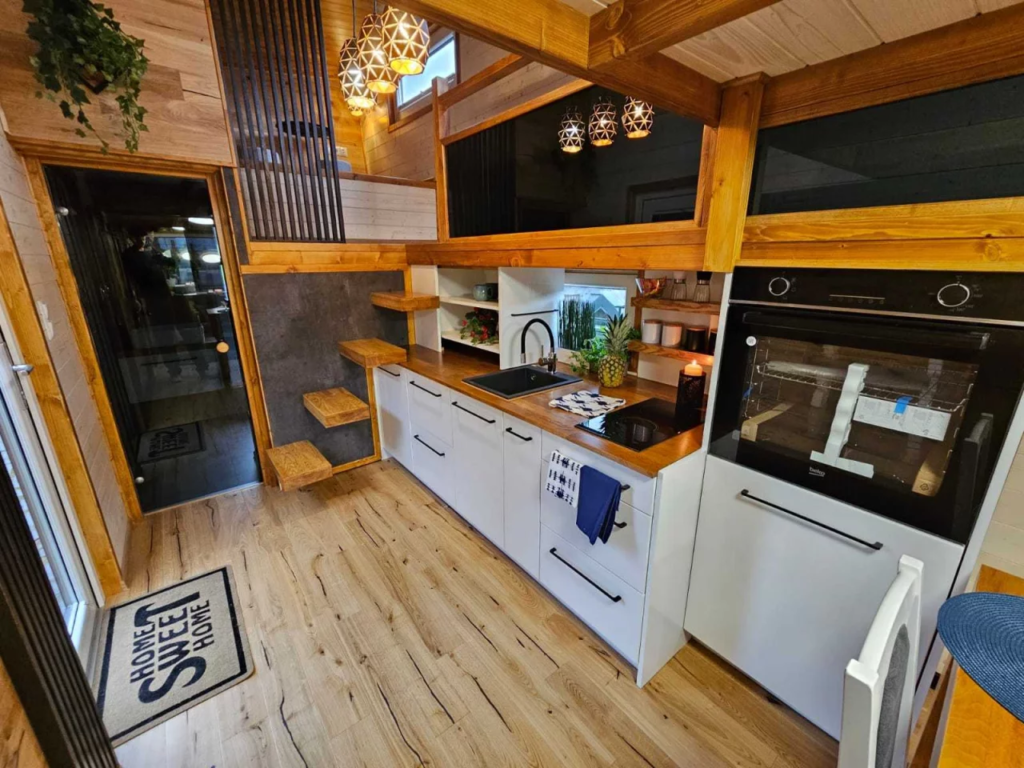
This extra-wide tiny house uses its generous dimensions to create a spacious interior that includes two bedrooms, a practical living area, and some unusually premium touches – as well as a storage-integrated staircase unlike any other we’ve seen. Designed by Mini Domy, the Mini House 300 x 1100 (aka Lena XXL) refers to its length in centimeters, which works out to 9.8 ft wide and 36 ft long. The standard tiny house width is 8.5 ft (2.6 m), so the difference doesn’t sound like a lot, but it really helps make for a more spacious and apartment-like interior – albeit at the cost of requiring a permit to tow on a public road. It’s based on a double-axle trailer and clad in engineered wood, with metal accenting, and a metal roof. The Mini House 300 x 1100’s staircase, shown in position for useMini Domy The interior is finished in Siberian spruce, with oak panel flooring, which is a luxurious upgrade from the vinyl usually seen even in high-end tiny houses, and helps its overall appearance seem closer to a wooden cabin than a typical modern tiny house. Its living room, shown here furnished with a small sofa, features a picture window and a wall-mounted TV. A very small wood-burning stove, of the type often used in boats, is attached to the wall too. The power outlets incorporate USB charging ports. The kitchen occupies the center of the home and is equipped with a sink, an induction cooktop, a fridge/freezer, and an oven. There’s also quite a lot of cabinetry in there and a dining table seats two. From the kitchen, a door connects to the bathroom. This has a shower, a vanity sink, and a toilet. Cement-look tiles are another nice touch. There are two bedrooms in the Mini House 300 x 1100. Both are reached by the same staircase, which is mounted on rails and slides aside to reveal hidden storage space – a novel idea we’ve not seen before. The staircase leads to a lowered walkway which, in turn, connects to the sleeping areas. Both are typical tiny house lofts and have enough space for a double bed and some storage. Each also includes a lowered standing platform that makes it easier to get dressed. The Mini House 300 x 1100’s living room includes a sofa and a small wood-burning stoveMini Domy We’ve no word on pricing or delivery for the Mini House 300 x 1100T, so those interested will need to contact the firm directly. Source: Mini Domy source

Tiny house goes extra-wide to deliver spacious small living Read More »

Stock Market Today: Dow, S&P 500 Extend Win Streaks; Apple Rises, Nvidia Sinks

The Dow Jones Industrial Average and other major stock indexes closed higher Tuesday, as Wall Street held out for any updates in the ceasefire extension talks between the U.S. and Iran. Meanwhile, Caterpillar (CAT) and Apple (AAPL) were Dow Jones index winners on the stock market today while Nvidia (NVDA) retreated. The Dow locked in a nearly 0.5% gain for a… Copyright ©2026 Investor’s Business Daily, LLC. All rights reserved. 87990cbe856818d5eddac44c7b1cdeb8 source

Stock Market Today: Dow, S&P 500 Extend Win Streaks; Apple Rises, Nvidia Sinks Read More »

Samsung's latest campaign is a World Cup-sized celebration of TV dominance

Samsung has launched a new campaign celebrating its 20th consecutive year as the world’s leading TV brand, positioning itself as the screen of choice for moments that matter. Titled “When it matters, watch it on a Samsung”, the campaign is anchored on the idea that significant viewing experiences deserve to be watched on the brand’s televisions. The effort comes as anticipation builds for the FIFA World Cup 2026, which Samsung describes as set to be the biggest edition of the tournament yet. At the centre of the campaign is a hero film inspired by a long-standing football tradition, where World Cup-winning nations are awarded a star to commemorate their victory. Don’t miss: Samsung denies using Dua Lipa’s image on TV packaging amid US$15m lawsuit Drawing on that symbolism, the film imagines Samsung receiving 20 stars to mark its two decades as the global TV market leader. Giant stars are transported across Europe by helicopter before arriving at a packed football stadium, where a new 20-star Samsung logo is unveiled. The logo will feature across the wider campaign. This follows Samsung’s recent partnership with former footballer Thierry Henry on a series of social-first content pieces designed to showcase the capabilities of Samsung TVs. The sketches place Henry in a variety of on-screen roles, including an action movie star, K-drama lead and football presenter. Each execution highlights different Samsung TV features through humorous scenarios centred on Henry watching himself on screen. The campaign is rolling out across 25 European markets through an integrated mix of digital, social and in-store activations. According to Samsung, the campaign commemorates its milestone of being named the world’s No.1 TV brand for 20 consecutive years, based on data from market research firm Omdia. “We’re incredibly proud celebrating Samsung’s achievement with such a powerful brand platform. Especially doing so in a World Cup year when everyone is looking to upgrade their TV,” said Sascha Kuntze, chief creative officer at BBH Singapore.  The latest campaign comes as Samsung continues to tap entertainment and pop culture partnerships to showcase its technology. Earlier this year, Samsung Electronics launched a global campaign tied to the upcoming release of The Devil Wears Prada 2, blending entertainment IP with product marketing for its new Samsung Galaxy S26 Ultra. Fronted by Helen J. Shen in character as Jin, the campaign centred on a custom content film demonstrating the device’s AI-powered “Circle to Search” feature. The spot follows Jin as she navigates a last-minute fashion request from Miranda Priestly, using the feature to identify and source clothing items from a reference image. Beyond the film, Samsung also extended the partnership into experiential marketing. Related articles: Why Samsung is betting on experience over specs to win over switchers  Samsung strikes BTS tour deal to put Galaxy at centre of fan experience    Samsung celebrates childhood imagination in heartfelt Galaxy S26 film    source

Samsung's latest campaign is a World Cup-sized celebration of TV dominance Read More »

Simple urine test shifts autism diagnosis from behavior to biology

Researchers have developed a urine-based screening tool that may help identify individuals who are most likely to be diagnosed with autism later in life, opening the door to assessment and support networks. In a study of 99 children aged between two and 11 years – 52 diagnosed with autism spectrum disorder (ASD) and 47 who were developing “typically” – Arizona State University (ASU) researchers measured 17 microbially derived metabolites (MDMs) excreted in urine. These small, microbe-produced molecules are significantly more prevalent (up to 1,000 times higher than the control) in individuals with ASD, making them prime candidates for a clinical test. Using these findings, the team developed what it calls the Microbially-Derived Metabolite (MDM) System – a scoring tool that classified ASD children in the study with 90% sensitivity and 100% specificity. “Many studies have confirmed that a subset of children with autism spectrum disorder have unusually high urinary concentrations of microbially-derived metabolites (MDMs) such as p-cresol sulfate and indoxyl sulfate,” the researchers wrote. “We hypothesized that these MDMs may affect neurodevelopment through the gut-brain axis and that a sub-phenotype characterized by gut dysbiosis may be present in most ASD individuals.” In fact, more than 40 other studies have identified elevated microbial metabolite levels that the MDM System registered as ASD-linked. The findings don’t imply that gut metabolites cause autism, nor that altering them would have any impact; the urine test is not intended as a stand-alone diagnostic tool, and, given the cohort, larger studies are needed. What’s more, ASD – and neurodivergence (ND) in general – is not something that needs fixing or “curing”, which the scientists here emphasize. What is needed, though, is the development of diagnostic tools that examine biology, not just behavior. ASD, like attention-deficit/hyperactivity disorder (ADHD), is now understood to be predominantly genetic, with up to 90% heritability. Basically, it’s in the genome. A Nature study published in April touched on the importance of early diagnosis. And as someone who spent more than 30 years without an ADHD diagnosis, I am acutely aware of how the “uncertainty” this paper touches on can show up. It makes early genetic- or biomarker-based tests so important. This latest study adds to a growing body of evidence that the gut microbiome may contribute to some biological differences seen across ASD – and could eventually help identify subgroups of individuals who may benefit from more personalized support. Metabolites from tyrosine, tryptophan and phenylalanine – all amino acids that play important roles in neurotransmitter pathways – were among those compounds implicated in the 17 identified by the researchers. ASU Biodesign Institute researchers and co-authors of the study include (from left) professors Rosa Krajmalnik-Brown, Jim Adams and Christina Flynn, PhD. Andy DeLisle/ASU “What we’ve discovered is that 80 to 90% of children with autism have extremely high levels of one or more microbially derived metabolites,” says Christina Flynn, first author and recent ASU PhD graduate. “Using this test will tell you which young children are at high risk for being diagnosed with autism, and guide treatment in those who have already been diagnosed to help them lead their best lives.” ASD kids had an average of three gut metabolites at elevated levels, compared with the control cohort. In fact, children without a diagnosis had no remarkable metabolites in their urine at all. “What’s really striking about the bacteria is that they make metabolites that are basically altered versions of serotonin and dopamine,” says Professor James Adams, corresponding author and a researcher with the Biodesign Center for Health Through Microbiomes, who also has an adult daughter with ASD. “These are two key neurotransmitters that affect mood, cognition and memory,” he adds. “This could explain many of the symptoms and co-occurring symptoms in children with autism – their social communication, anxiety, depression and attention.” It’s unclear how adjusting levels of MDMs could impact ASD symptoms, but the scientists emphasize that their findings are aimed at improving current diagnostic tools that go beyond traditional behavior-focused tests. “We think reducing the levels of these metabolites may help these children lead healthier and happier lives, and we encourage children to be screened sooner to receive earlier interventions,” Adams adds. And a key part of leading “healthier and happier lives” is broadening the scope of diagnostic tools from behavior to biology. “We hope there is a reduction in stigma and shame associated with the condition,” says Flynn, who also has a child with ASD. “Sometimes diagnostic hesitancy happens because parents feel like they’re not good enough parents and they’re being judged. But that’s not the case because if we can detect it in urine, it’s a biology-based condition. Hopefully that will prevent any hesitancy on parents’ parts to seek treatment and seek it as early as possible.” This test has been developed by scientists who also have ASD childrenIllustration by Sophia Franz/ASU The researchers also propose adding an ASD subtype – “ASD associated with microbially-derived metabolites”, or ASD-MDM – a phenotype seen in an estimated 90% of cases. “For more than 15 years, I have been doing research on the gut microbiome and its potential contributions to human health, and autism spectrum disorder has been at the core of our research,” says co-author Professor Rosa Krajmalnik-Brown. “I am excited about the MDM test, which includes important microbial metabolites, previously hypothesized to be linked with autism,” she adds. “This test can be a great way to assess this important microbial contribution.” The urine test is now available in the US, with Analutos, a UK partner lab, also offering this diagnostic tool internationally. “For many families, one of the biggest challenges is the waiting – the not knowing,” Flynn adds. “If this test shortens that gap, even by a little, that’s meaningful because earlier intervention can really help.” The research was published in the journal Molecular Psychiatry. Source: Arizona State University Fact-checked by Mike McRae source

Simple urine test shifts autism diagnosis from behavior to biology Read More »