MG's new flagship electric coupe looks oddly similar to a certain Porsche

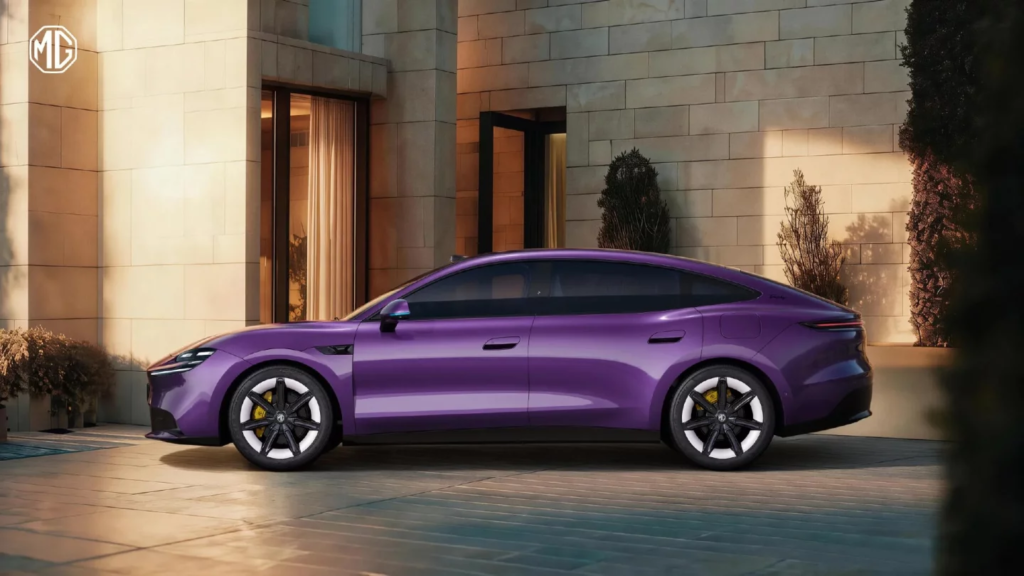
This is one of those “I swear I’ve seen that before” moments. MG has officially pulled the covers off its latest and greatest coupe, the 07, and the images are uncanny … resembling the Porsche Taycan in more ways than one. Of course, it’s a new electric/hybrid coming out of China. So it obviously gets the new EV treatment as well – C-shaped LED headlights, sporty bumpers, and flush door handles are all there. It adopts a low-slung, wide-body stance that’s in line with traditional fastbacks. With an active intake grille, the front fascia looks very sleek, even with the clamshell hood. Away from the front, at the rear, it sports a continuous light strip that blends perfectly with the panoramic sunroof and sloping roofline. The 07 comes with a long wheelbase and short front and rear overhangsMG Look at it from the side, and you’ll instantly spot the long wheelbase with short front and rear overhangs. The fenders sport aerodynamic vents, the wheels are two-tone with colored brake callipers, the doors are frameless, and the “Morello Purple” is kinda growing on me, I’m not going to lie. It looks like it’s spent a suspicious amount of time parked outside Porsche’s design studio. From the low-slung fastback silhouette to the four-point headlight signature and smooth Taycan-esque proportions, MG’s new flagship electric coupe feels less “inspired by” and more “strongly acquainted with” the Porsche Taycan. As for the interior, even though MG hasn’t released interior images, earlier spy shots pointed to an MG 4-style steering wheel and a floating center touchscreen. All that’s well and good, but what about the other stuff? Well, unfortunately, details on the specs, such as the specific motor and battery, are under wraps as of now. What we do know is that it’s built on SAIC‘s NEV platform – a completely new 800-volt architecture that will come with both electric and plug-in hybrid powertrains. The 07 will be the first MG model to come with LiDARMG It will also be the first MG model with LiDAR (Light Detection and Ranging) technology, which is clearly visible in the roof-mounted housing above the front windscreen. Coincidentally, it’s the same system that its parent company, SAIC Motor’s premium brand, IM Motors, introduced on the IM LS7 SUV. It will also come with the Momenta R7 “Enhanced World Model” (EWM), which makes use of artificial intelligence to efficiently learn and train itself from past driving scenarios. That tech, though, will only be limited to a higher-end trim, which is rumored to retail for about 300,000 yuan (US$44,112). The Momenta R7 automated driving system will also promise a “seamless parking-space-to-parking-space driving experience.” According to MG, the system will “possess physical scene understanding and predictive reasoning similar to an experienced driver,” which should enable proactive safety maneuvers for improved road safety. Prices for regular MG 07 trims are anticipated to range from 150,000 yuan ($22,060) to 200,000 yuan ($29,410) when it is released later this year. That does sound enticing for a brand that became the first Chinese carmaker to exceed 1 million sales in Europe. The 07 will come with the Momenta R7 “Enhanced World Model” (EWM)MG The 07 feels like SAIC’s attempt to fast-track itself into the premium conversation by borrowing visual cues people already associate with expensive performance EVs. And to be fair, it’s a smart strategy. Most buyers won’t care whether the design language originated in Stuttgart or Shanghai if the result looks sleek, futuristic, and costs a fraction of a Taycan. The bigger question is whether MG can eventually build an identity strong enough that it stops needing these visual shortcuts. Because underneath the Porsche cosplay, the 07 actually sounds promising. The MG 07 might just end up being a very good car. It just happens to look like it really wants you to think about a Porsche while staring at it. Is that a bad thing? Via: CarNewsChina source

MG's new flagship electric coupe looks oddly similar to a certain Porsche Read More »

Stock Market Today: Dow Closes Above 51,000; Nasdaq, S&P 500 Make History (Live Coverage)

The Dow Jones Industrial Average and other major stock indexes again closed at new highs Friday, as investors were hopeful over reports of a possible U.S.-Iran deal. On the stock market today, Dell Technologies (DELL) and NetApp (NTAP) soared, while two names dropped on merger news. The Dow powered up 0.7%, or 363 points, to reach a new high and… Copyright ©2026 Investor’s Business Daily, LLC. All rights reserved. 87990cbe856818d5eddac44c7b1cdeb8 source

Stock Market Today: Dow Closes Above 51,000; Nasdaq, S&P 500 Make History (Live Coverage) Read More »

Gen Z perspectives: Bad photographers, unhinged living and Grimace’s World Cup debut

Happy Friday, MARKETING-INTERACTIVE readers and welcome back to Gen Z Perspectives, your go-to feature where we unpack the week’s top stories and trending topics through the eyes of Gen Z. From the biggest industry moves to viral moments and marketing controversies worth dissecting, we’re bringing the heat with authenticity, awareness and probably a few unfiltered takes. If there was a theme this week, it was going big. Icelandair launched a hunt for the world’s worst photographer, Circles.Life urged consumers to “Live unhinged”, and McDonald’s turned up the FIFA World Cup 26 fever for fans around the globe. Let’s get into it. Don’t miss: Gen Z perspectives: Fresh movements and CHAGEE’s new brew print 1. Icelandair has a job for your friend who can’t take photos Icelandair is turning conventional travel marketing on its head with a campaign searching for the world’s worst photographer, proving that Iceland’s landscapes are so spectacular that even bad photos can look good. The airline launched a global casting call inviting self-proclaimed terrible photographers to apply for the role, offering an all-expenses-paid trip to Iceland and US$50,000 in exchange for their participation and photography. Read more here.  2. Go ahead and live unhinged, but Circles.Life says don’t let your mobile plan do the same   Circles.Life has unveiled a new brand platform, “Live unhinged,” as it looks to move beyond price-led telco marketing and build deeper relevance in Singapore’s lifestyle and community spaces. The campaign is anchored on the insight that Singaporeans are increasingly maximising value in everyday life, sometimes in ways that are highly relatable but not always entirely rational.  Read more here.  3. The FIFA World Cup is coming to McDonald’s, and Grimace made the squad McDonald’s is bringing the FIFA World Cup 26 fever to fans worldwide with a slate of limited-time meals, collectible merchandise and fan experiences designed to celebrate the world’s biggest football tournament. As part of the global campaign, the fast-food giant is rolling out FIFA World Cup 26 meals and Happy Meals featuring exclusive collectibles inspired by football icons including David Beckham, Ronaldinho Gaúcho, Thierry Henry, Son Heung-min and Lamine Yamal, alongside fan-favourite character Grimace. Read more here.  Related articles: In conversation: Can creativity still win in a data-driven media world?   Why the World Cup’s biggest screen may no longer be the only one that matters   Mamee Double-Decker’s CMO on why the brand did everything a snack brand shouldn’t do source

Gen Z perspectives: Bad photographers, unhinged living and Grimace’s World Cup debut Read More »

Coca-Cola launches global media review

Coca-Cola has launched a global review of its media, data science and technology business across most of its major markets. The review is facilitated by consultancy Mediasense and is expected to see incumbent WPP Open X compete against Publicis Groupe for the account. In addition, it coincides with the renewal cycle of Coca-Cola’s five-year partnership with WPP Open X, which began in 2021. The review also comes after Publicis Groupe secured Coca-Cola’s North American media account in 2025. MARKETING-INTERACTIVE has reached out to Publicis Groupe for comment. In a statement, a WPP spokesperson said they are proud to serve Coca-Cola’s global network partner. “The upcoming five-year contract renewal process coincides with Coca-Cola’s Next Chapter initiative, and we will continue to transform our capabilities in lockstep with them,” the statement said.  “We welcome the opportunity to showcase how our integrated media, data science, and agentic technology platform and solutions will continue to drive future growth across their key global markets.”   Don’t miss: Jaguar Land Rover picks new global agency partner for AI-era marketing push  MARKETING-INTERACTIVE previously reported that Coca-Cola would continue working with WPP’s Open X globally after partnering with Publicis Groupe for its North American media buying business. At the time, Open X reflected on the partnership in a LinkedIn post, stating: “Over the past three years, we’ve pushed boundaries together, pioneering a new open-source marketing model, launching Studio X, and harnessing the power of AI to connect with consumers in bold, innovative ways.” Coca-Cola’s global CMO Manuel Arroyo also highlighted the scaling of Open X, which he described as the industry’s first open-source marketing model. “We are living a special moment in marketing at The Coca-Cola Company, and I’m glad to have WPP Open X on our team to help us create the future of marketing,” he said. Coca-Cola first appointed WPP as its global marketing network partner in 2021, tasking the agency group with executing a new marketing model designed to drive long-term growth across its portfolio of brands in more than 200 countries and territories. Operating under the bespoke Open X team, the partnership was designed to deliver end-to-end capabilities across creative, media and data. At the time, Coca-Cola described the scale and depth of the agreement as unprecedented for both the company and the wider industry, spanning its beverage portfolio as well as its global ventures.  Related articles:  IBM picks new global media agency Coach and Kate Spade conclude global media pitch  Dyson concludes global media pitch  source

Coca-Cola launches global media review Read More »

World's first underwater data center powered by wind is now online

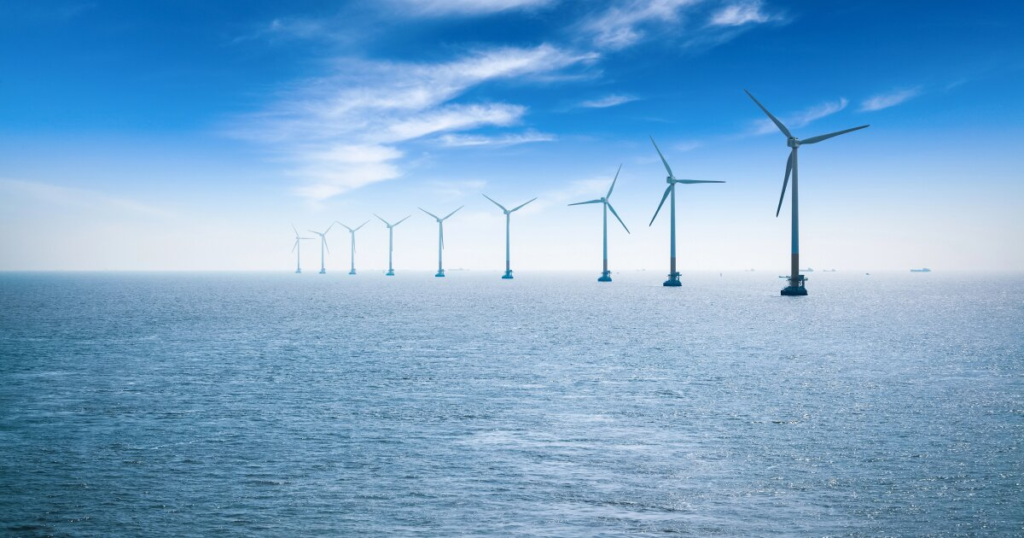
Just over seven months from completing phase one of this mega-project, Chinese engineers have finished the build and switched on the world’s first underwater data center (UDC) powered by offshore wind turbines. What’s more, it doesn’t need freshwater and cuts land use by more than 90% compared with above-ground centers. We reported on the big build in October 2025, when the first stage had been constructed. At the time, there was no projected timeline for it to become operational. The underwater infrastructure, off the coast of Shanghai in the Lin-hang Special Area, was officially switched on in late May, and it’s far more impressive than it may sound on paper. Data centers don’t need freshwater to function – but it remains the simplest cooling option, as it puts fewer demands on surrounding infrastructure, thanks to its lower levels of salts, minerals and biological impurities that can corrode pipes or reduce cooling efficiency over time. Unlike many inland facilities that still rely on freshwater, UDCs instead use the surrounding ocean as a heat sink, transferring this heat through sealed cooling systems. This center, built by a subsidiary of China Communications Construction, uses a circulating copper-pipe heat exchange system that reportedly reduces electricity consumption by 22.8%. Offshore wind farms are also estimated to generate 95% of the electricity needed to run its 192 server racks across four levels, significantly reducing reliance on existing power infrastructure. “For an undersea data center of the same scale, the electricity used for cooling would only account for about one-tenth of total power consumption,” Tsinghua University Professor Li Zhen told China Daily. “If data centers of the same scale were placed underwater, even allowing extra margins, cooling consumption could fall to around 30-billion kW. That would save about 50 billion kWh of electricity each year.” According to state media, the center is currently operating at 2.3 MW – but has a planned capacity of 24 MW (enough to power 20,000 households). This “room to move” is essentially future-proofing the UDC’s usefulness, as companies turn their attention from initial builds to longevity when it comes to hardware upgrades and compute capacity. Nonetheless, while UDCs may reduce freshwater demands and land use, underwater computing is still a largely unknown at commercial scale. Questions remain around how these facilities will endure – and what the ecological effects of continuously releasing heat into local marine environments might be. But considering tech companies are racing to put data centers in space to meet rising demand, real-world projects like China’s UDC could serve as valuable test cases in the AI age, revealing whether moving computing infrastructure into new environments can offset existing land-based issues – or reveal entirely new ones. Source: China Daily source

World's first underwater data center powered by wind is now online Read More »

Chelsea FC and Nike unleash a kit launch that refuses to be tamed

Chelsea FC and Nike have unveiled the club’s home kit for the 2026/27 season, accompanied by a global campaign titled “Can’t tame us” created by agency TILL DAWN and developed from a strategy by ICONIC. Rather than relying on a traditional reveal film, the campaign was designed to build anticipation through real-world and digital communities where Chelsea FC fans gather and engage. Drawing inspiration from luxury fashion marketing, the strategy combined street-level activations, “spotted in the wild” moments and cultural teasers across multiple markets. Don’t miss: From courts to feeds: How APAC fans are shaping the future of sport  At the centre of the campaign is the rampant lion, a symbol from the Chelsea FC badge. Ahead of the launch, claw marks appeared on flyposters, murals and outdoor projections across London, as well as in Los Angeles, São Paulo, Sydney and Hong Kong. According to TILL DAWN, the creative concept is built around the idea of a lion that exists within Chelsea supporters, representing qualities such as fearlessness, instinct and ambition. The lion motif also served as a teaser for the club’s refreshed badge, which was introduced following fan consultation. The new home shirt features a collar and button-down neck in Chelsea bright blue, while the rampant lion and Nike Swoosh are woven into the fabric in Midwest gold. In a departure from conventional sports marketing tactics, Chelsea FC did not seed the kit to paid ambassadors ahead of the launch. Instead, the club personally delivered the shirt to selected fans from the worlds of sport, music and entertainment. Among them were golfer Justin Rose, who was photographed wearing the kit during the PGA Championship in May, and Brazilian musician Hariel, who performed in the shirt at a sold-out event in Rio de Janeiro. The kit also appeared on Madonna during a Gymskin livestream. Beyond the product launch, Chelsea FC also unveiled a newly refurbished community football pitch in São Paulo, part of the club’s ongoing efforts to support grassroots participation and invest in communities connected to the sport. “Can’t tame us” marks the second consecutive home kit launch campaign developed by Chelsea FC, TILL DAWN and ICONIC, following last year’s “London, it’s our house” campaign. “We’ve been building cultural gravity around this club for a couple of seasons now. Partnerships with Roc Nation, collaborations with WWE, and conversations with the worlds of music and fashion have all reinforced our belief that the best of London culture and the best of football belong in the same room,” said Scott Fenton, brand director at Chelsea FC. In tandem, Craig Stronach, founder at TILL DAWN, said, “This kit launch is intentionally untamed, from the purposeful leaks to the launch moments, this campaign is rooted in a simple truth: you can’t tame us.” “We set out to develop a creative platform, embodying this behaviour, to celebrate 75 years of the rampant Lion and the disruptive spirit it represents. Enabling versatility for the campaign to evolve in real time – allowing us to react, adapt and build momentum throughout the launch journey,” he added.  James Kirkhamm, founder at ICONIC, said the campaign was intentionally designed to extend beyond football and into adjacent cultural spaces, while also embracing online kit leak culture rather than resisting it. By placing the same shirt across different content moments, experiences, platforms and communities, the aim was to spark conversation and anticipation throughout the launch journey. Chelsea FC’s latest campaign comes as brands across the football ecosystem increasingly look to fan culture and entertainment to deepen engagement. Earlier this year, The Coca-Cola Company unveiled a new FIFA World Cup 2026 anthem through its global music label Real Thing Records. The reimagined version of Van Halen’s classic hit Jump was performed by J Balvin, Amber Mark, Steve Vai and Travis Barker, blending football, music and popular culture to build excitement around the tournament. The track was first teased in Coca-Cola’s “Bubbling Up” campaign earlier this year. Related articles: Liverpool FC just made its anthem fully inclusive     Can football and finance collide? Arsenal thinks so  Tiger Beer crowns MY’s Red Devils to bring fan voices to Manchester United Museum source

Chelsea FC and Nike unleash a kit launch that refuses to be tamed Read More »

Rare Ebola strain is spreading beyond Africa. Here's what you should know.

Abrar Ahmad Chughtai, Holly Seale, & Md Saiful Islam, UNSW Sydney/ The Conversation The latest Ebola outbreak is showing no signs of slowing. On April 24, the first suspected case of the rare Bundibugyo strain of Ebola was detected in the Democratic Republic of the Congo (DRC). On May 17, the World Health Organisation declared the outbreak a “Public Health Emergency of International Concern”. The current Ebola outbreak is the third-largest in world history, with 906 suspected cases and 223 deaths in the DRC alone as of 27 May. And it may have spread to other continents. Health authorities are now investigating a suspected case in Italy, and two possible cases in Brazil. All three are believed to be travellers returning from either the DRC or Uganda. One American man who tested positive for Ebola is currently being treated in Germany. As concerns grow, the Coalition for Epidemic Preparedness Innovations has committed more than A$86 million in funding to fast-track the development of three potential vaccines, targeting the Bundibugyo strain. But in the meantime, could this outbreak spread further? And how concerned should we be? A deadly virus Ebola is a rare but potentially fatal virus that mainly spreads through direct contact with the bodily fluids – such as blood, faeces and vomit – of an infected person. Early symptoms of Ebola include sore throat, headaches, fever, fatigue and body pain. Severe Ebola cases can cause skin rashes, shortness of breath, vomiting, diarrhoea, abdominal pain and seizures. Ebola was first identified in humans in 1976. Since then, there have been more than 40 outbreaks around the world, with the majority occurring in African countries. The current outbreak is the third ever to be caused by the rare Bundibugyo strain. The majority of past outbreaks were driven by the more deadly Zaire strain, which kills up to 90% of people compared to up to 34% for Bundibugyo. What is driving this latest outbreak? The factors driving this latest outbreak also contributed to the devastating West African outbreak of 2014-16, where more than 11,000 people died. In both outbreaks, the virus had been circulating for months before an outbreak was declared, and initial cases had non-specific symptoms. Both outbreaks also rapidly spread in urban areas. Transmission in health-care settings is another common factor. Political instability and social unrest also contributed to both outbreaks. Most recently in the DRC, crowds have set fire to hospital tents, prompting some patients to flee isolation wards. And certain cultural practices – including traditional burial rituals that often involve handling dead bodies – may have accelerated the spread of both outbreaks. How it crossed continents Similar to the West African outbreak, this latest Ebola outbreak has spread to other continents through travel. Nine cases and one death have already been reported in Uganda, which shares a border with the DRC. An American man who tested positive for Ebola while working in the DRC, is in a stable condition after being treated in Germany. In Italy, authorities are monitoring a traveller who recently returned from the DRC to the city of Cagliari. According to some reports, Brazilian authorities are investigating two suspected Ebola cases. They are believed to be two travellers, one who returned from the DRC to São Paulo and the other from Uganda to Rio de Janeiro. Importantly, both suspected cases have been diagnosed with other illnesses. The São Paulo patient presented with fever and was later diagnosed with severe meningitis. The Rio de Janeiro patient tested positive for malaria after developing a cough, chills and diarrhoea, but has since tested negative for Ebola. So for now, no Ebola cases have been confirmed in Brazil. But these suspected cases have prompted the country to activate its Ebola safety protocols, including patient isolation, laboratory testing, and epidemiological investigations. Meanwhile, several countries have imposed travel restrictions to prevent Ebola from reaching their shores. Both the United States and Canada are temporarily restricting entry for travellers from the DRC, Uganda and South Sudan. The US and other countries such as India and Mexico are also strengthening public health screening and disease monitoring measures, particularly at airports. Some countries have mandated a 21-day quarantine period for their citizens returning from the DRC. Could it spread further, including to Australia? At this stage, the risk of Ebola reaching Australia is very low. Australia has not put in place any travel or quarantine requirements for affected countries, but federal health minister Mark Butler says authorities are still monitoring the outbreak “very closely”. Based on lessons from past outbreaks, there are three main ways the current Central African outbreak could play out. Without effective control measures, cases may surge in the coming months. Some models suggest that by mid-May, up to 1,000 cases had already occurred in the DRC, compared to official figures of about 900 cases. So the actual number of Ebola cases may be much higher than authorities realise. In a more favorable scenario, a strengthened public health response could bring this latest outbreak under control. This would be possible with continued support from the international community, the rapid development of vaccines and community engagement. However, the most realistic outcome is that cases will continue to rise before authorities successfully contain the current outbreak. Nevertheless, the international community responded much more swiftly to this outbreak, particularly compared to the devastating 2014-16 West African outbreak. That alone may protect us from an outbreak of the same catastrophic scale and cost. Abrar Ahmad Chughtai, Senior Lecturer, Infectious Diseases Epidemiology and Control, UNSW Sydney; Holly Seale, Professor, School of Population Health, UNSW Sydney, and Md Saiful Islam, Lecturer, UNSW Sydney This article is republished from The Conversation under a Creative Commons license. Read the original article. source

Rare Ebola strain is spreading beyond Africa. Here's what you should know. Read More »

Carbon Beta: A Market-Based Measure of Climate Transition Risk Exposure

Joop Huij, Dries Laurs, Philip Stork, and Remco C. J. Zwinkels Carbon beta measures a stock’s sensitivity to climate transition risk using a pollutive-minus-clean factor. It measures climate exposure, aligns with forward looking risk indicators, and shows that high-carbon-beta firms underperform when climate shocks occur. source

Carbon Beta: A Market-Based Measure of Climate Transition Risk Exposure Read More »

Quaint chocolate-flavored tiny house explores light and dark contrasts

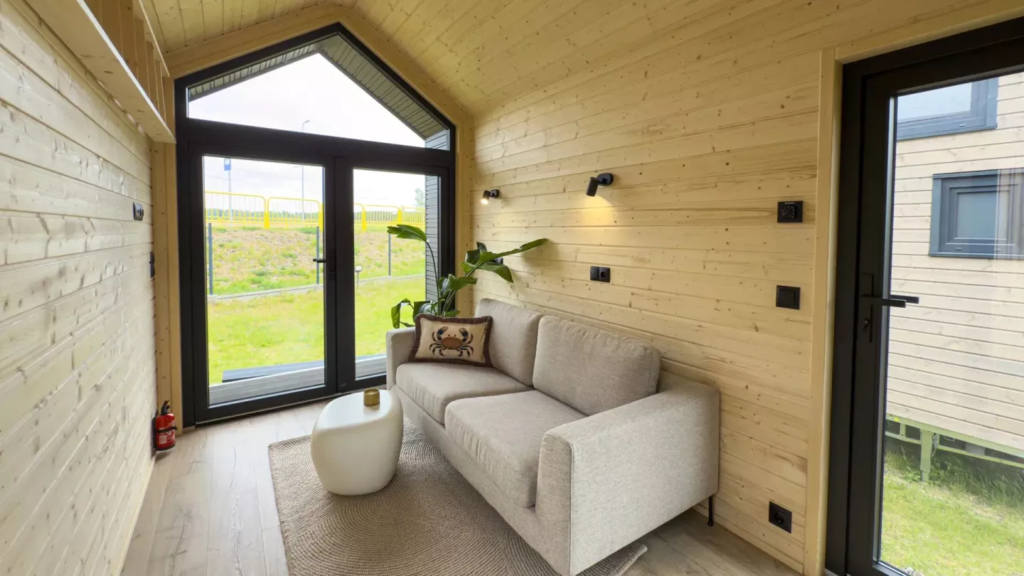
The last time we checked out Poland’s Mobi House we were introduced to a two-bedroom tiny house with a nifty rooftop terrace. Now we’re taking a closer look at an evolution of the Sunrise series called the Chocolate, which is dark on the outside and features a tasty light/dark filling. On the outside, Mobi’s Sunrise models look pretty similar, with a mix of black sheet metal and wood, sporting a small porch area and sat on a double-axle trailer. This latest flavor measures 6.6 x 2.5 x 4.2 m (21.6 x 8.2 x 13.1 ft) and sits on a THM 660 Lift&Go trailer. It has a usable floor area of 15.68 sq m (169 sq f), and the dark exterior has metal cladding and wood-texture inserts that give it a sleek, modern look. The lounge space in this promo shot has been furnished with a double sofa and small coffee tableMobi House Visitors can enter through a glass porch door that sits within floor-to-ceiling glass and allows lots of natural light to flood the interior, or via a glass side door. On the inside, the walls and ceiling are lined with simple-but-tasteful plywood panels, giving the interior a warm and natural tone. The finish also blends well with the black kitchen cabinets, which are fitted with an induction hob, extractor hood, small sink (also in black) and refrigerator. There’s a minimalist lounge on the ground level too, which hosts a sofa and coffee table in the promo shots but offers plenty of arrangement opportunities, such as a sofa bed for guests or an entertainment center along the opposite wall. That vacant paneled wall could easily accommodate a large TV or projection screen, while also serving as a place to stow the loft ladder between uses. There’s also a side door between the kitchen and lounge. Light textured ply offers a natural look to the interior, contrasted by dark cabinetry and fittingsMobi House The bathroom, located at the opposite end to the porch door, features a walk-in shower cubicle, a vanity sink, storage cabinets, and a toilet. There’s a single small window in here, along with the home’s water boiler. The main sleeping area is a mezzanine directly above the kitchen. It’s designed for two people and accessible via that loft ladder – which negates the need for a staircase taking up premium floorspace. Mobi House completed the Chocolate model on May 10, and it sold within a fortnight. We’ve no word on pricing for this particular unit and each home is built to order, but as a guide the company says that house prices range from PLN 93,972 to 431,000 (which converts to US$25,787 right up to $118,281). You’ll need to contact the company direct for shipping information. The Chocolate tiny house gets power via a RV-style hookup, and there’s a metal storage box mounted to the outside for essentials like propane bottlesMobi House Options for the Chocolate included an off-grid version instead of the default configuration with a RV hookup, and buyers could lower the cost by opting for the Lift&Go frame only (no trailer and detachable supports). As with other tiny houses in the Sunrise range, the Chocolate could be expanded with a second module should the need for more space arise. Source: Mobi House source

Quaint chocolate-flavored tiny house explores light and dark contrasts Read More »

Klook's mini slide stunt just became very real

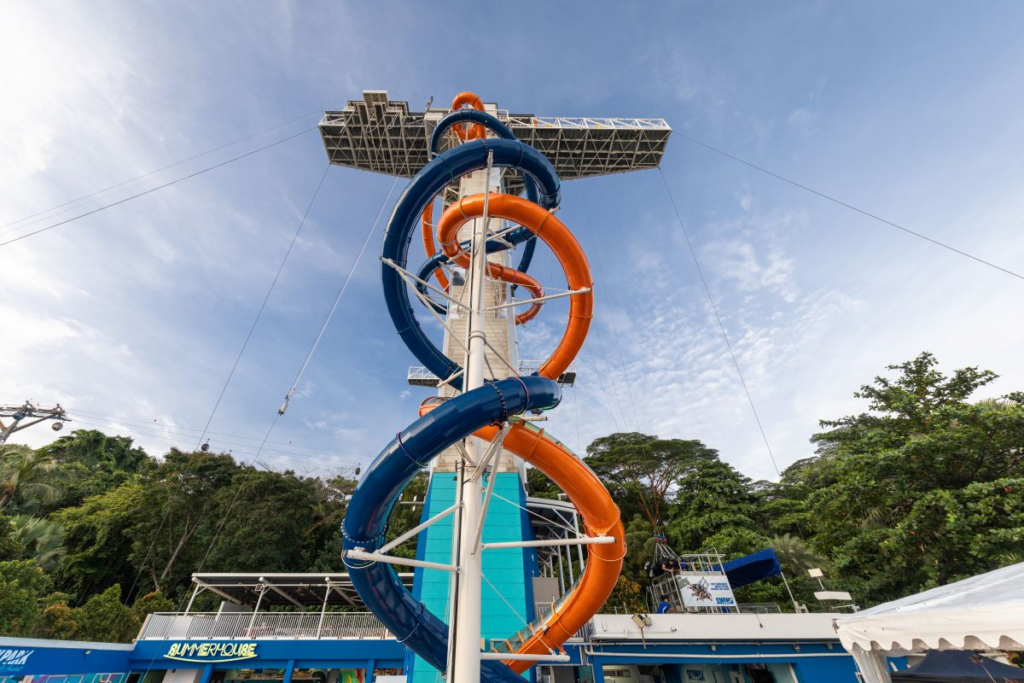
What started as an April Fool’s tease has officially become very real. Klook has launched its first-ever branded attraction globally with “Skyslides by Klook”, a new dual-slide experience opening at the relaunched Skypark Sentosa from 7 June 2026. Developed in partnership with ZJ Adventures, the attraction features two 44-metre slides, “Skydrop” and “The big Klook slide”, both billed as Southeast Asia’s tallest dry slides. The launch marks a new step for Klook as it moves beyond being an experiences booking platform to putting its own name on a physical attraction. Don’t miss: Sentosa names PR agency  “Skydrop” is also positioned as the world’s tallest land-based drop slide. The ride begins with a short drop before sending visitors into a curved slide path. Meanwhile, “The big Klook slide”, wrapped in Klook’s signature orange, offers a more relaxed and scenic alternative from the same height, making it more suited for families and younger riders. The experience also includes immersive UV lighting, a built-in conveyor system and themed ride variations paired with music and audiovisual elements, allowing riders to personalise each run. The slides will expand Skypark Sentosa’s existing line-up, which includes Singapore’s only bungy jump, giant swing and “Skybridge”. According to ZJ Adventures, the refreshed attraction is designed to give visitors more ways to play, depending on their age, comfort level and appetite for adrenaline. “Across the industry, we are seeing a shift in how people engage with attractions — it is no longer just about pushing limits, but about having the choice to experience something in a way that feels right for you,” said Zishan.  “With the new attraction, we wanted to create something that feels exciting yet accessible, where visitors can decide how they want to play, whether that is trying something new or simply enjoying the moment.” For Klook, the launch brings its brand promise of joy and discovery from the app into the real world. “With the launch of ‘Skyslides by Klook’, we are taking our belief in joy beyond the platform and bringing it into the real world through two distinct slides that form one connected experience,” said Sarah Wan, general manager, Singapore, Indonesia, Malaysia and Thailand, Klook. “Skypark Sentosa has been a valued partner of Klook, and we are excited to deepen this collaboration by creating something new together. As our first-of-its-kind attraction, it reflects Klook’s commitment to delivering innovative experiences that add to the energy and vibrancy of Sentosa, while enriching Singapore’s wider tourism landscape,” she added. Ahead of the official launch, Klook leaned into mischief to build anticipation for the attraction. The brand first teased the slides on social media on 1 April, leading some users to wonder if the whole thing was an April Fool’s joke, but the prank-like premise soon hit the streets. When MARKETING-INTERACTIVE reached out, Jeanette Ong, marketing lead, Klook Singapore said that April Fool’s Day was a deliberate choice.  “We wanted to foster a sense of mystery and excitement by leveraging the cultural moment – especially since the mini slide hinted at something bigger without fully revealing it,” explained Ong. To signal this was real and not another joke, Klook also built a real ticketing touchpoint to give the audience a way to register their excitement and engage directly with the brand from the start.  Klook later staged a guerrilla marketing stunt featuring two men carrying an inflatable slide down Robinson Road, turning the teaser into a real-world spectacle. In the accompanying caption, audiences were asked if they could find the Klook slide at Orchard Road on 16 May and Sentosa Siloso Beach on 23 May. Users were also encouraged to comment the word “Klook”. Those who commented received a direct message with a link to a Klook page detailing the “Mini Klook slide” event. The mechanic invited participants to find the slide, take part in a 30-second challenge and stand a chance to win unlimited play for the upcoming attraction. Participants had to slide as many times as possible within 30 seconds, with scores tracked on a leaderboard. The first 20 sliders daily also received a SG$20 Klook voucher, while winners will be contacted by email by 31 July. The activation, according to Ong, was built around the concept of “small start to giant adventures.”  “The mini slides used playful hints and cryptic visuals to spark curiosity and build social buzz, while QR codes and AR elements guided people toward the big reveal. We also placed discreet CCTV-style cameras to capture genuine reactions: the moment of discovery, the decision to go for it and the pure joy of sliding. By bringing unexpected fun into the everyday, we captured real, relatable moments,” said Ong.  She added that the guerilla activation connected with families and Gen Zs, with the audience showing clear enthusiasm and eager participation in the sliding experience. “This reinforces the broad appeal of Skyslides as an attraction that delivers excitement for thrill-seeking individuals while also offering a fun, accessible outing for families,” stated Ong.  The campaign turned the attraction launch into a social-to-physical treasure hunt, using April Fool’s-style ambiguity to spark curiosity, guerrilla marketing to drive street-level attention and a comment-to-DM mechanic to move users from social engagement to campaign participation. The campaign is measured by how many people pre-registered interest for the Skyslides launch prior to the big reveal. During the campaign period, Klook secured almost 2,000 RSVPs.  Beyond the slides, Skypark Sentosa is also home to Summerhouse, its beach club and dining concept, which features a viewing pool offering front-row seats to the action. The wider destination is designed to bring together rides, dining and social moments, giving visitors the option to take part, watch from the sidelines or unwind by the beach. The relaunch follows Skypark Sentosa’s temporary closure earlier this year for upgrades and renovations. In a social media post ahead of the closure, the attraction said it would shut from 5 January until further notice, inviting visitors to return for its final operating weekends before the gates closed. It also told ticket

Klook's mini slide stunt just became very real Read More »