Weak grip linked to an early grave – and a stronger handshake won't help

Hassan Vally, Deakin University/The Conversation If you follow wellness channels on social media, you might’ve come across the claim that your grip strength – or how firmly you can squeeze something with your hands – can predict how long you will live. This sounds far-fetched. Yet the science supports such a connection. But as wellness influencers try to monetize this link, what started as something based on scientific evidence starts to get stretched. Now some influencers claim just strengthening your grip strength can help you live longer. And it’s not just social media influencers. Mainstream media often follows some similar patterns, overlooking the complexity and nuance of the science and misrepresenting what it means for individuals. So many ideas about what makes us sick, or keeps us well, sound plausible. Early studies might sound promising. But then something gets twisted. In this series, we investigate how a grain of truth ends up as a common health myth. And we untangle what went wrong along the way. What the science says The evidence consistently shows a person’s grip strength is a good indicator of their overall health and therefore can act as a proxy for how long they might live. However, grip strength isn’t a driver of longevity. The strength of your hands doesn’t make you healthier. It indicates how robust the body is, from muscle and nerve function to the health of your heart and veins, and how your body uses energy. A typical way researchers have investigated the relationship between grip strength, health and longevity is to measure participants’ handgrip strength by getting them to squeeze a hand-held device called a dynamometer. Then they track participants over time to see if they developed diseases and how old they were when they died. For example, a study of around half a million British people aged 40–69 years found a 5-kg lower grip strength was associated with an approximately 20% greater risk of dying during the follow-up period, which was up to 10 years. The researchers also found muscle weakness, which they defined as having a grip strength of less than 26-kg for men and 16-kg for women, was associated with a higher overall risk of death as well as a higher risk of death from cardiovascular disease (heart attack and stroke), respiratory disease, chronic obstructive pulmonary disease and a number of cancers. The link is stronger for older people While the relationship between grip strength and health holds for all age groups, in older people it appears to be a particularly good predictor of death, heart attacks, stroke, falls and fractures. This is because it seems to be an exceptionally good indicator of age-related loss of muscle mass (known as sarcopenia), power and resilience in older people. Consequently, some researchers suggest grip strength should be considered a “new vital sign” – alongside more traditional indicators of health such as temperature, pulse, respiration and blood pressure. The reason grip strength is a less powerful predictor of longevity in younger people compared to older age groups is because most young people are near the upper end of physiological performance. Differences in young people’s health are relatively small compared to the “noise” introduced by measurement error or random variation. As people age, however, their health varies much more, while the sources of error remain roughly the same. Consequently, this higher signal-to-noise ratio results in a much stronger relationship between grip strength and health in later life. So how did this turn into hype? The problem with the way some people communicate this is generally an issue of overreach. Things often get muddled, and this association can sometimes be turned into a prescription. When people conflate correlation with causation, they may claim that just doing exercises to improve your grip strength, without improving your overall health, can help you live longer. But just because two variables are linked does not mean that one causes the other. Improving grip strength is not a magic path to longevity. Rather, it’s a marker or proxy of broader physiological robustness, which influences longevity. Intriguingly, some reels and articles explain the science clearly and highlight that grip strength is a proxy and not a cause, but then, paradoxically, go on to describe ways of increasing grip strength. This undoubtedly undermines the message that the relationship is not causal. One of the problems seems to be that influencers and journalists sometimes feel it’s not enough to just explain the science: they have to offer actionable health advice or a solution. This can lead to overreach, where advice is given that goes beyond what the evidence says. In a nutshell We’re all naturally drawn to simple metrics that promise insights into our health and longevity, and grip strength seems to be one of the more useful ones. Grip strength is a simple and accessible marker that can help predict health and longevity, particularly in the elderly. But improving your grip strength in isolation won’t make you healthier or extend your life. The most effective drivers of health and longevity remain the obvious ones: staying active, eating a balanced diet, sleeping well, maintaining social connections and managing stress. Hassan Vally, Associate Professor, Epidemiology, Deakin University This article is republished from The Conversation under a Creative Commons license. Read the original article. source

Weak grip linked to an early grave – and a stronger handshake won't help Read More »

Omnicom PR builds out APAC leadership team following regional overhaul

Omnicom Public Relations (OPR) has unveiled a new Asia Pacific leadership team, as the communications network looks to strengthen collaboration and integrated client support across its agency brands in the region. The appointments were revealed in an internal memo sighted by MARKETING-INTERACTIVE. The changes will take effect from 1 July 2026. According to the memo, the new structure is designed to provide more seamless support to clients across markets and agency brands, including Weber Shandwick, Golin and FleishmanHillard. Under the new structure, OPR has appointed market leaders across its key APAC markets. They include Yisi Liu (pictured far left), senior partner, MD, FleishmanHillard China, as the new president and general manager of China; Carol Yeung (pictured centre), managing director of Golin Hong Kong, as the new president and general manager of Hong Kong; Ryo Kanayama (pictured second from left) president of FleishmanHillard Japan, as the new president and general manager of Japan; and Elizabeth Bae (pictured far right) MD of Weber Shandwick Korea, as the new president and general manager of Korea. Meanwhile, Carolyn Ann Devanayagam (pictured second from right), head of Weber Advisory APAC and Singapore MD, will lead Singapore as president and general manager, while also taking on the additional role of head of advisory for OPR APAC. Don’t miss: Omnicom PR announces new leadership structure with Joanne Wong as APAC CEO  The network has also established a series of regional growth and practice leadership roles. These include Campbell Hanley as head of client experience and growth, Jena Qian as head of business development and marketing, and Robert Magyar as head of health. Other appointments include Glen Halliwell as senior vice president and regional medical communications specialist, Patrick Yu as head of financial and professional services, alongside his role as head of growth for Hong Kong, and Jonathan Fisher as head of corporate reputation and risk. The regional leadership bench is further rounded out by Thomas Skelton as head of data and analytics, Hin Yan Wong as head of strategy and planning, Shouvik Mukherjee as head of creative, and Rafidah Rashid as head of OMC Connect, while also serving as head of growth for Singapore. The executive leadership team will comprise Martin Yu as chief finance officer and Mary Czarnecki as managing director of human resources. The memo also stated that the appointments will complement existing leadership structures in Indonesia and Taiwan, which continue to operate as single business units under Aries Nugroho in Indonesia and Terry Chiang and Vivian Liu in Taiwan. Earlier last month, MARKETING-INTERACTIVE reported that Omnicom PR unveiled part of its new regional leadership structure across APAC, EMEA and Canada as part of a broader effort to streamline operations across its agency portfolio outside the US and UK, according to a statement from the firm. Under the new structure, FleishmanHillard’s Joanne Wong has been elevated to the role of APAC CEO at Omnicom PR, effective 1 July. Weber Shandwick EMEA CEO Hugh Taggart will become Omnicom PR’s EMEA CEO, and Weber Shandwick Canada CEO Greg Power has been appointed to lead as Canada CEO for Omnicom PR. The three executives will report directly to Omnicom PR global CEO Chris Foster and oversee all OPR agency brands within their respective regions, working closely with local leadership and drawing support from global agency leaders. Related articles: Omnicom PR reportedly restructures agency portfolio Omnicom’s first results post-IPG show merger costs bite, underlying performance holdsOmnicom Advertising Asia unveils regional leadership team source

Omnicom PR builds out APAC leadership team following regional overhaul Read More »

Quarterhorse edges closer to becoming a modern SR-71 successor

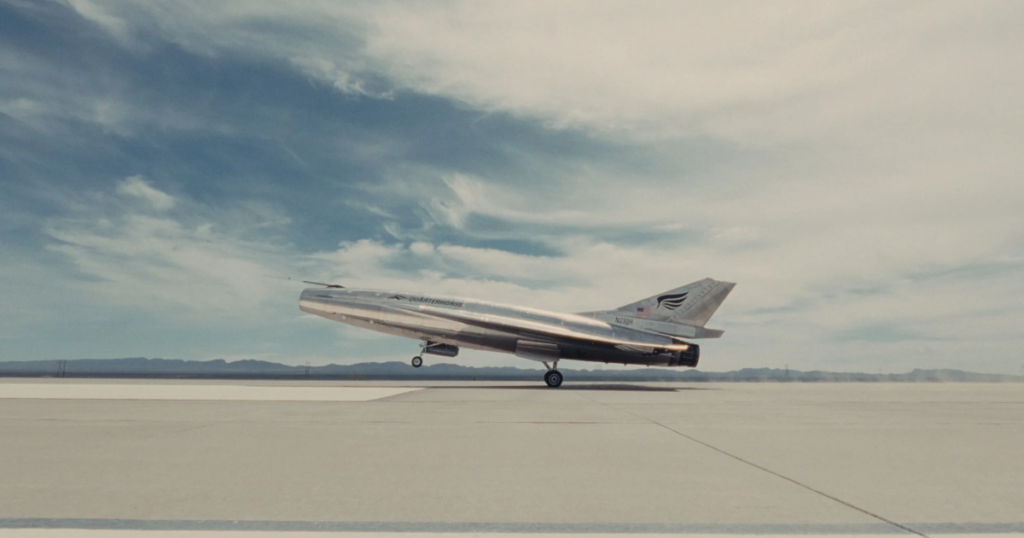
Hermeus’s Quarterhorse aircraft is still pushing the supersonic flight envelope, but the US Department of Defense is already so keen on the concept that it’s awarded the company US$159 million to explore the military applications of the technology. The Quarterhorse project aims at creating a supersonic aircraft that is, in effect, the successor to the legendary Cold War SR-71 Blackbird, which is the holder of multiple speed records, including the official world airspeed record for a crewed, air-breathing jet aircraft after reaching Mach 3.32 in 1976. Hermeus is pursuing this goal through a series of prototypes, each designed to test a different portion of the flight envelope, from taxiing and takeoff through to high-speed supersonic flight. Currently, the Quarterhorse Mk 2.1 has reached Mach 1.21, and there’s still a lone way to go before it can challenge the Blackbird’s laurels. However, the US Army and Navy are very interested in how to adapt the Quarterhorse to their needs – so much so that they’ve added $159 million to an existing development contract, for a total of $219 million. It is to not only help in developing an aircraft that can reach high Mach numbers, but also to explore how such a platform could launch high-speed missiles and other payloads. The latter is no small feat because supersonic speed dramatically changes the aerodynamics of an aircraft, making missile launches or bomb drops extremely difficult, to put it mildly. At subsonic speeds, the airflow over an airframe consists of relatively smooth, though complex, streams. Beyond the sound barrier, severe aerodynamic, mechanical, and thermodynamic complexities are introduced. Airflow streams become violent, compressible flows characterized by complex, interacting shock waves. This means that a missile suspended on an external pylon or inside an internal weapons bay is subjected to extreme gradients in pressure and velocity. As a missile or other payload separates from the launcher, it has to go through these shock waves, which can shove it any direction and tilt any which way, including smack into the aircraft. Because modern warplanes put a premium on stealth, internal weapon bays are preferred to reduce radar signatures, but opening the bays for launching creates a high-speed aerodynamic cavity. The result is high-decibel acoustic loads that can cause structural damage as well as buffeting that can prevent the missile from even leaving the bay. As a result, the aircraft has to be designed to minimize these effects as well as the thermal stresses caused by supersonic flight. This is combined with the need for powered systems that use springs, pneumatics, or hydraulics to shove the missile clear and a mechanism to ignite the missile’s motor only after it gets clear of the supersonic external flow to prevent it stalling or spinning out of control. The new contract focuses on reducing the risk factors for Quarthorse, especially in propulsion, thermal management, and power generation, as well as being able to release payloads at speeds up to Mach 3. It will also examine how Quarterhorse can be adapted for mass production, so it can be used as either a Loyal Wingman along with crewed fighter aircraft or as a standalone strike/electronic attack platform. Additional studies will investigate replacin aluminum structures with steel for better durability, and the addition of spike inlets and other aerodynamic refinements necessary to maintain stable flight and payload release at speeds approaching and exceeding Mach 3. “This program is about moving high-Mach capability out of the lab and into an operationally relevant environment,” said AJ Piplica, CEO and Co-founder of Hermeus. “By delivering flight-ready aircraft and demonstrating payload release at speed, we will prove this technology can create a decisive military advantage on a timeline that matters. Our focus is on providing the Air Force and Navy with the validated data they need to transition these platforms into the future force.” Source: Hermes source

Quarterhorse edges closer to becoming a modern SR-71 successor Read More »

Beyond the hype: How APAC brands are rewriting the pop-up playbook

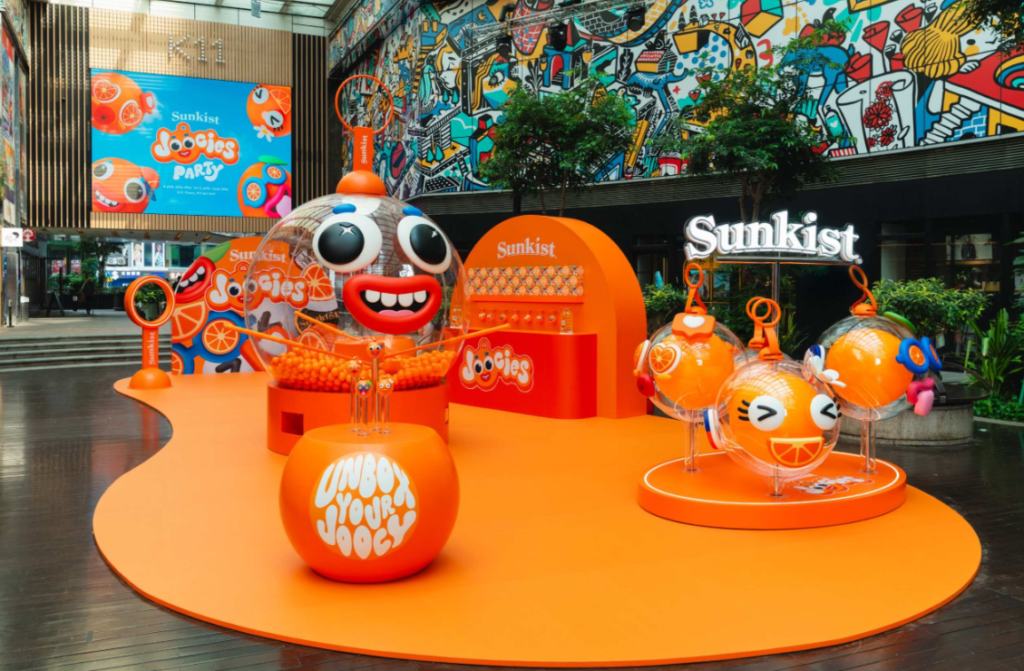
In an era of shrinking attention spans and endless pop‑ups, brands can no longer rely on flashy installations and one‑day queues. The focus has shifted from creating a fleeting moment to building a lasting memory that stays with consumers long after the doors close. Across APAC, marketers are rethinking how temporary spaces can drive lasting brand love, not just weekend foot traffic. One recent example is Sunkist Growers launching the “Sunkist Joocies party” limited-time pop-up in Hong Kong, debuting collectible citrus-themed cases and interchangeable charms where fruit meets fashion. Designed as a playful discovery journey, the experience revealed Sunkist’s Joocies character with surprise and delight. Visitors tested their reflexes in a high-energy orange-scooping challenge to win exclusive blind boxes and fresh oranges, turning a simple fruit into a shareable game that had both parents and children lining up for more.  Don’t miss: Sunkist turns oranges into fashion accessories at K11 pop-up While in Singapore, UNIQLO launched its “AIRism Cooling Station” at Orchard Central. Designed to tackle the local climate, the pop-up allowed visitors to physically experience the brand’s signature cooling technology through interactive installations tailored to Singapore’s heat. What turns a pop-up into lasting brand love? These exclusive experiences reflect that today’s audiences crave stories, experiences, and a genuine reason to stay in the conversation. That is why audience engagement, not just short-term buzz, is what makes a pop-up build long-term loyalty and genuine brand love, according to Sunny Yeung, managing partner and co-founder of Butter Creative. “The brands winning right now aren’t necessarily the ones with the loudest media spend; they are the ones audiences choose to interact with.” Pop-up stores allow a brand to facilitate this two-way interaction, building loyalty through emotional communication, Yeung said. He added:  When done right, it isn’t just short-term buzz – it is a long-lasting emotional connection. This sentiment is echoed by Paulene Ong, marketing director at UNIQLO Singapore, who believes effective pop-ups must ground themselves in a product’s real-world utility. “We design our pop-ups with intention,” Ong said. “Each event is not just a showroom; they are proof points of how we translate product features into lived moments that customers can relate to. This is what ultimately builds long-term loyalty and genuine brand love.” For Cassie Howard, senior director of category management and marketing at Sunkist Growers, a pop-up should serve as a physical expression of a brand’s personality. A pop-up builds long-term brand love when it moves beyond being a one-off transaction and becomes a memorable experience people emotionally connect with. Equally important is giving consumers something to take away beyond the product, whether a story, a collectible, or a shareable moment, that naturally extends the experience through social and word of mouth, reinforcing brand affinity over time, said Sunkist’s Howard. Why less is more in pop-up storytelling While many pop-ups come and go—remembered only for a quick photo opportunity—the most impactful ones leave a lasting impression. However, overloading an activation can backfire. According to Yeung, attempting to pack entertainment, personalisation, and storytelling all into a single pop-up can overwhelm modern consumers. “Audience patience is at an all-time low. Instead of struggling to balance all three, I believe a brand is already winning if an attendee walks away having truly connected with just one of those elements.” Brands should choose one main focus and let everything else support it, echoed Jacopo Pesavento, founder and CEO of Branding Records. Most of the time, the story should be the star, while entertainment and personalisation just help bring that story to life. He added:  When you bolt experiences onto a weak narrative, APAC consumers clock it straight away. They have seen too much to be fooled by production value alone. Pesavento points to Hong Kong heritage brand Garden as a prime example of narrative-driven success. In May, Garden launched its “Every bite tells a story” pop-up to celebrate its century-long history. Led by the brand’s iconic mascot, Grandpa G, the activation guided visitors through a retro-futuristic factory tour featuring unique bread-pairing experiences, exclusive collectibles, and street fashion collaborations with local brands GROCERY, Aim Higher Club, and Cantonese eatery Canto Spice. The way Garden packed a century of Hong Kong memories into a single physical space is a completely different game from just renting a cool venue and calling it experiential, said Branding Records’ Pesavento. Meanwhile, Sunkist’s Howard said the key is to design the experience so that each element reinforces a single, clear narrative, rather than competing for attention, adding that entertainment, personalisation, and storytelling should all serve the same story. “When that happens, the pop-up stops feeling like a collection of random activations and starts feeling like a cohesive experience that people actually remember.” Mark your calendars for 24 June! #Content360 Hong Kong returns with a dynamic, one-day event dedicated to pivotal trends—from the silver economies to breakthrough IP collaborations, sports, and beyond. Let’s dive into the art of curating content with creativity, critical thinking and confidence! Related articles: Garden brings a century of HK memories to Langham PlaceSunkist turns oranges into fashion accessories at K11 pop-up source

Beyond the hype: How APAC brands are rewriting the pop-up playbook Read More »

Stock Market Today: Nasdaq Sinks 4% On Rate-Hike Worries; Marvell Plunges In Semis Slide

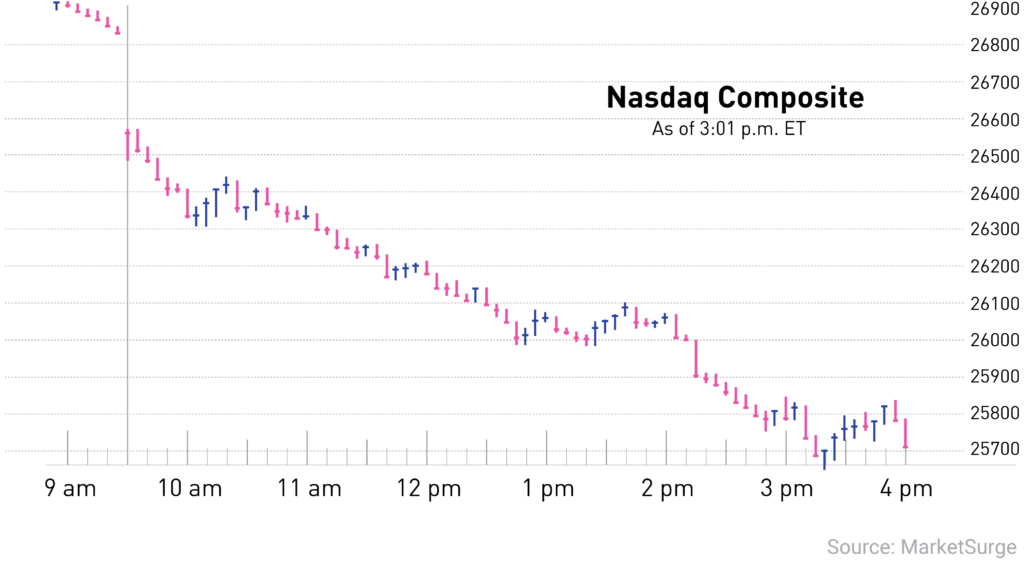
The stock market suffered Friday, with the Nasdaq composite closing with its worst session in more than a year as it bore the brunt of rising yields following a strong U.S. jobs report. In a difficult day for semiconductor stocks, Marvell Technology (MRVL) and AI chip heavyweight Nvidia (NVDA) were slammed. The Nasdaq composite sank 4.2%, the steepest percentage loss… Copyright ©2026 Investor’s Business Daily, LLC. All rights reserved. 87990cbe856818d5eddac44c7b1cdeb8 source

Stock Market Today: Nasdaq Sinks 4% On Rate-Hike Worries; Marvell Plunges In Semis Slide Read More »

Guess which bike hides beneath this 3.9-meter-long art deco streamliner

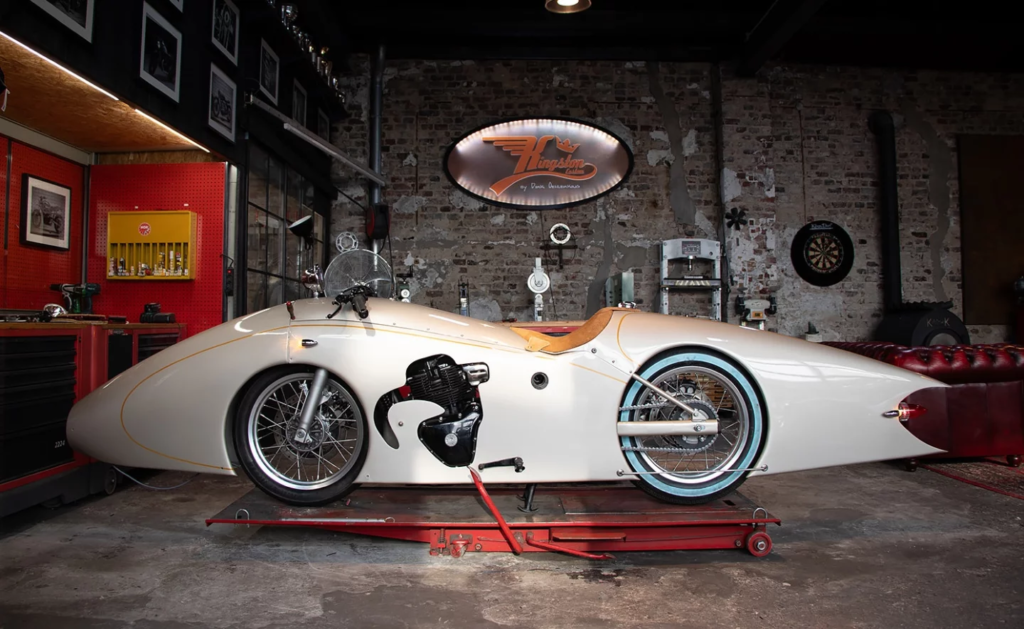
Royal Enfields are notoriously good at being the lab rat for all kind of customization. In fact, its Shotgun 650 was itself ‘inspired by custom’ per the company… and that bike is exactly what serves as the donor heart of this gorgeous one-off creation. Designed by Dirk Oehlerking from Kingston Custom, based in Gelsenkirchen, Germany, the finished bike is called the Kingsman, paying homage to the popular British comic book and film series of the same name. I’d best describe it as an art deco streamliner, but of course, there are more layers to it. Oehlerking’s methods are traditional, where he often sticks to starting with a 1:1 scale on cardboard, as opposed to using digital renderings. And when he was satisfied with what he came up with for this one, he went on to assemble individual pieces from 2-mm aluminum sheets. It’s built by Dirk Oehlerking from Kingston Custom, based in Gelsenkirchen, GermanyRoyal Enfield / Kingston Custom The result is a 3.9-m (12.8-ft) streamliner that may look like it’s meant to break land speed records, but a 650cc Enfield twin motor still powers it. And that’s hardly super fast. But this isn’t about speed; it’s about expansive imagination brought to life. At the front of the Kingsman is a streamlined nose cone that’s supported by a hand-built bracket attached to the bike’s steering neck. That nose is finished with the Shotgun 650’s OEM LED headlight, under which sit the fork-mounted wheel covers. The central fuselage is where most of the details are focused. There are cut-outs on either side that reveal the engine and the handmade exhausts, which are quite noticeably short. On top of that, the bodywork is a central cover bolted down with rivet-type fasteners. Down below sit the foot controls that peek through all that bodywork. Oehlerking has also been mindful of cutting in a small hatch to take care of routine maintenance. The 3.9-m-long art deco streamliner sports a retro Royal Enfield badgeRoyal Enfield / Kingston Custom The cockpit sports custom-made handlebars with the stock controls and grips. It also maintains the original Royal Enfield speedo. Very neat indeed. You’ll sit on a brown suede seat that’s now positioned further back, right where the central and rear parts of the body intersect. That’s exactly where the custom’s elongated tail section tapers from, finishing in a sharp concave cutout that sports a 1958 Cadillac taillight. Oehlerking was also mindful of using the space behind the rear wheel wisely. He fitted it with a roomy storage compartment that’s lined with wood and suede, and kitted with … wait for it … an umbrella, a mirror, a comb, a bottle opener, gin, tonic, glasses, and some cutlery. As much as it may seem like it, the Kingsman isn’t just supposed to be an art deco showpiece. It very much moves. There’s a custom-built fuel reservoir that’s placed in front of the rear wheel, accessed through a retro-style filler cap. It’s not just another custom that’s supposed to sit as a showpiece, the thing runs!Royal Enfield / Kingston Custom The right-side-up forks were taken from the Royal Enfield Classic 650, while the rear shocks from the Shothun 650 were swapped for rigid struts. Even the 19-inch front and 18-inch rear wheels were taken from the Classic 650, which are now paired with whitewall tires. Oehlerking has finished the setup by extending the swingarm by 100 mm (4 in). The Kingsman wears chromed bullet turn signals, a vintage Royal Enfield badge up front, and delicate pin-stripes on a chic cream color tone with gold accents. I’d love to swing a leg over it, but on a bike that’s almost 4 m long, I’d definitely have some difficulty parking the thing in tight spaces. It’s clear this creation is meant more to be admired than ridden, but still, knowing the thing can run is still appreciable. But I still wouldn’t say it’s practical – it absolutely isn’t. What makes the Kingsman so fascinating is its intricacies. In an era where custom builds increasingly rely on CAD renderings, algorithms, and social-media-friendly shock value, there’s something refreshing about a builder spending countless hours shaping metal by hand to create something this gloriously unnecessary. You get an umbrella, a mirror, a comb, a bottle opener, gin, tonic, glasses, and some cutlery as standardRoyal Enfield / Kingston Custom Sure, it’s still a Shotgun 650 underneath. But that’s like saying the Statue of Liberty is just a pile of copper. Technically correct, perhaps. But completely missing the point. Source: Royal Enfield x Kingston Custom source

Guess which bike hides beneath this 3.9-meter-long art deco streamliner Read More »

Shah Rukh Khan is more than just the king of Bollywood in Visa’s experiences-first push

Visa has appointed Bollywood superstar Shah Rukh Khan as its new brand ambassador for India, as the payments giant looks to strengthen its connection with a growing segment of affluent consumers seeking experiences over ownership. The partnership launches alongside Visa’s new India campaign, “Infinitely more”, which is anchored in what the company describes as a shift in consumer aspirations. According to Visa, affluent consumers in India are increasingly prioritising personalised, purposeful and experience-led lifestyles over traditional status symbols. The move is backed by findings from Visa’s “India’s Affluent Economy 2025–2026” whitepaper, which found that consumers are increasingly choosing experiences that align with how they want to live, travel and engage with the world around them. Don’t miss: With influencer marketing taking over, what values do celebrities bring to marketers?  In a statement, Visa said Khan’s global appeal, enduring relevance and trusted reputation made him a natural fit for the campaign. “Shah Rukh Khan embodies this mindset perfectly – iconic, aspirational and trusted,” said Gaurav Ramdev, head of marketing, India and South Asia at Visa. “The modern Indian affluent consumer is increasingly global, discerning and experience-led. That’s the story we bring to life with ‘Infinitely more’. He added that the partnership is a natural extension of Visa’s legacy of aspirational storytelling that reflects the cultural zeitgeist – stylish, global and larger than life. “With ‘Infinitely More’, we build on that legacy to represent the aspirations of today’s India, with Khan at the centre of an iconic narrative,” said Ramdev. As part of the campaign, Visa has also launched Visa.co.in, a platform designed to help eligible cardholders discover curated experiences across travel, dining, wellness, entertainment and lifestyle categories. The campaign film follows Khan on a globe-trotting journey across a series of premium experiences unlocked with a tap of his Visa card. It opens with the actor walking through a hotel lobby before emerging onto a quiet street. After tapping his Visa card, the setting transforms into a bustling street inspired by China, complete with food vendors, musicians and cheering crowds. Khan then charms a taxi passenger with a flower before paying for her ride with another tap of his card. The journey continues to what appears to be a luxury dining destination in Singapore, where diners from different cultures gather around the table. From there, Khan is transported to a Muay Thai ring in Thailand, where performers in traditional costume welcome him before he steps into the ring as a referee. A tuk-tuk ride then whisks him to a high-fashion runway featuring a nod to the iconic red heel from The Devil Wears Prada, before the film concludes with Khan boarding a plane and telling viewers they can experience “infinitely more with Visa Power”. Set to a reimagined version of the classic song Paisa Hai Paisa, the campaign shifts the focus from spending power to access, positioning Visa as an enabler of richer travel, dining and lifestyle experiences. The film also includes several easter eggs, including the return of a tuk-tuk driver and orangutan from previous Visa campaigns. Rajdeepak Das, chief creative officer of Publicis Groupe South Asia and chairman of Leo South Asia, said the creative idea was inspired by changing perceptions of affluence. “For today’s affluent consumers, true luxury is not just about what you own, but what you can access,” he said. “Shah Rukh Khan was the perfect embodiment of this idea, bringing together a world of aspiration, charm and possibility. We created a fast-paced, high-energy cinematic narrative packed with references and metaphorical Easter eggs that reflect the breadth of privileges Visa offers,” added Das.  Speaking about the partnership, Khan said the collaboration felt like a natural fit. “The most meaningful experiences are defined not just by the destination, but by how we experience the journey along the way,” he said. “I am delighted to partner with Visa – an iconic brand that enables you to move through the world with confidence, security and ease. For me, it’s a natural fit, because in every journey that has mattered, Visa has been everywhere I want to be,” added the actor.  With acceptance across more than 200 countries and territories and over 175 million merchant locations globally, Visa said the campaign reinforces its role in helping consumers access experiences seamlessly and securely wherever they are. The campaign also comes as Visa continues to deepen its presence in experience-driven categories such as music, entertainment and travel. Most recently, the payments giant was named worldwide tour sponsor for BTS World Tour “ARIRANG”, which will see the K-pop group perform 82 shows across 34 regions. Through the partnership, Visa is offering cardholders access to ticket promotions, merchandise and on-ground experiences, reflecting its broader strategy of connecting consumers with passion-led moments beyond transactions. It also joined forces with two-time Grammy-winning artist, composer, and producer Laufey in a new Asia Pacific partnership designed to engage her devoted fanbase and young travellers across the region. Related articles:   Visa names new APAC head of media, social, data, content, and digital innovation  Visa APAC nabs Alvina Seah as head of Visa design and creative studio  Visa wants you to travel like Jennie, in latest ‘Road to Ruby’ campaign  source

Shah Rukh Khan is more than just the king of Bollywood in Visa’s experiences-first push Read More »

World's new tallest building races toward completion in Saudi Arabia

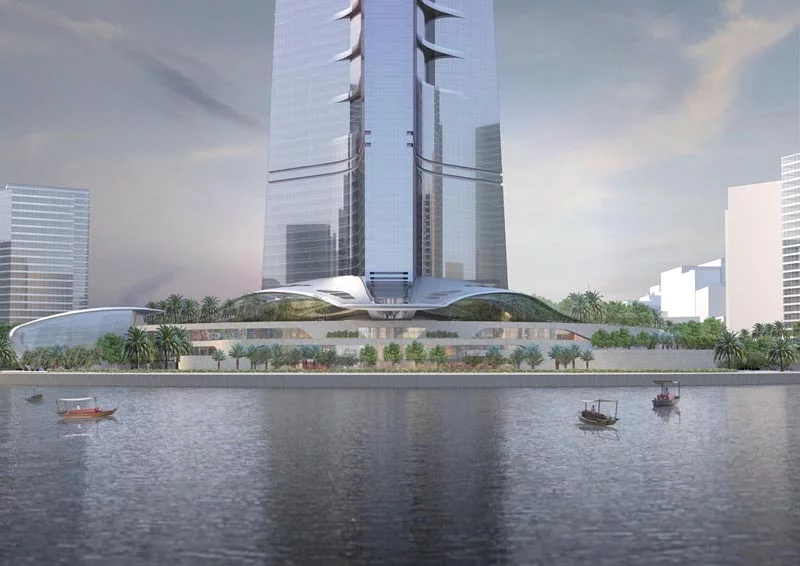
The future world’s tallest building has passed a major construction milestone. Saudi Arabia’s JEC Tower has now reached 102 floors and is rapidly progressing toward its planned height of more than 1 km (0.62 miles). Back in November of last year, we reported on the JEC Tower rising to 69 floors. With progress now moving at at extremely rapid pace, it surpassed 100 floors in recent weeks, becoming one of only around 25 buildings worldwide to do so. The JEC Tower will require 59 elevators and include 5.7 million sq ft (530,000 sq m) of floorspace insideJeddah Economic Company Architects Adrian Smith + Gordon Gill (AS+GG) recently confirmed it will consist of at least 157 floors. It will also be significantly taller than the current world’s tallest building, the 828-m (2,717-ft) Burj Khalifa and almost twice the height of the USA’s tallest skyscraper, the 541-m (1,776-ft) One World Trade Center. This kind of immense height requires a carefully considered structural system. “Concrete is king in the Middle East,” says engineering firm Thornton Tomasetti, which is helping realize the project. “So why not take advantage of Saudi Arabia’s local techniques to construct Jeddah Tower? We did just that, with an efficient concrete-based system that employs construction practices and concrete strengths common in the region. “The structural system is simplicity itself – without columns, outriggers, floor beams, spandrel beams, and vertical transfers. Specifically designed to be built quickly and efficiently, all walls are interconnected, and each structural element resists both wind and gravity loads. Below, a massive concrete foundation system supports the weight of all that height – with a 5-meter [16.4-ft]-thick raft foundation supported on 270 bored piles, each 1.8 meters [5.10 ft] in diameter, that go to depths up to 105 meters [344 ft].” The JEC Tower will feature the world’s highest observation pointAdrian Smith & Gordon Gill Architecture Previously referred to as both the Kingdom Tower and Jeddah Tower, the JEC Tower is at the center of a new urban development in the bustling port city of Jeddah. Its interior will boast the world’s highest observation point, plus a luxury hotel, office space, and palatial apartments. The megatall skyscraper is just one of several “gigaprojects” announced for Saudi Arabia as it aims to transform into a major tourism destination. However, while others like the the Line and Mukaab have seen their ambitions reduced or been cancelled altogether, JEC Tower is now firmly on track after years of delays, and Saudi authorities seem intent on realizing the project’s ambitious vision. Check out the following video to see the current progress on this incredible project. Jeddah Tower Construction Progress | May 2026 Sources: Thornton Tomasetti, AS+GG source

World's new tallest building races toward completion in Saudi Arabia Read More »

What if the best football is the kind nobody planned for?

Nike is encouraging football fans and players to throw out the rulebook with the launch of “Rip the script”, a new global campaign that champions instinctive, creative and attacking football. Positioned as a rallying cry for young players, the campaign aims to inspire athletes to trust their instincts and embrace a more joyful approach to the game. Beyond a single film, “Rip the script” serves as the entry point to what Nike describes as an evolving universe of football content spanning sport, entertainment, music and fashion. At the heart of the campaign is a six-minute film set inside a Hollywood mega-studio, where some of football’s biggest names reject convention and embrace spontaneous play. Don’t miss: Nike revives its rallying cry with ‘Why do it?’ campaign The film features football stars Cristiano Ronaldo, Kylian Mbappé, Erling Haaland and Vinícius Júnior, alongside football legends Eric Cantona, Ronaldinho, Zlatan Ibrahimović, Didier Drogba and Jorge Campos. The campaign also includes cameo appearances from cultural figures including LeBron James, Travis Scott, Kim Kardashian, Ted Lasso, Kate Scott, Channing Tatum, Young Miko and LISA. The film opens with Mbappé in the midst of an intense, cinematic football match. After he scores, the scene pulls back to reveal that the action is being directed on a Hollywood studio set. The director immediately calls “cut”, scolding Mbappé for improvising and adding theatrical flair to the scene. Frustrated that the players refuse to follow instructions, the director complains to his crew, prompting the football stars to go rogue. What follows is a chaotic journey through the studio, with players crashing through different film sets and inserting themselves into a series of cinematic scenarios. The campaign culminates with the stars joining forces for one final charge onto the pitch, before Haaland seals the film with a thunderous strike. According to Nike, the campaign is designed to unfold throughout the summer football tournament period, featuring interconnected storylines, unexpected appearances and Easter egg-filled content aimed at engaging fans, creators and players. The broader initiative also showcases Nike’s football ecosystem, spanning product innovation, community programmes and retail experiences. On the product front, Nike’s 2026 federation collections incorporate Aero-FIT cooling technology while drawing inspiration from each federation’s heritage and culture. The brand is also spotlighting its latest football boot range, including the Mercurial Vapor 17, Mercurial Superfly 11, Phantom 6 and Tiempo Maestro. Meanwhile, Nike is continuing to invest in grassroots football through Toma el Juego, its community-led street football programme. The initiative has hosted more than 100 tournaments across six continents and over 20 cities, aimed at fostering creativity and creating pathways from street football to elite competition. The campaign also extends into fashion and culture through several product collections, including the X2 range, Cryoshot, Mad 90 Pack and Hollywood Keepers collection, alongside regional collections such as Tercer Tiempo F.C. and Amor & Furia for consumers in Mexico and Latin America. As part of its retail activation strategy, Nike said it will refresh more than 5,000 retail locations globally from June through the end of the tournament. The brand is also launching football-focused experiences in key markets. The campaign reflects Nike’s continued efforts to position football not only as a sport, but as a cultural force that intersects with entertainment, fashion and community. “We know the magical moments in football happen when players trust their instincts. That’s the kind of football we love: fresh, instinctive, unexpected and creative,” said Helena Thornton, VP, Nike brand management. She added, “We made this film to meet football communities exactly where they are, not just on a screen, but in their world and deeply engrained into their subcultures. We didn’t want to follow the traditional marketing playbook. We wanted to give them something worth talking about, worth clipping, worth wearing, worth showing up to. A story they don’t just watch — one they can make their own. That’s the whole idea behind our universe of Nike Football.” In tandem, Enrico Balleri, VP, creative director, global brand voice at Nike said, “We were intentional in choosing every cast member in the film, and we had fun and leaned into the playfulness of their roles. We knew Kardashian, for example, takes her son to play football, so we created a whole ‘soccer mom’ persona for her, and in later extensions of the film, we’ll build and deepen that storyline. A cast that reflected an authenticity and a real connection to football was crucial to us.” The campaign comes as Nike continues to ramp up its football marketing efforts ahead of the summer tournament season. Earlier this week, Chelsea FC and Nike unveiled the club’s home kit for the 2026/27 season, alongside a global campaign titled “Can’t tame us”, created by TILL DAWN and developed from a strategy by ICONIC. Rather than centring on a traditional reveal film, the campaign was designed to build anticipation through the real-world and digital communities where Chelsea supporters gather. Drawing inspiration from luxury fashion marketing, it combined street-level activations, “spotted in the wild” moments and cultural teasers across multiple markets. Related articles: Nike unveils horror-themed brand identity to reshape football’s future    Nike and LEGO team up for wild, creative youth football collection   Nike and BTS team up for global merchandise blitz  source

What if the best football is the kind nobody planned for? Read More »

MG's new flagship electric coupe looks oddly similar to a certain Porsche

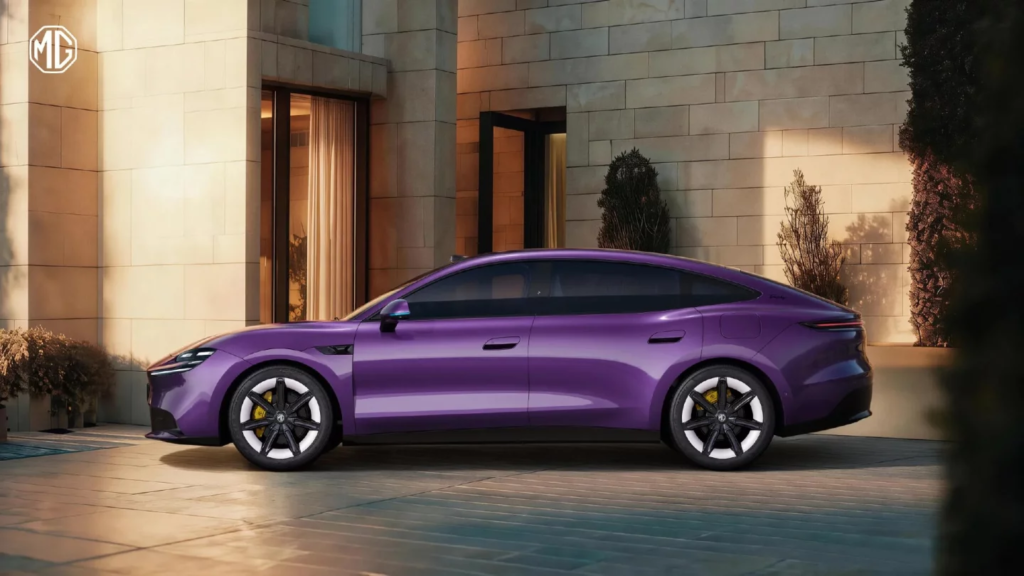
This is one of those “I swear I’ve seen that before” moments. MG has officially pulled the covers off its latest and greatest coupe, the 07, and the images are uncanny … resembling the Porsche Taycan in more ways than one. Of course, it’s a new electric/hybrid coming out of China. So it obviously gets the new EV treatment as well – C-shaped LED headlights, sporty bumpers, and flush door handles are all there. It adopts a low-slung, wide-body stance that’s in line with traditional fastbacks. With an active intake grille, the front fascia looks very sleek, even with the clamshell hood. Away from the front, at the rear, it sports a continuous light strip that blends perfectly with the panoramic sunroof and sloping roofline. The 07 comes with a long wheelbase and short front and rear overhangsMG Look at it from the side, and you’ll instantly spot the long wheelbase with short front and rear overhangs. The fenders sport aerodynamic vents, the wheels are two-tone with colored brake callipers, the doors are frameless, and the “Morello Purple” is kinda growing on me, I’m not going to lie. It looks like it’s spent a suspicious amount of time parked outside Porsche’s design studio. From the low-slung fastback silhouette to the four-point headlight signature and smooth Taycan-esque proportions, MG’s new flagship electric coupe feels less “inspired by” and more “strongly acquainted with” the Porsche Taycan. As for the interior, even though MG hasn’t released interior images, earlier spy shots pointed to an MG 4-style steering wheel and a floating center touchscreen. All that’s well and good, but what about the other stuff? Well, unfortunately, details on the specs, such as the specific motor and battery, are under wraps as of now. What we do know is that it’s built on SAIC‘s NEV platform – a completely new 800-volt architecture that will come with both electric and plug-in hybrid powertrains. The 07 will be the first MG model to come with LiDARMG It will also be the first MG model with LiDAR (Light Detection and Ranging) technology, which is clearly visible in the roof-mounted housing above the front windscreen. Coincidentally, it’s the same system that its parent company, SAIC Motor’s premium brand, IM Motors, introduced on the IM LS7 SUV. It will also come with the Momenta R7 “Enhanced World Model” (EWM), which makes use of artificial intelligence to efficiently learn and train itself from past driving scenarios. That tech, though, will only be limited to a higher-end trim, which is rumored to retail for about 300,000 yuan (US$44,112). The Momenta R7 automated driving system will also promise a “seamless parking-space-to-parking-space driving experience.” According to MG, the system will “possess physical scene understanding and predictive reasoning similar to an experienced driver,” which should enable proactive safety maneuvers for improved road safety. Prices for regular MG 07 trims are anticipated to range from 150,000 yuan ($22,060) to 200,000 yuan ($29,410) when it is released later this year. That does sound enticing for a brand that became the first Chinese carmaker to exceed 1 million sales in Europe. The 07 will come with the Momenta R7 “Enhanced World Model” (EWM)MG The 07 feels like SAIC’s attempt to fast-track itself into the premium conversation by borrowing visual cues people already associate with expensive performance EVs. And to be fair, it’s a smart strategy. Most buyers won’t care whether the design language originated in Stuttgart or Shanghai if the result looks sleek, futuristic, and costs a fraction of a Taycan. The bigger question is whether MG can eventually build an identity strong enough that it stops needing these visual shortcuts. Because underneath the Porsche cosplay, the 07 actually sounds promising. The MG 07 might just end up being a very good car. It just happens to look like it really wants you to think about a Porsche while staring at it. Is that a bad thing? Via: CarNewsChina source

MG's new flagship electric coupe looks oddly similar to a certain Porsche Read More »