Ferrero and Netflix reimagine Wonka for a new generation

The Ferrero Group has partnered exclusively with Netflix to bring Wonka’s world to stores and the screen with new chocolate treats and animated stories featuring Willy Wonka and a new generation of children, delighting the young at heart and Wonka fans alike. Following its 2018 acquisition of Wonka’s confectionery rights, Ferrero has brought its own vision to the beloved world of Charlie and the Chocolate Factory, adding fresh energy to seasonal treats as part of its commitment to product development and category expansion across its iconic brands. Meanwhile, the collaboration builds on Netflix’s partnerships, including ONE PIECE and naming Moose Toys as the master toy partner for Charlie vs. the Chocolate Factory and Young MacDonald. The move is part of Netflix’s expansion into confectionery. The partnership between Ferrero and Netflix marks the start of a long-term collaboration to bring the wonder of Wonka to consumers worldwide, leveraging marketing, media, and trade synergies to unlock opportunities for storytelling and consumer engagement. As part of the collaboration, Ferrero Group will launch 10 seasonal and limited edition Wonka products across chocolate, sugar confectionery, ice cream, and cereals. Coming this fall, Wonka products will be available in the US and select European markets, including the UK, France, Italy, and Germany. The new product line reflects the same creativity, curiosity, and wonder that have fueled the beloved books and films for generations. Meanwhile, Netflix will expand the on-screen Wonka universe with a 2026 reality competition series The Golden Ticket, and a 2027 animated film Charlie vs. The Chocolate Factory. Coming in 2026 exclusively on Netflix, the storyline follows Willy Wonka, who after years in prison for turning a child into a blueberry, returns to his factory to add sweetness to a bitter world, but teenager Charlie Paley and his friends, facing eviction, plot to break in and steal a priceless Wonka Bar to save their homes, only to find themselves in for more than they can chew. The golden ticket is a reality competition series set in the imaginative world of Wonka. Contestants can enter the chocolate factory, but only those who find a golden ticket get inside. Once in, the challenge is not over. Players must adapt, strategise, and survive tests of both mind and body to make it through. Alessandro Rapali, premium chocolate president at Ferrero Group, said: “We’re excited to be introducing a new Wonka family of products, starting with chocolate, sugar confectionery, ice cream and cereals. For generations, Charlie and The Chocolate Factory has been part of popular culture; our ambition is to apply the Ferrero lens to the Wonka universe and to bring fresh new energy to the seasonal aisle.” “Behind the scenes, our research, development and innovation teams have been carefully leveraging decades of experience in real chocolate factories, applying Ferrero’s signature quality and craftsmanship, and bringing to life a new Wonka world – one that we can’t wait to offer to Wonka fans,” he added.  Filippo Zuffada, senior director of consumer products, international at Netflix, added: “Netflix is reimagining the Wonka universe built on extraordinary imagination and whimsical creations, and Ferrero, with its outstanding heritage of product innovation and brand-building, could not be a better home for this partnership. Together, with the magic of our upcoming entertainment and Ferrero’s world-class portfolio, we’re giving fans a delectable new way to experience the wonder of Wonka on screen and on shelves around the world.” MARKETING-INTERACTIVE has reached out to Ferrero and Netflix for more information.  Don’t miss: Netflix ramps up global ad push with AI tools and 250M monthly viewers In fact, Netflix’s toy business has grown over the past year. At the beginning of 2025, Jazwares was named the master toy partner for Stranger Things, and in the fall of 2025, a co-master toy partnership with Mattel and Hasbro was announced for KPop Demon Hunters. Mark your calendars for 24 June! #Content360 Hong Kong returns with a dynamic, one-day event dedicated to pivotal trends—from the silver economies to breakthrough IP collaborations, sports, and beyond. Let’s dive into the art of curating content with creativity, critical thinking and confidence! Related articles: Netflix ramps up global ad push with AI tools and 250M monthly viewersNetflix joins the attention war with new ‘Clips’ featureMediacorp takes local drama regional with Netflix deal source

Ferrero and Netflix reimagine Wonka for a new generation Read More »
Genetic discovery could change how rice is grown around the world, but at a cost

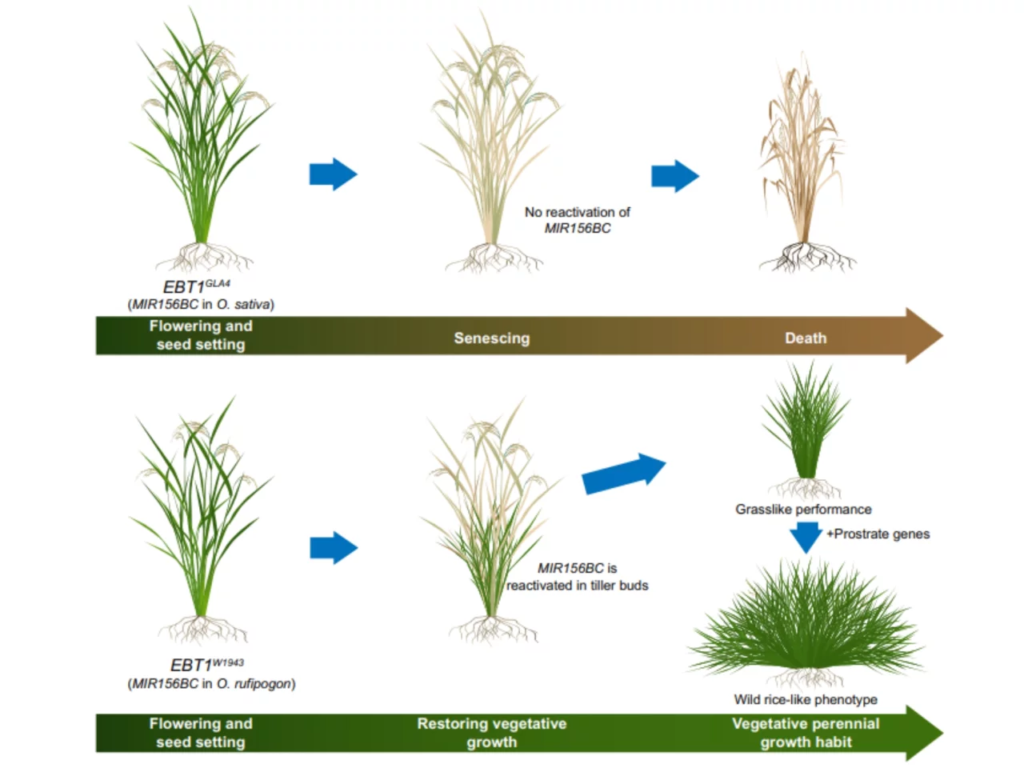
Rice is one of the most widely grown staple crops, providing around 20% of the daily calorie intake for more than half of the world’s population. However, the rice we cultivate is an annual crop, meaning that new plants must be sown each year. Its wild relatives, on the other hand, are perennial; they flower and continue producing new shoots year after year. In a study published in Science, researchers investigated the traits associated with perenniality in wild rice (Oryza rufipogon) and identified two genes that trigger vegetative propagation. By transferring these genes into cultivated rice (Oryza sativa), the team engineered a rice crop that exhibits the perennial growth found in its wild counterparts. Researchers believe that the annual rice that we cultivate today evolved from perennial ancestors. However, in response to domestication, the regenerative ability was lost. To identify the perennial traits in wild relatives, Chinese Academy of Sciences geneticist Bin Han and his colleagues compared 446 wild rice samples with cultivated varieties. They found a genomic region on chromosome 1 called Endless Branches and Tillers 1 (EBT1) features two copies of the regulatory gene microRNA156, coded simply as B and C. In young plants, this sequence is highly active, keeping the plant in a juvenile, vegetative state. As the plant matures, the activity of microRNA156 B and C fades. In wild rice, this region resets after flowering, allowing the plant to resume growth rather than shut down. The genetic sequence MIR156BC reactivates in wild rice.(Dai et al., Science, 2026) To see what this gene actually does in living plants, the researchers crossed O. rufipogon with cultivated O. Sativa. From those hybrid specimens, researchers selected one coded G43, which demonstrated an ability to stop flowering and resume vegetative propagation. In reactivating vegetative growth, G43 grows secondary shoots known as tillers, which branch from the base of the plant. While a normal rice plant produces around 10 tillers between flowering and dying, G43 produced an average of more than 70. The big limitation of these secondary tillers is that they are sterile, producing abnormal flowers without seeds. The researchers suggest genes inserted at additional locations may be needed to make fully fertile perennial rice plants. “Currently, the problem is that the EBT1 locus also suppresses flowering and therefore it reduces yield,” plant geneticist Salomé Prat from the Centre for Research in Agricultural Genomics told Refractor. “In this allele, the gene becomes again reactivated after flowering in tillering buds, enabling the formation of new tillers.” University of California, Davis, plant biologist Jorge Dubcovsky says that this gene-edited rice is unlikely to “reach the public soon”. “Perennial plants have lower yield than annuals,” Dubcovsky told Refractor. “Given the current population growth, I do not think we can afford switching our productive annual crops by less productive ones, even if they provide some ecological advantages.” Neither Prat nor Dubcovsky was involved with the research. The study has been published in Science. Fact-checked by Mike McRae. source

Genetic discovery could change how rice is grown around the world, but at a cost Read More »

Passive vs. Active in DC Plans

Passive exposure in defined contribution plans is not just a function of fund selection. It varies by asset class: passive dominates core equity exposures, while active remains more prevalent in fixed income and other less indexed segments. It is also increasing within target-date funds as allocations to them grow. The magnitude of the shift varies significantly. In US small blend equity, for example, active strategies fell from 65% of funds in 2013 to just 21% in 2023. Similar, though less pronounced, patterns appear across other core equity categories. By contrast, fixed income segments such as high yield and core plus bonds remain more actively managed. The shift toward passive is also visible across plan sizes. A decade ago, smaller plans were far more likely to rely on active strategies. Today, that gap has largely closed, with smaller plans adopting index strategies at rates like their larger counterparts. These findings draw from a series of analyses for the DCIIA Retirement Research Center examining how DC core menus have evolved over the last decade, leveraging plan investment data from filing years 2013 to 2023. In the first piece, which we summarized for Enterprising Investor, we explored changes in core menus. In our second piece, summarized here, we explore changes in the availability and utilization of passive investment strategies. source

Passive vs. Active in DC Plans Read More »

Norton's 206-hp V4 superbike finally arrives … with surprising pricing

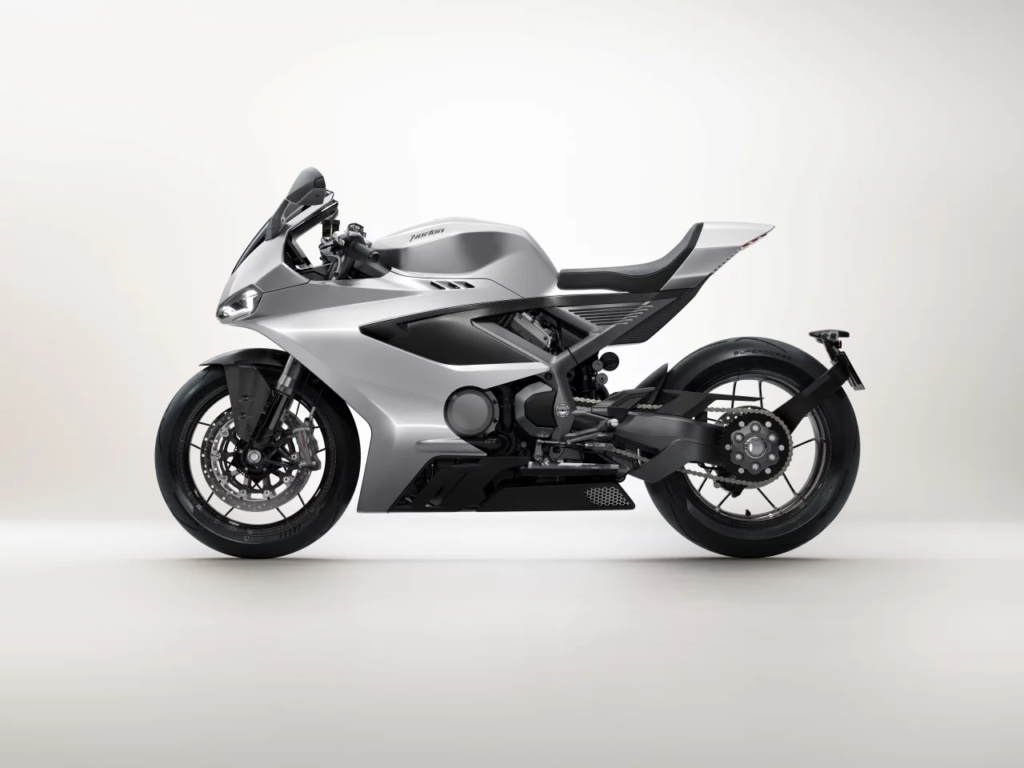
Norton Motorcycles’ comeback has been a long-documented story. The company has spent the better part of the last decade feeling like one of motorcycling’s great cautionary tales. Once a legendary British marque synonymous with Isle of Man glory and café-racer culture, the company disappeared into administration by 2020. All that changed when TVS Motor Company stepped in, acquiring Norton and quietly rebuilding it from the ground up. New facilities, fresh investment, and a renewed focus on engineering credibility rather than nostalgia alone. And now, Norton’s first motorcycle since its revival is finally here, meaning Norton may finally be ready to re-enter the superbike conversation for real. The Manx R is a proper supersport, and one that doesn’t feel like a retro cash grab or a heritage exercise. Rather, it’s a statement that the company wants to be taken seriously again – not just as a historic badge, but as a modern performance motorcycle brand with something left to prove. First revealed last year in November, the Manx R comes powered by a brand-new liquid-cooled 1,200cc V4 motor that produces 206 hp at 11,500 rpm and a max torque of 95.6 lb-ft (130 Nm) at 9,000 rpm. A brand-new liquid-cooled 1,200cc V4 motor powers the bikeNorton Motorcycles Keep in mind that even though the V4, with its 72-degree cylinder angle, carries the same bore and stroke measurements of 82 mm by 56.8 mm as the V4SV’s predecessor engine, Norton stresses that the motor is entirely new, with not even a single component shared between the two. The new motor is also considerably lighter than its predecessor, weighing 161.5 lb (73.3 kg). Power output has also been bumped up compared to the V4SV, with 77% of maximum torque available from as low as 5,000 rpm – there’s a clear focus on everyday rideability rather than outright track performance. As for where it stands in the supersport category, it’s right on par with the BMW S 1000 RR at 206 hp, while sitting just shy of the Ducati Panigale V4’s 213-hp peak output. Both the BMW and Ducati, however, reach those numbers at 13,750 rpm and 13,500 rpm, respectively – significantly higher than the Manx R’s 11,500-rpm peak. A balancer shaft comes standard for smoother power delivery, as do an up/down quickshifter and a six-speed constant-mesh transmission. Keep in mind that the Manx R is the first Norton ever to obtain international Euro5+ certification. Previously, the British MSVA (Motorcycle Single Vehicle Approval) process was used to approve all prior TVS-owned models, which severely restricted their ability to be sold internationally. Not this one. The underpinnings are all reflective of a premium motorcycle. There’s a die-cast aluminum twin-spar frame designed to offer greater lateral and torsional flex to improve rider comfort, paired with a single-sided die-cast aluminum swingarm. The Manx R is based around a diecast aluminum twin-spar frame and a single-sided die-cast aluminum swingarmNorton Motorcycles Suspension duties are handled by a fully adjustable 45-mm Marzocchi front fork with 4.7 inches (120 mm) of travel and a single monoshock with 4.9 inches (126 mm) of travel that also offers full adjustability. But that’s just on the base trim. From the Apex trim onwards, buyers get semi-active electronic adjustment alongside touches like four-piston Brembo Hypure calipers linked to Bosch Cornering ABS EVO, keyless start, five riding modes, launch control, an 8-inch touchscreen display, and more. The wheels also differ depending on trim level. The base model sports cast aluminum wheels, while the Apex gets forged OZ Racing aluminum wheels, with the Signature and First Edition trims receiving carbon wheels from Rotobox (Bullet Pro). Regardless of trim, all models ride on Pirelli Diablo Supercorsa SP-V4 tires measuring 120/70 ZR17 at the front and 200/55 ZR17 at the rear. Norton claims the base model’s wet weight, excluding its 3.8 gallons (14.5 L) of fuel, is 463 lb (210 kg). The wheelbase measures 56.5 inches (1,435 mm), the rake angle is 24.1 degrees, and seat height measures 33 inches (840 mm). Wish it were lighter? The First Edition is your best bet, with its carbon bodywork helping reduce weight to a claimed 443 lb (201 kg) without fuel. Of course, it gets all the bells and whistles: lean-angle-sensitive traction control, wheelie control, slide control, drag torque management, launch control, vehicle hold control, and a dynamic cruise control system – which automatically maintains the chosen speed even through turns, a claimed first in the superbike class according to Norton. The Manx R is adorned with rider aids like lean-angle-sensitive traction control, wheelie control, slide control, and drag torque management, among othersNorton Motorcycles A Bosch 10.3ME ECU and a six-axis IMU form the foundation of its electronic suite. Riders get five modes: Rain, Road, Sport, Track 1, and Track 2. Even when the motorcycle is turned off, individual settings are retained. You also get Bluetooth and Wi-Fi connectivity, smartphone mirroring, navigation control, music playback, GoPro control, and ride telemetry, all available through the 8-inch TFT touchscreen display. That display, by the way, is touch-sensitive only when stationary. Neat. Everything said and done, a motorcycle will always make its first impression through design. I said it before, and I’ll say it again: I really like how the Norton Manx R is styled. The absence of aerodynamic winglets – which are pretty much the norm in modern superbikes – helps the bike look cleaner and far more approachable. And it doesn’t come at the cost of reduced stability. Norton says the absence of winglets is compensated for by the Manx R’s semi-active suspension. The design philosophy was always meant to be “reductive,” according to Chief Designer Simon Skinner, who worked alongside renowned Jaguar Land Rover Creative Director Gerry McGovern. The result is a bike with smooth surfaces, concealed fasteners, and a flowing silhouette. It will almost most definitely arrive in the USANorton Motorcycles But then again, looks are subjective. I can totally understand if this isn’t everyone’s cup of tea. Coming to the most important bit now: pricing. Four trim levels

Norton's 206-hp V4 superbike finally arrives … with surprising pricing Read More »

LANEIGE gives Neo Cushion a glow-up with BTS’ Jin

Premium beauty brand LANEIGE has partnered with Jung von Matt HANGANG to lead the global launch of the third-generation Neo Cushion, the latest evolution of its hero cushion foundation line. The launch introduces upgraded Neo Cushion “The matte” and “The glow” lines, marking the next chapter of the franchise following last year’s Neo Cushion MEWY campaign. The campaign will roll out across Asia, the US and Europe, reinforcing Jung von Matt HANGANG’s role as a long-term strategic partner for the brand. Additionally, the brand rolled out a hero film featuring Jin, who fronts the campaign as he showcases the Neo Cushion range. In the film, Jin highlights the product’s skin-finish effects and wearability, aligning with LANEIGE’s positioning of the cushion as both performance-driven and visually expressive. Don’t miss: What happens when Somersby Light enters the world of K-pop fandom? According to a statement, the refreshed campaign aims to position the new Neo Cushion as a “next-generation benchmark” for skin texture expression in an increasingly crowded beauty market. The work is led by the idea: “Cushion is, ultimately, NEO. or NEO.” The campaign seeks to shift the focus beyond feature-led messaging, instead emphasising the product’s long-standing reputation for reliability and performance while encouraging consumers to rediscover the product through updated storytelling. Jung von Matt HANGANG is overseeing campaign strategy, creative development and the global rollout framework. This includes the hero film, key visuals and digital content ecosystem spanning digital platforms, eCommerce and retail environments. The move comes as beauty brands continue to double down on product-led storytelling and franchise-building strategies amid rising competition in the premium cosmetics category. Cushion foundations in particular remain a highly competitive segment across Asian beauty markets, where brands are increasingly balancing innovation with long-term brand equity. “The new Neo Cushion is not simply a product update, but a next-generation cushion newly defined by the skin texture expression consumers are looking for,” said Bill Yom, founder and managing director of Jung von Matt HANGANG. “Our role was to ensure this innovation is immediately understood and compelling across markets.” The move also reflects the growing influence of K-pop celebrities in global beauty and fashion marketing campaigns. Last month, Ray-Ban named Jennie as its newest global brand ambassador, tapping into the BLACKPINK star’s global popularity and cultural influence. According to the brand, Jennie embodies Ray-Ban’s DNA of expression and innovation, with the partnership aimed at encouraging consumers to express their “true selves”. Another example of this ongoing strategy came last year, when Colgate partnered with South Korean singer and actress IU to promote its “Optic White Purple” toothpaste. The campaign, which ran across Singapore, Malaysia, the Philippines, Indonesia and Hong Kong, leaned on social-first content featuring IU endorsing the product as her personal “beauty hack” and “the secret” to a whiter smile, further underscoring how global K-pop influence continues to be a go-to lever for brands targeting cross-market reach. Related articles:  Did McDonald’s Malaysia just launch its own K-pop boy group?  Nongshim taps K-pop group aespa to spice up Shin Ramyun’s global push M&M’S taps K-pop group ILLIT as regional ambassadors in Asia-wide campaign    source

LANEIGE gives Neo Cushion a glow-up with BTS’ Jin Read More »

14-story tall cylinder could generate electricity from ocean waves

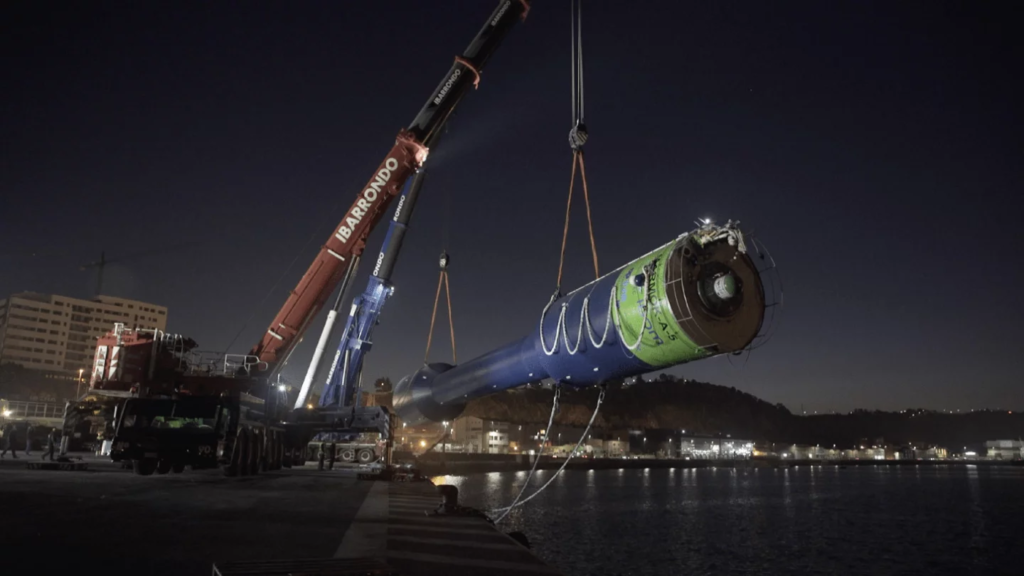
It isn’t easy harnessing the power of waves in the sea to generate electricity, but a Spanish engineering firm is giving it the ol’ college try with a giant floating buoy. Out on the Biscay Marine Energy Platform (BiMEP) off the coast of Bizkaia in Northern Spain, Bilbao-based IDOM is testing a low power wave energy converter (WEC) that’s been in the works for several years now. It’s called MARMOK-A-5, and it’s basically a point absorber Oscillating Water Column (OWC). It resembles a buoy with a cylindrical column of water inside, and the entire thing stands an enormous 140 ft (42 m) tall, with about 20 ft (5 m) sticking out above the surface. It’s 20 ft (5 m) in diameter, and is currently anchored to the sea bed nearly 300 ft (90 m) deep. The enormous WEC displaces 160 metric tons of water, and this prototype can generate 30 kW of electricityIDOM Previous versions of this concept have been deployed over the past few years since 2016 to survive entire winters. The latest iteration features intelligent control systems, controllable blades, and onboard batteries, and is meant to demonstrate its electricity generation performance in real sea conditions. Waves around the MARMOK-A-5 cause the water in this inner column to move relative to the buoy. This movement compresses and expands an air chamber at the top of the buoy, like a piston. The resulting reciprocating airflow spins a turbine, generating electricity that’s transmitted to a grid on the shore via a subsea cable. The Marmok-A-5 being deployed off the coast of Bizkaia in Northern SpainEuropewave This version can only produce a maximum of about 30 KW of electricity, which would be enough to supply about 15-20 average US homes at its peak. Here it is at a previous deployment last year: MARMOK-A5: Transformando la Energía de las Olas | Old Port Films “Achieving a safe installation and grid connection at BiMEP is a key step towards bringing wave energy closer to commercial reality,” said IDOM project manager Borja de Miguel. This is part of EuropeWave, an EU-wide R&D program committing some €20 million (US$23 million) toward developing wave energy technologies. Now that the MARMOK-A-5 has been successfully installed and connected to the grid as of this week, the next task is kicking it into full operational service. Data gathered from this trial will also help inform subsequent stages of fine-tuning the tech before it can be commercialized and rolled out widely. This is far from the only WEC out on the high seas, of course. In 2024, we saw the massive 826-ton OE-25 off the coast of Oahu in Hawaii from Ocean Energy. That same year, the University of Western Australia began testing a novel WEC design in King George Sound. And back in February of this year, Denmark’s Wavepiston signed an MoU to launch a 50-MW WEC installation to serve Barbados. There’s plenty of wave energy in the ocean, but creating scalable systems that can use this energy to generate electricity has proven difficult. Building them to withstand the elements out on the water, maintaining them, running them cost-effectively, and minimizing their impact on marine ecosystems all pose major challenges. Here’s hoping this giant buoy gets it right. Source: Europewave source

14-story tall cylinder could generate electricity from ocean waves Read More »

H&M Singapore reportedly hit by layoffs as SEA HQ moves to Malaysia

Fashion retailer H&M is reportedly restructuring its Asia Pacific operations, with its Southeast Asia regional headquarters set to move from Singapore to Kuala Lumpur. According to reports, 78 roles will be removed from a regional headcount of 256 under the former East Asia region, with most of the redundancies expected to affect employees based in Singapore. The restructuring will also see about 30% of its regional support workforce cut, according to a report by Malay Mail. Staff were reportedly informed of the changes on 11 May. Don’t miss: H&M appoints APAC media AOR across six markets In response to queries from The Straits Times, H&M Singapore said it is providing support to employees affected by organisational changes, though it did not share further details. The company also declined to disclose the number of workers impacted or the roles involved. H&M reportedly said it regularly reviews its ways of working as part of efforts to meet changing customer expectations and keep the organisation flexible, efficient and agile. It added that Singapore remains an important market, and that it will continue to maintain an office in the city-state. In addition, the move is reportedly part of a wider change to H&M’s commercial operating model, which will replace existing regional layers with four new “continents”. Under the new structure, the newly formed continent Asia Pacific will be headquartered in Shanghai and oversee five sales markets. As part of the reorganisation, the SEA sales market head office will be based in Kuala Lumpur, while the Northeast Asia sales market will move to Tokyo. Other markets under the APAC structure include India, with a hub in Bangalore; Australia and New Zealand, with a hub in Sydney; and Greater China, which will share the Shanghai hub with the APAC continent headquarters. Support functions in Singapore and Ho Chi Minh City are reportedly being offshored, while offices in Seoul and Manila are being downsized. Store-level operations and retail teams are not expected to be affected. Employees affected by the restructuring will reportedly go through a calibration process by 21 May 2026. Staff have been asked to complete an assessment survey and nominate two preferred roles, with placements to be determined based on their 2025 contribution ratings and recent disciplinary records, rather than through standard CV submissions. Interviews and evaluations are expected to take place between 25 May and 19 June, with staff to be informed of their final outcomes by mid-June. The new structure and staff relocations are reportedly expected to take effect by 1 July. For employees whose roles are removed or reduced, H&M will reportedly offer mutual separation agreements if no alternative role can be found within the new organisation. Details of the separation packages will be shared at a later date. MARKETING-INTERACTIVE has reached out to H&M for more information. H&M’s restructuring comes amid other recent operational shifts involving Singapore-based workforces. In March, Singapore’s homegrown beer icon Tiger Beer said it would end large-scale brewing at its Tuas brewery by the end of 2027, marking the close of 95 years of local production. Following the closure, approximately 130 roles may be affected, with severance, reskilling and career support to be coordinated with the Food and Drink Allied Workers Union and NTUC’s e2i. Moving forward, HEINEKEN’s Asia Pacific Breweries Singapore will shift to an import-based supply model, with production moving to regional hubs in Malaysia and Vietnam. Related articles: Amazon confirms 16,000 job cuts following internal email misfire    Yeo’s cuts 25 jobs in Singapore as can manufacturing moves to Malaysia   NTUC, SISEU to support We. Communications workers hit by layoffs    source

H&M Singapore reportedly hit by layoffs as SEA HQ moves to Malaysia Read More »

Reusable flosser skips disposable plastic for an EDC-style design

Flossing regularly is great for your teeth, but the single-use plastic picks add to the ever-growing problem of household waste. A Swedish design team has a better solution, in the form of a sleek flosser that’s made to last a lifetime. The Flossr from Gothenburg’s SNRGY Studios is made from stainless steel, and has a folding pick to hold floss that you can refill from a spool built into its body. The pick folds into the case when not in use, so you can carry it without worrying about gunking up your floss. Like other reusable flossers on the market, you can go with any brand of dental floss you like with this. But unlike others I’ve come across, this one can hold about 10 ft (3 m) of floss in its internal spool – and that should cover you for months of daily use. That means you don’t need to carry your dental floss in a separate container when you travel. Flossr – a better way to floss. I haven’t yet had a chance to try it, but threading floss on to this one looks pretty straightforward, and it has a built-in cutter to snip your floss too. The locking floss arm and keychain hole make it easy to travel with and keep it on you. As someone who’s been lugging around a bulky battery-powered water flosser, I’m keen to try a compact and thankfully low-tech alternative. The Flossr is made from dental grade stainless steel, with a locking floss arm and a hole for a keychainSYNRGY Studios The Flossr is expected to retail at US$49, but it’s currently discounted to $34 while it’s being crowdfunded on Kickstarter. That’ll net you the uncoated natural steel finish; for $49, you can choose from four different colors, including a handsome Midnight Blue, and also get a pouch for it. Shipping is free worldwide. All crowdfunding campaigns carry an element of risk, so you’ll want to keep that in mind if you choose to back this campaign. For what it’s worth, SYNRGY Studios has previously launched and shipped another product (a DIY soldering kit) on Kickstarter, and now sells it via its own online storefront. It’s also racked up more than 6,000 backers for this one. You can load up months’ worth of floss in the spool, and easily thread it without carrying a separate supplySYNRGY Studios So if all goes to plan, orders are slated to ship globally in January 2027. Source: Kickstarter source

Reusable flosser skips disposable plastic for an EDC-style design Read More »

Weight-loss drugs present new hope for adults with asthma

Could glucagon-like peptide-1 receptor agonists (GLP-1 RAs) nix the inflammation that drives asthma? Maybe, according to a large national study in Denmark. In the observational study of 27,523 people with a mean age of 54 years, scientists investigated whether GLP-1 RAs could benefit people with chronic and recurring asthma. While it’s easy to assume that weight loss – which, along with blood sugar regulation, is why many people take these drugs – can help open airways restricted by fatty tissue, the scientists believe that GLP-1s may play a role in regulating airway inflammation. The study cohort homed in on people from Danish health registers who had been diagnosed with asthma requiring reasonably consistent (more than two prescriptions a year) reliever-inhaler use, and who were also clinically overweight or obese, or had type 2 diabetes, or both. These individuals had ongoing health data collected from when they began taking a type of GLP-1 medication (fairly evenly split between liraglutide and semaglutide, with 2% prescribed a lesser-known drug such as exenatide, dulaglutide, or lixisenatide. “Use of GLP-1 drugs was associated with significant reductions in exacerbation burden as well as reliever use, exposure to inhaled corticosteroids and pneumonia events, irrespective of whether the drugs were being used to treat obesity or type 2 diabetes,” the researchers explained in their presentation. Because GLP-1 RAs are still new in medical-science terms, the class of drugs continues to be developed and intensely studied. Earlier papers have found links between GLP-1 use and cardiovascular health improvements, as well as talk of the medication’s potential in protecting cognitive function and relieving arthritis – all conditions that benefit from weight loss. But that’s not necessarily the whole story. The researchers behind this latest study suggest that ramping up metabolic function has a knock-on effect for chronic inflammatory conditions such as adult asthma. The data showed that a year after beginning their GLP-1 journey, participants had markedly improved asthma symptoms and less reliance on inhaled corticosteroids (preventive medicines) or acute-event treatment. Overall, the cohort had 26% fewer “exacerbations,” with men showing a 28% improvement, compared with a 23% improvement for women. The sex distinction is also interesting, as we’re learning more about how our biology differs and, as such, presents more complexity in conditions such as dementia. There’s a growing body of evidence uncovering the different immune systems of men and women, which could change how we treat chronic disease. We also touched on this in the context of the mouth’s microbiome and the immune system’s response to dental disease – but nonetheless it’s still emerging science. What we do know, however, is that GLP-1s impact more than just weight loss. In this research, the scientists found that people who were not overweight or obese but had type 2 diabetes showed more improvement in their asthma – 26% compared with 22%. Overall, spending up to a year on GLP-1s coincided with a reduced reliance on both acute-asthma reliever drugs (down 14%) and corticosteroid use (down 23%). As an asthmatic, I know that when I don’t “feel” it, I’ll drop the daily use of my inhaler – not recommended, of course, but that’s when it’s under control and not impacting quality of daily life. Interestingly, individuals in the study who also suffered from allergic rhinitis had 23% fewer flare-ups, and there was a 10% drop in pneumonia episodes compared with pre-GLP-1 medication. Scientists Simon Høj and Dr Kjell Erik Julius Håkansson, from Copenhagen University Hospital, presented their findings at the recent European Congress on Obesity in Istanbul, Turkey. The full findings are yet to be published. It’s also worth noting that the research is preliminary and observational, based only on medical data on GLP-1 use and hospital admissions. “There’s a high chance that the weight loss is a major contributor to these results,” warns Håkansson. “A common symptom in both asthma and obesity is shortness of breath, and the presence of excess fatty tissue creates a pro-inflammatory state in the body in general. There’s also evidence from other studies suggesting that the inflammation caused by excess adipose tissue is distinct from the ‘classic’ asthma inflammation, which often is driven by allergies or cells called eosinophils. “As the use of GLP-1 therapies increases, researchers are finding an increasing number of effects outside of weight loss,” he adds. The challenge will be trying to identify just how much weight loss is playing a role in modulating inflammatory responses, or if there are other GLP-1 mechanisms at play. Source: European Association for the Study of Obesity via EurekAlert! Fact-checked by Mike McRae. source

Weight-loss drugs present new hope for adults with asthma Read More »