Google Pushes For Sanctions In Location Tracking IP Fight

By Adam Lidgett ( April 18, 2025, 4:13 PM EDT) — Google wants a New York federal court to sanction a location tracking patent owner in litigation accusing the search engine giant of infringement, saying he either destroyed or failed to properly preserve key evidence…. Law360 is on it, so you are, too. A Law360 subscription puts you at the center of fast-moving legal issues, trends and developments so you can act with speed and confidence. Over 200 articles are published daily across more than 60 topics, industries, practice areas and jurisdictions. A Law360 subscription includes features such as Daily newsletters Expert analysis Mobile app Advanced search Judge information Real-time alerts 450K+ searchable archived articles And more! Experience Law360 today with a free 7-day trial. source

Google Pushes For Sanctions In Location Tracking IP Fight Read More »

Can construction robots solve Europe’s housing crisis?

Europe’s housing crisis is deepening. High building costs, tight regulations, and labour shortages have choked the supply of affordable homes. As cities swell with new arrivals and construction workers retire en masse, the gap between supply and demand is only widening. Endless solutions have been proposed. Mass housing projects, revamping the planning system, modular buildings, pre-fabricated materials, rent controls, and restrictions on corporate acquisitions of homes have all been explored with mixed success. But the shortage of affordable housing has only grown. Dutch startup Monumental has pitched another fix: automation. The company is developing a suite of autonomous, electric robots that work on construction sites around the clock. Salar al Khafaji, the startup’s CEO and co-founder, believes the tech can overcome the labour, cost, and regulatory hurdles crippling the industry. The 💜 of EU tech The latest rumblings from the EU tech scene, a story from our wise ol’ founder Boris, and some questionable AI art. It’s free, every week, in your inbox. Sign up now! “It’s obvious that we need some forms of automation and robotics to solve these problems,” he tells TNW. “There’s almost no other way around it.” At TNW Conference on June 19-20 in Amsterdam, al Khafaji will share his tips on building a thriving robotics business. Ahead of his talk, he outlined his vision of the future of construction.  Why construction has stagnated Before launching Monumental in 2021, al Khafaji cofounded a visualisation startup called Silk. When Silk was acquired by US analytics giant Palantir in 2016, he began pondering his next venture. His plan was to focus on a major global challenge. “I wanted to solve a serious problem in society,” he says. “And I became obsessed with construction and infrastructure.”  Al Khafaji was stunned to see so little technological progress in the industry. The built world in which we live, work, and play had become severely restricted as a result. His focus turned to a central problem: a productivity collapse in construction. Labour shortages, strict regulations, and high costs, he feared, were worsening the housing crisis. New developments had become eye-wateringly expensive and painfully slow to construct. They also often result in unpopular buildings.  The past offers unflattering comparisons. The Empire State Building, for instance, was completed in 1931 after just 410 days. Eighty-four years later, 432 Park Avenue took 1,500 days — and became infamous for leaks, malfunctions, and a divisive design. The problem extends beyond landmark buildings. Construction of standard homes has also lost pace. The average time taken to build a single-family house went from 4.8 months in 1971 — the earliest year with data available — to seven months in 2019. Even after scaling this to account for the growth in average house size, the process is still slower today. Longer projects also bring higher costs, with labour often forming the bulk. “It’s very, very labour-intensive because we’ve barely automated anything there,” al Khafaji says. Monumental is his attempt to overhaul the status quo. Credit: MonumentalAl Khafaji (right) and Monumental co-founder and CTO Sebastiaan Visser. Credit: Monumental Tackling the housing crisis Al Khafaji founded Monumental in 2021 alongside his long-term business partner, Sebastiaan Visser, who serves as the company’s CTO. Their big idea was automating on-site construction with robotics and software. They began by building a prototype robotic crane, which evolved into autonomous ground vehicles that carry building materials around a construction site. The first finished system off the production line focused on one crucial construction craft: bricklaying. It was a logical starting point. Bricklaying is a skilled but physically demanding and sometimes dangerous job with a rapidly dwindling workforce. In 2022, researchers found that 19 European countries had a shortage of bricklayers, which made it the occupation with the biggest labour scarcity. As a result, construction projects suffer from delays and increased costs. With the profession struggling to attract young talent, the shortage of workers is only set to grow. In the UK, the number of bricklayers recently hit a 25-year low, and a third of them are forecast to retire within the next decade. Monumental’s systems aim to fill the gap — and, ultimately, strengthen the supply of affordable housing. The startup’s electric bricklayer robots work autonomously alongside humans. Using sensors, computer vision, and small cranes, the machines precisely lay bricks and mortar in walls. The system also integrates with existing construction processes — a crucial requirement in an industry that isn’t always open to new technologies. The robot builders Al Khafaji compares the robots to distributed computers. Composed of multiple, interconnected modular components, they function like network devices. To prepare the machines for construction jobs, the startup’s software models both the site and the robots themselves. A machine vision stack then allows them to localise in the building zone. While they work, AI coordinates their tasks. “We really think of it as an operating system for construction sites,” al Khafaji says. “We’re trying to make construction more software-defined.” In 2023, the robots completed their first large-scale, 15-metre wall. Since then, the machines have built facades for houses, canal retaining walls, and other structures that stand across the Netherlands today. Investors have been impressed by the progress. Last year, Monumental raised $25mn in seed funding to bring the concept closer to reality. But the company still has to win over the construction industry. Labour’s role in the housing crisis Across construction sites, many labourers’ tasks have changed relatively little over recent decades. Bricklayers, for example, continue working in much the same way. Shipyard workers, by contrast, have had their jobs transformed — if not replaced — by containerisation and automated pickers.  Al Khafaji was shocked by construction’s lack of innovation. “It doesn’t feel like enough time, money, or talent is flowing there… It’s the industry with the most stagnation,” he says. “Construction basically works the same way as a century ago.” It’s a curious inertia given the size of the industry. Construction employs over 100 million people and accounts for about 13% of global GDP. Yet the


Can construction robots solve Europe’s housing crisis? Read More »

CIO Angelic Gibson: Quell AI Fears by Making Learning Fun

Effective technology leadership today prioritizes people as much as technology. Just ask Angelic Gibson, CIO at accounts payable software provider AvidXchange. Gibson began her career in 1999 as a software engineer and used her programming and people skills to consistently climb the corporate ladder, working for various companies including mattress company Sleepy’s and cosmetic company Estee Lauder. By the time she landed at Stony Brook University, she had worked her way up to technology strategist and senior software engineer/architect before becoming director, IT operations for American Tire distributors. By 2013, she was SVP, information technology for technology solutions provider TKXS and for the past seven years she’s been CIO at AvidXchange.  “I moved from running large enterprise IT departments to SaaS companies, so building SaaS platforms and taking them to market while also running internal IT delivery is what I’ve been doing for the past 13 years. I love building world class technology that scales,” says Gibson. “It’s exciting to me because technology is hard work and you’re always a plethora of problems, so you wake up every day, knowing you get to solve difficult, complex problems. Very few people handle complex transformations well, so getting to do complex transformations with really smart people is invigorating. It inspires me to come to work every day.”  Related:Surgical Center CIO Builds an IT Department Angelic Gibson One thing Gibson and her peers realized is that AI is anything but static. Its capabilities continue to expand as it becomes more sophisticated, so human-machine partnerships necessarily evolve. Many organizations have experienced significant pushback from workers who think AI is an existential threat. Organizations downsizing through intelligent automation, and the resulting headlines, aren’t helping to ease AI-related fears. Bottom line, it’s a change management issue that needs to be addressed thoughtfully.  “Technology has always been about increasing automation to ensure quality and increase speed to market, so to me, it’s just another tool to do that,” says Gibson. “You’ve got to meet people where they’re at, so we do a lot of talking about fears and constraints. Let’s put it on the table, let’s talk about it, and then let’s shift to the art of the possible. What if [AI] doesn’t take your job? What could you be doing?”  The point is to get employees to reimagine their roles. To facilitate this, Gibson identified people who could be AI champions, such as principal senior engineers who would love to automate lower level thinking so they can spend more time thinking critically.  Related:Knowledge Gaps Influence CEO IT Decisions “What we have found is we’ve met resistance from more senior level talent versus new talent, such as individuals working in business units who have learned AI to increasingly automate their roles,” says Gibson. “We have tons of use cases like that. Many employees have automated their traditional business operations role and now they’re helping us increase automation throughout the enterprise.”  Making AI Fun to Learn  Today’s engineers are constantly learning to keep pace with technology changes. Gibson has gamified learning by showcasing who’s leveraging AI in interesting ways, which has increased productivity and quality while impacting AvidXchange customers in a positive way.  “We gamify it through hackathons and showcase it to the whole company at an all-hands meeting, just taking a moment to recognize awesome work,” says Gibson. “And then there are the brass tacks: We’ve got to get work done and have real productivity gains that we’re accountable for driving.”  Over the last five years, Gibson has been creating a learning environment that curates the kinds of classes she wants every technologist to learn and understand, such as a prompt engineering certification course. Their progress is also tracked.  Related:The Kraft Group CIO Talks Gillette Stadium Updates and FIFA World Cup Prep “We certify compliance and security annually. We do the same thing, with any new tech skill that we need our teammates to learn,” says Gibson. “We have them go through certification and compliance training on that skill set to show that they’re participating in the training. It doesn’t matter if you’re a business analyst or an engineer, everyone’s required to do it, because AI can have a positive impact in any role.”  Establish a Strong Foundation for Learning  Gibson has also established an AI Center of Excellence (CoE), made up of 22 internal AI thought leaders who are tasked with keeping up with all the trends. The group is responsible for bringing in different GenAI tools and deep learning technologies. They’re also responsible for running proofs of concept (POC). When the project is ready for production, the CoE ensures it has passed all AvidXchange cybersecurity requirements.  “Any POC must prove that it’s going to add value,” says Gibson. “We’re not just throwing a slew of technology out there for technology’s sake, so we need to make sure that it’s fit for purpose and that it works in our environment.”  To help ensure the success of projects, Gibson has established a hub and spoke operating model, so every business unit has an AI champion that works in partnership with the CoE.  In addition, AvidXchange made AI training mandatory as of January 2024, because AI is central to its account payables solution. In fact, the largest customer use cases have achieved 99% payment processing accuracy using AI to extract data from PDFs and do quality checks, though humans do a final review to ensure that level of accuracy.   “What we’ve done is to take our customer-facing tool sets or internal business operations and hook it up to that data model. It can answer questions like, ‘What’s the status of my payment?’ We are now turning the lights on for AI agents to be available to our internal and external customer bases.”  Some employees working in different business units have transitioned to Gibson’s team specifically to work on AI. While they don’t have the STEM background traditional IT candidates have, they have deep domain expertise. AvidXchange upskills these employees on STEM so they can understand how AI works. 

CIO Angelic Gibson: Quell AI Fears by Making Learning Fun Read More »

This AI startup just raised $7.5m to fix commercial insurance for America’s 24m underprotected small businesses

Join our daily and weekly newsletters for the latest updates and exclusive content on industry-leading AI coverage. Learn More 1Fort announced today a $7.5 million seed funding round to improve how small businesses obtain commercial insurance through its AI-powered platform. The New York-based startup, which has experienced 200% month-over-month revenue growth in 2024, aims to automate the outdated, manual processes that have left millions of small businesses underinsured. Bonfire Ventures led the oversubscribed round, with participation from Draper Associates, Ramp founder Karim Atiyeh, and existing investors Village Global, Operator Partners, 8-Bit Capital, Character VC, and Company Ventures. This latest investment brings 1Fort’s total funding to $10 million. “Brokers handle insurance for 70% of businesses, yet 75% of those companies remain underinsured, with their brokers bogged down by decades-old, manual workflows involving email threads, PDFs, and spreadsheets,” Anthony Marshi, 1Fort’s co-founder and CEO, said in an exclusive interview with VentureBeat. “1Fort solves this problem by automating the entire insurance placement process for brokers. It collapses weeks of manual back-and-forth into a lightning-fast workflow that delivers the right coverage for clients without the usual hassle.” How 1Fort’s AI slashes insurance paperwork from hours to minutes 1Fort leverages artificial intelligence to eliminate the most time-consuming aspects of commercial insurance processing. The platform enables brokers to enter client information once, then automatically completes applications, retrieves carrier quotes, analyzes coverage options, and processes binds and payments. “Think of 1Fort’s AI as an autopilot for insurance submissions,” Marshi explained. “It handles the grunt work at lightning speed – autofilling tedious applications, pulling instant quotes from carriers, cross-comparing coverage options, and processing premium payment and financing.” According to the company, brokers using the platform save up to two hours per submission and increase their bind rates by up to 20 percent. These efficiency gains appear to drive the platform’s rapid adoption among insurance professionals. “Brokers are adopting 1Fort en masse because it delivers tangible results,” Marshi said. “They’re completing submissions in record time, binding far more deals, and securing better coverage for their clients.” Multi-carrier platform bridges coverage gaps across all 50 states 1Fort has tackled the fragmentation challenge in commercial insurance by partnering with over a dozen leading brokerages and A-rated carriers, including Arch, Tokio Marine HCC, and Markel. The platform now offers coverage across multiple business lines and is licensed in all 50 states. What began as a cyber insurance solution has expanded to include technology errors & omissions, professional liability, management liability, general liability, and workers compensation coverages. “1Fort isn’t a narrow point solution tackling a single step – it’s a full-stack platform covering everything from quoting to binding to risk management and financing,” Marshi said. “Unlike some insurtechs that try to cut brokers out, 1Fort is purpose-built to empower brokers and their clients at every step.” This broker-centric approach distinguishes 1Fort from direct-to-consumer insurance platforms. Rather than replacing brokers, 1Fort enhances their capabilities – a strategy that’s resonating with industry professionals. Travis Hedge, co-founder of Vouch, a broker for startups, endorsed the platform: “1Fort has been a great resource for our team, allowing us to move even faster and deliver great products for our clients.” 1Fort’s growth reflects a broader shift in the insurance industry, where artificial intelligence and automation increasingly replace decades-old manual processes. Jim Andelman, Bonfire Ventures co-founder and managing director, highlighted this opportunity: “Building AI-powered, service-as-software solutions to modernize legacy workflows in the insurance vertical is one of today’s most exciting opportunities.” The commercial insurance market represents a massive opportunity, generating hundreds of billions in annual premiums in the U.S. alone. Yet much of the industry still relies on outdated technology and manual processes. “After wading through many insurtech tools that have come and gone and let them down over the years, when brokers finally see a platform seamlessly handle complex workflows, it feels almost unreal,” Marshi noted. “In an industry awash with hype, that ‘it just works’ reaction has been the ultimate validation of 1Fort’s approach.” 1Fort’s ambitious vision: Building the ‘operating system’ for commercial insurance With fresh capital in hand, 1Fort plans to enhance its AI capabilities, expand its team, and establish additional carrier partnerships. The company has set ambitious goals for the coming years. “Our vision is to become the sole AI operating system for commercial insurance,” Marshi said. “That means fully automating every aspect of a broker’s workflow across all major commercial lines. Brokers will spend their time advising clients and building relationships, while 1Fort’s platform handles all the heavy lifting in the background.” The funding will accelerate development efforts to enhance the platform’s intelligence and automation. “This new funding has accelerated everything 1Fort was already doing,” Marshi explained. “It will fund further investments in our AI, pushing its automation and underwriting intelligence to new levels.” As small businesses face increasingly complex risks related to technology, data privacy, and cybersecurity, platforms like 1Fort could play a crucial role in closing the insurance gap. By streamlining the process for brokers, the company aims to make comprehensive insurance coverage more accessible to the millions of small businesses that currently remain vulnerable. “The endgame: obtaining insurance becomes as simple as a few clicks,” Marshi said, “with 1Fort’s AI running the entire process behind the scenes.” source

This AI startup just raised $7.5m to fix commercial insurance for America’s 24m underprotected small businesses Read More »

How today's enterprise architect juggles strategy, tech and innovation

Technology and business sustainability: Enterprise architects must manage the health status of technology ensuring that technology solutions continue to meet SLAs, are secure, sustainable, avoid technical debt and can evolve as business needs change. This requires long-term thinking and investment. Distributed responsibility ownership model: Responsibility for technology solutions may not be clear and spread across multiple teams, departments and organisations. enterprise architects must create systems that enable distributed ownership while maintaining coherence and alignment of the solutions and the end to end nature of the value chain they serve. Contracts, SLAs and supplier management: Managing vendor relationships, ensuring clear terms for service levels and mitigating risks associated with external suppliers are critical. enterprise architects need to balance innovation with the practical realities of contracts and service agreements. They must ensure any gaps are identified and addressed accordingly. Aggregated TCO: Evaluating the total cost across hardware, software, services and operational expenditures is key. enterprise architects help ensure that technology investments are optimized to deliver value without exceeding budget capex and opex constraints. Prioritization and planning: Enterprise architects must balance competing demands and prioritise initiatives that offer the most value. Strategic planning and demand/supply management is crucial to aligning resources with business goals and the enterprise architect has key input to this. Change management (technology and business): As technology evolves and landscapes become more complex and interconnected enterprise architects must manage transitions and ensure smooth adoption of new systems and changes. Technology can stretch deep into the business (including IT!) and enterprise architects need to be cognizant of the persona impact, any organizational shifts, training, disruption (particularly when urgent changes like vulnerability patches cause conflicts) and the pace of change that businesses are capable of absorbing. Pace of delivery and releases: Enterprise architects must find the balance between speed and quality. While businesses demand rapid releases (particularly for B2C channels), enterprise architects ensure that solutions are robust, secure and scalable. Fragmented customer experience: Ensuring that customers experience a seamless and integrated service across multiple touchpoints requires careful enterprise architecture to avoid siloed systems and fragmented user journeys. Compliance management: Enterprise architects are responsible for ensuring that systems comply with internal requirements, industry regulations, security standards and data protection laws. This requires close attention to the detail, auditing/testing, planning and designing upfront. Risk management: Enterprise architects must address data, security and operational risks, ensuring that technologies and systems are secure, resilient and compliant with regulatory requirements and at a level appropriate to the risk appetite of the organization. Navigating emerging trends: AI and beyond ImageIn addition to the complexity of managing ecosystems, enterprise architects face the challenge of navigating emerging technologies like AI, machine learning and automation. These technologies introduce both opportunities and challenges and enterprise architects must carefully evaluate how they fit into the broader technology strategy, cognisant of where these technologies are in the maturity cycle and make incremental gains (learning, value). As AI continues to reshape industries, enterprise architects must balance innovation with caution. They need to ensure that AI systems are scalable, secure and aligned with business goals. They must also address risks and challenges related to organisational readiness, data privacy, security, ethical concerns and regulatory changes as they evolve. The pace of technological change means enterprise architects must keep an eye on emerging trends without losing sight of long-term strategic goals. enterprise architects must balance the urgency of adopting new technologies with the need for stability, scalability and sustainability. source

How today's enterprise architect juggles strategy, tech and innovation Read More »

DOJ Wants Time During 9th Circ. Vegas Room Rate Arguments

By Matthew Perlman ( April 22, 2025, 7:25 PM EDT) — The U.S. Department of Justice has asked to participate in the Ninth Circuit argument for an appeal from Las Vegas casino-hotel guests accusing the operators of using software to inflate room rates, the first algorithmic price-fixing case to reach an appeals court…. Law360 is on it, so you are, too. A Law360 subscription puts you at the center of fast-moving legal issues, trends and developments so you can act with speed and confidence. Over 200 articles are published daily across more than 60 topics, industries, practice areas and jurisdictions. A Law360 subscription includes features such as Daily newsletters Expert analysis Mobile app Advanced search Judge information Real-time alerts 450K+ searchable archived articles And more! Experience Law360 today with a free 7-day trial. source

DOJ Wants Time During 9th Circ. Vegas Room Rate Arguments Read More »

Global Tariffs: Dynamic Risk Management Meets Its Moment

The recent introduction of US-imposed tariffs has shaken global trade. While economists and financial analysts debate whether this on-again/off-again trade war fits into their model for geopolitical, economic, or supply chain risks, the result is the same: uncertainty and chaos sure to shake up business strategy for the foreseeable future. This new era of volatility will impact all companies regardless of industry or geography, forcing business leaders and technology leaders to think like risk leaders. Everyone must focus on what they can control and adapt swiftly and dynamically. This is the moment for which enterprise risk management was made. Let Context And Control Dictate Your Risk Management Response Even in times of relative calm but perhaps especially in times of chaos, the purpose of risk management is not to remove all risks but to determine which risks are worth taking — and at what cost — in pursuit of strategic goals and business objectives. Two mantras should dictate your approach: context and control. Context is key to risk response. For example, for the pharmaceutical, airline, and automotive industries, where safety is paramount, pivoting to new suppliers to avoid tariff impact may not be a viable short-term strategy, as new suppliers must be certified for safety and quality. Control is critical for risk prioritization. Trying to predict and plan for what the US administration will do next on tariffs is not a suitable basis for a stable risk management strategy. To respond dynamically but in a collected manner: Continue to align risk strategy with the business. Volatility will inevitably require companies to rethink their business strategy. That could mean deliberately shrinking certain product lines that may no longer be profitable, pivoting away from certain global markets with high complexity, or diversifying your offering to take advantage of current circumstances and new preferences. For risk leaders, now is the time to embrace a continuous risk management approach to ensure that the business is taking on the right risks, at the right costs, in pursuit of value. Focus on factors you can control. There’s never enough time, budget, or resources to tackle risk in the way we’d like. And when the risk changes with every new headline or social media post, risk pros must prioritize efforts based on level of control. To regain control over business risk arising from tariff trauma, apply the Forrester Three E’s Framework to identify risks to the enterprise that you can control directly, risks to the ecosystem for which you only have partial control, and external risk factors (systemic risks) that are outside your control when determining risk mitigation options. Risk pros must identify those levers, whether that involves sourcing alternative suppliers, cost management measures, or reimagining pricing. Bolster your risk intelligence to enable dynamic risk management. To empower executives to make the right decisions, risk professionals need to borrow a leaf from first responders and emergency services and bolster their organization’s strategic risk intelligence capabilities. Risk pros can use them to quickly spot emerging risks and threats to the business, providing actionable strategic counsel to executives when moments such as the recent tariffs occur. This requires not only good data sources but professionals who are able to quickly synthesize and write actionable and practical recommendations that executives can use to make decisions, even in the face of limited information. Scrutinize changes through a data risk lens. Data risks come in different flavors: risks to data, risks from data, and risks in the data. Assess whether this change — such as to the supplier, location, process, etc. — introduces data risks that are unacceptable or require additional risk mitigation efforts. Changing your supplier for IT equipment may introduce risks to data if it is preloaded with spyware during the manufacturing process or if it’s in locations where threat actors have a higher likelihood of intercepting shipments to tamper with the devices. Hastily restructuring to move operations out of a geography may introduce risks from data based on how you use or process the data, as well as how the data needs to flow for business purposes; this can potentially put your organization out of compliance with regulatory or contractual obligations. Adapt safety and quality control processes to cost pressures, carefully. New tariffs can negatively impact safety and quality assurance by increasing overhead costs, which pressures companies to cut corners and brings a decline in quality control practices. Yet every industry has unique requirements for safety and quality outcomes that are nonnegotiable. Pharmaceutical companies must ensure that medications are safe, even if it means incurring higher costs for quality control, and construction projects must follow quality design and safety standards for new buildings or public infrastructure. Cost pressure cannot override safety and quality outcomes. Risk leaders must communicate the value of meeting these outcomes to business leaders, even if it means higher costs in the near term. There is only so much a company can do to optimize its safety/quality management systems, so risk leaders must be involved in any new sourcing or supply chain discussions to ensure that required outcomes are upheld. US Tariffs Don’t Apply To Services Yet, But Services Will Still Be Impacted US tariffs focus on goods, with a range of tariffs applied based on a highly specific focus on the balance of trade with specific countries and the United States. The US administration has not been shy about its desire to bring more manufacturing back to the US, but the US tariffs do not apply to services that make up the majority of the US’s trade balance with the rest of the world. Don’t forget to include services in your overall context and control lens and: Include services in risk intelligence feeds. US tariffs did not initially include any tariffs on services, but by levying significant goods tariffs, other countries are now fighting back. Service sectors including financial services, healthcare, and technology services are squarely in the firing line. China has started by targeting services exports from the US in response to the

Global Tariffs: Dynamic Risk Management Meets Its Moment Read More »

From banquet to bistro: How the product model is transforming the business of technology

Instead of organizing by skillset—developers here, testers there—product teams are cross-functional by design. They bring together the full lifecycle of expertise required to support a capability like configure-price-quote (CPQ), digital commerce, or fulfillment. They don’t just build software; they own strategy, delivery, iteration, and ultimately, outcomes. And that last word is key: outcomes. In a project model, teams are measured by what they deliver—how many story points they burn down, how fast they release features. In a product model, the question is different: Did we move the needle on a meaningful business metric? For a commerce team, that might mean increasing pipeline velocity or boosting conversion rates. For an internal team, success might be defined by time savings, productivity improvements, or reductions in operational risk. Regardless of the domain, the emphasis is the same: value over volume. source

From banquet to bistro: How the product model is transforming the business of technology Read More »

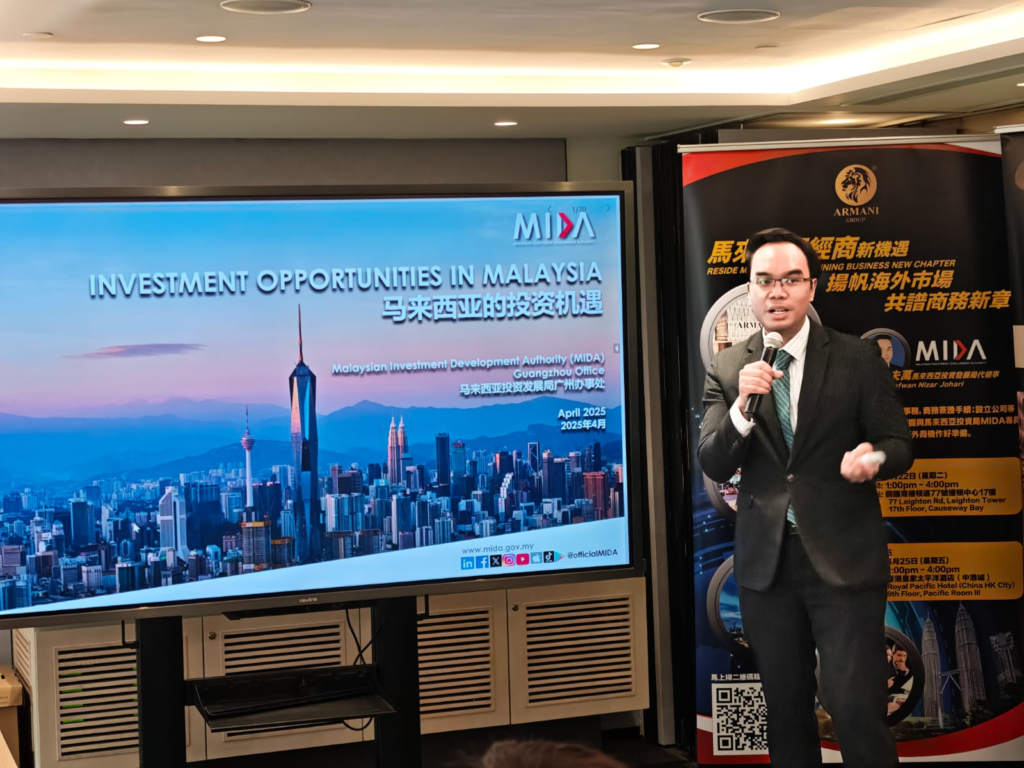
馬來西亞商貿講座探索港人到當地開設辦事處和投資新機遇

(相)馬來西亞投資發展局(MIDA)香港區負責人賽夫萬代領事(Safwan)。 由亞瑪尼集團(Armani Group)主辦的「馬來西亞商貿投資機遇講座」圓滿舉行,活動深入剖析馬來西亞市場環境、投資政策、品牌推廣策略及房地產項目介紹,為港商開拓東南亞市場提供實質指引。 馬來西亞投資發展局(MIDA)香港區負責人賽夫萬代領事(Safwan)強調,作為馬來西亞官方投資促進機構,MIDA提供全方位支援服務包括: – 專案評估與審批 – 營業許可證申請 – 稅務優惠諮詢 – 外派人員職位批准 賽夫萬特別指出,2024年香港為馬來西亞第五大外資來源地,投資總額達26億美元。馬來西亞憑藉語言相通(22%華人人口)、營商環境與香港相似等優勢,成為港商進軍擁有6億人口的東盟市場之理想跳板。 亞瑪尼集團提供優質地產項目 亞瑪尼集團的營銷總監嚴鍈健(Jonathan)則介紹集團主要業務包括:房地產開發、建築工程、傢俱貿易和製造,並擁有兩間馬來西亞上市公司。今次重點推介兩大發展項目: 1. Armani Hallson(阿瑪尼·浩鑫) – 吉隆坡黃金地段永久產權項目 – 直通雙子塔及輕鐵站的300米覆蓋天橋 – 預計回報率達8% – 配備專業酒店管理團隊 2. Lofthill Residence(御豪苑) – 酒店式服務公寓 – 距地鐵站僅60公尺 – 永久業權,入門門檻低 – 投資自住兩相宜 TVBI:助企業拓展海外華人市場 同場,電視廣播旗下TVBI總經理陳樹鴻(Desmond)分享媒體行銷策略: – 透過TVB馬來西亞頻道及社交平台,精準接觸當地華人社群; – 結合粵語內容與本土化行銷,有效降低文化隔閡; – 提供藝人協作、品牌授權等多元合作模式,顯著提升品牌知名度。 講座最後由已經到馬來西亞開設公司的本港企業嘉賓分享在馬來西亞設立公司及開拓業務的經驗。而與會者對馬來西亞投資環境展現高度興趣,表達想進行實地考察的意願。主辦方將籌組商務考察團,協助港商深入瞭解馬來西亞市場機會。 據悉,本次講座成功搭建馬、港商貿交流平台,為企業拓展東南亞市場打下基礎。 (相)亞瑪尼集團的營銷總監嚴鍈健(Jonathan)。 LinkedIn Email Facebook Twitter WhatsApp source

馬來西亞商貿講座探索港人到當地開設辦事處和投資新機遇 Read More »