CIOs increasingly dump in-house POCs for commercial AI

“We’re used to CIOs going out and buying software, and this year, they’re going to be sold [AI] software,” he says. “In the past, they had an idea in mind, a problem to solve, and it is directional, intentional. They are in control.” In some cases, the CIOs won’t have a choice about whether to purchase the add-on AI, Lovelock says. “This year, virtually every software company, for virtually every product, will have a gen AI feature this year, if they don’t already,” he says. “The salespeople are going to be calling their customers and saying, ‘We have gen AI,’ and in some cases, you come in one morning, and you have a slightly higher bill and a new button.” source

CIOs increasingly dump in-house POCs for commercial AI Read More »

From Alexander Graham Bell to an AI assistant guiding your customer journey, CX has come a long way (baby)!

Cutting-edge technology solutions such as Maximus TXM embodies the innovative customer experience of the future, integrating emerging technologies, advanced AI, and human-centered design principles — all in order to improve efficiency and effectiveness within contact center operations, such as reducing onboarding costs, improving quality performance, and decreasing employee turnover. The next-generation CX integrates customer interactions and data insights about them and provides these in one seamless experience with secure connections to major cloud services such as AWS and Salesforce. AI virtual agents become conversational and multi-language across web chat and voice channels. The human customer can either be fully serviced by the AI engines or be routed to a live agent with an accelerated path to resolution based on the bot’s analysis and intelligent routing methodology. Integration with CRM clouds like Salesforce allows for the storage, analysis, and annotation of each call or chat recording, within the context of other relevant information, enabling real-time intent, sentiment, and outcome analysis.    source

From Alexander Graham Bell to an AI assistant guiding your customer journey, CX has come a long way (baby)! Read More »

Block Execs Failed To Prevent 'Illicit Activities,' Suit Says

By Katryna Perera ( April 18, 2025, 5:29 PM EDT) — A Block Inc. shareholder claims in a new suit that the fintech company’s top brass, which includes former Twitter chief Jack Dorsey, failed to prevent illicit activities like money laundering, child sexual abuse and terrorism financing on its platform, causing damage to the company’s reputation and investors as a result…. Law360 is on it, so you are, too. A Law360 subscription puts you at the center of fast-moving legal issues, trends and developments so you can act with speed and confidence. Over 200 articles are published daily across more than 60 topics, industries, practice areas and jurisdictions. A Law360 subscription includes features such as Daily newsletters Expert analysis Mobile app Advanced search Judge information Real-time alerts 450K+ searchable archived articles And more! Experience Law360 today with a free 7-day trial. source

Block Execs Failed To Prevent 'Illicit Activities,' Suit Says Read More »

2027 AGI forecast maps a 24-month sprint to human-level AI

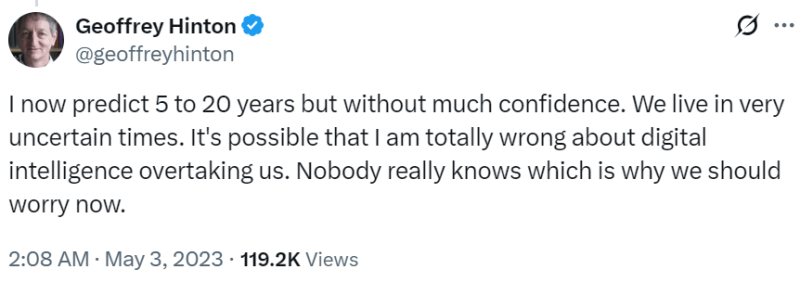
Join our daily and weekly newsletters for the latest updates and exclusive content on industry-leading AI coverage. Learn More The distant horizon is always murky, the minute details obscured by sheer distance and atmospheric haze. This is why forecasting the future is so imprecise: We cannot clearly see the outlines of the shapes and events ahead of us. Instead, we take educated guesses.  The newly published AI 2027 scenario, developed by a team of AI researchers and forecasters with experience at institutions like OpenAI and The Center for AI Policy, offers a detailed 2 to 3-year forecast for the future that includes specific technical milestones. Being near-term, it speaks with great clarity about our AI near future. Informed by extensive expert feedback and scenario planning exercises, AI 2027 outlines a quarter-by-quarter progression of anticipated AI capabilities, notably multimodal models achieving advanced reasoning and autonomy. What makes this forecast particularly noteworthy is both its specificity and the credibility of its contributors, who have direct insight into current research pipelines. The most notable prediction is that artificial general intelligence (AGI) will be achieved in 2027, and artificial superintelligence (ASI) will follow months later. AGI matches or exceeds human capabilities across virtually all cognitive tasks, from scientific research to creative endeavors, while demonstrating adaptability, common sense reasoning and self-improvement. ASI goes further, representing systems that dramatically surpass human intelligence, with the ability to solve problems we cannot even comprehend. Like many predictions, these are based on assumptions, not the least of which is that AI models and applications will continue to progress exponentially, as they have for the last several years. As such, it is plausible, but not guaranteed to expect exponential progress, especially as scaling of these models may now be hitting diminishing returns. Not everyone agrees with these predictions. Ali Farhadi, the CEO of the Allen Institute for Artificial Intelligence, told The New York Times: “I’m all for projections and forecasts, but this [AI 2027] forecast doesn’t seem to be grounded in scientific evidence, or the reality of how things are evolving in AI.”  However, there are others who view this evolution as plausible. Anthropic co-founder Jack Clark wrote in his Import AI newsletter that AI 2027 is: “The best treatment yet of what ‘living in an exponential’ might look like.” He added that it is a “technically astute narrative of the next few years of AI development.” This timeline also aligns with that proposed by Anthropic CEO Dario Amodei, who has said that AI that can surpass humans in almost everything will arrive in the next two to three years. And, Google DeepMind said in a new research paper that AGI could plausibly arrive by 2030. The great acceleration: Disruption without precedent This seems like an auspicious time. There have been similar moments like this in history, including the invention of the printing press or the spread of electricity. However, those advances required many years and decades to have a significant impact.  The arrival of AGI feels different, and potentially frightening, especially if it is imminent. AI 2027 describes one scenario that, due to misalignment with human values, superintelligent AI destroys humanity. If they are right, the most consequential risk for humanity may now be within the same planning horizon as your next smartphone upgrade. For its part, the Google DeepMind paper notes that human extinction is a possible outcome from AGI, albeit unlikely in their view.  Opinions change slowly until people are presented with overwhelming evidence. This is one takeaway from Thomas Kuhn’s singular work “The Structure of Scientific Revolutions.” Kuhn reminds us that worldviews do not shift overnight, until, suddenly, they do. And with AI, that shift may already be underway. The future draws near Before the appearance of large language models (LLMs) and ChatGPT, the median timeline projection for AGI was much longer than it is today. The consensus among experts and prediction markets placed the median expected arrival of AGI around the year 2058. Before 2023, Geoffrey Hinton — one of the “Godfathers of AI” and a Turing Award winner — thought AGI was “30 to 50 years or even longer away.” However, progress shown by LLMs led him to change his mind and said it could arrive as soon as 2028. There are numerous implications for humanity if AGI does arrive in the next several years and is followed quickly by ASI. Writing in Fortune, Jeremy Kahn said that if AGI arrives in the next few years “it could indeed lead to large job losses, as many organizations would be tempted to automate roles.” A two-year AGI runway offers an insufficient grace period for individuals and businesses to adapt. Industries such as customer service, content creation, programming and data analysis could face a dramatic upheaval before retraining infrastructure can scale. This pressure will only intensify if a recession occurs in this timeframe, when companies are already looking to reduce payroll costs and often supplant personnel with automation. Cogito, ergo … AI? Even if AGI does not lead to extensive job losses or species extinction, there are other serious ramifications. Ever since the Age of Reason, human existence has been grounded in a belief that we matter because we think.  This belief that thinking defines our existence has deep philosophical roots. It was René Descartes, writing in 1637, who articulated the now-famous phrase: “Je pense, donc je suis” (“I think, therefore I am”). He later translated it into Latin: “Cogito, ergo sum.” In so doing, he proposed that certainty could be found in the act of individual thought. Even if he were deceived by his senses, or misled by others, the very fact that he was thinking proved that he existed. In this view, the self is anchored in cognition. It was a revolutionary idea at the time and gave rise to Enlightenment humanism, the scientific method and, ultimately, modern democracy and individual rights. Humans as thinkers became the central figures of the modern world. Which raises a profound question: If machines can now think, or appear to think, and

2027 AGI forecast maps a 24-month sprint to human-level AI Read More »

For Earth Day 2025 Focus On The Threefer Of Sustainability Efforts: Meet Sustainability Goals, Achieve Better Financial Results, And Reach Business Strategy Goals

This past year, I was describing what a “twofer” was to my colleague Jinan Budge in Australia. I casually dropped this term for getting two things for the price of one during a conversation. In addition to talking about how weird lingo can be, it also led to me proposing that what we were talking about was actually a “threefer” — getting three things for the price of one. I can’t seem to let the idea of the threefer go when it comes to environmental sustainability efforts. Forrester’s original framing of the green market revolution explicitly made the point that sustainability efforts can be good business, showing the twofer effect: A combination of macroforces will create a tipping point, after which companies will no longer view environmental sustainability as primarily an ethical responsibility with added benefits to brand and modest cost savings but as a financial and regulatory obligation that they can’t ignore and, more importantly, an unprecedented business opportunity. There’s also a hidden threefer effect, however, because sustainability efforts also achieve business strategy goals. Earth Day 2025’s theme is “Our Power, Our Planet” and calls for unification around renewable energy. Using energy transfer as an example, the threefer you get is to: Meet sustainability goals. Sixty-seven percent of business and technology professionals report that improving environmental sustainability is a business objective over the next 12 months. Of those respondents, 34% said that reducing the organization’s scope 1 and scope 2 carbon footprint was an action the organization is taking to improve environmental sustainability. Maybe you’ve done a t-shirt analysis of all your sustainability efforts — e.g., those that are easy, difficult, and hard to achieve. Transferring energy to renewable energy sources is typically in the easy-to-achieve bucket and has big returns on meeting sustainability goals for reducing scope 2. In fact, 28% of infrastructure hardware decision-makers reported that green energy procurement/investments in renewable energy credits provided the most impact for sustainability/carbon footprint reduction for their organization. Achieve better financial results. We predicted that operational efficiencies and financial benefits will eclipse regulations as key drivers this year. Energy transfer can do exactly that. Benchmark the cost of energy today and then go shopping. Additionally, investigate policies for demand-side management to get an extra boost in cost management. Reach business strategy goals. Resilience has risen as a board-level topic since the COVID-19 pandemic. Businesses need to adapt to climate change to ensure uninterrupted delivery to customers as much as possible. Twenty-nine percent of global business continuity decision-makers reported that power and fuel shortages/scarcity/outages make it more difficult for their organization to deliver on its vision and brand promise, no matter the crisis. One of the ways to overcome this is to get closer to energy independence. Getting your sources of energy production more local (how much can your company produce?) and/or secure renewable sources will boost your business’s resilience strategy goals. Want to take advantage of this threefer? Read more about sustainability, the green market revolution, and/or schedule a guidance session. Happy Earth Day 2025! source

For Earth Day 2025 Focus On The Threefer Of Sustainability Efforts: Meet Sustainability Goals, Achieve Better Financial Results, And Reach Business Strategy Goals Read More »

Lumen: Building the trusted network for AI

Jeff Sieracki, senior director of product management at Louisiana-based Lumen, is quick to point out that the networking requirements of the modern enterprise are changing rapidly. It is an evolution being driven by several transformative computing trends, chief among them the rapid proliferation of AI workloads. “More organizations are coming to the harsh realization that their networks are not up to the task in the new era of data-intensive AI workloads that require not only high performance and low latency networks but also significantly greater compute, storage, and data protection resources,” says Sieracki. “The widespread adoption and deployment of more powerful technologies and innovations never happens in a vacuum. There are always corresponding networking, infrastructure, and management needs to consider.” Recent research validates Sieracki’s observations on the front lines. IDC’s Enterprise Horizons 2024 report, published last June, found that a staggering 86% of CIOs do not think their enterprise networks are prepared for the AI revolution. “As IDC’s findings confirm, the proliferation of AI-powered applications and workloads is itself a singular challenge for most enterprises because it requires large amounts of data to be moved quickly, but it is of course not the only challenge CIOs and IT leaders must consider,” adds Sieracki. “Today’s highly distributed organizations also demand greater collaboration, more efficient and powerful applications, and greater cybersecurity. And just as importantly, all of these needs must be met as the edge of the network continues to expand.” Sieracki notes that Lumen is ideally qualified to address this new reality with its exceptionally powerful networking capabilities, robust solutions portfolio – including public, private, and hybrid cloud offerings – and an extensive array of managed and professional services honed through decades of work empowering leading brands to achieve their digital transformation goals. “Our technology solutions and services rival any offered in the market today, but what really sets Lumen apart on the most fundamental level is the connectivity we offer in conjunction with our offerings,” he says. “Our Lumen Private Connectivity Fabric is designed and built to make Lumen the #1 provider of AI-ready infrastructure and offers 25% less optical loss than the competition1, less than 5 milliseconds of latency at the edge to handle 97% of U.S. business demand, and delivers 60% more capacity than traditional fiber.” The footprint of the Lumen network that delivers such capabilities is equally impressive and comprises 340,000 miles of fiber. Lumen also owns and operates more than 55 edge locations throughout North America and Asia-Pacific. The company also offers direct connections to more than 2,200  third-party data centers around the globe. This extensive reach allows low-latency compute and private cloud services to be placed within an extensive and ever-growing array of endpoints. In this global environment, Lumen’s customers are also aggressively safeguarded by the company’s world class network security. Providing the full array of cloud services enterprises need Lumen’s extensive network provides direct connectivity to all of the major cloud service providers and hyperscalers. Such flexibility, Sieracki notes, is imperative. “The most common misconception about the cloud is the belief that everything must be in it,” he says. “In years past we saw many organizations mistakenly rushing to put everything into a hyperscale environment, but today it is important to remember that it is truly a hybrid cloud world. Enterprises that embrace a multi-cloud architecture will get the most out of their IT infrastructure, but that more often than not also requires a partner who has experience addressing all of the challenges that arise when you have to manage workloads that span the complex environment that results.” That expertise is inherent in the Lumen Edge Private Cloud based on VMware Cloud Foundation (VCF), a fully managed Infrastructure-as-a-Service offering on Lumen’s high-performance networks that is seamlessly integrated with additional services such as Lumen Data Protect, Lumen’s Edge Bare Metal offerings, and Lumen Defender powered by Lumen Black Lotus Labs. Centralized management through Lumen’s platform and across each customer’s digital ecosystem is also made easy and intuitive through a single pane of glass. Customers, including stalwarts in industries like finance and healthcare, appreciate the unified platform VCF enables which integrates storage, networking, and data services into a cohesive private cloud solution in which they can provision and manage their resources with ease. The integrated nature of the platform also simplifies the management and deployment of workloads across various environments. “VCF enables customers to manage Kubernetes clusters, virtual machines (VMs), and AI workloads consistently from deployment to management while enhancing efficiency and ability to reduce the total cost of ownership,” says Sieracki. “It has never been easier for enterprises to manage the entire Software Defined Data Center Stack to maximize their compute, storage, and networking resources. As a Broadcom Pinnacle Partner and with Lumen Edge Private Cloud we are uniquely qualified to build a solution that meets each customer’s desired outcome.” To learn more, visit us here. 1 25% less fiber optic loss per km; less loss translates to less frequent need for fiber optic signal regeneration, decreasing equipment costs; figure is based on a comparison to vintage 2000 fiber (decrease from .22 db/km loss to.17 db/km). source

Lumen: Building the trusted network for AI Read More »

Apple Slams Claim Amber Alert On AirPod Hurt Boy's Hearing

By Bonnie Eslinger ( April 17, 2025, 11:08 PM EDT) — Apple urged a California federal judge Thursday to toss claims that a set of AirPod Pro earbuds was defective, causing an Amber alert to damage a 12-year-old boy’s hearing, saying there’s no evidence the notification could have caused the injury and the family’s expert didn’t rule out COVID-19 as the cause…. Law360 is on it, so you are, too. A Law360 subscription puts you at the center of fast-moving legal issues, trends and developments so you can act with speed and confidence. Over 200 articles are published daily across more than 60 topics, industries, practice areas and jurisdictions. A Law360 subscription includes features such as Daily newsletters Expert analysis Mobile app Advanced search Judge information Real-time alerts 450K+ searchable archived articles And more! Experience Law360 today with a free 7-day trial. source

Apple Slams Claim Amber Alert On AirPod Hurt Boy's Hearing Read More »

Bio-IT World 2025: Betting Big on AI, Investing in Drug Discovery, Transforming Drug Development

Cambridge Healthtech Institute’s Bio-IT World Conference & Expo was held from April 2nd to 4th, 2025, in Boston. It brought together an innovation ecosystem of investors, TechBios, and life sciences tech companies, a few system integrators, and biotechs and big pharma. The floor buzzed with discussions around innovation, partnering, and technology disruption. Twenty-eight hundred life sciences and IT executives from 30 countries were out there to explore and shape the future of life sciences innovation. Kshitij Kumar, CEO, Clovertex noted Bill Gates statement that despite the AI revolution, 3 roles that will remain essential include coders, energy experts, and biologists. So, folks in the life sciences industry, we are in the good place! Important points that came up in the keynote including ‘How do you measure the probability of success when building or investing in a company? How do you maintain the balance between speed vs perfection? How do you continue to build and manage risks, especially when, in the life sciences industry, regulatory and scientific risk is higher than market risk? As Sonya Makhni medical director, Mayo Clinic, called out ‘Develop your own risk stratification strategy for clinical and technical risk’. Subha Madhavan, VP and head AI, Pfizer noted ‘Creating regulatory grade RWD will occupy our mind for the next few years’. The Cambridge Venture Innovation and Partnering (VIP) forum was full of deep discussions where investors provided some invaluable guidance to the startup community of life sciences tech companies and Techbios on what were the critical aspects guiding their investment decisions, how AI adoption impacted these decisions and what were the critical factors impacting partnering decisions with biopharma. Since tech investors were seen to focus on business fundamentals, while biotech investors were seen to focus on the data that TechBios generated, the importance of clearly articulating ones value proposition so that it resonated with investors was emphasized. Pharma stressed that it looks for first in class or best in class assets that have ideally been already approved – asset differentiation is key. Having an asset in hand would save spend on time and money spent on the discovery process and this is the differentiator that TechBios would bring to the table. Notably, the timeline to demonstrate success is getting shorter and shorter, speed is a differentiator, and investors are monitoring this carefully. Establishing key partnerships with pharma would significantly enhance the valuation of TechBios. Life sciences tech companies on the other hand should focus on hiring life sciences domain experts who can train models and should have people on their boards who can determine product fit rather than those who can develop the product. VC firms called out that 2025 would be about GenAI for small molecules, while 2026 would be about AI driven intelligent lab automation. Finally, it was not just about building the technical infrastructure, but also about building a nimble culture and an agile culture to swiftly capture the right opportunities. Biopharma companies were also advised to rethink their budgeting strategies and to factor in the spend on IT infrastructure in the cost of developing a new molecule. Drew Dresser, Sr Director AI and Cloud Engineering, Flagship Pioneering spoke about how Flagship was building a digital backbone including scientific computing, a cloud foundation, scientific data models, and workflow orchestration engines across its portfolio of 35 companies. He touched upon the rise in Bio FMs and how biotech innovation lives in the cloud, the evolving role of AI co-scientists, such as Google AI co-scientist and the Allen AI Ai2’s code scientist, and how the role of agents will move beyond transactional activities to playing a role in hypothesis creation.  Abbvie presented its CSR authoring solution. Tobi Guennel, SVP product innovation Quartz Bio, presented its precision medicine AI platform which leverages a series of agents including orchestration agents, DM and Intelligence Agents, Auxiliary agents, Navigator agents and more, where all agents are embedded in the fabric. He reports that this resulted in a two-fold increase in speed from data to insights and a 25% increase in R&D output. Illumina highlighted that multiomics is at the core of identifying targets for cancer vaccines, and it emphasized the importance of the use of AI in spatial genomics to determine where the target is located in the tumor. ConcertAI, which positions itself as an oncology GenAI company, discussed how it has partnered with NVIDIA to build its platform with a multi-agentic framework and proprietary SLMs and LLMs to support oncology clinical trials. It forecasts that by 2027, domain-specific GenAI tools that are fine-tuned for pharma applications will deliver a 3-5-fold higher ROI than general purpose foundation models, particularly in regulatory-sensitive contexts. On a separate note, Joan Chambers, Senior Consultant, Tufts Center for the Study of Drug Development, presented findings from the Partnership for Advancing Clinical Trials (PACT), survey in which 15 biotechs and pharmas had participated, and noted that 75% considered hybrid decentralized clinical trials (DCTs) as a strategic objective and that they will use DCTs in more than 45% of their trials in the coming 5 years. Be it drug discovery, or drug development, GenAI and agents are leading the way. Life sciences is adopting AI at the speed of thought and slowly but surely, making precision medicine a reality. As Bill Fitzgerald head biotech markets Google Cloud aptly put it, ‘If AI were a drinking game, most people wouldn’t make it to breakfast’. “What really stood out at the BioIT event was the sharp appetite in the industry for implementing GenAI/agents to transform drug discovery and drug development, the focused yet nuanced investment strategies of VC firms for investing in TechBios vs life sciences tech companies, and the realization that for once, the entire innovation ecosystem, including regulators, is working together to accelerate disruptive innovation in the life sciences industry”, said Dr. Nimita Limaye, Research VP, Life Sciences, R&D Strategy and Technology, IDC. source


Bio-IT World 2025: Betting Big on AI, Investing in Drug Discovery, Transforming Drug Development Read More »

FCC Commish Names GOP Strategist New Chief Of Staff

By Christopher Cole ( April 21, 2025, 7:09 PM EDT) — A Republican on the Federal Communications Commission has named a New York GOP strategist and media consultant as his new chief of staff and senior adviser…. Law360 is on it, so you are, too. A Law360 subscription puts you at the center of fast-moving legal issues, trends and developments so you can act with speed and confidence. Over 200 articles are published daily across more than 60 topics, industries, practice areas and jurisdictions. A Law360 subscription includes features such as Daily newsletters Expert analysis Mobile app Advanced search Judge information Real-time alerts 450K+ searchable archived articles And more! Experience Law360 today with a free 7-day trial. source

FCC Commish Names GOP Strategist New Chief Of Staff Read More »