Consumers Are More Concerned About GenAI Than You Think

An update to ChatGPT made it easy to simulate Hayao Miyazaki’s style of animation, which has flooded social media with memes. Beyond the hype, this trend raises serious questions about copyright infringement. This article in The New York Times sums up some of the questions raised by the phenomenon. See below for an example of such an image shared on French President Emmanuel Macron’s Instagram account (source and screenshot from Le Monde).   It’s hard to miss another trend on social media, the “Starter Pack.” You can easily create your own figurine in seconds, such as this one below of French soccer star Kylian Mbappé created by Canal+ on its Instagram account. They look cool and fun, going viral very quickly.   But according to various scientists and researchers such as Dr. Sasha Luccioni, generating images via generative AI (genAI) tools consumes a lot of energy and water (several liters to cool servers for just one image). This is pale in comparison to videos. Moving forward, expect consumers to produce short-form but also long-form videos. Expect User-Generated Content on steroids. In fact, looking at the overall impact of AI (not just consumer usage), the International Energy Agency recently released a thorough analysis projecting that electricity demand from data centers worldwide is set to more than double by 2030 to around 945 terawatt-hours, slightly more than the entire electricity consumption of Japan today. AI will be the most significant driver of this increase, with electricity demand from AI-optimized data centers projected to more than quadruple by 2030. These are just two recent examples of how genAI is entering our daily lives, but there are many more. Marc Zao-Sanders recently published a very interesting piece in the Harvard Business Review on how people are really using genAI in 2025 — and it’s fascinating to see how genAI is increasingly being used for personal and professional support (for example, for therapy/companionship, organizing one’s life, or finding purpose).   At Forrester, we analyze the implications of such changes on consumer behaviors and attitudes, and what it means for brands. My colleague Audrey Chee-Read recently published a report showing that consumer optimism toward GenAI grows. We’ve just got the results from Forrester’s March 2025 Consumer Pulse Survey, where we asked 461 UK online adults — who’ve used or heard of genAI — how concerned they are about the impact of genAI. Top three concerns: Spread of misinformation/disinformation: 75% Data privacy violations: 69% Impact on human intellect: 68% Bottom two concerns: Bias and discrimination: 55% Environmental sustainability: 39% (the only one below 50%) This data was collected right before the buzz on the “Starter Pack” and “Studio Ghibli” memes. It’ll be interesting to see how it evolves in the coming months, but it’s clear that despite the growing optimism, consumers are still highly concerned. My colleague Audrey Chee-Read and myself are working on new research on this exciting topic. If you’re a Forrester client, stay tuned for additional research on how consumers use and perceive AI. Go to my Forrester bio and click “Follow” to be notified. You can also follow me on LinkedIn here. Also, as a client, you can schedule time with me for an inquiry or guidance session, or talk to your account team about workshops and strategy days on anticipating how AI will change how we interact with technology and brands. source

Consumers Are More Concerned About GenAI Than You Think Read More »

Best practices for migrating between public clouds

Historically, cloud migration usually meant moving on-premises workloads to a public cloud, like Amazon Web Services (AWS) or Microsoft Azure. And because so many businesses were keen to get out of the on-prem infrastructure management business by moving to public cloud, there were plenty of guides and tools to help with an on-prem to public cloud migration. But now that about half of enterprises have workloads in the public cloud, moving applications and data from on-prem server rooms or private data centers into a public cloud environment is no longer the crux of many cloud migration strategies. Instead, businesses are facing a new challenge: How to move workloads from one public cloud to another. Unfortunately, because cloud-to-cloud migration is a more novel type of use case for many companies, fewer resources are available to help guide the process. While cloud providers offer some tools (like Azure Migrate, which can move AWS-based server instances into Azure, and AWS Server Migration Service, which can move them in the opposite direction) that can migrate certain types of objects between clouds, they often don’t address issues like reconfiguring complex networking setups or the need to move hundreds of terabytes’ worth of data over network connections that offer limited bandwidth. And few guides to cloud migration offer best practices on how to perform a cloud-to-cloud migration. source

Best practices for migrating between public clouds Read More »

Think Tank Urges FCC To Drop $4.5M Fine Against Telnyx

By Christopher Cole ( April 17, 2025, 8:22 PM EDT) — A think tank claimed Thursday the Federal Communications Commission went too far when floating a nearly $4.5 million fine against a telecom for alleged robocall violations and that due process concerns call for rescinding the penalty…. Law360 is on it, so you are, too. A Law360 subscription puts you at the center of fast-moving legal issues, trends and developments so you can act with speed and confidence. Over 200 articles are published daily across more than 60 topics, industries, practice areas and jurisdictions. A Law360 subscription includes features such as Daily newsletters Expert analysis Mobile app Advanced search Judge information Real-time alerts 450K+ searchable archived articles And more! Experience Law360 today with a free 7-day trial. source

Think Tank Urges FCC To Drop $4.5M Fine Against Telnyx Read More »

When AI reasoning goes wrong: Microsoft Research shows more tokens can mean more problems

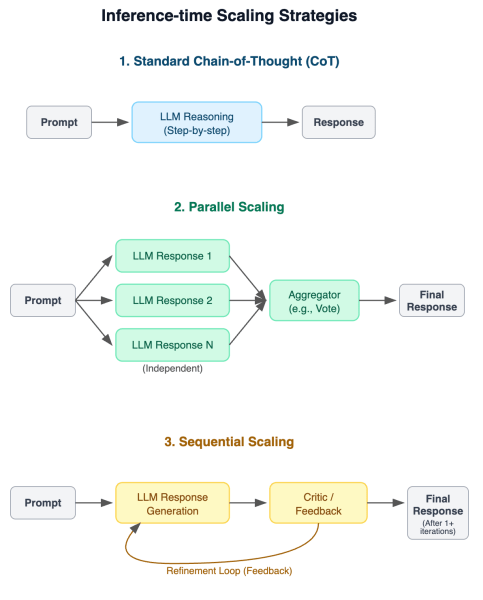
Join our daily and weekly newsletters for the latest updates and exclusive content on industry-leading AI coverage. Learn More Large language models (LLMs) are increasingly capable of complex reasoning through “inference-time scaling,” a set of techniques that allocate more computational resources during inference to generate answers. However, a new study from Microsoft Research reveals that the effectiveness of these scaling methods isn’t universal. Performance boosts vary significantly across different models, tasks and problem complexities. The core finding is that simply throwing more compute at a problem during inference doesn’t guarantee better or more efficient results. The findings can help enterprises better understand cost volatility and model reliability as they look to integrate advanced AI reasoning into their applications. Putting scaling methods to the test The Microsoft Research team conducted an extensive empirical analysis across nine state-of-the-art foundation models. This included both “conventional” models like GPT-4o, Claude 3.5 Sonnet, Gemini 2.0 Pro and Llama 3.1 405B, as well as models specifically fine-tuned for enhanced reasoning through inference-time scaling. This included OpenAI’s o1 and o3-mini, Anthropic’s Claude 3.7 Sonnet, Google’s Gemini 2 Flash Thinking, and DeepSeek R1. They evaluated these models using three distinct inference-time scaling approaches: Standard Chain-of-Thought (CoT): The basic method where the model is prompted to answer step-by-step. Parallel Scaling: the model generates multiple independent answers for the same question and uses an aggregator (like majority vote or selecting the best-scoring answer) to arrive at a final result. Sequential Scaling: The model iteratively generates an answer and uses feedback from a critic (potentially from the model itself) to refine the answer in subsequent attempts. These approaches were tested on eight challenging benchmark datasets covering a wide range of tasks that benefit from step-by-step problem-solving: math and STEM reasoning (AIME, Omni-MATH, GPQA), calendar planning (BA-Calendar), NP-hard problems (3SAT, TSP), navigation (Maze) and spatial reasoning (SpatialMap). Several benchmarks included problems with varying difficulty levels, allowing for a more nuanced understanding of how scaling behaves as problems become harder. “The availability of difficulty tags for Omni-MATH, TSP, 3SAT, and BA-Calendar enables us to analyze how accuracy and token usage scale with difficulty in inference-time scaling, which is a perspective that is still underexplored,” the researchers wrote in the paper detailing their findings. The researchers evaluated the Pareto frontier of LLM reasoning by analyzing both accuracy and the computational cost (i.e., the number of tokens generated). This helps identify how efficiently models achieve their results.  Inference-time scaling Pareto frontier Credit: arXiv They also introduced the “conventional-to-reasoning gap” measure, which compares the best possible performance of a conventional model (using an ideal “best-of-N” selection) against the average performance of a reasoning model, estimating the potential gains achievable through better training or verification techniques. More compute isn’t always the answer The study provided several crucial insights that challenge common assumptions about inference-time scaling: Benefits vary significantly: While models tuned for reasoning generally outperform conventional ones on these tasks, the degree of improvement varies greatly depending on the specific domain and task. Gains often diminish as problem complexity increases. For instance, performance improvements seen on math problems didn’t always translate equally to scientific reasoning or planning tasks. Token inefficiency is rife: The researchers observed high variability in token consumption, even between models achieving similar accuracy. For example, on the AIME 2025 math benchmark, DeepSeek-R1 used over five times more tokens than Claude 3.7 Sonnet for roughly comparable average accuracy.  More tokens do not lead to higher accuracy: Contrary to the intuitive idea that longer reasoning chains mean better reasoning, the study found this isn’t always true. “Surprisingly, we also observe that longer generations relative to the same model can sometimes be an indicator of models struggling, rather than improved reflection,” the paper states. “Similarly, when comparing different reasoning models, higher token usage is not always associated with better accuracy. These findings motivate the need for more purposeful and cost-effective scaling approaches.” Cost nondeterminism: Perhaps most concerning for enterprise users, repeated queries to the same model for the same problem can result in highly variable token usage. This means the cost of running a query can fluctuate significantly, even when the model consistently provides the correct answer.  Variance in response length (spikes show smaller variance) Credit: arXiv The potential in verification mechanisms: Scaling performance consistently improved across all models and benchmarks when simulated with a “perfect verifier” (using the best-of-N results).  Conventional models sometimes match reasoning models: By significantly increasing inference calls (up to 50x more in some experiments), conventional models like GPT-4o could sometimes approach the performance levels of dedicated reasoning models, particularly on less complex tasks. However, these gains diminished rapidly in highly complex settings, indicating that brute-force scaling has its limits. On some tasks, the accuracy of GPT-4o continues to improve with parallel and sequential scaling. Credit: arXiv Implications for the enterprise These findings carry significant weight for developers and enterprise adopters of LLMs. The issue of “cost nondeterminism” is particularly stark and makes budgeting difficult. As the researchers point out, “Ideally, developers and users would prefer models for which the standard deviation on token usage per instance is low for cost predictability.” “The profiling we do in [the study] could be useful for developers as a tool to pick which models are less volatile for the same prompt or for different prompts,” Besmira Nushi, senior principal research manager at Microsoft Research, told VentureBeat. “Ideally, one would want to pick a model that has low standard deviation for correct inputs.”  Models that peak blue to the left consistently generate the same number of tokens at the given task Credit: arXiv The study also provides good insights into the correlation between a model’s accuracy and response length. For example, the following diagram shows that math queries above ~11,000 token length have a very slim chance of being correct, and those generations should either be stopped at that point or restarted with some sequential feedback. However, Nushi points out that models allowing these post hoc mitigations also have a cleaner separation between correct and incorrect samples.

When AI reasoning goes wrong: Microsoft Research shows more tokens can mean more problems Read More »

The project of reform and revival that saved JAL

Tomohiro then succeeded Ueki as head of the Sakura Project and transferred up to 50 project members from IT planning to the PSPD. The team then consisted of around 100 people, but expanded to over 300 at its peak, with around 200 from JAL Infotec, the IT planning department, airport subsidiary JAL Sky, and call center subsidiary JAL Navia. And another 150 from partner companies like Nomura Research Institute (NRI), later taken over by IBM Japan, and Sigmaxyz. “Initially, the company’s reorganization plan identified outdated IT in several areas, so the IT planning department requested NRI’s assistance in reviewing the entire system,” adds Sugihara. “One aspect of the plan was updating the PSS, so NRI came in at the initial stage, but when it came time to put the plan into action, IBM Japan, who had worked on the POS system in the past, began to get more involved.” IBM took charge of upgrading JALCOM’s peripheral systems and managing the project, and Sigmaxyz was in charge of project management to customize Altea. But as the introduction of PSS progressed, a problem emerged regarding the complicated fare system for domestic flights, which is divided into discounts and reservation protocol not in sync with the global standard. source

The project of reform and revival that saved JAL Read More »

NVIDIA's Vision For AI Factories – 'Major Trend in the Data Center World'

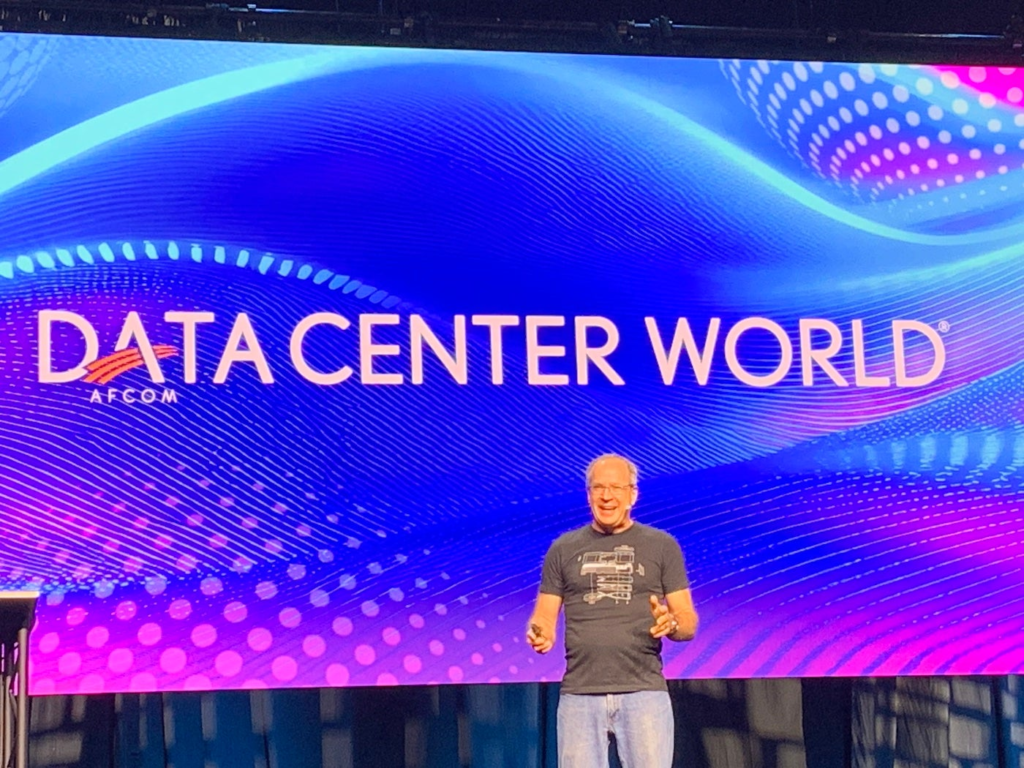
NVIDIA’s Wade Vinson during his keynote at Data Center World 2025. Image: Drew Robb/TechnologyAdvice NVIDIA kicked off the Data Center World 2025 event this week in Washington, D.C., with a bold vision for the future of AI infrastructure. In his keynote, Wade Vinson, NVIDIA’s chief data center engineer, introduced the concept of AI-scale data centers; these massive, energy-efficient facilities would meet the soaring demand of accelerated computing. NVIDIA envisions sprawling “AI factories” powered by Blackwell GPUs and DGX SuperPODs, supported by advanced cooling and power systems by Vertiv and Schneider Electric. “There is no doubt that AI factories are a major trend in the data center world,” said Vinson. Completing phase one of an AI factory in Texas Vinson pointed to the Lancium Clean Campus that Crusoe Energy Systems is building near Abilene, Texas. As he explained: The first phase of this AI factory is largely complete: 200 MW in two buildings. The second phase will expand it to 1.2 GW. It should be completed by the middle of 2026. The design includes direct-to-chip liquid cooling, rear-door heat exchangers, and air cooling. It will comprise six additional buildings, bringing the facility to four million square feet. 10 gas turbines will be deployed onsite to provide on-site power. Additionally, each building will operate up to 50,000 NVIDIA GB200 NVL72s GPUs on a single integrated network fabric, advancing the frontier of data center design and scale for AI training and inference workloads. Vinson said some AI factories will leverage on-site power, while others will take advantage of sites where power is already available. He pointed to old mills, manufacturing sites, and retail facilities that are already plugged into the grid. For example, an old mall in San Francisco can be converted to an AI factory in months, rather than the many years required to complete new-build construction and obtain utility interconnects and permits. Such sites often have large roofs that can be used for solar power arrays. More about data centers Reconfiguring existing data centers into AI factories How about existing data centers? Aging structures may struggle to accommodate NVIDIA gear and AI applications. Vinson believes many colocation facilities (colos) are in a good position to be transitioned into AI factories. “Any colo built in the last 10 years has enough power and cooling to become an AI factory,” he said. “AI factories should be looked upon as a revenue opportunity rather than an expense.” He estimates that AI could boost business and personal productivity by 10% or more, adding $100 trillion to the global economy. “It represents a bigger productivity shift than happened due to the wave of electrification around the world that started about 100 years ago,” said Vinson. Planning is key to AI factory success Vinson cautioned those interested in building or running their own AI factories about the importance of planning. It’s important to consider the various factors involved, and modeling is vital. He touted NVIDIA’s Omniverse simulation tool as one way to correctly plan an AI factory. It uses digital twin technology to enable comprehensive modeling of data center infrastructure and design optimization. Failing to model in advance and simulate many possible scenarios can lead to inefficiencies in areas such as energy consumption and can extend construction timelines. “Simulations empower data centers to enhance operational efficiency through holistic energy management,” said Vinson. SEE: Data Centres Can Cut Energy Use By Up To 30% With Just About 30 Lines of Code For example, many data center veterans may find it challenging to shift from traditional concepts of racks, aisles, and servers to GPU gear surrounded by liquid cooling and with adequate power and power distribution equipment. AI factory designs will have far more power and cooling gear inside than server racks; therefore, layouts will be radically different. After all, the amount of heat generated by GPU-powered SuperPODs is more than that generated by typical data centers. “Expect significant consolidation of racks,” said Vinson. “Eight old racks might well become one future rack with GPUs inside. It is essential to develop a simplified power and cooling configuration for the racks inside AI factories, as these will be quite different from what most data centers are used to.” source

NVIDIA's Vision For AI Factories – 'Major Trend in the Data Center World' Read More »

Exela Gets OK For $5M Financing While In DIP Talks

By Rick Archer ( April 17, 2025, 5:32 PM EDT) — A Texas bankruptcy judge gave Excela Technologies the go-ahead for a $5 million transaction as a stopgap while the payment processing company works to resolve objections to the final order for its proposed $185 million in Chapter 11 financing…. Law360 is on it, so you are, too. A Law360 subscription puts you at the center of fast-moving legal issues, trends and developments so you can act with speed and confidence. Over 200 articles are published daily across more than 60 topics, industries, practice areas and jurisdictions. A Law360 subscription includes features such as Daily newsletters Expert analysis Mobile app Advanced search Judge information Real-time alerts 450K+ searchable archived articles And more! Experience Law360 today with a free 7-day trial. source

Exela Gets OK For $5M Financing While In DIP Talks Read More »

BigQuery is 5x bigger than Snowflake and Databricks: What Google is doing to make it even better

Join our daily and weekly newsletters for the latest updates and exclusive content on industry-leading AI coverage. Learn More Google Cloud announced a significant number of new features at its Google Cloud Next event last week, with at least 229 new announcements. Buried in that mountain of news, which included new AI chips and agentic AI capabilities, as well as database updates, Google Cloud also made some big moves with its BigQuery data warehouse service. Among the new capabilities is BigQuery Unified Governance, which helps organizations discover, understand and trust their data assets. The governance tools help address key barriers to AI adoption by ensuring data quality, accessibility and trustworthiness. The stakes are enormous for Google as it takes on rivals in the enterprise data space. BigQuery has been on the market since 2011 and has grown significantly in recent years, both in terms of capabilities and user base. Apparently, BigQuery is also a big business for Google Cloud. During Google Cloud Next, it was revealed for the first time just how big the business actually is. According to Google, BigQuery had five times the number of customers of both Snowflake and Databricks. “This is the first year we’ve been given permission to actually post a customer stat, which was delightful for me,” Yasmeen Ahmad, managing director of data analytics at Google Cloud, told VentureBeat. “Databricks and Snowflake, they’re the only other kind of enterprise data warehouse platforms in the market. We have five times more customers than either of them.” How Google is improving BigQuery to advance enterprise adoption While Google now claims to have a more extensive user base than its rivals, it’s not taking its foot off the gas either. In recent months, and particularly at Google Cloud Next, the hyperscaler has announced multiple new capabilities to advance enterprise adoption. A key challenge for enterprise AI is having access to the correct data that meets business service level agreements (SLAs). According to Gartner research cited by Google, organizations that do not enable and support their AI use cases through an AI-ready data practice will see over 60% of AI projects fail to deliver on business SLAs and be abandoned. This challenge stems from three persistent problems that plague enterprise data management: Fragmented data silos Rapidly changing requirements Inconsistent organizational data cultures where teams don’t share a common language around data. Google’s BigQuery Unified Governance solution represents a significant departure from traditional approaches by embedding governance capabilities directly within the BigQuery platform rather than requiring separate tools or processes. BigQuery unified governance: A technical deep dive At the core of Google’s announcement is BigQuery unified governance, powered by the new BigQuery universal catalog. Unlike traditional catalogs that only contain basic table and column information, the universal catalog integrates three distinct types of metadata: Physical/technical metadata: Schema definitions, data types and profiling statistics. Business metadata: Business glossary terms, descriptions and semantic context. Runtime metadata: Query patterns, usage statistics and format-specific information for technologies like Apache Iceberg. This unified approach allows BigQuery to maintain a comprehensive understanding of data assets across the enterprise. What makes the system particularly powerful is how Google has integrated Gemini, its advanced AI model, directly into the governance layer through what they call the knowledge engine. The knowledge engine actively enhances governance by discovering relationships between datasets, enriching metadata with business context and monitoring data quality automatically. Key capabilities include semantic search with natural language understanding, automated metadata generation, AI-powered relationship discovery, data products for packaging related assets, a business glossary, automatic cataloging of both structured and unstructured data and automated anomaly detection. Forget about benchmarks, enterprise AI is a bigger issue Google’s strategy transcends the AI model competition.  “I think there’s too much of the industry just focused on getting on top of that individual leaderboard, and actually Google is thinking holistically about the problem,” Ahmad said. This comprehensive approach addresses the entire enterprise data lifecycle, answering critical questions such as: How do you deliver on trust? How do you deliver on scale? How do you deliver on governance and security? By innovating at each layer of the stack and bringing these innovations together, Google has created what Ahmad calls a real-time data activation flywheel, where, as soon as data is captured, regardless of the type or format or where it’s being stored, there is instant metadata generation, lineage and quality. That said, models do matter. Ahmad explained that with the advent of thinking models like Gemini 2.0, there has been a huge unlock for Google’s data platforms. “A year ago, when you were asking GenAI to answer a business question, anything that got slightly more complex, you would actually need to break it down into multiple steps,” she said. “Suddenly, with the thinking model it can come up with a plan… you’re not having to hard code a way for it to build a plan. It knows how to build plans.” As a result, she said that now you can easily have a data engineering agent build a pipeline that’s three steps or 10 steps. The integration with Google’s AI capabilities has transformed what’s possible with enterprise data.  Real-world impact: How enterprises are benefiting Levi Strauss & Company offers a compelling example of how unified data governance can transform business operations. The 172-year-old company is using Google’s data governance capabilities as it shifts from being primarily a wholesale business to becoming a direct-to-consumer brand. In a session at Google Cloud Next, Vinay Narayana, who runs data and AI platform engineering at Levi’s, detailed his organization’s use case. “We aspire to empower our business analysts to have access to real-time data that is also accurate,” Narayana said. “Before we embarked on our journey to build a new platform, we discovered various user challenges. Our business users didn’t know where the data lived, and if they knew the data source, they didn’t know who owned it. If they somehow got access, there was no documentation.” Levi’s built a data platform on Google Cloud that organizes data products by business

BigQuery is 5x bigger than Snowflake and Databricks: What Google is doing to make it even better Read More »