DOGE Cuts Overlook Long-Standing Bids To Improve IRS

By Kat Lucero ( April 3, 2025, 5:55 PM EDT) — As President Donald Trump moves to downsize the federal government, the new administration may be missing an opportunity to evaluate long-standing proposals that aim to make the Internal Revenue Service run more efficiently, such as major technology upgrades and improving the dispute resolution process…. Law360 is on it, so you are, too. A Law360 subscription puts you at the center of fast-moving legal issues, trends and developments so you can act with speed and confidence. Over 200 articles are published daily across more than 60 topics, industries, practice areas and jurisdictions. A Law360 subscription includes features such as Daily newsletters Expert analysis Mobile app Advanced search Judge information Real-time alerts 450K+ searchable archived articles And more! Experience Law360 today with a free 7-day trial. source

DOGE Cuts Overlook Long-Standing Bids To Improve IRS Read More »

The Augmented Architect: Real-Time Enterprise Architecture in the Age of AI

  Enterprise architecture (EA) has always aimed for clarity, control, and coherence. Yet its practitioners are often thwarted by an overwhelming paradox: They must guide the evolution of vast, dynamic enterprises using tools and processes that are static, fragmented, and slow. The EA repository, intended as the source of truth, devolves into a dusty attic of outdated diagrams and deliverables. Architects are stretched thin, trying to make sense of sprawling portfolios with limited visibility and time. “Data calls” are a weekly chore for both architects and stakeholders. Architecture review boards — meant to ensure alignment — are seen as bureaucratic bottlenecks. But what if the EA function was no longer confined to episodic review and disconnected models? What if it operated in real time, continuously enriched by machine-readable data and supported by intelligent agents that advise, validate, and even act? This is not speculative fiction. It is the emerging reality — a direct consequence of what we have called the sleeping giant waking up: the operationalization of architecture via closed feedback loops, AI agents, large language models (LLMs), retrieval-augmented generation, vector databases, and dynamic graph-based systems. The Feedback Loop Strikes Back Traditional EA processes are largely open-loop. A proposal is submitted, reviewed days or weeks later, deliberated in committee, and eventually approved — often based on stale information. By then, the initiative may have pivoted or the environment may have changed. Now imagine a closed-loop learning architecture system: Every update from a continuous integration/continuous delivery pipeline, every change in a cloud API, every deviation from policy becomes a signal. These signals are fed into a living architecture graph that reflects the true current state of the enterprise. Agents ingest these signals and perform continuous analysis: Harvesting agents monitor the digital signals of the enterprise, extracting knowledge into the information stores. Dependency agents are a specialization of those, mapping the digital estate’s interconnections and analyzing both automated data such as traces as well as architectural and unstructured information that may provide essential insights into higher-order, logical dependencies that are very real yet are not readily discoverable at a technical level. Lifecycle-aware agents flag aging technologies, enabling technical debt diagnosis. Conformance agents validate proposals against approved tech stacks, standards, and design patterns. Security and cost agents trace implications across risk, compliance, and spend. Architects are notified — not weeks after the fact but during or even before decision points. The result is a form of continuous architecture governance — high-velocity, high-confidence, and fully traceable, supporting outcome-driven and valuable EA as never before. AI As Architecture Sidekick AI augments the architect by continuously updating the repository to expose only fresh data. That means no more digging through stale wikis or emailing 10 teams for basic system lifecycle info. Instead: Intelligent recommenders augment architecture artifacts with context, rationale, and even business continuity considerations. Diagram recognition agents convert scanned or even hand-drawn schematics into structured model elements. Pattern recognition agents detect anti-patterns and optimization opportunities. Chatbots enable non-architects to interact with the repository, democratizing architecture insight. Generative agents propose transition roadmaps between current and target states based on actual feasibility, not just aspirational models. This is not just automation — it’s augmentation. Architects remain in the loop, but the loop is smaller, faster, and smarter. Solving The Classics — Finally Let’s revisit the perennial problems of enterprise architecture — and how real-time AI-augmented EA addresses them: Insufficient knowledge No human can know everything about a modern digital enterprise. AI doesn’t pretend to either — but it remembers everything and brings the right detail to the fore at the right time. Think of it as a cognitive prosthetic for the architect: surfacing precedents, warnings, and rationale at the point of decision. Insufficient visibility Visibility isn’t just about having access to data — it’s about trust in its freshness. Real-time integration with operational sources (observability platforms, configuration systems, source control, deployment records) ensures that the architecture graph is never out of date. The haystack becomes a needle-sorter. Fragmented deliverables Architecture artifacts multiply: PowerPoints, spreadsheets, PDFs, whiteboards. But in an agentic system, everything is rendered on demand from the same graph (and its associated unstructured content, linked via vector embeddings). Want a heatmap of system risks? A regulatory trace? A roadmap to sunset legacy? One prompt, one view — consistent, explainable, and composable. And those unstructured artifacts? An agent is happy to harvest new insights from them back into the knowledge store. Slow review cycles Review boards become decision accelerators instead of speed bumps. Agents pre-check submissions. Exceptions, not compliance, become the focus. Draft decisions are generated and validated before the meeting even starts. Architecture decision records are automatically created and updated, then immediately operationalized in the agentic memories. Ivory tower perception Abstractions are replaced with outcomes. Architects can show how a proposed change impacts a real customer journey, service-level agreement, or unit cost. The role regains relevance — no longer distant but embedded and explanatory. Architect As Prompt Engineer Much like GitHub Copilot transformed software engineering — improving productivity and satisfaction even in large-scale settings such as ANZ Bank — architects will increasingly work alongside copilots of their own. They will define acceptable patterns and reference architectures as they have always done but with the support of LLMs to provide comprehensive, grounded feedback. They will curate the architecture graph, tasking agents with updates and corrections, even large-scale schema refactorings and migrations. (This is not mere speculation. Charlie has had Claude perform complex and error-prone refactorings on his personal graph that would have taken a skilled database administrator hours). They will design guardrails and feedback loops. They ask “What are the safe ways to evolve this system?” and let the agent generate alternatives within constraints. The architect becomes a curator, facilitator, and, most importantly, a critical thinker in a system where AI can propose but should not dictate. As Stephane notes, “Every architect exposed to AI must be trained in critical thinking. There are no more Leonardos — but there is now AI.” The Architecture Operating System

The Augmented Architect: Real-Time Enterprise Architecture in the Age of AI Read More »

Major Manufacturing Shake-up: Intel Agrees to TSMC Takeover of Chip Foundries, Sources Say

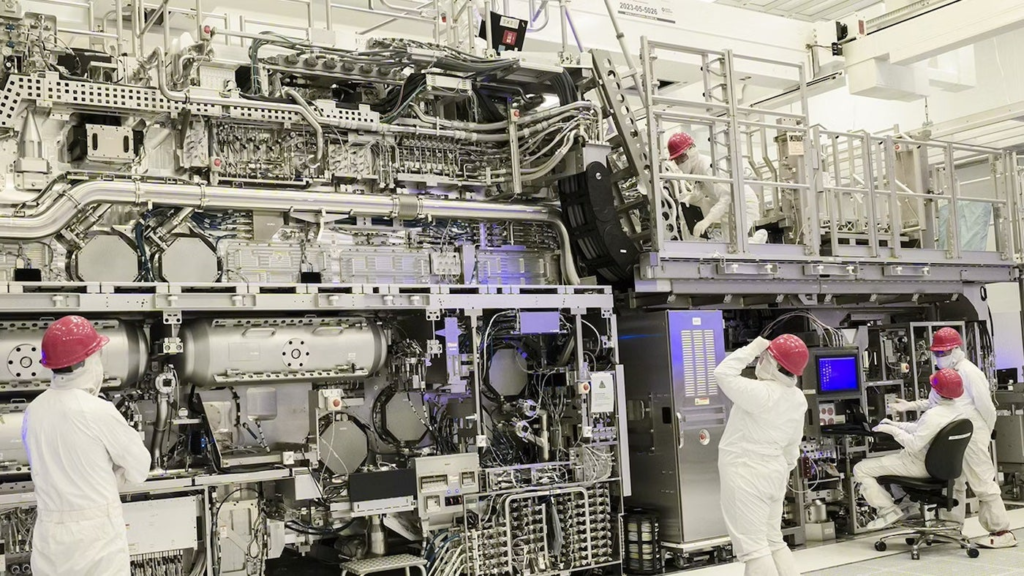
Intel foundry. Image: Intel Intel has tentatively agreed to let Taiwan Semiconductor Manufacturing Company (TSMC) take over some of its chipmaking facilities, according to The Information. TSMC will hold a 20% stake in the joint venture, contributing not cash, but value through sharing its chipmaking practices and training Intel staff, according to anonymous sources cited by the publication. Rumours of a possible takeover of Intel started swirling in February, with TSMC and Broadcom considering splitting the U.S. company’s manufacturing and design arms between them. The following month, TSMC reportedly offered a share in its proposed acquisition of the chip foundries to NVIDIA and AMD, as well as Broadcom. Both NVIDIA and Broadcom initiated manufacturing testing at Intel’s facilities at the time, sources said. However, Intel did not want to sell its chip design house separately from the foundry division, which manufactures custom chips for its customers. SEE: TSMC’s $100B Investment in US Data Centers Sets Foreign Investment Record Intel used to be a giant in the CPU industry, but the AI boom has led to recent struggles. Unlike its rivals, Intel chose not to focus solely on either manufacturing or designing chips and instead engaged in both. As a result, it saw its chip-making endeavours eclipsed by TSMC, who won NVIDIA as a customer. The U.S. manufacturing icon also had some struggles with quality in 2024, leading to its first reported net loss since 1986, and dropping from first to second on Gartner’s list of top global semiconductor vendors by revenue growth. Nevertheless, after The Information’s story was published, its shares received a boost. More about data centers Intel’s new CEO hits the ground running in bid to revive the company On February 28, Intel delayed the build of two chip factories in New Albany, Ohio by at least five years, which the general manager of Intel Foundry Manufacturing said was to “align the start of production of our fabs with the needs of our business and broader market demand,” as well as “​​manage our capital responsibly.” The $28 billion project was greenlit in 2022, under the leadership of former CEO Pat Gelsinger. He was removed by Intel’s board in December after his ambitious turnaround plan — which involved funnelling money into new fabs — failed to provide notable market share growth or profitability. Gelsinger was replaced by chip industry veteran Lip-Bu Tan in mid-March, who quickly announced that Intel would be spinning off assets that aren’t part of its core mission. He said the company would now be focusing efforts on AI and so-called “Software 2.0,” where language models and machine learning replace manually written code. Tan also revealed his intention to hire quality engineers, boost Intel’s chip foundry work, and potentially launch a custom semiconductor service. President Trump supports TSMC’s involvement with Intel U.S. President Donald Trump encouraged TSMC to assist in pulling Intel out of its slump with a joint venture, according to Reuters. He is keen to revive the former U.S. manufacturing icon while strengthening domestic production, so he does not want any part of Intel to be fully foreign-owned. As a result, TSMC is reportedly limiting its stake in Intel to under 50% to ensure regulatory approval under the Trump administration. source

Major Manufacturing Shake-up: Intel Agrees to TSMC Takeover of Chip Foundries, Sources Say Read More »

ServiceNow to acquire Logik.ai to boost CRM portfolio

“With CPQ more seamlessly embedded into the sales and order management capabilities, sellers can increase productivity by exponentially reducing time towards building sales quotes and recording opportunities in the system. But also, as the system learns, it can also recommend the right products and services to add to a particular deal or help in generating cross-sell and upsell revenue potential,” said Martin Schneider, vice president and principal analyst at Constellation Research. “Logik.ai users who do not have ServiceNow can definitely add more self-service capabilities to drive more frictionless commerce inside their business and provide more seamless customer experience.” As for how these CRM capabilities tie into ServiceNow’s service management capabilities, Schneider said the company’s approach to agentic AI and workflow will further automate the CPQ process and bring in more data sources to provide recommendations and configurations. The acquisition will take advantage of other synergies amongst the CRM and service management products as well, he said. “Service management, whether it is internal helpdesk or external call-center or support center, is inside the ‘CRM lifecycle’ of marketing, sales, customer support/experience. ServiceNow is simply building out a full suite of CRM offerings. And given their exceptional core workflow, these are going to be compelling, again, when you consider ServiceNow’s investment in agentic and generative AI capabilities,” Schneider explained. source

ServiceNow to acquire Logik.ai to boost CRM portfolio Read More »

Investing For Impact: The Power Of Clinical Intelligence

Healthcare organizations (HCOs) are investing heavily in technology, but these investments alone won’t optimize clinical workflows or enhance customer experiences.   The missing element: clinical intelligence.   When infused into workflows, healthcare delivery, and management, clinical intelligence optimizes both customer and employee experiences and enhances outcomes. In a future state, Intelligent Healthcare Organizations (IHOs) will evolve into digitally sophisticated entities. This advancement will enable smooth collaboration, straightforward navigation, and the adoption of strategies focused on delivering value, all powered by clinical intelligence that enhances interactions and decision-making. But reaching this future state won’t be easy. It will require an enterprise-wide cultural shift in how HCOs consume and utilize data to reshape workflows and improve experiences. Some of the hallmarks of IHOs are:  Connected and validated clinical workflows. IHOs will train powerful AI models on patient data. They will use a federated data network, one that collaborates among multiple HCOs, and continuously updates clinical applications, enabling accurate and validated workflows.  Automated clinical safety interventions. IHOs will enhance clinical safety, using ambient technology and robots to automate patient interventions with computer vision, motion sensors, and location intelligence. These technologies monitor environments and patient responses, often acting without human prompting, to ensure higher quality and safety.  Digital identities and verifiable credentials. Identity management in IHOs will ensure secure identification for all entities including humans, devices, APIs, and AI agents. Effective management of digital identities is essential for preserving data integrity and security. By implementing digital identity verification and using verifiable credentials, IHOs will give access to sensitive information only to authorized entities.  Investing in technology and achieving optimal impact from it are different challenges. The evolving needs of the healthcare industry demand that organizations organize their data. Ensuring data readiness requires a thorough and systematic approach. HCOs that fail to manage their data effectively will fall behind and miss out on the benefits of infusing clinical intelligence and becoming an IHO.  Our new report Clinical Intelligence Will Power The Intelligent Healthcare Organization provides a complete list of IHO hallmarks and the key steps to becoming an IHO. Please schedule a guidance session to learn more.   source

Investing For Impact: The Power Of Clinical Intelligence Read More »

The day a Russian missile hit a Ukrainian tech giant

Every entrepreneur has to overcome obstacles, but few have faced the challenges of Oleksandr Kosovan. As the founder and CEO of Ukrainian scaleup MacPaw, Kosovan runs his business in a country under invasion. The company has even been hit by missile barrages. As relentless Russian bombing and shelling pummel Ukraine, his team presses on with their work. In October, they released a new version of CleanMyMac, MacPaw’s flagship maintenance and optimisation product.  “It was completely developed during the war,” Kosovan tells TNW on a video call from his home in Kyiv. The software earned rave reviews. But two months later, the horrors of war arrived at MacPaw’s doorstep. TNW Conference – The 2025 Agenda has just touched down Discover the insightful and dare we say controversial sessions that will take place June 19-20. On a cold December morning, another devastating Russian ballistic missile attack struck Kyiv. The explosion hit MacPaw’s headquarters, shattering the building’s facade, windows, and engineering equipment. According to the rescue services, one person was killed in the attack.  Kosovan was en route to an event when a message about the strike appeared on his phone. “The only thing we could do is initiate our emergency procedures,” Kosovan says. “We had plans for this risk and they helped us to organise actions — because people were panicked. They didn’t know what to do.” Safety measures were swiftly implemented, emergency checks conducted, and recovery steps taken. The next day, MacPaw gained access to the office building. Staff worked alongside emergency services to salvage equipment and prevent further damage.  The company’s office spans three floors of the building. The hardest hit of them is still not operational, but the others have reopened. Staff are already working in them again. MacPaw’s wartime adaptations had given the business a head start on the recovery. Many team members were already working remotely. Processes had become highly automated. Staff were spread out geographically and shifts were scheduled to cover all critical roles during emergencies and military call-ups. While the missile strike was traumatic, MacPaw had been prepared. Preparing for war Numerous buildings were damaged by the missile strike. Credit: MacPaw As Russian troops amassed on the border with Ukraine in late 2021, MacPaw began disaster planning.  The company devised mitigation measures for various threats, from cyber attacks to Russian forces taking control of the office. An emergency team was formed from each product and service unit, with members based either outside Ukraine or in the country’s safer western regions. Communications security was beefed up, with Signal adopted as a new messaging service. Office infrastructure was moved entirely to the cloud. Satellite internet was set up to cover the risk of internet loss. The company then waited for reports on Russia’s military moves. On day one of the full-scale invasion in February 2022, MacPaw activated its risk mitigation plan. “We had to refocus our priorities,” Kosovan says. “The first of them was, of course, the safety of our people, and then the continuity of our business.” A code freeze regime was implemented for all products and infrastructure, with no changes permitted without prior approval from the emergency team. Hardware management strategies also shifted. With supply chains disrupted, new laptops now had to be sourced from abroad. At times, system administrators had to drive to remote locations and personally deliver laptops to team members. As wartime conditions became routine, the team adapted to their new reality. Nowadays, their biggest challenge is Russia’s relentless attacks on Ukrainian energy infrastructure. The strikes cause frequent and protracted power outages. In MacPaw’s home town of Kyiv, daily blackouts of eight hours have become commonplace, leading more team members to work from the office. To keep operations running, the company has installed extra power and internet access lines. A backup generator has also been acquired, alongside an uninterrupted internet access point via Starlink. “Starlink helps a lot,” Kosovan says. “It is one of the saving factors for Ukraine.” The new measures have kept MacPaw’s systems running throughout Russia’s attacks on Ukraine’s power grid. But the human impacts have been harder to resolve. The recovery process Windows have been covered in wooden panels to protect what remained inside MacPaw’s office. Credit: MacPaw Although no MacPaw staff were physically harmed in the missile attack, the psychological toll has been profound. “The greatest challenge we and many other companies are facing here right now is not the destruction of the offices, but the exhaustion of these people,” says Kosovan. “Mentally, this is very hard to process. People are breaking sometimes, and it is very hard to predict and help them.” For months, staff in Kyiv have endured air strikes day and night. “People cannot sleep normally because they always hear these explosions in the air…They don’t know whether the next night a drone will hit their house or not.” The brutality of the December missile attack was a stark contrast to the previous day at MacPaw. Staff had been preparing holiday gifts for Children of Heroes, an organisation that supports Ukrainian children who have lost parents in the war. Through the MacPaw Foundation, the company also provides Ukrainians with non-lethal aid, including protective gear, IT equipment, and medical supplies. Since 2022, the non-profit has distributed over $12mn in total support Alongside the humanitarian projects, Kosovan is helping to sustain the country’s IT sector. He’s personally invested in almost 20 Ukrainian businesses, including Osavul, a Kyiv-based AI startup that analyses information threats. Formed to counter Russian propaganda, Osavul now offers services to governments and businesses alike. “Our goal is to review the narratives, show which of them are dangerous, and then give you all the intelligence to understand what you can do,” Dmytro Bilash, the startup’s co-founder, told TNW last year. In combat zones, Ukrainian tech also has a powerful impact. Innovations range from a growing fleet of domestic drones to Delta, a battlefield management system. Developed by the military, the software combines a variety of tools, from digital maps to secure communications.  Ukrainian

The day a Russian missile hit a Ukrainian tech giant Read More »

The Sudden Silo Breaker: GenAI Converges Search Experiences And Disciplines

GenAI Mirrors Search Experiences Because of generative AI (genAI), all search experiences are increasingly conversational, assistive, and agentic. Consequently, distinctions between search experiences disappear. Perplexity and Rufus, Amazon’s shopping assistant, both leverage genAI-integrated search, blurring the line between search engine and site search experiences. Like Rufus, Perplexity’s shopping assistant rapidly summarizes reviews, compares features, and requires only one click to buy. Similarly, Adobe’s Acrobat AI Assistant, an example of cognitive search, facilitates conversations with PDFs and summarizes documents. This is similar to Leo, an AI assistant developed by private search engine Brave, which analyzes PDFs and Google Docs. Suddenly, search engine and cognitive search experiences look and feel alike. Examples abound of genAI-induced search convergence. Experiences like ChatGPT Tasks, Quora’s Poe, Reddit Answers, Salesforce’s Agentforce, ThredUp’s Style Chat, Workday Assistant, and more have much in common. Together, they form and reflect powerfully evolving search behavior. Now, users expect back-and-forth interactions with agents that act like personal assistants and, increasingly, act on users’ behalf. GenAI Minimizes Searchers’ Time To Value The convenience of genAI-integrated search experiences motivates mass adoption. Already, 37% of consumers use conversational search features whenever they can, according to a recent survey of Forrester’s Market Research Online Community. Such features replace the friction of clicks with the intuition of conversations and demand less effort. For example, when planning a trip, Google’s Gemini can let you know the best time to book flights, advise how to save money on hotels, create a trip planning document, draft a packing list, and check Gmail for confirmation codes. Microsoft’s Copilot can create a meal plan in seconds customized to your age by retrieving information from various sites. GenAI Demands Holistic Search As search experiences across engines, sites, and databases converge, silos between search marketing, commerce search, and cognitive search dissolve. Search-related tasks that once occurred in isolation — such as bid management for pay-per-click, log file analysis for search engine optimization, enhancing product metadata for commerce search, and synthesizing customer service answers for cognitive search — can now cross-pollinate in a holistic search strategy. Holistic search entails incrementality testing to mitigate keyword cannibalization, creating cross-functional testbeds for new search strategies and tactics, and listening more actively to customers’ voices. It means measuring search engine results page saturation, addressing websites’ existential crises, adopting commerce search, and investing in vector search. Our latest report — GenAI Forever Changes All Forms Of Search — details how to do all that and more. It’s a first-of-its-kind collaboration across Forrester’s B2C marketing, B2B marketing, commerce search, and cognitive search subject-matter experts. We look forward to your feedback and helping marketing, digital, and technology leaders and processes adapt to genAI-integrated search. As always, feel free to contact us to learn more. source

The Sudden Silo Breaker: GenAI Converges Search Experiences And Disciplines Read More »

We rode a remote-driven EV through Berlin. Is this the future of car sharing?

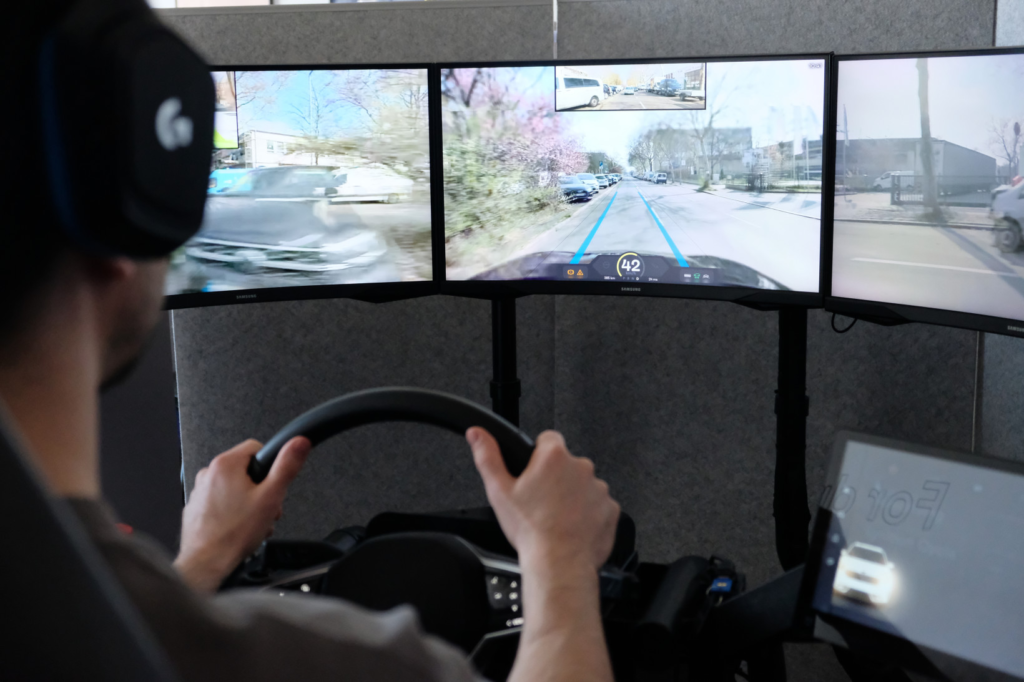
“Hello, I will be your driver for today,” says Bartek Szurgot, a software engineer at German startup Vay and my chauffeur for this ride. He disengages the handbrake, gently presses the accelerator and the new Kia Niro EV I’m sitting in slowly pulls out of the parking lot.    As we approach the first intersection, Bartek indicates, turns the steering wheel, makes his observations, and drives out onto a busy road near the centre of Berlin. So far, pretty standard — except for one big difference. Bartek isn’t in the car. He’s in an office a few blocks away, controlling the vehicle like a high-tech puppeteer. Remote operators like Bartek command Vay’s cars from a video game-style station equipped with a driver’s seat, steering wheel, pedals, and three monitors providing visibility in front of the car and to its side.  3 free tickets to TNW Conference? Get them now! For a limited time, groups can get up to three extra free tickets! Book now and increase your visibility and connections at TNW Conference Road traffic sounds, such as emergency vehicle sirens and other warning signals, are transmitted via microphones to the teledriver’s headphones. Operators could be sitting on the other side of the world.  Vay has developed a proprietary hardware and software system called “drive-by-wire” that communicates with the car’s key controls, including the steering wheel, brake, and gear shifter. Electrical signals transmitted from the remote operating station tell the system what to do, enabling the car to mirror the remote driver’s actions in real time.  Redundant mobile networks transmit the data. In the event of a network failure or emergency, the vehicle automatically comes to a safe stop. Vay’s remote drivers spend most of their time delivering vehicles to customers, who hail the cars on an app. After the car arrives, users take the wheel and drive themselves.  Teledrivers control the cars from remote locations. Credit: Siôn Geschwindt Customers can use the car for a short trip, hours, days, or even longer. Once they’re done, they stop the car safely in the road, apply the handbrake, get out, and carry on with their day. Then, a remote operator takes over again and drives on to the next client.    As anyone familiar with autonomous vehicles will know, watching a car drive itself takes some getting used to. Knowing that my “driver” was blocks away, steering through screens and sensors, made every turn feel surreal. But once you get used to it, the ride is almost disappointingly normal — I suppose that’s the point.   Vay’s tech is impressive, no doubt, but in Europe, regulators may strangle its potential before it ever scales. Meanwhile, across the Atlantic, Vay is accelerating. Vay already has a 40-strong fleet of remote-controlled cars in Las Vegas. In Berlin and across Europe, though, progress has been slower, with no commercial service in place yet.  Due to regulatory red tape, Vay is limited to test drives only and is required to keep a safety driver onboard. It has previously received an exemption, though. In 2023, it used one such regulatory hall pass to become the first company to operate a car on a European public road without a person inside.  However, the German government hands out such permits sparingly. That’s why I couldn’t take the wheel on our test drive. That was Graeme’s job, our safety driver for the trip. Nevertheless, it gave me a firm idea of what to expect. Cameras are attached to Vay’s cars. Credit: Siôn Geschwindt The future of car sharing? When I first heard of Vay’s remote driving concept a couple of years back, I was skeptical. The company touted the benefits: less hassle, cheaper fares, better working conditions for workers. But it seemed like a business model at risk of fading into irrelevancy once self-driving cars went mainstream. But with my mind fixated on the paradigms of ride-hailing on one hand and full autonomy on the other, I may have overlooked that Vay was doing something radically different. “We’re creating a whole new category of mobility,” Thomas von der Ohe, Vay’s CEO and co-founder, tells me from the company’s headquarters in Berlin. After spending years in the Bay area building self-driving cars, he came back to Europe, founding Vay in 2018 alongside Fabrizio Scelsi and Bogdan Djukic.  Vay’s rides in Las Vegas cost about half as much as Uber. Von der Ohe says they keep prices low by reducing driver labour costs. With ride-hailing services, it’s one driver, one car. But a single Vay driver can oversee up to 10 vehicles on any given day. When they drop one car at a customer, the drivers can “teleport” and gain control of another vehicle.  Vay could offer a taxi-style service where passengers ride in the back, but that would cut into profits and drive up prices. That’s why letting customers drive themselves makes business sense, says Von der Ohe.  Vay aims to make its biggest impact in car sharing and rentals, not ride-hailing. Von der Ohe says the company can match average car rental prices in Germany while helping rental firms cut costs by reducing the need for large parking facilities, especially at busy airports.  Vay also hopes to provide a better version of car sharing. Customers don’t need to pick up or park their cars — major hassles in dense European cities. Fleet owners can keep vehicles in use longer, and Von der Ohe believes the model could even reduce private car ownership in urban areas.  All this makes for a compelling value proposition. Vay has raised $150mn in funding so far, including €34mn ($37mn) from the European Investment Bank.  But there are still many potholes in the road. Outside Las Vegas, Vay is still unproven — and regulatory red tape isn’t making things easier.  In Europe, governments have been slow to adopt rules for remotely driven cars. Currently, the vehicles are subject to much the same guidelines as autonomous vehicles — which are patchy at best.  “We have the tech, it

We rode a remote-driven EV through Berlin. Is this the future of car sharing? Read More »

Lenovo, Ericsson End Patent Spat With Cross-Licensing Deal

By Alex Baldwin ( April 3, 2025, 5:12 PM BST) — Lenovo has settled all ongoing litigation with Swedish telecoms giant Ericsson after the two companies struck a cross-licensing deal for their respective standard-essential patents, Lenovo said Thursday.  … Law360 is on it, so you are, too. A Law360 subscription puts you at the center of fast-moving legal issues, trends and developments so you can act with speed and confidence. Over 200 articles are published daily across more than 60 topics, industries, practice areas and jurisdictions. A Law360 subscription includes features such as Daily newsletters Expert analysis Mobile app Advanced search Judge information Real-time alerts 450K+ searchable archived articles And more! Experience Law360 today with a free 7-day trial. source

Lenovo, Ericsson End Patent Spat With Cross-Licensing Deal Read More »

Gartner: Gen AI is in the 'Trough of Disillusionment,' Yet Spending Expected to Increase Through 2028

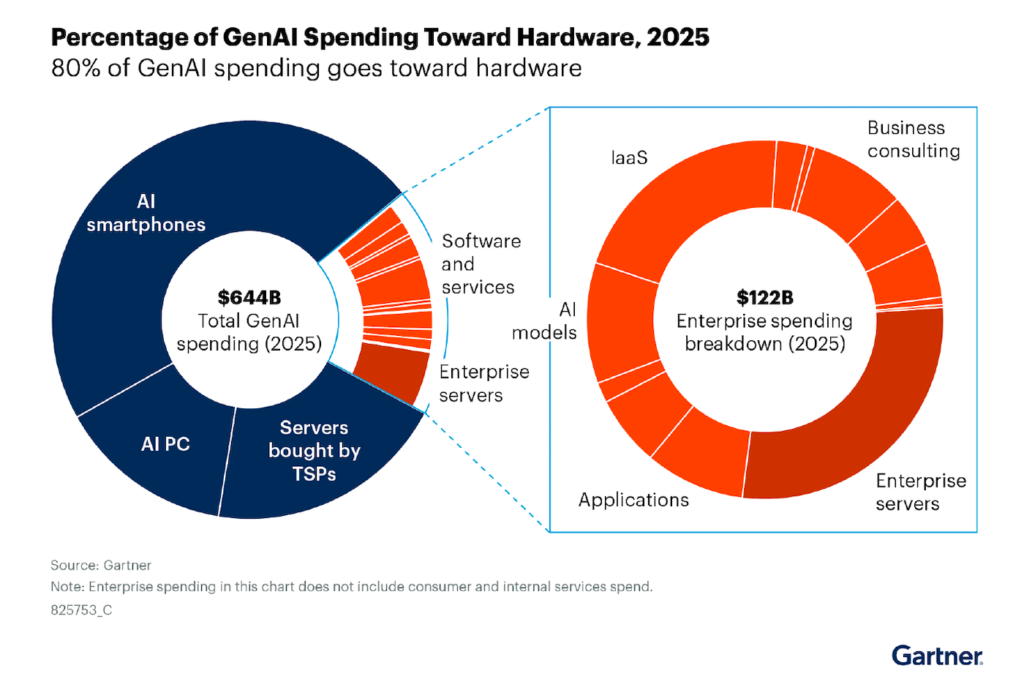
Global spending on generative AI will increase in 2025, but there will be fewer “ambitious projects,” according to a recent report from Gartner Distinguished VP Analyst John Lovelock. Generative AI spending will reach $644 billion in 2025. This is a jump of 76.4% from 2024’s numbers. In Gartner’s Hype Cycle, which roughly traces the rise, fall, and normalization of new technology, generative AI now finds itself entering the Trough of Disillusionment. Companies may have reached the limits of their experimentation with AI, and they may be disappointed with the outcomes. Gartner expects AI will remain in this phase until 2026, at which point transformational use cases will emerge to propel generative AI into the productivity stage. Generative AI spending expected to grow until at least 2028 After a period of stagnation in the Trough of Disillusionment, the only place to go is up. Gartner expects major growth in generative AI spending over the next five years despite current apathy. In particular, generative AI product adoption is expected to grow in the services sector, with compound annual growth rates (CAGRs) of 132.5% for generative AI applications and 131.8% for generative AI managed services. Highlights from Gartner’s research into IT spending related to generative AI and otherwise from 2023 to 2028 include: $438,434 million in generative AI on smartphones by 2026 $183,018 million in AI-optimized servers by 2026 $146,259 million in AI PCs by 2026 CAGR of 171.6% for generative AI on smartphones by 2028 CAGR of 139.9% for AI-optimized IaaS by 2028 Other use cases see relatively low CAGR, such as AI-optimized servers (34%), generative AI applications in software (64.7%), and generative AI infrastructure (69.2%). However, Gartner predicted, these use cases will still continue to grow in popularity until at least 2028. There could also be money to be made in what Gartner calls GenAI technology consulting, which has an 111.8% CAGR. GenAI technology consulting is teaching companies how to optimize AI-related business strategies and use AI for their benefit, not consulting with a generative AI model in order to come up with ideas. SEE: This Generative AI Customizable Policy from TechRepublic Premium Generative AI in hardware doesn’t necessarily correspond to consumer demand Many hot generative AI proofs-of-concept from 2023 failed, decreasing confidence in the technology. For example, the company Humane, which created a buzzy AI pin, shut down after failing to transform the way we interact with devices. Microsoft Copilot faced a backlash from consumers who found its security weak or its presence just plain creepy. Gartner predicts customers will continue to note dissatisfaction with generative AI functionality added to existing products. Companies may try to fix what isn’t broken by adding generative AI to the devices we use every day. SEE: OpenAI offered a feedback survey to developers to provide comments on an upcoming open-weight AI model. The GenAI market is driven by smartphone, PC, and other consumer device makers including generative AI as a default on their devices. As Lovelock pointed out, the number of purchases of AI-enabled PCs or smartphones is not necessarily a good indicator of consumer demand, as “consumers will be forced to purchase” these now-standard features whenever they pursue an upgrade. Image credit: Gartner Gartner’s Hype Cycle reminds us that most new technologies go through a stormy period as companies and consumers decide what really benefits their lives and businesses. Generative AI companies continue to pour billions into improving their AI models, Gartner pointed out. This “paradox,” as Lovelock called it, can be expected to maintain its delicate equilibrium through 2026. GenAI questions businesses will need to address For business leaders, 2025 and 2026 will present a lot of choices about generative AI. Should you use it for your business’ core functionality? For tasks that have to be done but feel like tedious roadblocks in front of the real work? For social aspects like composing quick emails or summarizing Slack messages when you come back from vacation? Or do you work in a creative field where the use of AI requires strict boundaries and policies so as not to dilute the quality of the work or open up potential legal trouble? Based on the Gartner report, we think 2025 and 2026 will be pivotal years for answering those questions. source

Gartner: Gen AI is in the 'Trough of Disillusionment,' Yet Spending Expected to Increase Through 2028 Read More »