Forrester

Balancing AI and Humanity: Insights from KM’s Biggest Events in 2024

Knowledge management (KM) is experiencing an exciting transformation fueled by the merging of generative AI, human-centered practices, and the evolving landscape of hybrid work. In 2024, two major events — Knowledge Summit Dublin and KMWorld 2024 — offered fascinating insights into this evolution. Attendees witnessed a remarkable journey, transitioning from imaginative discussions about AI’s potential to the tangible realities of its application in the field. Here are my key takeaways from these conferences that showcase the future of KM! Knowledge Summit Dublin: Merging AI And Human Creativity Held at Trinity College in June, Knowledge Summit Dublin showcased the synergy between generative AI and human experience. The conference’s theme, “Generative AI Meets Human Experience,” underscored that while technology is a powerful enabler, human creativity and collaboration remain at the heart of effective KM systems. One of the standout sessions, Stephanie Barnes’ “Radical KM — Art Aids Innovation,” explored how artistic practices could foster creativity and curiosity in teams. The session was a powerful reminder that KM is more than technological tools — it’s about cultivating a culture that values innovation and collaboration. In addition, Meta’s presentation focused on actionable strategies for integrating AI into KM through small, iterative implementations. Its approach provides a roadmap for organizations to experiment with AI while addressing real-world knowledge-sharing challenges. Interactive workshops like the Knowledge Café on conversational leadership emphasized the importance of tacit knowledge — the informal, intangible wisdom that drives meaningful collaboration. These discussions reinforced the need to balance AI capabilities with human interaction to create ecosystems where knowledge flows naturally. Knowledge Summit Dublin painted a compelling vision of generative AI as a complement to human ingenuity, creativity, and organizational culture, rather than a replacement for it. While we have been witness to the start of the evolution of knowledge management, it is clear through some of the dialogue and questions that the adoption of generative AI is in its early phase and that we are still figuring out how to make it scalable. KMWorld 2024: From Concept To Execution In The AI Era Fast-forward to November, and KMWorld 2024 in Washington, DC, marked a shift in focus toward operationalizing KM strategies powered by AI. Under the theme “KM & Enterprise Intelligence: Human or Artificial?” the event prioritized the practical realities of deploying AI in organizational contexts. Keynotes and case studies demonstrated how companies are using AI to streamline workflows, enable better decision-making, and unlock institutional knowledge. Panels tackled complex issues such as algorithmic bias, data privacy, and the importance of transparent governance. These discussions reflect a growing awareness of the ethical implications of AI-driven KM systems. Unlike Dublin’s emphasis on creativity and tacit knowledge, KMWorld 2024 zoomed in on measurable outcomes. For example, participants were introduced to frameworks for evaluating ROI on AI-powered KM initiatives. These metrics went beyond financial returns, including indicators such as knowledge accessibility, employee engagement, and process efficiency. Networking sessions explored solutions for fostering a culture of knowledge sharing in hybrid and remote work environments. These discussions showcased how organizations are enabling seamless collaboration across physical and virtual spaces, addressing the realities of today’s distributed workforce. With an entire track dedicated to storytelling, it is clear that this is an area of high growth worthy of Forrester clients’ attention. KMWorld 2024 shifted the narrative toward actionable strategies, demonstrating how organizations can integrate AI to deliver measurable value while navigating governance and ethical challenges. Emerging Trends In Knowledge Management The takeaways from these two conferences offer an exciting glimpse into the future of KM in 2025 and beyond! Generative AI is set to play a game-changing role, but its true potential will shine through when combined with a focus on human-centered practices. Here are some of the key themes that are starting to emerge that will help shape the future of KM: Balancing technology and humanity. Both events really emphasized the important balance between technology and our core human values. While AI can do a lot to streamline processes and boost efficiency, there’s no replacing the unique qualities of human creativity, empathy, and teamwork. The real challenge is finding ways to use AI that keep people at the heart of what we do. Ethical AI in KM. The increasing use of AI has sparked some important conversations about ethics. At KMWorld, participants highlighted how essential it is to focus on fairness, transparency, and accountability. As more organizations start using AI tools, creating clear governance frameworks will be key to keeping trust and integrity strong. Hybrid and inclusive collaboration. The rise of hybrid work is changing the way that knowledge moves within organizations. We’re seeing a growing need for tools that help share both tacit and explicit knowledge, making it easier to connect across distances and cultures. It’s so important that these technologies focus on inclusivity, ensuring that everyone’s voice is heard no matter where they are or what their role is. KM metrics beyond ROI. As more companies start adopting AI, there’s been a big shift in how they think about measuring the success of their knowledge management. Sure, ROI is still important, but it’s not the only thing on their minds anymore. Now, organizations are also paying attention to things like how well they retain knowledge, their capacity for innovation, and, of course, how happy their employees are. The Road Ahead For Knowledge Management After attending Knowledge Summit Dublin and KMWorld, I’m buzzing with excitement about the dynamic changes happening in the world of KM! Generative AI has stepped off the theoretical stage and is now a powerful, practical tool fueling efficiency and innovation. The shift from abstract AI concepts to real-world applications is palpable, with a strong focus on governance, accountability, and delivering tangible business results. As KM practitioners, we have an incredible opportunity to prioritize adaptability, ethics, and inclusivity, unlocking the true potential of our knowledge assets. In a rapidly changing landscape, KM is poised to be a key driver of resilience, sparking innovation and fostering long-term growth. I can’t wait to see what remarkable developments

Balancing AI and Humanity: Insights from KM’s Biggest Events in 2024 Read More »

The Future Of B2B Buying Will Come Slowly … And Then All At Once

In January, I started researching how B2B buyers are using generative AI to help their buying process. I reached out to a half-dozen IT leaders who had helped me navigate the purchasing of marketing automation, groupware, mobile apps, etc. … and I came up empty. Zero for six. “It’s too early,” I heard. “We’re being really cautious about how we use generative AI,” I heard from another. It seemed like B2B buyer adoption of generative AI was a long way off. GenAI Has Fast Become One Of Buyers’ Top Sources Of InformationSix months later, a little more than 18 months after ChatGPT launched, we polled B2B buyers for the first time about whether they are using generative AI. The genAI adoption numbers were shocking. The overwhelming majority, 89% of buyers in Forrester’s Buyers’ Journey Survey, 2024, reported that they were using genAI in at least one area of their purchasing process. What was even more surprising was that buyers reported genAI as one of the most impactful sources of information across all phases of the buying process. They weren’t just using genAI to discover new vendors but also to evaluate the differences between them and to justify their purchase commitment. Providers Are Starting To See The ImpactIn recent interviews, we have heard that genAI-enabled conversational search is beginning to make an impact on the revenue engine. Firms report that traffic growth from traditional search engines is slowing. Traffic sourced from conversational search engines, while still a small fraction of total traffic, is growing at double digits. Companies are seeing their first deals closing that are lead-sourced from conversational search engines. Like adoption, the impact has started slowly … GenAI Helps Buyers Be More Efficient And EffectiveBuyers are flocking to genAI because it enables them to do more research in less time. The overwhelming majority of buyers who used genAI in their purchasing process, 87%, agreed that genAI helped them create a better business outcome for their organization. The impact is largest with buyers making purchases of over $1 million who require more due diligence. Forrester predicts that, as a result of all this, B2B buyers of complex offerings will consider more vendors and come to a decision faster. Start Preparing For Smarter BuyersThe impact on B2B providers has started slowly … but will soon happen all at once. Since this survey, OpenAI has announced SearchGPT and Google has rolled out Search Generative Experience to a broader range of categories. The capabilities to which buyers have access will continue to grow. Providers need to start thinking about how to respond to these changes in buying behaviors — from strategy and content to site and sales experience. I talk about some of these topics in my discussion with Sri Sridharan on the What It Means podcast and in my report, Buying In The Age Of Generative AI. Forrester clients: Let’s chat more about the data via a Forrester guidance session. source

The Future Of B2B Buying Will Come Slowly … And Then All At Once Read More »

Zero-Party Data: The Gift That Keeps On Giving

As consumers look to stuff their stockings, marketers are ignoring an obvious gift waiting under their tree: zero-party data. This is data that customers volunteer about themselves, like their preferences, personal context, and purchase intentions. At a time when data deprecation makes customer data harder to acquire, zero-party data provides a valuable means for brands to learn more about shoppers, deliver relevant experiences, and convert them from first-time customers purchasing from a wish list to regular shoppers. With predicted holiday retail spend topping $1 trillion this year, brands have a plethora of opportunities to learn more about shoppers and deliver value. (Source: Tenor) Use Zero-Party Data To Improve Shoppers’ Experiences Holiday shoppers are trying to balance splurging on loved ones with economic worries and uncovering thoughtful gifts within a sea of choices. Many consumers are willing to volunteer zero-party data in exchange for something valuable such as loyalty points or exclusive offers. By collecting and using zero-party data, brands can help deliver value, provide cost savings, and combat that overwhelmed feeling for consumers. Brands can: Ask for zero-party data in exchange for cost savings. More retailers are offering free shipping or free returns as a perk for creating an account — a clear value exchange for consumers. But don’t miss the opportunity to also ask for one or two data points about someone’s product preferences in the account creation process. Doing so gives the brand data to immediately personalize post-purchase communications and keep customers engaged. Streamline product searches with product recommendations. Product recommendation quizzes improve the experience for consumers who don’t want to scour a company’s website for the perfect gift. In turn, brands get clarity on consumers’ shopping preferences and can add more consumer data to their arsenal. The best product quizzes gather enough data to make a targeted product recommendation and give the retailer some context on who a shopper is and how to best engage with them. Personalize Without Being Creepy With Zero-Party Data Personalization is a delicate balance. If it’s too precise, consumers may wonder, “Why does [brand] know that about me?” If it’s off the mark, it can frustrate or annoy customers. Zero-party data lets brands personalize experiences in a much more transparent way. By allowing consumers to weigh in about their needs and context, brands can personalize content and recommendations accurately without being creepy. For example, brands can: Get better-quality data than from inferences alone. Brands should confirm assumptions with consumers while explaining where the assumption came from. It’s as simple as OpenTable asking you to confirm “Do you want to set Boston as your home city?” when you make a reservation in Boston. If you hit “yes,” your next restaurant search will default to Boston. Ask who they are shopping for. With zero-party data and gift-giving signals — like when someone requests a gift receipt — brands can ensure that they’re personalizing off the right data. When MECCA Australia built a product quiz centered on Mother’s Day, it asked shoppers who they’re shopping for and what their typical buying behaviors are (ranging from “I know next to nothing about beauty” to “I love beauty, but I’m usually shopping for myself”). No one needs a million “personalized” emails about makeup that they bought as a gift when they have completely different makeup needs; with this one data point, MECCA ensured that it was communicating effectively with gift givers. To learn more about how to maximize your zero-party data efforts during holiday shopping and beyond, set up a guidance session. Thanks to Anna Hoskins for contributing to this blog post. source

Zero-Party Data: The Gift That Keeps On Giving Read More »

Forrester’s Guide To Retrieval-Augmented Generation

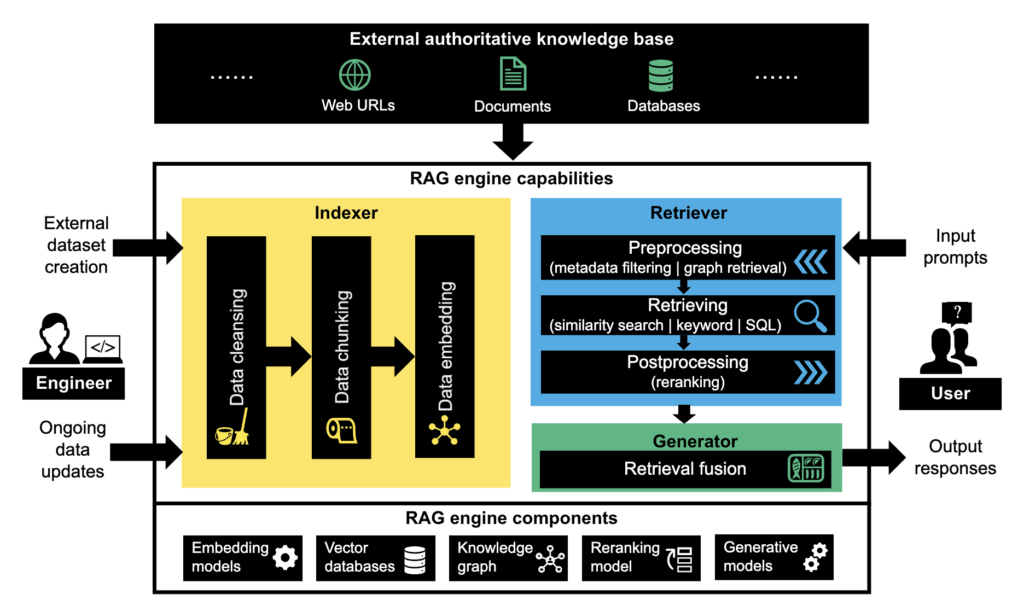
As businesses increasingly lean on generative AI to innovate customer experience and streamline operations, they encounter a critical challenge: the limitations of foundation models (FMs). These models often fall short in delivering accuracy and relevance, primarily due to insufficient or narrow training data. This is where retrieval-augmented generation (RAG) can step in, offering a promising solution. Our latest report delves into RAG’s potential to revolutionize enterprise AI adoption, combining the strengths of data indexing, knowledge retrieval, and generative capabilities to address foundational model limitations.  The Need For RAG In Addressing FM Limitations  Despite their transformative potential, FMs are inherently constrained. They can’t access information beyond their initial training data, which sometimes results in inaccurate or irrelevant outputs. RAG emerges as a critical evolution in AI, enabling systems to tap into an authoritative knowledge base to enhance the accuracy and relevance of generative outputs. The integration of RAG within enterprises showcases significant benefits, including improved content accuracy and the provision of domain-specific expertise. This enhances customer trust and boosts employee productivity. Vendors and users both attest to RAG’s capability to deliver near-perfect accuracy in AI-generated responses.  A Pragmatic Approach To RAG Integration  However, implementing RAG comes with challenges. The complexity of its architecture — spanning indexing, retrieval, and generation — requires a meticulous approach. Businesses must prepare their data for AI readiness, ensuring it’s clean, structured, and ethically sourced. Moreover, optimizing the interplay between indexing, retrieval, and generation processes demands a deep understanding of AI systems and their applications.  Adopting RAG is a strategic decision that necessitates a balanced and pragmatic approach. Our full report advocates for a step-by-step integration strategy, emphasizing the importance of AI-ready data and the optimization of RAG engine components. Ensuring seamless integration with existing systems and maintaining a focus on human-centric design are crucial for realizing RAG’s full potential.  Navigating The RAG Landscape  As RAG continues to evolve, staying abreast of its developments and understanding its implications is vital for businesses aiming to leverage AI effectively. By embracing a strategic approach to RAG integration, enterprises can unlock new levels of accuracy, relevance, and efficiency in their AI initiatives.  For an in-depth exploration of RAG’s capabilities, challenges, and strategic considerations, Forrester clients can read our full report: Forrester’s Guide To Retrieval-Augmented Generation, Part One. It serves as a valuable resource for businesses looking to navigate the complex but promising landscape of RAG.   Eager to transform your business capabilities with RAG? Forrester clients can schedule an inquiry  with me to chart your journey. And please stay tuned for part two on the tech ecosystem landscape of RAG!  source

Forrester’s Guide To Retrieval-Augmented Generation Read More »

Everything Is Getting More Expensive, And BI Is No Exception

When clients inquire about enterprise business intelligence (BI) platform pricing, I always advise them to simply divide the annual contract price by the number of expected users. If the resulting number is around $10 per user per month, I tell the client they are in a good spot. Why? For platforms with pricey develop/admin licenses, these expensive licenses are a tiny fraction of the overall user base and have little impact on total cost. The predominance of inexpensive licenses keeps the average cost at around $10 per user per month. Generative AI — specifically, conversational interactions with data — is changing the way that BI vendors are pricing. There is a trend away from licensing with more expensive “author” licenses and inexpensive or free “consumer” licenses as genAI erases some of the distinctions. Again, this is shifting the average cost toward the $10 per user per month benchmark. Most importantly, a Microsoft Power BI Pro license has been $10 per user per month for a long time. Some estimates indicate that there are more than 300 million Microsoft 365 users (all with a Power BI Pro license). Therefore, other BI vendors have no choice but to compete with that number. Well, things are changing. Inflation isn’t just impacting the cost of groceries; it is now coming for enterprise BI buyers. For the last year or so, Forrester has been hearing complaints from customers that their BI vendors are taking advantage of contract expirations to jack up the prices. Now it’s Microsoft’s turn. Today, Microsoft announced that it is raising Power BI Pro licenses to $14 (from $10) per user per month and Power BI Premium to $24 (from $20). Looks like we have a new benchmark for enterprise BI licenses. source

Everything Is Getting More Expensive, And BI Is No Exception Read More »

Are You Making These DevSecOps Mistakes? The Four Phases You Need to Know Before Your Code Becomes Your Vulnerability

In Forrester’s Security Survey, 2024, 56% of security decision-makers at firms that experienced an external attack indicated that the breach was the result of an application-related exploit. Why do we continue to be so bad at this!? Part of the problem is that the journey to DevSecOps is bumpy and long. But don’t give up! We’ve identified four key phases of the DevSecOps journey (prepare, crawl, walk, and run) as well as the best practices in each phase to either jump-start your transformation or restart your journey. Some brief highlights from our research: Prepare for your DevSecOps journey by first confirming your agile and DevOps methodologies. Organize DevSecOps practices around cross-functional product teams. This team will work within agile sprints to continuously integrate, test, and deliver code to ensure quality and reliability, even with frequent deployments. These teams will use key performance indicators to measure the effectiveness and efficiency of DevOps practices. Teams will often use the DevOps Research and Assessment (DORA) 2024 performance indicators as a guide. Monitor these metrics carefully as you progress to course-correct when DevSecOps practices are introduced, but also use these metrics as a basis for DevSecOps ones in future steps. Crawl and build trust. Central to this phase is fostering a culture of collaboration and open communication between the security and development teams. By sharing their unique challenges and responsibilities, both teams can develop a shared perspective, fostering empathy and understanding across the board. Empower the early-adopter cross-functional product teams identified in the prepare stage to identify common security gaps, initiatives to close that gap, and a couple of quick wins that the team is willing to commit to over the next three months. One such initiative might be the selection of DevSecOps tools using developer experience and automated remediation as important criteria, such as the criteria that I used in The Forrester Wave™: Software Composition Analysis Software, Q4 2024. Evaluation of tools must be done with input from both development and DevOps teams to ensure that they meet the needs of all stakeholders. In this phase, establish baseline metrics, such as the mean time to remediate security findings, to provide a tangible measure of progress and success. Walk and scale success. Adoption of DevSecOps practices now scales across the organization, propelled by the successes of early-adopter teams who share their achievements through internal roadshows. Product teams have automated security validation such as static application security testing (SAST), software composition analysis (SCA), and security scanning embedded into their pipelines and can expand coverage to testing APIs, infrastructure as code, and container images. But this automated scanning by multiple tools will generate an overwhelming number of security findings, with each categorizing the severity of issues in their own way. Normalize these findings, taking into account exploitability and other additional intelligence to prioritize them effectively. Watch developer velocity in this phase carefully, as you should realize faster development cycles. The integration of automated feedback loops within the development pipeline eliminates the need for developers to switch contexts between development and security tools, streamlining development. Run and achieve continuous security. As DevSecOps practices are expanded across various product teams to establish a culture of continuous security, it becomes essential to adapt and scale security knowledge accordingly. A key strategy involves implementing a developer security champion program. This gives security professionals more time to adopt a risk-based prioritization approach by pulling in signals and context from runtime and production, such as: Is the application internet-facing? Is it storing or transmitting personally identifiable information, payment card industry information, or protected health information? What is the priority to the business? What vulnerabilities can be leveraged for an attacker to move laterally? Security also has the time to crystallize “paved roads” — standardizing security templates and policies for continuous integration and continuous delivery pipelines, codifying security best practices, and providing product teams with secure and healthy libraries to use for authentication and authorization, encryption, and logging. Monitor metrics, such as the time to detect a security issue, patch it, and restore service in production. There is a temptation to reduce investment in further security initiatives and resources at this stage, but teams that choose to pause DevSecOps advancement or scale back on security professionals will be ill-equipped to tackle emerging security challenges introduced by new technologies, architectural shifts, and evolving software development methodologies. For example, embedded AI in customer-facing and internal applications and coding TuringBots will bring innovation but also require ongoing security investment to ensure that teams remain prepared and resilient against new threats.   Learn how to kick-start and manage your organization’s DevSecOps journey by attending my session, Secure Software At Speed With DevSecOps, on Tuesday, December 10, at the 2024 Forrester Security & Risk Summit! Additionally, Forrester clients can see the complete DevSecOps model and best practices by reading DevSecOps Best Practices: Prepare, DevSecOps Best Practices: Crawl, DevSecOps Best Practices: Walk, and DevSecOps Best Practices: Run or by setting up an inquiry or guidance session with either myself or my coauthor, Christopher Condo. (written with Danielle Chittem, research associate) source

Are You Making These DevSecOps Mistakes? The Four Phases You Need to Know Before Your Code Becomes Your Vulnerability Read More »

Meet Forrester’s New Principal Analyst Covering Loyalty Marketing, John Pedini

In 2025, we expect consumer usage of loyalty programs to grow amid declines in overall brand loyalty. Though loyalty programs offer the rewards that price-conscious consumers crave, companies struggle to inspire emotional loyalty across various tactics aimed at improving retention. Marketers need a loyalty strategy that appropriately balances transactional incentives with an understanding of what drives and impacts brand loyalty. We have a new analyst on the B2C marketing team, John Pedini, to help clients assess and optimize their customer loyalty initiatives. John brings over 28 years of experience working directly with the world’s leading brands to develop, implement, and support best-in-class loyalty, CRM, and customer engagement programs and is passionate about turning insights into strategies that can transform a brand from good to exceptional. John’s coverage will focus on helping marketers design effective loyalty strategies, execute winning loyalty tactics, and measure customer loyalty. He’s ready to help clients with guidance sessions, advisory, and workshops on program design, reward strategy, loyalty platforms, and brand-specific solutions to elevate the customer experience. Request a guidance session to connect with John to review your loyalty program and discuss how to build customer relationships that fuel business growth. source

Meet Forrester’s New Principal Analyst Covering Loyalty Marketing, John Pedini Read More »

Meet Forrester’s New Senior Analyst Covering Marketing Measurement, Brad Haag

According to our most recent CMO Pulse Survey, marketing executives plan to prioritize maturing how they measure marketing effectiveness in 2025. Marketing measurement plays a critical role in helping CMOs defend marketing investments, secure resources for future initiatives, and show that marketing is an engine for growth rather than a cost center. As CMOs look to clear out the marketing clutter in the year ahead, a comprehensive measurement strategy also provides insights into which marketing channels, creative, content, and programs are worth the investment and which may be wasting precious marketing budget. In recent years, the measurement landscape has shifted to accommodate data deprecation and increased automation, and data challenges such as disconnected data sources, inconsistent quality, and lack of internal resources prevent many marketers from making use of measurement and analytics. We have a new analyst on the team, Brad Haag, to help Forrester clients navigate these challenges and evolve their measurement approaches and practices. Brad understands the importance of demonstrating how excellent marketing drives both customer obsession and revenue. He brings over 12 years of experience in marketing measurement, advertising analytics, and consumer data strategy to his work at Forrester. His wide-ranging background provides a unique lens into how marketing measurement strategies impact teams across the enterprise, from hands-on-keyboard data engineers and analysts to C-suite decision-makers. Brad’s coverage will focus on marketing measurement strategy, best practices, and methodologies/approaches. He’s ready to help clients with guidance sessions, webinars, and workshops on evaluating and evolving their current measurement efforts, how the shifting data privacy landscape will impact marketing measurement, and how trends in the measurement space should be leveraged in the near- and long term. Brad will also be collaborating closely with other Forrester analysts across the spectrum of B2C marketing topics. If you’re a Forrester client, request a guidance session with Brad today to discuss your measurement strategy. source

Meet Forrester’s New Senior Analyst Covering Marketing Measurement, Brad Haag Read More »

Learn How To Master Buying Mayhem At B2B Summit North America

B2B professionals face a critical choice: Adapt to the new business buying reality — where buyers call the shots, outside influencers hold growing sway, and AI is poised to play a greater role — or lose to your competitors who do. Meeting this moment requires fundamentally new ways of thinking and working. It also, very likely, involves changes to your role. Yet maintaining the status quo is not an option. The good news is that the technology, tools, and methodologies exist to help you drive change and morph your strategies and tactics to adapt to this new buying paradigm. At B2B Summit North America 2025, happening March 31–April 3 in Phoenix and as a digital experience, we’ll dive deep into them — and give you hands-on guidance and real-world examples to help you apply them. In addition to keynote sessions, track presentations, and practitioner panels, the event will feature over 50 interactive sessions to help you effectively navigate the new buying landscape, transform your revenue processes for long-term growth, level up your use of data and insights, and much more. Our Most Experiential B2B Summit Yet We’re particularly excited that our upcoming B2B Summit will emphasize learning by doing. We’ve built in analyst-led roundtables and workshops to facilitate networking, share experiences, and learn from best practices. These highly interactive sessions will give you and your team a powerful head start in implementing what you learn once you return to the office. Also new next year: our location. For the first time, B2B Summit North America will take place in Phoenix, Arizona, known for its year-round sunshine, desert landscape, and vibrant culture. A stunning backdrop to our event, the city also provides great opportunities for enriching your experience. Why else should you come to B2B Summit? Over the span of four days, you will: Learn how to lead in the new B2B era. Our powerful keynote sessions will give you the why, what, and how of adapting to the power shift that’s underway in business buying. Starting with an exploration of today’s buying dynamics — more complex buying groups, more self-service buying, growing use of generative AI — the keynotes will then delve into specific aspects of how to navigate these dynamics. You’ll learn how to adapt your revenue processes, elevate your change leadership skills, meaningfully improve your processes, and more. Sharpen your knowledge and skills. Our breakout sessions across eight tracks will equip you to amplify your impact in your role and career. Topics will include resetting strategy and routes to market, activating buyer and customer insights, and harnessing data and technology. (Find our full agenda here.) Some of the sessions will also include dedicated time for Q&A with analysts. Start doing the work. You won’t need to wait until you’re back at the office to start applying what you learn. Our roundtables and hands-on workshops provide a forum to think through how new insights and methodologies could come to life at your organization. These sessions are a great opportunity for teams, which can take advantage of our team discounts. Get focused advice. Our popular one-on-one sessions provide a unique opportunity to dig deeper into your challenges with a Forrester analyst and get customized, unbiased insights and advice. Learn how others have succeeded. Hear firsthand from leaders as they share their stories of business transformation. Our B2B Return On Integration Honors and Programs Of The Year Awards sessions dive into the details of how B2B leaders aligned their revenue functions and made difficult changes that accelerated growth. Case studies throughout the event provide additional opportunities to learn how peer companies overcame specific challenges. Enjoy unique networking opportunities. On top of the many opportunities you’ll have throughout B2B Summit to make and rekindle connections, our special programs provide more tailored forums for networking. The Forrester Women’s Leadership Program is geared toward building community and surfacing advancement strategies through candid conversation among women across B2B sales, marketing, and product. Our Executive Leadership Exchange (invitation only) features private facilitated networking and premium experiences tailored to the C-suite. Stay on top of innovation. Once again, the B2B Summit Marketplace will bring together the latest products and innovations in B2B in one central location. With dedicated marketplace breaks included in the agenda, you’ll be able to explore the offerings and talk with vendors without missing any other action. Learn more about B2B Summit North America, and until December 3, take advantage of our “super early bird” pricing. I hope to see you in Phoenix as we explore together how to meet this pivotal moment in B2B. source

Learn How To Master Buying Mayhem At B2B Summit North America Read More »

Leverage Collaborative Supply Networks To Achieve Supply Chain Resilience And Sustainability

Do you recall all the supply chain drama of the COVID-19 shutdowns of March 2020 to December 2021? Remember the feverish discussions about a “new normal” that would come after? Well, that new normal has turned out to feature three main trends: 1) continued market volatility based on the impact of energy and commodity cost inflation; 2) perpetual supply chain disruption, fueled by geopolitical instability and the current sanctions and prospective tariffs; and 3) further exposure to regulatory risk due to the proliferation of supply chain ESG and carbon equalization tariff regulations. This is all a lot for any organization to manage. But savvy enterprises are discovering a new solution: collaborative supply networks, which can synchronize adaptive planning and execution across multiple enterprises contending with instability. Let’s take a look at some of the background that led to collaborative supply networks as well as some of the benefits that we’re seeing. Extending Sales And Operations Planning And Execution Consumer-packaged goods firms (CPGs) blazed a trail with enterprisewide sales and operations planning (S&OP). CPGs by their nature are familiar with wildly fluctuating demand and periodic supply bottlenecks. They invested in S&OP to align their sales channels, marketing, and financial planning, along with sales and operations execution (S&OE) to boost customer service and smooth the load on production and transportation capacity. From there, other industries took it a step further to extend S&OP processes to customers, sales channels, and suppliers. These industries realized that their topdown supply chains were too brittle to weather the types of crises they were facing. They adopted resilient collaborative supply networks to extend S&OP discipline to their suppliers and customer or channel partners, as we described in this blog.   Collaborative Supply Networks Scale Multi-Enterprise Responses To Volatility Three years into this “new normal,” an established market for collaborative supply networks exists to help enterprises achieve their resilience and sustainability goals, and we’ve developed a number of assets to help clients on this journey. The recent Forrester Wave™ evaluation on the leading collaborative supply networks evaluates 13 notable platforms across 29 criteria. Our recent case study on Latexco describing best practices in integrating S&OP with S&OE and our recently published guide to supply chain transformation may help put this all into better context. We also have a supply chain benchmarking tool to help you understand the role of your supply chain in competing for customers and capital compared with your peers’ supply chain capabilities. Our maturity self-assessment helps pinpoint the specific supply chain processes that offer the most scope for improvement, and the supply chain ROI framework helps you establish the business case for supply chain technology investment. We would love to help you with your supply chain transformation. If you are a Forrester client, feel free to schedule a guidance session through [email protected]. source

Leverage Collaborative Supply Networks To Achieve Supply Chain Resilience And Sustainability Read More »